In June 2026, the Dutch government formally urged the European Union to ban the sale of plastic-based chewing gum across all member states. Spearheaded by Bertram, the State Secretary of Infrastructure and Water Management, the proposal marks a major escalation in the global war on microplastics, singling out the chewing gum industry as a key source of environmental degradation and costly municipal litter.
According to Dutch environmental agency Rijkswaterstaat, chewing gum is the second most common form of litter on European streets after cigarette filters, accounting for approximately 13 percent of all street waste. Because the synthetic polymers in modern gum do not biodegrade, municipal cleanups require specialized high-pressure steam equipment to scrape flattened, calcified grey discs off pavements—a process that costs local governments millions of euros annually.
This regulatory pressure coincides with a major toxicological study that has shattered the candy’s clean, breath-freshening image. Researchers at the University of California, Los Angeles (UCLA) presented a pilot study demonstrating that chewing a single piece of conventional gum can release hundreds to thousands of microplastic particles directly into human saliva.
The study, led by Sanjay Mohanty, PhD, an associate professor of civil and environmental engineering, and graduate researcher Lisa Lowe, analyzed ten popular chewing gum brands. They discovered that, on average, one gram of conventional gum releases 100 microplastic fragments, with some brands shedding up to 600 fragments per gram.
Given that a standard piece of gum weighs between two and six grams, a single chew session can unleash up to 3,000 microplastic particles directly into the mouth. Strikingly, the researchers discovered that the microplastics are shed almost immediately, with 92% to 94% of the particles released within the first eight minutes of mastication.
This double blow of environmental and biological evidence has ignited a legislative push. In late 2025, the UK Parliament introduced an Early Day Motion, sponsored by Member of Parliament Wera Hobhouse, drawing attention to the synthetic polymers hidden within the candy and demanding mandatory transparency for the ingredients in chewing gum.
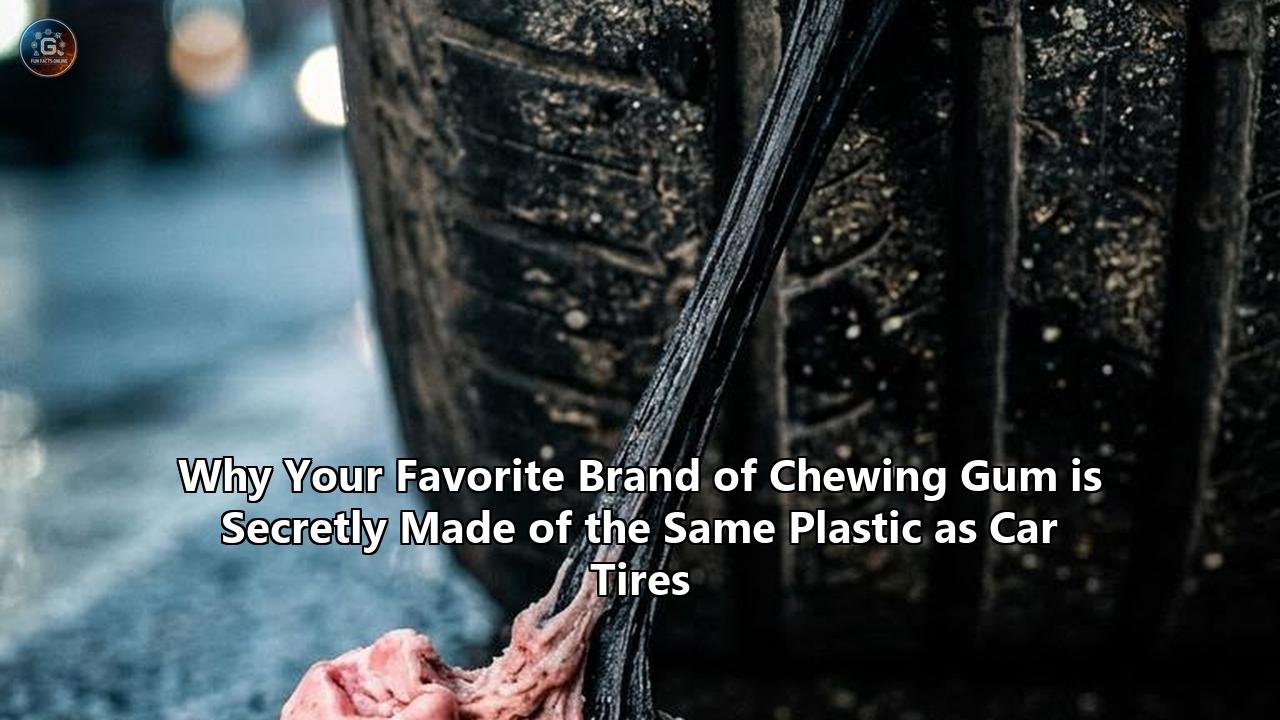
For the average consumer, this wave of scientific and regulatory scrutiny exposes a shocking reality: the bouncy, chewy substance in your mouth is chemically identical to the synthetic rubbers and plastics used to manufacture car tires, industrial adhesives, and plastic grocery bags.
Understanding how a standard consumer confectionery evolved into a mouth-sized piece of industrial plastic requires a deep look at the modern food processing industry. By examining the current crisis through a case study lens, we can extract critical principles regarding chemical exposure, corporate opacity, and the systemic challenges of decoupling our everyday lives from petroleum.
Rubber on the Road, Rubber in the Mouth: The Secret Chemistry of "Gum Base"
To understand why modern chewing gum is secretly made of the same plastic as car tires, one must read past the marketing claims on the front of the packaging and analyze the actual, hidden ingredients in chewing gum.
If you flip over a pack of conventional chewing gum—whether it is a sugar-free dental stick, a children's bubble gum, or a minty pellet—the ingredient panel will inevitably list a substance simply labeled "gum base".
This single, innocuous term is a regulatory "black box." Under the United States Food and Drug Administration (FDA) Code of Federal Regulations (specifically 21 CFR 172.615), as well as equivalent European and international food safety laws, manufacturers are permitted to list "gum base" as a single collective ingredient.
They are not legally required to disclose the specific chemical components that make up that base. Yet, within this regulatory envelope lies a cocktail of synthetic elastomers, plasticizers, resins, and waxes.
+---------------------------------------------------------------------------------+
|                                 "GUM BASE"                                      |
|            (The legal umbrella term concealing synthetic polymers)              |
+------------------------------------+--------------------------------------------+
                                     |
         +---------------------------+---------------------------+
         |                                                       |
+--------v-----------------------------------+ +-----------------v--------------------------+
|            SYNTHETIC ELASTOMERS            | |              PLASTICIZERS & WAXES              |
| (Provides elasticity, chewiness, structure) | |  (Adjusts firmess, texture, and moisture)  |
+--------------------------------------------+ +--------------------------------------------+
| * Styrene-Butadiene Rubber (SBR)           | | * Polyvinyl Acetate (PVA)                  |
|   - Chemically identical to car tire rubber| |   - The primary polymer in school wood glue|
| * Polyisobutylene (Butyl Rubber)           | | * Paraffin Wax                           |
|   - Used in sports balls and inner tubes   | |   - Petroleum-derived barrier agent        |
| * Polyethylene                             | | * Microcrystalline Wax                   |
|   - The basic plastic of grocery bags      | |   - Refined petroleum byproduct            |
+--------------------------------------------+ +--------------------------------------------+
Styrene-Butadiene Rubber (SBR)
This synthetic elastomer is the primary ingredient used to manufacture light-duty passenger car tires. SBR is a copolymer synthesized from styrene and butadiene. In industrial applications, SBR is prized for its high abrasion resistance, durability, and capacity to retain its shape under repeated physical stress.
In chewing gum, food-grade SBR serves an identical function: it provides the durable, elastic structural matrix that allows the gum to withstand hours of continuous chewing without dissolving or losing its elasticity.
While food-grade SBR undergoes purification processes to remove unreacted monomer impurities and does not contain carbon black (the pigment that turns car tires black), it remains the exact same polymer chain at a molecular level.
Polyisobutylene (Butyl Rubber)
Another common synthetic rubber found within the "gum base" is polyisobutylene. This vinyl polymer is synthesized from the monomer isobutylene and is highly valued for its gas impermeability and exceptional dampening properties.
Industrially, polyisobutylene is used to manufacture the airtight inner tubes of tires, the bladders of basketballs and soccer balls, and industrial-strength sealants and adhesives.
Within a stick of chewing gum, polyisobutylene provides the soft, pliable, and bouncy texture that makes mastication satisfying. It is particularly crucial in bubble gum formulations, as its gas-tight properties allow the elastomer matrix to trap air, enabling the chewer to blow large, stable bubbles.
Polyvinyl Acetate (PVA)
Polyvinyl acetate is a synthetic polymer prepared by the polymerization of vinyl acetate monomer. If you have ever used white school Elmer’s glue or yellow wood glue, you have handled PVA. It is also a primary component in latex-based paints and paper coatings.
In chewing gum, PVA acts as a plasticizer and modifier. It helps lower the softening temperature of the gum base, ensuring that the gum becomes soft and easy to chew once it reaches human body temperature inside the mouth. It also plays a key role in flavor retention, allowing the flavor oils to bind to the gum base and release slowly over time.
Polyethylene and Paraffin Waxes
Many conventional gum bases also incorporate polyethylene—the most common plastic on Earth, used to make grocery bags, squeeze bottles, and packaging films. Polyethylene adds structural bulk and moisture resistance.
This is blended with paraffin wax and microcrystalline wax, both of which are direct byproducts of petroleum refining. These waxes act as lubricants and softening agents, preventing the synthetic rubber polymers from becoming too tough or brittle during storage and chew.
The presence of these compounds raises a logical question: how did a product meant for human consumption become so deeply entangled with heavy industrial materials? To find the answer, we must examine the history of the chewing gum supply chain.
The Great Chicle Transition: How the Post-WWII Petrochemical Boom Redefined Gum
The transition of chewing gum from a natural, forest-harvested agricultural product to a synthetic, factory-produced petrochemical polymer is a classic study in industrial substitution.
For thousands of years, humans chewed natural substances. The ancient Greeks chewed mastic gum—a resin obtained from the bark of the mastic tree (Pistacia lentiscus). In North America, indigenous populations chewed spruce tree sap, a practice they passed on to European settlers who subsequently commercialized it.
However, the foundation of the modern global chewing gum industry was built on chicle. Chicle is a natural, milky latex sap harvested from the sapodilla tree (Manilkara zapota), native to the tropical rainforests of the Yucatán Peninsula and Central America.
When boiled down, chicle dries into a highly flexible, biodegradable, and completely non-toxic masticatory substance. In the late 19th and early 20th centuries, pioneers like Thomas Adams and William Wrigley Jr. built massive empires by importing chicle from Central America, flavoring it, and selling it to millions of consumers worldwide.
       NATURAL CHICLE BASE                             SYNTHETIC BASE
   (Late 19th - Mid 20th Century)                    (Post-WWII - Present)

       +-------------------+                         +-------------------+
       |  Sapodilla Tree   |                         |  Petroleum Crude  |
       |   (Manilkara)     |                         |    (Oil Refinery) |
       +---------+---------+                         +---------+---------+
                 |                                             |
                 | (Sustainable Tap)                           | (Chemical Cracking)
                 v                                             v
       +-------------------+                         +-------------------+
       |   Natural Latex   |                         | Synthetic Monomers|
       |   (Biodegradable) |                         | (Styrene/Ethylene)|
       +---------+---------+                         +---------+---------+
                 |                                             |
                 | (Boiling & Filtering)                       | (Catalytic Polymerization)
                 v                                             v
       +-------------------+                         +-------------------+
       | Pure Chicle Gum   |                         |   "Gum Base"      |
       | (Sheds 0 Plastics)|                         | (Sheds Micro-     |
       +-------------------+                         |   plastics)       |
                                                     +-------------------+
By the 1930s, however, the chicle-based supply chain was reaching its ecological and economic limits. The harvesting of chicle, known as chiclería, was an incredibly labor-intensive and manual process. Chicleros had to climb wild sapodilla trees in dense jungles, slash herringbone patterns into the bark, and collect the dripping latex.
Because sapodilla trees can only be tapped once every several years to prevent killing the tree, the supply of chicle was highly inelastic. It was geographically restricted, vulnerable to tropical weather disruptions, and impossible to scale to match the exploding global demand.
The turning point arrived during World War II. Chewing gum was issued to Allied soldiers as a standard ration item to help them relieve stress, keep their mouths moist in arid climates, and maintain focus.
This created an unprecedented surge in demand that the wild-harvested chicle forests simply could not sustain. In response, wartime chemical laboratories accelerated research into synthetic rubber and polymer substitutes, paving the way for the post-war petrochemical boom.
By the 1950s and 1960s, mass-market gum brands had almost completely phased out natural chicle, replacing it with synthetic elastomers derived from oil. The advantages of synthetic gum bases for corporations were overwhelming:
- Incredible Cost Savings: Petrochemical polymers could be synthesized in massive chemical plants at a fraction of the cost of wild-harvested chicle.
- Absolute Consistency: Unlike natural saps, which varied in quality, moisture content, and texture based on weather, soil conditions, and harvest season, synthetic rubber was chemically uniform. Every batch behaved exactly the same way in automated factory machinery.
- Infinite Shelf Life: Natural resins contain organic fats and proteins that can eventually oxidize and go rancid over time. Synthetic polymers like polyisobutylene and polyvinyl acetate are completely inert and can sit on retail shelves for years without degrading.
- Superior Mechanical Customization: Industrial chemists could modify the ratio of polymers to create specific textures, such as an ultra-tough rubber for high-performance bubbles or a softer, smoother base for sugar-free breath mints.
Through this transition, the chewing gum industry solved its scalability and margin challenges. However, it did so by locking consumers into an unacknowledged relationship with synthetic polymers.
By analyzing this transition as a case study, we can extract three critical principles that explain not only how this happened, but why the resulting environmental and public health crisis has proven so difficult to resolve.
Principle 1: The "Ingredient Cloaking" Loophole and the Power of Proprietary Blends
The first major principle highlighted by the chewing gum case study is the phenomenon of Ingredient Cloaking. This refers to a regulatory structure that permits corporations to hide complex synthetic chemicals behind simplified, pleasant-sounding, or historic group terminology, thereby preventing consumers from making truly informed purchasing decisions.
In the food, cosmetic, and fragrance industries, regulatory frameworks frequently protect proprietary corporate formulas at the expense of ingredient transparency. Under the FDA’s legacy guidelines, listing every single chemical polymer, plasticizer, and wax in a gum base would result in a label that looks more like a MSDS sheet from a chemical plant than a food label.
To "simplify" labeling, the food industry successfully lobbied for the creation of collective terms. The term "gum base" is a classic example of this compromise.
This regulatory opacity creates a profound asymmetry of information, which is evident when comparing how we regulate different categories of food. If a manufacturer adds a preservative like butylated hydroxytoluene (BHT) or an artificial color like Red 40, they must explicitly list it on the package.
Yet, when they formulate the physical matrix of the product with synthetic rubber polymers identical to those used in industrial adhesives, they can bypass disclosure entirely under the blanket term "gum base".
                 HOW "INGREDIENT CLOAKING" WORKS ON A LABEL

     [ WHAT THE CONSUMER SEES ]              [ THE ACTUAL INDUSTRIAL INGREDIENTS ]

     INGREDIENTS:                            INGREDIENTS:
     Sorbitol,                               Sorbitol,
     Glycerol,                               Glycerol,
    +-------------------------+             +-----------------------------------------+
    |  GUM BASE               |============>|  - Polyvinyl Acetate (School Glue)      |
    +-------------------------+             |  - Styrene-Butadiene Rubber (Car Tires) |
     Natural and Artificial                  |  - Polyisobutylene (Butyl Rubber)       |
     Flavors, Aspartame,                     |  - Polyethylene (Plastic Bags)          |
     BHT (to maintain freshness).            |  - Paraffin Wax (Petroleum Residue)     |
                                            +-----------------------------------------+
                                             Natural and Artificial Flavors,
                                             Aspartame, BHT.
This is not a unique anomaly; rather, it is a widespread corporate design pattern. We see the exact same principle at work in other massive consumer industries:
- The "Fragrance" or "Parfum" Loophole: In the cosmetics, personal care, and cleaning product industries, companies are permitted to list the word "fragrance" or "parfum" on ingredient lists. This single word can mask hundreds of undisclosed synthetic chemicals, including endocrine-disrupting phthalates, synthetic musks, and allergens, all shielded as trade secrets.
- The "Natural Flavors" Designation: In the food and beverage sector, "natural flavors" can encompass dozens of highly processed chemical carriers, emulsifiers, and preservatives, as long as the original source molecule was derived from a plant or animal.
- Proprietary Blend Disclosures: In the dietary supplement industry, manufacturers frequently group active ingredients under a "proprietary blend" umbrella, revealing the total weight of the blend but hiding the specific doses of individual ingredients, masking cheap fillers.
The consequence of Ingredient Cloaking is that it completely de-risks the use of unpopular or controversial raw materials. If chewing gum brands were legally forced to print "Ingredients: Styrene-Butadiene Rubber, Polyvinyl Acetate, Polyethylene, Aspartame, Mint Flavor" on their packaging, consumer resistance would be immediate and severe.
By cloaking these polymers under the pastoral and historical term "gum base," the industry has enjoyed decades of public complacency, demonstrating that the language of labeling is one of the most powerful tools in a corporation’s defensive arsenal.
Principle 2: The Greenwashing Paradox and Systemic Supply Chain Contamination
The second principle extracted from this case study is the Greenwashing Paradox. This principle states that switching to "organic," "clean," or "natural" alternative ingredients at the recipe stage is fundamentally ineffective if the manufacturing, refining, and packaging systems themselves remain dependent on plastic infrastructure.
The UCLA pilot study on chewing gum microplastics yielded a result that deeply shocked the researchers. Professor Sanjay Mohanty and researcher Lisa Lowe designed their experiment under a logical hypothesis: synthetic chewing gums, utilizing petroleum-derived plastic bases, would release a massive volume of microplastics, whereas natural, chicle-based organic gums would release virtually none.
To test this, they analyzed five conventional synthetic chewing gums and five specialty gums marketed as "natural," "organic," or "plant-based".
To their surprise, they found that both synthetic and natural gums released statistically similar levels of microplastics into human saliva. The average concentration of microplastics released per gram was 104.0 particles for synthetic gum and 95.8 particles for natural gum.
The chemical analysis of the saliva samples revealed that the microplastics coming out of both types of gum consisted primarily of polyolefins (such as polyethylene and polypropylene) and polyethylene terephthalates (PET).
                     THE GREENWASHING PARADOX IN CHEWING GUM

      [ CONVENTIONAL GUM ]                       [ "NATURAL" GUM ]
      - Base: Synthetic polymers                 - Base: Natural chicle sap
      - Process: Plastic-wrapped equipment       - Process: Plastic-wrapped equipment
      - Package: Poly-lined foil packaging       - Package: Poly-lined foil packaging
               |                                          |
               v                                          v
      Sheds ~104 microplastics/g                 Sheds ~95.8 microplastics/g

      ======================================================================
      CONCLUSION: Changing the raw ingredient (chicle vs SBR) does not prevent
      contamination if the industrial manufacturing and packaging pipeline
      remains entirely saturated with plastic contact surfaces.
      ======================================================================
How could a gum made from pure tree sap release the same type of microplastics as a synthetic gum made from car tire polymers?
The answer lies in systemic, downstream supply chain contamination. While the core masticatory ingredient of the natural gum was indeed a plant-based resin, the entire industrial process used to manufacture, refine, flavor, and package that gum was saturated with plastic.
- Manufacturing Equipment: The raw tree sap is processed in industrial mixers, extruders, and cutters lined with plastic seals, synthetic rubber hoses, and polymeric lubricants. The high-friction mechanical shearing forces of industrial mixing cause microscopic fragments of these machine components to wear off and migrate directly into the gum mass.
- Refining and Filtration: During processing, the natural sap must be filtered and purified. These filtration systems frequently utilize synthetic polymer membranes, mesh screens made of nylon or polyester, and plastic holding vats, all of which shed microparticles.
- Packaging and Storage: Chewing gum is highly sensitive to moisture and humidity. To prevent it from absorbing moisture and becoming sticky, or losing its moisture and becoming rock-hard, virtually all gum—including "natural" brands—is packaged in plastic-lined foil wraps, stored in polypropylene blister packs, or sealed in plastic tubs. Over time, physical friction between the gum and its packaging causes microscopic plastic fibers to transfer to the outer surface of the gum.
The Greenwashing Paradox teaches us that modern industrial manufacturing has become so thoroughly plasticized that we cannot simply "recipe-swap" our way out of chemical and microplastic exposure.
When a brand markets a product as "clean" or "eco-friendly," it is frequently looking only at the origin of the primary raw material, while ignoring the complex web of industrial contact surfaces that touch the product before it reaches the consumer.
True detoxification of consumer goods requires a holistic redesign of the entire production, filtration, and packaging pipeline—a far more expensive and complex endeavor than merely replacing synthetic rubber with tree sap in a recipe card.
Principle 3: The Systemic Externality of "Performance Optimization"
The third principle is the Externality of Performance Optimization. In industrial design, maximizing a product's functional performance, durability, and cost-efficiency without considering its end-of-life cycle inevitably results in massive, unpriced social and environmental externalities.
When chemical engineers in the mid-20th century developed synthetic chewing gum bases, they were focused on solving specific, immediate mechanical problems:
- How do we make the gum hold its flavor longer?
- How do we ensure it doesn't disintegrate after thirty minutes of intense chewing?
- How do we make it completely impervious to atmospheric moisture?
- How do we keep the raw material costs as low as possible?
Synthetics like styrene-butadiene rubber and polyvinyl acetate solved all of these problems brilliantly.
However, the very chemical characteristic that made these materials so successful in the mouth—their extreme molecular stability and resistance to breakdown—made them an environmental disaster once spat out. Because synthetic polymers are highly resistant to biological digestion, ultraviolet radiation, and water exposure, they do not decay.
They are designed to be functionally immortal.
+---------------------------------------------------------------------------------+
|                       THE PERFORMANCE OPTIMIZATION CYCLE                        |
|                                                                                 |
|   1. Corporate Objective: Maximize durability, elasticity, and shelf-life.      |
|   2. Chemical Solution: Replace biodegradable natural chicle with synthetic    |
|      petroleum-derived elastomers (SBR, Polyvinyl Acetate).                      |
|   3. Immediate Success: Lower cost, uniform texture, shelf-stable candy.         |
|   4. Unintended Externality: Immortal plastic litter that cannot decay.         |
|   5. Societal Cost: Taxpayers pay for sidewalk scrubbing; biological systems    |
|      absorb microplastics.                                                      |
+---------------------------------------------------------------------------------+
When a consumer spits a piece of conventional gum onto the street, they are discarding a custom-engineered piece of vulcanized synthetic rubber. Over weeks and months, the gum is trampled flat, binding chemically to the porous surface of concrete or asphalt.
Because it is hydrophobic, rain does not wash it away. It undergoes slow physical weathering, breaking down not into organic matter, but into smaller and smaller pieces.
Eventually, these particles wash into storm drains, enter waterways, and disintegrate into microplastics (particles smaller than 5 millimeters) and nanoplastics (particles smaller than 1 micrometer).
The Dutch government's proposed EU ban highlights the staggering scale of this unpriced externality. Municipalities across Europe spend millions of euros annually scraping gum off public spaces.
This means that the low retail price of a pack of synthetic chewing gum is essentially subsidized by public taxpayers, who pay the cleaning costs, and by the environment, which bears the long-term ecological toll of plastic accumulation.
The chewing gum case study demonstrates a broader law of modern industrial production: any corporate profit margin generated by substituting biodegradable natural materials with synthetic petroleum polymers is almost always paid for downstream by municipal taxpayers and biological ecosystems.
The Biological Toll: Ingesting the Tires and Glue
While the environmental cost of synthetic gum litter has been visible on city sidewalks for decades, the human health implications are only now starting to enter sharp focus.
The finding from the 2025 UCLA study that the vast majority of microplastics in chewing gum are released into saliva within the first eight minutes of chewing is highly concerning.
Unlike plastic cutting boards, food containers, or synthetic clothing fibers—where microplastic ingestion is secondary and accidental—chewing gum represents a unique exposure vector: intentional, active mastication of a plastic matrix directly inside the oral cavity.
During chewing, the teeth exert mechanical force, crushing the polymer matrix. This mechanical shearing, combined with the chemical action of salivary enzymes (like amylase) and the warm temperature of the human mouth, causes the physical degradation of the synthetic elastomers.
This causes the gum base to shed microparticles. Because humans naturally swallow their saliva while chewing, these released microplastics are directly transported into the gastrointestinal tract.
The UCLA researchers estimated that a moderate gum chewer, consuming 160 to 180 pieces of gum per year, could be ingesting roughly 30,000 microplastic particles annually from their gum habit alone.
While the precise biological impact of ingesting these particles is still being mapped by global toxicologists, emerging science presents several deeply concerning pathways:
Gastrointestinal Disruption
Once microplastics enter the digestive tract, they interact directly with the gut microbiome. Animal studies have shown that exposure to microplastics can alter the composition and diversity of gut bacteria, leading to dysbiosis—a state of microbial imbalance linked to chronic inflammatory bowel conditions, metabolic issues, and weakened immune function.
Furthermore, the physical presence of microplastics can damage the delicate mucosal lining of the intestines, potentially leading to increased intestinal permeability, commonly referred to as "leaky gut."
Systemic Translocation
While large microplastic particles pass through the digestive system and are excreted, particles smaller than 150 micrometers can cross the intestinal barrier. Through a process called persorption, these tiny particles slip between the cells of the gut wall and enter the bloodstream and lymphatic system.
Once in circulation, microplastics can accumulate in major organs, including the liver, kidneys, spleen, and even the brain, crossing the highly protected blood-brain barrier.
Chemical Toxicity and Vector Effects
The synthetic polymers in gum base are not inert blocks of pure plastic; they are combined with chemical additives, including antioxidants like BHT, emulsifiers like lecithin, and residual catalysts and monomers from the polymerization process.
Furthermore, microplastics act as "chemical sponges" inside the body. Due to their hydrophobic surfaces, they can adsorb and concentrate heavy metals, persistent organic pollutants, and endocrine-disrupting chemicals already present in the body’s digestive fluids, delivering a concentrated dose of toxins directly to intestinal tissues.
                  THE PATHWAY OF INGESTED GUM MICROPLASTICS

        +--------------------------------------------------------+
        |   Active Mastication of Synthetic "Gum Base" Matrix    |
        +---------------------------+----------------------------+
                                    |
                                    | (Mechanical shearing & salivary action)
                                    v
        +--------------------------------------------------------+
        |   Shedding of 100 - 600 Microplastics/Gram of Gum      |
        +---------------------------+----------------------------+
                                    |
                                    | (92-94% released in first 8 minutes)
                                    v
        +--------------------------------------------------------+
        |       Direct Ingestion of Microparticles via Saliva    |
        +---------------------------+----------------------------+
                                    |
         +--------------------------+--------------------------+
         |                                                     |
+--------v-------------------+                        +--------v-------------------+
|  PHYSICAL ACCUMULATION      |                        |    CHEMICAL EXPOSURE       |
+----------------------------+                        +----------------------------+
| * Persorption through gut  |                        | * Release of residual      |
|   wall into bloodstream    |                        |   monomers & plasticizers  |
| * Translocation to organs  |                        | * Adsorption of systemic   |
|   (liver, kidneys, brain)  |                        |   heavy metals & toxins    |
| * Plaque formation in      |                        | * Endocrine disruption     |
|   arterial walls           |                        |   and gut dysbiosis        |
+----------------------------+                        +----------------------------+
Particularly alarming is the potential link between microplastics and cardiovascular health. A landmark clinical study published in The New England Journal of Medicine analyzed patients who underwent surgery to remove fatty plaques from their carotid arteries.
The researchers discovered that nearly 60% of the patients had microplastics and nanoplastics—primarily polyethylene and polyvinyl chloride—embedded directly within their arterial plaques.
Crucially, those patients with microplastics in their plaques were 2.1 times more likely to experience a stroke, heart attack, or die over the subsequent 34 months compared to those whose plaques were plastic-free.
By chewing gum made from polyethylene and polyvinyl acetate, consumers are directly introducing these exact polymers into their biological systems, bypassing accidental environmental exposure and directly feeding the bloodstream with the building blocks of arterial disease.
The Legal and Corporate Backlash: Class Actions and Labeling Battles
As the scientific evidence of microplastic shedding mounts, the chewing gum industry is facing a dual threat: aggressive class-action litigation and sweeping regulatory crackdowns.
In the United States, consumer protection law firms have begun targeting major gum manufacturers. Under the Federal Trade Commission (FTC) Act and various state-level deceptive trade practices statutes, companies can be sued for misleading marketing.
For years, many premium gum brands have marketed their products with green, eco-friendly imagery, using terms like "natural," "clean," or "plant-based" on the front of the packaging, while continuing to hide synthetic polymers under the "gum base" label on the back.
Lawsuits are expected to argue that these marketing campaigns constitute consumer fraud. When a consumer pays a premium of 200% to 400% for a "natural" gum specifically to avoid synthetic chemicals and microplastics, only to receive a product that sheds thousands of polyolefin particles due to contaminated supply chains, they have suffered direct economic injury.
These legal challenges aim to force manufacturers to either clean up their supply chains or permanently remove deceptive ecological claims from their marketing.
       FEDERAL TRADE COMMISSION (FTC) "GREEN GUIDES" COMPLIANCE MATRIX

 [ MARKETING CLAIM ]         [ RECENT FINDING ]               [ LEGAL REMEDY ]

 "100% Natural"              UCLA study shows same micro-      Mandatory warning
                             plastics as synthetic gums due    labels or removal of
                             to processing contamination.      "natural" claim.

 "Plastic-Free"              Brands substitute recognizable    Fines for deceptive
                             plastics with industrial          advertising and
                             elastomers performing identical   unsubstantiated
                             functional roles.                 eco-friendly badges.

 "Clean Formula"             "Gum base" contains unlisted      Forced disclosure of
                             synthetic polymers under legacy   every single chemical
                             FDA CFR exemptions.               polymer in the base.
On the legislative front, the regulatory environment is shifting rapidly:
The Dutch Single-Use Plastics Proposal
The June 2026 Dutch proposal to the European Union seeks to reclassify plastic-containing chewing gum under the Single-Use Plastics (SUP) Directive.
If adopted, this would result in an outright ban on plastic-based chewing gum by 2030, permitting only 100% natural, certified biodegradable plant-based gums to be sold on the European market.
The EU REACH Restriction 78
The European Chemicals Agency’s sweeping ban on intentionally added microplastics, which took effect in October 2023, is steadily phasing out synthetic polymer microparticles (SPM) across consumer goods.
While chewing gum base is currently exempted as a food additive under certain provisions, the upcoming 2027 regulatory reviews are expected to close this loophole, requiring food manufacturers to prove their products do not release microparticles during intended consumption.
The UK Parliamentary Motion
The UK motion introduced in late 2025 has put intense pressure on the Food Standards Agency (FSA) to mandate transparent labeling.
The goal is to eliminate the term "gum base" entirely, forcing manufacturers to list every individual polymer in plain language. This would allow consumers to instantly identify if they are chewing on styrene-butadiene or polyethylene.
Faced with these existential threats, the global chewing gum market—valued at approximately $48 billion—is at a critical crossroads. The industry can no longer hide behind historic regulatory exemptions.
The era of cheap, invisible synthetic bases is coming to an end, forced out by the tandem pressures of biological science and public policy.
How to Audit Your Gum: A Guide to Reading the Label
For consumers looking to eliminate synthetic rubber and microplastics from their daily habits, navigating the opaque world of gum ingredients is challenging.
Because the FDA still permits the use of the vague term "gum base," you cannot rely on a simple scan of the back of the pack. Instead, you must learn to read between the lines and decode the specific nomenclature used by manufacturers.
To protect yourself and your family, use the following evaluation guide to audit your chewing gum:
                  CHEWING GUM INGREDIENT AUDIT FLOWCHART

                    Is "Gum Base" listed on the label?
                                   |
         +-------------------------+-------------------------+
         | Yes                                               | No
         v                                                   v
Does it specify "Chicle" or                         Check for alternative
"Natural Tree Gum Base"?                            gelling/chewing agents:
         |                                          - Pectin / Gelatin
         +-------------------------+                - Starch-based chews
         | Yes                     | No             - Licorice root
         v                         v                         |
+------------------+     +------------------+                v
|   PLASTIC-FREE   |     | SYNTHETIC BASE   |      +------------------+
|   (Safe to chew) |     |  (Made of SBR/   |      |   PLASTIC-FREE   |
|                  |     |   Polyethylene)  |      |   (Safe to chew) |
+------------------+     +------------------+      +------------------+
1. Identify the Core Base Terminology
Look closely at the ingredient list. If the label simply says "Gum Base" without any further qualification, it is almost certainly synthetic.
Major mass-market brands (such as Extra, Orbit, Trident, 5 Gum, Mentos, and Bubblicious) use synthetic bases consisting of polyethylene, polyvinyl acetate, and styrene-butadiene rubber. If it does not explicitly say "100% natural" or name a specific tree resin, assume you are chewing on car tire plastic.
2. Search for Botanical Names
Truly plastic-free, biodegradable gums will explicitly state the botanical source of their masticatory base. Look for the following terms:
- Chicle (derived from the Manilkara zapota tree)
- Sapodilla Sap
- Jelutong (a natural latex from the Dyera costulata tree)
- Mastic Gum (resin from the Pistacia lentiscus tree)
- Spruce Gum or Acacia Gum
If the ingredient list reads: "Ingredients: Organic Raw Cane Sugar, Natural Chicle Gum Base, Natural Peppermint Oil," the product is derived from natural, non-petroleum forest products.
3. Beware of the "Natural Flavor" and "Natural Sweetener" Trap
Many mainstream brands use clever marketing to divert your attention. They will print "Made with 100% Natural Xylitol" or "Flavored with Natural Mint Oils" in bold letters on the front of the box.
This is a classic diversion tactic. While the sweetener or the flavor may indeed be natural, the physical masticatory base that holds those sweeteners and flavors remains a synthetic petroleum polymer. Always separate the sweetening agent from the structural base polymer when evaluating a product's safety.
4. Check for Third-Party Biodegradability Certifications
Because the UCLA study demonstrated that even "natural" gums can suffer from plastic contamination during industrial processing and packaging, look for brands that hold independent, third-party plastic-free or environmental certifications.
For example, look for products certified by TÜV Austria as "OK Biodegradable," which guarantees that the entire product—including its base, flavors, and packaging—will completely break down in natural soil environments within a matter of weeks, without leaving toxic residues or microplastics behind.
The Lessons of the Chewing Gum Case Study
The quiet crisis unfolding inside our mouths is more than just a cautionary tale about a popular candy; it is a perfect micro-level case study of the systemic challenges defining the modern industrial state. By analyzing the scientific, regulatory, and historical vectors of the chewing gum industry, we can extract three profound lessons that apply broadly across all sectors of the consumer goods economy:
Lesson 1: The Fallacy of Chemical Isolation
For decades, toxicologists and regulatory bodies evaluated food safety under the assumption of chemical isolation—the belief that as long as an industrial polymer like styrene-butadiene rubber is "food grade" and is not swallowed or absorbed, it poses zero health risks to the consumer.
The UCLA microplastics discovery completely refutes this assumption. It demonstrates that the physical act of using a product—the mechanical friction of chewing—physically degrades the polymer matrix, releasing thousands of microscopic plastic particles directly into our saliva.
We can no longer assume that a synthetic material is safe simply because it is classified as "inert." Physical mechanics, not just chemical reactivity, must become a core metric of environmental and human health risk assessments.
+---------------------------------------------------------------------------------+
|                       THE THREE PILLARS OF SYSTEMIC REFORM                      |
|                                                                                 |
|   1. End Ingredient Cloaking: Abolish vague terms like "gum base" and           |
|      "fragrance" in favor of total chemical transparency.                       |
|   2. Systemic Decarbonization: Redesign entire production lines to eliminate     |
|      plastic contact surfaces, preventing supply chain contamination.           |
|   3. Internalize Disposal Costs: Hold corporations financially responsible      |
|      for the lifecycle of non-biodegradable synthetic polymers.                 |
+---------------------------------------------------------------------------------+
Lesson 2: The Inadequacy of Consumer-Level Ingredient Swapping
The discovery that "natural" gums release nearly identical amounts of microplastics as synthetic gums is perhaps the most humbling finding of the recent scientific wave. It teaches us that consumer-level green purchasing is an illusion if the surrounding industrial infrastructure remains unchanged.
A brand cannot deliver a truly non-toxic, plastic-free product if it continues to refine its raw materials in plastic equipment, filter its liquids through synthetic membranes, and package its products in polymer-lined foils.
To achieve a clean consumer market, we must look beyond individual recipes and address the deep, systemic contamination of our manufacturing and logistics supply chains.
Lesson 3: The Unavoidable Cost of Post-War Conveniences
The post-WWII shift from chicle to petroleum-derived synthetic rubber was celebrated as a triumph of modern chemistry and free-market economics. It brought consumers cheap, long-lasting, highly consistent chewing gum while generating massive profit margins for multinational candy conglomerates.
But as we look at the calcified grey circles permanently staining our city streets and the microplastics circulating through our blood vessels, the true, unpriced cost of that transition is finally being revealed.
The lesson is clear: there is no such thing as cheap, permanent synthetic performance. The cost is merely deferred, and sooner or later, our municipal budgets, our ecosystems, and our bodies will be forced to pay the invoice.
Future Horizons: The Quest for a Truly Biodegradable Chew
As we look toward the next decade, the chewing gum industry is entering a period of enforced reinvention. The combination of the Dutch-led European ban proposals, the strict microplastic restrictions of REACH Regulation 78, and growing consumer panic over salivary microplastics is forcing both heritage brands and venture-backed startups to seek alternative materials.
The next phase of this industrial battle will be fought across three distinct technological fronts:
The Rebirth of the Mayan Forest Alliances
Startups like Chicza, a Mexican cooperative, are attempting to scale up natural chicle harvesting by working directly with indigenous chicleros in the Mayan rainforests.
By creating sustainable forestry collectives, these companies aim to provide a reliable, premium, and truly plastic-free chicle base.
However, because wild chicle can never scale to match the massive, multi-billion-pound global demand of the mass market, this approach will likely remain a high-priced, artisanal niche.
Next-Generation Biodegradable Synthetic Polymers
To satisfy the mass market without relying on wild tree sap, material scientists are working to synthesize entirely new classes of biodegradable elastomers in laboratory settings.
Researchers are experimenting with modified starches, polycaprolactone (PCL), and polyhydroxyalkanoates (PHAs)—polymers produced through bacterial fermentation of sugars or lipids.
These materials can be engineered to mimic the exact elasticity, chewiness, and flavor-retention profile of styrene-butadiene rubber, but when exposed to soil bacteria and moisture post-chew, they completely compost into organic matter within six to eight weeks.
Total Manufacturing De-Plasticization
In response to the UCLA study’s revelation of supply chain contamination, pioneering brands are redesigning their entire factory floors.
This includes replacing synthetic rubber seals and plastic conveying tubes with medical-grade stainless steel, utilizing natural cellulose filtration systems instead of plastic membranes, and transitioning to 100% plastic-free packaging, such as vegetable-wax-lined paper and biodegradable cardboard box enclosures.
Ultimately, the transformation of chewing gum from a natural forest sap to a car-tire-derived plastic, and its current forced retreat back toward biodegradability, serves as a powerful warning.
It reminds us that the chemicals we design to be immortal will eventually make their way back to us—whether on the streets we walk on, in the water we drink, or directly in the saliva we swallow.
The next time you reach for a stick of chewing gum, look past the bright packaging and the minty fragrance, and ask yourself a simple question: are you chewing on a clean, natural treat, or are you actively helping a petrochemical corporation externalize its plastic waste directly into your body?
References
Food Revolution Network. (2026). UCLA study on microplastics released from natural and synthetic chewing gums. URL: https://foodrevolution.org
The Lyon Firm. (2026). Class-action litigation threats against deceptive "natural" gum marketing. URL: https://thelyonfirm.com
NL Times. (2026). Dutch government urges European Union to ban plastic-based chewing gum. URL: https://nltimes.nl
UK Parliament. (2025). Early Day Motion on chewing gum plastic ingredients and mandatory transparency. URL: https://parliament.uk
Chemsafe Consulting. (2026). REACH restriction on Synthetic Polymer Microparticles (SPM). URL: https://chemsafe-consulting.com
Healthline. (2025). UCLA study finds chewing gum releases microplastics into human saliva. URL: https://healthline.com
Food Safety News. (2025). ACS Spring Meeting presentation: UCLA study on chewing gum microplastics. URL: https://food-safety.com
The New Lede. (2025). Microplastics in human arterial plaque and cardiovascular health outcomes. URL: https://thenewlede.org
The Earth & I. (2025). Exclusive interview with Professor Sanjay Mohanty on UCLA pilot study results. URL: https://theearthandi.org
Hi-Tech Gum Base. (2026). Properties and safety of food-grade Styrene-Butadiene Rubber (SBR). URL: http://hitechgumbase.net
Nathan & Sons. (2025). Deconstructing the "gum base" label: Polyvinyl acetate, polyisobutylene, and SBR. URL: https://nathanandsons.com
eCFR. (2026). FDA Code of Federal Regulations Title 21 Section 172.615: Chewing gum base. URL: https://ecfr.gov
Microplastics App. (2026). De-coding chewing gum labels and finding polymer-free chicle alternatives. URL: https://microplasticsapp.com
Reference:
- https://nltimes.nl/2026/06/27/dutch-government-pushes-eu-ban-plastic-based-chewing-gum-amid-litter-crisis
- https://www.ewg.org/news-insights/news/2025/05/chewing-gum-releasing-microplastics-your-mouth
- https://www.healthline.com/health-news/chewing-gum-microplastics-saliva-study
- https://www.food-safety.com/articles/10285-study-shows-chewing-gum-releases-thousands-of-microplastics-whether-gum-is-synthetic-or-natural
- https://www.theearthandi.org/post/chew-on-this-microplastics-found-in-popular-gum-brands
- https://foodrevolution.org/blog/whats-in-your-chewing-gum/
- https://edm.parliament.uk/early-day-motion/64200/plastic-in-chewing-gum
- https://www.thelyonfirm.com/blog/microplastics-chewing-gum-lawsuit
- https://nathanandsons.com/blogs/news/natural-chewing-gum
- https://microplasticsapp.com/blog/chewing-gum-brands-ranked-microplastics
- https://unblock.federalregister.gov
- https://www.chemsrc.com/en/Catg/920.html
- https://www.thegoodscentscompany.com/data/rw1276591.html
- http://hitechgumbase.net/food%20grade%20sbr.html
- https://www.cee.ucla.edu/bursting-your-bubble-ucla-study-led-by-prof-sanjay-mohanty-finds-chewing-gum-releases-microplastics-into-saliva/
- https://measurlabs.com/blog/microplastic-regulations-and-testing-in-the-eu/
- https://www.sciencealert.com/chewing-gum-releases-hundreds-of-microplastics-in-your-mouth-study-finds
- https://acs.digitellinc.com/p/s/chewing-gums-unintended-sources-of-ingested-microplastics-in-humans-618916
- https://patents.google.com/patent/US6852345B2/en
- https://www.thenewlede.org/2025/03/chewing-gum-releases-microplastics/
- https://microplasticsapp.com/blog/eu-microplastics-ban
- https://www.chemsafe-consulting.com/blog/eu-spm-restriction-2026-update-what-to-know/
- https://www.gumassociation.org/wp-content/uploads/2025/11/ICGA_Microplastics-QA_November-12-UPDATE.pdf