In June 2026, a study published in the archaeological journal Antiquity redefined our understanding of how prehistoric European societies interacted with their dead. Researchers analyzing a pair of 2,000-year-old skeletons excavated from a remote coastal cairn at Loch Borralie, in the far northwest of Scotland, identified a mortuary practice without parallel in the archaeological record.
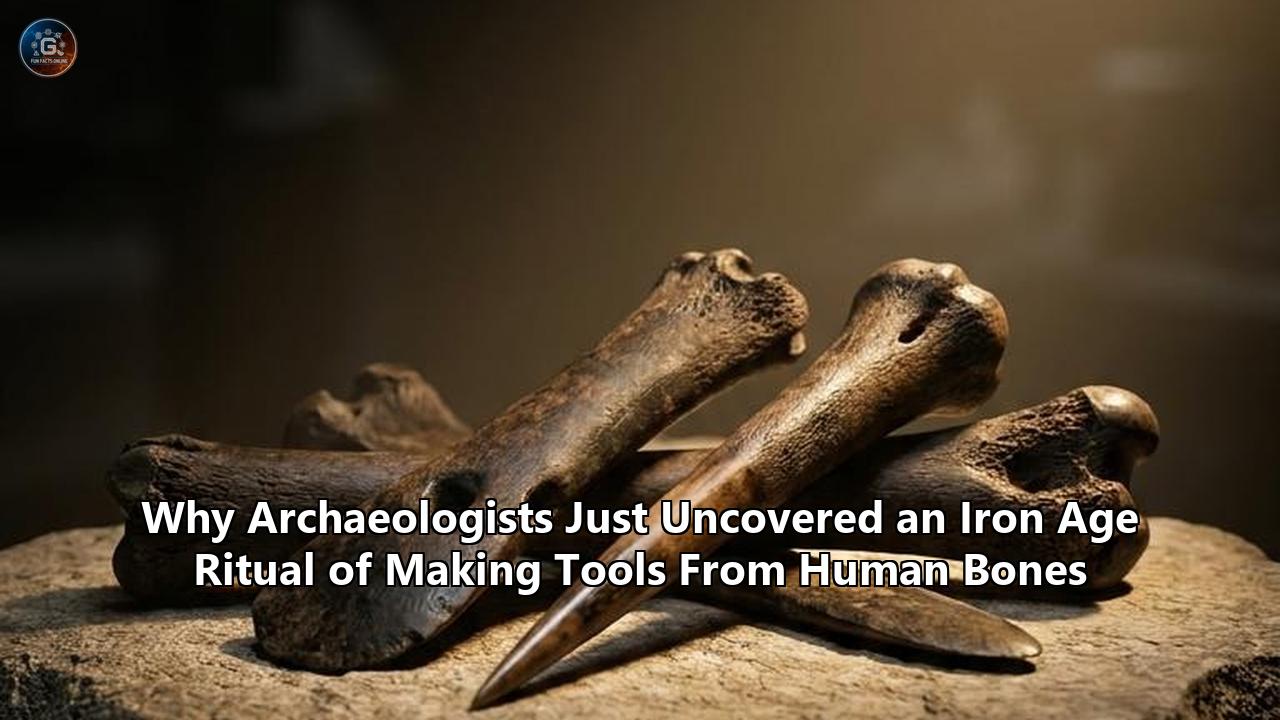
The remains of a woman, who died between 50 BCE and 70 CE, revealed that her brain had been systematically removed shortly after death. More strikingly, several of her long bones—including both humeri, an ulna, and a femur—had been fractured, carefully whittled, and tapered into sharp, polished points before being meticulously reassembled into their correct anatomical positions within her grave.
This discovery does more than merely shock modern sensibilities. It serves as a profound case study in prehistoric taphonomy, challenging long-held assumptions about the "invisible dead" of the British Iron Age. By dissecting the microscopic incisions, isotopic signatures, and genetic links of the Loch Borralie individuals, archaeologists have opened a window into a world where the boundaries between life, death, utility, and ritual were remarkably fluid.
Analyzing this discovery reveals a broader cultural pattern: the deliberate curation, modification, and deployment of Iron Age human bone tools. Far from a macabre eccentricity, the manipulation of the deceased was a sophisticated social technology used to navigate grief, cement ancestral authority, and negotiate community identity at the edge of the known world.
The Forensic Reconstruction of the Loch Borralie Cairn
To understand the broader phenomenon of prehistoric skeletal modification, one must first examine the forensic reality of the Loch Borralie find. The site, located in the alkaline-rich machair soils of Sutherland, was first exposed in 1998 by burrowing rabbits and subsequently excavated in 2000. For over two decades, the skeletal remains of the two individuals found within the low stone cairn—an adult female over the age of 30 (Individual 1) and a juvenile male (Individual 2)—were thought to have been damaged post-burial by scavenging rodents or dogs.
                       [ Loch Borralie Cairn ]
                                  |
         +------------------------+------------------------+
         |                                                 |
[ Individual 1: Adult Female ]                   [ Individual 2: Juvenile Male ]
 - Age: 30+                                       - Age: ~Teenager
 - Cause of Death: Blunt-force trauma             - Unmodified skeleton
 - Cranial: Basal fracture, endocranial cuts      - Maternal second cousin
 - Appendicular: Humeri, ulna, femur whittled      - Isotope: Inland origin (50 mi SE)
 - Reassembled in correct anatomical position
A multiyear re-evaluation by an international team of scientists led by Dr. Laura Castells Navarro of the University of York utilized advanced microscopic, endoscopic, and biomolecular analysis to rewrite this narrative. The researchers established that the modifications on Individual 1 were entirely anthropogenic.
The Mechanics of Brain Removal
Individual 1 suffered catastrophic paramortem trauma—a massive blunt-force impact that caused a severe fracture at the base of her skull. Whether this was the result of animal trampling, a fall, or human violence, it marked a sudden and brutal end to her life. What occurred next, however, was a highly structured, deliberate series of postmortem operations.
Using endoscopic lighting to peer inside the cranial vault, researchers discovered fine, parallel striations on the endocranial surface of the frontal bone. These incisions, made with a sharp iron tool, indicate that the practitioners carefully scraped the interior of the skull. Combined with the fracture at the skull base, which appears to have been mechanically widened, the evidence points to the deliberate extraction of the brain shortly after death.
Step 1: Paramortem Trauma / Death (Blunt-force impact)
       │
Step 2: Accessing the Cranial Vault (Widening of basal skull fracture)
       │
Step 3: Endocranial Scraping (Iron tool incisions on frontal bone interior)
       │
Step 4: Brain Extraction (Removal of soft tissue to halt rapid decay)
In the damp, cool climate of northern Scotland, soft tissue decomposes rapidly, driving the internal bacterial decay of the bone. By removing the brain—an organ exceptionally high in moisture and lipids—the processors halted the primary engine of putrefaction. This suggests a deliberate effort to preserve the head, perhaps for temporary display, ancestral curation, or as a prelude to further skeletal processing.
Whittling the Ancestral Frame
The treatment of the limbs was even more labor-intensive. The processors focused on four major long bones: both humeri (upper arms), the left ulna (forearm), and the right femur (thigh). Microscopic analysis revealed that these bones were intentionally fractured while still fresh—a state known as "green bone" fracturing, which produces clean, spiral cleavages rather than the jagged, crumbly breaks typical of dry, weathered bone.
Once split, the bone shafts were worked with precision:
- Shaping: The internal trabecular (spongy) bone and outer cortical layers were whittled down using sharp metal blades.
- Smoothing: The edges were ground and polished against abrasive stones, producing a beautifully smooth, tapered point.
- Anatomical Restoration: After these bones were transformed into sharp points, they were not carried away to be used in daily chores. Instead, they were returned to the cairn and placed back in their correct anatomical alignments relative to the rest of the skeleton.
This paradoxical act of modifying human bones into functional tool forms, only to immediately re-integrate them into a formally laid-out skeleton, challenges the simple division between utility and ritual. It suggests that the act of making Iron Age human bone tools was, in this context, an end in itself—a transformative rite where the physical body was literalized as a vessel of craftsmanship.
Case Study Comparison: The Hyper-Local Geography of Bone Craft
To understand if Loch Borralie represents an isolated anomaly or a localized manifestation of a wider British and European tradition, we must compare it to other known instances of human bone modification from the same epoch.
┌─────────────────────────────────────────────────────────────────────────────┐
│                       IRON AGE HUMAN BONE MODIFICATION                      │
├───────────────────────┬────────────────────────────┬────────────────────────┤
│ Site                  │ Skeletal Elements Used     │ Artifact Type / Function│
├───────────────────────┼────────────────────────────┼────────────────────────┤
│ Loch Borralie         │ Humeri, Ulna, Femur, Skull │ Whittled points /      │
│ (Sutherland, Scotland)│                            │ Anatomical replacement │
├───────────────────────┼────────────────────────────┼────────────────────────┤
│ Bar Hill              │ Parietal Skull Bone        │ Toothed comb /         │
│ (Cambridgeshire)      │                            │ Symbolic amulet        │
├───────────────────────┼────────────────────────────┼────────────────────────┤
│ Trumpington           │ Tibiae, Femora             │ Hide-working scrapers /│
│ (Cambridgeshire)      │                            │ Utilitarian tools      │
├───────────────────────┼────────────────────────────┼────────────────────────┤
│ Atlantic Scotland     │ Femur Heads                │ Spindle whorls /       │
│ (Various sites)       │                            │ Textile production     │
└───────────────────────┴────────────────────────────┴────────────────────────┘
The Cambridgeshire Skull Combs
In 2023, archaeologists analyzing material from the Bar Hill excavations near Cambridge identified the "Bar Hill Comb"—a prehistoric object carved from a human parietal bone. Dating to the British Iron Age (approx. 750 BCE–43 CE), this object was shaped like a weaving comb, featuring carved teeth and a small perforation for suspension.
       [ Human Parietal Bone ]
                  │
          (Carving & Shaping)
                  │
                  ▼
         [ Bar Hill Comb ]
         * Carved teeth (no wear grooves)
         * Perforated for suspension
         * Function: Symbolic amulet / Ancestral relic
Crucially, the Bar Hill Comb showed no wear grooves on its teeth, indicating it was never used to process textiles or groom hair. Instead, the teeth may have been carved to mimic the cranial sutures of the skull, emphasizing the biological origin of the medium.
Only two other such skull combs are known in Britain—found at Earith and Harston Mill—both within a 15-mile radius of Bar Hill. This highly concentrated distribution reveals what archaeologist Michael Marshall describes as a "hyper-local" tradition, wherein specific communities developed distinct, exclusive ways of processing and displaying the remains of their honored dead.
The Trumpington Hide Scrapers
In contrast to the symbolic, unworn combs of Bar Hill, excavations at Trumpington, also in Cambridgeshire, yielded Iron Age human bone tools designed for intensive manual labor. These tools, crafted from the shafts of human leg bones (tibiae and femora), exhibited heavy polish, micro-striations, and edge-rounding consistent with scraping animal hides.
Here, the bones of the dead were integrated directly into the domestic economy. The physical durability of human bone was exploited for its mechanical properties, yet the choice of human over animal bone (which was abundant) indicates that the labor of hide-working was itself imbued with spiritual or ancestral significance.
Spindle Whorls of Atlantic Scotland
Further north, in the Western and Northern Isles of Scotland, archaeologists have documented several late Iron Age spindle whorls—small, circular weights used in spinning thread—fashioned from the spherical heads of human femora.
These items, frequently found deposited under the thresholds or entranceways of stone roundhouses (brochs), were positioned to mark boundaries between the domestic interior and the wild outer world. The use of a ancestor’s femur head to spin wool, a foundational task of daily life, suggests that the dead were viewed as active, protective participants in the household economy.
Extracting the Anthropological Principles
What do these disparate practices—from the whittled limbs of Loch Borralie to the cranial combs of Cambridgeshire—teach us about the prehistoric mind? When we analyze these discoveries as a unified case study, several key sociological and philosophical principles emerge.
                  ┌─────────────────────────────────────┐
                  │      METAMORPHOSIS OF THE BODY      │
                  └──────────────────┬──────────────────┘
                                     │
         +───────────────────────────+───────────────────────────+
         │                                                       │
         ▼                                                       ▼
[ Principle 1: Relic Agency ]                           [ Principle 2: Materialization ]
 - Bone as an active agent                               - Translating social memory
 - Bridging the domestic and divine                      - Bone as a raw, tangible archive
 - Protection of household/community                     - Tactile connection to lineage
Principle 1: Relic Agency and the Rejection of Inertia
In modern Western societies, the corpse is generally treated as passive, inert, and subject to rapid containment, concealment, or chemical preservation. Once life departs, the body is legally and socially segregated from the world of the living.
For Iron Age communities, however, the human skeleton was not inert material. It was a source of active agency—what anthropologists call "relic power". The physical remains of the deceased did not mark the end of their social existence; rather, they marked a transition into a different class of personhood.
By carving a bone into a tool, the living did not desecrate the deceased; they consolidated their essence into an object that could be handled, curated, and utilized. A bone comb, a spindle whorl, or a whittled point became a physical anchor for the deceased’s enduring presence, allowing them to continue participating in the physical survival of their kin.
Principle 2: The Materialization of Ancestral Memory
In an oral society without written records, physical monuments and tactile relics are the primary mediums of historical preservation. Memory must be materialized to survive.
The Loch Borralie woman’s whittled bones represent a highly specialized form of this materialization. By transforming her limbs into tools and then re-depositing them within the stone cairn, her community created a permanent, physical archive of her death and subsequent transformation.
Anyone who entered the cairn or participated in her secondary burial rituals would have a direct, tactile connection to her lineage. The bone tools were not merely symbols; they were the literal, physical substance of the ancestor, reshaped by human hands to demonstrate control over death, decay, and time.
[ Ancestral Substance ] ──(Human Craftsmanship)──► [ Transformed Relic ] ──► [ Social Continuity ]Principle 3: Threshold and Boundary Control
The placement of modified human remains is rarely random. Throughout Iron Age Europe, human bone fragments—particularly cranial pieces and worked long bones—are frequently recovered from "liminal" spaces: ditch terminals, ramparts, postholes, and under the thresholds of houses.
The Scottish femur-head spindle whorls found under roundhouse entrances, and the placement of the Loch Borralie cairn near a coastal transit corridor, point to a belief that human bone possessed apotropaic qualities—the power to ward off evil and sanctify boundaries. The bones acted as spiritual guardians, physical barriers made from the very fabric of the ancestors to protect the living from physical and metaphysical threats.
Methodological Revolution: How Science Unlocks the Unseen
The re-evaluation of the Loch Borralie skeletons highlights a broader lesson for modern archaeological practice: the absolute necessity of integrating classical osteology with cutting-edge biomolecular and taphonomic techniques. The discoveries made in 2026 were only possible because of a multi-disciplinary toolkit that did not exist when the site was first excavated in 2000.
                     ┌───────────────────────────────────┐
                     │    MODERN ARCHAEOLOGICAL TOOLKIT  │
                     └─────────────────┬─────────────────┘
                                       │
       +───────────────────────────────+───────────────────────────────+
       │                               │                               │
       ▼                               ▼                               ▼
[ Ancient DNA (aDNA) ]      [ Strontium/Oxygen Isotopes ]    [ Micro-Taphononmy & CT ]
 - Identifies genetic sex    - Maps geographic biography     - Distinguishes tool marks
 - Reveals family pedigree   - Tracks prehistoric migration  - Explores internal cavities
 - Confirms second-cousins   - Proves 50-mile relocation     - Confirms brain extraction
1. High-Resolution Micro-Taphonomy and 3D Scanning
When the Loch Borralie bones were first analyzed in the early 2000s, the shallow scratches and fractured shafts were misidentified as animal gnawing or natural post-depositional weathering. 21st-century micro-taphonomy changed this.
By using high-magnification scanning electron microscopy (SEM) and 3D digital microscopes, researchers analyzed the precise geometry of the cut marks.
- Animal Gnawing: Typically leaves rounded, U-shaped grooves with parallel tooth-drag marks.
- Human Metal Tools: Leave sharp, V-shaped incisions with microscopic shoulder effect striations.
At Loch Borralie, the endocranial incisions and the shaved surfaces of the long bones exhibited the classic, crisp signatures of iron blades. Micro-CT scanning allowed the team to peer inside the bone structures without causing destructive damage, verifying that the internal spongy layers had been cleanly sliced away to form the tapered hollow points of the tools.
2. Ancient DNA (aDNA) and Familial Reconstruction
For generations, archaeologists could only guess at the social structures of the people buried in prehistoric cairns. The application of high-throughput paleogenomics to the Loch Borralie remains yielded startlingly precise data.
The DNA analysis confirmed that Individual 1 (the adult female) and Individual 2 (the juvenile male) were closely related. Specifically, their mitochondrial DNA and nuclear genome patterns revealed they were maternal second cousins.
This genetic link is crucial: it proves that the cairn was not a communal repository for a random assortment of dead, but a dedicated family monument. The highly elaborate, invasive processing of the woman’s body was performed by her immediate kin, transforming a private family tragedy into a shared, ancestral monument.
3. Strontium and Oxygen Isotope Biogeochemistry
While DNA tells us who these people were, isotope analysis tells us where they lived. By analyzing the ratios of strontium ($^{87}\text{Sr}/^{86}\text{Sr}$) and oxygen ($^{18}\text{O}/^{16}\text{O}$) isotopes preserved within the enamel of the individuals' teeth, scientists mapped their geographic life histories.
The chemical signatures in tooth enamel are locked in during childhood, reflecting the local geology and drinking water of the region where the person grew up.
Isotopic Profile (Loch Borralie Individuals)
┌───────────────────────────────────────────────────────────┐
│ Child Hood (Inland Highlands / 50 mi SE)                  │
│  - Geologic Sr/O Signature: High Radiogenic Strontium      │
├─────────────────────────────┬─────────────────────────────┤
│                             │ Migration                   │
│                             ▼                             │
│ Adulthood & Death (Loch Borralie Coast / Sutherland)      │
│  - Geologic Sr/O Signature: Maritime / Alkaline Machair   │
└───────────────────────────────────────────────────────────┘
The isotopic data for both the woman and the boy revealed that they did not grow up in the coastal machair of Loch Borralie. Instead, their signatures matched an inland, highland geology located approximately 50 miles to the southeast.
This finding provides empirical evidence of mobility. Prehistoric maritime communities along the northern coast of Scotland were not isolated, sedentary populations; they were dynamic, mobile groups that navigated inland valleys and sea lanes, carrying their cultural practices, family lineages, and unique mortuary traditions with them.
Dismantling the Myth of the "Invisible Dead"
For decades, one of the greatest paradoxes of British archaeology was the apparent "invisibility" of the Iron Age dead. While the preceding Bronze Age is defined by highly visible burial mounds (barrows), and the succeeding Romano-British period left extensive cemeteries, the centuries between 800 BCE and 43 CE yielded remarkably few human remains.
In many regions of Britain, the number of recovered skeletons represents only a tiny fraction of the estimated prehistoric population. This led to the widespread academic theory that the dominant funerary rite of the Iron Age was excarnation (the exposure of the corpse to the elements, allowing it to naturally deflesh and scatter, leaving no trace in the archaeological record).
                     [ Traditional View of Death ]
                                  │
                       (Excarnation / Exposure)
                                  │
                     [ Complete Dispersal / Loss ]
                                  │
                    (No physical traces remain)
The Loch Borralie case study, alongside a growing body of modified bone finds, offers a far more complex, multi-stage model of mortuary practice. Rather than a simple, binary choice between burial and exposure, Iron Age Britons practiced what can be termed secondary mortuary manipulation.
                      [ Multi-Stage Mortuary Model ]
                                    │
                         (Excarnation / Decay)
                                    │
                         (Exhumation / Retrieval)
                                    │
                    +───────────────┴───────────────+
                    │                               │
                    ▼                               ▼
         [ Skeletal Curation ]            [ Bone Tool Fashioning ]
          - Relic display                  - Combs, whorls, scrapers
          - Clan integration               - Threshold deposition
Under this model, the initial decomposition of the body was merely the first stage of a prolonged relationship with the deceased. After a period of exposure or temporary burial, the grave was reopened.
Selected bones—skulls, femora, humeri—were exhumed and retrieved. Some of these elements were curated as ancestral relics, some were carved into Iron Age human bone tools, and others were eventually re-interred in complex, structured arrangements.
The "invisible dead" were not simply thrown away or left to rot; their bones were actively circulating through the villages, roundhouses, and fields of the living. The rarity of complete skeletons is not a sign of indifference toward the dead, but rather an indicator of a highly active, hands-on, and protracted engagement with human remains.
The Broader Context of European Bone Curation
The practice of modifying human bone into functional and symbolic items is not unique to Scotland or Britain; it is a thread that runs through the broader tapestry of European prehistory.
The Amulets of Southern France and Bulgaria
During the late Bronze Age and early Iron Age in southern France and parts of Bulgaria, archaeologists have documented a widespread tradition of cutting circular discs from human skulls. These discs, known as cranial amulets or rondelles, were perforated and worn as necklaces.
Many of these amulets exhibit smooth, healed edges, indicating that the bone was harvested from individuals who had survived trepanation (the surgical drilling of the skull). The bone itself was believed to carry the survival power, resilience, or spiritual authority of the trepanned individual, serving as a powerful talisman for the living.
The Pit Deposits of Danebury and Suddern Farm
In central-southern England, the famous hillforts of Danebury and Suddern Farm yielded thousands of disarticulated human bone fragments from deep, disused grain storage pits. Rather than formal graves, these pits contained isolated skulls, detached limbs, and shattered pelvic bones, often deposited alongside animal carcass portions, fine pottery, and iron tools.
                 [ Danebury Hillfort Grain Pit ]
  ┌───────────────────────────────────────────────────────────┐
  │ Pit Opening (Liminal boundary to the underworld)         │
  ├───────────────────────────────────────────────────────────┤
  │ Layer 1: Agricultural refuse (Charred grain, ash)         │
  ├───────────────────────────────────────────────────────────┤
  │ Layer 2: Disarticulated human skull (No jaw)              │
  ├───────────────────────────────────────────────────────────┤
  │ Layer 3: Whole horse skeleton & iron agricultural tool   │
  └───────────────────────────────────────────────────────────┘
For decades, these pit deposits were interpreted as the remains of sacrificed enemies, victims of warfare, or outcasts denied proper burial. However, micro-taphonimic analysis by researchers like Dr. Richard Madgwick has revealed that many of these bones had been curated, handled, and kept above ground for months—or even years—before being deposited in the pits.
The grain storage pits, which represented the community's agricultural wealth and survival, were sanctified by the placement of ancestral bones. The curated remains of the dead were used to ensure the fertility of the soil and the security of the next harvest, linking the biological cycle of human life directly to the agricultural cycle of the earth.
Archaeological Ethics and the Reinterpretation of Legacy Collections
The discovery that the Loch Borralie woman’s bones were whittled into tools holds a vital institutional lesson for modern archaeology: the answers we seek are often already in our museums, waiting for the right questions—and the right technology—to find them.
┌─────────────────────────────────────────────────────────────────────────────┐
│                    THE ARCHAEOLOGICAL RE-EVALUATION CYCLE                   │
├───────────────────────┬────────────────────────────┬────────────────────────┤
│ Era                   │ Analytical Focus           │ Interpretative Paradigm│
├───────────────────────┼────────────────────────────┼────────────────────────┤
│ Initial Excavation    │ Gross anatomy, site        │ Macabre outlier,       │
│ (e.g., 2000)          │ stratigraphy, basic catalog│ scavenger damage       │
├───────────────────────┼────────────────────────────┼────────────────────────┤
│ First-Wave Revision   │ Radiocarbon dating, basic  │ Normative burial typ-  │
│ (e.g., 2010s)         │ osteological profiling     │ ologies, excarnation   │
├───────────────────────┼────────────────────────────┼────────────────────────┤
│ Modern Biomolecular   │ aDNA, isotopic profiling,  │ Secondary manipulation,│
│ Re-evaluation (2026)  │ micro-taphonomy, CT scans  │ relational biographies │
└───────────────────────┴────────────────────────────┴────────────────────────┘
The skeletons of Loch Borralie were excavated over twenty-five years ago. For two decades, they sat in storage, their unique modifications dismissed as the work of rats and dogs.
This misinterpretation was not due to negligence, but to the limitations of the interpretive paradigms of the time. Skeletons were expected to fit neat, normative categories: they were either "formal burials" or "discarded refuse."
By returning to these legacy collections with a "taphonomic biography" approach—treating each bone as a dynamic, long-term canvas that records every interaction from life, through death, decay, modification, and curation—archaeologists are uncovering a lost dimension of prehistory.
This raises profound ethical considerations:
- Respectful Curation: How do we ethically curate human remains that were themselves curated as objects by their contemporaries?
- Destructive Analysis: How do we balance the desire for scientific data (which requires drilling or grinding bone for DNA and isotopes) with the preservation of unique, human-worked bone surfaces?
- Reconnection: How do we navigate the biological relationship between ancient individuals and modern descendant communities, particularly when dealing with highly invasive postmortem modifications?
What to Watch: The Next Frontiers in Prehistoric Osteo-Archaeology
As the implications of the Loch Borralie discovery ripple through the global archaeological community, several key research avenues and upcoming milestones will shape our understanding of Iron Age human bone tools and prehistoric mortuary rituals:
- Re-evaluating Coastal Cairn Burials: Archaeologists are launching targeted re-examinations of other legacy skeletons excavated from the coastal machair sand dunes of northern Scotland and the Western Isles. Because these alkaline environments preserve bone exceptionally well, they represent the most promising archives for finding further evidence of postmortem skeletal modification.
- Advanced Residue Analysis on Bone Tools: Future studies will apply organic residue analysis (such as gas chromatography-mass spectrometry) to the tips of whittled bone tools like those from Loch Borralie. This could determine if these points were ever used to process specific materials—such as animal fats, plant fibers, or toxic substances—before they were returned to the grave.
- A Map of Prehistoric Brain Removal: Researchers are scanning Iron Age skulls across Atlantic Europe to see if the Loch Borralie woman's endocranial cut marks represent a widespread, undetected mortuary practice or a highly isolated ritual. If other skulls exhibit similar subtle, internal scrape marks, it would confirm that brain extraction was a standard component of prehistoric preservation techniques.
- Refining the Chronology of Mobile Maritime Networks: The integration of high-resolution radiocarbon dating with strontium isotope tracking will allow scientists to build precise timelines of how coastal clans moved along the maritime superhighways of the North Sea and the Atlantic. This will help clarify whether the migration of people like the Loch Borralie cousins was driven by trade, climate pressure, or the expanding shadow of the Roman Empire.
The whittled limbs and hollowed skull of the Loch Borralie woman force us to abandon simplistic, modern dichotomies of life and death, tool and body, ritual and utility. In the Iron Age, a tool was not always an inanimate object of convenience; sometimes, it was an ancestor, reshaped by hand to guide, protect, and labor alongside her descendants forever.
Reference:
- https://gizmodo.com/in-iron-age-scotland-people-removed-the-brains-of-the-dead-and-sharpened-their-bones-2000770229
- https://www.livescience.com/archaeology/2-000-years-ago-in-scotland-people-removed-a-corpses-brain-and-fashioned-the-arm-bones-into-tools
- https://www.ancient-origins.net/news-history-archaeology/iron-age-burial-scotland-00102859
- https://www.york.ac.uk/news-and-events/news/2026/research/iron-age-brain-removal-bone-tools/
- https://www.youtube.com/watch?v=NnSFnlwNeO8
- https://mola-newsroom.prgloo.com/news/ancient-comb-carved-from-human-skull-reveals-iron-age-practice-unique-to-cambridgeshire
- https://www.ctvnews.ca/lifestyle/article/burial-rituals-involving-removing-the-brain-sharpening-bones-provide-clues-to-iron-age-connections/
- https://the-past.com/news/iron-age-comb-made-from-human-skull-bone-among-a14-finds/
- https://www.smithsonianmag.com/smart-news/this-womans-brains-were-scooped-out-and-her-bones-were-broken-and-whittled-in-scotland-2000-years-ago-180988935/
- https://www.cardiff.ac.uk/news/view/212172-macabre-variety-of-iron-age-burial-practices
- https://en.wikipedia.org/wiki/Bone_tool
- https://allthatsinteresting.com/bar-hill-comb
- https://www.academia.edu/31644608/The_Useful_Dead_Bodies_as_Objects_in_Iron_Age_and_Norse_Atlantic_Scotland
- https://researchframeworks.org/syrf/iron-age-and-romano-british/
- https://www.popsci.com/science/brain-removal-iron-age-burial-scotland/