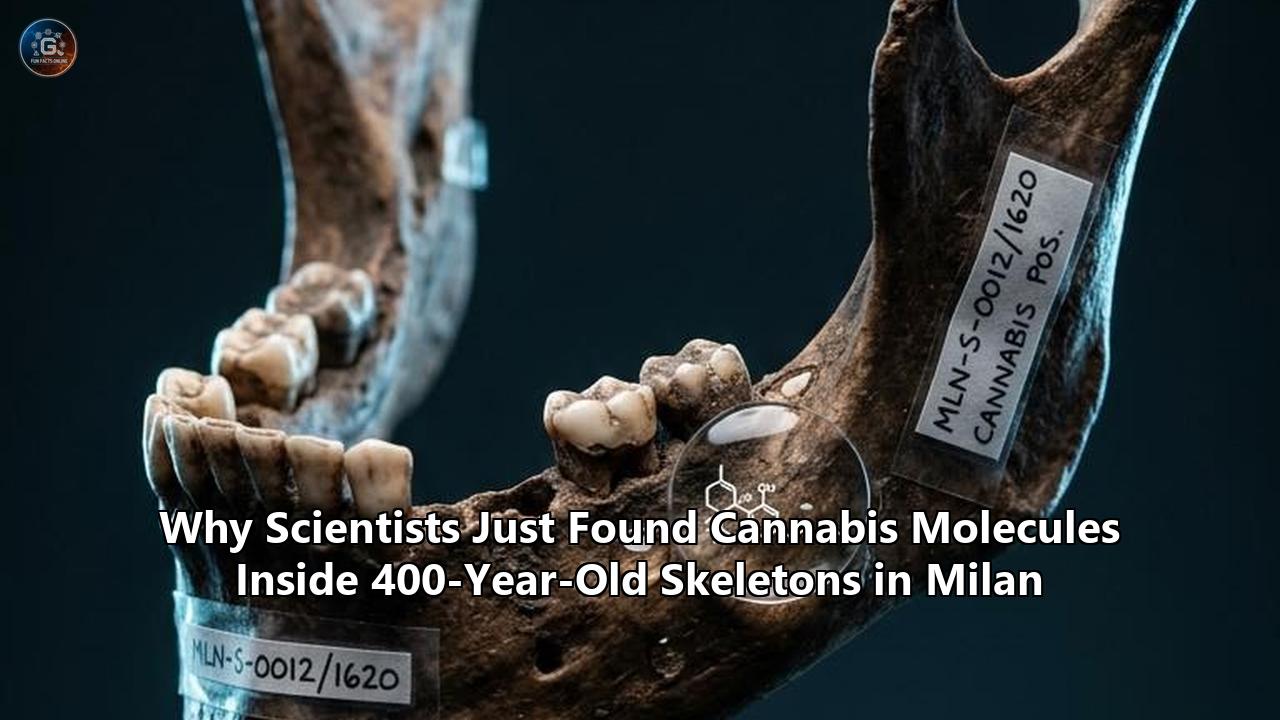
In late 2023, a team of forensic toxicologists and anthropologists from the University of Milan published a paper in the Journal of Archaeological Science that quietly rewrote the history of drug consumption in Europe. Led by biologist and doctoral student Gaia Giordano and archaeotoxicologist Domenico Di Candia, researchers announced they had unearthed the direct chemical signatures of cannabis inside the femur bones of two 400-year-old skeletons. These remains, recovered from the crypt of Milan’s historic Ca’ Granda hospital, date back to the 17th century—a time when the city was a congested, disease-ridden imperial outpost under Spanish rule.
The discovery of cannabis in ancient skeletons marks the first physical, biomolecular evidence of cannabis use in the Modern Age in Europe. While historians have long combed through ancient texts, medieval recipe books, and early modern botanical guides to piece together how humans interacted with psychoactive plants, this finding bypasses the biases and omissions of written history. It places the raw, undeniable proof of drug consumption directly inside the biological framework of the people who lived it.
The implications of this discovery ripple far beyond the borders of Lombardy. By blending the precision of modern forensic toxicology with the historical inquiry of archaeology, the Milanese research team has opened a window into the daily habits, coping mechanisms, and unspoken defiance of the early modern urban poor. To fully appreciate why this matters, one must examine not only the scientific feat of extracting volatile organic compounds from centuries-old bone matrix but also the social, political, and medical realities of 17th-century Milan.
The Crypt of Ca’ Granda: An Unprecedented Biological Archive
To understand how this discovery was made, one must first understand the unique setting of the excavation. The skeletons were recovered from the Ca’ Granda crypt, located directly beneath the Church of the Annunciata. This church was historically annexed to the Ospedale Maggiore (commonly known as the Ca’ Granda, meaning "the Great House"), which was founded in 1456 by Francesco Sforza, the Duke of Milan, and quickly grew to become one of the most innovative and prominent hospitals in Europe.
                     [Ospedale Maggiore / Ca' Granda]
                         (Main Free Hospital, Est. 1456)
                                      |
                                      v
                     [Church of the Blessed Annunciata]
                                      |
                                      v
                           [Ca' Granda Crypt]
                     (Interment of 10,000+ Poor Patients)
                                      |
                     +----------------+----------------+
                     |                                 |
           [Individual 1: Femur]             [Individual 2: Femur]
          - Female, ~50 Years Old           - Male, 15-18 Years Old
          - Post-Mortem: THC & CBD          - Post-Mortem: THC & CBD
Unlike some of Europe’s grand churches, which served as resting places for the wealthy aristocracy, the crypt of Ca’ Granda was the final resting place for the city’s working-class poor, indigent patients, and those who died within the hospital’s wards. It is estimated that the crypt contains the remains of more than 10,000 individuals who died between the 15th and 17th centuries. Because the hospital treated anyone who walked through its doors free of charge, the crypt provides a representative cross-section of Milan’s lower socio-economic classes during one of the most turbulent periods in the city’s history.
The research team analyzed femur bone samples from nine individuals who were laid to rest in this crypt between 1638 and 1697. This window of time is crucial: it captures a population that had survived—or was born in the immediate aftermath of—the devastating Great Plague of Milan (1629–1631). Through radiocarbon dating and stratigraphic analysis, the researchers confirmed the age of the skeletons, ensuring that the chemical signatures found within them belonged to the 17th century.
When the toxicological analyses were completed, two of the nine samples—representing roughly 22% of the test group—showed clear, undeniable concentrations of:
- Delta-9-tetrahydrocannabinol (THC), the primary psychoactive compound responsible for the euphoric "high" associated with cannabis.
- Cannabidiol (CBD), a non-psychoactive cannabinoid known for its therapeutic, anti-inflammatory, and analgesic properties.
The presence of both THC and CBD in these bones confirmed that these individuals had been exposed to the whole cannabis plant, rather than a purified extract or an isolated industrial compound.
The Science of Molecular Preservation: How Cannabinoids Endure in Dry Bones
Historically, the search for cannabis in ancient skeletons was considered a fool's errand. While hair, nails, and mummified soft tissues are known to retain traces of consumed substances, they degrade rapidly in typical burial conditions. In contrast, bone tissue is incredibly durable. However, because bones are highly mineralized, extracting organic, lipid-soluble molecules from them centuries after an individual’s death requires advanced biochemical technology.
[Ingestion/Inhalation of Cannabis] ---> [Bloodstream Absorption]
                                               |
                                               v
[Lipophilic Cannabinoids (THC/CBD)] ---> [Infiltration of Vascularized Bone Matrix]
                                               |
                                               v
[Osteogenesis / Remodeling] ----------> [Deposition in Osteoclast/Osteoblast Layers]
                                               |
                                               v
[400 Years of Decay (Crypt)] ---------> [Preservation in Mineralized Calcium Matrix]
                                               |
                                               v
[Modern Forensic Extraction] ---------> [Liquid Chromatography-Tandem Mass Spec]
To isolate these compounds, the researchers employed a methodology refined in modern forensic toxicology, where bones are sometimes analyzed to determine drug exposure in highly decomposed human remains.
- Decontamination: The bone fragments were carefully cleaned of external dirt, soil, and microbial contaminants that might have accumulated over 400 years in the crypt. This step was vital to prove that the cannabis molecules were embedded within the internal structure of the bone, rather than being the result of external contamination from the surrounding soil or modern handling.
- Pulverization: The outer layers of the bone were removed, and the remaining dense cortical bone of the femur was ground into an ultra-fine powder using sterile laboratory equipment.
- Acid Digestion and Purification: The bone powder was subjected to a chemical digestion process, breaking down the mineralized calcium phosphate (hydroxyapatite) matrix to release the organic molecules trapped within. The resulting liquid was purified using solid-phase extraction techniques to isolate the target cannabinoids.
- Mass Spectrometry Analysis: The purified liquid was analyzed using a mass spectrometer, an instrument that measures the mass-to-charge ratio of molecules to identify their exact chemical structures. By comparing the results to modern chemical standards, the team successfully identified the unique molecular footprints of THC and CBD.
The biology behind this preservation is centered on the lipophilic, or fat-soluble, nature of cannabinoids. When cannabis is ingested or inhaled, THC and CBD enter the bloodstream and are distributed throughout the body’s tissues. Because bone is a living, highly vascularized tissue that undergoes constant remodeling, these lipophilic molecules migrate into the bone marrow and become trapped within the newly forming mineralized layers of the bone matrix.
Over time, as the organic components of the body decay, the dense mineral matrix of the bone acts as a microscopic time capsule. It shields these lipid-soluble compounds from water, oxygen, and microbial enzymes that would otherwise break them down. In the stable, anaerobic, and climate-protected environment of the Ca’ Granda crypt, these molecules remained preserved for four centuries.
Deciphering the Demographics: Gender, Age, and Social Class
The two individuals whose bones yielded positive results for cannabis represent two completely different demographic groups:
| Skeletons Tested | Positive Identifications | Estimated Age | Biological Sex | Key Skeletal Pathology |
|---|---|---|---|---|
| 9 Femur Samples | 2 Skeletons (22%) | 1) ~50 Years Old 2) 15–18 Years Old | 1) Female 2) Male | Osteoarthritis, porotic lesions, rickets, bone bending, and marked entheseal changes |
The presence of cannabis across such distinct biological profiles suggests that its consumption was not a localized habit restricted to a specific subculture or demographic. Instead, it suggests a substance that was integrated into the broader fabric of daily life for Milan’s lower classes.
The osteological profiles of these skeletons provide a stark look at the physical toll of 17th-century life. Anthropological examinations of the remains in the Ca' Granda crypt revealed high rates of paleopathological indicators:
- Osteoarthritis: Chronic joint degradation, particularly in the spine and lower limbs, pointing to a lifetime of intense, repetitive manual labor.
- Porotic Lesions: Pit-like formations on the skull and orbital bones, which are classic indicators of chronic nutritional deficiencies, such as iron-deficiency anemia, scurvy, or recurring childhood infections.
- Rickets and Bone Bending: Visible deformities in the long bones (like the tibia and femur) that suggest severe Vitamin D deficiencies during childhood, a common issue in crowded, dark urban slums where children received little direct sunlight.
- Entheseal Changes: Modifications at the sites where muscles and tendons attach to the bone, indicating prolonged, strenuous physical exertion over many years.
For the 50-year-old woman, whose joints likely ached from decades of hard labor, and the teenage boy, who was entering adulthood in a city where physical survival was a daily struggle, cannabis may have represented one of the few available tools to cope with chronic physical suffering.
The Medical Record Discrepancy: A Case for Recreational Use
One of the most compelling aspects of the Milan study is the detective work the researchers performed to determine how and why these individuals consumed cannabis. Did they receive it as a prescription from the pioneering doctors of Ospedale Maggiore, or were they obtaining it through illicit, informal networks?
To answer this, the research team turned to the hospital’s fastidiously maintained historical archives. The Ospedale Maggiore was not a primitive medieval clinic; it was a leading, highly organized bureaucratic institution. The hospital’s administrative logs, medical formulas, and purchase records from the 17th century have survived in remarkably pristine condition. These archives list every single plant, chemical, oil, and mineral that was purchased, prepared, and administered to patients in the hospital’s wards.
                 [Historical Archive Analysis (1600s)]
                                  |
         +------------------------+------------------------+
         |                                                 |
[Ospedale Maggiore Logs]                       [Ospedale Maggiore Logs]
   - Opium / Poppy: PRESENT                       - Cannabis / Hemp: ABSENT
   - Used for: Pain, Sleep, Surgery               - Zero Medical Listings
         |                                                 |
         v                                                 v
[Confirmed Medical Use]                        [Inferred Informal Use]
(Traces found in cranial bones)                (Traces found in femur bones)
                                               - Recreational Consumption
                                               - Folk Healing / Herbology
                                               - Occupational Exposure
When the researchers cross-referenced their toxicological findings with the hospital’s medical logs, they found a striking discrepancy:
- Opium (Papaver somniferum): The hospital records extensively document the acquisition and formulation of opium. It was used as a primary sedative, anesthetic, and pain reliever, often administered in the form of laudanum or compound syrups. In a previous study conducted on cranial bones and preserved brain tissue from the same crypt, Dr. Giordano and Dr. Di Candia successfully detected opium molecules, directly matching the hospital’s official prescribing practices.
- Cannabis (Cannabis sativa): Cannabis is entirely absent from the hospital's official pharmacopeia during the 1600s. There are no recipes for cannabis-infused salves, no records of hemp flowers being purchased for medical preparations, and no mentions of the plant in the clinical notes of the hospital's physicians.
Because the Ospedale Maggiore did not officially stock or prescribe cannabis, the researchers had to look for alternative explanations for how THC and CBD ended up in the bones of its patients. They proposed three primary hypotheses:
Hypothesis 1: Recreational Consumption
In the 17th century, cannabis was likely consumed by infusing the flowering tops of the plant into hot water to make teas, or by baking it into foodstuffs like bread, cakes, and porridge. Without the modern option of mass-manufactured vaporizers or commercial cigarettes, early modern users relied on oral ingestion to experience the psychoactive and relaxing effects of the plant. For the poor, eating or drinking cannabis-infused preparations would have been an easy, affordable way to "relax, zone out," and find temporary relief from their grim surroundings.
Hypothesis 2: Self-Medication and Folk Healing
While the hospital’s university-trained physicians did not prescribe cannabis, the urban poor did not rely solely on official medicine. Traditional folk medicine, herbalism, and local healers (often referred to as "wise women," herbalists, or charlatans) operated widely in the shadows of the city. Cannabis had been known for centuries in European folk lore as a powerful remedy for birthing pains, gout, toothaches, joint pain, and digestive distress. The individuals in the crypt may have purchased inexpensive dried hemp flowers from local markets or gathered them wild to brew home remedies for their ailments.
Hypothesis 3: Occupational Exposure
Hemp was a massive industrial crop in 17th-century northern Italy. Workers who spent their days processing raw hemp—retting the stalks, beating the fibers, and spinning them into coarse threads for textiles, sails, and ropes—would have been constantly exposed to fine hemp dust, pollen, and plant resins. It is theoretically possible that chronic inhalation of industrial hemp dust containing high levels of cannabinoids could result in the accumulation of THC and CBD in bone tissue over several years. However, the presence of psychoactive levels of THC makes recreational ingestion or intentional self-medication the more likely source of such concentrated skeletal deposits.
Life Under the Spanish Crown: Pain, Plague, and the Search for Relief
To understand why the common people of Milan might have turned to cannabis, it is necessary to step back into the mid-to-late 1600s, an era when Lombardy was a territory of the global Spanish Empire. Far from being a romanticized golden age, the 17th century was a period of profound misery, economic decline, and physical suffering for the Italian peninsula.
                     [17th-Century Milan: A City in Crisis]
                                       |
         +-----------------------------+-----------------------------+
         |                             |                             |
 [The Great Plague]            [Imperial Taxation]           [Famines & Shortages]
 - 1629-1631 Outbreak           - Spanish War Funding         - Constant Food Crises
 - 50% Population Loss          - Economic Stagnation         - Widespread Malnutrition
         |                             |                             |
         +-----------------------------+-----------------------------+
                                       |
                                       v
                     [Overwhelming Physical Suffering]
                  (Chronic Labor Injuries, Poor Hygiene)
                                       |
                                       v
                     [Search for Accessible Relief]
                 (Cheap Folk Remedies: Cannabis / Hemp)
During this period, Milan was a heavily fortified military hub, taxed to the brink of collapse to fund Spain’s endless imperial wars across Europe. The economy was stagnant, and inflation was rampant. The physical infrastructure of the city was characterized by crowded, dark, poorly ventilated tenements, open sewers, and narrow streets where hygiene was virtually nonexistent.
But the defining trauma of this century was the Great Plague of Milan (1629–1631). Propelled by the movement of German and French soldiers fighting in the War of the Mantuan Succession, the bubonic plague swept through Lombardy with terrifying speed. It is estimated that out of Milan’s pre-plague population of roughly 130,000 people, between 60,000 and 80,000 died in less than two years. The city’s social, economic, and moral fabric was completely shattered.
The individuals buried in the Ca’ Granda crypt between 1638 and 1697 lived in the long, dark shadow of this catastrophe. Many of them would have lost entire families to the plague during their youth, and they lived in a city that was perpetually struggling to rebuild its labor force, clear its debts, and maintain basic order. Food shortages and famines were frequent, leading to the skeletal evidence of rickets and severe malnutrition noted by anthropologists.
For a day laborer earning a meager wage in a damp workshop, or a middle-aged woman struggling with chronic joint inflammation, the realities of life were harsh, cold, and painful. Professional medical treatments, such as physicians' consultations or pharmaceutical preparations like refined opium, were expensive and often out of reach for those who did not qualify for free hospital care. In this context of persistent physical and psychological trauma, a plant that grew easily in backyards, fields, and along roadsides would have been an invaluable resource. Cannabis provided a cheap, effective, and self-managed way to dull physical pain, ease anxiety, and escape the crushing weight of everyday life.
The Papal Prohibition vs. The Global Hemp Empire
The discovery of cannabis in the bones of these early modern citizens also highlights a massive historical paradox: the tension between official religious law and the realities of the global mercantilist economy.
               [17th-Century Cannabis Paradox]
                              |
       +----------------------+----------------------+
       |                                             |
[Religious Prohibition]                     [Industrial Necessity]
 - Pope Innocent VIII (1484)                 - Cornerstone of Global Shipping
 - "Unholy Sacrament"                        - Rope, Sails, Rigging, Paper
 - Linked to Witchcraft/Heresy               - Ubiquitous Crops Across Italy
       |                                             |
       +----------------------+----------------------+
                              |
                              v
             [Skeletal Reality in Milan's Crypt]
           - Peasants and laborers used the plant
           - Bypassed religious/state bans
           - Exploited agricultural ubiquity
For centuries, the Catholic Church—which held absolute spiritual and cultural authority in Spanish-ruled Milan—had maintained a hostile stance toward the psychoactive use of herbs. In 1484, Pope Innocent VIII issued the papal bull Summis desiderantes affectibus, which targeted witchcraft, heresy, and the use of "unholy sacraments". The Church’s concern was both theological and social: traditional herbal remedies, hallucinogenic plants, and mind-altering substances were frequently used by pagan healers, mid-wives, and folk practitioners who operated outside the official, patriarchal hierarchy of the Church.
During the height of the Counter-Reformation and the Inquisition in the 16th and 17th centuries, the use of psychoactive herbs for non-sanctioned purposes was dangerous. It could easily result in accusations of witchcraft, sorcery, or pacts with the devil. To consume cannabis to alter one's state of mind was to risk severe spiritual and legal consequences if caught.
Yet, while the Church banned the consumption of cannabis, the economic machinery of early modern empires depended entirely on the cultivation of the exact same plant. Cannabis sativa, in its industrial hemp form, was one of the most vital strategic resources of the era:
- Maritime Infrastructure: The age of exploration, colonization, and global trade was powered by wooden sailing ships. A single ship of the line required miles of heavy hemp rope for rigging and thousands of square yards of tough hemp canvas for sails. Italy, with its rich soils and favorable climate, was one of the premier producers of high-quality hemp in Europe.
- Paper and Communication: Hemp fiber was widely used to manufacture paper, which was essential for the growing bureaucracies, legal systems, and printing presses of the early modern state.
- Textiles and Domestic Goods: Coarse hemp cloth was woven to make durable clothing, sacks, bags, mattress stuffing, and footwear for the working classes.
- Agriculture: Hemp seeds were a common, nutrient-rich feed for livestock and poultry, and they were pressed to produce industrial oils used for lighting and soap making.
Because industrial hemp was grown in vast quantities across the fields of Lombardy, the plant was everywhere. While the industrial varieties of hemp were cultivated primarily for fiber and had lower levels of THC than modern medicinal strains, they still possessed psychoactive potential, particularly in their flowering tops.
For the average peasant or laborer, the line between industrial hemp and psychoactive cannabis was practically nonexistent. The absolute ubiquity of the crop meant that despite the decrees of Popes and the watchful eyes of the Inquisition, anyone who wanted to harvest, dry, and consume the flowering tops of the plant could do so with minimal effort and cost. The bones in the Ca’ Granda crypt prove that for the common people of Milan, practical utility and the need for relief easily triumphed over religious dogma.
Systematic Impact Analysis: Who and What Changes?
The confirmation of cannabis consumption in these historical remains is not just an intriguing historical footnote; it is a discovery with profound, systemic implications across multiple fields of study.
1. Archaeology and Bioarchaeology: The Body as an Unbiased Archive
Traditionally, archaeology has relied heavily on material culture—such as ceramic vessels, smoking pipes, seeds, and written texts—to reconstruct the diets, drug habits, and lifestyles of past societies. However, these material records are often incomplete or biased:
- Written records were almost exclusively penned by literate elites, church officials, or state administrators. They reflect what those in power chose to document, ban, or promote, while ignoring the lives and habits of the illiterate poor.
- Material artifacts like pipes can tell us that smoking took place, but they do not prove who used them, how often they were used, or whether the active compounds were actually absorbed and metabolized by the body.
The discovery of cannabis molecules in bone matrix forces a shift in archaeological methodology. It demonstrates that the human skeleton is a highly durable, objective biochemical ledger. By turning to toxicological archaeology (or "archaeotoxicology"), researchers can bypass written propaganda and elite biases to discover exactly what everyday people were putting into their bodies.
2. Forensic Science and Cold Case Investigations
The techniques used by Dr. Giordano, Dr. Di Candia, and their colleagues have immediate, practical applications in modern forensic science. In modern criminal investigations, toxicological analysis is typically performed on blood, urine, or hair samples. However, in cases involving highly decomposed, skeletonized, or ancient remains, these soft tissues are unavailable.
By validating precise, highly sensitive extraction protocols that can isolate and identify trace amounts of delicate organic molecules from bones that have spent centuries in damp crypts, this research provides modern forensic investigators with powerful new tools. It proves that drug exposure can be successfully mapped in human remains even after extreme post-mortem intervals, helping modern forensic teams reconstruct the final weeks, months, or years of a victim's life in cold cases or historical human rights investigations.
3. Historical Sociology and the Narrative of Defiance
This discovery challenges the long-held sociological assumption that early modern European societies were completely obedient, highly homogenized religious monocultures. It reveals a quiet, pervasive undercurrent of daily defiance among the working classes. Despite severe legal penalties, spiritual condemnation, and social stigma, the poor maintained their own autonomous networks of self-medication, leisure, and folk healing. It paints a much more complex, human, and relatable picture of our ancestors—not as flat historical figures, but as real people who got tired, felt pain, made choices, and sought relief in much the same way we do.
4. Drug Policy and Cultural Narratives
Modern political debates surrounding the legalization, medicalization, and regulation of cannabis are frequently built on historical narratives. Opponents of cannabis legalization often frame recreational consumption as a modern social pathology, a countercultural invention of the 20th century, or an imported vice.
The presence of cannabis in ancient skeletons completely upends this narrative. It establishes that cannabis has a deep, continuous, and indigenous history of recreational and therapeutic use in the very heart of Western Europe. By demonstrating that ordinary European citizens were consuming cannabis for relaxation and pain relief 400 years ago—long before the drug wars of the modern era—this science provides a deeper, historically grounded perspective to modern legislative and cultural discussions.
Short-Term Consequences: Shaking Up the Scientific Community
In the immediate wake of this study’s publication, several immediate shifts occurred within the fields of history, archaeology, and forensic toxicology:
- The Mobilization of Bone Archives: Across Europe, museums, universities, and municipal crypts house millions of skeletal remains from different historical eras. The success of the Milanese lab has inspired researchers across the continent to look at their own osteological collections with fresh eyes. Laboratories in the UK, France, Germany, and Spain are currently planning similar toxicological screenings on bones from medieval, Roman, and prehistoric populations to see if other psychoactive plants can be detected.
- The Demise of "Archive Exclusivity": Historians are increasingly recognizing that the written word can no longer be treated as the absolute authority on past human behaviors. There is a growing movement to integrate biomolecular data directly into historical and sociological studies of early modern Europe.
- A Re-examination of Early Modern Slang and Court Records: Historians of medicine and law are embarking on deep dives into local court records, Inquisition trial transcripts, and merchant ledgers from the 16th and 17th centuries. They are actively searching for coded language, slang, or overlooked descriptions of herb-induced behaviors, local plant trades, or "heretical" healing practices that may have referred to cannabis consumption.
- Methodological Standardization: Laboratories worldwide are working to replicate and standardize the extraction protocols developed by LABANOF (Laboratory of Forensic Anthropology and Odontology) in Milan. This will ensure that bone toxicology results from different excavations can be reliably compared, minimizing the risk of false positives or destructive testing of rare human remains.
Long-Term Consequences: Redefining Our Understanding of Human-Plant Relationships
Looking further down the road, this discovery is set to leave a lasting legacy on science, law, and culture over the coming decades.
                  [Long-Term Structural Impacts]
                                |
       +------------------------+------------------------+
       |                                                 |
[Deep-Time Toxicological Atlas]                 [Legal & Cultural Precedents]
 - Systematic testing across eras                - Establishes ancient "traditional use"
 - Mapping human drug consumption                - Challenges "imported vice" narrative
 - Direct physical timeline of use               - Strengthens local heritage claims
       |                                                 |
       +------------------------+------------------------+
                                |
                                v
               [Standardized Archaeological Practice]
             - Non-destructive toxicological testing
             - Bones treated as biochemical databases
The Creation of a "Deep-Time Toxicological Atlas"
As bone toxicological testing becomes a standard practice in archaeology, scientists will eventually construct a comprehensive, global timeline of human substance use. By mapping the presence of cannabinoids, opiates, nicotine, cocaine, alcohol, and various hallucinogenic alkaloids across different geographies and epochs, we will finally have an objective, physical record of how humanity’s relationship with mind-altering plants evolved. This will allow researchers to trace ancient trade routes, migration patterns, and cultural exchanges based on the chemical markers preserved within the bones of the travelers themselves.
Legal Definitions of "Traditional Use" and Cultural Heritage
In international drug policy and agricultural law, the concept of "traditional use" plays a significant role in determining how plants are regulated, protected, or commercialized. If a country or community can prove a long, continuous, and culturally integrated history of using a specific botanical substance, it can influence international treaties, patent laws, and trade regulations.
By providing hard, biomolecular evidence that cannabis was consumed by the general population in Europe during the 17th century, this research could strengthen legal arguments for the cultural heritage status of cannabis and hemp products in European regions. It could also protect traditional local farming practices and landraces from corporate patenting by proving centuries of domestic cultivation and use.
Transforming Museum Ethics and Skeletal Conservation
The realization that human bones contain incredibly delicate organic molecules that can survive for centuries will fundamentally change how museums and archaeological archives store, conserve, and handle skeletal remains. If bones are exposed to modern chemical consolidants, plastic wraps, cleaning solvents, or even excessive handling by bare hands, the fragile organic compounds trapped within them can easily be destroyed or contaminated.
In the long run, we will see the implementation of strict new conservation standards designed to preserve the "molecular integrity" of ancient bones. Skeletons will be treated not just as structural objects to be measured and displayed, but as delicate biochemical databases that must be kept pristine for future generations of mass spectrometers.
Forward-Looking Perspective: What Lies Beneath Milan?
The Ca’ Granda crypt is far from having yielded all its secrets. With over 10,000 skeletons still interred in its chambers, the site represents one of the largest and most well-preserved biological archives of the early modern period in the world. The detection of cannabis and opium in these remains is merely the opening chapter of a much larger, ongoing scientific exploration.
                     [Ca' Granda Crypt: 10,000+ Skeletons]
                                       |
                +----------------------+----------------------+
                |                                             |
     [Current Milestones]                             [Future Milestones]
  - Confirmed: Opium in Brain Tissue               - Reconstructing exact consumption methods
  - Confirmed: Cannabis in Femur Bones             - Screening for rare botanicals & toxins
  - Established: Low-class demographics            - Mapping individual genetic & health profiles
As the research team at the University of Milan and their international partners continue their work, several exciting milestones and unanswered questions lie on the horizon:
1. Reconstructing the Exact Methods of Consumption
While we know that the individuals in the crypt had cannabis in their systems, we do not yet know exactly how they consumed it. Were they smoking it in early clay pipes, drinking it in medicinal teas, or eating it in rustic baked goods?
Modern research is currently focusing on identifying specific combustion byproducts (such as microscopic carbon particles or unique pyrolytic compounds) within the skeletal remains or tooth enamel. This could eventually provide definitive proof of whether smoking was a common practice among the European working classes much earlier than is currently believed.
2. Screening for a Wider Range of Substances
Now that the methodology for extracting cannabinoids and opiates from dry bones has been validated, the research team is expanding their toxicological screen. Future studies will look for traces of other psychoactive, medicinal, and toxic substances, including:
- Solanaceous alkaloids (from plants like deadly nightshade, henbane, and mandrake), which were widely used in medieval and early modern folk magic, witchcraft, and traditional medicine.
- Early forms of tobacco, to map the exact speed and demographic penetration of this New World plant as it spread through the ports of Genoa and Venice into the Italian hinterland.
- Environmental toxins and heavy metals (such as lead, mercury, and arsenic), which were commonly used in early modern cosmetics, medicines, and industrial workshops. This will help scientists reconstruct the toxic burdens carried by the workers who built early modern Milan.
3. Combining Toxicology with Ancient DNA (aDNA) and Proteomics
By combining bone toxicology with ancient DNA sequencing and proteomics (the study of ancient proteins), researchers will soon be able to build incredibly detailed, individual profiles of these long-dead citizens. We will be able to see not only what drugs they took, but also their genetic ancestry, what specific diseases they suffered from, how their immune systems responded to the plague, and what their final meals consisted of.
This multi-disciplinary approach will transform historical research, turning anonymous skeletons into deeply personal, highly detailed human stories.
The Human Core of Scientific Discovery
The discovery of cannabis molecules inside the 400-year-old skeletons of Milan is a triumph of modern analytical chemistry, but its true power lies in its deep humanity. It serves as a reminder that history is not merely a record of kings, treaties, papal bulls, and grand empires. The true history of humanity is written in the lives of the silent majority—the laborers, the poor, the suffering, and the resilient who lived and died in the shadows of the great cities.
For the teenage boy and the middle-aged woman buried beneath the Ca’ Granda church, life in the 17th century was an uphill battle against pain, poverty, and disease. In their search for relief, comfort, and perhaps a brief moment of peace in a harsh world, they turned to a common, green plant that grew quietly in the fields of Lombardy. Though their voices were never recorded in the history books, their bones kept their secrets, waiting patiently for four hundred years for modern science to finally tell their story.
References
- --- Ancient Origins. (December 2023). "Archaeotoxicology Identifies First Physical Evidence of Cannabis in Modern Age Europe."
- --- CBC News. (November 2023). "Traces of cannabis in human bones suggest 17th-century Italians were recreational pot users."
- --- Popular Mechanics. (January 2024). "Scientists Discover Milan Crypt's Skeletons Contain Traces of Cannabis."
- --- Greek Reporter. (February 2024). "Traces of Cannabis Discovered in 17th-Century Skeletons in Italy."
- --- Giordano, G., et al. (December 2023). "Forensic toxicological analyses reveal the use of cannabis in Milano (Italy) in the 1600's." Journal of Archaeological Science, 160, 105873.
- --- Giordano, G., et al. (2023). "Papaver somniferum in seventeenth century (Italy): archaeotoxicological study on brain and bone samples in patients from a hospital in Milan." Scientific Reports.
Reference:
- https://greekreporter.com/2024/02/01/cannabis-used-recreationally-1600s-italy/
- https://www.ancient-origins.net/news-history-archaeology/medieval-cannabis-0019940
- https://www.popularmechanics.com/science/archaeology/a45999407/milan-17th-century-crypt-cannabis-discovery/
- https://www.popularmechanics.com/science/archaeology/a45999407/milan-17th-century-crypt-cannabis-discovery/
- https://www.google.com/search?q=time+in+Milan,+IT
- https://air.unimi.it/retrieve/34af62d7-704a-4774-b190-0ff91785ddb4/Cannabis%202023-11-03%2008_10_24.pdf
- https://www.semanticscholar.org/paper/Forensic-toxicological-analyses-reveal-the-use-of-Giordano-Mattia/9b77a6b5bf825347cada397ea78c578082abd34f
- https://www.futura-sciences.com/en/scientists-stunned-by-bizarre-find-in-300-year-old-bones-you-wont-believe-it_35868/
- https://www.youtube.com/watch?v=72m3mPW5Aus
- https://www.researchgate.net/publication/376120741_Forensic_toxicological_analyses_reveal_the_use_of_cannabis_in_Milano_Italy_in_the_1600's
- https://orcid.org/0000-0003-1401-6815
- https://www.dispensaries.com/blog/cannabis-in-bones-17th-century-italians/