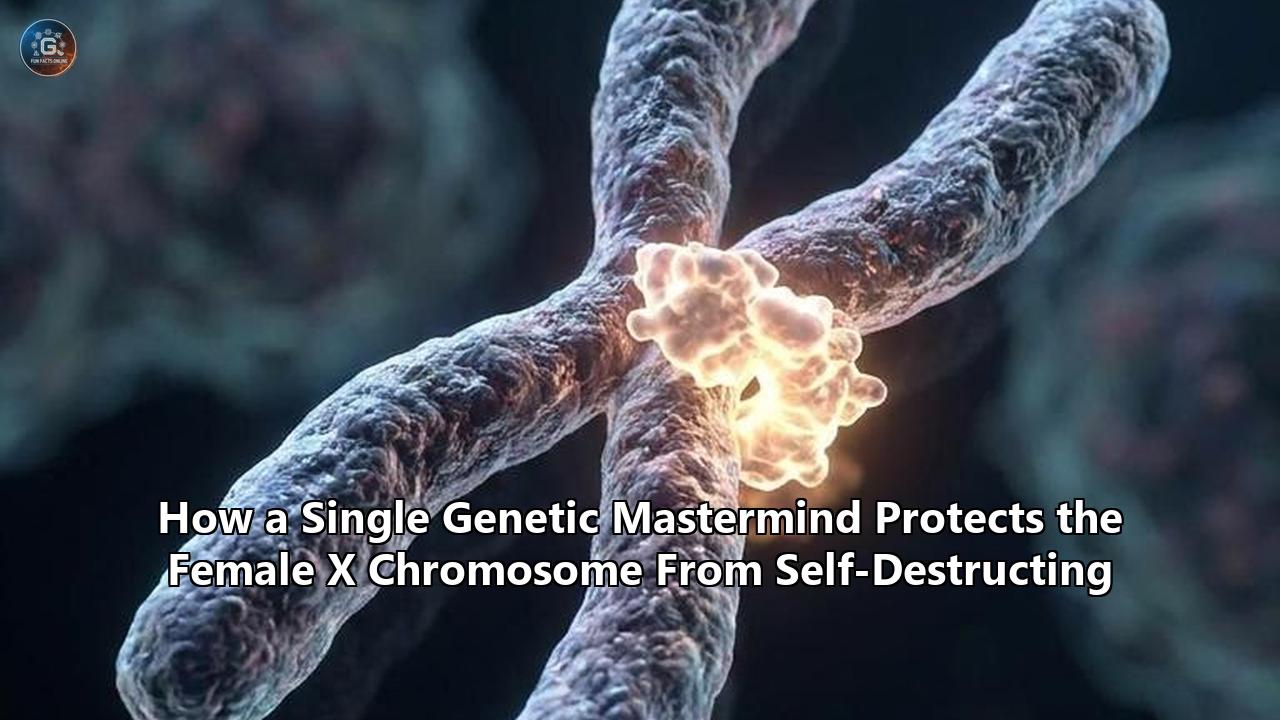
Deep within the nucleus of every female mammalian cell, a quiet, structural transformation is constantly underway. It is a biological necessity driven by a stark evolutionary imbalance. While biological males carry one X and one Y chromosome, biological females carry two X chromosomes. This double dose of genetic material is a potential death sentence. If both X chromosomes in a female cell were to remain fully active, the resulting overproduction of vital proteins would overwhelm the cell, causing the early embryo to self-destruct during the first stages of development.
To prevent this genomic overload, female embryos initiate a tightly regulated process of X chromosome inactivation—the complete and permanent silencing of one entire X chromosome in every somatic cell.
For decades, the mechanics of how a cell chooses, coats, and completely shuts down a massive chromosome carrying over a thousand genes remained one of molecular biology’s most elusive puzzles. The master molecule behind this operation is Xist (X-inactive specific transcript), a long non-coding RNA (lncRNA) that acts as a structural scaffold rather than a recipe for a protein. Yet, Xist cannot silence a chromosome on its own.
Research from prominent laboratories—including Mitchell Guttman’s team at the California Institute of Technology, Edith Heard’s group at the European Molecular Biology Laboratory (EMBL), and Howard Chang’s lab at Stanford University—has identified the "genetic mastermind" that executes Xist’s orders: a colossal, shape-shifting protein known as SPEN (referred to as SHARP in humans).
Using high-resolution imaging, single-cell genomics, and synthetic biology, scientists have mapped how SPEN leverages a physical phenomenon to amplify its silencing power across the vast distances of a chromosome. At the same time, this molecular machine has emerged as a double-edged sword, directly linking the silence of the X chromosome to the high prevalence of autoimmune diseases in women.
The Evolutionary Origins of a Genomic Battle
To understand why X chromosome inactivation is so critical, we must look back roughly 180 million years to the birth of mammalian sex chromosomes. Originally, the proto-X and proto-Y chromosomes were a matched, identical pair of non-sex chromosomes (autosomes).
Proto-Chromosomes (Identical Autosomes)
   [=== proto-X ===]  <-- Recombination (DNA Repair) -->  [=== proto-Y ===]

Evolutionary Divergence (SRY gene emerges on proto-Y)
   [=== proto-X ===]  <-- Recombination Suppressed ---->  [=== proto-Y (SRY) ===]
                                                                  │
                                                                  ▼
Genomic Decay of the Y                                        Decay & Shrinkage
   [=== proto-X (~1,000 genes) ===]                       [= Y (~50 genes) =]
This symmetry shattered when a single gene on the proto-Y chromosome mutated to trigger male development. As sex-specific genes began clustering around this newly minted male-determining region (the SRY gene), the chromosome underwent a series of genetic inversions—structural flips that prevented the X and Y chromosomes from pairing up and swapping genetic material during cell division.
This loss of recombination was catastrophic for the Y chromosome. Without the ability to swap healthy DNA templates with the X chromosome to repair genetic damage, the Y chromosome began a long journey of genomic decay. Over millions of years, the Y lost more than 95% of its original genes, shrinking to a genetic remnant that carries fewer than 50 functional genes.
The X chromosome, in contrast, remained highly conserved, preserving its robust library of roughly 1,000 genes. These genes govern vital cellular functions, ranging from brain development and metabolic pathways to immune system regulation.
This evolutionary divergence left mammals with a profound dosage problem. If female cells expressed genes from both of their X chromosomes at full capacity, they would produce twice as many X-linked proteins as male cells.
In the delicate economy of the cell, protein levels must be balanced. Unchecked double-dosage of these genes disrupts cell division, interferes with signaling pathways, and triggers apoptosis (programmed cell death) in early embryos.
Placental mammals solved this structural crisis through X chromosome inactivation. By permanently packaging one of the two female X chromosomes into a dense, inaccessible clump of inactive chromatin called a Barr body, female cells achieve dosage compensation, ensuring that both males and females have exactly one active, functional X chromosome in every cell.
The Stoichiometric Conundrum
When molecular biologists first began to map X chromosome inactivation in the 1990s, they identified the Xist gene as the master initiator. Unlike most genes, which are transcribed into messenger RNA (mRNA) to build proteins, Xist produces a massive 17,000-nucleotide long non-coding RNA molecule. Instead of leaving the nucleus, Xist RNA remains inside, physically coating the very chromosome from which it was transcribed.
However, as quantitative imaging technologies advanced, researchers stumbled upon a mathematical paradox.
THE STOICHIOMETRIC PARADOX

Conventional "One-to-One" Model (Failed):
Xist RNA Molecule  ──►  Silences  ──►  1 Single Gene
(Requires ~1,000 Xist molecules to silence the X chromosome, but only ~100 exist)

Spatial Amplification Model (Proven):
[ 1 Xist Molecule ] ──► Binds ──► [ SPEN/SHARP ] ──► IDR Molecular Velcro ──► [ Massive Protein Condensate ]
                                                                                   │
                                                                                   ▼
                                                                        Silences multiple nearby genes
Super-resolution microscopy revealed that an individual female cell contains only about 60 to 200 active molecules of Xist RNA at any given time. Yet, the X chromosome contains over 1,000 genes scattered across more than 160 million base pairs of DNA. This means there is roughly one molecule of Xist RNA for every ten target genes.
If Xist functioned like a physical blanket, draping itself over every single promoter and enhancer on the chromosome to block access, it would be a mathematical impossibility. It would be equivalent to trying to cover an entire continent with a postage stamp.
Furthermore, because these Xist molecules are highly scarce, they must be exceptionally selective. If Xist molecules drifted off the X chromosome and coated other chromosomes (autosomes), they would silence autosomal genes, which is equally lethal.
The cell had to solve two contradictory regulatory challenges:
- It needed to achieve robust, chromosome-wide silencing of over a thousand genes using only a handful of Xist molecules.
- It had to maintain absolute specificity, keeping this silencing machinery locked to the X chromosome without letting it leak into the rest of the genome.
The answer to this molecular riddle lies in the physical behavior of the giant protein SPEN (SHARP).
SPEN/SHARP: Structuring the Silencing Machinery
To understand how SPEN acts as the genetic mastermind of X chromosome inactivation, it is necessary to dissect its unique, multi-domain physical architecture.
SPEN is a massive protein, weighing in at more than 400 kilodaltons (kDa)—nearly four times the size of an average human protein. It acts as a physical bridge, linking the Xist RNA scaffold directly to the cell’s chemical silencing machinery and the physical architecture of the chromatin.
SPEN / SHARP PROTEIN DOMAINS
[ RRMs (1-4) ] ───► [ Intrinsically Disordered Regions (IDRs) ] ───► [ SPOC Domain ]
      │                                │                                    │
      ▼                                ▼                                    ▼
Binds Xist RNA             Molecular Velcro / Crowding             Recruits NCoR/SMRT
(Repeat A region)          (Phase-separated assemblies)            and activates HDAC3
This giant protein is composed of three primary functional zones:
1. The N-Terminal RNA Recognition Motifs (RRMs)
SPEN contains four distinct RNA-binding domains at its front end. These motifs are specifically shaped to lock onto the highly conserved "Repeat A" region of the Xist RNA molecule. This direct, physical bond is the crucial first link that anchors SPEN to the Xist RNA cloud coating the chromosome.
2. The Intrinsically Disordered Regions (IDRs)
Spanning nearly 1,000 amino acids in the middle of the protein is a vast, unstructured region. Unlike classical proteins that fold into rigid, three-dimensional shapes to perform their functions, IDRs remain highly flexible and unstructured, resembling loose, undulating strings. These regions are rich in polar and charged amino acids, allowing them to form weak, multivalent physical interactions with other disordered proteins.
3. The C-Terminal SPOC Domain
At its tail end, SPEN carries a highly conserved domain known as the SPEN Paralogue/Orthologue C-terminal (SPOC) domain. The SPOC domain is the business end of the silencing apparatus. It acts as an adapter that binds directly to transcription factors, chromatin-remodeling complexes, and chemical erasers that alter the physical structure of the DNA.
SPEN is an ancient protein with deep evolutionary roots. It was first identified in Drosophila melanogaster (where it is known as Split Ends) as a regulator of neuronal development and cell signaling pathways, particularly the NOTCH pathway.
As mammalian evolution progressed and the need for dosage compensation arose, placental mammals co-opted this ancient protein-silencing tool, repurposing SPEN to manage the monumental task of silencing an entire sex chromosome.
The Physics of Spatial Amplification
How does a small handful of Xist molecules recruit enough SPEN to silence an entire chromosome? In a study published in Nature Structural & Molecular Biology, Mitchell Guttman’s lab, led by researcher Joanna Jachowicz, mapped a phenomenon known as spatial amplification.
SPATIAL AMPLIFICATION PROCESS

Stage 1: Localized Transcription
  [ Xist Gene ] ──► Expresses Xist RNA ──► Diffusion across X-chromosome

Stage 2: Stoichiometric Initiation
  [ Xist RNA ] ──► Binds SPEN (1:1 ratio) ──► Raises local SPEN concentration

Stage 3: Non-Stoichiometric Condensation
  High local SPEN ──► IDR interactions activate ──► Phase Separation (Crowding)

Stage 4: Chromosome-wide Silencing
  Dense SPEN droplet coats chromosome ──► Silences genes far beyond Xist binding sites
The process does not occur in a simple, one-to-one stoichiometric fashion. Instead, Xist acts as a physical seed that triggers a localized phase transition inside the cell nucleus.
First, Xist RNA is transcribed from the X-inactivation center (Xic) on the future inactive X chromosome. Due to the three-dimensional looping of the genome, the nascent Xist molecules do not drift freely throughout the nucleus. Instead, they diffuse into regions of the chromosome that are physically closest in 3D space, anchoring themselves to genomic sites that are in close proximity to the Xist transcription locus.
As these Xist molecules accumulate on the X chromosome, their RNA Recognition Motifs bind directly to SPEN molecules that are floating in the surrounding nuclear fluid. This initial, direct recruitment is stoichiometric—one Xist molecule pulls in a set number of SPEN proteins.
However, as more Xist molecules anchor to the X chromosome, they create an incredibly dense local population of SPEN molecules in that specific 3D pocket of the nucleus.
Once the local concentration of SPEN crosses a specific physical threshold, the massive Intrinsically Disordered Regions (IDRs) of the SPEN proteins are activated. The highly flexible, unstructured regions of adjacent SPEN molecules begin to cling to one another like molecular Velcro, initiating a process known as liquid-liquid phase separation or macromolecular crowding.
This physical phase transition causes the SPEN proteins to coalesce into a dense, membraneless biological condensate—essentially a tiny, localized protein droplet that encapsulates the X chromosome.
This condensate drives non-stoichiometric recruitment. Because the SPEN molecules are now physically sticking to each other, they continue to pile into the droplet, recruiting more SPEN molecules from the surrounding nucleus without requiring any additional Xist RNA molecules to bind them.
This spatial amplification allows a tiny amount of Xist to generate a massive, localized concentration of SPEN across the entire X chromosome. The dense protein cloud spreads outward, covering and silencing regions of the chromosome that Xist itself has never physically touched.
To prove that this physical crowding is the driving force behind the silencing, Guttman's team engineered a synthetic version of the SPEN protein. They stripped the protein of its natural middle IDR and replaced it with a highly unstructured IDR from a completely unrelated protein called FUS, which is known for its ability to form liquid droplets.
Despite having no sequence similarity to the original SPEN IDR, this hybrid protein was fully capable of self-assembling, amplifying its concentration on the X chromosome, and successfully initiating X chromosome inactivation. This confirmed that the physical property of phase separation—not the specific amino acid sequence—is what coordinates this chromosome-wide shutdown.
Unveiling the Epigenetic Hammer
Once SPEN is spatially amplified and concentrated across the X chromosome, it deploys its C-terminal SPOC domain to execute the actual silence. The transition from an active, readable chromosome to a permanently locked, silent heterochromatin body occurs through a series of chemical alterations.
THE EPIGENETIC SILENCING CASCADE

Active Chromatin (Open, Readable)
   [ Histone Beads ] --- Loose DNA (Acetylated: H3K27ac) --- RNA Pol II transcribes genes

SPEN Recruitment
   [ SPEN / SHARP ] binds active promoters/enhancers via SPOC domain

HDAC3 Activation (The Chemical Eraser)
   SPOC domain recruits NCoR/SMRT ──► Activates HDAC3 ──► Strips Acetyl Groups (H3K27ac)

Chromatin Condensation
   DNA winds tightly around deacetylated histones ──► RNA Pol II is physically evicted

Permanent Locking
   Polycomb Complexes (PRC1/PRC2) add repressive marks (H3K27me3) ──► DNA Methylation seals gene
1. Targeting the Promoters and Enhancers
Despite coating the entire inactive X chromosome, SPEN is highly selective in its physical contacts. It does not bind randomly to junk DNA. Instead, SPEN is targeted specifically to the active promoters (the start sites of genes) and enhancers (the regulatory switches) of genes that are currently being expressed.
SPEN’s ability to target these regions is directly dependent on active transcription; it essentially "homes in" on the molecular machinery of active genes.
2. Recruiting the Chemical Erasers
Once docked at an active promoter, the SPOC domain of SPEN recruits a massive nuclear receptor co-repressor complex known as NCoR/SMRT. This complex is the physical carrier of HDAC3 (Histone Deacetylase 3), a powerful chemical eraser.
HDAC3’s job is to strip acetyl groups from the lysine residues of histone proteins (specifically the H3K27ac mark). Acetyl groups carry a negative electrical charge, which repels the negatively charged DNA backbone, keeping the chromatin structure loose, open, and accessible to transcription machinery.
When HDAC3 strips these acetyl groups away, the positive charge of the histones is restored, causing the DNA to wind tightly around the histone beads.
3. Evicting the Transcription Machinery
As the chromatin condenses, the physical space around the gene constricts. This structural collapse physically evicts RNA Polymerase II—the massive enzyme responsible for reading DNA and transcribing it into RNA—from the promoters of the X-linked genes. Without RNA Polymerase II, transcription grinds to a halt.
4. Setting the Permanent Lock
Once transcription is halted, SPEN’s job is largely complete. Research has revealed a fascinating dynamic: SPEN requires active transcription to remain anchored to chromatin.
As soon as a gene is successfully silenced, SPEN disengages from the DNA. This allows the protein to remain highly dynamic, constantly migrating to find the remaining active genes on the chromosome.
With the genes silenced and SPEN disengaged, downstream epigenetic complexes move in to permanently lock the chromosome. The B and C repeat regions of Xist recruit hnRNPK, which in turn pulls in the Polycomb Repressive Complexes (PRC1 and PRC2).
These complexes deposit repressive histone marks, specifically H2AK119ub1 and H3K27me3, across the entire chromosome.
Finally, DNA methyltransferases (DNMTs) add methyl groups directly to the cytosine bases of the DNA promoters, sealing the chromosome in a state of permanent heterochromatin that will be faithfully copied every time the cell divides for the rest of the organism's life.
Preventing Collateral Damage: The Self-Limiting Loop
If SPEN is such a potent, self-amplifying silencing machine, what stops it from spreading unchecked throughout the entire nucleus, falling onto autosomes, and shutting down the rest of the genome?
The cell prevents this disaster through an elegant, self-limiting negative feedback loop built directly into the relationship between Xist and SPEN.
THE SELF-LIMITING FEEDBACK LOOP

[ Xist Locus ] ──► Transcribes Xist RNA ──► Recruits & Amplifies SPEN
      ▲                                              │
      │                                              ▼
  Suppresses ◄─────────────────────────────── Silences Xist Locus
(Negative Feedback)                         (SETDB1 & HUSH recruit H3K9me3)
As SPEN assemblies grow on the X chromosome, they do not just silence the protein-coding genes of the X; they also target the Xist gene itself.
When Xist RNA levels begin to climb, the massive cloud of recruited SPEN proteins eventually reaches the Xist transcription locus. There, SPEN recruits the HUSH complex and the methyltransferase SETDB1, which deposit the repressive H3K9me3 mark directly across the Xist gene.
This action suppresses the transcription of new Xist RNA molecules. By acting as a brake on its own production, Xist ensures that its levels never rise high enough to permit the SPEN droplet to expand beyond the physical boundaries of the X chromosome.
If researchers genetically disrupt this feedback loop and artificially force the overexpression of Xist, the results are catastrophic. The excess Xist RNA spills over the physical boundaries of the X chromosome, diffusing to autosomal regions.
Once there, it seeds ectopic SPEN droplets, recruiting the epigenetic hammer to silence vital, non-sex chromosomes, which quickly kills the cell. The self-limiting loop is therefore a critical survival mechanism.
The Dark Side: Xist, SPEN, and Autoimmune Disease
While the physical partnership between Xist and SPEN is essential for female survival, it also exposes female biology to a distinct vulnerability. For decades, clinicians have been baffled by a striking gender disparity: about 80% of all patients afflicted with autoimmune diseases—such as systemic lupus erythematosus (lupus), rheumatoid arthritis, and Sjogren's syndrome—are biologically female.
Lupus, for example, displays a 9-to-1 female-to-male ratio, while Sjogren’s syndrome exhibits an even more lopsided 19-to-1 ratio.
AUTOIMMUNITY PATHWAY: THE RIBONUCLEOPROTEIN (RNP) COMPLEX

[ Xist RNA Scaffold ] ── Binds ── [ SPEN & 80+ Nuclear Proteins ]
                                        │
                                        ▼
                            Forms Dense RNP Complex
                                        │
                                        ▼ (Cellular Stress / Lysis)
                            Released into Extracellular Space
                                        │
                                        ▼
                            Mistaken for Viral Invader
                                        │
                                        ▼
                            Autoantibodies Developed
                                        │
                                        ▼
                            Chronic Autoimmune Attack
A study published in Cell by Howard Chang's group at Stanford University revealed that the very machinery of X chromosome inactivation is a primary driver of this autoimmune bias.
During the inactivation process, the long strands of Xist RNA entangle with SPEN and more than 80 other nuclear proteins, forming a massive, dense structure known as the Xist ribonucleoprotein (RNP) complex. Many of these associated proteins are highly basic, carrying positive charges that allow them to bind tightly to RNA and DNA.
When cells undergo normal turnover or are damaged by environmental stress, infection, or UV light, they burst open, releasing their contents into the surrounding tissue and bloodstream.
In biological males, the contents of the nucleus are familiar to the immune system. But in biological females, the extracellular release of these massive, structurally complex Xist RNP droplets presents a major challenge.
Because the Xist RNP is only produced in cells with two X chromosomes, the immune system of an XX individual has to tolerate a highly unique, giant macromolecular complex that XY individuals never produce.
If the immune system's tolerance mechanisms are slightly compromised due to genetic variations or environmental triggers, immune cells mistake the dense, protein-RNA clumps of the Xist RNP for a foreign, invading virus.
The body then begins to manufacture autoantibodies—misguided immune molecules designed to target the components of the Xist RNP.
Once these autoantibodies are in circulation, they do not just target debris from dead cells. They launch a chronic, systemic attack against the patient’s own healthy tissues, causing the widespread inflammation, tissue damage, and organ pathology characteristic of autoimmune disorders.
To confirm this direct link, Chang's team engineered male mice to express a modified form of Xist that could be turned on or off with a chemical trigger. Crucially, this modified Xist did not actually silence the male’s single X chromosome (which would have been fatal), but it did recruit the typical suite of proteins to form the Xist RNP complex.
When these bioengineered male mice were exposed to an environmental trigger, they developed lupus-like autoantibodies and multi-organ pathology at rates matching those of females, while normal male mice remained completely healthy.
This confirmed that the physical presence of the Xist-protein complex—the very mastermind of dosage compensation—is the fundamental anchor of female-biased autoimmunity.
Cancer and the Erasure of the Mastermind
The delicate balance maintained by Xist and SPEN is also heavily implicated in the development and progression of cancer. In healthy adult somatic cells, the inactive X chromosome is held in a state of permanent, epigenetic lock. However, in many aggressive cancers, this lock begins to fail—a process known as X-chromosome erosion.
X-CHROMOSOME EROSION IN CANCER

Healthy Inactive X (Xi)
   [ Stable Heterochromatin ] ──► Locked by Xist/SPEN ──► 1,000 genes silenced

Eroded X (Xi) in Ovarian Cancer
   Loss of Xist/SPEN ──► Reactivation of silenced genes (e.g., CD44) ──► Cancer Plasticity & Stemness
A study published in PNAS from the Sun lab revealed that in highly aggressive ovarian cancers, the expression of Xist is frequently downregulated or lost entirely. When Xist levels drop, the SPEN-mediated silencing droplets evaporate from the inactive X chromosome, allowing previously silenced genes to wake up.
This reactivation of the second X chromosome does not kill the cancer cells. Instead, it provides them with a powerful survival advantage.
The sudden double-dosage of X-linked genes—including key regulatory genes, cell-surface receptors, and transcription factors—unlocks cellular plasticity.
The cancer cells undergo a transition, reverting from specialized epithelial cells into highly mobile, drug-resistant cancer stem cells (CSCs).
This reversion is marked by a dramatic upregulation of stemness markers like CD44, which directly correlates with tumor metastasis, chemotherapy resistance, and poor patient survival rates.
Furthermore, recent genomic studies, such as the 2024 work by Dror et al. published in Cell, have challenged the classic dogma that Xist only works in cis (on the chromosome from which it is transcribed).
In certain developmental windows and specific cell types—including immune cells and cancer cells—Xist can also operate in trans, spreading its regulatory reach to bind and dampen specific genes on autosomes.
When Xist and SPEN regulation is disrupted in a tumor, it alters the epigenetic state of both the sex chromosomes and the autosomes, throwing the cell's entire regulatory network into chaos and driving the progression of the disease.
Therapeutics: Reactivating the Silent X
Understanding the precise mechanics of how SPEN and Xist silence the X chromosome is not just an academic achievement; it is opening up a completely new frontier in molecular medicine.
Rather than trying to fix defective genes, scientists are now asking: can we exploit the machinery of X chromosome inactivation to cure devastating genetic diseases?
Consider Rett syndrome, a severe neurodevelopmental disorder that occurs almost exclusively in females. Rett syndrome is caused by a mutation in the MECP2 gene, which resides on the X chromosome.
Because female cells randomly inactivate one of their two X chromosomes during early development, a girl born with this mutation will have a mosaic brain: about half of her brain cells will express the healthy, wild-type copy of the MECP2 gene, while the other half will have inactivated the healthy chromosome and are left expressing the mutated, defective copy.
THERAPEUTIC REACTIVATION OF THE SILENT X (e.g., Rett Syndrome)

Patient Cell with Mutant MECP2:
   [ Active X (Mutant MECP2) ]                 [ Inactive X (Healthy MECP2) ]
                │                                            │
                ▼ (Cell lacks functional protein)            ▼ (Silenced by SPEN/HDAC3)
          Rett Syndrome Symptoms                       No protein produced

Targeted Therapeutic Intervention:
   Deploy antisense oligonucleotides (ASOs) or small molecules to block SPEN/HDAC3
                │
                ▼
   Stripping of repressive chemical marks (H3K27me3, DNA methylation)
                │
                ▼
   Selective Reactivation of the Healthy MECP2 gene on the Inactive X
                │
                ▼
         Symptom Reversal
The healthy copy of the MECP2 gene is right there inside the cell nucleus, fully intact but held in a state of deep, epigenetic sleep by the lingering effects of the Xist-SPEN droplet.
Armed with the knowledge of how SPEN recruits HDAC3 and Polycomb complexes to lock down the chromosome, researchers are developing targeted therapeutics designed to wake up the silent, healthy gene.
By deploying small molecules or antisense oligonucleotides (ASOs) that specifically block the SPEN-SPOC domain from recruiting NCoR/SMRT, or by inhibiting HDAC3 and DNA methyltransferases, scientists can selectively strip the repressive chemical marks from the inactive X chromosome.
In laboratory models of human neurons, this targeted epigenetic editing has successfully reactivated the silent, healthy copy of the MECP2 gene, restoring normal protein production and reversing the cellular cellular deficits of Rett syndrome.
Similar approaches are being explored for other X-linked conditions, including CDKL5 Deficiency Disorder (CDD) and fragile X syndrome, offering hope for disease-modifying therapies that treat the root genetic cause rather than merely managing the symptoms.
Looking Ahead: The Emerging Frontiers
As we move deeper into 2026, the study of the X chromosome is shifting from basic gene mapping to a complex understanding of cellular identity, evolutionary history, and human health.
THE FUTURE OF SEX CHROMOSOME RESEARCH

              ┌──────────────────────────────────────────────┐
              │  Human Tissue Atlases & nmXCI Profiling      │
              │  - Mapping gene-by-gene "escapees"           │
              │  - Understanding tissue-specific disease     │
              └──────────────────────┬───────────────────────┘
                                     ▼
              ┌──────────────────────────────────────────────┐
              │  Synthetic Biology & Phase Transition Control│
              │  - Programming biomolecular condensates      │
              │  - Directing custom gene silencing           │
              └──────────────────────┬───────────────────────┘
                                     ▼
              ┌──────────────────────────────────────────────┐
              │  Clinical Autoimmune Diagnostics             │
              │  - Lupus screening panels based on Xist RNP  │
              │  - Pre-symptomatic biomarker discovery       │
              └──────────────────────────────────────────────┘
The landscape of human genetics has been enriched by several key developments:
- Whole-Organism Human Atlases: Research published in eLife by Bjorn Gylemo and colleagues has successfully constructed a high-resolution, tissue-specific atlas of human X chromosome inactivation. By studying rare individuals with non-mosaic X-inactivation (nmXCI), researchers directly mapped the inactivation status of 380 X-linked genes across 30 normal human tissues, identifying nearly 200 genes whose inactivation profiles had never been directly observed in humans before.
- The "Escapee" Landscape: These studies have revealed that up to 15% to 25% of genes on the "inactive" human X chromosome actually escape silencing, remaining active and contributing to subtle expression differences between the sexes. This variable escape from inactivation explains why the clinical severity of X-linked disorders varies so widely from person to person.
- Synthetic Biomolecular Condensates: In the lab, researchers are transitioning from observing phase-separated protein droplets to actively programming them. By design, synthetic biology tools can now recruit IDR-containing proteins like SPEN to custom genomic targets, allowing scientists to silence disease-driving oncogenes or viral DNA with surgical precision.
- Clinical Autoimmune Screenings: The discovery of the Xist RNP as a primary driver of female-biased autoimmunity is paving the way for diagnostic screening panels. By detecting autoantibodies against specific components of the Xist-SPEN complex, clinicians are working toward identifying lupus and other autoimmune disorders years before physical symptoms manifest, allowing for early, preventative interventions.
The story of the female X chromosome is no longer viewed as a simple narrative of genetic shutoff. Instead, it is recognized as a masterfully coordinated physical dance, where a scarce long non-coding RNA and a giant, shape-shifting protein partner to exploit the laws of physics.
By mastering the mechanics of this spatial amplification, science is not only solving a fundamental biological mystery, but also forging the tools to rewrite the future of genetic medicine.
Key Terms Explained
- X Chromosome Inactivation (XCI): The cellular process by which one of the two X chromosomes in female mammalian cells is rendered transcriptionally silent, equalizing gene expression levels with XY males.
- Xist (X-inactive specific transcript): A long non-coding RNA molecule expressed from the inactive X chromosome that acts as a structural scaffold to recruit silencing proteins across the chromosome.
- SPEN / SHARP: A massive, multi-domain protein that binds directly to Xist RNA and acts as the master coordinator of gene silencing during the initiation of XCI.
- Spatial Amplification: A physical mechanism where a small number of seed molecules (like Xist) recruit a high local concentration of proteins (like SPEN), triggering self-assembly that spreads across a wide cellular territory.
- Intrinsically Disordered Regions (IDRs): Large, unstructured regions within proteins that lack a fixed 3D shape, allowing them to participate in weak, multivalent interactions that drive phase-separation and crowding.
- Phase Separation: A thermodynamic phenomenon where proteins and RNAs spontaneously organize into dense, liquid-like droplets (condensates) within the cell, concentrating active machinery without the need for a physical membrane.
- Autoantibody: An abnormal antibody produced by the immune system that mistakenly targets and attacks the body's own healthy proteins and tissues.
Reference:
- https://pmc.ncbi.nlm.nih.gov/articles/PMC9472561/
- https://pmc.ncbi.nlm.nih.gov/articles/PMC3678792/
- https://encyclopedia.pub/entry/5031
- https://portlandpress.com/biochemsoctrans/article/49/6/2549/230427/The-tandem-repeat-modules-of-Xist-lncRNA-a-swiss
- https://pmc.ncbi.nlm.nih.gov/articles/PMC2491718/
- https://elifesciences.org/articles/102701
- https://encyclopedia.pub/entry/55350
- https://pubmed.ncbi.nlm.nih.gov/32025035/
- https://pmc.ncbi.nlm.nih.gov/articles/PMC8969943/
- https://www.biorxiv.org/content/10.1101/2020.11.22.393546v1.full-text
- https://pubmed.ncbi.nlm.nih.gov/38306984/
- https://www.quantamagazine.org/the-incredible-shrinking-sex-chromosome-20151201/
- https://academic.oup.com/genetics/article/216/1/205/6065599
- https://www.researchgate.net/publication/344100146_The_Evolution_of_Sex_Determination
- https://www.healthynj.org/what-is-the-x-chromosome/
- https://pmc.ncbi.nlm.nih.gov/articles/PMC7766869/
- https://www.lupusresearch.org/recent-discoveries-shedding-light-on-why-women-are-at-a-greater-risk-for-lupus/
- https://www.sciencedaily.com/releases/1997/09/970902050857.htm
- https://plathlab.org/research/x-chromosome-regulation-2/
- https://pmc.ncbi.nlm.nih.gov/articles/PMC12723843/
- https://www.dbt.univr.it/documenti/OccorrenzaIns/matdid/matdid512269.pdf
- https://pubmed.ncbi.nlm.nih.gov/32482714/
- https://pmc.ncbi.nlm.nih.gov/articles/PMC8969943/
- https://escholarship.org/content/qt15k9p70g/qt15k9p70g_noSplash_f7c7c61b6b47043e732801bdfa272603.pdf
- https://www.mdpi.com/2075-4655/7/4/28
- https://www.biorxiv.org/content/10.1101/2020.12.30.424676v1.full-text
- https://pmc.ncbi.nlm.nih.gov/articles/PMC7035112/
- https://www.mdpi.com/2075-4655/7/4/28
- https://guttmanlab.caltech.edu/wp-content/uploads/2021/08/Bhat2021.pdf
- https://orcid.org/0000-0002-1599-682X
- https://www.mdpi.com/2075-4655/7/4/29
- https://colab.ws/articles/10.1038%2Fs44319-025-00499-1
- https://www.researchgate.net/publication/355954336_Xist_spatially_amplifies_SHARP_recruitment_to_balance_chromosome-wide_silencing_and_specificity_to_the_X_chromosome
- https://www.unisr.it/attachments/bmb2020/c488d7f0-5879-4666-bb32-0b26011eeff3/d8831f77-6b2e-4f41-9729-4097efa71a37.pdf
- https://pubmed.ncbi.nlm.nih.gov/33916248/
- https://phys.org/pdf350722028.pdf
- https://www.youtube.com/watch?v=YgCiYfjQzxw
- https://www.researchgate.net/publication/403676397_SETDB1_and_HUSH_modulate_Xist_RNA_levels_during_establishment_of_X_chromosome_inactivation
- https://bioquicknews.com/xist-rna-protein-complex-contributing-to-background-autoimmunity-in-women/
- https://med.stanford.edu/news/all-news/2024/02/women-autoimmune.html
- https://medreview.odus.princeton.edu/2024/11/19/new-advances-in-understanding-xist-and-female-autoimmunity/
- https://www.pnas.org/doi/10.1073/pnas.2418096121
- https://www.youtube.com/watch?v=vbwFWt9o50Y
- https://plathlab.org/research/x-chromosome-regulation-2/
- https://pmc.ncbi.nlm.nih.gov/articles/PMC12148325/
- https://www.mdpi.com/journal/epigenomes/special_issues/X-Chromosome-Inactivation
- https://reports.ucb.com/IAR_2025_WEB.pdf
- https://frontlinegenomics.com/new-insights-into-x-inactivation/
- https://pubmed.ncbi.nlm.nih.gov/40673498/
- https://www.youtube.com/watch?v=8owmbVpGeog
- https://www.researchgate.net/publication/7961560_X-inactivation_profile_reveals_extensive_variability_in_X-linked_gene_expression_in_females
- https://www.researchgate.net/profile/Joanna-Jachowicz