In a climate-controlled repository in Britain, a 640-meter-long cylinder of dark rock holds the detailed record of a ancient planetary emergency. Extracted from Shropshire during the Prees-2 drilling project, the core captures the precise boundary of the end-Triassic mass extinction—a period 201 million years ago when violent volcanic eruptions tore apart the supercontinent Pangea and unleashed rapid global warming.
For decades, paleontologists assumed that as tree-dominated canopy forests withered under this ancient greenhouse heat, resilient ferns stepped in as passive ecological medics. They were viewed as harmless "disaster species," briefly carpeting damaged landscapes until trees could recover.
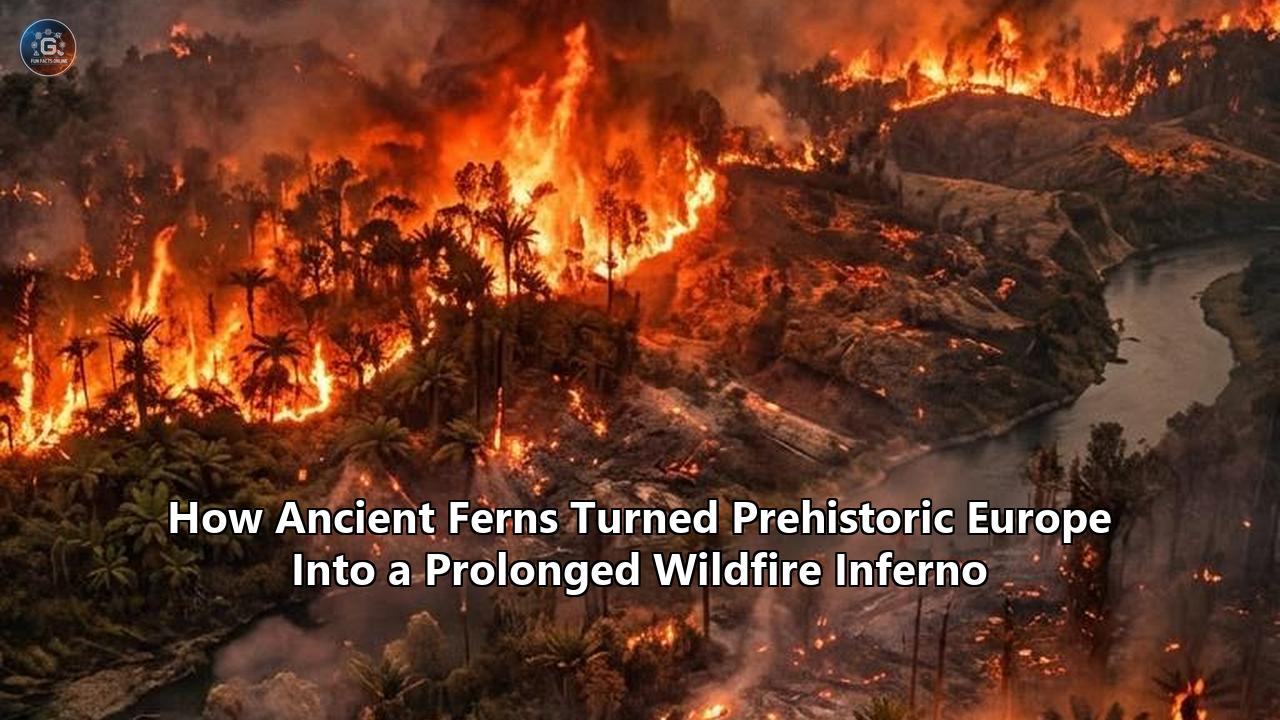
A study published in Nature Geoscience by an international research team led by Utrecht University turns that story on its head. The evidence reveals that ancient fern savannahs were not innocent bystanders. Instead, they acted as environmental arsonists. By producing vast mats of highly flammable, slow-decaying dry fuel, these opportunistic plants transformed vast stretches of prehistoric Europe into a self-sustaining wildfire inferno that raged for up to 300,000 years.
"Ferns are truly remarkable plants that have withstood many crises throughout Earth history, and some species can adapt to some of the most extreme environments," explained Dr. Bas van de Schootbrugge, a paleobotanist at Utrecht University and senior author of the study. "When the ferns dry out, the thick mats act as the ideal fuel to trigger massive wildfires. Ferns responded to and delivered the fuel that fanned the flames, triggering repeated massive wildfires. A truly hellish world."
By combining microscopic chemical analysis, laboratory fire simulations, and rock cores drilled across Northwest Europe, researchers have reconstructed a deep-time ecological disaster. Their findings detail how an opportunistic plant group took advantage of climate chaos, weaponized fire to crush competing vegetation, and locked an entire continent in a cycle of flame and regrowth.
                 VOLCANIC ERUPTIONS (CAMP)
                            │
                            ▼
              CO2 Spike & 5-10°C Global Warming
                            │
                            ▼
            Collapse of Conifer Canopy Forests
                            │
                            ▼
           Ferns Colonize Soil (Fern Savannahs)
                            │
                            ▼
       Dry Fern Fronds Form Thick Fuel Mats + Ladders
                            │
                            ▼
       Drought & Lightning Trigger Massive Wildfires
                            │
                            ▼
   ┌─────────────────────────────────────────────────┐
   │ Above-ground fronds burn; subterranean rhizomes │
   │ survive and sprout rapidly, smothering trees    │
   └────────────────────────┬────────────────────────┘
                            │
                            └─────────► [REPEATS FOR 40,000 TO 300,000 YEARS]
An Empire in Ashes: The End-Triassic Crisis
To understand how ferns became ecological arsonists, one must first look at the landscape of Europe 201 million years ago. The world was structurally unrecognizable. The landmasses of Earth were welded together into Pangea, and what is now Northwest Europe—including the United Kingdom, Germany, Luxembourg, Denmark, and East Greenland— lay nestled inside a warm, humid continental interior. Massive forests of archaic conifers, seed ferns, and towering gymnosperms stabilized the soils, regulated local hydrology, and controlled the carbon cycle.
That stability collapsed with the rift of the Central Atlantic Magmatic Province (CAMP). Fissures opened across thousands of miles, spewing millions of cubic kilometers of basaltic lava. Accompanying the eruptions were massive surges of volcanic carbon dioxide, sulfur, and methane.
Within a geological blink, atmospheric greenhouse gas concentrations spiked. Global surface temperatures surged by 5 to 10 degrees Celsius. Acid rain stripped nutrients from the earth, while intense, prolonged droughts altered seasonal weather systems.
┌──────────────────────────────────────────────────────────────────────────┐
│                      TRIASSIC-JURASSIC TRANSITION                        │
├───────────────────────────────┬──────────────────────────────────────────┤
│ Driver                        │ Central Atlantic Magmatic Province (CAMP)│
├───────────────────────────────┼──────────────────────────────────────────┤
│ Temperature Surge             │ +5°C to +10°C global average rise        │
├───────────────────────────────┼──────────────────────────────────────────┤
│ Primary Vegetation Shift      │ Conifer/Gymnosperm forest collapse to    │
│                               │ fern-dominated savannahs                 │
├───────────────────────────────┼──────────────────────────────────────────┤
│ Fern Spike Duration           │ ~40,000 to 300,000 years                 │
├───────────────────────────────┼──────────────────────────────────────────┤
│ Key Geographic Core Locations │ United Kingdom, Germany, Luxembourg,    │
│                               │ Denmark, Greenland                       │
└───────────────────────────────┴──────────────────────────────────────────┘
The giant canopy trees could not adapt to such swift environmental change. Across Northern Europe, forests died off on a massive scale. Tree pollen vanished from the fossil record, replaced by stark layers of eroded soil sediment.
When canopy trees die, the environmental structures beneath them fall apart. Unshaded ground heats up rapidly, water tables fluctuate, and topsoil washes into river basins during flash storms. In this stripped-down ecosystem, standard succession rules no longer applied. The stage was set for an organism that could handle extreme conditions, survive nutrient-starved dirt, and thrive in disturbance.
Enter the ferns.
Following the Flawed Evidence Trail
Geologists have long known that ferns dominated the post-extinction landscape. In palynology—the study of microscopic spores and pollen—this event is known as the "fern spike". In sediment layers coinciding with the extinction, tree pollen numbers drop to near zero, while fern spores leap to make up 80 to 90 percent of all plant microfossils.
Traditionally, scientists believed this fern spike was a quiet, temporary holding pattern. Ferns were thought to be innocent opportunistic plants that covered bare dirt until gymnosperms could return.
Yet one question remained unanswered: Why did the fern spike last so long?
Geochemical dating showed the fern-dominated landscape persisted for anywhere from 40,000 to 300,000 years. In ecological terms, that is an eternity. Pioneer species normally yield to secondary growth within decades or centuries. Something was actively keeping the trees from coming back, holding European ecosystems in a prolonged state of recovery.
                     TRADITIONAL VIEW vs. NEW DISCOVERY

    TRADITIONAL VIEW                         NEW FINDINGS
┌───────────────────────┐               ┌───────────────────────┐
│ Volcanoes cause heat  │               │ Volcanoes cause heat  │
└───────────┬───────────┘               └───────────┬───────────┘
            │                                       │
            ▼                                       ▼
┌───────────────────────┐               ┌───────────────────────┐
│ Trees die, Ferns cover│               │ Trees die, Ferns form │
│ ground passively      │               │ flammable savannahs   │
└───────────┬───────────┘               └───────────┬───────────┘
            │                                       │
            ▼                                       ▼
┌───────────────────────┐               ┌───────────────────────┐
│ Ecosystem gradually   │               │ Ferns fuel widespread │
│ recovers over time    │               │ fires, blocking trees │
└───────────────────────┘               └───────────┬───────────┘
                                                    │
                                                    ▼
                                        ┌───────────────────────┐
                                        │ Sustained fire loop   │
                                        │ lasts up to 300kyr    │
                                        └───────────────────────┘
Researchers trying to reconstruct prehistoric wildfires Europe experienced during this interval ran into major technical hurdles. To track ancient fires, geologists usually rely on two proxies:
- Macro-charcoal: Visible bits of burned wood preserved in sedimentary rock.
- Polycyclic Aromatic Hydrocarbons (PAHs): Organic chemical molecules formed when organic matter combusts, carried in wildfire smoke.
Both proxies have blind spots. Macro-charcoal is fragile. A single burnt log can break apart into millions of tiny fragments during river transport, making a small, localized fire look like a massive regional burn in rock samples.
PAHs present the opposite problem. These soot molecules climb high into the atmosphere and travel thousands of miles on ocean winds before settling. Finding PAHs in European rocks proved fires were burning somewhere on Earth, but it could not pinpoint whether Northwest Europe itself was ablaze or merely catching smoke blown in from far-off landmasses.
To prove that local landscapes were actively burning, the Utrecht team needed an indisputable smoking gun—a marker frozen directly inside local soil layers that could not be moved by winds or falsely multiplied by fragmenting wood.
Microscopic Ashes: The Palynomorph Darkness Index
The break in the case came when researchers stopped looking only at giant rock charcoal and began examining the microfossils themselves.
Using a light microscope connected to high-resolution digital cameras, Dr. van de Schootbrugge and his colleagues analyzed more than 15,000 fossilized spores and pollen grains extracted from drill cores in Shropshire (UK), Germany, Luxembourg, and Denmark. They measured a physical variable that palynologists had seen for decades but rarely quantified: microfossil optical density, or color darkening.
This analytical technique is called the Palynomorph Darkness Index (PDI).
                 PALYNOMORPH DARKNESS INDEX (PDI)
                     COLOR SPECTRUM ANALYSIS

  [Amber / Yellow] ─────────► [Translucent Brown] ─────────► [Charred Black]
   Unburned Spores             Moderate Heat Impact            High-Temp Fire
  (Normal Sediment)           (Subsurface Heating)            (Wildfire Flame)
In normal sedimentary rocks, fossil spores show a light amber or golden-yellow color under transmitted light. If rocks are buried deep underground over millions of years, geothermal heat gradually bakes the spores, darkening them slowly into deep brown and black.
When the team plotted PDI values across the 640-meter Prees-2 core and its mainland European counterparts, they uncovered an unexpected pattern.
Right at the start of the end-Triassic extinction, the pollen grains and fern spores abruptly turned dark brown and black. Above and below this specific layer, spores retained their natural light-amber color.
Because burial heat affects an entire rock layer uniformly over millions of years, it cannot selectively darken a single thin strip of sediment while leaving layers directly above and below untouched. The heat source had to come from the surface, acting in real time before the sediment was buried.
┌──────────────────────────────────────────────────────────────────────────┐
│                      PREES-2 ROCK CORE ANALYSIS                          │
├─────────────────┬──────────────────────┬─────────────────────────────────┤
│ Core Depth Zone │ Microfossil Color    │ Environmental Interpretation    │
├─────────────────┼──────────────────────┼─────────────────────────────────┤
│ Post-Extinction │ Golden Amber         │ Ecosystem stabilizes; normal    │
│ (Lower Jurassic)│                      │ burial temperature history      │
├─────────────────┼──────────────────────┼─────────────────────────────────┤
│ Extinction Layer│ Dark Brown to Black  │ Intense, sustained wildfires    │
│ ("Dark Zone")   │ (High PDI)           │ scorch spores at surface        │
├─────────────────┼──────────────────────┼─────────────────────────────────┤
│ Pre-Extinction  │ Golden Amber         │ Intact conifer forest; low fire │
│ (Upper Triassic)│                      │ frequency                       │
└─────────────────┴──────────────────────┴─────────────────────────────────┘
To test this finding, collaborators at the University of Nottingham performed controlled combustion experiments. They placed modern spores from related plants inside lab furnaces, exposing them to controlled heat treatments.
The lab results matched the core samples. Spores exposed to brief, high-temperature heat spikes—identical to the conditions of a fast-moving brush fire—showed the exact same chemical and optical darkening profile as the 201-million-year-old fossil spores from the drill cores.
The team had found their proof. This uniform "Dark Zone" spanned thousands of square kilometers from Britain to Central Europe and Eastern Greenland. The entire region was caught in a continuous, high-temperature fire loop.
              EUROPEAN DRILL CORE CORRELATION SITES

        [ Greenland Basin ] ───► Darkened Spores / High PDI
                 │
        [ Prees-2, UK ] ───────► 640m Core / Dark Zone
                 │
        [ Luxembourg ] ────────► Charcoal & PAH Spikes
                 │
        [ Germany Core ] ──────► Matched PDI Thermal Profile
                 │
        [ Denmark Core ] ──────► Spore Darkening Verified
The Tinderbox Engine: Why Ancient Ferns Born to Burn
The discovery of the Dark Zone posed a new question: What was fueling these intense, widespread fires?
In a healthy forest ecosystem, live green canopy trees resist fire. Wood contains moisture, and fallen conifer needles compress into dense ground layers that burn slowly. But when climate stress killed off Europe's gymnosperm forests, pioneer fern species moved in to cover the open land.
Unlike modern flowering plants or thick conifer forests, fern savannahs create a uniquely dangerous fuel structure.
                          FUEL BED DYNAMICS

    CONIFER FOREST LITTER                  FERN SAVANNAH LITTER
┌──────────────────────────┐            ┌──────────────────────────┐
│ - Compacted needles      │            │ - Loose, aerated fronds  │
│ - Retains moisture       │            │ - Dries rapidly          │
│ - Slow decomposition     │            │ - Resists bacterial rot  │
│ - Smoldering fires       │            │ - Fast, high-temp blazes │
└──────────────────────────┘            └──────────────────────────┘
Fern fronds are thin, papery, and rich in structural silica and lignin compounds. When fronds die at the end of a growing season, they do not rot quickly. Bacteria and fungi break down fern tissue far slower than typical leaf litter. Instead of decaying into rich topsoil, dead fronds stack up year after year, building thick, dry mats across the landscape.
"In the case of ferns, their biomass dries out, but it degrades very poorly," Dr. van de Schootbrugge noted. "So it is possible to have thick cured mats of material that can ignite when you have droughts followed by storms and lightning strikes."
These mats were exceptionally volatile. When the regional climate shifted between intense wet spells and severe droughts, the cured fern fronds dried out under the hot sun. Once dry, the aerated mats allowed air to flow through the fuel bed, providing oxygen to support rapid combustion.
                     FERN SAVANNAH FIRE MECHANICS

 [ Air / Oxygen Flow ] ──┐
                         ├──► Loose Fern Frond Mat ──► Rapid Flame Spread
 [ Extreme Dryness ] ────┘         │
                                   ▼
                       Vertical Climbing Ferns
                                   │
                                   ▼
                      [ FIRE LADDER TO CANOPY ]
Compounding the problem, not all ancient ferns grew low to the ground. The fossil record shows that climbing ferns and tall tree-ferns flourished in these open habitats. These taller species acted as natural "fire ladders".
When ignition hit the cured ground fronds, flames climbed up the climbing ferns into the upper canopy of any surviving tree stands. Low-intensity surface brush fires quickly escalated into intense canopy blazes, destroying whatever saplings or mature trees attempted to grow.
The Rhizome Trap: How Fires Created More Ferns
The team's research revealed a crucial ecological dynamic: fire did not destroy the fern savannahs. It preserved them.
This dynamic relies on a fundamental difference in plant anatomy. Conifers and gymnosperms grow from above-ground trunks, branches, and shallow root collars. When a high-intensity fire sweeps through a forest, it scorches the living cambium layer beneath the tree bark, killing the tree. Re-establishing a conifer forest requires seeds to survive, land on fertile soil, germinate, and grow for decades without burning.
Ferns operate on a completely different survival strategy.
                     POST-FIRE RECOVERY COMPARISON

        GYMNOSPERM / TREE                       WEEDING FERN
┌──────────────────────────────┐       ┌──────────────────────────────┐
│ - Growing tip above ground   │       │ - Growing tip below ground   │
│ - Fire scorches bark & seed  │       │ - Rhizomes buried in soil    │
│ - Tree dies instantly        │       │ - Fronds burn; roots survive │
│ - Recovery: Decades (seeds)  │       │ - Recovery: Days/weeks       │
└──────────────────────────────┘       └──────────────────────────────┘
Many fern species store their growing tips, nutrient reserves, and reproductive structures in thick subterranean root stems called rhizomes, buried inches beneath the soil surface.
When a wildfire burns a fern savannah, above-ground fronds turn to ash in seconds. But dirt acts as an insulator. A few inches down, ground temperatures barely rise, leaving the buried rhizomes unharmed.
Once the flames pass, the fern is poised to strike. Ash deposits dump potassium, phosphorus, and nitrogen directly into the soil. The fire clears away competing brush and opens the canopy, letting sunlight hit the ground.
Using stored underground nutrients, subterranean rhizomes send up fresh green fronds within days of the first rain.
                THE SELF-PERPETUATING FIRE LOOP

   ┌────────────────────────────────────────────────────────┐
   │                                                        │
   ▼                                                        │
Wildfire burns surface fronds ──► Rhizomes survive in soil  │
   │                                       │                │
   │                                       ▼                │
   │                              Rapid regrowth & expansion│
   │                                       │                │
   ▼                                       ▼                │
Kills tree saplings ────────────► Creates thick dry mats ───┘
This rapid response gave ferns a distinct advantage over competing plants. Young tree saplings trying to grow in the open savannah were repeatedly scorched back to the dirt before reaching maturity. Meanwhile, ferns re-sprouted, expanded their territory, and produced a fresh batch of dry fronds to fuel the next fire.
The result was a long-term ecological trap. The ferns created the fuel for fires, fires wiped out competing trees, and ferns grew back even stronger. This cycle explains why the "fern spike" persisted across Europe for up to 300,000 years.
The climate crisis started the initial fire, but the ferns took over, running the inferno on loop.
Lessons for a Warming World
The scientific implications of the Nature Geoscience study extend beyond solving a 201-million-year-old mystery. The findings challenge how researchers model past mass extinctions and highlight how living organisms actively shape Earth's climate system.
In traditional Earth system models, plants are treated as passive recipients of climate conditions—shrinking when conditions turn hot and dry, and expanding when conditions turn cool and wet.
The European end-Triassic record shows that vegetation can take control of an ecosystem, driving environmental feedback loops that worsen planetary crises.
┌──────────────────────────────────────────────────────────────────────────┐
│                     ECOLOGICAL FEEDBACK MECHANISMS                       │
├───────────────────────────────┬──────────────────────────────────────────┤
│ Factor                        │ Role in End-Triassic Inferno             │
├───────────────────────────────┼──────────────────────────────────────────┤
│ CAMP Volcanism                │ Primary trigger: initial atmospheric CO2 │
│                               │ spike and forest death                   │
├───────────────────────────────┼──────────────────────────────────────────┤
│ Opportunistic Fern Expansion  │ Biological amplifier: rapid takeover of  │
│                               │ deforested soils                         │
├───────────────────────────────┼──────────────────────────────────────────┤
│ Fuel Accumulation             │ Physical driver: slow degradation leaves │
│                               │ dense, dry frond mats                    │
├───────────────────────────────┼──────────────────────────────────────────┤
│ Fire-Survival Rhizomes        │ Persistence mechanism: underground roots │
│                               │ survive surface fires to outcompete trees│
└───────────────────────────────┴──────────────────────────────────────────┘
This deep-time case study carries clear warnings for modern ecosystems. Today, rising global temperatures, deforestation, and changing rainfall patterns are stressing forests worldwide. As native canopy trees struggle under climate stress, invasive and opportunistic fire-promoting plants move into damaged habitats.
Modern ferns provide a clear preview of this dynamic. In 2022, after catastrophic wildfires burned through Bohemian Switzerland National Park in the Czech Republic, pioneer ferns colonized the scorched, exposed soils. Modern bracken ferns (Pteridium aquilinum) act similarly in degraded ecosystems today, spreading across clear-cut lands, producing dense fuel loads, and suppressing tree seedling growth through repeated fires.
                     MODERN vs. ANCIENT ECOSYSTEM PARALLEL

   END-TRIASSIC EUROPE (~201 MA)               MODERN DISTURBED LANDSCAPES
┌──────────────────────────────────┐       ┌──────────────────────────────────┐
│ - CAMP Volcanic Warming          │       │ - Global Climate Warming         │
│ - Collapse of Conifer Canopy     │       │ - Deforestation / Severe Droughts│
│ - Expansion of Fern Savannahs    │       │ - Invasive Fern / Grass Spreads  │
│ - Repeated Flammable Fire Loops  │       │ - Higher Wildfire Frequency      │
└──────────────────────────────────┘       └──────────────────────────────────┘
"The lesson we can learn from this is that the combination of climate change, deforestation, and the spread of opportunistic species can provide all the ingredients for a perfect storm," Dr. van de Schootbrugge observed.
What started as a volcanic disaster was amplified by the biosphere itself. The opportunistic ferns transformed a transient shock into a centuries-long nightmare of fire and death.
What Comes Next in Deep-Time Forensics
The discovery of the Dark Zone and the role of ferns in fueling ancient blazes opens new doors for paleoclimatologists and geologists.
Researchers are preparing to deploy the Palynomorph Darkness Index across other major extinction boundaries throughout Earth's history. Key targets include:
- The Permian-Triassic Extinction (252 Million Years Ago): The largest mass extinction in Earth history, triggered by the Siberian Traps volcanism, which also features a massive fern and lycophyte spore spike.
- The Cretaceous-Paleogene (K-Pg) Boundary (66 Million Years Ago): The asteroid impact that wiped out the non-avian dinosaurs, followed by a global "fern spike" in sediment layers worldwide.
- The Toarcian Oceanic Anoxic Event (183 Million Years Ago): A Jurassic hyperthermal event marked by global warming, forest dieback, and extensive wildfire activity.
                       FUTURE RESEARCH TARGETS

   PERMIAN-TRIASSIC               TOARCIAN EVENT             CRETACEOUS-PALEOGENE
      (~252 MA)                     (~183 MA)                     (~66 MA)
┌────────────────────┐        ┌────────────────────┐       ┌────────────────────┐
│ Siberian Traps     │        │ Jurassic Thermal   │       │ Asteroid Impact    │
│ Volcanism          │        │ Maximum            │       │ Global Firestorm   │
│                    │        │                    │       │                    │
│ Target: Spore PDI  │        │ Target: Charcoal & │       │ Target: Global     │
│ mapping across     │        │ PAH profile in     │       │ Fern Spike         │
│ Pangean basins     │        │ marine shales      │       │ flammability test  │
└────────────────────┘        └────────────────────┘       └────────────────────┘
By re-examining microfossil samples stored in global university archives, geologists can use the PDI technique to map the exact geographical footprints of prehistoric fires without relying solely on fragile charcoal bits.
The rock cores from Shropshire, Germany, Denmark, and Luxembourg have revealed a crucial truth. Life does not merely suffer through planetary crises; it reacts, adapts, and sometimes fans the flames.
Over 200 million years ago, a delicate green plant took advantage of a warm, degraded world, turning prehistoric Europe into a landscape of fire and ash—a stark reminder of how quickly ecological feedback loops can reshape life on Earth.
Reference:
- https://www.eurekalert.org/news-releases/1136404
- https://www.uu.nl/en/news/triassic-inferno-fires-raged-across-europe-for-thousands-of-years-during-past-global-warming
- https://www.courthousenews.com/ancient-global-warming-fueled-a-fiery-chapter-in-europes-past/
- https://www.youtube.com/watch?v=-Y2CxXJtIwc
- https://www.miragenews.com/ancient-pollen-reveals-prehistoric-climate-1714397/
- https://www.sciencedaily.com/releases/2026/07/260722032105.htm
- https://www.sci.news/paleontology/fern-fueled-wildfires-europe-end-triassic-mass-extinction-14940.html
- https://pmc.ncbi.nlm.nih.gov/articles/PMC5245107/