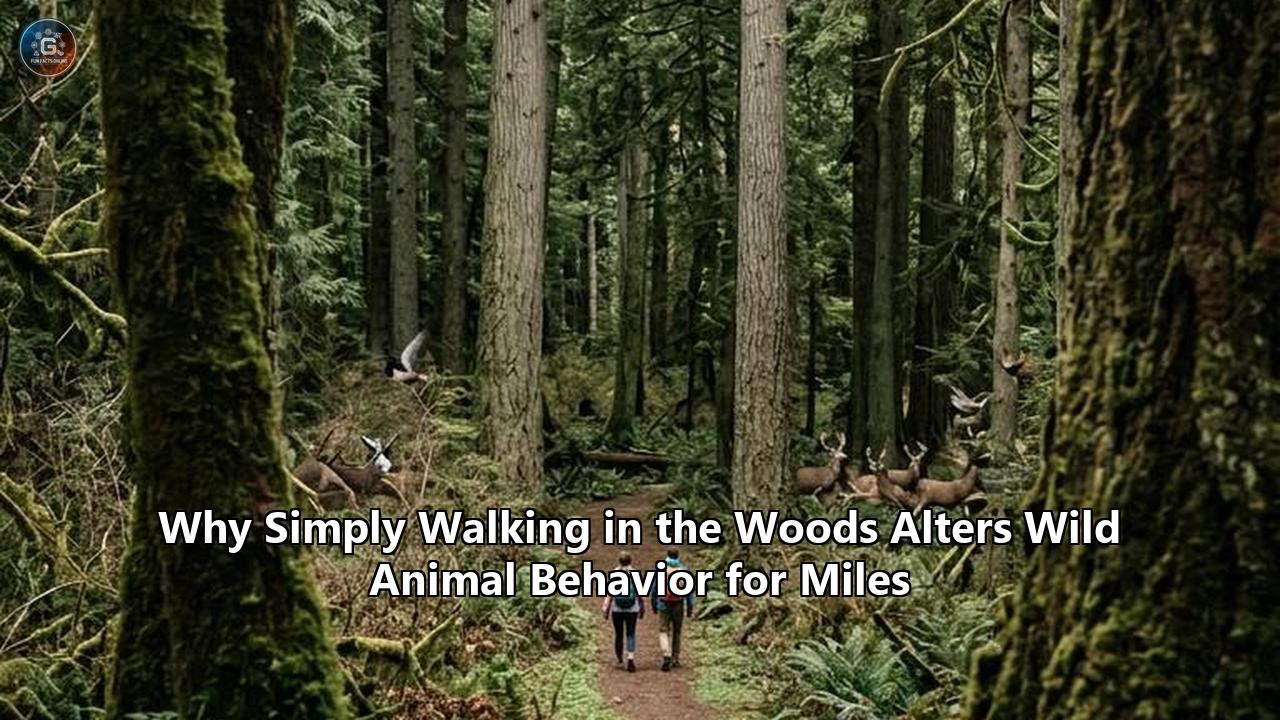
When an outdoor enthusiast laces up their boots, clips into a backpack, and steps onto a designated wilderness trail, they almost certainly view their presence as benign. Unlike clear-cut logging, commercial mining, or housing developments, quiet non-motorized recreation—hiking, trail running, snowshoeing, and wildlife watching—has long carried the cultural reputation of being ecologically harmless. The guiding philosophy of public lands has mirrored this intuition for decades, encouraging people to "take only pictures, leave only footprints."
A sweeping body of empirical ecological research has overturned that foundational assumption.
Controlled acoustic experiments, global wildlife camera-trap arrays, and high-resolution GPS telemetry have revealed that simply walking through the woods projects an invisible, multi-mile sensory shockwave that reshapes the behavior of wild animals. From apex predators like mountain lions and wolves down to foraging ungulates and forest rodents, wild species detect human transit across vast distances. In response, they flee feeding grounds, abandon fresh kills, suppress daylight activities, elevate their stress hormones, and reorganize entire food webs.
The findings fundamentally challenge how biologists, land managers, and the public conceptualize human disturbance. Physical habitat destruction and resource extraction are no longer the only drivers of wildlife disruption; our presence as a biological entity—our voices, footfalls, silhouettes, and scent trails—generates a pervasive "landscape of fear" that alters ecosystems without a single tree being felled.
                 HUMAN FOOT TRAIL
                        │
       [Auditory / Visual / Scent Footprint]
                        │
  ┌─────────────────────┼─────────────────────┐
  ▼                     ▼                     ▼
SPATIAL               TEMPORAL            PHYSIOLOGICAL
DISPLACEMENT          DISRUPTION          ALTERATIONS
(0.5 – 3.0 km)        (Day to Night)      (Endocrine Surge)
  │                     │                     │
  ▼                     ▼                     ▼
Avoidance Halos       1.36x Shift to       Elevated Cortisol &
& Trail Vacancies      Nocturnality        Caloric Depletion
  │                     │                     │
  └─────────────────────┼─────────────────────┘
                        │
                        ▼
            TROPHIC WEB RESTRUCTURING
      (Mesopredator Release, Abandoned Kills,
          Altered Forest Regeneration)
The Anatomy of a Disturbance: The Multi-Mile Acoustic and Olfactory Halo
The disruption caused by a hiker does not stop at the edge of the dirt path. In terrestrial ecology, the physical zone a human occupies is dwarfed by their sensory footprint—the radius within which an animal’s sensory organs can detect an approaching human.
In a landmark field experiment published in Current Biology, researchers led by Dr. Katherine A. Zeller and Dr. Mark A. Ditmer of the USDA Forest Service’s Rocky Mountain Research Station directly isolated the ecological effect of recreation noise. The team deployed automated behavioral response systems consisting of high-definition video cameras coupled to hidden speaker arrays across forest systems. When an animal walked past a sensor, the system recorded its baseline behavior before broadcasting realistic recreation sounds—such as hikers speaking in conversational tones or mountain bike components clattering—from 20 meters away.
The experimental playback was starkly revealing: across multiple mammal species, the broadcast of ordinary human vocalizations caused animals to be 3.1 to 4.7 times more likely to flee their immediate surroundings compared to exposure to natural baseline sounds like birdsong or wind. Furthermore, the time animals spent in high-alert vigilance states increased by a factor of 2.2 to 3.0. Even more striking was the spatial lag: local wildlife abundance across the test plots dropped by a factor of 1.5 in the entire week following the noise deployments.
Animals did not simply glance up and return to eating; they evacuated the zone entirely.
"Noise from recreation alone caused immediate anti-predator responses," the research team observed, noting that larger groups of vocal trail users triggered the strongest flight reactions, making animals up to eight times more likely to abandon an area.
Experimental Recreation Noise Impacts (Zeller et al., Current Biology):
────────────────────────────────────────────────────────────────────────
Metric Tested                       Observed Magnitude Change
────────────────────────────────────────────────────────────────────────
Flight Probability                  3.1x to 4.7x increase vs. natural sound
Vigilance Duration                  2.2x to 3.0x longer alert posturing
Post-Disturbance Abundance          1.5x reduction over the following week
Large Group Vocal Flight Trigger    6.0x to 8.0x likelihood of sudden flight
────────────────────────────────────────────────────────────────────────
The transmission of this fear operates through three primary vectors:
- Acoustic Decay and Forest Horizons: Conversational human speech averages 60 decibels at one meter. In quiet wilderness areas where ambient baseline sound levels hover between 20 and 30 decibels, the acoustic signal of two hikers talking travels across long distances before dropping below the detection threshold of wild animals. For ungulates and carnivores with acute auditory bandwidths, the cadence of human speech carries clear signatures across several hundred meters, penetrating dense forest canopies and echoing through alpine basins.
- Olfactory Plumes: Atmospheric boundary layer turbulence transports human volatile organic compounds (VOCs), deodorants, laundry detergents, and sweat downwind. For macrosmatic animals like bears, wolves, and deer—whose olfactory surfaces contain hundreds of millions of receptor cells—a human walking a ridgeline generates a downwind scent cone that can prompt flight or avoidance behaviors more than a mile away.
- Visual Silhouettes and Shadow Breaking: On open ridgelines, alpine meadows, and switchbacks, an upright biped breaking the skyline represents a distinct predatory shape. Wildlife species calculate risk based on line-of-sight exposure; a single silhouette appearing on an exposed trail can trigger herd movement across an entire opposite-facing valley wall.
The Evolutionary Root: The Human 'Super Predator' Paradigm
To understand why a hiker without a weapon induces the same behavioral panic as a charging grizzly, ecologists point to how humans affect wildlife from an evolutionary perspective.
For decades, ecological models treated human recreationists as novel environmental disturbances—an unfamiliar annoyance akin to a fallen boulder blocking a path or an unusual weather event. But evolutionary biologists, including Dr. Chris Darimont of the University of Victoria and Dr. Liana Zanette of Western University, have demonstrated that wild animals perceive humans as the planet’s ultimate "super predator".
Humans kill adult prey at rates up to 14 times higher than non-human apex carnivores. Over millennia, our technological capacity, social hunting structures, and broad geographical range made our species exceptionally lethal. Animals that survived alongside human expansion were those that developed acute, hardwired behavioral avoidance strategies triggered by human sensory cues.
Human Predation vs. Natural Apex Carnivore Dynamics:
┌────────────────────────────────────────────────────────┐
│ Human Lethality Index:                                 │
│ Kills adult prey at up to 14x the rate of carnivores   │
└──────────────────────────┬─────────────────────────────┘
                           ▼
┌────────────────────────────────────────────────────────┐
│ Evolutionary Behavioral Imprint:                       │
│ Deeply ingrained anti-predator flight response         │
└──────────────────────────┬─────────────────────────────┘
                           ▼
┌────────────────────────────────────────────────────────┐
│ Non-Consumptive Human Encounters (Hiking / Walking):   │
│ Trigger identical neurobiological predator alarms      │
└────────────────────────────────────────────────────────┘
In a series of field trials across North America, Europe, and Africa, researchers played audio recordings of human speech, lions (Panthera leo), wolves (Canis lupus), and dogs to native wildlife. In South Africa’s Greater Kruger National Park, a study published in Current Biology found that 95% of mammal species—including elephants, giraffes, leopards, hyenas, and zebras—were significantly more terrified of human voices than the roaring of lions. When hearing humans speaking calmly, animals abandoned watering holes twice as fast and fled in half the time compared to when they heard lions hunting.
In North America, research by Dr. Justin Suraci showed that pumas (Puma concolor) in the Santa Cruz Mountains fled 30% more quickly from the sound of humans reading poetry or political talk shows through forest speakers than from the vocalizations of regional competitor species.
The animal brain does not distinguish between a researcher reading a novel, a family out for a weekend walk, and a hunter stalking game. The auditory signature of the human voice signals the presence of the world's most dangerous predator, prompting immediate evasion.
Spatial Compression: The Phantom Footprint of Recreational Trails
When humans construct and use a trail network, they carve up wildlife habitat in a way that is invisible to human eyes. The direct footprint of a trail might only be two feet wide, but the effective footprint—the surrounding zone of avoidance—can span kilometers.
             THE TRAIL BUFFER PHENOMENON

 [ Undisturbed Core ] <─── Buffer Zone ───> [ Trail ] <─── Buffer Zone ───> [ Undisturbed Core ]
                      │ (500m - 2000m)    │     │     │ (500m - 2000m)    │
                      │                   │     │     │                   │
   Full Foraging      │ Low Use / Flight  │  Hikers   │ Low Use / Flight  │   Full Foraging
   Normal Bedding     │ Vigilance Spike   │   Only    │ Vigilance Spike   │   Normal Bedding
   Diurnal Living     │ High Allostatic   │           │ High Allostatic   │   Diurnal Living
                      │ Load              │           │ Load              │
Ecologists quantify this spatial compression using three key parameters:
- Alert Distance (AD): The distance at which an animal interrupts its foraging or resting to orient toward an approaching human.
- Flight Initiation Distance (FID): The physical distance between the human and the animal at the moment the animal flees.
- Area of Influence (AOI): The total land area around recreation infrastructure where animal density, habitat selection, or foraging rates are measurably reduced.
The Glacier National Park Natural Experiment
The scale of this spatial displacement was captured in a study published in Scientific Reports by Alissa Anderson and Dr. Daniel Thornton of Washington State University. During the summer of 2020, COVID-19 management measures led to the complete closure of the eastern half of Glacier National Park to public access, while limited researchers and wildlife managers maintained strict travel protocols. In the summer of 2021, the park reopened to standard high-volume seasonal tourism.
Using an array of 40 camera-trap stations placed along hiking corridors during both years, the researchers captured a natural experiment. Out of 22 mammal species monitored, 16 altered their behavior in response to the presence of hikers.
When the park reopened to visitors:
- Elk (Cervus canadensis), black bears (Ursus americanus), and white-tailed deer (Odocoileus virginianus) exhibited significant declines in trail-adjacent habitat occupancy.
- Grizzly bears (Ursus arctos horribilis) and coyotes (Canis latrans) substantially suppressed their daytime movements, disappearing from viewsheds during trail operating hours.
- During the closure year, apex carnivores like mountain lions were photographed resting and bedding directly on popular hiking paths—areas they completely vacated once recreation resumed.
Glacier National Park Species Response Matrix (Anderson et al., Scientific Reports):
┌─────────────────────────┬──────────────────────┬────────────────────────────────────┐
│ Species                 │ Park Closure (2020)  │ Park Reopened to Hikers (2021)     │
├─────────────────────────┼──────────────────────┼────────────────────────────────────┤
│ Mountain Lion           │ Day bedding on paths │ Abandoned trailside habitat        │
│ Black Bear              │ High trail-zone use  │ Statistically significant vacancy  │
│ Elk & White-Tailed Deer │ Regular diurnal use  │ Fled to dense, marginal cover      │
│ Grizzly Bear & Coyote   │ Active across 24 hrs │ Shifted entirely to nocturnal hours│
│ Red Fox                 │ Moderate occurrence  │ Increased (using human shield)     │
└─────────────────────────┴──────────────────────┴────────────────────────────────────┘
Spatial displacement is not confined to the immediate trail verge. In studies of alpine ungulates like bighorn sheep (Ovis canadensis) and European chamois (Rupicapra rupicapra), human hikers traveling along ridge lines displaced herds between 500 meters and 2.5 kilometers away from preferred grazing meadows, forcing them onto steep, nutrient-poor escape terrain.
When multiple hiking paths crisscross a mountain valley, these multi-kilometer avoidance buffers overlap. An interconnected trail network of just 20 miles can functionally sterilize tens of thousands of acres of contiguous wilderness, transforming prime foraging valleys into fragmented webs of avoidance zones.
Temporal Displacement: Pushing Nature into the Dark
When wildlife cannot escape humans spatially—often because surrounding terrain is fragmented by roads, cliffs, agricultural boundaries, or housing—they adapt using time instead of space. They become creatures of the night.
In an extensive global meta-analysis published in Science, Dr. Kaitlyn Gaynor analyzed 76 studies covering 62 mammal species across six continents to understand how humans affect wildlife activity cycles. The findings revealed a planetary shift: in response to human presence, mammals increased their nocturnality by an average factor of 1.36.
Mammalian Daily Activity Reallocation Under Disturbance:

Baseline / Low Disturbance Activity:
[ Daylight: 50% ] [ Darkness: 50% ]

Human Recreation Disturbance:
[ Daylight: 32% ] [ Darkness: 68% ]  <── (1.36x Shift to Nocturnality)
An animal that naturally split its active hours evenly between day and night (50% diurnal, 50% nocturnal) shifted its schedule under human disturbance to conduct 68% of its active life under cover of darkness. This temporal shift occurred regardless of whether the human activity was lethal (such as hunting) or non-lethal (such as hiking, trail jogging, and nature photography).
"Animals responded strongly to all types of human disturbance, regardless of whether people actually posed a direct threat," Dr. Gaynor noted. "Our presence alone is enough to disrupt their natural patterns of behavior."
                     TEMPORAL PARTITIONING CASCADE

 Day-Active Mammals (Elk, Deer, Bears)
          │
          ▼  (Exposed to Daytime Trail Traffic)
 Forced Nocturnal Lifestyle
          │
          ├───────────────────────────────────────────────┐
          ▼                                               ▼
 Physiological & Metabolic Costs             Disrupted Ecological Interactions
  • Thermoregulatory strain in freezing nights   • Inefficient nocturnal foraging
  • Visual mismatch in darkness                 • High encounter rates with
  • Disrupted circadian hormone cycles            nocturnal predators (Pumas/Wolves)
This temporal flight into the night imposes heavy biological costs on species that did not evolve for life after dark:
1. The Visual Penalty and Foraging Efficiency Deficit
Many herbivores and meso-carnivores rely on photopic (daylight) vision to identify high-protein plant shoots, spot camouflage-adapted predators, and navigate complex topography. When forced to forage exclusively at night under scotopic (low-light) conditions, their rate of caloric intake drops while search times increase. An elk foraging at 2:00 AM consumes lower-quality forage and expends more energy per bite than one grazing during midday.
2. Thermoregulatory Energetic Penalties
High-elevation alpine environments and northern temperate forests experience drastic temperature drops after sunset. Diurnal animals use midday solar radiation to thermoregulate, resting in warm microclimates. Pushing animals to be active during freezing night hours increases metabolic heat production demands, accelerating the depletion of critical winter fat reserves.
3. Forced Interspecific Encounters
Shifting all diurnal mammals into the night creates temporal crowding. Species that evolved distinct daily time-slots to avoid one another—such as coyotes avoiding wolves, or bobcats avoiding pumas—are compressed into the same narrow nocturnal window. This temporal overlap intensifies competition, alters predator-prey dynamics, and can lead to higher rates of conflict between species that would otherwise avoid each other during the day.
Cascading Trophic Repercussions: The 'Human Shield' and Mesopredator Release
The behavioral changes triggered by hiking do not operate in a vacuum; they ripple down entire ecological food webs, initiating trophic cascades that alter plant communities and change species interactions.
                    TOP-DOWN TROPHIC CASCADE

                     Human Hiker on Trail
                              │
             ┌────────────────┴────────────────┐
             ▼                                 ▼
      Apex Predators                    Large Ungulates
     (Pumas, Wolves, Bears)              (Deer, Elk)
             │                                 │
             ▼ (Fear Flight)                   ▼ (Fear Flight)
      Vacate Kill Sites /               Suppressed Rumination /
      Flee Forest Valleys               Flee to Marginal Habitats
             │                                 │
    ┌────────┴────────┐                        │
    ▼                 ▼                        ▼
Mesopredators    Small Rodents          Over-Browsing
(Foxes, Skunks)  (Mice, Voles)          of Safe Havens
    │                 │                        │
    ▼ (Release)       ▼ (Population Surge)     ▼
Depletion of     High Seed Consumption  Soil Erosion /
Ground Birds     Loss of Forest Sprouts Forest Failure
1. Apex Predator Evacuation and Kill Abandonment
Large carnivores are sensitive to human presence. When mountain lions or wolves hear approaching hikers, they flee their immediate home ranges. Research by the Santa Cruz Puma Project demonstrated that when pumas hear human voices near their deer kills, they immediately abandon the carcass.
Rather than spending days consuming a high-calorie kill, the mountain lion starves for calories and is forced to kill 36% more deer per year to make up for meals lost to human disturbance. The hiker never sees the cougar, but their presence indirectly increases ungulate mortality across the broader ecosystem.
2. The 'Human Shield' Dynamic and Mesopredator Release
Because top carnivores actively avoid trails used by humans, smaller prey and medium-sized predators (mesopredators) exploit these human-dense corridors as spatial shields.
- The Shielding Effect: Species like striped skunks (Mephitis mephitis), Virginia opossums (Didelphis virginiana), red foxes (Vulpes vulpes), and deer mice (Peromyscus maniculatus) recognize that large predators avoid humans. As a result, these smaller animals move toward hiking trails and campgrounds.
- Prey Behavioral Release: In the UC Santa Cruz playback trials led by Dr. Suraci, while top predators fled human speech, deer mice expanded their spatial foraging area by 45%, and woodrats increased their foraging intensity by 17%. With the apex predators driven off by human voices, rodents operated with less fear of predation.
Human Shield Dynamic:
┌─────────────────────────────────────────────────────────────┐
│ 1. Humans hike along forest trail corridors                │
└──────────────────────────────┬──────────────────────────────┘
                               ▼
┌─────────────────────────────────────────────────────────────┐
│ 2. Apex carnivores (Pumas, Wolves, Bears) evacuate zone     │
└──────────────────────────────┬──────────────────────────────┘
                               ▼
┌─────────────────────────────────────────────────────────────┐
│ 3. Mesopredators & Rodents colonize the low-predator buffer │
└──────────────────────────────┬──────────────────────────────┘
                               ▼
┌─────────────────────────────────────────────────────────────┐
│ 4. Local ecological shift: Ground-nesting birds decline,    │
│    tree seed consumption spikes, forest regeneration slows  │
└─────────────────────────────────────────────────────────────┘
3. Cascades to Forest Flora and Seed Germination
This shift in animal populations reaches the plant community. When rodents increase in abundance near human trails due to the exclusion of top predators, their consumption of tree seeds (such as pine nuts and acorns) rises sharply. Seedlings are eaten before they can root, altering forest regeneration patterns within the human disturbance corridor.
At the same time, because large herbivores are frightened off trails into dense, unvisited forest patches, those interior sanctuaries experience heavy over-browsing, stripping the understory and degrading habitats for nesting songbirds.
The Energetic Equation: Allostatic Load and the Starvation Margin
At its most fundamental level, wildlife survival is an energy balance equation. Every calorie an animal ingests must be balanced against maintenance metabolism, thermoregulation, locomotion, reproduction, and predator defense.
Human trail recreation tips this balance toward an energy deficit through two linked physiological pathways: behavioral interruption and neuroendocrine stress responses.
$$\Delta E = E_{\text{ingested}} - (E_{\text{basal}} + E_{\text{thermoreg}} + E_{\text{locomotion}} + E_{\text{vigilance}} + E_{\text{stress}})$$
When humans repeatedly enter wildlife habitats, $E_{\text{vigilance}}$, $E_{\text{locomotion}}$, and $E_{\text{stress}}$ increase, while $E_{\text{ingested}}$ declines due to lost foraging time.
                       THE ENERGETIC DEFICIT SPIRAL

  Normal Baseline Caloric Budget:
  ┌────────────────────────────────────────────────────────────┐
  │ Foraging & Ingestion:  [ +++++ 100% ]                      │
  │ Basal & Movement Cost: [ ----   60% ]                      │
  │ Surplus for Breeding / Winter Fat Reserve: [ + 40% ]       │
  └────────────────────────────────────────────────────────────┘

  Recreation-Disturbed Caloric Budget:
  ┌────────────────────────────────────────────────────────────┐
  │ Foraging Time:         [ +++     60% ] (Interrupted)       │
  │ Basal & Movement Cost: [ ------  85% ] (Flight & Vigilance)│
  │ Neuroendocrine Waste:  [ --      15% ] (Stress Allostasis) │
  │ Net Caloric Balance:   [ - 40% Deficit ] ──> Starvation / Reproductive Failure
  └────────────────────────────────────────────────────────────┘
The Cost of Vigilance and Flight
When a grazing ungulate like a bighorn sheep or mule deer detects a human on a trail, it displays vigilance postures—raising its head, widening its eyes, elevating muscle tone, and halting mastication. In areas with frequent hiking traffic, animals can spend up to 40% less time feeding during daylight hours compared to those in undisturbed habitats.
When vigilance turns into an active flight response, the caloric cost spikes. An elk running up a 30-degree snow-covered slope burns between 15 and 20 times more energy than an elk resting or foraging calmly. During harsh winter months, when forage quality is low and snow depth makes movement difficult, every flight response burns irreplaceable fat reserves.
Caloric Expenditure of Mammalian Flight Dynamics:
────────────────────────────────────────────────────────────────────────
State of Activity              Metabolic Rate Multiplier vs. Rest
────────────────────────────────────────────────────────────────────────
Resting / Rumination           1.0x (Baseline)
Vigilant Scanning              1.3x to 1.6x
Calm Walking                   2.5x to 3.5x
High-Velocity Snow Flight      15.0x to 20.0x
────────────────────────────────────────────────────────────────────────
The Neuroendocrine Cost: Chronic Allostatic Load
Animals do not need to visibly run away to suffer physiological harm. In recreation ecology, the most significant damage often happens internally.
When an animal perceives an approaching human as a threat, its sympathetic-adreno-medullary (SAM) axis and hypothalamic-pituitary-adrenal (HPA) axis activate immediately:
- Catecholamines (adrenaline and noradrenaline) enter the bloodstream, causing heart rates to double or triple within seconds.
- The HPA axis prompts the secretion of glucocorticoids (cortisol in large mammals; corticosterone in birds and rodents).
- These hormones mobilize glucose, raise blood pressure, suppress digestion, and halt reproductive processes to prepare the body for emergency escape.
                    NEUROENDOCRINE STRESS CASCADE

                   Hiker Approaching on Trail
                               │
            ┌──────────────────┴──────────────────┐
            ▼                                     ▼
     SAM Axis Activation                   HPA Axis Activation
   (Adrenaline / Noradrenaline)            (Glucocorticoids / Cortisol)
            │                                     │
            ▼                                     ▼
   Heart Rate Triples,                    Glucose Mobilization,
   Blood Pressure Spikes                  Suppression of Immunity
            │                                     │
            └──────────────────┬──────────────────┘
                               │
                               ▼
                    CHRONIC ALLOSTATIC LOAD
           • Muscle Wasting & Immune Suppression
           • Ovarian Cycle Disruption & Low Birth Weights
           • Elevated Susceptibility to Pathogens
If disturbances are rare, the system resets cleanly through negative feedback loops. But when hikers, trail runners, and dog walkers pass by continuously every 15 minutes across a summer season, the stress response becomes chronic.
This state—termed chronic allostatic load—damages animal health. Prolonged elevation of glucocorticoids causes muscle wasting, suppresses immune function, disrupts ovarian cycles, lowers birth weights, and increases vulnerability to parasites and disease. An animal may stand quietly 100 meters from a trail, appearing undisturbed to an observer, while experiencing dangerous heart rates and elevated stress hormones.
The Recreation Mandate vs. Conservation Reality
The discovery that human presence alters wildlife across broad spatial and temporal scales has created a difficult dilemma for public land management agencies.
Most park systems operate under a split mandate:
- Preserve ecological integrity and biodiversity.
- Provide the public with outdoor recreation, scenic access, and leisure opportunities.
                  THE PUBLIC LANDS DUAL MANDATE CRISIS

  ┌───────────────────────────┐         ┌───────────────────────────┐
  │    Conservation Mandate   │         │    Public Access Mandate  │
  │ • Species preservation    │ ◄─────► │ • Trail access & tourism  │
  │ • Unfragmented habitats   │ Conflict│ • Economic revenue models │
  │ • Intact trophic webs     │         │ • Ecotourism expansion    │
  └───────────────────────────┘         └───────────────────────────┘
For decades, agencies assumed these mandates were compatible as long as visitors remained on maintained trails, packed out their trash, and did not hunt or clear trees. However, modern behavioral ecology indicates that human presence itself acts as a disruptive form of habitat degradation.
This tension has worsened with the growth of outdoor recreation. Park visitation has surged over the past decade, accelerated by GPS tracking apps, social media geotagging, and an expanding outdoor recreation industry. Popular trails in national parks and public lands now see thousands of hikers daily.
Outdoor recreation infrastructure has also expanded into formerly remote areas. Digital mapping platforms create user-generated social trails that penetrate deep into wilderness areas, fragmenting formerly intact habitat cores.
Recreation Footprint: Physical vs. Functional Degradation:
┌─────────────────────────────────────────────────────────────┐
│ Physical Trail Width:  [ 1 - 2 Meters ]                     │
└──────────────────────────────┬──────────────────────────────┘
                               ▼
┌─────────────────────────────────────────────────────────────┐
│ Functional Ecological Degradation Halo:                     │
│ [ <────────────── 1,000 to 4,000 Meters ──────────────> ]   │
│ (Acoustic footprint, temporal avoidance, trophic disruption) │
└─────────────────────────────────────────────────────────────┘
The underlying challenge is that wild ecosystems are governed by the perceptions of animals, not human intentions. A hiker may walk through a forest with deep appreciation for nature, but to an elk, wolf, or bear, their voice and silhouette trigger the same survival alarms as a predator.
Re-Engineering Public Lands: Solutions for Human-Wildlife Coexistence
Resolving this conflict does not require banning humans from public lands entirely. Instead, wildlife biologists and recreation ecologists point toward management frameworks designed to reduce the sensory footprint of human activity.
                     MANAGEMENT TOOLKIT FOR COEXISTENCE

       ┌───────────────────────┼───────────────────────┐
       ▼                       ▼                       ▼
SPATIAL REFUGIA         TEMPORAL ZONING         BEHAVIORAL DESIGN
• Core Sanctuary Zones  • Trail Curfews         • Group Size Caps
• Trail Density Limits  • Seasonal Closures     • Quiet Corridor Rules
• Corridors Without     • Daylight Protections  • Strict Canine Leash
  Human Access            for Feeding             Enforcement
1. Spatial Refugia and Trail Density Caps
Wildlife can tolerate human presence if they have access to adequate spatial refugia—large, undisturbed blocks of habitat completely free of human transit.
- Trail Density Limits: Conservation planners increasingly set strict trail density caps (e.g., maximum linear trail length per square kilometer). Keeping large core areas trail-free ensures animals can avoid human corridors without being pushed off essential home ranges.
- Dedicated Movement Corridors: Establishing designated wildlife transit zones where no recreational trails are built allows animals to cross between valleys and watersheds without running into human recreation bottlenecks.
2. Temporal Zoning and Trail Curfews
Because human recreation is concentrated during daylight hours, managing time is often more practical than managing space:
- Night and Twilight Curfews: Enforcing trail closures from dusk until dawn allows nocturnal and crepuscular wildlife to forage, drink, and travel along trail corridors without encountering humans.
- Daylight Allocation Windows: Restricting human access to specific daytime windows (e.g., 9:00 AM to 5:00 PM) preserves essential dawn and dusk foraging hours for sensitive herbivores and carnivores.
- Seasonal Breeding and Winter Closures: Temporarily closing trails during spring calving, raptor nesting, or harsh winter periods prevents animals from experiencing high allostatic loads when their energetic reserves are lowest.
Temporal Zoning Schedule Example:
┌─────────────────────┬──────────────────────┬───────────────────────────────┐
│ Time Window         │ User Status          │ Ecological Function           │
├─────────────────────┼──────────────────────┼───────────────────────────────┤
│ 05:00 AM - 09:00 AM │ Closed to Public     │ Dawn Crepuscular Foraging     │
│ 09:00 AM - 05:00 PM │ Open for Trail Use   │ Concentrated Human Activity   │
│ 05:00 PM - 09:00 PM │ Closed to Public     │ Dusk Feeding & Watering       │
│ 09:00 PM - 05:00 AM │ Strictly Closed      │ Undisturbed Nocturnal Transit │
└─────────────────────┴──────────────────────┴───────────────────────────────┘
3. Modifying Human Behavior
Simple shifts in how recreationists move across landscapes can reduce disturbance:
- Limiting Group Size and Vocal Noise: Because large, loud groups trigger the highest rates of animal flight, capping group sizes on sensitive backcountry trails and establishing quiet-use guidelines helps reduce acoustic disturbance footprints.
- Strict Leash Regulations: Domestic dogs trigger disproportionately intense flight responses, as wildlife view canines as active pack hunters. Keeping dogs leashed—or excluding them from sensitive wildlife corridors—reduces animal stress responses.
- Staying on Established Trails: Predictability helps wildlife adapt. When hikers stay strictly on marked paths, animals can learn where risk is concentrated and adjust their space use accordingly. Off-trail hiking breaks this spatial predictability, forcing wildlife to treat whole landscapes as active hazard zones.
What to Watch Next: The Future of Behavioral Wildlife Monitoring
Technological and methodological advances are transforming our understanding of how humans affect wildlife.
Emerging Behavioral Monitoring Technologies:
┌─────────────────────────┬──────────────────────────────────────────────────┐
│ Technology              │ Research Application                             │
├─────────────────────────┼──────────────────────────────────────────────────┤
│ High-Frequency Bio-Logs │ Tri-axial accelerometry captures micro-stress    │
│ Automated Bioacoustics  │ AI-driven soundscape analysis maps noise plumes  │
│ Global Camera Arrays    │ Multi-continental networks monitor space shifts  │
│ Non-Invasive Hormones   │ Fecal glucocorticoid maps quantify stress loads  │
└─────────────────────────┴──────────────────────────────────────────────────┘
Over the coming years, four research frontiers will shape the future of recreation ecology:
- High-Frequency Bio-Logging: Miniaturized tri-axial accelerometers and continuous heart-rate monitors attached to wild animals will measure the metabolic cost of human encounters in real time, capturing hidden stress responses that do not result in visible flight.
- AI Soundscape Ecology: Automated acoustic monitoring stations paired with machine learning algorithms will map real-time human acoustic footprints across entire mountain ranges, tracking how noise spreads and dissipates through complex terrain.
- Global Camera Trap Networks: Initiatives like Snapshot USA and international camera-trap databases are collecting millions of image records across multiple continents. These broad datasets will allow scientists to assess how wildlife communities adapt to human recreation across diverse biomes.
- Non-Invasive Hormone Mapping: Advances in fecal glucocorticoid and hair-cortisol analysis will enable biologists to assess population-level stress across broad landscapes, identifying stressed wildlife groups before population declines show up in census counts.
                     THE FUTURE OF COEXISTENCE

   Traditional Assumption                     Modern Ecological Reality
 ┌───────────────────────────┐              ┌───────────────────────────┐
 │ Non-consumptive footprint │              │ Human presence is an      │
 │ stops at the trail edge.  │              │ apex-predator stimulus    │
 │ "Leave No Trace" is       │ ───────────► │ that alters behavior,     │
 │ purely physical.          │              │ energetics, and food      │
 │                           │              │ webs across square miles. │
 └───────────────────────────┘              └───────────────────────────┘
Recreation ecology shows that enjoying the natural world and protecting its inhabitants are not automatically the same thing. Recognizing that human presence acts as an ecological force across entire landscapes is an essential step toward designing wilderness spaces where both humans and wildlife can share the landscape. A step onto a forest trail is never completely silent; the wildlife around us is always listening, calculating risk, and stepping carefully into the shadows.
Reference:
- https://scholarworks.sjsu.edu/cgi/viewcontent.cgi?article=8953&context=etd_theses
- https://medium.com/southern-winds/the-most-terrifying-halloween-costume-try-being-a-human-9a7d57a34e1f
- https://pubmed.ncbi.nlm.nih.gov/31313436/
- https://enewspaper.latimes.com/infinity/article_share.aspx?guid=21b0edb7-1f71-4328-a23b-e6260b84df66
- https://www.sciencedaily.com/releases/2024/06/240613140838.htm
- https://news.mongabay.com/2025/10/study-busts-big-bad-myth-that-wolves-are-growing-fearless-of-humans/
- https://faunalytics.org/a-human-voice-will-scare-mountain-lions-and-liberate-mice/
- https://vcresearch.berkeley.edu/news/mammals-going-nocturnal-avoid-humans
- https://pmc.ncbi.nlm.nih.gov/articles/PMC7819564/
- https://www.researchgate.net/publication/398540673_Wildlife_responses_to_recreational_trail_density_are_mediated_by_landscape_configuration_rather_than_short-term_increases_in_recreation_intensity
- https://pmc.ncbi.nlm.nih.gov/articles/PMC9839714/
- https://www.facebook.com/61558344094992/videos/only-4-animals-hunt-humans-and-one-will-shock-you-animals-human-bear-predator/1604032794033228/
- https://www.humaneworld.org/en/all-animals/keeping-your-distance
- https://www.facebook.com/groups/347727109516227/posts/1504513440504249/
- https://www.facebook.com/currentbiology/posts/experimental-recreationist-noise-alters-behavior-and-space-use-of-wildlifenoise-/997142282413989/
- https://www.backcountryhunters.org/Portals/0/EasyDNNNews/AssetsFromText/FINAL_Oregon_BHA_E-Bike_Comment_Package.pdf
- https://news.wsu.edu/press-release/2023/01/19/low-impact-human-recreation-changes-wildlife-behavior/
- https://www.popsci.com/environment/african-savannah-lion-human-predator/
- https://www.kqed.org/science/1946501/fear-of-human-voices-can-shape-an-ecosystem
- https://www.researchgate.net/publication/303868690_Does_hunting_or_hiking_affect_wildlife_communities_in_protected_areas
- https://barryyeoman.com/2021/02/room-to-roam-wildlife-covid-pandemic/
- https://bioone.org/journals/wildlife-biology/volume-2021/issue-3/wlb.00853/Red-deer-exhibit-spatial-and-temporal-responses-to-hiking-activity/10.2981/wlb.00853.full
- [http://doi.wiley.com/10.1890/1051-0761(2003)13[951:WRTRAA]2.0.CO;2](http://doi.wiley.com/10.1890/1051-0761(2003)13[951:WRTRAA]2.0.CO;2)
- https://pacificbio.org/publications/vegetation/state_parks/wa_east/Mt_Spokane_Trails_PBI_report.pdf
- https://wildlife.org/wild-cam-when-humans-are-away-glacier-wildlife-strays/
- https://academic.oup.com/jmammal/article/107/3/652/8698900
- https://pubmed.ncbi.nlm.nih.gov/29903973/
- https://www.theguardian.com/environment/2018/jun/14/human-activity-making-mammals-more-nocturnal-study-finds
- https://www.smithsonianmag.com/science-nature/humans-are-forcing-daytime-animals-night-mode-180969366/
- https://www.facebook.com/khmertimes/posts/a-new-study-published-in-science-has-now-demonstrated-just-how-much-wildlife-sha/1033432282360018/
- https://www.facebook.com/physorg/posts/wild-animals-do-not-always-perceive-humans-as-a-universal-threat-while-lethal-hu/1382912940530757/
- https://www.facebook.com/groups/rewildingscotland/posts/1143990352459186/
- https://www.facebook.com/huckinstitutes/posts/scientists-have-long-wondered-whether-loud-human-caused-noise-interferes-with-wi/1736667754067641/
- https://www.humaneworld.org/en/all-animals/keeping-your-distance
- https://www.facebook.com/BCMARINETRAILS/videos/we-share-the-backcountry-space-with-many-wild-creatures-learning-how-to-live-in-/736947355821102/