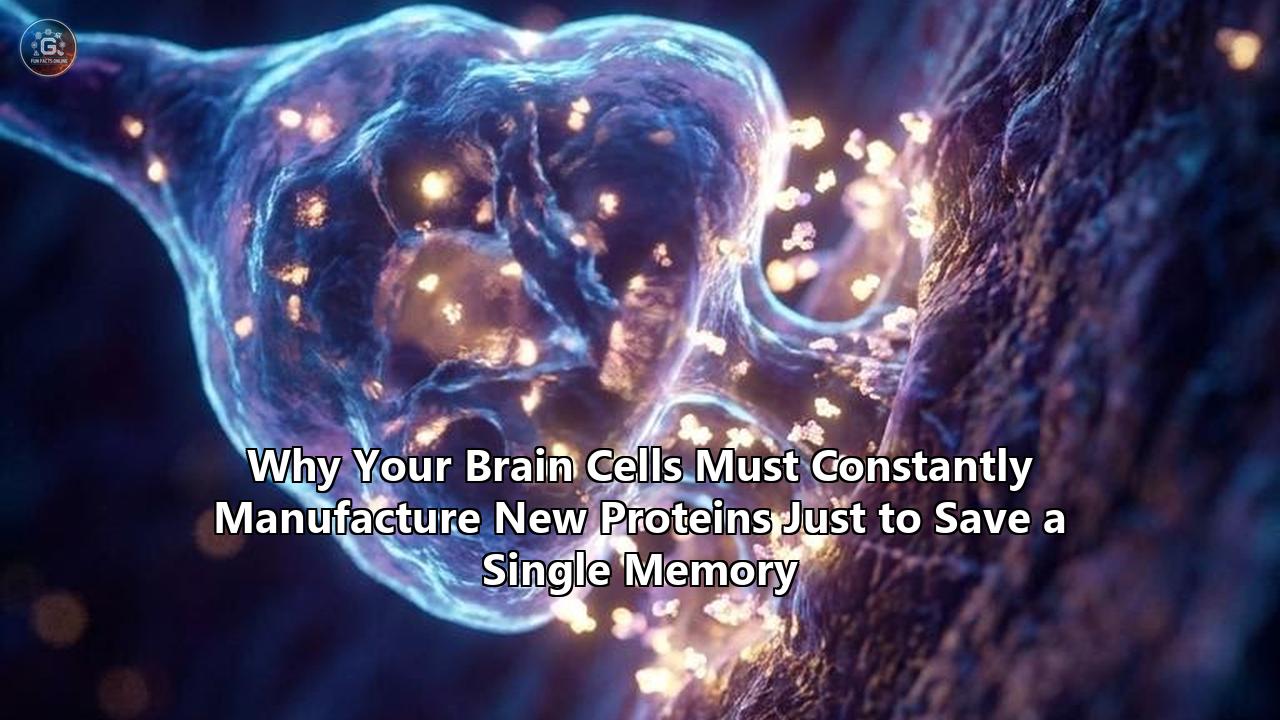
The biological architecture supporting human memory is caught in a relentless, silent crisis. Every experience we retain—from the smell of morning coffee to the complex motor patterns of riding a bicycle—is inscribed physically within the brain’s synaptic networks. Yet, the molecular building blocks of these networks are highly unstable. The receptors, structural scaffolds, and signaling enzymes that define a synapse have a half-life measured in mere hours or days. They drift, degrade, and are cleared away by cellular housekeeping mechanisms.
This reality presents a profound paradox: how can memories endure for decades when the physical substrate holding them is constantly vanishing?
New scientific insights have brought this paradox into sharp focus, exposing a high-stakes competition between opposing biological mechanisms. A study published in the Proceedings of the National Academy of Sciences (PNAS) demonstrated that the structural survival of memory is entirely dependent on continuous, aggressive protein synthesis. By tracking synaptic connections at the microscopic scale, researchers revealed that halting the brain's protein-manufacturing assembly lines doesn't just disrupt memory recall—it actively dissolves the physical connections between memory-holding cells.
Simultaneously, a study published in Science from researchers at Stanford University exposed the dark side of this perpetual manufacturing requirement. As the brain ages, the delicate molecular machinery responsible for synthesizing these proteins begins to stall and collide, creating cellular "traffic jams" that directly trigger cognitive decline.
These developments highlight a deep conceptual divide in neurobiology. To explain how the brain maintains stable structures in a shifting molecular sea, scientists have proposed radically different theories. These range from dynamic, self-recruiting molecular "tags" to functional, crystalline amyloids that lock synapses in place. Examining these competing models, their structural tradeoffs, and the methodological battles waged to study them reveals the extraordinary cost the brain pays to keep its past alive.
The Engram Dissolution: Why Memory Requires Continuous Construction
For years, a fierce debate divided neuroscientists over whether protein synthesis is required to store memories, or merely to retrieve them. When animals are given a protein synthesis inhibitor (PSI) like anisomycin immediately after learning, they fail to recall the memory naturally. However, pioneering experiments in optogenetics showed that if scientists directly stimulated the specific ensemble of neurons—known as the "engram"—associated with that memory, the animals still exhibited the learned behavior.
This led to a comforting hypothesis: perhaps the physical trace of a memory is preserved in the structural wiring diagram of the brain, completely independent of ongoing protein production. Under this view, protein synthesis was merely a utility required to construct the "retrieval cues" or receptors needed for natural access.
The PNAS study shattered this model by examining the effects of prolonged protein synthesis blockade. Utilizing a highly advanced imaging technique called dual-eGRASP (enhanced green fluorescent protein reconstitution across synaptic partners), the research team mapped the precise density and structural volume of synapses connecting engram cells in the ventral CA1 region of the hippocampus and the basal amygdala of mice.
[1x PSI Injection]  --->  Temporary Receptor Loss  --->  Synapses Intact  --->  Optogenetic Recall Works
[4x PSI Injections] --->  Structural Degradation  --->  Synapses Dissolve --->  Total Memory Erasure
The researchers compared two conditions:
- Acute Blockade (Single Dose): Mice received a single injection of anisomycin after contextual fear conditioning. While their natural memory recall was impaired, optogenetic stimulation of their engram cells successfully triggered the fear response (freezing). The dual-eGRASP imaging revealed why: their engram-to-engram synapse density remained intact, though individual dendritic spines had slightly shrunken.
- Prolonged Blockade (Four Doses over 6 Hours): Mice received sustained protein synthesis inhibition. In this group, both natural recall and artificial optogenetic recall were completely abolished. Under the microscope, the structural explanation was stark: the prolonged absence of new proteins caused a catastrophic drop in engram-to-engram synapse density alongside a severe reduction in spine size.
This trial demonstrated that how memories are stored is not a static state of anatomical wiring. Instead, memory storage is a highly active, metabolically expensive process of continuous reconstruction. The brain does not build a synapse once and leave it; it must constantly manufacture and deposit new structural proteins just to keep the physical synapse from dissolving. If the supply line is cut for even a few hours, the physical architecture of the memory trace is dismantled.
The Theseus's Ship Paradox: Dynamic Replacement vs. Structural Solidification
The requirement for continuous protein synthesis brings us to a fundamental biological question. If the structural components of a synapse are constantly being degraded and replaced, how does the synapse "remember" its exact size, strength, and connectivity?
This is the classic "Theseus’s Ship" paradox of neurobiology, named after the philosophical puzzle of a ship whose wooden planks are replaced one by one until none of the original components remain. If every molecule in a memory-storing synapse is replaced, does the memory remain the same? More practically, how do the incoming, newly synthesized proteins know where to go and how to configure themselves?
To resolve this paradox, two major, competing schools of thought have emerged. Both models explain how the brain maintains stable synaptic configurations over time, but they propose radically different molecular strategies:
+---------------------------------------------------------------------------------------------------+
|                                 THE SYNAPTIC STABILITY DUEL                                       |
+---------------------------------------------------+-----------------------------------------------+
|             THE DYNAMIC TAG-TEAM MODEL            |          THE CRYSTALLIZED AMYLOID MODEL       |
|                 (KIBRA / PKM-zeta)                |                  (CPEB3 / Orb2)               |
+---------------------------------------------------+-----------------------------------------------+
| • Fluid, continuous molecular exchange.           | • Highly stable, insoluble protein state.     |
| • KIBRA acts as a "synaptic tag" (molecular glue).| • Chaperone proteins guide folding.           |
| • PKM-zeta acts as a strengthening enzyme.        | • Orb2/CPEB self-assembles into amyloids.     |
| • High plastic flexibility for updating memories. | • Low metabolic upkeep, highly durable.       |
| • High metabolic cost of ongoing manufacture.     | • Risk of toxic aggregation (prion-like).     |
+---------------------------------------------------+-----------------------------------------------+
Model A: The Dynamic Tag-Team (KIBRA and PKM-zeta)
Developed by researchers including André Fenton of New York University and Todd Sacktor of SUNY Downstate Health Sciences University, this model suggests that synaptic stability is maintained through a perpetual partnership between a structural "tag" and a catalytic enzyme.
The enzyme is protein kinase M-zeta (PKM-zeta), a persistently active kinase that continuously drives the insertion of AMPA receptors into the postsynaptic membrane, keeping the synapse strong. However, PKM-zeta is highly mobile and degrades rapidly. To keep it anchored at the specific synapses that hold a memory, it requires a structural partner: KIBRA (kidney and brain-expressed protein).
During memory formation, activated synapses are marked with KIBRA, which serves as a highly selective "molecular glue". PKM-zeta binds to this KIBRA tag, stabilizing the synapse. As individual molecules of PKM-zeta and KIBRA wear out, their presence at the synapse attracts newly synthesized copies of both proteins.
This self-perpetuating cycle ensures that even as individual proteins are degraded and replaced, the structural blueprint of the synapse remains constant. This process directly shapes how memories are stored, allowing them to survive for decades within a constantly changing molecular environment.
Model B: The Crystallized Anchor (Functional Amyloids and CPEB/Orb2)
An alternative, fundamentally different model has been championed by Kausik Si and his team at the Stowers Institute. Rather than relying on a continuous, dynamic exchange of unstable proteins, this model proposes that the brain locks memory-storing synapses in place by converting specific proteins into highly stable, insoluble structures called functional amyloids.
In fruit flies, this process centers on a prion-like protein called Orb2 (known as CPEB3 in mammals). Typically, amyloid proteins are associated with devastating neurodegenerative diseases like Alzheimer's or Parkinson's, where they misfold into toxic aggregates that destroy brain cells. However, the Si Lab's research has demonstrated that the nervous system deliberately utilizes controlled amyloid formation as a physiological tool to preserve long-term memories.
When a synapse is activated during learning, Orb2 undergoes a structural transition, self-assembling into a highly stable amyloid state. This amyloid aggregate acts as a physical scaffold, resisting enzymatic degradation and localizing the translation of new proteins precisely at that synapse.
Publishing in PNAS, the Si Lab identified the specific role of cellular "chaperone proteins" in this process. Instead of merely preventing protein misfolding—their traditional role—these specialized chaperones actively guide Orb2 to change its shape, allowing it to form functional amyloids in response to specific sensory experiences.
Comparing the Tradeoffs: Fluid Dynamics vs. Rigid Permanence
Both the KIBRA/PKM-zeta dynamic tag-team and the functional amyloid model provide viable solutions to the Theseus's Ship paradox, but they do so through entirely different physical paradigms. The biological tradeoffs of each approach are profound, shaping how our brains balance memory stability, flexibility, and metabolic efficiency.
                  ========================================
                  =   SYNAPTIC MAINTENANCE STRATEGIES    =
                  ========================================

     [DYNAMIC REPLACEMENT MODEL]             [STRUCTURAL AMYLOID MODEL]
          (KIBRA / PKM-zeta)                       (Orb2 / CPEB3)

          o   o   o (New Proteins)                     +--------+
          |   |   |                                    |        | (Amyloid Block)
     +----+---+---+----+                      +--------+--------+--------+
     |   Synaptic Tag  |                      |    Rigid Scaffold Mesh   |
     +-----------------+                      +--------------------------+
     * High Flexibility                       * High Stability
     * High Metabolic Cost                    * Low Metabolic Cost
     * Easy to Update / Erase                 * Hard to Modify / Erase
1. Metabolic Cost and Longevity
- The Dynamic Model (KIBRA/PKM-zeta): This strategy is incredibly expensive. Because the proteins are designed to degrade, the neuron must maintain a continuous, high-volume production line. If the local ribosome machinery stalls, the memory tag will eventually fade.
- The Amyloid Model (CPEB3/Orb2): This is highly efficient. Once an amyloid scaffold is formed, its tightly packed, beta-sheet-rich physical structure is remarkably resistant to heat, chemical disruption, and proteolysis. It requires very little metabolic upkeep to remain in place for years.
2. Plasticity and the Re-writing of Memories
- The Dynamic Model (KIBRA/PKM-zeta): By relying on a fluid, enzymatically regulated cycle, this system is highly adaptable. If a memory needs to be updated, weakened, or erased (a process known as reconsolidation), the brain can introduce specific biochemical signals to temporarily disrupt the KIBRA/PKM-zeta interaction. This allows the synapse to be remodeled to fit new information.
- The Amyloid Model (CPEB3/Orb2): Because amyloids are chemically inert and structurally rigid, they are far more difficult to modify. While this makes them ideal for storing absolute, unchanging truths (such as deep fear associations or core motor skills), it makes the memory trace highly resistant to updating, potentially contributing to maladaptive cognitive states like Post-Traumatic Stress Disorder (PTSD).
3. Pathological Vulnerability
- The Dynamic Model (KIBRA/PKM-zeta): The primary risk here is systemic failure. If the cell's energy levels drop, or if translation machinery becomes damaged, the dynamic cycle collapses, leading to rapid, widespread memory loss—a phenomenon observed in early-stage dementia.
- The Amyloid Model (CPEB3/Orb2): The threat is localized toxicity. Because functional amyloids share structural properties with the pathological amyloids of Alzheimer's disease, any failure in the chaperone proteins regulating their assembly can cause the system to spin out of control. If functional amyloids escape their synaptic boundaries, they can seed the formation of toxic, cell-killing plaques.
The Logistics of the Synapse: Local Assembly Lines vs. Centralized Shipping
Whether a neuron relies on dynamic tags or functional amyloids, it must confront a massive geographic challenge. Neurons are some of the most asymmetric and spatially extended cells in nature. A single human motor neuron can extend an axon over a meter long, and a cortical pyramidal cell may possess over 10,000 individual dendritic branches, each terminating in a synapse.
If how memories are stored depends on a continuous supply of new proteins, how does the cell transport these molecules to the exact synapses that need them?
Historically, biology textbooks taught a highly centralized model of protein production:
- DNA is transcribed into messenger RNA (mRNA) in the nucleus of the cell body (soma).
- The somatic ribosomes translate this mRNA into proteins.
- Molecular motors (such as kinesin and dynein) transport these finished proteins down the microtubule highway to the distant synapses.
[CENTRALIZED MODEL]
[Nucleus/Soma] ---> (Translates Protein) ---> [Microtubule Highway (Days)] ---> [Synapse]
* Logistics bottleneck: slow, energy-intensive, and lacks synaptic precision.

[LOCAL TRANSLATION MODEL]
[Nucleus/Soma] ---> (Ships mRNA) ---> [Local Ribosomes (Active Synapse)] ---> (Translates Protein)
* Efficient, instantaneous, and highly localized to specific active connections.
However, this centralized shipping model is highly inefficient for memory maintenance. It can take hours or even days for a protein to travel from the soma to a distant synapse. Synaptic plasticity, by contrast, requires immediate, highly localized responses. Furthermore, a centralized warehouse cannot easily manage the unique, custom protein requirements of thousands of individual, widely separated synapses.
This logistic bottleneck was solved by the discovery of local translation, a paradigm-shifting field pioneered by Erin Schuman of the Max Planck Institute for Brain Research. Schuman, who was awarded the 2026 HFSP Nakasone Award for her breakthroughs, proved that synapses do not wait for protein shipments from the cell body. Instead, they operate as fully autonomous micro-factories.
Using advanced labeling techniques like BONCAT (bioorthogonal non-canonical amino acid tagging) and FUNCAT (fluorescent non-canonical amino acid tagging), Schuman’s team visualized newly synthesized proteins within living neurons. They discovered that neurons package mRNAs into specialized "RNA granules" and transport these silent instructions out to the dendrites and axons before they are needed.
When a specific synapse is activated during learning, local signals (such as the release of the neurotrophin BDNF) trigger the immediate translation of these local mRNAs. The ribosome machinery directly adjacent to the active synapse quickly manufactures the required proteins on-site. By establishing that protein synthesis occurs locally, Schuman's research rewrote the cellular blueprint of how memories are stored, demonstrating that the brain decentralizes its manufacturing to bypass the physical limitations of intracellular transport.
The Methodological War: Chemical Inhibitors vs. Precision Optogenetics
Our understanding of the molecular basis of memory has been hard-won, shaped by deep methodological debates and technological breakthroughs. For over half a century, the primary tool used to study the role of protein synthesis in memory was the pharmacological blockade. Scientists would train an animal, inject a protein synthesis inhibitor (PSI) like anisomycin or cycloheximide into its brain, and observe the resulting amnesia.
However, this classic pharmacological approach had a major flaw: PSIs are notoriously blunt, toxic instruments.
+---------------------------------------------------------------------------------------------------+
|                                METHODOLOGICAL COMPARISON TABLE                                    |
+-------------------+---------------------------------------------------+---------------------------+
| METHOD            | ADVANTAGES                                        | DISADVANTAGES             |
+-------------------+---------------------------------------------------+---------------------------+
| Pharmacological   | • Simple, historical baseline.                    | • Extreme cellular toxicity. |
| Blockade (PSIs)   | • Easy to administer in vivo.                     | • Disrupts cell respiration.|
|                   | • Globally halts protein synthesis.               | • Induces apoptosis.      |
|                   |                                                   | • Poor spatial control.   |
+-------------------+---------------------------------------------------+---------------------------+
| Optogenetic       | • Millisecond temporal precision.                 | • High technical complexity.|
| Engram Mapping    | • Highly cell-type specific.                      | • Requires gene therapy.  |
|                   | • Allows artificial memory reactivation.          | • Invasive fiber optics.  |
|                   | • Minimal off-target toxicity.                    | • Only targets chosen cells. |
+-------------------+---------------------------------------------------+---------------------------+
The Sins of Anisomycin
When anisomycin is injected into the brain to block protein synthesis, it doesn't just stop ribosomes from translating mRNA. It also:
- Disrupts cellular respiration and depletes ATP levels.
- Triggers a massive, abnormal release of neurotransmitters.
- Activates stress-activated protein kinases (MAP kinases), causing local inflammation.
- Induces apoptosis (programmed cell death) in vulnerable neuronal populations.
Because of these severe off-target effects, a skeptical faction of neuroscientists argued that PSI-induced amnesia was not actually caused by a lack of new memory proteins. Instead, they proposed that the drugs were simply poisoning the brain cells, disrupting the overall neural circuitry, and making it impossible for the animal to retrieve its memories. Under this skeptical view, the entire foundation of memory consolidation theory was built on a series of toxic artifacts.
The Precision Revolution: eGRASP and Optogenetics
To resolve this methodological standoff, modern neurobiology had to move beyond blunt chemical hammers and develop highly precise genetic scalpels. The 2026 PNAS study elegantly bridged this historical gap by combining classical pharmacological blocks with cutting-edge genetic tools.
By using optogenetics, researchers genetically engineered specific engram neurons to express channelrhodopsin-2 (ChR2), a light-sensitive ion channel. This allowed them to bypass natural recall pathways entirely and directly activate the memory engram using pulses of blue light delivered via implanted fiber-optic cables.
At the same time, they utilized dual-eGRASP to visually distinguish the synapses formed between engram cells from those formed with non-engram cells. Dual-eGRASP uses two different fluorescent proteins that are split in half and anchored to the pre- and post-synaptic membranes of specific partner cells. When the two cells form a synapse, the halves join together and fluoresce brilliantly under a microscope, allowing scientists to count and measure individual memory-storing connections.
This combination of tools allowed researchers to pinpoint exactly what was happening at the synaptic scale during a protein synthesis blockade. When they observed that a prolonged blockade of protein synthesis (using four carefully spaced injections of anisomycin) completely dissolved the physical connections revealed by dual-eGRASP, they finally put the historical debate to rest. The amnesia wasn't an artifact of cellular sickness; the physical structural connections of the engram had simply ceased to exist.
When the Factory Fails: Ribosome Stalling and the Aging Brain
Understanding how the brain maintains its synaptic assembly lines is more than just an academic pursuit—it is a critical key to unlocking the mysteries of cognitive decline and neurodegenerative disease. If keeping our memories alive requires our brain cells to constantly manufacture new proteins, then any decline in the efficiency of this manufacturing process will inevitably degrade our ability to retain the past.
This brings us to a study published in Science by Judith Frydman and her team at Stanford University. The researchers investigated the decline of proteostasis—the intricate cellular quality-control network that ensures proteins are correctly folded, maintained, and recycled.
           ======================================================
           =    RIBOSOME STALLING AND TRANSLATION ELONGATION    =
           ======================================================

     [HEALTHY AGING SYNAPSE]
     mRNA:     5'-[ codon ]-[ codon ]-[ codon ]-[ codon ]-[ codon ]-3'
     Ribosomes:     [ RIBO 1 ]     [ RIBO 2 ]     [ RIBO 3 ]
     Result: Smooth translation. Finished proteins are deployed to synapses.

     [SENESCENT/AGING SYNAPSE]
     mRNA:     5'-[ codon ]-[ codon ]-[ codon ]-[ codon ]-[ codon ]-3'
     Ribosomes:     [ RIBO 1 ]===[ RIBO 2 ] (Collision!)
     Result: Ribosome traffic jam. Misfolded, incomplete proteins aggregate into toxic clumps.
To study this process, the Stanford team turned to the turquoise killifish (Nothobranchius furzeri), an ultra-short-lived vertebrate that ages rapidly, making it an ideal model for studying the biological timeline of cognitive decline. By tracking the lifespans of thousands of individual proteins across various tissues, the researchers uncovered a specific vulnerability in the aging brain's protein-manufacturing assembly line: ribosome stalling during translation elongation.
During protein synthesis, a ribosome moves along an mRNA strand like a train on a track, reading the genetic instructions and assembling amino acids one by one. The Stanford team discovered that as brain cells age, the ribosomes frequently lose their footing, slowing down, stalling, and colliding with one another.
These molecular "traffic jams" have catastrophic consequences for the cell:
- The Production of Faulty Parts: When ribosomes collide, they often drop their cargo, producing incomplete, misfolded proteins. These malformed proteins are not only useless for synaptic maintenance; they are highly prone to sticking together and forming toxic, insoluble aggregates.
- Protein-Transcript Decoupling: In healthy cells, the amount of mRNA transcribed from a gene directly correlates with the amount of protein produced. In aging brains, however, the Stanford team observed a dramatic disconnect. Even though the cell's nucleus continued to produce plenty of mRNA instructions, the stalled local ribosomes could not translate them into finished proteins.
- The Collapse of Synaptic Architecture: Without a steady stream of fresh, functional proteins, the dynamic KIBRA/PKM-zeta tags dissolve, the functional amyloids degrade, and the physical connections between engram cells are lost, leading to the gradual erasure of long-term memories.
This discovery reframes our understanding of neurodegenerative conditions like Alzheimer's disease. Traditionally, Alzheimer's has been viewed as a disease of accumulation, where toxic amyloid-beta and tau proteins build up and choke the brain. The Stanford study suggests that this accumulation is actually a late-stage symptom of a deeper, fundamental failure of production. The primary issue is a mechanical breakdown of the cell's local protein-manufacturing plants.
The Therapeutic Frontier: Repairing the Assembly Lines
Ultimately, resolving the tension between these competing models of how memories are stored will determine how we treat memory disorders in the future. As the global population ages, finding ways to preserve cognitive function is becoming one of the most urgent challenges of modern medicine.
+---------------------------------------------------------------------------------------------------+
|                              EMERGING THERAPEUTIC PARADIGMS                                       |
+-------------------+---------------------------------------------------+---------------------------+
| TARGET            | STRATEGY                                          | CLINICAL POTENTIAL        |
+-------------------+---------------------------------------------------+---------------------------+
| Translation       | • Small molecules to boost ribosome speed.        | • Restores overall protein|
| Elongation        | • Clears ribosomal "traffic jams".                |   production in aging.    |
|                   | • Prevents ribosome collisions on mRNA.           | • Reverses cognitive drift.|
+-------------------+---------------------------------------------------+---------------------------+
| Chaperone         | • Enhances protein folding helpers.               | • Stabilizes functional   |
| Regulation        | • Selectively promotes healthy amyloids (CPEB3).  |   amyloids at synapses.   |
|                   | • Prevents pathogenic misfolding (tau, Abeta).    | • Slows Alzheimer's.      |
+-------------------+---------------------------------------------------+---------------------------+
| KIBRA / PKM-zeta  | • Mimics of the "molecular glue" interaction.      | • Artificially stabilizes |
| Interaction       | • Keeps memory tags anchored to synapses.         |   fading memories.        |
|                   | • Prevents decay of dynamic memory networks.      | • Restores access in PTSD.|
+-------------------+---------------------------------------------------+---------------------------+
Historically, therapeutic efforts have focused on clearing out toxic protein aggregates after they have already formed. However, this strategy has yielded frustratingly modest clinical benefits. The latest research points toward three far more proactive, upstream approaches:
1. Accelerating the Ribosome Train
Instead of trying to clean up the toxic protein clumps that result from ribosome collisions, researchers are looking for ways to prevent the collisions from happening in the first place. By developing small-molecule therapeutics that stabilize ribosomes during translation elongation, scientists hope to keep the cellular machinery moving smoothly, restoring healthy proteostasis and halting age-related memory decline before it starts.
2. Targeting Chaperones to Direct Amyloid Folding
The Si Lab’s discovery that chaperone proteins actively guide functional amyloid formation in memory storage opens up a fascinating new therapeutic avenue. By designing drugs that selectively modulate specific chaperone classes, we could theoretically promote the formation of healthy, memory-preserving functional amyloids (like CPEB3) while simultaneously inhibiting the formation of pathogenic, disease-causing amyloids (like amyloid-beta and tau).
3. Stabilizing the KIBRA/PKM-zeta Interaction
For psychiatric disorders characterized by memory instability or cognitive trauma, directly targeting the KIBRA/PKM-zeta interaction holds immense promise. In conditions like PTSD, where traumatic memories are pathologically hyper-stabilized, drugs that temporarily disrupt this molecular glue could help weaken the traumatic engram. Conversely, in early-stage Alzheimer's, KIBRA-mimicking compounds could help stabilize fading synapses, artificially preserving long-term memory traces.
Unresolved Questions in Memory Biology
As we stand on the threshold of this new era of neurobiology, several profound questions remain unanswered. If our brain cells are constantly manufacturing new proteins just to save a single memory, what are the ultimate physical boundaries of this system?
- The Energetic Limits of the Mind: The brain consumes roughly 20% of the body's energy, despite making up only 2% of its weight. Much of this energy is spent driving local translation at synapses. Is the physical capacity of our memory limited not by the number of neurons we possess, but by the maximum metabolic budget our body can allocate to keep these local protein factories running?
- The Integration of Competing Models: Do dynamic tags (KIBRA/PKM-zeta) and functional amyloids (CPEB3/Orb2) operate in entirely separate, non-overlapping memory systems? For example, does the brain use dynamic, easily updated tags for short-term episodic memory, while reserving rigid, indestructible functional amyloids for core motor skills and fear associations?
- The Code of the Local mRNA Pool: How does a synapse select which specific mRNAs to translate from its local pool during learning? Is there a complex, sub-synaptic code that determines how different patterns of neural activity trigger the synthesis of unique protein cocktails?
What is now undeniably clear is that memory is not a monument carved in stone. It is a flickering flame, kept burning only by the continuous, tireless efforts of the cellular machinery within our brains. To remember who we are, our neurons must never stop building.
Reference:
- https://scitechdaily.com/new-study-reveals-molecular-secret-to-lifelong-memories/
- https://www.nyu.edu/about/news-publications/news/2024/june/how-do-our-memories-last-a-lifetime--new-study-offers-a-biologic.html
- https://pmc.ncbi.nlm.nih.gov/articles/PMC12818406/
- https://www.researchgate.net/publication/399709096_Protein_synthesis_blockade_prevents_fear_memory_reactivation_via_inhibition_of_engram_synapse_strengthening
- https://www.sciencedaily.com/releases/2026/05/260528082505.htm
- https://www.ivanhoe.com/news_flash/protein-traffic-jams-may-explain-aging-memory-loss-and-alzheimers-click-here/
- https://www.stowers.org/news/new-research-reveals-how-the-brain-turns-experience-into-memory-with-help-from-a-tiny-protein
- https://www.hfsp.org/hfsp-nakasone-award/2026-erin-m-schuman
- https://pmc.ncbi.nlm.nih.gov/articles/PMC2745628/
- https://www.geneonline.com/alzheimers-linked-protein-plays-key-role-in-long-term-memory-formation-study-finds/
- https://medicine.yale.edu/news-article/protein-turnover-mapping-may-offer-clues-for-alzheimers-cancer-treatment/