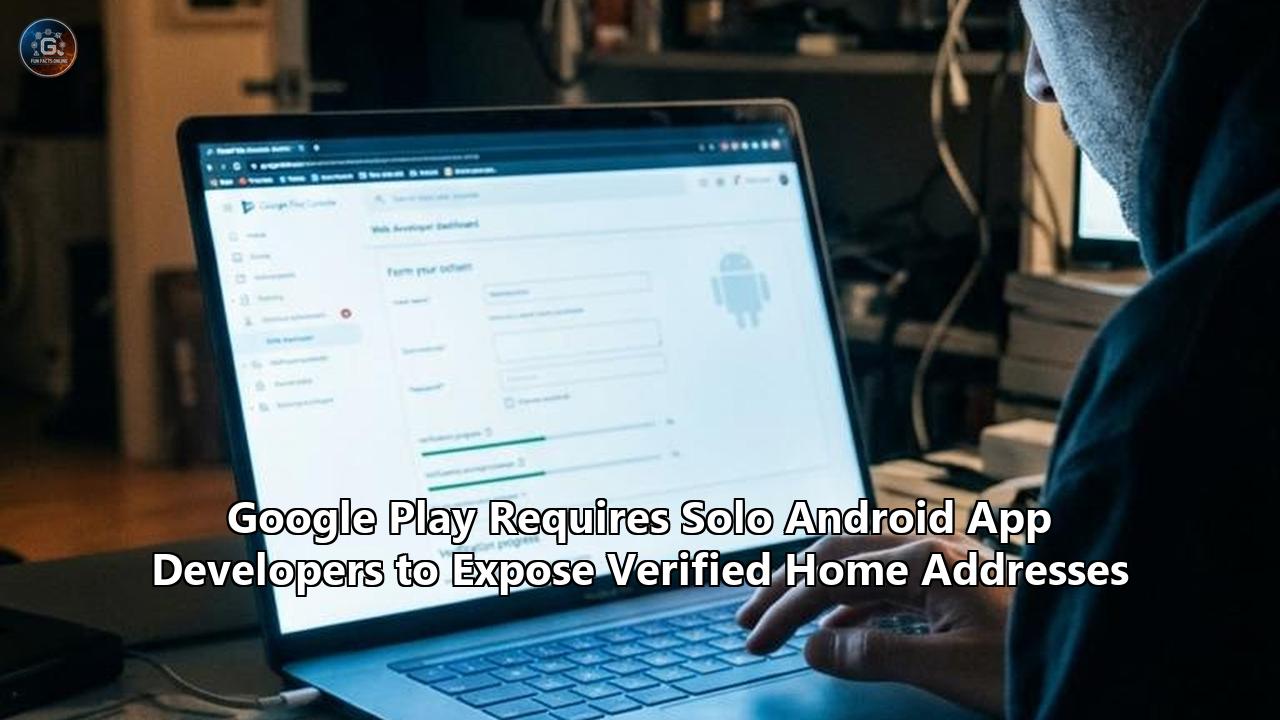
Independent Android software creators woke up in late November to an alarming ultimatum buried in Google Play Console documentation: declare your commercial status under European law by February 1, 2027, or watch your applications face update freezes and global removal. Even more troubling than the administrative deadline was the fine print governing what follows on March 1, 2027. On that date, Google will take the verified physical residential addresses and personal phone numbers of solo developers who monetize their software and broadcast them publicly on Google Play store listings across the globe.
The policy shift applies to any individual developer classified as a "trader" under European Union and United Kingdom consumer protection frameworks. In practice, that classification encompasses virtually anyone generating regular revenue through paid downloads, in-app purchases, or programmatic advertisements via networks like AdMob. Because Google explicitly forbids the use of post office boxes for merchant payment profiles, software engineers operating out of spare bedrooms, home offices, and kitchen tables face an unprecedented invasion of their physical privacy.
Public outrage swept through developer forums, subreddits, and international technology communities as the implications crystallized. Where platform compliance updates typically involve automated digital certificates or tax filings, this mandate threatens to turn home addresses into public contact directories for hundreds of millions of Android users.
Behind this administrative rule lies a tangled web of European regulatory overreach, rigid legacy payments infrastructure inside Mountain View, and an architectural decision by Google to enforce global transparency far beyond what statutory law actually requires.
The Regulatory Engine: Unpacking DSA Article 30 and the UK DMCCA
To understand why this mandate surfaced, one must look across the Atlantic to Brussels and London. The root mechanism driving the change is Article 30 of the European Union’s Digital Services Act (DSA)—formally Regulation (EU) 2022/2065—alongside parallel provisions in the United Kingdom’s Digital Markets, Competition and Consumers Act (DMCCA).
Article 30 of the DSA, titled "Traceability of traders," obligates online marketplaces to ensure that consumers can identify and locate commercial sellers. The law was drafted primarily with physical e-commerce in mind: European regulators sought to curb illicit marketplaces where anonymous shell operations could sell counterfeit electronics, dangerous toys, or unvetted cosmetics without accountability. If a defective lithium-ion battery purchased on an online storefront causes a fire, European law dictates that the consumer must have a direct legal name, physical address, telephone number, and email to initiate legal action or claim damages.
When lawmakers finalized the DSA, they applied these provisions broadly to any intermediary service allowing consumers to conclude distance contracts with "traders". Under European Commission guidance anchored in the Unfair Commercial Practices Directive (Directive 2005/29/EC), a "trader" is defined as any natural or legal person acting for purposes relating to their trade, business, craft, or profession.
The European Commission’s interpretive criteria do not establish an earnings threshold for software development. A developer does not need to run an incorporated venture with a dozen employees to be categorized as a trader. Instead, the determination pivots on commercial intent and regularity:
- Do you offer paid downloads or in-app microtransactions?
- Do your free applications generate recurring revenue from banner ads or rewarded video placements?
- Do you maintain a regular transaction volume, indicating an ongoing economic activity rather than an isolated sale?
If the answer to those questions is affirmative, European law considers the developer a commercial merchant rather than a casual hobbyist.
For years, Google insulated individual app publishers by acting as the merchant of record in Europe. When European consumers purchased an app or an in-app token, the transaction technically executed between the consumer and Google Ireland Limited. However, Google announced that effective March 1, 2027, Google Play is formally transitioning to an online marketplace model in the European Economic Area (EEA) and the UK. In that marketplace paradigm, the contractual counterparty shifts directly from Google to the developer.
This transition legally triggers Article 30’s traceability rules. Google must collect, verify, and display the trader's identity. If a developer attempts to bypass these requirements by falsely self-certifying as a "non-trader" while actively monetizing software, they trigger immediate liability under European consumer laws and Google’s own terms of service, exposing their account to global suspension, revenue forfeiture, and permanent blacklisting.
The Global Broadcast Anomaly: Why Google’s Approach Diverges from Apple
While European mandates establish the baseline obligation, they do not explain why a developer in Sydney, Toronto, or Austin must have their residential address exposed to smartphone users in Tokyo, Johannesburg, or New York.
The European Union’s DSA is a regional regulation designed to safeguard consumers located within the 27 EU member states and the broader European Economic Area. The statute does not assert extraterritorial jurisdiction over how software stores present information to consumers outside European borders.
This distinction exposes a major operational divergence: Apple and Google took radically different paths to satisfy the exact same regulatory requirement.
                     ┌────────────────────────────────────────┐
                     │ European Union Digital Services Act    │
                     │ (DSA Article 30: Trader Traceability)  │
                     └───────────────────┬────────────────────┘
                                         │
             ┌───────────────────────────┴───────────────────────────┐
             ▼                                                       ▼
┌─────────────────────────────┐                         ┌─────────────────────────────┐
│    Apple App Store Model    │                         │   Google Play Store Model   │
├─────────────────────────────┤                         ├─────────────────────────────┤
│ • Regional Geo-Filtering    │                         │ • Worldwide Broadcast       │
│   (Shown ONLY in EU/EEA)    │                         │   (Shown in ALL Countries)  │
│                             │                         │                             │
│ • P.O. Box Permitted        │                         │ • P.O. Box Strictly Banned  │
│   (With verified billing)   │                         │   (Requires physical home)  │
│                             │                         │                             │
│ • Separation of Internal    │                         │ • Direct Pipe to Payments   │
│   KYC & Public Metadata     │                         │   Profile Merchant KYC      │
└─────────────────────────────┘                         └─────────────────────────────┘
When Apple updated App Store Connect to comply with the DSA, it engineered a regional display barrier. If a user browsing from Paris, Berlin, or Madrid taps on an app’s store listing, Apple displays the developer’s trader status, phone number, and address. If that exact same listing is loaded by a user in the United States or South Korea, the contact card disappears. Apple limits disclosure strictly to the jurisdiction requiring it.
Google, by contrast, chose to broadcast the verified phone numbers and residential addresses of solo traders worldwide. Starting March 1, 2027, an app support card on Android will serve this information to anyone who visits the Play Store, regardless of IP geolocation or account origin.
Why did Google choose a worldwide rollout instead of implementing geo-fencing?
The decision stems from Mountain View’s broader push toward uniform global verification profiles and systemic administrative simplicity. Building and maintaining regionally contingent metadata pipelines introduces caching complexities across distributed content delivery networks (CDNs) and requires continuous edge-routing checks based on user IP and Play Store country settings. More importantly, Google has spent the past three years systematically standardizing its Google Play developer requirements, migrating all account tiers toward maximum identity verification. Rather than treating the DSA as a local regulatory hurdle, Google’s platform architects integrated it into their global trust-and-safety initiative, treating complete merchant transparency as the default status for any monetized developer account.
The second major divergence involves post office boxes. Apple’s developer portal permits individual traders to list a verified P.O. Box or professional mail address as their public-facing point of contact. To prevent fraudulent abuse, Apple requires the developer to submit corroborating documentation—such as an official postal invoice, lease agreement, or utility bill—proving that the developer owns or leases that specific box. This cleanly separates the developer’s private identity verification file from their public consumer-facing contact card.
Google permits no such separation. Play Console help documents explicitly state that P.O. Boxes cannot be used for developer payment profiles. The address displayed on the public store listing is pulled directly from the developer’s verified Google Payments merchant profile—a database strictly configured to reject non-physical locations.
Under the Hood: The Payments Backend and the CMRA Trap
To understand why a solo developer cannot simply type a mail drop or coworking suite into their Play Console settings, one must trace the technical pipeline connecting Google Play to Google Payments.
In the early days of the Android Market, developer registration was lightweight. An engineer needed only a standard Google account and a one-time $25 credit card payment. Over the past decade, however, Google integrated the developer backend directly into its centralized financial compliance engine: Google Payments (the same infrastructure powering Google Pay and merchant billing).
+--------------------------------------------------------------------------------+
|                           GOOGLE'S KYC PIPELINE                                |
+--------------------------------------------------------------------------------+
|                                                                                |
|  [ Developer Home Address ] ---> [ Proof of Address: Utility Bill / Bank ]    |
|                                                     |                          |
|                                                     v                          |
|                                      [ Experian / Equifax / USPS APIs ]        |
|                                                     |                          |
|                                                     v                          |
|                                       Is address flagged as CMRA,              |
|                                         Virtual Box, or P.O. Box?              |
|                                                     |                          |
|                         +---------------------------+------------------------+ |
|                         | YES                                                | |
|                         v                                                    v |
|             [ REJECTED: Merchant KYC ]                              [ PASSED ] |
|                                                                          |     |
|                                                                          v     |
|                                                      [ Google Payments Profile |
|                                                              Database ]        |
|                                                                          |     |
+--------------------------------------------------------------------------|-----+
                                                                           |
                                            (Direct Pipeline Coupling)     |
                                                                           v
                                                      [ Google Play Storefront   |
                                                          Metadata Engine ]      |
                                                                           |
                                                                           v
                                                      [ PUBLIC PLAY STORE PAGE:  |
                                                        Exposes Verified Home    |
                                                        Address Worldwide ]      |
When an individual developer enrolls to earn revenue, Google’s merchant onboarding initiates an automated Know Your Customer (KYC) and Anti-Money Laundering (AML) audit. The developer must provide a government-issued photo ID (such as a passport or driver’s license) and secondary proof of residency—typically a utility bill, bank statement, or municipal tax assessment dated within the last 90 days.
During this verification pass, Google runs the submitted address through postal validation services and third-party credit verification APIs, such as Experian, Equifax, or local national credit registries:
- USPS Address Matching and CASS Certification: In the United States, the address is cross-referenced against the Coding Accuracy Support System (CASS) and the National Change of Address (NCOA) databases.
- Commercial Mail Receiving Agency (CMRA) Scrubbing: These databases contain explicit metadata tags identifying whether an address belongs to a single-family home, a multi-unit apartment complex, or a Commercial Mail Receiving Agency (such as a UPS Store, a Mail Boxes Etc. franchise, or a Regus virtual office suite).
- Automated Risk Scoring: If Google’s merchant validation scripts detect that an individual developer’s profile address is tagged as a P.O. Box or a CMRA drop, the system flags the profile for non-compliance. Automated notices demand documentation showing an active commercial lease or utility bill in the individual's legal name matching that commercial location.
Because solo developers do not own commercial office buildings or run primary physical leases at virtual coworking spaces, their documentation fails verification.
The structural flaw in Google’s implementation is that the Play Store front-end does not maintain an independent "public contact address" data field decoupled from the underlying merchant payments profile. When Google Play assembles an app’s listing via internal microservices, the "About the developer" component queries the payments database directly.
If a developer changes their payment profile address to an unverified location to safeguard their home, Google’s automated merchant systems suspend their payout capabilities until verified residential documentation is uploaded. The solo creator is trapped in an architectural loop: satisfy merchant banking KYC by submitting their actual home, or forfeit their ability to publish software updates and receive revenues.
The Escalation of Google Play Developer Requirements
This latest mandate does not exist in isolation. It represents the culmination of a multi-year campaign by Google to transform its app ecosystem from a freewheeling, open software repository into a heavily regulated, enterprise-grade software catalog.
                                  TIMELINE OF RISING FRICTION

   Late 2023                       Late 2024 - 2025                Late 2026 - Early 2027
  ┌──────────────────────────────┐┌──────────────────────────────┐┌──────────────────────────────┐
  │ 20-Tester Mandate            ││ D-U-N-S & Enterprise Screen  ││ DSA Trader Doxxing Mandate   │
  ├──────────────────────────────┤├──────────────────────────────┤├──────────────────────────────┤
  │ New personal accounts must   ││ Organization accounts forced ││ All monetized personal       │
  │ run closed tests with 20     ││ to obtain verified D-U-N-S   ││ accounts must declare trader │
  │ opt-in testers for 14 days   ││ registry numbers, physical   ││ status. Verified physical    │
  │ continuous before publishing ││ articles of incorporation,   ││ home addresses published     │
  │ production APKs.             ││ and commercial phone lines.  ││ globally on March 1, 2027.   │
  └──────────────────────────────┘└──────────────────────────────┘└──────────────────────────────┘
For more than a decade, the primary selling point of developing for Android over Apple’s iOS was low platform friction. Apple charged $99 annually, demanded extensive human app reviews, and maintained strict sandboxes. Google charged a nominal $25 fee, approved apps within hours using automated scanners, and allowed independent hackers to deploy experimental software with minimal identity overhead.
That dynamic eroded rapidly under successive revisions to Google Play developer requirements:
The 20-Tester Closed Testing Wall
In late 2023, Google decreed that any personal developer account created after November 2023 could no longer publish an app directly to production. Instead, solo creators must recruit a minimum of 20 independent testers who opt into a closed testing track for at least 14 consecutive days. Only after submitting an application detailing testing feedback can the developer apply for production access—a manual review process that Google frequently rejects if engagement logs show low user activity.
The D-U-N-S Number Barrier for Organizations
Simultaneously, Google mandated that any developer registering as an organization must secure a Data Universal Numbering System (D-U-N-S) number from commercial credit bureau Dun & Bradstreet. Obtaining a D-U-N-S profile requires submitting formal corporate charters, business licenses, commercial registry filings, and utility bills verified against national business registries. This operational overhead completely closed organizational account creation to unincorporated teams or open-source collectives.
Universal Account Verification Deadlines
Throughout 2024 and 2025, Google systematically forced all legacy developer accounts—some dating back to the Android Market’s inception in 2008—to select verification deadlines. Developers had to re-submit identity verification documentation, link their accounts to verified phone numbers, and submit merchant documentation or face immediate account closure and package deletion.
The November 2026 trader declaration rule represents the final phase of this tightening lifecycle. Under the guise of European consumer compliance, Google has effectively bridged the barrier between high-level regulatory compliance and grassroots open-source software distribution. The informal era of Android indie development is systematically being dismantled by administrative fiat.
The Indie Dilemma: Defensive Geo-Blocking and the "Privacy Tax"
Faced with the reality of their living rooms appearing in store listings on March 1, 2027, solo developers around the world are calculating the cost of survival.
They have discovered that escaping the home-address exposure mandate requires paying what the independent community has termed a "privacy tax"—or making radical commercial sacrifices.
DEVELOPER OPTIONS UNDER THE NEW POLICY

├── 1. COMPLY UNALTERED
│   ├── Expose personal home address and phone number to 3+ billion Android users worldwide.
│   └── Financial cost: $0.
│   └── Safety cost: Total loss of domestic privacy; vulnerability to doxxing, harassment, and swatting.
│
├── 2. PAY THE "PRIVACY TAX" (Incorporate an Organization)
│   ├── Form an LLC, Ltd, or national equivalent ($100 - $1,000 upfront).
│   ├── Pay annual state/national franchise taxes ($100 - $800+ annually).
│   ├── Lease dedicated commercial office with physical signage ($1,200 - $3,600+ annually).
│   ├── Acquire commercial business insurance and secondary legal representation.
│   ├── Secure Dun & Bradstreet D-U-N-S registration.
│   └── Total Year 1 Cost: $2,500 - $6,000+.
│
└── 3. DEFENSIVE GEO-BLOCKING
    ├── Unpublish all applications from 31 European countries (27 EU states + UK, Norway, Iceland, Liechtenstein).
    ├── Legally declare "Non-Trader" status on Google Play Console.
    ├── Keep home address hidden from global view.
    └── Commercial cost: Forfeit 15% - 35% of total global app revenues and user base.
Option 1: The Commercial Infrastructure Route
For a single developer generating $200 to $500 a month from a specialized niche utility, casual game, or open-source tool, running a full corporate shell is economically irrational.
To upgrade from a personal account to an organization account on Google Play (where a corporate office address is displayed instead of a residence), the creator cannot merely purchase a $50 mailbox:
- Corporate Formation: The developer must file Articles of Organization for a limited liability company (LLC), private limited company (Ltd), or local equivalent ($100 to $800 depending on jurisdiction).
- Franchise Fees: In states like California, maintaining an LLC imposes a mandatory $800 annual minimum franchise tax, irrespective of profitability.
- Commercial Physical Leases: Because Dun & Bradstreet and Google both screen for virtual offices and CMRA mail drops, the developer must secure physical desk space or a dedicated micro-office where business signage is physically posted. A shared desk with mail handling typically costs $150 to $300 per month.
- D-U-N-S Validation: The developer must wait weeks for Dun & Bradstreet to inspect municipal records and issue a corporate registry number before Google will even permit the transition to an enterprise account.
For an independent developer netting $4,000 a year, spending $2,500 to $4,000 on corporate maintenance, registered agent services, and physical office space wipes out their entire operational margin.
Option 2: Defensive Geo-Blocking
For tens of thousands of developers, the only viable, privacy-preserving strategy is defensive regional abandonment.
Under the updated Google Play developer requirements, Google clarifies that developers who do not distribute their applications in either the European Economic Area or the United Kingdom are permitted to declare themselves as non-traders without verifying trader contact information.
This carve-out has sparked a wave of developers preparing to uncheck 31 nation-states from their distribution matrices inside Play Console:
"I run a small, ad-supported audio utility that generates about $180 a month," explained one Australia-based developer on Google's issue tracker. "European users represent roughly 12% of my active installs. The EU DSA demands disclosure to European consumers, yet Google forces that disclosure to the entire planet. My family lives in this house. My kids play in the front yard. I cannot risk a disgruntled user, a stalker, or an online troll having our doorstep accessible with two taps on a smartphone screen. My only rational choice is to withdraw my software from the UK and Europe entirely and declare non-trader status. Europe’s consumer protection law is directly cutting European citizens off from global software."
This reaction is not an isolated edge case. Independent developer communities across North America, Asia, and Latin America are openly sharing scripts and configuration profiles designed to batch-purge European countries from their target track releases ahead of the February 1, 2027 deadline.
The unintended economic consequence of the rule is the partition of the Android software ecosystem, where European consumers find themselves cut off from global independent utilities, niche productivity software, and boutique indie games whose creators cannot afford the safety and overhead costs of full physical exposure.
Physical Safety, Stalking, and Digital Hostility
Technology company executives often operate behind corporate campus security perimeters, executive protection details, and legal teams designed to filter external hostility. Independent developers work under no such protective canopy.
The nature of modern app store interaction has grown increasingly hostile. Anyone who has monitored public reviews on Google Play understands that user feedback frequently transcends standard software bug reporting. When an app updates its interface, deprecates a legacy feature, runs an aggressive ad network algorithm, or introduces a subscription tier, user reactions can escalate into extreme online vitriol.
Publishing an individual's physical home address introduces distinct real-world security threats:
Doxxing and Targeted Swatting
Swatting—the practice of making a hoax emergency call to municipal law enforcement to dispatch heavily armed tactical police units to a victim's address—remains an active threat in digital gaming and streaming communities. Independent game developers who balance mechanics, adjust drop rates, or ban cheating accounts have frequently faced harassment campaigns. Exposing a developer’s verified address eliminates the investigative friction previously required for malicious actors to locate a victim's home.
High-Risk Developer Demographics
The security threat falls disproportionately on vulnerable creators:
- Marginalized Groups and Women in Tech: Female developers and LGBTQ+ creators routinely experience heightened rates of digital harassment, online stalking, and targeted intimidation. Forcing these developers to attach their residential address to their professional software tools forces many to exit the commercial market entirely.
- Sensitive Software Verticals: Developers who build applications addressing sensitive topics—such as reproductive health trackers, domestic abuse exit tools, whistleblower communication utilities, or secularist resources in authoritarian regimes—face persecution from ideological extremists. A public home address turns a digital release into a direct physical hazard for the creator and their family.
- Geopolitical and Cross-Border Vulnerabilities: A dissident developer living abroad who publishes an independent news or censorship-circumvention tool for their home country could have their foreign residence cataloged by state-sponsored surveillance actors scraping Google Play metadata.
The systemic asymmetry is profound: users can download, review, rate, and criticize applications while maintaining total digital anonymity behind burner accounts and pseudonyms. The developer whose work powers the ecosystem must publish the street name and house number where their family sleeps.
Regulatory Contradictions: GDPR and South Korea’s PIPA
Google’s decision to publish residential data globally in the name of European compliance creates a sharp legal paradox: it appears to run directly counter to European and international data protection laws.
The primary statute at issue is Regulation (EU) 2016/679, the General Data Protection Regulation (GDPR). While the Digital Services Act establishes a mandate for trader transparency, Article 5(1)(c) of the GDPR enshrines the foundational principle of data minimization:
Personal data shall be adequate, relevant and limited to what is necessary in relation to the purposes for which they are processed ('data minimisation').
The purpose identified by the European Parliament and Council in Article 30 of the DSA is to ensure that European consumers engaging in transactions within the single market can verify the legal identity of their contractual counterparty.
By extracting the private residential address of an individual, verifying it via financial instruments, and then broadcasting that record across non-EU territories where the DSA possesses no legal force, Google is arguably processing and disseminating personal data far beyond what is necessary to achieve the statutory objective.
Furthermore, Article 25 of the GDPR requires Data Protection by Design and by Default. Apple demonstrated that technically viable, privacy-preserving compliance mechanisms exist: geo-filtering public displays to EU IP addresses and accepting verified P.O. Box arrangements. Google’s engineering decision to bypass geo-filtering in favor of universal exposure suggests a structural failure to implement data protection by design.
A parallel conflict is developing in East Asia under South Korea’s Personal Information Protection Act (PIPA). Article 3 of PIPA explicitly commands that personal information controllers must process personal information to the minimum extent necessary for the intended purpose, and must minimize infringements on the privacy of data subjects. South Korean legal analysts have noted that Google’s global publication rule exposes Korean developers—who monetize via small domestic apps—to worldwide scrapers and automated data brokers without legal cause under Korean domestic law.
International privacy advocacy organizations and European digital rights groups, including Austrian privacy collective NOYB (None of Your Business), have historically targeted platform architectures that weaponize regional compliance to dismantle baseline privacy rights. If formal complaints are lodged with Ireland’s Data Protection Commission (DPC)—Google’s primary lead supervisory authority in Europe—or the French CNIL, Google’s global broadcast policy could face regulatory scrutiny before its March 2027 enforcement milestone.
Critical Milestones and What to Watch Next
As the countdown begins, developers, industry trade bodies, and consumer advocates face several critical milestones that will define the future of open mobile software distribution:
+--------------------------------------------------------------------------------+
|                             ENFORCEMENT TIMELINE                               |
+--------------------------------------------------------------------------------+
|                                                                                |
|  [ Late 2026 ]        Developer backlash gains international media traction    |
|       |                                                                        |
|       v                                                                        |
|  [ Feb 1, 2027 ]      HARD DEADLINE: All active Play Console accounts must     |
|       |               complete Trader Status Declaration.                      |
|       v                                                                        |
|  [ Feb 2-28, 2027 ]   Enforcement phase begins: Update blocking on             |
|       |               non-compliant apps; notices of global account removal.   |
|       v                                                                        |
|  [ Mar 1, 2027 ]      GLOBAL BROADCAST LAUNCH: Verified residential addresses  |
|                       and phone numbers go live worldwide on Play Store.       |
|                                                                                |
+--------------------------------------------------------------------------------+
Key Dates for Developer Portfolios
- February 1, 2027: The absolute deadline for every active Google Play Console developer account to register an official declaration of trader or non-trader status. Any account that fails to submit this declaration will face immediate administrative sanctions, including blocking production binary updates and subsequent removal from Google Play globally.
- February 2–28, 2027: Google’s internal risk engines begin automated audits of accounts flagged as non-compliant. During this window, developers who attempted to declare non-trader status while maintaining active monetization components (AdMob SDKs, Play Billing libraries) will likely receive automated warning flags demanding declaration reconciliation.
- March 1, 2027: The public switch activates. The verified physical address and phone number for all developers categorized as traders will be rendered in the public "About the developer" section across all global storefronts.
Emerging Questions and Potential Reversals
Three key pressure points will determine whether Google holds this policy line or makes concessions:
- Antitrust and App Store Legislation: In the wake of legal defeats against Epic Games and mounting scrutiny under the EU’s Digital Markets Act (DMA), Google remains vulnerable to accusations of leveraging anti-competitive administrative barriers. Forcing solo developers out of the market reinforces the dominance of massive corporate gaming publishers who can absorb compliance overhead without operational disruption.
- Third-Party Virtual Identity Services: An industry of intermediary business services is already mobilizing to exploit the loophole. Specialized business registration platforms are experimenting with providing developers with compliant legal entities, physical signage networks, and corporate phone numbers specifically tailored to pass Google’s automated verification algorithms. The viability and cost of these services remain uncertain.
- The Prospect of a Geo-Filtering Concession: If backlash escalates and privacy regulators signal intent to launch cross-border GDPR probes into data minimization violations, Google's platform leadership may be forced to replicate Apple's model. Implementing client-side and server-side geo-filtering to restrict trader disclosure strictly to European storefronts—while creating an authenticated pathway for P.O. Boxes—would dismantle the controversy without violating European statutory mandates.
Until Mountain View signals an operational shift, solo Android creators are left with an unpalatable set of options. The ecosystem that once promised that any software engineer with an internet connection and a laptop could build a worldwide business from their living room is drawing a hard line. Under the revised Google Play developer requirements, that commercial path remains open—provided the creator is comfortable inviting billions of strangers directly to their front door.
Reference:
- https://finance.biggo.com/news/ae292cf4-159e-4ffd-8b04-ec631a089e1e
- https://www.androidauthority.com/google-forcing-developers-publish-addresses-online-3739622/
- https://mlq.ai/news/google-play-will-show-solo-developers-home-addresses-if-they-sell-apps/
- https://www.reddit.com/r/PrepperIntel/comments/1y71ylq/google_will_soon_share_android_developers/
- https://wersm.com/google-play-developers-publish-addresses/
- https://www.reddit.com/r/Android/comments/1y6patv/google_play_will_force_solo_app_developers_to/
- https://nokiamob.net/2026/11/26/google-wants-your-app-it-may-also-want-your-home-address/
- https://www.thelec.net/news/articleView.html?idxno=15908
- https://au.pcmag.com/mobile-apps/121098/new-google-play-store-rules-mean-some-devs-have-to-publicly-share-their-address
- https://www.reddit.com/r/androiddev/comments/17w3pgz/google_started_displaying_full_legal_name_and/
- https://shattered.io/google-play-developer-address-public-trader-status-march-1-2027-nov-27/
- https://www.youtube.com/watch?v=M61zQuZ_hCw
- https://thenextweb.com/news/google-play-developer-addresses-trader-dsa-worldwide
- https://www.phonearena.com/news/new-google-play-store-rules-are-forcing-some-app-developers-to-make-their-home-addresses-public_id185162