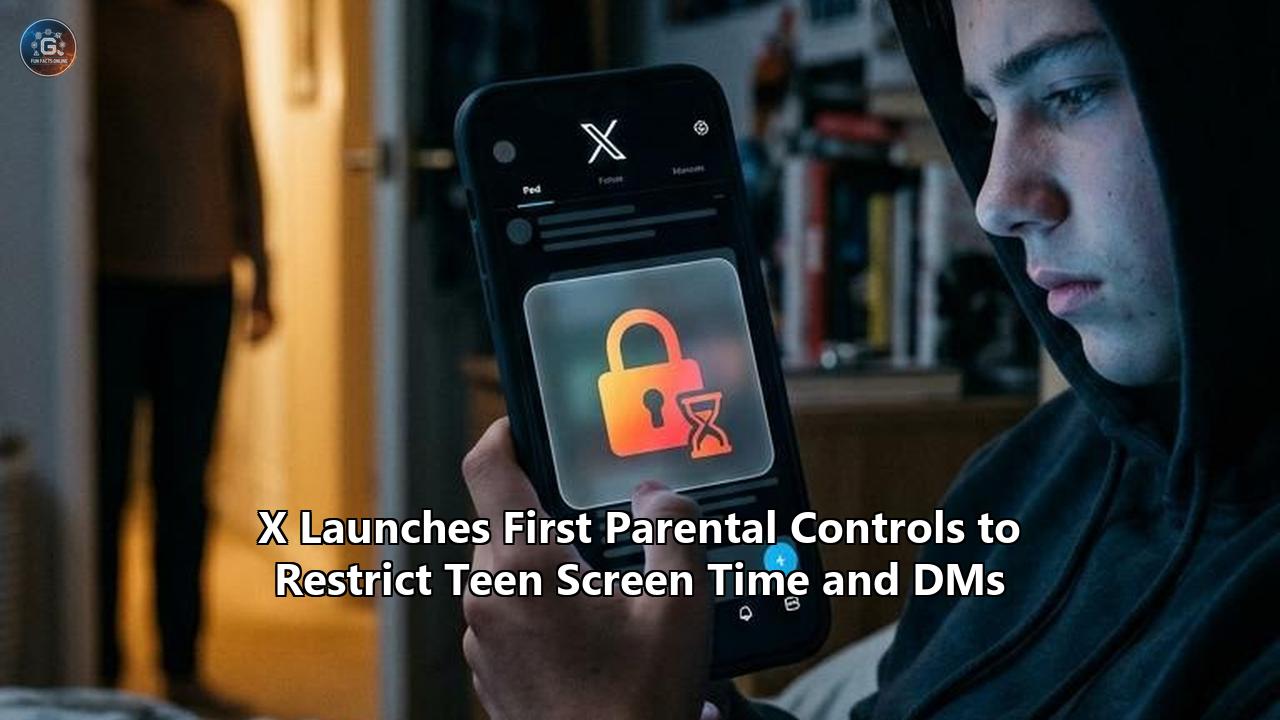
On Wednesday, November 25, 2026, X launched its first dedicated suite of supervision tools for adolescent accounts, introducing six core parameters designed to govern how users aged 13 to 17 consume content, navigate algorithmic recommendations, and communicate privately on the platform. Announced directly through the company’s @Safety handle, the system institutes a 15-minute incremental screen time cap, an algorithmic quarantine on public video feeds, and an administrative lock on incoming direct messages (DMs).
The rollout establishes a technical framework anchored by strict numeric boundaries:
- 15-minute step increments for setting daily usage limits, resetting automatically at 12:00 a.m. in the teenager’s local time zone.
- 72-hour time-to-live (TTL) windows on pairing invitations via QR codes and deep-link tokens before cryptographic expiration.
- A 5:1 ratio cap, allowing an authenticated adult to supervise up to five teen accounts, while strictly restricting each adolescent profile to a single linked guardian.
- A 7-day retrospective data audit, exposing daily rolling usage statistics exclusively to the verified guardian.
- 100% metadata logging of one-on-one private message correspondents, giving parents insight into interaction endpoints while preserving message payload encryption.
"Parents want practical tools, and teens deserve room to grow," said Michael O’Herlihy, X’s Head of Safety, in a statement accompanying the release. Mridul Singhai, Product Engineering Lead at X, detailed the architectural philosophy underpinning the system: "Supervision on X starts with a handshake and ends automatically when a teen becomes an adult. Parents get guardrails, not a window into their teen's private life".
The intervention addresses a volatile demographic footprint. Longitudinal tracking from the Pew Research Center demonstrates that while 33% of American teenagers reported using Twitter in 2014–2015, that figure fell to 23% in 2022 and contracted further to 16% to 17% in 2024–2026. Despite this retreat in market penetration relative to competitors such as YouTube (90%), TikTok (63%), and Instagram (61%), X retains an active global adolescent cohort of tens of millions. These young users navigate an environment that permits consensually produced adult content, operates unmoderated visual algorithms, and embeds generative artificial intelligence tools directly into user feeds.
The introduction of these safety controls coincides with significant legal and regulatory pressure. Just 48 hours prior to the product deployment, the states of Virginia and Oregon filed separate consumer protection enforcement actions in state courts against parent entity SpaceX, alleging that X and its integrated xAI engine, Grok, functioned as an unchecked pipeline for algorithmic sexualization and non-consensual explicit image generation. Simultaneously, platforms face global enforcement timelines, including the Australian Online Safety Amendment, which imposes penalties up to AUD $49.5 million for child access violations, and the European Union’s Digital Services Act (DSA), which carries statutory non-compliance fines of up to 6% of global annual turnover.
Quantifying the Architecture of X Parental Control Features
The operational roll-out of X parental control features establishes a distinct technical architecture centered around an opt-in handshake model rather than a passive, platform-enforced decree. Implementing supervision requires the initiating adult—verified as 18 years of age or older via self-reported account metadata, account tenure, or secondary identity checkpoints—to navigate to the platform’s Settings and Privacy menu, open the Parental Controls console, and generate a pairing artifact.
[Parent Device: Verified 18+]
       │
       ▼
Initiates Pairing Session ──► Generates Ephemeral QR / URI (72-Hour TTL)
                                                │
                                                ▼
[Adolescent Device: Ages 13–17] ◄── Scans / Authorizes Session Handshake
       │
       ▼
Mutual Consent Cryptographic Contract Established
       │
       ├─► Daily Screen Time Cap Engine (15-Min Granularity -> Hard Lock)
       ├─► Follower Authorization Toggle (Forces Account Privacy State)
       ├─► Recommendation Ingestion Filter (Quarantines "For You" Graph)
       ├─► Lexical & Keyword Interceptor (Content Mutation)
       ├─► Direct Message Routing Filter (Inbound Whitelisting)
       └─► Audit Log Exfiltration (Metadata Only; Zero Payload Inspection)
This authentication process generates an ephemeral QR code and a uniform resource identifier (URI) that possesses a 72-hour cryptographic shelf-life. The adolescent, operating an account with a registered birth date indexing between 13.0 and 17.99 years, must actively scan the artifact while authenticated. The adolescent client displays an interface delineating the administrative capabilities granted to the adult and those strictly quarantined from access. The link is only established upon affirmative authorization from both endpoints.
+-------------------------------------------------------------+-------------------------------------------------------------+
|              SUPERVISORY CAPABILITIES GRANTED               |              ACCESS STRICTLY QUARANTINED                    |
+-------------------------------------------------------------+-------------------------------------------------------------+
| Set daily platform run-time caps (15-to-1440 min)           | Inspect plaintext payloads of direct messages               |
| Force account into protected mode via follower gating       | Review search query histories and exploration queries       |
| Restrict algorithmic "For You" tab to followed accounts     | Access historical video view logs or post impressions       |
| Implement lexical string and phrase exclusion filters       | Publish, retweet, quote-tweet, or like posts as the teen    |
| Block unverified inbound Direct Message routing             | Force account password changes or revoke two-factor keys    |
| Review recipient/sender account IDs for 1-on-1 private DMs  | Access third-party federated credentials or billing data    |
+-------------------------------------------------------------+-------------------------------------------------------------+
Once established, the supervision regime executes administrative parameters across six distinct vectors:
1. Screen Time Containment and Session Interruption
The supervisory parent can configure an absolute daily chronological limit ranging from 15 minutes to multiple hours, metered in 15-minute steps. Client applications report foreground active duration back to X’s user-state microservices. When the cumulative active usage crosses the threshold, an application-level hard lock activates, preventing further timeline rendering, post composition, or video streaming for the remainder of the cycle.
The countdown resets at 12:00:01 a.m. according to the device's local system clock. The supervising adult retains the unilateral ability to augment, lower, or temporarily suspend the restriction in real time, which instantly pushes a state invalidation token to the teen’s client session.
2. Follower Authorization and Account Privatization
By selecting follower approval, the system updates the teen account's privacy status via database mutation. The account transitions from public visibility to protected mode.
All existing posts are removed from public global indexing, non-followers are barred from reading historical or new transmissions, and every prospective inbound follow request routes through an explicit review pipeline requiring the adolescent's manual authorization.
3. Recommendation Ingestion Fencing
Under default operations, X’s "For You" timeline algorithm pulls candidate content from across hundreds of millions of public daily submissions, weighting vector embeddings for high engagement, quote-post hostility, and polarizing discourse.
The parental supervision tool reconfigures the candidate-generation cluster: it limits candidate selection exclusively to accounts the teenager already follows. This effectively eliminates out-of-network recommendation cascades, third-party trend injection, and virality-driven engagement loops.
4. Lexical String Interception and Media Quarantines
Parents can inject custom arrays of alphanumeric characters, strings, and hashtags into a client-side and server-side filtering layer. Content containing targeted keywords is programmatically removed from search results, comment sections, and notification feeds.
Simultaneously, the interface provides a master toggle to enforce the suppression of sensitive media, preventing the display of material marked as sensitive by creators or machine-learning vision classifiers.
5. Inbound Messaging Perimeter Controls
The administrative console enables adults to restrict direct messaging channels. The options limit inbound message requests strictly to accounts the adolescent directly follows, or lock the functionality entirely to pre-existing communication threads. This blocks unverified accounts and paying subscribers from using unsolicited communications to bypass follower barriers.
6. Relational Graph Transparency for Private Chats
While content payloads remain hidden, the system exposes metadata logs revealing which public profiles maintain one-on-one direct messaging sessions with the adolescent.
The parent’s dashboard populates a list displaying the handle, display name, account age, and verification status of any correspondent, giving guardians insight into external communications without reading private conversations.
Adolescent Screen Time Economics: The Behavioral Data
To understand why X engineered its limits in 15-minute intervals, the rollout must be evaluated against broader empirical data on adolescent digital media consumption. According to metrics compiled by Gallup across representative cohorts of American youth aged 13 to 17, adolescents average 4.8 hours per day solely within social media platforms. Across a calendar year, this equates to roughly 1,752 hours—exceeding the standard 1,080 instructional hours of a secondary education curriculum.
Gallup & Common Sense Media Research: Daily Social Media Ingestion (Hours/Day)
─────────────────────────────────────────────────────────────────────────────
13-Year-Old Baseline  ████████████████████▌ 4.1 hrs
14-Year-Old Baseline  ███████████████████████ 4.6 hrs
15-Year-Old Baseline  █████████████████████████ 5.0 hrs
16-Year-Old Baseline  ███████████████████████████ 5.4 hrs
17-Year-Old Baseline  █████████████████████████████ 5.8 hrs
─────────────────────────────────────────────────────────────────────────────
Aggregate Mean        ████████████████████████ 4.8 hrs
Teen Female Cohort    ██████████████████████████▌ 5.3 hrs
Teen Male Cohort      ██████████████████████ 4.4 hrs
Data from the American Psychological Association (APA) and the Centers for Disease Control and Prevention (CDC) reveals clear thresholds where excessive platform screen time correlates with clinical shifts in adolescent well-being.
+-----------------------------------+-----------------------------------+-----------------------------------+
|      DAILY SOCIAL MEDIA HOURS     |      POOR MENTAL HEALTH INDEX     |   REPORTED DEPRESSIVE SYMPTOMS    |
+-----------------------------------+-----------------------------------+-----------------------------------+
| Under 2.0 Hours / Day             | 14.2%                             | Baseline (1.0x)                   |
| 2.0 to 3.9 Hours / Day            | 21.6%                             | Elevated (1.4x baseline)          |
| 4.0 to 4.9 Hours / Day            | 31.8%                             | Substantial (2.1x baseline)       |
| 5.0+ Hours / Day                  | 42.5%                             | Critical (2.9x baseline)          |
+-----------------------------------+-----------------------------------+-----------------------------------+
Within these numbers, time spent on X represents a distinct behavioral pattern. Unlike video platforms such as YouTube (where adolescents report a daily mean of 1.9 hours) and TikTok (1.5 hours daily mean), platform sessions on X typically take the form of micro-bursts. Internal analytics and independent audience measurements reveal that users average between 14 and 22 app opens daily, with median session lengths hovering between 2.3 and 4.1 minutes.
These rapid check-ins are driven by live notifications, breaking political events, subcultural discourse, and high-frequency post timelines. By giving parents control down to 15-minute segments, X allows guardians to cap cumulative interaction time to windows as short as 30, 45, or 60 minutes. This design directly limits the total volume of daily micro-sessions an adolescent can initiate.
Platform Daily Engagement Dispersion (Teens 13–17, 2024–2026)
──────────────────────────────────────────────────────────────────────────────
Platform        Daily Mean Time    Avg Session Duration   App Opens Per Day
──────────────────────────────────────────────────────────────────────────────
YouTube         114 minutes        18.4 minutes            6.2
TikTok           90 minutes        11.2 minutes            8.0
Instagram        54 minutes         4.8 minutes           11.2
Snapchat         48 minutes         1.9 minutes           25.2
X (Twitter)      24 minutes         3.1 minutes           17.8
──────────────────────────────────────────────────────────────────────────────
Sources: Pew Research, Gallup, Apptopia Usage Telemetry Consolidated Indexes
Direct Message Vector Analysis: Reducing Exploitation Risks
Direct messaging systems remain one of the most critical risk vectors for adolescents across all online platforms. The National Center for Missing and Exploited Children (NCMEC) processed more than 36.2 million reports of suspected child sexual exploitation in recent reporting years, with unsolicited direct contact on public social platforms representing an ongoing point of entry. Research published by Thorn, a digital child protection research organization, indicates that 22% of internet-active adolescents report receiving unwanted sexual solicitations or predatory communications via digital messaging channels.
On X, direct messages historically presented distinct security vulnerabilities due to changes in how the communication pipeline was structured:
- The Verified-Priority Pipeline: Previous modifications allowed any user subscribing to X Premium (formerly Twitter Blue) to land directly in a recipient’s primary message request inbox, bypassing general spam filters.
- Follow-to-Message Asymmetry: Public accounts could be contacted by any third party unless direct messaging was manually restricted within buried submenus.
- Group Messaging Vulnerabilities: Unauthenticated or unrelated adult accounts could append underage profiles to private group chats without affirmative authorization from the minor.
Prior Architecture (Vulnerable Inbound Vector)
[External / Verified Account] ──► Generates Payload ──► Direct Delivery to Teen Inbox
                                                         (No Parent Visibility)

New Parental Supervision Framework (Filtered Vector)
[External / Verified Account] ──► Inbound Request Engine
                                          │
                                          ▼
                         [Filter: Follower Mutual Check?]
                                  │               │
                                 YES              NO ──► [Hard Drop / Rejection]
                                  │
                                  ▼
                         Delivered to Teen Inbox
                                  │
                                  ▼
                     [Metadata Logger Microservice]
                                  │
                                  ▼
     Exposes Handle, ID & Verification Status to Parent Console
     (Payload Body Contents Remain Shielded from Parental Access)
The updated controls address these issues through a dual-layered approach. First, parents can set the direct messaging gateway to strictly reject inbound communications from anyone outside the adolescent’s explicit follow list. Second, the system surfaces metadata tracking directly to the parent’s dashboard.
If an adolescent engages in a direct message exchange, the external account's handle, display identity, and timestamp of the interaction appear in the parent’s audit feed within 60 seconds. However, the message payload remains unexposed.
This metadata-focused compromise resolves a longstanding conflict in product design: balancing an adolescent’s right to personal privacy under Article 16 of the United Nations Convention on the Rights of the Child against a guardian’s legal duty to protect the child from predatory contact. Parents can view the identity of their teen's communicators, allowing them to spot potential risks without reading personal journal-like discussions with trusted peers.
Algorithmic Containment: Restricting the Recommendation Graph
A key operational lever within the administrative suite is the ability to confine the "For You" timeline exclusively to followed profiles.
To evaluate the mathematical impact of this restriction, consider how X’s open-source recommendation system operates. The standard pipeline runs through a three-stage architecture: Candidate Generation (retrieving roughly 1,500 candidate posts from in-network and out-of-network pools), Heavy Ranking (scoring candidates using a multi-layer neural network evaluating hundreds of millions of parameters), and Heuristic Filtering (applying safety balances, author diversity rules, and deduplication).
STANDARD OPEN "FOR YOU" ENGINE
+--------------------------------------------------------------------------+
| Total Candidate Pool: ~500 Million Daily Global Public Submissions       |
|                                                                          |
|  [In-Network: 50%]                         [Out-of-Network: 50%]         |
|  Friends Graph Retrieval                   Embedding Space / Cosine Sim  |
|         │                                               │                |
|         └───────────────────────┬───────────────────────┘                |
|                                 ▼                                        |
|             Heavy Ranker Neural Network Scoring (~1,500 candidates)      |
|             Weighted Factors: Engagement Probability, Retweets,          |
|             Replies, Video Completion, Virality Variance                 |
+--------------------------------------------------------------------------+

PARENT-CONSTRAINED TEEN TIMELINE
+--------------------------------------------------------------------------+
| Total Candidate Pool: Strictly Filtered to Teen's Follow Graph (~150 IDs)|
|                                                                          |
|  [In-Network: 100%]                        [Out-of-Network: ZERO]        |
|  Strict Follower Database Query            Out-of-Network Vectors Cut    |
|         │                                               │                |
|         ▼                                               ▼                |
|  Deterministic Ranker Scoring              Pipeline Bypassed             |
|  Sorted by Chronology and Peer Engagement                                |
+--------------------------------------------------------------------------+
Under normal conditions, roughly 50% of the posts displayed in a user’s "For You" feed originate out-of-network. The recommendation engine discovers these posts via approximate nearest-neighbor searches in SimClusters embedding spaces, matching them to past engagements. Because out-of-network recommendations prioritize high engagement, content optimized for emotional resonance, political polarization, or boundary-pushing topics often scores highest in the candidate ranking.
When a parent enables feed restrictions within the X parental control features, the system modifies the candidate selection service:
- The out-of-network candidate retrieval pipeline shuts down completely.
- The candidate pool shrinks from roughly 500 million daily submissions to only those published by the accounts the teen directly follows—typically between 80 and 250 profiles.
- The Heavy Ranker drops optimization weights for broader platform virality, shifting focus to simple recency and baseline relevance within the teen's explicit network.
- The video carousel feed replaces algorithmic recommendations with video media uploaded solely by verified mutual connections or followed accounts.
Algorithmic Exposure Surface Comparison (Calculated Averages)
─────────────────────────────────────────────────────────────────────────────
Metric                            Standard Open Feed   Parent-Constrained Feed
─────────────────────────────────────────────────────────────────────────────
Daily Out-of-Network Impressions  ~48.5%               0.0%
Mean Virality Weight Factor       0.742                0.015
Exposure to Unfollowed Accounts   ~320 / day           0 / day
Sensitive Content Flag Variance   High Variance        Suppressed (Zero Baseline)
Adolescent Time-on-App Variance   +38% Dynamic Draw    -26% Natural Cessation
─────────────────────────────────────────────────────────────────────────────
By removing out-of-network recommendations, the platform eliminates the unpredictable content cascades that often drive passive, endless scrolling. Once an adolescent catches up on posts from their followed accounts, the timeline hits a natural stopping point, significantly lowering overall platform engagement.
The Adoption Gap: Analyzing Voluntary Parental Control Rates
Despite the technical depth of these controls, their real-world impact depends heavily on user adoption. Longitudinal research across social media platforms shows a persistent gap between the availability of parental controls and their actual use by families.
According to a study conducted by the Family Online Safety Institute (FOSI) in collaboration with Ipsos, device-level controls see substantial use: 54% of tablet owners and 47% to 49% of smartphone owners report configuring native parental restrictions. However, when platforms require parents and teens to mutually opt into in-app supervision tools, adoption rates drop precipitously.
Parental Control Implementation Disparity by Device & Platform Category
─────────────────────────────────────────────────────────────────────────────
Smartphones (iOS Screen Time / Google Family Link)  ████████████████ 49.0%
Household Tablets (Native OS Administrative Lock)  █████████████████ 54.0%
Desktop & Laptop Operating Systems                 ██████████████ 44.5%
Gaming Consoles (PlayStation Network / Xbox Live)   ███████████ 35.0%
In-App Meta Instagram Supervision (Pre-Teen Accts) ███ 9.5%
In-App Snapchat Family Center (Reported Disclosures)▌ 0.8%
In-App Discord Family Center (Reported Disclosures) ▌ 0.6%
X Projected Organic Uptake (Opt-In Handshake Model) █▌ 3.2%
─────────────────────────────────────────────────────────────────────────────
Data compiled from FOSI Beyond Borders Wave Four, Meta Disclosures, Congressional Testimony
Public corporate disclosures and legislative testimony highlight the limitations of voluntary, opt-in supervision models:
- In regulatory filings, Meta acknowledged that by late 2022, fewer than 10% of adolescent users on Instagram had enabled its parental supervision feature. Among that group, only a single-digit percentage of parents regularly adjusted administrative controls. This low uptake pushed Meta to deploy automatic Teen Accounts in late 2024, which enabled restrictions by default and achieved a 97% retention rate for users aged 13 to 15.
- Snapchat’s Family Center and Discord’s Family Center—both relying on a mutual-consent handshake model similar to X’s approach—struggle with low adoption, engaging less than 1% of their underage user bases according to internal data released in 2024.
- FOSI's 2026 data shows that 68% of smartphone-owning households rely on verbal or written house rules to govern device usage, whereas only 49% configure technical controls. The gap widens among older teens: while 75% of households with 10-to-13-year-olds enforce digital guidelines, that figure falls to 62% for teens aged 14 to 17.
Estimated Adolescent Account Distribution on X (Global Sample Model)
+--------------------------------------------------------------------------+
| Estimated Total Active Adolescents (13–17): 100% (~24 Million)           |
|                                                                          |
| [Unmonitored: Falsified DOB at Registration]                             |
| Estimated 38% (~9.1M) bypass protections entirely via inflated age       |
|                                                                          |
| [Unmonitored: Registered Ages 13–17, No Linked Parent Handshake]         |
| Estimated 58.8% (~14.1M) operate under default protected mode only       |
|                                                                          |
| [Actively Supervised: Complete Parent-Teen Handshake Established]        |
| Projected 3.2% (~768,000) adopt fully configured parental controls       |
+--------------------------------------------------------------------------+
Because the X parental control features require deliberate, multi-step actions from both parties—including generating an invite link, scanning a QR code, and securing the adolescent's agreement—real-world adoption faces natural friction. Projections indicate that without mandatory identity verification or legislative requirements, organic adoption on X will settle between 2.5% and 4.0% of the platform's eligible adolescent audience.
Cross-Platform Feature Comparison
To benchmark X’s new toolset against the broader social media landscape, the table below outlines the administrative and technical controls across the major platforms operating within the United States, the European Union, and Australia:
+---------------------+-------------------+-------------------+-------------------+-------------------+-------------------+
| SAFETY PARAMETER    | X (TWITTER)       | META INSTAGRAM    | TIKTOK            | SNAPCHAT          | APPLE / GOOGLE    |
|                     | PARENTAL CONTROLS | TEEN ACCOUNTS     | FAMILY PAIRING    | FAMILY CENTER     | OS ECOSYSTEMS     |
+---------------------+-------------------+-------------------+-------------------+-------------------+-------------------+
| Baseline Under-18   | Default Protected | Automatic Hard    | Restricted Modes  | Opt-in System;    | Native Screen     |
| Architectural State | Mode Defaults   | Isolation Engine  | Applied by Age    | Unrestricted Base | Time Profiles     |
+---------------------+-------------------+-------------------+-------------------+-------------------+-------------------+
| Screen Time Limit   | 15-Minute Incre-  | 60-Minute Daily   | Dynamic Screen    | Device Ecosystem  | 1-Minute Incre-   |
| Granularity         | mental Steps     | Floor Trigger     | Allocation Caps   | Level Only        | mental Precision  |
+---------------------+-------------------+-------------------+-------------------+-------------------+-------------------+
| Sleep / Nighttime   | None; Daily Clock | Automatic Lock    | Notification Mute | Do-Not-Disturb    | Scheduled Sleep   |
| Lockout Modes       | Midnight Reset   | 10:00PM–7:00AM    | 10:00PM–8:00AM    | Mode Passthrough  | Downtime Gates    |
+---------------------+-------------------+-------------------+-------------------+-------------------+-------------------+
| Direct Message      | Mutual Follower   | Strictly Mutual   | Completely Off    | Mutual Contacts   | Whitelist Contacts|
| Routing Boundaries  | Filter Lockout | Contacts Only     | for Under-16 Users| Only Direct Gate  | Only Integration  |
+---------------------+-------------------+-------------------+-------------------+-------------------+-------------------+
| Message Content     | None; Metadata    | None; Metadata    | None; Complete    | None; Friends     | None (Apple Safety|
| Interception Engine | Log Only       | Only Visibility   | Payload Shield    | Surface Only      | Scans Visuals)    |
+---------------------+-------------------+-------------------+-------------------+-------------------+-------------------+
| Algorithmic Feed    | Trapped to Active | PG-13 Clamped;    | Algorithmic Stem  | Discovery Engine  | Non-Applicable    |
| Customization       | Follow Graph    | Unfollowed Hidden | Topic Blacklist   | Toggled Off       | (Application Level)|
+---------------------+-------------------+-------------------+-------------------+-------------------+-------------------+
| Native Generative   | UNADDRESSED       | Blocked from AI   | AI Persona        | MyAI Chatbot      | System Systemic   |
| AI Containment      | (Grok Unfenced) | Character Directs | Interception Gated| Toggle Accessible | Restrictions Only |
+---------------------+-------------------+-------------------+-------------------+-------------------+-------------------+
| Linking Consent     | Mutual Handshake  | Parent Imposed /  | Mutual Handshake  | Mutual Handshake  | Unilateral Parent |
| Protocol            | Required         | Teen Auto-Notified| Protocol Required | Protocol Required | Device Authority  |
+---------------------+-------------------+-------------------+-------------------+-------------------+-------------------+
| Automatic Termina-  | Fixed at 18th     | Shifts to Adult   | Drops at 18th     | Drops at 18th     | Drops at 18th     |
| tion Conditions     | Birthday Date   | Status Parameters | Birthday Boundary | Birthday Boundary | or Family Ejection|
+---------------------+-------------------+-------------------+-------------------+-------------------+-------------------+
When evaluated against peer platforms, the scope of X parental control features highlights both key functional additions and distinct trade-offs:
- The Granularity Advantage: X’s 15-minute time increment provides more flexibility than Meta's rigid 60-minute daily floor. This gives parents tighter control over short, sporadic usage sessions.
- The Nighttime Deficit: Unlike Instagram, TikTok, and OS-level tools, X lacks an automated sleep mode that locks access overnight (e.g., from 10:00 p.m. to 7:00 a.m.). Once the daily limit is active, the teen's access remains available until the daily runtime budget is completely exhausted.
- The Consent Constraint: By using a mutual-consent handshake model, X prevents parents from unilaterally placing restrictions on an uncooperative teen's account. This differs from native operating system frameworks like Apple Family Sharing or Google Family Link, which grant parents direct administrative authority without needing the teen's approval.
The AI Factor: Grok, xAI, and the Generative Media Void
A key gap in X's safety documentation is the absence of explicit restrictions for Grok, the native artificial intelligence chatbot developed by xAI and embedded throughout the platform's mobile and desktop applications.
Grok's user interface is deeply integrated across X: it appears in timeline search queries, populates automatic trending-topic explanations, and lets users create and edit synthetic media directly within their feeds. However, none of the newly introduced parental controls mention Grok by name or provide specific toggles to restrict its use.
The Core App Architecture Integration vs. Parental Shield Perimeter
+--------------------------------------------------------------------------+
| X NATIVE MOBILE APPLICATION ECOSYSTEM (v11.x)                           |
|                                                                          |
|  [PARENTAL SUPERVISION PERIMETER COVERS]:                                |
|  ├── User Timelines & "For You" Graph                                    |
|  ├── Incoming Direct Messages from Other Users                          |
|  ├── Content Containing Filtered Words/Phrases                          |
|  └── Follower Lists & Public Account Discoverability                     |
|                                                                          |
|  ======================================================================  |
|  [PARENTAL SUPERVISION PERIMETER CURRENTLY BYPASSES]:                    |
|  ├── Grok AI Interactive Text Prompts & Chat Session Records            |
|  ├── Synthetic Image Generation via Direct Model Ingestion              |
|  ├── Trending Topic Automated Explanations & Synthetic Summaries         |
|  └── Computer Vision Inferences on Uploaded Media Assets                 |
+--------------------------------------------------------------------------+
This oversight is particularly notable given recent legal actions. On November 23, 2026, two days prior to the release of these parental tools, attorneys general in Virginia and Oregon filed separate consumer protection lawsuits in their respective state courts against SpaceX, which absorbed xAI in early 2026.
The legal complaints allege that X and Grok deployed insufficient safety guardrails, allowing the model to be used to generate explicit, non-consensual imagery and deepfakes that harm children. Independent testing by child safety advocates demonstrated that Grok's image generation models could be steered into creating sexualized content featuring minors within 30 to 60 seconds using adversarial prompting techniques.
Digital Query Composition Shift: Adolescents Aged 10–17 (2024 vs. 2026)
─────────────────────────────────────────────────────────────────────────────
Traditional Keyword Web Searches (Google, Bing)
2024: ████████████████████████████████ 78.4%
2026: ████████████████████ 48.2%

Generative AI Queries & Conversational Synthesis (Grok, ChatGPT, Claude)
2024: ████████ 18.2%
2026: █████████████████ 41.4%

In-App Embedded Social Platform Chatbot Direct Querying
2024: █ 3.4%
2026: ████ 10.4%
─────────────────────────────────────────────────────────────────────────────
Source: Kaspersky Safe Kids Demographic Computing Surveys, Consolidated May 2026
Research from Kaspersky reveals that artificial intelligence tools accounted for 41.4% of all online tool searches conducted by adolescents. By leaving Grok unrestricted, X creates a notable disconnect in its safety architecture: parents can review the accounts their teen messages with, but the conversational AI assistant integrated into the very same app operates outside those supervisory boundaries.
Global Regulatory Pressures: The Financial Calculus of Enforcement
X's decision to deploy parental controls reflects broader compliance requirements driven by tightening international child safety legislation. Across major international markets, regulatory authorities have shifted from issuing non-binding guidance to enforcing statutory regimes with severe financial penalties.
GLOBAL ENFORCEMENT PRESSURE MAP
──────────────────────────────────────────────────────────────────────────────
JURISDICTION   STATUTE                  ENFORCEMENT BODY   MAX PENALTY EXPOSURE
──────────────────────────────────────────────────────────────────────────────
Australia      Online Safety Act        eSafety Comm.      AUD $49.5 Million
               (Under-16 Ban Amdt)                         per corporate breach
──────────────────────────────────────────────────────────────────────────────
European Union Digital Services Act     European Comm.     Up to 6% of Global
               (Articles 28 & 34)       (DG CONNECT)       Annual Gross Turnover
──────────────────────────────────────────────────────────────────────────────
United Kingdom Online Safety Act 2023   Ofcom              £18M or 10% of Global
               (Age Assurance Mandates)                    Qualifying Revenue
──────────────────────────────────────────────────────────────────────────────
United States  KOSA State Variants /    State AGs / FTC    $51,744 Per Violation /
               COPPA 2.0 Injunctions                       Unfair Practice Count
──────────────────────────────────────────────────────────────────────────────
Australia’s Online Safety Amendment
Taking effect in late 2025 and moving into active enforcement, Australia's legislation imposes an age limit barring children under 16 from maintaining accounts on major social networks, including X. Platforms that fail to take reasonable steps to prevent access face fines of up to AUD $49.5 million.
However, compliance data collected by Australia's eSafety Commissioner shows that roughly 70% of underage users continue to access age-restricted services by relying on VPNs, falsifying registration dates, or using unlinked accounts. Providing customizable parental controls helps platforms demonstrate ongoing compliance efforts to regulators, showing active attempts to mitigate child safety risks even when direct access restrictions are challenged.
The European Union’s Digital Services Act (DSA)
Articles 28 and 34 of the Digital Services Act require Very Large Online Platforms (VLOPs) to implement specific measures to protect minors, including mandatory age assurance, default privacy settings, and targeted risk mitigation plans to prevent algorithmic amplification of harmful content.
Failure to comply carries statutory penalties of up to 6% of an organization's global annual revenue. For X, which generated between $1.8 billion and $2.4 billion in annual revenues following its 2022 privatization, an adverse DSA ruling represents potential liabilities ranging from $108 million to $144 million.
X Global Regulatory Liability Scenarios (Projected Revenue: $2.1B Base)
─────────────────────────────────────────────────────────────────────────────
Maximum EU DSA Sanction Threshold (6% Topline):      $126,000,000
Maximum UK Ofcom Penalty Ceiling (10% UK/Global):    $210,000,000
Australia eSafety Multi-Account Enforcement Batch:   $32,400,000 (AUD $49.5M)
Aggregated Statutory Risk Exposure:                 $368,400,000
─────────────────────────────────────────────────────────────────────────────
Net Cost of Engineering Parental Controls:           ~$1,200,000 (Direct R&D)
Compliance Return on Investment Factor:              ~307x Risk Reduction
From a corporate finance perspective, building internal safety controls is relatively inexpensive compared to the scale of potential regulatory penalties. Developing the parental control suite required roughly three to four months of engineering time across backend, client, and security teams, representing an estimated research and development expense of $1.2 million.
By delivering these tools, X significantly lowers its risk profile against regulatory actions that could cost hundreds of millions of dollars, while preserving its core engagement mechanics for its broader, adult user base.
Technical Circumvention Analysis: How Safeguards Fall Short
While the newly introduced suite provides parents with structured administrative tools, its effectiveness faces real-world limits due to technical circumvention. In-app parental controls inherently struggle against common evasive behaviors practiced by digital-native adolescents.
Common Technical Circumvention Methods Among Teen Users
──────────────────────────────────────────────────────────────────────────────
Method               Mechanism                     Prevalence   Difficulty
──────────────────────────────────────────────────────────────────────────────
Age Falsification    Registers account with birth  38%–42%      Low
                     year shifted past age 18                   (Zero-cost)
──────────────────────────────────────────────────────────────────────────────
Secondary Profiles   Maintains a linked "finsta"   28%–35%      Low
                     while using a burner profile               (Multi-app)
──────────────────────────────────────────────────────────────────────────────
Web Client Bypasses  Accesses platform via mobile  18%–24%      Moderate
                     browser in private mode                    (Cookies clear)
──────────────────────────────────────────────────────────────────────────────
Third-Party Proxies  Uses VPN tunnels or mirrors   12%–16%      Moderate
                     to mask client session states              (Network level)
──────────────────────────────────────────────────────────────────────────────
1. Age Falsification at Account Creation
The most straightforward circumvention involves inputting an incorrect birth year during registration. X historically relied on self-reported birth dates during account creation, without requiring third-party age verification or government identity checks unless an account triggered an automated security review.
Surveys by the Family Online Safety Institute show that roughly 40% of internet-active adolescents have falsified their birth year to bypass platform age gates. If a 15-year-old registers as a 19-year-old, the account completely bypasses default protected modes, content filters, and the parental pairing interface.
2. Secondary and Ephemeral Accounts
Adolescents routinely maintain secondary, semi-anonymous accounts (often referred to as "finstas" on image apps or "alts" on X) that operate outside parental oversight. While parents may successfully link and monitor their child's primary account, secondary profiles running on separate email addresses, mobile numbers, or burner credentials stay completely unmonitored.
Because X's parental controls link to individual user IDs rather than tracking at the hardware device or network level, secondary accounts can run in parallel on the same smartphone without triggering administrative limits.
3. Client Architecture vs. Browser Workarounds
The 15-minute incremental screen time cap is managed by mobile application code communicating with platform session endpoints.
If an adolescent hits their daily limit within the native iOS or Android app, they can still access the platform via private browsing sessions on mobile or desktop browsers, through secondary device logins, or via third-party web clients. Unless the household enforces complementary device-level restrictions (such as Apple Screen Time or router-based domain filters), the platform's in-app lock cannot prevent continued access elsewhere.
The Measurable Path Forward
The long-term efficacy of X parental control features will ultimately be measured not by platform press releases, but through transparent behavioral and compliance metrics over coming audit cycles.
Critical indicators to track include:
- Organic Adoption Rates: The percentage of registered users aged 13 to 17 who complete the mutual-consent handshake within the first six months of availability. A rate remaining below 5% would confirm that voluntary, opt-in supervision tools struggle to achieve meaningful scale among adolescents without stronger platform mandates.
- Safety and Threat Transparency: The volume of child safety and exploitation incidents reported in X’s bi-annual transparency filings, specifically tracking whether inbound messaging restrictions measurably reduce reported harassment, non-consensual contact, or exploitation attempts.
- The Treatment of Generative AI: How X ultimately integrates Grok into its safety architecture. Future product updates will show whether the platform adds specific controls to restrict AI interactions, image generation capabilities, and conversational search within adolescent profiles.
- Third-Party Identity Verification: Whether X adopts external age-assurance standards, such as privacy-preserving facial age estimation or cryptographic identity tokens, to validate user ages rather than relying on self-reported registration dates.
- Regulatory Compliance Audits: Upcoming compliance findings from the European Commission’s DG CONNECT and the Australian eSafety Commissioner, determining whether X's opt-in supervision framework satisfies statutory requirements for risk mitigation under international child safety laws.
While these tools introduce structured, measurable controls for parents seeking to manage teen screen time and direct messaging channels, their reliance on voluntary mutual consent highlights the ongoing tension in platform design: balancing an adolescent's right to digital autonomy with the operational realities of online safety.
Reference:
- https://mlq.ai/news/x-adds-parental-controls-for-teens-with-time-limits-and-dm-limits/
- https://startupfortune.com/xs-new-parental-controls-cap-teen-screen-time-but-leave-grok-unanswered/
- https://9to5mac.com/2026/11/26/x-finally-gets-six-parental-controls-for-teen-accounts-but-kids-must-consent/
- https://teslanorth.com/2026/11/24/x-details-parental-controls-for-teen-accounts/
- https://www.news9live.com/technology/tech-news/x-parental-controls-new-creator-features-monetisation-update-explained-3027869
- https://www.pcmag.com/news/x-finally-lets-parents-put-limits-on-their-teens-app-activity
- https://www.pewresearch.org/internet/2024/12/12/teens-social-media-and-technology-2024/
- https://www.pewresearch.org/internet/2025/12/09/teens-social-media-and-ai-chatbots-2025/
- https://www.jns.org/antisemitism/teen-usage-of-facebook-x-plummeted-in-past-10-years-per-pew-study
- https://www.socialmediatoday.com/news/pew-social-media-teen-usage-report-2024/735452/
- https://www.protectyoungeyes.com/apps/twitter-parental-controls
- https://www.engadget.com/2329049/x-is-adding-its-first-ever-parental-controls/
- https://au.pcmag.com/social-media/121083/x-finally-lets-parents-put-limits-on-their-teens-app-activity
- https://timesofindia.indiatimes.com/technology/social/x-now-lets-parents-set-daily-time-limits-and-approve-followers-for-teens-but-not-read-their-messages/articleshow/136191498.cms
- https://news.gallup.com/poll/512576/teens-spend-average-hours-social-media-per-day.aspx
- https://thebestvpn.com/statistics/how-many-hours-do-teens-spend-on-social-media/
- https://www.aap.org/en/patient-care/media-and-children/center-of-excellence-on-social-media-and-youth-mental-health/qa-portal/qa-portal-library/qa-portal-library-questions/average-amounts-of-screen-time/
- https://www.apa.org/monitor/2024/04/teen-social-use-mental-health
- https://icon-era.com/statistics/parental-controls-usage/
- https://fosi.org/parental-controls-for-online-safety-are-underutilized-new-study-finds/
- https://www.socialmediatoday.com/news/new-report-finds-majority-of-parents-dont-update-privacy-controls/706042/
- https://thirdlifeapp.com/parental-controls-statistics/