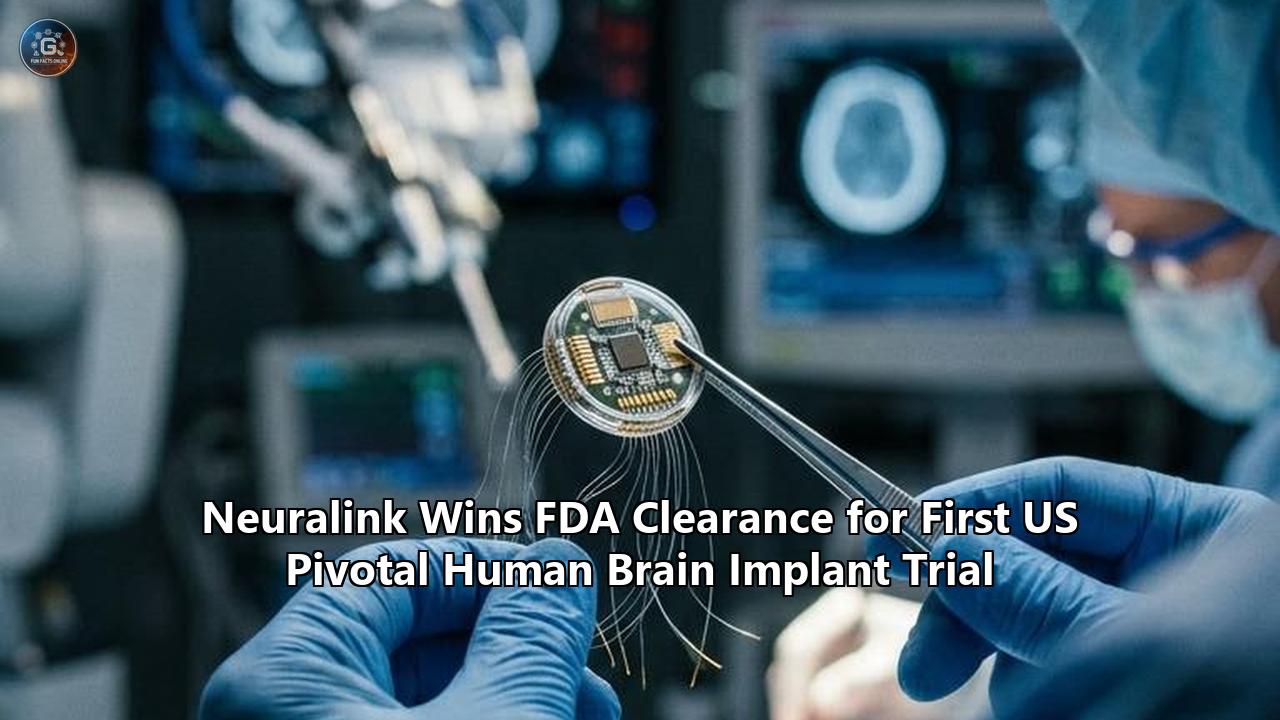
Thirty-one months after the U.S. Food and Drug Administration first permitted Elon Musk’s Neuralink to place an electrode array into a living human skull, federal regulators have officially escalated the technology from experimental exploration to registration-grade verification. On November 25, 2026, the FDA cleared Neuralink to initiate "LINK," the first pivotal clinical trial for an implantable, high-channel-count brain-computer interface (BCI) conducted in the United States.
The regulatory designation represents a critical transition. Early Feasibility Studies (EFS)—the regulatory category that governed Neuralink’s initial PRIME trial in the U.S., alongside sister cohorts CAN-PRIME in Canada and GB-PRIME in Great Britain—are designed solely to establish basic device safety and initial functional proof-of-concept in small cohorts. A pivotal trial, by contrast, operates under rigorous statistical powering rules intended to generate the definitive safety and efficacy evidence required for commercial Premarket Approval (PMA) as a Class III medical device.
The clearance arrives supported by a database of more than 30 human participants who have received the company’s N1 implant across international feasibility sites, accumulating tens of thousands of aggregate device-control hours. Neuralink confirmed that enrollment is officially open for the LINK trial, with initial eligibility focused on adults suffering from severe tetraplegia caused by amyotrophic lateral sclerosis (ALS)—a neurodegenerative disorder that impacts approximately 31,000 individuals across the United States.
By granting investigational device clearance for a pivotal study, the FDA has moved high-density intracortical neural decoding out of academic exploration and into the formal regulatory pipeline for medical commercialization. The benchmark metrics, surgical variables, and clinical endpoints that will govern this study will define the standard of care for invasive neuroprosthetics.
The Statistical Architecture of the LINK Trial
Unlike early-stage exploratory protocols that prioritize qualitative user feedback and basic surgical tolerance, pivotal medical device trials require pre-specified statistical hypotheses designed to satisfy FDA Center for Devices and Radiological Health (CDRH) standards. In a pivotal trial, investigators must prove that the device achieves clinically meaningful primary efficacy endpoints while staying below pre-established thresholds for Serious Device-Related Adverse Events (SDAEs).
REGULATORY PROGRESSION: NEURALINK CLINICAL PIPELINE

   [July 2020]      FDA Breakthrough Device Designation (N1 System)
        │
   [May 2023]       Investigational Device Exemption (IDE) for Early Feasibility
        │
   [Jan 2024]       PRIME Feasibility Study (First Human Implant: Noland Arbaugh)
        │
   [2024–2026]      Cohort Expansion: >30 Implants Across US, Canada, and UK
        │
   [Nov 25, 2026]   FDA Clearance of LINK: First US Pivotal Human BCI Trial
        │
   [Target: PMA]    Premarket Approval Submission (Estimated 2028–2029)
While Neuralink’s public release omitted exact sample size caps, the structural norms of Class III neurotechnology pivotal studies provide clear parameters. Where early feasibility studies typically assess between 3 and 10 individuals, pivotal trials for implantable neuroprosthetic interfaces historically require sample sizes ranging from 20 to 50 participants across 5 to 10 independent clinical sites to ensure statistical power ($1 - \beta \ge 0.80$) at a two-tailed significance threshold of $\alpha = 0.05$.
The quantitative framework of the LINK trial rests on four core performance metrics:
- Information Transfer Rate (ITR): Measured in Bits Per Second (BPS). The trial will evaluate whether participants can consistently achieve communication and control throughput matching or exceeding standard assistive eye-tracking interfaces (typically hovering between 1.5 and 3.0 BPS) and approaching physical mouse control (approximately 5.0 to 10.0 BPS).
- Grid Navigation and Cursor Stability: Assessed through standardized Fitts’ Law target acquisition tasks, calculating Index of Performance (IP) through movement time and error rates across varied target distances and widths.
- Functional Independence Measures: Quantified through targeted sections of the Assistive Technology Device Predisposition Assessment (ATDPA) and the ALS Functional Rating Scale-Revised (ALSFRS-R), tracking the reduction in caregiver-assisted minutes required for digital interaction.
- System Availability and Calibration Uptime: Tracking mean time between recalibrations, continuous battery runtime under maximum transmission load, and the degradation rate of recording channels over a multi-year implantation window.
Safety endpoints will be monitored against a non-inferiority safety margin. The FDA requires continuous surveillance of primary safety endpoints at 12 months post-implantation, specifically mandating an incidence rate of serious surgical, neurological, or infectious complications (such as deep surgical site infections, craniotomy-related intracranial hemorrhage, or durotomy-associated cerebrospinal fluid leaks) falling below predefined risk thresholds, historically set at less than 10% across the trial cohort.
Hardware Under Test: The N1 Implant and R1 Robotic System
The device undergoing pivotal evaluation is Neuralink's N1 implant—a coin-sized, hermetically sealed titanium unit measuring 23 millimeters in diameter and 8 millimeters in thickness. The geometry is designed to sit flush within a 23-millimeter circular craniectomy, replacing a removed piece of skull so that the device resides directly below the galea aponeurotica and scalp, leaving no external percutaneous connectors.
N1 IMPLANT TECHNICAL PROFILE

Form Factor:               23 mm diameter × 8 mm thickness (flush cranial fit)
Enclosure Material:        Biocompatible Titanium (Grade 5 hermetic seal)
Electrode Count:           1,024 microscale recording sites
Thread Array:              64 polyimide threads (16 electrodes per thread)
Thread Dimensions:         4–6 μm thickness; 16–24 μm width
Insertion Depth:           3–5 mm (Cortical Layer V, Primary Motor Cortex)
Custom ASIC:               1,024-channel low-power analog front-end (AFE)
On-Chip Processing:        Real-time spike sorting, bandpass filtering, telemetry
Wireless Telemetry:        2.4 GHz ultra-low-power radio protocol
Power Supply:              Lithium-ion battery; Qi-compatible inductive charging
Power Consumption:         <10 mW nominal operational power
The device's data pipeline originates in its electrode array. While legacy microelectrode configurations—such as the silicon-based Utah Array deployed in academic BCI research for three decades—use rigid pins containing 96 to 128 recording channels, the N1 system records from 1,024 channels distributed across 64 flexible polyimide threads. Each thread measures between 4 and 6 micrometers in thickness and 16 to 24 micrometers in width, rendering them thinner than an average human red blood cell is wide and roughly one-twentieth the diameter of a standard 70-micrometer human hair.
Each thread features 16 custom-passivated platinum or iridium-oxide electrode recording sites. These flexible arrays cannot be inserted manually by a neurosurgeon; their structural flexibility causes them to buckle against the surface tension of the pia mater. Insertion requires the R1 surgical robot—a specialized, automated system driven by sub-micron optical coherence tomography (OCT) and stereoscopic computer vision.
The R1 robot utilizes an ultra-fine tungsten-rhenium needle that grips each thread via an engineered loop, advancing it into the brain parenchyma at a controlled speed to a depth of 3 to 5 millimeters. This depth targets Layer V of the precentral gyrus (primary motor cortex, or M1), where the pyramidal neurons responsible for voluntary motor outflow originate.
To prevent vascular damage, the R1's imaging suite dynamically tracks cortical surface motion caused by respiratory variation and arterial pulsatility (which introduces 10 to 30 micrometers of tissue displacement per cardiac cycle). The robot plans insertion trajectories that circumvent surface microvessels down to 20 micrometers in caliber. Across a complete surgical procedure, the R1 executes 64 discrete insertions—placing all 1,024 electrodes—in approximately 20 to 25 minutes of active robotic time, minimizing total open-dura exposure.
Quantitative Results from Feasibility Cohorts
The evidentiary basis that persuaded the FDA to authorize LINK stems from data collected across the PRIME feasibility registry, which Neuralink expanded from a single patient in early 2024 to more than 30 participants by late 2026. The clinical trajectory of these early recipients provides the empirical reference points that the pivotal trial must statistically confirm.
PRIME TO LINK FEASIBILITY BENCHMARKS

Metric                             Participant 1 (P1)     Participant 2 (P2)     Target LINK Endpoint
-----------------------------------------------------------------------------------------------------
Active Implantation Duration       >34 Months             >28 Months             12–24 Months Minimum
Total Recording Electrodes         1,024                  1,024                  1,024
Mechanical Thread Retraction       ~85% of threads        <5% of threads         <10% Cohort Mean
Stabilized Active Channels         ~150–200               >950                   >800
Peak Information Transfer Rate     9.5 BPS                >10.2 BPS              >8.0 BPS Mean
Daily Usage Duration               8–12 Hours/Day         8–10 Hours/Day         >4 Hours/Day
Primary Indication                 C4-C5 SCI              C4-C5 SCI              Severe Paralysis (ALS)
The Retraction Incident and Algorithmic Recovery in Participant 1
In January 2024, Neuralink performed its first human implant on Noland Arbaugh, a 29-year-old quadriplegic man paralyzed from the C4-C5 level down following a diving accident. Within weeks of implantation, the feasibility study encountered a critical mechanical anomaly: approximately 85% of the implanted threads retracted from the motor cortex.
The mechanical failure was driven by micromotion dynamics. Following the craniectomy, the natural displacement of the brain within the cerebrospinal fluid cavity, combined with post-surgical subdural air resorption, caused the cortex to shift relative to the rigid inner surface of the skull where the N1 device was seated. Because the initial surgical protocol left insufficient slack in the thread geometry, the moving parenchyma pulled free from the stationary electrode sites. The number of functional channels recording action potentials dropped from over 900 to below 150, causing Arbaugh's cursor control speed and BPS metrics to plunge by roughly 60%.
Rather than explanation through revision surgery, Neuralink countered the physical degradation via software modifications. Engineers adjusted the decoding pipelines running on external base stations:
- Lowering the Threshold for Unit Sorting: The decoding system shifted away from isolating single-unit action potentials (individual neuron spikes) and toward extracting multi-unit activity and local field potential (LFP) power bands across the remaining proximal electrodes.
- Adaptive Kalman Filtering: The team integrated re-weighted Kalman filters that continuously recalibrated intent matrices based on real-time kinematic decoding, compensating for diminished channel diversity.
These software modifications restored Arbaugh’s information transfer rate. His throughput recovered to a peak of 9.5 BPS, exceeding his pre-retraction performance baseline. Over the subsequent two years, Arbaugh routinely logged between 8 and 12 hours of daily device use, utilizing the system for text generation, internet browsing, and continuous competitive gaming.
Engineering Changes Validated in Participant 2
In July 2024, Neuralink implanted its second clinical participant, a quadriplegic individual known as Alex. Incorporating the lessons learned from the thread retraction anomaly in the initial surgery, the clinical team executed four quantified protocol adjustments:
- Deeper Parenchymal Insertion: Electrodes were placed up to 5 millimeters into cortical tissue, compared to the 3-to-4-millimeter depth used in Participant 1, ensuring the active recording sites reached deep pyramidal layers.
- Engineered Strain-Relief Loops: The R1 surgical robot was reprogrammed to leave deliberate slack in the extra-parenchymal polyimide segment, creating a mechanical buffer that absorbs up to 1 millimeter of independent brain displacement.
- Cranial Contour Optimization: The cranial seat preparation was reshaped to reduce the gap between the internal face of the N1 enclosure and the brain surface, minimizing mechanical shear.
- Elimination of Subdural Pockets: Modified dura closure protocols prevented the formation of post-surgical fluid or air pockets that promote brain shifts.
The engineering modifications proved effective. Follow-up evaluations at 30, 90, and 180 days post-operation confirmed that Alex experienced virtually zero thread retraction, maintaining over 950 active electrode sites. Operating with an intact 1,024-channel array, Alex achieved sustained decoding throughput rates surpassing 10.2 BPS, enabling him to independently operate complex computer-aided design (CAD) software and play first-person video games without assistive hardware.
Speech-Independent Decoding in ALS: Bradford Smith
A key driver of the FDA's decision to authorize LINK specifically for ALS was the performance profile established by later feasibility cohorts, which included Bradford Smith, Neuralink's first participant with advanced ALS.
Unlike spinal cord injury patients whose motor cortex remains entirely intact while descending corticospinal pathways are severed at the spine, ALS presents progressive upper and lower motor neuron degeneration. As motor neurons in the precentral gyrus die, cortical signal amplitude degrades, raising questions about whether an intracortical BCI can sustain decoding efficacy as the underlying disease advances.
Smith, whose disease progression had stripped him of functional limb movement and natural phonation, was able to generate sustained text output and device control directly through intended movement signals. Clinical data from his trial demonstrated that despite active neurodegeneration, high-density electrode arrays could isolate and decode surviving motor cortical assemblies with sufficient fidelity to support daily communication. This success established the empirical clinical foundation required for the FDA to approve LINK as an ALS-specific pivotal registration study.
The Regulatory Calculus of Pivotal Status
The regulatory chasm between an Early Feasibility Study and a Pivotal Trial is one of the most demanding transitions in biomedical engineering. Under 21 CFR Part 812, an Investigational Device Exemption (IDE) can be issued for early feasibility based primarily on preclinical safety data—such as benchtop electrical testing and short-to-medium-term animal studies—to verify that an implant does not induce acute toxicity, unintended thermal damage, or uncontrollable surgical risk.
FDA DEVICE APPROVAL PATHWAYS (CLASS III NEUROLOGICAL DEVICES)

Phase                      Regulatory Mechanism       Cohort Size      Primary Objective
-----------------------------------------------------------------------------------------------------
Exploratory                Early Feasibility (EFS)    1–10 Patients    Initial human safety and tolerance
Confirmatory               Traditional Feasibility    10–30 Patients   Refine design, endpoints, workflows
Registration               Pivotal Trial (LINK)       20–50+ Patients  Statistically powered safety & efficacy
Commercial Authorization   Premarket Approval (PMA)   Post-Market      Broad commercial sale and prescription
A pivotal study operates under vastly different legal and scientific mandates. It serves as the primary clinical engine for a Premarket Approval (PMA) application—the most stringent regulatory hurdle enforced by the FDA.
To clear this bar, Neuralink had to submit extensive prospective validation data from its international cohorts to prove that the device design, materials, firmware, and surgical robotics have frozen into a stable, reproducible configuration. Any design alteration made to a medical device mid-pivotal trial risks invalidating previously gathered clinical data, potentially forcing a restart of the evaluation clock.
The timeline demands of PMA-track neuroprosthetic trials are structurally extensive. Across all Class III active implantable neurological devices evaluated by the FDA over the past two decades, the historical timeline from initial IDE approval to final commercial PMA clearance spans an average of 4.5 to 7.2 years, requiring clinical investments routinely exceeding $100 million.
ESTIMATED TIME ALLOCATION FOR PMA REGULATORY APPROVAL

[Months 0–12]    Site Activation, Multi-Center IRB Approvals & Patient Screening
[Months 6–24]    Surgical Implantation Phase (Rolling Enrollment of 20–50 Participants)
[Months 24–36]   Primary 12-Month Endpoint Collection for Final Implant Cohorts
[Months 36–42]   Statistical Data Lock, Independent Audits & Final PMA Assembly
[Months 42–54]   FDA Panel Review, Advisory Committee Hearings & Final Action
Neuralink’s path to pivotal status was facilitated by the FDA’s Breakthrough Devices Program, which granted the N1 system Breakthrough status in July 2020. Under this framework, the FDA provides Neuralink’s regulatory affairs team with prioritized access to CDRH review teams, enabling "sprint discussions"—structured, rolling technical reviews of specific trial components, such as biocompatibility profiles, animal histopathology, sterilization validation, and statistical analysis plans (SAPs).
This accelerated access allowed Neuralink to negotiate its primary clinical endpoints and non-inferiority margins iteratively, cutting months off the standard regulatory negotiation cycle.
Competitive Field: Intracortical, Endovascular, and Surface Systems
Neuralink’s pivotal clearance positions the company at the front of the commercial race for invasive BCIs, but it operates in an active sector where rival neurotechnology developers are pursuing distinct anatomical and technical strategies. The technical trade-offs across these competing platforms center on three parameters: channel count, surgical invasiveness, and long-term signal stability.
NEUROTECHNOLOGY COMPETITIVE MATRIX

Feature               Neuralink N1        Synchron Stentrode   Paradromics Connexus   Precision Layer 7
-------------------------------------------------------------------------------------------------------
Anatomical Target     Intracortical       Endovascular         Intracortical          Cortical Surface
                      (Parenchyma)        (Sagittal Sinus)     (Parenchyma)           (Subdural)
Electrode Count       1,024 Channels      16 Channels          1,600+ Channels        1,024 Channels
Invasiveness Level    Craniotomy + Robot  Catheter Delivery    Craniotomy Required    Micro-slit Cranial Entry
                      Surgical Entry      (No Brain Surgery)                          (No Brain Penetration)
Telemetry Type        Wireless (2.4 GHz)  Wireless Sub-Q       Transcutaneous Wire    Wireless Sub-Q
Bandwidth Potential   High (>8.0 BPS)     Low (~0.5–1.5 BPS)   Very High (>10 BPS)    Moderate (~3.0–5.0 BPS)
Regulatory Phase      FDA Pivotal (LINK)  Feasibility Active   IDE Feasibility Prep   Early Feasibility (EFS)
Synchron: The Endovascular Counterweight
Synchron represents the philosophical alternative to Neuralink’s penetrating surgical paradigm. The company’s Stentrode device circumvents open craniotomy and robotic needle insertion entirely. Delivered by an interventional neurosurgeon via a standard catheter procedure through the jugular vein, the Stentrode is navigated into the superior sagittal sinus—a primary venous channel running adjacent to the motor cortex.
Once deployed, the stent-like scaffolding expands, pressing 16 electropolished recording nodes against the interior endothelial wall of the blood vessel to capture cortical electrical oscillations.
While Synchron achieved human feasibility clearance earlier than Neuralink—completing its COMMAND feasibility trial across U.S. and Australian sites—its anatomical placement imposes bandwidth limits. Because the electrodes record from inside a vessel wall rather than within cortical tissue, they record aggregated field potentials filtered by vascular tissue rather than direct single- or multi-unit action potentials.
Consequently, Synchron’s information transfer rate hovers between 0.5 and 1.5 BPS—sufficient for low-speed menu selection, click commands, and basic text choices, but an order of magnitude lower than the direct mouse control and rapid typing rates demonstrated in Neuralink human trials.
Paradromics: High-Density Wire Arrays
Austin-based Paradromics is Neuralink’s most direct technical peer in raw channel density. The company’s Connexus Direct Data Interface utilizes a microfabricated array of more than 1,600 platinum-iridium micro-wires bonded to an application-specific integrated circuit (ASIC).
Unlike Neuralink’s flexible threads that require individual serial insertion by an optical robotic head, Paradromics employs a micro-wire brush architecture that is pressed simultaneously into the cortex. While this approach captures massive data volumes capable of decoding complex motor intention and synthetic speech phonemes, the simultaneous insertion of a dense, rigid wire matrix carries different biomechanical and tissue-displacement considerations than Neuralink’s distributed, micro-scale thread arrays.
Precision Neuroscience: The Reversible Subdural Approach
Founded by former Neuralink executives, Precision Neuroscience has developed the Layer 7 Cortical Interface—a paper-thin, flexible polyimide film array containing 1,024 micro-electrodes. The Layer 7 array does not penetrate the cerebral cortex; instead, it is delivered through an ultrathin cranial micro-slit measuring less than 400 micrometers in width and slid onto the subdural surface of the brain.
This approach eliminates the risk of tissue disruption and intraparenchymal capillary hemorrhage. However, recording from the surface (electrocorticography, or ECoG) rather than from Layer V pyramidal neurons limits the system to collecting synchronized population signals rather than discrete action potentials.
Precision's regulatory strategy has focused on short-term intraoperative neural mapping and medium-term monitoring, targeting functional restoration without the physiological commitment of direct parenchymal penetration.
Biomechanical Realities: The Foreign Body Response and Long-Term Stability
As Neuralink enters a multi-site pivotal trial involving dozens of chronically implanted participants, the primary technical risk factor shifts from short-term mechanical stability to the long-term histopathological response of cortical tissue.
THE INTRAPARENCHYMAL TISSUE INTERFACE

Day 0: Mechanical Insertion
  │── Capillary shear, transient micro-bleeding, local disruption of blood-brain barrier (BBB)
  │── Cellular membrane trauma in Layer V neurons adjacent to thread tracks
  ▼
Day 1–14: Acute Inflammatory Cascade
  │── Extravasation of serum proteins (albumin, fibrinogen)
  │── Chemotactic activation of resting microglia and infiltration of hematogenous macrophages
  │── Phagocytosis of cellular debris around the 4–6 μm polyimide threads
  ▼
Day 14–60: Subacute Cellular Reorganization
  │── Proliferation of reactive astrocytes (astrogliosis)
  │── Upregulation of Glial Fibrillary Acidic Protein (GFAP) and chondroitin sulfate proteoglycans
  │── Gradual restoration of the blood-brain barrier around electrode shafts
  ▼
Day 60+: Chronic Encapsulation & Signal Equilibrium
  │── Formation of a dense, non-conductive glial scar sheet (10–50 μm thick)
  │── Progressive displacement of viable neuronal somas away from recording sites
  │── Rise in complex electrical impedance; long-term signal-to-noise ratio (SNR) reduction
The human brain is a non-static, mechanically hostile environment for synthetic electronics. When an electrode is driven into the cerebral cortex, it breaches the blood-brain barrier (BBB), initiating a cascade of inflammatory events:
- Serum Protein Infiltration: Circulating albumin and fibrinogen leak into the interstitial space, triggering the rapid chemotactic activation of resting parenchymal microglia.
- Cellular Infiltration: Microglia transform into active amoeboid macrophages that surround the foreign body, attempting to digest the polyimide material via reactive oxygen species (ROS) and hydrolytic enzymes.
- Astroglial Encapsulation: Over weeks, reactive astrocytes proliferate, upregulating Glial Fibrillary Acidic Protein (GFAP) to form a dense, fibrous cellular sheath around the electrode track.
This glial sheath acts as an electrical insulator. As the fibrous capsule thickens, it pushes viable neuronal cell bodies away from the electrode recording faces, creating an impedance barrier that progressively dampens the amplitude of extracellular action potentials. Historical studies of rigid silicon implants have documented a 20% to 50% drop in identifiable single-unit signal-to-noise ratio over a 12-to-24-month span.
Neuralink’s reliance on flexible, micro-scale polyimide threads is engineered to mitigate this foreign body response. Biomechanical research indicates that when an implant’s structural dimensions fall below 10 micrometers, glial activation decreases because the implant matches the scale of individual glial cell processes, significantly limiting mechanical shear during brain pulsation.
The pivotal LINK trial will provide the first statistically powered dataset verifying whether these thin, flexible threads maintain electrical impedance stability and neuronal yield across a multi-year human cohort, or whether biological encapsulation will eventually demand automated decoding algorithms to extract functional signals from increasingly attenuated local field potentials.
Thermal and Electromagnetic Safety Constraints
Because the N1 device is hermetically sealed within the skull without external wires, it must comply with thermal dissipation safety limits enforced by international medical device standards.
Under ISO 14708-1 (active implantable medical devices) and IEC 60601-1, no implantable device placed in contact with human tissue may raise the temperature of the surrounding tissue by more than 2.0 degrees Celsius above normal baseline core temperature (typically 37.0°C), with many institutional review boards enforcing an internal safety ceiling of 1.0°C to prevent thermal stress or metabolic damage in vulnerable cortical neurons.
N1 IMPLANT THERMAL & COMMUNICATIONS BUDGET

Parameter                        Operational Limit             N1 System Specification
---------------------------------------------------------------------------------------
Max Allowable Tissue ΔT          <2.0°C (ISO 14708-1)          <0.8°C Under Peak Inductive Charge
Continuous Device Heat           <40 mW/cm²                    <15 mW/cm² Active Decoupled State
Battery Charging Mechanism       Resonant Inductive (Qi-class) Transcutaneous Magnetic Flux
Battery Charging Thermal Rise    Controlled Variable           Internal Thermistors Throttled
Wireless Communication Link      2.4 GHz ISM Band              Proprietary Low-Energy Bluetooth
End-to-End Latency Budget        <50 Milliseconds              <18 Milliseconds (Spike-to-Cursor)
Managing this thermal budget requires careful electrical optimization within the N1’s custom Application-Specific Integrated Circuit (ASIC):
- Front-End Power Consumption: The 1,024 analog front-end amplifiers, filters, and analog-to-digital converters (ADCs) operate on an ultra-low power budget, consuming less than 10 microwatts per recording channel. The entire chip operates within a baseline envelope of less than 10 milliwatts during real-time streaming.
- On-Chip Signal Compression: Raw neural recording across 1,024 channels sampled at 20 kilohertz with 10-bit resolution generates a data torrent of over 200 megabits per second. Transmitting that raw data volume over radio frequencies would exceed the thermal ceiling, warming the scalp to unacceptable levels. The N1 processor solves this by executing real-time thresholding and spike-detection on-chip, reducing the transmission requirement to a compressed data stream of spike timestamps and frequency power bands, transmitted at just a fraction of the raw bandwidth via a low-power 2.4 GHz wireless link.
- Transcutaneous Inductive Charging: Power is replenished via an external, inductive charging puck held over the implant by a custom headpiece. To eliminate thermal injury risks during charging cycles, the N1 internal circuitry features redundant temperature sensors that throttle inductive current transfer if internal temperatures approach 38.0°C.
The LINK study must demonstrate that across hundreds of thousands of collective charging hours, participants experience zero thermal scalp complications, zero device heating events, and continuous telemetry latency held below 20 milliseconds to sustain precise neuromuscular control.
Epidemiological Need and Healthcare Economics
The focus of the LINK trial on amyotrophic lateral sclerosis establishes Neuralink's entry into a defined clinical niche before expanding to the broader motor-impairment market. The epidemiology of ALS and traumatic spinal cord injury outlines the scale of this addressable market.
EPIDEMIOLOGICAL LANDSCAPE & ADDRESSABLE POPULATIONS (US)

Indication                           Prevalence          Annual Incidence    Average Annual Direct Cost
-------------------------------------------------------------------------------------------------------
Amyotrophic Lateral Sclerosis (ALS)  ~31,000 Individuals ~5,000 Diagnoses    $150,000–$250,000 / Patient
Cervical Spinal Cord Injury (Tetra)  ~190,000 Individuals ~12,000 New Cases   $120,000–$210,000 / Patient
Severe Stroke / Locked-In Syndrome   ~140,000 Individuals ~35,000 Survivors   $90,000–$180,000 / Patient
Total Initial Core Market            ~361,000 Patients   ~52,000 / Year      >$50 Billion Aggregate
In the United States, approximately 5,000 individuals receive an ALS diagnosis each year, with an overall disease prevalence of 30,000 to 31,000 active cases at any given time. Because the condition involves the rapid degeneration of both upper and lower motor neurons, patients experience progressive loss of voluntary muscle control.
Within 24 to 48 months of symptom onset, most patients lose limb movement, speech, and swallowing function, eventually requiring invasive mechanical ventilation.
This functional trajectory places an extraordinary financial burden on families and healthcare systems:
- Direct Healthcare Costs: The direct medical costs associated with managing advanced ALS range between $150,000 and $250,000 annually per patient, driven primarily by round-the-clock professional caregiver support, home ventilation management, and specialized mobility and communication equipment.
- Caregiver Hours: Family members and home-health aides provide an average of 11 to 14 hours of daily direct physical assistance to manage communication, positional adjustments, and digital interactions.
- Lifetime Quadriplegia Costs: For traumatic cervical spinal cord injuries occurring at age 25, the Christopher & Dana Reeve Foundation calculates lifetime direct medical and living expenses at $5.4 million per patient, excluding lost household earnings and productivity.
The economic thesis underlying the commercialization of the N1 system does not depend on curing the underlying biological paralysis. Instead, it rests on the restoration of digital autonomy.
If a functional BCI enables a paralyzed individual to control communications, operate smart-home interfaces, manage personal finances, and execute remote professional work without physical caregiver intervention, it shifts the dependency equation:
POTENTIAL ECONOMIC VALUE PROPOSITION (PER PATIENT / YEAR)

[Caregiver Time Displacement] ──► 2.5 to 4.0 Hours Saved/Day ──► $28,000–$45,000 Savings
[Digital Autonomy & Labor]    ──► Remote Knowledge Work Capability ──► $30,000–$75,000 Productivity
[Quality-of-Life Metrics]     ──► Reduction in Depression/Institutionalization Interventions
From an insurance reimbursement perspective, achieving FDA Premarket Approval will allow Neuralink to pursue dedicated Category I Current Procedural Terminology (CPT) codes for both surgical implantation and robotic calibration.
Additionally, Neuralink will be positioned to petition the Centers for Medicare & Medicaid Services (CMS) for a New Technology Add-on Payment (NTAP) and Medicare Coverage of Innovative Technology (MCIT), paving the way for commercial insurance reimbursement models that price the system against the multi-million-dollar lifetime costs of long-term assistive care.
Unresolved Milestones on the Pathway to Approval
With the FDA's clearance of the LINK trial, the developmental focus shifts from regulatory debate to surgical execution, multi-center coordination, and statistical verification. Moving forward, the neurotechnology sector and clinical communities will watch several key milestones to gauge the trial’s progress toward commercial availability:
CRITICAL PATHWAY MILESTONES: 2026–2029

[Q1 2027]   Multi-Center Site Activation: Formal launch across independent tier-1 neurosurgical centers
[Q3 2027]   Surgical Enrollment Target: Initial cohort reaching 20–30 participants fully implanted
[Q4 2027]   Thread Retention Verification: 12-month mechanical retention data across the ALS cohort
[Q2 2028]   Primary Safety Endpoint Readout: Formal reporting of Serious Adverse Event (SDAE) rates
[Q4 2028]   Premarket Approval (PMA) Filing: Formal submission to FDA CDRH review panel
[2029]      PMA Approval Decision & CPT Reimbursement Integration
1. Multi-Center Surgical Reproducibility
To support a PMA submission, Neuralink cannot rely solely on surgeries conducted at familiar trial locations like the Barrow Neurological Institute in Phoenix, Arizona. The LINK trial must prove that outside neurosurgeons at multiple academic medical centers can achieve identical outcomes using the R1 robot.
Surgical performance will be judged on concrete parameters: craniectomy precision, absence of durotomy tears, zero unintended intraoperative cortical bleeding, and consistent robotic thread placement across diverse patients with varied cortical topography and brain atrophy patterns.
2. Longitudinal Signal Maintenance in Degenerating Brains
Because LINK enrolls patients with ALS, the trial will test the limits of neural decoding in the presence of active neurodegenerative decline. The study must confirm whether adaptive decoding software can continually recalibrate as upper motor neurons die, or whether disease progression will eventually extinguish cortical signal volume entirely. Quantifying the operational lifespan of the interface in ALS patients will determine whether the implant remains effective throughout the terminal stages of the disease.
3. Cyber-Physical Security Architecture
Unlike consumer electronics, an implanted Class III device controlling digital communication presents an attractive target for digital compromise. Neuralink must validate its hardware-level cryptographic isolation, proving that the low-power 2.4 GHz wireless link is secure against unauthorized eavesdropping, signal spoofing, and malicious telemetry injection. These safety systems must operate under strict battery power constraints while maintaining zero impact on real-time neural decoding speeds.
4. Preparation for the Expansion Pipeline
While the LINK trial focuses strictly on digital device control through motor decoding, success in this study directly impacts Neuralink’s parallel development pipeline:
- Blindsight: The company’s visual prosthetic system, designed to inject artificial phosphenes into the primary visual cortex (V1) using high-density targeted electrical stimulation across 1,024 to 4,096 channels.
- The Spinal Cord Bridge: A paired architecture linking an intracranial N1 motor-decoding implant to an intraspinal stimulating array, designed to bypass physical spinal lesions and reanimate paralyzed limbs by routing intent signals directly to peripheral motor pools.
The clearance of the LINK trial moves invasive brain-computer interfaces past the realm of one-off demonstrations. For the participants enrolling in this pivotal trial, the stakes are measured in functional independence: words typed per minute, software tasks completed without assistance, and daily interactions executed through intent alone.
For the broader medical field, the transition to a formal pivotal human trial marks the beginning of an era where success is defined not by novelty, but by statistical power, clinical outcomes, and reproducible surgical safety.
Reference:
- https://www.benzinga.com/news/health-care/26/11/63661320/elon-musks-neuralink-wins-fda-clearance-for-brain-implant-trial-in-patients-with-als
- https://www.basenor.com/blogs/news/neuralink-wins-fda-approval-for-link-its-first-pivotal-bci-trial
- https://casrai.org/news/neuralink-link-pivotal-trial-als-fda-clearance-2026
- https://gizmodo.com/neuralink-obtains-fda-approval-for-als-brain-implant-trial-2000845737
- https://neuralink.com/trials/device-control/
- https://www.investing.com/news/stock-market-news/neuralink-secures-fda-approval-for-first-us-pivotal-brainchip-trial-5051484
- https://www.newsweek.com/elon-musks-neuralink-moves-toward-implanting-computer-chips-in-human-brain-12769287
- https://www.engadget.com/2329008/neuralink-receives-fda-approval-for-brain-implant-trial-in-als-patients/
- https://finance.biggo.com/news/d1499d53-dade-4f05-b734-14503338a1d0
- https://www.barrowneuro.org/patient-care/take-action/find-a-clinical-trial/clinical-trial/prime-study/