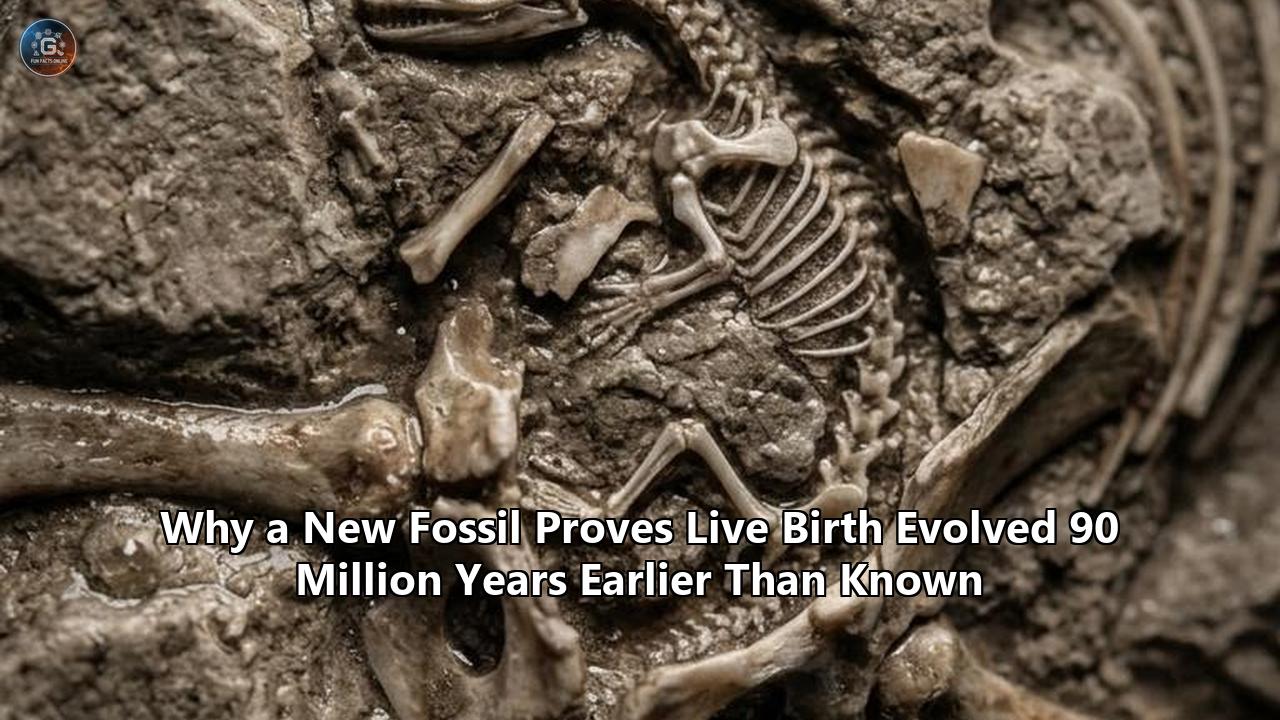
A slice of fossilized limb bone no thicker than a human hair, unearthed from the sun-scorched badlands of northwestern Argentina, has overturned a central tenet of vertebrate paleontology.
Microscopic analysis of the femur and ulna of Chiniquodon theotonicus—a carnivorous, beagle-sized mammal ancestor known as a non-mammalian cynodont that roamed western Gondwana 236 million years ago—reveals that the creature gave birth to live young rather than laying eggs. Published in Frontiers in Mammal Science by a research team led by the National Scientific and Technical Research Council of Argentina (CONICET), the discovery pushes the documented timeline for the evolution of live birth in the mammalian ancestry back by roughly 90 to 95 million years.
Until this analysis, textbook consensus held that viviparity (live birth) was a relatively late evolutionary novelty within the synapsid clade. It was long assumed to have originated approximately 140 to 160 million years ago during the Middle to Late Jurassic, exclusive to the immediate common ancestors of modern therian mammals (marsupials and placentals), while all older lineages laid eggs much like contemporary monotremes.
The new evidence dismantles that timeline. By identifying a microscopic "neonatal line"—a structural scar left in bone tissue during the physiological transition of birth—and pairing it with an extensive statistical dataset across thousands of living and extinct tetrapods, researchers have shown that complex reproductive strategies emerged amidst the severe ecological pressures of the Middle-to-Late Triassic.
PREVIOUS TIMELINE:
Triassic (236 Ma)                    Jurassic (~160 Ma)           Present Day
  Cynodonts (Assumed Egg-Laying) ------> Therian Mammals (Live Birth) -> Modern Placentals/Marsupials
                                                                      -> Monotremes (Eggs)

REVISED TIMELINE:
Triassic (236 Ma)                    Jurassic (~160 Ma)           Present Day
  Chiniquodon (Live Birth Documented) -> Therian Lineages ----------> Modern Placentals/Marsupials
                                      -> Monotreme Divergence ------> Reversion to Eggs? Or Independent Path
The Microscopic Anomaly: Inside the Petrographic Thin Section
The discovery did not occur in a dramatic field excavation, but over a microscope during routine laboratory training at the Universidad de Buenos Aires. Co-author María de los Ángeles Miceli Baro was preparing and examining petrographic thin sections of Chiniquodon theotonicus limb bones as part of a postgraduate paleohistology course when she observed an anomalous pattern near the deep medullary core.
"She came with her samples, and we were looking at them, and we said, 'Hey, look, you have embryonic tissue. This is very weird, I have never seen this,'" said lead author Dr. Leandro Gaetano, a paleontologist at CONICET and the University of the Witwatersrand.
+-----------------------------------------------------------------------------------+
|                        CROSS-SECTION OF CHINIQUODON BONE                         |
|                                                                                   |
|  [ Outer Cortex ]  Postnatal Growth (Rapid expansion, wide vascular canals)       |
|          |                                                                        |
|  ================= NEONATAL LINE (Structural shift & optical arrest) ============== |
|          |                                                                        |
|  [ Inner Core ]    Prenatal Growth (Embryonic woven bone, fine, narrow canals)    |
|          |                                                                        |
|  (Medullary Void)  Resorption Cavity (Normally erases inner layers in adults)     |
+-----------------------------------------------------------------------------------+
Bone tissue records an animal's life history much like the growth rings of a tree. As a skeletal element expands radially, osteoblasts lay down mineralized matrix around blood vessels. During embryonic development inside the mother or within an egg, skeletal development proceeds under tightly regulated, buffered conditions. This produces an inner zone of embryonic bone: a dense, hypovascular matrix woven with fine, disorganized collagen fibers and narrow vascular canals.
At the moment of birth or hatching, the neonate is thrust into an unbuffered environment. It must abruptly support its own mass, breathe air directly, suckle or forage, and endure dramatic metabolic shifts. This physiological shock induces a transient pause or severe disturbance in osteogenesis, followed immediately by rapid, hypervascular bone deposition.
Under polarized and cross-polarized light microscopy, this event is preserved as a neonatal line—a distinct, hyper-mineralized boundary characterized by an optical and structural shift in bone histology.
           PRENATAL PHASE                      NEONATAL TRANSITION                   POSTNATAL PHASE
+------------------------------------+  +--------------------------------+  +--------------------------------+
| Dense, hypovascular matrix         |  | Transient growth pause         |  | Rapid fibro-lamellar matrix    |
| Fine, disordered collagen fibers   |==> Intense metabolic shock        |==> Wide, radial vascular canals   |
| Narrow, slow-forming channels      |  | Optical & structural boundary  |  | High-rate osteogenesis         |
+------------------------------------+  +--------------------------------+  +--------------------------------+
Neonatal lines are well-documented in forensic anthropology and the histology of extant placentals, including humans, artiodactyls, and rodents. However, locating this structure in a non-mammalian cynodont from the Triassic period was widely considered improbable due to normal skeletal remodeling.
Escaping the Medullary Void: The Taphonomic Miracle
To understand why this discovery eluded paleontologists for over a century, one must examine the destructive mechanics of vertebrate bone remodeling.
Long bones (such as the femur and ulna) are not static mineral blocks; they grow by simultaneously depositing primary bone around their outer periosteal surface while osteoclasts resorb bone from the inside out. This inner destruction expands the medullary (marrow) cavity to keep the skeleton light and biomechanically efficient while maintaining mineral balance.
DIAGRAM: ENDOSTEAL RESORPTION AND THE LOSS OF EARLY LIFE HISTORY

Young Stage:
   [ Core embryonic bone preserved ]
   [ Periosteum: outward growth    ]

Adult Stage (Normal Cynodont):
   (       Expanded Medullary Void       )  <-- Osteoclasts have destroyed embryonic bone
   [ Dense adult cortical bone layers    ]

Chiniquodon Specimen (Rare Arrested Resorption):
   ( Narrow Medullary Void )
   [ Preserved Embryonic Bone ]              <-- Survived endosteal erosion
   ==== NEONATAL LINE ====                   <-- Preserved boundary
   [ Adult Outer Cortical Bone ]
In almost every adult vertebrate, this process of endosteal resorption completely consumes the bone laid down during early infancy, hatching, or gestation. As an animal reaches adult proportions, its earliest biological records are erased.
Paleohistologists had previously sectioned bones from roughly 25 other cynodont species, but in every instance, the central medullary zone had long since expanded past the neonatal stage, leaving behind an empty central lumen or heavily remodeled secondary trabeculae.
The Chiniquodon specimen analyzed by Gaetano’s team (housed in the vertebrate paleontology collections in Argentina) managed to beat these taphonomic and biological odds. Because the individual experienced asymmetrical cortical drift—where bone expands preferentially along one anatomical axis while slowing on another—a small wedge of the deep inner primary cortex avoided osteoclastic resorption.
When the researchers prepared wafer-thin petrographic cross-sections, polished them down to 30 microns, and viewed them under transmitted cross-polarized light with a lambda compensator, the embryonic bone core and its bounding neonatal line were intact.
The Allometric Smoking Gun: How Size Rule Out an Egg
Finding a neonatal line proves that an animal underwent a sharp transition from an encapsulated embryonic state to free-living juvenile life. However, viewed purely under a lens, a hatching line and a birth line share near-identical structural characteristics. Both mark the physical emergence of an organism.
To settle whether this animal hatched from an egg or was born alive, the team turned to comparative biomechanics and mathematical allometry.
+------------------------------------------------------------------------------------------+
|                 MAMMALS VS. REPTILES: ALLOMETRIC SCALING AT BIRTH/HATCHING                |
|                                                                                          |
| 100% +---------------------------------------------------------------------------------+ |
|      |                                                                                 | |
|      |                                            * Modern Placental Mammals           | |
|  50% |                                            * CHINIQUODON RECONSTRUCTION         | |
|      |                                              (Neonate ~10%-20% of adult mass)   | |
|      |                                                                                 | |
|  20% |                                                                                 | |
|      |                                                                                 | |
|  10% |                                                                                 | |
|      |                                                                                 | |
|   1% |   + Egg-laying Amniotes (Reptiles, Birds, Monotremes)                           | |
|      |     (Strictly limited by eggshell surface-area-to-volume physics)                | |
|   0% +---------------------------------------------------------------------------------+ |
|      0.1 kg                     1.0 kg                     10 kg                  100 kg |
|                                   ADULT BODY MASS                                        |
+------------------------------------------------------------------------------------------+
The team calculated the physical size of the Chiniquodon offspring at the precise moment the neonatal line formed. By measuring the cross-sectional circumference of the bone at the boundary and utilizing well-established osteometric scaling equations, they estimated the neonate's body mass. They then assembled an extensive comparative dataset covering 5,270 species of living and fossil amniotes, comprising:
- 1,894 mammal species
- 2,596 reptile species
- 780 bird species
The results exposed a distinct biological divergence:
+--------------------------+-----------------------+-----------------------------------------------+
| Taxonomic Group          | Reproductive Mode     | Neonate-to-Adult Body Mass Ratio              |
+--------------------------+-----------------------+-----------------------------------------------+
| Extant Squamates/Turtles | Oviparous (Egg)       | Extremely low in medium-to-large adults (<2%) |
| Extant Crocodilians      | Oviparous (Egg)       | Extremely low (<0.5%)                         |
| Extant Birds             | Oviparous (Egg)       | Constrained by egg volume/aerodynamics (<5%)  |
| Monotremes               | Oviparous (Egg)       | Tiny hatchlings (<1%)                         |
| Marsupials               | Viviparous (Altricial)| Highly altricial at birth, mature in pouch    |
| Placental Mammals        | Viviparous (Eutherian)| High ratio: 5% to over 20%                    |
| *Chiniquodon theotonicus*| **Viviparous**        | **10% to 18.7%**                              |
+--------------------------+-----------------------+-----------------------------------------------+
The neonate-to-adult body mass ratio for Chiniquodon fell squarely between 10% and 18.7%. An adult Chiniquodon weighed between 8 and 15 kilograms (roughly 17 to 33 pounds), comparable to an African bay duiker or a medium-sized dog. The bone circumference at the neonatal line indicated that the newborn was born weighing anywhere from several hundred grams up to nearly 1.8 kilograms.
In the physical world, an egg-laying amniote of this body size cannot produce a viable egg large enough to hold an offspring of that mass without running into fatal physiological limits:
$$\text{Gas Flux } (J) \propto \frac{\text{Surface Area}}{\text{Shell Thickness}} \times \Delta P_{O_2}$$
As an egg scales upward, its volume (and thus the oxygen demand of the developing embryo) expands cubicly ($\propto r^3$), whereas the surface area of the eggshell expands only squarely ($\propto r^2$). To prevent the heavy shell from crushing under its own weight, the shell must thicken, which drastically impedes gas diffusion and suffocates the embryo.
No known egg-laying terrestrial animal at Chiniquodon's body mass has ever yielded a hatchling-to-adult mass ratio approaching 15%. The mathematical models classified Chiniquodon exclusively alongside modern viviparous placental mammals.
The Ecological Crucible: Western Gondwana 236 Million Years Ago
The timeline of this transition highlights the ecological context in which it occurred. Chiniquodon theotonicus fossils are preserved in the Chañares Formation of the Ischigualasto-Villa Unión Basin in northwestern Argentina.
Dating to the late Ladinian to early Carnian stages of the Middle-to-Late Triassic (~236 Ma), this ecosystem sat in a high-stress post-extinction recovery phase.
+---------------------------------------------------------------------------------+
|               TRIASSIC ECOSYSTEM PRESSURES DRIVING LIVE BIRTH                   |
|                                                                                 |
|  1. POST-PERMIAN EXTINCTION VACUUMS                                             |
|     Niche recovery, intense faunal competition, rapid trophic restructuring.     |
|                                                                                 |
|  2. SEVERE CLIMATIC INSTABILITY                                                 |
|     Monsoonal mega-arid cycles, fluctuating water tables, volcanic ash loading. |
|                                                                                 |
|  3. INTENSE NEST PREDATION                                                      |
|     Pseudosuchians, basal dinosauromorphs, and terrestrial archosaurs.          |
|                                                                                 |
|  ============================== ADAPTIVE RESPONSE ============================ |
|                   INTERNAL EMBRYONIC RETENTION (VIVIPARITY)                     |
|     Protects embryos from desiccation, volcanic toxicity, and ground predators. |
+---------------------------------------------------------------------------------+
"Cynodonts thrived in the Triassic, a period of recovery and restructuring of ecosystems after one of the most devastating mass extinctions in life history," explained senior author Dr. Adriana Mancuso, a CONICET paleobiologist specializing in Triassic paleoenvironments. "This meant high competition for resources and strong predatory pressures. Combined with a trend toward aridity and strong seasonality, embryos of viviparous species would be better protected than those of egg-laying species."
                       ENVIRONMENTAL THREATS TO REPRODUCTION

             [ Egg-Laying (Oviparity) ]          [ Live Birth (Viviparity) ]
                       |                                     |
                       v                                     v
Threats:     - Nest flooding                       - Mother carries offspring
             - Soil desiccation                    - Constant thermoregulation
             - Archosaur nest predation            - Continuous metabolic nutrient flux
             - Thermal spikes                      - Mobility away from volcanic ash falls
                       |                                     |
Result:      High clutch mortality                 High parental investment,
                                                   drastically lower embryonic mortality
The Chañares Formation captures an environment marked by volcanic ash falls (tuffs), braided river systems, and pronounced seasonality where dry periods alternated with sudden sheet floods.
For an egg layer, leaving a clutch in a shallow burrow or surface nest presented serious vulnerabilities:
- Pseudosuchians (early crocodile relatives), large predatory synapsids, and swift early dinosauromorphs (Lagerpeton, Marasuchus) patrolled the understory.
- Volcanic deposition altered soil chemistry and posed toxic hazards for permeable eggshells.
- Severe wet-dry cycles dried out porous eggs or smothered clutches in fine volcanic mud.
Internal gestation eliminated these threats. By converting the maternal body into a mobile, temperature-regulated, and chemically filtered incubator, cynodonts shielded their developing young from ground predators and climate swings.
This ecological setting drove the evolution of live birth, transforming reproductive biology from a numbers game of vulnerable egg clutches into focused, high-investment maternal protection.
The Cladistic Shockwave: Did Monotremes Re-Evolve Egg-Laying?
The identification of viviparity in a Middle Triassic non-mammalian cynodont creates a phylogenetic puzzle that directly challenges the traditional arrangement of the mammalian family tree.
In classical cladistics, mammalian reproductive evolution was understood as a clean, stepped progression:
THE HISTORICAL TEXTBOOK MODEL (Linear Evolution):

   Basal Synapsids (Eggs)
         |
         +--> Non-Mammalian Cynodonts (Eggs)
                   |
                   +--> Stem Mammaliaforms (Eggs)
                             |
                             +--> Monotremes (Eggs - Living Fossils)
                                       |
                                       +--> Therians (Live Birth: Marsupials & Placentals)
In this model, the platypus and echidna (Monotremata) represent the ancestral baseline—a primitive branch that diverged before live birth evolved.
The Chiniquodon evidence complicates this tidy evolutionary ladder. Chiniquodon is a member of the clade Probainognathia, occupying an evolutionary node deeper in the tree, outside Mammaliaformes and far ancestral to crown Mammalia.
THE PHYLOGENETIC DILEMMA: TWO EQUALLY PARSIMONIOUS SCENARIOS

SCENARIO 1: Deep Ancestral Origin & Monotreme Reversion
=======================================================
Root (Stem Cynodonts)
  |
  +-- [INNOVATION: LIVE BIRTH EVOLVES ~240 Ma]
        |
        +---> Probainognathia (*Chiniquodon*) [VIVIPAROUS]
        |
        +---> Stem Mammals (*Morganucodon*, etc.)
                |
                +---> Monotremata (Platypus/Echidna) [REVERTED TO OVIPARITY]
                |
                +---> Theria (Placentals & Marsupials) [VIVIPAROUS]


SCENARIO 2: Convergent Evolution (Multiple Inventions)
======================================================
Root (Egg-Laying Ancestor)
  |
  +---> Probainognathia (*Chiniquodon*) ----> [INDEPENDENT LIVE BIRTH EVOLUTION]
  |
  +---> Monotremata (Egg-Laying Retained)
  |
  +---> Theria (Marsupials/Placentals) -----> [INDEPENDENT LIVE BIRTH EVOLUTION]
This presents researchers with two competing evolutionary interpretations, both carrying major implications for evolutionary biology:
Scenario 1: The Deep Origin and the Monotreme Reversion
Under this hypothesis, viviparity was acquired once, deep within Probainognathia during the Triassic period (~240 Ma). It served as the basal state for crown mammals, meaning that the earliest common ancestors of platypuses, echidnas, marsupials, and placentals all gave birth to live young.
The direct consequence of this model is that monotremes secondarily re-evolved egg-laying.
For decades, evolutionary biologists deemed such a reversal near-impossible under Dollo's Law of Irreversibility, which states that once a complex anatomical or physiological structure is lost, it cannot be regained in identical form.
However, modern molecular biology has challenged the absolute rigidity of Dollo's Law:
GENOMIC MECHANISMS: VITELLOGENIN VS. CASEIN

1. Ancient Amniote Baseline:
   [ VIT 1 ] [ VIT 2 ] [ VIT 3 ] (High yolk production genes)
   No lactation genes.

2. Cynodont / Mammalian Transition:
   Loss/Pseudogenization of Vitellogenin: [ vit1* ] [ vit2* ] [ vit3* ]
   Upregulation of Casein / Milk Secretions: [ CSN1S1 ] [ CSN2 ] [ CSN1S2 ]

3. Modern Monotremes:
   Retain only ONE functional pseudo-vitellogenin gene + High lactation dependence.
   Their eggs are soft, parchment-like, and absorb nutrient secretions in the uterus.
Monotremes lay small, leathery eggs with minimal yolk compared to birds or reptiles. The monotreme egg stays in the mother's uterus for roughly two-thirds of its development, absorbing maternal nutrients directly through uterine secretions before a thin parchment shell is deposited shortly before laying.
Genomically, monotremes have already lost two of the three ancestral vitellogenin (egg-yolk protein) genes, replacing that nutrition with milk secreted from skin patches.
If their ancestors possessed internal gestation, shifting toward a short external incubation period by laying a pliable, semi-gestated egg is biologically plausible.
+-----------------------------------------------------------------------------------------+
|                  SQUAMATE ANALOGY: REVERSIBLE REPRODUCTIVE STRATEGIES                    |
|                                                                                         |
|  Live birth has independently evolved over 150 times in vertebrates.                    |
|  Among modern squamate reptiles (lizards and snakes), several lineages—such as          |
|  certain South American Liolaemus lizards and Eurasian Zootoca vivipara—exhibit         |
|  evolutionary transitions between egg-laying and live birth over short geological       |
|  spans. If squamates can repeatedly toggle this physiological switch, early mammal      |
|  ancestors likely possessed similar evolutionary plasticity.                           |
+-----------------------------------------------------------------------------------------+
Scenario 2: Evolutionary Convergence Across Cynodont Lineages
The alternative scenario suggests that the evolution of live birth occurred independently multiple times within the mammalian lineage.
In this framework, Chiniquodon evolved internal gestation in response to the arid, predator-dense Triassic landscape, while other contemporary cynodonts retained egg-laying. Later, during the Jurassic, therian mammals independently assembled their own placental mechanisms.
"It is very well possible that C. theotonicus does not represent an isolated case of viviparity among cynodonts," Gaetano noted. "It could be evidence of the general switch from laying eggs to giving birth to live young early on in the mammalian lineage. But we need more evidence to test this hypothesis."
Anatomy of a Revolution: The Cynodont Morphological Package
Live birth did not evolve in isolation. It formed one component of an integrated anatomical and physiological overhaul that reshaped cynodont biology throughout the Triassic.
+------------------------------------------------------------------------------------------+
|                       THE TRIASSIC CYNODONT TRANSITION SUITE                             |
|                                                                                          |
|       PHYSIOLOGICAL ADVANCE       |                FUNCTIONAL BENEFIT                    |
+-----------------------------------+------------------------------------------------------+
| 1. Secondary Bony Palate          | Separated breathing from chewing; allowed continuous |
|                                   | suckling and sustained oxygen consumption.           |
|                                   |                                                      |
| 2. Heterodont Dentition           | Specialized incisors, canines, and multicusped post- |
|                                   | canines for rapid metabolic fuel processing.         |
|                                   |                                                      |
| 3. High Vascular Density in Bone  | Fast growth rates, high baseline metabolic output,   |
|                                   | and the emergence of endothermy (warm-bloodedness).   |
|                                   |                                                      |
| 4. Whisker Pits / Maxillary Foramina | Tactile sensory reception, indicating the presence |
|                                   | of an insulating hair coat.                          |
|                                   |                                                      |
| 5. Epipubic Pelvic Support        | Supported the abdominal wall during locomotion and   |
|                                   | internal gestation / pouch carriage.                 |
+-----------------------------------+------------------------------------------------------+
TRADITIONAL VIEW NEW HISTOLOGICAL REALITY
+------------------------------------+ +------------------------------------+
| Cold-blooded, scaly, egg-laying | | Endothermic, furred, whiskered |
| "mammal-like reptiles" | ====> | predator nursing large, live-born |
| sluggishly nesting in burrows | | young in dynamic Triassic terrain |
+------------------------------------+ +------------------------------------+For over a century, non-mammalian cynodonts were popularly envisioned as scaly, cold-blooded "mammal-like reptiles". The histological discovery of viviparity fits directly into modern fossil data showing that cynodonts were already biologically active, warm-blooded, and physiologically complex.
                      THE CO-EVOLUTION OF MAMMALIAN PHYSIOLOGY

                              [ ENDOTHERMY ]
                       (High Metabolic Requirements)
                                    |
                                    v
       +----------------------------+----------------------------+
       |                                                         |
       v                                                         v
 [ CONSTANT TEMPERATURE ]                               [ RAPID NUTRITION ]
 (Enables internal embryonic                            (Requires high maternal
  gestation at stable temps)                             investment via milk)
       |                                                         |
       v                                                         v
 [ VIVIPARITY / LIVE BIRTH ] <=======================> [ LACTATION / SUCKLING ]
 (Neonate born large, active,                           (Secondary palate allows
  and physiologically buffered)                          uninterrupted breathing)
Internal gestation requires sustained thermal stability; an embryo developing internally in a cold-blooded poikilotherm is subject to every swing in ambient temperature unless the mother thermoregulates behaviorally.
The elevated metabolic rates evident in Chiniquodon’s fibro-lamellar bone tissue provided the homeothermic engine required to incubate offspring internally.
Simultaneously, carrying large, live young transforms maternal energetics. Once born, a large eutherian-like newborn requires high-energy food.
The skull of Chiniquodon features precise dental occlusion and an expanded secondary bony palate. This allowed young to seal their mouths and breathe while suckling milk or maternal secretions, a developmental requirement tied directly to the evolution of live birth.
Behind the Laboratory Bench: Destructive Sampling and South American Paleontology
While high-level evolutionary debates dominate the headlines, the path to this discovery highlights the technical trade-offs and research landscape of modern vertebrate paleontology.
THE DILEMMA OF DESTRUCTIVE OSTEOLOGY

  +-----------------------+                    +------------------------------------+
  | Unique Fossil Bones   | === [ DIAMOND SAW ] ==> Petrographic Thin Section (30 µm)
  | (Irreplaceable Specimen|                    | - Microstructure revealed         |
  |  in Museum Archive)   |                    | - Original bone destroyed forever  |
  +-----------------------+                    +------------------------------------+
              |
              | (Alternative Approach)
              v
  +--------------------------------------------+
  | Synchrotron Phase-Contrast Microtomography |
  | - 100% Non-destructive                     |
  | - Requires multi-million-dollar particle    |
  |   accelerators (ESRF, Sirius)              |
  | - Strict beamtime allocation limits        |
  +--------------------------------------------+
The Cost of Destructive Sampling
To discover a neonatal line, researchers must slice through fossil bone using diamond-tipped saws, grinding a section of an irreplaceable fossil down to a translucent sliver.
For museum curators, approving destructive sampling is a calculated risk. If the bone core is hollowed out by ancient marrow expansion, the interior offers nothing but empty calcite crystals, destroying a diagnostic anatomical specimen for zero scientific return.
The Argentine team secured permissions by targeting specific, non-diagnostic limb bone fragments from well-documented Chiniquodon quarries in La Rioja Province, balancing anatomical preservation with histology.
+-----------------------------------------------------------------------------------------+
|                  METHODOLOGICAL COMPARISON IN FOSSIL HISTOLOGY                          |
+---------------------------+------------------------------+------------------------------+
| Feature                   | Petrographic Thin-Sectioning | Synchrotron CT Scanning (SRCT)|
+---------------------------+------------------------------+------------------------------+
| Destructive to fossil?    | Yes                          | No                           |
| Spatial Resolution        | Sub-micron optical (<0.5 µm) | Sub-micron volumetric (~0.7 µm)|
| Mineral Birefringence     | Visible under polarized light| Not directly visible         |
| Cost per sample           | Low ($50 - $200)             | Very high ($1,000s in beam)  |
| Accessibility             | Standard geological lab      | Specialized synchrotrons     |
| Identification of Arrest  | High optical contrast        | Phase-density contrast       |
+---------------------------+------------------------------+------------------------------+
The Context of CONICET and Global Science
This discovery was achieved by researchers working under Argentina’s National Scientific and Technical Research Council (CONICET) and public universities.
South American paleontologists working in the Ischigualasto and Chañares formations have unearthed some of the most critical fossil sites spanning the dawn of the dinosaurs and cynodonts. Despite ongoing economic and budgetary challenges affecting scientific infrastructure in the region, their institutions continue to produce field discoveries and laboratory analyses that reshape evolutionary biology.
The Historical Baseline: How Live Birth Pushed Deeper Across the Animal Kingdom
The Chiniquodon discovery represents a major milestone in synapsid paleontology. However, viewing this breakthrough alongside earlier discoveries shows that nature has repeatedly deployed live birth across evolutionary history.
MAJOR MILESTONES IN VERTEBRATE LIVE BIRTH DISCOVERIES

  DEVONIAN (380 Ma)        TRIASSIC (248 Ma)         TRIASSIC (236 Ma)       JURASSIC (160 Ma)
         |                        |                          |                       |
         v                        v                          v                       v
  *Materpiscis*            *Chaohusaurus*             *Chiniquodon*           Therian Mammals
  (Placoderm Fish)         (Ichthyopterygian)         (Cynodont Synapsid)     (Stem Placentals)
  Oldest known live birth  Marine live birth          Oldest known viviparous (Traditional assumed
  in any vertebrate        origin on land/sea         mammalian ancestor      start of mammalian
(Gogo Formation) (Anhui, China) (La Rioja, Argentina) live birth)- The Devonian Placoderm Breakthrough (2008):
When paleontologist John Long identified an embryo and permineralized umbilical cord inside the armored placoderm Materpiscis attenboroughi from the 380-million-year-old Gogo Formation of Western Australia, it pushed back the origin of vertebrate live birth by roughly 200 million years. It proved that internal fertilization and live birth were active at the dawn of jawed vertebrates (Gnathostomata).
- The Early Triassic Ichthyosaur Discovery (2014):
The discovery of Chaohusaurus geishanensis in China captured an ancient marine reptile preserved mid-birth—with a neonate emerging head-first from the maternal pelvis. This showed that live birth in marine reptiles evolved on land before their transition to open oceans.
- The Chiniquodon Synapsid Milestone:
The Argentine Chiniquodon discovery fills a fundamental evolutionary gap: the mammalian line on land. It demonstrates that terrestrial synapsids abandoned egg-laying tens of millions of years before the first true mammals appeared.
+-----------------------------------------------------------------------------------------+
|                  SUMMARY OF OLDEST KNOWN VIVIPAROUS FOSSILS BY CLADE                     |
+-----------------------+-----------------------------+-----------------+-----------------+
| Clade                 | Earliest Known Species      | Geological Age  | Discovery Year  |
+-----------------------+-----------------------------+-----------------+-----------------+
| Placodermi (Fish)     | *Materpiscis attenboroughi* | ~380 Ma         | 2008            |
| Ichthyosauria         | *Chaohusaurus geishanensis* | ~248 Ma         | 2014            |
| Sauropterygia         | *Keichousaurus hui*         | ~242 Ma         | 2004            |
| Archosauromorpha      | *Dinocephalosaurus*         | ~245 Ma         | 2017            |
| **Cynodontia/Synapsida**| ---Chiniquodon theotonicus---| **~236 Ma**     | **Published**   |
| Eutheria (Crown Mam.) | *Juramaia sinensis* (Inferred)| ~160 Ma       | 2011            |
+-----------------------+-----------------------------+-----------------+-----------------+
What Comes Next: Scanning the Vaults of Deep Time
The identification of viviparity in Chiniquodon changes how paleobiologists approach museum archives. For decades, thousands of cynodont limb bones collected from the Karoo Basin of South Africa, the Santa Maria Formation of Brazil, and the southwestern United States were cataloged and shelved under the assumption that they belonged to straightforward, egg-laying reptiles.
THE NEXT RESEARCH ROADMAP

  [ Museum Archives Worldwide ]
                |
                v
  ( Non-Destructive Synchrotron Tomography )
  Targeting: Brasilodontidae, Traversodontidae, Morganucodontidae
                |
                +------------------------------+
                |                              |
                v                              v
  Map Neonatal Lines Across        Reconstruct Ancestral
  the Entire Cynodont Tree         Genomic Regulatory Networks
                |                              |
                +--------------+---------------+
                               |
                               v
         Resolve the Monotreme Reversion Paradox:
         Did platypuses re-evolve eggs, or was viviparity
         invented independently across cynodont branches?
Several active research programs are moving forward to resolve the questions opened by the Chiniquodon discovery:
- Synchrotron Phase-Contrast Tomography Campaigns:
Teams are deploying high-energy synchrotrons—including the European Synchrotron Radiation Facility (ESRF) in Grenoble, France, and the Sirius light source in Campinas, Brazil—to perform sub-micron volumetric X-ray scanning of intact cynodont bones. This non-destructive technique reconstructs internal growth rings and detects neonatal lines without cutting the physical fossils.
- Testing Advanced Non-Mammalian Cynodont Families:
Targeted histological surveys are underway on Brasilodon quadrangularis (the closest known sister group to Mammaliaformes) and diverse tritylodontids and traversodontids. If neonatal lines and high neonate-to-adult mass ratios appear across these branches, it will reinforce the hypothesis that live birth is the ancestral state of all advanced cynodonts.
- Genomic and Developmental Modeling:
Comparative evolutionary developmental biologists (evo-devo) are cross-referencing these fossil dates with molecular clocks tracking the loss of vitellogenin genes and the gain of casein cluster loci. Reconciling fossil bone histology with genomic mutation rates will clarify whether early egg-to-live-birth transitions were driven by broad genetic rewiring or subtle tweaks to hormone regulation.
The discovery from northwestern Argentina confirms that the physiological traits that define modern mammals were active experiments millions of years before true mammals emerged. The journey toward warm blood, high parental investment, and live birth was underway during the Triassic, etched into the interior microstructure of bones that survived deep time.
Reference:
- https://www.thebrighterside.news/post/ancient-mammal-ancestors-gave-birth-to-live-young-236-million-year-old-fossil-finds/
- https://www.earth.com/animals/mammal-ancestors-live-birth-cynodont/
- https://phys.org/visualstories/2026-08-million-year-fossil-story-mammalian.amp
- https://www.livescience.com/animals/land-mammals/mammal-ancestors-may-have-given-live-birth-90-million-years-earlier-than-we-thought-rewriting-evolutionary-timelines
- https://www.sciencenews.org/article/mammal-ancestors-birthed-live-earlier
- https://gizmodo.com/this-236-million-year-old-fossil-just-rewrote-the-story-of-live-birth-2000797767
- https://www.sci.news/paleontology/chiniquodon-theotonicus-live-birth-origin-14990.html
- https://www.reddit.com/r/Paleontology/comments/1vnop6a/new_cynodont_fossil_discovery_pushes_back_the/
- https://www.sciencedaily.com/releases/2026/08/260813045534.htm
- https://www.practicalfishkeeping.co.uk/fishkeeping-news/380-million-year-old-fossil-fish-is-oldest-known-livebearer/
- https://www.discovermagazine.com/your-weekly-attenborough-materpiscis-attenboroughi-37433
- https://phys.org/pdf154796016.pdf
- https://pubmed.ncbi.nlm.nih.gov/18509443/