The Overlooked Witness: Unveiling Bryophytes in the Crime Lab
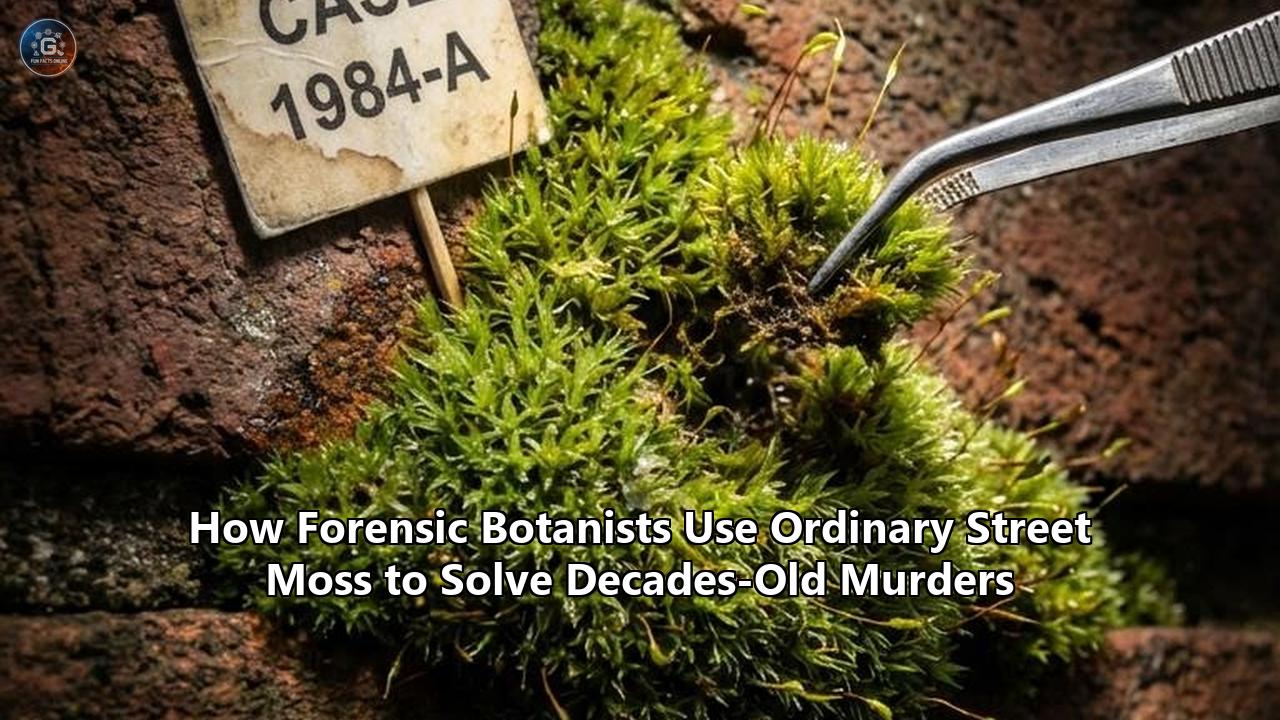
When a violent crime goes cold, modern investigators instinctively turn to the digital and the molecular. They subpoena cloud storage records, run cellular tower dumps, and feed degraded human genetic material into next-generation sequencing machines. Yet, a landmark study published in the journal Forensic Sciences Research in early 2026 demands a stark reevaluation of what constitutes critical trace evidence. According to the comprehensive 150-year review led by Matt von Konrat of the Field Museum in Chicago and Jenna Merkel of George Washington University, law enforcement agencies are routinely walking past some of the most highly specific, chronologically precise evidence at any outdoor crime scene: ordinary street moss.
The publication of "Green Clues: Unveiling the Role of Bryophytes in Forensic Science" formally establishes mosses, liverworts, and hornworts as a distinct and highly reliable class of evidence. While traditional crime scene investigators prioritize human DNA, synthetic fibers, and shell casings, the researchers argue that the microscopic fragments of bryophytes clinging to a suspect’s shoe or the tread of a tire offer an entirely different category of intelligence. These primitive plants, which evolved some 470 million years ago, function as environmental hard drives, recording the precise physical movements of a suspect, the exact location of a clandestine grave, and the undeniable timeline of a victim's death.
This news forces a structural shift in how cold cases are evaluated. For decades, the discipline of forensic botany has existed on the fringes of standard police procedure, viewed mostly as an academic novelty rather than a primary investigative tool. "With our paper, we wanted to highlight the significance of botanical evidence, because chances are, investigators are simply overlooking it because they don't know what they're looking at," von Konrat stated following the study's release. By systematically comparing the investigative power of microscopic moss fragments against traditional mainstays like GPS tracking and forensic entomology, the research reveals that law enforcement's heavy reliance on technology has created a blind spot for biology.
The integration of moss into the investigative toolkit represents a fundamental tradeoff in crime scene management. Detectives must now weigh the value of sterile, sterile-suit collection protocols against the urgent need to preserve living, biological trace evidence that actively rots inside standard plastic evidence bags. As the scientific and legal communities process the findings of the 2026 Forensic Sciences Research paper, the contrast between the high-tech, sterile crime lab and the damp, chaotic reality of the natural environment has never been more pronounced.
The Micro-Habitat Tradeoff: Bryology vs. Palynology and Dendrochronology
To understand why the introduction of bryophyte analysis is disrupting the forensic landscape, one must compare it against the historical heavyweights of botanical evidence: dendrochronology (the study of tree rings) and palynology (the study of pollen). When forensic botany first gained mainstream legal recognition during the 1935 trial for the kidnapping of Charles Lindbergh's baby, it was dendrochronology that secured the conviction. An expert successfully matched the growth rings of the wood used in the kidnapper's homemade ladder to the specific floorboards missing from the suspect's attic. While powerful, analyzing tree wood requires macro-level physical evidence—large, obvious pieces of material left at the scene.
In contrast, forensic palynology operates on the microscopic level. Pollen analysis has long been the dominant method for linking a suspect to a geographical region. However, the biological imperative of pollen limits its precision. Because pollen is specifically designed by evolution to disperse as widely as possible on the wind, its presence on a suspect's jacket only proves that the individual was within a broad regional zone. A grain of oak pollen in a suspect's hair might have blown in from a forest three miles away.
Bryology—the study of mosses—offers a radically different set of biological tradeoffs. Unlike flowering plants, bryophytes lack true stems, roots, or vascular systems. Instead of drawing water up from deep underground, they absorb moisture and nutrients directly from their immediate, ambient surroundings through tiny root-like structures called rhizoids. This evolutionary limitation is their greatest forensic asset. Because they cannot seek out water, mosses are aggressively bound to hyper-specific microhabitats. One species of moss might only survive on the north-facing side of a limestone rock in deep shade, while a completely different species thrives two inches away in acidic soil exposed to direct sunlight.
Furthermore, mosses reproduce via spores and fragments that are incredibly fragile, sticky, and often no larger than an eyelash. Unlike dead leaves that crumble and fall away, or pollen that blows off in a breeze, a moistened moss fragment acts like biological Velcro, clinging tenaciously to the canvas of a shoe, the fabric of denim jeans, or the rubber well of a vehicle tire. When investigators choose to rely on palynology, they trade geographical precision for a higher likelihood of finding evidence. When they utilize bryology, they sacrifice the ease of collection for an unprecedented level of spatial precision, pinning a suspect not just to a county or a forest, but to a specific square meter of soil.
Geolocation Showdown: Digital Cell Tracking vs. Botanical Fingerprinting
The contrast between digital geolocation and botanical fingerprinting is most brutally illustrated by the Michigan cold case of Katherine "Baby Kate" Phillips. In 2011, the four-month-old infant disappeared near Ludington, Michigan. Her father, Sean Phillips, was eventually convicted of second-degree murder, but he refused to disclose the location of her remains, offering only vague claims that she was in a "peaceful place".
Law enforcement deployed the full arsenal of modern digital and physical search techniques. They utilized cell phone tower pings, analyzed GPS data, and coordinated massive grid searches involving cadaver dogs and hundreds of volunteers across seven massive Michigan counties. These digital tracking methods yielded nothing but frustration. Cellular data in rural areas often relies on fewer towers, creating vast triangulation zones that can span square miles. Digital tracking provides a radius; it does not provide a destination.
Faced with the failure of digital technology, investigators turned to the mud caked on the suspect's shoes. In 2013, von Konrat led a team that analyzed this dirt, initiating an investigation that would eventually be detailed in the 2026 Forensic Sciences Research paper. The researchers identified an incredibly specific botanical recipe trapped in the mud: diatoms, sedges, and several highly distinct species of moss, including Brachythecium albicans and Calliergonella lindbergii.
This is where the unique capabilities of moss eclipsed digital technology. The researchers calculated that the precise ecological requirements for this combination of acidic wetland, red pine, and specific Sphagnum moss species could not exist just anywhere. By cross-referencing these biological requirements against the topography of western Michigan, the team narrowed the search area from seven counties down to a highly specific wetland area known as Lemke Drain in Mason County. They pinpointed a patch of land measuring just 50 square feet.
While a GPS tracker relies on satellites that can be blocked by heavy canopy cover, and a cell phone can simply be powered off, the environmental transfer of moss cannot be evaded. "There are hundreds of species of moss and dozens of species of grasses and trees living in that area," von Konrat explained. "But based on the bits of moss, we knew what sort of micro-habitat we were looking for". Even though the infant's physical remains have not yet been recovered—likely due to the rapid disintegration of fetal bones in acidic soil—the father later confirmed in a police interview that the exact 50-square-foot patch pinpointed by the botanists was indeed where he had buried his daughter.
The Chronological Challenge: Entomological Timelines vs. Biological Stopwatches
Establishing a reliable Post-Mortem Interval (PMI)—the time elapsed since death—is one of the most fraught challenges in forensic science. Traditionally, investigators rely on two competing approaches: forensic entomology for the short term, and forensic anthropology for the long term.
Forensic entomology analyzes the life cycles of necrophagous insects, such as blowflies and flesh flies, that colonize a corpse. By measuring the developmental stages of maggots, an entomologist can establish a highly accurate timeline of death. However, this method faces a severe temporal cliff. Once the soft tissue is entirely consumed and the insect succession cycle ends—usually within a few weeks or months—entomology ceases to be useful. Conversely, forensic anthropology examines bone degradation and weathering, but this approach lacks precision, often yielding estimates with margins of error spanning several years.
Bryophyte analysis bridges this massive chronological gap, acting as a biological stopwatch that functions with striking precision over a period of decades. Because mosses lack root systems and grow slowly over exposed surfaces, they readily colonize human skeletal remains and synthetic fabrics left in outdoor environments. The 2026 study highlights a dramatic case from Stockholm, Sweden, where police discovered unidentified human remains concealed under a tarp. There was no identifying documentation, no soft tissue for insect analysis, and no clear evidence to indicate when the victim had died.
A botanist from the Swedish Museum of Natural History examined the moss growing through the victim's skeleton and clothing. The expert focused on a specific species called red-stemmed feathermoss (Hylocomium splendens). Unlike many plants that grow continuously, Hylocomium splendens exhibits an unusual architectural trait: it builds a completely new, distinct tier of growth every single year, functioning almost exactly like the annual growth rings of a tree.
By analyzing the architecture of the moss colonizing the skull, the scientist counted eight to nine distinct tiers. This botanical clock allowed detectives to abandon their broad missing persons search and focus exclusively on files from eight to nine years prior, which directly led to the identification of the victim. A similar methodology was applied in a cold case in Italy, where scientists counted the annual growth cycles of five distinct moss species colonizing a skeleton in a forest, perfectly matching the timeline of a man who had vanished exactly six years earlier. While entomology dictates the timeline of the flesh, moss dictates the timeline of the bone, trading the rapid accuracy of insect lifecycles for the enduring, year-by-year memory of plant growth.
Behavioral Reconstruction: Autopsy Reports vs. Environmental Transfer
Determining the manner of death—specifically distinguishing between suicide and homicide—often relies entirely on the medical examiner's autopsy report. Pathologists look for defensive wounds, the angle of a ligature mark, or the presence of petechial hemorrhaging. However, when a body is discovered in a delayed state of decomposition, or when the physical trauma is ambiguous, the autopsy alone cannot always reconstruct the behavioral sequence of events leading up to the death.
In these ambiguous scenarios, analyzing environmental transfer provides a competing narrative to the physiological data. A 2005 case from Taipei, Taiwan, perfectly illustrates this dynamic. Police discovered a man hanging from the branch of a tree in a local park. Given the suspicious circumstances and the lack of witnesses, investigators initially treated the scene as a potential homicide, suspecting that the victim had been incapacitated, hoisted into the tree, and staged to look like a suicide. The physical autopsy could confirm asphyxiation, but it could not definitively prove whether the man had climbed the tree under his own power or had been dragged there by an assailant.
The decisive evidence came not from human tissue, but from a microscopic smear of green plant material on the victim's wrists. Forensic botanists analyzed the smear and identified it as a specific species of moss. More importantly, they matched this exact moss species to the localized colony growing on the upper branches of the tree, well above the height of the victim's suspended body.
This environmental transfer completely altered the investigative hypothesis. For the moss to be ground into the skin of the victim's wrists, he had to have actively gripped the upper branches, acquiring the botanical trace evidence through the friction of his own physical exertion. A staged hanging by a third party would not have produced that specific localized transfer on the victim's inner wrists. The botanical analysis proved that the man had climbed the tree himself, confirming the manner of death as a suicide and allowing police to close the case. By contrasting the physiological results of the autopsy with the ecological reality of the moss, investigators were able to reconstruct the behavior of the deceased, using the environment itself as a silent witness to his final moments.
The Analytical Divide: Morphological Microscopy vs. DNA Barcoding
Even when investigators successfully recognize and collect moss at a crime scene, a fierce methodological debate exists within the laboratory over how to process it. The forensic botany community is currently split between two competing analytical approaches: traditional morphological microscopy and the rapidly advancing field of DNA barcoding.
The traditional approach relies on classical taxonomy. Highly trained bryologists place eyelash-sized moss fragments under scanning electron microscopes (SEM) to identify the species based on its physical architecture. They examine the cellular structure of the leaf margins, the shape of the spores, and the angle of the rhizoids. This morphological approach is incredibly precise, but it carries a severe institutional vulnerability: it relies entirely on the subjective expertise of a human specialist. With university botany departments facing budget cuts and traditional taxonomists aging out of the workforce, finding a localized expert who can distinguish between 12,000 global species of moss is becoming increasingly difficult.
Competing against this traditional method is the modern approach of DNA barcoding and environmental DNA (eDNA) analysis. By extracting the genetic material from a moss fragment, technicians can isolate specific genetic markers—such as the rbcL and ITS sequences—and run them against global digital databases to identify the species. This approach removes the subjective human element, offering a replicable, objective result that juries and judges generally prefer.
However, the tradeoff is steep. Extracting usable DNA from environmental plant samples is notoriously difficult. The overall quantity and quality of DNA extracted from forensic botanical fragments are often severely degraded by UV radiation and moisture. Furthermore, because mosses function as miniature ecosystems, a single fragment of moss is entirely coated in the DNA of environmental contaminants—fungi, bacteria, microscopic diatoms, and insect larvae. When a technician amplifies the sample using Polymerase Chain Reaction (PCR), the resulting sequence data often matches the fungal contaminant rather than the plant itself. Until specialized genetic databases for bryophytes reach the sheer volume and accuracy of human DNA systems like CODIS, laboratories must constantly weigh the objective allure of DNA barcoding against the reliable, albeit scarce, expertise of the traditional microscopist.
The Disturbance Metric: Geochemical Soil Analysis vs. Botanical Stress Indicators
When investigating clandestine graves or illegal dumping sites, authorities frequently utilize geochemical soil analysis to determine if the earth has been recently disturbed. They look for shifts in soil pH, the sudden introduction of nitrogen from decomposing remains, or disruptions in the physical soil stratification. While effective, geochemical analysis requires extensive core sampling and expensive laboratory processing to yield results.
A competing approach—botanical stress analysis—offers a rapid, on-site visual indicator of disturbance. Because mosses are incredibly sensitive to changes in their immediate microhabitat, any disruption to their environment triggers an immediate physiological response. This dynamic proved critical in the prosecution of a massive cemetery desecration case in Chicago. At the historic Burr Oak Cemetery—the final resting place of Emmett Till—investigators discovered that workers had been illegally excavating old graves, dumping the skeletal remains, and reselling the burial plots to unsuspecting families.
When confronted, the suspects offered a cohesive alibi, claiming the large mounds of dirt and bone fragments found in an unused area of the cemetery were decades old, predating their employment. Geochemical soil analysis was complicated by the sheer volume of organic matter naturally present in the cemetery.
Instead, experts turned to the common moss Fissidens taxifolius found growing on the discarded human bones and excavated dirt mounds. By carefully analyzing the physical condition, abiotic stress markers, and growth stage of the moss in relation to its required light and moisture levels, investigators established a definitive biological timeline. The moss's health and development categorically proved that the remains had been disinterred and dumped no longer than 12 to 24 months prior.
This botanical stress analysis completely dismantled the suspects' timeline. The physiological condition of the moss contradicted their alibis and directly placed the accused workers at the scene during the exact window of the desecration. While geochemical analysis looks for what has been mixed into the dirt, botanical stress analysis examines how the living environment is reacting to the trauma of the shovel, providing a highly specific, undeniable metric of human interference.
The Evidence Collection Paradox: Standard CSI Protocols vs. Biological Preservation
The most significant barrier to the widespread adoption of bryophyte analysis is not scientific, but procedural. There is a fundamental conflict between standard crime scene investigation protocols and the biological reality of plant life. The publication of the 2026 review exposes a critical training gap within modern law enforcement: the very methods police use to secure evidence are actively destroying botanical clues.
Standard CSI protocol dictates that physical evidence—such as a suspect's muddy boot or a victim's clothing—must be securely packaged to prevent cross-contamination and to strictly maintain the chain of custody. For decades, the gold standard for this process has been the airtight plastic evidence bag. This protocol is explicitly designed to protect human DNA from outside elements and to contain any biological fluids.
However, placing damp, moss-covered clothing or muddy shoes into a sealed plastic bag creates a catastrophic micro-environment. The trapped ambient moisture immediately triggers a greenhouse effect. Within 24 to 48 hours, aggressive mold and bacterial rot will begin to consume the fragile bryophyte fragments, degrading their cellular structure and rendering them completely unidentifiable under a microscope. The effort to preserve the human DNA actively annihilates the botanical DNA.
To successfully leverage moss in criminal investigations, forensic teams must pivot away from standard synthetic packaging and embrace breathable, paper-based evidence collection methods, such as manila envelopes and folded paper bindles. Furthermore, crime scene technicians must be trained to actively scrape for moss in the field, recognizing that a degraded leaf or a smear of green paste on a tire well holds the same evidentiary weight as a latent fingerprint. As von Konrat and Merkel advocate, the integration of moss into forensic science requires law enforcement to stop viewing the crime scene as a sterile laboratory puzzle, and start treating it as a complex, living ecosystem.
The Courtroom Clash: Synthetic Trace Evidence vs. Natural Variability
Introducing moss into a criminal trial forces prosecutors to navigate a complex legal battlefield. Under the strict parameters of the Daubert standard—the rule that governs the admissibility of expert witness testimony in the United States—evidence must be empirically testable, subject to peer review, and possess a known error rate.
When prosecutors present synthetic trace evidence, such as automotive paint chips or carpet fibers, they enjoy the benefit of standardized manufacturing. A forensic chemist can confidently testify that a specific shard of glass belongs to the windshield of a 2018 Ford F-150 because the chemical composition was rigidly controlled in a factory setting. Juries easily grasp this concept of uniform matching.
Botanical evidence, however, is relentlessly wild. Moss is subject to natural variability, seasonal weather shifts, and localized genetic mutations. Defense attorneys routinely challenge the admission of plant material by highlighting this ecological chaos. They argue that because moss spores can be carried by an animal or washed away in a heavy rainstorm, finding a specific bryophyte on a suspect's shoe is merely circumstantial, lacking the definitive, factory-grade certainty of a synthetic fiber match.
The publication of "Green Clues" serves as a direct, peer-reviewed countermeasure to this legal skepticism. By consolidating historical data, documenting successful convictions like the "Baby Kate" case, and establishing the rigid environmental limitations of bryophytes, the researchers are providing prosecutors with the academic ammunition necessary to survive a Daubert hearing. They argue that it is precisely the wild, hyper-specific nature of the moss—its inability to grow outside of its strict microhabitat—that makes it far more incriminating than a mass-produced carpet fiber. A synthetic thread can be purchased by millions of consumers nationwide, but a distinct combination of Calliergonella lindbergii and acidic wetland soil only exists in a handful of isolated geographic pockets.
The Horizon: Next-Generation Ecogenomics and AI Integration
The revelation that ordinary street moss holds the key to solving decades-old murders marks a turning point in investigative methodology, but the science is already accelerating toward new horizons. The next phase of forensic botany will not rely solely on traditional microscopes or isolated genetic markers. Instead, researchers are pushing toward the integration of comprehensive ecogenomics—the mapping of the entire microscopic ecosystem that lives on and within a single fragment of moss.
In the near future, when a detective scrapes a piece of moss from a suspect's boot, the laboratory will not just identify the plant. They will sequence the environmental DNA of the specific bacteria, the localized fungi, and the micro-invertebrates that colonized that exact specimen. This compounding layer of biological data will create an environmental barcode so statistically unique that its accuracy will rival human fingerprinting.
Simultaneously, the development of artificial intelligence image recognition is poised to resolve the critical shortage of trained taxonomists. Field applications are currently being developed that will allow crime scene technicians to attach macro-lenses to their smartphones, photograph a patch of moss at a burial site, and use AI algorithms to instantly cross-reference the leaf architecture against global botanical databases.
The 2026 study by von Konrat and Merkel is not a conclusion; it is a foundation. As law enforcement agencies begin to rewrite their evidence collection protocols and scientists expand the genetic libraries of the world's most ancient plants, the margin of error for criminals operating in the natural world is rapidly shrinking. The forest, the wetlands, and the damp cracks of the city sidewalks are no longer just the backdrop to a crime. They are active, recording participants, and they are finally being called to testify.
Reference:
- https://www.eurekalert.org/news-releases/1105960
- https://www.fieldmuseum.org/about/press/solving-mysteries-with-moss
- https://www.zmescience.com/science/biology/how-moss-helps-solve-crimes/
- https://www.sciencedaily.com/releases/2025/12/251225080738.htm
- https://www.researchgate.net/publication/365182345_Contributions_and_Current_Trends_of_Forensic_Botany_in_Crime_Scene_Investigation
- https://scitechdaily.com/how-moss-is-solving-mysteries-scientists-never-expected/
- https://www.saturdayeveningpost.com/2025/12/our-better-nature-plants-that-help-solve-crimes/
- https://academic.oup.com/fsr/advance-article-pdf/doi/10.1093/fsr/owaf026/64344609/owaf026.pdf
- https://pmc.ncbi.nlm.nih.gov/articles/PMC12598279/
- https://www.vaia.com/en-us/explanations/law/forensic-science/forensic-botany-methods/
- https://www.michelegargiulo.com/blog/moss-can-solve-murders
- https://www.eurekalert.org/news-releases/1105960
- https://scitechdaily.com/how-moss-is-solving-mysteries-scientists-never-expected/
- https://pmc.ncbi.nlm.nih.gov/articles/PMC12598279/
- https://bridgemi.com/michigan-government/msu-researchers-moss-yes-moss-can-help-solve-murders/
- https://www.researchgate.net/publication/368199588_DNA-Based_Analysis_of_Plant_Material_in_Forensic_Investigations