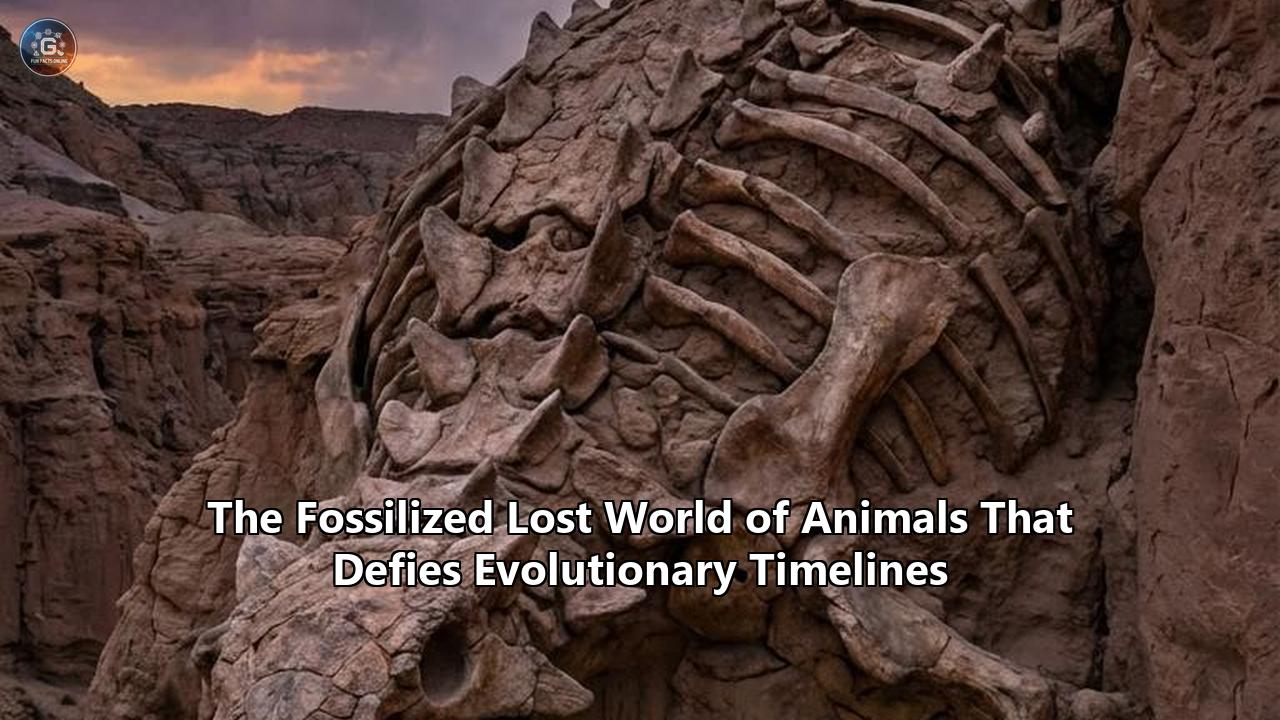
The mudstone of southwest China’s Yunnan Province holds a silent, 550-million-year-old ledger of life and death. For decades, paleontologists have scoured these remote ridges, splitting rocks in search of the earliest ancestors of modern animals. Mostly, they found algae. The prevailing consensus dictated that they were looking in the wrong era; complex animal life, according to the standard textbooks, had not yet burst into existence.
On April 2, 2026, that established timeline was dismantled.
Publishing in the journal Science, an international team of researchers from Oxford University and Yunnan University unveiled the Jiangchuan Biota—a spectacular fossil trove containing over 700 exceptionally preserved specimens dating between 554 and 539 million years ago. Buried within this late Ediacaran rock layer were not just simple, quilted organisms, but highly complex creatures equipped with tentacles, feeding structures, and bilateral symmetry. Most critically, the researchers identified the oldest known relatives of deuterostomes—the broad superphylum of animals that eventually gave rise to vertebrates, including fish, apes, and humans.
The discovery pushes the origin of complex animal diversification back by at least four million years, proving that the foundational body plans of modern life were already well-established before the famous Cambrian explosion.
"Our discovery closes a major gap in the earliest phases of animal diversification," said Dr. Gaorong Li, lead author of the study and researcher at Oxford University's Museum of Natural History. "For the first time, we demonstrate that many complex animals, normally only found in the Cambrian, were present in the Ediacaran period, meaning that they evolved much earlier than previously demonstrated by fossil evidence."
This is not a minor adjustment of dates. The Jiangchuan Biota represents a fundamental realignment of evolutionary biology. It forces researchers to rethink how quickly life complexified, how organisms interacted in pre-Cambrian oceans, and how the environmental chemistry of the early Earth preserved—or destroyed—the fragile soft tissues of our earliest ancestors.
To understand the magnitude of the Yunnan excavation, one must follow the evidence trail back through the conflicting data of molecular biology, the deceptive physics of decay, and the long-standing orthodoxies that have governed paleontology for over a century.
The Cambrian Conundrum and Darwin’s Doubt
Since the birth of modern evolutionary theory, the sudden appearance of complex animal life has been a persistent irritant to paleontologists. When Charles Darwin published On the Origin of Species in 1859, he viewed the fossil record of the Cambrian Period—then thought to be the absolute floor of animal life—as a glaring vulnerability in his theory of gradual evolution by natural selection.
Darwin expected a slow, steady accumulation of traits over deep time. Instead, the rock layers presented an abrupt biological wall. Below the Cambrian strata, the rocks appeared entirely barren of animal remains. Above the boundary, the oceans were suddenly teeming with trilobites, mollusks, and armored arthropods. This sudden proliferation of complex, hard-bodied life forms around 535 to 540 million years ago became known as the Cambrian explosion.
For over a century, the prevailing scientific narrative held that this explosion marked the actual inception of complex animal ecosystems. The discovery of the Burgess Shale in the Canadian Rockies in 1909 by Charles Walcott only reinforced this view. The Burgess Shale captured a Middle Cambrian marine ecosystem in unprecedented, soft-tissue detail, revealing a bizarre menagerie of predators and prey: the five-eyed Opabinia, the fearsome apex predator Anomalocaris, and early chordates like Pikaia.
But the sheer anatomical sophistication of the Burgess Shale fauna raised an obvious mechanical question. How could evolution produce functional eyes, complex nervous systems, articulated limbs, and segmented digestive tracts out of nowhere?
The Jiangchuan Biota provides the answer: it didn't.
The complex animals of the Cambrian did not materialize from thin air; they were the heavily armored survivors of an evolutionary arms race that had been quietly escalating for millions of years during the preceding Ediacaran period. The evidence was always there, locked in the mudstone, but reading that evidence required a precise alignment of geological luck and advanced extraction techniques.
Hunting Ghosts: The Phantom Timeline of Molecular Clocks
Long before the picks and hammers of the Yunnan University team struck paydirt in southwest China, geneticists were warning paleontologists that the accepted timeline was wrong.
The tension between the fossil record and molecular biology has defined modern evolutionary studies. While paleontologists dig for physical remains, geneticists read the deep past through the "molecular clock". This technique relies on the premise that DNA sequences mutate at a relatively constant, predictable rate. By comparing the genetic differences between two living species—say, a sea star and a human—and measuring the rate of genetic drift, scientists can calculate backward to pinpoint the exact moment in deep time when those two lineages diverged from a common ancestor.
The molecular clock data has consistently pointed to a phantom timeline. For decades, genetic analyses have suggested that the first animals evolved as far back as 800 million years ago, deep in the Neoproterozoic era, hundreds of millions of years before the Cambrian explosion.
This created a massive, 250-million-year void in the history of life. If animals were diversifying, splitting into complex lineages, and evolving bilateral symmetry during the Neoproterozoic and early Ediacaran, where were their bodies?
Some scientists argued that the molecular clock was simply calibrated incorrectly, misinterpreting rapid bursts of genetic mutation as long periods of gradual change. Others suggested a more frustrating reality: the earliest animals existed, but they were small, entirely soft-bodied, and lived in ocean chemistry fundamentally hostile to fossilization.
Without hard parts like shells, teeth, or exoskeletons—which did not evolve broadly until the Cambrian—a dead animal is rapidly consumed by scavengers or decomposed by bacteria. For a soft-bodied worm or a delicate comb jelly to become rock, it must be buried instantly in a highly specific, low-oxygen environment where specific minerals can precipitate out of the surrounding sediment and form a rigid mold before the organic tissue rots away.
Dr. Ross Anderson and his team at the University of Oxford have spent years mapping the exact geochemical conditions required for Burgess Shale-Type (BST) preservation, noting that specific clay-organic interactions are necessary to freeze soft tissues in time. The absence of fossils, they argued, was not necessarily an absence of life. It was a failure of geology.
This dynamic is what makes the Yunnan discovery so critical. The Jiangchuan Biota provides the physical anchor that validates the molecular clock, bridging the gap between genetic theory and the tangible fossilized animals evolution timeline. The bodies were finally found.
The Physics of Decay and the Octopus Illusion
To truly appreciate the rarity of the Ediacaran fossils pulled from Jiangchuan, one must understand how easily the earth erases soft biological material—and how easily decomposition can trick the human eye.
The study of how organisms decay and fossilize is known as taphonomy. Taphonomic overprinting is the paleontological equivalent of a funhouse mirror; it distorts, exaggerates, and outright fabricates anatomical features as tissues rot, collapse, and mineralize.
A striking example of this phenomenon occurred concurrently with the Yunnan discovery. On April 8, 2026, just days after the Jiangchuan Biota paper was published, another major study in the Proceedings of the Royal Society B dismantled one of the most famous soft-tissue fossils in the world.
For 25 years, a 300-million-year-old fossil from the Mazon Creek site in Illinois known as Pohlsepia mazonensis held the title of the world's oldest octopus. It even held a Guinness World Record. The carbonized imprint clearly showed a rounded mantle and what appeared to be a cluster of sprawling tentacles, perfectly matching the visual profile of a primitive cephalopod.
But when researchers at the University of Reading subjected the fossil to advanced synchrotron microtomography—bombarding the rock with high-energy X-rays generated by a particle accelerator—they found something that shouldn't have been there: tiny, preserved internal teeth.
The "octopus" was an illusion.
"It turns out the world's most famous octopus fossil was never an octopus at all," explained Dr. Thomas Clements, lead author of the Mazon Creek study. "It was a nautilus relative that had been decomposing for weeks before it became buried and later preserved in rock, and that decomposition is what made it look so convincingly octopus-like."
When the ancient shelled nautiloid died, its internal soft tissues likely liquefied and collapsed outward, slipping from the shell and creating a splayed, tentacle-like halo of organic sludge that subsequently mineralized.
"Sometimes, reexamining controversial fossils with new techniques reveals tiny clues that lead to really exciting discoveries," Clements noted.
The Pohlsepia revelation serves as a stark warning for anyone studying the deep past. If a 300-million-year-old fossil can so convincingly mimic an entirely different phylum due to the physical mechanics of rot, the challenge of identifying 550-million-year-old Ediacaran tissues is exponentially higher.
When the Yunnan researchers excavated their 700 specimens, they were not just looking at animals; they were looking at animals that had survived the catastrophic distortion of taphonomy. The fact that they could definitively identify feeding structures, U-shaped guts, and delicate stalks in the Jiangchuan mudstone is a testament to an almost miraculous preservation environment.
The Ediacaran Garden and Its Intruders
Prior to the Jiangchuan discovery, the world of the late Ediacaran period (roughly 575 to 539 million years ago) was viewed as a bizarre, almost alien chapter in Earth's history.
The classic "Ediacara biota"—named after the Ediacara Hills of South Australia where they were first identified—consisted of enigmatic, soft-bodied organisms that looked nothing like modern life. Creatures like Dickinsonia resembled large, ribbed bathmats, displaying a unique quilted anatomy that lacked any obvious mouth, gut, or means of locomotion. Haootia looked like a goblet formed of bundled muscle fibers.
Paleontologists often referred to this era as the "Garden of Ediacara." It was thought to be a peaceful, static marine ecosystem dominated by stationary, filter-feeding, or osmotroph (absorbing nutrients directly through the skin) organisms. There was little evidence of predation, active burrowing, or the complex, mobile interactions that define modern food webs.
The Jiangchuan Biota violently disrupts this serene picture. The newly discovered animals are intruders in the Ediacaran garden.
Among the 700 specimens excavated from the Yunnan site are creatures that possess bilateral symmetry—meaning they have distinct left and right sides, a front and a back. Bilateria is the massive taxonomic clade that encompasses nearly all complex animals today, from earthworms to eagles. Bilateral symmetry was the architectural prerequisite for directed forward movement, which in turn drove the evolution of clustered sensory organs at the front of the body—a process known as cephalization, or the dawn of the head.
Even more surprisingly, the Jiangchuan site yielded rare fossils interpreted as early comb jellies (ctenophores), predators that propel themselves through the water column using rows of beating cilia. The presence of active, complex organisms living alongside the static, quilted Ediacaran forms shows that the transition into the Cambrian was not a sudden replacement, but a protracted ecological overlap. The architects of the next era were already sharing the sea floor with the doomed relics of the past.
Anatomy of an Ancient Sea: Unpacking the Deuterostomes
The most consequential specimens pulled from the Yunnan mudstone are small, delicate, and easily overlooked by an untrained eye. They possess U-shaped bodies, attach to the ancient sea floor via narrow stalks, and feature heads crowned with tentacle-like structures clearly adapted for capturing suspended food particles.
The research team identified these creatures as ambulacrarians—a group that includes the ancestors of modern starfish, sea urchins, and acorn worms.
To the layperson, a stalked, tentacled sea creature might seem like an evolutionary dead-end, an obscure branch on the tree of life. To an evolutionary biologist, it is a smoking gun.
Ambulacrarians are deuterostomes. To understand the timeline of fossilized animals evolution, one must grasp the fundamental, microscopic divide that splits the animal kingdom in two: the fate of the blastopore.
When a complex animal embryo first begins to develop, it forms a hollow sphere of cells. Soon, a small indentation appears on the surface of this sphere, called the blastopore. In one major branch of the animal kingdom—the protostomes (which includes arthropods, mollusks, and annelid worms)—this first embryonic opening eventually develops into the animal's mouth.
In the other major branch—the deuterostomes—the blastopore becomes the anus, and the mouth develops later on the opposite end of the embryo.
This deep embryological division happened hundreds of millions of years ago, and every complex animal on Earth belongs to one of these two lineages. Humans, along with all vertebrates, are deuterostomes.
Because ambulacrarians are deuterostomes, finding them perfectly preserved in 550-million-year-old rock means that the grand evolutionary split between protostomes and deuterostomes had already occurred by the late Ediacaran.
Dr. Frankie Dunn, a researcher at the Museum of Natural History at Oxford University and co-author of the study, synthesized the massive implications of this single anatomical trait:
"The presence of these ambulacrarians in the Ediacaran period is really exciting," Dunn stated. "We have already found fossils which are distant relatives of starfish and sea cucumbers and are looking for more. The discovery of ambulacrarian fossils in the Jiangchuan biota also means that the chordates—animals with a backbone—must also have existed at this time."
If ambulacrarians were swaying in the ocean currents 554 million years ago, their sister group, the chordates, must have been sharing those same waters. The ancestral lineage that would eventually lead to the first jawless fish, the first tetrapods to crawl onto land, the first dinosaurs, and ultimately, human beings, was already actively navigating the late Ediacaran seas.
The Jiangchuan Biota does not just push back the origin of starfish; it pushes back the origin of us.
Ten Years in the Dirt: The Methodology of Discovery
Discoveries of this magnitude are rarely the result of a single serendipitous hammer strike. They are the culmination of grueling, systematic geological surveys driven by sheer stubbornness.
The rocks of eastern Yunnan Province have long been known to harbor ancient fossils, but for years, they yielded nothing but the carbonized remnants of primitive algae. Paleontologists generally viewed the specific strata as a dead zone for complex animal life, assuming the environmental conditions were either unsuitable for animals to live in, or unsuitable for their delicate tissues to fossilize.
Professor Peiyun Cong and Associate Professor Fan Wei, both of Yunnan University, refused to accept this conventional wisdom. They spent nearly a decade mapping the stratigraphy of the region, searching for the exact microscopic conditions—a sudden influx of fine-grained clay, rapid burial, anoxic waters—that might have trapped an Ediacaran animal before it rotted.
"After years of fieldwork, we finally found several sites with the right conditions where animal fossils are preserved together with the abundant algae," Fan Wei explained.
Between 2022 and 2025, the team, eventually expanding to include researchers from the UK, initiated a massive excavation at a site measuring just 518 square feet—an area roughly the size of a small apartment. From this tightly constrained pocket of rock, they painstakingly extracted approximately 700 individual fossils.
The scale of the find stunned independent observers. Dr. Jo Wolfe, an organismic and evolutionary biology researcher at Harvard University who was not directly involved in the study, noted the sheer density of the site: "I'm amazed that during so few field seasons they found that much."
About 200 of the recovered specimens were definitively categorized as animals. Many were microscopic, measuring less than an inch long, requiring highly specialized optical and electron microscopy to differentiate their anatomical structures from the surrounding mineral matrix. The researchers found entire bodies preserved intact: delicate feeding tentacles, complete digestive tracts, and the subtle traces of internal organs.
The Jiangchuan site perfectly illustrates the concept of "taphonomic windows"—brief, highly localized geological phenomena where the destructive forces of the Earth are temporarily suspended, allowing a snapshot of an ancient ecosystem to survive deep time. The team had not just found an animal; they had found an entire, functioning late-Ediacaran ecological community.
The Aftermath: The Grand Canyon's Second Album
To fully understand the trajectory of fossilized animals evolution initiated in the Ediacaran, we must look at what happened after the Cambrian explosion. If the Jiangchuan Biota represents the silent prologue, and the Burgess Shale is the loud, chaotic debut, the subsequent eras reveal how these early body plans were rigorously tested, optimized, and weaponized.
A prime example of this post-explosion refinement was detailed just months before the Jiangchuan announcement. In a study published in Science Advances (July 2025, featured widely in early 2026), a team led by Dr. James D. Schiffbauer of the University of Missouri and Giovanni Mussini of Cambridge University cataloged an extraordinary trove of over 1,500 fossils from the Grand Canyon.
These fossils originated from the Bright Angel Formation, a shale deposit laid down roughly 505 million years ago. This places the Grand Canyon ecosystem in the late Cambrian, a few million years after the Burgess Shale.
The researchers uncovered a marine environment characterized not by explosive, experimental radiation, but by intense, crowded competition. The oceans were filling up. The strange, fractal organisms of the Ediacaran were long extinct, their static lifestyles rendered obsolete by the new reality of mobile predators with jaws, claws, and compound eyes.
In this increasingly hostile world, the descendants of the early bilateral worms found in Yunnan were forced to specialize. One of the standout fossils from the Bright Angel Formation is Kraytdraco spectatus, a predatory priapulid worm that exhibits an astonishing level of anatomical refinement.
Kraytdraco was armored with microscopic, tooth-like denticles for scraping surfaces, combined with delicate, elongated filaments designed to filter microscopic particles directly from the water column. The worm essentially possessed two entirely distinct feeding strategies built into a single body plan—a highly efficient adaptation rarely seen in early organisms.Mussini aptly described this late Cambrian phase as evolution's "experimental second album." "Rather than simply multiplying, species were adapting, carving out roles that would shape marine life for hundreds of millions of years," the researchers noted.
The Grand Canyon fossils provide the critical third data point in the grand timeline. First, the Jiangchuan Biota (554 Ma) shows the initial, quiet assembly of complex bilateral body plans and early deuterostomes. Next, the Cambrian explosion (540-535 Ma) unleashes these body plans into a rapid diversification of hard-shelled phyla. Finally, the Bright Angel Formation (505 Ma) demonstrates the stabilization and ecological specialization of these survivors under intense selective pressure.
This contiguous narrative forever dispels Darwin’s anxiety. The Cambrian was not an origin event; it was an escalation.
The Substrate Revolution: Rewriting the Sea Floor
The physical transition from the Ediacaran to the Cambrian is not merely a story of anatomical changes; it is a story of planetary engineering. The very environment of the ocean floor was permanently altered by the animals that emerged from the Jiangchuan ecosystem.
During the Precambrian, the ocean floor was largely covered by thick, leathery microbial mats—vast colonies of cyanobacteria and other microbes that bound the sediment together. These mats created a firm, stable surface that allowed organisms like Dickinsonia to rest passively and absorb nutrients.
The evolution of bilateral symmetry and complex musculature—traits clearly present in the Jiangchuan worms and ambulacrarians—doomed the microbial mats.
As early animals developed the ability to burrow into the sediment in search of food or to hide from newly evolved predators, they initiated the "Cambrian substrate revolution". These ancient worms and early arthropods churned the ocean floor, aerating the mud and destroying the cohesive microbial crust.
This bioturbation fundamentally changed the biogeochemistry of the oceans. It released trapped nutrients into the water column, fueling plankton blooms that, in turn, supported larger, actively swimming predators like ctenophores. The static, two-dimensional world of the Ediacaran was physically dismantled by the three-dimensional, burrowing, swimming mechanics of the new bilateral fauna.
The sedimentary layers themselves record this violent transition. Geologists define the official start of the Cambrian period not by the sudden appearance of a specific hard-shelled animal, but by the appearance of Treptichnus pedum—a complex, branching trace fossil created by an unknown burrowing animal churning through the sediment. The discovery of complex, feeding bilateria in the Jiangchuan Biota provides a direct look at the biological culprits who likely instigated this planetary renovation.
Reconciling the Deep Past: A New Evolutionary Synthesis
The integration of the Yunnan discoveries into the broader biological framework necessitates a massive rewrite of paleontology textbooks. The previous, rigid boundaries separating the Precambrian from the Phanerozoic eon have effectively dissolved.
We now have a cohesive, functioning model of fossilized animals evolution that synthesizes genetics, taphonomy, and paleontology into a single narrative stream:
- The Genetic Dawn (800 - 650 Million Years Ago): The molecular clocks are likely correct. Deep in the Neoproterozoic, during the severe global glaciations known as "Snowball Earth," the fundamental genetic toolkits for animal life began to diverge. These earliest animals were likely microscopic, entirely soft-bodied, and left no definitive physical trace due to the aggressive recycling of the Earth's crust and the lack of suitable preservation windows.
- The Ediacaran Assembly (635 - 550 Million Years Ago): As the ice retreated and ocean oxygen levels fluctuated, life grew larger. The classical Ediacaran biota—the quilted, fractal osmotrophs—dominated the shallow seas. But hidden within this ecosystem, the bilateral lineages were quietly consolidating their genetic gains, developing rudimentary guts, nervous systems, and front-to-back polarity.
- The Jiangchuan Vanguard (554 - 539 Million Years Ago): The breakthrough. Complex deuterostomes (ambulacrarians), early comb jellies, and bilateria establish themselves. They possess tentacles, stalks, and digestive tracts. The lineage leading directly to chordates is definitively active in the water column.
- The Cambrian Explosion (540 - 520 Million Years Ago): Driven by rising oxygen levels, shifting continental coastlines, and the escalation of predator-prey dynamics, animals begin sequestering calcium and silica from the seawater to build defensive armor, shells, and teeth. This sudden biomineralization creates the illusion of a sudden burst of life, as these hard parts fossilize easily.
- The Post-Cambrian Refinement (520 - 500 Million Years Ago): Ecosystems stabilize. Niche specialization takes over. Highly adapted predators like Kraytdraco spectatus in the Bright Angel Formation demonstrate that the major phyla are locked in, optimizing their strategies for long-term survival in a crowded, competitive ocean.
"This exceptional research not only reshapes our understanding of early animal evolution but also underscores the importance of preservation modes and sedimentary contexts in uncovering life's deep past," noted Earth Science analyses of the Jiangchuan discovery. "The Jiangchuan Biota offers a remarkable testament to nature's evolutionary experimentation and transition during a pivotal juncture in Earth's history."
Unresolved Questions and the Path Forward
Despite the monumental clarity the Yunnan fossils provide, the deep past remains stubbornly opaque in key areas. Solving one mystery in paleontology reliably spawns a dozen others.
The most immediate question raised by the Jiangchuan Biota is the explicit whereabouts of the first true chordates. Dr. Frankie Dunn’s assertion—that the presence of ambulacrarians necessitates the simultaneous existence of their chordate sister group—acts as a massive, flashing target for future geological surveys.
If chordates existed 554 million years ago, what did they look like? Did they possess a primitive notochord? Were they free-swimming filter feeders, or burrowing worm-like entities? The race is now actively underway to find a late-Ediacaran fossil bearing the unmistakable hallmarks of the vertebrate lineage.
Professor Peiyun Cong, Fan Wei, and their teams are not packing up their tools. Armed with the highly specific stratigraphical and chemical profile of the Jiangchuan deposit, researchers will now cross-reference these environmental conditions with other late Ediacaran rock formations globally. If the unique clay-organic interactions that preserved the Yunnan specimens can be located in Australia, Newfoundland, or Namibia, we may soon uncover entirely different communities of Precambrian complex life.
Furthermore, taphonomists will aggressively expand their laboratory experiments, deliberately decaying modern analogs—like sea cucumbers and acorn worms—under highly controlled conditions to see exactly how their tissues collapse, rot, and mineralize. By building a comprehensive catalog of taphonomic distortion, as demonstrated by the debunking of the Pohlsepia octopus, paleontologists can revisit existing, confusing Ediacaran fossils and potentially reinterpret them with fresh eyes.
Finally, the boundary must be pushed even deeper. If the physical fossil record now firmly matches the molecular clock at 554 million years ago, the hunt turns to the Tonian and Cryogenian periods (1 billion to 635 million years ago). Dr. Ross Anderson’s work at Oxford indicates that while certain older rocks possess the correct chemistry for preservation, they still remain devoid of animal fossils. Researchers must now determine if this represents a true absence of complex life, or simply a failure to locate the correct taphonomic window.
The story of fossilized animals evolution is written in mud, pressure, and time. For decades, we believed the first chapter was missing. The mudstone of Yunnan Province has proven that the pages were there all along; we just had to learn how to read them. As picks continue to split the slate in southwest China, the origins of our own distant, deep-sea ancestry are finally rising to the surface.
Reference:
- https://scienmag.com/remarkable-fossil-discovery-rewrites-the-timeline-of-complex-animal-evolution/
- https://keyt.com/news/national-world/cnn-other/2026/04/04/fossils-from-china-show-complex-life-evolved-millions-of-years-earlier-than-once-thought/
- https://www.ox.ac.uk/news/2026-04-03-spectacular-fossil-treasure-trove-pushes-back-origins-complex-animals
- https://www.sci.news/paleontology/jiangchuan-biota-14677.html
- https://www.ox.ac.uk/news/2023-06-28-new-oxford-study-sheds-light-origin-animals
- https://en.wikipedia.org/wiki/Fossil
- https://nhm.org/stories/oldest-fossils-far
- https://earthsky.org/earth/fossils-show-humans-invertebrate-ancestors-are-much-older/
- https://www.britannica.com/science/evolution-scientific-theory/The-fossil-record
- https://royalsocietypublishing.org/rstb/article/363/1496/1425/45388/The-earliest-fossil-record-of-the-animals-and-its
- https://www.reading.ac.uk/news/2026/Research-News/Oldest-octopus-fossil-is-no-octopus-at-all-scans-reveal
- https://www.courthousenews.com/newly-discovered-fossils-push-back-record-of-complex-life/
- https://astrobiology.com/2026/04/spectacular-fossil-treasure-trove-pushes-back-origins-of-complex-animals.html
- https://www.sciencedaily.com/releases/2026/04/260406234153.htm
- https://www.futura-sciences.com/en/heres-what-these-505-million-year-old-fossils-reveal-about-the-origins-of-life_25297/