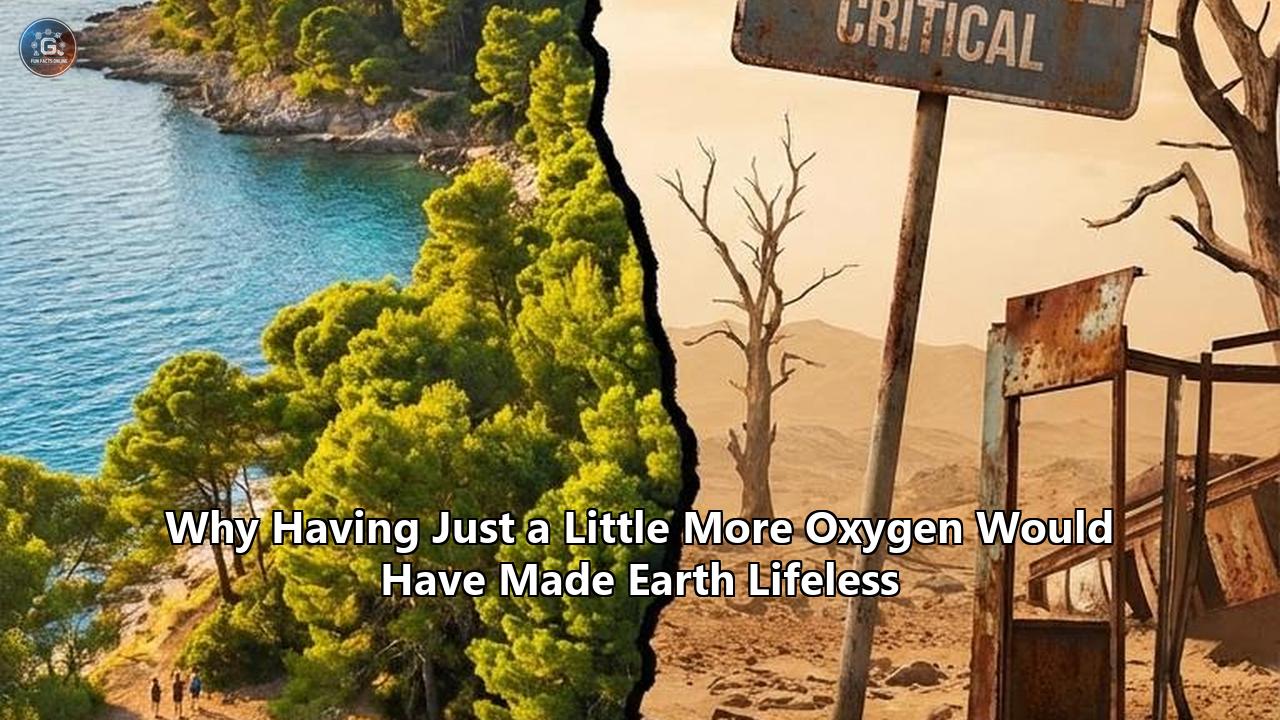
When astrobiologists model the ideal conditions for life, they traditionally search for a familiar triad: liquid water, manageable temperatures, and oxygen. But a February 2026 analysis published in Nature Astronomy reveals a chemical paradox that fundamentally rewrites our understanding of planetary habitability. If the embryonic Earth had contained just a fraction more oxygen during its molten formation, it would be a sterile, dead rock today.
The research, led by astrobiologists Craig Walton and Maria Schönbächler at ETH Zurich, operates as a profound case study in planetary evolution. By running extensive computer simulations on the partitioning of elements in magma oceans, the team discovered that Earth successfully navigated a highly specific "chemical Goldilocks zone." Their findings establish a stark principle: oxygen, long championed as the definitive signature of a living world, is inherently destructive. If its concentration is not strictly managed by geological and biological bottlenecks, it acts as a planetary sterilizer.
To understand how precarious our biosphere's foundation truly is, we must examine this recent discovery alongside a wave of late-2025 and 2026 findings regarding the Earth's early atmosphere. Together, these studies form a unified thesis. From the settling of the planet's core to the initial emergence of microbial life, having just a little more oxygen would have systematically dismantled the mechanisms required for life to exist.
The Magma Ocean's Delicate Ledger
To extract the broader principles of planetary habitability, we must first look at the mechanics of Earth's formation approximately 4.6 billion years ago. During this Hadean eon, the planet was a global ocean of turbulent, molten rock. A massive sorting process was underway. Heavy metals, primarily iron and nickel, succumbed to gravity and sank toward the center of the planet to form the core, while lighter silicate materials remained near the surface to eventually form the mantle and crust.
The ETH Zurich case study reveals that the ambient oxygen concentration during this specific sorting phase dictated the fate of two non-negotiable biological building blocks: phosphorus and nitrogen. Phosphorus is the structural backbone of DNA and RNA, and it forms the core of ATP (adenosine triphosphate), the molecule that powers cellular machinery. Nitrogen is the fundamental component of amino acids, which string together to form proteins. Without both elements readily available on the planetary surface, biological evolution cannot initiate.
Walton and Schönbächler's simulations demonstrated that the behavior of phosphorus and nitrogen is entirely contingent on the oxidation state of the magma. If there is too little oxygen present, the chemical environment is highly reducing. Under these conditions, phosphorus acts as a siderophile—an iron-loving element. It chemically binds with the sinking iron and is dragged down into the planetary core, permanently locked thousands of miles below the surface and entirely inaccessible to future biological processes.
However, the inverse scenario is even more treacherous. If the magma ocean contained just a slightly higher concentration of oxygen, the environment would become oxidizing. While this would successfully keep phosphorus in the upper mantle, the excess oxygen would trigger reactions that cause nitrogen to become highly volatile. The nitrogen would bubble out of the magma, outgas into the primitive atmosphere, and, lacking a strong enough magnetic shield or sufficient gravity at that developmental stage, escape entirely into the vacuum of space.
Earth's survival required threading a microscopic chemical needle. The oxygen levels early Earth experienced during core formation were perfectly calibrated to ensure that phosphorus rejected the iron core, while nitrogen remained stable enough to stay trapped in the mantle and crust for future volcanic release. Mars, by contrast, failed this exact test. The models indicate that our planetary neighbor formed with an incorrect oxygen quotient, meaning its surface was likely chemically crippled from the start, despite later possessing liquid water.
This structural principle—that early oxygen is a thief of vital nutrients—forces a reevaluation of our astrobiological metrics. A young exoplanet showing signs of high oxygen is not a prime candidate for life; it is likely a victim of chemical depletion.
The Biological Bottleneck: Throttling the Cyanobacteria
Even after Earth survived its molten phase and successfully retained its surface nitrogen and phosphorus, oxygen posed a second existential threat during the Archean eon (4.0 to 2.5 billion years ago).
By about 3 billion years ago, primitive life had established itself in the oceans. Crucially, cyanobacteria had evolved the complex molecular machinery required for oxygenic photosynthesis—using sunlight to split water, harvest energy, and expel oxygen as a waste product. Yet, the atmosphere remained virtually devoid of oxygen for hundreds of millions of years following this evolutionary leap.
For decades, this delay puzzled geochemists. If the biological factories were active, why didn't oxygen accumulate immediately?
A study published in Communications Earth & Environment in late 2025 by researchers at Okayama University provides the answer, and in doing so, reveals another layer of our planet's survival pattern. Led by Dr. Dilan M. Ratnayake, the research team simulated Archean ocean conditions to investigate the environmental constraints on early cyanobacteria. They discovered that trace compounds—specifically nickel and urea—acted as a vital biological throttle.
In the early Archean oceans, volcanic and hydrothermal activity kept nickel concentrations extremely high. Nickel is a necessary cofactor for the enzyme urease, which microbes use to metabolize urea into usable nitrogen. But the Okayama University researchers found that at the high concentrations present on early Earth, the interaction between nickel and urea actually inhibited runaway cyanobacterial growth. It was only as the Earth's crust cooled and the influx of mantle-derived nickel slowed that the biological brakes were gradually released. As nickel declined and urea stabilized, cyanobacteria were finally able to proliferate at a scale large enough to impact the atmosphere.
This billion-year delay was not a missed opportunity for life; it was a required incubation period. If the nickel-urea bottleneck had not suppressed the early oxygen output, the consequences would have been immediately fatal.
During the Archean, life was almost exclusively composed of obligate anaerobes—organisms that evolved in the absence of oxygen. To these microbes, oxygen was not a breath of fresh air; it was a highly reactive, toxic free radical. Oxygen eagerly steals electrons from other molecules, a process that shreds cellular membranes, denatures enzymes, and destroys DNA. Had cyanobacteria been allowed to bloom unchecked and spike oxygen levels early Earth environments would have been sterilized by oxidative stress long before life had time to evolve the complex antioxidant enzymes (like superoxide dismutase and catalase) required to survive it.
The Hot Spring Proxies: Surviving the Toxic Transition
When the biological throttle finally began to loosen and oxygen started to leak into the ocean, the biosphere had to manage the toxin carefully. The mechanics of this survival were illuminated in an April 2026 study conducted by the Earth-Life Science Institute (ELSI) in Japan.
Supervised by Associate Professor Shawn McGlynn, graduate student Fatima Li-Hau sought to understand how the very first oxygen-exposed ecosystems managed to avoid being oxidized to death. Because the late Archean ocean no longer exists, the researchers utilized a modern proxy: five unique, iron-rich hot springs in Japan whose chemical compositions closely mimic the ancient seas.
Their analysis of these natural laboratories revealed a sophisticated microbial defense network. In four of the five hot springs, the dominant organisms were not oxygen-producers, but microaerophilic iron-oxidizing bacteria. These highly specialized microbes have the ability to survive in environments with only trace amounts of oxygen. More importantly, they gain their metabolic energy by taking the dissolved iron (Fe2+) abundant in the water and reacting it with the free oxygen produced by neighboring cyanobacteria, converting it into solid iron oxide (Fe3+), commonly known as rust.
This process effectively weaponized the environment to neutralize the threat. By constantly consuming the trace oxygen to oxidize iron, these bacteria acted as a planetary buffer. They kept the local oxygen concentrations extremely low, creating a safe, habitable pocket for the surrounding anaerobic life forms. The ELSI study suggests that the early Earth was covered in these diverse microbial consortiums, where iron-oxidizers and anaerobes worked in tandem to suppress the toxic buildup of oxygen.
The structural lesson extracted from this case study is one of strict chemical limitation. The iron-oxidizing buffer was highly effective, but it had a finite capacity. It could only process the oxygen as fast as the local iron supply and bacterial metabolism allowed. If the cyanobacteria had produced just a little more oxygen, overwhelming the capacity of the iron-oxidizers, the buffer would have collapsed. The unreacted oxygen would have immediately flooded the microbial mats, chemically burning the anaerobes and causing a localized extinction event.
The Climatological Knife-Edge: Methane and the Ice-Albedo Trap
By approximately 2.4 billion years ago, the buffering capacity of the oceans was finally exhausted. The dissolved iron had largely precipitated out as banded iron formations, and oxygen began to outgas directly into the atmosphere. This initiated the Great Oxidation Event (GOE), arguably the most severe ecological crisis in the planet's history.
The GOE highlights the macro-level consequence of excessive oxygen: extreme climate destabilization. During the Archean, the Sun was approximately 20% to 30% dimmer than it is today. This "Faint Young Sun" should have resulted in a permanently frozen Earth. The planet only maintained liquid oceans because its atmosphere was rich in methane (CH4), a greenhouse gas vastly more potent at trapping heat than carbon dioxide.
The introduction of atmospheric oxygen initiated a catastrophic chemical reaction. Oxygen reacts violently with methane, oxidizing it into carbon dioxide and water. While CO2 is a greenhouse gas, it is significantly weaker than methane. As the cyanobacteria pumped more oxygen into the sky, the planetary methane blanket was systematically destroyed, severely diminishing the atmosphere's ability to retain solar heat.
The result was the Huronian Glaciation, a period during which global temperatures plummeted, triggering a "Snowball Earth" scenario. Glaciers advanced from the poles all the way to the equator, encasing the continents and oceans in a thick layer of ice for up to 300 million years. This massive freeze is estimated to have wiped out between 80% and 99.5% of all life on Earth, dwarfing the extinction event that later killed the dinosaurs.
Here, the pattern of planetary fragility reappears. The Earth survived the Huronian Glaciation only because the oxygen accumulation was relatively slow, paced by the gradual emergence of landmasses and the tectonic weathering of rocks, which slowly sequestered carbon and moderated the chemical shifts. A study tracking the stable isotopes of shale over 3.7 billion years demonstrated that the emergence of large continents 2.4 billion years ago changed the planet's albedo (reflectivity) and facilitated chemical weathering that absorbed CO2, playing a complex role in these glacial cycles.
If the oxygen levels early Earth produced during the onset of the GOE had been just slightly higher, the destruction of the methane greenhouse would have been instantaneous rather than gradual. An abrupt plunge into a deep freeze would have triggered an irreversible ice-albedo feedback loop. Ice is highly reflective; it bounces solar radiation back into space. As the ice sheets expanded, the Earth would have absorbed less and less heat from the already faint Sun. A slightly stronger initial pulse of oxygen would have thickened the ice beyond the point where volcanic outgassing of CO2 could ever melt it. Earth would have become a permanent, brilliant white ice-ball, permanently locked in a deep freeze, rendering the re-emergence of complex life impossible.
Tectonic Pacing and the Secular Rise of Oxygen
The survival of the biosphere through the Great Oxidation Event was not the end of the oxygen paradox. It took another billion years, known as the "Boring Billion," for oxygen to slowly tick upward toward modern levels. This slow, secular rise was entirely dependent on tectonic modulation.
Research utilizing machine learning to analyze pyrite geochemistry across 3.5 billion years has shown that atmospheric oxygen levels did not rise in a straight line. Instead, the long-term oxygenation of the Earth was characterized by short-term fluctuations driven by tectonic cycles. The assembly and breakup of supercontinents dictated the supply of nutrients—like phosphorus and iron—washing into the oceans.
When continents collided and formed massive mountain ranges, erosion rates spiked, flooding the coastal shelves with nutrients and causing biological productivity (and oxygen output) to surge. When tectonic activity quieted, nutrient runoff slowed, and oxygen levels stabilized or dipped.
This tectonic pacing was the final safeguard. If the geologic engine of the Earth had operated slightly faster, driving nutrient runoff at a highly accelerated rate, the subsequent explosion of photosynthetic life would have pushed oxygen levels too high, too quickly. In modern ecosystems, when nutrient runoff causes massive algal blooms, the subsequent decay of that organic matter strips the water of oxygen, creating massive "dead zones." On the early Earth, a similar runaway nutrient-to-oxygen cycle would have wildly destabilized the carbon and sulfur cycles, leading to extreme fluctuations in ocean acidity and atmospheric pressure.
Earth's biosphere expanded precisely because the tectonic modulation kept the oxygen supply on a tight leash, allowing the slow evolution of complex eukaryotic cells that could utilize aerobic respiration to harness oxygen's volatile energy safely. Aerobic respiration is essentially controlled cellular combustion—using the destructive power of oxygen to break down glucose and release massive amounts of energy. It is this biological innovation that eventually allowed for multicellular life, animals, and human beings. But this adaptation required billions of years of low-oxygen environments to perfect the necessary enzymatic shielding.
Lessons for the Future and the Search for Biosignatures
By treating the chemical history of Earth as a unified case study, a rigorous and counterintuitive framework for astrobiology emerges.
Historically, the search for extraterrestrial intelligence (SETI) and the broader astrobiological community have treated the presence of atmospheric oxygen as the gold standard for habitability. The James Webb Space Telescope and future observatories like the Habitable Worlds Observatory are specifically designed to scan exoplanetary atmospheres for the spectral lines of oxygen.
However, the findings from ETH Zurich, Okayama University, and ELSI demand a total revision of this approach. An exoplanet that exhibits high oxygen levels early in its stellar system's lifespan is almost certainly dead. If we detect a young rocky planet with a heavily oxidized atmosphere, we are not looking at a cradle of life; we are looking at a world that failed the core-formation test, likely bleeding off its nitrogen and locking its phosphorus away. We are looking at a planet that lacked the nickel-urea bottlenecks and iron-oxidizing buffers necessary to protect its fragile early biology from toxic oxidation.
To find a living world, astronomers must search for planetary systems that exhibit the exact same delays and chemical throttles that Earth experienced. The ideal biosignature is not high oxygen, but rather the simultaneous presence of highly reactive gases that shouldn't coexist without biological intervention—like oxygen and methane—in specific, restrained ratios.
Furthermore, the Okayama University study regarding the nickel and urea bottleneck has direct implications for the upcoming Mars Sample Return missions. When analyzing Martian regolith, planetary scientists will now look closely at the historical concentrations of transition metals and organic compounds to determine if Mars ever possessed the chemical throttles necessary to support a sustained, metered biological expansion, or if its chemistry condemned it to early sterilization.
The Temporal Window of a Breathable Earth
The ultimate lesson drawn from these planetary dynamics is that a highly oxygenated atmosphere is not a permanent feature of Earth, nor is it the default state of a living planet. It is a highly specific, temporal phase.
Just as the Earth required a strict limitation on early oxygen to allow life to take hold, it is currently locked in a long-term countdown toward deoxygenation. Advanced biogeochemical and climate models indicate that the future lifespan of Earth's oxygen-rich atmosphere is severely limited.
As the Sun ages, it is gradually increasing in luminosity. This increasing solar flux is slowly accelerating the weathering of silicate rocks on the Earth's surface, a process that pulls carbon dioxide out of the atmosphere. Within approximately 1 billion years, the atmospheric CO2 will drop below the threshold required to sustain C3 and C4 photosynthesis. When global plant life inevitably collapses due to CO2 starvation, the biological production of oxygen will halt.
Once the primary producers die off, the highly reactive nature of oxygen will ensure its rapid disappearance. The remaining oxygen will quickly react with the rocks, the oceans, and the decaying organic matter. Current stochastic models project that the lifespan of atmospheric oxygen levels remaining above 1% of the present level is only 1.08 billion years (± 0.14 billion years).
Following this drop, the Earth will revert to an anaerobic state, bearing a strong resemblance to the Archean eon before the Great Oxidation Event. The atmosphere will likely fill with methane once again, and the only surviving lifeforms will be the descendants of the extremophile obligate anaerobes that currently hide in deep-sea vents and subterranean fractures, fleeing from the very oxygen that sustains us.
The history of oxygen on Earth is thus framed by absolute extremes. It required a flawless cosmic roulette during core formation to preserve vital nutrients. It required an exact sequence of metal shortages and bacterial buffers to prevent premature atmospheric toxicity. It required perfectly paced tectonic shifts to ensure the destruction of the methane greenhouse did not result in a permanent deep freeze.
By analyzing the data extracted from ancient shales, modern hot springs, and magma simulations, a distinct narrative crystallizes. We do not live on a planet that is inherently friendly to life. We live on a planet that managed, through a series of increasingly improbable chemical bottlenecks, to survive its own reactivity. Having just a little more oxygen at any point during the planet's first two billion years would not have accelerated evolution; it would have severed the delicate chain of chemical compromises required to keep Earth from becoming just another lifeless rock in the void.
Reference:
- https://ethz.ch/en/news-and-events/eth-news/news/2026/02/why-only-a-small-number-of-planets-are-suitable-for-life.html
- https://www.forbes.com/sites/kionasmith/2026/02/09/earth-won-the-chemical-lottery-for-supporting-life-new-study-suggests/
- https://planetpailly.com/2015/04/10/sciency-words-the-oxygen-catastrophe/
- https://www.wunc.org/2019-09-07/opinion-earth-has-survived-extinctions-before-its-humans-who-are-fragile
- https://www.rocketstem.org/2025/07/30/will-earth-last-forever/
- https://royalsocietypublishing.org/rstb/article/380/1931/20240093/235095/Atmospheric-oxygen-and-methane-on-the-early
- https://arxiv.org/html/2409.13105v1
- https://www.sciencedaily.com/releases/2025/11/251102011144.htm
- https://www.forbes.com/sites/startswithabang/2019/03/20/what-was-it-like-when-oxygen-appeared-and-almost-murdered-all-life-on-earth/
- https://astrobiology.com/2025/10/earths-oxygen-boom-a-fresh-perspective-for-a-billion-year-old-problem.html
- https://scitechdaily.com/ancient-hot-springs-reveal-how-life-survived-on-a-toxic-early-earth/
- https://asm.org/articles/2022/february/the-great-oxidation-event-how-cyanobacteria-change
- https://thunderword.highline.edu/2026/04/02/how-did-life-survive-on-early-earth/
- https://www.elsi.jp/en/news_events/highlights/2025/hot_spring_ancient_microbial_life/
- https://www.researchgate.net/publication/267908103_The_Rise_of_Oxygen_in_Earth's_Early_Ocean_and_Atmosphere
- https://www.eurekalert.org/news-releases/855145
- https://www.pnas.org/doi/10.1073/pnas.2536681123
- https://reinhard.gatech.edu/uploads/5/4/1/0/54106417/ozaki_natgeo_2021.pdf