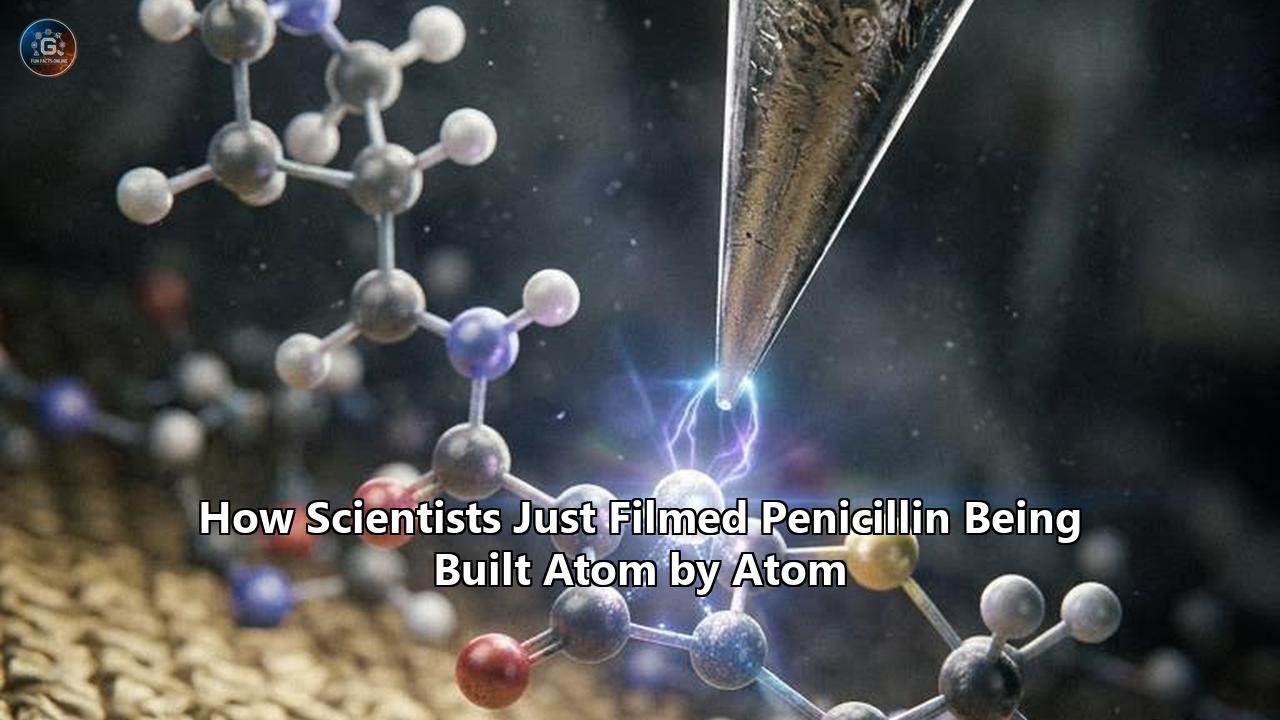
An international research consortium led by the University of Oxford has captured the first atomic-resolution molecular movie depicting the creation of penicillin’s core structure in real time. Published in Nature Catalysis, the study resolves a mechanistic puzzle that resisted direct structural observation for more than four decades: how a single fungal enzyme converts an unstructured, linear peptide into the strained bicyclic ring system that underpins the modern antibiotic pharmacopeia.
The team deployed time-resolved serial femtosecond crystallography and X-ray emission spectroscopy at ultrafast X-ray free-electron laser (XFEL) facilities across three continents. By coordinating the reactions of thousands of enzyme microcrystals on a high-speed conveyor tape and hitting them with quadrillionth-of-a-second X-ray pulses, the researchers mapped chemical intermediates lasting mere milliseconds. The investigation was carried out in partnership with Diamond Light Source, Lawrence Berkeley National Laboratory, the SLAC National Accelerator Laboratory, and PAL-XFEL.
The findings dismantle textbook assumptions regarding the sequence of chemical bonds forged during biosynthesis. Rather than following long-standing theoretical models of iron coordination, the reaction relies on an unexpected thioaldehyde intermediate, a transient monocyclic beta-lactam intermediate, and an active water network coordinated by structural flexures deep within the enzyme body.
The achievement bridges eighty years of chemistry at Oxford, tracing a direct line from Dorothy Hodgkin’s 1945 X-ray crystallography work determining the static structure of penicillin to Ernst Chain and Howard Florey’s early purification work. Today, as antimicrobial resistance threatens to render standard therapies ineffective against common bacterial pathogens, decoding the atomic choreography of antibiotic construction hands drug developers an empirical blueprint to engineer new molecular scaffolds.
The Breakthrough: Visualizing the Atomic Ballet of Isopenicillin N Synthase
The core molecular machine responsible for this synthesis is isopenicillin N synthase (IPNS), a non-heme iron(II)-dependent oxidase. Found in filamentous fungi such as Penicillium chrysogenum, IPNS carries out an extraordinarily challenging chemical operation: it consumes a single molecule of atmospheric dioxygen ($O_2$) and four electrons to stitch a linear tripeptide—$\delta$-(L-$\alpha$-aminoadipoyl)-L-cysteinyl-D-valine, known universally as ACV—into isopenicillin N. In doing so, the enzyme creates two fused rings: a four-membered $\beta$-lactam ring and a five-membered sulfur-containing thiazolidine ring.
For over eight decades, understanding how penicillin is made in fungal cells has stood as one of the central problems of bioorganic chemistry. The difficulty has never been identifying the start and finish lines; mass spectrometry, isotope tracing, and static crystallography have mapped ACV and isopenicillin N in exhaustive detail. The impasse lay in the journey. The intermediates formed between the entry of oxygen and the expulsion of the double-ringed antibiotic persist for fractions of a second before decaying into subsequent states.
                                    +----------------------------------+
                                    |     Linear Tripeptide (ACV)      |
                                    | delta-(L-alpha-aminoadipoyl)-    |
                                    |     L-cysteinyl-D-valine         |
                                    +-----------------+----------------+
                                                      |
                                                      |  IPNS + Fe(II) + O2
                                                      v
                                    +----------------------------------+
                                    |    Uncoordinated Thioaldehyde    |
                                    |     Transient intermediate       |
                                    +-----------------+----------------+
                                                      |
                                                      |  First Ring Closure
                                                      v
                                    +----------------------------------+
                                    |   Monocyclic Beta-Lactam Core    |
                                    |   (Fe-S coordination restored)   |
                                    +-----------------+----------------+
                                                      |
                                                      |  Second Ring Closure
                                                      v
                                    +----------------------------------+
                                    |         Isopenicillin N          |
                                    |  Fused Beta-Lactam-Thiazolidine  |
                                    +----------------------------------+
To break this impasse, the research team—spearheaded by first author Dr. Patrick Rabe and senior author Professor Christopher Schofield at Oxford’s Department of Chemistry and the Ineos Oxford Institute—had to construct an experiment capable of freezing physical time without freezing the chemical sample.
The Conveyor Tape and the X-Ray Pulse
The experimental design required bringing together micro-crystallography, precise gas kinetics, and ultrafast photon science.
- Anaerobic Microcrystal Slurry Preparation: The team grew millions of uniform, microscopic crystals of IPNS loaded with iron(II) and the ACV substrate under strictly anaerobic conditions to prevent the enzyme from initiating the reaction prematurely.
- Dynamic Delivery System: Tiny droplets of this crystal slurry were printed onto a specialized moving tape, just two millimeters in width, travelling through an environmental enclosure.
- Oxygen Activation Trigger: As the tape entered an oxygen-saturated zone, ambient $O_2$ rapidly diffused into the permeable lattice of the microcrystals, synchronizing the start of the catalytic cycle across trillions of enzyme molecules.
- Time-Resolved Interrogation: By tuning the speed of the moving tape, the scientists controlled precisely how many milliseconds elapsed between the oxygen trigger and the moment the crystal crossed the focal path of an X-ray free-electron laser.
- Diffraction and Spectroscopy: When the sample met the beam, a sub-picosecond burst of coherent X-rays scattered off the crystal, yielding high-resolution diffraction patterns before radiation damage could tear the biomolecule apart. Simultaneously, time-resolved X-ray emission spectroscopy (tr-XES) tracked the electronic oxidation state and spin configuration of the active-site iron center.
+-----------------------------------------------------------------------------------------+
|                  Time-Resolved Serial Femtosecond Crystallography (tr-SFX)              |
|                                                                                         |
|  [Anaerobic Crystals] --> [Tape Conveyor: 2mm] --> [Oxygen Chamber] --> [XFEL Beam]    |
|                                                    (Reaction Starts)    (Diffraction &  |
|                                                                          Spectroscopy)  |
|                               <--- Variable Tape Speed Controls dt --->                 |
+-----------------------------------------------------------------------------------------+
To slow down selected proton abstraction steps and extend the lifespan of the most elusive intermediate states, the researchers used deuterium-labeled ACV. The kinetic isotope effect provided by the heavier hydrogen isotope stretched key catalytic windows just enough for the XFEL pulses to capture definitive electron density maps.
Shattering Theoretical Consensus
The resulting atomic movie overturned decades of computational speculation regarding the order of covalent modifications.
- The Uncoordinated Thioaldehyde Intermediate: For years, prevailing wisdom suggested that throughout the initial cysteinyl oxidation, the substrate's sulfur atom remained firmly bound to the active-site iron ion. The movie showed the opposite: cysteinyl oxidation generates a transient thioaldehyde intermediate where the sulfur unexpectedly detaches from the iron coordination sphere entirely.
- The Monocyclic Intermediate: Following this sulfur liberation, the four-membered $\beta$-lactam ring closes first, yielding a discrete monocyclic $\beta$-lactam intermediate. Only after the $\beta$-lactam ring forms does the sulfur re-coordinate to the iron center, enabling the subsequent iron-oxo species—a high-valent iron(IV)-oxo (ferryl) intermediate—to activate the valine residue’s carbon-hydrogen bonds and drive the second ring closure that generates the five-membered thiazolidine ring.
- The Catalytic Water Relay: The movie exposed critical structural actors that had been invisible in static models: structured water molecules within the active site. Rather than acting as inert filler in the binding pocket, these water molecules participate in an organized network that facilitates proton transfers and stabilizes electrostatic charges as the ring undergoes intense steric strain. Structural movements occurring throughout the enzyme’s outer scaffold, far from the iron core, work in concert with these catalytic waters to control the reaction path.
Who Is Affected: Structural Shifts Across Medicine, Science, and Industry
The direct visualization of penicillin’s enzymatic birth extends far beyond academic curiosity. It sends measurable ripples through multiple sectors of biotechnology, medicine, and fundamental biophysics.
+---------------------------------------------------------------------------------------+
|                                    STAKEHOLDER MAP                                    |
+--------------------------+------------------------------------------------------------+
| Sector                   | Primary Operational & Scientific Impact                    |
+--------------------------+------------------------------------------------------------+
| Medicinal Chemistry      | Transition from semi-synthetic trial-and-error to rational |
| & Antibiotic Discovery   | design of non-natural beta-lactam core scaffolds.          |
+--------------------------+------------------------------------------------------------+
| Industrial Biocatalysis  | Replacement of high-energy, solvent-heavy chemical paths   |
| & Pharmaceuticals        | with tailored single-pot enzymatic reactions.              |
+--------------------------+------------------------------------------------------------+
| Structural Biology       | Broadening use of tr-SFX and tr-XES to observe real-time   |
| & Biophysics             | non-equilibrium enzymatic chemistry at ambient temp.       |
+--------------------------+------------------------------------------------------------+
| Human Disease Research   | Deepened mechanistic insight into the 2-oxoglutarate/Fe(II)|
| (Oncology & Epigenetics) | oxygenase superfamily, including cancer target AspH.       |
+--------------------------+------------------------------------------------------------+
1. Medicinal Chemists and Antibiotic Discovery Pipelines
Medicinal chemists have spent decades modifying the perimeter of the penicillin molecule. Semi-synthetic derivatives such as ampicillin, methicillin, amoxicillin, and piperacillin alter the acyl side chains flanking the bicyclic core, but the core itself—the $\beta$-lactam-thiazolidine architecture—has remained largely untouched because chemical synthesis of strained four-membered rings requires difficult, low-yielding reactions.
Now, drug discovery teams possess an empirical map showing how a biological catalyst handles the extreme physical strain required to force carbon, nitrogen, and oxygen atoms into a four-membered ring without generating off-pathway degradation products. This offers a path forward for researchers seeking to bypass traditional chemical synthesis to construct custom bicyclic and tricyclic cores capable of evading classical $\beta$-lactamase enzymes.
2. Industrial Biomanufacturing and Fine Chemical Producers
The pharmaceutical manufacturing sector relies heavily on hybrid production workflows. Strains of Penicillium chrysogenum are fermented in immense industrial bioreactors to generate penicillin G or V. These products are then chemically or enzymatically de-acylated to produce 6-aminopenicillanic acid (6-APA), the building block that manufacturers subsequently modify using conventional organic synthesis.
These semi-synthetic chemical steps carry substantial costs:
- Use of halogenated solvents, protective groups, and toxic heavy-metal catalysts.
- High thermal energy requirements to maintain cryogenic conditions (often down to $-40^\circ\text{C}$) to prevent ring degradation during chemical coupling.
- Waste-heavy purification cascades to isolate the pure active pharmaceutical ingredient (API).
Industrial biochemists can now utilize IPNS as an engineered biocatalytic engine. By understanding how the enzyme positions the peptide backbone and harnesses active-site water to direct ring formation, protein engineers can alter the active pocket to accept unnatural precursors, converting the linear building blocks into fully tailored antibiotics in a single, room-temperature aqueous process.
3. Structural Biologists and the Biophysics Community
For structural biologists, this molecular movie demonstrates the maturation of time-resolved serial femtosecond crystallography. For decades, protein structures were constrained to static crystal snapshots frozen in liquid nitrogen at $100\text{ K}$. Cryogenic freezing captures an enzyme at a local energetic minimum, missing non-equilibrium transitions, high-energy intermediates, and the subtle, fluid motions of protein domains.
The protocol established by the Oxford, Diamond, SLAC, and Berkeley teams validates a universal method: initiating reactions using rapidly diffusing gaseous ligands (such as $O_2$, $CO$, or $NO$) directly on microcrystals moving through ambient environments. This approach is already being adapted to map other multi-step metalloenzymes that catalyze difficult transformations across all domains of life.
4. Oncology, Epigenetics, and Fundamental Cell Biology
IPNS does not exist in an evolutionary vacuum. It belongs to the broader superfamily of non-heme iron(II) and 2-oxoglutarate-dependent oxygenases. This family includes human enzymes that control vital physiological responses:
- Hypoxia-Inducible Factor (HIF) Prolyl Hydroxylases: The master regulators of oxygen sensing in human cells, determining how tissues adapt to ischemia, altitude, and cardiovascular disease.
- Aspartate $\beta$-Hydroxylase (AspH): An enzyme overexpressed on the surface of malignant cells in liver, pancreatic, and breast cancers, driving tumor invasiveness and metastasis.
- Jumonji-domain Histone Demethylases (JHDMs) and TET Methylcytosine Dioxgenases: Epigenetic regulators that control gene expression through chromatin remodeling and DNA demethylation.
The simultaneous paper published by the SLAC-Oxford collaboration examining the AspH enzyme underscores this deep mechanistic connection. Insights gained from the coordination dynamics of iron, the role of outer-sphere protein flexures, and the management of reactive oxygen species in IPNS translate to these human enzymes, assisting in the design of small-molecule inhibitors targeting cancer and ischemic disorders.
What Changes: Re-Engineering the Rules of Biocatalysis
Visualizing this reaction at atomic resolution alters how scientists conceptualize enzyme mechanisms and molecular design.
+---------------------------------------------------------------------------------------+
|                    CONCEPTUAL SHIFTS IN ENZYME CATALYSIS                              |
+--------------------------+------------------------------------------------------------+
| Old Paradigm             | New Atomic-Resolution Evidence                             |
+--------------------------+------------------------------------------------------------+
| Rigid Active Site Focus  | Long-range protein dynamics and flexible loops modulate    |
|                          | transition states several nanometers from the catalytic Fe.|
+--------------------------+------------------------------------------------------------+
| Passive Solvent Role     | Ordered active-site water molecules actively direct proton |
|                          | transfers and buffer mechanical ring strain.               |
+--------------------------+------------------------------------------------------------+
| Continuous Iron Chelation| The substrate sulfur detaches entirely to form an          |
|                          | uncoordinated thioaldehyde before re-coordinating.        |
+--------------------------+------------------------------------------------------------+
The End of the "Lock and Key" Iron Coordination Model
In classical bioinorganic chemistry, non-heme iron centers were often treated as rigid geometric anchors. Catalytic cycles were drawn with the assumption that substrates remain bound to the metal center throughout every oxidation step to prevent radical side-reactions from damaging the host cell.
The IPNS molecular movie demonstrates that nature is comfortable executing radical transformations without continuous coordination. The sulfur atom detaches from the iron center, enabling the formation of the uncoordinated thioaldehyde intermediate without escaping the active-site pocket.
The protein creates a solvent-excluded electrostatic cage that holds the fleeting species in position without a formal covalent or coordinate bond to the metal center. This flexibility shows protein designers that artificial enzymes do not require rigid transition-state templates; instead, they need conformational freedom to support multi-step cascades.
Redefining the Role of Solvent in the Catalytic Core
Water in structural biology has frequently been relegated to background noise—crystallographic artifacts stripped away in schematic diagrams. The real-time frames of the IPNS reaction show that water molecules are active, non-protein structural elements of the catalyst.
At the moment the cysteinyl C-H bond is cleaved, a chain of water molecules acts as a proton relay wire, shuttling protons away from the reaction site to prevent premature protonation of catalytic intermediates. Later in the cycle, as the ring forms, these waters reorganize their hydrogen bonds to stabilize the evolving dipole of the $\beta$-lactam carbonyl group.
Understanding how water is organized inside an active pocket gives computational biochemists working with de novo protein design platforms (such as RFdiffusion and Rosetta) a clearer objective: designing hydrophobic pockets with strategically positioned water networks can catalyze reactions that protein side chains cannot execute alone.
Integrating Long-Range Enzyme Mechanics
One of the most striking outcomes reported by senior author Christopher Schofield and his colleagues is that amino acid residues far removed from the active site undergo concerted micro-movements during the catalytic cycle.
The crystallographic data reveals that as the intermediate advances from the thioaldehyde to the monocyclic $\beta$-lactam, the entire outer architecture of IPNS undergoes breathing motions. Flexible loops flanking the substrate entry channel contract, compressing the active-site cavity by a fraction of an angstrom. This macroscopic compression physically drives the sulfur and carbon centers together, overcoming the thermodynamic barrier required to form the strained rings.
This finding demonstrates that rational enzyme engineering cannot focus entirely on active-site mutations; it must also preserve or introduce long-range conformational networks that transmit kinetic energy to the catalytic center.
Short-Term Consequences (1–3 Years): Immediate Industry and Research Pivots
The publication of these intermediate coordinates triggers immediate shifts across academic laboratories, pharmaceutical R&D groups, and synchrotron facilities.
+---------------------------------------------------------------------------------------+
|                            SHORT-TERM TIMELINE (1-3 YEARS)                            |
+---------------------------------------------------------------------------------------+
|  Year 1: Integration with AI Models                                                   |
|  - Ingestion of intermediate coordinates into AlphaFold and RoseTTAFold pipelines.   |
|  - Transition-state benchmark datasets established for molecular dynamics.            |
|                                                                                       |
|  Year 2: Directed Evolution & Mutagenesis                                             |
|  - Targeted mutagenesis of IPNS water-coordinating residues.                         |
|  - Initial screening of IPNS variants with non-natural amino acid substrates.         |
|                                                                                       |
|  Year 3: Beamline Method Scaling                                                      |
|  - Tape-drive gas-diffusion cells deployed at SACLA, European XFEL, and LCLS-II.      |
|  - Tr-SFX pipeline applied systematically to human oxygen-sensing enzymes.            |
+---------------------------------------------------------------------------------------+
Upgrading Machine Learning and Generative Structural Models
Over the past five years, artificial intelligence platforms like AlphaFold, ESMFold, and RoseTTAFold have made major progress in static protein structure prediction. However, these systems still struggle to model dynamic catalytic states, high-energy transition states, and the exact coordination geometry of multi-component metalloenzymes during catalytic turnover.
The atomic coordinates from the Nature Catalysis study give the structural biology and computational chemistry communities a high-resolution, empirical training dataset. Modeling groups are already incorporating these coordinates to benchmark:
- Quantum mechanics/molecular mechanics (QM/MM) calculations of carbon-hydrogen bond activation.
- Generative algorithms trained to predict dynamic intermediate conformations rather than static resting states.
- Molecular dynamics simulations that incorporate explicit water-network transitions during catalytic cascades.
By supplying empirical ground truth for transient intermediates, these coordinates provide a rigorous test case for computational chemistry models.
Precision Engineering of Isopenicillin N Synthase Mutants
With the exact reaction trajectory uncovered, directed evolution laboratories are shifting away from random screening toward targeted mutagenesis. Researchers are targeting:
- The water-coordinating second-sphere residues to alter the electrostatic environment of the active site.
- The flexible entry channel loops to accommodate non-natural peptides with expanded, bulkier, or halogenated side chains.
- The amino acids interacting with the valine-binding pocket to direct the construction of six- or seven-membered fused rings, which could yield entirely new classes of antimicrobial scaffolds.
Early proof-of-concept experiments modifying these residues are already underway at the Ineos Oxford Institute and partner centers, aiming to assess how broad a substrate scope the enzyme can tolerate when its internal water networks are systematically preserved.
Proliferation of Tape-Drive Time-Resolved Metrology
The success of the 2-millimeter tape delivery system combined with rapid oxygen diffusion establishes a repeatable framework for experimental biophysics. Beamlines at the European XFEL in Schenefeld, the Linac Coherent Light Source (LCLS-II) in California, SACLA in Japan, and PAL-XFEL in South Korea are adapting their experimental endstations to support this methodology.
Teams studying other oxygen-dependent enzymes—such as non-heme halogenases, methane monooxygenases, and plant ethylene-forming enzymes—are booking beamline slots to apply this conveyor-belt gas-activation method. The ability to initiate chemistry via gas diffusion eliminates the need for artificial photolabile "caged" substrates, preserving the authentic physiological environment of the enzyme.
Long-Term Consequences (5–15 Years): Overcoming Antimicrobial Resistance and Modernizing Synthesis
Looking further ahead, the capacity to film and dissect how penicillin is made will fundamentally alter the therapeutic landscape, directly addressing the global crisis of antimicrobial resistance (AMR) and modernizing industrial manufacturing.
+---------------------------------------------------------------------------------------+
|                             THE ANTIMICROBIAL RESISTANCE GAP                          |
+---------------------------------------------------------------------------------------+
|  Historical Reality:                                                                  |
|  Decades of minor peripheral modifications (Ampicillin -> Amoxicillin -> Augmentin)  |
|  Bacteria countered with: Beta-Lactamases -> Extended Spectrum (ESBL) -> NDM-1/KPC    |
|                                                                                       |
|  Biomimetic Solution:                                                                 |
|  Re-engineer the catalytic engine (IPNS) to forge fundamentally new bicyclic cores    |
|  Bacteria encounter molecular structures their existing lactamases cannot cleave.     |
+---------------------------------------------------------------------------------------+
Re-Arming the Antibiotic Pipeline Against Superbugs
The World Health Organization has declared antimicrobial resistance one of the top global public health threats facing humanity. Common pathogens—including Klebsiella pneumoniae, Pseudomonas aeruginosa, Acinetobacter baumannii, and methicillin-resistant Staphylococcus aureus (MRSA)—have evolved sophisticated defenses.
The primary bacterial defense mechanism against $\beta$-lactam antibiotics is the production of $\beta$-lactamase enzymes, which hydrolyze the amide bond of the four-membered ring, rendering the antibiotic harmless before it can bind to its target transpeptidases (penicillin-binding proteins, or PBPs).
   Bacterial Defense:
   Strained Beta-Lactam Ring  ---(Beta-Lactamase Hydrolysis)--->  Inert, Broken Ring
   [Lethal to Bacteria]                                           [Bacterial Survival]

   Next-Gen Solution:
   De Novo Core Engineering   ---> Unnatural Core Geometries    ---> Resistant to Hydrolysis
   (Via IPNS Biomimicry)          Maintains PBP Inactivation         Maintains Antibiotic Action
For decades, the pharmaceutical sector countered this mechanism by developing $\beta$-lactamase inhibitors (such as clavulanic acid, tazobactam, and vaborbactam) to co-administer alongside standard antibiotics. However, bacteria responded with metallo-$\beta$-lactamases (such as NDM-1) and carbapenemases (such as KPC), against which there are few clinical counters.
Unlocking the intermediate stages of penicillin assembly enables a different counter-strategy. Armed with empirical knowledge of how penicillin is made, synthetic biologists can alter the active site of IPNS to construct non-canonical core structures:
- Core rings containing novel heteroatoms (e.g., substituting selenium, oxygen, or silicon for sulfur).
- Strained bicyclic systems with altered dihedral angles that sterically block $\beta$-lactamases while preserving high-affinity binding to essential bacterial transpeptidases.
- Hybrid $\beta$-lactam-macrolide or $\beta$-lactam-peptide macrocycles synthesized in a single biological step.
These next-generation scaffolds would not merely circumvent existing resistance mechanisms; they would force bacteria to evolve entirely new enzymatic machinery to survive, resetting the evolutionary timeline in clinical medicine.
Decarbonization and Greening of Pharmaceutical Manufacturing
The pharmaceutical industry generates substantial quantities of chemical waste per kilogram of final therapeutic product. The production of semi-synthetic $\beta$-lactams remains heavily reliant on multi-step organic synthesis that consumes petroleum-derived solvents, requires intensive refrigeration, and produces heavy-metal byproducts.
Over a 10-to-15-year horizon, the structural insights provided by the Oxford-led research support the development of a fully enzymatic manufacturing platform. By taking optimized IPNS variants and coupling them upstream to modified non-ribosomal peptide synthetases (NRPS), chemical engineers can build continuous, cell-free enzymatic cascades.
+---------------------------------------------------------------------------------------+
|                         DECARBONIZED MANUFACTURING HORIZON                            |
|                                                                                       |
|  [Renewable Feedstocks]                                                               |
|           |                                                                           |
|           v                                                                           |
|  [Engineered NRPS Modules]                                                            |
|           |                                                                           |
|           v (Aqueous Flow)                                                            |
|  [Custom Tripeptide Precursors]                                                       |
|           |                                                                           |
|           v                                                                           |
|  [Engineered IPNS Biocatalytic Bed] + (Ambient O2 + Ascorbate Relay)                  |
|           |                                                                           |
|           v                                                                           |
|  [Target Antibiotic API]  --> 90% reduction in solvent waste                          |
|                               --> Elimination of cryogenic cycles                     |
|                               --> Net-zero footprint for life-saving therapeutics     |
+---------------------------------------------------------------------------------------+
This clean-technology transition would secure pharmaceutical supply chains against geopolitical shocks, lower production costs, and reduce the carbon footprint of global medicine production.
Accelerating the Field of De Novo Catalyst Design
Synthetic chemists have long sought to reproduce the efficiency of IPNS using simple, small-molecule synthetic catalysts. However, reproducing this double-ring cyclization in a flask using synthetic iron catalysts has consistently failed; non-enzymatic reactions generally lead to unselective radical decomposition, substrate fragmentation, or irreversible iron-sulfur aggregation.
The molecular movie demonstrates that the protein scaffold’s primary function is not to provide overwhelming energetic force, but to enforce precise geometric constraints and provide dynamic proton sinks. Synthetic chemists are using these structural lessons to design synthetic coordination cages and metal-organic frameworks (MOFs). By placing iron centers inside synthetic cavities equipped with internal hydrogen-bonding networks and controlled solvent access, chemists can translate the structural principles of IPNS into industrial catalysts that operate without relying on fragile biological proteins.
Technical Bottlenecks and Unresolved Questions
While this molecular movie represents a major technical achievement, critical structural and biological questions remain unanswered. Translating these atomic snapshots into industrial therapeutics involves navigating notable experimental constraints.
+---------------------------------------------------------------------------------------+
|                                CRITICAL BOTTLENECK MATRIX                             |
+-----------------------+---------------------------------------------------------------+
| Challenge Domain      | Primary Technical Limitation                                  |
+-----------------------+---------------------------------------------------------------+
| Instrumentation &     | Scarcity of global XFEL facilities; high cost and intensive   |
| Access Constraints    | beamtime competition limit high-throughput mutant profiling.  |
+-----------------------+---------------------------------------------------------------+
| Crystal Lattice       | Protein packing within crystalline lattices may restrict the  |
| Artifacts             | full range of motion seen in living native fungal solutions.  |
+-----------------------+---------------------------------------------------------------+
| Radical Deactivation  | In vitro turnover frequently leads to self-inactivation via   |
| & Enzyme Lifespan     | off-target oxidation, requiring steady reducing power.        |
+-----------------------+---------------------------------------------------------------+
| Substrate Permeability| Non-natural ACV analogues exhibit poor diffusion kinetics into|
| in Crystal Form       | the tight solvent channels of IPNS microcrystals.             |
+-----------------------+---------------------------------------------------------------+
The Crystalline Constraint Versus Solution Dynamics
An ongoing technical challenge in time-resolved protein crystallography is the influence of crystal packing forces. Although microcrystals contain significant solvent content—often 40% to 60% water by volume—the physical packing of enzyme molecules within the periodic lattice can suppress large-scale domain movements.
Questions remain regarding whether the subtle loop flexures and dynamic water channels observed at the XFEL beamlines behave identically inside the fluid, crowded cytoplasm of a living fungal hypha. Validating these atomic positions will require orthogonal biophysical measurements, such as time-resolved cryo-electron microscopy (tr-Cryo-EM) and ultrafast two-dimensional infrared (2D-IR) spectroscopy, to track bond vibrations in solution without the spatial constraints of a crystal lattice.
The Oxygen Diffusion Gradient
While the 2-millimeter tape drive achieves rapid gas delivery, diffusion across the boundary layer of microcrystals is not strictly instantaneous.
- Microcrystals situated on the outer periphery of a droplet encounter oxygen microseconds before those embedded near the interior.
- This variation introduces a kinetic spread across the sample, meaning the X-ray diffraction patterns represent an ensemble average of states, even if a particular intermediate dominates.
- While deuterium labeling successfully broadened the lifetime of the monocyclic intermediate, de-convoluting the subtle electron density of shorter-lived species (such as the initial iron-superoxo adduct) remains an interpretive and computational challenge.
          Droplet Surface: High [O2] Diffusion (t = 0 ms)
          ==================================================
          *  *  *  *  *  *  *  *  *  *  *  *  *  *  *  *  *  (Fast Activation)
            *  *  *  *  *  *  *  *  *  *  *  *  *  *  *  *
              *  *  *  *  *  *  *  *  *  *  *  *  *  *
                *  *  *  *  *  *  *  *  *  *  *  *  (Slightly Delayed Activation)
          ==================================================
          Droplet Core: Slower [O2] Diffusion Rate
The Inherent Fragility of the Iron(IV)-Oxo Intermediates
The ferryl species [$Fe(IV)=O$] responsible for the second ring closure is one of the most powerful oxidizing agents in living systems. If the substrate shifting within the active site experiences even slight delays, this reactive oxygen intermediate can turn inward, oxidizing adjacent protein side chains (such as tryptophan or tyrosine residues) and irreversibly inactivating the enzyme.
In nature, Penicillium chrysogenum mitigates this by maintaining continuous enzyme turnover and localized reducing pools (such as ascorbate and glutathione). Engineered IPNS variants carrying non-natural substrates often exhibit high rates of uncoupled turnover—consuming oxygen and generating destructive reactive oxygen species (ROS) while failing to cyclize the target molecule. Stabilizing these fragile intermediates across diverse substrates remains an open bioengineering hurdle.
What to Watch Next: The Scientific Road Ahead
The real-time visualization of penicillin's assembly opens up a focused set of near-term scientific milestones. Over the next 24 to 36 months, the field will move forward through several concrete developments:
+---------------------------------------------------------------------------------------+
|                                  THE UPCOMING WATCHLIST                               |
+---------------------------------------------------------------------------------------+
|  [ ] First crystal structure of engineered IPNS bound to non-peptidic substrates.     |
|  [ ] Time-resolved mapping of Deacetoxycephalosporin C Synthase (DAOCS).             |
|  [ ] Development of high-throughput acoustic droplet ejection for mutant screening.   |
|  [ ] In vivo validation of synthetic bicyclic beta-lactams against clinical isolates. |
|  [ ] Cryo-EM single-particle movies tracking solution-state IPNS dynamics.            |
+---------------------------------------------------------------------------------------+- Mapping the Downstream Cephalosporin Machinery: The immediate biological sequel to IPNS is deacetoxycephalosporin C synthase (DAOCS), commonly known as expandase. This related non-heme iron enzyme takes the five-membered thiazolidine ring built by IPNS and ring-expands it into the six-membered dihydrothiazine ring of cephalosporins. Structural biology teams are already preparing microcrystals of DAOCS to complete the molecular film of the entire $\beta$-lactam manufacturing pathway.
- High-Throughput Microfluidic Screening at Synchrotrons: To bypass the scarcity of beamtime at massive XFEL installations, consortia are developing smaller acoustic droplet ejectors and microfluidic mixers that can operate at fourth-generation diffraction-limited storage rings (such as Diamond-II, ESRF-EBS, and the Advanced Photon Source Upgrade). This will allow researchers to screen hundreds of mutant IPNS enzymes against varied unnatural substrates, accelerating biocatalytic optimization.
- Synthesis of Non-Natural Antimicrobial Leads: The ultimate validation of this structural investigation will be the biological activity of molecules built using its blueprint. Observers should track announcements from chemical biology laboratories detailing the synthesis of the first non-natural $\beta$-lactams produced by rationally engineered IPNS variants, particularly their minimum inhibitory concentrations (MICs) against multi-drug resistant WHO Priority Pathogens.
- Integration of Time-Resolved Data with Multiscale Molecular Dynamics: Watch for new computational frameworks that bridge quantum mechanics (modeling iron-oxo orbital overlap) with full-scale protein dynamics (modeling hydration shells and loop contractions). These unified simulations will allow researchers to design catalytic cycles computationally before spending time and resources on beamline verification.
More than eighty years after Oxford researchers first demonstrated that a mold extract could cure deadly bacterial infections, the same institution, backed by an international team of biophysicists, has pulled back the final curtain on this biological process. By moving from static structural images to an atomic-resolution molecular movie, science has finally captured the fleeting, high-wire transformation that turns simple amino acids into medicine’s most famous shield. The challenge now passes to protein engineers, medicinal chemists, and the global biotechnology community to turn this mechanistic insight into the next line of defense against the rising tide of resistant superbugs.
Reference:
- https://www.chem.ox.ac.uk/article/oxford-chemists-capture-the-first-molecular-movie-of-penicillin-biosynthesis?utm_source=homepage&utm_medium=web&utm_campaign=153
- https://www.diamond.ac.uk/Science/Research/Highlights/2026/Ingenious-molecular-movie-reveals-how-penicillin-works.html
- https://bioengineer.org/molecular-movie-captures-penicillin-being-built-atom-by-atom/
- https://news.stanford.edu/stories/2026/10/x-rays-moelcular-movies-enzymes-cancer-penicillin
- https://www.researchgate.net/publication/415494543_Unanticipated_intermediates_during_isopenicillin_N_synthase_catalysis_identified_by_time-resolved_X-ray_free-electron_laser_studies
- https://www.techexplorist.com/medicine-saved-millions-still-secrets-reveal/105728/
- https://www.eurekalert.org/news-releases/1146607
- https://www.ox.ac.uk/news/2026-10-08-ingenious-molecular-movie-finally-reveals-how-penicillin-is-made
- https://biosciences.lbl.gov/2021/09/07/enzyme-action-movie-shows-how-nature-makes-penicillins/
- https://www.facebook.com/physorg/posts/a-molecular-movie-captures-previously-unseen-steps-in-penicillin-formation-at-at/1591618696326846/