Inside a sterile biological safety cabinet at Cape Breton University in Nova Scotia, a series of standard plastic Petri dishes sat arranged under fluorescent light. Each agar plate had been seeded with Staphylococcus aureus—a virulent bacterium notorious for colonizing open lacerations, causing boils, and triggering deadly bloodstream infections. Resting in the center of the bacterial cultures were small paper discs infused with an opaque, viscous black paste.
Forty-eight hours later, when the researchers inspected the dishes, the evidence was unmistakable.
Surrounding the dark paste, the dense lawn of yellow bacterial growth had failed to materialize. Instead, a clean, transparent ring of inhibition stretched outward, measuring up to 10.5 millimeters across. The substance had halted the pathogen in its tracks.
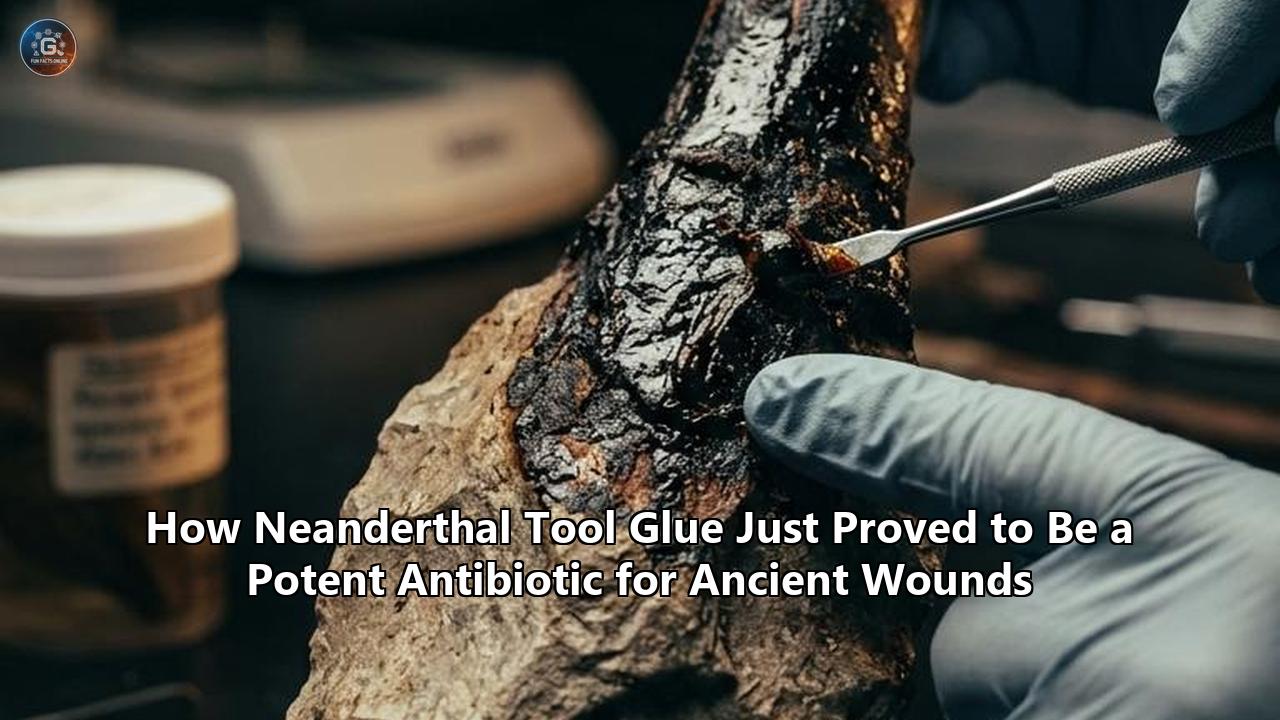
The black paste was not a newly synthesized clinical antibiotic from a pharmaceutical pipeline. It was birch bark tar, produced by following the precise pyrotechnic recipes utilized by European Neanderthals more than 100,000 years ago.
For nearly a century, archaeologists cataloged this sticky, resinous substance under a single utilitarian heading: prehistoric adhesive. Wherever birch tar was unearthed across Middle Palaeolithic dig sites—from the waterlogged sediments of Campitello in central Italy to the open-cast lignite mines of Königsaue in Germany—it was treated as proof of tool hafting. It was seen as the world’s oldest synthetic glue, engineered by extinct hominins solely to fuse sharp flint points onto wooden hunting spears and knife handles.
A joint study published in PLOS One by an international team of researchers from the University of Cologne, the University of Oxford, the University of Liège, and Cape Breton University has dismantled that single-purpose assumption. Led by archaeologist Dr. Tjaark Siemssen and chemist Dr. Matthias Bierenstiel, the investigation revealed that Neanderthal tool glue acts as a potent, selectively targeted topical antibiotic capable of disabling wound-infecting pathogens.
The discovery upends decades of assumptions regarding the cognitive sophistication of our closest evolutionary cousins. It establishes that the very material Neanderthals used to forge their deadlier weapons may have doubled as their primary shield against microscopic killers, reshaping our understanding of Palaeolithic survival.
       Pleistocene Pyrolysis
     [Betula pendula / pubescens]
                 │
   (Anaerobic thermal degradation)
                 │
                 ▼
       Crude Birch Bark Tar
                 │
 ┌───────────────┴───────────────┐
 │                               │
 ▼                               ▼
Mechanical Utility             Pharmacological Action
- High shear strength          - Betulin & Lupeol derivatives
- Waterproof binding           - Phenols, guaiacols, & cresols
- Stone-to-haft adhesion       - Selective inhibition of S. aureus
The Hafting Dogma: A Century of Categorical Error
To understand why the antibiotic potency of birch tar went unmeasured for so long, one must examine the intellectual silos that have constrained Palaeolithic archaeology since the late nineteenth century.
When prehistoric stone tools were first systematically categorized, researchers operated under a strictly mechanistic framework. Flints were weapons; wood was structure; resins and tars were fasteners. If a dark, charred coating clung to the base of a Mousterian scraper or Levallois blade, its function was self-evident: it kept the rock attached to the stick.
Birch tar was hailed as a cognitive milestone when its presence was confirmed at early hominin sites. The chemistry required to produce it is demanding. Birch bark does not simply secrete tar when placed near an open flame; exposed to oxygen, the bark catches fire and burns down to gray mineral ash within minutes.
To transform the white outer bark of Betula pendula or Betula pubescens into dark pitch, ancient hominins had to master pyrolysis—thermal decomposition in an oxygen-depleted environment at temperatures between 250 and 400 degrees Celsius. They had to bury bark bundles under dirt, insulate them beneath clay domes, or burn them tightly pressed against flat stone surfaces to trap the condensing volatile vapors.
The earliest confirmed traces of this deliberate pyrotechnology appear in the archaeological record during Marine Isotope Stage 7, roughly 200,000 years ago. At Campitello Querciolaia in Tuscany, researchers recovered flint flakes embedded in birch tar residues dating back at least 200 millennia. At Königsaue in Germany's Harz foothills, excavators discovered pieces of shaped pitch bearing Neanderthal thumbprints alongside flake impressions.
Because these artifacts were consistently recovered in association with stone blades, an orthodoxy took hold: birch tar was exclusively an industrial bonding agent. Archaeologists wrote dissertations on its tensile strength, its shear resistance, its melting point, and the complex planning sequences required to extract it from European forests during cold glacial cycles.
Hardly anyone asked whether a substance smeared on tools could also be smeared on flesh.
"We have had a persistent tendency in prehistoric archaeology to view materials through modern functional silos," explains Dr. Tjaark Siemssen, lead author of the study, based at the University of Cologne and the Institute of Archaeology at the University of Oxford. "If we find an adhesive on an arrow or spear, we classify it as glue, and our inquiry stops there. But traditional societies do not compartmentalize materials that way. A substance that seals wood can seal skin. A substance that resists rotting in the rain can prevent decay in an open wound."
Archaeologists occasionally unearthed mysterious, isolated lumps of tar carrying the unmistakable impressions of hominin molars. For years, these chewed fragments were dismissed as mere byproduct preparation—hunters using their teeth to soften cooled pitch before working it onto a spearhead. Yet the presence of human DNA, oral microbes, and plant remnants preserved in ancient chewing tars, such as those recovered from Scandinavian hunter-gatherer sites, suggested that prehistoric individuals were keeping pitch in their mouths for extended periods.
The question was no longer whether early humans were putting birch tar in direct contact with their bodies. The question was what that tar was doing to them.
Reigniting Pleistocene Pyrotechnology
The investigation began not in an automated chemical facility, but on the forest floor of Western Europe, where researchers set out to replicate the physical realities of Middle Palaeolithic pitch manufacture.
Reconstructing Neanderthal technology requires confronting the raw, tactile friction of ancient survival. Dr. Siemssen and his colleagues harvested the bark of fallen Betula pendula (silver birch) and Betula pubescens (downy birch)—the two dominant birch variants that blanketed the European landscape during the Late Pleistocene.
Experimental Reconstruction Matrix:
---------------------------------------------------------------------
Method               Setup                       Yield Range  Efficacy
---------------------------------------------------------------------
1. Stone Condensation Open fire beside cold rock  0.06 - 0.15g Mild/Moderate
2. Raised Pit / Clay  Anaerobic pit under hearth  0.25 - 0.69g Highest (BT5)
3. Indigenous Vessel  Sealed container over heat  0.40 - 0.85g Moderate
---------------------------------------------------------------------
To eliminate modern artifacts, the researchers engineered three distinct production pathways reflecting varying levels of technological complexity:
- The Stone Condensation Method: The simplest, most primitive approach. Birch bark strips were ignited immediately adjacent to a vertical, smooth river boulder. As the flames burned the outer edges, an oily vapor condensed directly onto the cool rock surface, leaving behind a thin, dark liquid film that had to be patiently scraped away with flint flakes before it scorched.
- The Raised Structure and Pit Method: A more advanced pyrotechnic setup. The team dug a narrow pit into dense earth, placed a collection receptacle at the base, and layered densely packed rolls of dry birch bark above it. The entire pit was then sealed beneath a wet blanket of river clay and soil to exclude oxygen, leaving only a tiny drainage pathway. A heavy wood fire was maintained directly over the sealed pit for two hours, baking the subterranean bark and distilling the crude tar into the lower chamber.
- The Indigenous Closed-Vessel Method: A comparative extraction inspired by traditional North American First Nations practices, using a sealed container with pinhole perforations exposed to external fire, generating high yields of smooth, medical-grade pitch.
Every method yielded a black, highly aromatic compound with a pungently smoky, medicinal scent. It was also relentlessly, uncontrollably adhesive.
"The messiness of birch tar production deserves a special mention," the researchers recorded during field trials. "Every step of the production is a sensory experience in itself, and getting the tar off our hands after spending hours at the fire has been a challenge every time."
This practical observation became a crucial insight. In an era without rubber gloves, chemical solvents, or running water, Neanderthal toolmakers could not produce birch tar without thoroughly coating their fingers, palms, and forearms.
Neanderthal toolmakers were not sterile laboratory technicians; they were hunters living in harsh subarctic terrain, their hands constantly covered in minor cuts, abrasions, animal bites, and flint knapping lacerations. If the tar they produced had harbored toxic compounds, it would have poisoned them through open cuts. If it possessed antiseptic properties, every single production cycle would have simultaneously functioned as an involuntary medical treatment.
The Biological Barrier: Dissecting the Laboratory Evidence
Once the crude tars were collected and stabilized, samples designated BT1 through BT6 were transported to Cape Breton University's Department of Chemistry, where Dr. Matthias Bierenstiel and researcher Aderonke Oludare oversaw biological and antimicrobial testing.
The team deployed a modified Kirby-Bauer disc diffusion assay—the gold standard clinical test used in modern hospitals to measure antibiotic susceptibility. Filter paper discs impregnated with standardized concentrations of the experimental birch tars were placed onto nutrient agar plates inoculated with two distinct, medically significant bacterial species:
- ---Staphylococcus aureus:--- A Gram-positive, spherical bacterium that resides commensally on skin but acts as a ruthless opportunistic pathogen. It is the primary instigator of wound infections, abscesses, cellulitis, and fatal osteomyelitis in traumatic physical injuries.
- ---Escherichia coli:--- A Gram-negative, rod-shaped bacterium common to the mammalian lower intestine, possessing an outer membrane composed of lipopolysaccharides that shields it from many natural biocides.
The contrast between the two pathogens was sharp.
Disc Diffusion Assay Results (Inhibition Zone Diameter):
----------------------------------------------------------------------
Sample ID    Bark Origin      Production Method        S. aureus   E. coli
----------------------------------------------------------------------
BT1          B. pendula       Indigenous Vessel        7.5 mm      0.0 mm
BT2          B. pubescens     Indigenous Vessel        7.0 mm      0.0 mm
BT3          B. pubescens     Stone Condensation       0.0 mm      0.0 mm
BT4          B. pendula       Stone Condensation       7.2 mm      0.0 mm
BT5          B. pendula       Raised Pit Structure    10.5 mm      0.0 mm
BT6          B. pubescens     Raised Pit Structure     7.4 mm      0.0 mm
Gentamicin   [Control]        Standard Antibiotic     19.0 mm     18.5 mm
----------------------------------------------------------------------
Across all six test formulations, birch tar had no effect on Escherichia coli. The Gram-negative bacteria grew unhindered, spreading across the discs.
When exposed to Staphylococcus aureus, the outcome changed completely. With the exception of a single low-concentration sample (BT3), every birch tar preparation generated visible zones of inhibition. The most potent formulation—BT5, derived from silver birch (Betula pendula) via the anaerobic raised clay pit method—carved out a clear zone of 10.5 millimeters.
This selectivity is chemically revealing. In an ancient survival context, an open wound is not threatened by enteric gut flora like E. coli; it is assaulted by cutaneous Gram-positive pathogens, overwhelmingly led by Staphylococcus species native to skin, animal hides, and dirt. Birch tar was not a blunt, indiscriminate poison that killed all cellular life. It was a selective weapon targeting the exact family of bacteria that turns an Ice Age flesh wound into a gangrenous death sentence.
To understand why, one must look closely at the chemical changes that occur when birch bark is heated.
The outer bark of birch contains extraordinary concentrations of pentacyclic triterpenoids, dominated by betulin and lupeol. These crystalline white molecules serve as the living tree's natural defense against fungal infestation and wood-decaying parasites. During the high-temperature, low-oxygen pyrolysis required to make pitch, these heavy triterpenoids undergo severe thermal cracking.
The long molecular chains break down, volatilizing and recombining into a complex slurry of lighter, biologically active phenolic derivatives: cresols, xylenols, catechols, and guaiacol compounds.
When applied to an infection, these pyrolytic phenols act as molecular wrecking balls against Gram-positive bacteria. Because Staphylococcus lacks the protective outer lipopolysaccharide membrane of Gram-negative organisms, its thick peptidoglycan cell wall is directly exposed to external chemicals. The phenolic compounds in birch tar rapidly diffuse through this porous wall, destabilizing the fragile cytoplasmic membrane, disrupting proton gradients, and causing the bacterial cell to leak vital ions until it collapses and dies.
Alongside this chemical assault is a physical defense: pitch forms an impenetrable mechanical dressing.
Calculations made by the research team demonstrated that just 0.2 grams of birch tar can spread smoothly across 100 square centimeters of skin surface. When spread thin, the tar cools into an elastic, hydrophobic, and completely airtight seal. It repels moisture, stops external dirt and flies from reaching the injury, and locks its active antimicrobial phenols directly against the damaged tissue.
Neanderthals had engineered a substance that was simultaneously an adhesive, a flexible liquid suture, an insect deterrent, and an antibiotic bandage.
Trauma and Survival on the Pleistocene Tundra
To measure the evolutionary significance of this dual-use material, one must confront the physical reality of Neanderthal daily life.
For much of the twentieth century, popular culture portrayed Neanderthals as ape-like brutes, hunched and sluggish. Over the past twenty-five years, physical anthropology has replaced that caricature with a dramatically different portrait. Neanderthals were hyper-muscular, broad-chested, highly active pursuit hunters who occupied cold glacial landscapes teeming with megafauna: woolly mammoths, steppe bison, cave bears, and woolly rhinoceroses.
Hunting these massive animals was not a remote, passive affair. Neanderthals lacked bows and arrows; their primary weapons were heavy thrusting spears tipped with stone points, such as those made from Levallois flakes. To make a kill, they had to approach dangerous herbivores and drive spears into them at point-blank range.
The fossilized skeletal record reflects the extreme hazards of this hunting strategy.
Representative Paleopathological Profiles:
-----------------------------------------------------------------------------
Specimen         Location           Documented Skeletal Pathology
-----------------------------------------------------------------------------
Shanidar 1       Zagros Mts, Iraq   Crushed orbit (blindness), withered/amputated
                                    right arm, multiple healed fractures,
                                    severe gait-altering foot trauma.
La Chapelle-     Corrèze, France    Severe osteoarthritis, lost dentition,
aux-Saints 1                        healed pelvic fracture, degenerative joint
                                    disease requiring assisted feeding.
St. Césaire 1    Charente-Maritime, Deep, healed cranial fracture inflicted by
                 France             a sharp stone blade (interpersonal trauma).
Krapina 180      Croatia            Extensive healed supracondylar fracture
                                    of the humerus showing sustained care.
-----------------------------------------------------------------------------
When paleolithic physical anthropologist Erik Trinkaus conducted systemic surveys comparing Neanderthal bone injuries to modern human populations, he noted that the distribution of healed traumas—dominated by cranial fractures, broken ribs, shoulder damage, and shattered limbs—most closely mirrored the injury patterns seen in professional rodeo athletes. They were regularly thrown, crushed, kicked, and gored.
Yet the most striking feature of these fossils is not that the individuals were injured. It is that their bones show extensive healing.
In modern trauma medicine, bone healing is taken for granted: a fractured femur or humerus is aligned, splinted, and monitored. But in a wild Pleistocene environment, a fractured bone almost never occurs in isolation. It is accompanied by ripped muscle, shredded connective tissue, deep punctures, and compound lacerations that breach the dermis.
Without antiseptics, an open laceration in the wild rapidly becomes colonized by Staphylococcus aureus or Streptococcus. Within days, bacteria multiply within necrotic muscle tissue, forming purulent abscesses. The infection penetrates the haversian canals of broken bone segments, causing acute osteomyelitis. Systemic bacteremia follows, leading to septic shock, multi-organ failure, and death within two to three weeks.
Yet individuals like Shanidar 1 in modern Iraq lived for decades after sustaining catastrophic physical trauma. His right arm had withered and was broken in multiple places; his eye socket had been crushed early in life, leaving him blind on one side; his foot bones were warped, severely impairing his mobility. He had suffered injuries that undeniably tore his flesh down to the periosteum.
Yet he healed. The bone remodeled smoothly. He survived long into old age, protected and cared for by his community.
The classic archaeological explanation has long leaned heavily on social altruism: other members of the clan carried him, shared meat, and sheltered him from predators. While compassion was certainly essential, social support alone cannot stop a bacterial infection. You cannot care an infected, septic wound into remission simply with warm companionship and soft meat.
Survival required active, effective medical intervention. It demanded an understanding of which natural substances could stop flesh from decaying.
The Expanding Blueprint of Neanderthal Medical Knowledge
The realization that birch tar functioned as an antibiotic does not exist in an archaeological vacuum. It serves as a physical linchpin, connecting several formerly disparate lines of biological evidence that have emerged across Europe over the past decade.
    EVIDENCE SPECTRUM: NEANDERTHAL MEDICAL KNOWLEDGE
 ┌─────────────────────────────────────────────────────────┐
 │                                                         │
 │  DENTAL CALCULUS (El Sidrón)                            │
 │  - Poplar bark consumption (Salicylic acid / Aspirin)   │
 │  - Penicillium mold genetic signatures                  │
 │                                                         │
 │  PALEOPATHOLOGY (Shanidar, La Chapelle)                 │
 │  - Survival decades past catastrophic trauma            │
 │  - Advanced bone remodeling without fatal sepsis        │
 │                                                         │
 │  MINERAL & BOTANICAL USE (Worldwide)                    │
 │  - Red ochre used as dermatological & antiparasitic sun │
 │  - Intentional harvesting of medicinal herbs            │
 │                                                         │
 │  EXPERIMENTAL PHARMACOLOGY (PLOS One, 2026)             │
 │  - Birch tar actively inhibits Staphylococcus aureus    │
 │  - 0.2g provides 100cm² of sterile, waterproof seal     │
 │                                                         │
 └─────────────────────────────────────────────────────────┘
The concept of Neanderthal medical knowledge gained major scientific footing in 2017, when a team led by Dr. Laura Weyrich from the Australian Centre for Ancient DNA analyzed dental calculus—petrified tooth plaque—extracted from hominin remains at El Sidrón cave in northern Spain.
The molecular evidence locked within the teeth of a young adult male known as "El Sidrón 1" yielded an astonishing medical case study. Paleopathological examination revealed that this individual had suffered from a massive, painful dental abscess in his jawbone. Metagenomic sequencing of his oral plaque further demonstrated that his digestive tract was infested with Enterocytozoon bieneusi, a debilitating microsporidian parasite that induces severe, dehydrating diarrhea.
What was extraordinary was what was recovered from his teeth. Unlike other individuals at the same site, whose plaque was dominated by traces of meat and forest nuts, El Sidrón 1 had zero meat signatures. Instead, his plaque was packed with DNA sequences from:
- Poplar trees (Populus): The bark and buds of the poplar tree are naturally saturated with salicin, a bitter glucoside that metabolizes within the human liver into salicylic acid—the active analgesic and anti-inflammatory agent in modern aspirin.
- ---Penicillium rubens: Plaque samples contained genetic material from the Penicillium fungus, the precise natural mold from which Alexander Fleming isolated the modern antibiotic penicillin.
The Neanderthal was not eating poplar wood for caloric subsistence; it possesses virtually no nutritional value. He was chewing the bark to dull the intense agony of his jaw abscess. And he was consuming natural mold capable of combating the bacterial infection threatening his life.
The forensic recovery of Neanderthal medical knowledge from dental calculus broke open a door that Western science had kept firmly shut for a century. It showed that Middle Palaeolithic hominins possessed an empirical pharmacopeia. They observed, tested, and remembered the physiological effects of specific plants, fungi, and minerals across multiple generations.
Birch tar represents a tangible material manifestation of Neanderthal medical knowledge, bridging the gap between raw plant foraging and deliberate pharmaceutical engineering.
Unlike chewing a bitter leaf or scraping moss off a rock, birch tar cannot be scavenged readymade from nature. It does not exist until human hands deliberately ignite, control, and suffocate a fire. The moment an early hominin discovered that the sticky residue collected on a stone hearth not only helped secure a wooden handle, but also soothed burns, kept swarming flies off raw abrasions, and prevented an open cut from turning red and leaking foul fluids, the boundary between technology and medicine disappeared.
Rather than isolated occurrences of trial and error, Neanderthal medical knowledge reflects a cohesive, intergenerational framework of healthcare.
"Healthcare in Neanderthal society was not an anomaly; it was a fundamental survival strategy," argues Dr. Penny Spikins, an archaeologist at the University of York and a leading voice in prehistoric social care models. "In small, kin-based bands where every adult hunter was irreplaceable, you could not afford to let an experienced tracker die from an infected puncture wound. Caring for injuries was an economic and evolutionary necessity. The discovery that their most common adhesive was a potent antibiotic means they were walking around with a medicine chest in their tool pouches."
The Indigenous Bridge: From Unama'ki to the Middle Palaeolithic
The breakthrough linking Neanderthal tool tar to modern laboratory microbiology would likely never have happened within a purely European archaeological department. It occurred because modern archaeologists built an intellectual bridge to Indigenous ethnopharmacology on the other side of the Atlantic.
The catalyst for the project originated in Unama'ki—the ancestral and unceded territory of the Mi'kmaq people in Cape Breton, Nova Scotia.
For centuries, Mi'kmaq medicine keepers have harvested the bark of local paper birch (Betula papyrifera) to manufacture a traditional therapeutic substance known as maskwio'mi. Passed down through countless generations of oral history, the process involves heating birch bark in a sealed container under low-oxygen conditions until a dark, pungent, oily extract drips out.
For the Mi'kmaq, maskwio'mi was never an adhesive. It was, and remains, an all-purpose medicine: an antiseptic ointment applied topically to soothe severe rashes, accelerate the healing of burns, close open knife cuts, and treat persistent skin infections like eczema and psoriasis.
Indigenous Knowledge Systems vs. Western Archaeological Orthodoxy:
-----------------------------------------------------------------------------
Dimension            Western Archaeological Canon    Mi'kmaq Knowledge Keepers
-----------------------------------------------------------------------------
Primary Purpose      Mechanical hafting / glue       Therapeutic wound ointment
Classification       Synthetic manufacturing         Living ethnopharmacology
Application Target   Stone, antler, wooden shafts    Damaged human skin, tissue
Silo Structure       Material science / pyrology     Holistic material healing
Modern Validation    Laboratory shear stress testing Clinical disc diffusion
-----------------------------------------------------------------------------
When Dr. Matthias Bierenstiel, a chemist at Cape Breton University, began working alongside Mi'kmaq Elders and knowledge keepers to analyze the chemistry of maskwio'mi, he discovered that the traditional oil possessed potent antibacterial and anti-inflammatory properties against skin pathogens.
Halfway across the world, Dr. Siemssen in Germany was studying the vast quantities of birch tar appearing across Neanderthal sites in Europe and struggling with a persistent contradiction: Why did ancient hominins spend immense amounts of time and fuel producing large reserves of tar when they only needed tiny fractions of a gram to haft a stone blade?
The collaboration brought these parallel inquiries together.
By incorporating the Mi'kmaq extraction technique into their comparative trials alongside the Neanderthal pit and stone condensation methods, the research team directly mapped living Indigenous chemistry onto Pleistocene archaeology.
The chemical profiles of modern Mi'kmaq maskwio'mi and the replicated Neanderthal tars were remarkably aligned: both were rich in cracked phenolic derivatives, both selectively halted the proliferation of Staphylococcus aureus, and both formed an identical waterproof, flexible barrier over broken skin.
This convergence highlights how the hyper-specialized siloing of modern Western science often blinds researchers to functional overlaps that are common knowledge in non-Western traditions.
"We are only just beginning to realize how much prehistoric archaeology has missed by treating traditional ecological knowledge as folklore rather than rigorous empirical science," notes Dr. Bierenstiel. "The Mi'kmaq elders didn't need a mass spectrometer to tell them that birch oil kills skin infections; they knew it because it worked consistently for thousands of years. What our laboratory tests proved is that this precise knowledge extends back past modern humans, across species boundaries, all the way into the deep Middle Palaeolithic."
Palaeopharmacology in the Age of Superbugs
While the findings resolve an ancient archaeological mystery, their implications reach far beyond the deep past. The selective antibacterial potency of birch pitch lands squarely in the center of an urgent medical challenge: the global crisis of antimicrobial resistance (AMR).
For nearly a century, modern medicine has relied on a reductionist pharmaceutical model: isolate a single synthetic or fungal molecule (such as penicillin, methicillin, or ciprofloxacin), concentrate it into a pill or vial, and use it to eliminate a targeted bacterial enzyme.
The consequences of that strategy are now unfolding across clinical wards worldwide. Pathogenic bacteria, endowed with rapid reproductive rates and horizontal gene transfer, routinely evolve resistance to single-molecule drugs.
Staphylococcus aureus has proved especially formidable, morphing into methicillin-resistant Staphylococcus aureus (MRSA) and vancomycin-intermediate strains that resist nearly every frontline therapeutic on the market. The World Health Organization has designated resistant S. aureus a high-priority pathogen, responsible for hundreds of thousands of fatal, intractable hospital-acquired infections every year.
Pharmaceutical companies have largely abandoned the search for novel classes of conventional antibiotics due to high costs and low financial returns, leaving clinicians with an increasingly empty therapeutic armory.
This crisis has catalyzed a burgeoning field: palaeopharmacology—the study and clinical revival of ancient, complex therapeutic preparations preserved in archaeological and historical records.
The Molecular Resistance Trap:
-----------------------------------------------------------------
Modern Single-Molecule Antibiotics:
  Pathogen Exposed ──> Single Target Mutates ──> Resistance Established
  (e.g., Methicillin blocks penicillin-binding protein PBP2a)

Ancient Multi-Component Botanical Tars:
  Pathogen Exposed ──> Multiple Molecular Strikes Occur Simultaneously:
                       ├── Phenols destabilize outer membrane
                       ├── Catechols disrupt proton gradients
                       ├── Hydrophobic matrix suffocates biofilm
                       └── Terpenoids block enzymatic function
  Result: Pathogen cannot evolve resistance via simple single-point mutations.
-----------------------------------------------------------------
The primary strength of birch pitch lies in its chemical messiness.
Birch tar is not a single chemical isolate; it is an intricate, unstandardized soup of dozens of interacting organic compounds: betulin, lupeol, allobetulin, catechol, 4-methylcatechol, guaiacol, syringol, and high-molecular-weight phenolic resins.
When bacteria encounter this multi-pronged natural cocktail, they do not face a single locked door that can be bypassed by an isolated genetic mutation. They face simultaneous chemical attacks across multiple structural fronts. The light volatile phenols compromise membrane integrity; the polyphenols coordinate and precipitate bacterial surface proteins; the heavy tar matrix creates an anoxic, physically protective seal that prevents the formation of sticky bacterial biofilms.
"As the world confronts an escalating crisis of antibiotic-tolerant bacteria, returning to ancient remedies offers critical new perspectives," the study's authors emphasize. "Complex, naturally occurring formulations like birch tar do not trigger the rapid development of resistance in the way single isolated synthetic molecules do."
Researchers at Cape Breton University and partner institutions are now investigating how the active fractions of birch tar can be adapted into modern clinical dressings.
The goal is not to have surgeons start fires in hospital courtyards to distill tree bark over river rocks. The modern promise lies in harvesting the bioactive principles of pyrolyzed birch tar to manufacture advanced, non-stick, antimicrobial barrier films.
Such dressings could prove transformative for chronic, non-healing diabetic foot ulcers, severe third-degree burns, and post-operative incisions—wounds where Staphylococcus aureus readily establishes chronic biofilms and where modern antibiotics often fail to penetrate.
By exploring the medicine of the Ice Age, researchers may find the tools needed to withstand the medical emergencies of the future.
The Unexcavated Medicine Cabinet
The realization that Neanderthal tool glue was an effective topical antibiotic is forcing archaeologists to reconsider the entire material inventory of the Middle Palaeolithic.
If birch tar was not merely an adhesive, what other artifacts have been categorized under incomplete, modern labels?
Re-Evaluating the Middle Palaeolithic Material Inventory:
-----------------------------------------------------------------------
Artifact / Substance   Historic Categorization     Emerging Medicinal Hypotheses
-----------------------------------------------------------------------
Birch Bark Tar         Tool hafting glue           Broad-spectrum topical biocide,
                                                   liquid suture, dental chew.
Red & Yellow Ochre     Cave art, ritual pigment,   UV-protective sunblock,
                       tanning agent               collagen cross-linker,
                                                   topical dermatological seal.
Pine & Conifer Resins  Stone tool adhesive         Potent antifungal agent,
                                                   systemic antiparasitic balm.
Bitumen (Natural Tar)  Waterproofing sealant       Astringent skin barrier,
                                                   antimicrobial packing.
Animal Fats & Tallows  Adhesive plasticizers       Lipophilic carrier agents for
                                                   lipophilic plant medicines.
-----------------------------------------------------------------------
Consider red ochre, the natural iron oxide mineral found scattered across hundreds of early human and Neanderthal living sites. For decades, ochre was treated almost exclusively as a symbol—a paint used for cave walls, burials, and body decoration to signal abstract identity.
Yet emerging archaeological experiments reveal that iron oxides act as powerful skin protectants. Ochre blocks harmful ultraviolet radiation, inhibits bacterial enzymes that break down skin collagen during hide tanning, and deters parasitic insects when rubbed across bare skin. In Africa and Eurasia, prehistoric people were not simply painting themselves for aesthetic ritual; they were applying a mineral armor against sun, ticks, and environmental pathogens.
The same dual-use reality applies to coniferous resins. Pine and fir resins, frequently identified alongside birch tar in hafting compounds across southern Europe and the Levant, are saturated with diterpenes and abietic acid derivatives. These molecules possess aggressive antifungal and antimicrobial properties, preventing fungal rot from devouring wooden tool handles—and stopping mycoses from thriving on wet, wounded human feet.
The challenge now falls directly to archaeological science to refine its analytical methods.
Historically, when residue analysis was conducted on an excavated stone blade, chemists dissolved the organic matter simply to identify its resin base. Today, researchers are developing micro-sampling protocols designed to detect traces of human biological material—ancient red blood cells, inflammatory enzymes, salivary amylase, and immune markers—preserved within the microscopic crevices of the hafting resin itself.
If Neanderthals regularly applied birch tar directly to wounds, or used tar-covered hands and tools to treat injuries, molecular traces of human blood and bodily fluids will inevitably be found preserved within the fossilized tar matrices resting in museum drawers.
Several forward-looking milestones will shape the next phase of this research:
- Palaeoproteomic Screening of Ancient Tars: Utilizing high-resolution liquid chromatography-tandem mass spectrometry (LC-MS/MS) on micro-residues from sites like Königsaue and Neumark-Nord to scan for human immune proteins and blood serum trapped within Pleistocene adhesives.
- Biofilm Disruption Trials: Testing fractionated birch pitch distillates against modern clinical strains of Methicillin-Resistant Staphylococcus aureus* (MRSA) to identify whether the complex phenols can dismantle stubborn bacterial biofilms that resist conventional pharmaceuticals.
- Cross-Disciplinary Ethnopharmacology Surveys: Systematically comparing the distribution of Middle Palaeolithic plant assemblages against global Indigenous pharmacopeias, matching the floral footprints found in Neanderthal hearths to documented ethnobotanical remedies.
The picture of our extinct cousins that emerges from the laboratory agar plate is neither that of an ape-like scavenger nor that of a struggling brute.
It reveals a resilient hominin who studied the forest, understood its thermal transformations, and recognized the unseen properties of the materials they manipulated. When an Ice Age hunter knelt by a fire pit, peeling away a strip of smoldering birch bark, they held a substance that could assemble a weapon, mend a spear, or save a wounded relative's life.
In the flickering light of the Pleistocene hearth, technology, chemistry, and medicine were forged together in the exact same drop of black tar.
Reference:
- https://www.sciencedaily.com/releases/2026/10/261008005256.htm
- https://journals.plos.org/plosone/article?id=10.1371/journal.pone.0343618
- https://www.sciencealert.com/neanderthals-used-ancient-gloop-as-antibacterial-medicine-study-suggests
- https://www.sciencedaily.com/releases/2026/10/261008005256.htm
- https://journals.plos.org/plosone/article/file?id=10.1371/journal.pone.0343618&type=printable
- https://pmc.ncbi.nlm.nih.gov/articles/PMC12998862/
- https://www.smithsonianmag.com/smart-news/did-neanderthals-use-birch-bark-tar-as-an-antibiotic-to-treat-wounds-and-infections-180988393/
- https://www.popsci.com/health/neanderthals-antibiotic-birch-tar-medicine/
- https://www.discovermagazine.com/ice-age-neanderthals-may-have-used-birch-tar-as-early-medicine-48837
- https://www.eurekalert.org/news-releases/1119603
- https://pmc.ncbi.nlm.nih.gov/articles/PMC12998862/
- https://www.earth.com/plants/neanderthals-seem-to-have-used-birch-tar-to-heal-wounds/
- https://www.sci.news/archaeology/neanderthal-birch-tar-14631.html
- https://www.discovermagazine.com/ice-age-neanderthals-may-have-used-birch-tar-as-early-medicine-48837
- https://www.researchgate.net/publication/398141012_Antibacterial_properties_of_experimentally_produced_birch_tar_and_its_medicinal_affordances_in_the_Pleistocene