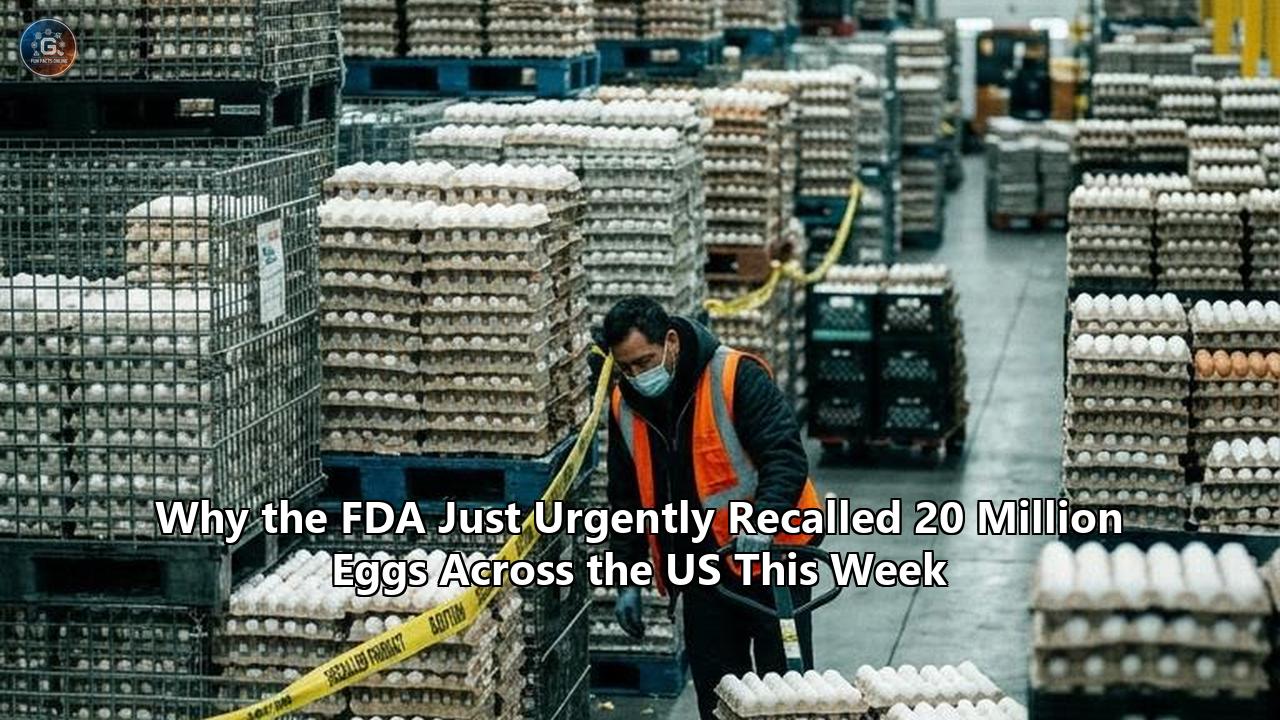
Federal food safety regulators and one of the country’s largest egg producers executed an urgent market extraction, pulling 1,589,577 dozen eggs—nearly 19.1 million individual shell eggs—off retail shelves and out of commercial food service pipelines across six states.
The recall, initiated by Indiana-headquartered Midwest Poultry Services, L.P. following regulatory coordination with the U.S. Food and Drug Administration (FDA), impacts white-shell and brown cage-free shell eggs produced at two large-scale layer complexes in Texas. Distributed between June 6 and July 3, the affected product made its way into major supermarket chains—including Kroger, Brookshire’s, Simple Truth, Country Morning, and Sunups—across Texas, Oklahoma, Arkansas, Louisiana, New Mexico, and Mississippi.
The emergency action was triggered when routine internal drag-swab sampling detected the presence of Salmonella Enteritidis (SE) within the housing environment of the Texas facilities. While no confirmed human illnesses have been tied to this specific production run, the FDA categorized the potential contamination as a high-priority hazard due to the unique biological capability of Salmonella Enteritidis to infect eggs internally before the shell is formed.
Upon confirming the positive environmental samples, Midwest Poultry Services halted fresh shell egg shipments from the affected Texas barns and diverted remaining lay yields to liquid-egg processing facilities for heat pasteurization. However, millions of cartons had already entered the complex web of retail distribution. The logistics of tracing, isolating, and destroying millions of eggs spread across hundreds of retail distribution centers highlights the intricate food safety mechanisms governing America's egg supply chain.
Transovarian Transmission: Why Surface Washing Cannot Stop Salmonella Enteritidis
To understand why an environmental detection triggers a multi-state recall of millions of eggs, one must examine the specific microbiology of Salmonella Enteritidis (SE). Unlike most foodborne bacterial pathogens that contaminate eggshells externally via fecal matter during or after oviposition, SE possesses a specialized pathogenic mechanism: transovarian transmission.
       TRANSOVARIAN (VERTICAL) TRANSMISSION
       [Hen Reproductive Tract: Ovary / Oviduct]
                        │
                        ▼
       SE Bacteria Colonize Vitelline Membrane / Albumen
                        │
                        ▼
       Eggshell Formed Around Contaminated Contents
                        │
                        ▼
       [Intact Egg Laid with Internal Contamination]
       *(Impervious to surface washing & sanitizers)*
When a laying hen contracts SE, the bacteria do not merely pass through her digestive tract. The pathogen exhibits a tropism for the avian reproductive tissues, colonizing the ovaries and the magnum region of the oviduct. As an egg yolk develops and travels down the reproductive tract, SE bacteria are shed directly into the vitelline membrane or embedded within the thick albumen (egg white) before the inner and outer shell membranes and the outer calcium carbonate shell are deposited.
This vertical transmission path means an egg can be laid with intact, pristine outer shells while harboring live, multiplying bacteria inside.
- Shell Pore Architecture: An average chicken eggshell features between 7,000 and 17,000 microscopic pores designed for embryonic gas exchange ($O_2$ and $CO_2$).
- Horizontal vs. Vertical Risk: Horizontal transmission occurs when external fecal bacteria enter through these pores—often driven by "thermal vacuum" when a warm egg is washed in cool water. Vertical transmission bypasses the shell entirely, establishing bacterial colonies directly in the nutrient-rich interior.
- Wash Limits: Industrial egg washers utilize alkaline sanitizing sprays (pH 10.0 to 11.5) at temperatures maintained at least 20°F higher than the egg's internal temperature to prevent thermal vacuuming. While this eliminates surface pathogens like E. coli or Salmonella Typhimurium, it has zero impact on SE encapsulated within the albumen.
Because an internally infected egg shows no visible signs of spoilage, odor, or shell defect, standard grading cameras and candling light stations cannot detect the organism. A single layer hen with an asymptomatic ovarian SE infection can lay contaminated eggs intermittently for weeks, making environmental swab monitoring the primary line of defense.
Inside 21 CFR Part 118: How Environmental Drag-Swabbing Intercepted the Strain
The early detection of the pathogen in the Texas houses was not a matter of luck; it was the direct outcome of federal mandates codified under 21 CFR Part 118, formally known as the FDA Egg Safety Rule. Enacted to control Salmonella Enteritidis in layer flocks with 3,000 or more hens, the rule establishes strict, non-negotiable diagnostic milestones throughout a flock's laying cycle.
+-------------------------------------------------------------------+
|               FDA EGG SAFETY RULE (21 CFR Part 118)               |
+-------------------------------------------------------------------+
                                  │
                                  ▼
      Environmental Drag-Swabbing (Manure Pits / Transfer Belts)
      [Executed at 40-45 Weeks of Age & Post-Molt Periods]
                                  │
                                  ▼
              Primary Enrichment (Buffered Peptone Water)
                                  │
                                  ▼
                Selective Enrichment (TT / RV Broths)
                                  │
                                  ▼
            Rapid Screen (Real-Time qPCR for invA Target)
                                  │
          ┌───────────────────────┴───────────────────────┐
          ▼                                               ▼
   [Negative Result]                               [Positive Result]
   Continue Shell Distribution                     Halt Shell Egg Distribution
                                                   Divert Yield to Breaking Plant
                                                   Initiate Farm & Retail Recall
Under 21 CFR Part 118, egg producers are required to conduct environmental drag-swabbing when a poultry flock reaches 40 to 45 weeks of age, as well as 4 to 6 weeks following any induced molt. Field technicians drag sterile, buffered-peptone-soaked gauze pads across high-risk accumulation zones within the poultry barn:
- Manure Pit Lines: Gauze drag assemblies are pulled along the length of manure collection belts or pit floors underneath hen cages, where shed bacteria concentrate.
- Egg Transfer Belts: Swabs are wiped across mechanical egg-gathering belts, elevator pads, and header bars where thousands of eggs make physical contact daily.
Once collected, the swabs undergo a rigorous laboratory diagnostic pipeline:
[Barn Gauze Swabs] ──> [Pre-Enrichment Broth] ──> [Selective Enrichment] ──> [Real-Time qPCR Target Screen]- Pre-Enrichment: Swabs are incubated in Buffered Peptone Water (BPW) at 35°C for 24 hours to revive injured or dormant bacterial cells.
- Selective Enrichment: Aliquots are transferred into Tetrathionate (TT) broth and Rappaport-Vassiliadis (RV) broth, which suppress competing gut microflora while allowing Salmonella to proliferate.
- Molecular Screening: Real-time quantitative Polymerase Chain Reaction (qPCR) assays target specific, highly conserved genetic markers, such as the invA gene (responsible for host cell invasion).
- Isolation and Typing: Positive qPCR hits are plated onto selective chromogenic agars (such as Xylose Lysine Deoxycholate agar) to isolate pure colonies for serotyping and Whole Genome Sequencing (WGS).
This proactive testing pipeline differs sharply from historical outbreaks. Unlike the multi-state egg recall 2024 involving Milo's Poultry Farms, where public health agencies initiated investigations only after hospitalizations and outbreak clusters were reported across 12 states, the current intervention intercepted the threat at the farm level. The environmental swabs flagged the presence of SE before cluster analysis at the Centers for Disease Control and Prevention (CDC) registered a spike in human illness.
The Supply Chain Pivot: Julian Codes, Plant P-1950, and the Breaking Plant
Once environmental drag swabs return a positive result for SE, regulatory mechanics move swiftly. The FDA Egg Safety Rule mandates that a producer must either immediately begin testing shell eggs directly (four consecutive 1,000-egg sample pools taken at two-week intervals) or instantly divert all flock output to an official egg products processing plant—commonly known as a "breaking plant."
Midwest Poultry Services opted for immediate diversion and voluntary market extraction. But pulling nearly 1.6 million dozen eggs that had already entered commercial pipelines required precise tracking through federal plant codes and Julian date conventions.
CARTON CODE BREAKDOWN:   P-1950  157
                         │       │
                         │       └─ Julian Date: Day 157 (June 6)
                         └───────── USDA Plant Identification Number
Every USDA-inspected egg carton displays a plant code preceded by the letter "P" alongside a three-digit Julian date representing the day of the year the eggs were washed, graded, and packed.
- Plant Identifier P-1950 / 0840962: These codes pinpoint the exact packing facilities in Texas where the eggs were processed.
- Julian Date Range 157 to 184: Day 157 corresponds to June 6; Day 184 corresponds to July 3. This 28-day window accounts for the entire suspect manufacturing period.
- Sell-By/Best-By Windows: Combined with standard retail shelf-life calculations (typically 30 to 45 days from packing), the affected products were stamped with sell-by dates ranging from July 20 to August 17.
When eggs are diverted to a liquid breaking plant, the physical shells are mechanically cracked and separated. The liquid whole egg, albumen, or yolk fractions are routed through industrial pasteurization units. Under USDA Food Safety and Inspection Service (FSIS) regulations (9 CFR 590), liquid whole egg must be held at a minimum temperature of 140°F (60°C) for at least 3.5 minutes.
[Raw Shell Eggs] ──> [Mechanical Egg Breaker] ──> [Thermal Pasteurizer: 140°F / 3.5 min] ──> [Safe Liquid Product]This thermal processing kills pathogenic vegetative cells—including heat-sensitive SE—rendering the liquid egg safe for industrial commercial baking and food production while preserving the functional protein structure necessary for foaming and coagulation.
Structural Pressures and Policy Evolution Post-2024
The regulatory speed demonstrated in this national recall reflects a broader shift in federal food safety enforcement following the egg recall 2024. In September 2024, a major outbreak linked to Milo's Poultry Farms resulted in 93 confirmed cases and 34 hospitalizations across 12 states. That incident exposed vulnerabilities in how quickly regional processing hubs isolated contaminated flocks and communicated risks across distribution tiers.
| Feature / Metric | The 2024 Outbreak (Milo's Poultry Farms) | Current Recall Action (Midwest Poultry Services) |
|---|---|---|
| Primary Trigger | Human Illness Clusters & WGS Epidemiological Matching | Proactive Environmental Swabbing under 21 CFR Part 118 |
| Outbreak Impact | 93 Illnesses, 34 Hospitalizations across 12 States | 0 Reported Illnesses at time of recall announcement |
| Brands Affected | Milo's Poultry Farms, Tony's Fresh Market, M&E, Happy Quackers | Kroger, Simple Truth, Brookshire's, Country Morning, Sunups |
| Supply Chain Action | Facility Shutdown & Post-Illness Voluntary Extraction | Immediate Pasteurization Diversion & Market Extraction |
During the 2024 crisis, regulators faced challenges tracing unbranded bulk packaging distributed to food service clients and independent restaurants. In response, the FDA's Human Foods Program overhauled its environmental sampling oversight, encouraging egg producers to conduct automated real-time PCR screening of packing equipment and enforce stricter isolation protocols.
These regulatory shifts unfolded against a tight economic backdrop for the poultry sector:
- Avian Influenza Strains: Highly Pathogenic Avian Influenza (HPAI) outbreaks periodically force the depopulation of tens of millions of commercial layers nationwide, tightening shell egg inventories and elevating retail prices.
- Flock Consolidation: Modern egg complexes often house over one million laying hens across multiple high-density cage-free or conventional houses. A single environmental positive in one housing unit can force the diversion or recall of output from an entire complex to prevent cross-contamination in shared washing and grading facilities.
- Financial Mechanics of Extraction: Pulling 1.6 million dozen eggs incurs massive supply chain costs, including retail credit reimbursements, reverse logistics, hazardous waste destruction fees, and lost shell-egg price premiums. Diverting fresh shell eggs to pasteurization breaking plants typically yields only a fraction of the wholesale value of carton-packed shell eggs.
Producers have adapted to these economic risks by incorporating voluntary holds and early diversion protocols. Rather than waiting for secondary laboratory confirmation or CDC epidemiological inquiries, commercial operations now pull products as soon as routine environmental screening triggers a target hit—a direct operational lesson inherited from the egg recall 2024.
Thermal Death Curves and Commercial Kitchen Auditing
While federal agencies work to remove recalled inventory from supermarket cold cases, food service directors and commercial kitchen operators face the operational task of auditing inventory and managing thermal processing safety.
BACTERIAL SURVIVAL VS. INTERNAL COOKING TEMPERATURE
─────────────────────────────────────────────────────────────────────────────
Temperature   Log Reduction Time (Salmonella Enteritidis)   Safety Status
─────────────────────────────────────────────────────────────────────────────
140°F (60°C)  ~3.5 to 5.0 Minutes                           Requires Sustained Heat
150°F (66°C)  ~1.0 Minute                                   Moderate Risk if Brief
160°F (71°C)  ~2 to 5 Seconds                               Rapid Inactivation
165°F (74°C)  Instantaneous (<1 Second)                     FDA Food Code Target
─────────────────────────────────────────────────────────────────────────────
Understanding the thermal inactivation kinetics of Salmonella Enteritidis is critical for managing risk in high-volume food production environments:
- The D-Value Concept: The D-value represents the time required at a specific temperature to reduce a microbial population by 90% (a 1-log reduction). For SE in whole egg, the D-value at 140°F (60°C) ranges from 3.5 to 5 minutes.
- Thermal Death Time (TDT): At 165°F (74°C), the D-value drops to fractions of a second, causing immediate thermal lysis of the bacterial cell membrane and denaturation of crucial metabolic enzymes.
- The 7-Log Reduction Standard: The FDA Food Code requires culinary processes for raw shell eggs intended for immediate service to achieve a 7-log (99.99999%) reduction in bacterial load.
       7-LOG REDUCTION DYNAMICS AT 165°F (74°C)
       [1,000,000 SE Bacterial Cells / Gram]
                        │
                        ▼ (Heat applied to reach 165°F)
       [0.0001 Surviving Cells / Gram]
       (Complete Pathogen Inactivation Achieved)
For institutional kitchens serving vulnerable populations—such as hospitals, long-term care facilities, and daycare centers—the risk profile of raw shell eggs is particularly acute:
- Inappropriate Dishes: Undercooked preparations such as soft-boiled eggs, sunny-side-up eggs, poached eggs, hollandaise sauce, unpasteurized caesar salad dressings, and house-made mayonnaise fail to reach the sustained internal core temperature of 165°F required to guarantee a 7-log kill step.
- Cross-Contamination Kinetics: When raw egg shells are cracked, microscopic aerosol droplets or liquid residue on food handler gloves can transfer SE to ready-to-eat contact surfaces, preparation tables, or utensils.
- Sanitization Protocols: Surfaces exposed to raw egg liquid must be sanitized using EPA-registered hard-surface disinfectants. Quaternary ammonium compounds (QUAT) at concentrations of 200–400 ppm or sodium hypochlorite (chlorine bleach) solutions at 100–200 ppm require a minimum wetted contact time of 60 seconds to disrupt Salmonella lipid membranes.
Next-Gen Egg Biosecurity: Vaccines, Phage Therapeutics, and Microfluidic Sensors
As the egg industry faces ongoing microbial threats and structural supply vulnerabilities, agricultural scientists and commercial producers are looking beyond conventional drag-swabbing toward advanced biological and molecular defenses.
                   NEXT-GENERATION BIOSECURITY HORIZON
                                    │
    ┌───────────────────────────────┼───────────────────────────────┐
    ▼                               ▼                               ▼
[Poultry Immunization]   [Phage & Probiotic Control]    [In-Line LAMP Biosensors]
Combines live attenuated  Lytic bacteriophages &         Microfluidic DNA testing
& inactivated oil-based   cecal competitive exclusion   delivers barn results in
vaccine schedules.        suppress SE colonizations.    under 45 minutes.
1. Multi-Stage Avian Immunization Programs
Vaccination of pullets (young laying hens) during the rearing phase has emerged as a cornerstone of preventive biosecurity. Modern programs utilize a dual-vaccine approach:
- Live Attenuated Strains: Administered via drinking water during the early weeks of life, these attenuated strains stimulate mucosal immunity within the hen’s gut, triggering localized IgA antibody production that hinders SE colonization of the intestinal wall.
- Inactivated Oil-Emulsion Vaccines: Administered via intramuscular injection prior to the onset of lay, these killed vaccines induce high titers of systemic IgG antibodies. These circulating antibodies enter the hen’s reproductive system, preventing SE from establishing persistent infections in the ovarian tissue and oviduct.
2. Bacteriophage Therapeutics and Competitive Exclusion
To reduce reliance on chemical intervention and minimize antibiotic use, producers are integrating biological control mechanisms:
- Lytic Bacteriophages: Specific, naturally occurring viruses that target and destroy Salmonella bacterial cells without harming the hen's native gut microbiome are applied via drinking water or misted over flock litter. The phages bind to outer membrane proteins on SE, injecting their viral DNA to lyse and destroy the host bacteria.
- Competitive Exclusion Cultures: Administered to day-old chicks, these specialized mixtures of beneficial gut flora rapidly colonize the cecal crypts, physically occupying ecological niches and producing short-chain fatty acids (like butyric and propionic acid) that lower intestinal pH and create a chemical environment hostile to SE colonization.
3. Real-Time Microfluidic Biosensors
The future of environmental surveillance lies in shifting diagnostic capabilities from off-site laboratories directly to the barn floor:
- Loop-Mediated Isothermal Amplification (LAMP): Portable, microfluidic "lab-on-a-chip" cartridges are being deployed to perform rapid DNA amplification at a constant temperature, eliminating the complex thermal cycling equipment required for traditional PCR.
- Rapid Diagnostic Timelines: Field technicians can swab manure belts, extract bacterial DNA, and run automated LAMP assays on-site, receiving validated results in under 45 minutes.
These technological advances are transforming poultry health management. By coupling real-time molecular diagnostics with targeted biological interventions, egg producers aim to detect and contain pathogens at the flock level long before contaminated products can ever reach a consumer's cart.
Affected Product Identification Summary
Retail consumers and food service operators holding egg inventory purchased in the affected southern region should check product packaging against the following federal recall metrics:
- Plant Identification: Check the side panel or top lid imprint for Plant Code P-1950 or 0840962.
- Julian Date Range: Look for the three-digit production date code between 157 and 184.
- Affected Brands: Kroger, Simple Truth, Brookshire's, Country Morning, Sunups, and bulk Grade A/AA commercial boxes.
- Distribution States: Texas, Oklahoma, Arkansas, Louisiana, New Mexico, Mississippi.
- Required Action: Do not cook, consume, or serve recalled products. Return affected packages to the point of purchase for a full refund, and sanitize any refrigerator drawers, shelves, or containers that came into direct contact with the cartons.
Reference:
- https://www.cbsnews.com/news/egg-recall-salmonella-midwest-poultry-kroger/
- https://www.fda.gov/apology_objects/abuse-detection-apology.html
- https://www.foxbusiness.com/lifestyle/more-than-1-5-million-dozen-egg-cartons-recalled-over-possible-salmonella-contamination
- https://www.fda.gov/apology_objects/abuse-detection-apology.html
- https://www.cdc.gov/salmonella/outbreaks/eggs-09-24/index.html
- https://www.fda.gov/apology_objects/abuse-detection-apology.html
- https://www.tasteofhome.com/article/milos-egg-recall-october-2024/
- https://www.foodnetwork.com/fn-dish/news/milos-poultry-farm-egg-recall-salmonella-september-2024