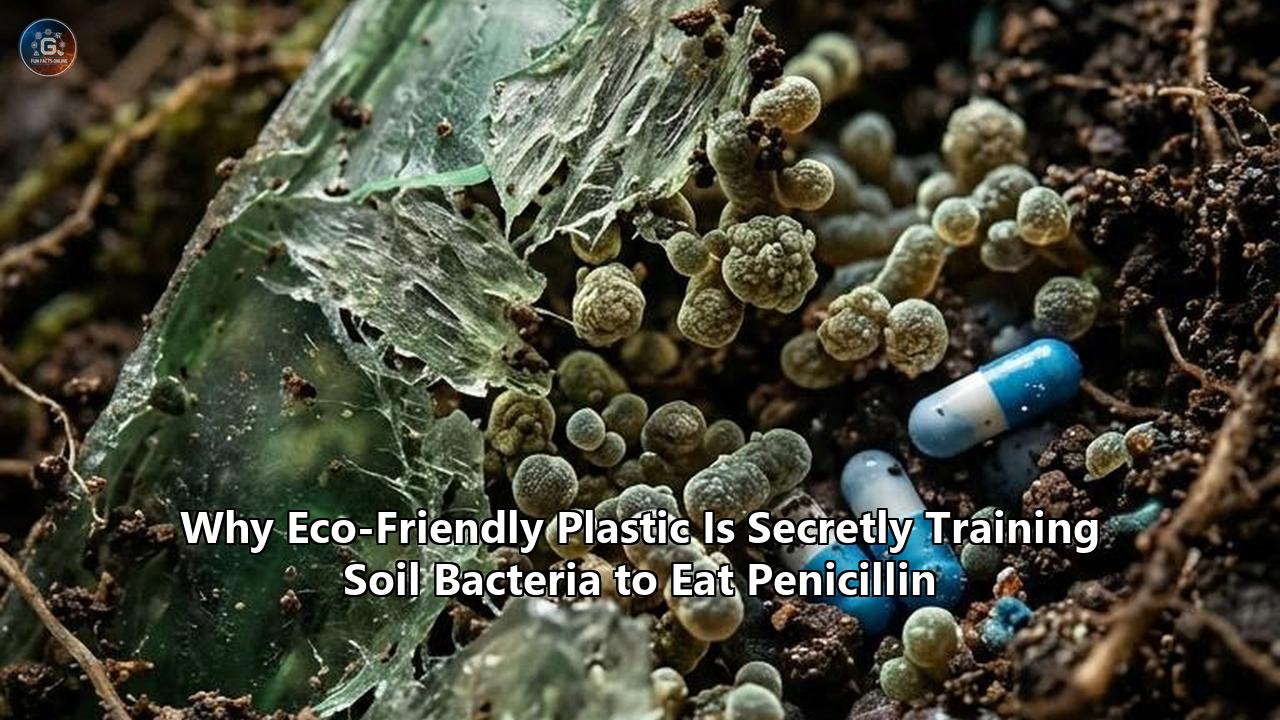
A team of microbiologists and polymer chemists at the University of Konstanz in Germany have uncovered an evolutionary collision between green materials and medical science. In a study published in The ISME Journal, researchers investigating how soil microbes break down biodegradable, plant-oil-derived plastics discovered that the primary bacterial enzyme responsible for consuming the polymer possesses a dual capability: it also cleaves and inactivates clinical beta-lactam antibiotics, including penicillin and ampicillin.
The study, led by microbial ecologist Dr. Harry Lerner and senior author Dr. David Schleheck alongside chemist Dr. Stefan Mecking, focused on long-chain aliphatic polyesters (LCAPs). These materials are designed to mimic the durability of traditional polyethylene while remaining biologically degradable.
After burying film strips of the material ten centimeters deep in forest humus for nearly 15 months, the scientists isolated a previously unknown bacterial enzyme, designated LCPH1. Structural modeling revealed an active site that functions as a structural analog to class C beta-lactamases—the defensive enzymes pathogenic bacteria deploy to destroy penicillin-class drugs.
The finding converts a long-standing environmental hope into an evolutionary case study. Biodegradable plastics have been manufactured, subsidized, and deployed worldwide on the assumption that making synthetic materials biologically digestible would neutralize the global plastic pollution crisis.
Instead, exposing microbial communities to massive volumes of synthetic ester-bonded polymers acts as an unintentional training ground. In selecting for bacteria capable of chewing through novel polyester bonds, the environment selects for open-groove, promiscuous enzymes that simultaneously neutralize frontline antibiotics.
The revelation reframes the ongoing environmental conversation, shifting focus from material persistence to unintended biological co-selection. It exposes the critical ecological trade-offs hidden within sustainable material design.
The Konstanz Discovery: An Accidental Resistance Reservoir
The path to uncovering LCPH1 began with an investigation into the soil breakdown of next-generation polyesters. Stefan Mecking’s polymer research group at the University of Konstanz had synthesized LCAPs—specifically PE-12,12 and PE-18,18—by deriving long-chain dicarboxylic acids and diols from plant oils. The resulting plastics matched the mechanical resilience, crystallinity, and barrier properties of high-density polyethylene (HDPE), but with chemical ester bonds embedded every dozen to eighteen carbon atoms, allowing natural hydrolytic enzymes to break down the long polymer chains.
Biodegradable Polyester (LCAP)           β-Lactam Ring (Penicillin)
      O                                           O
      ║                                           ║
── C ─ C ─ O ─ CH₂ ──                       ── C ─ C ─ NH ──
           │                                       │
     Ester Bond                              Cyclic Amide
           ▼                                       ▼
  Hydrolyzed by LCPH1                     Cleaved by LCPH1
(Yields plant-oil monomers)             (Inactivates antibiotic)
To determine how real-world microbial communities interact with these polymers, Lerner and his team placed rectangular strips of the bioplastic into the top layer of leaf litter and forest humus within the University of Konstanz botanical garden. Parallel soil microcosms were monitored in the laboratory, measuring microbial respiration through cumulative carbon dioxide evolution.
While traditional HDPE films exhibited zero discernible mass loss over hundreds of days, the plant-oil-based LCAP strips were completely degraded within 250 to 330 days, lagging behind pure natural cellulose (which vanished in approximately 80 days) but confirming full biological digestibility.
The physical mechanism of degradation, however, revealed unexpected dynamics. When the researchers retrieved the buried plastic films after 15 months and examined them under scanning electron microscopy (SEM), the surface was not uniformly thinning. Instead, it was pitted with microscopic, rod-shaped cavities that perfectly matched the dimensions of bacterial cells. Microbes were not simply settling on the film; they were physically sinking into the plastic matrix, eating micro-craters into the material while anchoring themselves within the cavities they etched.
Plastisphere Cavity Formation (Cross-Section):

[ Soil Environment: Ambient Microbes & Mineral Particles ]
━━━━━━━━━━━━━━━━━━━━━━━━━━━━━━━━━━━━━━━━━━━━━━━━━━━━━━━━━
  ┌─┐  ┌─┐        <-- Bacterial Cells Colonize Surface
  │ │  │ │
══╪═╪══╪═╪═══════════════════════════════════════════════  <-- LCAP Film Surface
  │ └──┘ │        <-- LCPH1 Enzymes Secreted / Anchored to Membrane
  │ Bio- │            Digest Surrounding Ester Bonds
  │ film │
  │ Pit  │        <-- Cavity Deepens: Bacteria Sink Into the Matrix
  └──────┘
  ═══════════════════════════════════════════════════════  <-- Bulk Plastic Substrate
To identify the biological tools driving this process, the researchers extracted total DNA directly from the biofilms clinging to the plastic strips and performed metagenomic sequencing. Within the genetic profile of the plastic-degrading bacterial consortium, a specific sequence appeared in high abundance: a gene coding for an uncharacterized enzyme belonging to the family-VIII esterases.
The researchers named the protein LCPH1 (Long-Chain Polyester Hydrolase 1). When the team deployed AlphaFold3 to model the enzyme’s three-dimensional folded architecture, its structural profile surprised the microbial ecologists. LCPH1 shared fold homology not just with known bacterial esterases, but exhibited structural alignment with class C serine beta-lactamases—enzymes that constitute one of medicine’s primary therapeutic obstacles in treating bacterial infections.
The structural models clarified the dual nature of the enzyme. Standard esterases typically position their catalytic sites inside narrow, channel-like clefts that fit slender aliphatic chains. LCPH1, by contrast, featured a wide, surface-exposed active site groove—a wide-open cleft reminiscent of a "Pac-Man" profile.
This wide-open architecture evolved to let the enzyme clamp onto bulky, insoluble, crystalline plastic polymers. But the same open cleft also allowed beta-lactam antibiotic rings to enter the catalytic pocket unobstructed.
Subsequent laboratory synthesis confirmed what computational modeling had predicted. The researchers cloned the codon-optimized lcph1 gene into an Escherichia coli expression vector, purified the enzyme via affinity chromatography, and exposed it to both synthetic polyesters and clinical beta-lactam agents.
LCPH1 depolymerized the plant-oil-based plastic into water-soluble aliphatic monomers. In the same test environment, the enzyme cleaved the cyclic amide bonds of both Penicillin G and Ampicillin, destroying the chemical core that gives penicillin antibiotics their therapeutic power.
The enzyme had evolved to feed a bacterium by digesting synthetic polyester chains. In doing so, it simultaneously gave its host the biological machinery to neutralize life-saving antibiotics.
Enzymatic Convergent Architecture: The Ester-Amide Cross-Reactivity
The molecular mechanics behind LCPH1 illustrate how bacterial enzymes adapt across biochemical categories. Beta-lactam antibiotics rely on a strained, four-membered cyclic amide ring (the beta-lactam ring). This ring mimics the D-alanyl-D-alanine peptide terminus of bacterial cell wall precursors.
When a susceptible bacterium attempts to build its cell wall, the antibiotic binds to and permanently blocks transpeptidase enzymes (penicillin-binding proteins, or PBPs). Without functional transpeptidases, the bacterium cannot cross-link its peptidoglycan layer, causing its cell wall to lose structural integrity and burst under osmotic pressure.
       Bacterial Cell Wall Cross-Linking vs. Antibiotic Action
       ───────────────────────────────────────────────────────
Normal Peptidoglycan Synthesis:
  [Peptidoglycan Strands] ──(Transpeptidase PBP)──> [Cross-Linked Rigid Wall]

Penicillin Inhibition:
  [Penicillin] ──(Binds to PBP active serine)──────> [PBP Inactivated -> Lysis]

Resistance via LCPH1:
  [Penicillin] ──(Enters LCPH1 Pac-Man cleft)─────> [Ring Hydrolyzed / Inactive]
                                                     │
                                                     └──> PBP Free to Cross-Link
Bacteria have spent millions of years fighting this vulnerability by evolving beta-lactamases. These specialized defensive enzymes use an active-site nucleophile—most commonly a catalytic serine residue—to attack the carbonyl carbon of the beta-lactam ring.
The enzyme opens the four-membered ring through hydrolysis, converting the active drug into an inert penicilloic acid derivative before it can reach the cell wall transpeptidases.
The biochemical twist in the Konstanz discovery stems from the chemical similarity between that cyclic amide bond and an aliphatic ester bond. Both esterases and serine beta-lactamases belong to the broad superfamily of serine hydrolases, which rely on a conserved Ser-X-X-Lys catalytic motif.
In a conventional environment, these two enzyme sub-families are kept functionally separated by substrate geometry. Natural cutin, suberin, and plant-derived triglycerides feature flexible ester chains, whereas beta-lactams are rigid, fused bicyclic molecules. Natural esterases possess catalytic tunnels tailored for linear lipids, physically excluding bulky antibiotic molecules.
Standard Esterase Active Site            LCPH1 Dual-Action "Pac-Man" Site
┌───────────────────────────────┐        ┌───────────────────────────────┐
│           Narrow              │        │      Wide Surface Cleft       │
│           Channel             │        │    (Expanded Substrate Arc)   │
│              │                │        │               │               │
│        [Ser-His-Asp]          │        │         [Ser-X-X-Lys]         │
│              │                │        │          /         \          │
│       Slender Linear          │        │    Bulky Polymer   Beta-Lactam│
│        Fatty Acid             │        │    Ester Chains      Molecules│
│   (Antibiotics Excluded)      │        │      Accepted        Accepted │
└───────────────────────────────┘        └───────────────────────────────┘
The introduction of synthetic, high-molecular-weight polyesters breaks this structural barrier. Because synthetic polymers like LCAP, polybutylene adipate terephthalate (PBAT), and polycaprolactone (PCL) present long, dense, hydrophobic chains bundled into crystalline domains, an enzyme cannot pull an individual thread into a deep, narrow internal tunnel.
To degrade a plastic sheet, the enzyme must bring its catalytic machinery directly to the material's exterior face.
AlphaFold3 structural mapping of LCPH1 demonstrates how evolution solves this mechanical challenge:
- Cleft Geometry: The enzyme deleted the steric gates that normally enclose the catalytic serine, flattening and expanding its substrate-binding groove into an open, shallow cleft.
- Active-Site Architecture: The Ser-X-X-Lys motif is directly exposed along this outer groove, enabling it to latch onto the backbone of solid polyester films.
- Substrate Promiscuity: Removing the surrounding steric walls eliminated the gatekeeping mechanism that typically keeps antibiotics out. The wide cleft inadvertently accommodates the bicyclic core of beta-lactams, allowing the catalytic serine to hydrolyze penicillins with kinetics comparable to specialized low-level beta-lactamases.
The bacterium carrying LCPH1 also features a lipoprotein signal motif that anchors the enzyme directly to the outer cell membrane. The cell does not simply release the enzyme into the open soil where it would rapidly diffuse away. Instead, the bacterium anchors the enzyme to its exterior wall.
As the cell presses against the plastic surface, it digests the polymer right beneath it, forming the microscopic pits captured in Lerner’s SEM imagery.
Simultaneously, this outer membrane positioning forms an interceptive shield against external threats. Any penicillin molecules diffusing toward the cell are intercepted and destroyed at the outer membrane before they can cross the periplasm to reach their cell-wall targets.
The bacterium gains a stable source of carbon and energy, alongside chemical immunity against one of nature’s most ubiquitous antimicrobial defenses.
The Plastisphere: An Evolutionary Pressure Cooker
The broader implications of the Konstanz study extend beyond a single German forest soil sample. LCPH1 demonstrates that the "plastisphere"—the complex microbial biofilm community that rapidly colonizes and coats plastic debris in natural environments—operates under completely different evolutionary dynamics than the surrounding soil matrix.
Historically, environmental safety assessments for plastics treated polymer particles as inert physical objects. When petroleum-based polymers such as polyethylene (PE), polypropylene (PP), and polyvinyl chloride (PVC) entered soils and waterways, researchers focused on their physical fragmentation into microplastics, chemical additive leaching, and ability to transport hydrophobic toxins.
Conventional plastics resist enzymatic attack, meaning they function primarily as long-lasting, passive rafts. Bacteria attach to them, forming stable biofilms that linger in rivers, marine water, and topsoils for decades.
A January 2026 study from East China Normal University confirmed this pattern: when PVC was tracked in an urban river system for 88 days, it acted as a long-term reservoir for antibiotic resistance genes (ARGs) simply by serving as an undisturbed surface where diverse microbial species gathered and swapped genes.
Conventional Plastics (PVC / PE)         Biodegradable Plastics (PLA / PBAT / LCAP)
─────────────────────────────────         ─────────────────────────────────────────
• Insoluble, recalcitrant surface         • Metabolically accessible carbon source
• Passive microbial raft                  • Dynamic, active biological buffet
• Low metabolic activity within base      • Rapid community turnover and population spikes
• Long-term, slow ARG accumulation        • Intense spikes in ARGs and virulence factors
• Physical vector for persistence         • Biochemical selection for catalytic promiscuity
Biodegradable plastics change this dynamic entirely. Materials like polylactic acid (PLA), polybutylene succinate (PBS), polyhydroxyalkanoates (PHA), and LCAP do not sit quietly in the environment. They represent dense, concentrated pulses of carbon and metabolic energy dropped into environments that are frequently nutrient-starved.
The East China Normal University investigation highlighted this difference: while PVC maintained a flat, steady baseline of microbial colonization, biodegradable PLA triggered an intense, volatile spike in opportunistic pathogens—specifically enriched genera like Vibrio and Acinetobacter—and a surge in virulence factors during its active degradation phase.
Once the bioplastic begins to break down, the plastisphere shifts from a passive raft to an active biological buffet.
The metabolic buffet triggers distinct ecological cascades in soil environments:
- Biofilm Congestion and Cell Density: Microbes multiply as they consume the polymer, forming biofilms that are orders of magnitude denser than those found on neighboring mineral particles or inert polyethylene.
- Stress-Induced Membrane Permeability: As biodegradable plastics weather under soil moisture, UV exposure, and microbial oxidation, they shed high concentrations of weathered nanoplastic fragments and organic intermediates. Research shows these fragments trigger elevated levels of reactive oxygen species (ROS) in surrounding bacteria. To manage oxidative stress, bacterial cell membranes temporarily become more porous.
- Hyper-Accelerated Horizontal Gene Transfer (HGT): High cell density combined with increased membrane permeability accelerates horizontal gene transfer. In systems containing aged biodegradable PLA microplastics, the conjugative transfer frequency of antibiotic resistance plasmids jumps by 14.5-fold compared to baseline environments.
- Phage-Mediated Gene Amplification: Recent metagenomic analyses of agricultural soils indicate that biodegradable microplastics shift viral communities, particularly expanding the Caudoviricetes class of bacteriophages. These lytic viruses actively package and shuttle high-risk ARGs between microbial hosts across the bioplastic biofilm.
The Plastisphere Evolutionary Cascade:

[ Biodegradable Plastic Particle (PLA / PBAT / LCAP) ]
                      │
                      ▼ (Hydrolysis & Weathering)
    [ Concentrated Carbon Pulse + Nanoplastic Shedding ]
                      │
         ┌────────────┴────────────┐
         ▼                         ▼
  [ Rapid Biomass Boom ]    [ Elevated Oxidative Stress (ROS) ]
  • Biofilm hyper-density   • Increased membrane permeability
  • Population blooms       • Mobilization of transposons
         │                         │
         └────────────┬────────────┘
                      ▼
     [ Accelerated Gene Transfer (HGT) ]
     • Conjugation jumps ~14.5x
     • Phage transduction surges
     • Co-selection of broad-spectrum enzymes (LCPH1)
                      │
                      ▼
[ Dissemination of Multi-Drug Resistance into Bulk Soil ]
When an enzyme like LCPH1 emerges within this high-density environment, it rarely stays confined to a single, harmless soil strain.
Because plastic-degrading biofilms favor mobile genetic elements—including integrons, insertion sequences, and broad-host-range plasmids—enzymatic capabilities that offer evolutionary fitness can spread rapidly across bacterial taxa.
A gene that began as a tool to harvest carbon from plant-oil plastic can quickly disseminate across soil bacteria, passing directly into opportunistic pathogens.
Assessing the Eco-Friendly Plastic Impact in Agricultural Systems
Nowhere is the real-world eco-friendly plastic impact more pronounced than in commercial agriculture. Over the past twenty years, agricultural mulch films have become central to global food production. Farmers lay thin plastic sheets across millions of hectares of fields to retain soil moisture, suppress weeds, and raise soil temperatures, substantially boosting crop yields.
Traditionally, these agricultural mulches were made from low-density polyethylene (LDPE). But polyethylene films are nearly impossible to recover completely at harvest. Thin films shred into millions of microscopic fragments, leaving behind a persistent legacy known across agricultural regions as "white pollution." In response, agricultural ministries, environmental agencies, and sustainability certifications worldwide have pushed farmers toward biodegradable mulches, primarily made from blends of PBAT and PLA.
Global Agricultural Mulch Paradigm:

Traditional Pathway:
  [ LDPE Polyethylene Films ] ──> Fragmentation ──> "White Pollution"
                                                    (Persistent Microplastics)
Sustainable Alternative:
  [ PBAT / PLA Mulch Blends ] ──> In-situ Tilling ──> Biological Breakdown
                                                      (Assumed Benign)
Field Reality:
  [ Residual Bioplastics ] + [ Animal Manure / Trace Antibiotics ]
                                    │
                                    ▼
       Accelerated Resistome Expansion & Plasmid Conjugation
These "green" agricultural films are designed to be plowed directly into the earth at the end of the growing season, with the expectation that soil microorganisms will consume the fragments and convert them entirely into carbon dioxide, water, and microbial biomass.
However, evaluating the eco-friendly plastic impact within active agricultural soils exposes a major blind spot in this strategy. Farmland is not a sterile, closed laboratory; it is repeatedly treated with animal manure, bio-solids, and reclaimed irrigation water, all of which contain trace amounts of veterinary antibiotics and diverse baseline communities of enteric bacteria.
When biodegradable plastic mulches are tilled into manured soils, the two inputs interact synergistically:
- Direct ARG Enrichment: A multi-year study evaluating 14-year field experiment sites found that while manured soils already harbored baseline resistance genes, adding biodegradable microplastics (PLA and PBAT) drove ARG abundance upward by an additional 21.5% and 47.9%, respectively.
- Selective Host Shifting: Metagenomic sequencing shows that biodegradable plastics deliberately shift soil taxonomic structures toward generalist Proteobacteria, an opportunistic bacterial phylum that contains widespread clinical pathogens like Pseudomonas, Acinetobacter, and Klebsiella.
- Veterinary Antibiotic Adsorption: As biodegradable microplastics degrade in soil, their surfaces become heavily oxidized and carboxylated, vastly increasing their surface area and chemical sorption capacity. These weathering fragments pull residual tetracyclines, sulfonamides, and beta-lactams out of the surrounding soil pore water, creating localized zones where high concentrations of antimicrobials sit directly beside dense microbial biofilms.
- Virulence Factor Co-selection: Research on polybutylene succinate (PBS) microplastics in soils shows that the enrichment of antibiotic resistance genes is accompanied by a simultaneous increase in bacterial virulence factor genes (VFGs)—the genetic instructions bacteria use to evade immune systems, adhere to human tissues, and produce toxins.
Agricultural Plastisphere Synergy in Manured Soil:

   [ Residual Veterinary Antibiotics ]      [ Tilled PBAT / PLA Mulch Films ]
                  │                                        │
                  ▼                                        ▼
   [ Chemical Adsorption to Pores ]         [ Carbon-Rich Biofilm Substrate ]
                  │                                        │
                  └───────────────────┬────────────────────┘
                                      │
                                      ▼
             [ The Farmland Hyper-Biofilm (Proteobacteria) ]
                                      │
              ┌───────────────────────┴───────────────────────┐
              ▼                                               ▼
   [ Up to +47.9% ARG Abundance ]                 [ Upregulation of Virulence ]
   [ 14.5x Conjugation Frequency]                 [ Toxin / Adhesion Factors  ]
The eco-friendly plastic impact cannot be understood simply by calculating mass loss over time or confirming that a polymer is consumed by microorganisms. The biological breakdown process itself actively drives evolutionary change.
By tilling thousands of tons of biodegradable polyesters into topsoils already laced with agricultural antibiotics, agricultural systems are running an unmonitored, open-air evolutionary experiment. They are feeding bacteria the carbon foundations required to evolve and deploy enzymes like LCPH1 across billions of acres of food-producing land.
Lessons in Green Chemistry: The Bioavailability Dilemma
The discovery of the LCPH1 enzyme exposes structural flaws in how green chemistry evaluates environmental solutions. For three decades, the primary design goal for sustainable materials has been straightforward: replace chemically recalcitrant, non-degradable petroleum polymers with materials that natural microorganisms can assimilate.
However, this transition introduces what must be understood as the Bioavailability Dilemma. When materials are engineered to be chemically inert and inaccessible to biology, they cause physical pollution: they choke marine life, clog drainage networks, and fragment into microplastics that work their way into tissues and trophic webs.
Yet when materials are designed to be chemically vulnerable and biologically edible, they interact directly with microbial ecology. They cease to be simple refuse and become active metabolic inputs.
               THE SUSTAINABLE MATERIALS TRILEMMA

                      Microbial Inactivity
                    (Persistent / Recalcitrant)
                              ▲
                             / \
                            /   \
                           /     \
                          /       \
                         /  LACK   \
                        / OF DUAL   \
                       / ADVANTAGE   \
                      /               \
   Rapid Enzymatic   ▼─────────────────▼   Clinical Antimicrobial
    Degradability                                 Safety
 (Metabolic Buffet)                          (Shielded Resistors)
This dynamic reveals fundamental principles that material scientists, ecological modelers, and regulatory agencies failed to anticipate:
1. Enzymatic Cross-Reactivity Follows Structural Simplification
Enzymes do not evolve in isolated, theoretical siloes. Bacteria break down large, unfamiliar polymers by repurposing and fine-tuning ancestral proteins—typically enzymes that evolved to digest natural polyesters like plant cutin, suberin, or bacterial storage granules.
When synthetic chemists design polyester chains with high flexibility, accessible ester linkages, and wide chain architectures to speed up biodegradation, they inadvertently match the structural requirements needed to hydrolyze cyclic antibiotics.
By pushing enzymes to evolve broad, open binding clefts capable of grabbing irregular, solid synthetic chains, materials scientists unintentionally create catalytic machinery capable of neutralizing complex therapeutic molecules.
2. Single-Metric Regulatory Assessments Fail Complex Systems
Current commercial standards for labeling a plastic product as "biodegradable" or "compostable"—such as ASTM D6400 in the United States or EN 13432 in the European Union—rely almost entirely on single-variable testing. They measure the percentage of organic carbon converted into carbon dioxide ($CO_2$) within a fixed period, typically under high-temperature industrial composting conditions or standardized laboratory soil microcosms.
This single-metric approach overlooks fundamental ecological questions:
- Which specific bacterial and fungal taxa are enriched while the material degrades?
- How does the polymer alter the local resistome and the horizontal transfer of mobile genetic elements?
- Do the enzymes generated during biodegradation possess off-target catalytic activity against human, veterinary, or environmental antimicrobials?
A material can achieve a perfect 100% mineralization score within an industrial testing facility while creating an evolutionary reservoir for antibiotic resistance when degraded in open agricultural soil.
3. Nutrient Pulses Create Systemic Instability
Conventional plastics act as environmental anchors; biodegradable plastics act as evolutionary catalysts. Adding a biodegradable carbon source into an established microbial ecosystem disrupts long-standing competitive dynamics. In natural soils, slow-growing, specialized microbial networks keep opportunistic pathogens in check.
Flooding that system with digestible polyesters triggers boom-and-bust demographic shifts, preferentially selecting for fast-growing, highly adaptable generalists like Proteobacteria.
These adaptable generalists are the precise taxonomic group most capable of harboring, expressing, and spreading multi-drug resistance genes throughout the wider environment.
Current Validation Pipeline vs. Needed Systems Biology Framework
─────────────────────────────────────────────────────────────────
Traditional ASTM / EN Standards:
  [ Polymer Specimen ] ──> [ Mineralization Assays (% CO2) ] ──> [ Certified Green ]

Systems Biology Framework:
  [ Polymer Specimen ] ──> [ Respiration Kinetics & Degradation Rates ]
                       ──> [ Metagenomic Resistome Profiling (ARGs) ]
                       ──> [ Substrate Docking / Enzymatic Cross-Screening ]
                       ──> [ Horizontal Gene Transfer (Conjugation) Assays ]
                       ──> [ Comprehensive Environmental Impact Rating ]
Comparative Assessment: Microplastics in the Soil Matrix
To understand how biodegradable plastics alter soil microbiomes compared to traditional polymers, it helps to review the empirical data generated across global soil microcosm and field experiments over recent seasons:
| Metric / Parameter | Conventional Polymers (PE, PP, PVC) | Biodegradable Polymers (PLA, PBAT, PBS, LCAP) | Environmental Significance |
|---|---|---|---|
| Degradation Mechanism | Slow abiotic weathering (UV oxidation, mechanical shear); minimal microbial digestion. | Active biological depolymerization via microbial esterases, lipases, and cutinases. | Dictates whether the material acts as a passive surface or an active metabolic buffet. |
| Impact on Soil ARG Abundance | Negligible to moderate long-term ARG increase (acting primarily as a physical aggregation raft). | Sharp, significant ARG enrichment (+21.5% in PLA; +47.9% in PBAT in manured agricultural soils). | Accelerated dissemination of clinical and veterinary resistance determinants. |
| HGT Conjugative Transfer Frequency | Baseline to 2-fold increase under heavy UV-weathered conditions. | Up to 14.5-fold increase in conjugation frequency when combined with trace antibiotics. | Rapid plasmid-mediated transmission of resistance determinants across bacterial taxa. |
| Dominant Bacterial Hosts | Primarily stable environmental taxa; variable colonization by Pseudomonas. | Generalist Proteobacteria, Bradyrhizobium, and opportunistic pathogens (Acinetobacter, Vibrio). | Enriches bacterial groups that pose direct human and animal health concerns. |
| Enzymatic Evolution Pressures | Minimal enzyme induction; select oxidative enzymes (alkane hydroxylases). | Strong induction of broad-groove family-VIII esterases and α/β-hydrolases. | Drives cross-reactive hydrolytic capacity against beta-lactam structures (LCPH1). |
| Microbial Dynamic Pattern | Flat, steady, long-term accumulation of biofilm biomass. | Sharp, transient spikes in biomass, respiration, ROS generation, and virulence factors. | Creates temporary ecological windows of hyper-evolutionary risk. |
Policy Blind Spots: The Global Plastics Treaty and Agricultural Standards
The discovery that plastic-degrading enzymes can cross-react with antibiotics arrives at a pivotal geopolitical moment. Negotiators, scientists, and environmental ministers are working to finalize the United Nations legally binding instrument on plastic pollution (commonly known as the UN Global Plastics Treaty).
A major focus of these international treaty negotiations centers on substituting traditional, fossil-based single-use plastics with bio-based, compostable, and biodegradable alternatives.
                          Global Policy Tensions:

        UN Global Plastics Treaty             WHO Global Action Plan on AMR
        ─────────────────────────             ─────────────────────────────
        • Phasing out fossil polymers         • Curbing environmental resistomes
        • Mandating bio-based alternatives    • Restricting antibiotic pollution
        • Subsidizing biodegradable mulches   • Controlling agricultural runoff
                    │                                     │
                    └──────────────────┬──────────────────┘
                                       ▼
                       UNRESOLVED REGULATORY CONVERGENCE:
         Biodegradable plastic mandates inadvertently accelerate
           microbial resistome expansion in agricultural soils.
The emerging evidence from Konstanz, Shanghai, and agricultural research stations worldwide reveals that international environmental policy operates within disconnected silos. While global environmental coalitions encourage biodegradable plastics to hit plastics reduction targets, the World Health Organization (WHO) has identified antimicrobial resistance (AMR) as one of humanity's most urgent global public health threats.
If shifting away from petroleum-based plastics drives the expansion of soil resistomes, one environmental crisis simply fuels another.
The disconnect stems from four primary regulatory blind spots:
1. Zero Resistome Screening in Material Certification
No standard testing framework—whether managed by ASTM, ISO, or the European Committee for Standardization (CEN)—requires chemical manufacturers to test how a newly patented polymer impacts the environmental resistome.
A material is certified as safe for soil disposal based entirely on chemical purity, lack of heavy metals, and the speed at which it breaks down into carbon dioxide.
Whether the material enriches mobile resistance elements, triggers antibiotic cross-reactivity, or drives horizontal gene transfer is omitted from standard certification protocols.
2. Overlooking Co-Contaminant Interactions in Agriculture
Regulatory approvals for biodegradable agricultural mulches treat soils as clean, neutral background environments.
In the real world, commercial agricultural fields receive continuous inputs of veterinary pharmaceuticals, industrial fertilizers, animal slurries, and biological pest controls.
Certifying a polymer based on how it degrades in pristine, unfertilized potting soil tells regulators almost nothing about how that same material behaves when mixed with manure containing tetracyclines, sulfonamides, and penicillin residues.
The Farm-Level Regulatory Vacuum:

[ Clean Laboratory Soil ] ──> [ PBAT/PLA Degrades to CO2 ] ──> Certified "Eco-Friendly"
                                                                     │
                                                                     ▼
[ Industrial Farmland ]   ──> [ Manure + Trace Antibiotics + Residual Mulch Fragments ]
                                                             │
                                                             ▼
                                      Spikes in Proteobacteria, ARGs, and LCPH1-Type
                                           Enzymes (Completely Unregulated)
3. Misclassifying Transient Risks
As highlighted by the East China Normal University team, biodegradable polymers create an intense risk window during their active degradation phase.
Regulators often assume that because a bioplastic disappears from sight within a year, its environmental footprint ends with its physical dissolution.
However, evolutionary changes do not reverse themselves just because the initial food source is consumed.
Once a bacterial population has expanded its genome to include an enzyme like LCPH1, and once those resistance genes spread onto broad-host-range plasmids, the resulting antibiotic resistance persists within the soil community long after the original plastic has completely degraded into carbon dioxide.
Engineering Beyond Promiscuity: The Path Forward
The discovery of LCPH1 does not mean society should abandon the development of sustainable materials and return to non-degradable petroleum plastics. Leaving hundreds of millions of metric tons of indestructible, long-chain petrochemical waste in ecosystems remains an unacceptable environmental outcome.
Rather, Lerner and Schleheck’s discovery marks the end of an oversimplified era where "biodegradability" was treated as an unalloyed, self-evident good.
Addressing this challenge requires a disciplined pivot in how biodegradable polymers are designed, tested, and deployed:
                          Pathways for Reform:

       Polymer Design                   Monitoring & Policy
       ──────────────                   ───────────────────
  • Restrict wide ester backbones   • Overhaul ASTM / ISO protocols
  • Favor closed-channel kinetics   • Mandate metagenomic surveillance
  • Closed-loop chemical recycling  • Map agricultural resistome hot spots
  • Steer clear of clinical targets • Ban tilling bioplastics with manure
Next-Generation Polymer Engineering
Synthetic chemists can use the structural insights gained from LCPH1 to design future polymers that evade cross-reactive enzyme pathways.
By altering bond stereochemistry, introducing targeted steric hindrance along the polymer chain, or engineering alternating co-polymers, chemists can design materials that require specialized, closed-channel depolymerases for breakdown—enzymes whose narrow geometry prevents them from binding or cleaving beta-lactam rings.
Simultaneously, the plastics sector should invest more heavily in closed-loop chemical upcycling—depolymerizing pure plastic waste back into virgin monomers using contained, industrial catalysts—rather than relying on unmanaged biological degradation in open farm fields.
Reforming Material Safety Protocols
Standard testing regimens must expand beyond basic mineralization assays.
Before any novel bioplastic is approved for open-environment agricultural use, manufacturers should be required to run metagenomic screenings:
- Soil incubation trials conducted in both baseline soils and manure-amended agricultural soils.
- Metagenomic sequencing of the resulting plastisphere to quantify whether the material enriches known clinical or veterinary ARGs.
- Structural and enzymatic modeling of any newly induced hydrolytic enzymes to confirm they do not cross-react with critical human and veterinary antibiotics.
Targeted Agricultural Field Management
Agricultural extension services must adjust practical field guidance.
Farmers should be cautioned against simultaneously applying untreated livestock manure and tilling in biodegradable mulch films.
Separating these practices—such as using biodegradable films only in crop rotations that rely on composted, antibiotic-free fertilizers, or allowing a defined fallow period between mulch breakdown and manure application—can break the synergistic loop that drives horizontal gene transfer and ARG amplification.
What to Watch Next
As the research community processes the Konstanz findings, several immediate milestones and unresolved questions will shape the intersection of materials science, environmental microbiology, and public health:
- Global Genomic Mapping of LCPH1: Watch for upcoming metagenomic surveys evaluating how widely distributed the lcph1 gene and its family-VIII homologs are across agricultural soils worldwide. Determining whether this dual-function enzyme is a rare localized anomaly or a globally distributed mechanism is a critical research priority.
- Plasmid Mobility Testing: Further laboratory work is underway to see whether the lcph1 sequence can be transferred onto conjugative plasmids and expressed within human pathogens like Klebsiella pneumoniae, Escherichia coli, and Pseudomonas aeruginosa. Confirming high-efficiency horizontal transfer into clinical pathogens would move this issue from an ecological concern to a top-tier public health priority.
- The Final Text of the UN Plastics Treaty: Track whether environmental negotiators integrate microbial resistome assessments into the criteria defining safe "substitute materials" during final treaty sessions. Omitting resistome impacts will leave a significant regulatory loophole in global plastic reduction mandates.
- Revisions to ASTM and CEN Standards: Look for proposals within international standards committees to add biological risk profiles, horizontal gene transfer indices, and cross-resistance testing to existing compostability certification frameworks.
The discovery in the Konstanz forest confirms that nature responds dynamically to synthetic chemistry. By engineering plastics designed for microbial consumption, society stepped directly into the complex evolutionary battlefield of soil biology. Managing the consequences requires recognizing that how a material leaves the world matters every bit as much as how long it persists.
Reference:
- https://academic.oup.com/ismej/article-pdf/doi/10.1093/ismejo/wrag203/70893085/wrag203.pdf
- https://www.sci.news/biology/plastic-antibiotic-degrading-soil-bacteria-enzyme-15045.html
- https://almanaque.in/articles/soil-enzyme-lcph1-cuts-a-plant-oil-plastic-and-knocks-out-penicillin
- https://academic.oup.com/ismej/article/20/1/wrag203/8778421
- https://www.focus.de/earth/circular/deutsche-forscher-finden-pac-man-enzym-das-plastik-frisst_6c599009-e66d-4a62-8208-ce93e19664d2.html
- https://www.biorxiv.org/content/10.1101/2025.09.01.670660v1.full
- https://www.bionity.com/en/news/1189734/an-enzyme-that-offers-hope-novel-plastic-degrading-enzyme-discovered-in-bacteria.html
- https://www.biorxiv.org/content/10.1101/2025.09.01.670660v1
- https://www.eurekalert.org/news-releases/1112208
- https://www.researchgate.net/publication/394490141_Biodegradable_microplastics_exacerbate_the_risk_of_antibiotic_resistance_genes_pollution_in_agricultural_soils
- https://www.the-microbiologist.com/news/biodegradable-and-conventional-plastics-shape-very-different-antibiotic-resistance-risks-in-river-microbiomes/7744.article
- https://www.mdpi.com/2071-1050/17/22/9981
- https://pubmed.ncbi.nlm.nih.gov/41092755/
- https://pubmed.ncbi.nlm.nih.gov/40811910/
- https://www.semanticscholar.org/paper/0c730f9562988652b2293900c372384c462f1ffc
- https://pubmed.ncbi.nlm.nih.gov/35302032/
- https://www.researchgate.net/publication/359232244_Biodegradable_microplastics_induced_the_dissemination_of_antibiotic_resistance_genes_and_virulence_factors_in_soil_A_metagenomic_perspective
- https://www.sci.news/biology/plastic-antibiotic-degrading-soil-bacteria-enzyme-15045.html
- https://www.thecooldown.com/green-tech/pac-man-enzyme-breaks-down-bioplastics-antibiotics/