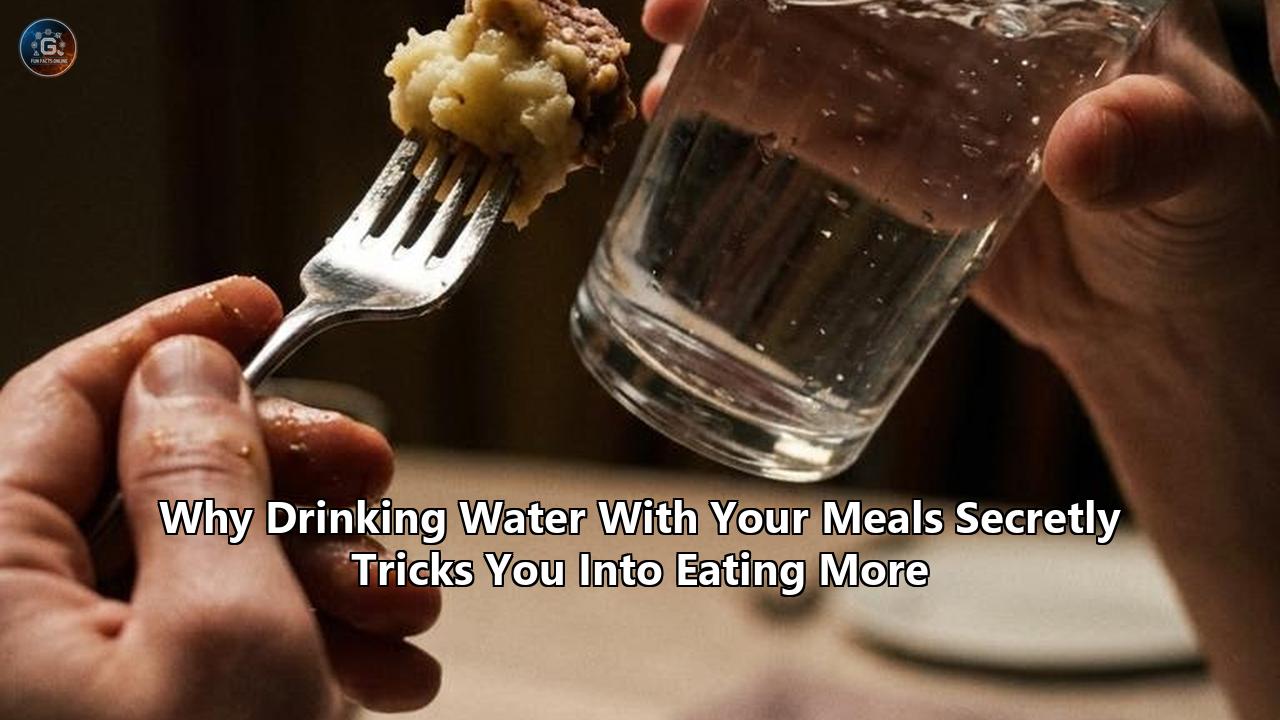
A tall glass of ice water sitting next to a dinner plate has long been one of the most widely repeated staples of weight-loss advice. The reasoning behind it seems mathematically elegant and physically intuitive: by filling the stomach with a non-caloric liquid during a meal, you will mechanically stretch the gastric walls, trigger early satiety signals, and leave far less room for calorie-dense food.
However, a clinical study published in the journal Appetite by researchers at Cornell University and Penn State University has completely upended this conventional wisdom. The findings suggest that this deeply ingrained habit may actually be pulling our biological levers in the opposite direction.
The research team, led by Paige Cunningham, an assistant professor in the Division of Nutritional Sciences at Cornell University, and her long-time collaborator John Hayes, a professor of food science at Penn State, discovered that drinking more water during a meal is strongly associated with a higher consumption of solid food and an increased overall caloric intake.
By analyzing detailed video records of eating behaviors across multiple laboratory lunch trials, the researchers uncovered a hidden physiological and sensory trap: drinking water while eating secretly tricks the brain and the digestive system, allowing people to eat larger quantities of food without even realizing it.
The Challenge: The Surprising Satiety Paradox
The Cornell-Penn State study pooled and meticulously analyzed behavioral data from 86 adult participants across 172 laboratory-controlled lunches. Subjects were served either a rich beef chili or a spiced chicken tikka masala, accompanied by a glass of water, and were allowed to eat as much as they wanted.
To capture every physiological and behavioral nuance, the researchers recorded every bite, chew, and sip on video. The quantitative results directly challenged classic dietary guidelines:
- Increased Caloric Intake: For every additional 100 grams of water (approximately 3.5 ounces) that participants drank during their meal, they ate roughly 39 more grams of food. This translated directly to an average increase of 49 extra calories per meal. Because water contains no calories, this entire energy surplus came straight off the food plate.
- The "Switching" Effect: The study highlighted a behavioral pattern termed "switching"—the act of alternating back and forth between taking a bite of food and taking a sip of water. Each individual switch between food and water was statistically linked to an additional 4.4 grams of food consumed during the lunch.
- The Satiety Disconnect: Perhaps the most alarming finding was that the water appeared to work exactly as promised on the psychological side. Participants who drank more water did indeed report feeling a greater sensation of fullness and satiety after lunch. Yet, despite feeling fuller, they still ate more.
The paper itself notes that these findings present a direct challenge to "the widespread dietary advice to drink water with meals to reduce food intake."
[Traditional Weight-Loss Belief]
Drink Water -> Stretches Stomach -> Triggers Fullness -> Eat Less Food

[The Scientific Reality (Cunningham & Hayes, 2026)]
Drink Water -> Cleanses Palate & Lubricates Food -> Delays Sensory Boredom & Speeds Swallowing -> Eat More Calories
This presents a serious challenge for public health and clinical weight management. If one of our primary tools for controlling portion sizes is secretly acting as a consumption accelerator, it means millions of well-intentioned dieters are inadvertently sabotaging their weight-loss efforts. To address this problem, we must first understand the biological, neurological, and physical mechanisms that make water such a powerful catalyst for overeating.
Why It Matters: The Neurological and Physiological Mechanisms
The reason drinking water while eating backfires so spectacularly lies at the intersection of taste neurology, gastric mechanics, and the physical properties of oral lubrication. When we consume liquids alongside solids, we disrupt the highly evolved biological feedback loops designed to tell our brains exactly when we have had enough.
1. The Neurological Trap: Sensory-Specific Satiety and Palate Cleansing
The primary driver behind the overeating observed in the Cornell-Penn State study is a neurological phenomenon known as sensory-specific satiety (SSS).
Sensory-specific satiety is the brain’s built-in mechanism to prevent nutritional deficiencies and encourage dietary variety. As you sit down and eat a specific food—such as beef chili—your sensory receptors (the taste buds on your tongue and the olfactory receptors in your nasal cavity) are repeatedly exposed to the same flavors, spices, fats, and textures. Over the course of several minutes, the brain’s reward center, primarily located in the orbitofrontal cortex, begins to desensitize to those specific sensory inputs.
As a result, the food's appeal naturally and steadily fades the longer you eat it. This sensory boredom is a powerful, non-conscious signal that tells you to stop eating. It is why you can feel completely stuffed and unable to take another bite of your main course, yet suddenly find yourself "hungry" again when a sweet dessert is placed in front of you.
When you introduce drinking water while eating, you accidentally hack this neurological defense mechanism. Water acts as a highly effective neutral rinse. Every time you take a sip, you wash away the lingering fats, spices, salts, and sugars coating your tongue, gums, and oral mucosa.
By clearing the palate, you reset your sensory threshold. When you take your next bite of chili, the brain experiences it not as the fifteenth bite of a repetitive meal, but as a fresh, highly rewarding taste experience. The water reintroduces sensory contrast, delaying the onset of sensory-specific satiety and keeping the food highly appealing for a much longer period.
This explains why the "switching" behavior was so strongly linked to overeating. By continuously alternating between bites and sips, participants were constantly refreshing their palates, preventing sensory adaptation, and artificially prolonging the pleasure of the meal.
[Sensory-Specific Satiety (No Water)]
Repetitive Bites -> Receptor Desensitization -> Brain Signals Boredom -> Early Stop

[Sipping Water Mid-Meal]
Bite -> Sip Water (Palate Cleansed) -> Next Bite Feels "New" -> Sensory Satiety Delayed -> Overeating
2. The Physical Mechanics: Why Water Fails to Keep the Stomach Stretched
The mechanical justification for drinking water with meals is that the added volume will stretch the stomach walls, activating mechanoreceptors that send satiety signals to the hypothalamus via the vagus nerve. While this makes intuitive sense, it completely ignores the complex physics of gastric transit.
The stomach is not a simple, passive balloon; it is a highly dynamic organ capable of sorting and processing different materials based on their physical properties and caloric densities. This process is governed by a physiological phenomenon known as gastric sieving.
When you consume a mixture of solids and liquids, your stomach does not keep them blended as a uniform, homogeneous paste. Instead, the gastric mucosa and the muscular contractions of the stomach wall quickly separate the liquid phase from the solid phase. Because plain water contains no calories, macronutrients, or complex structures, it does not trigger the chemical receptors in the duodenum (the first part of the small intestine) that release hormones to slow down gastric emptying.
As a result, water is cleared from the stomach with remarkable speed. Through the gastric canal (a pathway along the lesser curvature of the stomach), liquids can quickly bypass solid food boluses and drain out of the pyloric sphincter, often within 10 to 20 minutes of ingestion.
[The Process of Gastric Sieving]
Step 1: Ingestion of solid food and water together.
Step 2: Stomach identifies water as non-caloric and highly fluid.
Step 3: Gastric canal allows water to flow around the solid food mass.
Step 4: Water rapidly empties through the pyloric sphincter (10-20 mins).
Step 5: Concentrated, dense solid food remains, occupying less physical volume.
This rapid clearance means that while a large glass of water might create a very brief sensation of distension while you are actively swallowing, that volume is gone long before the digestive system can translate physical stretch into sustained, chemical satiety signals. The water drains away, leaving the dense, calorie-heavy solid foods behind to sit in the stomach, occupying far less volume than the combined solid-liquid mass did initially.
This explains the classic study conducted by pioneering satiety researcher Dr. Barbara Rolls at Penn State University. Dr. Rolls and her team compared three conditions:
- A chicken rice casserole served with a large glass of water.
- A chicken rice casserole served without water.
- A chicken rice soup made with the exact same ingredients and volume of water as the first condition.
The results were telling. Consuming the chicken rice casserole with a separate glass of water did absolutely nothing to increase satiety or reduce subsequent energy intake compared to eating the casserole alone. However, when the exact same volume of water was structurally incorporated into the food to create a soup, participants reported significantly higher fullness, reduced hunger, and ate 27% fewer calories at their next meal.
When water is structurally bound within a food matrix (as in a soup, stew, or high-water-content vegetable), the stomach cannot perform gastric sieving. The water and nutrients are locked together in a viscous emulsion that empties slowly, maintaining gastric distension and keeping stretch receptors active for hours. But when you drink water alongside dry food, the water slips past the solid barrier, draining rapidly and leaving you with a highly concentrated, energy-dense meal that fails to keep you full.
3. The Lubrication Acceleration: Bypassing the Oral Brake
A third critical factor identified by Cunningham is oral lubrication.
Saliva is not just a chemical digestant; it is the body's natural speed regulator for eating. Solid food must be thoroughly chewed and mixed with saliva to form a cohesive, lubricated mass (a bolus) before it can be safely swallowed. This mastication process is a vital component of the body’s metabolic signaling. The repetitive physical action of chewing sends rhythmic neural feedback to the satiety centers of the brain, while salivary amylase begins the chemical breakdown of carbohydrates, releasing simple sugars that trigger early metabolic signals.
When we practice drinking water while eating, we introduce an artificial lubricant that completely bypasses this natural oral brake. Instead of taking the time to chew a mouthful of food thirty times to produce enough saliva for a comfortable swallow, we chew it ten times, take a sip of water to wet the dry mass, and wash it down.
[Natural Oral Processing]
Solid Food -> Extensive Chewing -> Salivary Secretion -> Slow Ingestion -> Early Satiety Signals

[Water-Lubricated Processing]
Solid Food -> Minimal Chewing -> Sip of Water -> Rapid Swallow -> Accelerated Eating -> Delayed Satiety
This artificial lubrication accelerates our eating speed, allowing us to ingest food at a rate that far outruns our hormonal feedback loops. The gastrointestinal hormones that signal satiety—such as cholecystokinin (CCK), peptide YY (PYY), and glucagon-like peptide-1 (GLP-1)—are released by endocrine cells in the lower intestines when they detect the chemical presence of nutrients.
Because it takes roughly 15 to 20 minutes for these hormones to be synthesized, secreted, enter the bloodstream, and reach the hypothalamus, eating speed is one of the most critical determinants of overall caloric intake. By using water to lubricate our food and swallow it faster, we can easily pack in hundreds of extra, unnecessary calories before our physiological "brakes" have a chance to engage.
The "Fast Drinker" Paradox: An Unexpected Clue
While the Cornell-Penn State study shattered several dogmas, it also presented a highly surprising result that initially baffled the research team. While drinking more water overall and frequent sipping were tightly linked to eating more food, participants who drank their water faster during the meal actually ended up eating less.
Specifically, the data showed that every increase of 10 grams per minute in a participant's water-drinking rate was associated with eating 16.2 fewer grams of food and taking in about 20 fewer calories.
                 [THE WATER DRINKING PARADOX]

      Slow, Frequent Sipping             Rapid Gulping
     ------------------------       -----------------------
      * Cleanses the palate          * Rapid stomach expansion
      * Lubricates each bite         * Intense vagal stretch
      * Prolongs sensory appeal      * Shortens meal focus
      * Leads to: OVEREATING         * Leads to: UNDER-EATING
How can drinking more water make you eat more, while drinking water faster makes you eat less? The researchers offered this as an intriguing open question, but physiological science points to two highly plausible mechanisms:
Vagal Stretch Receptor Saturation
When water is sipped slowly and continuously throughout a meal, it trickles through the gastric canal and empties into the duodenum without ever causing a sudden change in pressure within the stomach.
However, when a large volume of water is gulped down rapidly, the sudden influx of liquid temporarily overwhelms the stomach's emptying capacity. This causes an immediate, high-intensity expansion of the proximal stomach (the fundus). This sharp, sudden stretch triggers an intense volley of sensory signals along the vagal nerve fibers directly to the nucleus of the solitary tract (NTS) in the brainstem.
Even though this water will still drain out of the stomach relatively quickly, the temporary peak in mechanical pressure is sharp enough to act as an immediate emergency brake on appetite, causing the individual to stop eating sooner.
Disruption of the Eating Rhythm
Slow, rhythmic sipping integrates seamlessly into the dining experience, acting as a pleasant palate cleanser that enhances and prolongs the enjoyment of the food.
Gulping water quickly, on the other hand, is a highly disruptive physical action. It breaks the sensory flow of the meal, shifts the individual's focus away from the flavors of the food, and can physically cut short the duration of the eating window. Because the meal ends sooner, the total volume of food consumed is lower.
This paradox highlights a critical nuance: it is not just what we put into our bodies that determines our metabolic responses, but how and when we consume it.
The Solution: A New Architecture for Mealtime Hydration
Now that science has exposed the hidden risks of drinking water while eating, how should we adapt our daily habits? Completely avoiding hydration around meals is neither practical nor healthy, as proper hydration is essential for cellular function, kidney health, and overall digestion.
Instead, metabolic experts, clinical nutritionists, and researchers are developing a structured, science-backed framework to help us redesign our mealtime hydration. By separating our liquid intake from our solid food consumption, we can preserve the health benefits of water without falling into the satiety traps of palate cleansing and accelerated chewing.
       ===============================================================
                       MEALTIME HYDRATION BLUEPRINT
       ===============================================================

       [T-30 Minutes]      [During the Meal]          [T+60 Minutes]
       --------------      -----------------          --------------
         Drink 500ml       Sip minimally (max 100ml)   Resume hydration
         cold water        No continuous "switching"  Supports digestion

       * Triggers early    * Forces slow chewing      * Helps nutrient
         stretch signals   * Maintains sensory satiety  absorption
       ===============================================================
1. The Pre-Loading Strategy: The 500ml "30-Minute" Rule
One of the most effective ways to use water as an appetite suppressant—without triggering the sensory traps of mid-meal drinking—is the pre-loading strategy.
Instead of placing a large glass of water on the table to drink with your food, you should consume approximately 500 milliliters (roughly 17 ounces) of water exactly 30 minutes before your meal begins.
Why it works:
Drinking a large volume of water 30 minutes before eating gives the liquid enough time to expand the stomach walls and trigger early, non-specific satiety signals via the vagal nerve. Because the water is consumed on an empty stomach, it passes through the pyloric sphincter and enters the duodenum within 20 to 30 minutes, well before the first bite of solid food is taken.
By the time you sit down to eat, your hydration needs are fully met, meaning you won't feel thirsty during the meal. More importantly, because the water has already cleared your stomach, it cannot act as an artificial lubricant or a palate cleanser while you are eating. This forces your body to rely on its natural salivary and chewing mechanisms, allowing sensory-specific satiety to take its course and naturally guide you to stop eating when full.
The Clinical Evidence:
A landmark 12-week clinical trial examined the efficacy of this pre-loading strategy in adults. The participants were divided into two groups: one group was instructed to drink 500ml of water 30 minutes before each of their three daily meals, while the control group was instructed to simply imagine that their stomachs were full before eating.
At the end of the 12 weeks, the pre-loading group had lost an average of 4.4 pounds (2 kg) more than the control group, demonstrating that drinking water before meals is an incredibly simple and highly effective weight-loss tool—whereas drinking water during meals can have the opposite effect.
2. The "30-60" Separation Protocol
To maximize digestive efficiency and prevent the physical acceleration of eating, clinical nutritionists are increasingly recommending the "30-60" Separation Protocol.
Step 1: Stop drinking all liquids 30 minutes before your meal.
Step 2: Keep your table completely dry—do not place water, soda, or any beverages on the table.
Step 3: If you absolutely must drink due to dry food or spice, limit your intake to small, targeted sips (no more than 3-4 ounces total).
Step 4: Wait at least 60 minutes after finishing your meal before resuming normal fluid intake.
The Physiological Benefits:
By keeping your dining table dry, you remove the temptation to constantly switch between bites and sips. This has several immediate positive effects on your digestive physiology:
- Slower Eating Speed: Without water to help wash down your food, you are forced to chew each bite thoroughly to generate sufficient saliva. This drastically slows your eating speed, allowing your gut hormones (CCK, PYY, GLP-1) to keep pace with your actual intake.
- Intact Sensory Satiety: Allowing the flavors and fats of the food to build up on your palate ensures that sensory-specific satiety occurs naturally. You will find that the food's appeal naturally declines after a reasonable portion, making it much easier to put the fork down.
- Enhanced Mastication: Thoroughly chewing your food reduces the workload on your stomach and small intestine, ensuring that nutrients are broken down more efficiently and absorbed more completely.
3. Transitioning to Structured Food Matrices (Eating Your Hydration)
As Dr. Barbara Rolls' research demonstrated, the physical state in which water is consumed is just as important as the water itself. To stay hydrated and promote lasting fullness, we should transition from drinking our water alongside dry meals to eating our hydration through structured food matrices.
Instead of serving a dry chicken breast with white rice and a glass of water, reconstruct the meal into a nutrient-dense, high-volume soup or stew.
               [TWO WAYS TO CONSUME WATER & FOOD]

     Dry Food + Glass of Water          Water Bound in Food Matrix
    ---------------------------        ----------------------------
     * Low viscosity                   * High viscosity emulsion
     * Rapid gastric sieving           * Delayed gastric emptying
     * Water bypasses the food         * Water & nutrients empty together
     * Low sustained fullness          * High, long-lasting satiety
By simmering the chicken, rice, and vegetables in a broth, you lock the water molecules into a thick, cohesive food matrix. When you consume this soup, your stomach is physically unable to separate the water from the solid nutrients.
The entire volume must be processed together, slowing gastric emptying, maintaining stomach distension, and keeping you full for hours after the meal is over.
Additionally, you can incorporate naturally water-rich whole foods into your diet. Vegetables such as cucumbers (96% water), zucchini (94% water), tomatoes (94% water), and broccoli (90% water) are packed with structured cellular water.
When you consume these foods, the water is released slowly as your digestive enzymes break down the plant cell walls, providing a steady, continuous release of hydration that supports metabolic health and steady satiety without ever clearing your palate or accelerating your eating speed.
4. Leveraging the "Spice Effect" to Slow Eating
In a fascinating parallel study published alongside the water research, Cunningham and her team measured the effect of spicy foods on overall consumption. They found that adding a moderate amount of spice (such as a spicy salsa) to a meal naturally slowed down eating speeds and significantly decreased the total volume of food consumed.
                 [THE HYDRO-SPICE RELATIONSHIP]

          Spicy Salsa                     Glass of Water
     ---------------------             --------------------
      * Activates TRPV1                 * Cleanses palate
      * Slows chewing pace              * Speeds swallowing
      * Limits portion size             * Increases intake
This "spice effect" works by mildly activating the TRPV1 receptors in the mouth, which detect thermal heat. This sensation naturally prompts the eater to take smaller bites, chew more slowly, and pause more frequently between mouthfuls.
If you struggle with eating too quickly, incorporating mild to moderate spices into your meals is an incredibly effective way to naturally slow your pace without needing to rely on a glass of water for lubrication. Just be sure to resist the urge to put out the fire with large gulps of water, as this will bring you right back to the palate-cleansing, consumption-boosting cycle.
Restructuring Your Meals: A Tactical Comparison
To make these scientific insights actionable, let's look at how a typical day of eating can be reorganized to move from an overeating-prone pattern to a highly structured, satiety-optimized protocol.
Scenario A: The High-Overeating Hydration Pattern (The Classic Trap)
- 7:30 AM: Breakfast of dry whole-wheat toast with peanut butter and a banana. You keep a 16-ounce glass of water on the counter, taking a large sip after every bite of sticky peanut butter to help wash it down.
Result: Artificial lubrication allows you to eat the toast in under three minutes. The water clears your palate, making every bite of peanut butter taste intensely rewarding, and you find yourself reaching for a second piece of toast.
- 12:30 PM: Lunch of dry turkey and cheese sandwich with baked potato chips. You drink a 20-ounce bottle of cold water throughout the meal, alternating bites of the dry bread with sips of water.
Result: The frequent "switching" delays sensory-specific satiety. You easily finish the entire sandwich and the bag of chips, feeling full immediately afterward but experiencing a sharp return of hunger by 2:30 PM as the water rapidly drains from your stomach.
- 6:30 PM: Dinner of grilled salmon, roasted broccoli, and dry brown rice. You drink two full glasses of water with the meal to "help fill you up."
Result: Gastric sieving separates the water, which empties quickly. The dry rice is easily swallowed with the help of the liquid, leading to a much larger portion size than your body actually requires.
Scenario B: The Satiety-Optimized Hydration Pattern (The Expert Protocol)
- 7:00 AM: You drink 500ml of cold water immediately upon waking, exactly 30 minutes before breakfast.
- 7:30 AM: Breakfast of whole-wheat toast with peanut butter and a banana. Your kitchen table is completely dry. You chew each bite of the rich peanut butter thoroughly, allowing your natural saliva to lubricate the food.
Result: Without water to wash it down, you eat much more slowly. Sensory-specific satiety kicks in after just one piece of toast, and you feel genuinely satisfied without needing a second portion.
- 12:00 PM: You drink 500ml of water, then wait 30 minutes.
- 12:30 PM: Lunch of a high-volume, hydrated vegetable and turkey soup. No separate beverages are on the table.
Result: Because the water is structurally bound within the soup matrix, your stomach empties slowly and evenly. You stay deeply hydrated and physically full well into the late afternoon.
- 6:00 PM: You drink a glass of water, then wait 30 minutes.
- 6:30 PM: Dinner of grilled salmon with a generous side of spicy cucumber salad (seasoned with chili flakes and vinegar) and steamed broccoli.
Result: The mild spice from the chili flakes activates your TRPV1 receptors, naturally slowing down your chewing pace. The water-rich cucumber and broccoli provide structured hydration. You finish the meal feeling deeply satisfied, and you wait until 7:30 PM to pour your evening glass of water.
Future Directions: Rewriting the Dietary Playbook
The discovery that drinking water while eating can drive overeating is a major shift that is forcing the nutritional and medical communities to re-evaluate their standard advice. As this research gains broader traction, we can expect to see significant changes in clinical guidelines, digital health platforms, and personalized weight-loss strategies.
1. Updating Digital Satiety Algorithms
Popular health and weight-loss applications, such as Noom, MyFitnessPal, and Lose It!, have long used simple hydration trackers that encourage users to meet their daily water targets by any means necessary—often prompting them to drink glasses of water specifically alongside their logged meals.
With these new findings, digital health platforms are beginning to update their behavioral algorithms. Future updates to these apps will likely include meal-timing alerts, prompting users to log and consume their water 30 minutes before their scheduled meals, while actively discouraging the logging of water consumed mid-meal.
By guiding users toward optimal hydration windows, these platforms can help dieters harness the true power of water without falling into the "switching" and palate-cleansing traps.
[Old App Advice]
"Log your water during lunch! Drink 2 glasses to help fill your stomach."

[New Science-Backed App Advice]
"Mealtime alert: Drink 500ml of water now, then wait 30 minutes to eat. Keep your table dry during lunch to prevent overeating!"
2. Clinical Adjustments for Metabolic Health
In clinical settings, metabolic specialists, bariatric doctors, and registered dietitians are beginning to integrate these findings into their standard care protocols. For patients struggling with chronic overeating, emotional eating, or severe obesity, addressing how they drink water is often far easier and less restrictive than forcing immediate, drastic cuts to their caloric intake.
By simply prescribing the "30-60" Separation Protocol, clinicians can help patients naturally reduce their meal sizes, slow down their eating speed, and re-establish a healthy relationship with their body's internal satiety signals.
This protocol is especially crucial for patients recovering from bariatric surgery, such as gastric bypass or sleeve gastrectomy, where the physical size of the stomach is severely limited. For these individuals, drinking water with meals can cause severe discomfort, rapid dumping syndrome, or paradoxically stretch the surgically altered stomach pouch over time.
3. Emerging Areas of Research
While the Cornell-Penn State study has provided clear, actionable answers, it has also opened up several incredibly exciting avenues for future metabolic research. Some of the key questions that scientists are currently investigating include:
- The Impact of Carbonation: How does sparkling water or carbonated water affect sensory-specific satiety and eating speed compared to still water? Carbon dioxide gas can physically expand the stomach walls much faster, but it also alters the pH of the mouth and introduces a highly distinct tactile sensation that may affect palate cleansing in entirely different ways.
- Temperature Effects: Does the temperature of the water make a difference? Ice-cold water has a mild numbing effect on taste buds, which could theoretically delay sensory-specific satiety even more than room-temperature water. Warm teas or broths, on the other hand, may have different lubricating properties and gastric emptying rates.
- Individual Microbiome and Motility Profiles: How do these findings vary based on individual gut health? People with naturally slower gastric motility (such as those with mild gastroparesis) or altered gut microbiomes may experience different gastric emptying rates and hormonal feedback loops when combining solids and liquids.
Summary of Clinical Guidelines
To help you easily apply these findings to your daily life, here is a quick reference guide to the dos and don'ts of healthy hydration:
| Instead of... | Try... | The Biological Reason |
|---|---|---|
| Keeping a large glass of water on the dining table. | Drinking 500ml of cold water exactly 30 minutes before eating. | Pre-loading stretches the stomach but clears out before food arrives, avoiding palate cleansing. |
| Sipping water continuously to wash down dry food. | Chewing food thoroughly to allow natural saliva to lubricate each bite. | Natural mastication slows eating speeds and allows gut satiety hormones to keep pace. |
| Alternating frequently between bites of food and sips of water. | Keeping your mealtime "dry" and waiting 60 minutes after eating to hydrate. | Preventing the "switching" effect preserves sensory-specific satiety, making you stop when full. |
| Consuming dry, dense meals with a side beverage. | Incorporating water directly into your meals via soups, stews, and water-rich vegetables. | Structurally bound water prevents gastric sieving, slowing gastric emptying and prolonging fullness. |
A New Relationship with the Dinner Table
For generations, the advice to drink water with meals has been repeated as an unquestioned truth in the world of health and wellness. It was a simple, well-intentioned rule born from a basic mechanical view of the human body: fill the container with water, and there is less room for anything else.
But as the research from Cornell and Penn State beautifully demonstrates, the human body is not a simple, passive container. It is a highly complex, dynamic, and adaptive biological system governed by intricate chemical, neurological, and physical feedback loops.
By treating our digestive systems with the scientific respect they deserve, we can move past outdated myths and build a far more effective, intuitive relationship with our food. The next time you sit down to enjoy a meal, leave the water glass in the kitchen. Trust your teeth to chew, your saliva to lubricate, and your brain to tell you exactly when you have had enough.
References
- Cunningham, P., & Hayes, J. (2026). "Mealtime behaviors and food properties: The impact of water co-ingestion and sensory-specific satiety on total energy intake." Appetite, July 2026.
- Rolls, B. J., et al. (1999). "Water incorporated into a food but not water served as a beverage affects satiety in lean women." The American Journal of Clinical Nutrition, 70(4), 448–455.
- Lappalainen, R., et al. (1993). "Drinking water with a meal: a simple method of coping with feelings of hunger, satiety and desire to eat." European Journal of Clinical Nutrition, 47(11), 815-819.
- Dennis, E. A., et al. (2010). "Water consumption increases weight loss during a hypocaloric diet intervention in middle-aged and older adults." Obesity, 18(2), 300–307.
- Marciani, L., et al. (2001). "Effect of meal viscosity and nutrients on satiety, intragastric dilution, and gastric emptying assessed by MRI." American Journal of Physiology-Gastrointestinal and Liver Physiology, 280(6), G1227-G1233.
Reference:
- https://studyfinds.com/drinking-water-with-meals-might-make-you-eat-more-not-less/
- https://news.cornell.edu/stories/2026/07/common-diet-tips-about-water-intake-and-spicy-foods-could-be-dead-wrong
- https://www.reddit.com/r/science/comments/1uz0txg/common_rationale_for_drinking_water_at_meals_is/
- https://redbloom.co/blogs/research/hydration-timing-when-to-drink-water-for-better-digestion
- https://pubmed.ncbi.nlm.nih.gov/10500012/
- https://clinicaromero.com/health_and_wellness/does-drinking-water-during-meals-affect-digestion-what-science-says/
- https://pmc.ncbi.nlm.nih.gov/articles/PMC6209729/
- https://www.healthline.com/nutrition/drinking-with-meals
- https://pubmed.ncbi.nlm.nih.gov/8287852/