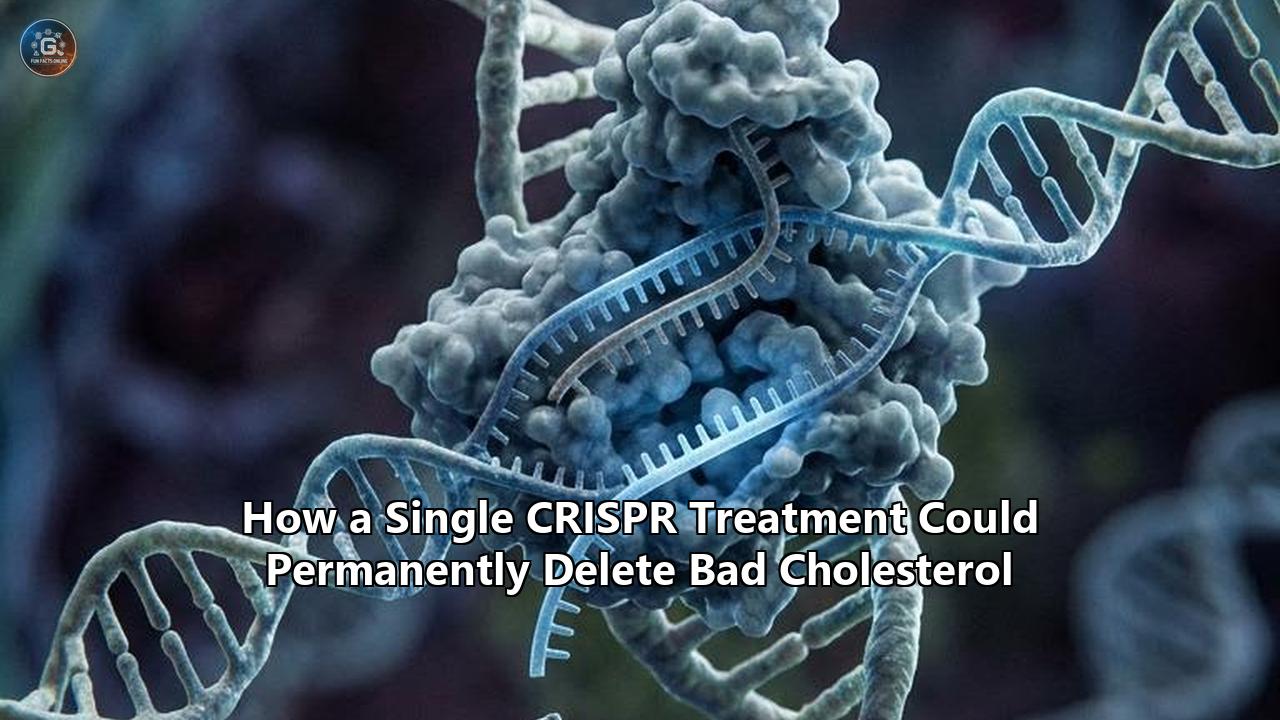
Clinical investigators have presented data confirming that a single intravenous infusion of an in vivo gene-editing medicine can permanently switch off a cholesterol-producing gene in human liver cells. In clinical trial results published in the New England Journal of Medicine and presented at the European Atherosclerosis Society Congress, an experimental base-editing therapy designated VERVE-102 slashed circulating levels of low-density lipoprotein cholesterol (LDL-C)—commonly known as "bad" cholesterol—by up to 62% in patients with severe inherited cardiovascular risk. The treatment also suppressed blood levels of the target disease protein, PCSK9, by as much as 88%.
The data marks a major transition in modern medicine. Until recently, CRISPR and related genomic technologies were restricted to ex vivo therapies for rare, catastrophic disorders like sickle cell disease, where patient cells are extracted, genetically altered in a cleanroom, and re-infused after intensive chemotherapy. This clinical milestone demonstrates that a CRISPR cholesterol treatment can be delivered directly into the human bloodstream via a routine four-hour outpatient infusion to treat a widespread chronic condition.
Atherosclerotic cardiovascular disease remains the leading cause of death worldwide, claiming roughly 18 million lives each year. For more than three decades, clinical management has relied entirely on chronic intervention: asking millions of patients to take daily statin tablets or undergo bi-weekly to bi-monthly biologic injections for forty or fifty continuous years.
VERVE-102, developed by Verve Therapeutics in collaboration with Eli Lilly, replaces that decades-long maintenance burden with a single-course genetic modification. By physically altering a single chemical base pair inside the DNA of hepatocytes (liver cells), the treatment deactivates the PCSK9 gene permanently.
"We know that a key driver of cardiovascular disease is high LDL cholesterol, and the key to reducing cardiovascular events is to keep LDL as low as possible for as long as possible," said Dr. Scott Vafai, chief medical officer of the program. "The current treatment model relies on chronically administered therapies for which real-world efficacy is limited by high discontinuation rates. This data demonstrates that a one-time therapy to durably lower LDL is possible in humans."
Understanding how this treatment functions requires examining four interconnected layers: the genetic anomaly that inspired it, the sub-microscopic molecular editing machinery that executes it, the nanoparticle vehicle that delivers it to the liver, and the health economics required to make a one-time genetic therapy viable for the global population.
The Clinical Trial Results: Heart-1 and Heart-2
The clinical validation of hepatic base editing unfolded across two sequential clinical trials: the initial Heart-1 phase 1b study and the subsequent Heart-2 trial.
The trials enrolled patients suffering from heterozygous familial hypercholesterolemia (HeFH) or premature coronary artery disease. Patients with HeFH inherit a mutated gene from one parent that disables their natural clearance of LDL cholesterol, resulting in circulating LDL-C levels often two to four times higher than normal from birth. Left untreated, these patients frequently suffer heart attacks in their thirties or forties.
                  HEART-2 PHASE 1b DOSE ESCALATION
─────────────────────────────────────────────────────────────────
 Cohort Dose (mg/kg)   Mean PCSK9 Reduction   Mean LDL-C Reduction
─────────────────────────────────────────────────────────────────
 0.30 mg/kg                   -51%                    -9%
 0.45 mg/kg                   -53%                   -44%
 0.60 mg/kg                   -60%                   -51%
 1.00 mg/kg                   -88%                   -62% (Max: -69%)
─────────────────────────────────────────────────────────────────
 Duration: Reductions sustained past 18 months of ongoing follow-up.
In the Heart-2 trial, 35 participants were administered a single intravenous infusion across six ascending dose cohorts ranging from 0.3 mg/kg to 1.0 mg/kg. The clinical endpoints demonstrated clear dose dependency:
- At the sub-therapeutic starting dose (0.3 mg/kg), PCSK9 protein dropped by an average of 51%, while LDL-C declined by 9%.
- At the therapeutic target doses (0.6 mg/kg to 1.0 mg/kg), circulating PCSK9 protein dropped by 60% to 88%.
- Circulating LDL-C fell by an average of 51% to 62%, with individual patients experiencing maximum LDL-C reductions of 69%.
- Patients who received a total RNA dose exceeding 50 milligrams achieved an average LDL-C reduction of 59%.
Crucially, this reduction was not transient. Longitudinal blood samples taken at one month, six months, twelve months, and eighteen months post-infusion showed that the drop in LDL-C remained stable, showing zero therapeutic drift or rebound. The edit had integrated permanently into the genome of the patients' hepatocytes.
The initial Heart-1 study using an earlier prototype (VERVE-101) ran into safety concerns when high doses triggered transient liver enzyme spikes and two serious cardiovascular events in patients with advanced underlying atherosclerosis, prompting the development of VERVE-102.
The updated VERVE-102 formulation demonstrated a drastically improved safety profile. Adverse reactions were limited to mild, temporary infusion reactions and fatigue, with no treatment-related serious adverse events, no dose-limiting toxicities, and no clinically significant shifts in liver transaminases (ALT/AST) or platelet counts.
The Biological Target: Why PCSK9 Controls Bad Cholesterol
To understand why turning off a single gene can clean the bloodstream of arterial plaque, one must look at how the human liver regulates lipid metabolism.
Cholesterol does not dissolve in water. To travel through the bloodstream, it must be packaged into spherical capsules composed of lipids and proteins called lipoproteins. Low-density lipoprotein (LDL) carries cholesterol from the liver to peripheral tissues. When LDL particles exist in excess, they penetrate the delicate endothelial lining of coronary arteries. Once trapped inside the vessel wall, they oxidize, triggering an inflammatory cascade:
- Endothelial Infiltration: Excess LDL particles pass into the sub-endothelial space of coronary arteries.
- Macrophage Recruitment: White blood cells enter the vessel wall to consume the oxidized lipids.
- Foam Cell Formation: Overloaded macrophages transform into foam cells, forming a fatty streak.
- Plaque Rupture and Thrombosis: The fatty core calcifies, hardens, and eventually ruptures, triggering a blood clot that blocks blood flow to the heart muscle, causing a myocardial infarction.
       NORMAL LIVER CELL                  EDITED LIVER CELL (VERVE-102)
   ┌───────────────────────┐            ┌───────────────────────┐
   │                       │            │                       │
   │  LDLR ──► Catches LDL │            │  LDLR ──► Catches LDL │
   │   ▲          │        │            │   ▲          │        │
   │   │          ▼        │            │   │          ▼        │
   │ Recycles  Lysosome    │            │ Recycles  Lysosome    │
   │ (150x)   Destroys LDL │            │ (150x)   Destroys LDL │
   │                       │            │                       │
   │  PCSK9 Protein        │            │  PCSK9 Gene INACTIVE  │
   │   │                   │            │  (No PCSK9 protein    │
   │   ▼                   │            │   to destroy LDLR)    │
   │ Binds LDLR ──► Both   │            │                       │
   │                Destroyed           │  ► Maximum LDLRs stay │
   │                in Lysosome         │    on surface to clear│
   │                                    │    blood cholesterol  │
   └───────────────────────┘            └───────────────────────┘
The liver acts as the central vacuum cleaner for these dangerous particles. Hepatocytes display thousands of specialized docking stations called Low-Density Lipoprotein Receptors (LDLR) on their outer surfaces. When an LDL particle flows past, an LDLR binds to it, pulls it inside the cell via endocytosis, and routes it to an internal digestive organelle called the lysosome, where the cholesterol is broken down. The receptor then detaches unharmed, cycles back to the cell surface, and repeats this clearing process up to 150 times.
The biological spoiler in this system is an enzyme called PCSK9 (proprotein convertase subtilisin/kexin type 9).
Manufactured inside the liver and secreted into the blood, PCSK9 locks onto the LDL receptor while it is holding an LDL particle. This lock prevents the receptor from safely untangling inside the endosome. Instead of returning to the surface to clear more cholesterol, the entire LDLR-PCSK9 complex is dragged into the lysosome and destroyed.
The more PCSK9 protein a person makes, the fewer LDL receptors survive on their liver cells, and the higher their blood cholesterol climbs.
The Human Genetic Discovery
The validation of PCSK9 as a clinical target did not originate in a laboratory dish; it was discovered through human genetics.
In the early 2000s, geneticists Dr. Helen Hobbs and Dr. Jonathan Cohen at the University of Texas Southwestern Medical Center sequenced the DNA of thousands of individuals from diverse populations. They made an unexpected discovery: roughly 2% to 3% of individuals carried natural "loss-of-function" nonsense mutations in their PCSK9 gene. Because one copy of the gene was broken, their livers produced half the normal amount of PCSK9 protein.
These individuals had lifelong LDL-C levels that were 30% to 40% lower than the general population—ranging between 20 and 50 mg/dL, compared to typical adult levels of 120 to 160 mg/dL. Over an entire lifetime, this reduction translated into an 88% reduction in coronary heart disease risk.
Even more remarkably, individuals who inherited two broken copies of PCSK9 produced zero PCSK9 protein, had near-zero LDL cholesterol, and lived long, healthy lives with normal fertility and cognition.
Nature had run the experiment: disabling PCSK9 in the human body is completely safe and confers lifelong protection against heart disease.
How Base Editing Rewrites the Code Without Double-Strand Breaks
When the original CRISPR-Cas9 technology emerged, it operated like molecular scissors. The Cas9 enzyme used a guide RNA to locate a 20-letter sequence of DNA and cut clean through both strands of the double helix.
While effective at knocking out genes, creating a double-strand break (DSB) inside a living human presents notable risks:
- Indel Chaos: When a cell repairs a severed double strand using non-homologous end joining (NHEJ), it randomly inserts or deletes random nucleotides (indels), creating unpredictable genomic errors.
- Chromosomal Translocations: If Cas9 cuts multiple sites in the genome simultaneously, loose DNA ends can swap places, fusing chromosomes together and creating a potential oncogenic risk.
- p53 Activation: Double-strand breaks alert the cell's master tumor-suppressor protein, p53, which can trigger cell death or accidentally select for pre-cancerous cells that have defective p53 pathways.
TRADITIONAL CRISPR-Cas9 (Double-Strand Cut)
DNA Strand:   5' ─── G A T C [ CUT ] A T T C ─── 3'
DNA Strand:   3' ─── C T A G [ CUT ] T A A G ─── 5'
                       │
                       ▼
              Indels, Translocations, DNA Damage Response

─────────────────────────────────────────────────────────────

CRISPR BASE EDITING (Single-Letter Rewrite)
DNA Strand:   5' ─── G A T C ─── [ A ➔ G ] ─── A T T C ─── 3'  (No DSB)
DNA Strand:   3' ─── C T A G ─── [ T ➔ C ] ─── T A A G ─── 5'  (Nick Only)
                       │
                       ▼
            Clean, Precise Chemical Conversion
To eliminate these hazards, researchers adapted the technology into Base Editing, invented in 2016 by a research team led by Dr. David Liu at Harvard University and the Broad Institute.
Instead of cutting the DNA duplex, a base editor works like a molecular pencil. It fuses two distinct biological components into a single engineered machine:
- A Cas9 Nickase (nCas9): A mutated version of the Cas9 protein that has had one of its two cutting blades disabled. It unwinds the DNA helix and nicks only one strand, leaving the structural backbone intact.
- An Adenosine Deaminase Enzyme: An evolutionarily evolved enzyme attached to the tail of the Cas9 nickase. Once the guide RNA matches the target sequence in the PCSK9 gene, the deaminase physically grips an individual Adenine (A) nucleotide and chemically removes an amino group ($NH_2$), converting Adenine into Inosine (I).
The cell's internal replication machinery reads Inosine as Guanine (G). When the nicked strand is repaired, the cell naturally converts the original Adenine-Thymine (A-T) base pair into a permanent Guanine-Cytosine (G-C) base pair.
The Precise Edit Inside the Liver
In the VERVE-102 CRISPR cholesterol treatment, the guide RNA steers the base editor to a non-coding region at the start of intron 1 within the PCSK9 gene in hepatocytes.
The editor changes an "A" to a "G" at the specific splice donor site. When the liver cell transcribes the gene into messenger RNA, the splicing machinery fails to recognize where the coding region ends and the non-coding region begins. The resulting abnormal transcript cannot be translated into a functional protein and is quickly shredded by the cell's quality control systems.
Because no double-strand break is introduced, deep sequencing assays show undetectable levels of chromosomal translocations or large genomic deletions. The edit occurs in up to 70% of hepatocytes, permanently silencing the liver's ability to produce the PCSK9 protein while leaving the rest of the genome untouched.
Delivery: Using GalNAc-Decorated Lipid Nanoparticles to Target the Liver
The most sophisticated gene editor is useless if it cannot travel from an IV bag through the human circulatory system, pass through tissue barriers, and enter the nucleus of a liver cell without getting destroyed by the immune system or accumulating in unintended organs like the lungs, brain, or heart.
To solve this delivery challenge, the therapy avoids using viral vectors such as Adeno-Associated Viruses (AAV). While AAVs are widely used in early gene therapies, they come with substantial drawbacks: they can trigger intense neutralizing antibody reactions that prevent re-dosing, they can integrate randomly into the host genome, and their persistent expression leaves gene-editing scissors active inside cells for years, increasing long-term off-target risks.
Instead, VERVE-102 uses synthetic Lipid Nanoparticles (LNPs)—microscopic spherical fat capsules engineered to carry nucleic acid payloads.
                     LIPID NANOPARTICLE (LNP)
               ┌───────────────────────────────────┐
               │    GalNAc Targeting Ligands       │
               │         \       /                 │
               │        ┌─────────┐                │
               │   ┌────┤ Lipid   ├────┐           │
               │   │    │ Bilayer │    │           │
               │   │    └─────────┘    │           │
               │   │                   │           │
               │   │  INTERNAL PAYLOAD │           │
               │   │  • Base Editor    │           │
               │   │    mRNA           │           │
               │   │  • PCSK9-Targeted │           │
               │   │    Guide RNA      │           │
               │   └───────────────────┘           │
               │                                   │
               └───────────────────────────────────┘
                                 │
                                 ▼
                     HEPATOCYTE UPTAKE PATHWAY
      ┌─────────────────────────────────────────────────────────┐
      │ 1. GalNAc binds Asialoglycoprotein Receptors (ASGPR)    │
      │ 2. Rapid Endocytosis takes LNP into the liver cell      │
      │ 3. pH shift inside Endosome releases mRNA & Guide RNA   │
      │ 4. Cytoplasmic Ribosomes translate Base Editor protein  │
      │ 5. Base Editor enters Nucleus ➔ Rewrites PCSK9 (A ➔ G)  │
      │ 6. LNP & mRNA cleared from body within 24–48 hours      │
      └─────────────────────────────────────────────────────────┘
The internal core of each nanoparticle houses two distinct synthetic RNA molecules:
- Messenger RNA (mRNA): Instructions that tell the patient's own cellular ribosomes how to build the adenine base editor protein.
- Single Guide RNA (sgRNA): The navigation blueprint that guides the assembled base editor directly to the PCSK9 locus.
The GalNAc Targeting Mechanism
The critical engineering distinction between VERVE-101 and the upgraded VERVE-102 lies in the surface chemistry of the nanoparticle.
Standard LNPs rely on passive targeting: once infused, they absorb a blood protein called Apolipoprotein E (ApoE), which then directs the particle to LDL receptors on liver cells. However, in patients with HeFH, functional LDL receptors are sparse or defective. This caused early-generation LNPs to circulate longer than intended, triggering immune reactions in non-target tissues.
To bypass this hurdle, VERVE-102 decorates the outer surface of each lipid capsule with N-acetylgalactosamine (GalNAc) ligands.
GalNAc is a sugar molecule that binds with ultra-high affinity to the Asialoglycoprotein Receptor (ASGPR), a receptor found in immense concentrations exclusively on human hepatocytes.
When the GalNAc-LNP flows through the hepatic sinusoids, it acts like a guided missile:
- Receptor Engagement: GalNAc binds immediately to ASGPR on the hepatocyte surface.
- Endosomal Internalization: The liver cell engulfs the nanoparticle into an endosome.
- Ionizable Lipid Fusion: As the endosome acidifies, the ionizable lipids within the nanoparticle change charge, destabilizing the endosomal membrane and releasing the mRNA and guide RNA into the cytoplasm.
- Transient Translation: Liver ribosomes translate the mRNA into base editor proteins within hours.
- Nuclear Execution: The base editors migrate into the cell nucleus, locate the PCSK9 gene via the guide RNA, execute the single-letter chemical change, and exit.
- Complete Clearance: Within 24 to 48 hours, cellular proteases and nucleases completely degrade the mRNA, guide RNA, and base editor proteins. The delivery lipids are metabolized and cleared by the body, leaving behind a permanently modified genome but zero residual synthetic chemistry.
Because the editing machinery is expressed for less than two days, the base editor does not linger in the cell to make off-target edits over time. The medicine acts like a transient software patch that edits the hardware and immediately vanishes.
The Statin Paradox: Why Daily Pills Fail to Prevent Heart Disease
To appreciate why a permanent genetic intervention is necessary, one must look at the real-world performance of existing cholesterol treatments.
Cardiologists already possess an array of cholesterol-lowering medications:
- Statins (Atorvastatin, Rosuvastatin): Inhibit HMG-CoA reductase, the rate-limiting enzyme in cholesterol synthesis, lowering LDL-C by 30% to 50%.
- Ezetimibe: Inhibits the NPC1L1 transporter in the intestine to block dietary cholesterol absorption, lowering LDL-C by an additional 15% to 20%.
- Monoclonal PCSK9 Antibodies (Evolocumab/Repatha, Alirocumab/Praluent): Large biologic proteins injected subcutaneously every two to four weeks that bind circulating PCSK9, lowering LDL-C by 50% to 60%.
- siRNA Therapies (Inclisiran/Leqvio): Small interfering RNA injected twice yearly in a clinic to degrade PCSK9 mRNA inside the liver.
─────────────────────────────────────────────────────────────────────────────
Therapy Class    Mechanism            Dosing Schedule         Real-World 1-Yr
                                                              Discontinuation
─────────────────────────────────────────────────────────────────────────────
Statins          HMG-CoA Reductase    Daily oral pill         50% – 60%
                 Inhibitor

Ezetimibe        NPC1L1 Transport     Daily oral pill         40% – 50%
                 Blocker

PCSK9 mAbs       Neutralizing         Subcutaneous injection  30% – 45%
(Repatha)        Antibodies           every 2 to 4 weeks

siRNA            PCSK9 mRNA           Subcutaneous injection  15% – 25%
(Inclisiran)     Cleavage             every 6 months

Base Editing     Single-Letter Intron Single 4-hour IV        0% (One-and-done
(VERVE-102)      A➔G Splice Mutation  Infusion (Permanent)    permanent edit)
─────────────────────────────────────────────────────────────────────────────
Despite the availability of these therapies, coronary heart disease remains pervasive. The reason is the chronic care compliance failure.
Clinical registry data consistently reveals that over 50% of patients prescribed daily statins discontinue taking their medication within twelve months. The drop-off is driven by real and perceived side effects (such as muscle aches and joint pain), pill fatigue, cost, loss of health insurance, or the psychological disconnect of taking a pill every day for a silent, asymptomatic condition.
Injectable PCSK9 antibodies face similar real-world hurdles: they require lifelong cold-chain refrigeration, recurrent pharmacy authorizations, and perpetual injections. Discontinuation rates exceed 30% within the first two years.
The Lifetime Cumulative Exposure Model
Cardiovascular risk is not determined by a snapshot of your cholesterol levels today; it is dictated by cumulative lifetime exposure—a metric cardiologists quantify as "gram-years" or "cholesterol-years," directly analogous to pack-years of smoking.
CUMULATIVE LIFETIME LDL EXPOSURE (Atherosclerosis Plaque Threshold)
LDL (mg/dL)
 200 ┼                                      /  Critical Plaque
     │                                     /   Rupture Threshold
 150 ┼                      /─────────────/ ◄─ Chronic Pills
     │                     / (Poor Adherence)  (Fluctuating Control)
 100 ┼                    /
     │                   /
  50 ┼──────────────────/ ◄─────────────────── Single Base Edit
     │ (Lifelong low flat curve)               (VERVE-102 at age 35)
   0 ┴────────┬─────────┬─────────┬─────────┬─────────
     0       20        40        60        80  Age (Years)
A patient who maintains an LDL-C level of 150 mg/dL for fifty years accumulates $150 \times 50 = 7,500$ mg-years of vascular exposure, pushing them past the threshold where calcified plaques rupture and cause a heart attack.
If a patient begins taking a statin at age 50, they lower their LDL-C, but they cannot erase the thirty years of vascular damage already accumulated. If they stop taking the statin at age 53 due to muscle soreness, their LDL-C bounces straight back to 150 mg/dL, and plaque accumulation accelerates.
A one-time CRISPR cholesterol treatment administered early in adulthood flattens the lifetime exposure curve permanently. By reducing LDL-C from 150 mg/dL down to 50 mg/dL in a single afternoon, the patient never reaches the critical cumulative plaque threshold over their entire lifespan.
Health Economics: Can Healthcare Systems Afford a One-and-Done Cure?
The arrival of in vivo gene editing presents a profound pricing and structural challenge for insurance companies, national health programs, and biopharmaceutical companies.
Gene therapies approved to date have focused on ultra-rare monogenic diseases. Bluebird Bio’s Zynteglo for beta-thalassemia was launched at $2.8 million; Vertex and CRISPR Therapeutics’ Casgevy for sickle cell disease debuted at $2.2 million; CSL Behring’s Hemgenix for hemophilia B reached $3.5 million.
These multi-million-dollar price tags are sustainable only because the target patient populations are tiny—numbering in the hundreds or low thousands per year.
Cardiovascular disease, by contrast, is a mass-market condition:
- In the United States alone, over 1.3 million people suffer from heterozygous familial hypercholesterolemia.
- More than 20 million Americans have established atherosclerotic cardiovascular disease and fail to reach target cholesterol levels despite maximal statin therapy.
- Globally, hundreds of millions of individuals carry elevated cardiovascular risk.
If a pharmaceutical company priced a CRISPR cholesterol treatment at $2 million, it would bankrupt global healthcare systems overnight.
PROJECTED LIFETIME HEALTHCARE COSTS (Per High-Risk HeFH Patient)
─────────────────────────────────────────────────────────────────
Cost Component               30-Year Chronic Care    One-Time Gene Edit
─────────────────────────────────────────────────────────────────
Daily High-Dose Statins             $7,200                  $0
Monthly PCSK9 mAbs ($5,800/yr)    $174,000                  $0
Cardiologist Visits / Lipids       $24,000               $6,000
Coronary Angiography (x3)          $36,000               $12,000
Percutaneous Stenting (x2)         $64,000                  $0
Emergency CABG Bypass (x1)         $95,000                  $0
Post-MI Cardiac Rehab              $18,000                  $0
Single Gene-Editing Infusion            $0          $35,000 – $50,000
─────────────────────────────────────────────────────────────────
ESTIMATED TOTAL EXPENSE           $418,200          $53,000 – $68,000
─────────────────────────────────────────────────────────────────
NET SYSTEM SAVINGS PER PATIENT:             ~$350,000
The New Pricing Framework
Health economists and Wall Street analysts project that in vivo therapies for broad cardiometabolic diseases will adopt a pricing structure closer to advanced interventional procedures (such as open-heart coronary bypass surgery or transcatheter aortic valve replacement) rather than rare-disease gene therapy:
- Initial Launch Pricing for Severe Indications (HeFH): Expected between $30,000 and $60,000 as a single upfront cost.
- Offsetting Multi-Decade Drug Costs: Over a 30-year span, brand-name PCSK9 biologic injections cost approximately $170,000 to $200,000 per patient, excluding the hundreds of thousands of dollars spent treating breakthrough heart attacks, stent placements, and emergency hospitalizations.
- Amortized Annuity Models: Payers and health systems are developing installment-based reimbursement structures where the cost of the single infusion is spread over five to ten years, contingent upon continued clinical durability documented in longitudinal health registries.
Large pharmaceutical backing—such as Eli Lilly’s heavy financial commitment to the Verve base-editing program—signals that the biopharma industry is preparing for a high-volume, lower-margin commercial model that can manufacture mRNA-LNP treatments at global industrial scale, leveraging the manufacturing infrastructure established during the COVID-19 pandemic.
Safety, Durability, and Regulatory Hurdles
Despite the impressive clinical efficacy, permanently rewriting the human genome inside a living organ raises critical biological questions that regulatory agencies like the U.S. FDA and European Medicines Agency (EMA) are monitoring closely.
                     PRIMARY CLINICAL & SAFETY CONCERNS
┌─────────────────────────────────────────────────────────────────────────────┐
│ 1. PERMANENCE & IRREVERSIBILITY                                             │
│    Once an A➔G base edit is made, it cannot be reversed. Any late-emerging   │
│    toxicity or unintended long-term biological consequence is permanent.    │
├─────────────────────────────────────────────────────────────────────────────┤
│ 2. OFF-TARGET GENOME EDITING                                                │
│    The risk that the guide RNA directs the base editor to an unintended     │
│    locus elsewhere in the genome, potentially damaging a tumor-suppressor.  │
├─────────────────────────────────────────────────────────────────────────────┤
│ 3. GERMLINE LEAKAGE                                                         │
│    Ensuring lipid nanoparticles do not enter gonadal tissue (testes/ovaries)│
│    and inadvertently edit sperm or egg cells, altering future generations.  │
├─────────────────────────────────────────────────────────────────────────────┤
│ 4. CELLULAR REGENERATION & DURABILITY                                       │
│    Evaluating whether hepatocytes shedding and turning over across decades  │
│    could dilute the proportion of edited liver cells over time.             │
└─────────────────────────────────────────────────────────────────────────────┘
1. The Permanence Dilemma
The single greatest asset of gene editing is also its greatest clinical risk: you cannot "un-swallow" an edit.
If a patient takes a daily statin or a monthly antibody and develops an adverse reaction, the physician simply halts the drug, and circulating biological chemistry returns to baseline within days. With a base-editing therapy, the chemical bond is permanent. If unexpected long-term immunological or metabolic consequences arise a decade later, the modified DNA cannot be recalled.
To address this, regulatory bodies require clinical trial sponsors to monitor treated patients through mandatory 15-year safety registries to track long-term survival, hepatic function, and potential oncogenic events.
2. Off-Target Mutagenesis
What happens if the base editor binds to a genetic sequence that looks nearly identical to PCSK9 somewhere else in the 3-billion-letter human genome?
If an adenine base editor accidentally deactivates a critical tumor-suppressor gene (such as TP53 or BRCA1), it could elevate cancer risk.
To evaluate this risk, researchers deploy high-throughput genomic assays:
- GUIDE-seq and CIRCLE-seq: In vitro molecular assays that identify every theoretical genomic site where the guide RNA might cross-react.
- Deep Targeted Sequencing: Profiling hundreds of candidate off-target genomic loci across millions of treated human cells.
In preclinical and clinical validation studies of VERVE-102, whole-genome sequencing demonstrated zero detectable off-target editing above background sequencing error rates (typically $<0.1\%$). The high specificity of the modern adenine base editor, combined with the fact that the enzyme is degraded within 48 hours of infusion, minimizes the risk of unintended genomic edits.
3. Germline Transmission
The FDA placed a temporary clinical hold on early base-editing trials until developers proved conclusively that the lipid nanoparticles could not migrate to reproductive organs and edit germline cells (sperm or eggs).
Altering somatic liver cells treats an individual patient; altering germline DNA would introduce permanent, heritable genetic modifications into future generations, raising profound ethical and regulatory concerns.
Subsequent animal studies resolved this concern. Comprehensive genomic sequencing of sperm samples from sexually mature male primates treated with clinical-grade base editors showed zero detectable PCSK9 edits.
Similarly, genotyping 436 offspring from treated female mice confirmed zero germline transmission. The GalNAc targeting ligand confines the therapeutic nanoparticles almost exclusively to the hepatic sinusoids.
4. Durability and Hepatocyte Turnover
A central biological question is whether the human liver—an organ with unique regenerative capabilities—will eventually replace edited cells with unedited cells, causing cholesterol levels to slowly rise again decades later.
Hepatocytes have an average lifespan of 200 to 400 days in humans. When an edited hepatocyte divides, it replicates its entire genome, including the edited PCSK9 locus, passing the inactivated gene directly to both daughter cells.
In non-human primate studies followed out past four continuous years, and human clinical cohorts followed past eighteen months, the reduction in blood PCSK9 and LDL cholesterol has shown zero decay. The edit appears as durable as the liver itself.
Beyond PCSK9: Expanding the Gene-Editing Pipeline
While PCSK9 is the most validated target in cardiovascular genetics, it is not the only gene that controls arterial health. Biopharma companies are developing a broader pipeline of base-editing therapies aimed at other lipid pathways.
                   EXPANDING GENE-EDITING TARGETS
┌──────────────┬──────────────────┬─────────────────┬────────────────────────┐
│ Candidate    │ Target Gene      │ Target Lipid    │ Clinical Target        │
├──────────────┼──────────────────┼─────────────────┼────────────────────────┤
│ VERVE-102    │ PCSK9            │ LDL-C           │ Heterozygous FH /      │
│              │                  │                 │ Secondary ASCVD        │
├──────────────┼──────────────────┼─────────────────┼────────────────────────┤
│ VERVE-201    │ ANGPTL3          │ LDL-C + Triglys │ Homozygous FH /        │
│              │                  │                 │ Severe Dyslipidemia    │
├──────────────┼──────────────────┼─────────────────┼────────────────────────┤
│ LPA Editors  │ LPA              │ Lipoprotein(a)  │ Genetically Elevated   │
│              │                  │                 │ Lp(a) / Calcific AS    │
└──────────────┴──────────────────┴─────────────────┴────────────────────────┘
Disabling ANGPTL3 for Refractory Hypercholesterolemia
Patients with Homozygous Familial Hypercholesterolemia (HoFH) inherit two completely defective copies of the LDLR gene. Because they lack functional LDL receptors entirely, disabling PCSK9 provides little clinical benefit—there are no receptors to save from lysosomal destruction.
To treat this population, researchers developed candidate therapies like VERVE-201, which target ANGPTL3 (Angiopoietin-like protein 3).
ANGPTL3 naturally acts as a brake on endothelial lipase and lipoprotein lipase. When base editing switches off the ANGPTL3 gene in hepatocytes, the liver clears both LDL cholesterol and circulating triglycerides through alternative, LDLR-independent pathways.
This expands the reach of gene editing to patients who are completely unresponsive to standard statins and PCSK9 antibodies.
Silencing Lipoprotein(a)
Another major target in cardiovascular medicine is Lipoprotein(a), or Lp(a).
Lp(a) is a highly atherogenic, pro-thrombotic particle determined almost entirely by genetics rather than diet or lifestyle. Roughly 20% of the global population inherits elevated Lp(a) levels ($>50$ mg/dL), which triples their lifetime risk of early heart attack, stroke, and calcific aortic valve stenosis.
Standard statin medications do not lower Lp(a); in some patients, they modestly increase it.
Preclinical development is now underway on in vivo base editors and epigenetic silencers designed to permanently shut down the LPA gene in hepatocytes, providing a potential one-time genetic cure for an inherited risk factor that currently has no approved oral pill.
The Road Ahead: From High-Risk Patients to Population Health
The transition of gene editing from treating rare genetic anomalies to widespread cardiovascular disease marks a major turning point in modern medicine.
The clinical roadmap over the next several years follows a clear regulatory trajectory:
- Phase 2 Randomized Controlled Trials: Enrolling hundreds of patients with HeFH and established coronary artery disease to evaluate dosing precision against placebo controls.
- Cardiovascular Outcomes Trials (CVOTs): Multi-thousand-patient Phase 3 trials tracking hard clinical endpoints—measuring not just surrogate biomarker drops in LDL-C, but statistically significant reductions in heart attacks, strokes, and cardiovascular mortality over a five-year window.
- Transition to Primary Prevention: While the initial FDA approvals will focus on high-risk patients who have already experienced a heart attack or carry severe genetic hypercholesterolemia, success in these populations could pave the way for primary prevention.
In future decades, cardiologists envision a preventive health model where individuals in their thirties with elevated cardiovascular risk undergo a single outpatient infusion.
By rewriting a single letter of genetic code, medicine can permanently alter the biological trajectory of cardiovascular disease, converting what was once an inevitable lifetime buildup of arterial plaque into a preventable condition. The era of lifelong daily pills is beginning to give way to permanent molecular cures.
Reference:
- https://crisprmedicinenews.com/news/clinical-update-first-trial-of-base-editing-therapy-lowers-cholesterol-in-humans/
- https://www.tctmd.com/news/gene-editing-therapy-safely-lowers-pcsk9-ldl-cholesterol-phase-i-heart-2
- https://www.hcplive.com/view/verve-102-lowers-pcsk9-ldl-c-interim-phase-1b-hypercholesterolemia-data
- https://www.aspconline.org/news/interim-data-from-the-heart-1-phase-1b-clinical-trial-of-verve-101-in-patients-with-hefh-to-be-prese
- https://www.biopharmadive.com/news/verve-base-editing-first-human-dosing-trial/627042/
- https://www.cgtlive.com/view/verve-therapeutics-base-editing-therapy-verve-102-reduces-ldl-c-patients-hefh-cad
- https://vervetx.gcs-web.com/news-releases/news-release-details/verve-therapeutics-announces-positive-initial-data-heart-2-phase/
- https://www.biospace.com/drug-development/verves-base-editor-numerically-beats-other-cholesterol-lowering-drugs
- https://globalgenes.org/raredaily/fda-lifts-verves-clinical-hold-on-base-editing-therapy-for-rare-heart-disease/
- https://www.researchgate.net/publication/381460632_VERVE-101_a_CRISPR_base-editing_therapy_designed_to_permanently_inactivate_hepatic_PCSK9_and_reduce_LDL-cholesterol
- https://www.sciencenews.org/article/verve-101-gene-editing-ldl-cholesterol-base-editing
- https://www.oligotherapeutics.org/wp-content/uploads/2022/08/OTS-base-editing-PCSK9.pdf
- https://www.dralo.net/blog/verve-102
- https://vervetx.gcs-web.com/news-releases/news-release-details/verve-therapeutics-announces-updates-its-pcsk9-program/
- https://www.onhealthcare.tech/p/one-infusion-a-permanent-gene-edit
- https://www.packgene.com/frontier/052626-eli-lilly/
- https://www.cgtlive.com/view/gene-editing-investigations-mature-heart-1-trial-familial-hypercholesterolemia
- https://www.fiercebiotech.com/biotech/fda-hands-verve-list-demands-lifting-gene-editing-hold-revealing-concerns-safety-new