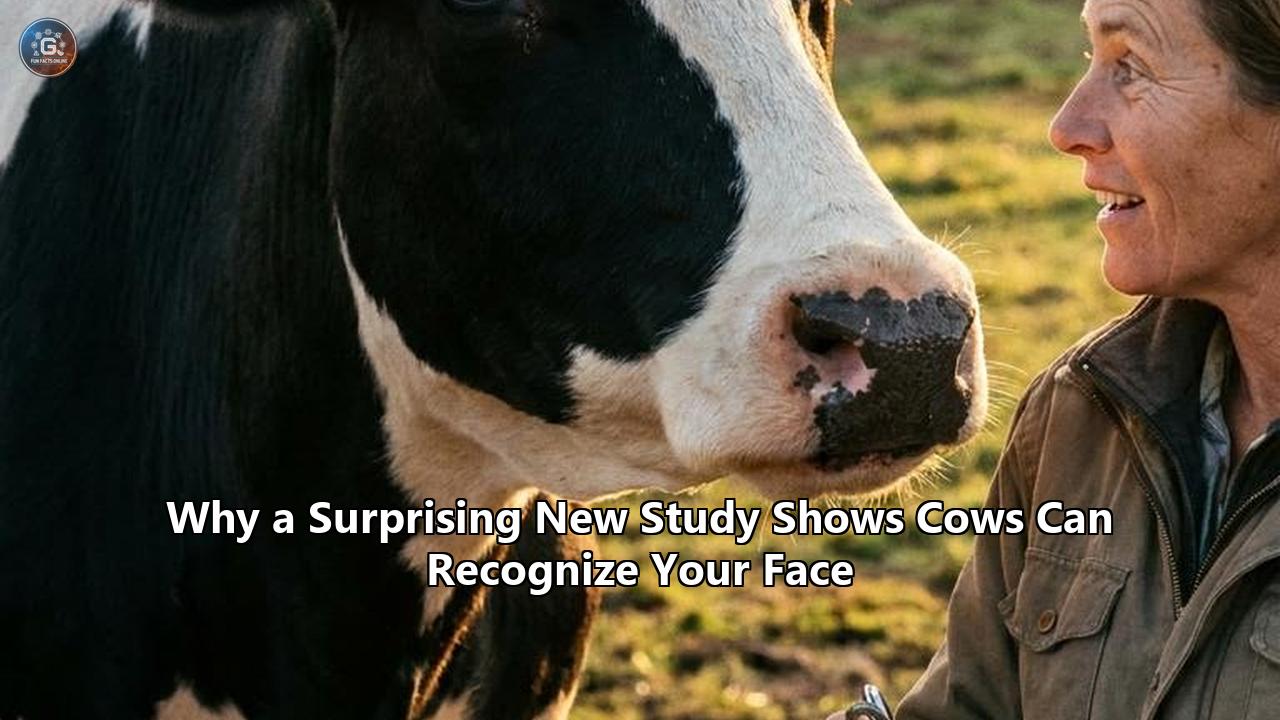
On May 20, 2026, researchers at France’s National Research Institute for Agriculture, Food and Environment (INRAE) published a study in PLOS One that fundamentally dismantles a long-held myth about livestock intelligence. Led by cognitive scientists Océane Amichaud and Léa Lansade, the investigation demonstrated that cows do not merely view humans as a homogenous threat or source of feed. Instead, they can recognize individual human faces and seamlessly match those faces with corresponding voices.
This discovery comes at a critical historical juncture for global agriculture. As modern dairy and beef operations scale up, they are increasingly replacing traditional, relational livestock husbandry with automation, artificial intelligence, and automated tracking systems. While computer scientists are building advanced computer vision platforms to help humans identify and monitor cows by their faces, this new cognitive research proves that the cows have been identifying and monitoring us all along.
The finding exposes a deep division in how the livestock industry approaches animal identity. On one side is the AgTech movement, which views the animal through a highly engineered, digital lens to maximize yield and trace diseases. On the other side is the emerging field of cognitive ethology, which focuses on the subjective experience of the animal and its relationship with its handlers. Contrasting these two paradigms reveals a profound truth: the future of sustainable farming may depend not just on how well we can track our herds with cameras, but on how well we understand the mental maps our herds are building of us.
Inside the Nouzilly Barn: The Methodology Behind the Discovery
To understand why this study has surprised both cognitive biologists and livestock managers, one must look at the rigorous experimental design used by the INRAE team at their research facility in Nouzilly, France.
The researchers gathered a cohort of 32 Prim’Holstein heifers, aged between 15 and 21 months. This breed, a variant of the Holstein-Friesian, is the most common dairy cow in Europe and North America, prized for its massive milk-producing capacity but rarely studied for its cognitive depth. Since birth, each heifer had been cared for and fed by a small, dedicated team of four male caretakers. The animals had never participated in cognitive testing and were completely unfamiliar with digital screens.
The experimental design split the inquiry into two distinct phases: a visual preference test and a cross-modal (multisensory) integration test.
           [ Screen A: Familiar Face ]       [ Screen B: Unfamiliar Face ]
                                  \         /
                                   \       /
                                    \     /
                                     [Cow]
                                       |
                             [Heart Rate Monitor]
The Visual Preference Test
In the first phase, each cow was guided into a central holding pen, positioned directly between two large, high-definition television screens. The screens simultaneously played two short, muted, 2D videos.
- Screen A displayed the silent face of a familiar caretaker who had fed and handled the cow daily since its birth.
- Screen B displayed the silent face of an unfamiliar man of similar age, build, and ethnicity whom the cow had never met.
Both men in the videos maintained neutral facial expressions and made minor, natural head movements. Using high-precision video tracking, the researchers measured the exact duration of time the cows spent gazing at each screen.
The results were clear: the cows spent significantly more time staring at the unfamiliar faces. In the field of cognitive psychology, this is known as the "novelty preference paradigm." When an animal is presented with a familiar stimulus and an unfamiliar one, it will quickly dismiss the familiar object because it already possesses a complete mental representation of it. It directs its visual attention toward the novel stimulus to gather information. By consistently staring longer at the strangers, the heifers demonstrated that they could visually distinguish their everyday handlers from outsiders using only flat, two-dimensional facial features.
The Cross-Modal Integration Test
While the visual test proved that cows can tell human faces apart, it did not prove whether they understood who those faces belonged to. They might have simply perceived them as different visual pattern maps. To address this, the INRAE researchers designed a cross-modal test to determine if the animals could link a visual face with an auditory voice.
While showing the same side-by-side videos of the familiar caretaker and the stranger, the researchers played a voice recording from a speaker positioned precisely between the two screens. The voice played was either that of the familiar caretaker or the stranger, with both men reciting the exact same, neutrally toned sentence.
This created two experimental conditions:
- The Congruent Condition: The voice matches the face on one of the screens.
- The Incongruent Condition: The voice does not match the face (e.g., the familiar caretaker’s voice is played while the cow is looking at the stranger’s face, or vice versa).
The researchers observed that when the voice and face were congruent, the cows focused their gaze intently on the matching video. When the audio and visual cues were incongruent, the cows exhibited signs of cognitive confusion, shifting their gaze rapidly between the screens as if experiencing a "violation of expectation".
This behavior indicates that cows do not process human characteristics in isolation. They do not just recognize a voice or a face; they merge these sensory inputs into a singular, multi-sensory mental file of an individual person.
The Physiological Baseline
To rule out the possibility that the cows' reactions were driven by fear, anxiety, or excitement, the researchers fitted each heifer with a continuous heart-rate monitor.
Intriguingly, the cows' heart rates remained entirely stable throughout both the visual and cross-modal tests. There were no spikes in heart rate variability, indicating that the animals were not experiencing an acute emotional fight-or-flight response. This stability suggests that the visual sorting and voice-matching were purely cognitive, analytical processes. The cows were calmly cataloging and verifying the identities of the humans in their environment, treating them as distinct social entities rather than generalized stimuli.
Answering the long-standing question, do cows recognize faces, the researchers discovered that these herd animals possess a highly sophisticated, multi-modal cognitive mapping system dedicated to tracking the humans who care for them.
The Industrial Mirror: When AI Tries to Recognize Cows
While cognitive biologists are discovering how cows perceive us, the commercial agricultural industry is heavily focused on the reverse: developing artificial intelligence to help industrial farm systems identify individual cows.
As global dairy and beef operations expand into mega-facilities housing thousands of animals, the traditional, intimate relationship between farmer and animal has eroded. In these massive Confined Animal Feeding Operations (CAFOs), it is physically impossible for human workers to know every animal. To solve this, the agricultural technology sector has turned to computer vision, neural networks, and biometric scanning.
Several competing commercial technologies have emerged to solve the challenge of automated animal identification:
- OneCup AI's "BETSY" (Bovine Expert Tracking & Surveillance): Developed in Canada, this platform uses off-the-shelf security cameras placed around feed bunks and water troughs. BETSY processes high-definition video feeds through a computer vision pipeline to identify individual cattle with close to 100% accuracy, tracking their weight, feed intake, and early signs of lameness.
- 406 Bovine: A mobile-app-based system that allows ranchers to snap a quick, three-second smartphone video of a cow’s head in the field. The AI backend analyzes the unique spatial layout of the cow's muzzle, eyes, and ear positions to instantly generate a "digital twin" profile containing the animal's entire medical and reproductive history.
- CattleTracs: Born out of research at Kansas State University, this app utilizes crowdsourced photos of cattle to create a national disease traceability network. By matching facial biometrics from smartphone photos, the platform can trace a sick animal's movement across multiple farms and state lines, acting as a biosecurity quarantine tool.
- Halisi Livestock: Operating in East Africa, this AI-driven platform helps smallholder farmers upload smartphone photos of their cattle to a blockchain-backed database. The biometric facial recognition verifies ownership and vaccination history, allowing farmers to secure micro-loans and crop insurance without needing expensive, easily lost physical ear tags.
These technologies operate on highly sophisticated computer vision models. They typically utilize a multi-layered convolutional neural network (CNN) pipeline. For instance, a system might use a lightweight object detection model like YOLOv5 to locate and crop the cow's face from a video frame, then pass that cropped image to a deep neural network, such as a Vision-Transformer (ViT), to classify the individual animal's identity.
These models are trained on millions of images to detect up to 200 distinct biometric coordinates on a cow's face. They look at the unique contours of the muzzle print (which is as distinct as a human fingerprint), the pattern of the hair whorls on the forehead, and the specific geometry of the eyes and ears.
+---------------------------------------------------------------------------------+
|                                 TWO PARADIGMS OF RECOGNITION                    |
+---------------------------------------------------------------------------------+
| Aspect                 | AI-on-Cow (Computer Vision)    | Cow-on-Human (Cognitive)      |
+------------------------+--------------------------------+-------------------------------+
| Directionality         | One-way, top-down, digital     | Two-way, relational, analog   |
| Primary Sensor         | High-resolution digital camera | Dichromatic visual cortex     |
| Processing Unit        | Convolutional Neural Network   | Multimodal temporal lobe      |
| Data Inputs            | 200 spatial coordinate points  | 2D face, vocal frequency, smell|
| Operational Goal       | Efficiency, traceability, yield| Social navigation, safety     |
| Vulnerabilities        | Mud, lighting, camera angles   | Limited herd/handler size     |
+------------------------+--------------------------------+-------------------------------+
Comparing the Mechanisms: AI Algorithms vs. Bovine Cognitive Mapping
The contrast between how an artificial intelligence platform identifies a cow and how a cow identifies a human handler highlights the fundamental difference between mathematical data processing and organic cognitive mapping.
How the AI Platform Processes Identity
To an AI model like CattleFaceNet or BETSY, a cow’s face is a matrix of pixel values. The algorithm relies on high-frequency spatial details. It must normalize the image, correcting for varying lighting conditions, shadows, and angles.
The system operates using an "ArcFace" (Additive Angular Margin Loss) framework, which projects facial features onto a hypersphere to maximize the mathematical distance between different individual identities. If a cow’s face is covered in mud, if the ear tag obscures a key coordinate point, or if the lighting is too dim, the neural network’s accuracy degrades rapidly. The system has no "common sense" understanding of what a cow is; it is entirely dependent on the statistical distribution of pixel contrast.
How the Cow Processes Identity
In contrast, a cow’s visual and cognitive systems are optimized for organic, real-world survival.
Cows have dichromatic vision, meaning they possess only two types of color receptor cones in their retinas, compared to the three found in humans. They are highly sensitive to blue and green wavelengths but cannot perceive red, seeing the world in a muted spectrum of blues, yellows, greens, and grays.
Furthermore, their eyes are placed laterally on the sides of their skull. This gives them an expansive 330-degree panoramic field of view, an evolutionary adaptation designed to detect predators creeping up from behind.
However, this wide-angle capability comes with severe physical tradeoffs:
- Their binocular vision (where both eyes overlap to provide depth perception) is incredibly narrow, spanning only 30 to 50 degrees directly in front of them.
- Their visual acuity is poor compared to humans, estimated at roughly 20/120 to 20/250. This means that a cow sees at 20 feet what a human with normal vision can resolve at 120 to 250 feet.
                                [Blind Spot]
                                  (Behind)
                                   /    \
                     +------------+      +------------+
                     |  Left Eye  |      | Right Eye  |
                     | Monocular  |      | Monocular  |
                     |  Vision    |      |  Vision    |
                     +------------+      +------------+
                                   \    /
                                [Binocular]
                                 (30°-50°)
                                  (Front)
Given these visual limitations, it seems counterintuitive that a cow can distinguish between the subtle facial features of different humans. The answer lies in their highly developed temporal lobes and their reliance on multisensory cross-modal integration.
A cow does not rely on high-resolution visual geometry alone. Instead, it uses a holistic, associative approach. When a cow looks at a human, it combines its low-resolution visual input with auditory vocal frequencies, movement patterns (the unique gait of a handler), and highly sensitive olfactory (smell) data.
This multisensory integration creates a cognitive model that is incredibly resilient. If a handler puts on a wide-brimmed hat, changes from a blue jacket to a yellow raincoat, or stands in deep shadow, an AI model might fail to recognize them due to the drastic change in visual pixels. But a cow will still identify them instantly. The cow’s brain cross-references the visual silhouette with the handler's familiar voice and scent, maintaining an uninterrupted sense of the individual's identity.
While pet owners have long taken for granted that dogs can identify their families, asking do cows recognize faces moves the conversation into a different category of animal cognition. It reveals that livestock possess the neurological hardware to build complex, multi-dimensional profiles of non-conspecifics (animals of a different species), using cognitive strategies that are far more flexible than the most advanced digital neural networks.
The Agricultural Tradeoff: High-Tech Automation vs. Relational Husbandry
The intersection of AI-driven livestock tracking and bovine cognitive research presents a stark operational choice for the future of global farming. As livestock production consolidates, dairy and beef operations are diverging into two competing management philosophies: the Automated Efficiency Paradigm and the Relational Husbandry Paradigm.
                   +---------------------------------------+
                   |       THE FARM DESIGN FORK            |
                   +---------------------------------------+
                                  /         \
                                 /           \
               [Automated Efficiency]     [Relational Husbandry]
               * Robotic Milking (AMS)    * Direct Human Handling
               * AI "BETSY" Monitoring    * Low-Stress Interactions
               * Zero-Contact Systems     * Oxytocin-Driven Yields
               * Homogenous Crowding      * Individualized Care
The Automated Efficiency Paradigm
This approach seeks to completely remove the human variable from the daily life of livestock. In a fully automated dairy farm utilizing Automated Milking Systems (AMS), cows roam freely within large barns. When they feel the physical urge to be milked, they voluntarily walk into a robotic milking stall. An automated gate closes behind them, a laser-guided robotic arm sanitizes the udder, attaches the teat cups, milks the animal, and releases her back into the herd.
Throughout this process, there is zero direct human contact. The herd's health, mobility, and heat cycles are monitored entirely by AI computer vision networks, overhead thermal cameras, and smart ear tags.
The primary benefit of this system is consistency. Humans are highly variable; they can be tired, impatient, loud, or aggressive. Proponents of total automation argue that removing humans eliminates a major source of unpredictable acute stress for the cows.
However, this comes at a significant biological and financial cost:
- The loss of the "stockman's eye": An experienced human handler can spot subtle behavioral changes—a slight droop in an ear, an unusual posture, or a minor change in temperament—long before an AI algorithm triggers an alert.
- High capital expenses: Installing robotic milking stalls and comprehensive AI monitoring networks requires hundreds of thousands of dollars in upfront capital, which is cost-prohibitive for small and medium-scale farms.
- The "neutral baseline" limitation: While automation protects cows from negative human interactions, it also deprives them of the positive cognitive stimulation and security that comes from a trusted relationship with a familiar handler.
The Relational Husbandry Paradigm
The alternative approach leans heavily into the biology of the cow as a highly social herd animal. In this model, the farm is structured around low-stress animal handling and the cultivation of positive human-animal relationships (HAR).
The INRAE study proves that cows do not perceive humans as an indistinguishable category. They know precisely which workers treat them gently and which ones are harsh. In agricultural ethology, the quality of this relationship is not just a matter of ethics; it directly impacts economic productivity.
When a cow is handled by someone she recognizes and trusts, her body releases oxytocin, the hormone responsible for milk let-down and social bonding. This makes the milking process fast, efficient, and complete.
Conversely, if a cow sees the face or hears the voice of a handler she associates with a negative, painful, or frightening experience (such as rough sorting, shouting, or veterinary injections), her brain triggers an acute stress response. This releases cortisol and adrenaline into her bloodstream. Adrenaline physically blocks the action of oxytocin on the mammary tissue, preventing milk let-down.
This stress response has severe economic consequences:
- Reduced milk yield: Studies in dairy science show that fear of handlers can reduce a herd's milk yield by up to 10%.
- Increased residual milk: When a cow cannot fully let down her milk, a significant volume remains trapped in the udder. This residual milk becomes a breeding ground for bacteria, directly causing mastitis—a painful udder infection that is the single most expensive health issue in the global dairy industry.
- Worker safety hazards: A stressed, fearful cow weighing 1,400 pounds is highly unpredictable. Fear-induced behavior leads to kicking, charging, and crushing, which are primary causes of farmworker injuries.
For large-scale dairy operators, knowing do cows recognize faces introduces a new layer of complexity to labor training and farm management. If cows can hold a grudge against a specific worker based on facial and vocal recognition, then a single abusive or poorly trained employee can cause a persistent drop in milk yield across an entire herd, even when that employee is not directly milking the cows. The cows will recognize the worker walking down the alleyway, trigger a stress response, and carry that physiological tension into the milking parlor hours later.
Why Evolution Built a Face-Recognizing Herd Animal
To understand why a domestic cow possesses the cognitive architecture to recognize individual human faces, one must look backward 10,500 years to the evolutionary origins of the species.
The modern domestic cow (Bos taurus taurus) is descended from the wild aurochs (Bos primigenius), a massive, aggressive, and highly social wild ox that roamed the forests and grasslands of Eurasia. Aurochs lived in complex, matriarchal herds consisting of closely related females, their offspring, and a shifting hierarchy of attendant bulls.
Survival in a wild aurochs herd depended entirely on stable social navigation:
- The dominance hierarchy: A herd of heavy, horned herbivores cannot survive if the animals must fight for resources every day. To prevent constant, energy-depleting, and potentially fatal conflict, aurochs established a strict social hierarchy. Once a hierarchy was established, subordinate animals yielded to dominant ones without physical violence. This required every member of the herd to recognize every other member individually, remembering their strength, temper, and social status.
- Maternal bonding: In a dense herd, a mother must be able to instantly identify her calf, and a calf must be able to identify its mother, using visual, vocal, and scent cues. A mix-up could lead to starvation for the calf or defense of an unrelated offspring at the expense of her own.
- Cooperative defense: Aurochs relied on collective vigilance and defense to protect themselves from predators like wolves and lions. This cooperative behavior required high levels of social coordination and trust.
                         [ AUROCHS EVOLVED HERD SOCIALITY ]
                          * Strict Dominance Hierarchies
                          * Individual Recognition of Peers
                          * High Social Cooperation & Trust
                                        |
                                        v
                            [ 10,500 YEARS OF DOMESTICATION ]
                          * Humans integrated into herd ecosystem
                          * Cow neural pathways co-opted
                          * Cross-modal visual/vocal tracking of humans
This evolutionary pressure gifted cattle with a highly developed neural architecture dedicated to social recognition. They possess specialized brain regions in the temporal cortex that are biologically tuned to process faces and voices, similar to the fusiform face area in primates.
When humans domesticated the aurochs in the Fertile Crescent around 10,500 years ago, we did not create new cognitive abilities; we co-opted existing ones. Over millennia of close contact, bottle-feeding, hand-milking, and herding, cows integrated humans into their social ecosystem. They redirected the neural machinery they used to recognize other cows toward recognizing us.
Comparison with Other Domestic Species
While we have long known that dogs and horses can read our expressions, the question of whether agricultural livestock share these traits—specifically, do cows recognize faces—has historically been dismissed. However, when we place cows alongside other domestic animals, we see they are part of a broad spectrum of highly intelligent, socio-cognitively complex species:
- Dogs: Highly selected over 30,000 years for human-like social communication. They can follow pointing gestures, recognize individual faces, and read human emotions from visual cues.
- Horses: Highly sensitive to human facial expressions. They can remember individual human faces, distinguish between angry and happy expressions, and adjust their behavior based on the emotional state of their handler.
- Sheep: Studies conducted at the Babraham Institute in the UK demonstrated that sheep possess specialized visual cortex neurons that fire in response to specific sheep and human faces. Sheep can remember up to 50 individual faces for over two years, even when presented with flat, 2D photographs.
- Pigs: Have demonstrated exceptional spatial memory, tool use, and self-awareness (including the ability to decode reflections in mirrors). They can distinguish between handlers based on clothing colors, visual stature, and olfactory signatures.
- Cows: As proven by the 2026 INRAE study, cows join this elite group. They possess the cognitive capacity for cross-modal, multisensory human recognition, proving that livestock are far more intellectually complex than the general public assumes.
The Neurological Underpinnings of Cross-Modal Recognition
The most significant aspect of the INRAE study is not merely that cows can tell us apart, but how they do it. The confirmation of cross-modal representation is a major milestone in cognitive biology.
In cognitive science, cross-modal recognition is the ability to recognize an object or individual across different sensory modalities. For example, if you are handed a set of keys in a pitch-black room, you can identify them by touch alone. If the lights are turned on, you can instantly recognize those same keys by sight. Your brain has created an abstract, non-sensory mental file of "keys" that can be accessed by either your eyes or your hands.
In the case of cows, cross-modal recognition means that when a heifer hears her handler's voice, her brain does not just process a sound frequency. The sound of that voice automatically activates a visual mental image of the handler’s face inside her visual cortex, even before she turns to look.
This is not a simple Pavlovian reflex. In classical conditioning, a sound (like a bell) is paired with a reward (like food). The animal does not need to understand what the bell means; it simply salivates in response to the auditory trigger.
[ Pavlovian Reflex ]  Auditory Trigger (Bell)  ====================> Physiological Reflex (Salivation)

[ Cognitive Mapping ] Auditory Trigger (Voice)  => Mental File => Visual Representation (Face) => Adjusted Behavior
If cows operated purely on classical conditioning, any human voice paired with food would elicit the exact same, undifferentiated behavior. Instead, the INRAE study showed that cows experienced a "violation of expectation" when a familiar voice was paired with an unfamiliar face. This reaction proves that they have built a cohesive, multi-dimensional mental file for that specific person. The visual face on the screen and the auditory voice from the speaker must match, or the cow's brain flags the input as anomalous.
This cognitive processing requires a high level of neurological integration:
- Sensory Reception: The cow's lateral eyes receive 2D visual light waves, and her ears capture auditory sound waves.
- Feature Extraction: Specialized neural pathways in the temporal and visual cortices extract key features of the face (distance between eyes, hair color) and the voice (pitch, resonance, cadence).
- Association and Retrieval: These extracted features are sent to the associative areas of the brain, where they are matched against stored "mental templates" of known individuals.
- Validation and Synthesis: If the incoming visual and auditory signals align with a stored template, the template is validated, and the cow selects an appropriate behavioral response based on her historical relationship with that specific person.
This level of cognitive mapping demonstrates that cattle possess a rich, active internal mental life. They are continuously interpreting, validating, and updating their understanding of the humans who share their lived environment.
Designing Cow-Centric Smart Farms of the Future
The realization that cows form detailed, multisensory representations of their handlers is driving a quiet movement in agricultural design. Forward-looking farms are beginning to move away from both pure automation and unmonitored human handling, opting instead for a hybrid approach: Cow-Centric Smart Farming.
+---------------------------------------------------------------------------------+
|                       COW-CENTRIC SMART FARM DESIGN                             |
+---------------------------------------------------------------------------------+
|                                                                                 |
|   +--------------------------+                         +---------------------+  |
|   |   AI COMPUTER VISION     |                         |  HUMAN HANDLERS     |  |
|   |  - Non-invasive cameras  |                         | - Focus on positive |  |
|   |  - Track physical health |                         |   physical contact  |  |
|   |  - Monitor lameness      |                         | - Provide tactile   |  |
|   |  - Measure food intake   |                         |   stimulation       |  |
|   +--------------------------+                         +---------------------+  |
|                 \                                                 /             |
|                  \                                               /              |
|                   \--->  Reduces chronic herd stress  <---------/               |
|                   |--->  Stimulates oxytocin release  |                         |
|                   +--->  Maximizes daily milk yields  +                         |
|                                                                                 |
+---------------------------------------------------------------------------------+
This hybrid model utilizes advanced AI computer vision to handle the objective, non-contact tracking of cattle (such as identifying lameness, weight drops, or estrus cycles), which frees up human workers to focus exclusively on high-value, positive, and relational interactions with the animals.
Operational Strategies for Cow-Centric Farms
- Consistent Auditory and Visual Identifiers: Because cows utilize cross-modal integration, farms are training workers to use consistent, calm vocalizations and highly visible, color-coded clothing. A handler might wear a specific blue uniform and speak in a low, rhythmic tone whenever they are entering the barn to perform low-stress tasks (like feeding or bedding change). This allows the cows to instantly identify them as a safe, predictable presence.
- Relational Auditing: Progressive dairy facilities are beginning to run behavioral audits of their staff. By tracking how cows react when a specific worker enters a pen—whether they look calmly at the person, stand their ground, or turn and flee—managers can objectively assess the quality of that worker's human-animal relationship, providing targeted retraining to employees who trigger herd anxiety.
- Positive Tactile Conditioning: Rather than reserving physical contact for painful procedures like vaccinations or hoof trimming, handlers are trained to engage in deliberate, positive tactile interactions. Massaging a cow on her preferred grooming zones (such as the base of the neck, chest, and withers) reduces her heart rate and cements a positive mental profile of that specific handler.
The Path Forward: Unresolved Questions in Bovine Cognition
While the May 2026 INRAE study has provided a definitive, scientifically verified answer to the question do cows recognize faces, it has opened a brand-new landscape of cognitive inquiries that researchers are preparing to tackle next.
As we look toward the future of animal welfare and cognitive ethology, several critical questions remain unresolved:
- Can cows read human emotional expressions? We now know that cows can distinguish between different human faces and voices, but can they tell the difference between a happy, relaxed face and an angry, scowling one? Studies in horses and dogs have shown they can read our emotional micro-expressions; future research will determine if cattle possess this same emotional intelligence.
- How long does bovine social memory last? If a dairy handler leaves a farm, how long does a cow retain their visual and vocal "mental file"? Do they remember their favorite caretakers for weeks, months, or years? Understanding the duration of this memory is crucial for managing staff turnover on commercial farms.
- Can cows generalize positive experiences? If a cow forms a highly positive relationship with a specific handler, does that trust carry over to other humans, or is it strictly limited to that one individual? Conversely, does a single negative interaction with an abusive handler make the cow permanently fearful of all humans, or can they selectively isolate their fear to that specific person?
- What are the limits of recognition in large herds? The INRAE study utilized a cohort of 32 cows exposed to four caretakers. How does this cognitive capacity scale in a commercial herd of 500 or 1,000 cows exposed to dozens of different workers? Is there a cognitive "dunbar's number" for cows, beyond which they can no longer process individual human identities and default to viewing humans as a single, undifferentiated group?
Ultimately, understanding the mechanics of how and why do cows recognize faces could redefine our approach to livestock husbandry. It bridges the gap between high-tech agricultural automation and compassionate, biologically informed animal care. By proving that cows are highly observant, socially intelligent beings capable of forming complex mental maps of the people around them, this research reminds us that farming is not just an engineered system of inputs and outputs. It is a living, breathing network of relationships—and the animals are watching us far more closely than we ever realized.
Reference:
- https://www.scimex.org/newsfeed/cows-recognise-a-familiar-human-face
- https://newatlas.com/biology/cows-tell-face-friend-stranger/
- https://www.sci.news/biology/cows-familiar-human-faces-14790.html
- https://www.mdpi.com/2076-3417/13/12/7052
- https://www.preprints.org/manuscript/202401.2032
- https://www.agproud.com/articles/59583-ai-facial-recognition-technology-for-cattle
- https://www.eurekalert.org/news-releases/1128053
- https://news.inbox.eu/150aw3g-cows-can-distinguish-people-what-they-pay-attention-to?language=en
- https://www.popsci.com/environment/cows-tell-humans-apart/
- https://www.youtube.com/watch?v=XkD69Fxac48
- https://www.thebullvine.com/news/instant-cow-id-the-ai-powered-app-that-recognizes-cattle-from-50-feet-away/
- https://www.npr.org/2020/11/30/940197035/researchers-develop-an-app-to-identify-cattle-through-facial-recognition
- https://iafrica.com/african-farmers-turn-to-cow-facial-recognition-and-ai-soil-analysis-to-head-off-looming-food-crisis/
- https://www.researchgate.net/publication/377517621_Biometric_identification_of_dairy_cows_via_real-time_facial_recognition
- https://modernfarmer.com/2023/05/facial-recognition/