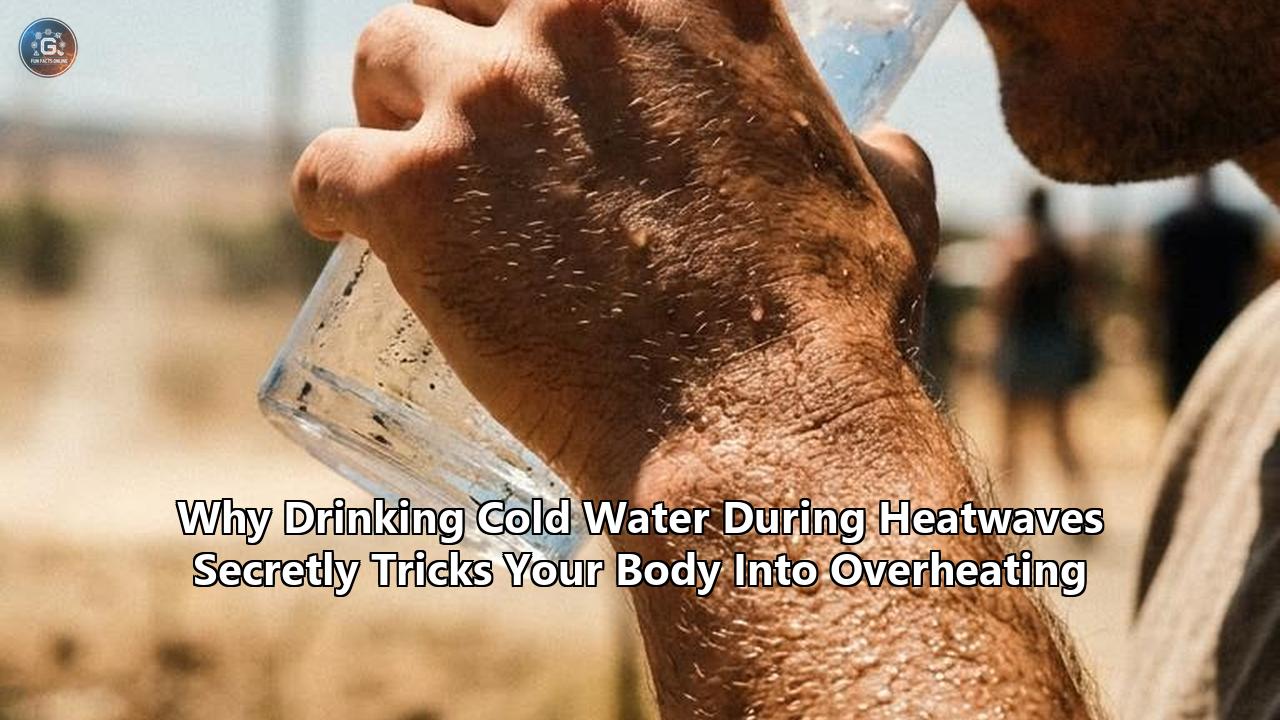
As summer 2026 delivers unprecedented, multi-week heatwaves across North America, Southern Europe, and East Asia, public health agencies face a subtle yet dangerous physiological phenomenon. With ambient temperatures routinely shattering 40°C (104°F) and urban heat islands pushing wet-bulb temperatures into critical zones, emergency departments are witnessing an influx of patients suffering from advanced thermal strain.
Many of these individuals report taking aggressive measures to stay hydrated—specifically by consuming vast quantities of ice-chilled water. Yet, thermal physiologists and emergency medicine specialists are highlighting a troubling paradox: drinking cold water during heatwave conditions can trick the body's internal thermostat into downregulating its primary defense against heat stroke, inadvertently accelerating core hyperthermia.
The instinct to reach for a glass filled with ice when the body feels overwhelmed by environmental heat is universal. Psychologically, cold liquid offers an instant wave of relief to the thermosensitive tissues of the mouth and throat. Physiologically, however, introducing sub-10°C (50°F) fluids into a heat-stressed digestive tract sets off a cascade of conflicting autonomic signals.
Recent thermal physiology research from institutions monitoring climate-related health risks, including the National Centre for Epidemiology and Population Health, reveals that cold liquids activate visceral thermoreceptors in the stomach and esophagus. These receptors send rapid signals to the brain's central thermostat—the preoptic area of the hypothalamus—falsely indicating that the body core is cooling rapidly. In response, the brain curtails peripheral sweating, the body's single most effective mechanism for shedding heat.
This biological miscommunication presents a major public health challenge during extreme climate events. As health authorities rewrite extreme-heat survival guidelines, understanding the hidden mechanics of internal thermoregulation—and replacing reflexive ice consumption with scientifically grounded hydration strategies—has become a vital necessity for survival in an warming world.
The Biological Illusion: How Visceral Thermoreceptors Mislead the Hypothalamus
To understand why drinking ice-cold water during an extreme thermal event can backfire, one must look at how the central nervous system processes temperature. Human thermoregulation is managed by the preoptic area (POA) located in the anterior hypothalamus. The POA functions as an integrated biological thermostat, continuously receiving afferent thermal data from two distinct sensory networks: peripheral thermoreceptors situated in the skin, and central thermoreceptors distributed throughout the spinal cord, abdominal viscera, and deep internal tissues.
Under normal heat exposure, skin thermoreceptors detect rising ambient temperatures and trigger a sympathetic nervous system response. Cutaneous blood vessels dilate (vasodilation) to shunt warm blood from the core to the surface, while eccrine sweat glands are instructed to secrete water onto the skin. As this sweat evaporates into the surrounding air, it extracts latent heat from the body, providing essential cooling.
                          [ Environmental Heat Stress ]
                                       │
                                       ▼
                        [ Skin Thermoreceptors Fired ]
                                       │
                                       ▼
                  [ Hypothalamus (POA) Initiates Sweating ]
                                       │
     ┌─────────────────────────────────┴─────────────────────────────────┐
     │                                                                   │
     ▼                                                                   ▼
[ Normal Path: Ambient Water ]                       [ Ingestion of Ice-Cold Water (<10°C) ]
     │                                                                   │
     ├─ Sweat glands remain active                                       ├─ Visceral cold receptors fire in gut
     ├─ Continuous evaporative cooling                                   ├─ Hypothalamus senses false internal cooling
     └─ Core temperature stabilizes                                      ├─ Sweating downregulated prematurely
                                                                         └─ Reduced evaporative heat loss
                                                                                 │
                                                                                 ▼
                                                                  [ NET CORE HEAT RETENTION ]
When an individual ingests fluids chilled below 10°C (50°F), this coordinated defense encounters a biological anomaly. Cold-sensitive thermoreceptors located within the abdominal wall, esophagus, and stomach react instantaneously to the thermal drop. These visceral receptors transmit high-frequency signals along the splanchnic and vagus nerve pathways straight into the POA.
Because central thermoreceptors are weighted far more heavily by the POA than peripheral skin receptors, the brain registers this local thermal drop as a signal that the entire body core is rapidly cooling down.
Consequently, the POA adjusts its autonomic output:
- Suppression of Eccrine Sweating: The brain reduces sympathetic neural drive to sweat glands across the torso and limbs.
- Peripheral Vasoconstriction: In severe cases, cutaneous blood vessels partially constrict, reducing the flow of warm core blood to the skin surface where heat can radiate outward.
- Internal Heat Redistribution: The physiological impulse to dissipate heat is muted, while the external environmental thermal load continues to penetrate the body's outer shell.
The mathematical reality of this thermal tradeoff is stark. Ingesting 500 mL of ice water absorbs a small amount of internal heat energy as the fluid warms from 4°C to 37°C within the stomach. This process absorbs roughly 16.5 kilocalories of thermal energy.
However, evaporating just 30 mL of sweat from the skin surface dissipates approximately 17.4 kilocalories through latent heat loss. If the visceral cold signal causes the body to suppress sweating by even a modest volume over the next hour, the loss of evaporative cooling far exceeds the minor thermal relief provided by the cold liquid. In hot, dry conditions, this dynamic results in a net gain of stored internal heat.
The thermoregulatory confusion caused by drinking cold water heatwave conditions reveals how easily local sensations in the mouth can mask systemic stress in the core. While the oral cavity registers an immediate, highly rewarding sensation of cold, the underlying physiological system is deprived of the evaporative sweat output required to remain safe.
Gastric Emptying, Vascular Spasms, and Autonomic Shock
The thermoregulatory mismatch caused by brain-gut miscommunication is only one part of the problem. Cold fluids introduce physical and mechanical disruptions to the gastrointestinal and cardiovascular systems that further impair thermal recovery during high-heat events.
+-----------------------------------------------------------------------------------+
|                        PHYSIOLOGICAL IMPACTS OF ICE WATER INGESTION               |
+-----------------------------------+-----------------------------------------------+
| Organ / System                    | Physiological Response                        |
+-----------------------------------+-----------------------------------------------+
| Preoptic Area (Hypothalamus)      | Downregulates sweat gland activation          |
| Splanchnic Blood Vessels          | Localized vasoconstriction; delayed perfusion |
| Stomach & Pyloric Sphincter       | Delayed gastric emptying; smooth muscle cramps |
| Small Intestine (Duodenum/Jejunum)| Delayed arrival of fluid for systemic uptake   |
| Vagus Nerve                       | Autonomic shock, bradycardia, presyncope      |
+-----------------------------------+-----------------------------------------------+
Delayed Gastric Emptying and Water Absorption Kinetics
Hydration does not occur in the stomach. Water must pass through the pyloric sphincter into the small intestine—specifically the duodenum and jejunum—where it is absorbed across the intestinal epithelium into the bloodstream. The speed at which fluid moves from the stomach to the intestine is governed by the rate of gastric emptying.
When near-freezing liquids enter the stomach, smooth muscle in the gastric wall undergoes a localized temperature drop. Smooth muscle fibers contract in response to cold stress, leading to a temporary reduction in gastric motility and a tightening of the pyloric sphincter.
While room-temperature or moderately cool water (15°C to 20°C) passes fluid into the small intestine efficiently, extremely cold liquid (<5°C) can cause gastric retention. The stomach retains the cold fluid longer while attempting to warm it toward body temperature.
As a result, an individual who drinks a large volume of ice water during an intense heatwave may feel a heavy, sloshing sensation in their abdomen, remaining functionally dehydrated on a cellular level even while their stomach is uncomfortably full.
Splanchnic Vasoconstriction Under Thermal Strain
During a heatwave, the cardiovascular system operates under intense stress. To facilitate cooling, the autonomic nervous system diverts a significant portion of cardiac output away from internal organs—such as the kidneys, liver, and digestive tract—and redirects it toward the cutaneous blood vessels in the skin. This process leaves the splanchnic circulation operating at reduced baseline perfusion.
When an individual rapidly pours ice-cold liquid into an already ischemic stomach, local blood vessels undergo sudden temperature-induced vasoconstriction. The combination of reduced baseline splanchnic blood flow and acute cold-induced constriction can trigger abdominal cramping, nausea, and sharp visceral pain.
In extreme situations, this vascular disruption impairs the integrity of the mucosal barrier, causing digestive discomfort and discouraging further fluid intake precisely when continuous rehydration is necessary.
The Vagal Shock Reflex
The esophagus and stomach are densely innervated by the vagus nerve (Cranial Nerve X), a major conduit of the parasympathetic nervous system. Rapidly consuming ice water cools the posterior wall of the esophagus, which sits directly adjacent to the descending aorta and the primary vagal nerve trunks.
Cold Fluid Ingestion (<10°C)
   │
   ├─► Rapid cooling of esophageal & gastric mucosa
   │
   ├─► Stimulation of Vagus Nerve (Cranial Nerve X)
   │
   └─► Parasympathetic activation / Sympathetic suppression
         │
         ├─► Sudden reduction in Heart Rate (Transient Bradycardia)
         ├─► Drop in Cardiac Output during high peripheral vasodilation
         │
         └─► Presyncope, Dizziness, and Vascular Collapse
In an individual experiencing heat strain, cardiac output is elevated, with heart rates often exceeding 100 to 120 beats per minute at rest to maintain blood pressure despite widespread peripheral vasodilation. Rapidly swallowing icy water can provoke a strong vagal reflex, triggering abrupt parasympathetic suppression of the heart rate.
This sudden plunge in heart rate—occurring while blood vessels in the skin remain wide open—can cause an immediate drop in arterial blood pressure. The result is heat-induced syncope (fainting), severe dizziness, or acute presyncope, which can lead to falls or physical collapse during heatwaves.
Public Health Misconceptions and Real-World Consequences
The physiological missteps surrounding fluid temperature stem from a widespread public health misunderstanding. For decades, sports science literature has noted that ice slurries and sub-zero drinks can benefit elite athletes preparing for short, high-intensity athletic events.
However, applying athletic cooling protocols to the general population during ambient, multi-day heatwaves creates dangerous outcomes.
+-------------------------------------------------------------------------------------+
|                     ATHLETIC PERFORMANCE VS. PUBLIC HEATWAVE HYDRATION               |
+-----------------------+----------------------------------+--------------------------+
| Parameter             | Athletic Context (Short-Burst)   | Heatwave Context (Public)|
+-----------------------+----------------------------------+--------------------------+
| Fluid Temperature     | Ice Slurry / <5°C                | Cool / 15°C - 20°C       |
| Primary Goal          | Internal thermal sink before run | Sustained sweat output   |
| Humidity Profile      | High humidity (sweat drops off)  | Variable / Dry heatwaves |
| Ingestion Pattern     | Bolus prior to event             | Continuous small sips    |
| Population Physiology | High-fit, young, high airflow    | General public, elderly  |
+-----------------------+----------------------------------+--------------------------+
The Athletic Paradox vs. Environmental Heat Exposure
In sports science, "pre-cooling" with ice slurries works primarily because athletes ingest the frozen slush before they begin sweating heavily, or during short bouts of exercise in high-humidity environments where sweat cannot evaporate effectively anyway. In high humidity (relative humidity > 80%), sweat drips off the skin without evaporating, meaning evaporative heat loss is already compromised. In that specific scenario, internal conductive heat transfer from ice offers a net physiological benefit.
During a general environmental heatwave, the scenario is completely different:
- The public is exposed to prolonged, continuous heat over many hours or days, rather than 45 minutes of structured exercise.
- In dry or moderately dry heatwaves, sweat evaporation remains remarkably efficient, provided sweat production is maintained.
- Suppressing sweat output via cold water ingestion in dry heat destroys the body's most effective natural cooling system.
Vulnerable Populations at Heightened Risk
The consequences of drinking cold water heatwave errors are particularly severe for vulnerable populations, including older adults, individuals with cardiovascular disease, outdoor workers, and young children.
                                [ VULNERABLE POPULATIONS ]
                                            │
         ┌──────────────────────────────────┼──────────────────────────────────┐
         │                                  │                                  │
         ▼                                  ▼                                  ▼
[ Elderly Individuals ]            [ Outdoor Workers ]               [ Young Children ]
 │                                  │                                 │
 ├─ Diminished thirst response      ├─ Heavy metabolic heat output    ├─ Higher surface area-to-mass
 ├─ Blunted thermoreceptors         ├─ High sweat requirements        ├─ Immature thermoregulation
└─ Rapid progression to heat stroke└─ Vagal shock risk from gulps └─ Sudden GI thermal shock- Elderly Individuals: Aging reduces the sensitivity of peripheral skin thermoreceptors and dulls the brain's thirst mechanism. When an older adult ingests ice-cold water, their visceral thermoreceptors trigger an overstated reduction in sweating. Because their cardiovascular reserve is already reduced, the sudden gain in core thermal storage can push them rapidly from mild heat strain into life-threatening heat stroke.
- Outdoor Workers: Construction laborers, agricultural workers, and delivery personnel face intense metabolic heat production alongside extreme ambient air temperatures. When heat-strained workers gulp large quantities of ice-chilled water during brief breaks, the combination of acute vagal stimulation, gastrointestinal vasoconstriction, and sweat downregulation often leads to sudden heat cramps, severe nausea, or presyncope, forcing them off the job.
- Children: Pediatric thermoregulation relies heavily on cutaneous blood flow rather than high sweat rates. Introducing large amounts of ice-cold fluid can cause sudden gastrointestinal distress and vascular shifts, leading to vomiting, which accelerates dehydration during extreme heat events.
Evidence-Based Hydration Strategies for Heatwaves
To address the challenges uncovered by extreme heat events, thermal physiologists, public health agencies, and occupational health authorities are standardizing updated protocols for fluid consumption. Staying safe during a heatwave requires aligning fluid temperature, volume, timing, and electrolyte composition with human physiological needs.
           [ HEATWAVE HYDRATION PROTOCOL ]
                         │
      ┌──────────────────┼──────────────────┐
      │                  │                  │
      ▼                  ▼                  ▼
[ TEMPERATURE ]       [ TIMING ]       [ ELECTROLYTES ]
 15°C to 20°C      150 to 250 mL     0.5–0.7 g/L Sodium
 (Cool, not ice)   every 15–20 min   (Prevents hyponatremia)
The Optimal Temperature Range: 15°C to 20°C (59°F to 68°F)
Extensive research into gastric emptying, fluid absorption, and thermoreceptor response shows that the ideal water temperature during heatwave exposure is cool to ambient—specifically between 15°C and 20°C (59°F to 68°F).
- Sustained Sweating: Water at 15°C to 20°C provides a pleasant, refreshing sensation in the mouth without triggering the abdominal thermoreceptors that suppress eccrine sweating.
- Maximum Gastric Motility: Fluids in this cool range empty from the stomach into the small intestine efficiently, allowing rapid uptake into the bloodstream.
- Highest Voluntary Consumption: Studies demonstrate that individuals drink up to 50% more fluid overall when water is presented at roughly 15°C compared to either freezing water (<5°C) or warm water (>30°C). This cool temperature hits the sweet spot for palatability, encouraging continuous hydration without GI distress.
Paced Consumption vs. Bolus Ingestion
Gulping large volumes of liquid at long intervals (bolus drinking) places unnecessary stress on the stomach and cardiovascular system. Under heat stress, the small intestine can process and absorb fluid at a maximum rate of roughly 800 to 1,000 mL per hour.
Public health protocols recommend:
- Continuous Micro-Sipping: Consume 150 to 250 mL (roughly 5 to 8 ounces) of cool water every 15 to 20 minutes.
- Preventing Gastric Distension: Avoid consuming more than 500 mL in a single 15-minute window to prevent fluid sloshing, stomach cramps, and vagal nerve irritation.
- Pre-Emptive Hydration: Begin drinking cool fluids before entering high-heat environments. Once thirst registers strongly, the body is already experiencing a 1% to 2% fluid deficit.
The Role of Electrolytes and Osmolar Balance
Drinking large volumes of pure water—regardless of temperature—during prolonged heatwaves creates a risk of exercise-associated or heat-induced hyponatremia. This low-blood-sodium condition occurs when heavy sweating depletes essential minerals, and the remaining systemic sodium is diluted by excessive intake of plain water.
Heavy Sweating (Loss of Water + Na+) ──► Excessive Plain Water Intake ──► Dilution of Extracellular Sodium
                                                                                │
                                                                                ▼
                                                                     [ HYPONATREMIA RISK ]
                                                                                │
                                                               ┌────────────────┴────────────────┐
                                                               ▼                                 ▼
                                                       [ Brain Cell Swelling ]          [ Confusion / Coma ]
To maintain osmotic balance and ensure rapid intestinal absorption, hydration protocols advise:
- Sodium Supplementation: When sweating continuously for more than 60 minutes, plain water should be supplemented with electrolytes, particularly sodium (0.5 to 0.7 grams of sodium per liter of water).
- Enhanced Absorption Kinetics: The presence of low concentrations of sodium and glucose in fluid triggers the SGLT1 (sodium-glucose cotransporter) protein in the intestinal wall. This active transport mechanism pulls water rapidly across the mucosal barrier into the bloodstream alongside sodium, accelerating rehydration far beyond what plain water achieves.
Integrating External Evaporative Cooling
Internal hydration must be paired with external thermal management to protect the body during extreme heat events. Because drinking cool water maintains the body's internal drive to sweat, external cooling methods can work alongside the body's natural physiological pathways.
+-------------------------------------------------------------------------------------+
|                      INTEGRATED HEATWAVE COOLING FRAMEWORK                          |
+--------------------------+----------------------------------------------------------+
| Method                   | Biological Mechanism                                     |
+--------------------------+----------------------------------------------------------+
| Cool Water (15°C - 20°C) | Preserves autonomic sweating & speeds GI absorption       |
| Skin Misting + Fan Airflow| Accelerates evaporative heat loss from surface capillaries |
| Wet Towels on Axis/Neck  | Direct conductive heat loss from major superficial blood vessels |
| Shade / Climate Control  | Eliminates direct radiative heat gain from solar rays    |
+--------------------------+----------------------------------------------------------+- Skin Misting and Air Movement: Applying a fine mist of ambient-temperature water to exposed skin while sitting near a fan mimics the natural sweating process. This provides rapid evaporative cooling without triggering central thermoreceptor sweat suppression.
- Targeted Cold Applications: Place ice packs or cold, damp cloths externally on areas where major arteries run close to the skin surface—such as the sides of the neck, axillae (armpits), and groin. This approach cools the circulating blood conductively without sending false thermal signals to the stomach's visceral thermoreceptors.
Heatwave Survival Matrix
To help navigate fluid choices and temperature management during extreme thermal events, reference this practical guidelines summary:
+---------------------------------------------------------------------------------------------------------------------------+
|                                              HEATWAVE HYDRATION ACTION PLAN                                               |
+------------------------+---------------------------------------+----------------------------------------------------------+
| Action Area            | DO THIS (Physiologically Sound)       | AVOID THIS (Thermal Trap Risk)                           |
+------------------------+---------------------------------------+----------------------------------------------------------+
| Water Temperature      | Drink cool or ambient water           | Gulping ice-chilled water or ice slurries                |
|                        | (15°C – 20°C / 59°F – 68°F)           | (<10°C / 50°F)                                           |
+------------------------+---------------------------------------+----------------------------------------------------------+
| Consumption Pattern    | Sip 150–250 mL continuously every     | Chugging 1 Liter at once after long periods              |
|                        | 15–20 minutes                         | without fluid                                            |
+------------------------+---------------------------------------+----------------------------------------------------------+
| Electrolyte Balance    | Add low-dose sodium/electrolytes to   | Drinking gallons of un-salted plain water during         |
|                        | fluids during heavy sweating          | prolonged sweating                                       |
+------------------------+---------------------------------------+----------------------------------------------------------+
| External Cooling       | Apply cold cloths to neck/armpits and | Relying entirely on cold drinks to lower elevated        |
|                        | mist skin with ambient water          | body core temperature                                    |
+------------------------+---------------------------------------+----------------------------------------------------------+
| Signs of Thermal Shock | Shift to shade, elevate feet, sip cool| Giving ice-chilled drinks to someone showing signs       |
|                        | fluids, apply external ice packs      | of heat exhaustion or presyncope                         |
+------------------------+---------------------------------------+----------------------------------------------------------+
Adapting Public Health Strategies to a Warming World
The scientific insights surrounding drinking cold water heatwave dynamics highlight a broader challenge: adapting public health messaging to the realities of a warming climate. For decades, basic advice during hot weather was simple: "stay in the shade and drink cold water".
As summer temperatures increasingly push human physiological systems to their absolute limits, public health guidance must evolve to reflect advanced thermal science.
Municipalities and disaster management authorities across Europe, North America, and Asia are updating their extreme-heat response infrastructure:
- Rethinking Water Station Architecture: Public emergency water distribution centers are adjusting their cooling targets. Rather than serving ice water, urban hydration stations are calibrated to dispense water at 15°C to 18°C, ensuring rapid absorption and maximum voluntary intake without triggering stomach cramps or sweat suppression.
- Workplace Regulations for Outdoor Labor: Occupational health standards are shifting toward enforced micro-sipping breaks with temperature-regulated fluids and electrolyte options, replacing informal ice chest access that can lead to sudden thermal shock.
- Targeted Education in Senior Care: Nursing homes and community centers are training staff to offer cool, ambient fluids continuously throughout the day, avoiding large glasses of ice water that cause gastric discomfort or blunted thermoregulatory responses in older adults.
Moving forward, thermal physiologists continue to explore key questions about individual variation. Ongoing studies examine how factors like age, chronic metabolic disease, and long-term heat acclimatization affect visceral thermoreceptor sensitivity. Researchers are also investigating whether specific natural flavor additions or altered mineral ratios can speed up gastric emptying even further under extreme heat strain.
What remains clear is that surviving extreme heat requires working with the body's physiological mechanisms rather than against them. By swapping ice-cold liquids for cool, steady, electrolyte-balanced hydration, individuals can protect their biological cooling systems, avoid dangerous thermal confusion, and stay safe through the escalating heatwaves of the future.
References & Supporting Research
- ANU National Centre for Epidemiology and Population Health (2026): Thermoregulatory pathways, thermal strain, and clinical progression to heat stroke during extreme weather events.
- Gatorade Sports Science Institute (GSSI) Thermal Physiology Review: Cold fluid ingestion, abdominal thermoreceptors, and the independent suppression of sweat rate during heat strain.
- Journal of Physiology & Human Thermoregulation: Central integration of peripheral vs. central thermoreceptors in the preoptic area (POA) of the hypothalamus.
- European Journal of Applied Physiology & PMC Gastric Emptying Studies: Effects of fluid temperature on gastric motility, pyloric sphincter tone, and small intestine absorption kinetics.
- Clinical Public Health & Extreme Heat Guidelines (2025/2026): Occupational and municipal hydration interventions for high wet-bulb temperature exposure.
Reference:
- https://science.anu.edu.au/news-events/news/when-body-cant-cool-down-what-are-risks-extreme-heat
- https://clinmedjournals.org/articles/iacph/international-archives-of-clinical-physiology-iacph-1-001.php
- https://www.gssiweb.org/sports-science-exchange/article/cold-water-and-ice-slurry-ingestion-for-reducing-body-temperature-during-exercise-in-the-heat
- https://www.gardenstatepain.com/post/understanding-the-surprising-effects-of-cold-drinks-on-body-temperature
- https://www.justintimemedicine.com/curriculum/6935
- https://iastate.pressbooks.pub/curehumanphysiology/chapter/body-temperature-homeostasis/
- https://mammothmug.com/blogs/hydration/cold-water-vs-warm-water-hydration
- https://proworksbottles.com/blogs/the-locker-room/does-cold-water-hydrate-you-faster
- https://omrf.org/bodywork-how-cold-should-drinking-water-be/
- https://www.precisionhydration.com/performance-advice/hydration/cold-drinks-hot-weather-performance/
- https://fluidlogic.com/blogs/news/does-room-temperature-water-hydrate-you-faster-what-science-says
- https://www.quora.com/Why-does-it-sweat-after-drinking-some-water-in-hot-summer
- https://en.as.com/latest_news/why-you-shouldnt-drink-very-cold-water-in-the-middle-of-summer-it-can-make-you-feel-hotter-n/