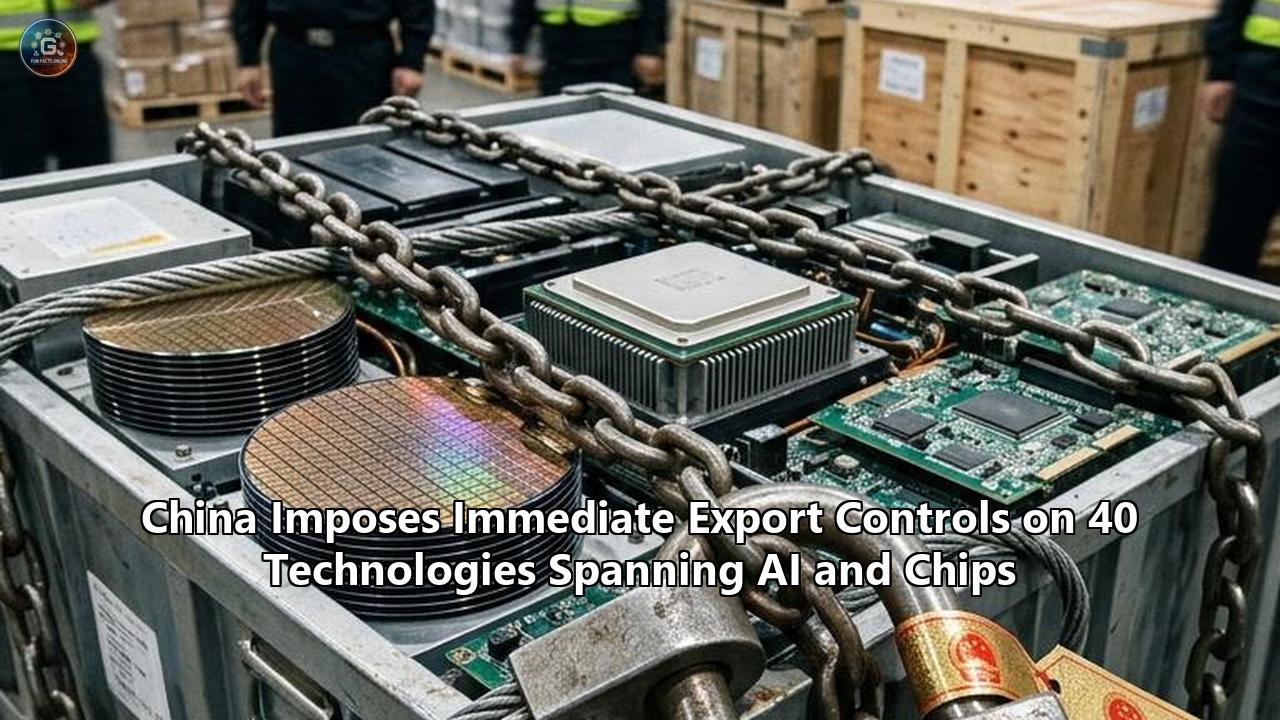
On October 16, 2026, the Ministry of Commerce (MOFCOM) and the Ministry of Science and Technology (MOST) jointly released Announcement No. 48 of 2026, issuing a sweeping draft revision to China’s Catalogue of Technologies Prohibited or Restricted from Export. While public comments remain open through November 15, 2026, a critical operational clause blindsided international trade attorneys and cross-border corporate teams: Beijing enacted a mandatory pre-export registration mechanism that took effect the very same day.
The interim rule applies immediately to 40 designated high-technology fields, covering not only new agreements but transactions already underway that have not yet cleared final settlement.
Spanning 23 entries in artificial intelligence, 12 in advanced photovoltaic manufacturing, and five in precision biomedicine, the update establishes a bifurcated defense for China’s critical intellectual property. Fourteen technologies are slated for outright export prohibition, while 26 are placed on a restricted licensing schedule.
                                  ANNOUNCEMENT NO. 48 (40 TECHNOLOGIES)
                                                    │
                 ┌──────────────────────────────────┴──────────────────────────────────┐
                 ▼                                                                     ▼
       14 PROHIBITED TECHNOLOGIES                                            26 RESTRICTED TECHNOLOGIES
  (Absolute statutory ban on foreign transfers)                         (Mandatory MOFCOM/MOST export licensing)
                 │                                                                     │
  • Autonomous Malicious Code & Mutation Engines                        • Frontier AI Foundation Models (≥2T Params)
  • Defense & Critical Infrastructure AI Agents                         • Advanced Vulnerability Discovery Tools
  • Perovskite & Tandem Solar Cell Mass Production                      • 2.5D/3D Advanced Semiconductor Packaging
  • Proprietary Cell & Gene Therapy Platforms                           • Heterojunction (HJT) Solar Cell Architectures
Western headlines quickly characterized the policy as another round of geopolitical retaliation against export restrictions orchestrated by the United States. However, the legal architecture and granular technical specifications buried within the regulatory text tell a different story. China is constructing a domestic mirror to the United States Export Administration Regulations (EAR), designed not simply to embargo rivals, but to tightly govern the outward flow of algorithmic, physical, and biological patents while safeguarding commercial software monetization across overseas markets.
The strategic scope of China export controls has expanded into frontier software, advanced chip packaging architectures, and next-generation energy systems. Navigating this new regulatory terrain requires examining the statutory mechanisms, technical classifications, and corporate maneuvering taking place behind closed doors.
Inside Announcement No. 48: The Bureaucratic Architecture
The rollout of Announcement No. 48 relied on an administrative protocol that caught corporate compliance departments off guard. Western regulatory updates under the U.S. Bureau of Industry and Security (BIS) or the European Commission typically offer extended grace periods between publication, public review, and formal enforcement. Beijing opted for an asymmetrical strategy: a 30-day public consultation window paired with an immediate, enforceable pre-export registration requirement.
┌──────────────────────────────────────────────────────────────────────────────────┐
│                   INTERIM REGISTRATION WORKFLOW (EFFECTIVE OCT 16)                │
└──────────────────────────────────────────────────────────────────────────────────┘
  Transaction Initiation / Pending Contract
      │
      ▼
  Provincial Department of Commerce (Initial Docketing & Scope Verification)
      │
      ▼
  Joint Review: MOFCOM Bureau of Industry, Security, Import & Export Control + MOST
      │
      ├───────────────────────────────┬───────────────────────────────┐
      ▼                               ▼                               ▼
  Category Clearance             Registration Certificate        Referral to National
  (Unrestricted Tech / API)      Issued (Conditional Outflow)    Security Review Panel
By imposing registration requirements on October 16, the authorities eliminated the standard compliance window. Any company attempting to rush an offshore transfer of model weights, cross-license semiconductor IP, or restructure equity in a joint venture prior to November 15 finds itself subject to state review.
The statutory roots of this action run through Article 20 of the Foreign Trade Law of the People’s Republic of China and the Regulations on the Administration of Technology Import and Export, bolstered by the omnibus Export Control Law passed in 2020. The Catalogue itself serves as the statutory sieve. When a technology is marked "prohibited," the ban is absolute; Chinese enterprises and foreign-invested vehicles domiciled in the mainland cannot transfer, assign, or license the underlying IP outside the borders under any circumstances.
When classified as "restricted," an exporter must run a multi-step administrative obstacle course:
- Apply to the provincial-level commercial authority for preliminary technical review.
- Obtain a Technology Export Letter of Intent from MOFCOM before entering binding commercial negotiations.
- Submit formal contracts and algorithmic specifications to secure an official Technology Export License.
Historically revised in 2008, 2020, 2023, and 2025, the Catalogue had largely functioned as a catch-up measure. The 2020 intervention, which halted the forced fire sale of TikTok’s recommendation algorithm during the Trump administration, demonstrated the tool's potency.
Announcement No. 48 moves from reactive containment to systemic preemptive control. MOFCOM’s Bureau of Industry, Security, Import and Export Control collaborated directly with the Ministry of Science and Technology over several months. They surveyed major domestic technical players, including Alibaba Cloud, Tencent, Baidu, DeepSeek, and leading research institutes within the Chinese Academy of Sciences (CAS), to locate the precise technological assets that give the country structural leverage.
The AI Breakdown: 23 Regulated Technologies
Artificial intelligence forms the core of the document, accounting for 23 of the 40 targeted entries. Rather than issuing blanket restrictions on software code, MOFCOM and MOST engineered a technical threshold system that distinguishes between commercial inference access and the underlying foundation assets.
                     FRONTIER AI REGULATORY MATRIX
┌─────────────────────────────────┬─────────────────────────────────┐
│     PROHIBITED FROM EXPORT      │     RESTRICTED (LICENSING)      │
├─────────────────────────────────┼─────────────────────────────────┤
│ • Automated malware generators  │ • Large models (≥2T parameters) │
│ • Code mutation engines         │ • Top-10 global benchmark tools │
│ • Defense-grade agent systems   │ • AI vulnerability analyzers    │
│ • State-sensitive trained models│ • Specialized agent frameworks  │
└─────────────────────────────────┴─────────────────────────────────┘
  EXCLUDED FROM REGULATORY SCOPE:
  • Commercial SaaS & API Endpoints   • Open-Source Public Releases
The 2-Trillion Parameter Threshold
The policy draws a line around foundation model size: models trained with 2 trillion parameters or more, or those demonstrating top-ten capabilities across internationally recognized benchmarks, fall under restricted export controls.
Parameters represent the internal weights and biases that an artificial neural network fine-tunes during pre-training to map relationships within data. A 2-trillion parameter threshold targets frontier artificial intelligence architectures, such as Alibaba’s Qwen 3.8-Max, Moonshot AI's Kimi K3, and specialized multimodal mixture-of-experts (MoE) clusters. Models operating below this capacity remain eligible for streamlined administrative approvals, provided their training corpora do not contain sensitive data.
The restriction applies strictly to the export of the core assets:
- Raw floating-point model weights (e.g., FP16, BF16, or specialized 4-bit/8-bit quantized weights).
- Foundational pre-training source code and pipeline orchestration frameworks.
- Algorithmic architectures designed to handle autonomous multi-step reasoning.
The Offensive Threat Barrier: Prohibited AI Subsystems
While foundation models face licensing hurdles, two categories face complete prohibition:
- Autonomous Malicious Code Generation and Mutation Engines: Software engines capable of dynamically rewriting malicious payloads to bypass zero-trust intrusion detection systems.
- Specialized Defense and Critical Infrastructure Agents: Autonomous agent architectures trained to coordinate operations within supervisory control and data acquisition (SCADA) systems, military command logistics, or national power grids.
Conversely, dual-use defensive technologies—such as automated software vulnerability discovery and source code scanning suites—are placed under restricted licensing. This allows the state to approve security audits for allied states or international partners while blocking unauthorized transfers to overseas commercial competitors.
The API Exemption and Cloud Exceptions
The most misunderstood component of the new rules involves cross-border consumer access. Several immediate reports claimed China was severing foreign access to its generative models. MOFCOM's policy explanations clarified that API calls, interaction through web applications, Software-as-a-Service (SaaS) workflows, and client-side inference on mobile devices are exempt from export registration.
[Overseas User / Enterprise Client]
                │
         (HTTPS / API Call) ──► Allowed without export license
                ▼
┌──────────────────────────────────────────────┐
│  Tier-1 Data Center (Shanghai / Shenzhen)    │
│  Underlying Weights (≥2T Parameters)         │ ──► Prohibited from moving abroad
└──────────────────────────────────────────────┘
                │
   (Outbound Transfer Attempt)
                ▼
┌──────────────────────────────────────────────┐
│  Foreign Cloud Server (Frankfurt / Virginia) │ ──► Requires MOFCOM/MOST Review
└──────────────────────────────────────────────┘
The underlying logic is clear: Beijing wants its technology sector to capture international revenue through application layer software, software subscriptions, and developer API integrations. By banning the physical transfer of underlying weights while greenlighting cloud-based access, the regulation binds foreign developers to computing clusters hosted within, or governed by, mainland infrastructure.
The rules also provide a path for Chinese enterprises expanding abroad. Companies deploying enterprise models onto overseas cloud infrastructure that they directly operate can access simplified, automatic licensing pathways. The explicit red line is the alienation or transfer of control to foreign entities.
Silicon and Advanced Packaging: Defending the Hardware Boundary
Washington’s technology controls have historically targeted semiconductor hardware, cutting off supply lines of extreme ultraviolet (EUV) lithography systems, high-bandwidth memory (HBM), and advanced microchips. Announcement No. 48 responds along a different technical axis: semiconductor design and advanced packaging IP.
The draft places export restrictions on AI chip design technologies utilizing manufacturing process nodes at or below 14 nanometers, alongside 2.5D and 3D heterogeneous packaging architectures.
                 ADVANCED SEMICONDUCTOR CONTROL TARGETS
┌────────────────────────────────────────────────────────────────────────┐
│ 1. SUB-14NM CHIP ARCHITECTURES                                         │
│    Floor plan, register-transfer level (RTL), and electronic design    │
│    automation (EDA) workflows for sub-14nm computing accelerators.     │
├────────────────────────────────────────────────────────────────────────┤
│ 2. 2.5D INTERPOSER & SUBSTRATE DESIGN                                  │
│    High-density silicon interposers bridging logic compute dies and    │
│    High-Bandwidth Memory (HBM) modules via microbumps.                 │
├────────────────────────────────────────────────────────────────────────┤
│ 3. 3D WAFER-TO-WAFER STACKING                                          │
│    Direct hybrid bonding and Through-Silicon Vias (TSVs) enabling      │
│    logic-on-logic and memory-on-logic high-density integration.        │
├────────────────────────────────────────────────────────────────────────┤
│ 4. 3D NAND FLASH DESIGN TOPOLOGY                                       │
│    Multi-deck flash memory array architectures and peripheral-circuit- │
│    under-array bonding techniques (e.g., Xtacking IP).                 │
└────────────────────────────────────────────────────────────────────────┘
As shrinking physical transistors becomes increasingly difficult, advanced packaging has emerged as the primary mechanism for increasing computing performance. Rather than printing an entire processor on a single, expensive monolithic piece of silicon, chipmakers divide the processor into smaller functional blocks called "chiplets" (such as logic cores, memory controllers, and I/O components) and assemble them across a shared substrate.
In 2.5D integration, separate chips are arrayed side by side over a silicon interposer, an ultra-thin layer containing high-density wiring that allows dies to communicate with minimal latency and high data throughput. 3D packaging goes further, stacking silicon dies directly on top of one another using microscopic vertical channels known as Through-Silicon Vias (TSVs) and copper-to-copper direct bonding.
               2.5D PACKAGING (Side-by-Side Interposer)
             ┌──────────────┐          ┌──────────────┐
             │  Logic Die   │          │  HBM Module  │
             └──────┬───────┘          └──────┬───────┘
               Microbumps                Microbumps
  ──────────────────┴─────────────────────────┴──────────────────
                      Silicon Interposer (High-Density Routing)
  ──────────────────┬─────────────────────────┬──────────────────
                    └─────────── C4 Bumps ────┘
  ═══════════════════════════════════════════════════════════════
                      Organic Package Substrate

                3D PACKAGING (Vertical Die-to-Die Stacking)
             ┌────────────────────────────────────────┐
             │       Top Die (Compute / SRAM)         │
             └───────────────────┬────────────────────┘
                       Direct Cu-Cu Hybrid Bond
             ┌───────────────────┴────────────────────┐
             │   Bottom Die with Through-Silicon Vias │
             │                 (TSVs)                 │
             └───────────────────┬────────────────────┘
                               Microbumps
  ═══════════════════════════════════════════════════════════════
                      Organic Package Substrate
Domestic Chinese OSAT (Outsourced Semiconductor Assembly and Test) leaders—such as JCET Group, Tongfu Microelectronics, and Huatian Technology—have made major gains in these processes, developing packaging solutions comparable to TSMC’s Chip-on-Wafer-on-Substrate (CoWoS) and Intel’s EMIB architectures.
Announcement No. 48 does not limit the export of physical microchips packaged using these techniques. Instead, it bars the export of the design methodologies, register-transfer level (RTL) specifications, thermal dissipation designs, and proprietary electronic design automation (EDA) workflows required to fabricate them.
The rules also cover design blueprints for 3D NAND flash memory. This targets Yangtze Memory Technologies Corp’s (YMTC) proprietary Xtacking architecture, an approach that processes peripheral memory control circuits and memory memory-cell arrays on two separate wafers before bonding them face-to-face.
By locking down this IP, the regulatory framework ensures that while Chinese fabs face foreign tool bans, the chip architectures and packaging techniques devised to bypass those limits cannot be sold or licensed to foreign firms seeking to hedge their own advanced manufacturing dependencies.
Photovoltaics: Securing Hegemony Over Next-Generation Solar
The clean technology sector accounts for 12 entries within the revised catalogue, revealing a long-term economic calculation. While China dominates mature-node crystalline silicon photovoltaic manufacturing—accounting for roughly 80% to 95% of global output across polysilicon, ingots, wafers, solar cells, and completed modules—its margins on traditional passivated emitter and rear cell (PERC) technology have dropped due to massive domestic overcapacity.
Announcement No. 48 bypasses commoditized panels to focus control on the future of energy transition materials:
- Perovskite and Perovskite-Tandem Solar Cells: Prohibited from export.
- Heterojunction (HJT) Solar Cells: Placed on the restricted list.
- High-Purity Silicon Production & Precision Slicing: Specialized automated manufacturing equipment added to licensing regimens.
                     SOLAR CELL EFFICIENCY CEILINGS
┌───────────────────────────────────────────────────┬─────────────┐
│ Technology Architecture                           │ Theoretical │
│                                                   │ Efficiency  │
├───────────────────────────────────────────────────┼─────────────┤
│ Standard Crystalline Silicon (PERC / TOPCon)      │ ~29.4%      │
│   (Mature commodity: Unrestricted export)         │             │
├───────────────────────────────────────────────────┼─────────────┤
│ Heterojunction Technology (HJT)                   │ ~30.5%      │
│   (High altitude & space: Export Restricted)      │             │
├───────────────────────────────────────────────────┼─────────────┤
│ Perovskite-on-Silicon Tandem Cells                │ >33-35%     │
│   (Next-gen market leader: Export Prohibited)     │             │
└───────────────────────────────────────────────────┴─────────────┘
Standard silicon solar cells face an absolute physical efficiency limit: the Shockley-Queisser theoretical ceiling of 29.4%. Standard commercial silicon tops out between 23% and 26% efficiency. Perovskites—synthetic materials possessing an identical crystal structure to the natural calcium titanium oxide mineral—can be customized at the molecular level to absorb different bands of the solar spectrum.
By layering a perovskite thin-film over a silicon base (creating a tandem cell), the combined system captures both short and long wavelengths, pushing laboratory efficiencies past 33% and unlocking theoretical potentials beyond 40%.
Chinese manufacturers, backed by state research labs, lead the transition from laboratory scale to industrial production line implementation for perovskite manufacturing. This includes mastering roll-to-roll chemical vapor deposition, slot-die coating of crystalline perovskite films, and specialized laser scribing protocols to prevent moisture degradation.
       TANDEM SOLAR ARCHITECTURE (PROHIBITED FROM EXPORT)
  Incoming Sunlight (Wide Spectrum)
  │││││││││││││││││││││││││││││││││
  ▼▼▼▼▼▼▼▼▼▼▼▼▼▼▼▼▼▼▼▼▼▼▼▼▼▼▼▼▼▼▼▼▼
┌──────────────────────────────────┐
│ Transparent Conductive Electrode │
├──────────────────────────────────┤
│ PEROVSKITE TOP CELL              │ ──► Absorbs High-Energy Blue Light
│ (Bandgap ~1.7–1.9 eV)            │     (Prohibited Manufacturing IP)
├──────────────────────────────────┤
│ Tunnel Junction Interlayer       │
├──────────────────────────────────┤
│ CRYSTALLINE SILICON BOTTOM CELL  │ ──► Absorbs Low-Energy Red & IR Light
│ (Bandgap ~1.1 eV)                │
├──────────────────────────────────┤
│ Rear Metal Back-Contact          │
└──────────────────────────────────┘
By placing perovskite manufacturing processes into the absolute "prohibited" tier, Beijing prevents domestic solar firms from building advanced, localized factories in North America, India, or Europe. Foreign competitors seeking next-generation clean tech cannot simply license Chinese perovskite blueprints; they must either purchase completed modules directly from Chinese-owned facilities or build out their own advanced material platforms from scratch.
Heterojunction (HJT) cell production, which combines crystalline silicon with amorphous silicon thin films to improve performance in extreme temperature and high-radiation aerospace environments, is also kept behind restricted licensing. The strategic aim is direct: ensure the world remains dependent on Chinese manufacturing processes through the transition from silicon to tandem photovoltaics.
Biomedicine: Protecting Advanced Biological Platforms
The pharmaceutical and biological sectors account for five targeted additions, focusing on next-generation therapeutic pipelines:
- Proprietary platforms and manufacturing for Cell and Gene Therapies (CGT).
- Small nucleic acid drug development platforms, including small interfering RNA (siRNA) and antisense oligonucleotides (ASO).
- Pathogenic microbiology detection and synthesis tools.
The CGT provisions apply strict controls to platform technologies: the viral vector designs, CRISPR-derived base editing protocols, and cell culturing automation tools used to produce CAR-T therapies.
                     BIOPHARMACEUTICAL OUTBOUND REGIME
┌─────────────────────────────────┬─────────────────────────────────┐
│     PROHIBITED PLATFORMS        │     FACILITATED LICENSING       │
├─────────────────────────────────┼─────────────────────────────────┤
│ • Base & Prime Editing Tools    │ • Single-molecule Out-licensing │
│ • Proprietary Viral Vector Eng. │ • Regional Commercial Rights    │
│ • Large-Scale Bioreactor Auto.  │ • Phase II/III Clinical Assets  │
│ • Pathogen Synthesis Blueprints │ • Contract Research Svcs (CRO)  │
└─────────────────────────────────┴─────────────────────────────────┘
Crucially, MOFCOM included a regulatory release valve to accommodate outbound pharmaceutical transactions. Over the past three years, licensing deals have emerged as an important commercial bridge between Chinese biotechnology startups and Western global pharmaceutical firms. Chinese biotechs frequently discover promising oncology or autoimmune small molecules, run early Phase I trials domestically, and then out-license global commercialization rights to multinational giants such as Pfizer, AstraZeneca, or Novartis in multi-billion-dollar licensing transactions.
Announcement No. 48 protects this pipeline: licensing models that grant marketing or development rights abroad without transferring ownership of the core platform technology are granted accelerated, automatic licensing. Chinese biopharmas can continue monetizing specific drug candidates overseas, but the fundamental synthetic biological platforms that produce them remain anchored in the mainland.
Strategic Asymmetry: Comparing Washington and Beijing
The expansion of China export controls marks the arrival of a strategic mirror image in global trade governance. The United States and China are now operating twin administrative regimes, though they differ fundamentally in design, execution, and economic focus.
┌────────────────────────┬────────────────────────────────┬────────────────────────────────┐
│ Dimension              │ United States (BIS / EAR)      │ China (MOFCOM / MOST)          │
├────────────────────────┼────────────────────────────────┼────────────────────────────────┤
│ Primary Statutory Tool │ Entity List, Foreign Direct    │ Catalogue of Technologies      │
│                        │ Product Rules (FDPR)   │ Prohibited/Restricted  │
├────────────────────────┼────────────────────────────────┼────────────────────────────────┤
│ Primary Target Focus   │ Physical hardware, tool tools, │ Underlying technology, source  │
│                        │ and advanced computing chips   │ code, weights, processes│
├────────────────────────┼────────────────────────────────┼────────────────────────────────┤
│ Chokepoint Strategy    │ Capital equipment and design   │ Process know-how, clean tech,  │
│                        │ tools (EUV litho, EDA) │ raw algorithmic assets │
├────────────────────────┼────────────────────────────────┼────────────────────────────────┤
│ Extraterritorial Reach │ Broad (de minimis and tool-use │ Formally based on domestic IP, │
│                        │ provisions across borders)     │ but captures foreign JVs       │
└────────────────────────┴────────────────────────────────┴────────────────────────────────┘
Washington uses the Foreign Direct Product Rule (FDPR) to project jurisdiction globally, stating that if a foreign chip is made using American-origin software or equipment, the United States can regulate its sale anywhere in the world.
Beijing’s approach anchors itself in process, chemical, and algorithmic know-how. Rather than seeking to regulate every intermediate transaction worldwide, the revised Catalogue restricts the transfer of foundational processes that foreign industries need to build out their own manufacturing and AI ecosystems.
The timing highlights the unraveling of international technology markets. Despite bilateral talks between Washington and Beijing to establish risk-mitigation dialogues around AI safety, each superpower is writing administrative barriers into law. The international technology sector is fracturing into two distinct technological regimes, each with its own supply chain stacks, design standards, and compliance red lines.
Corporate Realities: Joint Ventures, VIEs, and M&A
For multinational corporations and venture capital firms, the most disruptive detail of Announcement No. 48 is its immediate impact on corporate structure and intellectual property assignment. Cross-border restructuring projects that were standard practice are now subject to regulatory review.
               CORPORATE COMPLIANCE VULNERABILITY ZONES
┌────────────────────────────────────────────────────────────────────────┐
│ 1. OFFSHORE VARIABLE INTEREST ENTITIES (VIEs)                          │
│    Transferring domestic IP or algorithm control from a mainland       │
│    operating company to a Cayman Islands listing vehicle requires      │
│    formal clearance under cross-border ownership provisions.           │
├────────────────────────────────────────────────────────────────────────┤
│ 2. GLOBAL JOINT VENTURES                                               │
│    Engineering teams in Beijing sharing underlying 2.5D packaging      │
│    blueprints or model weight matrices with foreign JV partners now    │
│    trigger technical export control violations.                        │
├────────────────────────────────────────────────────────────────────────┤
│ 3. CROSS-BORDER MERGERS & ACQUISITIONS                                 │
│    Foreign acquisitions of Chinese technology startups now mandate     │
│    submitting IP portfolios to MOFCOM for clearance before closing.    │
├────────────────────────────────────────────────────────────────────────┤
│ 4. OUTBOUND TALENT AND IP ASSIGNMENT                                   │
│    Chinese nationals patenting algorithms developed inside mainland    │
│    R&D centers directly to foreign parent corporations face scrutiny   │
│    under intellectual property transfer control rules.                 │
└────────────────────────────────────────────────────────────────────────┘
The new registration mandate specifically names transactions that transfer ownership or operational control of targeted technologies to overseas entities. This creates major operational hurdles:
Variable Interest Entity (VIE) Structural Headwinds
Historically, Chinese technology startups seeking foreign capital established Cayman Islands holding companies linked to their domestic operating entities through contractual agreements known as VIEs. Under Announcement No. 48, if an enterprise signs IP-sharing contracts that assign proprietary model weights, agent systems, or semiconductor design patents to an offshore entity, the contract qualifies as a regulated cross-border transfer. Without MOFCOM registration, these contracts risk being declared void under Chinese law.
Multinational R&D Operations
Global semiconductor design firms, autonomous vehicle developers, and artificial intelligence laboratories maintaining research campuses in Shanghai, Beijing, or Shenzhen must reassess their cross-border engineering workflows.
If an engineer based in China commits code regarding 2.5D interposer routing, automated vulnerability scanning, or frontier multi-agent frameworks to a centralized, shared international repository, that internal code commit constitutes an export of regulated technology. Enterprise security teams are implementing internal access controls and segmenting technical networks to prevent domestic R&D branches from sharing unreviewed files across corporate intranets.
The Open-Source Question: The DeepSeek and Qwen Dilemma
The inclusion of foundation models within the restricted schedule sparked immediate debate across the global open-source community. Over the past eighteen months, Chinese open-weight models—most notably Alibaba Cloud's Qwen family and DeepSeek's open-weights releases—have become foundational tools for Western developers, AI startups, and academic researchers seeking alternatives to closed systems like OpenAI and Anthropic.
                  OPEN-SOURCE STATUS AFTER OCT 16
┌──────────────────────────────────┬──────────────────────────────────┐
│     EXEMPT FROM REGULATION       │     SUBJECT TO PRE-EXPORT REVIEW │
├─────────────────────────────────┼──────────────────────────────────┤
│ • Qwen 2.5 / DeepSeek V2.5       │ • Unreleased Frontier Models     │
│   (Already in public domain)     │   (Weights ≥2T parameters)       │
│ • Published Academic Papers      │ • Pre-release Weights Export     │
│   (ArXiv, NeurIPS, CVPR)         │   to Foreign Cloud Hosts         │
│ • Public Git Repositories        │ • Proprietary Fine-Tuned Weights │
│   (Already indexed globally)     │   Involving Critical Domains     │
└─────────────────────────────────┴──────────────────────────────────┘
MOFCOM’s official guidance addressed this question directly, establishing an exemption for materials already published: technologies that have entered the public domain via academic publications, open-source repositories, or open-access distributions remain free from export restrictions.
The challenge lies in what happens next:
- Pre-Release Review: For future frontier models that have not yet reached public release, an AI lab cannot post model weights, architectures, or training code to international hubs like GitHub or Hugging Face if the parameters exceed the 2-trillion threshold, without first clearing the pre-export registration process.
- Dual-Licensing Complications: Chinese artificial intelligence firms that release light, open-weight versions for free while charging overseas enterprise clients for commercial, high-capacity model weights must seek formal licenses for those transactions.
- Data Sensitivity Triggers: Even if a model operates below 2 trillion parameters, it is barred from export if MOFCOM determines its pre-training data incorporates state-sensitive information.
This framework leaves established, already-released models accessible while granting state regulators final authority over whether next-generation foundation models can be shared with the broader international open-source community.
The Path to November 15: What to Watch Next
As the public consultation window advances toward the November 15, 2026 deadline, industry stakeholders are watching how Beijing finalizes the rules. The transition from draft policy to codification will reveal the scope of MOFCOM and MOST's long-term export ambitions.
                          POLICY MILESTONE TIMELINE
┌──────────────────────────────┬─────────────────────────────────────────────────┐
│ Date                         │ Milestone & Strategic Focus                     │
├──────────────────────────────┼─────────────────────────────────────────────────┤
│ October 16, 2026             │ Announcement No. 48 published.                  │
│                              │ Interim pre-export registration takes effect.   │
├──────────────────────────────┼─────────────────────────────────────────────────┤
│ October 20 – November 5, 2026│ Enterprise closed-door review sessions.         │
│                              │ MOFCOM / MOST meet with tech & clean energy rep.│
├──────────────────────────────┼─────────────────────────────────────────────────┤
│ November 15, 2026            │ Public comment submission window closes.        │
├──────────────────────────────┼─────────────────────────────────────────────────┤
│ Q1 2027 (Expected)           │ Formal codification of revised Catalogue.       │
│                              │ Definitive technical metrics and exemptions set.│
└──────────────────────────────┴─────────────────────────────────────────────────┘
Several key questions will define the execution of this regulatory shift:
The Final Parameter and Capability Metrics
During the consultation period, artificial intelligence companies are lobbying regulators to refine the definitions of "world-leading capabilities" and clarify parameter calculations. The industry seeks clear metrics: will parameter counts apply to total sparse parameters in Mixture-of-Experts (MoE) architectures, or only to the active parameter counts utilized during an individual inference step? How will the Ministry evaluate benchmark rankings to determine what qualifies as an elite model?
Clarification of Exemption Categories
Foreign enterprises will seek written confirmation regarding automated, simplified licensing pathways. While MOFCOM’s spokesperson indicated that operating foreign data centers, overseas clinical drug trials, and multinational standards-setting initiatives would qualify for expedited approval, corporate compliance teams need those allowances codified within the Catalogue’s formal annexes.
International Countermeasures
The arrival of these regulations will alter how the international community responds to China export controls. If Beijing prevents the transfer of perovskite manufacturing intellectual property or restricts access to high-capacity AI architectures, Western governments may lean more heavily into industrial protectionism.
The United States Congress and executive agencies are already evaluating whether to restrict domestic cloud platforms from hosting Chinese AI models or bar Western institutional capital from funding firms in these 40 targeted fields.
Rather than functioning as a temporary geopolitical countermove, Announcement No. 48 establishes an institutional foundation for long-term technological competition. Beijing has demonstrated that the era of open, unregulated cross-border technology transfers has ended. By claiming administrative authority over its frontier models, silicon design, and clean energy intellectual property, China has built an export control system designed to match, absorb, and counter external trade pressure for years to come.
Reference:
- https://www.geopolitechs.org/p/china-imposes-temporary-export-registration
- https://dealroom.co/news/163301-china-drafts-export-curbs-on-40-ai-solar-and-biotech-technologies/
- https://peoplesdaily.pdnews.cn/china/er/30053358541
- https://tech-insider.org/china-mirrors-us-export-bans-40-tech-list-2026/
- https://www.thenationalnews.com/future/technology/2026/10/16/china-targets-ai-technology-exports-with-new-controls-as-us-trade-truce-frays/
- https://explainx.ai/blog/china-announcement-48-ai-export-catalogue-23-ai-technologies-model-weights-2026
- https://www.globaltimes.cn/page/202610/1372418.shtml
- https://aiweekly.co/alerts/china-proposes-export-curbs-on-23-ai-items-weights-included
- https://www.reddit.com/r/LocalLLaMA/comments/1x7g3zq/china_proposes_export_controls_on_23_ai/
- https://dig.watch/updates/china-ai-export-controls-technologies
- https://www.pbs.org/newshour/world/china-says-it-will-curb-tech-exports-including-ai-citing-national-security-risks
- https://thenextweb.com/news/china-ai-export-controls-draft
- https://technode.global/2026/10/18/china-ai-export-controls-23-technologies/
- https://superpowerdaily.com/posts/china-proposes-export-curbs-on-40-technologies-including-ai-models-and-agents