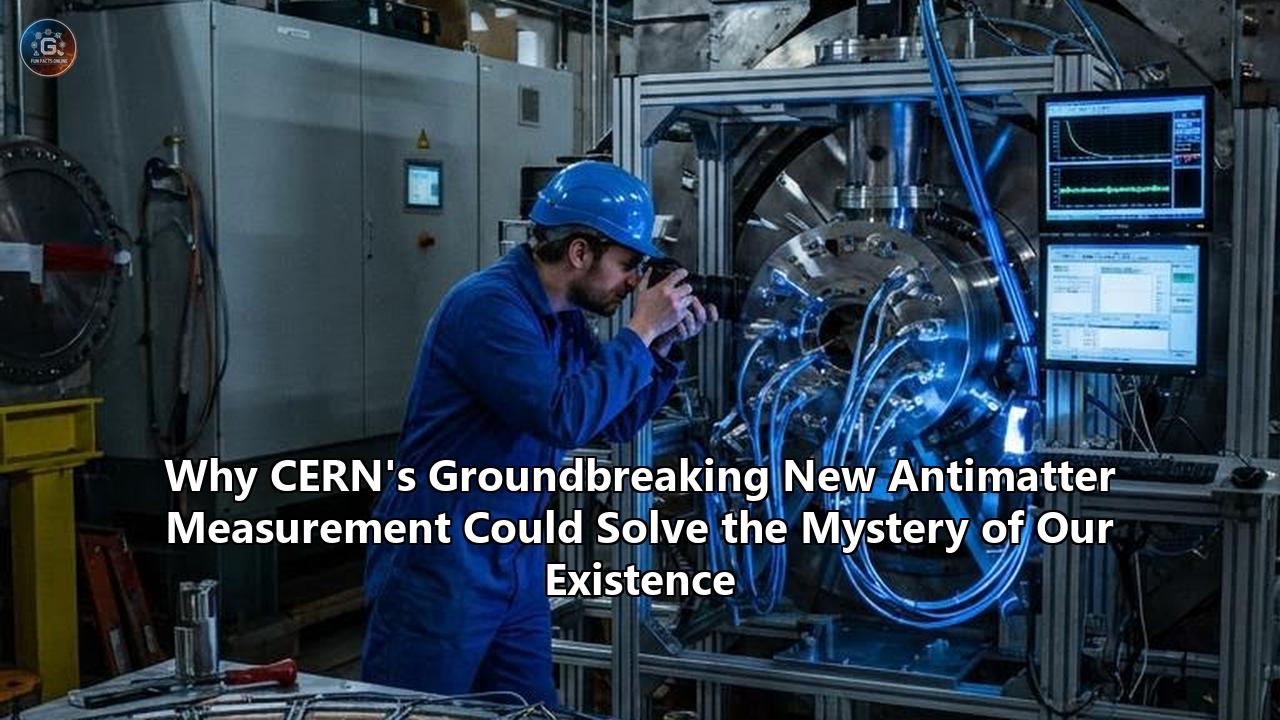
On March 24, 2026, a standard shipping truck slowly made its way across the asphalt of the European Organization for Nuclear Research (CERN) campus on the Franco-Swiss border. To an outside observer, it was an unremarkable transit. Yet, secured inside the vehicle’s cargo hold was one of the most volatile and precious payloads in human history: a cloud of 92 antiprotons, suspended in a portable cryogenic vacuum chamber.
This historic transport, executed by the BASE-STEP project under the Baryon Antibaryon Symmetry Experiment (BASE) collaboration, marked the first time that antimatter had been successfully moved by road. By detaching a Penning trap containing the subatomic antiparticles from the massive electromagnetic infrastructure of CERN's Antimatter Factory, loading it onto a truck, and maintaining the sample's stability over a five-kilometer journey, physicists demonstrated that the most fragile substance in the universe could survive the mechanical vibrations and electromagnetic fluctuations of the everyday world.
This achievement is part of a broader, rapidly accelerating campaign at CERN to resolve the deepest paradox in modern physics: the baryogenesis mystery. According to the Standard Model of particle physics and the prevailing theories of the Big Bang, the universe should not exist. When the cosmos was forged roughly 13.8 billion years ago, energy should have condensed into equal amounts of matter and antimatter. Because matter and antimatter annihilate each other instantly upon contact, releasing their entire mass as pure energy, the early universe should have undergone a complete, cataclysmic self-destruction, leaving behind nothing but a cold, expanding sea of radiation.
Yet, we inhabit a universe dominated entirely by matter. Somehow, a subtle asymmetry—an incredibly minute preference for matter over antimatter—allowed a tiny fraction of normal matter to survive the cosmic annihilation. That leftover fraction, representing just one survivor out of every billion pairs, went on to form every galaxy, star, planet, and living organism.
To discover the source of this asymmetry, CERN is deploying a suite of diverse, competing, and complementary experimental approaches. The BASE-STEP road transit is not an isolated stunt; it is a direct structural response to a series of staggering milestones achieved over the last several months:
- The First Antimatter Qubit (July 2025): The BASE collaboration kept a single trapped antiproton coherent—oscillating smoothly between two quantum spin states—for an unprecedented 50 seconds, creating the world’s first antimatter quantum bit (qubit) and opening the door to coherent quantum spectroscopy.
- The First Observation of CP Violation in Baryons (July 2025): At the high-energy frontier, the Large Hadron Collider beauty (LHCb) experiment confirmed the first solid evidence of charge-parity (CP) violation in baryons—the three-quark particles that make up the nucleus of every atom—by studying the asymmetric decay of the beauty-lambda ($\Lambda_b^0$) baryon.
- The Sympathetic Cooling Milestone (November 2025): The Antihydrogen Laser Physics Apparatus (ALPHA) collaboration reported an eightfold increase in the production rate of atomic antihydrogen, synthesizing and trapping 15,000 anti-atoms in under seven hours by using laser-cooled beryllium-9 ($^9\text{Be}^+$) ions to sympathetically cool positrons to within seven degrees of absolute zero.
These developments have set up a profound experimental rivalry. To crack the cosmic mystery of our existence, should we look to the high-energy debris of particle colliders, where short-lived heavy baryons decay in a fraction of a picosecond? Or should we look to ultra-low-energy traps, where stable antiparticles and anti-atoms are held in pristine cryogenic isolation and probed with the delicate tools of quantum metrology?
Analyzing the technical tradeoffs, physical limitations, and unique philosophies of these competing approaches reveals how this multi-pronged cern antimatter discovery campaign is pushing the boundaries of physical science.
The Cosmic Crime Scene: Understanding the Baryogenesis Paradox
To appreciate the gravity of the latest cern antimatter discovery pathways, one must first comprehend the nature of the cosmic asymmetry. The conceptual origin of antimatter dates back to 1928, when British physicist Paul Dirac formulated his relativistic wave equation for the electron. To reconcile quantum mechanics with Einstein's Special Theory of Relativity, Dirac's equation required a mathematical duplicate of the electron's quantum state, but with a positive instead of a negative electrical charge.
The physical reality of this theoretical prediction was confirmed in 1932 by Carl Anderson, who observed the track of a "positron" in a cloud chamber. In 1955, Emilio Segrè and Owen Chamberlain used the Bevatron accelerator at Lawrence Berkeley National Laboratory to produce the antiproton, proving that the basic building blocks of the atomic nucleus also possessed mirror-image counterparts.
An antiparticle is identical to its corresponding matter partner in almost every respect: it shares the exact same mass, spin, and lifetime. However, its internal quantum properties—such as electric charge, magnetic moment, and baryon number—are precisely reversed.
In the language of quantum field theory, this relationship is governed by three fundamental symmetries:
- Charge Conjugation (C): Replacing particles with their antiparticles (reversing the sign of all internal charges).
- Parity (P): Reversing the spatial coordinates of the system, essentially reflecting it in a mirror.
- Time Reversal (T): Reversing the direction of time's flow.
For decades, physicists believed that the laws of nature were invariant under both C and P symmetries individually. However, in 1964, James Cronin and Val Fitch shocked the scientific community by demonstrating that neutral kaons (mesons containing a strange quark and a down antiquark) violated the combined Charge-Parity (CP) symmetry during their weak-force decays.
   [ Matter System ]  ---( Parity / P )--->  [ Mirrored Matter ]
          |                                         |
    ( Charge / C )                            ( Charge / C )
          |                                         |
          v                                         v
 [ Antimatter System ] ---( Parity / P )---> [ Mirrored Antimatter ]
If CP symmetry were perfectly conserved, the physical laws governing a matter particle would be identical to those governing an antimatter particle operating in a mirror-image space. The discovery of CP violation proved that the universe distinguishes between matter and antimatter at a fundamental level.
In 1967, Soviet physicist Andrei Sakharov established that any physical mechanism capable of generating the observed matter-antimatter asymmetry from an initially symmetric Big Bang must satisfy three strict criteria:
- Baryon Number Violation: There must be physical processes that do not conserve the total number of baryons (protons, neutrons, and related heavy particles) in the universe, allowing a net excess of matter to be generated.
- C and CP Violation: Nature must possess asymmetries under charge conjugation and charge-parity operations. Without these violations, any process that produces an excess of baryons would be exactly counterbalanced by an identical process producing an excess of antibaryons.
- Out-of-Equilibrium Conditions: These baryon-generating interactions must occur outside of thermal equilibrium. In a state of thermal equilibrium, the rates of baryon-creating reactions are precisely equal to the rates of their reverse, baryon-destroying reactions, nullifying any net gain.
While the Standard Model of particle physics contains mechanisms for CP violation, they are mathematically confined to the weak interaction and are primarily parameterized by a single complex phase in the Cabibbo-Kobayashi-Maskawa (CKM) matrix, which describes how quarks change their identity through weak-force decays.
Herein lies the crisis: when physicists calculate the total amount of CP violation allowed by the CKM matrix, they find it is roughly ten orders of magnitude too small to account for the current density of matter in our universe. If the CKM matrix were the sole source of CP asymmetry, the observable universe would contain only enough matter to form a single galaxy, or perhaps a few stars, scattered across a vast, barren expanse of radiation.
To resolve this cosmic shortfall, physicists are forced to look beyond the established Standard Model. This search has bifurcated into two fundamentally different, yet deeply complementary, physical methodologies: high-energy colliders and low-energy precision traps.
High-Energy Colliders vs. Low-Energy Precision Traps: Two Divergent Philosophies
The search for the missing physics of baryogenesis has split the experimental physics community into two camps. Each camp approaches the problem of matter-antimatter asymmetry from a different energy scale, employing radically different experimental designs, measuring distinct physical phenomena, and managing unique systematic errors.
| Experimental Dimension | High-Energy Colliders (e.g., LHCb) | Low-Energy Precision Traps (e.g., ALPHA, BASE) |
|---|---|---|
| Primary Energy Scale | TeV (Tera-electronvolts, $10^{12}$ eV) | neV to $\mu\text{eV}$ (Nano- to Micro-electronvolts) |
| Physical Regime | Relativistic, high-temperature, dynamic collision debris | Non-relativistic, cryogenic, static trapped particles |
| Typical Target System | Short-lived heavy hadrons (beauty and charm mesons/baryons) | Stable antiparticles (antiprotons, positrons) and antihydrogen |
| Primary Measurement | Decay rates, branching ratios, angular distributions | Spectroscopic frequencies, magnetic moments, gravitational drift |
| Statistical Style | High-throughput, billions of decay events per day | Single-particle metrology, long integration times, stable environments |
| Primary Symmetry Tested | CP Violation (dynamic symmetry breaking in weak decays) | CPT Violation (fundamental coordinate symmetry of spacetime) |
| Vulnerability to Noise | High background collision noise, detector efficiency systematics | Environmental magnetic field fluctuations, quantum decoherence |
The High-Energy Philosophy: Recreating the Primordial Soup
The high-energy approach, epitomized by the LHCb experiment at CERN, operates on the principle of recreation. By smashing bunches of protons together at center-of-mass energies up to 13.6 TeV, the Large Hadron Collider acts as a highly controlled time machine, reproducing the extreme temperatures and energy densities of the universe as it existed a fraction of a nanosecond after the Big Bang.
In these violent collisions, the raw kinetic energy of the colliding protons is converted into a cascade of heavy, highly unstable particles that do not exist in the everyday world. Among these are hadrons containing the "beauty" (bottom) and "charm" quarks. These heavy quarks decay into lighter, stable particles (such as protons, kaons, and pions) through the weak interaction.
By deploying massive, multi-tiered detectors that span tens of meters, collider physicists record the trajectory, momentum, and identity of every decay product. Because these detectors can process millions of collisions per second, they compile massive statistical datasets over years of operational runs.
The goal of this approach is to observe differences in the behavior—specifically the decay rates and spatial orientations—of these heavy particles compared to their antiparticle counterparts. If a heavy baryon decays into a specific set of daughter particles slightly more frequently than its antibaryon equivalent decays into the corresponding antiparticles, CP violation has occurred.
The advantage of the high-energy approach is its direct connection to the early universe’s dynamic processes. It allows physicists to explore heavy-quark sectors where CP violation is naturally amplified by the high mass of the constituent quarks. Furthermore, it probes the weak force, which is the only force in the Standard Model known to violate CP symmetry.
However, the tradeoffs of this approach are severe:
- Extreme Complexity: The environment of a particle collider is incredibly messy. Each collision produces a storm of background particles that must be filtered out using highly sophisticated trigger systems and reconstruction algorithms.
- Systematic Asymmetries: Because the LHC detectors are built from ordinary matter, they inherently interact differently with matter than with antimatter. A detector's physical components will absorb antiprotons more readily than protons due to annihilation reactions. Correcting for these "instrumental asymmetries" to extract the genuine, underlying physical asymmetry is an incredibly challenging analytical task that requires massive simulation efforts and deep systematic controls.
- Theoretical Limits: Interpreting CP-violating signals in heavy hadrons requires calculating the effects of the strong force (Quantum Chromodynamics, or QCD) that binds quarks together. Because QCD is non-perturbative at these energy scales, the theoretical calculations are plagued by large uncertainties, making it difficult to determine whether a measured asymmetry matches the Standard Model or signals new physics.
The Low-Energy Philosophy: The Pristine Cryogenic Sanctuary
The low-energy precision trapping community, headquartered at CERN's Antimatter Factory, operates on the opposite principle: isolation and control. Rather than smashing particles to see what flies out, these physicists capture stable antiparticles (antiprotons and positrons) and slow them down to a crawl.
Using the Antiproton Decelerator (AD) and the Extra Low Energy Antiproton Ring (ELENA) at CERN, high-energy antiprotons produced by colliding protons with a stationary metal target are systematically stripped of their kinetic energy. Their velocities are reduced from nearly the speed of light to a mere fraction of a percent of that speed.
Once slowed, these antiparticles are injected into cryogenic traps, where they are suspended in ultra-high vacuum chambers by fine-tuned configurations of electric and magnetic fields (Penning-Malmberg traps). Inside these cages, the antiparticles are cooled to temperatures just a hair above absolute zero (typically around 4 Kelvin, or down to 100 milli-Kelvin in some experimental designs).
In this quiet, cryogenic sanctuary, physicists do not have to contend with the chaotic, multi-particle background of a high-energy collision. Instead, they can focus their attention on a single trapped antiproton, or a small, highly ordered cloud of antihydrogen atoms, for days, weeks, or even years.
The scientific goal here is twofold:
- Testing CPT Symmetry: By performing ultra-precise spectroscopic measurements of the energy levels of antihydrogen and comparing them to the incredibly well-studied energy levels of ordinary hydrogen, physicists can test Charge-Parity-Time (CPT) symmetry to an unprecedented number of decimal places.
- Searching for Lorentz Violation: If even the slightest difference is detected between the physical properties of a particle and its antiparticle (such as a tiny shift in the charge-to-mass ratio or the magnetic moment), it would indicate that CPT symmetry is broken. This would imply a violation of Lorentz invariance, the fundamental postulate of Einstein's Special Relativity which states that the laws of physics are the same for all observers, regardless of their orientation or velocity.
The advantage of this low-energy metrology is its unmatched precision. While collider physics measures asymmetries at the percentage or parts-per-thousand level, trapped-particle experiments can measure physical constants to parts-per-billion, parts-per-trillion, or even parts-per-quadrillion. The physical systems are clean, and the theoretical calculations of atomic hydrogen are among the most precise in all of physics, leaving zero room for strong-force QCD uncertainties to muddy the results.
Yet, this approach has its own strict set of limitations:
- Extreme Vulnerability to Environmental Noise: Because these experiments operate at such high levels of precision, they are incredibly sensitive to any external disturbance. A passing tram, a slight shift in the laboratory's ambient temperature, or the subtle magnetic field fluctuations caused by the cycling of nearby high-energy accelerators can completely destroy the quantum coherence of the trapped particles, ruining months of integration.
- Ultra-Low Production Yields: While the LHC produces billions of heavy hadrons, the Antimatter Factory operates on a literal handful of antiparticles. Even with recent upgrades, the total mass of antimatter produced in the entire history of human science is measured in nanograms, barely enough to boil a cup of tea if completely annihilated. This scarcity makes statistical scaling an uphill battle.
The Collider Front: LHCb and the Baryon CP Violation Breakthrough
For over six decades, every single observation of CP violation in a laboratory setting occurred within the meson sector. Mesons are hadrons composed of one quark and one antiquark. Because they contain both a matter and an antimatter component, they are highly unstable and undergo complex quantum mixing, making them fertile ground for observing quantum asymmetries. CP violation was first found in neutral kaons in 1964, then in B-mesons in 2001, and finally in D-mesons in 2019.
However, mesons do not form the stable matter that builds our universe. The visible cosmos is made of baryons—stable, three-quark particles like protons (composed of two up quarks and one down quark) and neutrons (one up quark and two down quarks).
If CP violation is the physical mechanism that allowed matter to survive the Big Bang, then this asymmetry must manifest within baryonic matter. Yet, despite decades of intense experimental searches at accelerators worldwide, CP violation in baryons remained entirely unobserved—until the landmark LHCb cern antimatter discovery published in Nature in July 2025.
  Meson (Observed CPV since 1964)         Baryon (First Observed CPV in 2025)
      [ Quark ]----[ Antiquark ]              [ Quark ]------[ Quark ]
                                                 \            /
                                                  \          /
                                                   [ Quark ]
The Target: The Beauty-Lambda Baryon ($\Lambda_b^0$)
To hunt for this elusive baryonic asymmetry, the LHCb collaboration focused their attention on a heavier, short-lived relative of the proton: the beauty-lambda baryon, denoted as $\Lambda_b^0$.
The $\Lambda_b^0$ baryon is composed of an up quark, a down quark, and a heavy beauty (or bottom) quark. It is essentially a neutron where one of the light down quarks has been replaced by a heavy beauty quark. Because the beauty quark is highly massive (approximately 4.2 GeV/$c^2$), it can decay through several complex weak-force pathways, making it an ideal laboratory for searching for CP-violating quantum interference.
Specifically, the LHCb physicists analyzed a highly complex four-body decay channel:
$$\Lambda_b^0 \to p K^- \pi^+ \pi^-$$
In this process, the beauty-lambda baryon decays into a proton ($p$), a negatively charged kaon ($K^-$), a positively charged pion ($\pi^+$), and a negatively charged pion ($\pi^-$). To establish CP violation, they had to compare this decay rate to the rate of the corresponding antimatter process, wherein the anti-beauty-lambda baryon ($\bar{\Lambda}_b^0$) decays into its anti-products:
$$\bar{\Lambda}_b^0 \to \bar{p} K^+ \pi^- \pi^+$$
The Statistical Sifting: Extracting 2.45% Asymmetry from 80,000 Decays
The primary experimental challenge in this search was the sheer rarity of this specific decay channel, combined with the incredibly high background noise of the LHC. The LHCb detector, a forward spectrometer designed specifically to capture the particles that fly close to the beamline where heavy quarks are preferentially produced, recorded petabytes of data during LHC Run 1 (2011–2012) and Run 2 (2015–2018).
The international collaboration of over 1,800 scientists had to write incredibly selective software triggers to filter through billions of collisions, reconstruct the precise decay vertices of the particles, and isolate the $\Lambda_b^0$ decay events. It took more than 80,000 clean, reconstructed baryon and antibaryon decay events to assemble a statistically viable sample.
Once the data was compiled, physicists calculated the CP asymmetry parameter ($A_{CP}$), which is defined as the relative difference between the decay rates of the matter baryon and the antimatter antibaryon:
$$A_{CP} = \frac{N(\Lambda_b^0 \to p K^- \pi^+ \pi^-) - N(\bar{\Lambda}_b^0 \to \bar{p} K^+ \pi^- \pi^+)}{N(\Lambda_b^0 \to p K^- \pi^+ \pi^-) + N(\bar{\Lambda}_b^0 \to \bar{p} K^+ \pi^- \pi^+)}$$
The final analysis yielded an astonishing result:
$$A_{CP} = (2.45 \pm 0.46 \pm 0.10)\%$$
This value represents a relative asymmetry of 2.45% between the matter and antimatter decay pathways, with a statistical uncertainty of 0.46% and a systematic uncertainty of 0.10%.
In particle physics, a discovery is only recognized when the statistical significance of the result exceeds five standard deviations ($5\sigma$), which corresponds to a 1-in-3.5-million chance that the observed signal is a random statistical fluctuation. The LHCb measurement deviated from zero by 5.2 standard deviations ($5.2\sigma$), marking the first definitive, peer-reviewed observation of CP violation in baryon decays.
The Core Tradeoffs of the LHCb Breakthrough
While the LHCb discovery is an extraordinary triumph that finally proves CP violation can occur within the baryonic matter that constitutes our physical reality, it highlights the core tradeoffs of the high-energy collider approach:
- Standard Model Compatibility: The measured 2.45% asymmetry is, within current theoretical errors, consistent with the predictions of the CKM matrix of the Standard Model. Because the Standard Model's CP violation is known to be too weak overall, this discovery does not immediately reveal "new" physics. Instead, it provides a highly precise anchor point. It proves the mechanism works, but it does not yet supply the massive boost in CP-violating parameters needed to explain the universe’s total matter density.
- Complex Final States: The decay of a baryon into a four-body state ($p K^- \pi^+ \pi^-$) is incredibly complex. The decay does not happen in a single step; rather, it proceeds through intermediate, highly unstable quantum resonances (such as $\Delta^{++}$ or $\Lambda(1520)$ states). Disentangling these overlapping resonances requires advanced multi-dimensional amplitude analyses, introducing systematic challenges that will require years of further study to fully resolve.
The Metrology Front: ALPHA and the Sympathetic Cooling Revolution
While the collider physicists at LHCb were sifting through the fiery remnants of high-energy collisions, the atomic physicists at the ALPHA experiment were pursuing a radically different route to the same mystery. Their target was not a fleeting, heavy baryon, but the simplest possible neutral anti-atom: antihydrogen.
Antihydrogen consists of a single negatively charged antiproton orbited by a positively charged positron. Because it is a stable, neutral atomic system, it is the perfect physical twin of ordinary hydrogen—the most precisely measured and theoretically understood system in the history of science.
If physicists can trap antihydrogen and measure its spectroscopic transitions (such as the 1S–2S two-photon transition) to the same level of precision as hydrogen (which has been measured to an accuracy of 1 part in $10^{15}$), any discrepancy between the two would immediately expose CPT violation and signal a revolutionary shift in our understanding of spacetime.
       Hydrogen (Matter)                    Antihydrogen (Antimatter)
    [ Proton (+) ] <=========> [ Electron (-) ]   [ Antiproton (-) ] <=========> [ Positron (+) ]
The Bottleneck: The Positron Temperature Barrier
The core challenge of studying antihydrogen is not making it; it is cooling it enough to trap it.
To form antihydrogen, the ALPHA collaboration must merge a cloud of antiprotons (sourced from the ELENA ring) with a cloud of positrons (sourced from a radioactive sodium-22 source). These two species are mixed inside a Penning-Malmberg trap. If they are cold enough, the opposite charges will attract, and the positron will fall into a stable orbit around the antiproton, creating neutral antihydrogen.
However, because neutral antihydrogen is not electrically charged, it cannot be held by strong electric fields. It can only be trapped using its tiny magnetic moment, which interacts with a magnetic minimum trap (an octupole and mirror coil configuration). The depth of this magnetic trap is incredibly shallow—only about 0.5 Kelvin (or about 0.00004 electronvolts) in equivalent energy.
Any antihydrogen atom with a temperature higher than 0.5 Kelvin will simply drift straight through the magnetic barrier, strike the matter-built walls of the vacuum chamber, and annihilate instantly.
Historically, this was a massive bottleneck. The positrons collected from the radioactive source would spiral around the magnetic field lines of the Penning trap, losing energy through synchrotron radiation. However, this self-cooling mechanism was highly inefficient, leaving the positron cloud too warm to readily form trappable antihydrogen.
In 2010, the ALPHA collaboration managed to trap only 38 antihydrogen atoms over an entire year of operation. Over the next decade, accumulating enough anti-atoms to run a single precise spectroscopic measurement took weeks of continuous, round-the-clock integration.
The Breakthrough: Sympathetic Beryllium-9 Cooling
To shatter this thermal barrier, the ALPHA collaboration designed a pioneering cooling technique published in Nature Communications in November 2025. Their solution was sympathetic cooling using an auxiliary cloud of laser-cooled ions.
The ALPHA team introduced a cloud of beryllium-9 ($^9\text{Be}^+$) ions into a separate section of their Penning trap. Because beryllium ions possess a net positive charge and a highly specific atomic transition, they can be directly cooled using ultraviolet laser beams tuned to a precise wavelength. By siphoning off the kinetic energy of the beryllium ions with these lasers, physicists can cool the ion cloud to within a fraction of a degree of absolute zero.
 [ Laser Beam ] ===> [ Beryllium Ions (Be+) ] <---(Collisions)--- [ Positrons (e+) ]
                          (Laser Cooled)                       (Sympathetically Cooled)
                                                                        |
                                                                        v
                                                            Drops to -266 °C (7 K)
Once the beryllium cloud was ultra-cold, the ALPHA team carefully guided the warm positron cloud into the same physical trap. As the positrons swirled through the beryllium ions, they repeatedly collided with the cold, heavy ions. Through these elastic Coulomb collisions, the positrons transferred their thermal energy to the laser-cooled beryllium, which in turn dissipated the heat via continuous laser interaction.
This sympathetic cooling process worked with astonishing efficiency, reducing the temperature of the positron cloud to $-266^\circ\text{C}$ (just 7 Kelvin).
The Result: An Eightfold Acceleration in Antihydrogen Synthesis
When these ultra-cold positrons were subsequently mixed with antiprotons, the rate of antihydrogen formation and subsequent trapping skyrocketed.
In their paper, the ALPHA collaboration reported that they successfully accumulated more than 15,000 antihydrogen atoms in under seven hours—an eightfold increase in the rate of production compared to their previous records. Over the entire course of their experimental runs, they accumulated over 2 million antihydrogen atoms.
Niels Madsen, deputy spokesperson for ALPHA and the leader of the positron-cooling project, highlighted the transformative nature of this achievement:
"The new technique is a real game-changer when it comes to investigating systematic uncertainties in our measurements. We can now accumulate antihydrogen overnight and measure a spectral line the following day".
Jeffrey Hangst, the spokesperson for the ALPHA experiment, echoed this sentiment, noting:
"These numbers would have been considered science fiction 10 years ago. With larger numbers of antihydrogen atoms now more readily available, we can investigate atomic antimatter in greater detail and at a faster pace than before".
Tradeoffs and Future Applications: The Gravity Test (ALPHA-g)
The primary tradeoff of the ALPHA approach is the sheer physical scale of the equipment required to produce a tiny amount of material. Even with 15,000 antihydrogen atoms, the total mass of the trapped antimatter is less than a trillionth of a gram.
However, this massive leap in yield is already unlocking entirely new experimental vectors. Throughout 2025 and into 2026, the collaboration has been channeling these unprecedented numbers of antihydrogen atoms into the ALPHA-g experiment.
ALPHA-g is designed to test the Weak Equivalence Principle—the corner-stone of Einstein’s General Relativity—on antimatter. By releasing the trapped antihydrogen atoms from a vertical magnetic trap and tracking exactly where they annihilate on the detector walls, physicists can measure the acceleration of antimatter due to Earth's gravity ($g$) to a precision of 1%.
If antimatter falls down with the exact same acceleration as matter, General Relativity is vindicated. If it falls at a different rate—or, in a highly speculative scenario, falls upward—it would tear down the standard gravitational paradigm and offer a radical, geometric solution to the matter-dominated universe.
The Quantum Frontier: BASE, the First Antimatter Qubit, and BASE-STEP Mobile Metrology
While ALPHA targets atomic antihydrogen, the BASE collaboration focuses on the fundamental properties of the constituent parts of antimatter, specifically the antiproton. Rather than synthesizing neutral atoms, BASE isolates a single antiproton in a cryogenic Penning trap and keeps it there for extreme periods of time—having established a record of holding a single sample stable for over a year.
The BASE experiment is designed to measure two primary physical quantities with extreme precision:
- The Charge-to-Mass Ratio: The relative electrical charge of the antiproton compared to its inertial mass.
- The Magnetic Moment (g-factor): The intrinsic magnetic strength of the antiproton, which dictates how its quantum spin precesses in an external magnetic field.
If CPT symmetry is an absolute law of nature, the charge-to-mass ratio and the magnetic moment of the proton and the antiproton must be identical in magnitude, but opposite in sign. Any microscopic deviation would immediately provide the symmetry-breaking mechanism required to explain the baryon asymmetry of the universe.
To push these measurements to the highest levels of precision, the BASE collaboration has introduced two profound technical breakthroughs: the creation of the first antimatter qubit and the execution of the BASE-STEP portable antimatter transport.
July 2025: The First Antimatter Qubit
To measure the magnetic moment of a trapped antiproton, physicists must determine the frequency at which its spin flips when exposed to a radiofrequency drive. This technique, known as coherent quantum transition spectroscopy, requires tracking the evolution of the antiproton's quantum spin state without destroying it.
In July 2025, the BASE collaboration published a breakthrough in Nature. For the first time, they successfully kept a single trapped antiproton oscillating smoothly between two different quantum states (spin-up and spin-down) for almost a minute (50 seconds).
[ Spin Up / State 0 ] <=======( 50 Seconds of Coherence )=======> [ Spin Down / State 1 ]This achievement represents the demonstration of the world's first antimatter qubit. In quantum mechanics, any transition between states is highly vulnerable to quantum decoherence—the process by which interactions with the surrounding environment destroy the phase relationship between the quantum states, collapsing the system.
By achieving a spin coherence time of 50 seconds in an antiparticle system, BASE proved that quantum information processing and quantum sensing techniques could be directly applied to antimatter. Stefan Ulmer, the spokesperson for the BASE collaboration, explained the significance:
"This represents the first antimatter qubit and opens up the prospect of applying the entire set of coherent spectroscopy methods to single matter and antimatter systems in precision experiments. Most importantly, it will help BASE to perform antiproton moment measurements in future experiments with 10- to 100-fold improved precision".
The Noise Problem: The Industrial Curse of the Antimatter Factory
However, this extraordinary quantum sensitivity immediately ran into a physical wall: the noise environment of CERN's main site.
The Antimatter Factory is an industrial-scale research facility. It sits adjacent to the massive accelerators that feed the Large Hadron Collider. The cycling of these heavy magnets, the operation of nearby electrical substations, and even the vibration of cooling pumps generate significant, fluctuating magnetic fields.
While these magnetic fluctuations are negligible in daily life, to an experiment measuring a magnetic moment to twelve decimal places, they are catastrophic. The background magnetic field variations of the Antimatter Factory act as a constant source of decoherence, limiting the precision of the antiproton measurements.
Stefan Ulmer described this fundamental limitation:
“The machines and equipment in CERN's 'antimatter factory', where BASE is located, generate magnetic field fluctuations that limit how far we can push our precision measurements”.
March 2026: BASE-STEP and the Portable Antimatter Trap
To break through this environmental noise barrier, the BASE collaboration developed a bold, counter-intuitive solution: BASE-STEP (BASE Short-distance Transportable Agent for Precision metrology). If they could not shield their experiment from the noise of CERN, they would physically remove the antimatter from the accelerator complex and transport it to a quiet, dedicated laboratory.
On March 24, 2026, the team completed the world-first transport of antiprotons. They accumulated a cloud of 92 antiprotons inside an innovative, portable cryogenic Penning trap, disconnected it entirely from the ELENA deceleration line, loaded the apparatus onto a truck, and drove it five kilometers across the CERN campus to an offline laboratory.
  [ ELENA Decelerator ] ===> [ Cryogenic Penning Trap ] ===> [ Loaded onto Truck ]
                                                                     |
                                                                     v
                                                            ( 5 km Road Transit )
                                                                     |
                                                                     v
  [ Precision Offline Lab ] <=========================================+
To make this transport possible, the BASE-STEP team had to design a highly compact, self-contained cryogenic system that could withstand the mechanical jolts and acceleration of a road trip while maintaining an absolute physical barrier between the antimatter and the matter of the truck. The engineering specifications of the transportable trap are extraordinary:
- Ultra-High Vacuum: The trap chamber must maintain a pressure of less than $10^{-18}$ mbar. At this extreme vacuum, there are so few residual gas molecules that a trapped antiproton has a life expectancy of several years before colliding with an ordinary matter atom.
- Cryogenic Cooling: The entire trap is cooled by liquid helium to $-269^\circ\text{C}$ (4.2 Kelvin), which keeps the electronic components quiet and maintains the ultra-high vacuum through cryogenic pumping.
- Active Magnetic and Electric Fields: Robust electric and magnetic fields must be continuously maintained at the center of the cryogenic chamber to keep the antiprotons precisely suspended, preventing them from drifting even a fraction of a millimeter and touching the chamber's physical walls.
- Vibration Isolation: The trap structure was meticulously engineered with mechanical dampening systems to absorb road shocks, ensuring that bumps, speed humps, or sudden stops did not jar the antiprotons out of their magnetic cradle.
The success of this 20-minute road test demonstrated that portable antimatter metrology is a viable scientific reality. Christian Smorra, the head of the BASE-STEP project, outlined the long-term vision of this technology:
"Our aim with BASE-STEP is to be able to capture antiprotons and deliver them to dedicated precision laboratories at CERN, Düsseldorf, Leibniz University Hannover and possibly elsewhere. We validated the concept with protons last year, but today's success with antiprotons represents a major breakthrough".
By separating the generation of antimatter from its measurement, BASE-STEP has decoupled precision metrology from accelerator schedules. It allows physicists to transport antimatter to specialized metrology laboratories equipped with the quietest environments and the most advanced optical clocks in the world, pushing the search for CPT violation into a brand-new regime.
CPT Symmetry on Trial: Standard Model vs. New Physics
To understand why these low-energy measurements have such profound implications for our understanding of existence, we must examine the physical difference between CP violation and CPT violation.
Within the standard mathematical framework of physics, CP violation is not only allowed; it is a natural, integrated feature of the weak interaction. The CKM matrix accommodates CP violation through a complex phase, which represents a simple rotation of quark states in a multi-dimensional space. While this standard CP violation is too small to explain why we exist, its existence does not break the rules of quantum field theory.
CPT violation, however, is a completely different beast.
The CPT Theorem, formulated by physicists like Wolfgang Pauli, Julian Schwinger, and John Bell, states that any local, Lorentz-invariant quantum field theory with a stable vacuum must conserve the combined symmetry of Charge, Parity, and Time (CPT).
                                [ CPT Symmetry ]
                               /                \
                              /                  \
                             v                    v
              [ Conserved / Standard Model ]    [ Violated / New Physics ]
                     |                                  |
                     |                                  v
                     v                     * Lorentz Invariance Broken
             * Matter & Antimatter          * Einstein's Relativity Fails
               strictly symmetric           * Spacetime has preferred direction
               in mass, lifetime,           * Gravity acts asymmetrically
               and magnetic moment          * Quantum Field Theory rewritten
If CPT symmetry is perfectly conserved, then:
- The mass of a particle and its antiparticle must be identical to infinite decimal places.
- The magnetic moment of a particle and its antiparticle must be exactly equal in magnitude and opposite in sign.
- The lifetime of a particle and its antiparticle must be identical.
- The atomic transitions (such as the energy required to jump from the 1S to the 2S state) of hydrogen and antihydrogen must be identical.
If any of the low-energy experiments at CERN find even a tiny discrepancy in these properties, it would mean that CPT symmetry is violated.
The violation of CPT symmetry would represent a catastrophic failure of our current physical paradigm. It would mean that Lorentz invariance—the core postulate of Einstein’s theory of Special Relativity, which underpins all of modern cosmology and high-energy physics—is broken at some microscopic scale.
While this sounds alarming, it is exactly the kind of "crisis" that could solve the mystery of our existence.
How CPT Violation Explains the Universe
If CPT symmetry is broken at a fundamental level, it provides a radical, elegant solution to the baryogenesis paradox that bypasses the limitations of the Standard Model:
- Inherent Thermodynamic Asymmetry: If the masses of particles and antiparticles are not perfectly identical, then in the ultra-hot, dense plasma of the early universe, the thermal equilibrium would naturally favor the production of one species over the other. As the universe expanded and cooled, this microscopic mass difference would naturally lead to a massive survival imbalance, leaving behind a matter-dominated universe without requiring any complex out-of-equilibrium decay pathways.
- A Preferred Direction in Spacetime: A violation of Lorentz invariance would mean that spacetime has an inherent, fundamental orientation. This "spacetime background" could interact differently with the spins of matter particles versus antimatter particles, driving a physical wedge between their behaviors during the very first fractions of a second after the Big Bang.
Comparing the Pillars: A Multi-Vector Analysis of CERN's Antimatter Strategy
The race to solve the baryogenesis mystery is not a winner-take-all competition; it is a complementary, multi-vector assault on a single, massive physical wall. Each of the core experimental programs at CERN provides a distinct piece of the puzzle.
To understand how these programs fit together, we can compare and contrast their key characteristics, analytical tradeoffs, and potential to uncover new physics.
1. High-Energy Decay Rates (LHCb)
- Focus: CP violation in unstable, heavy baryons ($\Lambda_b^0$).
- Primary Parameter Tested: Weak decay rates and angular decay parameters.
- Scale of Precision: $10^{-2}$ to $10^{-3}$ (percentage level precision).
- Vulnerability to Systematics: Very high. Requires correcting for complex detector material interactions and non-perturbative strong-force (QCD) background effects.
- Role in Solving Existence: Directly measures dynamic, weak-force symmetry breaking. If LHCb detects an anomaly in the decay rates that exceeds Standard Model predictions, it will point directly to new, heavy CP-violating particles (such as a second Higgs doublet or supersymmetric partners) that operated in the early universe.
2. Low-Energy Atomic Spectroscopy (ALPHA)
- Focus: CPT symmetry in neutral antihydrogen atoms.
- Primary Parameter Tested: Optical and hyperfine transition frequencies (e.g., 1S-2S transition).
- Scale of Precision: $10^{-12}$ to $10^{-15}$ (parts-per-trillion and beyond).
- Vulnerability to Systematics: Moderate. Extremely sensitive to residual magnetic fields and thermal movement, which is why the 2025 sympathetic cooling breakthrough is so critical.
- Role in Solving Existence: Provides the ultimate clean test of spacetime coordinate symmetries. If ALPHA measures a spectral line shift in antihydrogen compared to hydrogen, it proves that the universe does not treat matter and antimatter equally under electromagnetic interactions, necessitating a rewrite of quantum field theory.
3. Single-Particle Metrology (BASE)
- Focus: CPT symmetry in isolated antiprotons.
- Primary Parameter Tested: Magnetic moment ($g$-factor) and charge-to-mass ratio.
- Scale of Precision: $10^{-9}$ to $10^{-12}$ (parts-per-billion to parts-per-trillion).
- Vulnerability to Systematics: High sensitivity to local electromagnetic noise. This has been directly addressed by the 2025 antimatter qubit and the 2026 BASE-STEP mobile transport projects.
- Role in Solving Existence: Tests the fundamental electromagnetic and inertial constants of the core baryonic building block of our universe. A tiny shift in the antiproton's magnetic moment compared to the proton's would reveal that the building blocks of matter and antimatter have structurally different internal electromagnetic structures.
                    [ The Baryogenesis Puzzle ]
                                |
        +-----------------------+-----------------------+
        |                       |                       |
        v                       v                       v
 [ Dynamic Decay Asymmetries ]  [ Atomic Spectroscopy ]  [ Single-Particle Metrology ]
  - LHCb (Collider Front)        - ALPHA (Metrology)      - BASE (Quantum Front)
  - Probes early universe        - Probes CPT via         - Probes fundamental
    via heavy baryon decay         antihydrogen           constants of single
    in high-energy collisions      spectral lines         antiprotons in traps
The Analytical Tradeoffs in Action
This comparative mapping reveals the strategic wisdom of CERN's multi-pronged approach.
LHCb operates at the "dirty but realistic" end of the spectrum. It operates in the same relativistic, high-temperature regime that characterized the actual baryogenesis epoch. However, its measurements are plagued by massive backgrounds, detector asymmetries, and the mathematical quagmire of non-perturbative QCD. Collider physics can show us where symmetry is broken, but the complexity of the hadronic systems makes it incredibly difficult to isolate the exact quantum numbers of the new physics.
Conversely, BASE and ALPHA operate at the "clean but synthetic" end. They construct pristine, artificial quantum environments that are mathematically quiet and theoretically perfect. If BASE finds a difference in the twelfth decimal place of the antiproton's charge-to-mass ratio, there is no hadronic mud to wipe away; the result is clean, clear, and mathematically indisputable. However, these experiments operate at temperatures just above absolute zero—far removed from the high-temperature plasma of the early universe.
Thus, these two approaches act as the scissors of modern physics, cutting away at the mystery from both ends: colliders hunt for the dynamic forces that drove the asymmetry in the hot early universe, while precision metrology traps hunt for the permanent, structural scars left behind in the basic properties of spacetime.
The Metrology Battle: Traps, Decelerators, and Transport Technologies
To fully understand the mechanics of this cern antimatter discovery matrix, one must look at the specific technologies being deployed to cool, store, and transport these highly volatile substances.
The production of low-energy antimatter at CERN is a highly sequential process that relies on a series of nested decelerators and trapping technologies:
  [ Proton Beam ] ===> [ Metal Target ] ===> [ Antiprotons (3.57 GeV) ]
                                                     |
                                                     v
                                          [ Antiproton Decelerator (AD) ]
                                            (Slipped to 5.3 MeV)
                                                     |
                                                     v
                                          [ ELENA Decelerator Ring ]
                                            (Cooled to 100 keV)
                                                     |
                                                     v
                                         [ Precision Experiments ]
                                         (BASE, ALPHA, AEgIS, GBAR)
The Deceleration Chain: AD and ELENA
- Antiproton Decelerator (AD): The AD is a 182-meter-circumference ring that takes hot, relativistic antiprotons produced by colliding protons from the Proton Synchrotron with a stationary metal target (at energies of 3.57 GeV) and slows them down to an energy of 5.3 MeV. This deceleration is achieved through a combination of stochastic cooling (using pickup electrodes and kicker magnets to smooth out the beam's energy spread) and electron cooling (where a cold electron beam is merged with the antiproton beam to absorb their thermal energy).
- ELENA (Extra Low Energy Antiproton Ring): ELENA is a hexagonal deceleration ring with a circumference of only 30.4 meters. It is designed to take the 5.3 MeV antiprotons from the AD and slow them down even further to an energy of just 100 keV. Because the antiprotons are so much slower, they can be decelerated using thin foil sheets and captured in electromagnetic traps with incredibly high efficiency, increasing the trap-capture rates of experiments like BASE and ALPHA by orders of magnitude.
Comparing Trapping Technologies: Penning vs. Paul Traps
Once the antiprotons reach the experiments, they must be captured and cooled. Different experiments deploy different trapping configurations depending on their physical targets:
- Penning Traps (Deployer: BASE, ALPHA, BASE-STEP): Penning traps use a combination of a strong, uniform axial magnetic field (typically produced by a superconducting solenoid) to confine particles radially, and a series of hollow, cylindrical electrodes that create an electrostatic potential well to confine the particles axially.
Tradeoffs: Penning traps are exceptionally stable and can hold charged particles for years. However, they require massive, heavy superconducting magnets that consume significant power and liquid helium, making them structurally difficult to make portable.
- Paul Traps (Radiofrequency Traps): Paul traps use dynamic, time-varying radiofrequency (RF) quadrupole electric fields to confine ions without requiring a massive magnetic field.
Tradeoffs: They are much lighter and highly compact, making them ideal for portability. However, the rapidly oscillating electric fields introduce "micromotion" and RF heating, which can disrupt the delicate quantum states of trapped antiprotons, making them less suitable for ultra-high-precision CPT metrology.
The BASE-STEP Engineering Solution
To make their portable trap a reality, the BASE-STEP collaboration chose to adapt the Penning trap design, overcoming the weight and power limitations through a masterclass in cryogenic engineering:
- Superconducting Solenoid without Liquid Helium Bath: Traditional Penning traps require the superconducting magnet to be physically immersed in a massive tank of liquid helium, which must be continuously vented and refilled. This is highly dangerous and physically impossible to operate on a moving truck. BASE-STEP uses a specialized "cryofree" superconducting magnet that is cooled via closed-cycle pulse-tube cryocoolers, drastically reducing the system's weight and liquid helium inventory.
- Ultra-Dense Magnetic Shielding: To prevent the earth's magnetic field and local environmental magnetic noise from shifting the trapping potential during transit, the BASE-STEP chamber is enclosed in multiple nested layers of high-permeability Mu-metal and superconducting shields, isolating the internal 92 antiprotons from the fluctuating electromagnetic world outside.
What Lies on the Horizon: The Next Milestones in Antimatter Metrology
As we look ahead, the implications of this multifaceted cern antimatter discovery campaign extend far beyond the walls of the Geneva laboratory. Each of these experimental pathways is marching toward a series of critical milestones that could finally crack the baryogenesis mystery.
The Long-Distance Transport Campaign
With the successful five-kilometer campus transit of 92 antiprotons on March 24, 2026, the BASE-STEP collaboration has validated their transportable metrology paradigm. The next phase of this project is highly ambitious.
Over the next few run cycles, the team plans to scale up the capacity of the portable trap to hold larger quantities of antiprotons. They will then initiate long-distance transport campaigns across Europe.
The ultimate target is to deliver high-quality, ELENA-decelerated antiprotons directly to partner laboratories, such as:
- Heinrich Heine University in Düsseldorf: Home to some of the world's most advanced optical clocks and atomic metrology setups.
- Leibniz University Hannover: A global hub for quantum logic spectroscopy and high-precision frequency comb metrology.
By feeding these quiet, offline laboratories with a steady stream of portable antimatter, physicists can perform comparisons between protons and antiprotons using quantum logic spectroscopy—a technique that can push the precision of CPT measurements by several orders of magnitude, far beyond what is currently physically possible within the noisy confines of the CERN accelerator complex.
Probing the Gravitational Mystery of Antimatter
Simultaneously, the ALPHA-g experiment is currently utilizing the massive influx of antihydrogen atoms unlocked by the November 2025 sympathetic cooling breakthrough to run their gravitational descent measurements.
The next key milestone for ALPHA-g is to push their measurement of the gravitational acceleration of antimatter ($g_{\text{anti}}$) past the 1% precision mark. If they observe even the slightest deviation from $1g$, it will provide the first direct proof of an asymmetric interaction between gravity and antimatter, offering a brand-new geometric mechanism for the cosmic survival of matter.
    [ Standard Relativity Prediction ]          [ Speculative Asymmetry ]
       Matter Accel:    1.0g                      Matter Accel:    1.0g
       Antimatter Accel: 1.0g                      Antimatter Accel: 0.99g (or different)
The Search for Light Dark Matter via Antimatter
An emerging frontier that intersects with these trapped-particle experiments is the search for dark matter. Some theoretical frameworks beyond the Standard Model suggest that certain light dark matter candidates—such as axions or axion-like particles (ALPs)—might couple differently to matter than to antimatter.
If these dark matter particles are passing through the Earth, they would generate a tiny, oscillating magnetic field. Because BASE can monitor the spin precession frequency of a single trapped antiproton and a single trapped proton simultaneously, they can search for microscopic, time-dependent variations in the difference between their $g$-factors.
A detection of such an oscillation would simultaneously solve two of the greatest mysteries in modern cosmology: the nature of dark matter and the matter-antimatter asymmetry of the universe.
The Ultimate Cosmic Question
The staggering variety of experimental approaches at CERN—from the raw, high-energy collisions of LHCb to the cold, quiet quantum traps of BASE and ALPHA—demonstrates the sheer scale of the intellectual effort being directed at the baryogenesis paradox.
The recent acceleration of breakthroughs is transforming antimatter from a volatile, exotic substance of science fiction into a highly controlled, portable, and coherent physical system. We are no longer limited to merely observing the debris of the early universe; we can now trap its mirror image, hold it stable for a year, load it onto a truck, and inspect its quantum heart with the most precise instruments ever built by human hands.
As these competing technologies continue to push their precision to the absolute limits of physical measurement, we draw closer to answering the ultimate, existential question: Why is there something rather than nothing?
Whether the final answer is found in the asymmetric decay of a beauty-lambda baryon at the LHC, the laser-cooled spectral lines of an antihydrogen atom, or a tiny, single-particle magnetic shift measured in a quiet laboratory in Hannover, the result will fundamentally rewrite our understanding of space, time, and our own place within the cosmos. We are, after all, the unlikely survivors of a cosmic near-extinction event—and the keys to understanding our survival are finally being turned in the laboratories of Geneva.
Reference:
- https://www.gsi.de/en/start/news/details?tx_news_pi1%5Baction%5D=detail&tx_news_pi1%5Bcontroller%5D=News&tx_news_pi1%5Bnews%5D=6234&cHash=2f79aa6b4aed4352b47391f6df2259da
- https://en.wikipedia.org/wiki/2026_in_science
- https://home.cern/quantum-leap-antimatter-measurements/
- https://igfae.usc.es/igfae/en/lhcb-cern-asimetria-cp-barions/
- https://home.cern/new-piece-matter-antimatter-puzzle/
- https://www.futuretimeline.net/blog/2025/11/24-breakthrough-in-antimatter-production.htm
- https://home.cern/breakthrough-antimatter-production/
- https://lhcb-outreach.web.cern.ch/2025/03/25/observation-of-the-different-behaviour-of-baryonic-matter-and-antimatter/
- https://sciencemediacentre.es/en/cerns-lhcb-observes-matter-antimatter-asymmetry-baryons-first-time
- https://www.researchgate.net/publication/400540049_CP_Violation_in_Baryon_Decays_at_LHCb
- https://modernsciences.org/cern-discovery-matter-antimatter-universe-july-2025/
- https://pubs.aip.org/physicstoday/online/44546/Matter-antimatter-asymmetry-is-observed-in-baryon
- https://www.sfu.ca/physics/news-events/news/2025/antimatter-production.html
- https://orbit-rri.org/general-news-updates/first-in-history-scientists-at-cern-will-attempt-to-transport-antimatter/