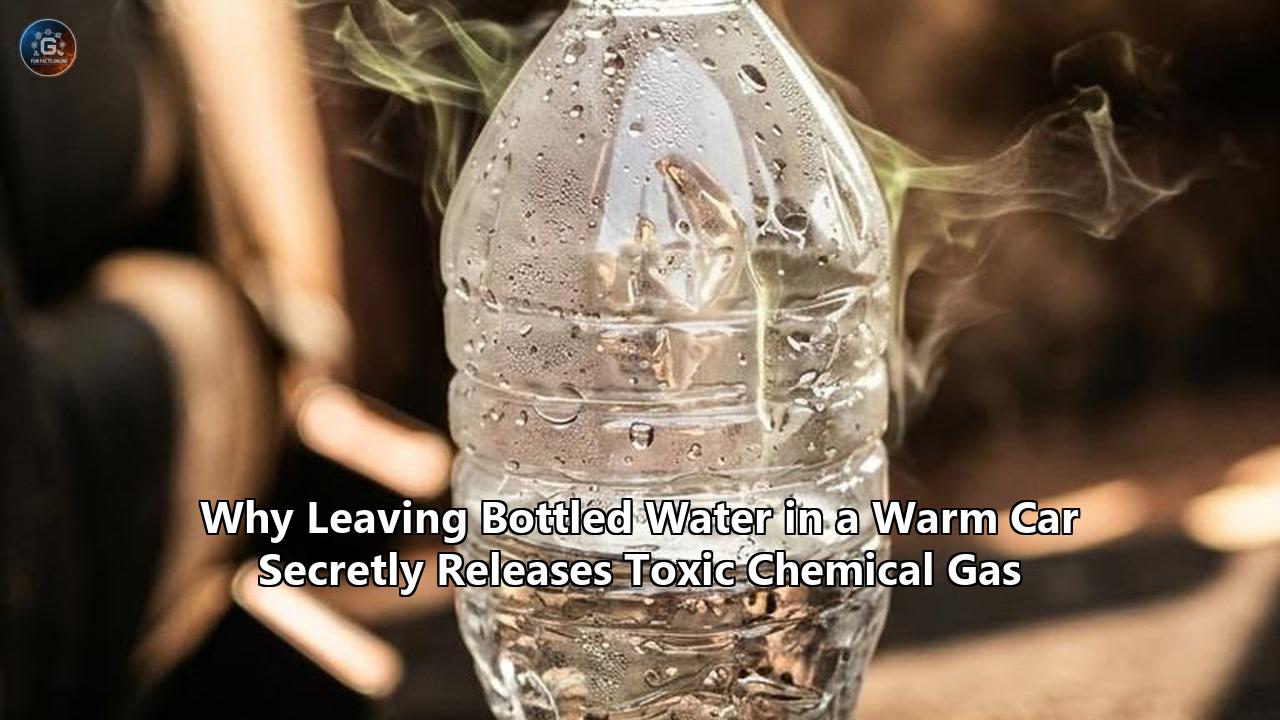
Scientists studying environmental toxicology have uncovered a disturbing phenomenon occurring inside millions of vehicles every summer: a standard plastic bottle left in a warm car undergoes rapid chemical degradation, off-gassing volatile organic compounds (VOCs) into the interior air space of the bottle while simultaneously leaching heavy metals and microplastics into the liquid.
Recent findings published in Eco-Environment & Health by a research team at Jinan University, led by Dr. Ruijuan Liu, demonstrated that Polyethylene Terephthalate (PET) water bottles exposed to sunlight and heat release up to 46 distinct volatile organic chemicals into the bottle’s internal headspace. These volatile compounds—including aldehydes like formaldehyde and acetaldehyde, along with complex alkanes and aromatic hydrocarbons—accumulate rapidly as temperatures rise. When an individual opens a heated bottle, these pressurized gases disperse into the vehicle cabin air and are inhaled directly, while the dissolved chemical payload is ingested with every sip.
Combined with 2024 nanoplastic mapping research from Columbia University—which revealed that a single bottle of water contains roughly 240,000 microscopic plastic fragments—the emerging consensus among chemical safety experts is clear: leaving a bottled water in hot car environment transforms a basic hydration tool into a continuous chemical reaction vessel.
Tracing how scientists uncovered this silent chemical transformation reveals a story spanning two decades, moving from dismissed internet myths to rigorous molecular laboratory analyses.
       CHRONOLOGY OF DISCOVERY: HEAT-INDUCED PET DEGRADATION

 2000s          2008–2014         2015–2020          2024             2024–2026
---|----------------|----------------|----------------|----------------|---
Internet Hoaxes  Antimony & Thermal  Aldehyde & VOC   Nanoplastic      Headspace VOC Gas
Obscure Real     Thresholds          Migration        Explosion        & Active Photolysis
Plastic Risks    Identified          Mapped           (240k particles) Off-Gassing Proven
2000s–2010: The Dioxin Myth and Early Catalyst Clues
The public debate surrounding plastic bottles in high-temperature environments began not with rigorous laboratory research, but with a viral internet hoax in the early 2000s. Chain emails warned millions of consumers that freezing or heating plastic water bottles released cancer-causing "dioxins". Public health organizations, including Johns Hopkins Medicine and the American Cancer Society, issued swift debunkings, pointing out that single-use plastic bottles do not contain dioxins at all.
However, while the media focused on debunking the dioxin myth, material scientists were quietly discovering that heat was driving dangerous chemical shifts inside PET plastics—just through entirely different chemical pathways.
In 2008, environmental engineer Dr. Jenna Jambeck and her colleagues published a landmark study in the Journal of Environmental Monitoring examining PET (#1 plastic), the universal material used for commercial water packaging. They tracked the behavior of antimony trioxide ($Sb_2O_3$), a chemical catalyst used during the industrial polymerization of PET resin.
At room temperature (20°C / 68°F), the antimony remained locked inside the plastic matrix, leaching into the water at negligible, safe levels. But when the team elevated the temperature to 60°C (140°F)—a baseline temperature routinely recorded inside enclosed vehicles during sunny weather—antimony migration spiked dramatically. Over extended exposure, antimony levels in the water exceeded European drinking water health guidelines.
This was the first major scientific turning point: while dioxins were a fabrication, temperature was indisputably acting as an accelerator for toxic catalyst migration.
2014: The Florida Thermal Benchmark
The escalation moved from theoretical lab experiments to real-world conditions in 2014, when researchers at the University of Florida, led by Dr. Lena Ma, conducted a comprehensive thermal stress study on 20 commercial brands of bottled water.
Dr. Ma’s team subjected the bottles to 158°F (70°C) for four weeks—simulating the conditions a case of water faces when left in a trunk, delivery truck, or backseat during peak summer months. The results revealed a direct, linear relationship between temperature, duration, and chemical release:
- Antimony Concentrations: Surged continuously throughout the four-week window, rising to levels that raised toxicological concerns for long-term consumption.
- Bisphenol A (BPA): Although PET is formulated without BPA, trace contamination from processing equipment was detected leaching into the liquid under extreme heat.
- Phthalates: Flexible plasticizers migrated out of bottle walls and cap liners as thermal energy loosened the weak hydrogen bonds holding the additives inside the polymer.
"When you heat plastic, the polymer chains relax," explained Dr. Rolf Halden, Director of the Biodesign Center for Environmental Health Engineering at Arizona State University, discussing heat-induced leaching. "The chemicals aren't covalently bound to the plastic matrix; they're embedded within it. Heat gives those molecules the kinetic energy they need to migrate into whatever liquid or air space is adjacent."
The Florida study established 104°F (40°C) as the critical tipping point where chemical leaching shifts from a passive trickle to an aggressive cascade.
2015–2020: Unmasking Aldehydes and Temperature Kinetics
As analytical equipment grew more precise, researchers expanded their focus beyond liquid leaching to study volatile chemical emissions occurring inside the container.
In 2018, European food packaging researchers published analyses detailing the formation of low-molecular-weight aldehydes in PET bottles. Polyethylene terephthalate is synthesized by reacting ethylene glycol with terephthalic acid. Under heat stress, thermo-oxidative degradation occurs: the polymer backbone undergoes scission, forming acetaldehyde ($CH_3CHO$) and formaldehyde ($HCHO$) as thermal byproducts.
These aldehydes are highly volatile. While a portion dissolves into the water—giving water left in a bottled water in hot car scenario a sweet, stale, or metallic taste—the rest off-gasses into the air pocket trapped between the water surface and the bottle cap.
                 THERMAL DEGRADATION PATHWAY IN PET BOTTLES

   Solar Radiation & Interior Heat (140°F–180°F / 60°C–82°C)
                             │
                             ▼
              PET Polymer Backbone Chain Scission
                             │
            ┌────────────────┴────────────────┐
            ▼                                 ▼
   Gas-Phase Off-Gassing             Liquid-Phase Leaching
  (Headspace Gas Accumulation)      (Dissolved Contaminants)
   • Acetaldehyde                    • Antimony Catalyst ($Sb_2O_3$)
   • Formaldehyde                    • Phthalates (DEHP, DBP)
   • Hexanal & Alkanes               • Micro- & Nanoplastics
   • Aromatic Hydrocarbons           • Disinfection Byproducts
The European studies revealed that carbonated water accelerated this process because dissolved carbon dioxide ($CO_2$) increased interior bottle pressure, forcing volatile aldehydes out of the polymer matrix at an even higher rate.
By 2020, science had established that heat converts PET plastic from an inert barrier into an active source of chemical emissions. Yet the full scale of what was being off-gassed—and the structural breakdown of the plastic itself—remained severely underestimated.
2024: The Nanoplastic Revolution
In January 2024, a team from Columbia University published findings in the Proceedings of the National Academy of Sciences (PNAS) that altered the global understanding of plastic degradation. Utilizing a advanced technique called dual-laser Stimulated Raman Scattering (SRS) microscopy, researchers Naixin Qian and Dr. Beizhan Yan analyzed popular commercial bottled water brands.
Previous studies using standard microscopes had identified roughly 300 microplastic fragments per liter of bottled water. The Columbia team discovered that the actual number was closer to 240,000 plastic particles per liter—90% of which were nanoplastics, measuring less than 1 micrometer in size.
                       PLASTIC PARTICLE CONCENTRATIONS

 Legacy Detection Methods (Pre-2024)
 [■] ~300 Microplastic Particles / Liter

 Advanced SRS Optical Imaging (Columbia Univ. 2024 Study)
 [██████████████████████████████████████████████████] ~240,000 Particles / Liter (90% Nanoplastics)
Crucially, the team identified PET plastic as one of the predominant polymer types. Their work demonstrated that PET bottles continuously shed physical particles off their inner walls due to mechanical stress, factory bottling friction, and—most aggressively—temperature spikes.
When a bottled water in hot car scenario occurs, intense thermal expansion causes the inner lining of the PET bottle to expand, crack at the microscopic scale, and shed billions of nanoplastic fragments directly into the fluid. These nanoplastics are small enough to pass directly through human intestinal walls, enter the bloodstream, and penetrate cellular membranes.
2024–2026: The Breaking Moment—HEADSPACE VOC GAS & PHOTOLYSIS
The most alarming development in this research timeline came between late 2024 and 2026, when environmental chemists shifted their attention from the liquid inside the bottle to the compressed air pocket beneath the cap.
The team led by Dr. Ruijuan Liu at Jinan University published ground-breaking work in Eco-Environment & Health, systematically analyzing what happens when PET bottled water is subjected to direct sunlight and high ambient temperatures. The researchers didn't just test water; they sampled the gas phase—the volatile air pocket trapped above the water level inside the sealed bottle.
The results were stark:
- Volatile Gas Off-Gassing: Sealed PET bottles exposed to solar UV-A radiation and heat off-gassed between 6 and 46 distinct volatile organic chemicals into the internal headspace air within 24 to 72 hours.
- Chemical Breakdown: The detected chemical gases included harmful compounds such as formaldehyde, acetaldehyde, hexanal, 2,4-di-tert-butylphenol, and various alkylated aromatic hydrocarbons.
- Photolytic Acceleration: Sunlight and UV radiation triggered photo-oxidation on the interior surface of the bottle, breaking down the polymer into gaseous organic fragments far faster than heat alone.
- Headspace Inhalation Exposure: When a consumer opens a hot, sun-exposed water bottle, the pressurized gas vents outward immediately. Inhaling this small, concentrated burst delivers VOCs directly to respiratory tissues, bypassing the digestive system entirely.
Complementary real-world vehicle testing conducted in 2025 by independent environmental testing labs like Water Filter Guru verified these lab findings under consumer conditions. Single-use PET water bottles left inside a vehicle for just three days during warm weather developed measurable levels of bis(2-ethylhexyl) phthalate (DEHP) alongside volatile trihalomethanes (THMs) like chloroform at 17 parts per billion (ppb).
Stainless steel and glass containers tested in the exact same vehicles under identical heat profiles showed zero chemical off-gassing and zero leaching.
The Chemistry of the Hot Car Greenhouse
Understanding why a bottled water in hot car setting becomes so toxic requires examining the severe atmospheric physics inside a closed automobile.
A vehicle acts as a solar heat trap. Shortwave solar radiation passes freely through the glass windows, striking interior surfaces such as the dashboard, seats, and floor mats. These dark materials absorb the energy and re-radiate it as longwave infrared radiation, which cannot easily escape through the glass.
                  THE VEHICLE GREENHOUSE THERMAL PROFILE

 Outside Ambient Air Temp: 85°F (29°C)
 ─────────────────────────────────────────────────────────────────
 Time Elapsed       Cabin Interior Temp        Dashboard Surface Temp

 10 Minutes         104°F (40°C)               135°F (57°C)
 20 Minutes         119°F (48°C)               155°F (68°C)
 30 Minutes         125°F (52°C)               168°F (75°C)
 60+ Minutes        140°F–160°F (60°C–71°C)     180°F–200°F (82°C–93°C)
Within 60 minutes on an 85°F summer day, the internal ambient air temperature of a parked car reaches between 140°F and 160°F (60°C to 71°C). A water bottle sitting directly on a dashboard or leather seat can reach surface temperatures approaching 180°F to 200°F (82°C to 93°C).
At these temperatures, four distinct chemical processes occur simultaneously within the bottle:
1. Polymer Glass Transition Softening
Polyethylene terephthalate has a glass transition temperature ($T_g$) around 67°C to 81°C (152°F to 178°F). As the bottle temperature approaches this threshold, the rigid, crystalline polymer chains soften and expand. The intermolecular spaces widen, enabling embedded industrial additives to migrate freely.
2. Catalyst Extraction (Antimony Trioxide)
During manufacturing, antimony trioxide is added at concentrations between 150 and 300 mg/kg to facilitate polymerization. At standard room temperatures, this heavy metal remains bound in the solid polymer matrix. High heat provides activation energy that severs non-covalent bonds, leaching antimony into the water column. Antimony exposure is linked to metabolic disruption, liver dysfunction, and gastrointestinal toxicity.
3. Thermo-Oxidative Cleavage and Off-Gassing
When heat breaks the ester bonds in the PET polymer chain, terminal hydroxyl groups react to form volatile aldehydes. Acetaldehyde and formaldehyde are generated continuously inside the heated bottle walls. Because acetaldehyde has a boiling point of just 20.2°C (68.4°F), it instantly turns into a gas, pressurizing the interior bottle headspace.
4. Micro- and Nanoplastic Shedding
Thermal expansion and UV photolysis weaken the surface integrity of the plastic lining. As the water boils internally or expands against the container walls, millions of microscopic PET flakes peel off, creating high concentrations of nanoplastics.
Health Implications: Endocrine Disruption and Inhalation Risks
The human health consequences of drinking from—or inhaling vapors from—a heated plastic bottle stem from cumulative chemical toxicity rather than acute poisoning. A single sip from a warm water bottle will not send an adult to the emergency room, but repeated exposure contributes to systemic toxic burdens.
           EXPOSURE PATHWAYS & BIOLOGICAL IMPACTS

 [ HEADSPACE GAS ] ──► Inhalation ──► Lung Epithelium ──► Direct Bloodstream Entry
 (Formaldehyde/VOCs)

 [ LIQUID LEACHATE ] ──► Ingestion ──► Intestinal Wall ──► Liver/Kidney Accumulation
 (Antimony/Phthalates)

 [ NANOPLASTICS ]   ──► Ingestion ──► Systemic Vascular ──► Trans-Placental/Brain Barrier
 (<1µm Particles)                     Circulation          Penetration
Endocrine Disruption
Phthalates (such as DEHP) and residual bisphenols act as synthetic xenoestrogens. Once inside the human body, these compounds bind to estrogen, androgen, and thyroid hormone receptors, disrupting normal endocrine signaling. Chronic exposure to endocrine-disrupting chemicals (EDCs) is linked by public health researchers to lowered sperm counts, early puberty, polycystic ovary syndrome (PCOS), metabolic disorders, and thyroid dysregulation.
Respiratory Toxic Gas Inhalation
Formaldehyde and acetaldehyde—key components of the off-gassed headspace vapor identified in the Jinan University research—are known respiratory irritants and classified human carcinogens. Opening a hot plastic bottle releases a concentrated puff of these VOC vapors directly toward the nose and mouth. Inhaling volatile organic compounds introduces them straight across the delicate pulmonary membranes into arterial blood, bypassing the liver's first-pass detoxification filtering.
Cellular Toxicity from Nanoplastics
Nanoplastic fragments (<1000 nm) are smaller than human red blood cells. Research conducted by toxicologists shows these particles can penetrate human cells, trigger oxidative stress, induce mitochondrial damage, and cross both the blood-brain barrier and the placental barrier in pregnant women. Heat exposure multiplies the concentration of these cellular invaders exponentially.
Chemical Comparison: Container Materials Under Thermal Stress
Not all containers react to hot car conditions in the same way. The choice of bottle material dictates whether heating causes chemical activity or remains completely inert.
| Material Type | Primary Recycling Code / Material | Headspace VOC Off-Gassing at 140°F (60°C) | Chemical Leaching Risk (Antimony, BPA, Phthalates) | Nanoplastic Generation under Heat | Safe for Hot Car Storage? |
|---|---|---|---|---|---|
| Single-Use Plastic | Polyethylene Terephthalate (PET / PETE #1) | High (6–46 VOCs detected, Formaldehyde, Acetaldehyde) | High (Antimony leaching increases 10x–50x) | Extreme (~240,000+ particles/L base) | NO — Heat breaks bonds & off-gasses |
| Reusable Hard Plastic | Polycarbonate / Co-polyester (#7 / Various) | Moderate to High (BPS/BPA migration depending on resin) | Moderate to High (Estrogenic activity increases with heat) | Moderate (Structural degradation over repeated dishwasher cycles) | NO — Heat accelerates additive migration |
| Food-Grade Stainless Steel | 18/8 (304) Stainless Steel | Zero | Zero (Completely non-reactive) | Zero | YES — Thermally inert, insulates liquid |
| Borosilicate Glass | High-Silica Glass | Zero | Zero (Heavy-metal free) | Zero | YES — Chemically inert, heat-resistant |
Regulatory Blind Spots and the Modern Paradox
Despite accumulating scientific evidence, safety regulations for food packaging have struggled to keep pace with the real-world conditions bottled water encounters.
Both the U.S. Food and Drug Administration (FDA) and the European Food Safety Authority (EFSA) evaluate chemical migration safety based on standard storage protocols—typically testing packaging at room temperature (20°C / 68°F) or under short-term refrigerated conditions. Regulatory compliance testing rarely accounts for the extreme thermal microclimates created inside locked automobiles, delivery trucks, or unconditioned warehouses, where single-use bottles routinely sit at 140°F (60°C) for days or weeks before reaching store shelves.
                 REGULATORY GAP vs. REAL-WORLD EXPOSURE

 Regulatory Standard Testing (FDA / EFSA)
 ┌─────────────────────────────────────────────────────────┐
 │ Tested at Room Temperature: 68°F (20°C)                  │
 │ Evaluated for short-term static storage                 │
 └─────────────────────────────────────────────────────────┘
                             ▼
               FAILS TO REFLECT REAL-WORLD CONDITIONS
                             ▼
 Real-World Consumer & Supply Chain Exposure
 ┌─────────────────────────────────────────────────────────┐
 │ Vehicle Cabins / Trunks: 140°F–180°F (60°C–82°C)        │
 │ Direct Solar UV-A Exposure & Photolysis                 │
 │ Rapid Headspace VOC Off-Gassing & Nanoplastic Shedding  │
 └─────────────────────────────────────────────────────────┘
Environmental health advocacy groups are increasingly urging regulatory agencies to reform testing protocols. Demands include:
- Mandating heat-stress testing (at 60°C / 140°F minimum) for all plastics intended for liquid packaging.
- Requiring explicit warning labels on single-use plastic water bottles: "Do not leave in direct sunlight or heated vehicles."
- Establishing strict safety thresholds for volatile organic gas emissions in food-contact materials.
Practical Protocols: Mitigating Your Heat Exposure
Eliminating exposure to degraded plastics requires simple behavioral changes. Environmental health specialists recommend adopting the following strict guidelines for summer hydration:
- Adopt the "One-Way Out" Rule: If a single-use PET plastic bottle has been left in a warm car, on a dashboard, or in a hot trunk for more than a few hours, do not drink the water, and do not open the bottle close to your face. Dispose of it responsibly.
- Never Reuse Single-Use PET Bottles: Single-use PET bottles are manufactured for a single cold-use cycle. Refilling them and subjecting them to repeated thermal cycles destroys the inner polymer barrier, exponentially increasing antimony leaching, nanoplastic shedding, and VOC off-gassing.
- Switch to Vacuum-Insulated Stainless Steel or Glass: Double-wall 18/8 stainless steel and borosilicate glass bottles are chemically inert. Stainless steel insulates water, preventing it from reaching thermal degradation thresholds even when left in a sun-baked car seat.
- Mind the Supply Chain: Purchase bottled water from stores that keep inventory inside temperature-controlled spaces, avoiding outdoor pallet displays at gas stations or garden centers where solar radiation triggers photolysis long before purchase.
What to Watch Next
As analytical chemistry tools become more powerful, researchers are shifting focus toward long-term toxicological modeling. Key scientific and regulatory developments on the horizon include:
- Inhalation Toxicology Studies: Follow-up research building on Dr. Liu’s findings will quantify the precise volume of volatile organic gases absorbed by human lungs when opening heated plastic containers.
- Placental and Neural Barrier Mapping: Ongoing nanoplastic tracking studies at Columbia University and European research consortia aim to map how nanoplastics generated by heat cross human organ barriers.
- Legislative Warning Mandates: State-level environmental protection boards in the U.S. and health ministries in Europe are reviewing proposals to require high-temperature degradation warnings on single-use plastic packaging.
The scientific timeline from 2008 to today demonstrates that the danger of a bottled water in hot car setting is neither a myth nor a minor inconvenience. It is an active chemical process that transforms an everyday convenience into a steady source of toxic chemical gas, heavy metal catalysts, and microplastic pollution. Removing plastic water bottles from hot vehicles remains one of the simplest, most effective steps consumers can take to reduce their daily environmental chemical exposure.
Reference:
- https://blog.gsa-messgeraete.de/en/pet-bottles-can-release-harmful-vocs/
- https://pubmed.ncbi.nlm.nih.gov/23561160/
- https://nyruralwater.org/news/bottled-water-packed-nanoplastics-study-finds
- https://microplasticsapp.com/blog/water-bottle-left-in-hot-car-microplastics
- https://stg-fullcircle.fsewp.asu.edu/external/fact-check-plastic-water-bottles-left-in-hot-cars-dont-release-dioxins-do-leach-other-chemicals/
- https://mammothmug.com/blogs/hydration/plastic-water-bottle-heat-leaching
- https://consensus.app/search/does-the-temperature-impact-the-release-of-substan/xL-PorhVQZGJtXakvYocAw/
- https://www.springwellwater.com/safe-bottled-water-hot-car/
- https://www.abc10.com/article/news/verifyis-it-safe-to-drink-bottled-water-left-in-hot-cars/103-454986738
- https://waterfilterguru.com/plastic-water-bottle-hot-car-microplastics/
- https://www.mdpi.com/2076-3417/10/12/4321
- https://theberkey.com/blogs/water-filter/is-your-plastic-water-bottle-left-in-a-hot-car-safe-to-drink-what-happens-if-you-drink-it
- https://uknow.uky.edu/uk-healthcare/don-t-let-summer-heat-hijack-your-drink
- https://www.reddit.com/r/water/comments/1n2iwht/drinking_water_from_plastic_bottles_left_in/