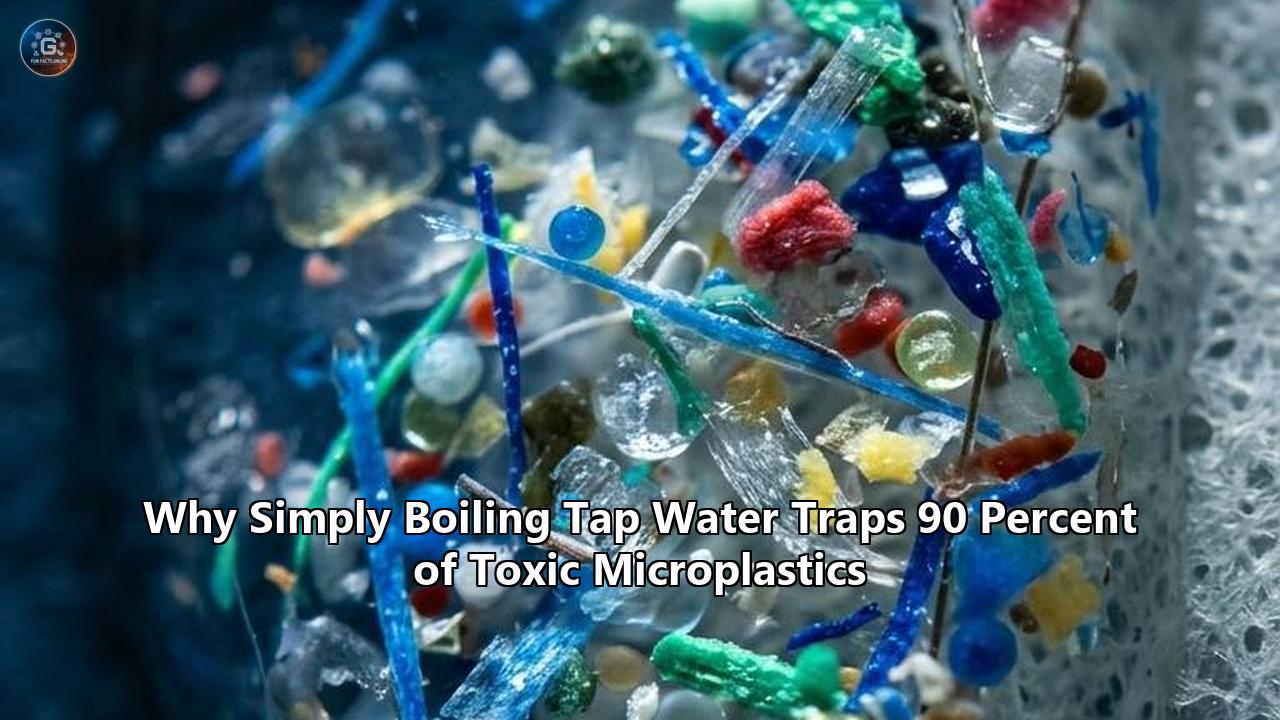
Subjecting municipal drinking water to a rolling boil for five minutes can eliminate up to 90 percent of suspended nano- and microplastics, according to peer-reviewed findings published in Environmental Science & Technology Letters. Conducted by an environmental engineering team led by Eddy Y. Zeng of Jinan University and Zhanjun Li of Guangzhou Medical University, the research reveals that an everyday kitchen routine acts as a surprisingly efficient physical-chemical trap for synthetic polymer particles. The mechanism relies on thermal mineral precipitation: as hard water reaches its boiling point, dissolved calcium carbonate falls out of solution, encapsulating synthetic fragments within crystalline limescale shells that can be mechanically strained through a standard paper filter.
The discovery lands at a pivotal juncture for environmental health. Centralized municipal water treatment facilities struggle to capture sub-micron particles, leaving tap water as a documented vector for chronic chemical and particulate exposure. "We estimated that intakes of nano- and microplastics through boiled water consumption were two to five times less than those through tap water on a daily basis," Zeng noted upon releasing the data. "This simple but effective boiling-water strategy can 'decontaminate' nano- and microplastics from household tap water and has the potential for harmlessly alleviating human exposure through water consumption."
Yet the strategy also exposes deep geographic and structural divides. The physical process relies almost entirely on water hardness: while mineral-dense water yields an extraction rate approaching 90 percent, the identical technique applied to soft water captures barely a quarter of circulating plastics. Furthermore, boiling does not destroy polymers—it merely relocates them into mineral scale. Navigating this finding requires understanding the underlying water chemistry, the biological hazards of chronic microplastic ingestion, and the widening policy debates over whether public utilities or individual households should bear the burden of clean drinking water.
The Challenge: Municipal Infrastructure Meets an Invisible Contaminant
The contamination of global drinking water by microscopic synthetic debris is not an emerging risk; it is an established reality. In a benchmark survey cited in the Guangzhou study, researchers detected nano- and microplastics (NMPs) across 129 out of 159 tap water samples sourced from 14 nations. The polymers identified—predominantly polystyrene (PS), polyethylene (PE), and polypropylene (PP)—mirror the most heavily produced plastics in commercial packaging, textiles, and single-use containers.
Traditional municipal water treatment networks were engineered in the 19th and 20th centuries to conquer biological pathogens, suppress turbidity, and remove heavy metals. They rely on a sequence of coagulation, flocculation, sedimentation, and rapid sand filtration. While these processes remove larger microplastic debris (particles between 1 and 5 millimeters) with reasonable efficacy, their efficiency plummets when dealing with sub-micron fragments.
Nanoplastics—defined as synthetic particles smaller than 1 micrometer—exhibit colloidal behavior. Their tiny mass and elevated surface charge allow them to remain suspended in water columns indefinitely, slipping straight through granular sand filters and carbon beds. Because municipal water quality regulations globally do not mandate monitoring thresholds or maximum contaminant levels (MCLs) for microplastics, treatment authorities have had little regulatory compulsion or capital financing to deploy secondary membrane technologies capable of halting them.
+-----------------------------------------------------------------------------+
|               HOW CENTRALIZED WATER TREATMENT FAILS NANOPLASTICS            |
+-----------------------------------------------------------------------------+
|  MUNICIPAL STAGE       MECHANISM               PLASTIC RETENTION STATUS      |
|                                                                             |
|  1. Intake Screening   Coarse physical bars     Stops large debris (>5 mm);   |
|                                                lets all microplastics pass. |
|                                                                             |
|  2. Coagulation &      Alum / ferric salts      Traps some fibers; leaves   |
|     Flocculation       form flocs              sub-micron particles free.   |
|                                                                             |
|  3. Sedimentation      Gravity settling        Dense flocs sink; buoyant    |
|                                                polymers stay suspended.     |
|                                                                             |
|  4. Sand Filtration    Porous granular bed     Arrests particles >10 µm;    |
|                                                nanoplastics slip through.   |
|                                                                             |
|  5. Disinfection       Chlorine / Ozone        Kills bacteria; cannot break |
|                                                covalent plastic bonds.      |
+-----------------------------------------------------------------------------+
Consumers seeking refuge in commercial bottled water encounter a far worse dynamic. A study conducted by researchers at Columbia University and published in the Proceedings of the National Academy of Sciences deployed stimulated Raman scattering microscopy to evaluate popular bottled water brands. The findings were startling: a single liter of bottled water contained an average of 240,000 detectable plastic fragments—roughly 90 percent of which were nanoplastics, outpacing tap water concentrations by orders of magnitude. The bottling process itself, combined with the mechanical abrasion of caps and flexible polyethylene terephthalate (PET) walls, sheds an unrelenting cascade of synthetic dust into the liquid.
As public awareness of this particulate deluge has grown, consumers have faced a technological impasse. Point-of-use reverse osmosis (RO) systems can intercept nanoplastics, but they require high water pressure, produce three to five gallons of wastewater for every gallon purified, and present prohibitive costs for lower-income households. The revelation that standard thermal boiling could achieve comparable capture rates without specialized machinery immediately repositioned a primitive culinary practice as an accessible frontline defense.
Why It Matters: The Internal Toxicology of Ingested Plastics
The urge to purge microplastics from drinking supplies is propelled by an expanding body of clinical and toxicological data. For years, the official position of several public health agencies hovered around ambiguous reassurance, citing insufficient epidemiological proof of direct harm. That posture is rapidly deteriorating as advanced analytical tools quantify how these particles behave once inside human tissue.
The primary danger stems from particle dimension. While microplastics between 150 micrometers and 5 millimeters generally pass through the gastrointestinal tract unabsorbed, sub-micron nanoplastics do not respect epithelial boundaries. Because of their minuscule surface area and lipophilic chemistry, nanoplastics undergo endocytosis across the gut lining, crossing the intestinal epithelial barrier to enter mesenteric lymph nodes and the systemic circulatory system. From the bloodstream, researchers have documented their translocation into the liver, kidneys, spleen, and human placenta.
                      PARTICLE SIZE & BIOLOGICAL ACCESS

   Macro-Debris         Microplastics                  Nanoplastics
     (>5 mm)             (1 µm - 5 mm)                    (<1 µm)
        |                      |                             |
        v                      v                             v
 Trapped outside       Passes through gut;           Crosses gut epithelium;
   human body          causes local micro-           enters bloodstream;
                       inflammation.                 crosses cellular membranes.
The clinical reality of this bioaccumulation became concrete following a landmark prospective cohort study published in The New England Journal of Medicine by Raffaele Marfella and colleagues. Pathologists evaluated atheromatous plaques surgically removed from 257 patients undergoing carotid endarterectomy. Using pyrolysis-gas chromatography-mass spectrometry, stable isotope analysis, and electron microscopy, the authors detected polyethylene and polyvinyl chloride in the vascular plaques of 58 percent of the patients.
The clinical outcomes were stark: across a 34-month follow-up period, patients with confirmed micro- and nanoplastics embedded in their vascular lesions experienced a 4.53-fold higher hazard ratio for nonfatal myocardial infarction, nonfatal stroke, or all-cause mortality compared to patients whose plaques were free of plastic residue. Plaque tissues containing plastics demonstrated elevated levels of pro-inflammatory cytokines, including interleukin-6, interleukin-1-beta, and tumor necrosis factor-alpha, indicating that the foreign particles exacerbate vascular inflammation and plaque vulnerability.
Beyond mechanical abrasion and vascular inflammation, plastic particles serve as molecular vectors for toxic chemicals. Commercial resins are compounded with proprietary blends of plasticizers, flame retardants, UV stabilizers, and antioxidants—including endocrine-disrupting chemicals such as:
- Ortho-phthalates: plasticizers linked to altered reproductive development, sperm motility loss, and metabolic dysfunction.
- Bisphenols (BPA, BPS, BPF): synthetic estrogens that bind to nuclear hormone receptors at sub-nanomolar concentrations.
- Per- and Polyfluoroalkyl Substances (PFAS): persistent fluorinated surfactants added to process equipment that alter lipid profiles and suppress vaccine-induced antibody responses.
In an aqueous suspension, the hydrophobic surfaces of microplastics also attract ambient environmental poisons, concentrating persistent organic pollutants like polychlorinated biphenyls (PCBs) and polycyclic aromatic hydrocarbons (PAHs). When these particles enter the acidic, bile-rich milieu of the human digestive tract, the thermodynamic equilibrium shifts, driving the desorption of these toxic compounds directly into surrounding cellular membranes.
The Physical Chemistry: How Thermal Desolvation Traps Synthetic Polymers
The discovery that heating water isolates plastic debris might initially sound counterintuitive. Heat does not break down high-density polyethylene or polypropylene; thermal degradation of these carbon backbones requires pyrolysis temperatures well above 300°C. Instead, the process uncovered by the Guangzhou and Jinan research team hinges on mineral desolvation and heterogeneous nucleation.
The critical player is calcium bicarbonate, $Ca(HCO_3)_2$, a compound naturally present in high concentrations within "hard" water regions. In ambient conditions, calcium bicarbonate remains entirely dissolved. When water is heated toward 100°C, the dissolved bicarbonate undergoes thermal decomposition, off-gassing carbon dioxide and converting into calcium carbonate, $CaCO_3$:
$$Ca(HCO_3)_2(aq) \xrightarrow{\Delta} CaCO_3(s)\downarrow + CO_2(g)\uparrow + H_2O(l)$$
Calcium carbonate is an unusual mineral characterized by retrograde solubility: unlike sugar or salt, which dissolve more readily in hot water, calcium carbonate becomes less soluble as water temperature increases. As boiling forces dissolved carbon dioxide out of solution, the local pH shifts slightly upward, driving the saturation index of calcium carbonate into a state of acute supersaturation. The excess mineral must precipitate out of the liquid phase as solid crystalline crusts—what homeowners recognize as limescale.
+-----------------------------------------------------------------------------+
|             THE 4-STAGE MECHANISM OF ENCAPSULATION VIA BOILING             |
+-----------------------------------------------------------------------------+
|                                                                             |
|  Stage 1: Ambient State                                                     |
|  [ Ca2+ ]  [ HCO3- ]     ~ ~ ~ ~ (Free-floating Nanoplastic Particles)      |
|  All minerals dissolved; plastics stay suspended indefinitely.             |
|                                                                             |
|  Stage 2: Thermal Activation (100°C Boiling)                                |
|  Ca(HCO3)2  --->  CaCO3 (solid) + CO2 (gas) ^ + H2O                         |
|  Supersaturation forces calcium carbonate to seek solid nucleation sites.   |
|                                                                             |
|  Stage 3: Heterogeneous Nucleation                                          |
|         [CaCO3]                                                             |
|     [CaCO3] *======* [CaCO3]     <-- Plastic core acts as seed; crystals   |
|         [CaCO3]                      grow around and lock it inside.        |
|                                                                             |
|  Stage 4: Flocculation & Mechanical Trapping                                |
|  Heavy mineral-plastic clumps drop out of suspension; a simple paper or     |
|  stainless steel filter strains them out of the drinking supply.            |
+-----------------------------------------------------------------------------+
Ordinarily, spontaneous (homogeneous) nucleation in clear liquid requires high energy. Minerals prefer to crystallize on an existing solid surface—a process known as heterogeneous nucleation. When evaluating the physical-chemical mechanics of boiling tap water microplastics, researchers discovered that the hydrophobic surfaces of suspended polystyrene, polyethylene, and polypropylene particles serve as active nucleation sites.
Because plastic fragments possess higher surface energies and lower interfacial tension relative to the bulk water, calcium carbonate crystals nucleate directly upon them. Over the course of a five-minute boil, layers of calcite and aragonite deposit over the plastic cores. As the crystal shells thicken, individual particles form aggregates—heavy, macroscopic clusters that precipitate out of suspension.
Scanning electron microscope imaging performed by Zeng’s laboratory revealed that the plastic particles are completely encased inside the mineral matrix. Trapped inside calcium carbonate, the polymers can no longer remain suspended as colloidal entities. They settle to the bottom of the vessel as part of the visible precipitate, turning a filtration-resistant nanoscopic threat into an easily intercepted sediment.
The Hydro-Geographic Divide: Water Hardness as an Arbitrary Health Shield
The primary finding—a 90 percent reduction in suspended plastics—comes with a stark chemical caveat: the mechanism is only as robust as the mineral content of the water entering the pot.
Water hardness is measured by the concentration of dissolved multivalent cations, primarily calcium and magnesium, expressed in milligrams of calcium carbonate per liter ($mg/L$ of $CaCO_3$). In the controlled trials performed by Zeng and Li, the extraction percentage scaled directly alongside mineral saturation:
- Hard Water ($\sim$300 mg/L $CaCO_3$): 89.6% to 90% particle removal.
- Moderately Hard Water ($\sim$180 mg/L $CaCO_3$): 84% particle removal.
- Soft Water ($<$60 mg/L $CaCO_3$): 25% particle removal.
+-----------------------------------------------------------------------------+
|           WATER HARDNESS VS. MICROPLASTIC REMOVAL EFFICIENCY                |
+-----------------------------------------------------------------------------+
| Mineral Concentration (CaCO3)   Plastic Extraction Rate    Resulting Risk   |
|                                                                             |
| Hard (300 mg/L)        [████████████████████] 90%         Minimal residual  |
| Moderate (180 mg/L)    [█████████████████   ] 84%         Low residual      |
| Soft (<60 mg/L)        [█████               ] 25%         High residual     |
+-----------------------------------------------------------------------------+
In regions fed by limestone-rich aquifers—such as parts of the American Midwest, Texas, southern England, the Paris basin, and northern China—tap water naturally carries the mineral concentrations required to maximize this coprecipitation dynamic. In these areas, five minutes of boiling followed by filtration clears out nine of every ten suspended polymer fragments.
Conversely, in areas supplied by pristine, mineral-poor surface water—such as the Pacific Northwest of the United States, coastal British Columbia, western Scotland, and the granitic zones of Scandinavia—tap water hardness routinely hovers below 50 mg/L. In these communities, evaluating the efficacy of boiling tap water microplastics yields a different result: three out of four plastic particles remain freely suspended after boiling, as there is simply not enough dissolved calcium to form the protective crystal encrustations.
This chemical dependency reveals a sharp socio-economic and geographic divergence. Households in soft-water regions cannot rely on a standard kettle to address microplastic contamination. For these populations, achieving comparable particle clearance would require artificially remineralizing the water with food-grade calcium salts before heating, or investing in mechanical sub-micron filtration.
The Filtration Step: Why Boiling Alone Is Not Enough
A dangerous public misunderstanding has trailed this scientific news: the misconception that boiling water "destroys" or "neutralizes" microplastics.
Boiling does not eliminate plastic. The polymers are neither oxidized into carbon dioxide nor reduced to harmless elements. The thermal cycle merely converts mobile, biologically accessible nanoplastics into immobilized, scale-encased micro-rocks. If a consumer boils hard water for five minutes, allows it to cool, and drinks directly from the kettle without straining it, they ingest the identical mass of plastic.
+-----------------------------------------------------------------------------+
|                         THE CRITICAL TWO-STEP PROTOCOL                      |
+-----------------------------------------------------------------------------+
|                                                                             |
|   INCORRECT PRACTICE (ZERO NET GAIN):                                       |
|                                                                             |
|     +--------+    100°C Boil    +--------+    Direct Drink    +--------+    |
|     | Unpure | ---------------> | Limescale| ---------------> | Toxic  |    |
|     | Water  |                  | Precip.  |                  | Ingest |    |
|     +--------+                  +--------+                    +--------+    |
|                                                                             |
|     * Gastric acid (pH 1.5 - 2.0) dissolves the limescale shell, releasing  |
|       the trapped nanoplastics straight into the gastrointestinal tract.    |
|                                                                             |
|                                                                             |
|   CORRECT PRACTICE (UP TO 90% REMOVAL):                                     |
|                                                                             |
|     +--------+    100°C Boil    +--------+    Strain Scale    +--------+    |
|     | Unpure | ---------------> | Limescale| ---------------> | Pure   |    |
|     | Water  |                  | Precip.  | (Paper Filter)   | Effluent |  |
|     +--------+                  +--------+                    +--------+    |
|                                                                             |
|     * Limescale incrustants are physically separated and discarded before   |
|       they can enter the human digestive system.                            |
|                                                                             |
+-----------------------------------------------------------------------------+
Worse, ingesting the chalky precipitate exposes the encapsulated particles to gastric digestion. The human stomach operates at an ultra-low pH of 1.5 to 2.0, driven by hydrochloric acid. Calcium carbonate dissolves instantly in strong acids:
$$CaCO_3(s) + 2HCl(aq) \rightarrow CaCl_2(aq) + CO_2(g) + H_2O(l)$$
Once the protective mineral shell dissolves in the stomach, the trapped nanoplastics and microplastics are freed, entering the duodenum unshielded.
Therefore, the protocol is strictly a two-stage intervention: thermal coprecipitation followed by physical separation. The Guangzhou team explicitly proved that pouring the boiled, cooled liquid through an unbleached paper coffee filter or a micro-mesh stainless steel strainer successfully captured the crystal encrustants, yielding clear, decontaminated drinking water. Without that mechanical separation, boiling does not lower microplastic intake.
The Household Danger: Secondary Contamination from Heated Appliances
Adopting safe household protocols for boiling tap water microplastics requires close attention to the cooking vessel itself. The irony of modern kitchen equipment is that the appliances many rely on to boil water are themselves major sources of microplastic shedding.
An investigation led by researchers at Trinity College Dublin evaluated the particulate shedding of common consumer appliances. The authors discovered that commercial electric kettles constructed with polypropylene inner bodies shed micro- and nanoplastics at staggering rates when exposed to high temperatures. A single liter of water boiled within a standard plastic kettle can contain millions of freshly abraded nanoplastics—shed directly from the hot walls and heating base—erasing any decontamination benefits achieved through mineral coprecipitation.
To successfully use thermal precipitation as an environmental health intervention, the preparation chain must eliminate synthetic polymers entirely:
1. Kettle Substrates
- Recommended: Borosilicate glass, high-grade 304 or 316 surgical stainless steel, enameled cast iron, or unglazed ceramic vessels.
- Avoid: Any heating vessel containing polypropylene (PP), polycarbonate (PC), or polybutylene terephthalate (PBT) water reservoirs, internal sight-glasses, or plastic lid inserts that sit directly in the steam path.
2. Separation Media
- Recommended: Unbleached, chemical-free paper coffee filters (creped cellulose fibers) or woven stainless steel mesh discs with nominal pore openings below 50 micrometers.
- Avoid: Synthetic polyester or nylon pour-over strainers, which shed microfibers under thermal stress.
3. Cooling Protocols
The water must be allowed to cool for at least ten to fifteen minutes following the five-minute rolling boil. Calcium carbonate nucleation continues as the water cools slightly below the boiling point. Agitating or pouring boiling liquid immediately after turning off the heat can fracture the delicate initial calcite crusts, remobilizing sub-micron particles before they can settle into robust flocculants.
+-----------------------------------------------------------------------------+
|              HOME PROTOCOL: MICROPLASTIC-FREE BOIL & STRAIN                 |
+-----------------------------------------------------------------------------+
|                                                                             |
|  [STEP 1] VESSEL SELECTION                                                  |
|  Use exclusively all-glass (borosilicate) or all-stainless steel.           |
|                                                                             |
|  [STEP 2] ROLLING BOIL                                                      |
|  Maintain a continuous, vigorous boil for 5 full minutes.                   |
|                                                                             |
|  [STEP 3] QUIET COOLING                                                     |
|  Rest undisturbed for 10-15 minutes to allow CaCO3 crystals to aggregate.  |
|                                                                             |
|  [STEP 4] CELLULOSE FILTRATION                                              |
|  Pour through an unbleached paper coffee filter into a clean glass carafe.  |
|                                                                             |
|  [STEP 5] DESCALING MAINTENANCE                                             |
|  Rinse mineral buildup down the drain with citric acid periodically;        |
|  wipe clean using non-synthetic cotton cloths.                              |
+-----------------------------------------------------------------------------+
Upstream Solutions: Municipal Water Engineering and Policy Frameworks
While the discovery offers immediate household agency, environmental scientists and water utility directors caution that individual home remediation is an emergency stopgap, not an acceptable regulatory resolution. Placing the burden on individuals to spend fuel and time boiling drinking water exposes a systemic failure in upstream pollution prevention and water quality management.
Centralized water utilities across North America and Europe are testing engineering upgrades to filter nanoplastics before water ever reaches the distribution grid:
+-----------------------------------------------------------------------------+
|              UPSTREAM WATER TREATMENT TECHNOLOGIES: A COMPARISON            |
+-----------------------------------------------------------------------------+
|  TECHNOLOGY              PORE SIZE / CUTOFF     REMOVAL RATE     CHALLENGES |
|                                                                             |
|  Rapid Sand Filter       10 - 50 µm             Poor (<35%)      Standard;  |
|                                                                  leaks NMPs |
|                                                                             |
|  Membrane Bioreactor     0.05 - 0.4 µm          Moderate (~80%)  Biofouling;|
|  (MBR)                                                           high power |
|                                                                             |
|  Ultrafiltration (UF)    0.01 - 0.1 µm          High (>95%)      High cost; |
|                                                                  backwash   |
|                                                                             |
|  Nanofiltration (NF)     0.001 - 0.01 µm        Very High (>98%) Pressure;  |
|                                                                  scaling    |
|                                                                             |
|  Reverse Osmosis (RO)    <0.001 µm              Near Total       Extreme    |
|                                                 (>99.9%)         energy;    |
|                                                                  brine waste|
+-----------------------------------------------------------------------------+- Advanced Ultrafiltration (UF): Operating with pore sizes between 0.01 and 0.1 micrometers, ultrafiltration hollow-fiber membranes physically strain out virtually all microplastics and a dominant share of nanoplastics without requiring chemical precipitants. However, retrofitting aging municipal plants with UF racks requires multi-million-dollar capital investments and increases operational electricity demands.
- Electrocoagulation: Water engineers are piloting electrocoagulation systems that apply low-voltage current across iron or aluminum sacrificial anodes. The release of metallic ions destabilizes the negative zeta potential of suspended nanoplastics, forcing them into macro-flocs that settle out far more rapidly than conventional chemical coagulants allow.
- Granular Activated Carbon (GAC) Enhancements: By optimizing the surface charges and pore tortuosity of carbon beds, utilities are working to maximize the physical adsorption of synthetic polymer fibers.
On the regulatory front, jurisdictions are beginning to build the foundation for mandatory standards. The State of California became the first government entity to formalize microplastics oversight with the passage of Senate Bill 1422. The legislation compelled the California State Water Resources Control Board to develop standardized definition matrices, analytical methods, and four continuous years of testing across public water systems. The resulting protocols rely on Raman microspectroscopy and Fourier-transform infrared (FTIR) spectroscopy to log baseline microplastic counts.
In parallel, the European Union revised its Drinking Water Directive (Directive 2020/2184), requiring the European Commission to establish an EU-wide methodology for measuring microplastics across distribution networks. The mandate sets the stage for formal inclusion of synthetic particles on the EU’s priority Contaminant Watch List.
Beyond municipal treatment, international attention centers on upstream polymer reduction. Delegates to the United Nations Intergovernmental Negotiating Committee (INC) on Plastic Pollution continue working to finalize an internationally binding instrument covering the full life cycle of plastics. Public health advocates at the summit point to drinking water contamination as proof that waste management alone cannot contain the synthetic waste stream: global caps on virgin polymer production, design bans on hazardous chemical additives, and mandated microfiber catches on commercial washing machines are the only durable ways to cut the volume of particles entering surface watersheds.
Unresolved Scientific Questions and Limits of Thermal Remediation
While boiling hard tap water reliably traps insoluble polymer fragments, the practical limits of this approach point to key areas for ongoing research.
First is the issue of chemical partitioning. While the study in Environmental Science & Technology Letters proved that solid plastic particles—polystyrene, polyethylene, and polypropylene—coprecipitate with calcium carbonate, it did not demonstrate that dissolved organic chemical additives are extracted at the same rate.
When water is held at 100°C for five minutes, volatile compounds with low boiling points may partially evaporate along with steam. However, non-volatile compounds—such as short-chain PFAS, long-chain phthalate esters, and fluorotelomers—remain in the liquid. If steam evaporates while non-volatile compounds stay behind, prolonged boiling without a closed condensing lid can inadvertently concentrate non-volatile chemical pollutants in the remaining water.
+-----------------------------------------------------------------------------+
|              WHAT BOILING WATER DOES AND DOES NOT REMOVE                   |
+-----------------------------------------------------------------------------+
|  CONTAMINANT TYPE            DOES BOILING REMOVE IT?     MECHANISM          |
|                                                                             |
|  Microplastics (In Hard Water)     YES (Up to 90%)       CaCO3 entrapment   |
|  Microplastics (In Soft Water)     NO  (Only ~25%)       Insufficient CaCO3 |
|  Biological Pathogens              YES (100%)            Thermal lysis      |
|  PFAS / "Forever Chemicals"        NO                    Non-volatile       |
|  Heavy Metals (Lead, Arsenic)      NO                    Non-volatile       |
|  Chlorine / Volatile Organics      YES                   Vaporization       |
+-----------------------------------------------------------------------------+
Second, the lower size limit of thermal encapsulation needs deeper verification. The study tested particle diameters ranging from 150 micrometers down to 0.1 micrometers (100 nanometers). What happens to ultra-fine nanoplastics measuring between 1 and 50 nanometers remains an open question. At those sub-molecular scales, Brownian motion is intense, and the surface curvature of the particle changes how crystals nucleate. If ultra-fine nanoplastics fall below the critical size needed to catalyze calcium carbonate nucleation, a portion of the most biologically invasive particles could evade entrapment entirely.
Finally, researchers must evaluate the environmental fate of the captured waste. If hundreds of millions of households descale their kettles using vinegar or citric acid solutions and flush the dissolved scale down the sink, the calcium carbonate matrix dissolves, washing the captured nano- and microplastics straight back into municipal sewer networks and local surface waters. Safe disposal requires physical capture: allowing spent filters and collected dry mineral scale to be routed to solid municipal landfill disposal rather than flushed into the wastewater system.
What to Watch Next
The broad public discussion surrounding boiling tap water microplastics reflects a changing balance between individual habits and institutional oversight. As medical research further clarifies the cardiovascular, reproductive, and metabolic risks of long-term particulate bioaccumulation, consumer reliance on ad-hoc home remedies will continue to drive demand for structural water reforms.
Over the coming quarters, several milestones will show whether policy and technology are evolving to meet this challenge:
- Standardized Testing Mandates: Regulatory decisions will determine whether environmental agencies follow California’s lead by requiring public water utilities to publish standardized annual microplastic and nanoplastic counts in Consumer Confidence Reports.
- Point-of-Use Certification Standards: Testing organizations like the National Sanitation Foundation (NSF International) and the American National Standards Institute (ANSI) are working on new verification protocols to rate home filtration products specifically on sub-micron plastic extraction.
- Municipal Infrastructure Investments: Regional water authorities will begin reporting data from pilot projects testing membrane bioreactors, electrocoagulation, and ultrafiltration at utility scale.
- Global Treaty Provisions: The finalization of the UN Global Plastics Treaty text will reveal whether the international community adopts binding caps on primary polymer production or defaults to voluntary downstream waste management targets.
Until municipal distribution systems can deliver water completely stripped of synthetic particulates, a centuries-old domestic custom—boiling water and pouring it through a simple paper filter—stands as an accessible, cost-effective way to shield the human body from an pervasive industrial pollutant.
Reference:
- https://www.smithsonianmag.com/smart-news/boiling-tap-water-could-help-remove-80-percent-of-its-microplastics-study-suggests-180983874/
- https://www.acs.org/pressroom/presspacs/2024/february/want-fewer-microplastics-in-your-tap-water.html
- https://www.futura-sciences.com/en/boiling-your-tap-water-and-pouring-it-through-a-coffee-filter-can-remove-up-to-90-of-the-microplastics-in-it-g1_900853/
- https://www.waterdropfilter.com/blogs/home-and-wellness/boil-water-to-remove-microplastics
- https://pubs.acs.org/estlcu/article/11/3/273/345760/Drinking-Boiled-Tap-Water-Reduces-Human-Intake-of
- https://microplasticsapp.com/blog/does-boiling-water-remove-microplastics
- https://acs.figshare.com/collections/Drinking_Boiled_Tap_Water_Reduces_Human_Intake_of_Nanoplastics_and_Microplastics/7095698
- https://e360.yale.edu/digest/microplastics-tap-water-boiling
- https://www.koreaherald.com/article/3336828