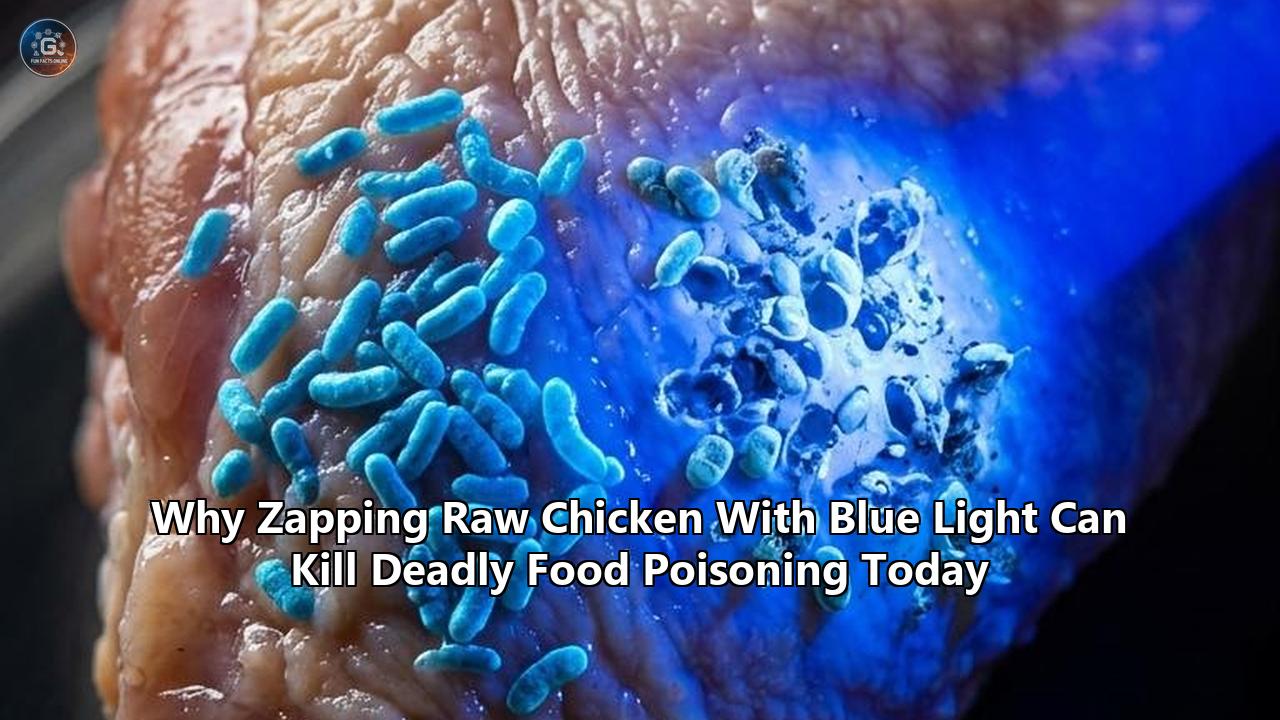
On October 6, 2026, researchers at the University of Reading and the UK Animal and Plant Health Agency (APHA) published findings in the journal Microbiology demonstrating that violet-blue light kills every tested strain of Campylobacter—the leading cause of bacterial food poisoning globally—including strains resistant to multiple front-line antibiotics. The study evaluated 64 distinct field strains harvested from commercial poultry flocks and farm environments over a 16-year period.
Exposed to low-power light at a wavelength of 405 nanometers, every single strain suffered catastrophic bacterial die-off. At maximum exposure, bacterial loads dropped by 99% to more than 99.9%. Even after researchers subjected surviving bacteria to 15 successive rounds of sublethal exposure and re-culturing, the microbes failed to develop any measurable tolerance or resistance to the light.
The implications of this discovery are sweeping. Foodborne illness linked to raw chicken sickens millions of people each year, drives thousands of hospitalizations, and strains global healthcare systems. Traditional decontamination methods have reached a structural impasse: chemical washes such as chlorine and peracetic acid face heavy regulatory bans and consumer resistance across Europe, while antibiotic overuse on farms has fueled dangerous drug resistance. By utilizing non-ionizing, visible photons to ignite a targeted molecular chain reaction inside bacterial cells without altering the meat itself, this photonic approach offers an intervention that could transform the poultry processing floor.
+-------------------------------------------------------------------------+
|                  VIOLET-BLUE LIGHT INACTIVATION PROFILE                 |
+-------------------------------------------------------------------------+
| Target Pathogen:         Campylobacter jejuni / C. coli (64 strains)    |
| Optical Wavelength:      405 nanometers (visible violet-blue spectrum)  |
| Source Technology:       Solid-state Light-Emitting Diodes (LEDs)       |
| Inactivation Efficiency: 2-log (99%) to >3-log (>99.9%) reduction       |
| Antimicrobial Resistance: Drug-resistant strains killed identically     |
| Resistance Evolution:    0% tolerance increase after 15 serial cycles   |
| Residues / Byproducts:   Zero chemical additions or surface residues    |
+-------------------------------------------------------------------------+
The Biophysical Engine: How 405 nm Photons Dismantle Pathogen Biology
To understand why violet-blue light neutralizes deadly foodborne pathogens without cooking the meat or leaving chemical residues, one must examine the specific mechanics of bacterial bio-energetics. The technique—formally termed violet-blue photodynamic inactivation (VB-PDI)—operates on a principle entirely distinct from ultraviolet (UV-C) irradiation.
UV-C light, typically deployed at 254 nanometers, relies on direct genomic destruction. It shatters microbial DNA by fusing adjacent thymine bases into cyclobutane pyrimidine dimers, halting transcription and replication. However, UV-C is an ionizing hazard: it triggers rapid lipid oxidation in raw meat, turns chicken fat rancid, denatures surface proteins, alters meat coloration, and poses severe occupational hazards, including immediate corneal damage and skin erythema for plant operators.
Violet-blue photodynamic inactivation sidesteps these pitfalls because 405 nm sits firmly within the visible light spectrum. It does not possess sufficient photon energy to break covalent chemical bonds directly or damage eukaryotic tissue at low-to-moderate irradiances. Instead, it uses an internal vulnerability within the bacteria themselves.
Photon Absorption (405 nm)
       │
       ▼
Intracellular Porphyrins (Coproporphyrin III / Protoporphyrin IX)
       │
       ▼
Triplet Excited State (³Por*)
       │
       ├───────────────────────────────┬───────────────────────────────┐
       ▼                               ▼                               ▼
Type I Reaction                 Type II Reaction                Cellular Consequences
Electron / Hydrogen Transfer    Direct Energy Transfer to ³O₂   • Outer Membrane Collapse
       │                               │                        • Periplasmic Leakage
       ▼                               ▼                        • Nucleoid Disruption
Superoxide Radicals (O₂•⁻)      Singlet Oxygen (¹O₂)            • Proteomic Inactivation
Hydrogen Peroxide (H₂O₂)        (Extremely Reactive)            • Unrepaired Cell Death
Inside Campylobacter jejuni, Salmonella enterica, and related enteric bacteria, endogenous porphyrins—such as coproporphyrin III, uroporphyrin, and protoporphyrin IX—act as fundamental metabolic intermediates during the biosynthesis of heme, an iron-binding molecule essential for respiration. These tetrapyrrole rings have a prominent light absorption band, known as the Soret band, which peaks tightly between 400 and 410 nanometers.
When a 405 nm photon strikes an intracellular porphyrin molecule, it absorbs that optical energy, promoting an electron from its ground state into a short-lived singlet state before it transitions through intersystem crossing into a long-lived triplet excited state. In this excited condition, the porphyrin initiates two concurrent photochemical reactions:
- Type I Reactions: The excited porphyrin transfers electrons directly to nearby cellular substrates or ambient dissolved oxygen, creating superoxide anion radicals ($\text{O}_2^{\bullet-}$), hydrogen peroxide ($\text{H}_2\text{O}_2$), and downstream hydroxyl radicals ($\bullet\text{OH}$).
- Type II Reactions: The excited porphyrin transfers its energy directly to ground-state triplet molecular oxygen ($^3\text{O}_2$), exciting it into singlet oxygen ($^1\text{O}_2$).
Singlet oxygen is one of nature's most indiscriminately destructive oxidants. With a lifetime measured in mere microseconds, it cannot diffuse far from its origin, but its reaction radius causes severe damage. It attacks unsaturated fatty acids within bacterial lipid bilayers, oxidizes sulfhydryl groups in essential transport proteins, and inactivates crucial metabolic enzymes.
The Unique Fragility of Campylobacter
Most pathogenic bacteria possess defenses against oxidative bursts. Escherichia coli and Salmonella maintain complex, multi-tiered systems to disarm reactive oxygen species, including robust catalases (KatG, KatE), multiple superoxide dismutases (SodA, SodB, SodC), and alkyl hydroperoxide reductases (AhpC/AhpF).
Campylobacter jejuni, however, is an evolutionary anomaly. It is a strict microaerophile, adapted to survive exclusively in environments where oxygen concentrations hover between 3% and 10%—such as the avian gastrointestinal tract. Because it did not evolve to survive high-oxygen exposure, its enzymatic defenses against oxidative stress are bare-bones. It possesses only a single catalase gene (katA), a single superoxide dismutase (sodB), and an incomplete repair network.When exposed to violet-blue light, Campylobacter generates an internal oxidative surge that its defenses cannot handle. Singlet oxygen rapidly degrades the cell's outer and inner membranes, causing cellular contents to leak out. Simultaneously, hydroxyl radicals slice through the single circular chromosome, while oxidants compromise the structural integrity of the flagellar motor apparatus, rendering the bacterium immobile and non-infectious.
The Failure of Bacterial Resistance
In antimicrobial therapies, the primary threat to long-term efficacy is the rapid selection of resistant variants. Antibiotics typically bind to a solitary structural target:
- Fluoroquinolones bind DNA gyrase (gyrA).
- Macrolides bind the 50S ribosomal subunit.
- Beta-lactams bind penicillin-binding proteins.
A single point mutation can block that binding affinity, allowing bacteria to thrive.
Violet-blue photodynamic inactivation avoids this failure point. Because reactive oxygen species launch thousands of simultaneous attacks across hundreds of cellular targets—peroxidizing lipids, shearing structural proteins, oxidizing nucleotides, and disrupting cytoplasmic metabolic pathways—a bacterium cannot survive through a single genetic mutation.
To evade 405 nm photolysis, Campylobacter would need to overhaul its core heme biosynthesis pathways or construct dense, opaque cellular shielding. Neither adaptation is biologically viable. The University of Reading team confirmed this structural barrier experimentally: after 15 consecutive cycles of partial killing and re-culturing, the survival curve of the bacteria remained unchanged. The 15th generation perished just as swiftly as the first.
Who Is Affected: The Farm-to-Fork Human and Economic Toll
The emergence of a chemical-free, resistance-proof pathogen intervention addresses a long-standing vulnerability across food production and public health. Bacterial contamination of poultry is not an isolated farm problem; it represents a systemic failure that exposes poultry producers, supply-chain workers, consumers, and public healthcare systems to persistent risk.
+--------------------------------------------------------------------------+
|                     SYSTEMIC BURDEN OF POULTRY PATHOGENS                 |
+--------------------------------------------------------------------------+
| UK Annual Campylobacter Infections:  ~700,000 estimated true cases       |
| UK Annual Economic / Healthcare Cost: £700 million (~$915 million USD)   |
| US Annual Campylobacter Cases:       ~1.5 million estimated infections   |
| US Annual Salmonella Infections:     ~1.35 million infections            |
| US Direct / Indirect Economic Loss:  >$4.1 billion annually              |
| Flock Carriage Rates:                65% to 75% of commercial broilers   |
| Common Post-Infection Complications: Guillain-Barré, Reactive Arthritis  |
+--------------------------------------------------------------------------+
The Human Vulnerability
For the consumer, raw chicken represents one of the most hazardous items brought into domestic kitchens. In the UK, laboratory-confirmed Campylobacter cases reached record numbers between 2024 and 2026, climbing past 70,000 reported cases annually. Because mild or moderate gastrointestinal illnesses often go unreported, epidemiologists calculate that the actual infection rate sits closer to 700,000 cases per year in Britain alone.
In the United States, the Centers for Disease Control and Prevention (CDC) estimates that Campylobacter triggers roughly 1.5 million illnesses, 13,000 hospitalizations, and 120 deaths every year, while non-typhoidal Salmonella adds another 1.35 million illnesses and 420 deaths.
While symptoms often manifest as self-limiting diarrhea, severe abdominal cramping, and fever, the secondary consequences can be debilitating:
- Guillain-Barré Syndrome (GBS): Approximately 1 in every 1,000 diagnosed Campylobacter patients develops GBS, an acute autoimmune neuromuscular disorder. Surface lipooligosaccharides on the C. jejuni membrane structurally mimic human peripheral nerve gangliosides (molecular mimicry). When the host immune system manufactures antibodies against the bacteria, those antibodies cross-react and attack the patient's myelin sheaths, leading to acute flaccid paralysis that frequently requires prolonged intensive-care ventilation.
- Reactive Arthritis: Between 1% and 3% of patients develop painful joint inflammation weeks after the intestinal infection resolves, which can persist as a chronic, debilitating condition.
- Post-Infectious Irritable Bowel Syndrome (PI-IBS): Up to 15% of patients suffer prolonged gastrointestinal dysfunction, functional dyspepsia, and chronic gut dysbiosis that linger for years.
In domestic settings, direct consumption of undercooked chicken is only part of the problem. Cross-contamination remains the primary driver of transmission. Pathogens wash off wet poultry surfaces onto human hands, drip onto countertops, transfer to cutting boards, or contaminate adjacent raw produce.
Surveys by food safety agencies repeatedly show that despite public warnings, many consumers continue to rinse raw chicken in sinks before cooking. This practice aerosolizes droplets containing Campylobacter and Salmonella, scattering bacteria up to three feet in every direction across clean plates, utensils, and food preparation areas. Effective blue light chicken safety interventions deployed upstream eliminate these pathogens at the plant, preventing millions of viable bacteria from ever entering homes.
       [ Poultry Farm ]  ─── Flock Carriage Rate: ~70%
              │
              ▼
    [ Scalding & Plucking ] ── Mechanical Cross-Contamination
              │
              ▼
       [ Evisceration ]   ── Aerosolized / Visceral Leakage
              │
              ▼
   +──────────────────────+
   │ VIOLET-BLUE LIGHT    │ ── Non-chemical, 99–99.9% Microbial Reduction
   │ INTERVENTION ZONE    │    (Eliminates Pathogen Load Before Packaging)
   +──────────────────────+
              │
              ▼
    [ Cold-Chain Retail ] ── 80% Reduction in High-Titer Contaminated Retail Meat
              │
              ▼
    [ Domestic Kitchen ]  ── Cuts Cross-Contamination from Cutting Boards, Sinks, Knives
Poultry Processors and Supply Chains
Modern poultry processing plants operate at staggering speeds, handling 10,000 to 14,000 birds per hour on continuous overhead shackle lines. At this velocity, preventing cross-contamination is an immense engineering challenge.
Campylobacter is present in the gastrointestinal tracts of 65% to 75% of live broilers without causing any clinical disease in the birds. During automated processing, several mechanical stages compromise sanitary controls:- Defeathering: Mechanical rubber picking fingers beat against warm bird carcasses, aerosolizing bacteria and forcing microbes deep into opened feather follicles.
- Automated Evisceration: High-speed metal spoons enter the body cavity to extract viscera. Even a minute calibration error can puncture the bird's intestines, spraying intestinal fluid containing up to $10^8$ colony-forming units (CFU) of Campylobacter and Salmonella per gram across the carcass, the machinery, and adjacent birds.
- Immersion Chilling: In systems using shared water baths without robust sanitizers, clean birds can pick up bacteria shedding from contaminated carcasses.
Processors bear the financial cost of this biological burden. In jurisdictions with strict regulatory microbial limits, lots that exceed statutory bacterial thresholds face severe retail price markdowns, must be diverted to low-value rendering or cooked processing, or get rejected entirely. Incorporating targeted photodynamic light arrays directly into conveyor runs gives processing plants a fast, non-chemical step to drive down surface microbial titers.
The Regulatory and Geopolitical Divide: Chemical Washes vs. Photonic Clean Labels
The arrival of 405 nm decontamination touches directly on one of international trade's most fiercely contested topics: the regulatory split over poultry sanitation between North America and Europe.
+-------------------------------------------------------------------------+
|                  INTERNATIONAL POULTRY REGULATORY LANDSCAPE             |
+-------------------------------------------------------------------------+
| JURISDICTION    STANDARD PRACTICE           REGULATORY PHILOSOPHY       |
+-------------------------------------------------------------------------+
| United States   Chemical washes             Permissive of chemical      |
| (USDA-FSIS)     (Chlorine dioxide,          antimicrobials; focus on    |
|                 Peracetic acid,             end-product microbial       |
|                 Acidified sodium chlorite)  clearance.                  |
+-------------------------------------------------------------------------+
| European Union  Potable water only          Strict chemical wash ban    |
| & United        (Regulation EC No 853/2004; (farm-to-fork hygiene);     |
| Kingdom         sanitary and phytosanitary  rejects chemicals masking   |
| (EFSA / FSA)    rules)                      poor upstream practices.    |
+-------------------------------------------------------------------------+
| PHOTONIC        Violet-blue light           PHYSICAL INTERVENTION:      |
| INTERVENTION    (405 nm photodynamic        Leaves zero residues,       |
| (VB-PDI)        LED exposure)               requires no chemical wash,  |
|                                             aligns with clean labels.   |
+-------------------------------------------------------------------------+
The Transatlantic Impasse
For more than two decades, the United States and the European Union have remained locked in an agricultural trade dispute centered on poultry washing.
In the United States, the Department of Agriculture's Food Safety and Inspection Service (USDA-FSIS) permits poultry integrators to deploy chemical rinses, dips, and sprays during processing. The industry heavily utilizes:
- Peracetic acid (PAA)
- Acidified sodium chlorite
- Chlorine dioxide
- Cetylpyridinium chloride
These chemical baths serve as antimicrobial interventions that wash away bacteria after evisceration, allowing US processing lines to operate at high line speeds while lowering measurable retail surface pathogen loads.
The European Union and post-Brexit United Kingdom take an opposing regulatory stance. Under Regulation (EC) No 853/2004, processors are strictly prohibited from using any chemical wash other than potable water on animal carcasses, unless a specific chemical substance receives explicit approval through European Food Safety Authority (EFSA) scientific reviews. The European regulatory rationale is philosophical: allowing chemical carcass washes risks encouraging farms and slaughterhouses to neglect basic hygiene, relying on chemical baths to clean up dirty birds at the end of the line.
This divide created the "chlorinated chicken" debate that stalled post-Brexit trade discussions and transatlantic commerce. European consumer advocacy groups and farming unions rejected imported meat treated with chemical washes, viewing it as evidence of substandard animal welfare and poor farm-level biosecurity.
The Non-Chemical Photonic Bridge
Violet-blue photodynamic inactivation changes this dynamic entirely. Because 405 nm light is pure, non-ionizing visible illumination, it is neither a chemical wash nor a chemical additive. It leaves zero chemical residues, forms no harmful organochlorine byproducts (such as trihalomethanes or haloacetic acids), and requires no wastewater mitigation systems for chemical runoff.
Under both EFSA and UK Food Standards Agency (FSA) frameworks, visible light operates as a physical processing aid rather than a chemical additive, provided it does not cause chemical changes within the food substrate itself. By eliminating pathogenic bacteria without introducing chemical agents, the integration of blue light chicken safety technology offers a rare point of alignment: a post-slaughter intervention capable of satisfying strict European clean-label standards while delivering the microbial reductions required by industrial processors.
What Changes on the Processing Floor: Engineering, Physics, and Meat Quality
Moving violet-blue photodynamic inactivation from controlled, planar laboratory Petri dishes to high-speed commercial poultry processing requires solving significant engineering challenges. Slaughterhouses are wet, cold, and fast-moving environments—conditions that demand precise optical physics and thermal engineering.
+-----------------------------------------------------------------------+
|             INDUSTRIAL RETROFIT: PHOTONIC TUNNEL SPECIFICATIONS       |
+-----------------------------------------------------------------------+
| Target Location:           Post-Evisceration / Pre-Chiller / Post-Chill |
| Conveyor Line Speed:       140 to 220 carcasses per minute            |
| Peak Optical Fluence:      50 to 120 Joules per square centimeter     |
| Irradiance Density:        80 to 150 mW/cm² (high-output multi-LEDs)  |
| Operating Temperature:     2°C to 4°C (refrigerated processing zone)  |
| Optical Architecture:      360-degree cylindrical reflective tunnel   |
| Substrate Preservation:    TBARS lipid oxidation delta < 0.1 mg MDA/kg|
| Color Stability:           CIE L*, a*, b* chromatic shift: Not Sig.   |
+-----------------------------------------------------------------------+
The Challenge of Carcass Topography and Optical Shadowing
In early laboratory experiments, researchers irradiated thin, flat liquid films containing suspended bacteria. In those planar setups, photons struck the targets directly, resulting in fast 3-log reductions within predictable timeframes. A plucked broiler carcass, however, is an irregular, three-dimensional geometric surface full of micro-crevices:
- Feather Follicles: Empty follicles form recessed pockets where bacteria can lodge, shielded from direct horizontal illumination.
- Visceral Cavities: The inner surface of the thoracic and abdominal cavity requires internal optical delivery; an overhead lighting array cannot reach the inside of the bird.
- Surface Creases: Folds around the wings, thighs, and neck create shadows. Light traveling in straight lines cannot bend into these recesses.
Direct Photons ───►  \  \  \  \  \
                      \  \  \  \  \
                      ┌───────────────┐
                      │ Exposed Skin  │ ──► Complete Pathogen Kill
                      │ (High Fluence)│
       Shadow Zone ──►│   __/\__      │ ──► Bacterial Survival Risk
                      │  /      \     │     Without Multi-Angle
                      │ (Follicle)    │     Diffuse Light Arrays
                      └───────────────┘
To solve the shadow problem, optical engineers are designing multi-angle, 360-degree reflective light tunnels. By lining industrial conveyor enclosures with high-reflectance materials—such as expanded polytetrafluoroethylene (ePTFE) or specialized specular aluminum, which reflect over 95% of 405 nm light—engineers can flood the processing tunnel with diffuse, multi-directional photons. As carcasses hang from moving overhead shackles, light ricochets repeatedly off the walls, illuminating crevices and follicles from multiple angles to minimize shadowed areas.
The Balance Between Optical Fluence and Line Velocity
In poultry processing, time is a strict operational metric. Industrial plants run lines at velocities carrying 140 to 220 birds per minute, meaning an individual bird moves through an assigned processing segment in just seconds.
The total antimicrobial dose delivered by light—its fluence—is governed by the relationship:
$$\text{Fluence } (J/\text{cm}^2) = \text{Irradiance } (W/\text{cm}^2) \times \text{Time } (\text{seconds})$$
If an operational target calls for a 99% reduction (a 2-log reduction) requiring an optical fluence of, for example, $60\text{ J/cm}^2$, a low-power light array delivering only $20\text{ mW/cm}^2$ would need 3,000 seconds (50 minutes) of exposure—an impossible delay for an active industrial line.
Commercial systems bridge this gap by deploying industrial-grade, solid-state LED arrays with narrow beam profiles that deliver concentrated optical power. By using high-irradiance arrays producing $100\text{ to } 200\text{ mW/cm}^2$, the required exposure dwell time drops into practical operational windows.
Processors can also place light tunnels across multiple processing points:
- A preliminary stage right after the final inside-outside bird washer.
- A secondary treatment run along the entry into air-chilling tunnels.
- A final pass during conveyor transport right before cut-up and packaging.
Distributing the photon dose across existing transport stages allows plants to hit cumulative antimicrobial fluences without slowing line speeds or interrupting product flow.
CONVENTIONAL CHEMICAL INTERVENTION
[ Bird Washer ] ──► [ Peracetic Acid Dip Tank ] ──► [ Water Drainage ] ──► [ Air Chilling ]
                    • High chemical costs           • Environmental runoff
                    • Sensory / worker hazards      • EU regulatory barrier

PHOTONIC (VB-PDI) INTERVENTION
[ Bird Washer ] ──► [ 405 nm LED Light Tunnel ] ──► [ Air Chilling ]
                    • Zero chemicals added          • EU / US compliance
                    • Zero wastewater hazards       • Continuous operation
Cold-Chain Synergy: Light at Low Temperatures
Industrial meat processing requires strictly managed cold chains, keeping ambient room temperatures between 2°C and 4°C to suppress microbial growth. Earlier biophysical research, including work conducted at the National University of Singapore, revealed a distinct mechanical advantage: violet-blue photodynamic inactivation actually becomes more lethal at lower temperatures.
At chilling temperatures (4°C), bacterial cell membranes transition from a fluid phase to a rigid, semi-crystalline gel state. This cold-induced membrane stiffening slows enzymatic repairs and locks porphyrins closer to the cell membrane.
When 405 nm light generates reactive oxygen species under these chilled conditions, the oxidized membrane lipids cannot repair or rearrange themselves quickly. Membrane permeability spikes faster than it does at room temperature, accelerating cellular collapse. Chilled environments also benefit the hardware: solid-state LEDs run more efficiently and maintain longer operating lifespans when ambient temperatures remain low, reducing the cooling load needed for industrial lighting arrays.
Meat Quality, Oxidation, and Sensory Profile
Any food safety intervention fails commercially if it alters the texture, color, or flavor of the product. Poultry breast meat is vulnerable to sensory changes: accelerated lipid oxidation creates grassy, rancid off-flavors, while protein denaturation reduces water-holding capacity, leading to tough, dry meat during cooking.
Extensive food chemistry testing confirms that 405 nm violet-blue illumination does not alter chicken quality within effective pathogen-inactivating doses:
- Lipid Peroxidation (TBARS): Thiobarbituric acid reactive substances (TBARS) measure malondialdehyde (MDA), the primary chemical marker of lipid oxidation. At fluences sufficient to achieve 2-log to 3-log reductions of Campylobacter and Salmonella, raw chicken breast muscle treated with 405 nm light shows negligible increases in MDA concentration, staying well below the 0.5 mg MDA/kg threshold where consumers detect sensory defects.
- Colorimetry ($L^a^b^$ coordinates): Visible light does not bleach or discolour poultry meat. Spectrophotometric measurements demonstrate that lightness ($L^$), redness ($a^$), and yellowness ($b^$) remain indistinguishable between light-treated and untreated control samples. This contrasts with ozone or high-concentration chlorine treatments, which can whiten carcass surfaces or cause gray discolorations.
- Protein Integrity and Water-Holding Capacity: Because 405 nm visible light does not generate intense heat or break peptide bonds, sarcoplasmic and myofibrillar proteins stay structurally intact. Drip loss during refrigerated storage and cooking losses during pan-frying show no difference compared to untreated poultry.
The Broader Pathogen Spectrum: Beyond Campylobacter
Although the October 2026 University of Reading study focused on Campylobacter—the pathogen most sensitive to VB-PDI—the underlying photochemical reaction also neutralizes other foodborne pathogens contaminating raw chicken. Understanding the comparative susceptibility of these different bacteria allows processors to tune and optimize their lighting systems.
+--------------------------------------------------------------------------+
|            RELATIVE SUSCEPTIBILITY TO 405 nm PHOTODYNAMIC ACTION         |
+--------------------------------------------------------------------------+
| BACTERIAL SPECIES     GRAM STATUS  SUSCEPTIBILITY   PRIMARY LIMITING FACTOR |
+--------------------------------------------------------------------------+
| Campylobacter jejuni  Gram (-)     Extreme          Microaerophilic; sparse |
|                                                     oxidative defenses      |
+--------------------------------------------------------------------------+
| Listeria              Gram (+)     High             Abundant endogenous     |
| monocytogenes                                       coproporphyrin III;     |
|                                                     no outer membrane       |
+--------------------------------------------------------------------------+
| Salmonella enterica   Gram (-)     Moderate         Robust multi-catalase   |
| (Typhimurium/Infantis)                              and repair suites       |
+--------------------------------------------------------------------------+
| Escherichia coli      Gram (-)     Moderate         Porin filtering,        |
| (STEC strains)                                      efflux, outer LPS layer |
+--------------------------------------------------------------------------+
| Clostridium           Gram (+)     High (spores:    Vegetative cells highly |
| perfringens           (anaerobic)  Low)             vulnerable; dipicolinic |
|                                                     acid shields spores     |
+--------------------------------------------------------------------------+
Salmonella enterica
Salmonella is a facultative anaerobe that colonizes poultry intestines and is regularly identified in contaminated meat recalls. Salmonella contains endogenous porphyrins, but its dense outer lipopolysaccharide (LPS) membrane and dual catalases mean it requires higher optical fluences than Campylobacter to achieve the same log reduction.Where Campylobacter succumbs at fluences between 30 and $60\text{ J/cm}^2$, Salmonella enterica serovars (such as S. Enteritidis and S. Typhimurium) typically require 80 to $150\text{ J/cm}^2$ for comparable kills. While higher, this dose remains within reach for industrial multi-pass light tunnels, especially when combined with existing organic acid interventions.
Listeria monocytogenes
Listeria monocytogenes poses a severe hazard in ready-to-eat poultry products, cold cuts, and further-processing facilities due to its ability to thrive at refrigeration temperatures (psychrotolerance) and build resilient biofilms on wet stainless-steel equipment.As a Gram-positive organism, Listeria lacks the protective outer lipopolysaccharide membrane that shields Gram-negative bacteria. Additionally, Listeria synthesizes abundant quantities of coproporphyrin III. When hit with 405 nm photons, Listeria displays high sensitivity, collapsing quickly under light-induced oxidative stress.
This high susceptibility opens applications for violet-blue light beyond raw carcass decontamination, allowing processors to sanitize stainless steel conveyors, cutting blades, slicing lines, and storage coolers continuously while processing is underway.
Biofilm Disruption
In poultry facilities, bacteria rarely exist as free-floating single cells; they form complex biofilms. Bacteria bind to polymer surfaces, drains, and metal conveyors within a dense protective matrix of extracellular polymeric substances (EPS) composed of polysaccharides, proteins, and extracellular DNA. Routine chemical sanitizers often struggle to penetrate these matrices, leaving protected niches where pathogens survive and periodically recontaminate passing food.
Photons at 405 nanometers can penetrate deep into EPS matrices without losing their antimicrobial potency. Once inside, the light excites porphyrins contained within the embedded bacteria, generating reactive oxygen species from the inside out. This internal oxidation destabilizes the EPS matrix, shears structural carbohydrates, and loosens biofilm cohesion, helping standard sanitation cycles wash them away.
Short-Term Consequences (1 to 3 Years): Field Trials, Clean Labels, and System Economics
Over the next one to three years, the commercialization of violet-blue light will drive visible changes across poultry processing, regulatory discussions, and retail marketing.
                    TIMELINE OF ANTICIPATED DEVELOPMENTS

  [ 2026 - 2027 ] ────────────────► Commercial Abattoir Validation Trials
                                    • Transition from lab arrays to 10,000 bird/hr lines
                                    • Optimization of reflective tunnel geometries
                                    • Calibration of worker safety filters

  [ 2027 - 2028 ] ────────────────► Regulatory Classification & Clean-Label Push
                                    • EFSA / FSA classification as "Physical Processing Aid"
                                    • USDA-FSIS hurdle approval protocols
                                    • Supermarket adoption of chemical-free safety labels

  [ 2028 - 2030+ ] ───────────────► Supply-Chain Transformation & In-Transit Systems
                                    • Blue-LED embedded cold-chain display cases
                                    • Downstream reductions in human Guillain-Barré cases
                                    • Cross-border harmonization of poultry safety standards
From Laboratory Flukes to Commercial Abattoir Pilots
The primary hurdle facing the technology is moving from benchtop testing to commercial processing speeds. In the study published in Microbiology, the University of Reading and APHA tested bacteria grown on agar and suspended in liquid media. While the results demonstrated complete biological susceptibility across 64 wild strains, verifying the same performance on irregular, bloody, moist chicken skins traveling along factory conveyors requires dedicated in-plant testing.
Multiple trial installations are currently moving forward in the UK and Europe, backed by academic-industrial consortiums. These pilots focus on three operational targets:
- Optical Fluence Consistency: Designing reflective tunnel arrays that bathe hanging birds in continuous light, ensuring shadowed areas receive sufficient antimicrobial photon exposure.
- Line-Speed Synchronization: Configuring lighting zones within automated evisceration, post-washing, and chilling lines to achieve effective log-reductions without slowing shackle speeds.
- Physical Durability: Building IP69K-rated, waterproof, washdown-resistant LED light fixtures that can withstand nightly sanitation with high-pressure, caustic cleaning solutions without burning out or drifting in optical frequency.
Capital Expenditures vs. Chemical Operating Costs
For poultry plant operators, investing in high-intensity solid-state LED systems comes down to capital and operational economics.
+--------------------------------------------------------------------------+
|                  ECONOMIC COMPARISON: CHEMICAL VS. PHOTONIC              |
+--------------------------------------------------------------------------+
| COST VECTOR        CONVENTIONAL CHEMICAL WASH   VIOLET-BLUE LED ARRAYS   |
+--------------------------------------------------------------------------+
| Upfront Capital    Low-to-moderate              High                     |
| Expenditure        (spray bars, mixing tanks)   (specialized LED arrays, |
|                                                 reflective tunnels)      |
+--------------------------------------------------------------------------+
| Ongoing Chemical   High                         Zero                     |
| Consumption        (continuous tanker deliveries                         |
|                    of PAA, chlorine, acids)                              |
+--------------------------------------------------------------------------+
| Wastewater         High                         Zero                     |
| Treatment Surcharge (chemical neutralization,                           |
|                    biological oxygen demand)                             |
+--------------------------------------------------------------------------+
| Equipment Wear &   Accelerated corrosion of     Negligible               |
| Maintenance        stainless steel, seals       (routine LED driver      |
|                    from harsh oxidizers         replacement at 50,000h)  |
+--------------------------------------------------------------------------+
| Worker Safety      Vapor scrubbing required;    Optical shielding,       |
| Engineering        respiratory hazards          blue-blocker safety glass |
+--------------------------------------------------------------------------+
While chemical wash infrastructure is cheap to install, its ongoing operating costs are high. Industrial slaughterhouses run through tens of thousands of gallons of concentrated peracetic acid and sanitizing chemicals each year.
Furthermore, corrosive chemical residues accelerate wear and tear on stainless-steel conveyor bearings, rollers, and mechanical equipment, while local wastewater authorities levy heavy environmental surcharges on chemical-laden plant wastewater.
Solid-state LED arrays reverse these cost dynamics. The initial capital expenditure for high-power 405 nm industrial luminaires, drivers, and reflective tunnels is significant. However, their ongoing operating costs are limited to the electrical power needed to run them. Modern high-efficiency LEDs boast operating lifespans exceeding 50,000 hours. Over an operational lifecycle, the energy costs of running LED arrays are substantially lower than recurring chemical purchases and wastewater mitigation, giving processors a clear economic return on investment.
Occupational Safety in Processing Environments
Introducing high-intensity violet-blue light into poultry plants requires careful safety controls for human operators. While 405 nm light produces no ionizing radiation, strong visible violet-blue light still presents potential retinal hazards under prolonged exposure, known as the "blue light hazard" (photochemical maculopathy).
Industrial installations address this by enclosing treatment zones. The LED light tunnels operate inside fully enclosed steel housings with baffled entry and exit points that block stray light. For windows or maintenance access points, plants use amber or yellow polycarbonate shields that completely filter out wavelengths below 450 nanometers.
By taking these steps to protect plant workers, processors can integrate blue light chicken safety systems onto the floor without introducing respiratory irritants, chemical aerosols, or the extreme safety risks linked to UV-C equipment.
Long-Term Consequences (5 to 10 Years): Restructuring Food Safety and Global Trade
Looking out over a five-to-ten-year horizon, the widespread adoption of violet-blue light decontamination could drive fundamental shifts across public health, trade policies, and retail packaging.
+-----------------------------------------------------------------------+
|                    DECADE-SCALE IMPACT MATRIX                         |
+-----------------------------------------------------------------------+
| PUBLIC HEALTH:       Significant reduction in human campylobacteriosis|
|                      and secondary autoimmune sequelae (GBS).         |
|                                                                       |
| DRUG RESISTANCE:     Breaks the transmission pathway of resistant     |
|                      poultry pathogens into human communities.        |
|                                                                       |
| TRADE DIPLOMACY:     Bridges the US-EU regulatory standoff with       |
|                      clean-label, non-chemical post-slaughter safety. |
|                                                                       |
| PACKAGING SYSTEMS:   Enables illuminated retail cases and transport   |
|                      containers for active cold-chain disinfection.   |
+-----------------------------------------------------------------------+
Curbing Antimicrobial Resistance Reservoirs
The poultry industry represents one of the world's most significant reservoirs of antimicrobial resistance (AMR). For decades, the widespread agricultural use of antibiotics—particularly fluoroquinolones like enrofloxacin and macrolides—selected for resistant bacterial populations. The Reading/APHA investigation underscored the severity of this problem: out of the 64 field strains tested, more than half were resistant to ciprofloxacin and erythromycin, and nearly 20% resisted three or more distinct antibiotic classes.
When these resistant strains survive industrial processing, they enter retail markets, cross-contaminate home kitchens, and cause human infections that resist primary clinical treatments. By demonstrating that antibiotic-resistant strains are just as vulnerable to 405 nm photodynamic inactivation as drug-sensitive strains, violet-blue light provides a durable physical barrier. Deploying this technology across processing plants removes resistant bacteria from raw meat, breaking a primary pathway through which drug-resistant animal pathogens reach human populations.
AGRICULTURAL ANTIBIOTIC USE
       │
       ▼
Selection for Multi-Drug Resistant (MDR) Campylobacter in Broiler Gut
       │
       ▼
Automated Slaughter & Evisceration (Spreads MDR bacteria onto carcass)
       │
       ├─────────────────────────────────┐
       ▼                                 ▼
WITHOUT OPTICAL INTERVENTION       WITH 405 nm VB-PDI INTERVENTION
Contaminated Meat Reaches Retail    99–99.9% Inactivation (MDR Strains Included)
       │                                 │
       ▼                                 ▼
Cross-Contamination in Kitchens     Trace-Level / Non-Infectious Retail Loads
       │                                 │
       ▼                                 ▼
Human Sepsis / Enteritis            Infection Averted;
Antibiotics Ineffective (Treatment Fails)  AMR Transmission Broken
Breaking the Transatlantic Trade Stalemate
The historical standoff over "chlorinated chicken" has long impeded agricultural agreements between North America and Europe. The commercial validation of violet-blue photodynamic systems gives both sides an opportunity to resolve this trade friction.
Because 405 nm illumination involves zero chemicals, European regulators can approve it as a non-chemical physical intervention under Regulation (EC) No 853/2004 without weakening their core principles regarding farm-to-fork hygiene.
For North American processors looking to export into European and British markets, installing light tunnels provides a path to meet stringent European microbial standards without relying on chemical washes. Replacing chemical dips with photodynamic light arrays aligns processing practices on both sides of the Atlantic, establishing a unified, non-chemical safety benchmark for international poultry trade.
Smart Packaging and Cold-Chain Display Cases
Looking further ahead, advances in solid-state lighting will allow processors to extend photodynamic decontamination beyond slaughterhouses and directly into transit and retail display.
       [ Poultry Packaging Facility ]
                     │  (Sealed in Light-Permeable Barrier Film)
                     ▼
       [ Refrigerated Transport Container ]
                     │  (Continuous Low-Flux 405 nm LED Illumination)
                     ▼
       [ Supermarket Retail Display Case ]
                     │  (Low-Flux Blue Lighting Prevents Bacterial Recovery)
                     ▼
       [ Consumer Kitchen ]
Because 405 nm light operates safely within the visible spectrum, engineers can integrate low-flux blue LEDs directly into:
- Refrigerated transport containers.
- Distribution distribution centers.
- Supermarket refrigerated display cases.
Chicken cuts packaged in high-clarity, non-absorbing barrier films could receive continuous, low-level illumination throughout their time on the retail shelf. This ongoing exposure suppresses bacterial recovery, breaks down emerging biofilms, and actively lowers microbial titers right up to the moment the customer picks up the package.
Critical Bottlenecks and Unresolved Scientific Challenges
While the science behind violet-blue photodynamic inactivation is robust, moving this technology into plants worldwide requires addressing several practical bottlenecks.
+-------------------------------------------------------------------------+
|                  TECHNICAL ROADBLOCKS & MITIGATION STRATEGIES           |
+-------------------------------------------------------------------------+
| BOTTLENECK             PHYSICAL LIMITATION        MITIGATION STRATEGY   |
+-------------------------------------------------------------------------+
| Optical Shadowing      Photons travel in straight Specular, 360-degree  |
|                        lines; feather follicles   diffuse reflective    |
|                        and crevices escape light. tunnels; dual-axis    |
|                                                   carcass rotation.     |
+-------------------------------------------------------------------------+
| Tissue Penetration     405 nm light attenuates    Primary focus on      |
| Depth                  within 1-2 mm of raw meat  surface flora; early  |
|                        surfaces; cannot reach     intervention before   |
|                        internalized pathogens.    deep internalization. |
+-------------------------------------------------------------------------+
| High Conveyor Line     Processing lines move at   High-power LED arrays |
| Speeds                 140-220 birds per minute;  (100-200 mW/cm²)      |
|                        limits optical dwell time. placed across multi-  |
|                                                   stage conveyor runs.  |
+-------------------------------------------------------------------------+
| Thermal Management     High-output LEDs emit      Heat pipes and liquid |
|                        waste heat; chilling       cooling loops sinking |
|                        rooms must stay below 4°C. thermal energy outside|
|                                                   refrigerated zones.   |
+-------------------------------------------------------------------------+
The Limits of Light Penetration
The physics of optical scattering within raw muscle tissue creates an unavoidable boundary condition: visible violet-blue light penetrates only shallow depths.
In raw poultry skin and lean muscle tissue, 405 nm light scatters and absorbs quickly, losing power within 1 to 2 millimeters. If automated processing equipment forces bacteria deep into the muscle fascia, or if Salmonella migrates into bone marrow and interior connective tissues, surface light treatments cannot reach those organisms.
Therefore, photodynamic light arrays cannot serve as an excuse for poor upstream hygiene. They are designed to eliminate surface contamination, preventing surface-borne bacteria from spreading and cross-contaminating foods in kitchens.
Processors must integrate 405 nm systems as part of a multi-barrier "hurdle technology" strategy:
- Strong biosecurity on broiler farms.
- Careful machinery calibration during mechanical evisceration.
- Photonic tunnels deployed immediately post-wash to catch surface bacteria before they can migrate deep into feather follicles or muscle tissue.
                       THE HURDLE TECHNOLOGY APPROACH

  [ Farm Biosecurity ] ──► Clean Flocks, Water Acidification
           │
           ▼
  [ Processing Care ]  ──► Calibrated Evisceration, Scalding Controls
           │
           ▼
  [ Photonic Barrier ] ──► 405 nm Blue Light Tunnels (Surface Inactivation)
           │
           ▼
  [ Cold Chain Ops ]   ──► Rapid Air Chilling, Active Display Illumination
           │
           ▼
  [ Consumer Safety ]  ──► Reduced Kitchen Cross-Contamination Risk
The Thermal Engineering Challenge
High-power solid-state LEDs convert only a portion of their electrical energy into usable photons; the remainder becomes heat. In an industrial poultry plant where ambient temperatures must stay strictly between 2°C and 4°C, dumping kilowatts of waste heat from high-intensity lighting fixtures directly into the chilling room is unacceptable.
Engineers must pair these LED arrays with dedicated cooling architectures. Systems under development utilize liquid-chilled heat sinks and closed-loop heat pipes that route waste heat away from the lighting fixtures, venting it safely outside the refrigerated processing floor.
Designing robust cooling loops that function reliably in wet environments subject to daily caustic washdowns is a key challenge that equipment manufacturers must resolve before plant managers will sign off on wide-scale retrofits.
What to Watch Next
As violet-blue photodynamic inactivation transitions from laboratory research to commercial production, several critical milestones will signal its adoption speed across the food industry:
- Commercial Carcass Trial Data: Results from the first pilot installations treating naturally contaminated poultry carcasses on high-speed commercial lines in Britain and Europe are expected to publish across upcoming processing sector reviews. These findings will reveal real-world log-reductions on irregular bird surfaces.
- Regulatory Determination Notices: Observers should track formal technical notices and guidance from the UK Food Standards Agency (FSA), the European Food Safety Authority (EFSA), and the USDA-FSIS regarding whether 405 nm continuous arrays are classified as standard physical processing aids or require novel technological approvals.
- Supermarket Procurement Audits: Major supermarket chains across the UK and Europe—such as Tesco, Sainsbury's, Marks & Spencer, and the German discounters—maintain strict internal safety and animal welfare standards for their poultry suppliers. If retail auditing bodies begin recognizing light-treated chicken as a preferred baseline for pathogen control, it will spark rapid commercial adoption among primary processors.
- The Development of Hurdle Synergies: Research into pairing 405 nm illumination with mild, naturally derived plant extracts, organic surface rinses, or aerosolized water mists could lower the optical fluences needed for pathogen clearance, speeding up shackle line processing times.
- The Race for Clean-Label Poultry: As consumer wariness over chemical food treatments grows alongside concerns over farm antibiotic usage, the first poultry brands to secure retail certification for chemical-free, light-sanitized poultry will establish a valuable brand differentiator.
By exploiting the internal biochemical vulnerability of bacteria using targeted, visible light, food safety science has developed a potent tool against foodborne illness. Violet-blue light offers a durable, chemical-free path to lower infection rates, curb drug-resistant pathogens, and protect consumers before raw poultry ever leaves the processing plant.
Reference:
- https://ground.news/article/reading-study-blue-light-could-cut-raw-chicken-food-poisoning
- https://studyfinds.com/blue-light-cuts-drug-resistant-bacteria-raw-chicken/
- https://www.discovermagazine.com/blue-light-killed-64-strains-of-food-poisoning-bacteria-and-could-one-day-make-chicken-safer-49775
- https://microbiologysociety.org/resource/blue-light-could-cut-food-poisoning-from-raw-chicken.html
- https://pmc.ncbi.nlm.nih.gov/articles/PMC7767196/
- https://www.foodingredientsfirst.com/news/blue-light-campylobacter-chicken-food-safety.html
- https://www.thepoultrysite.com/news/2015/07/blue-light-can-inactivate-foodborne-pathogens
- https://pubmed.ncbi.nlm.nih.gov/37726297/
- https://www.reading.ac.uk/news/2026/Research-News/Blue-light-could-cut-food-poisoning-from-raw-chicken