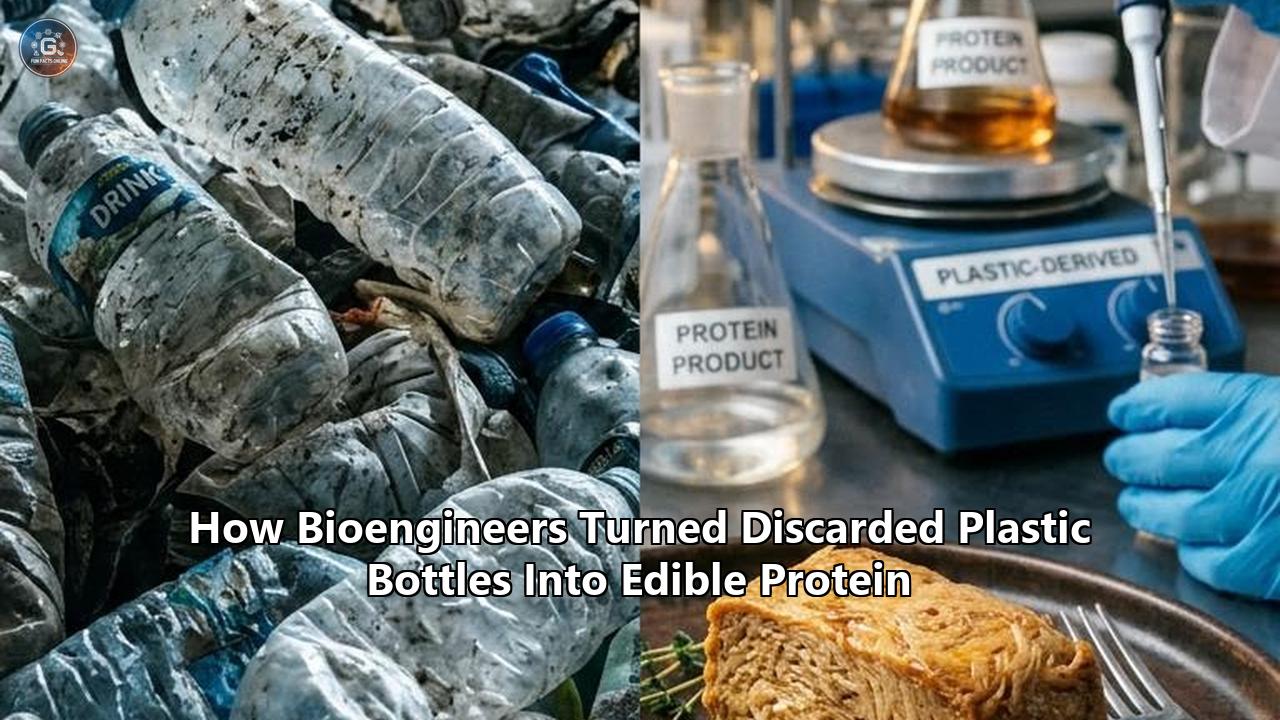
At the American Chemical Society’s Fall meeting in Chicago, researchers from Southern Illinois University Carbondale presented a series of edible baked goods known as “µBites” (pronounced micro-bites). The primary ingredient did not originate in a grain field, orchard, or livestock farm. Instead, the nutritional base of these cookies was synthesized from discarded polyethylene terephthalate (PET) beverage bottles and agricultural residues, converted through thermochemical deconstruction and microbial precision fermentation.
The presentation marked a critical inflection point in synthetic biology and circular manufacturing. Converting plastic into edible protein has moved from theoretical laboratory assays to tangible, calorie-dense foods designed to resolve two intersecting structural crises: the uncontrolled accumulation of synthetic polymers across the biosphere and an escalating shortfall in global food systems.
                     +---------------------------------------+
                     | Discarded PET Bottles & Biomass Waste |
                     +---------------------------------------+
                                         |
                                         v
                     +---------------------------------------+
                     |  STAGE 1: THERMOCHEMICAL BREAKDOWN    |
                     |  - Oxidative Hydrothermal Dissolution |
                     |    OR Anoxic Fast Pyrolysis           |
                     |  - Yields: TPA, EG, soluble acetates  |
                     +---------------------------------------+
                                         |
                                         v
                     +---------------------------------------+
                     |   STAGE 2: PRECISION FERMENTATION     |
                     |  - Engineered Y. lipolytica,          |
                     |    P. putida, C. necator, & S. cerev. |
                     |  - Bio-funneling via PCA pathway      |
                     +---------------------------------------+
                                         |
                                         v
                     +---------------------------------------+
                     | STAGE 3: PURIFICATION & NUTRITION     |
                     |  - Nucleic acid (RNA) degradation     |
                     |  - Heavy metal & additive stripping   |
                     |  - Single-Cell Protein (55-65% crude) |
                     +---------------------------------------+
                                         |
                                         v
                     +---------------------------------------+
                     | Finished Product: µBites & Rations    |
                     +---------------------------------------+
This bioengineering approach treats petroleum-derived plastics not as permanent garbage, but as dense hydrocarbons suitable for precision microbial fermentation. Developed through collaborative programs funded by the Defense Advanced Research Projects Agency (DARPA) and the National Aeronautics and Space Administration (NASA), teams of microbiologists, chemical engineers, and geneticists are demonstrating that microbes can systematically dismantle fossil polymers and upgrade the constituent carbon into complete, highly digestible single-cell proteins.
The Dual Crisis: Waste Proliferation and Caloric Insecurity
The scientific effort to transform post-consumer polymers into food addresses a systemic breakdown in global materials management and agricultural production.
+---------------------------------------------------------------------------------+
|                               THE STRUCTURAL DILEMMA                            |
+---------------------------------------------------------------------------------+
|  PLASTIC WASTE TRAJECTORY                       CALORIC & PROTEIN DEMAND        |
|  - 400+ million metric tons produced/year       - 50% protein demand surge      |
|  - <9% mechanically recycled worldwide            projected by 2050             |
|  - Mechanical downcycling degrades chains       - 30% of humanity facing severe |
|  - Microplastics pervasive in trophic webs        food insecurity risks         |
+---------------------------------------------------------------------------------+
The Breakdown of Mechanical Recycling
Global plastic manufacturing exceeds 400 million metric tons per year, yet international recycling rates hover below 9%. Conventional mechanical recycling suffers from thermodynamic and economic limits:
- Polymer Degradation: Repeated mechanical remelting and extrusion cycles shorten polymer chains, causing thermal and mechanical degradation that degrades resin purity.
- Downcycling Realities: A clear PET water bottle rarely becomes another bottle; it is typically downcycled into polyester textile fibers or industrial strapping, products that are almost never recycled again and eventually enter landfills or incinerators.
- Market Failures: The crash of export markets for low-grade plastic scrap underscored that commodity sorting and mechanical reprocessing cannot economically compete with cheap virgin fossil feedstocks.
The downstream consequence of this disposal failure is environmental saturation. Micro- and nanoscale plastic particles now permeate marine and terrestrial food chains, agricultural soils, and human vascular systems, introducing endocrine-disrupting additives like phthalates and bisphenols into biological systems.
The Coming Protein Deficit
Simultaneously, traditional agriculture is approaching planetary resource boundaries. Global agricultural data indicates:
- Worldwide food production must increase by roughly 50% by 2050 to sustain projected population levels.
- Up to 30% of the world's population faces persistent nutritional vulnerability and food insecurity.
- Modern livestock production accounts for massive quantities of arable land, freshwater consumption, and greenhouse gas emissions, creating vulnerability to topsoil erosion, extreme weather events, and fertilizer supply shocks.
Extreme-Environment Supply Bottlenecks
Beyond global macroeconomic trends, operational logistics in isolated, high-risk environments face critical resource constraints:
+-------------------------------------------------------------------------+
|                  OPERATIONAL VULNERABILITY IN THE FIELD                 |
+-------------------------------------------------------------------------+
|  Military Theaters:                                                     |
|  - Forward operating bases produce tons of rigid packaging waste        |
|  - Up to 50% of logistics casualties stem from food/fuel convoys        |
|                                                                         |
|  Disaster Response Zones:                                               |
|  - Supply lines sever within hours of seismic or meteorological events  |
|  - Plastic water bottles accumulate while populations starve            |
|                                                                         |
|  Deep Space Missions (NASA):                                            |
|  - Resupply missions to Mars or lunar bases are mass-prohibitive        |
|  - Every gram of single-use cargo packaging must be repurposed          |
+-------------------------------------------------------------------------+
In military theaters, forward operating bases generate tons of rigid plastic waste and packaging while spending millions of dollars transporting food rations over vulnerable supply lines. DARPA estimates show that a significant fraction of casualties in past conflicts occurred during logistics convoys transporting food, water, and fuel. Similarly, post-disaster zones routinely experience an influx of bottled relief water, generating local plastic waste mountains while immediate food distribution remains paralyzed.
The Polymer Bottleneck: The Biochemical Barriers
Converting synthetic polymers into bioavailable nutrients was long dismissed as biologically impractical due to the durable chemical bonds that give plastics their stability.
                +-------------------------------------------------------+
                |     CHEMICAL CHALLENGES OF POLYMER CONVERSION        |
                +-------------------------------------------------------+
                | 1. High Crystallinity (Rigid ester backbones)        |
                | 2. Slow Enzymatic Cleavage (Ambient kinetics fail)    |
                | 3. Heavy Metal Residues (Antimony trioxide catalysts) |
                | 4. Polymer Additives (Plasticizers, flame retardants) |
                +-------------------------------------------------------+
The Physics of Synthetic Inertia
Polyethylene terephthalate consists of repeating monomers of terephthalic acid (TPA) and ethylene glycol (EG) linked together by robust ester bonds:
$$\left[ -\mathrm{O}-\mathrm{CH_2}-\mathrm{CH_2}-\mathrm{O}-\mathrm{CO}-\mathrm{C_6H_4}-\mathrm{CO}- \right]_n$$
The physical architecture of commercial PET presents steep barriers to microbial assimilation:
- High Glass Transition Temperature ($T_g$): PET exhibits a $T_g$ between 67°C and 81°C. At ambient temperatures, the polymer chains remain locked in rigid, glassy states that block enzymes from accessing the ester linkages.
- Crystalline Packaging: Commercial bottles feature up to 30–40% biaxially oriented crystallinity, creating dense molecular packing that repels water and prevents biocatalytic hydrolysis.
- Steric Hindrance: Aromatic benzene rings along the main chain restrict molecular flexibility, requiring substantial activation energy to break the ester bonds.
The Limits of Direct Enzymatic Degradation
The 2016 discovery of Ideonella sakaiensis 201-F6 and its specialized enzymes—PETase (EC 3.1.1.101) and MHETase (EC 3.1.1.102)—proved that biology can digest synthetic polyesters. However, natural enzymatic degradation remains far too slow for industrial utility. Wild-type I. sakaiensis requires weeks to break down a small sliver of low-crystallinity PET film at 30°C, yielding negligible biomass.
                                    PETASE KINETICS
Post-Consumer Bottle (High Crystallinity) ---> Ambient PETase ---> Degradation time: Months/Years
                                                                  (Yield insufficient for food)
Direct enzymatic digestion cannot process millions of tons of rigid post-consumer waste within the rapid timeframes needed for industrial single-cell protein production.
The Chemical Contaminant Barrier
Industrial plastics contain complex chemical additive packages:
- Polymerization Catalysts: Antimony trioxide ($\mathrm{Sb_2O_3}$), germanium dioxide, and titanium compounds used during PET synthesis leave inorganic residues.
- Processing Aids and Modifiers: Slip agents, UV stabilizers, plasticizers, and thermal stabilizers are embedded within the resin matrix.
- Printing Inks and Adhesives: Commercial post-consumer containers carry pigments, residual adhesives, and lamination layers.
Directly feeding pulverized plastic to microbes risks introducing trace toxins into the final biomass, demanding rigorous upstream deconstruction and downstream purification.
The Breakthrough: The Two-Stage Thermochemical-Biological Pipeline
To circumvent enzymatic kinetics limits, bioengineers engineered a two-stage hybrid process: thermochemical depolymerization followed by microbial funneling.
+-----------------------------------------------------------------------------------+
|                        THE HYBRID CONVERSION PIPELINE                             |
+-----------------------------------------------------------------------------------+
|  [ Plastic Shreds ]                                                               |
|          |                                                                        |
|          v                                                                        |
|  +-----------------------------------------------------------------------------+  |
|  | STEP 1: PRE-TREATMENT & DEPOLYMERIZATION                                    |  |
|  | A. Oxidative Hydrothermal Dissolution (OHD)                                 |  |
|  |    - Water + O2 at 200°C–350°C, high pressure                               |  |
|  |    - Converts PET & biomass into water-soluble organic acids                |  |
|  | B. Anoxic Fast Pyrolysis                                                    |  |
|  |    - Thermal cracking at 450°C–550°C without oxygen                         |  |
|  |    - Converts polymers into volatile hydrocarbon oil/wax condensates        |  |
|  +-----------------------------------------------------------------------------+  |
|          |                                                                        |
|          v                                                                        |
|  [ Microbe-Accessible Carbon Substrates (TPA, EG, Acetates, Alkanes) ]             |
|          |                                                                        |
|          v                                                                        |
|  +-----------------------------------------------------------------------------+  |
|  | STEP 2: AEROBIC PRECISION FERMENTATION                                      |  |
|  | - Microbial host metabolizes intermediate carbon                            |  |
|  | - Bio-funneling via protocatechuate & beta-ketoadipate pathways            |  |
|  | - Cellular proliferation produces high-density biomass                      |  |
|  +-----------------------------------------------------------------------------+  |
|          |                                                                        |
|          v                                                                        |
|  [ Harvested Microbial Biomass / Single-Cell Protein ]                            |
+-----------------------------------------------------------------------------------+
Stage 1: Fast Thermochemical Depolymerization
Instead of waiting for enzymes to chew through crystalline plastics, researchers apply rapid thermochemical methods to crack long polymer backbones into water-soluble, low-molecular-weight intermediates in minutes.
Method A: Oxidative Hydrothermal Dissolution (OHD)
Developed by Dr. Ken Anderson at Southern Illinois University Carbondale, OHD subjects mixed feedstocks—such as shredded PET bottles combined with agricultural biomass (corn stover, leaves)—to subcritical water and pressurized molecular oxygen at temperatures between 200°C and 350°C under 15–20 MPa of pressure:
- The subcritical water acts as a reactive solvent with elevated hydronium ($\mathrm{H_3O^+}$) and hydroxide ($\mathrm{OH^-}$) concentrations, hydrolyzing the ester linkages of PET within 10 to 30 minutes.
- Concurrently, controlled oxygen addition oxidizes the released ethylene glycol and terephthalate fragments into small carboxylates, including acetic acid, formic acid, benzoic acid, and water-soluble short-chain dicarboxylic acids.
- This process eliminates the need for organic solvents, creating a clear, aqueous nutrient stream containing low-molecular-weight carbon compounds ready for microbial uptake.
PET Polymer + Agricultural Biomass
    ---[ OHD: Subcritical H2O + O2 / 200-350°C / 15-20 MPa ]--->
Water-Soluble Carboxylates + Terephthalic Acid + Acetates
Method B: Anoxic Fast Pyrolysis
Pioneered under the DARPA BioPROTEIN project by Dr. Stephen Techtmann (Michigan Technological University) and Dr. Ting Lu (University of Illinois Urbana-Champaign), thermal pyrolysis deconstructs plastics under anoxic conditions at 450°C to 550°C.
- Within seconds, thermal energy cleaves the covalent $\mathrm{C-C}$ and $\mathrm{C-O}$ bonds, vaporizing the solid plastic into gaseous hydrocarbons.
- Rapid cooling of these vapors yields a condensed, amber liquid hydrocarbon substrate—often termed pyrolysis oil or plastic wax—composed of linear alkanes, alkenes, and aromatic fragments.
- This energy-dense liquid mimics the aliphatic profiles found in unrefined petroleum distillates, presenting an ideal feedstock for specialized hydrocarbonoclastic bacteria.
Solid Polyolefin / PET Waste
    ---[ Fast Pyrolysis: 450-550°C / Anoxic / Rapid Quench ]--->
Aliphatic Hydrocarbon Oil & Wax Condensate
Stage 2: Microbial Funneling and Precision Fermentation
Once the plastic is converted into liquid or aqueous carbon intermediates, bioengineers introduce these solutions into industrial bioreactors inoculated with specialized microbial strains.
+---------------------------------------------------------------------------------+
|                        MICROBIAL ASSIMILATION PATHWAYS                          |
+---------------------------------------------------------------------------------+
|                                                                                 |
|  [ Terephthalic Acid (TPA) ]                  [ Ethylene Glycol (EG) ]          |
|               |                                           |                     |
|        (tphA1A2A3 + tphB)                           (fucO + aldA)               |
|               v                                           v                     |
|  [ Protocatechuic Acid (PCA) ]                    [ Glycolic Acid ]             |
|               |                                           |                     |
|        (pcaGH dioxygenase)                                v                     |
|               v                                    [ Glyoxylate ]               |
|    [ 3-Carboxy-cis,cis-muconate ]                         |                     |
|               |                                           v                     |
|               v                                   [ Pyruvate / Acetate ]        |
|    [ beta-Ketoadipate Pathway ]                           |                     |
|               |                                           |                     |
|               +-------------------+   +-------------------+                     |
|                                   |   |                                         |
|                                   v   v                                         |
|                          [ Acetyl-CoA + Succinyl-CoA ]                          |
|                                       |                                         |
|                                       v                                         |
|                              [ TCA / Krebs Cycle ]                              |
|                                       |                                         |
|                                       v                                         |
|                           [ AMINO ACID BIOSYNTHESIS ]                           |
|                      (Glutamate, Leucine, Lysine, Valine)                       |
|                                       |                                         |
|                                       v                                         |
|                           [ CELLULAR PROLIFERATION ]                            |
|                            (Single-Cell Protein Mass)                           |
+---------------------------------------------------------------------------------+
Catabolic Bio-Funneling of Terephthalate (TPA)
Specialized bacteria such as Pseudomonas putida KT2440 and Rhodococcus jostii use dedicated bio-funneling pathways to process aromatic compounds:
- Dioxygenation: The multi-component enzyme terephthalate 1,2-dioxygenase (encoded by tphA1A2A3) adds two oxygen atoms to the aromatic ring of TPA, forming 1,6-dihydroxycyclohexa-2,4-diene-dicarboxylate (DCD).
- Dehydrogenation: The dehydrogenase tphB restores ring aromaticity, decarboxylating DCD into protocatechuic acid (PCA).
- Ring Cleavage: Protocatechuate 3,4-dioxygenase (encoded by pcaGH) performs ortho-cleavage on the aromatic ring, generating 3-carboxy-cis,cis-muconate.
- Metabolic Integration: Subsequent enzymatic steps of the $\beta$-ketoadipate pathway convert the opened carbon ring into succinyl-CoA and acetyl-CoA, feeding directly into the tricarboxylic acid (TCA) cycle.
Catabolic Assimilation of Ethylene Glycol (EG)
Simultaneously, ethylene glycol is metabolized through native or engineered oxidoreductases:
- EG is oxidized to glycolaldehyde by propanediol oxidoreductase (fucO) or alcohol dehydrogenases, then converted to glycolic acid by lactaldehyde dehydrogenase (aldA).
- Glycolate oxidase metabolizes glycolic acid into glyoxylate, which is redirected into central carbon metabolism via the glycerate or malate synthase pathways.
Through these metabolic funnels, every carbon atom that once formed rigid plastic is repurposed to build cellular constituents: nucleic acids, lipid membranes, and functional enzymes. This platform turns plastic into edible protein in under 24 hours inside continuous stirred-tank bioreactors, yielding dense single-cell biomass.
Bioengineering the Biomass: Synthetic Gene Circuits and Nutritional Optimization
Raw bacterial biomass cultivated on crude hydrocarbons is not automatically optimal food. Bioengineers apply synthetic biology to refine cellular composition, programming organisms to generate a complete human nutritional profile.
+--------------------------------------------------------------------------------+
|                   SYNTHETIC METABOLIC UPGRADES IN BIOENGINEERED YEAST          |
+--------------------------------------------------------------------------------+
|  ENGINEERING TARGET      MECHANISM APPLIED             NUTRITIONAL OUTCOME      |
|  ------------------      -----------------             -------------------      |
|  Essential Amino Acids   Overexpression of feedback-   Balanced human protein   |
|                          insensitive DHDPS & homoserine  profile exceeding FAO  |
|                          dehydrogenase enzymes         standards (Lys, Met, Leu)|
|                                                                                 |
|  Flavors & Aromas        Heterologous expression of    Vanilla aroma (Vanillin) |
|                          feruloyl-CoA synthetase &     eliminates petrochemical |
|                          phenolic acid decarboxylase   odor notes               |
|                                                                                 |
|  Micronutrients          Integration of crtB, crtI,    Provitamin A enrichment  |
|                          and crtY carotene synthases   (Beta-Carotene)          |
|                                                                                 |
|  Lipid Profiles          Upregulation of delta-9 and   High polyunsaturated     |
|                          delta-12 desaturases in       fatty acids; low         |
|                          oleaginous Y. lipolytica      saturated fat fraction   |
+--------------------------------------------------------------------------------+
Programming Gene Circuits for Complete Nutrition
At the University of Illinois Urbana-Champaign, Dr. Ting Lu's synthetic biology group focuses on designing metabolic circuits to enrich microbial biomass:
      [ Upstream Plastic Intermediates: Carboxylates & Acetates ]
                                  |
                                  v
                +------------------------------------+
                |  SYNTHETIC METABOLIC GATEWAYS      |
                +------------------------------------+
                   /               |                \
                  /                |                 \
                 v                 v                  v
     +-----------------+  +-----------------+  +-----------------+
     |   AMINO ACIDS   |  |     LIPIDS      |  |  VITAMINS &     |
     | Deregulated     |  | Oleaginous      |  | CAROTENOIDS     |
     | biosynthesis of |  | engineering of  |  | Carotenoid      |
     | Lys, Thr, Met   |  | Omega-3 & PUFA  |  | pathway (crt)   |
     +-----------------+  +-----------------+  +-----------------+
                 \                 |                 /
                  \                |                /
                   v               v               v
            +-----------------------------------------------+
            | Upgraded Microbial Single-Cell Biomass (µBite) |
            |      ~60% Protein, Complete Essential AA      |
+-----------------------------------------------+- Amino Acid Enrichment: Natural microbes prioritize structural proteins and balance amino acid output for survival rather than human dietary needs. By overexpressing feedback-resistant versions of key enzymes—such as aspartate kinase and dihydrodipicolinate synthase (DHDPS)—researchers force cells to accumulate higher concentrations of essential amino acids like lysine, methionine, threonine, and leucine.
- Lipid Architecture Tuning: Strains of the oleaginous yeast Yarrowia lipolytica were modified by knocking out competing $\beta$-oxidation genes and upregulating $\Delta$-9 and $\Delta$-12 desaturases. This shifts the cellular lipid profile away from saturated fats toward beneficial mono- and polyunsaturated fatty acids (oleic and linoleic acids).
- Micronutrient Synthesis: To move beyond basic calories, researchers at Southern Illinois University engineered yeast strains containing the carotenogenic gene cassette (crtB, crtI, crtY) from Pantoea ananatis, allowing the yeast to synthesize high levels of $\beta$-carotene (provitamin A) directly from plastic-derived carbon substrates.
- Bio-Flavor Synthesis: The SIU team led by Dr. Lahiru Jayakody and Sandhya Jayasekara genetically introduced enzymatic pathways that convert trace phenolic intermediates into vanillin (4-hydroxy-3-methoxybenzaldehyde), providing natural flavoring to ensure consumer acceptability.
Nutritional Composition: Biomass vs. Conventional Proteins
Microbial protein grown on deconstructed plastic matches or exceeds standard dietary benchmarks:
+---------------------------------------------------------------------------------+
|                MACRONUTRIENT COMPOSITION COMPARISON (% DRY WEIGHT)              |
+---------------------------------------------------------------------------------+
|  Nutrient Fraction      Plastic-Derived SCP      Soy Protein Isolate      Beef  |
|  -----------------      -------------------      -------------------      ----  |
|  Crude Protein                 55 - 65%                 85 - 90%          60%   |
|  Lipids (Fats)                  8 - 15%                  1 - 3%           20%   |
|  Dietary Fiber/Carbs           10 - 20%                  3 - 6%            0%   |
|  Ash / Minerals                 5 - 8%                   4 - 6%            4%   |
|  Nucleic Acids (Crude)          8 - 12%                    <1%            <1%   |
|  Nucleic Acids (Treated)         <2.0%                     <1%            <1%   |
+---------------------------------------------------------------------------------+
The amino acid profile contains all nine essential amino acids required for human health, satisfying the nutritional standards established by the Food and Agriculture Organization (FAO) and World Health Organization (WHO):
+---------------------------------------------------------------------------------+
|              ESSENTIAL AMINO ACID PROFILE (mg / g Total Protein)                |
+---------------------------------------------------------------------------------+
|  Amino Acid             Plastic-Derived SCP      FAO/WHO Baseline Reference     |
|  ----------             -------------------      --------------------------     |
|  Leucine                       82.4                         66.0                |
|  Lysine                        74.1                         58.0                |
|  Valine                        58.3                         35.0                |
|  Isoleucine                    46.2                         28.0                |
|  Threonine                     49.8                         34.0                |
|  Phenylalanine + Tyr           78.5                         63.0                |
|  Methionine + Cys              32.0                         25.0                |
|  Tryptophan                    14.2                         11.0                |
|  Histidine                     23.0                         19.0                |
+---------------------------------------------------------------------------------+
Safety, Toxicology, and Decontamination Engineering
Turning post-consumer waste into human food requires resolving significant safety challenges. The biochemical process must prevent petrochemical toxins, heavy metals, and bacterial byproducts from contaminating the final food matrix.
+---------------------------------------------------------------------------------+
|                         DOWNSTREAM PURIFICATION PIPELINE                        |
+---------------------------------------------------------------------------------+
|                                                                                 |
|   [ Wet Microbial Broth from Fermentation ]                                    |
|                       |                                                         |
|                       v                                                         |
|   +-------------------------------------------------------------------------+   |
|   | 1. THERMAL SHOCK & RNA EXTRACTION                                       |   |
|   |    - Incubate at 65°C–70°C for 20 min to activate endogenous ribonucleases  |   |
|   |    - Reduces nucleic acid content from >10% down to <1.5%               |   |
|   +-------------------------------------------------------------------------+   |
|                       |                                                         |
|                       v                                                         |
|   +-------------------------------------------------------------------------+   |
|   | 2. CENTRIFUGATION & CELL WALL FRACTIONATION                             |   |
|   |    - Continuous disc-stack centrifugation separates intact cells         |   |
|   |    - Mechanical homogenizers lyse cells to release clean protein         |   |
|   +-------------------------------------------------------------------------+   |
|                       |                                                         |
|                       v                                                         |
|   +-------------------------------------------------------------------------+   |
|   | 3. CHELATION & MEMBRANE DIAFILTRATION                                   |   |
|   |    - EDTA & citric acid washes chelate residual antimony & heavy metals |   |
|   |    - Ultrafiltration membranes (10–30 kDa) strip free small molecules   |   |
|   +-------------------------------------------------------------------------+   |
|                       |                                                         |
|                       v                                                         |
|   +-------------------------------------------------------------------------+   |
|   | 4. SPRAY DRYING & STERILIZATION                                         |   |
|   |    - Flash drying yields stable, off-white, allergen-screened powder    |   |
|   +-------------------------------------------------------------------------+   |
|                       |                                                         |
|                       v                                                         |
|   [ Purified Food-Grade Single-Cell Protein Powder ]                            |
+---------------------------------------------------------------------------------+
The Nucleic Acid Bottleneck
Fast-growing single-cell microorganisms contain high concentrations of nucleic acids—primarily ribosomal RNA—often making up 8% to 12% of total dry biomass.
$$\mathrm{RNA} \longrightarrow \mathrm{Purines\;(Adenine,\;Guanine)} \longrightarrow \mathrm{Uric\;Acid}$$
When humans consume excessive purines, the liver metabolizes them into uric acid. Because humans lack the urate oxidase enzyme, elevated uric acid levels can precipitate as monosodium urate crystals in synovial joints and renal tubules, causing gout and kidney stones.
- The Solution: A precise thermal-shock processing step is applied to harvested biomass.
- Elevating broth temperatures to 65°C–70°C for 20 to 30 minutes deactivates heat-sensitive cellular proteases while activating endogenous intracellular ribonucleases (RNases).
- These RNases cleave the long RNA chains into small nucleotides that diffuse out of the cells into the wash liquid.
- This processing reduces total nucleic acid content to below 1.5% to 2.0% of dry weight, well within international food-grade thresholds established for commercial single-cell proteins like Quorn (Fusarium venenatum).
Chemical Residue and Heavy Metal Stripping
To ensure the harvested protein remains free of upstream synthetic components, downstream processing employs multi-tiered filtration and analytical validation:
- Catalyst Chelation: Post-fermentation biomass undergoes washing with food-grade chelating agents (such as citric acid and EDTA salts) to bind and eliminate trace antimony, titanium, and germanium residues carried over from the original PET manufacturing.
- Diafiltration: Multi-stage tangential flow membrane filtration (with cut-offs ranging from 10 to 30 kDa) separates intact proteins from unreacted monocarboxylates, small aromatics, and hydrophilic mineral salts.
- Endotoxin Screening: When using Gram-negative bacterial hosts like P. putida, extraction isolates the cytosolic protein fractions from the outer lipopolysaccharide (LPS) membrane layers, ensuring the final powder tests negative on Limulus Amebocyte Lysate (LAL) pyrogenicity assays.
Decentralized Deployment: From Field Units to Deep Space
The primary driver behind bioengineered plastic into edible protein research has been the need for operational resilience in distributed and logistically isolated environments.
+---------------------------------------------------------------------------------+
|                        FIELD DEPLOYMENT OPERATIONAL PROFILE                     |
+---------------------------------------------------------------------------------+
|                                                                                 |
|  [ Field Deployment Contexts ]                                                  |
|   |                                                                             |
|   +---> 1. Military Expeditionary Units (DARPA ReSource)                        |
|   |        - Tactical vehicle trailer-mounted system                            |
|   |        - 28-day off-grid operation via solar/battery microgrids             |
|   |        - Ingests MRE wrappers, bottles, and fuel drums                      |
|   |        - Yields: Field protein powders and mechanical lubricants            |
|   |                                                                             |
|   +---> 2. Humanitarian Disaster Relief                                         |
|   |        - Rapid-deployment modular container units                           |
|   |        - Deconstructs municipal packaging waste on-site                     |
|   |        - Eliminates logistics delays during infrastructure failures         |
|   |                                                                             |
|   +---> 3. Deep-Space Exploration (NASA Deep Space Food Challenge)              |
|   |        - Closed-loop microgravity bioreactors                               |
|   |        - Upcycles transit mission packaging and crew waste into µBites      |
|   |        - 3D-prints fresh rations on demand without terrestrial resupply     |
+---------------------------------------------------------------------------------+
The DARPA ReSource "Black Box" Architecture
Under the DARPA ReSource program, research teams led by Michigan Technological University engineered self-contained, field-deployable units.
                                DARPA "BLACK BOX" MODULE
+---------------------------------------------------------------------------------------+
|  [ INLET ] Post-Consumer Packaging / Waste Plastics                                  |
|      |                                                                                |
|      v                                                                                |
|  [ MODULE 1: Pyrolysis / Thermal Shredder ]                                           |
|      |  - 500°C anoxic conversion to liquid wax condensates                           |
|      v                                                                                |
|  [ MODULE 2: Automated Continuous Stirred Bioreactor ]                                |
|      |  - High-density microbial conversion via hydrocarbonoclastic bacterial culture |
|      v                                                                                |
|  [ MODULE 3: Thermal RNA Shock & Centrifugal Washing ]                                |
|      |  - Purifies protein and strips cellular residues                              |
|      v                                                                                |
|  [ MODULE 4: Dehydration & Powder Milling ]                                           |
|      |                                                                                |
|      v                                                                                |
|  [ OUTLET ] Edible Single-Cell Protein & Pure Base Lubricants                         |
+---------------------------------------------------------------------------------------+
These self-contained modules fit onto the bed of a standard military tactical vehicle or inside a standard shipping container:
- Input Flexibility: Operates on unsorted waste, including polyethylene ration packaging, PET water containers, and polypropylene structural dunnage.
- System Autonomy: Designed to run continuously for up to 28 days using integrated solar arrays and battery microgrids, requiring minimal external inputs besides ambient air and water.
- Multimodal Output: The system simultaneously produces single-cell protein powder for personnel sustenance and synthetic lubricants for military vehicle maintenance.
NASA Deep Space Closed Loops and the µBite System
For long-duration spaceflight to Mars, resupply missions are physically impossible and weight allowances are tightly constrained. The NASA Deep Space Food Challenge spurred the development of Southern Illinois University’s µBite platform:
Spacecraft Packaging Scrap + Inedible Crop Biomass
    ---> Oxidative Hydrothermal Dissolution Module (Water + Pressurized O2)
    ---> Fermentation Broth with Genetically Programmed Baker's Yeast
    ---> Protein & Nutrient Paste Formation
    ---> Integrated 3D Food Printer Extrusion
    ---> Microwave Setting & Sterilization
    ---> Finished Nutritive µBite Cookie
The µBite system demonstrates that in closed extraterrestrial habitats, packaging waste is a recoverable carbon reservoir. Reprogrammed baker's yeast converts this substrate into protein, fat, vanilla flavoring, and vitamins, which are then extruded into solid food using automated 3D printers.
The Path to Commercialization: Regulation, Consumer Acceptance, and Life Cycle Metrics
Moving this technology from specialized military and space applications into broader commercial food systems requires navigating strict regulatory frameworks, addressing consumer sentiment, and demonstrating economic viability.
+---------------------------------------------------------------------------------+
|                       COMMERCIALIZATION READINESS MATRIX                        |
+---------------------------------------------------------------------------------+
|  VETTING CRITERION       CORE CHALLENGE                 TECHNICAL / REGULATORY PATH |
|  -----------------       --------------                 --------------------------- |
|  Consumer Perception     The psychological "Yuck"       Emphasize molecular purity; |
|                          factor regarding plastic       highlight yeast platforms   |
|                          waste origins                  analogous to brewing        |
|                                                                                     |
|  Regulatory Clearance    Novel Food status & GRAS       Extensive batch assays,     |
|                          certification (FDA / EFSA)     subchronic 90-day rodent    |
|                                                         toxicology, heavy-metal     |
|                                                         quantification (ICP-MS)     |
|                                                                                     |
|  Economic Viability      Capital expenditure (CapEx)    Co-production of high-value |
|                          of high-pressure OHD reactors   specialty chemicals alongside|
|                          and bioreactor power demands   bulk single-cell protein    |
|                                                                                     |
|  Life Cycle Carbon       Energy consumption during      Demonstrated 50% carbon     |
|                          thermal depolymerization       reduction relative to waste |
|                          and continuous aeration        incineration and landfilling|
+---------------------------------------------------------------------------------+
Navigating the "Yuck" Factor
The most visible challenge facing plastic-derived food is human psychology. Consumers readily accept food produced through microbial synthesis—such as beer, yogurt, baker's yeast, and precision-fermented chymosin used in cheese—yet the prospect of eating something derived from discarded bottles provokes hesitation.
Scientific teams emphasize molecular independence:
- Microbes do not contain intact plastic.
- The input polymers are completely broken down into basic, low-molecular-weight organic building blocks (acetate, ethanol, glycolate).
- Microbes consume these carbon molecules to synthesize entirely new cellular biomass.
- The resulting single-cell protein is structurally and chemically distinct from plastic, resembling the nutritional profiles of inactive brewer's yeast or Torula yeast (Cyberlindnera jadinii).
Plastic Bottle (Covalent Polymer)
    ==[ Thermochemical Cleavage ]==> Simple Organic Carbon
    ==[ Microbial Digestion ]==> Cellular Protein & Vitamins
The Regulatory Gauntlet: FDA GRAS and EFSA Novel Foods
Before plastic-derived biomass can enter retail food supply chains, it must satisfy strict safety requirements overseen by global food safety authorities:
+-------------------------------------------------------------------------------+
|                      REGULATORY APPROVAL ROADMAP                              |
+-------------------------------------------------------------------------------+
|  1. Compositional Equivalence:                                                |
|     Demonstrate complete absence of synthetic additives, microplastics,      |
|     and regulated monocarboxylates down to parts-per-billion limits.          |
|                                                                               |
|  2. Toxicological Assessment:                                                 |
|     Conduct 90-day subchronic toxicity feeding studies in rodents to confirm  |
|     the absence of mutagenic, teratogenic, or cytotoxic effects.              |
|                                                                               |
|  3. Heavy Metal Thresholds:                                                   |
|     Verify via Inductively Coupled Plasma Mass Spectrometry (ICP-MS) that     |
|     antimony, arsenic, cadmium, lead, and mercury fall below food limits.     |
|                                                                               |
|  4. Filing Submissions:                                                       |
|     Submit formal dossiers for FDA Generally Recognized as Safe (GRAS)       |
|     affirmation and EFSA Novel Food authorization.                            |
+-------------------------------------------------------------------------------+
Life Cycle Assessment and Techno-Economic Feasibility
Life cycle assessment (LCA) data shows that chemical and biological upcycling provides substantial environmental advantages over status-quo disposal methods:
- Carbon Footprint Reduction: Converting PET waste via thermochemical cracking and microbial fermentation produces up to 50% lower greenhouse gas emissions compared to landfilling and waste-to-energy incineration.
- Water and Land Efficiency: Producing single-cell protein requires less than 1% of the land area and roughly 5% of the water volume needed to grow an equivalent mass of soy or beef protein.
- Techno-Economic Integration: To offset the capital costs of high-pressure hydrothermal reactors and continuous bioreactor aeration, commercial scaling focuses on co-production.
Facilities can configure their fermentation broths to simultaneously generate high-value compounds—such as natural vanillin, squalene, and specialized biolipids—alongside bulk protein biomass, maximizing unit economics.
The Horizon: Next-Generation Strains and Global Circular Bioeconomies
The successful demonstration of converting discarded plastic into edible protein confirms the viability of a bio-upcycling pathway once considered purely theoretical. Researchers are now expanding beyond simple PET bottles to tackle the broader, more complex polyolefin streams that dominate municipal waste.
+---------------------------------------------------------------------------------+
|                       NEXT-GENERATION RESEARCH VECTORS                          |
+---------------------------------------------------------------------------------+
|                                                                                 |
|  [ Expand Feedstock Range ]                                                     |
|  - Engineering strains (*Pseudomonas*, *Rhodococcus*) to digest multi-layer     |
|    films, polyethylene (PE), polypropylene (PP), and vulcanized rubbers         |
|                                                                                 |
|  [ Cell-Free Synthetic Enzyme Cascades ]                                        |
|  - Immobilizing multi-enzyme arrays on graphene substrates to crack plastics    |
|    at ambient temperatures without living cells                                 |
|                                                                                 |
|  [ Autonomous Micro-Consortia ]                                                 |
|  - Assembling self-balancing bacterial-fungal consortia that break down mixed   |
|    packaging, print inks, and barrier layers in a single, continuous vessel     |
|                                                                                 |
+---------------------------------------------------------------------------------+
Advancing to Polyolefins and Multi-Layer Packaging
While PET accounts for a large portion of beverage packaging, the bulk of global plastic waste consists of polyolefins: low-density polyethylene (LDPE), high-density polyethylene (HDPE), and polypropylene (PP). These polymers lack hydrolyzable ester bonds, featuring inert, fully saturated carbon-carbon ($\mathrm{C-C}$) backbones.
Synthetic biologists are engineering strains of Rhodococcus opacus and Acinetobacter venetianus with upregulated alkane hydroxylases (alkB) and cytochrome P450 systems, allowing them to rapidly digest the long aliphatic chains produced by the pyrolysis of mixed polyolefin films.
The Industrial Scaling Timeline
Key benchmarks will dictate the technology's trajectory over the coming years:
- Pilot Demonstration Facilities: Transitioning from 10-liter benchtop reactors to multi-thousand-liter industrial fermenters capable of processing metric tons of plastic waste per day.
- Decentralized Field Validation: Deployment of the first mobile DARPA ReSource units in field training exercises and NASA simulation habitats.
- Regulatory Approvals: Initial formal filings of GRAS safety determination dossiers for human-grade, plastic-derived single-cell proteins.
Reprogramming microorganisms to transform synthetic waste into nutritional protein bridges industrial recycling and precision biotechnology. By treating discarded polymers as a carbon feedstock rather than a permanent pollutant, bioengineers are building closed-loop manufacturing systems that help safeguard both planetary ecosystems and global food security.
Reference:
- https://in-food.co.uk/waste-to-food-process-turns-pet-into-protein/
- https://www.proteinproductiontechnology.com/post/engineered-yeast-turns-plastic-waste-into-protein-rich-food
- https://www.newfoodmagazine.com/news/scientists-turn-plastic-waste-into-ingredients-for-protein-rich-cookies/2136286.article
- https://www.discovermagazine.com/these-microbes-could-turn-plastic-and-plant-waste-into-ingredients-for-protein-rich-cookies-49584
- https://www.technologynetworks.com/applied-sciences/news/this-cookie-started-its-life-as-a-plastic-bottle-415922
- https://bioengineering.illinois.edu/news/bioprotein-deconstructs-plastic-waste
- https://www.researchgate.net/publication/356658838_Microbial_fermentation_of_polyethylene_terephthalate_PET_plastic_waste_for_the_production_of_chemicals_and_electricity
- https://www.biorxiv.org/content/10.1101/2024.11.20.624590v1.full
- https://www.mtu.edu/magazine/research/2022/stories/plastic-trash-protein/
- https://borgenproject.org/turning-plastic-into-protein-powder/
- https://pubs.acs.org/ascecg/article/12/42/15603/143676/Single-cell-Protein-Bioplastic-Films-from
- https://www.thechemicalengineer.com/news/student-researchers-create-tasty-cookies-from-plastic-waste/
- https://www.goodgoodgood.co/articles/scientists-make-cookies-out-of-recycled-plastic
- https://www.popsci.com/technology/darpa-military-waste-management/
- https://www.mtu.edu/magazine/research/2022/stories/plastic-trash-protein/
- https://pmc.ncbi.nlm.nih.gov/articles/PMC8193722/
- https://www.foodingredientsfirst.com/news/engineered-yeasts-turn-pet-bottles-and-crop-waste-into-3d-printed-protein-cookies.html
- https://www.mtu.edu/news/2021/07/1-million-prize-for-plasticstoprotein-research-awarded-to-steve-techtmann-ting-lu.html
- https://www.foodingredientsfirst.com/news/converting-plastic-to-protein-us-military-backed-project-employs-pyrolysis-to-make-food-and-fuel-from-waste.html
- https://en.reset.org/can-plastic-become-food-the-food-generator-looking-to-turn-our-waste-products-into-edible-proteins/
- https://thespoon.tech/researchers-use-bacteria-to-transform-plastic-into-edible-protein/
- https://www.facebook.com/Reuters/videos/would-you-eat-a-3d-printed-cookie-made-from-bottle-waste/1778212629973402/
- https://nautil.us/this-cookie-was-a-plastic-bottle-1284161
- https://www.newsweek.com/generator-turns-plastic-trash-edible-protein-1612618
- https://www.facebook.com/undarkmagazine/posts/scientists-at-michigan-tech-are-developing-a-system-to-convert-plastic-waste-int/906554294849939/
- https://www.researchgate.net/publication/363551209_Microbial_Fermentation_of_Polyethylene_Terephthalate_PET_Plastic_Waste_for_the_Production_of_Chemicals_or_Electricity