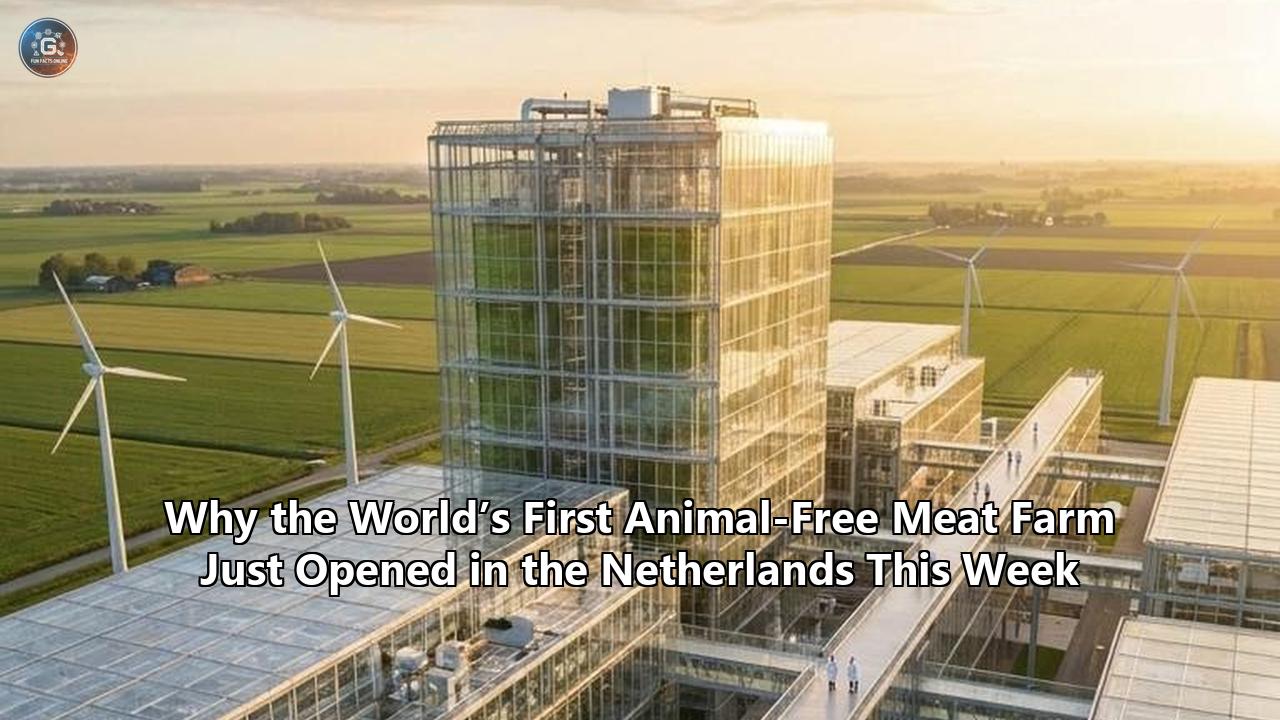
In the flat, windswept polders of Schipluiden, just a short drive from the high-tech urban corridors of Rotterdam and The Hague, a quiet transformation took place. On Friday, June 5, 2026, fifth-generation dairy farmer Corné van Leeuwen stood alongside scientists, policymakers, and agricultural pioneers to cut a ribbon on his family’s homestead, which was established in 1914.
Behind him sat a retrofitted brick-and-timber outbuilding. Inside, glowing sterile bioreactors hummed at a constant 37 degrees Celsius. This launch marked the official opening of the world’s first animal-free meat farm—a pilot facility designed to grow genuine animal protein directly from bovine stem cells, completely bypassing the need for animal slaughter.
This event represents a fundamental pivot in the long-polarized war over the future of food. Until now, cellular agriculture was the exclusive domain of slick, venture-backed biotechnology firms operating out of sterile industrial business parks in Singapore, San Francisco, or Israel. Farmers viewed these enterprises with deep suspicion, seeing lab-grown proteins as an existential threat to their livelihoods and rural heritage.
By bringing high-tech bioreactors directly onto an active, working family farm, the Dutch systems integration firm RespectFarms and its partners are testing an entirely different thesis: that the future of meat can be decentralized, agricultural, and led by the very farmers who have fed humanity for generations.
                     +---------------------------------------+
                     |        Corné van Leeuwen's Farm       |
                     |             (Schipluiden)             |
                     +-------------------+-------------------+
                                         |
                 +-----------------------+-----------------------+
                 |                                               |
  +--------------v---------------+               +--------------v---------------+
  |  Traditional Dairy Pasture   |               |   Animal-Free Meat Unit      |
  |  - 60 Milking Cows           |               |   - 20L to 200L Bioreactors  |
  |  - 12,000L Milk/Cow/Year     |               |   - Closed-Loop Cell Culture |
  |  - Artisanal Cheesemaking    |               |   - Experience & Education   |
  +--------------+---------------+               +--------------+---------------+
                 |                                               |
                 +-----------------------+-----------------------+
                                         |
                     +-------------------v-------------------+
                     |   Circular On-Farm Economy            |
                     |   - Cheese whey used for cell media   |
                     |   - Low-carbon local distribution     |
                     +---------------------------------------+
To understand why this development occurred in this specific Dutch pasture requires looking beyond the celebratory press releases. The technical, political, and scientific architecture of this project reveals a complex story of survival, regulatory strategy, and deep-tech agricultural engineering.
The Historical Parallel: From Milk Robots to Meat Bioreactors
The location of this project is not a historical coincidence. Corné van Leeuwen’s farm has a legacy of pioneering agricultural transitions. In 1993, Van Leeuwen’s father made headlines across Europe by installing the very first commercial automatic milking system—a Lely milk robot—on this exact property.
"At the time, people thought my father was out of his mind," Van Leeuwen recalls. "They said cows would never let a machine milk them without a human present, and that it would destroy the soul of farming. Today, robotic milking is a standard global technology."
The installation of a modular cultivated meat production unit inside a renovated stable next to sixty milking cows represents the next stage of this automation curve. Rather than replacing his dairy herd, Van Leeuwen is integrating cell cultivation as a parallel business line.
The technical setup at Schipluiden bypasses the traditional lifecycle of livestock. In conventional agriculture, raising a beef steer requires up to two years of land use, water consumption, feed inputs, and subsequent waste management, culminating in the animal's slaughter.
On this animal-free meat farm, the cycle is contracted to less than two weeks within a closed-loop system:
- Biopsy: A veterinarian performs a minor, harmless needle biopsy on the rump of a healthy cow from the pasture, extracting a tiny tissue sample containing satellite muscle cells.
- Isolation: The tissue is enzymatically treated on-site to isolate these primary stem cells.
- Proliferation: The cells are introduced into a bioreactor filled with a nutrient-rich, animal-free growth medium, where they divide rapidly.
- Differentiation: By altering the mechanical agitation and nutritional profile of the bioreactor, the cells are signaled to fuse into multinucleated myotubes, forming genuine animal muscle fibers.
- Harvest: The resulting biomass is harvested, ready to be structured into familiar food products like burgers, sausages, or meatballs.
The target of the Schipluiden pilot is to transition from testing to a fully operational, farm-scale demonstration site by 2028. The facility currently utilizes bioreactors with operational capacities ranging from 20 to 200 liters.
While these volumes are small compared to the 50,000-liter vats planned by industrial biotechnology conglomerates, they are optimized for decentralization. The objective is to establish a modular, replicable blueprint that allows an individual farmer to produce up to 100 metric tons of clean meat per year—roughly equivalent to the annual meat yield of a typical medium-sized livestock farm—using a fraction of the land, water, and energy.
Inside the Bioreactor: The Technical Reality of Farm-Scale Cultivation
To appreciate the scale of this achievement, one must look at the biological and mechanical processes taking place inside these farm-scale bioreactors. The systems integration designed by RespectFarms relies on a deep understanding of cellular dynamics and fluid mechanics.
Growing animal cells outside a living body is difficult. Muscle cells are anchorage-dependent, meaning they require a physical surface to adhere to in order to grow and multiply.
In a liquid suspension inside a stirred-tank bioreactor, scientists must introduce microscopically small structures known as microcarriers. These microcarriers—often made of pectin, cellulose, or algae-derived alginate—provide the surface area required for cell attachment.
       [Stirred-Tank Bioreactor]
       +-----------------------+
       |   O2, CO2, Temp (37°C)|
       |                       |
       |    O  o  O   o   O    |  <-- Bovine stem cells adhering to
       |   \ /   \ /   \ /     |      porous plant-based microcarriers
       |    X     X     X      |      suspending in nutrient-rich media
       |   / \   / \   / \     |
       |                       |
       |       [Impeller]      |  <-- Controlled RPM to balance nutrient
       |         --|--         |      distribution vs. cell shear stress
       +-----------------------+
The fluid dynamics within a 200-liter bioreactor present a delicate engineering trade-off:
- Nutrient Distribution: The liquid must be continuously mixed to ensure that oxygen, glucose, amino acids, and growth factors are evenly distributed to every cell.
- Shear Stress: If the internal impeller spins too quickly, the resulting mechanical shear forces can tear the delicate cells away from their microcarriers, killing them.
- Gas Exchange: The system must precisely balance dissolved oxygen (DO) and carbon dioxide ($CO_2$) levels. Too little oxygen suffocates the cells; too much carbon dioxide lowers the pH of the medium, creating an acidic environment that halts growth.
At the Schipluiden farm, the bioreactors are equipped with automated PLC (Programmable Logic Controller) systems running proprietary algorithms developed in collaboration with Wageningen University & Research (WUR). These systems monitor temperature, pH, impeller speed, and gas flow rates in real-time, automatically adjusting gas valves and peristaltic pumps to keep the culture in a state of homeostatic balance.
The biological starting point is equally sophisticated. Rather than using genetically modified immortalized cell lines, which raise regulatory eyebrows in Europe, the project focuses on primary bovine satellite cells.
These are adult stem cells found in mature muscle tissue, responsible for natural muscle repair and regeneration. Because primary cells have a finite lifespan—governed by the Hayflick limit of cellular division—the research team must optimize the extraction and expansion protocols to maximize the number of doublings before cellular senescence occurs.
To solve this, the CRAFT (Cellular Revolution in Agriculture and Farming Technology) consortium is focusing on optimizing the "seed train". This process involves starting with a cryopreserved vial of cells, thawing them, and progressively stepping them up through larger and larger vessels—from a 100-milliliter laboratory flask to a 5-liter seed bioreactor, and ultimately to the 200-liter production bioreactor.
Maintaining viability and phenotypic stability across this scale-up process is one of the primary technical challenges being evaluated at the pilot site.
The Sterility Paradox: Running Biopharma in a Dairy Barn
The central engineering challenge of the Schipluiden project is not the biology of the cow cells, but the environment in which they are grown. This is the sterility paradox: cellular agriculture requires environments that are cleaner than an operating room, yet it is being deployed on a working dairy farm teeming with bacteria, fungal spores, and agricultural dust.
In traditional industrial biotechnology, sterile environments are maintained through massive, centralized cleanrooms equipped with complex HVAC (Heating, Ventilation, and Air Conditioning) systems, positive-pressure air locks, and strict gowning protocols for personnel. Translating these systems to a farm setting without incurring millions of euros in capital expenditure requires innovative engineering.
To address this, facility design specialist Royal Kuijpers—a member of the CRAFT consortium—developed a modular, closed-containment system specifically designed for agricultural environments.
Rather than attempting to make the entire stable sterile, they constructed a highly isolated, self-contained "clean box" inside the existing building. This clean box functions as a Class 10,000 (ISO 7) cleanroom, utilizing several layers of protection:
| Layer | System Component | Technical Function |
|---|---|---|
| First Line | Multi-stage HEPA filtration | Scrubs agricultural dust, animal dander, and airborne pathogens from incoming air, cycling the air volume 30 times per hour. |
| Second Line | Positive air pressure differential | Ensures that whenever the access door is opened, air flows outward, preventing contaminated barn air from rushing into the clean space. |
| Third Line | Closed-loop automated CIP/SIP | Clean-in-Place and Sterilize-in-Place systems use steam-on-demand and eco-friendly sanitizing agents to sterilize the interior of the bioreactor vessels without manual disassembly. |
| Fourth Line | Sterile barrier fluid transfer ports | Employs physical micro-valves and heat-sealed tubing to transfer nutrients and cells without exposing the liquids to the surrounding room air. |
This modular approach significantly lowers the barrier to entry for conventional farmers. Instead of rebuilding their entire physical infrastructure, they can drop a pre-fabricated, standardized, sterile production unit directly into an underutilized barn, machine shed, or outbuilding.
This "plug-and-play" biomanufacturing model dramatically reduces up-front capital requirements and simplifies the operational learning curve for the farm family.
The CRAFT Consortium: Mapping the Alliance
The launch of the Schipluiden facility was made possible by the CRAFT Consortium, a unique public-private partnership that unites organizations across agricultural, scientific, and corporate boundaries.
Understanding the specific expertise contributed by each of these stakeholders reveals how the complex supply chain of this animal-free meat farm was assembled:
                     [ CRAFT CONSORTIUM ]
                              |
     +------------------------+------------------------+
     |                                                 |
+----v--------------------+                       +----v--------------------+
|     RespectFarms        |                       |   Wageningen University |
|  - System Integration   |                       |  - Academic R&D         |
|  - Farm-Scale Design    |                       |  - Process Optimization |
+----+--------------------+                       +----+--------------------+
     |                                                 |
+----v--------------------+                       +----v--------------------+
|  Mosa Meat & Aleph Farms|                       |         Multus          |
|  - Cellular Assets      |                       |  - Cost-Effective       |
|  - Regulatory Strategy  |                       |    Growth Media         |
+----+--------------------+                       +----+--------------------+
     |                                                 |
+----v--------------------+                       +----v--------------------+
|        Kipster          |                       |     Royal Kuijpers      |
|  - Farm Operations      |                       |  - Sterile Engineering  |
|  - Scaled Agriculture   |                       |  - Cleanroom Retrofits  |
+-------------------------+                       +-------------------------+
1. RespectFarms (The System Integrator)
Founded by Ira van Eelen, Ralf Becks, and Florentine Zieglowski, RespectFarms acts as the central orchestrator. They do not develop cell lines or synthesize nutrients; instead, they integrate these disparate technologies into an operational model designed for a farmer.
Ira van Eelen’s participation carries deep historical significance: she is the daughter of Willem van Eelen, the Dutch researcher who patented the foundational concept of cultivated meat shortly after World War II but was unable to commercialize it during his lifetime due to prohibitive costs.
2. Wageningen University & Research (The Scientific Engine)
WUR is globally recognized as a premier agricultural university. Under the guidance of research manager Affif Grazette and scientists from the Bioprocess Technology and Food Quality & Design groups, WUR is leading the optimization of the on-farm bioreactor.
Their role is to turn the slurry of muscle cells harvested from the bioreactor into high-quality food, researching how texture, mouthfeel, and nutritional profiles can be managed at a micro-scale.
3. Mosa Meat and Aleph Farms (The Cellular Pioneers)
Maastricht-based Mosa Meat—co-founded by Dr. Mark Post, who unveiled the world's first cultivated beef burger in London in 2013—brings cell lines and product development expertise to the consortium.
Alongside Israel-based Aleph Farms, which specializes in thin-cut structured beef tissue, these companies provide the biological material and coordinate the regulatory strategy necessary to navigate the strict European Novel Foods process.
4. Multus (The Medium Specialist)
The growth medium—the liquid nutrient broth that feeds the cells—historically represented up to 80% of the production cost of cultivated meat. London-based Multus specializes in producing scalable, animal-free, and cost-effective growth media.
Their technology replaces expensive animal-derived components like Fetal Bovine Serum (FBS) with high-efficiency, food-grade plant proteins and yeast extracts.
5. Kipster (The Sustainable Poultry Pioneer)
Co-founded by Ruud Zanders, Kipster is famous for building carbon-neutral, high-welfare poultry operations. Kipster’s role is to ensure that the farm-scale cell units align with real-world farm operations, animal welfare standards, and circular agricultural principles.
6. Royal Kuijpers (The Mechanical Architect)
This engineering firm specializes in designing complex, high-purity systems for the pharmaceutical, high-tech, and food processing industries. They designed the physical layout of the Schipluiden facility, solving the sterility challenge within a legacy farm setting.
The Circular Chemistry of Farm-Scale Nutrients
One of the most compelling aspects of the Schipluiden pilot is the exploration of on-farm circularity. In massive industrial cell-culture facilities, nutrients are trucked in from distant chemical processing plants.
On an integrated animal-free meat farm, scientists are exploring how local agricultural waste and secondary streams can be used to feed the cells, closing the carbon loop on-site.
                     [ Traditional Dairy Farm ]
                                 |
                     (Milking & Cheesemaking)
                                 |
                    +------------v------------+
                    |       Cheese Whey       |  <-- Natural agricultural
                    |      (Waste Stream)     |      byproduct of cheese
                    +------------+------------+      production
                                 |
                     (Enzymatic Hydrolysis)
                                 |
                    +------------v------------+
                    |  Hydrolyzed Lactose     |  <-- Purified into glucose/
                    |   & Whey Proteins       |      galactose and amino acids
                    +------------+------------+
                                 |
                    +------------v------------+
                    |  Animal-Free Meat Unit  |  <-- Fed directly to bovine
                    |     (Bioreactor)        |      cells in bioreactor
                    +-------------------------+
To replace standard cell culture ingredients, WUR and RespectFarms are focusing on two major on-farm feedstocks:
Cheese Whey Hydrolysate
Because Corné van Leeuwen is an artisanal cheesemaker, his farm produces thousands of liters of cheese whey—a watery liquid byproduct containing lactose, proteins, and minerals—each year. Whey represents a significant environmental disposal challenge for dairy farms due to its high biochemical oxygen demand (BOD).
However, whey is structurally rich in valuable nutrients:
- Lactose Conversion: Researchers are utilizing enzymatic hydrolysis to split the lactose disaccharide in whey into glucose and galactose, providing a sustainable, on-farm carbon and energy source for the growing cells.
- Whey Proteins: The functional proteins in whey—such as beta-lactoglobulin and alpha-lactalbumin—are being analyzed to see if they can replace expensive recombinant proteins like albumin, which are traditionally used in cell media to maintain osmotic pressure and transport nutrients.
Green Biorefinery Grass Extracts
The surrounding pastures are dominated by Perennial Ryegrass (Lolium perenne), which is highly efficient at converting sunlight and nitrogen into plant-based proteins. Typically, a cow digests this grass to build muscle tissue.
By applying "green biorefinery" technologies on the farm, the grass is mechanically pressed to extract a nutrient-rich juice. This juice is then treated to isolate soluble proteins and free amino acids, which can be fed directly to the cells in the bioreactor, bypassing the cow’s digestive tract entirely.
By transforming waste streams into high-value cell nutrients, the farm-integrated model could significantly improve the carbon footprint of cultivated meat. A life cycle assessment (LCA) conducted during the planning phases of the project indicates that a farm-integrated cell unit using local energy and circular feedstocks could reduce greenhouse gas emissions by up to 92%, land use by 95%, and water consumption by 78% compared to conventional European beef production.
Political Jujitsu: Reframing the Alt-Protein Culture Wars
The launch of the Schipluiden farm arrives at a moment of intense political friction over the future of agriculture in Europe and North America. Over the past two years, cultivated meat has become a primary target in global culture wars:
- Italy enacted a total ban on the production and import of synthetic food, citing the need to protect the nation's culinary heritage and agricultural economy.
- Several U.S. states, including Florida and Alabama, passed legislation criminalizing the sale of cell-cultured meat.
- Protests by traditional farmers disrupted cities across the EU, with tractor blockades highlighting intense frustration over tightening environmental regulations, nitrogen emissions limits, and perceived competition from corporate-backed alternative protein startups.
In this highly charged political environment, the animal-free meat farm in Zuid-Holland represents a masterclass in political jujitsu. Rather than fighting traditional agriculture, this model co-opts it.
               [ Centralized Corporate Model ]
                             vs
              [ On-Farm Decentralized Model ]

          Centralized                      On-Farm
      +-----------------+            +-----------------+
      |  Biotech Giant  |            |   Local Farmer  |
      |   (Singapore)   |            |  (Schipluiden)  |
      +--------+--------+            +--------+--------+
               |                              |
      +--------v--------+            +--------v--------+
      | Industrial Park |            | Retrofitted Barn|
      |  Cleanroom Vats |            |  Bioreactor Unit|
      +--------+--------+            +--------+--------+
               |                              |
      +--------v--------+            +--------v--------+
      |  Retail Giant   |            | Local Farm Shop |
      |   Supermarket   |            |  Short Supply   |
      +-----------------+            +-----------------+
Historically, alternative protein advocates made the mistake of framing their technology as an alternative to farmers. This approach generated predictable, furious resistance from rural communities and their political allies.
RespectFarms turns this dynamic around. Their core message is clear: The farmer is not a problem to be solved; the farmer is the solution.
"If we build a system where livestock farmers are replaced by industrial food factories, we will hollow out rural communities and concentrate the global food supply in the hands of a few corporate conglomerates," says Ira van Eelen. "By putting the technology on the farm, we ensure that the protein transition is fair, transparent, and rooted in rural societies."
This political shift has earned the project support from unlikely corners:
1. EIP-Agri Funding
The project is funded in part by the European Innovation Partnership for Agricultural Productivity and Sustainability (EIP-Agri), an EU framework specifically designed to support traditional farmers.
This marks the first time that EU agricultural development funds have been used to build a cellular agriculture facility. By categorizing the cell bioreactor as a form of "agricultural diversification" rather than an industrial chemical plant, the project establishes a precedent for public funding.
2. Provincial Backing
The Province of Zuid-Holland contributed €500,000 to the project. Regional politicians—who are often highly sensitive to the concerns of the farm lobby—have championed the Schipluiden farm as an example of Dutch agricultural leadership.
"What is happening here is only possible because of cooperation between farmers, researchers, companies, and governments," said Aad Straathof, the provincial deputy for agriculture and fisheries. "This shows how high-tech agriculture and traditional farming can strengthen each other."
3. Public Trust
A consumer survey conducted by Euroconsumers found that 27% of European citizens trust farmers to ensure the safety and quality of cultivated meat, compared to just 11% who trust retail brands or private technology corporations.
By anchoring the production process on an active farm with a direct-to-consumer farm shop, the project leverages the natural credibility of family farmers to address the consumer "yuck factor" that has hampered lab-grown alternatives.
Financial Realities: The Closing of Meatable vs. the Mosa Strategy
The launch of the Schipluiden facility occurs against a turbulent economic backdrop for the global alternative protein sector. The venture capital boom that funded the initial rise of cellular agriculture has cooled, forcing companies to re-evaluate capital-intensive scaling strategies.
This financial shift was illustrated in December 2025, when the prominent Dutch cultivated pork pioneer Meatable, based in Leiden, closed its doors after failing to secure fresh funding. Backed by UK-based investment group Agronomics and national investment funds, Meatable had raised millions of euros to build a large pilot plant.
However, the cost of scaling up traditional industrial cell-culture systems proved too high for private markets to sustain, leading to a responsible wind-down of operations.
In contrast, Maastricht-based Mosa Meat has continued to secure capital, closing a €15 million funding extension in late 2025 that brought its recent capital raises to €58 million. Mosa Meat's resilience is linked to its diversified strategy, which focuses on dual paths:
- Centralized Production: Scaling up its 2,760-square-meter C.A.M.P.U.S. facility in Maastricht to produce commercial volumes for early-adopting markets.
- Decentralized Production: Partnering with the CRAFT consortium and RespectFarms to validate on-farm cell cultivation, positioning the company as a key technology provider for a future decentralized farming network.
                [ Capital Expenditure (CapEx) Comparison ]

Centralized Biotech Plant                        On-Farm Cell Unit
- Sterile cleanroom build: €10M+                 - Retrofitted existing stable: €250k
- 50,000L custom bioreactors: €15M+              - 200L modular bioreactor: €150k
- Dedicated energy/water utility: €5M+           - Farm utility grid integration: €50k
- Specialized pharma staff: €2M/year             - Trained farm operator: €0 (Diversified)
=====================================            =====================================
Total CapEx: €30M+ (High Risk)                  Total CapEx: €450k (Low/Shared Risk)
The economic viability of the decentralized model depends on shifting capital costs. In the centralized approach, a single company must bear the entire financial burden of building a food processing factory from scratch.
Under the decentralized animal-free meat farm model, those capital investments are distributed:
- Repurposed Assets: The farmer already owns the land, the structures, the electrical connections, and the water access. Retrofitting a 1914 barn requires a fraction of the capital needed to construct a new biopharma plant in an industrial park.
- Diversified Revenue: Because the cell unit operates alongside traditional dairy farming and cheesemaking, the farmer does not rely entirely on immediate cell-culture sales to survive. This reduces the risk of pilot-stage financial failures.
- Local Energy Integration: Farms are increasingly becoming local power generation hubs, equipped with rooftop solar arrays, wind turbines, and anaerobic manure digesters. Running energy-intensive bioreactors on farm-generated renewable electricity lowers operating costs and reduces environmental impacts.
The Experience Centre: Overcoming the "Yuck Factor" Through Rural Transparency
While the technical and economic metrics of the Schipluiden project are critical, its most significant impact may be cultural. A major challenge facing cellular agriculture is the psychological barrier of public acceptance.
To many consumers, "lab-grown meat" sounds unnatural, evoking clinical images of sterile petri dishes, white lab coats, and corporate secrecy.
To address this, the South Holland provincial government and RespectFarms invested a portion of their funding to build an on-site Experience Centre directly adjacent to the bioreactor room. Scheduled to host its first public, school, and policymaker tours this summer, this center is designed to make cellular agriculture visible, tangible, and accessible.
                     +---------------------------------------+
                     |         The Experience Centre         |
                     |             (Schipluiden)             |
                     +-------------------+-------------------+
                                         |
                 +-----------------------+-----------------------+
                 |                                               |
  +--------------v---------------+               +--------------v---------------+
  |     Visual Transparency      |               |     Community Dialogue       |
  |  - Double-paned glass walls  |               |  - Workshops for farmers     |
  |  - View active bioreactors   |               |  - School field trips        |
  |  - Demystify cell growth     |               |  - Policymaker briefings     |
  +------------------------------+               +------------------------------+
The Experience Centre utilizes structural design to build trust:
- Visual Transparency: Large, double-paned glass windows allow visitors to look directly into the bioreactor cleanroom, showing that the system resembles a microbrewery or clean dairy processing facility rather than a sinister pharmaceutical lab.
- Sensory Reassurance: Visitors can step out of the cleanroom viewing area and look directly into the neighboring pasture where the donor cows graze, highlighting the biological connection between the living animal and the cell-derived product.
- Direct Dialogue: By positioning the farmer as the face of the operation, visitors can ask questions directly to someone who understands animal husbandry, food safety, and rural stewardship, rather than a corporate spokesperson.
"When people see a bioreactor operating in a sterile office building, they are suspicious," says Ralf Becks, co-founder of RespectFarms. "But when they see it here on the farm, next to the cheese vats, they realize it's just another way of processing what the farm produces. It turns a scary technology into a normal agricultural activity."
Looking Ahead: The Roadmap to 2028 and the Decentralized Era
The inauguration of the Schipluiden pilot facility is a significant first step, but the path to a fully commercialized global network of animal-free meat farms remains demanding. Over the next four years, the CRAFT consortium will execute a structured roadmap to transition from a demonstration site to a viable commercial model:
+------------------------------------------------------------------------+
|                                ROADMAP                                 |
+------------------------------------------------------------------------+
|                                                                        |
| 2026-2027: Technical Optimization                                      |
| - Refine cell media using cheese whey & grass extracts on-farm.        |
| - Complete scale-up testing from 20L to 200L bioreactors.              |
|                                                                        |
| 2027: Regulatory Advocacy                                              |
| - Prepare comprehensive safety dossiers for EU EFSA submission.        |
| - Leverage farm-integrated data to secure public safety approvals.     |
|                                                                        |
| 2028: Full Operational Pilot                                           |
| - Establish 100-ton capacity cell farming module.                      |
| - Formulate and test first generation on-farm hybrid products.         |
|                                                                        |
| 2028-2030+: Commercial Expansion                                       |
| - Replicate modular cleanroom designs across European farms.           |
| - Launch local commercial sales in EU pending EFSA clearance.          |
|                                                                        |
+------------------------------------------------------------------------+
1. Technical Optimization (2026–2027)
The immediate focus at Schipluiden is stabilizing the bioprocess engineering. The research team must demonstrate that they can consistently grow muscle tissue in a farm environment across multiple seasons without contamination, while reducing the cost of the on-farm nutrient media to parity with conventional feed.
2. Regulatory Navigation (2027)
Because cultivated meat has not yet been approved for commercial sale in the European Union, none of the meat produced in Schipluiden can be sold to consumers.
The CRAFT consortium will collect biological, chemical, and operational data from the pilot site to compile comprehensive safety dossiers for the European Food Safety Authority (EFSA). The group aims to leverage the farm-integrated nature of the project to show that the process is safe, traceable, and consistent with European food standards.
3. Commercial Blueprint Formulation (2028)
Once technical and regulatory milestones are met, RespectFarms plans to package the Schipluiden designs into a commercial franchise model.
This will allow farmers around the world to purchase a pre-engineered, modular cell-culture package—complete with a cleanroom container, bioreactors, automated control systems, and supply agreements for cell lines and growth media.
This decentralized vision presents a new perspective on global food security. Instead of relying on a few massive, vulnerable production hubs, the food system of tomorrow could be supported by a resilient, distributed network of local cell farms.
If successful, the quiet experiment on Corné van Leeuwen’s dairy farm in Schipluiden will be remembered as the moment the protein transition came home to the pasture.
Reference:
- https://qazinform.com/news/dutch-farm-launches-worlds-first-cultivated-meat-facility-ff3545
- https://www.nieuweoogst.nl/nieuws/2026/01/30/wij-zien-kweekvlees-produceren-juist-als-kans
- https://www.deondernemer.nl/innovatie/kweekvlees-wereldprimeur-boerderij-corne-respectfarms-foodtech-innovatie-melkrobot-boer-corne-van-leeuwen~b5dba8a
- https://nltimes.nl/2026/06/07/schipluiden-opens-worlds-first-farm-growing-meat-cells-without-animal-slaughter
- https://www.greenqueen.com.hk/mosa-meat-opens-worlds-largest-cultivated-meat-facility/
- https://in-food.co.uk/respectfarms-opens-cultivated-meat-farm/
- https://www.thecooldown.com/green-tech/cultivated-meat-farm-opens-rotterdam/
- https://www.greenqueen.com.hk/cultivated-meat-farm-dairy-lab-grown-netherlands/
- https://www.respectfarms.com/blog/world-s-first-cultivated-meat-farm-launches-in-the-netherlands
- https://www.speciesunite.com/news-stories/the-worlds-first-cultivated-meat-farm-opens-in-the-netherlands
- https://www.foodingredientsfirst.com/news/cultivated-meat-on-dairy-farms-dutch-start-up-launches-world-first-pilot.html
- https://www.respectfarms.com/blog/the-feasibility-of-cultivated-meat-from-the-farm
- https://www.respectfarms.com/cultivated-meat
- https://www.greenqueen.com.hk/cultivated-meat-farm-dairy-lab-grown-netherlands/
- https://www.whatiscultivatedmeat.com/news
- https://www.bioreactors.eu/en/bioreactor/specifications/
- https://www.innovabiomed.com/bioreactor-fermenter-for-cultivated-meat.html
- https://www.greenqueen.com.hk/cellular-agriculture-netherlands-cultivated-meat-fermentation-funding/
- https://www.freshnfrozen.info/netherlands-launches-worlds-first-farm-integrated-cultivated-meat-project/
- https://www.greenqueen.com.hk/craft-consortium-cultivated-meat-farm-lab-grown-farmers-eu/
- https://www.respectfarms.com/craft
- https://www.eu-startups.com/2025/12/as-meatable-shuts-down-dutch-based-mosa-meat-lands-e15m-and-achieves-99-999-cost-cut-from-its-e250k-first-burger/
- https://nltimes.nl/2025/12/24/cultivated-meat-company-mosa-meat-secures-new-funding-amid-sector-shake
- https://ioplus.nl/en/posts/netherlands-invests-in-future-of-food-with-two-cellular-agriculture-facilities