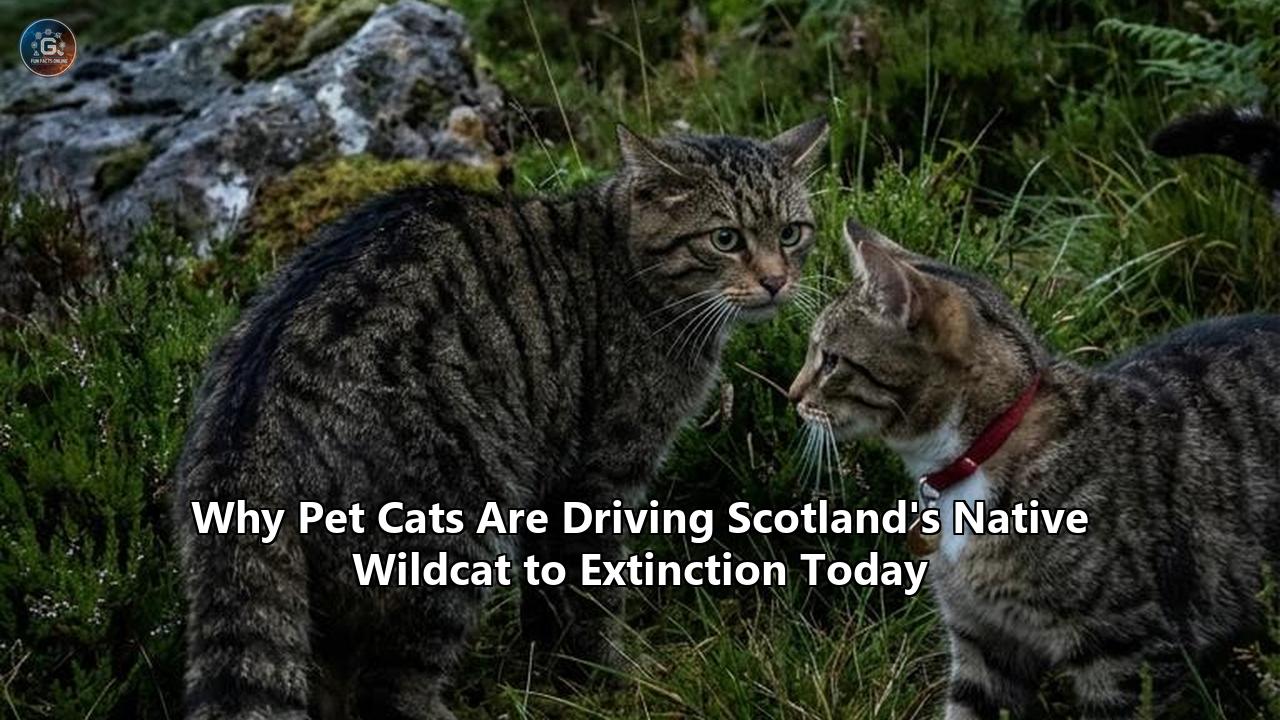
At the Eurowildcat Conference at Highland Wildlife Park in Kingussie, conservation biologists and government officials released the 20-year framework Scotland’s Wildcat Strategy 2025–2045. The strategy is anchored by empirical survival data from the nation’s reintroduction program alongside a severe ecological calculation: 46 captive-bred wildcats have been released into the 600-square-kilometer Cairngorms Connect landscape since the summer of 2023, yet they face a national population of roughly 900,000 domestic pet cats (Felis catus) and an estimated 100,000 feral domestic cats.
The mathematical reality confronting efforts to halt Scottish wildcat extinction is governed by demographic disproportion. Across the Scottish Highlands, wildcats are outnumbered by unneutered, free-ranging domestic felines and their feral descendants by a ratio exceeding 2,000 to 1. In 2019, the International Union for Conservation of Nature (IUCN) Cat Specialist Group declared the wild-living population of the Scottish wildcat (Felis silvestris) functionally extinct. Field surveys conducted by the Scottish Wildcat Action (SWA) partnership had analyzed 6,546 Single Nucleotide Polymorphism (SNP) genetic markers from wild-living cats across six priority landscapes. The findings were stark: zero sampled free-living cats met the genetic threshold required to qualify as pure wildcats. Every wild animal surveyed was embedded within an introgressed "hybrid swarm".
The field monitoring data compiled by the Saving Wildcats partnership—a multi-agency collaboration led by the Royal Zoological Society of Scotland (RZSS) alongside NatureScot, Forestry and Land Scotland, and Cairngorms Connect—demonstrates that captive-bred wildcats can adapt, hunt, and reproduce in the wild. In a study published in the IUCN’s Cat News, researchers confirmed that 95% of the initial 19 wildcats released in 2023 survived their first ten months post-release. The animals recorded a 20% average increase in body weight, relying on field voles (Microtus agrestis) and European rabbits (Oryctolagus cuniculus). By late 2025, field teams deploying more than 100 motion-activated camera traps and satellite GPS collars had documented at least 24 wild-born kittens across nine litters produced by released females.
Survival and reproduction within the release corridor do not, by themselves, resolve the central threat to the species. The reintroduction effort operates in an open landscape where pet cats and feral felines roam unconstrained. Every unneutered pet cat that wanders into the pine forests and scrub glens represents a genetic and epidemiological hazard capable of unravelling decades of captive breeding in a single breeding cycle.
                       SCOTTISH WILDCAT GENOMIC TIMELINE

  Pre-1950               1953–1954              1997                   2019–Present
  ─────────────────────  ─────────────────────  ─────────────────────  ─────────────────────
  Over 2,000 years of    Myxomatosis wipes      Admixture spikes:      IUCN declares wildcat
  coexistence with       out ~99% of rabbits.   SNP analyses show      functionally extinct;
  domestic cats; near-   Wildcat numbers drop   domestic markers       Saving Wildcats begins
  zero hybridization.    below critical         exceeding 50% across   releases into Cairngorms
  Domestic SNPs < 5%.    density thresholds.    the hybrid swarm.      to rebuild native gene pool.
The 70-Year Genomic Collapse
For over two millennia, native wildcats and domestic cats occupied the British landscape without compromising their distinct genetic lineages. Research published in Current Biology by an international consortium of genomic scientists sequenced the whole genomes of modern domestic cats, captive-bred wildcats, archaeological specimens, and historical museum skins spanning the 14th through 20th centuries.
Excavations at sites such as Kilton Castle in Northeast England revealed that domestic cats—initially brought to the British Isles during the Roman era roughly 2,000 years ago—shared geographic territory with Felis silvestris for centuries with negligible gene flow. The two species occupied distinct ecological niches. The European wildcat, weighing between 4 and 8 kilograms with a heavy-set skull, long limbs, and dense tabby coat ending in a blunt, black-ringed tail, avoided human settlements and hunted within native broadleaf and pine woodlands. The domestic cat, descended from the Near Eastern wildcat (Felis lybica lybica), clustered around agricultural centers, grain stores, and human dwellings.
The genomic baseline remained intact until the mid-20th century. Sequencing data demonstrates that specimens collected prior to 1950 showed domestic cat genetic markers at rates below 5%. Between 1950 and 1997, that boundary collapsed. By the late 1990s, the proportion of domestic cat ancestry detected in free-ranging Scottish wildcats surged, with individuals exhibiting hybrid admixture rates between 20% and 74%.
HISTORICAL GENOMIC INTROGRESSION IN THE SCOTTISH HIGHLANDS
===================================================================================
Era                   Pre-1950 Baseline       1960–1980 Post-Cull     Post-1997 Collapse
-----------------------------------------------------------------------------------
Domestic SNP Load     < 5.0%                  15.0% – 35.0%           Up to 74.0%
Primary Driver        Ecological Isolation    Habitat Fragmentation   Population Collapse
Breeding Dynamics     Intraspecific Mating    Forced Interbreeding    Hybrid Swarm Dominance
===================================================================================
This sudden introgression followed an acute demographic bottleneck driven by three ecological disruptions:
- The Myxomatosis Outbreak (1953–1954): The accidental introduction and rapid spread of the Myxoma virus wiped out an estimated 99% of Great Britain's European rabbit population within two years. Rabbits served as the primary caloric anchor for wildcats in marginal Highland landscapes. With their prey base destroyed, wildcat numbers crashed, fragmenting contiguous populations into isolated pockets.
- Intensified Predator Control and Post-War Afforestation: Commercial sporting estates expanded predator control targeting generalist carnivores, while the Forestry Commission cleared native scrub and mature broadleaf tracts to plant monoculture conifer plantations of Sitka spruce (Picea sitchensis). These clearings altered travel corridors and increased human access into the wildcat's remaining strongholds.
- Agricultural Expansion and Feral Encroachment: Post-war rural expansion carried unneutered barn cats and residential pets into previously remote Highland glens.
As native wildcat densities fell below the critical reproductive threshold of approximately 0.02 cats per square kilometer, reproductive encounters between male and female wildcats declined sharply. Biologists refer to the consequence as the "Desperation Mating Hypothesis." Solitary female wildcats entering estrus were unable to locate conspecific mates across fragmented territories. Instead, they encountered free-ranging domestic tomcats and male feral hybrids.
Because both species share 38 chromosomes and are fully interfertile, these crosses produced viable, fertile offspring. Each successive generation backcrossed with an expanding pool of domestic and hybrid felines. Over fewer than six decades, the unhybridized Highland wildcat was displaced by a continuous genetic spectrum, making rampant introgression the primary driver pushing the taxon toward total Scottish wildcat extinction in its native range.
Pelage Scoring vs. Genomic Sequencing
For decades, wildcat conservation in the UK relied on visual assessments. In 2005, Dr. Andrew Kitchener and colleagues at National Museums Scotland formalized the pelage scoring system to categorize wildcats, hybrids, and domestic tabbies. The system grades seven diagnostic coat characteristics, assigning a score from 1 (domestic phenotype) to 3 (classic wildcat phenotype) for each feature:
- Dorsal stripe: Must run strictly along the spine and terminate cleanly at the base of the tail, never extending down the tail itself.
- Tail rings: Must feature distinct, separate black bands (typically 3 to 5) with wide pale bands between them.
- Tail tip: Must end in a blunt, thick, black club shape.
- Flank markings: Must consist of clean, distinct vertical stripes with no spots, broken dashes, or blotched patterns.
- Nape and shoulder stripes: Must run clearly down the neck without breaking into spots.
- Underparts: Must display an unspotted, buff or cream belly.
- White patches: Must show zero white fur on the chin, chest, paws, or groin.
Under this diagnostic framework, a specimen scoring 19 out of 21 (or 21/21 under strict protocols) was classified as a pure Scottish wildcat and afforded the highest legal protection under Schedule 5 of the Wildlife and Countryside Act 1981.
       KITCHENER SEVEN-POINT PELAGE PROFILE (SCOTTISH WILDCAT)

              [1] Nape/Shoulder: Clear parallel stripes
              │
              ├── [2] Dorsal Stripe: Ends cleanly at tail base
              │   │
              │   └── [3] Tail: Blunt, thick, black club tip
              │       │
              │       └── [4] Tail Rings: 3–5 distinct black bands
              │
              ├── [5] Flank: Continuous vertical tabby striping
              ├── [6] Underparts: Unspotted buff or cream
              └── [7] White Patches: 0% white markings allowed
High-throughput genomic sequencing exposed the flaws in relying solely on coat patterns. When researchers developed the 6,546 SNP diagnostic panel, they compared pelage scores with whole-genome data across hundreds of wild-living, captive, and historical cats. The correlation broke down across the hybrid spectrum:
- High Pelage Score with Substantial Domestic Admixture: Approximately 35% of cats in field surveys that scored 18 or higher on the Kitchener scale carried between 20% and 45% domestic cat DNA. Pelage characteristics are controlled by a limited set of developmental pigmentation loci (such as ASIP, MC1R, and Taqpep). Once wildcat alleles at these specific coat loci fix or dominate in an individual, the cat visually presents as a classic wildcat, even while carrying significant domestic introgression throughout the rest of its genome.
- Low Pelage Score with High Wildcat Ancestry: Conversely, a single cross with a domestic cat introducing a recessive white spot or a broken flank stripe could drop a cat's visual score below the legal threshold of 19, despite that individual retaining more than 75% pure wildcat ancestry across its functional genome.
This disconnect created an unworkable enforcement framework. Under UK wildlife law, pure wildcats could not be killed, captured, or disturbed. Domestic cats and hybrid feral cats, categorized as non-native invasive generalist predators, could be culled by gamekeepers and farmers via snaring, shooting, and live trapping. Field practitioners and wildlife managers using spotlights or trail cameras could not distinguish high-introgression hybrids from true wildcats. Consequently, animals that appeared wild were sometimes spared when they carried high domestic DNA loads, while individuals carrying valuable wildcat genetic lineages were occasionally culled as feral pests.
The genomic analysis led by Dr. Helen Senn of the RZSS established that reliance on morphology had obscured the collapse of the wild population for decades. When genetic testing was introduced, the baseline shifted. Wild individuals that appeared to be pure wildcats were, in reality, morphologically stabilized components of a hybrid swarm.
The Demographic Asymmetry: 10,000 to 1
The fundamental barrier to wildcat recovery in Scotland is demographic asymmetry. While conservation translocations reintroduce individuals by the dozen, domestic cat reproduction operates on an industrial scale.
According to veterinary population estimates compiled by the People's Dispensary for Sick Animals (PDSA) and Cats Protection, the UK is home to approximately 11 million owned domestic cats. Scotland accounts for roughly 900,000 of that population. In rural regions within the Highlands, Aberdeenshire, and the Scottish Borders, domestic cat densities range from 5 to 50 individuals per square kilometer in rural villages, hamlets, and agricultural holdings. In contrast, historical, healthy densities of European wildcats in similar Highland environments rarely exceeded 0.05 to 0.2 individuals per square kilometer.
THE DEMOGRAPHIC AND GENETIC DIVIDE IN SCOTLAND
===================================================================================
Metric                          Domestic/Feral Cats (*F. catus*)   Scottish Wildcats (*F. silvestris*)
-----------------------------------------------------------------------------------
Scottish Mainland Population    ~900,000 owned + ~100,000 feral     46 released (2023–2025) + ~160 captive
Density (Cats per km²)          5.0 – 50.0 (Settlement edges)      0.02 – 0.10 (Wild scrub/forest)
Annual Reproductive Potential   Up to 3 litters/year (3–6 kittens) 1 litter/year (1–4 kittens)
Neutering/Vaccination Rate      ~80% owned (highly variable rural) 0% in wild (managed post-release)
Legal Classification            Property / Unprotected Feral       Annex IV Habitats Dir. / Schedule 5
===================================================================================
This numerical disparity drives gene flow almost exclusively in one direction. Sewall Wright’s classic island-continent model of population genetics illustrates why the Highland wildcat population was overwhelmed:
$$q_t = (1 - m)^t (q_0 - q_m) + q_m$$
In this model, $q_0$ represents the initial frequency of wildcat-specific alleles, $q_m$ is the allele frequency of the immigrant population (domestic cats), $m$ represents the proportional migration (interbreeding) rate per generation, and $t$ denotes time in generations.
Given an overwhelming domestic immigrant pool ($m \gg 0.05$) relative to an effective wildcat population size ($N_e$) that fell below 50 individuals after the 1950s, the equilibrium frequency of pure wildcat alleles inevitably moved toward local extinction. Even an annual interbreeding rate as low as 1% to 2% within a fragmented population of fewer than 100 wildcats replaces the native genome within 30 to 50 generations.
Uncontrolled domestic cat breeding fuels this imbalance. While approximately 80% to 85% of urban pet cats in the UK are neutered, compliance drops significantly in rural farming environments. Working farm cats, kept around barns and outbuildings to control rodents, are frequently unneutered and unmanaged. A single unspayed female cat and her offspring can theoretically produce dozens of descendants within a few years.
GPS tracking studies on domestic cats in rural landscapes show that their movements extend well beyond suburban gardens. Research tracking rural domestic cats in Britain documented median roaming ranges between 1.5 and 4.2 kilometers from rural homes, with male unneutered cats routinely traveling more than 6 kilometers in search of mates. These excursion corridors cut directly across:
- Riparian river systems (such as the River Spey and its tributaries);
- Scrub edges and rough grassland supporting high densities of field voles;
- Clear-fell forestry tracks used by released wildcats as hunting and travel routes.
When a released female wildcat establishes a home range of 10 to 25 square kilometers in the Cairngorms, her territory is routinely intersected by the roaming footprints of rural domestic felines, accelerating what conservation geneticists term Scottish wildcat extinction via genetic dilution.
            SPATIAL OVERLAP IN RURAL SCOTTISH HIGHLANDS

    [ Farmstead / Rural Hamlet ]
           │
           │ ~1.5 – 6.0 km Domestic Tom Roaming Radii
           ▼
    ┌────────────────────────────────────────────────────────┐
    │ EDGE HABITAT: Clear-Fell Scrub, Vole-Rich Rough Grass  │
    │                                                        │
    │   • Feral / Domestic Cats: Hunting & Scent Marking     │
    │   • Released Scottish Wildcats: Core Hunting Grounds   │
    │                                                        │
    │           >>> High-Risk Hybridization Zone <<<         │
    └────────────────────────────────────────────────────────┘
           ▲
           │ ~10.0 – 25.0 km² Territory Range
           │
    [ Core Native Woodland / Montane Scrub: Wildcat Dens ]
Pathogen Spillover: The Microbial Threat
Beyond genetic dilution, free-ranging domestic cats expose native wildcats to novel pathogens. As domesticated animals, pet and farm cats exist at densities supported by human food sources and veterinary care. They act as persistent reservoir hosts for feline viral and parasitic diseases that can decimate small, isolated wildcat populations.
Data from post-mortem examinations and serological surveys conducted during the Scottish Wildcat Action project highlighted the prevalence of four primary infectious agents across rural cat populations in northern Scotland:
1. Feline Leukaemia Virus (FeLV)
FeLV is an oncogenic retrovirus transmitted via close, prolonged contact, including mutual grooming, fighting, and mating. It causes profound immunosuppression, bone marrow disorders, and secondary tumors. In large domestic cat populations, FeLV maintains an endemic presence, with rural prevalence rates typically ranging from 1% to 3%. In contrast, when FeLV breaches a small, immunologically naive population of wildcats, mortality can exceed 80%. An outbreak among Iberian lynx (Lynx pardinus) in Doñana, Spain, in 2007 demonstrated that domestic cat-transmitted FeLV could trigger mass mortality in a wild felid population within months.
2. Feline Immunodeficiency Virus (FIV)
FIV is a lentivirus similar to human HIV, transmitted primarily through deep bite wounds during territorial disputes and aggressive mating behavior. In rural Scottish feral and farm cat surveys, FIV antibody seroprevalence was documented at rates between 10% and 21%. Wild-living hybrids and putative wildcats captured during field operations tested positive for FIV at rates exceeding 15%. FIV causes gradual CD4+ T-cell depletion, leaving the animal vulnerable to opportunistic infections, chronic stomatitis, and progressive weight loss. For an animal that relies on peak physical fitness to hunt elusive prey in Highland winters, an FIV-compromised immune system is typically fatal.
3. Feline Coronavirus (FCoV) and Feline Infectious Peritonitis (FIP)
FCoV is an enteric virus common in multi-cat environments, with seroprevalence in domestic populations often exceeding 60%. While most domestic cats experience self-limiting gastrointestinal distress, spontaneous systemic mutation of the virus into the biotype causing Feline Infectious Peritonitis (FIP) leads to systemic granulomatous vasculitis and death in up to 95% of untreated wild felids.
4. Toxoplasma gondii
This intracellular protozoan parasite requires felids as its definitive host to complete its sexual life cycle and shed environmentally stable oocysts. While domestic cats commonly acquire immunity early in life, wildcats hunting heavily infected rodent and lagomorph populations face high parasitic loads. Necropsy data from dead wildcats retrieved in Scotland between 2013 and 2021 revealed that disseminated toxoplasmosis—affecting the lungs, liver, and brain—was a primary or contributing cause of death in 12% of examined carcasses.
DISEASE BURDEN TRANSIT: DOMESTIC RESERVOIRS TO NATIVE VECTORS
===================================================================================
Pathogen                  Transmission Route      Feral/Domestic Seroprevalence   Impact on Native Wildcat
-----------------------------------------------------------------------------------
Feline Leukaemia (FeLV)   Saliva, Mating, Bites   1.0% – 3.0%                     High mortality (>80%), tumors
FIV                       Bite Wounds, Fighting   10.0% – 21.0%                   Chronic immune depletion
FCoV / FIP                Fecal-Oral, Shared Scat 40.0% – 60.0%                   Fatal systemic vasculitis
*Toxoplasma gondii*       Oocyst Ingestion, Prey  50.0% – 85.0%                   Fatal pulmonary/cerebral damage
===================================================================================
The basic reproduction number ($R_0$) of these pathogens depends on host density:
$$R_0 = \beta \cdot S \cdot D$$
Where $\beta$ is the transmission rate, $S$ is the number of susceptible individuals, and $D$ is the duration of infectivity. Under natural conditions, a wildcat population at 0.05 cats per square kilometer could not sustain high-$R_0$ viral diseases; outbreaks would self-extinguish as the pathogen ran out of susceptible hosts. However, when free-ranging pet cats continuously replenish the host pool, domestic animals act as an external reservoir, keeping infectious pressure high even as wildcat numbers drop toward extirpation.
Cairngorms Connect: Reintroduction Data and Empirical Results
The reintroduction program managed by the Saving Wildcats partnership represents the most resource-intensive attempt to re-establish Felis silvestris in Great Britain. Situated within the Cairngorms National Park, the Cairngorms Connect project covers a 600-square-kilometer tract of contiguous conservation land managed by NatureScot, Forestry and Land Scotland, RSPB Scotland, and Wildland Limited.
       CAIRNGORMS CONNECT CONSERVATION FRAMEWORK (600 km²)

  ┌──────────────────────────────────────────────────────────────┐
  │  CORE RELEASE ZONE: Badenoch & Strathspey                    │
  │                                                              │
  │   • 2023: 19 Wildcats Released (GPS Tracked)                 │
  │   • 2024:  9 Wildcats Released (Targeted Densities)          │
  │   • 2025: 18 Wildcats Released (Genetic Connectivity)        │
  │   ────────────────────────────────────────────────────────   │
  │   TOTAL: 46 Reintroduced | 24 Wild-Born Kittens Documented   │
  └──────────────────────────────────────────────────────────────┘
                                ▲
                                │ 5–10 km Buffer Security
                                │
  ┌──────────────────────────────────────────────────────────────┐
  │  DEFENSIVE PERIMETER: Community TNVR Operations              │
  │                                                              │
  │   • 132+ Feral Cats Trapped, Neutered, Vaccinated, Returned  │
  │   • Subsidized Microchipping & Neutering for Pet Cats        │
  │   • Trail-Camera Surveillance: >100 Camera Traps Active      │
  └──────────────────────────────────────────────────────────────┘
The release program uses an initial breeding setup at the Royal Zoological Society of Scotland’s Highland Wildlife Park. The Conservation Breeding for Release Centre (CBRC) includes 16 breeding enclosures and 20 pre-release aviaries built away from public access. The enclosures feature natural vegetation, live prey enrichment, and minimal human interaction to preserve wild hunting and avoidance behaviors.
Between June 2023 and September 2025, releases followed a phased protocol:
- Cohort 1 (Summer 2023): 19 wildcats (sub-adults, male and female) fitted with satellite-linked GPS-VHF collars.
- Cohort 2 (Summer 2024): 9 wildcats released to reinforce territories and balance sex ratios.
- Cohort 3 (Summer 2025): 18 wildcats released across expanded sections of the Cairngorms Connect footprint, bringing the total reintroduced population to 46 individuals.
ANNUAL RELEASE METRICS & POST-RELEASE PERFORMANCE
===================================================================================
Release Cohort     Cats Released   10-Month Survival   Wild-Born Litters   Total Kittens
-----------------------------------------------------------------------------------
2023 (Cohort 1)    19              94.7% (18/19)       2 litters (May 2024) 8 kittens
2024 (Cohort 2)    9               88.9% (8/9)         7 litters (Sum 2024) 16 kittens
2025 (Cohort 3)    18              Ongoing Monitoring  Confirmed Litters   Ongoing Surveys
-----------------------------------------------------------------------------------
CUMULATIVE         46              91.3% (Cohort Avg)  9+ Recorded Litters 24+ Kittens
===================================================================================
Post-release telemetry generated detailed datasets on captive-bred wildcat behavioral ecology:
1. First-Year Survival Rates Exceeded Theoretical Models
Standard carnivore translocation models predict first-year mortality between 40% and 60% due to starvation, predation, vehicle collisions, and hyperdispersal. In the 2023 release group, 18 of the 19 cats (94.7%) survived their initial ten months in the wild. GPS monitoring confirmed that 17 cats settled within the intended reintroduction area of Badenoch and Strathspey. Two cats exhibited hyperdispersal, moving beyond the release core; one settled near Mar Lodge on the southern flank of the Cairngorm plateau.
2. Diet and Mass Dynamics
Periodic veterinary recaptures and physical health assessments showed that released wildcats did not merely maintain baseline health; they averaged a 20% increase in body weight during their first six months post-release. Scat analysis ($n = 412$ samples analyzed via metabarcoding) and motion-activated camera-trap footage confirmed that their diet aligned with historical baselines:
- Field voles (Microtus agrestis) and bank voles (Myodes glareolus): 58.2% of prey items.
- European rabbits (Oryctolagus cuniculus): 24.6%.
- Avian prey, brown hares (Lepus europaeus), and cached roe deer (Capreolus capreolus) carrion: 17.2%.
3. Natural Reproduction in the Wild
In late May 2024, trail cameras confirmed that two released females had given birth to wild litters. By the close of the 2024–2025 breeding cycle, nine separate litters yielded at least 24 wild-born kittens, all showing the classic blunt, ringed-tail morphology of their captive-bred parents.
               POST-RELEASE WILDCAT DIET COMPOSITION

      [ 17.2% ] Avian, Hares & Carrion
         │
         ├── [ 24.6% ] European Rabbit (*O. cuniculus*)
         │
         └── [ 58.2% ] Voles (*Microtus agrestis* / *M. glareolus*)
Defensive Perimeters: The TNVR Protocol
The empirical survival of released cats highlights the importance of threat management. Without sustained measures to control the domestic cat population around the reintroduction zone, the new wildcat population would be absorbed into the hybrid swarm within three to five generations.
To counter this, Saving Wildcats integrated a Trap, Neuter, Vaccinate, and Return (TNVR) program alongside its translocations. Operated in partnership with Cats Protection and the Strathspey Veterinary Centre, TNVR creates an unfertile, disease-vaccinated barrier across the reintroduction zone.
THE TNVR INTERVENTION PROTOCOL
===================================================================================
Phase       Target Action              Execution Detail
-----------------------------------------------------------------------------------
Step 1      Trail Camera Detection     >100 camera traps identify uncollared felines
Step 2      Humane Trapping            Targeted cage traps baited with valerian/mackerel
Step 3      Veterinary Processing      Sedation, full physical exam, and pelage scoring
Step 4      Genomic Sampling           Ear notch & blood draw for SNP chip analysis
Step 5      Surgical Sterilization     Castration / Ovariohysterectomy completed
Step 6      Disease Prophylaxis        Vaccination: FeLV, FCV, FVR, FPV; Broad-spectrum wormer
Step 7      Microchipping & Ear-Tipping Subcutaneous microchip inserted; left ear-tipped
Step 8      Targeted Return            Returned to site of capture if domestic/feral hybrid
===================================================================================
Since the launch of the release phase, the field team has processed 132 feral domestic cats within Badenoch and Strathspey. Every captured cat undergoes full surgical sterilization (castration or ovariohysterectomy) and receives vaccinations against Feline Leukaemia, Panleukopenia, and Respiratory Viruses. The left ear is notched (tipped) under general anesthesia to allow rapid visual identification on trail cameras, preventing stressful recapture events.
                    THE MECHANICS OF TNVR DEFENSE

    [ Free-Ranging Feral Cat ] ──► Camera Identification & Trapping
                                               │
                                               ▼
                              ┌──────────────────────────────────┐
                              │ Veterinary Clinical Workflow:    │
                              │  • Full Surgical Sterilization   │
                              │  • Polyvalent Core Vaccinations  │
                              │  • Blood/Ear Tissue Genotyped    │
                              │  • Microchip & 0.5 cm Ear-Tip    │
                              └──────────────────────────────────┘
                                               │
                                               ▼
    [ Neutered, Non-Reproductive Host ] ◄── Released at Capture Point
The mathematical objective of TNVR in this landscape is to reduce fertile domestic cat density below the critical threshold required to trigger accidental hybridization. Spatial population models developed by wildcat researchers show that the probability of hybridization ($P_h$) within a specific territory can be expressed as:
$$P_h = 1 - e^{-\lambda \cdot N_{fert} \cdot \sigma}$$
Where $N_{fert}$ represents the density of unneutered domestic and feral cats, $\lambda$ is the search efficiency of an un-mated wildcat, and $\sigma$ is the seasonal mating encounter rate. By reducing $N_{fert}$ toward zero within a 10-kilometer buffer zone around core wildcat home ranges, $P_h$ can be suppressed below 0.005 per reproductive cycle, protecting the genetic recovery of the released stock.
Hybridization Probability (Ph) vs. Density of Fertile Domestic Cats (N_fert)
1.0 ┤                                        * * * * *
0.8 ┤                                * * * *
0.6 ┤                          * * *
0.4 ┤                    * * *
0.2 ┤              * * *
0.0 ┤  * * * * * *
    └──────┬───────────────┬────────────────┬───────────────┬───
          0.00            0.05             0.10            0.15
                     N_fert (Fertile Domestic Cats per km²)
          ▲
          └── TNVR Buffer Target: N_fert maintained near zero (< 0.01)
However, TNVR has operational limits. The strategy requires neutering at least 75% to 85% of the free-ranging domestic population across a landscape to drive long-term demographic decline. When pet owners bring new, unneutered domestic cats into the region, or when farm cat populations are left unmanaged, the reproductive potential of the feral population can recover within two to three breeding seasons.
Legislative Gaps and the 2045 Roadmap
The launch of Scotland’s Wildcat Strategy 2025–2045 marks a shift from reactive field conservation to a long-term population recovery plan. Coordinated through the IUCN Conservation Planning Specialist Group (CPSG) and signed by more than 25 partner organizations, the strategy establishes clear operational targets to be met by 2045:
- Self-Sustaining Metapopulation: Establish a contiguous, genetically verified population of at least 500 wildcats distributed across three connected core areas: Cairngorms Connect, the Western Highlands, and the Grampian Region.
- Genetic Purity Thresholds: Maintain an average wildcat genomic ancestry level exceeding 85% across all wild-living populations, verified through continuous SNP panel monitoring.
- Ex-situ Reservoir Expansion: Increase the managed captive-breeding studbook population from roughly 160 individuals to more than 250 verified cats, drawn from an expanded founder base to minimize inbreeding depression.
- Buffer Biosecurity: Implement mandatory pet cat management zones across all primary and secondary wildcat recovery areas.
                      SCOTLAND'S WILDCAT ROADMAP: 2025–2045

      Phase 1: 2025–2030                  Phase 2: 2030–2037                 Phase 3: 2037–2045
  ─────────────────────────────      ─────────────────────────────      ─────────────────────────────
  • Release 40+ cats into Cairngorms  • Expand releases to Western      • Connect 3 core regional
    Connect and monitor genetics       Highlands and Grampians            populations via corridors
  • Mandate Highland microchipping   • Achieve >75% landscape TNVR      • Reach >500 self-sustaining
  • Scale captive studbook to 200      saturation in all buffer zones     wildcats (>85% wild genome)
Achieving these goals requires closing a significant regulatory loophole between Scotland and the rest of the UK. In June 2024, England made microchipping mandatory for all pet domestic cats over the age of 20 weeks, with unchipped owners facing fines of up to £500. The Scottish Government held consultations regarding similar measures, but nationwide mandatory microchipping, coupled with mandatory neutering for non-breeding pets, has not yet been enacted into law.
Conservation biologists argue that voluntary measures cannot protect the species over the next two decades. In rural Scotland:
- Microchipping: Without mandatory identification, wildcat field teams who capture an unmarked cat in a trap cannot instantly distinguish a lost pet from an abandoned feral stray. This forces field teams to hold animals for observation or surrender them to animal shelters, increasing costs and complicating rapid TNVR operations.
- Neutering: Voluntary neutering programs, even when subsidized by charities such as Cats Protection, miss the rural demographic that keeps free-roaming farm cats for rodent control. Unless neutering is legally mandated or systematically incentivized for all pet and working cats within a 15-kilometer radius of designated wildcat priority areas, the reservoir of fertile domestic cats will continually replenish itself.
LEGISLATIVE INCONSISTENCY IN DOMESTIC FELINE REGULATION (UK)
===================================================================================
Jurisdiction      Mandatory Microchipping   Mandatory Sterilization   Protected Release Buffers
-----------------------------------------------------------------------------------
England           Enacted (June 2024)       No                        Not Applicable
Wales             Under Review              No                        Not Applicable
Scotland          Consultation Completed    No (Charity Subsidies)    Voluntary / Regional TNVR
===================================================================================
Addressing this policy divide is critical to preventing permanent Scottish wildcat extinction. Captive breeding and release techniques have advanced significantly: animals can be bred without human habituation, released cats show high survival rates and successful hunting behavior, and wild-born litters are surviving in Highland habitats. Yet these accomplishments remain vulnerable to human habits outside the forest reserves.
Averting the complete disappearance of the Scottish wildcat will hinge not merely on rearing wild kittens in large enclosures, but on regulating how humans manage domestic felines across rural Scotland. If domestic cats continue to roam unneutered, unvaccinated, and unmanaged through the Highland glens, the native wildcat will inevitably be absorbed into the domestic feline genome—its unique evolutionary lineage erased through genetic dilution.
Long-Term Outlook: Milestones and Indicators to Watch
As the Saving Wildcats project transitions out of its initial EU LIFE-funded cycle in late 2026 and begins Phase Two, researchers will monitor four metrics to assess whether the species is on a durable recovery path:
- The In-Situ Admixture Index: Whole-genome and SNP monitoring of every wild-born kitten must demonstrate that wildcat ancestry remains above the 80% threshold. If backcrossing with domestic felines is detected among second-generation ($F_2$) wild-born litters, it will indicate that local TNVR buffer zones have failed to control gene flow.
- Spatial Range Expansion: Field teams will monitor whether sub-adult wildcats dispersing beyond the 600-square-kilometer Cairngorms Connect zone can establish home ranges without suffering vehicle mortality or hybridizing with farm cats in neighboring river valleys.
- Pathogen Spillover Rates: Annual serological testing of recaptured wildcats will serve as an early-warning indicator for FeLV, FIV, and feline coronavirus outbreaks, tracking whether domestic reservoir populations are declining under targeted vaccination programs.
- Scottish Parliamentary Legislation: The introduction and passage of mandatory cat microchipping and subsidized neutering legislation in Holyrood will determine whether conservationists gain the legal mechanisms required to protect wildcat recovery areas from genetic swamping.
The next five years will determine whether the Scottish wildcat returns as a self-sustaining carnivore in Britain's native woodlands, or persists only as an introgressed ghost species surviving within an unmanaged domestic gene pool.
Reference:
- https://www.heraldscotland.com/news/26569951.national-strategy-restore-expand-scotlands-wildcat-population/
- https://www.qps.com/2024/01/08/feline-folly-scottish-wildcats-face-extinction-after-interbreeding-with-domestic-cats/
- https://www.facebook.com/100091595225622/posts/scottish-wildcat-haven-has-reported-signs-of-wildcats-after-the-devastating-cair/1039022359160929/
- https://www.wildcru.org/programmes/scottish-wildcat-programme/
- https://cairngorms.co.uk/our-work/saving-wildcats
- https://www.nature.scot/doc/genetic-scorecard-indicator-wildcat
- https://research-information.bris.ac.uk/en/studentTheses/hybridisation-and-introgression-in-the-scottish-wildcat/
- https://www.savingwildcats.org.uk/news-events/2025/december/first-year-of-wildcat-reintroduction-project-hailed-as-big-success/
- https://www.savingwildcats.org.uk/about-saving-wildcats/wildcat-conservation-in-scotland/
- https://www.savingwildcats.org.uk/news-events/2025/september/wildcat-wrap-up-another-successful-year-of-wildcat-conservation-in-scotland/
- https://pubmed.ncbi.nlm.nih.gov/37935118/
- https://www.reddit.com/r/Awwducational/comments/1gyyrjz/after_2000_years_of_isolation_a_few_decades_of/
- https://www.savingwildcats.org.uk/endof2023update