The global landscape of electronics manufacturing is undergoing its most radical transformation in decades, and the device sitting on your desk is at the very center of it. According to a landmark study released in May 2026 by the Consumer Technology Association (CTA), which represents over 1,200 tech companies including Apple, Nvidia, and Sony, the technology sector has shifted sharply away from Chinese manufacturing. The data reveals that only 22% of US consumer technology imports originated from China last year, down from 45% the year before, and a staggering drop from 54% in 2022. For the first two months of 2026, consumer tech imports from China plummeted even further to a historic low of just 12%.
Nowhere is this shift more dramatic than in the portable computer sector. The CTA study estimates that roughly 60% of all laptop and tablet shipments to the United States in 2025 originated in Vietnam. Just three years prior, in 2022, nearly all laptop imports to the US came from China.
This is not a temporary logistical detour or a minor corporate reshuffling; it is a permanent dismantling of a multi-decade manufacturing monopoly. Major PC brands are aggressively offshoring their assembly lines and component ecosystems. HP has executed a massive structural pivot, moving nearly 90% of its North America-bound personal computer manufacturing out of China to countries like Thailand, Mexico, and Vietnam. Dell Technologies is marching toward its target of complete production relocation of US-bound devices by 2027, alongside a strict mandate to eliminate Chinese-fabricated silicon from its devices. Microsoft has instructed its supplier network to prepare for complete "out-of-China" production for its Surface laptop line and data center servers, demanding that at least 80% of the server bill of materials (BOM) be sourced from alternative nations. Even Apple, notorious for its historic dependence on the "Red Supply Chain," has migrated a major portion of its MacBook production to Vietnam through partners like Foxconn and Quanta Computer.
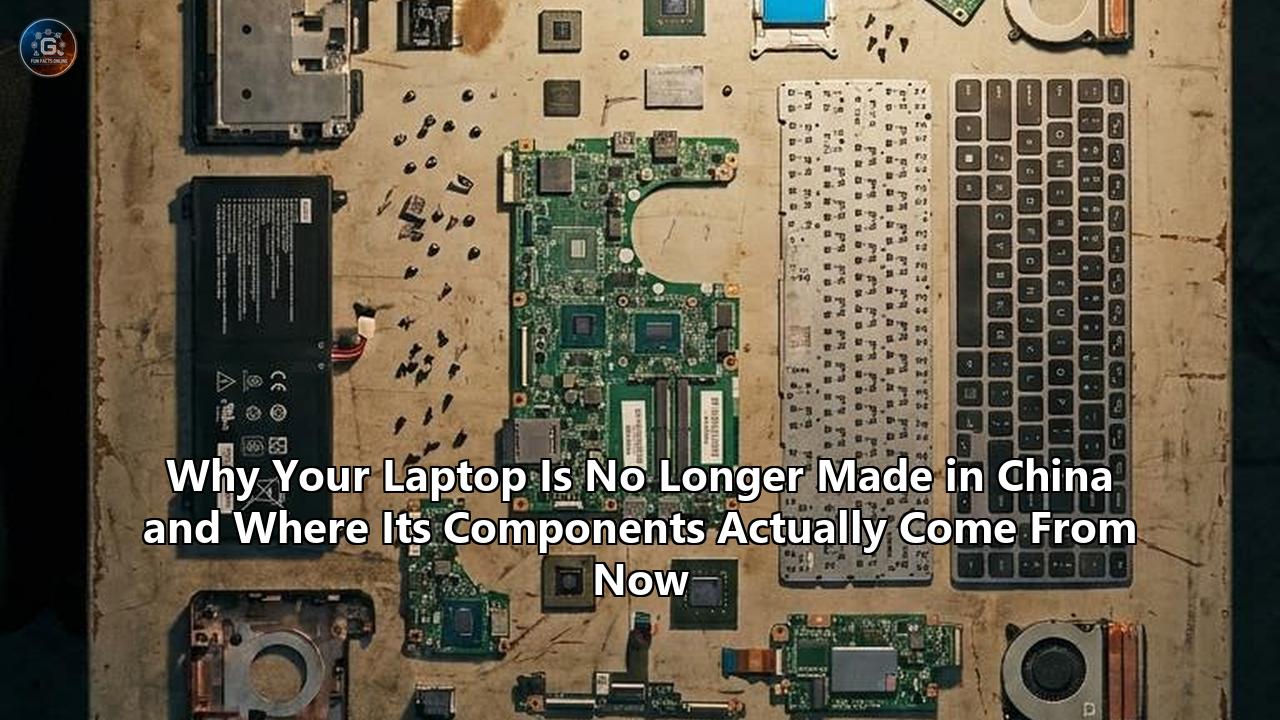
This restructuring has rewritten the geography of global technology. If you purchase a mid-range or premium laptop, the chassis was likely stamped in northern Vietnam, the multi-layer motherboard printed in Thailand, the battery assembled in Dong Nai province, the display panel laminated in Mexico, and the final assembly completed in a highly automated facility outside of Hanoi or Bangkok.
Uncovering why the laptop supply chain was pulled out of China—and tracing where its millions of individual parts actually go now—reveals a complex narrative of geopolitical friction, economic necessity, and the monumental effort required to rebuild the modern world's most intricate hardware ecosystem.
The Challenge: The Fragility of Chongqing's "One-Stop" Empire
For more than fifteen years, the global laptop supply chain was defined by an extreme, hyper-efficient concentration of manufacturing power. To understand the monumental challenge of current relocation efforts, one must first look at the system that came before.
Beginning in the late 2000s, the Chinese municipality of Chongqing, located in southwestern China, transformed itself into the undisputed "Laptop Capital of the World." Chongqing’s rise was not an accident; it was a highly orchestrated, state-backed industrial strategy. Led by local government planners, the city built an end-to-end ecosystem designed to satisfy every conceivable need of a laptop brand.
[Silicon Valley / Taiwan] ──> [Chongqing Supply Chain Hub] ──> [Global Consumer Markets]
      (Product Design)             - Motherboard Printing           (USA, Europe, Asia)
                                   - Chassis Stamping
                                   - Display Lamination
                                   - Final Assembly (EMS/ODM)
At its peak, Chongqing alone manufactured more than 60 million laptops annually—accounting for roughly one out of every three laptops sold globally. Along with the coastal tech clusters of Kunshan (near Shanghai) and Chengdu, mainland China assembled up to 90% of the world's portable computers.
This system relied on the Original Design Manufacturer (ODM) model. Major Western brands—such as HP, Dell, and Apple—rarely owned the factories that built their machines. Instead, they contracted design and assembly to a tight-knit group of Taiwanese manufacturing giants, including:
- Quanta Computer (the world’s largest notebook manufacturer)
- Compal Electronics
- Wistron
- Inventec
- Foxconn (Hon Hai Precision Industry)
- Pegatron
These companies set up massive, highly integrated campuses across China.
The defining characteristic of this legacy system was its geographic compression. A contract manufacturer in Chongqing could source a printed circuit board (PCB) from a supplier three miles away, receive keyboard keys from a specialized plastics molding factory in the next district, and secure aluminum alloy chassis components from a metal-stamping plant just down the road. This physical proximity eliminated international shipping costs, minimized inventory requirements, and allowed brands to take a laptop from blueprint to mass production in a matter of weeks. The entire laptop supply chain was optimized for a single metric: minimizing the cost per unit.
However, this hyper-efficiency came at the cost of extreme structural vulnerability. By concentrating nearly the entire global production capacity of a vital consumer and enterprise tool within a single geographical territory, the technology sector created a massive single point of failure. The system was highly vulnerable to any geopolitical, economic, or public health disruption within mainland China. When those disruptions arrived in rapid succession, the highly optimized, single-source model collapsed under its own weight.
What Went Wrong: The Catalysts of the Great Decoupling
The demise of China’s laptop manufacturing monopoly was triggered by a series of compounding crises that transformed a highly profitable partnership into an unacceptable risk.
The Geopolitical Tariff War
The primary catalyst for the migration was the escalating trade and tariff conflict between Washington and Beijing. When the US-China trade war began in 2018, laptops were initially spared from direct consumer-facing tariffs. However, the broader import duties targeted the underlying components that make up a computer. Tariffs of up to 25% were slapped on crucial items like graphics processing units (GPUs), motherboards, electrical connectors, and metal chassis.
The pressure intensified dramatically following the return of Donald Trump to the US presidency in 2025. The administration’s implementation of a blanket 10% tariff on all Chinese imports, coupled with aggressive "reciprocal tariff" policies, directly targeted consumer technology. Suddenly, a laptop fully assembled in Chongqing and imported into the United States faced an immediate 10% to 25% price penalty.
For companies operating on razor-thin hardware margins, absorbing these duties was impossible. Acer CEO Jason Chen confirmed that the company was forced to raise prices on US-bound laptops made in China, while other brands realized that maintaining a China-only manufacturing footprint was no longer financially viable.
               +----------------------------------------+
               |      COMPOUNDING CRISES IN CHINA       |
               +----------------------------------------+
                                    |
      +-----------------------------+-----------------------------+
      |                             |                             |
      v                             v                             v
[Geopolitical Tariffs]      [Zero-COVID Gridlock]        [Rising Operations Cost]
  - 10-25% import duties      - Weeks-long lockdowns       - Blue-collar labor costs up
  - Trade war expansion       - Port & cargo closures      - Sourcing shortages
  - Component restrictions    - Manufacturing stops        - Shrinking young workforce
The Pandemic-Era Gridlock
If tariffs provided the financial incentive to leave, the pandemic provided the operational emergency. During the COVID-19 pandemic, China’s strict zero-COVID policy resulted in abrupt, weeks-long lockdowns of entire industrial zones, including key manufacturing hubs like Kunshan and Shanghai.
Electronics factories were forced to halt operations or run in "closed-loop" systems where workers slept on factory floors. Crucial ports like Shanghai and Shenzhen experienced massive container bottlenecks, leaving millions of finished laptops sitting in warehouses while global demand for remote-work devices surged.
These disruptions proved that a supply chain optimized solely for cost, without geographical redundancy, was fundamentally fragile. Tech executives realized they needed a "China+1" or "China+N" strategy—maintaining production in China for the domestic market, but building independent, parallel supply chains elsewhere to serve Western consumers.
The Chinese Labor Deficit
Beneath the political and health crises lay a deeper, structural shift: the economic maturation of China itself. The era of cheap, bottomless blue-collar labor in mainland China is over. Over the past decade, manufacturing wages in China have risen steadily, driven by a shrinking working-age population and a shift toward a service- and consumption-based economy.
Younger Chinese workers, who are increasingly college-educated, are highly reluctant to work repetitive, grueling shifts on electronics assembly lines. Laptop manufacturers in Chongqing and Chengdu faced chronic labor shortages and escalating recruitment costs, which narrowed the labor cost differential between China and Southeast Asian alternatives like Vietnam, Thailand, and Indonesia.
National Security and Data Sovereignty
In an era of heightened cyber warfare and geopolitical polarization, the physical origin of technology has become a critical national security concern. Laptops are not passive consumer goods; they are highly integrated communication portals utilized by government agencies, military contractors, and multinational corporations.
Western governments and enterprise clients began expressing deep anxieties over the potential for hardware-level vulnerabilities, firmware backdoors, or malicious chips secretly embedded during the assembly process in Chinese factories.
These concerns prompted major brands to initiate a radical, component-level purge. Dell, for example, made the strategic decision to phase out all Chinese-produced semiconductors from its products. This applied not only to chips produced by Chinese companies but also to chips fabricated by US or European firms within factories located on Chinese soil.
Similarly, Microsoft’s mandate to move server and Surface laptop production outside of China by 2026 was explicitly driven by the need to guarantee data and hardware security for its high-value corporate and cloud customers.
Anatomy of a Decoupled Laptop: Where the Components Come From Now
Moving a final assembly line is relatively simple. A factory worker in Vietnam can be trained to screw a motherboard into a chassis and click a display ribbon cable into place just as quickly as a worker in Chongqing. The true challenge lies in the "radical" migration of the component ecosystem.
A modern laptop is a complex puzzle comprised of dozens of highly specialized components, raw materials, and subsystems. To truly bypass Chinese manufacturing, tech brands have had to systematically rebuild the entire laptop supply chain across multiple nations.
                    THE ANATOMY OF A DECOUPLED LAPTOP

       [Display & Panel Assembly]             [Silicon & Processing]
       - Vietnam (Bac Ninh, Dong Nai)         - Fab: Taiwan (TSMC), USA, S. Korea
       - Mexico (HP Commercial)               - Packaging: Malaysia, Philippines
                   \                                     /
                    \                                   /
         +-------------------------------------------------+
         |                 THE MOTHERBOARD                 |
         |  - Fabrication: Thailand, Vietnam, Indonesia   |
         |  - Passive Components: Philippines, Malaysia    |
         +-------------------------------------------------+
                    /                                   \
                   /                                     \
       [Chassis & Mechanicals]                [Battery & Energy Storage]
       - Northern Vietnam                     - Dong Nai Province, Vietnam
       - Mexico (Nearshore assembly)          - Bengaluru, India (Domestic)
1. The Silicon and the Motherboard (PCBs & ICs)
The motherboard is the nervous system of the laptop, populated by the central processing unit (CPU), graphics processing unit (GPU), random-access memory (RAM), solid-state drives (SSDs), and hundreds of tiny passive components like resistors and capacitors.
- Advanced Logic Chips: The brain of the computer—such as Intel Core, AMD Ryzen, or Apple M-series processors—has always been fabricated in advanced semiconductor foundries in Taiwan (TSMC), South Korea (Samsung), or the United States (Intel). However, the secondary packaging, testing, and assembly of these chips were historically concentrated in China. This packaging step has shifted rapidly to major semiconductor assembly hubs in Malaysia (Penang) and the Philippines.
- Printed Circuit Board (PCB) Fabrication: The physical fiberglass boards on which components are soldered were traditionally manufactured by Shenzhen-based companies. In response to the tariff shifts, motherboard makers have relocated their production lines. Asus, for instance, shifted 90% of its motherboard and PC component production to factories in Thailand, Vietnam, and Indonesia.
- Active ODM Expansion: Major Taiwanese ODMs have established extensive PCB assembly (PCBA) lines outside China. Compal Electronics now runs high-capacity motherboard printing operations in Vietnam to serve Dell, while Inventec and Quanta have built out high-speed Surface Mount Technology (SMT) lines in Thailand to produce motherboards for HP and Google.
2. The Chassis and Mechanical Casings
The laptop chassis—the aluminum alloy or plastic shell that houses the internal hardware—requires heavy industrial machinery, including metal extrusion, computer numerical control (CNC) machining, and plastic injection molding. Historically, shipping these bulky, heavy parts across borders was cost-prohibitive, forcing chassis manufacturing to remain close to final assembly.
As final assembly moved to Vietnam, the chassis suppliers had to follow. Chinese component manufacturers, facing the loss of their primary clients, began setting up foreign subsidiaries. An example of this trend is Mingjie Co., a Dongguan-based manufacturer of plastic casings for electronics. Under intense pressure from its Western customers, the company established a massive manufacturing facility a 90-minute drive north of Hanoi, Vietnam.
Similar metal-stamping and plastic-injection facilities have sprouted across northern Vietnamese provinces like Bac Ninh and Bac Giang, allowing local assembly plants to source cases, hinges, and keyboard brackets without relying on imports from mainland China.
3. Displays and Screens
The display assembly is typically the most expensive single component in a laptop, consisting of the liquid crystal display (LCD) or organic light-emitting diode (OLED) panel, the backlighting unit, the glass lamination, and the integrated display driver circuitry.
South Korean giants Samsung Display and LG Display have historically operated massive assembly lines in Vietnam, making the country a natural hub for laptop screens. However, Chinese display giant BOE, which supplies panels to Dell, HP, and Apple, has also invested heavily in building advanced display panel factories in northern Vietnam.
Additionally, Sharp shifted its dedicated PC display and laptop production facilities from China to Vietnam to escape prohibitive US tariffs, consolidating the display supply chain within Southeast Asia.
4. Batteries and Power Subsystems
Laptop batteries require a complex assembly of lithium-ion cells, protective plastic casings, and specialized battery management system (BMS) circuit boards that prevent overheating and regulate power delivery.
Vietnam has emerged as a powerhouse for battery assembly. Chinese battery manufacturers have aggressively relocated their production southward to maintain their relationships with global brands.
- Hengli (Vietnam) Battery Technology: Headquartered in Dong Nai province, this wholly-owned subsidiary of China's Hengli International Group operates a highly automated, 100,000-square-meter facility dedicated to manufacturing energy storage products and device batteries.
- Ritar Power: Another major battery manufacturer that has shifted a significant portion of its production capacity to Vietnam, supplying finished battery packs directly to nearby laptop assembly facilities.
- Dixon Technologies and Syrma SGS: In India, local EMS providers have partnered with global battery cell manufacturers to assemble laptop batteries domestically, satisfying the strict localization requirements of the Indian government's trade initiatives.
5. Keyboards, Fans, and Passive Components
The remaining "micro-supply chain" consists of hundreds of smaller, low-cost parts: keyboard keycaps, copper heat pipes, cooling fans, rubber feet, screws, and packaging cartons. Individually, these parts are inexpensive, but a shortage of a single type of screw can halt an entire laptop assembly line.
These low-margin, high-volume items are now scattered across a diverse array of developing economies. Companies in the Philippines and Thailand have scaled up high-volume plastics extrusion to press keyboard keys, while carton, glass, and packaging suppliers have concentrated tightly around the new assembly clusters in northern Vietnam to provide just-in-time logistics support to the major ODMs.
The Friction: The Hidden Bottlenecks of Decoupling
While the statistics from the Consumer Technology Association highlight a dramatic shift in finished laptop imports, they obscure the immense friction, logistical bottlenecks, and structural challenges that have plagued the migration of the laptop supply chain. Rebuilding an industrial ecosystem that took China three decades to perfect cannot be accomplished overnight without significant disruption.
The Transshipment Paradox
The most controversial aspect of the great decoupling is the "transshipment" phenomenon. While a laptop box may proudly bear a label reading "Assembly in Vietnam" or "Assembled in Thailand," a significant percentage of the underlying raw materials, passive components, and sub-assemblies are still fabricated in mainland China.
+-------------------+           +-----------------------+           +-------------------+
|   Mainland China  | --------> |   Vietnam / Thailand  | --------> |   Western Market  |
|  - Raw materials  |           |  - Final assembly     |           |   (USA / Europe)  |
|  - Precision molds|           |  - Local packaging    |           |   - Tariff free   |
|  - Micro-chips    |           |  - "Made in Vietnam"  |           |                   |
+-------------------+           +-----------------------+           +-------------------+
Vietnam's proximity to southern China—a short truck drive from the electronics hubs of Shenzhen and Guangzhou to the Vietnamese border—makes it incredibly easy to ship Chinese-made parts across the border for final touch-up and packaging.
Industry experts refer to this as "tariff-hopping" or "laundering" Chinese goods. Western customs agencies, particularly in the United States, have grown highly vigilant, implementing strict "rules of origin" audits.
To qualify for tariff-free entry, a laptop must meet specific thresholds of localized value-add. If a Vietnamese factory simply screws together a completely knocked-down (CKD) kit imported from China, customs officials can trace the product back to its Chinese origin and apply full tariffs, creating a legal minefield for brand compliance departments.
Infrastructure Chokepoints
The sudden influx of multibillion-dollar electronics operations has pushed the infrastructure of Southeast Asian nations to their absolute limits.
- Power Grid Failures: Northern Vietnam, the epicenter of the new laptop assembly cluster, has experienced severe power grid strain. During periods of intense summer heat, the region’s hydroelectric-dependent grid has suffered rolling blackouts, forcing advanced, highly automated electronics factories to halt production or operate on expensive diesel generators. For semiconductor and PCB fabrication lines, where a split-second power fluctuation can ruin an entire batch of materials, these grid instabilities are extremely costly.
- Skyrocketing Real Estate: The rush to acquire factory space has triggered a real estate bubble in industrial parks. Land rental prices in prime industrial zones around Hanoi, Bac Giang, and Bangkok have soared, pricing out smaller component suppliers and increasing the capital expenditure required to relocate.
- Labor Crises: While countries like Vietnam and Thailand offer competitive entry-level wages, they face an acute shortage of specialized, high-level technical talent. A modern laptop assembly plant requires thousands of automated systems engineers, quality-assurance technicians, and supply chain managers. China has an abundance of this specialized workforce; Southeast Asian nations are scrambling to train enough local talent to meet the explosive corporate demand.
The Capital Expenditure and Cost Fallacy
For decades, the thesis of globalization was that offshoring lowered consumer prices. However, the current fragmentation of the laptop supply chain has actually introduced significant structural costs.
Operating decentralized, fragmented factories across multiple countries means brands can no longer leverage the massive economies of scale they enjoyed in Chongqing. Shipping motherboards from Thailand, displays from Vietnam, and chassis from Mexico to a final consolidation point introduces massive logistical overhead, customs clearance delays, and transit risks.
While these moves protect brands from catastrophic tariff penalties, they have driven up the capital expenditures of manufacturers. Consequently, consumer laptop prices have faced upward pressure, proving that decoupling is an exercise in risk mitigation, not cost reduction.
The Solutions: How Experts and Leaders Are Re-Engineering the Electronics Supply Chain
Faced with these challenges, tech executives, contract manufacturers, and national governments are executing sophisticated, long-term strategies to build a resilient, geographically diversified electronic manufacturing ecosystem.
| Country | Primary Role in Laptop Supply Chain | Key Advantages | Major Players Active |
|---|---|---|---|
| Vietnam | Final assembly, display lamination, battery integration, plastic casings | Proximity to China, skilled assembly labor, established Samsung/Foxconn clusters | Foxconn, Compal, Quanta, Pegatron, Apple, Dell |
| Thailand | Motherboard fabrication, PCBA, SMT line operations, consumer laptop assembly | Mature automotive & hard-drive supplier ecosystem, stable power grid | HP, Inventec, Quanta, Asus |
| India | Domestic market assembly, localization of entry-level and education devices | PLI financial incentives, massive domestic consumer market, lower long-term labor costs | Dixon, Syrma SGS, Kaynes, HP, Dell, Lenovo |
| Mexico | Nearshore commercial and enterprise notebook assembly for North American markets | Proximity to the United States, fast transit times, USMCA tariff exemptions | HP, Inventec, Quanta |
The "China+1" Bifurcated Architecture
Rather than completely abandoning China, major laptop brands have adopted a dual-track manufacturing strategy. Under this architecture, the highly efficient, mature factories in Chongqing, Chengdu, and Kunshan continue to run at scale. However, their output is strictly partitioned.
                      +-----------------------------+
                      |   GLOBAL LAPTOP BRAND       |
                      +-----------------------------+
                                     |
               +---------------------+---------------------+
               |                                           |
               v                                           v
[Chongqing / Kunshan Hub]                     [Southeast Asia / Mexico]
  - Target: Domestic China                      - Target: USA / Western Markets
  - Target: Non-US Western Markets              - Component Origin: Local & diversified
  - Optimized for: Cost & scale                 - Optimized for: Tariff compliance & resilience
This dual-track system allows brands to preserve the cost-efficiencies of China's ecosystem where politically feasible, while shielding their most sensitive, tariff-exposed Western markets from geopolitical shocks.
India’s PLI 2.0 and the "Make in India" Push
India has leveraged the global desire to diversify away from China to build its own high-tech manufacturing sector from scratch. The primary tool in this effort is the Indian government’s Production Linked Incentive (PLI 2.0) scheme for IT hardware.
The PLI scheme offers direct cash payouts and tax incentives—ranging from 3% to 5% of incremental sales—to global electronics brands that manufacture laptops, tablets, and servers within India. Crucially, the scheme is structured to force deep localization. To unlock the full financial benefits, companies cannot simply assemble imported parts; they must progressively source motherboards, batteries, and chassis from local Indian suppliers.
To comply with these regulations and tap into India’s massive domestic market, global tech giants have formed joint ventures with local Electronic Manufacturing Service (EMS) providers.
- Dixon Technologies: India’s largest home-grown EMS firm has constructed massive manufacturing hubs in Noida and southern India, partnering with HP, Lenovo, and Acer to assemble entry-level and education-focused laptops.
- Syrma SGS, Kaynes Technology, and VVDN: These local players have scaled rapidly, manufacturing multi-layer PCBAs, power adapters, and battery management systems within high-tech industrial clusters in Bengaluru and Chennai.
While India’s component ecosystem is still in its infancy compared to China’s, experts estimate that these state-backed partnerships will eventually replace 10% to 20% of global laptop import requirements.
Nearshoring in Mexico for North American Enterprise Markets
For enterprise and commercial laptops—the high-end machines purchased by corporations, banks, and government agencies—delivery speed is a critical competitive advantage. Corporations cannot afford to wait weeks for a customized order of 10,000 laptops to ship across the Pacific Ocean.
To satisfy this demand, HP and its manufacturing partners have turned to Mexico.
- Proximity and Speed: A laptop assembled in a nearshore facility in Guadalajara or Monterrey can be loaded onto a truck and delivered to corporate offices in Texas, Chicago, or New York in a matter of days.
- Tariff Shields: Under the United States-Mexico-Canada Agreement (USMCA), electronics assembled in Mexico qualify for complete duty-free entry into the United States, neutralizing any threat of sudden tariff hikes on Chinese components.
- The Division of Labor: This nearshoring strategy has created a clear division of labor within HP's supply chain: consumer laptops, which are highly price-sensitive, are assembled in Thailand, while high-margin, time-sensitive commercial notebooks are assembled in Mexico.
Coordinated Ecosystem Relocation
To overcome the "radical" challenge of component-level relocation, Taiwanese ODMs are no longer moving in isolation. Instead, they are executing "coordinated ecosystem relocations."
When a giant like Quanta Computer builds a new manufacturing campus in Thailand, or Foxconn expands its footprint in Vietnam, they act as the "anchor tenant." They use their immense purchasing power to negotiate with dozens of their long-time tier-2 and tier-3 sub-suppliers—the makers of screws, cables, plastic housings, and packaging—forcing them to establish factories in the exact same industrial park.
By recreating the tightly compressed, physical clusters of Chongqing in northern Vietnam and central Thailand, contract manufacturers are successfully shrinking transit times, eliminating cross-border customs delays, and rebuilding the hyper-efficiency of the legacy system outside of Chinese borders.
Looking Ahead: AI PCs and the Next Frontier of Supply Chain Geopolitics
As the laptop supply chain solidifies its new, geographically diversified architecture, it is colliding with the next major technological transformation: the rise of the artificial intelligence personal computer (AI PC).
Research firm Counterpoint forecasts that AI-enabled laptops—devices equipped with dedicated Neural Processing Units (NPUs) designed to run complex machine learning models directly on-device—will account for more than 50% of all global laptop shipments from 2026 onward.
               THE AI PC SUPPLY CHAIN COMPLEX

    [High-Bandwidth Memory (HBM)] ---------\
         - South Korea (SK Hynix)           \
         - USA (Micron)                      \
                                              v
    [Advanced NPU / CPU Logic] --------> [AI PC MOTHERBOARD] ---> [Secure Final Assembly]
         - Taiwan (TSMC 3nm/2nm)         - Thailand & Vietnam     - Mexico (Enterprise)
         - USA / Intel Fabs             - Restricted components  - India (PLI Domestic)
                                              ^
    [Thermal Cooling Subsystems] ------------/
         - Taiwan & Southeast Asia
The transition to AI PCs introduces a new layer of complexity to the global supply chain, driven by several key factors:
Strict Export Controls
An AI PC requires advanced logic chips fabricated on 3-nanometer or 2-nanometer process nodes, alongside high-performance memory architectures like High-Bandwidth Memory (HBM) and low-power DDR5. Because these advanced chips are subject to strict, evolving export control regulations imposed by the United States and its allies, they cannot be legally shipped to, processed in, or assembled within mainland China. Consequently, the high-end AI laptop market is structurally forced to reside entirely within secure, friendly nations like Vietnam, Taiwan, and the United States.
Thermal Management Engineering
AI-powered computing generates significant thermal loads, requiring advanced cooling systems. Laptop chassis designs must incorporate complex vapor chambers, copper heat pipes, and high-performance cooling fans. The manufacturing of these advanced thermal subsystems is shifting rapidly to specialized factories in Taiwan and Malaysia, further diminishing the role of basic metal-stamping plants in mainland China.
Secure Hardware Sourcing
As AI laptops integrate more deeply into corporate and government operations, the security of the hardware itself is paramount. A single compromised component—such as a keyboard controller chip or a bios chip—could allow a bad actor to intercept sensitive data.
This reality is forcing Microsoft, Dell, and other major brands to implement end-to-end "hardware provenance tracing". By utilizing blockchain-based supply chain ledger systems, brands can trace the exact mine, foundry, and factory that produced every single transistor and diode in an AI PC, ensuring a clean, fully verified, and secure device from factory to desk.
The era of the cheap, anonymous, single-source laptop is over. While the physical move away from China was born out of geopolitical necessity, the resulting geographical diversification has created a far more resilient, secure, and adaptable technological ecosystem. The next time you open your laptop, you are not just opening a piece of personal technology; you are opening a testament to the modern world's most complex and successful industrial re-engineering project.
Reference:
- https://au.pcmag.com/computers-electronics/117899/your-laptop-isnt-made-in-china-anymore
- https://www.techradar.com/pro/hp-says-it-will-move-large-parts-of-production-out-of-china
- https://supplychains.com/hps-shifting-supply-chain-a-strategic-move-beyond-china/
- https://ruibao.news/foreign-capital-exodus-china-may-2026-en/
- https://www.scmp.com/tech/big-tech/article/3205740/us-computer-giant-dell-replace-all-china-made-chips-its-products-2024-amid-tensions-between-beijing
- https://www.trendforce.com/news/2025/10/17/news-microsoft-reportedly-moving-most-laptop-and-server-production-outside-china-as-early-as-2026/
- https://vir.com.vn/vietnam-emerges-as-a-prime-destination-for-hps-pc-production-diversification-103625.html
- https://mic.iii.org.tw/English/InsightsDtl.aspx?id=9
- https://omdia.tech.informa.com/om128340/display-dynamics--december-2024-pc-oems-will-move-their-capacities-out-of-china-in-2025-owing-to-geopolitical-and-tariff-concerns
- https://www.thinkchina.sg/economy/chinas-factory-exodus-turning-vietnam-worlds-assembler
- https://www.reddit.com/r/technology/comments/1mrj7m0/asus_says_90_of_pc_and_motherboard_production_has/
- https://www.henglivn.com/en/
- https://www.tomshardware.com/news/hp-relocating-pc-assembly
- https://www.electronicsforyou.biz/industry-buzz/global-notebook-manufacturing-turning-towards-vietnam-from-china/
- https://www.channelnews.com.au/big-pc-brands-move-to-dump-china-made-se-asia-the-new-manufacturing-hub/
- https://www.scmp.com/tech/big-tech/article/3228237/pc-maker-hp-stresses-commitment-china-it-seeks-diversify-manufacturing-thailand-mexico
- https://www.cambridge.edu.au/go/epub/library/Humanities9/OEBPS/Text/Chapter06-Section-03.html
- https://www.pcmag.com/news/your-laptop-isnt-made-in-china-anymore-tariffs-cta
- https://www.digitimes.com/news/a20250218VL202/acer-notebooks-price-us-jason-chen.html
- https://www.techpowerup.com/313515/hp-to-move-pc-production-to-mexico-thailand-and-vietnam
- https://www.tomshardware.com/tech-industry/microsoft-surface-and-data-center-production-to-be-moved-out-of-china-by-2026-claims-report-components-parts-and-assembly-of-laptops-and-servers-moving-to-counter-trade-war-uncertainty
- https://www.ndtvprofit.com/business/microsoft-shifting-laptop-tablet-manufacturing-out-of-china-as-trade-tensions-reignite-report-9469206
- https://www.quora.com/What-are-the-laptop-motherboard-producing-companies-you-know
- https://www.slashgear.com/1547436/hp-computers-and-laptops-where-are-they-made/
- https://jingsourcing.com/p/b-pcb-factory-china/
- https://www.tradeimex.in/blogs/global-laptop-trade-report-2025-export-import-by-country
- https://vietnamnet.vn/en/tech-giants-shift-pc-production-to-vietnam-amid-tariff-concerns-2423647.html
- https://www.ritarpower.com/blog/vietnam-battery-manufacturer.html
- https://learningenglish.voanews.com/a/after-covid-chinese-suppliers-race-to-vietnam/7014954.html