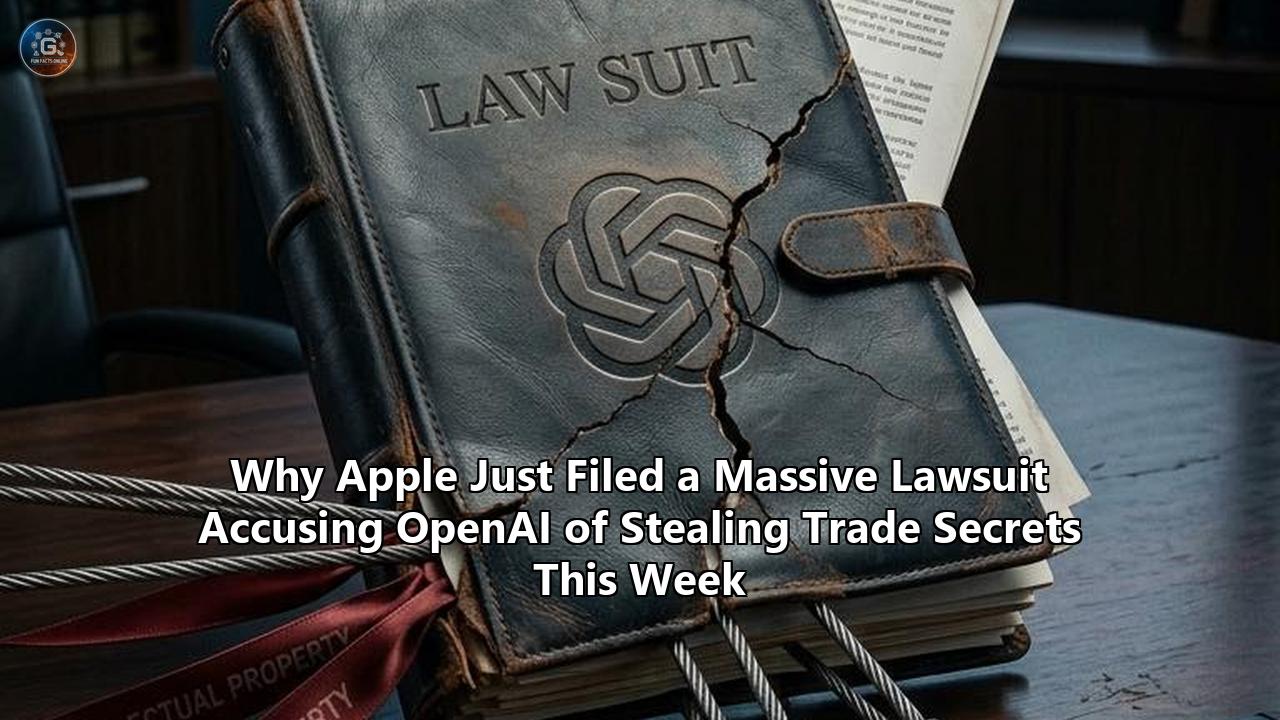
On Friday, July 10, 2026, the technology industry’s most lucrative and closely watched alliance formally shattered in a federal courthouse in California. Apple Inc. filed a sweeping, 41-page civil complaint in the U.S. District Court for the Northern District of California, accusing OpenAI, its hardware subsidiary io Products, and two key former employees of executing a systematic, institutional campaign to steal highly sensitive proprietary hardware trade secrets.
The statistics underpinning the complaint are staggering. Apple is attempting to shield a hardware empire that generates more than $200 billion in annual iPhone revenue, while OpenAI—privately valued at $300 billion—is quietly preparing for a massive initial public offering (IPO) targeting a $1 trillion valuation. At the center of the dispute is io Products, the hardware startup founded by legendary former Apple design chief Jony Ive, which OpenAI acquired in May 2025 in an all-stock transaction valued at approximately $6.5 billion.
According to the lawsuit, OpenAI’s rapid transition into consumer electronics has been fueled not by independent research and development, but by a massive siphon of talent and intellectual property from Cupertino. Apple alleges that more than 400 of its former employees have migrated to OpenAI. Among them are the two individual defendants named in the suit: Tang Yew Tan, who spent 24 years at Apple and rose to Vice President of Product Design for the iPhone and Apple Watch, and Chang Liu, an eight-year Apple veteran who served as a Senior System Electrical Engineer.
The lawsuit alleges that these individuals did not merely take their skills north to San Francisco; they allegedly carried physical prototypes, custom battery specifications, advanced circuit board designs, and proprietary supply chain secrets with them to jumpstart OpenAI's efforts to build a screen-free "iPhone killer".
The Quantitative Anatomy of Apple's Allegations
                                  THE NUMBERS IN CONFLICT
┌────────────────────────────────────────────────────────────────────────────────────────┐
│  $6.5 Billion     Valuation of OpenAI's acquisition of Jony Ive's startup, io Products │
├────────────────────────────────────────────────────────────────────────────────────────┤
│  400+             Apple employees poached by OpenAI during its aggressive expansion    │
├────────────────────────────────────────────────────────────────────────────────────────┤
│  24 Years         Tang Tan’s tenure at Apple before joining OpenAI as Hardware Chief   │
├────────────────────────────────────────────────────────────────────────────────────────┤
│  1,000+ Pages     Proprietary Apple hardware schematics allegedly downloaded by Liu   │
├────────────────────────────────────────────────────────────────────────────────────────┤
│  $1 Trillion      OpenAI's rumored target valuation for its upcoming IPO              │
└────────────────────────────────────────────────────────────────────────────────────────┘
The filed complaint paints a picture of a calculated corporate espionage scheme rather than an organic talent migration. Rather than relying on circumstantial evidence of similar product designs, Apple’s legal team presented a granular, data-backed timeline of alleged data exfiltration, network intrusions, and compromised supply chain partners.
The legal battle lines drawn in the Apple OpenAI lawsuit center on three distinct, quantifiable categories of misappropriation:
1. The "LOL" Security Exploit and the 1,000-Page Download
The first major point of vulnerability detailed in the complaint involves Chang Liu, who resigned from his post as an electrical engineer at Apple in January 2026 to join OpenAI's technical staff. Upon his departure, Liu failed to return an Apple-issued corporate laptop.
According to forensic audits cited in the complaint, Liu discovered a previously unpatched authentication bug within Apple’s offboarding system. This vulnerability allowed his unreturned device to retain access to Apple's secure internal network storage even after his employment credentials had been deactivated.
Rather than reporting the security gap under standard protocol, Liu allegedly exploited it. The lawsuit includes text messages sent by Liu to another Apple employee he was actively trying to recruit to OpenAI, reading:
"LOL, I found out I can access the [network storage], so funny."
Through this unauthorized access point, Apple alleges Liu downloaded a massive compilation of highly sensitive technical files exceeding 1,000 pages. This data cache allegedly contained proprietary system architecture, thermal modeling data, and electrical engineering schematics for Apple’s unreleased hardware, specifically focusing on complex printed circuit board (PCB) designs.
2. Tang Tan's "Show and Tell" Recruiting Pipeline
The second and structurally more damaging component of the lawsuit targets Tang Yew Tan, OpenAI's Chief Hardware Officer. Tan, who holds well over 100 patents from his 24-year career at Apple, was uniquely positioned to understand the exact internal architecture of Apple's unreleased consumer devices.
Apple alleges that Tan weaponized this knowledge to orchestrate an aggressive recruiting pipeline specifically designed to extract physical trade secrets from active Apple engineers.
The complaint details Tan’s interview process at OpenAI, alleging that he used highly confidential internal Apple project code names—which only current employees would recognize—to put candidates at ease and probe for proprietary information. More egregiously, the lawsuit claims that Tan directed active Apple employees interviewing with OpenAI to bring "actual parts," physical prototypes, and unreleased components to their interviews for "show and tell" sessions.
These physical components reportedly included:
- Custom lithium-ion battery packs with proprietary energy density specifications.
- Main logic boards and advanced system-in-package (SiP) modules.
- Experimental electromagnetic shielding components designed for compact form factors.
Furthermore, Apple claims that Tan possessed and distributed an internal Apple document titled "Need to Know," which detailed Apple’s offboarding security and asset-recovery protocols. Tan allegedly provided this document to incoming OpenAI hires before they tendered their resignations in Cupertino, effectively giving them a step-by-step checklist to evade Apple’s corporate security sweeps.
3. Supply Chain Deception and Unauthorized Metal-Finishing
Apple's allegations extend beyond the walls of its corporate headquarters and directly into its highly optimized global supply chain. In one of the most striking sections of the complaint, Apple accuses OpenAI of using its poached executives to mislead a primary manufacturing partner.
According to the filing, OpenAI successfully convinced an elite metallurgical supplier—which has spent years developing custom finishes exclusively for Apple—to apply Apple’s proprietary, highly guarded metal-finishing technique to a prototype OpenAI hardware device. The lawsuit claims that OpenAI representatives explicitly misled the supplier, falsely claiming they had Apple's express permission to utilize the proprietary technique.
Additionally, Apple alleges that OpenAI approached a second major supplier specializing in advanced power and battery manufacturing. Using highly specialized, internal Apple terminology acquired from Tan and other ex-employees, OpenAI representatives allegedly peppered the supplier with highly targeted technical questions about custom battery chemistry and power-management components currently under development for unreleased Apple wearables.
From Synergy to Sabotage: The Disintegration of the Apple-OpenAI Alliance
The timing of the Apple OpenAI lawsuit represents a dramatic, highly public shift in the competitive dynamics between the two Silicon Valley giants. Only two years prior, in June 2024, the companies stood shoulder-to-shoulder.
During its 2024 Worldwide Developers Conference (WWDC), Apple announced a blockbuster partnership to integrate OpenAI’s ChatGPT directly into Siri and the broader Apple Intelligence ecosystem. It was a deal designed to marry Apple’s hardware dominance and local on-device processing with OpenAI’s industry-leading cloud-based generative models.
               CHRONOLOGY OF A COLLABORATION'S COLLAPSE
┌───────────────┬─────────────────────────────────────────────────────────┐
│ June 2024     │ Apple announces WWDC partnership to integrate ChatGPT    │
│               │ into Siri and Apple Intelligence.                       │
├───────────────┼─────────────────────────────────────────────────────────┤
│ May 2025      │ OpenAI announces the $6.5B acquisition of io Products,  │
│               │ signaling its definitive entry into consumer hardware.  │
├───────────────┼─────────────────────────────────────────────────────────┤
│ February 2026 │ Apple privately approaches OpenAI regarding data theft  │
│               │ concerns; OpenAI reportedly ignores the inquiry.        │
├───────────────┼─────────────────────────────────────────────────────────┤
│ June 2026     │ Apple sidelines OpenAI, showcasing Google Gemini as the  │
│               │ primary cloud AI engine for the revamped Siri.          │
├───────────────┼─────────────────────────────────────────────────────────┤
│ July 10, 2026 │ Apple files the trade secrets lawsuit in the Northern   │
│               │ District of California federal court.                   │
└───────────────┴─────────────────────────────────────────────────────────┘
However, behind the scenes, the relationship began souring almost immediately. The primary driver of this friction was OpenAI’s aggressive pivot toward vertical integration.
The generative AI company, which had long been dependent on Apple’s App Store and Google’s Android ecosystem to distribute its software to the mobile market, grew increasingly wary of the "Apple Tax"—the 30% commission Apple levies on in-app purchases and subscriptions, including ChatGPT Plus. For OpenAI, which burns billions of dollars annually on computing power and model training, losing nearly a third of its mobile subscription revenue to a distributor was commercially unsustainable in the long run.
The solution was clear: OpenAI needed its own platform. By developing custom consumer hardware, OpenAI could bypass the App Store entirely, interacting directly with its users and capturing 100% of its subscription and transaction revenues.
Apple watched this transition with growing alarm. When OpenAI completed its acquisition of Jony Ive's io Products in the summer of 2025, it became clear that the startup was no longer just an AI software laboratory, but a direct competitor in the consumer electronics space. The collaborative spirit quickly evaporated.
In February 2026, Apple’s legal counsel quietly reached out to OpenAI to raise initial concerns regarding the retention of corporate data by departing employees. According to the lawsuit, OpenAI ignored the inquiry entirely, refusing to cooperate with an internal audit or address the security anomalies Apple had flagged.
The breaking point arrived in June 2026. When Apple took the stage to demonstrate its newly revamped Siri and advanced Apple Intelligence features, ChatGPT was no longer the sole star of the show. Instead, Apple highlighted Google’s Gemini as the primary engine powering its deep cloud-based queries.
Rumors immediately began circulating that OpenAI was preparing its own legal action against Apple, claiming the iPhone maker had breached their original integration contract by failing to adequately promote and implement ChatGPT across iOS devices.
Rather than waiting to defend itself against a contract claim, Apple went on the offensive. The filing of the trade secrets lawsuit on July 10 effectively preempted any contract claims by OpenAI, framing the entire hardware division of the AI lab as an enterprise "rotten to its core".
The $6.5 Billion Core: Jony Ive, io Products, and the Race Beyond Screens
To understand why Apple took the extraordinary step of suing a major partner, one must look at the physical product OpenAI is attempting to build. The acquisition of io Products in 2025 was designed to be OpenAI’s hardware foundation.
Founded in 2024 by Jony Ive, along with former Apple design stars Evans Hankey, Scott Cannon, and Tang Tan, io Products was engineered from its inception as an incubator for the next era of personal computing. The startup raised an initial seed round of $225 million from prominent venture capital firms including Sutter Hill Ventures, SV Angel, Maverick Ventures, Thrive Capital, and the Emerson Collective.
When OpenAI acquired the company, it brought on board a highly cohesive team of 55 elite hardware engineers, materials scientists, and product developers—many of whom had spent decades working together in Apple’s legendary, ultra-secretive Industrial Design group. Along with this team came a long-term consulting partnership with LoveFrom, the independent design firm Ive established after his departure from Apple in 2019, which commands annual corporate retainer fees as high as $200 million.
                 IO PRODUCTS INC. CAPITAL & ACQUISITION MATRIX
┌──────────────────────────────────────┬─────────────────────────────────────────┐
│ Seed Funding Raised (2024)           │ $225 Million                            │
├──────────────────────────────────────┼─────────────────────────────────────────┤
│ Core Investors                       │ Sutter Hill, Emerson Collective,        │
│                                      │ Thrive Capital, SV Angel, Maverick      │
├──────────────────────────────────────┼─────────────────────────────────────────┤
│ OpenAI Initial Stake (Late 2024)     │ 23% ($1.5 Billion valuation equivalent) │
├──────────────────────────────────────┼─────────────────────────────────────────┤
│ Total Acquisition Valuation (2025)  │ $6.5 Billion (All-stock transaction)    │
├──────────────────────────────────────┼─────────────────────────────────────────┤
│ Outbound Talent Transfer             │ 55 Core Engineers & Researchers         │
└──────────────────────────────────────┴─────────────────────────────────────────┘
The consumer hardware device under development at OpenAI is not designed to be a traditional smartphone. Industry analysts and supply chain leaks describe it as a pocket-sized, screen-free companion device designed to sit alongside a user’s existing computer or phone, interacting entirely through voice, contextual computer vision, and advanced AI agents.
The goal of this device is to move consumers "beyond screens," offering a highly intuitive, emotionally integrated interface that responds directly to a user's physical environment.
However, translating these high-minded design philosophies into physical reality is an incredibly capital-intensive and logistically complex endeavor. Startups that have attempted to launch AI-first hardware devices without establishing robust supply chains and manufacturing frameworks have faced severe commercial setbacks.
The primary challenges in this space are highly physical and quantitative:
- Thermal Dissipation: High-performance AI models running locally on device generate immense thermal energy. Without active cooling fans, a pocket-sized device must rely on advanced passive cooling techniques, custom metal chassis, and proprietary thermal interface materials to prevent overheating.
- Power Density: Running continuous, context-aware microphone arrays, camera feeds, and neural processing units (NPUs) drains battery power at an unsustainable rate. Maximizing battery life requires highly specialized battery chemistry, custom system-on-chip (SoC) power management, and proprietary power-gating architectures.
- Form Factor Optimization: To feel like "jewelry" rather than a utilitarian piece of plastic, a premium consumer device requires microscopic manufacturing tolerances. The gap where glass meets metal must be engineered to a fraction of a millimeter, requiring custom CNC milling processes and proprietary metal-finishing techniques.
Apple argues that instead of investing the necessary time, capital, and academic research to solve these hard engineering problems independently, OpenAI chose to take an illegal shortcut. By recruiting Tang Tan and Chang Liu—and utilizing the stolen schematics, battery designs, and supplier networks they brought with them—OpenAI was able to shave years and hundreds of millions of dollars off its product development timeline.
The lawsuit alleges that OpenAI’s entire hardware division is built on a foundation of stolen Apple engineering, stating that "OpenAI's nascent hardware business now rests on the shakiest of foundations, rotten to its core by its illegal reliance on misappropriated trade secrets."
The Macroeconomics of the Lawsuit: IPO Valuations, App Store Fees, and Market Power
The legal battle between Apple and OpenAI is, at its core, a fight for the future of the consumer computing platform. The economic stakes for both companies are massive, influencing not only their current quarterly earnings but their long-term structural valuations.
OpenAI's $1 Trillion IPO Ambitions
OpenAI is currently in the process of quietly preparing for a massive public listing. To achieve its targeted $1 trillion valuation, the company must convince public market investors that it is not merely a software-as-a-service (SaaS) provider vulnerable to rapid commoditization, but a fully integrated ecosystem.
A pure AI software model can be replicated, fine-tuned, or undercut on price by open-source alternatives like Meta’s LLaMA or Google’s open weights models. A proprietary, beautifully designed physical device, however, creates immense consumer lock-in, recurring revenue streams, and high barriers to entry.
                     VALUATION COMPARISONS & ESTIMATES
┌───────────────────────────────────────┬────────────────────────────────────────┐
│ Apple Market Capitalization (2026)    │ ~$3.5 Trillion                         │
├───────────────────────────────────────┼────────────────────────────────────────┤
│ OpenAI Current Private Valuation      │ ~$300 Billion                          │
├───────────────────────────────────────┼────────────────────────────────────────┤
│ OpenAI Projected IPO Valuation Target │ $1.0 Trillion                          │
├───────────────────────────────────────┼────────────────────────────────────────┤
│ Polymarket Odds of $1T IPO Success    │ 52%                                    │
└───────────────────────────────────────┴────────────────────────────────────────┘
The filing of the Apple OpenAI lawsuit threatens to severely dent this valuation narrative. If the court grants Apple’s request for a preliminary injunction, OpenAI’s ability to recruit top-tier hardware talent from other Silicon Valley firms will be effectively frozen.
Furthermore, any public disclosure during the discovery process that reveals OpenAI’s hardware plans are dependent on stolen technology could cause institutional investors to heavily discount the company's hardware division. This anxiety is already reflected in prediction markets; on Polymarket, the odds of OpenAI successfully debuting on the public markets at a valuation of $1 trillion or more have slipped to just 52% following the filing of the lawsuit.
Bypassing the App Store Gateway
For Apple, the threat is existential. The company’s long-term growth strategy relies heavily on its Services division, which generated over $85 billion in high-margin revenue in fiscal year 2025. A significant portion of this revenue is derived from the "Apple Tax"—the 15% to 30% cut of subscriptions and digital goods sold through iOS apps.
If OpenAI can successfully transition its hundreds of millions of active ChatGPT users away from iPhones and onto a proprietary, screen-free physical device, Apple stands to lose billions in potential services revenue.
Furthermore, if an AI-first companion device successfully replaces the smartphone as the primary gateway to the internet, Apple’s core hardware revenue is at risk. Apple cannot afford to let OpenAI leverage Apple’s own proprietary manufacturing processes, metallurgical science, and battery optimizations to build the very hardware designed to make the iPhone obsolete.
Legal Precedents and the High Hurdle of Trade Secret Litigation
The federal lawsuit filed by Apple rests on four distinct claims under the federal Defend Trade Secrets Act (DTSA) and two claims of breach of contract against the individual defendants. While the allegations detailed in the 41-page complaint are explosive, winning a trade secret case in federal court is an incredibly complex, highly technical challenge.
                   COMPARING HISTORIC TECH TRADE SECRET CASES
┌──────────────────────┬──────────────────────┬──────────────────────────────────┐
│ Case                 │ Primary Allegations  │ Outcome / Settlement             │
├──────────────────────┼──────────────────────┼──────────────────────────────────┤
│ Waymo v. Uber (2018) │ Theft of 14,000      │ Uber settled for $245 million    │
│                      │ self-driving files   │ in equity; Levandowski jailed.   │
├──────────────────────┼──────────────────────┼──────────────────────────────────┤
│ Apple v. Rivos (2024)│ Poaching of SoC      │ Settled; Rivos agreed to undergo │
│                      │ design engineers     │ rigorous forensic audits.        │
├──────────────────────┼──────────────────────┼──────────────────────────────────┤
│ Apple v. OpenAI      │ Systematic theft of  │ Pending; Apple seeking immediate │
│ (2026)               │ hardware schematics  │ injunctive relief & damages.     │
└──────────────────────┴──────────────────────┴──────────────────────────────────┘
To secure a favorable verdict or a sweeping injunction, Apple’s legal counsel must clear three distinct legal hurdles:
1. Defining the Trade Secrets with Specificity
Under both the DTSA and the California Uniform Trade Secrets Act (CUTSA), a plaintiff cannot simply make broad assertions that a competitor stole "know-how" or general engineering concepts. Apple must identify the exact documents, blueprints, chemical formulas, or manufacturing tolerances that were taken.
In the case of Chang Liu, this hurdle appears relatively low; Apple’s digital forensics team has identified specific PCB schematic files and 1,000-page engineering documents downloaded from their network.
However, in the case of Tang Tan, the legal boundary is much blurrier. Tan’s defense will almost certainly argue that the information he utilized during interviews and product development was not "proprietary trade secrets," but rather his own general professional experience, engineering acumen, and industry-standard practices accumulated over a 24-year career. California law historically strongly protects the right of workers to change jobs and utilize their general professional skills, making "inevitable disclosure" arguments highly difficult to sustain.
2. Demonstrating Reasonable Efforts to Maintain Secrecy
To qualify for legal protection, a trade secret must have commercial value because it is kept secret, and the owner must have taken active, reasonable steps to protect it.
Apple’s complaint goes to great lengths to detail its extensive security architecture, including:
- Granular "Need to Know" security clearances for specific project files.
- Continuous digital logging and monitoring of external network access.
- Mandatory exit-interview security screenings and hardware return protocols.
However, the fact that Chang Liu was allegedly able to utilize an unreturned corporate laptop to exploit an authentication bug and access internal network files after his resignation could be weaponized by OpenAI's defense.
OpenAI’s lawyers may argue that if a mid-level engineer could easily access and download over a thousand pages of highly confidential files after leaving the company, Apple’s security measures were not "reasonable," and therefore the documents do not enjoy full trade secret protection under the law.
3. Proving Misappropriation and Institutional Knowledge
It is not enough for Apple to prove that individual employees took files; to hold OpenAI and io Products corporate entities liable, Apple must prove that the companies knew or had reason to know that the information being brought in by recruits was stolen.
Apple’s primary evidence of this "institutional misconduct" is the allegation that Tang Tan, in his capacity as OpenAI's Chief Hardware Officer, actively directed recruits to bring physical Apple prototypes to interviews and distributed Apple’s proprietary offboarding security documents to incoming hires.
If Apple can prove these assertions through email discovery, Slack messages, or deposition testimony, the liability for OpenAI will be severe.
The Talent Corridor Freeze: How the Lawsuit is Reshaping Silicon Valley Recruiting
While the ultimate legal resolution of the Apple OpenAI lawsuit may take years of litigation and trial preparation, the practical, real-world consequences of the filing are being felt immediately across the technology industry. The most significant short-term outcome is the dramatic freezing of the talent corridor between Cupertino and San Francisco.
Historically, Silicon Valley’s rapid innovation has been fueled by the constant, fluid migration of engineers and designers between established giants and ambitious startups. Non-compete agreements are legally unenforceable under California Business and Professions Code Section 16600, allowing tech workers to freely jump to competitors for higher pay, equity options, or more exciting projects.
                      SILICON VALLEY TALENT CORRIDOR IMPACT
┌────────────────────────────────────────┬───────────────────────────────────────┐
│ Previous Dynamic (Pre-July 2026)       │ New Reality (Post-July 2026)          │
├────────────────────────────────────────┼───────────────────────────────────────┤
│ Fluid, high-speed migration of top     │ Severe risk of legal exposure for any │
│ hardware talent from Apple to OpenAI.  │ engineer transitioning companies.     │
├────────────────────────────────────────┼───────────────────────────────────────┤
│ Candidates showcase project experience │ Absolute ban on bringing physical     │
│ freely during interviews.              │ parts, prototypes, or files.          │
├────────────────────────────────────────┼───────────────────────────────────────┤
│ Rapid onboarding and acceleration of   │ Extreme forensic auditing of new      │
│ hardware prototypes.                   │ hires' devices and personal emails.   │
└────────────────────────────────────────┴───────────────────────────────────────┘
By filing this lawsuit, Apple has effectively established a legal roadblock that bypasses California’s ban on non-compete agreements. According to reports from Bloomberg’s Mark Gurman, the mere existence of the lawsuit is already heavily reshaping OpenAI’s hiring practices and discouraging Apple engineers from even exploring employment opportunities at the AI lab.
Any Apple engineer who currently interviews at OpenAI knows they will be placed under immediate, intense scrutiny by Apple’s corporate security and internal forensics teams.
Departing employees must now anticipate that their personal emails, corporate device access logs, and messaging histories will be forensically audited for any sign of data exfiltration. Furthermore, OpenAI’s recruiting teams must drastically alter their interview protocols, explicitly instructing candidates not to share any internal project code names, unreleased timelines, or physical hardware components to avoid being dragged into the litigation.
This talent freeze is a massive blow to OpenAI's hardware timeline. While the company has acquired the core design vision of Jony Ive and the 55 employees of io Products, translating those designs into mass-manufactured, global-scale consumer products requires hundreds of highly specialized manufacturing, electrical, and quality-assurance engineers.
If the talent pipeline from Apple—which possesses the world's most experienced consumer hardware workforce—is permanently choked off, OpenAI’s ability to execute on its physical product roadmap will be severely compromised, independent of any final court ruling.
Sam Altman vs. Elon Musk: The Public Relations War
As the legal teams prepare their initial motions, a parallel, highly volatile public relations battle has erupted across social media platforms, highlighting the deep personal and professional rivalries at the top of the tech industry.
                     THE SOCIAL MEDIA BATTLE LINES
┌────────────────────────────────────────────────────────────────────────────────┐
│  ELON MUSK (@elonmusk):                                                        │
│  "He takes scamming to a whole new level... trying to steal all of             │
│  Apple's phone technology."                                                    │
├────────────────────────────────────────────────────────────────────────────────┤
│  SAM ALTMAN (@sama):                                                           │
│  "homeboy you're the one selling public market investors on short-term         │
│  space datacenters."                                                           │
└────────────────────────────────────────────────────────────────────────────────┘
Within hours of the lawsuit being filed on July 10, Tesla and SpaceX CEO Elon Musk—who co-founded OpenAI in 2015 before dramatically parting ways with the company in 2018—immediately seized on the complaint to attack OpenAI CEO Sam Altman.
Musk, who recently lost a high-profile jury trial in May 2026 over his own nonprofit-related dispute with OpenAI, used his platform on X (formerly Twitter) to amplify Apple's allegations. Resurfacing an old post where he referred to Altman as "Scam Altman," Musk wrote:
"He takes scamming to a whole new level. He graduated from stealing an open source AI charity to trying to steal all of Apple's phone technology."
Replying to another post detailing the systematic nature of the alleged theft, Musk remarked:
"They sure put a lot of effort into this crime."
Altman did not remain silent. In a highly unusual public counterpunch on X, OpenAI’s CEO fired back directly at Musk, targeting SpaceX’s massive $1.1 trillion valuation and its recent pitches to public market investors regarding orbital, space-based AI data centers designed to solve terrestrial energy constraints:
"homeboy you're the one selling public market investors on short-term space datacenters."
While the social media spat resembles a highly personalized corporate feud, it underscores the intense narrative battle surrounding OpenAI's governance and corporate culture. For Altman, the Apple lawsuit lands just months after several former OpenAI board members and executives publicly questioned his trustworthiness and leadership style during a series of congressional and legal testimonies.
If Apple’s lawsuit successfully paints Altman’s administration as a corporate culture that actively encourages the illegal theft of intellectual property to secure market shortcuts, it could severely damage his standing with global regulators and institutional investors alike.
Future Outlook: Key Milestones in the Coming Legal Battle
As the Apple OpenAI lawsuit moves forward in the U.S. District Court for the Northern District of California, the technology and financial sectors will be watching several critical legal mileposts over the coming months:
1. The Motion for Preliminary Injunction (Q3 2026)
Apple’s first major objective will be to secure a preliminary injunction against OpenAI, io Products, Tang Tan, and Chang Liu. To win this motion, Apple must demonstrate to a federal judge that it will suffer "irreparable harm" if OpenAI is allowed to continue using the disputed hardware schematics and supply chain secrets while the lawsuit is pending.
If the judge grants the injunction, OpenAI will likely be forced to:
- Isolate all engineering files and hardware prototypes associated with Tang Tan, Chang Liu, and the disputed Apple designs.
- Allow third-party, court-appointed forensic examiners to audit their internal servers, Slack databases, and corporate emails.
- Temporarily halt the development and manufacturing of its upcoming consumer device, which would inevitably push its projected release date well past the rumored 2027 timeline.
2. OpenAI’s Formal Response and Counterclaims (Q3 2026)
OpenAI must file its formal answer to Apple’s complaint. It is highly likely that OpenAI’s legal team will move to dismiss several of the trade secret claims, arguing that Apple has failed to define its proprietary technologies with sufficient specificity.
Furthermore, observers will be watching to see if OpenAI files blockbuster counterclaims against Apple, potentially alleging anticompetitive behavior, monopolistic gatekeeping of the mobile software ecosystem, or breach of their original 2024 ChatGPT integration contract.
3. The Evidentiary Discovery Phase (Late 2026 – 2027)
If the case survives initial motions to dismiss, it will enter the highly invasive discovery phase. This process will involve the deposition of key industry figures, potentially including Apple CEO Tim Cook, OpenAI CEO Sam Altman, and legendary designer Jony Ive.
Internal emails, product designs, and corporate strategies that both companies have spent years keeping tightly guarded secrets will be subject to legal disclosure, offering an unprecedented, highly detailed look at the inner workings of Silicon Valley’s two most powerful companies.
The legal battle initiated by Apple on July 10, 2026, is far more than a standard intellectual property dispute. It is a titanic struggle to define the physical boundaries, corporate ethics, and market dominance of the generative AI era. With billions of dollars in hardware revenue, a $1 trillion IPO, and the very future of the consumer computing platform hanging in the balance, the trial of Apple v. OpenAI is set to become the defining tech litigation of the decade.
References
- --- 9to5mac.com: "(July 10, 2026) Apple has filed a lawsuit against OpenAI today..."
- --- macrumors.com: "(July 10, 2026) Apple today accused OpenAI of stealing Apple trade secrets..."
- --- apnews.com: "(July 11, 2026) Apple on Friday accused OpenAI of stealing trade secrets..."
- --- theguardian.com: "(July 10, 2026) Apple filed a lawsuit against OpenAI on Friday..."
- --- pbs.org: "(July 10, 2026) Apple on Friday accused OpenAI of stealing trade secrets..."
- --- macrumors.com: "(July 13, 2026) OpenAI's ambitions to build a hardware rival..."
- --- 247wallst.com: "(July 13, 2026) The company that once partnered with OpenAI..."
- --- lawcommentary.com: "(July 13, 2026) Apple has sued OpenAI and two former employees..."
- --- techstrong.ai: "(May 21, 2025) OpenAI said it is acquiring legendary iPhone designer Jony Ive's secretive..."
- --- cooley.com: "(May 29, 2025) Cooley advised io Products on its $6.5 billion acquisition..."
- --- youtube.com: "(May 22, 2025) Reuters Newsfeed: OpenAI is buying Jony Ive's startup..."
- --- forbes.com: "(July 10, 2026) Key Background: OpenAI has spent the last year expanding..."
- --- siliconangle.com: "(May 21, 2025) OpenAI acquires Jony Ive's io Products in $6.5B all-stock deal..."
- --- macrumors.com: "(July 09, 2025) OpenAI has completed its acquisition of Jony Ive's AI startup..."
- --- openai.com: "(May 21, 2025) A letter from Sam & Jony introducing io Products..."
- --- wikipedia.org: "io Products, Inc. was acquired by OpenAI in May 2025..."
- --- campustechnology.com: "(June 03, 2025) OpenAI has announced plans to acquire io..."
- --- 9to5mac.com: "Chang Liu and Tang Tan named as defendants..."
- --- cbsnews.com: "(July 10, 2026) Apple on Friday sued ChatGPT maker OpenAI..."
- --- indiatimes.com: "(July 13, 2026) Apple has accused former iPhone engineer Chang Liu..."
- --- hcamag.com: "(July 13, 2026) 'This case is about Apple's former employees...'"
- --- washingtonpost.com: "(July 11, 2026) Tech giant Apple sued ChatGPT-maker OpenAI on Friday..."
- --- jurist.org: "(July 11, 2026) Apple challenges OpenAI's hardware push in trade-secret lawsuit..."
- --- indiatimes.com: "(July 12, 2026) Tang Yew Tan placed at the center of Apple's lawsuit..."
- --- creativebloq.com: "(July 13, 2026) What makes the claim more extraordinary..."
- --- techbrew.com: "(July 13, 2026) Stopping the iPhone killer..."
Reference:
- https://apnews.com/article/apple-openai-lawsuit-trade-secrets-theft-6fff8833f5889d86406b89a02dd8fb16
- https://www.pbs.org/newshour/nation/apple-files-lawsuit-against-openai-accusing-chatgpt-maker-of-stealing-trade-secrets
- https://www.hcamag.com/us/specialization/employment-law/apple-sues-openai-over-alleged-trade-secret-theft/582063
- https://www.jurist.org/news/2026/07/apple-challenges-openais-hardware-push-in-trade-secret-lawsuit/
- https://247wallst.com/investing/2026/07/13/apple-sued-openai-for-stealing-secrets-elon-musk-couldnt-resist-piling-on/
- https://www.forbes.com/sites/madhulika-pathak/2026/07/10/apple-claims-openai-stole-trade-secrets-in-new-lawsuit/
- https://campustechnology.com/articles/2025/06/03/openai-to-acquire-io-plans-consumer-ai-hardware-push.aspx
- https://techstrong.ai/ai-at-the-edge/openai-to-buy-iphone-designer-jony-ives-ai-startup-for-6-5-billion/
- https://en.wikipedia.org/wiki/Io_(company))
- https://www.macrumors.com/2026/07/10/apple-sues-openai/
- https://www.cbsnews.com/news/apple-sues-openai-chatgpt-stealing-trade-secrets/
- https://timesofindia.indiatimes.com/technology/tech-news/three-things-that-former-iphone-engineer-chang-liu-took-when-he-left-the-company-as-per-apples-40-page-lawsuit-against-chatgpt-maker-openai/articleshow/132341888.cms
- https://9to5mac.com/2026/07/10/apple-sues-openai-trade-secret-theft/
- https://gadgetsnow.indiatimes.com/tech-news/who-is-tang-tan-the-apple-designer-at-the-centre-of-openais-lawsuit/articleshow/132345709.cms
- https://www.creativebloq.com/design/apples-ai-struggle-turns-ugly-as-it-sues-openai-and-io-the-company-founded-by-iphone-designer-jony-ive
- https://www.theguardian.com/technology/2026/jul/10/apple-sues-openai-trade-secrets
- https://9to5mac.com/2026/07/10/apple-sues-openai-trade-secret-theft/
- https://www.macrumors.com/2026/07/13/openai-lawsuit-threatens-plans/
- https://www.youtube.com/watch?v=y_Kd_gvvup0
- https://siliconangle.com/2025/05/21/openai-acquires-jony-ives-io-products-6-5b-stock-deal/
- https://www.pbs.org/newshour/nation/apple-files-lawsuit-against-openai-accusing-chatgpt-maker-of-stealing-trade-secrets
- https://www.theguardian.com/technology/2026/jul/10/apple-sues-openai-trade-secrets
- https://openai.com/sam-and-jony/
- https://www.cooley.com/news/coverage/2025/2025-05-29-cooley-advises-io-products-on-6-5-billion-acquisition-by-openai
- https://www.macrumors.com/2025/07/09/openai-jony-ive-io-acquisition-complete/
- https://www.lawcommentary.com/articles/apple-sues-openai-over-alleged-theft-of-hardware-trade-secrets
- https://www.techbrew.com/stories/apple-openai-lawsuit-trade-secrets-hardware-ai
- https://www.lawcommentary.com/articles/apple-sues-openai-over-alleged-theft-of-hardware-trade-secrets