On June 18, 2026, a study published in the journal Science dismantled one of the most resilient and widely taught narratives in evolutionary biology. For over 150 years, academic textbooks have asserted that the first four-legged vertebrates to venture onto land did so by mirroring modern amphibians. This established model claimed that these ancient pioneers hatched from eggs as aquatic larvae—essentially prehistoric tadpoles equipped with feathery external gills and finned tails—before undergoing a dramatic hormone-driven metamorphosis into air-breathing, limb-reliant adults.
The new research, co-authored by paleontologists Jason D. Pardo of the Field Museum of Natural History and Vilnius University, and Arjan Mann of the Lauer Foundation for Paleontology and the Field Museum, reveals that this foundational premise is incorrect.
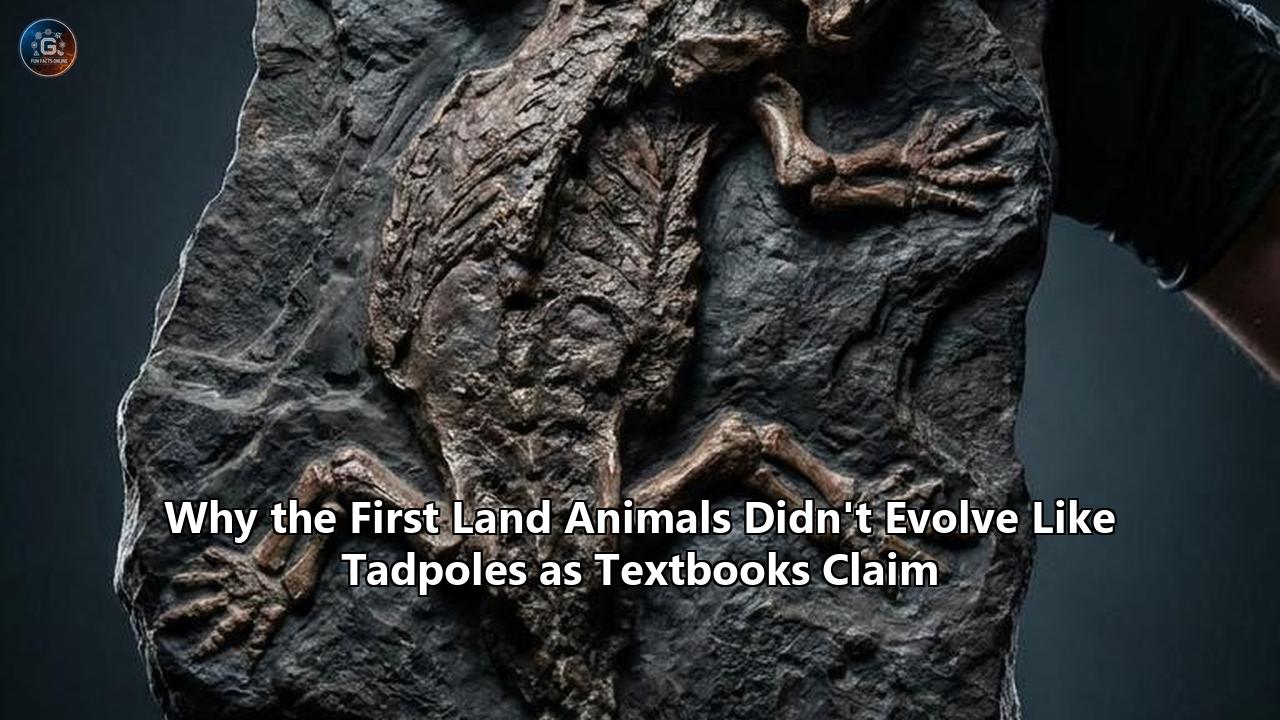
By analyzing fossilized hatchlings dating back 309 million years to the Pennsylvanian subperiod of the Carboniferous, the researchers uncovered direct evidence that the earliest tetrapods skipped the tadpole phase entirely. Instead of transitioning through a metamorphic cycle, these ancient animals grew via "direct development". They hatched as fully functional, miniature versions of their adult selves, pre-equipped with limbs and lacking any transient larval organs.
This discovery fundamentally alters our understanding of the evolution of land animals, demonstrating that metamorphosis was not the physiological bridge that allowed vertebrates to conquer terrestrial ecosystems. Instead, direct development was the ancestral rule across the fin-to-limb transition, and the biphasic life cycle of frogs and salamanders is a highly specialized, late-evolving adaptation.
Traditional Textbook Model:
[ Egg ] ---> [ Aquatic Tadpole (Larva with Gills) ] ---> (Metamorphosis) ---> [ Terrestrial Adult ]

Revised Evolutionary Model (Pardo & Mann, 2026):
[ Egg ] ---> [ Functional Miniature Adult (Direct Development) ] ----------> [ Terrestrial/Semi-Aquatic Adult ]
The Mazon Creek Specimen Data
The foundation of this study lies in a cache of fossilized hatchlings excavated from the Mazon Creek Lagerstätte, located approximately 70 miles southwest of Chicago, Illinois. Mazon Creek is internationally recognized for its preservation of delicate soft tissues within iron carbonate (siderite) nodules. These nodules formed approximately 309 million years ago in a coastal deltaic estuary, flash-burying organisms in fine-grained sediments during catastrophic silt-laden flood events.
Among the dozens of specimens analyzed, the centerpiece of the research is an exceptionally rare hatchling of a group known as embolomeres. Embolomeres were formidable, crocodile-like apex predators of the Carboniferous and Permian rivers and swamps. As adults, these animals could stretch to lengths exceeding 3 meters (10 feet).
The fossilized hatchling recovered from Mazon Creek is a stark contrast to these giants:
- Total Length: The specimen measures just 15 to 20 millimeters (0.6 to 0.8 inches) in length, roughly equivalent to the size of a short piece of macaroni.
- Age at Death: Biologists estimate the individual was only days to a couple of weeks old when it was buried.
- Nutritional State: High-resolution scanning electron microscopy (SEM) conducted at the Canadian Museum of Nature revealed the distinct carbonaceous outline of an internal yolk sac within the animal’s abdominal cavity. This confirms that the specimen was a newly hatched individual still relying on maternal nutrients.
- Limb Development: Despite its micro-scale size, the hatchling possessed fully formed, albeit tiny, forelimbs and hindlimbs.
- Respiratory Structures: The specimen exhibited absolutely no trace of external gills or the skeletal modifications associated with a larval branchial apparatus.
To ensure that the absence of external gills was not a fluke of preservation, the researchers examined other taxonomic lineages within the same Mazon Creek deposits.
- Aïstopods: The team analyzed a hatchling of a snake-like, limbless stem tetrapod. Like the embolomere, the young aïstopod showed direct developmental markers and lacked any specialized larval traits.
- Megalichthyids: The researchers studied juvenile specimens of megalichthyids—large, predatory, lobe-finned fish that sit on the "fin" side of the fin-to-limb transition. These fish likewise showed no specialized larval morphotypes.
- Lissamphibians: Crucially, the Mazon Creek deposits yielded early relatives of modern amphibians, such as branchiosaurid temnospondyls. These specimens preserved highly conspicuous, feathery external gills.
The presence of well-defined gills in the temnospondyl fossils serves as an internal control for the study. It proves that the geochemical conditions at Mazon Creek were fully capable of preserving delicate larval respiratory structures. Their complete absence in the stem tetrapods is not an artifact of fossilization but a biological reality.
========================================================================================
Mazon Creek Specimen Comparison (Carboniferous, ~309 Ma)
========================================================================================
Taxonomic Group      | Developmental Mode | External Gills Preserved? | Yolk Sac Present?
========================================================================================
Embolomeres          | Direct             | No                        | Yes (in hatchlings)
Aïstopods            | Direct             | No                        | Yes (in hatchlings)
Megalichthyids       | Direct             | No                        | No (juveniles only)
Temnospondyls        | Metamorphic        | Yes (highly conspicuous)   | No (larval stages)
========================================================================================
The Historical Burden of the Scala Naturae
The long-held assumption that early tetrapods evolved via a metamorphic, tadpole-like stage was not built on concrete fossil data. Instead, it was an intellectual inheritance from Victorian-era biology.
In the 19th century, naturalists relied heavily on the scala naturae—the "ladder of nature"—which posited that evolution was a linear, progressive march from "lower" organisms to "higher" organisms. Within this framework, modern amphibians were viewed as a living bridge between fully aquatic fish and fully terrestrial reptiles.
This linear view was reinforced by Ernst Haeckel’s biogenetic law, famously summarized as "ontogeny recapitulates phylogeny." Haeckel argued that the development of an individual organism (ontogeny) repeats the evolutionary history of its species (phylogeny). Because frogs and salamanders begin their lives as fish-like larvae before developing legs and air-breathing lungs, paleontologists assumed this sequence must mirror the historical evolution of land animals.
The Outdated Linear Progression (Scala Naturae):
[ Fish ] ===> [ Amphibians (Metamorphic) ] ===> [ Reptiles ] ===> [ Mammals ]
This assumption made the transition from water to land seem simpler. It allowed scientists to envision a gradual shift where animals spent their vulnerable youth in the safety of the water, gradually adapting their limbs and lungs before stepping onto land as mature adults.
However, this linear model ignored the complex branching nature of the evolutionary tree. Modern amphibians (lissamphibians) are not primitive ancestors; they are a highly specialized group that emerged tens of millions of years after the first tetrapods had already established a foothold on land. By projecting the highly specialized life cycles of modern frogs onto Paleozoic stem tetrapods, researchers had mistaken a late-stage evolutionary innovation for an ancestral foundation.
The Geological and Geochemical Context of Mazon Creek
To understand how these minute details were preserved for over 300 million years, it is necessary to examine the unique geologic setting of the Mazon Creek fossil beds.
Located within the Carbondale Formation of northeastern Illinois, the Mazon Creek area was a vast deltaic estuary located just 10 degrees north of the Paleozoic equator. Rivers flowing from the newly rising Appalachian Mountains carried vast quantities of mud and sand southwestward, where they emptied into a shallow, tropical interior sea.
This environment was highly dynamic, characterized by seasonal monsoons and sudden, catastrophic flooding. During these floods, massive volumes of terrestrial and freshwater organisms were swept from river deltas into brackish and marine waters, where they were rapidly buried in thick layers of oxygen-poor silt.
Geochemical Preservation Mechanism of Siderite Nodules:
1. Catastrophic Flood ---> Rapid burial of organism in fine-grained, iron-rich silt.
2. Anaerobic Decay    ---> Bacterial decomposition of tissues depletes local oxygen.
3. Carbonate Surge    ---> Decomposition releases carbon dioxide (CO2), raising local pH.
4. Siderite Binding   ---> Dissolved iron (Fe2+) reacts with carbonate (CO32-), precipitating FeCO3.
5. Concrete Shell     ---> Siderite forms a hard, protective nodule around the organic remains.
This rapid, anaerobic burial halted the process of normal aerobic decay and scavenging. As the trapped organic matter began to break down under anaerobic conditions, localized bacterial activity altered the chemistry of the surrounding pore water. The decomposition of proteins released ammonia and carbon dioxide, which localized a sharp spike in alkalinity directly around the carcass.
This alkaline microenvironment caused dissolved iron ($Fe^{2+}$) and carbonate ($CO_3^{2-}$) in the groundwater to precipitate out of solution as siderite ($FeCO_3$). The siderite grew outward from the decaying organism, forming a hard, protective concrete shell—an ironstone nodule—long before the surrounding mud could be fully compacted into shale.
It is this rapid cementation process that captured "the impossible". It didn't just preserve bones; it cast the outlines of internal organs, skin textures, cartilaginous supports, and even the delicate yolk sacs of organisms that had died only days after hatching.
Re-evaluating the "Blades": Esconichthys apopyris
The discovery of direct development in stem tetrapods was also made possible by resolving a decades-old paleontological mystery regarding a specific fossil known as Esconichthys apopyris.
First described in 1974 by David Bardack of the University of Illinois at Chicago, Esconichthys apopyris was named to honor the Earth Science Club of Northern Illinois (ESCONI). For over 50 years, Esconichthys was the most common vertebrate fossil found in the marine (Essex) portion of the Mazon Creek deposits. Fossil collectors nicknamed these specimens "blades," "ghosts," or "grasshoppers" due to their elongated, flattened, and often blade-like shapes.
Anatomy of the Putative "Esconichthys apopyris" (Historic View):
                     _________________
                   /                  \===--___
   [ Prominent ]  |   Elongate,        |       ===--___  [ Finned Tail ]
   [   Eyes    ]  |   Limbless Body    |               ===--__
     O     O      |   with Myomeres    |                      ===--_
      \___/        \__________________/===--___              _---===
        ||              ||                     ===--________---
   [Two Pairs of Elongate Gills]
These "blades" typically measured between 20 and 80 millimeters in length. They possessed:
- A prominent pair of dark, well-preserved eyes.
- A slender, limbless body lined with 25 to 30 chevron-shaped muscle segments (myomeres).
- Two pairs of long, feathery appendages projecting from behind the head, which were historically interpreted as external gills.
- A single low fin running along the ventral side of the tail.
Because of these features, Esconichthys was treated as a valid biological species. Paleontologists struggled to place it on the tree of life, with some arguing it was a larval lungfish, others suggesting it was a larval amphibian, and some even classifying it as an enigmatic stem chordate.
By utilizing advanced imaging technologies, Pardo and Mann re-examined dozens of these "blade" specimens. Their analysis revealed that Esconichthys apopyris is not a single species at all. Instead, it is a "wastebasket taxon" containing the early, unossified hatchling stages of several completely different vertebrate lineages.
"Esconichthys apopyris" (Wastebasket Taxon)
      |
      +---> Hatchling Megalichthyids (Lobe-finned Fish)
      |
      +---> Hatchling Aïstopods (Snake-like Stem Tetrapods)
      |
      +---> Hatchling Embolomeres (Croc-like Stem Tetrapods)
The long, feathery projections once identified as external larval gills were actually misidentified. In some specimens, they turned out to be the cartilaginous precursors of pectoral supports or displaced cranial elements. In others, they were carbonaceous stains from decomposing soft tissues.
Once these structures were correctly identified and paired with high-resolution structural data, the researchers were able to match the "blades" to their respective adult groups. The results were consistent across every single lineage: none of them showed any anatomical adaptations for a specialized, metamorphic larval stage.
The Structural Mechanics of Direct Development
To appreciate why direct development is such a critical revelation for the evolution of land animals, we must examine the physical and physiological differences between this mode of growth and modern amphibian metamorphosis.
In modern metamorphic amphibians (such as the wood frog, Lithobates sylvaticus, or the spotted salamander, Ambystoma maculatum), the life cycle is strictly biphasic. This partitioning of life stages requires a massive, coordinated suite of physiological and anatomical changes:
Amphibian Metamorphosis (Biphasic Tissue Remodeling):
[ Larval Structures ]                                 [ Terrestrial Adult Organs ]
- External Gills / Gill Slits  ===> (Apoptosis)  ===> - Fully Developed Lungs
- Flat Tail Fin                ===> (Resorption) ===> - Strong, Skeletal Limbs
- Lateral Line System          ===> (Degeneration)===> - Keratinized Skin Layer
- Wide, Suction-Feeding Jaws   ===> (Remodeling) ===> - Narrow, Muscular Tongue/Jaws
This process is coordinated by the thyroid gland, which releases a massive surge of thyroxine ($T_4$) and triiodothyronine ($T_3$). These hormones bind to nuclear thyroid hormone receptors, triggering widespread programmed cell death (apoptosis) in larval tissues while simultaneously stimulating the rapid proliferation and differentiation of adult progenitor cells.
This metamorphic transition is incredibly demanding from an energetic standpoint. During the peak of metamorphosis, a tadpole cannot feed because its mouthparts and digestive tract are being completely rebuilt. It is highly vulnerable to predators because its tail is being resorbed before its limbs are fully functional for locomotion.
The Carboniferous hatchlings studied by Pardo and Mann show no evidence of this costly remodeling process.
Skeletal Development
In the baby embolomeres from Mazon Creek, ossification of the skeleton was already well underway in a pattern that matches the adult layout.
- Cranial Ossification: The dermal bones of the skull roof, including the parietals, frontals, and jaw elements, were already forming as distinct, solid plates. In metamorphic amphibians, the larval skull is largely cartilaginous, with many bones failing to ossify until the onset of metamorphosis.
- Axial Skeleton: The vertebrae, including the intercentra and neural arches, were already beginning to ossify in a progressive anterior-to-posterior sequence. This continuous ossification is typical of modern fish and amniotes, rather than the delayed, rapid skeletal development seen in metamorphic frogs and salamanders.
- Limb Bud Development: The limbs of the baby embolomeres grew continuously, scaling up in proportion with the rest of the body. There was no sudden, hormone-triggered eruption of legs from a limbless larval body.
Respiratory Mechanics
Without external gills, how did these tiny hatchlings breathe?
Modern lungfish and many primitive ray-finned fish possess internal gills protected by an opercular cover, but they also rely heavily on lungs for aerial respiration, especially in warm, oxygen-depleted waters. The baby embolomeres and megalichthyids likely relied on a combination of:
- Cutaneous Respiration: The high surface-area-to-volume ratio of a 10-millimeter hatchling allows for highly efficient gas exchange directly through the skin, a mechanism still utilized by many small vertebrates.
- Internal Gill Ventilation: The presence of internal branchial arches suggests they possessed internal gills similar to those of fish, which did not require the dramatic external structures seen in modern salamander larvae.
- Early Lung Inflation: The early ossification of the rib cage and hyoid apparatus suggests that even very young hatchlings were capable of gulping air at the water's surface, utilizing lungs from the very beginning of their post-hatching lives.
By bypassing the need for a specialized larval stage, early tetrapods avoided the high energetic costs and structural vulnerabilities associated with metamorphosis. They grew continuously, gradually adjusting to their ecological niches as they scaled up in size.
========================================================================================
Developmental Mechanics: Direct vs. Metamorphic
========================================================================================
Feature                 | Direct Development (Carboniferous Tetrapods) | Metamorphosis (Modern Lissamphibians)
========================================================================================
Growth Curve            | Continuous, linear scaling                   | Sigmoidal, interrupted by remodeling
Skeletal Ossification   | Early, progressive, continuous               | Delayed, rapid during adult transition
Thyroid-Mediated Apoptosis| Absent                                      | Present (massive tissue resorption)
Vulnerability Window    | Low (gradual ecological niche shift)         | High (immobile, non-feeding stage)
========================================================================================
Whatcheeria deltae: High-Velocity Growth in Early Tetrapods
The discovery of direct development in Carboniferous stem tetrapods is strongly supported by independent histological research on other early land-dwelling vertebrates. A prime example is the research conducted on Whatcheeria deltae, an Early Carboniferous stem tetrapod that lived approximately 331 to 326 million years ago.
Discovered in a limestone quarry near the town of What Cheer, Iowa, Whatcheeria was a massive, six-foot-long, lake-dwelling predator. It was essentially the "T. rex of its time," dominating its freshwater ecosystem.
In a study led by paleontologist Megan Whitney of Harvard University and Stephanie Pierce of Harvard's Museum of Comparative Zoology, researchers performed thin-section bone histology on an ontogenetic series of nine Whatcheeria femora (thigh bones). This sample represented a wide range of size classes, from small juveniles to fully mature adults.
Bone Histology Tissue Types:
[ Woven/Fibrolamellar Bone ] ---> Fast, disorganized collagen matrix. Rapid growth.
[ Parallel-Fibered Bone ]    ---> Moderate, semi-organized matrix. Standard growth.
[ Lamellar Bone ]            ---> Slow, highly organized sheets. Structural reinforcement.
The results of this histological analysis were unexpected:
- Fibrolamellar Bone: In the smaller juvenile femora, Whitney discovered highly vascularized fibrolamellar bone. This tissue is characterized by a rapid, disorganized deposition of collagen fibers that are quickly filled in by blood vessels and osteons.
- Growth Rates: Fibrolamellar bone is a diagnostic signature of fast, continuous growth. Prior to this discovery, paleontologists believed that rapid juvenile growth was a specialized physiological trait exclusive to amniotes (mammals, birds, and reptiles).
- Absence of Growth Marks: None of the juvenile femora showed lines of arrested growth (LAGs), which are seasonal "growth rings" commonly seen in modern reptiles and amphibians that grow slowly and cyclically. This indicates that young Whatcheeria grew continuously year-round, unaffected by seasonal resource scarcity.
- Growth Trajectory: Instead of growing "slow and steady" throughout its life, Whatcheeria front-loaded its growth. It grew rapidly during its youth and then leveled off as it reached adulthood, transitioning to the slow deposition of parallel-fibered and lamellar bone.
This high-velocity, continuous growth strategy aligns with the direct development model described by Pardo and Mann. If the earliest tetrapods were slow-growing, metamorphic animals like modern salamanders, their bones would be dominated by slow-growing, parallel-fibered tissue punctuated by numerous LAGs.
Instead, both Whatcheeria and the Mazon Creek stem tetrapods show that early land vertebrates grew continuously and rapidly, reaching skeletal maturity quickly. This rapid growth allowed them to quickly occupy large-bodied predator niches, outcompeting slower-growing aquatic organisms and establishing themselves as dominant forces in both aquatic and terrestrial environments.
Comparison of Early Tetrapod Growth Strategies (Carboniferous Period):
                          Size (Adult)    Growth Rate (Juvenile)   Bone Tissue Type
Whatcheeria deltae   ===> ~2.0 meters ===> Rapid & Continuous ===> Fibrolamellar
Greererpeton         ===> ~1.5 meters ===> Moderate & Cyclical ===> Parallel-fibered / LAGs
Embolomeres          ===> ~3.0 meters ===> Continuous Scaling ===> Direct Development
Why Amphibian Metamorphosis is a Derived Specialization
If direct development was the ancestral state for early tetrapods, a major evolutionary question arises: why did modern amphibians (lissamphibians) evolve a metamorphic, biphasic life cycle?
The answer lies in the concept of ecological niche partitioning. Rather than being a "bridge" to transition onto land, metamorphosis is a highly specialized evolutionary strategy designed to maximize energy capture and minimize competition between different life stages.
Modern frogs and salamanders typically live in highly seasonal, unpredictable, or resource-limited environments. In these settings, a biphasic life cycle offers several major advantages:
1. Resource Exploitation
Aquatic environments often experience massive, seasonal blooms of algae, zooplankton, and detritus. Modern tadpoles are specialized feeding machines designed specifically to harvest these ephemeral aquatic resources. They possess specialized scraping mouthparts and highly elongated, simple digestive tracts optimized for digesting algae and organic debris.
By spending their youth as aquatic herbivores, modern amphibians can exploit a massive energy source that is completely unavailable to terrestrial adults. When this aquatic resource dries up or the pool begins to evaporate, the surge of thyroid hormones triggers metamorphosis, transforming the herbivorous tadpole into a carnivorous, land-dwelling adult.
Niche Partitioning in Modern Amphibians:
[ Larva (Tadpole) ]    ===> Aquatic Herbivore (Exploits algal blooms)
       |
  (Metamorphosis)
       v
[ Adult (Frog) ]       ===> Terrestrial Carnivore (Exploits insect populations)
2. Competition Avoidance
Because tadpoles and adult frogs live in different environments and eat completely different foods, they never compete with one another for resources. This allows a single habitat to support vastly larger populations of a species than would be possible if both young and adults were competing for the same food and territory.
3. Predator Avoidance
Terrestrial environments are teeming with highly active predators, including birds, mammals, and reptiles. For a small, slow-growing juvenile vertebrate, land can be an incredibly dangerous place.
By keeping their young in aquatic environments—often in temporary, fish-free pools—modern amphibians can protect their offspring during their most vulnerable developmental stages. They only emerge onto land once they are larger, more agile, and equipped with adult sensory systems and defense mechanisms.
The evolution of land animals was therefore not enabled by metamorphosis; rather, metamorphosis was an evolutionary response to the colonization of land. As the terrestrial world became increasingly crowded and competitive during the Late Paleozoic and Mesozoic eras, the ancestors of modern amphibians branched off from the main tetrapod lineage. They developed a biphasic life cycle to exploit new, ephemeral microhabitats and protect their young from the growing array of land-based predators.
The Critical Role of Community Science
The landmark study by Pardo and Mann highlights another increasingly important aspect of modern paleontology: the vital partnership between academic researchers and amateur, or avocational, fossil collectors.
The key fossil that unlocked the entire study—the baby embolomere featuring the preserved yolk sac—was not found by a professional museum crew. It was collected by Richard Rock, a Vietnam War veteran, master gardener, and dedicated fossil enthusiast who has spent 66 years exploring the spoil heaps of Mazon Creek.
The Discovery Chain:
[ Richard Rock ] ---> Collects siderite nodule at Mazon Creek. Labels it "baby lamprey."
       |
[ Andrew Young ] ---> ESCONI member photographs Rock's collection, spots the fossil.
       |
[ Arjan Mann ]   ---> Field Museum curator recognizes the specimen as a stem tetrapod.
       |
[ Advanced Scan ]---> Canadian Museum of Nature confirms baby embolomere via SEM.
Rock had stored the specimen in his home collection, neatly cataloged with a small, laminated label that read "baby lamprey". In 2023, Andrew Young, a fellow member of the Earth Science Club of Northern Illinois (ESCONI), was photographing Rock's extensive collection when he noticed the tiny, delicate fossil. Realizing it was something entirely unique, Young flagged the specimen for Arjan Mann, who was then visiting the museum's collections.
The specimen was subsequently donated to the Field Museum of Natural History, ensuring it would be permanently preserved in a public research collection. This donation allowed Pardo and Mann to subject the fossil to high-resolution scanning electron microscopy and synchrotron virtual histology, ultimately leading to the landmark publication in Science.
This collaborative model is essential for the future of paleontology. Delicate, soft-bodied fossils of post-hatching vertebrates are exceptionally rare, representing literal "one-in-a-million" preservation events. Without the thousands of hours logged by amateur collectors like Richard Rock, these critical pieces of our evolutionary history would remain buried in the coal spoil heaps of Illinois, lost to weathering and time.
As Jason Pardo emphasized, "For us, our work relies on ensuring our interpretations of fossils are replicable by other researchers. We achieve this by ensuring our specimens are in public museums and research collections. We have worked closely with amateur collectors to ensure that the scientifically important fossils we report here will always be available to any researcher... We would like to see more partnerships like this".
Dismantling the Classical Evolutionary Tree
By proving that direct development was the ancestral state for early tetrapods, the research by Pardo and Mann forces a fundamental restructuring of the vertebrate evolutionary tree.
For decades, the standard phylogenetic sequence taught in high school and university biology courses was structured as a linear sequence of developmental transitions:
Traditional Text-Book Topology (Outdated):
                       __ [ Modern Amphibians (Lissamphibia) ] ---> Retains Tadpole/Metamorphosis
                      /
[ Sarcopterygian Fish] ===> [ Paleozoic Stem Tetrapods ]
                      \__ [ Amniota (Reptiles, Birds, Mammals) ] ---> Evolves Direct Development
In this outdated model, direct development was treated as a derived, highly advanced trait that evolved late in the tetrapod lineage. The key innovation of the amniote egg (with its protective amnion, chorion, and allantois membranes) was thought to be the trigger that allowed animals to skip the aquatic larval stage, enabling them to lay eggs on dry land.
The new data from Mazon Creek completely inverts this relationship. Direct development is not a late-stage amniote innovation; it is the ancestral condition for all tetrapods, inherited directly from their lobe-finned fish ancestors.
Revised Vertebrate Topology (Based on Pardo & Mann, 2026):
                                                              __ [ Lissamphibia (Metamorphosis) ]
                                                             /
[ Sarcopterygian Fish (Direct) ] ---> [ Stem Tetrapods (Direct) ]
                                                             \__ [ Amniota (Direct Development) ]
In this revised framework:
- The Ancestral State: Sarcopterygian fish and early stem tetrapods grew continuously via direct development. They hatched as fully formed juvenile versions of adults, and stayed in similar aquatic or semi-aquatic environments throughout their entire lives.
- The Amniote Path: Amniotes (the lineage leading to reptiles, birds, and mammals) simply retained this ancestral direct development. The major innovation of the amniote egg was not the elimination of the tadpole stage, but rather the addition of extra-embryonic membranes that allowed this ancestral developmental mode to be packaged and protected on dry land.
- The Amphibian Path: Modern amphibians (lissamphibians) branched off and underwent a radical developmental reorganization. They evolved metamorphosis and the aquatic tadpole stage as a highly specialized, derived strategy to colonize new ecological niches and survive the increasingly intense predatory and environmental pressures of the Mesozoic era.
This phylogenetic correction resolves a long-standing paradox in vertebrate paleontology. If the earliest tetrapods were highly reliant on a fragile, metamorphic larval stage, it would be difficult to explain how they successfully navigated the radical environmental shifts of the Carboniferous and Permian periods.
Direct development made them far more resilient, allowing them to grow steadily and adapt continuously as they expanded from brackish estuaries into freshwater lakes, coastal swamps, and eventually, the dry interior of the supercontinent Pangaea.
Biophysical Modeling and the Future of Terrestrial Colonization
The shift from a metamorphic model to a direct development model has profound implications for how biophysicists, ecologists, and paleontologists model the water-to-land transition.
When researchers assumed that early tetrapods developed like modern salamanders, their biomechanical models of early locomotion and feeding were partitioned by developmental stage:
Old Biomechanical Modeling Paradigm:
- Hatchling Stage  ===> Modeled strictly as an aquatic swimmer (relying on undulatory tail propulsion).
- Metamorphic Stage===> Modeled as a transitional crawler (struggling with semi-functional limbs).
- Adult Stage      ===> Modeled as a terrestrial/semi-aquatic walker.
This transitional model assumed a division of labor: the young were aquatic specialists, while the adults were terrestrial pioneers.
With the confirmation of direct development, these models must be completely rebuilt. Because early tetrapod hatchlings were born as miniature adults, they had to navigate the exact same physical environments as their massive parents from day one.
This introduces a set of biophysical and ecological constraints:
1. Scaling and Locomotion
A 15-millimeter hatchling embolomere operates in a completely different physical regime than a 3-meter adult. At the millimeter scale, water behaves as a much more viscous fluid (characterized by a low Reynolds number) than it does at the meter scale (high Reynolds number).
This means that a tiny, direct-developing hatchling could not rely on the same locomotory mechanics as its parents. While the adult could easily slice through the water using inertial forces, the hatchling had to contend with viscous drag, requiring unique limb-use and tail-beating strategies to swim effectively.
2. Trophic Competition
Because hatchlings and adults shared the same basic anatomy, they also shared similar feeding mechanisms. However, because of the massive difference in size, they had to target different size classes of prey.
While a 3-meter adult embolomere could swallow large fish and other tetrapods, a 15-millimeter hatchling had to target tiny aquatic invertebrates, insect larvae, and micro-crustaceans. This required highly precise sensory and capture systems to be functional immediately upon hatching, rather than developing gradually during a larval phase.
Scaling Biophysics in Stem Tetrapods:
                           Hatchling Stage               Adult Stage
Scale:                     1.5 Centimeters               3.0 Meters
Fluid Dynamics:            Low Reynolds Number (Viscous) High Reynolds Number (Inertial)
Locomotory Challenge:      Overcoming fluid drag         Maximizing forward thrust
Primary Prey:              Micro-crustaceans, insects    Large fish, smaller tetrapods
3. Thermal and Osmotic Regulation
Tiny organisms lose water and heat much faster than large ones due to their high surface-area-to-volume ratio. A direct-developing hatchling living in a brackish or freshwater estuary would be highly vulnerable to osmotic shock and desiccation.
This suggests that early tetrapod hatchlings must have stayed in highly sheltered, stable microhabitats—such as dense vegetative mats or shallow estuarine pools—until they grew large enough to withstand the broader, more volatile environments patrolled by adults.
By adjusting our biophysical models to account for direct development, scientists can now simulate these ancient lifecycles with far greater accuracy. This will allow researchers to reconstruct not just how individual bones evolved, but how entire Paleozoic ecosystems functioned, from the microscopic hatchlings hiding in the weeds to the giant apex predators ruling the open waters.
Unresolved Questions and New Frontiers
The publication of the June 2026 Science paper is not the final chapter in the study of early tetrapod development; rather, it marks the opening of a vast new research frontier. While the core premise of ancestral direct development has been established, a host of intriguing questions remain unanswered.
1. The Respiratory Transition
If early tetrapod hatchlings lacked external gills, exactly when and how did they transition to fully air-breathing organisms?
Future research will focus on analyzing the internal rib structures, hyoid bones, and branchial arches of these tiny fossils. By using high-resolution synchrotron micro-CT scanning, paleontologists hope to visualize the microscopic channels for blood vessels and nerves that would have supplied internal gills, allowing them to map the exact respiratory toolkit of these ancient hatchlings.
2. The Diversity of Developmental Strategies
Did all early tetrapods follow the exact same developmental path, or did different lineages experiment with diverse growth strategies?
We already have hints of incredible diversity: while Whatcheeria grew rapidly and continuously using fibrolamellar bone, other early tetrapods like Greererpeton show much slower, more episodic growth. By sampling a wider variety of Carboniferous and Devonian fossils for bone histology and hatchling anatomy, researchers can map the full spectrum of developmental options that existed at the dawn of land-dwelling life.
========================================================================================
Summary of Unresolved Research Frontiers
========================================================================================
Research Question              | Primary Methodology                     | Potential Impact
========================================================================================
Respiratory Mechanics          | Synchrotron micro-CT scanning           | Clarify internal gill vs. lung use in hatchlings
Growth Strategy Diversity      | Comparative bone histology              | Map the spectrum of growth rates across lineages
Evolution of Metamorphosis     | Genomic and fossil analysis of modern   | Pinpoint the exact timing of the metamorphic transition
                               | amphibian ancestors                     |
========================================================================================
3. The Genomic Origins of Metamorphosis
How did the complex genetic machinery of modern amphibian metamorphosis arise?
By comparing the genomes of modern frogs, salamanders, and caecilians with those of other vertebrates, evolutionary developmental biologists can identify the genetic changes that allowed modern amphibians to construct their unique, biphasic life cycles. Pairing this genomic data with the fossil record will allow scientists to pinpoint exactly when the genetic switches for metamorphosis first evolved.
As these new lines of inquiry are explored, the traditional textbook story of the evolution of land animals will continue to be refined. The image of a fragile, tadpole-like creature crawling out of a drying pond is gone, replaced by a far more complex, diverse, and robust picture of ancient life. The pioneers of the terrestrial world did not rely on a dramatic, metamorphic transformation to conquer the land. They were ready for the challenge from the very moment they hatched.
Reference:
- https://www.404media.co/a-new-fossil-discovery-just-rewrote-150-years-of-evolutionary-theory/
- https://www.courthousenews.com/fossils-show-earliest-four-legged-animals-skipped-the-tadpole-stage/
- https://www.sciencenews.org/article/assumption-early-land-vertebrates-wrong
- https://www.livescience.com/animals/extinct-species/a-completely-different-story-300-million-year-old-fossils-reveal-the-first-vertebrate-land-dwellers-werent-what-we-thought-researchers-claim
- https://www.malaymail.com/news/life/2026/06/19/did-early-land-animals-evolve-like-frogs-why-new-fossil-evidence-says-no/224391
- https://www.earth.com/news/jason-pardo-paleontologist-on-mazon-creek-fossils-that-story-doesnt-work-anymore-dmm/
- https://www.lauerfoundationpse.org/post/a-new-paper-in-the-journal-science-on-stem-tetrapods-includes-lauer-foundation-specimens
- https://www.smithsonianmag.com/science-nature/a-vietnam-veteran-collected-fossils-for-66-years-one-mislabeled-baby-lamprey-made-paleontologists-reconsider-how-vertebrates-moved-from-water-to-land-180988981/
- https://www.sci.news/paleontology/embolomeres-14859.html
- https://www.popsci.com/environment/first-land-animal-not-amphibians/
- https://www.fossilera.com/fossils/2-fossil-lungfish-esconicthys-nodule-pos-neg-mazon-creek
- https://en.wikipedia.org/wiki/Paleofauna_of_the_Mazon_Creek_fossil_beds
- https://www.fieldmuseum.org/about/press/fossilized-babies-of-ancient-crocodile-like-predators-uproot-scientists-understan
- https://timesofindia.indiatimes.com/etimes/animals/310-million-year-old-fossil-babies-reveal-a-surprising-truth-about-earths-first-land-animals/articleshow/131934769.cms
- https://bsky.app/profile/jdpardo.bsky.social/post/3molka5g7sk2i
- https://esconi.org/2026/06/mazon-monday-327-direct-development-of-stem-tetrapods-across-the-fin-to-limb-transition/
- https://benzatine.com/news-room/revising-the-evolution-story-early-tetrapods-defied-tadpole-transformation
- http://www.fossilmall.com/EDCOPE_Enterprises/Mazon-Creek/MC27/MC-fossils-27.htm
- https://esconi.org/2025/02/mazon-monday-257-mazon-creek-fossil-species-named-for-esconi-fossils-paleontology-mazonmonday-mazonc/
- https://www.thefossilforum.com/topic/100449-mazon-creek-best-of-the-best-esconichthys-apopyris-bardack-1974/
- https://nixillustration.com/tag/vertebrate/
- https://esconi.org/2021/07/fossil-friday-67-esconichthys-apopyris-fish-mazoncreek-fossilfriday-illinois-fossil/
- https://www.researchgate.net/figure/Eusthenopteron-foordi-MCZ-5810-Complete-skeleton-covered-with-scales-Shows-the-humerus_fig4_213770274
- https://www.sciencedaily.com/releases/2024/11/241126134812.htm
- https://en.wikipedia.org/wiki/Tetrapod
- https://www.researchgate.net/publication/365801262_Fossil_bone_histology_reveals_ancient_origins_for_rapid_juvenile_growth_in_tetrapods
- https://cordis.europa.eu/article/id/30785-study-investigates-life-histories-of-earliest-known-tetrapods
- https://www.researchgate.net/publication/365801262_Fossil_bone_histology_reveals_ancient_origins_for_rapid_juvenile_growth_in_tetrapods
- https://www.sciencedaily.com/releases/2022/11/221128101215.htm
- https://en.wikipedia.org/wiki/Whatcheeria
- https://www.oeb.harvard.edu/news/cracking-open-fossil-bone-reveals-rapid-juvenile-growth-early-tetrapods
- https://www.researchgate.net/publication/397099340_The_origin_of_Amniota_in_phylogenetic_context
- https://www.eurekalert.org/news-releases/1132056
- https://www.researchgate.net/publication/365788577_Bone_Histology_of_Fossil_Tetrapods_Advancing_Methods_Analysis_and_Interpretation
- https://pmc.ncbi.nlm.nih.gov/articles/PMC6485594/
- https://pmc.ncbi.nlm.nih.gov/articles/PMC3136505/