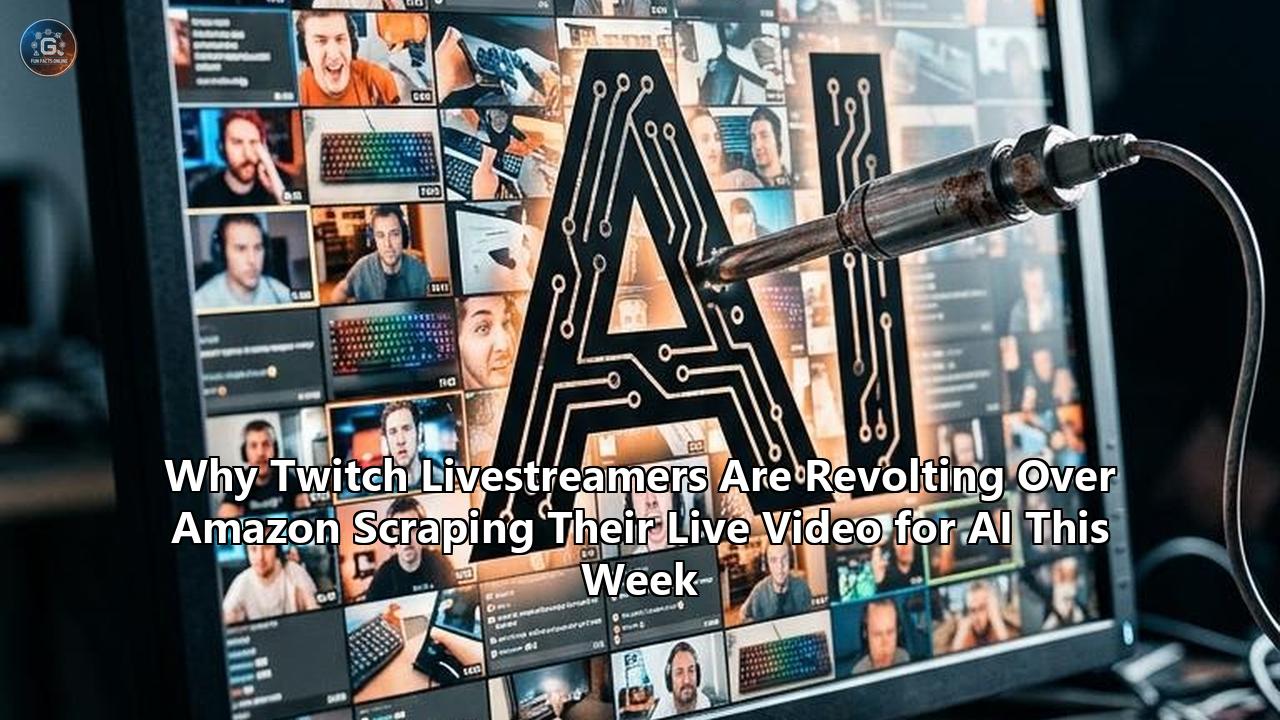
Amazon ignited widespread fury across the live-broadcasting community this week after rolling out an account setting that quietly enrolls every Twitch channel into its generative artificial intelligence training pipeline by default. Under the newly implemented system, live video feeds, voice audio, video-on-demand (VOD) archives, clips, chat transcripts, and channel images are automatically harvested to train Amazon’s internal foundation models—unless creators manually locate and disable an obscure toggle buried inside their account privacy menus.
The backlash escalated from a simmering policy dispute into a full-scale creator revolt following a live question-and-answer broadcast by Twitch executives. Asked directly by thousands of broadcasting partners why the platform chose a default opt-out mechanism rather than requiring explicit consent, Twitch Chief Product Officer Mike Minton offered an unvarnished admission: “If it was opt-in, nobody would opt in. That’s honestly the answer. It’s going to be on by default.”
Minton’s candid statement confirmed what digital rights advocates and livestreamers have long feared: major technology conglomerates view user-generated live streams not merely as entertainment to be hosted and monetized, but as raw, unpriced training fuel for multi-modal machine learning systems. The move has spurred organized channel blackouts, viral tutorials on circumventing platform data harvesters, formal complaints to international privacy regulators, and renewed demands for federal legislation protecting human likeness and voice rights.
What began as an unannounced user-interface update has exposed an urgent conflict between platform gatekeepers and the independent labor force that powers them. As the generative AI race shifts from static text and still photography to real-time multimodal interaction, Twitch livestreamers find their creative personas, unscripted speech, and community interactions positioned squarely at the center of the extraction economy.
The Opt-Out Flashpoint: Mechanics of Default Extraction
The controversy surfaced when users noticed an unannounced toggle titled "Training for Generative AI" under the Security and Privacy tab in their account settings. The setting carries a brief explanatory description: "Allow your channel content to train generative AI content models at Amazon."
According to Twitch’s newly published support documentation, content subject to ingestion encompasses:
- Real-time live video broadcasts and synchronized audio tracks
- Full Video-on-Demand (VOD) archives
- Creator-generated Clips and channel Highlights
- Synchronized live chat logs, including viewer messages, timestamps, and custom community emotes
- Static channel assets, profile pictures, banners, and descriptive text
Twitch Channel Ingestion Architecture
┌────────────────────────────────────────────────────────┐
│                   Live Broadcast                       │
│  ┌──────────────┐  ┌──────────────┐  ┌──────────────┐  │
│  │ Video Stream │  │ Audio Track  │  │  Live Chat   │  │
│  └──────┬───────┘  └──────┬───────┘  └──────┬───────┘  │
└─────────┼─────────────────┼─────────────────┼──────────┘
          │                 │                 │
          ▼                 ▼                 ▼
┌────────────────────────────────────────────────────────┐
│ Amazon AI Training Pipeline (Enabled by Default)       │
│  - Multimodal Video Tokenization                       │
│  - Conversational Voice & Prosody Cloning             │
│  - Natural Language Chat & Slang Processing            │
│  - Real-time Reaction & Behavioral Modeling            │
└────────────────────────────────────────────────────────┘
          ▲
          │ (Requires Manual Opt-Out)
┌─────────┴──────────────────────────────────────────────┐
│ Settings > Security & Privacy > Training for Gen AI    │
└────────────────────────────────────────────────────────┘
The corporate architecture of the system introduces structural inequities that go beyond the default setting itself. Chief among them is the absolute vulnerability of viewers and guest broadcasters. Under Twitch's current rule structure, if an individual user disables the training toggle on their personal account, that preference only shields content hosted directly on their own channel page. The moment that same user participates in the chat of an un-toggled channel, their messages, interactions, and community banter are swept up into Amazon's training sets, governed solely by the host channel's settings.
Furthermore, Twitch confirmed that opting out is strictly prospective. The toggle prevents content from being incorporated into future training cycles, but the platform has offered zero mechanism for retrospective data deletion, zero accounting of what datasets have already been ingested since Amazon acquired Twitch in 2014, and zero process for removing creator likenesses from models that are already deployed or in active development.
The company also maintains a clear boundary between generative AI models and internal operational machine learning. Disabling the toggle does not disable automated computer vision for content moderation (AutoMod), algorithmic recommendation engines, or speech-to-text automated captioning systems. While Twitch maintains that these moderation tools do not retain raw data to synthesize new media, creators argue the boundary between "operational classification" and "foundational feature extraction" remains entirely opaque.
The broader practice of Twitch AI data scraping represents a fundamental pivot in how digital platforms monetize human presence. Rather than extracting value through subscription splits and ad impressions, the platform is now leveraging the unscripted biological and social telemetry of its workforce to construct foundational technologies that could ultimately automate them.
The Core Problem: The Multimodal Data Wall and Amazon’s AI Deficit
To understand why Amazon forced this policy onto Twitch despite widespread creator opposition, one must examine the acute data shortages confronting frontier artificial intelligence developers.
The Exhaustion of Public Text
Over the past three years, the generative AI sector has largely exhausted the open internet's supply of high-grade text and curated images. Public web crawls (such as Common Crawl), Wikipedia, open-access academic repositories, and digitized book collections have already been ingested into baseline large language models (LLMs). The frontier of artificial intelligence has moved rapidly toward multimodal models—systems capable of fluidly seeing, hearing, reasoning about physical space, and conversing in real-time without latency.
Training these advanced multimodal systems requires vast volumes of high-density video and spontaneous, unedited human speech. Clean, commercial stock video and scripted Hollywood films are poorly suited for this task; they are sanitized, rehearsed, and devoid of the chaotic, multi-layered visual and auditory cues that define organic human interaction.
AI Training Data Hierarchy by Value & Scarcity
High Value ▲  ┌──────────────────────────────────────────────────┐
           │  │ Unscripted Multimodal Live Video (Twitch)        │
           │  │  - Synchronized gaze, micro-expressions, speech  │
           │  │  - Real-time conversational latency & reactions   │
           │  ├──────────────────────────────────────────────────┤
           │  │ Curated Long-Form Video (YouTube, Documentaries) │
           │  ├──────────────────────────────────────────────────┤
           │  │ Static Imagery & Art (ArtStation, Flickr)        │
           │  ├──────────────────────────────────────────────────┤
Low Value  │  │ Raw Public Text & Web Crawls (Common Crawl)      │
           ▼  └──────────────────────────────────────────────────┘
Twitch represents one of the single most concentrated, continuous reservoirs of real-time human behavior on Earth. The platform distributes over two million hours of broadcast content every single day. This continuous stream provides AI researchers with:
- Continuous Speech and Conversational Prosody: Unlike polished podcasts or audiobooks, livestreamers speak organically for hours at a time. Their speech includes interruptions, cadence shifts, emotive laughter, stuttering, muttering, and rapid tonal variations that teach acoustic models how humans actually articulate thought under cognitive load.
- Synchronized Visual Telemetry: The ubiquitous "facecam" layout fixes a human face in the corner of a dynamic visual environment. This setup allows computer vision models to map optical flow, tracking how eye gaze, pupil dilation, micro-expressions, and head movements correlate directly with high-speed visual stimuli occurring on the primary screen.
- Synchronous Socio-Textual Feedback: Stream chat is not a standard comment section; it is a live, reactive crowd dynamic. Mapping millisecond-level chat spikes (laughter tokens, meme propagation, collective outrage) to precise video frames teaches multimodal systems the subtleties of human social context, humor, timing, and irony.
Amazon has trailed competitors like Google, Microsoft, and OpenAI in the consumer generative AI space. While Google possesses YouTube’s multi-billion-hour video vault and Microsoft leverages its exclusive OpenAI partnership alongside GitHub's code repositories, Amazon's primary proprietary asset in the consumer engagement domain is Twitch.
By quietly turning on data extraction across millions of active channels, Amazon secured an instantaneous, zero-cost data pipeline to power its Nova multimodal foundation models, its Olympus LLM initiatives, and its AWS Bedrock enterprise services. The company achieved this without negotiating licensing frameworks, without building revenue-share models, and without offering the creator base compensation for the computational value extracted from their live broadcasts.
What Went Wrong: Asymmetrical Terms, Dark Patterns, and Legal Vulnerabilities
The revolt across Twitch stems from an erosion of platform trust, driven by legal and design mechanisms that many creators consider predatory. When examined closely, the rollout reveals three distinct areas where platform governance failed its user base.
1. Inversion of Consent and Dark Design Patterns
The central ethical critique centers on the choice of an opt-out architecture rather than an opt-in model. In digital design, setting a data extraction setting to "active" by default is a recognized dark pattern designed to exploit user inertia. The vast majority of internet users never alter default settings, particularly when those settings are added post-hoc and buried multiple layers deep within complex sub-menus.
User Consent Architecture Comparison

OPT-IN (Ethical Baseline)
[Platform Notice] ──▶ [Explicit User Consent?] ─┬─▶ YES: Data Ingestion
                                                └─▶ NO:  Content Protected

OPT-OUT (Twitch Implementation)
[Silent Default ON] ──▶ [Data Ingestion Active] ──▶ [User Discovers Setting?] ─┬─▶ YES: Manual Toggle Off
                                                                               └─▶ NO:  Perpetual Extraction
Prior to this rollout, Twitch’s UserVoice feedback platform—an official forum where creators vote on desired platform features—accumulated more than 15,000 votes overwhelmingly demanding that any AI training features be strictly opt-in. The platform ignored this collective directive. When Mike Minton admitted that an opt-in setting would yield zero participation, he acknowledged that the company knew its creators did not want their work used for this purpose, yet chose to override their autonomy to secure the data anyway.
2. Exploitation of Blanket Terms of Service
Like most major social platforms, Twitch’s foundational Terms of Service (ToS) contain expansive licensing provisions. Section 8 of the Twitch ToS grants the company a "worldwide, non-exclusive, royalty-free, fully paid-up, sublicensable, and transferable license" to use, reproduce, distribute, prepare derivative works of, and display user content.
Historically, these expansive clauses were designed for basic platform utility: to allow servers to transcode video streams, deliver video across global content delivery networks (CDNs), create thumbnail previews, and run promotional clips on social media.
However, platforms are now retroactively repurposing these legacy hosting licenses to legitimize the extraction of core creative IP for AI training. By claiming that training a generative AI model falls within the domain of "preparing derivative works" or "improving services," technology companies have separated data utilization from the original intent of the contract. Creators who signed these agreements years—or even a decade—ago never consented to having their physical appearance, vocal patterns, and behavioral signatures harvested to build commercial generative systems.
3. The Chat Inequity and the Dissolution of Community Privacy
The decision to tether chat scraping permissions to channel owners rather than individual authors creates a fundamental breach of community privacy. Live stream chats often serve as tight-knit social hubs where users discuss mental health struggles, share personal anecdotes, and develop shared cultural languages.
Under the August policy, a viewer who is deeply opposed to Twitch AI data scraping can opt out on their account, yet still have their personal disclosures, questions, and messages ingested simply because they participated in a stream where the creator was unaware of the new toggle. This creates an adversarial dynamic between streamers and their audiences, forcing viewers to demand proof of privacy settings from their favorite creators or abandon live participation entirely.
The Economic and Labor Threat: The Synthetic Clone Economy
Beyond the immediate privacy violations, the streamer revolt is rooted in economic self-preservation. Digital creators understand that the end state of foundational multimodal training is the automation of their own medium.
The Extraction-to-Replacement Cycle
┌────────────────────────────────────────────────────────┐
│ 1. Unpaid Data Ingestion                               │
│    Streamers broadcast 40+ hrs/week; Amazon harvests   │
│    vocal patterns, humor, reaction timings, and faces. │
└──────────────────────────┬─────────────────────────────┘
                           ▼
┌────────────────────────────────────────────────────────┐
│ 2. Generative Persona Synthesis                        │
│    Amazon trains lightweight, multimodal synthetic     │
│    avatars (autonomous VTubers / interactive agents).  │
└──────────────────────────┬─────────────────────────────┘
                           ▼
┌────────────────────────────────────────────────────────┐
│ 3. Economic Disintermediation                          │
│    AI-driven digital entities stream 24/7, respond     │
│    to individual chatters in real-time, and undercut   │
│    human creators on advertising and sponsorship rates.│
└────────────────────────────────────────────────────────┘
The rise of virtual streamers (VTubers) has proved that audiences are fully willing to engage with synthetic, digitally rendered characters. Currently, the overwhelming majority of successful VTubers are driven by human actors utilizing motion-capture rigs and real-time voice filtering. However, the models Amazon is training on Twitch data are explicitly designed to remove the human operator entirely.
By capturing the nuance of how top-tier broadcasters interact with their audiences—how they handle awkward silences, how they react to gameplay failures, how they moderate tone when addressing trolls, and how they cultivate comedic timing—Amazon is compiling the blueprints for fully autonomous digital livestreamers.
These synthetic entities offer corporate platforms immense economic advantages over human labor:
- Zero Rest Requirements: Synthetic streamers can broadcast 24 hours a day, 365 days a year, maximizing continuous ad-impression inventory without fatigue or burnout.
- Complete Platform Compliance: Generative personas will never violate advertiser-friendly guidelines, utter copyright-infringing audio, make controversial political statements, or demand higher subscription revenue splits.
- Infinite Scalability: A single foundational agent can be individualized across thousands of parallel sub-streams, dynamically interacting with individual viewers in their native languages while personalizing product placement in real time.
For full-time independent broadcasters who have spent years building their careers—often working 50 to 80 hours a week without healthcare, pensions, or job security—the default expropriation of their work to train the infrastructure that will compete with them is an existential threat.
Streamer Countermeasures: Technical Resistance and Digital Sabotage
Faced with administrative indifference and inadequate platform controls, creators and independent software developers are taking direct action to disrupt the training pipeline. Across the live streaming ecosystem, grassroots technical countermeasures are emerging to protect intellectual property and degrade the value of scraped data.
Multi-Layered Streamer Defense Matrix
┌───────────────────────┬─────────────────────────────────────────────────┐
│ Defense Vector        │ Technical Mechanism                             │
├───────────────────────┼─────────────────────────────────────────────────┤
│ Real-Time Poisoning   │ Imperceptible visual noise & high-frequency audio│
│                       │ perturbations injected into broadcast feeds.    │
├───────────────────────┼─────────────────────────────────────────────────┤
│ Chat Sanitization     │ Automated bot scripts scrubbing live chat logs   │
│                       │ and replacing user text with algorithmic noise. │
├───────────────────────┼─────────────────────────────────────────────────┤
│ Verification Badging  │ Third-party browser extensions auditing channel │
│                       │ privacy settings to verify opt-out compliance.  │
├───────────────────────┼─────────────────────────────────────────────────┤
│ Bandwidth Strikes     │ Coordinated blackouts and multi-streaming onto  │
│                       │ self-hosted, sovereign RTMP/WebRTC protocols.   │
└───────────────────────┴─────────────────────────────────────────────────┘
1. Data Poisoning and Perceptual Perturbation
Taking inspiration from tools like Nightshade and Glaze—which allow visual artists to subtly alter pixel values to confuse image-generation models—streamers and software engineers are developing real-time video poisoning overlays.
These software plugins apply algorithmic perturbations directly to the open broadcasting software (OBS) output feed before it reaches Twitch's ingest servers. To human viewers on a standard monitor or mobile device, the broadcast appears completely normal. However, to the convolutional neural networks and visual transformers that process the frames, the mathematical noise disrupts facial-landmark detection, scrambles optical flow vectors, and causes multimodal models to misclassify foundational objects and expressions.
2. Audio Watermarking and Latency Inversion
Vocal synthesis models rely on clean, continuous audio samples to map phonetic resonance and prosody. In response, audio engineers within the streaming community have released open-source digital signal processing (DSP) filters that inject ultrasonic audio watermarks into live microphone feeds.
These filters run imperceptible frequency shifts and phase modulations that break automated audio-slicing pipelines. When ingested by speech-to-text and voice-cloning engines, the corrupted audio generates high error rates, rendering the vocal tracks useless for training generative voice models without degrading the listening experience for human fans.
3. Community Audit Tools and Browser Extensions
To solve the "chat privacy trap," third-party development collectives have deployed open-source browser extensions (such as TwitchPrivacyGuard and OptOutCheck). These extensions interface with Twitch's internal API to query a channel’s backend privacy configuration before a viewer begins watching.
- If the streamer has actively disabled AI training, the extension renders a verified green privacy shield beside the channel title.
- If the streamer is still operating on the default extraction settings, a warning banner appears over the chat box, alerting viewers that any text entered into the channel will be ingested by Amazon's models.
- Advanced versions of these extensions include automated "chat sanitizers" that automatically scrub or delete chat messages within seconds of posting, preventing them from being preserved in long-term platform logs.
4. Strategic Multi-Streaming and Sovereign Infrastructure
Frustrated by corporate extraction, prominent creator collectives are accelerating their departure from platform exclusivity. Leveraging recent policy changes that eliminated Twitch’s strict exclusivity clauses, creators are adopting multi-streaming setups that simulcast to alternative venues such as YouTube, Kick, and decentralized platforms like PeerTube and Owncast.
A growing faction of technical creators is investing in sovereign broadcasting stacks—running private RTMP/WHIP servers where all VOD archives and chat histories are hosted on personal private cloud servers, locked behind cryptographic paywalls, and shielded from commercial web scrapers through strict Cloudflare AI-blocking rules.
Legal and Regulatory Remedies: The Push for Structural Solutions
Grassroots technical resistance can raise the cost of data extraction, but durable protection requires binding legal precedents and aggressive regulatory enforcement. Legal scholars, digital rights organizations, and labor unions are pursuing multiple vectors of legal recourse to dismantle unilateral Twitch AI data scraping.
Regulatory & Legal Enforcement Vectors
┌────────────────────────────────────────────────────────┐
│ 1. European Union: GDPR & The EU AI Act               │
│    - Challenge consent inversion (Articles 6 & 7)      │
│    - Classify biometric video analysis under strict    │
│      systemic risk transparency obligations.           │
└──────────────────────────┬─────────────────────────────┘
                           │
┌──────────────────────────┴─────────────────────────────┐
│ 2. United States: FTC Dark Patterns & NO FAKES Act     │
│    - Section 5 enforcement against deceptive defaults  │
│    - Enactment of federal property rights over voice,  │
│      image, and digital likeness.                      │
└──────────────────────────┬─────────────────────────────┘
                           │
┌──────────────────────────┴─────────────────────────────┐
│ 3. Collective Bargaining & Creator Guilds              │
│    - Union-negotiated digital asset protections        │
│    - Mandatory AI training riders & revenue sharing    │
└────────────────────────────────────────────────────────┘
1. European Data Protection and the EU AI Act
Amazon’s default-on strategy faces immediate legal exposure across the European Union under the General Data Protection Regulation (GDPR) and the newly enacted EU Artificial Intelligence Act.
Under GDPR Article 6, the processing of personal data is only lawful if the controller possesses a legitimate basis, such as explicit consent (Article 7) or contractual necessity. Live video and audio inherently capture biometric data—including facial geometry, voiceprints, and behavioral characteristics—which receive heightened protections under GDPR Article 9.
European data protection authorities (including Ireland’s DPC and France’s CNIL) have previously established that:
- Consent cannot be considered freely given or valid when hidden behind opt-out defaults.
- Consent must be an affirmative, unambiguous act (opt-in).
- Data collected for one distinct purpose (platform broadcasting and moderation) cannot be repurposed for an entirely unrelated commercial endeavor (generative AI training) without new, explicit authorization.
Legal advocates have already submitted formal complaints to EU regulators, arguing that Twitch's opt-out mechanism violates basic European privacy rights. If European authorities find Twitch non-compliant, Amazon could face regulatory fines reaching up to 4% of its annual global turnover, forcing a complete dismantling of the default-on architecture within the European single market.
2. FTC Enforcement on "Dark Patterns" and Commercial Fairness
In the United States, regulatory focus is shifting toward the Federal Trade Commission (FTC) under Section 5 of the FTC Act, which prohibits "unfair or deceptive acts or practices."
The FTC has intensified its scrutiny of platforms that silently rewrite data governance terms or utilize manipulative user-interface designs to secure commercial assets. In recent enforcement actions against major tech entities, the Commission clarified that quietly deploying default settings to capture user media for machine learning training constitutes an unfair practice if consumers are not provided with clear, conspicuous, and upfront notice prior to account initialization.
Simultaneously, the bipartisan NO FAKES Act (Nurture Originals, Foster Art, and Keep Entertainment Safe Act) moving through the U.S. Congress aims to establish a clear federal intellectual property right over an individual’s voice and visual likeness. If signed into law, the legislation will make it explicitly illegal to synthesize a person's digital double without express written authorization, significantly undermining the commercial utility of harvesting unscripted creator broadcasts without individual licensing agreements.
3. Collective Bargaining and Digital Labor Unions
The live-streaming dispute highlights an undeniable labor reality: individual creators operating as fractured, independent contractors hold minimal bargaining power against multi-trillion-dollar platforms.
In response, organizations like the Creators Guild of America, the UK Equity Union, and divisions within SAG-AFTRA are working to establish collective bargaining frameworks for digital creators. Drawing inspiration from the major Hollywood union strikes—which successfully negotiated strict protections against artificial intelligence replication and mandated consent for synthetic digital doubles—creator labor advocates are demanding standard contractual riders that:
- Prohibit the default inclusion of creator content in machine learning training sets.
- Require transparent audits detailing whether historical archives were used in baseline models.
- Establish mandatory collective licensing pools where any platform ingesting user media must pay continuous training royalties into a creator-administered fund.
Architectural Solutions: Building an Opt-In Provenance Framework
Resolving the fundamental rift between platforms and creative communities requires replacing unilateral terms of service with technological and economic models that treat human data as sovereign property.
Proposed Ethical AI Ingestion Architecture
┌────────────────────────────────────────────────────────┐
│ 1. Immutable Opt-In Gate                               │
│    Default state = Completely air-gapped from scrapers │
│    Training active ONLY upon explicit cryptographic key│
└──────────────────────────┬─────────────────────────────┘
                           ▼
┌────────────────────────────────────────────────────────┐
│ 2. C2PA Content Credentials & Cryptographic Watermarking│
│    Broadcast video tagged with immutable metadata:     │
│    "Do Not Train" flags enforced at network layer.    │
└──────────────────────────┬─────────────────────────────┘
                           ▼
┌────────────────────────────────────────────────────────┐
│ 3. Automated Training Royalties (Data Dividends)       │
│    Smart-contract tracking: If creator opts in, compute│
│    usage generates automated micro-payments to creator.│
└────────────────────────────────────────────────────────┘
A sustainable path forward requires three foundational architectural shifts:
1. Cryptographic Provenance and Standardized Metadata
Platforms must integrate Content Authenticity Initiative (CAI) and Coalition for Content Provenance and Authenticity (C2PA) standards into live video encoding pipelines.
Under this architecture, every frame of video and packet of audio generated by a creator is cryptographically signed at the point of ingestion with immutable metadata tags. These tags explicitly define the downstream usage rights of the media:
- ai-training: prohibited
- voice-synthesis: false
- derivative-works: commercial-license-required
When content is exported, clipped, or archived, this cryptographic signature remains bound to the file. Scraping engines that crawl the web or internal platform pipelines are required by law to parse these machine-readable headers, instantly excluding marked media from training pipelines under strict liability penalties.
2. The Data Dividend: Algorithmic Revenue Sharing
If artificial intelligence companies wish to utilize human creative labor to enhance their models, they must establish equitable compensation structures. Rather than extracting value unilaterally, platforms should introduce transparent Data Dividends.
Data Dividend Economic Model
┌────────────────────────────────────────────────────────┐
│ AWS Foundation Model Ecosystem                         │
│ (Enterprise API Revenue, Model Subscriptions, Copilots)│
└──────────────────────────┬─────────────────────────────┘
                           │
                           ▼ (Gross Revenue Allocation)
┌────────────────────────────────────────────────────────┐
│ Dedicated Model Training Pool (e.g., 15-20% Allocation)│
└──────────────────────────┬─────────────────────────────┘
                           │
                           ▼ (Weighted Pro-Rata Distribution)
┌────────────────────────────────────────────────────────┐
│ Opted-In Creators                                      │
│ - Weighted by broadcast hours ingested                 │
│ - Weighted by unique vocal & visual complexity         │
│ - Continuous passive payouts as models generate revenue│
└────────────────────────────────────────────────────────┘
Under a data dividend model:
- Creators receive a granular, transparent dashboard showing precisely which models are utilizing their video, audio, or chat logs.
- Participation is strictly opt-in, complete with clear estimates of expected financial returns.
- A fixed percentage of downstream enterprise revenue generated by the trained models (via AWS Bedrock or direct consumer subscriptions) is directed into a pro-rata compensation pool distributed monthly to participating creators.
This mechanism transforms the platform-creator dynamic from an extractive hierarchy into a mutual economic partnership. Streamers who are comfortable contributing to generative technologies are compensated fairly for their data contributions, while those seeking to preserve their creative autonomy can remain entirely excluded without penalty.
What to Watch Next: The Milestones Defining the Creator-AI Frontier
The battle unfolding across Twitch is a critical test case for the broader creator economy. How this controversy is resolved will determine whether platforms can treat user-generated live media as uncompensated corporate property, or whether creators will successfully establish rights over their digital identities.
Over the coming months, several key milestones will signal the direction of this struggle:
- The European Regulatory Challenge: Watch for initial formal inquiries or preliminary injunctions from European data protection authorities regarding Twitch's compliance with GDPR consent standards and EU AI Act transparency rules. A regulatory defeat in Europe will force Amazon to redesign its data collection architecture globally.
- Platform Retention and Migration Metrics: Keep track of creator churn and viewership shifts toward alternative streaming platforms like Kick, YouTube, and independent protocols. If high-profile partners stage sustained streaming blackouts or move their core communities off Twitch, the resulting drop in concurrent viewership and advertising revenue will force executive reassessments.
- Adoption of Client-Side Poisoning Tools: The development and widespread deployment of real-time OBS noise-injection plugins will test whether community-driven technical countermeasures can successfully degrade data pipelines at scale, raising the computational cost of scraping live feeds.
- Progress of Likeness Protection Legislation: The legislative trajectory of the NO FAKES Act in the United States and similar personality-rights statutes in other jurisdictions will establish whether digital likeness, voiceprints, and unscripted behavioral telemetry receive federal property protections.
The assumption that tech platforms can silently repurpose human life and culture to construct generative replacements has run into fierce resistance. The revolt on Twitch marks the end of passive acceptance; the future of live streaming will be decided by who controls the rights to human presence in an increasingly synthetic world.
Reference:
- https://allaboutcookies.org/twitch-chat-trains-amazon-ai
- https://uk.pcmag.com/ai/166701/amazon-is-using-twitch-content-for-ai-training-heres-how-you-can-opt-out
- https://mlq.ai/news/twitch-turns-on-amazon-ai-training-for-streamers-by-default-with-an-opt-out-setting/
- https://mashable.com/tech/twitch-amazon-training-ai-streamers-how-to-opt-out
- https://www.gamedeveloper.com/marketing/twitch-will-sacrifice-you-to-its-ai-overlord-whether-you-like-it-or-not
- https://www.weatherapi.com/error.aspx
- https://twit.tv/posts/tech/amazon-will-train-ai-twitch-streams-what-does-mean-creators
- https://www.extremetech.com/internet/twitch-lets-amazon-train-ai-on-creator-content-by-default-with-opt-out
- https://www.tubefilter.com/2026/08/12/twitch-amazon-llm-scraping-opt-in-mike-minton/
- https://www.youtube.com/shorts/5cH5Jy32xQs?app=desktop
- https://www.facebook.com/NBCNews/posts/for-many-twitch-creators-the-policy-allowing-amazon-to-use-streamers-content-to-/1444144154244112/
- https://www.techradar.com/streaming/if-it-was-opt-in-nobody-would-opt-in-amazons-ai-is-being-trained-on-your-twitch-streams-unless-you-turn-it-off-heres-how-to-stop-it