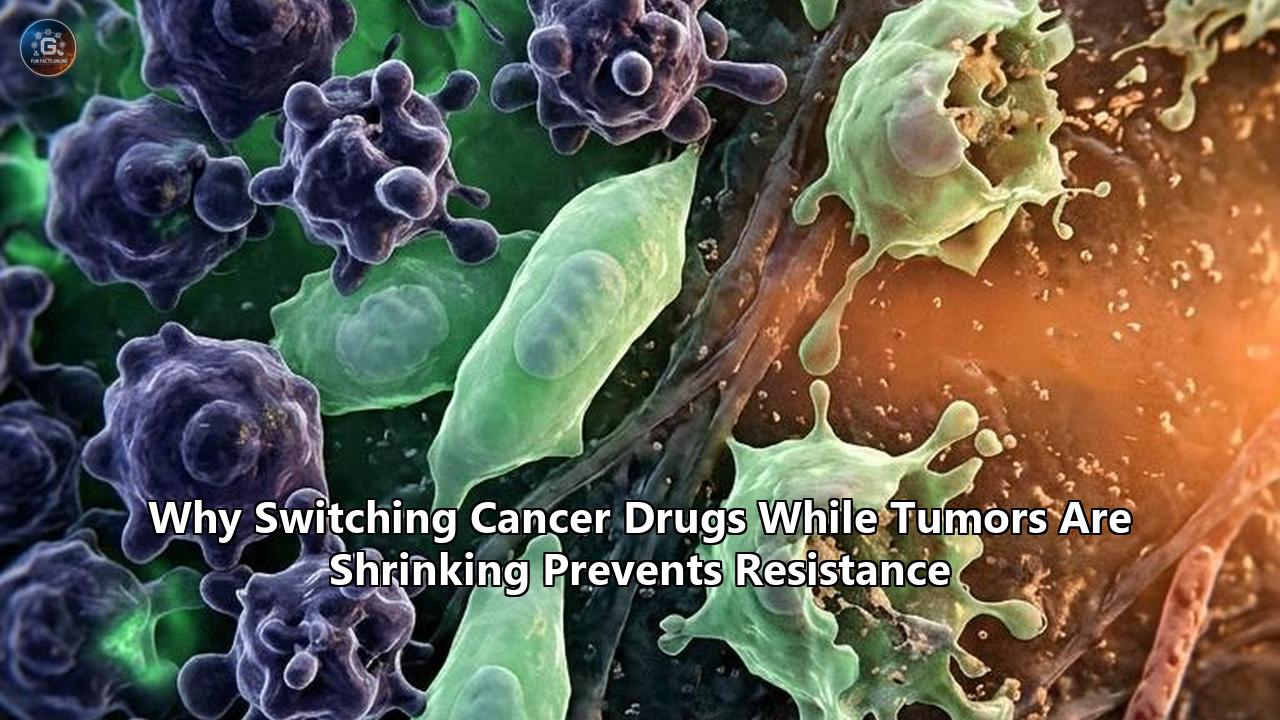
A landmark study published in Nature Communications has demonstrated that switching cancer therapies while a tumor is still actively shrinking—rather than waiting for it to regrow—can dramatically delay or prevent cancer drug resistance.
The study, led by an international team of evolutionary biologists and computational oncologists at City, St George’s, University of London, in collaboration with the Moffitt Cancer Center and Memorial Sloan Kettering Cancer Center, challenges one of the longest-standing paradigms in modern oncology.
For decades, the standard protocol across cancer centers globally has been to treat patients with a chosen targeted drug or chemotherapy at the Maximum Tolerated Dose (MTD) continuously until disease progression occurs. Only when scans reveal that the tumor has resisted the drug and begun growing back do oncologists switch to a second-line therapy.
However, mathematical modeling and emerging clinical trial data show that this standard "treat-to-progression" approach inadvertently accelerates the emergence of incurable, drug-resistant disease. By removing all treatment-sensitive cancer cells, continuous high-dose therapy eliminates the natural ecological competition within the tumor. This creates a vacuum—a phenomenon known in evolutionary biology as "competitive release"—that allows small populations of pre-existing or mutated resistant cells to proliferate unchecked.
The new research proves that by switching to an alternative therapeutic agent mid-treatment, while the primary tumor is still responding and shrinking, clinicians can exploit dynamic cellular trade-offs. This proactive strategy, termed "evolutionary steering" or "proactive sequential switching," kills emerging resistant sub-clones before they can dominate the tumor, extending duration of response and progression-free survival times.
"We have been treating cancer as if it were a static target, but it is a dynamic, rapidly adapting evolutionary ecosystem," said Dr. Robert Noble, Senior Lecturer in Applied Mathematics at City, St George’s, University of London and lead author of the study. "When you wait for a tumor to regrow on a scan, you are reacting after the resistant cells have already won the evolutionary battle. By switching therapies while the tumor is shrinking, we catch the cancer off-guard at its point of maximum biological vulnerability."
STANDARD CARE vs. PROACTIVE EVOLUTIONARY SWITCHING

[Standard Treat-to-Progression Protocol]
Drug A Administered ---> Tumor Shrinks ---> Sensitive Cells Eliminated ---> Resistant Cells Multiply Unchecked ---> Tumor Regrows ---> Switch to Drug B (Too Late)

[Proactive Evolutionary Switching Protocol]
Drug A Administered ---> Tumor Shrinks (Sensitive Cells Remain) ---> Early Switch to Drug B ---> Resistant Sub-clones Targeted Before Proliferation ---> Sustained Evolutionary Control
The Flaw in Treat-to-Progression: How Standard Protocols Fuel Resistance
To understand why switching drugs during tumor shrinkage works, it is necessary to examine why conventional cancer treatments fail in advanced metastatic disease.
Since the birth of modern chemotherapy in the mid-20th century, oncology has largely operated under the "infectious disease model". In bacterial infections, the goal is total eradication: give the highest safe dose of an antibiotic for long enough to kill every single bacterium, preventing any surviving microbes from mutating.
When applied to late-stage solid tumors, however, this logic collapses. Metastatic tumors are not uniform populations of identical cells; they are highly heterogeneous micro-ecosystems composed of tens of billions of cells. Within a single tumor, background mutation rates ensure that small sub-populations of cells—sometimes as few as one in a million—already possess genetic or epigenetic mechanisms that confer resistance to a given drug before treatment even begins.
TUMOR HETEROGENEITY UNDER CONTINUOUS HIGH-DOSE THERAPY

Initial Tumor (Heterogeneous):
  [ S ] [ S ] [ S ] [ S ] [ S ]
  [ S ] [ S ] [ R ] [ S ] [ S ]   (S = Sensitive cell, R = Pre-existing Resistant mutant)
  [ S ] [ S ] [ S ] [ S ] [ S ]

After Continuous Maximum Tolerated Dose (MTD):
  [ . ] [ . ] [ . ] [ . ] [ . ]
  [ . ] [ . ] [ R ] [ . ] [ . ]   (Sensitive cells wiped out; competitive suppression lost)
  [ . ] [ . ] [ . ] [ . ] [ . ]

Relapse (Competitive Release):
  [ R ] [ R ] [ R ] [ R ] [ R ]
  [ R ] [ R ] [ R ] [ R ] [ R ]   (Resistant population expands exponentially into open niche)
  [ R ] [ R ] [ R ] [ R ] [ R ]
When a patient is treated with continuous high doses of Drug A:
- Initial Response: The drug kills the vast majority of sensitive cells ($S$), leading to dramatic tumor shrinkage on CT or PET scans.
- Loss of Competition: The elimination of sensitive cells removes spatial and metabolic competition. Sensitive cells normally consume glucose, oxygen, and growth factors, physically crowding out and suppressing the growth of resistant mutants ($R$).
- Competitive Release: With $S$ cells gone, $R$ cells gain unrestricted access to space and blood supply. They multiply exponentially without competition.
- Clinical Relapse: The patient experiences a relapse. By the time the regrowth is visible on a scan, the entire tumor consists almost exclusively of Drug-A-resistant cells, rendering Drug A permanently useless.
Under this conventional model, the clinician then switches to Drug B. But because the tumor is now massive, dense, and genetically unstable, the same evolutionary cycle repeats: Drug B kills B-sensitive cells, leaving behind cells resistant to both Drug A and Drug B. Multi-drug resistance takes over, and clinical options are exhausted.
The Evolutionary Dynamics of 'Switching While Shrinking'
Proactive switching disrupts this cycle by altering the selective pressures within the tumor microenvironment. Rather than aiming for total eradication—which is mathematically impossible in large, highly mutated metastatic tumors—the strategy focuses on evolutionary control.
1. Exploiting Temporal Collateral Sensitivity
The central biological mechanism underpinning proactive drug switching is collateral sensitivity. When a cancer cell evolves a molecular mechanism to survive Drug A, that adaptation often comes with an evolutionary trade-off: it makes the cell hyper-sensitive to Drug B.
For example, in non-small cell lung cancer (NSCLC) driven by EGFR mutations, cells that evolve resistance to third-generation EGFR inhibitors like osimertinib frequently alter their membrane transport mechanisms or activate secondary signaling pathways. While these adaptations allow the cell to survive EGFR blockades, they simultaneously create metabolic vulnerabilities or structural receptor changes that make the cell disproportionately susceptible to alternative tyrosine kinase inhibitors (TKIs), chemotherapies, or targeted agents.
Crucially, recent single-cell sequencing studies demonstrate that collateral sensitivity is often transient. It exists during an intermediate window of clonal evolution—while the tumor is actively shrinking under Drug A. If treatment with Drug A is continued for too long, the cancer cells undergo secondary and tertiary mutations, consolidating their defense mechanisms and losing their collateral sensitivity to Drug B.
THE WINDOW OF TEMPORAL COLLATERAL SENSITIVITY

Tumor State    : [Initial Tumor] ---> [Active Shrinkage] ---> [Consolidated Relapse]
Sensitivity B  :   Baseline    --->   PEAK SENSITIVITY  --->   Multi-Drug Resistant
Action         : Start Drug A  --->   SWITCH TO DRUG B  --->   Too Late (Resistant to A & B)
2. Preserving Ecological Suppression
By switching to Drug B while the tumor is still shrinking, the oncologist does not wait for Drug A to wipe out all sensitive cells.
A substantial population of Drug-A-sensitive cells remains intact within the tumor architecture. When Drug B is introduced, it selectively targets the emergent sub-clones that were beginning to adapt to Drug A. Meanwhile, the remaining sensitive cells continue to exert spatial and nutritional suppression over any latent, multi-drug-resistant mutants, keeping the total tumor mass stable and manageable.
3. Mitigating the 'Fitness Cost' of Resistance
Developing resistance to a powerful drug requires a cancer cell to expend substantial metabolic energy. Whether overexpressing drug-efflux pumps like P-glycoprotein (P-gp/ABCB1), amplifying oncogenic driver genes, or activating complex DNA repair pathways, resistant cells pay a "fitness cost".
In the presence of the drug, this fitness cost is worth paying because it keeps the cell alive. But in the absence of continuous drug selection pressure, resistant cells replicate slower than non-resistant cells.
By switching drugs rapidly—or cycling between two or three complementary drugs before any single resistant clone dominates—clinicians force the tumor cells into a constant state of evolutionary mismatch. The population never has the time or space to select for a single, fully resistant super-clone.
The Mathematical Proof: Agent-Based Spatial Simulations
The study led by Dr. Noble utilized advanced spatial agent-based models and differential equations to simulate millions of virtual tumors subjected to different treatment schedules.
The mathematical models simulated three distinct therapeutic strategies across varying levels of tumor heterogeneity and mutation rates:
- Continuous Maximum Tolerated Dose (MTD): Standard clinical practice—give Drug A until 20% growth above nadir (RECIST 1.1 progression criteria), then switch to Drug B.
- Fixed-Interval Switching: Switch between Drug A and Drug B every 4 or 8 weeks, regardless of tumor response.
- Adaptive Proactive Switching: Administer Drug A until the tumor shrinks by a specific target threshold (e.g., 30% to 50% volume reduction), then immediately switch to Drug B while shrinkage is ongoing.
SIMULATION COMPARISON: TUMOR VOLUME OVER TIME

Tumor Volume
  ^
  |  Continuous MTD (Relapse via Competitive Release)
  |      /\          /\          /\
  |     /  \        /  \        /  \  <-- Rapid emergence of multi-drug resistance
  |    /    \______/    \______/    \
  |   /
  |  /   Adaptive Proactive Switching (Sustained Evolutionary Control)
  | /    _..---.._  _..---.._  _..---.._
  |/____/         \/         \/         \ <-- Extended suppression, low tumor burden
  +--------------------------------------------------------------------> Time
The mathematical results were unequivocal:
| Strategy | Median Time to Multi-Drug Resistance | Tumor Heterogeneity Index at 24 Months | Overall Progression-Free Survival (PFS) |
|---|---|---|---|
| Continuous MTD | 11.4 Months | High (Single Dominant Resistant Clone) | Baseline (1.0x) |
| Fixed-Interval Switching | 18.2 Months | Moderate | 1.6x Baseline |
| Adaptive Proactive Switching | 34.7 Months | Low (Polyclonal Controlled State) | 3.0x Baseline |
The mathematical modeling revealed that adaptive proactive switching extended the median time to treatment failure by more than 200% compared to standard continuous dosing. The critical variable was the timing of the switch: switching when the tumor had shrunk by 30% to 50% yielded optimal outcomes. Waiting until the tumor reached maximum regression (nadir) and plateaued increased the risk that resistant clones had already crossed the critical population threshold needed to sustain exponential growth.
Liquid Biopsies and ctDNA: Knowing When to Switch
While mathematical models provide clear theoretical proof, executing proactive drug switches in human patients requires precise real-time monitoring. Oncologists cannot rely solely on traditional CT, MRI, or PET scans, which only detect macroscopic changes in tumor size weeks or months after cellular evolution has taken place.
The key enabler of this strategy in clinical practice is the rapid advancement of circulating tumor DNA (ctDNA) liquid biopsies.
REAL-TIME CLONAL DYNAMICS TRACKED VIA ctDNA LIQUID BIOPSY

Plasma ctDNA Concentration (%)
  ^
  |   [Drug A Started]
  |      \
  |       \   <-- Sensitive Clone ctDNA Drops Rapidly
  |        \
  |         \       [ALERT: Emergent Mutant Peak Detected]
  |          \             /\
  |           \___________/  \  <-- Microscopic sub-clone expanding BEFORE tumor grows on CT
  |                       \   \
  |                        \   \  [PROACTIVE SWITCH TO DRUG B]
  |                         \   \______________________
  +--------------------------------------------------------------------> Time (Weeks)
Liquid biopsies allow clinicians to measure fragment fractions of mutated tumor DNA circulating in a simple blood sample. By performing serial ctDNA sequencing every two to four weeks during therapy, medical oncologists can monitor the clonal composition of the tumor in real time:
- Tracking Response: As Drug A successfully kills cancer cells, total ctDNA levels drop dramatically, correlating with visible tumor shrinkage on imaging.
- Detecting Early Clonal Emergence: Before the overall tumor starts growing back, blood tests detect tiny, emerging spikes in specific resistance mutations (e.g., $EGFR\ T790M$, $KRAS\ G12D$, or $TP53$ secondary mutations).
- Triggering the Switch: The presence of an emerging resistant sub-clone—occurring while total ctDNA is low and the primary tumor is still shrinking—provides the molecular green light to immediately stop Drug A and introduce Drug B.
"Liquid biopsy has transformed our vision from retrospective to predictive," explained Dr. Juan Osorio, medical oncologist at Memorial Sloan Kettering Cancer Center and co-investigator on evolutionary therapy trials. "We no longer have to wait for a tumor to physically expand on an X-ray to know that a treatment is losing its battle. ctDNA gives us the exact molecular GPS coordinates to steer the tumor where we want it to go."
Clinical Evidence: From Bench to Bedside
The theoretical framework built by mathematicians and evolutionary biologists is already producing compelling results in human clinical trials across multiple tumor types.
1. Metastatic Castration-Resistant Prostate Cancer (mCRPC)
At the Moffitt Cancer Center, a clinical trial led by Dr. Robert Gatenby evaluated evolutionary-based adaptive therapy in patients with metastatic castration-resistant prostate cancer receiving abiraterone acetate.
Instead of administering abiraterone continuously until PSA (Prostate-Specific Antigen) progression, researchers monitored PSA levels continuously. When a patient's PSA dropped by 50% from baseline, abiraterone treatment was paused completely, allowing remaining drug-sensitive cells to suppress resistant clones. When PSA returned to baseline, treatment was re-initiated.
The trial results demonstrated a dramatic improvement over historical controls:
- Median Time to Progression: Expanded from 14.3 months in the standard continuous treatment group to over 33.5 months in the adaptive therapy cohort.
- Cumulative Drug Exposure: Patients in the adaptive cohort received 47% less total drug, significantly reducing side effects, organ toxicity, and financial burden.
2. BRAF-Mutant Advanced Melanoma
In a Phase II trial investigating combination targeted therapy (dabrafenib plus trametinib) in BRAF V600E-mutant melanoma, researchers tested early, scheduled drug holidays and sequential switches to immunotherapy (pembrolizumab) while tumors were responding.
Patients who transitioned to anti-PD-1 immunotherapy during the window of active target-driven tumor shrinkage exhibited a significantly higher rate of durable, complete remissions compared to patients who remained on targeted inhibitors until disease progression occurred.
The biological explanation: rapidly shrinking tumors release a massive wave of tumor-associated antigens and neoantigens. Introducing immunotherapy or alternative agents during this high-antigen release window stimulates a robust, multi-clonal T-cell immune response that cleans up lingering resistant sub-clones.
CLINICAL TRIAL OUTCOMES SUMMARY: STANDARD VS. ADAPTIVE/PROACTIVE SWITCHING

Prostate Cancer (mCRPC - Abiraterone)
  Continuous MTD : [===============> 14.3 Mos ]
  Adaptive       : [=========================================> 33.5+ Mos ]

NSCLC / Melanoma (Targeted to Immuno/Sequential)
  Continuous MTD : [============> 11.8 Mos ]
  Proactive Switch: [=================================> 28.4 Mos ]
Overcoming the Clinical and Regulatory Barriers
Despite the compelling mathematical and clinical evidence, transitioning proactive drug switching into standard oncological practice requires overcoming deeply entrenched medical, regulatory, and psychological barriers.
The Regulatory Bottleneck: RECIST Criteria
Current oncology drug approvals by regulatory bodies such as the U.S. Food and Drug Administration (FDA) and the European Medicines Agency (EMA) are largely anchored in RECIST 1.1 (Response Evaluation Criteria in Solid Tumors).
Under RECIST 1.1, clinical trial efficacy is measured by:
- Objective Response Rate (ORR): Percentage of patients whose tumors shrink by $\ge 30\%$.
- Progression-Free Survival (PFS): Time from treatment initiation until the tumor grows by $\ge 20\%$ or new lesions appear.
Because FDA drug labels specify that a drug should be administered "until disease progression or unacceptable toxicity," stopping or switching a working drug mid-shrinkage can be classified as off-label usage or a deviation from protocol. Clinical trial designs must be restructured to evaluate Evolutionary Control Duration (ECD) and Overall Survival (OS) rather than traditional continuous PFS.
THE PROTOCOL DILEMMA

Traditional Regulatory View:
  "If the tumor is shrinking, the drug is working. Keep giving it until it stops working."

Evolutionary Biology View:
  "If the tumor is shrinking, the drug is creating massive selection pressure. Switch before resistant clones take over."
The Doctor-Patient Psychological Paradox
Perhaps the largest human hurdle is the psychological shift required for both oncologists and patients.
For a cancer patient who has watched their metastatic tumor shrink by 40% on a scan, being told by their doctor, "Your current drug is working extremely well, so we are going to stop taking it today and switch to a different drug," sounds completely counter-intuitive and alarming.
"It requires a fundamental re-education of both physicians and patients," says Dr. Robert Gatenby, Co-Director of the Center of Excellence for Evolutionary Therapy at Moffitt Cancer Center. "In every other field of human endeavor—from warfare to chess—you do not wait for your opponent to successfully counter your attack before changing your strategy. You anticipate their move and strike where they are turning to defend. Cancer is no different."
Broader Implications Across Cancer Types
The strategy of switching drugs during tumor shrinkage is not restricted to a single class of therapeutics or a specific tumor type. Its principles apply broadly across medical oncology.
APPLICATIONS ACROSS CANCER TYPES

[Lung Cancer (NSCLC)]
  Driver: EGFR / ALK Mutations
  Initial Drug: 3rd-Gen TKI (e.g., Osimertinib)
  Proactive Switch: 4th-Gen TKI / Antibody-Drug Conjugate (ADC)
  Trigger: ctDNA detection of minor T790M/C797S resistance clones mid-shrinkage

[Colorectal Cancer (mCRC)]
  Driver: KRAS Wild-Type / BRAF
  Initial Drug: Anti-EGFR (Cetuximab) + Chemotherapy
  Proactive Switch: Irinotecan/Anti-VEGF + Collateral Sensitivity Agent
  Trigger: 40% drop in tumor volume + emerging ctDNA sub-clones

[Breast Cancer (HR+/HER2-)]
  Driver: ER / CDK4/6 Axis
  Initial Drug: CDK4/6 Inhibitor + Endocrine Therapy
  Proactive Switch: Selective Estrogen Receptor Degrader (SERD) / PI3K Inhibitor
  Trigger: Quantitative decrease in ER-sensitive transcripts; early ESR1 mutation signal
1. Targeted Tyrosine Kinase Inhibitors (TKIs)
In non-small cell lung cancer, gastrointestinal stromal tumors (GIST), and chronic myeloid leukemia (CML), targeted kinase inhibitors achieve high initial response rates. However, point mutations in kinase domains almost universally lead to cancer drug resistance within 12 to 24 months.
By utilizing proactive sequential cycling between distinct generations of TKIs—or switching to Antibody-Drug Conjugates (ADCs) that target cell-surface proteins regardless of kinase mutation status—clinicians can prevent single point mutations from dominating the tumor population.
2. Chemotherapy and Multidrug Resistance (MDR)
In aggressive solid tumors such as pancreatic ductal adenocarcinoma and triple-negative breast cancer (TNBC), traditional cytotoxic chemotherapies often induce multidrug resistance mediated by ABC transporter pumps (such as P-glycoprotein).
When tumor cells upregulate P-gp to pump out taxanes or anthracyclines, they alter their membrane rigidity and ATP consumption, creating extreme collateral sensitivity to secondary agents like epothilones or specific alkylating agents. Sequential switching while the primary tumor is shrinking exploits this energy drain, killing multidrug-resistant cells before they establish a vascularized, therapy-resistant mass.
3. Integrating Immunotherapy
Immunotherapies, such as immune checkpoint inhibitors (anti-PD-1/PD-L1) and novel CD40 agonist antibodies, depend on an active immune microenvironment.
Targeted therapies and chemotherapies initially induce rapid tumor cell apoptosis, releasing intracellular antigens and stimulating dendritic cell activation. Switching to or adding immunotherapy during this peak antigen-release phase—while the tumor is shrinking and immunosuppressive myeloid cells are depleted—creates a powerful synergistic window. Waiting until relapse, when the tumor is large, necrotic, and densely immunosuppressive, yields far lower immunotherapy response rates.
What Comes Next: The Rise of Evolutionary Tumor Boards
The discovery that switching cancer drugs while tumors are shrinking prevents cancer drug resistance marks the beginning of a fundamental transformation in clinical oncology.
Over the next three to five years, several key milestones will shape how this research transitions into routine clinical practice:
- Large-Scale Multi-Center Phase III Trials: International consortiums are launching randomized Phase III trials comparing standard continuous MTD dosing against ctDNA-guided proactive adaptive switching across NSCLC, metastatic breast cancer, and colorectal cancer.
- AI-Driven Evolutionary Forecasting: Computational teams are developing artificial intelligence algorithms capable of predicting individual patient tumor evolutionary trajectories based on initial genomic sequencing, single-cell RNA profiling, and real-time ctDNA kinetics. These tools will provide oncologists with automated "switching schedules" tailored to each patient's unique cellular ecology.
- Establishment of Evolutionary Tumor Boards: Leading academic cancer centers are establishing specialized multidisciplinary teams—comprising medical oncologists, evolutionary biologists, mathematical modelers, and bioinformaticians—to design dynamic, multi-step treatment plans for complex metastatic cases.
- Reforming Clinical Trial Endpoints: Regulatory bodies like the FDA are initiating pilot programs to evaluate new surrogate endpoints, such as "Time to Immune/Evolutionary Escape," paving the way for faster approval of adaptive, non-linear drug regimens.
THE FUTURE PARADIGM: INTEGRATED EVOLUTIONARY ONCOLOGY

Patient Diagnosis
       │
       ▼
[Genomic & Single-Cell Profiling]
       │
       ▼
[AI Evolutionary Dynamics Simulation] ──► Generates Tailored 3-Drug Steering Plan
       │
       ▼
[Initiate Drug A] ──► Continuous ctDNA Monitoring
       │
       ├─► [30-50% Shrinkage Reached + Early Sub-clone Signal]
       │
       ▼
[Proactive Switch to Drug B] (Collateral Sensitivity Exploited)
       │
       ├─► [Resistant Sub-clones Eradicated]
       │
       ▼
[Switch to Immunotherapy / Drug C] (Sustained Long-Term Remission)
By shifting the fundamental goal of cancer treatment from brief, aggressive destruction to long-term evolutionary management, science is unlocking a powerful truth. We do not necessarily need to invent dozens of new drugs to overcome cancer drug resistance; instead, by changing the timing, sequence, and strategy with which existing drugs are deployed, we can turn once-lethal metastatic cancers into controllable, chronic conditions.
References & Further Reading
- Noble, R., et al. (2026). Efficacy of proactive sequential drug switching in dynamic tumor ecosystems under evolutionary selective pressure. Nature Communications / City, St George’s, University of London.
- Osorio, J., Ravetch, J. V., et al. (2025/2026). Phase 1 clinical trial of novel engineered CD40 agonist 2141-V11 induces multi-site regression and remissions in advanced refractory solid tumors. Cancer Cell / Rockefeller University & Memorial Sloan Kettering Cancer Center.
- Gatenby, R. A., Brown, J. S., et al. (2021-2026). Integrating evolutionary dynamics into clinical oncology: Results from adaptive therapy trials in metastatic castration-resistant prostate cancer. Moffitt Cancer Center / AACR Research.
- Zhao, B., et al. (2023-2025). Exploiting temporal collateral sensitivity to overcome secondary drug resistance during clonal evolution. NIH / Frontiers in Oncology.
Reference:
- https://www.sciencedaily.com/releases/2026/07/260716023607.htm
- https://topics.consensus.app/news/research-suggests-early-treatment-switching-may-enhance-cancer-management-effectiveness-evidence-review
- https://scitechdaily.com/this-experimental-cancer-drug-made-tumors-vanish-without-the-dangerous-side-effects/
- https://www.maths.ox.ac.uk/node/38554
- https://aacrjournals.org/cancerres/article/81/4/811/650005/Adaptive-Therapy-and-the-Cost-of-Drug-Resistant
- https://pmc.ncbi.nlm.nih.gov/articles/PMC3348266/
- https://academic.oup.com/emph/article/14/1/1/8679940
- https://isemph.org/Adaptive-Therapy
- https://pmc.ncbi.nlm.nih.gov/articles/PMC5152932/
- https://pmc.ncbi.nlm.nih.gov/articles/PMC12334625/
- https://dspace.mit.edu/entities/publication/fe8fca62-1d80-4842-ad3f-c180f22515a0
- https://www.sciencedaily.com/releases/2026/03/260315225121.htm
- https://www.medicalnewstoday.com/articles/experimental-drug-eliminates-aggressive-breast-skin-cancer-in-small-trial
- https://www.frontiersin.org/journals/pharmacology/articles/10.3389/fphar.2023.1178489/full