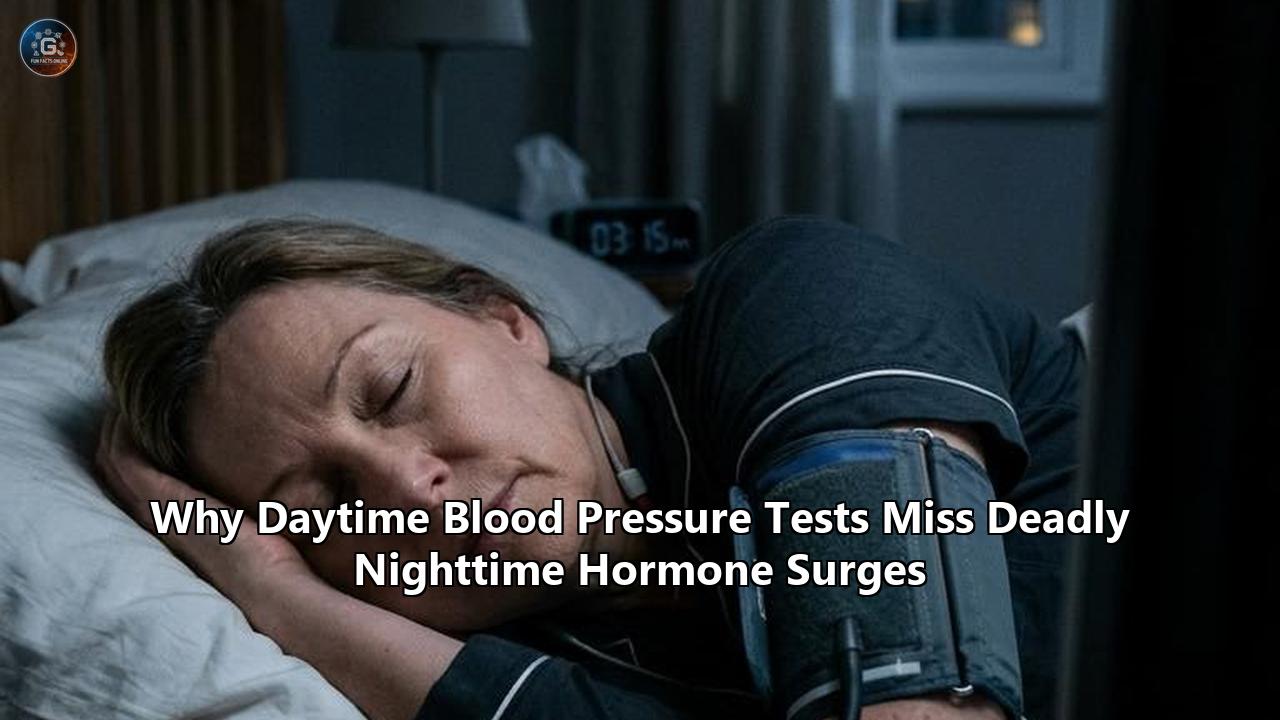
The routine daytime medical examination rests on an unexamined, century-old premise: that the physiological state captured while a patient sits awake in an examination room mirrors the biology that dictates their survival. On August 26, 2026, a multinational study published in Science Translational Medicine dismantled that assumption.
Led by researchers from the University of Bristol, the University of Manchester, and the University of Bergen, the investigation utilized a wearable micro-sampling device called U-RHYTHM to continuously track adrenal hormone concentrations in real-world environments over 24-hour cycles. The data revealed that primary aldosteronism—a condition long mischaracterized as a rare oddity but now recognized to afflict up to 20% of people with hypertension—operates primarily in the dark. Rather than exhibiting a steady, uniform elevation throughout the day, the adrenal glands of affected patients unleash episodic, violent bursts of aldosterone predominantly during sleep.
Between these nocturnal eruptions, circulating steroid concentrations frequently plummet back into the normal range. When these patients sit under the fluorescent lights of a clinic at 10:00 AM to give blood or have their brachial blood pressure measured with a standard cuff, their profiles often appear unremarkable. Yet during sleep, unchecked hormone activity drives sustained vasoconstriction, renal fluid retention, and dangerous nighttime blood pressure surges that quietly destroy the cerebral, renal, and cardiac vasculature.
The findings illuminate a massive structural failure in cardiovascular medicine. By relying on snapshot measurements taken during working hours, modern diagnostics systematically overlook the nocturnal endocrine drivers of cardiovascular disease, leaving millions of patients exposed to preventable strokes, heart attacks, and end-stage kidney failure.
The 130-Year Blind Spot: The Structural Flaws of Clinic Blood Pressure
Cardiovascular diagnostics remains tethered to a tool conceived in the nineteenth century. In 1896, Italian physician Scipione Riva-Rocci introduced the mercury sphygmomanometer, establishing the cuff-based, daytime blood pressure reading as the foundational metric of arterial health. For more than a century, clinical protocols have treated blood pressure as a relatively static variable, assuming that an isolated resting measurement between 9:00 AM and 5:00 PM reliably indexes an individual's vascular risk.
Human hemodynamics is not static. It operates under strict circadian control governed by the suprachiasmatic nucleus (SCN) of the hypothalamus and peripheral tissue molecular clocks. In a healthy adult, blood pressure follows a distinct 24-hour sinusoidal wave:
- Waking hours are marked by higher, fluctuating arterial pressure driven by physical exertion, mental stress, and sympathetic nervous system tone.
- Upon entering sleep, blood pressure naturally drops by 10% to 20% compared to daytime averages—a physiological decline termed nocturnal "dipping."
- This nighttime dip serves as a mandatory rest period for the circulatory system, relieving mechanical tension on the endothelial lining, allowing the left ventricle to decompress, and enabling vascular repair mechanisms to operate under low shear stress.
When that nocturnal reduction is blunted or inverted, the vascular tree endures continuous, uninterrupted barotrauma. Decades of prospective observational data—including landmark findings from the International Database on Ambulatory Blood Pressure in Relation to Cardiovascular Outcomes (IDACO) and the Ohasama Study—have repeatedly demonstrated that nocturnal blood pressure is a far stronger predictor of cardiovascular events, cognitive decline, and all-cause mortality than any measurement taken in a physician's office.
The clinical reality is defined by two deceptive phenotypes:
+-----------------------------+------------------------------------+------------------------------------+
|                             | Office BP Normal (<130/80 mmHg)   | Office BP High (≥130/80 mmHg)      |
+-----------------------------+------------------------------------+------------------------------------+
| Nighttime BP Normal         | Normotensive                       | White-Coat Hypertension            |
| (<110/65 mmHg)              | (Low risk)                         | (Often overtreated)                |
+-----------------------------+------------------------------------+------------------------------------+
| Nighttime BP Elevated       | Masked Nocturnal Hypertension      | Sustained Hypertension             |
| (≥120/70 mmHg)              | (Extreme risk; rarely diagnosed)   | (Recognized risk)                  |
+-----------------------------+------------------------------------+------------------------------------+
Masked nocturnal hypertension represents one of the most perilous diagnostic vacuums in modern practice. An individual can register an optimal office reading of 118/76 mmHg and receive routine reassurance from their physician, yet experience sustained nocturnal readings exceeding 140/90 mmHg while asleep. The patient is categorized as healthy precisely when their internal organs are sustaining severe mechanical damage. Until now, the primary barrier to addressing this crisis was mechanistic: clinicians could observe that nighttime blood pressure failed to drop on 24-hour ambulatory cuffs, but they lacked the diagnostic resolution to explain why the nocturnal physiology went awry in the first place.
Inside the U-RHYTHM Discovery: The Architecture of Nocturnal Endocrine Spikes
The trial published in Science Translational Medicine provided the missing mechanistic link. Researchers led by Dr. Thomas Upton, Professor Stafford Lightman, and Dr. Eder Zavala set out to observe steroid hormone secretion as a continuous dynamic movie rather than a single frozen frame.
Conventional venous blood collection is fundamentally incapable of capturing dynamic endocrine changes across normal daily life. Cannulating an inpatient every fifteen minutes disrupts sleep architecture, triggers sympathetic activation, and artificially alters the hypothalamic-pituitary-adrenal (HPA) axis.
To overcome this, the European consortium developed and deployed the U-RHYTHM system: a non-invasive, lightweight wearable monitor worn around the waist that extracts interstitial fluid micro-samples from subcutaneous tissue every 20 minutes across 24 consecutive hours.
The trial analyzed 60 patients evaluated across specialized endocrine and hypertension centers in Bristol, Bergen, Stockholm, and Athens. Using high-resolution liquid chromatography-tandem mass spectrometry (LC-MS/MS) paired with computational mathematical rhythmometry, the team mapped 24-hour concentrations of multiple adrenal steroids simultaneously, including:
- Aldosterone
- 18-hydroxycortisol
- 18-oxocortisol
- Cortisol
- Corticosterone
24-Hour Steroid Flux Profile (Standardized Representation)

Circulating
Hormone Level
   ^
   |                           * * * Nocturnal Surges
   |                          *     *   (Sleep Phase)
   |                         *       *
   |        Daytime Burst    *       *
   |           * *           *       *
Cutoff ----+--*---*---------*---------*----------------- Diagnostic Threshold
   |      *       *        *           *
   |     *         *      *             *
   |    *           * * **               * *
   +---------------------------------------------------> Time
       08:00       14:00      22:00       04:00
      (Clinic                  (Sleep)     (Early Surge)
       Window)
The mathematical reconstruction yielded an unexpected physiological profile. Scientists had long presumed that in primary aldosteronism—where the adrenal cortex produces excess aldosterone independently of the renin-angiotensin cascade—the hormone is continuously, monotonically overproduced. The U-RHYTHM data demonstrated that hormone production follows a highly volatile, pulsatile rhythm.
Patients exhibited intense bursts of aldosterone during the day, but the most sustained and pronounced elevations occurred overnight during sleep. The adrenal tissue fired off nocturnal steroid surges that remained active for hours while patients were resting in their own beds.
Critically, between these pulsatile surges, circulating concentrations of aldosterone dropped precipitously. In multiple patients with severe, confirmed primary aldosteronism, interstitial hormone levels fell well beneath the clinical thresholds used to diagnose the condition during daytime morning hours.
"Primary aldosteronism is an important cause of high blood pressure and the most common cause of secondary hypertension we see in our blood pressure clinic," observed Dr. Thomas Upton, Clinical Research Fellow at the University of Bristol. "However, due to the way hormones change during the day and the current complexity of the diagnostic process, diagnosis is often delayed or never made at all."
Dr. Eder Zavala, UKRI Future Leader Fellow at the University of Manchester, emphasized the shift in perspective: "By continuously monitoring hormones over 24 hours, we were able to reveal a previously hidden pattern of nocturnal hormone bursts. This gives us a much clearer understanding of the disease and could ultimately help doctors detect it earlier and treat patients more effectively."
The physiological proof of causality arrived through surgical follow-up. In patients diagnosed with unilateral aldosterone-producing adenomas (Conn's adenomas), the abnormal nocturnal pulses completely vanished after surgical adrenalectomy. The midnight hormone surges were abolished, daytime levels stabilized, and the patients' nocturnal blood pressure patterns normalized. The pathological driver was directly tied to the nocturnal secretory activity of the excised adrenal tissue.
The Molecular Cascade: How Sleep-Bound Hormones Trigger Nocturnal Damage
The biological rationale for why nocturnal hormone surges are disproportionately damaging lies in the molecular machinery of the distal nephron and vascular smooth muscle.
+--------------------------------------------------------------------------------+
| Nocturnal Adrenal Pulse (Aldosterone + 18-hydroxycortisol + Cortisol)          |
+--------------------------------------------------------------------------------+
                                       │
                                       ▼
+--------------------------------------------------------------------------------+
| Renal Principal Cell: Mineralocorticoid Receptor (MR) Translocation            |
| Transcription of Serum and Glucocorticoid-Regulated Kinase 1 (SGK1)            |
+--------------------------------------------------------------------------------+
                                       │
                                       ▼
+--------------------------------------------------------------------------------+
| Phosphorylation & Inhibition of Nedd4-2 Ubiquitin Ligase                       |
| Membrane Retention of Epithelial Sodium Channels (ENaC) & Na+/K+ ATPase        |
+--------------------------------------------------------------------------------+
                                       │
                                       ▼
+--------------------------------------------------------------------------------+
| Unchecked Renal Sodium & Fluid Reabsorption During Sleep                       |
| Suppression of Nocturnal Pressure Natriuresis                                 |
+--------------------------------------------------------------------------------+
                                       │
                                       ▼
+--------------------------------------------------------------------------------+
| Plasma Volume Expansion + Endothelin-1 Upregulation + Vascular Stiffness       |
+--------------------------------------------------------------------------------+
                                       │
                                       ▼
+--------------------------------------------------------------------------------+
| Severe Nighttime Blood Pressure Surges, Non-Dipping, and Reverse Dipping       |
+--------------------------------------------------------------------------------+
Under physiological conditions, aldosterone binds to the mineralocorticoid receptor (MR) in the cytoplasm of epithelial principal cells located within the late distal convoluted tubule and the cortical collecting duct of the kidney. Upon ligand binding, the aldosterone-MR complex dissociates from molecular chaperones, homodimerizes, and translocates into the nucleus. There, it acts as a transcription factor, driving the expression of several transport-modulating proteins, most prominently serum and glucocorticoid-regulated kinase 1 (SGK1).
SGK1 phosphorylates the ubiquitin-protein ligase Nedd4-2. In its unphosphorylated state, Nedd4-2 targets the epithelial sodium channel (ENaC) for ubiquitination, internalization, and proteasomal degradation. Once SGK1 inactivates Nedd4-2, ENaC subunits remain locked in the apical plasma membrane. Concurrently, aldosterone drives the transcription and insertion of basolateral Na+/K+-ATPase pumps.
The physiological result is an aggressive reabsorption of luminal sodium back into peritubular capillaries, with potassium and hydrogen ions excreted in exchange. Water passively follows sodium through transcellular and paracellular osmotic gradients, expanding circulating intravascular fluid volume.
During waking hours, when the human body is upright, gravitational pooling of blood in lower extremities, ongoing insensible water loss, and upright hemodynamic forces partially offset fluid overload. Furthermore, healthy kidneys engage "pressure natriuresis": if systemic arterial pressure rises, renal perfusion pressure climbs, triggering an adaptive decrease in tubular sodium reabsorption to shed volume and lower pressure back to baseline.
During recumbency and sleep, this regulatory balance collapses under the weight of nocturnal hormone spikes:
- Fluid Redistribution: Lying flat redistributes venous blood from the lower extremities to the central circulatory compartment, suddenly boosting venous return, end-diastolic cardiac filling, and stroke volume.
- Defective Pressure Natriuresis: In primary aldosteronism, autonomous nocturnal aldosterone secretion locks ENaC open right when the kidney needs to excrete excess volume. The expected nocturnal pressure natriuresis fails.
- Endothelial Hyperreactivity: Beyond the kidney, aldosterone acts directly on mineralocorticoid receptors in vascular smooth muscle cells and endothelial tissue. It stimulates the local generation of reactive oxygen species (ROS) via NADPH oxidase activation, decouples endothelial nitric oxide synthase (eNOS), and upregulates endothelin-1 (ET-1) receptors.
- Vascular Tone Inversion: Instead of relaxing into parasympathetic-mediated vasodilation during deep, slow-wave sleep, resistance arteries constrict.
This toxic confluence—hypervolemia crashing into rigid, constricting systemic arteries—forces the cardiovascular system to produce acute nighttime blood pressure surges simply to drive renal filtration. What should be an eight-hour period of metabolic recovery transforms into an extended hypertensive crisis.
The Diagnostic Mirage: Why Morning Blood Testing Misses the Disease
The study's findings directly challenge current international screening guidelines for endocrine hypertension. According to clinical consensus statements from the Endocrine Society, the American Heart Association (AHA), and the European Society of Hypertension (ESH), screening for primary aldosteronism relies almost exclusively on the morning Aldosterone-to-Renin Ratio (ARR).
The established testing protocol dictates:
- The patient must be out of bed for at least two hours.
- The sample must be collected between 8:00 AM and 10:00 AM.
- The patient must remain seated for 5 to 15 minutes before venipuncture.
- Confounding antihypertensive medications—such as spironolactone, eplerenone, beta-blockers, ACE inhibitors, and angiotensin receptor blockers (ARBs)—must be washed out over 2 to 6 weeks.
The empirical data from the U-RHYTHM trial exposes why this testing sequence generates false-negative results.
Human hormone release is inherently ultradian and episodic. The adrenal cortex does not secrete aldosterone in a smooth, continuous flow. The data revealed that in patients with primary aldosteronism, aldosterone is released in discrete bursts characterized by rapid secretory peaks followed by prolonged valleys.
Because clinical guidelines mandate morning testing, physicians are sampling an arbitrary point on a dynamic curve. If the morning blood draw happens to coincide with a post-surge trough, the plasma aldosterone concentration may fall well below the conventional diagnostic threshold (often set at 10 to 15 ng/dL or 280 to 420 pmol/L). When the laboratory runs the test, the resulting ARR appears reassuringly normal.
Snapshot Testing vs. Continuous Reality

Single Morning Venipuncture (09:00 AM):
[Blood Draw] ───> Aldosterone: 8.2 ng/dL (Normal Range)
                  Renin: Suppressed
                  Result: NEGATIVE / INCONCLUSIVE
                  Outcome: Patient dismissed; disease advances.

Continuous 24-Hour Micro-dialysis:
[09:00 AM]    ───> Aldosterone: 8.2 ng/dL  (Trough)
[02:00 PM]    ───> Aldosterone: 16.5 ng/dL (Daytime spike)
[08:00 PM]    ───> Aldosterone: 11.1 ng/dL (Moderate)
[01:00 AM]    ───> Aldosterone: 34.8 ng/dL (Nocturnal burst)
[03:40 AM]    ───> Aldosterone: 42.1 ng/dL (Peak nocturnal surge)
                  Result: OVERWHELMINGLY POSITIVE
                  Outcome: Correct identification of hyperaldosteronism.
The issue is compounded by the physiology of plasma renin. In primary aldosteronism, the chronic volume expansion and sodium retention downregulate renin synthesis by juxtaglomerular cells in the renal afferent arterioles. Suppressed renin is the clinical hallmark of the disease.
However, when a patient presents with an undetectable plasma renin concentration alongside a low or borderline-normal spot aldosterone reading (due to an uncaptured diurnal trough), clinicians frequently dismiss the result as an ambiguous artifact, labeling it "low-renin essential hypertension."
Professor Stafford Lightman, co-author of the study and professor of medicine at the University of Bristol, framed the systemic dilemma clearly: "The findings suggest that clinicians may need to rethink how they look for the disorder, which the Endocrine Society clinical practice guidelines now recommend should be considered for all people with hypertension. Future diagnosis could move away from single time point blood tests and towards tracking the body's hormone rhythms over time, particularly the overnight patterns that appear to hold crucial clues to disease."
The reliance on single-point testing has created a healthcare system where fewer than 2% to 3% of patients eligible for primary aldosteronism screening are ever tested. Millions of individuals are cycled through escalating doses of three, four, or five generic antihypertensives—calcium channel blockers, ACE inhibitors, and thiazide diuretics—none of which directly target the uncontrolled nocturnal mineralocorticoid receptor activation driving their arterial destruction.
The Organ-Targeted Violence of Nocturnal Blood Pressure Surges
When nocturnal hormone surges abolish normal sleep-time hemodynamics, the consequences extend far beyond elevated numbers on an ambulatory cuff. The clinical presentation splits into several dangerous dipping profiles, each with distinct prognostic implications:
Hemodynamic Dipping Classifications

Dipper (Normal):
Daytime BP:   130 mmHg  ───────────────┐
Nighttime BP: 110 mmHg                 └──> 10% to 20% decline (Physiological protection)

Non-Dipper:
Daytime BP:   130 mmHg  ────────┐
Nighttime BP: 122 mmHg          └──> 0% to 10% decline (2-fold elevation in CV mortality)

Reverse Dipper / Riser:
Daytime BP:   130 mmHg  ──────┐
Nighttime BP: 142 mmHg        └────> BP increases during sleep (Highest mortality & stroke risk)

Extreme Dipper:
Daytime BP:   130 mmHg  ──────────────────────┐
Nighttime BP: 95 mmHg                         └─> >20% decline (Increased risk of hypoperfusion stroke)
The clinical evidence demonstrating the toxicity of non-dipping and riser patterns is clear. In the Ambulatory Blood Pressure Collaboration in Patients With Hypertension (ABC-H) meta-analysis—which pooled 17,312 hypertensive patients across three continents—researchers evaluated the precise cardiovascular risks tied to nocturnal blood pressure patterns.
After adjusting for daytime and average 24-hour systolic blood pressure, patients categorized as reverse dippers exhibited an 89% increased risk of stroke (hazard ratio [HR]: 1.89; 95% confidence interval [CI]: 1.25–2.87) and a 57% increased risk of coronary heart disease events (HR: 1.57; 95% CI: 1.10–2.24) compared to normal dippers. All-cause mortality in the riser group climbed by 41% to 56% across multiple models.
The physical mechanics of arterial damage explain why nocturnal hypertension accelerates vascular collapse:
1. Cerebral Microvascular Shearing and Silent Infarctions
The human brain is a low-impedance organ receiving approximately 15% of total cardiac output. Cerebral arterioles rely on autoregulation to keep capillary beds shielded from pressure extremes. During sleep, autoregulatory tone adapts to anticipated lower perfusion pressures.
When sudden nighttime blood pressure surges collide with this relaxed vascular bed, the high pulsatile energy transmits deep into fragile penetrating arterioles feeding the subcortical white matter and basal ganglia. This recurring hydraulic force damages cerebral vascular smooth muscle, ruptures local tight junctions, and provokes blood-brain barrier leakage.
The consequences are observable on brain MRI: extensive white matter hyperintensities (leukoaraiosis), silent lacunar infarctions, and cerebral microbleeds. Longitudinal follow-up reveals that patients with nocturnal non-dipping score significantly lower on cognitive assessments over five- to ten-year spans, displaying an accelerated trajectory toward vascular dementia.
2. Disproportionate Left Ventricular Hypertrophy (LVH)
Left ventricular mass index (LVMI) does not correlate linearly with daytime clinic readings; it correlates directly with nocturnal pressure loads. While a patient sleeps, cardiac output should decrease alongside peripheral resistance, allowing the myocardium to lower its oxygen consumption.
In the presence of nocturnal aldosterone surges, persistent volume overload forces the left ventricle to contract against intense peripheral afterload throughout the night. The myocyte response is concentric hypertrophy: walls thicken, collagen matrix deposition increases, and interstitial fibrosis accelerates.
Hypertrophied left ventricles lose their compliance, leading directly to heart failure with preserved ejection fraction (HFpEF)—a clinical syndrome notoriously resistant to conventional therapies, marked by high hospital readmission rates and elevated cardiovascular mortality.
3. Accelerated Glomerular Sclerosis and Proteinuria
The kidney is both perpetrator and target of nocturnal mineralocorticoid excess. Persistent hyperaldosteronism induces efferent arteriolar vasoconstriction far exceeding afferent arteriolar constriction. This imbalance drives intraglomerular capillary hypertension.
The delicate slit diaphragms of podocytes stretch under mechanical pressure, leading to progressive podocyte detachment and effacement. Clinically, this is reflected by early microalbuminuria, which inexorably transitions to overt macroproteinuria.
As the basement membrane breaks down, glomerular sclerosis spreads, leading to nephron loss and an accelerated decline in estimated glomerular filtration rate (eGFR). The resulting chronic kidney disease further impedes the body's ability to excrete sodium, forming a destructive physiological feedback loop.
Sleep Fragmentation, Obstructive Apnea, and Autonomic Feedback Loops
The physiological damage caused by nocturnal hormone surges does not occur in an isolated endocrine silo; it intersects aggressively with sleep disorders, creating an escalating systemic feedback loop.
Obstructive Sleep Apnea (OSA) is present in over 70% of patients with resistant hypertension, and its correlation with primary aldosteronism is exceptionally strong. For years, clinicians assumed this comorbidity was merely the shared consequence of common demographic factors, such as age and obesity. Molecular and hemodynamic research paints a very different picture: the relationship is bidirectionally causal.
+--------------------------------------------------------------------------------+
| Autonomous Nocturnal Aldosterone Secretion                                     |
+--------------------------------------------------------------------------------+
                                       │
                                       ▼
+--------------------------------------------------------------------------------+
| Renal Sodium & Water Retention                                                 |
+--------------------------------------------------------------------------------+
                                       │
                                       ▼
+--------------------------------------------------------------------------------+
| Nocturnal Recumbency: Rostral Fluid Shift (Legs to Pharyngeal Tissues)        |
+--------------------------------------------------------------------------------+
                                       │
                                       ▼
+--------------------------------------------------------------------------------+
| Pharyngeal Edema & Upper Airway Caliber Narrowing                              |
+--------------------------------------------------------------------------------+
                                       │
                                       ▼
+--------------------------------------------------------------------------------+
| Repeated Upper Airway Collapse (Apneas & Hypopneas)                            |
+--------------------------------------------------------------------------------+
                                       │
                                       ▼
+--------------------------------------------------------------------------------+
| Hypoxia & Hypercapnia Trigger Carotid Chemoreceptors                           |
+--------------------------------------------------------------------------------+
                                       │
                                       ▼
+--------------------------------------------------------------------------------+
| Acute Sympathetic Nervous System (SNS) Storm & Catecholamine Surges            |
+--------------------------------------------------------------------------------+
                                       │
                                       ▼
+--------------------------------------------------------------------------------+
| Peripheral Vasoconstriction & Violent Spike in Nocturnal Blood Pressure        |
+--------------------------------------------------------------------------------+
                                       │
                                       ▼
+--------------------------------------------------------------------------------+
| Cortisol/ACTH Release & Secondary Adrenal Stimulation (Amplifies Cycle)        |
+--------------------------------------------------------------------------------+
When a patient lies down, gravity ceases to pool fluid in the interstitial spaces of the calves and thighs. In an individual with normal fluid volume, this fluid redistribution is handled easily by the right heart and pulmonary circulation. But in a patient whose distal tubules have been hoarding sodium and water all day due to hyperaldosteronism, as much as 1.5 liters of fluid shifts rostrally into the neck and upper mediastinum over the course of the night.
This rostral fluid shift leads to localized pharyngeal edema. The tissues surrounding the upper airway swell, narrowing the luminal diameter of the hypopharynx. When the patient falls into deeper stages of sleep and pharyngeal dilator muscles lose their tone, the airway collapses completely, producing obstructive apneas.
Each obstructive event sets off a severe neurological and hemodynamic emergency:
- As the patient struggles to inhale against a closed glottis, intrathoracic pressure plunges to –40 mmHg or lower, drastically increasing left ventricular transmural pressure (afterload).
- Concurrently, arterial oxygen saturation falls while carbon dioxide levels spike, directly stimulating the carotid bodies and central chemoreceptors.
- The brainstem responds with an intense sympathetic discharge. Plasma concentrations of norepinephrine and epinephrine surge within seconds.
- Systemic vascular resistance spikes violently.
These episodic sympathetic discharges directly amplify nighttime blood pressure surges, sending systolic readings soaring past 180 to 200 mmHg during sleep arousals.
Furthermore, recurring nocturnal hypoxia stimulates the adrenal cortex to produce even more steroid hormones. Hypoxia-inducible factors (HIFs) and sympathetic outflow activate local adrenal pathways, stimulating the transcription of steroidogenic enzymes like CYP11B2 (aldosterone synthase). The patient is trapped in a progressive cascade: hormone surges worsen airway collapse, and the ensuing sleep apnea accelerates nocturnal steroid release.
Chronotherapy and Precision Therapeutics: Realignment with Sleep Biology
The discovery of sleep-dominant adrenal surges requires an overhaul of therapeutic timing and drug selection. For decades, hypertension management has been dominated by a convenient morning dosing paradigm: patients wake up, brush their teeth, and swallow their antihypertensive pills.
This approach creates an acute pharmacokinetic-pharmacodynamic mismatch:
Morning Dosing vs. Nocturnal Hormonal Load

08:00 AM ───> Oral Medication Ingested (e.g., Amlodipine, Lisinopril)
10:00 AM ───> Peak Plasma Drug Concentration (Cmax)
              [Blood pressure suppressed throughout afternoon]
08:00 PM ───> Plasma Drug Concentration Dropping
02:00 AM ───> DRUG AT TROUGH (Minimal therapeutic coverage)
              ▲
              │ CONCURRENT TIMING:
              ▼
              PEAK NOCTURNAL ALDOSTERONE & CORTISOL SPIKES
              [Unchecked receptor binding, non-dipping, extreme surges]
When a standard short- to intermediate-acting medication is taken in the morning, its peak plasma concentration arrives during midday, when physical activity and waking physiology already sustain perfusion. By the time midnight arrives, circulating drug levels are clearing. The medication hits its lowest systemic concentrations at the exact moment the adrenal cortex unleashes its peak nocturnal hormone bursts.
This pharmacodynamic disconnect explains why large randomized chronotherapy trials have frequently generated conflicting or confusing results:
- The controversial Hygia Chronotherapy Trial previously reported a drastic 45% reduction in cardiovascular events with bedtime dosing of blood pressure medications.
- Conversely, the rigorously monitored UK-based TIME (Treatment in Morning versus Evening) trial, which followed 21,104 patients for a median of 5.2 years, found absolutely no difference between morning and evening administration for major adverse cardiovascular events (HR: 0.95; 95% CI: 0.83–1.09).
The critical error of the TIME trial—and the reason its negative results cannot be applied across the board—was its indiscriminate enrollment of an unphenotyped general hypertension population. The trial did not stratify patients by endocrine profile, nor did it isolate individuals with nocturnal non-dipping, primary aldosteronism, or low-renin phenotypes.
Administering an ACE inhibitor or a generic diuretic at night to a patient whose hypertension is driven by daytime sympathetic stress yields little clinical benefit. Conversely, failing to block sleep-time mineralocorticoid receptor activity in a patient who experiences midnight aldosterone surges leaves the true driver of vascular injury unchecked.
To counter nocturnal hormone surges, pharmacology must be targeted mechanistically:
1. Mineralocorticoid Receptor Antagonists (MRAs)
Traditional first-line treatments like spironolactone and eplerenone compete directly with aldosterone at the intracellular receptor. When prescribed, dosing strategies must ensure adequate receptor blockade throughout the sleep period.
Furthermore, the introduction of non-steroidal MRAs—such as finerenone—provides a new pathway forward. Unlike steroidal MRAs, finerenone features a balanced tissue distribution between the heart and kidney, binds the mineralocorticoid receptor with high selectivity via a distinct bulky non-steroidal structure, and carries a significantly lower incidence of hyperkalemia. Clinical trials (such as FIDELIO-DKD and FIGARO-DKD) have confirmed that finerenone dramatically slows kidney disease progression and lowers cardiovascular events; matching its pharmacokinetics to suppress sleep-time MR activation is a critical area for targeted therapy.
+------------------------------------------------------------------------------------+
| Comparative Profiles of Mineralocorticoid Receptor Interventions                   |
+------------------------------------------------------------------------------------+
| Drug / Strategy   | Class / Mechanism        | Circadian / Nocturnal Utility       |
+------------------------------------------------------------------------------------+
| Spironolactone    | Steroidal MRA            | Effective, but carries off-target   |
|                   | Non-selective (Androgen/ | anti-androgenic side effects;       |
|                   | Progesterone cross-talk) | evening dosing blunts surges.       |
+------------------------------------------------------------------------------------+
| Eplerenone        | Steroidal MRA            | Highly selective, shorter half-life |
|                   | Selective (MR specific)  | (~4-6h); often requires twice-daily |
|                   |                          | dosing to cover nocturnal bursts.   |
+------------------------------------------------------------------------------------+
| Finerenone        | Non-Steroidal MRA        | Bulky structural binding; potent    |
|                   | High selectivity/affinity| cardiorenal protection; lower       |
|                   |                          | hyperkalemia risk than steroidal.   |
+------------------------------------------------------------------------------------+
| Baxdrostat /      | Aldosterone Synthase     | Halts enzymatic production of       |
| Lorundrostat      | Inhibitor (ASI)          | aldosterone (*CYP11B2*) at the source;|
|                   | Directly prevents spikes | eliminates spikes before emergence. |
+------------------------------------------------------------------------------------+
| Unilateral        | Curative Surgery         | Permanently extinguishes autonomous |
| Adrenalectomy     | (Adrenal Adenoma)        | nocturnal bursts in unilateral PA.  |
+------------------------------------------------------------------------------------+
2. Next-Generation Aldosterone Synthase Inhibitors (ASIs)
Rather than simply blocking the receptor after the hormone is already circulating, novel small-molecule ASIs—including baxdrostat and lorundrostat—inhibit CYP11B2, the terminal enzyme responsible for synthesizing aldosterone from 11-deoxycorticosterone within the adrenal cortex.
Historically, developing ASIs failed because CYP11B2 shares 93% sequence identity with CYP11B1, the critical enzyme that synthesizes cortisol. Non-selective inhibition precipitated severe adrenal insufficiency.
Modern ASIs achieve several-hundred-fold selectivity for CYP11B2 over CYP11B1. Phase 2 clinical trials (such as the BrigHTN trial for baxdrostat and Target-HTN for lorundrostat) demonstrated dose-dependent reductions in systolic blood pressure of up to 12 to 14 mmHg in treatment-resistant populations.
By shutting down enzymatic hormone production at the glandular source, these agents prevent episodic steroid surges from launching during the night, effectively neutralizing nocturnal endocrine storms before they reach the bloodstream.
Overhauling the Standard of Care: Strategic Lessons and Policy Shifts
The discoveries brought to light by the U-RHYTHM research consortium offer a blueprint for restructuring the diagnostic pipeline for hypertension worldwide. Resolving this blind spot requires moving beyond opportunistic daytime clinic assessments and reforming the standard of care across primary care and internal medicine.
Principle 1: Ambulatory and Nocturnal Monitoring Must Become the Screening Standard
Relying on clinic blood pressure checks as the gatekeeper for initiating or adjusting antihypertensive therapy is clinically obsolete. Health systems must mandate 24-hour Ambulatory Blood Pressure Monitoring (ABPM) or validated, automated nocturnal Home Blood Pressure Monitoring (HBPM) for any patient who presents with:
- Blood pressure exceeding 130/80 mmHg on two separate daytime visits.
- Unexplained target-organ damage, such as left ventricular hypertrophy, microalbuminuria, or intracranial white matter changes on neuroimaging.
- Resistant hypertension requiring three or more concurrent antihypertensive agents.
- Significant snoring, daytime somnolence, or documented obstructive sleep apnea.
If a patient exhibits a non-dipping or reverse-dipping hemodynamic pattern on ABPM, this finding should immediately trigger an endocrine diagnostic workup for mineralocorticoid excess, regardless of whether their daytime readings appear controlled.
Principle 2: Endocrine Protocols Must Abandon Single-Point Mornings
The clinical reliance on an isolated morning Aldosterone-to-Renin Ratio must be phased out in favor of dynamic or integrated sampling modalities. A single blood test taken at 9:00 AM cannot rule out an episodic, ultradian disease.
While wearable micro-dialysis monitors transition from specialized clinical trials to commercial availability, healthcare providers should expand the use of:
- 24-Hour Urinary Aldosterone Excretion Rates: When coupled with simultaneous 24-hour urinary sodium collection, this remains a valuable, integrated method to capture total steroid production over an entire day-night cycle, smoothing out the peaks and valleys that cause false-negative blood tests.
- Tandem Overnight Salivary Biomarkers: Salivary steroid sampling, collected at bedtime and early morning, can offer an accessible window into dynamic circadian hormone release without requiring complex clinical equipment.
- Integrated Metabolomic Profiling: Screening must expand beyond aldosterone alone to track hybrid steroids such as 18-hydroxycortisol and 18-oxocortisol. As demonstrated in the Science Translational Medicine trial, these hybrid steroids serve as accurate chemical markers of adrenal dysregulation, remaining detectable even when primary aldosterone levels temporarily fall.
The Reformed Clinical Pipeline

[Initial Presentation: Clinic BP > 130/80 mmHg or Target-Organ Damage]
                                 │
                                 ▼
[Mandatory 24-Hour Ambulatory Blood Pressure Monitoring (ABPM)]
                                 │
        ┌────────────────────────┴────────────────────────┐
        ▼                                                 ▼
[Normal Dipping Pattern (10-20%)]         [Non-Dipping or Riser Pattern]
        │                                                 │
        ▼                                                 ▼
[Standard Essential Workup]               [High-Suspicion Endocrine Screener]
                                                          │
                                                          ▼
                                          [Integrated 24h Urine / Salivary Profile]
                                          [Targeted Screen: ARR + Hybrid Steroids]
                                                          │
                                 ┌────────────────────────┴────────────────────────┐
                                 ▼                                                 ▼
                  [Suppressed Renin / Elevated Steroids]                  [Alternative Etiologies]
                                 │                                                 │
                                 ▼                                                 ▼
                  [Adrenal Protocol CT & AVS Confirmation]                [Evaluate Secondary OSA /
                                 │                                         Renovascular Drivers]
        ┌────────────────────────┴────────────────────────┐
        ▼                                                 ▼
[Unilateral Disease]                              [Bilateral Hyperplasia]
        │                                                 │
        ▼                                                 ▼
[Laparoscopic Adrenalectomy]                      [Targeted Nocturnal MRA / ASI Therapy]
        │                                                 │
        ▼                                                 ▼
[Permanent Resolution of Spikes]                  [Restoration of Nocturnal Hemodynamics]
Principle 3: Depolarizing the Treatment Model Toward Mechanism-Specific Care
The widespread practice of prescribing generic "stepped-care" antihypertensives—adding an ACE inhibitor, then a calcium channel blocker, then a thiazide diuretic without determining the physiological cause of the high blood pressure—fails patients with secondary endocrine disease.
When a patient's arterial disease is driven by autonomous mineralocorticoid activation, prescribing medications that do not address the biological source leaves the vascular damage unmanaged.
Healthcare systems, insurance providers, and clinical guidelines must streamline access to adrenal venous sampling (AVS), high-resolution cross-sectional adrenal imaging, and targeted medications like mineralocorticoid receptor antagonists and aldosterone synthase inhibitors. Treating the specific molecular cause halts progressive cardiovascular disease far more effectively than cycling through multiple non-specific treatments.
What Comes Next: The Horizon of Wearable Endocrine Medicine
The work carried out by the Bristol, Manchester, and Bergen teams represents a fundamental step toward continuous, time-resolved diagnostics. The broader lessons of this research reach beyond hypertension; they reveal that static point-in-time clinical testing is an outdated approach to managing complex, circadian-driven human illnesses.
Over the next three to five years, several critical milestones will determine how rapidly these findings transform clinical practice:
- The Commercialization of Automated Microfluidic Sampling: Dynamic Therapeutics—the University of Bristol spinout advancing the U-RHYTHM device—is working alongside regulatory agencies to clear wearable micro-sampling systems for routine clinical use. Miniaturizing these devices into consumer-compatible, minimally invasive wearables will enable outpatient clinics to offer multi-steroid 24-hour profiling at scale.
- Real-Time Sweat and Interstitial Fluid Biosensors: Academic and bioengineering laboratories are developing aptamer-based and enzyme-functionalized electrochemical sensors capable of continuous, reagentless aldosterone and cortisol monitoring. These sensors aim to track circulating hormone levels continuously, mirroring how continuous glucose monitors (CGMs) modernized diabetes management.
- Pairing Wearable Hormonal Tracking with Cuffless Photoplethysmography (PPG): The integration of continuous, real-time hormone data with cuffless, beat-to-beat optical blood pressure sensors will soon allow researchers to analyze hemodynamic responses in real time. Clinicians will be able to observe exactly how a specific midnight hormonal pulse drives acute vascular resistance and microvascular stress as it unfolds.
- Phase 3 Aldosterone Synthase Inhibitor Trials: Ongoing pivotal phase 3 trials evaluating baxdrostat and lorundrostat are expected to report definitive outcome data. Demonstrating that directly inhibiting aldosterone synthesis eliminates nocturnal non-dipping, reduces major adverse cardiovascular events (MACE), and preserves renal function in low-renin and resistant hypertension will force international guidelines to reconsider first-line therapy recommendations.
Human physiology does not pause during sleep, nor does it remain frozen at the levels measured during a brief daytime appointment. The discovery that primary aldosteronism hides behind nocturnal hormone spikes proves that medicine can no longer afford to evaluate vascular risk exclusively during business hours.
As time-resolved diagnostic tools move into widespread clinical use, identifying and neutralizing nighttime blood pressure surges will become an essential component of modern cardiovascular medicine, replacing static snapshots with the dynamic, continuous biology that truly dictates patient health.
Reference:
- https://orcid.org/0000-0003-0138-3982
- https://knowridge.com/2026/09/nighttime-hormone-bursts-may-cause-high-blood-pressure/
- http://www.gzjiayumed.com/en/ArticleShow.asp?ArtID=12729
- https://www.eurekalert.org/news-releases/1141216
- https://www.sciencedaily.com/releases/2026/09/260913081916.htm
- https://www.eurekalert.org/news-releases/1141216
- https://topics.consensus.app/news/observational-study-finds-nocturnal-hormone-bursts-may-affect-aldosterone-levels-in-hypertension-evidence-review
- https://pubmed.ncbi.nlm.nih.gov/42502516/
- https://www.ndtv.com/health/do-you-have-high-blood-pressure-study-says-this-nighttime-hormone-surge-could-be-the-cause-12048207
- https://www.researchgate.net/publication/371758906_High-resolution_daily_profiles_of_tissue_adrenal_steroids_by_portable_automated_collection
- https://scitechdaily.com/a-hidden-hormone-disorder-may-be-driving-millions-of-high-blood-pressure-cases/
- https://www.ahajournals.org/doi/10.1161/hypertensionaha.115.06981
- https://ora.ox.ac.uk/objects/uuid:0461822b-9626-40cb-acfc-989120ddfb1d/files/rrj430571f