On an experimental plot along Lake Wheeler Road in Raleigh, North Carolina, horticultural researchers recently loaded dozens of plastic crates with newly harvested strawberries, set them on digital field scales, and re-calibrated their instruments three times because they assumed the readouts were broken.
The numbers did not align with conventional botany.
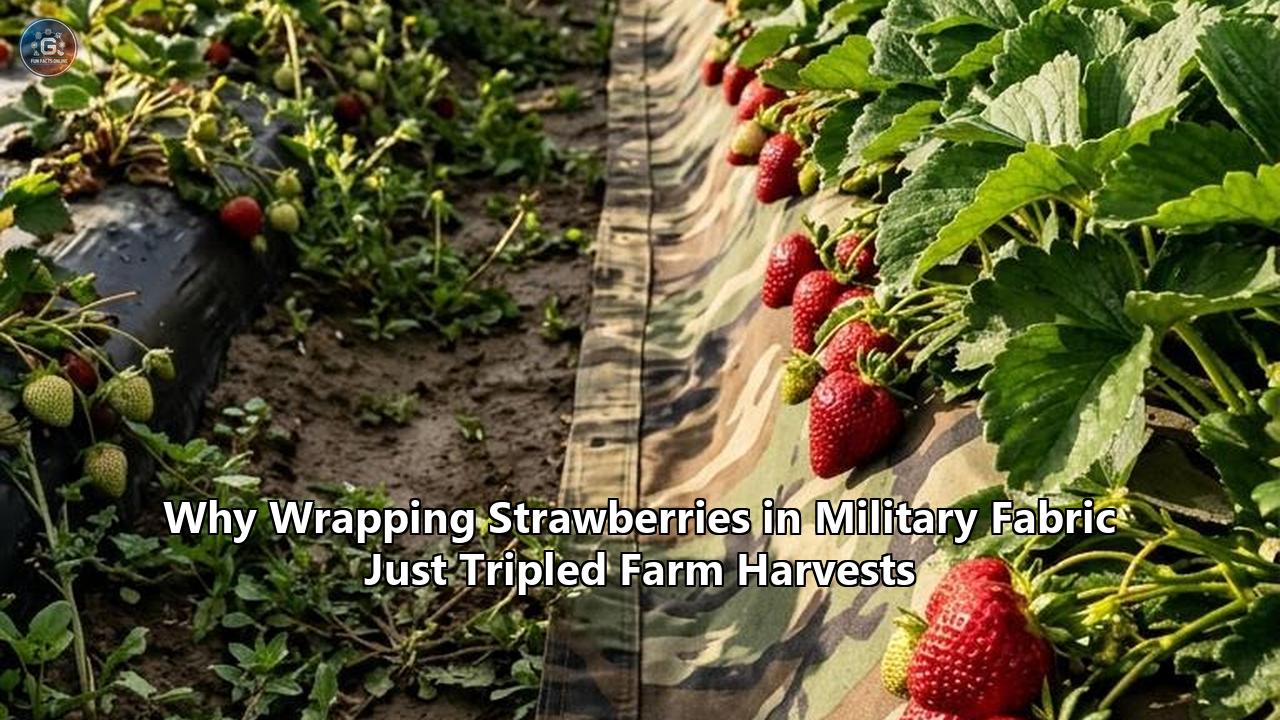
Underneath low arched hoops draped in an off-white, spongy textile, the strawberry plants had not simply survived the capricious frost-and-thaw cycles of a North Carolina winter and spring. They had exploded with fruit. The harvest crates coming out from under the mesh weighed more than three times as much as those gathered from the open-air control rows just three feet away. The fruit was larger, crimson to the tip, free of chemical pesticide wash, and harvested weeks before the traditional regional season had even peaked.
When lead researcher Gabriel Olawuyi and his colleagues at North Carolina State University tallied the final harvest tallies in a peer-reviewed paper published in the journal Agriculture, the empirical record was clear: the plants covered by this peculiar cloth produced a 3.56-fold increase in harvestable berries compared to standard, uncovered plants. Average fruit weight surged from 6.63 grams in the control plots to 12.18 grams under the covers.
The cloth had not been fabricated for farms. It was never intended to touch soil, shelter delicate Fragaria × ananassa root crowns, or modulate photon fluxes.
The material draped over those Raleigh strawberry beds was a direct civilian spin-off of military research financed to keep combat infantry soldiers alive and functional under extreme physical duress. The core architecture of the cloth was engineered inside high-security textile labs to solve two lethal operational hazards faced by soldiers deployed in tropical environments: debilitating heat exhaustion caused by heavy body armor, and vector-borne diseases transmitted through the bites of infectious mosquitoes.
How a piece of ballistic-adjacent textile engineering migrated from an infantry plate-carrier rig into commercial berry beds—and why it shattered long-standing assumptions about crop shade avoidance, microclimates, and insect mechanics—reveals a fundamental evolution occurring at the intersection of material physics and high-value agriculture.
The Ballistic Laboratory Anomaly
To locate the origin of the Raleigh strawberry trial, one has to leave the experimental farm plots and walk through the secure workshops of NC State’s Wilson College of Textiles. There, surrounded by circular industrial knitting machines the size of industrial boilers, textile engineers have spent years running tests on how to make ceramic and ultra-high-molecular-weight polyethylene body armor wearable in humid combat zones.
Anyone who has donned military body armor knows its most punishing flaw: heat retention. Ceramic trauma plates, engineered to stop high-velocity 7.62mm rifle rounds, are dense, impermeable slabs. When pressed flush against a soldier’s torso over a standard uniform, they seal off the skin. Body heat and perspiration accumulate rapidly, degrading physical endurance and elevating core body temperature toward heat stroke.
Compounding this misery is insect vectors. In subtropical operational environments, mosquitoes readily pierce traditional combat fabrics. If an army drenches uniforms in synthetic insecticides like permethrin to prevent malaria or dengue, the chemical washes out, degrades under ultraviolet exposure, and exposes soldiers to chronic transdermal pesticide absorption.
“The path to Plant Armor started with trying to make a cloth to go on a soldier's chest to make body armor more comfortable,” explains Dr. R. Michael Roe, William Neal Reynolds Distinguished Professor of Insect Biology and Biotechnology at NC State and co-senior author of the project. “Then, through trial and error, we arrived at a product that could triple the output of strawberry farms. We couldn't have predicted that when we started”.
The military design challenge Roe and his colleagues originally confronted was mechanical, not chemical. They wanted to build a spacer fabric—a structural textile that could sit directly beneath a soldier's ballistic chest plate to preserve a continuous cushion of airflow, compress elastically under load, and present an impenetrable labyrinth to a mosquito's proboscis without using a single drop of chemical repellent.
The insect mouthpart, while evolutionarily sophisticated, operates under finite physical laws. A mosquito lands, anchors its labella against the outer yarn, and drives a flexible fascicle through the fabric pore to locate capillaries below the epidermis. If the fabric possesses true physical depth—a three-dimensional internal micro-architecture—the fascicle cannot navigate the structural filaments. It strikes internal yarn boundaries, flexes, and fails to penetrate.
The military prototype worked. It created an airy, mechanical cushion that relieved convective heat buildup under ballistic armor while locking out biting vectors.
Then came the intellectual cross-pollination.
Roe’s lab works across entomology, agriculture, and biomaterials. As his team watched the prototype resist insect probes while permitting rapid passive vapor transfer, they noticed an unaddressed failure in global horticulture: commercial row covers were notoriously crude, fragile, and physiologically taxing on crops.
If a three-dimensional spacer textile could outsmart a mosquito fascicle beneath an infantry plate carrier without trapping suffocation levels of moisture, what would happen if you threw it over a high-value commercial field crop?
The Chemical Treadmill of the Commercial Berry
To understand why a 3.56-fold harvest multiplier is causing ripple effects through agricultural investment offices, one must examine the precarious, chemically intensive economics of strawberry farming.
The strawberry is one of the most commercially profitable and ecologically fragile specialty crops in the world. Unlike apples or citrus, which grow on woody, elevated perches protected by thick rinds, the garden strawberry is a low-lying perennial herb whose flowers and fruits develop in constant contact with soil pathogens, atmospheric spores, and ground-crawling pests.
In the United States, commercial strawberry production is concentrated heavily in California’s coastal basins—Watsonville, Salinas, and Oxnard—alongside the winter capital of Florida’s Plant City, with an expanding regional footprint across North Carolina, Georgia, and the Pacific Northwest. Across all these zones, growers operate under an unrelenting chemical regime.
For decades, the foundation of strawberry cultivation was pre-plant soil fumigation with methyl bromide, a potent ozone-depleting gas that sterilized the dirt, eradicating parasitic nematodes, verticillium wilt, and weed seedbanks. Under the Montreal Protocol, methyl bromide was phased out, forcing the agricultural industry onto alternative chemical cocktails like chloropicrin, 1,3-dichloropropene (Telone), and metam potassium. These soil fumigants face tightening regulatory constraints, buffer-zone mandates, and suburban encroachment disputes.
Once the bare-root crowns are in the ground, the biological threats shift skyward. A strawberry plant is an open buffet for an army of specialist and generalist arthropods:
- Twospotted spider mites (Tetranychus urticae), which scrape leaf surfaces, destroying chlorophyll and desiccating foliage.
- Strawberry aphids (Chaetosiphon fragaefolii), which vector destructive plant viruses while excreting sticky honeydew that fuels black sooty mold.
- Western flower thrips (Frankliniella occidentalis), which feed on blossoms, causing characteristic cat-facing, bronzing, and unmarketable scarring of developing fruit.
- Tarnished plant bugs (Lygus lineolaris), which puncture developing seed embryos, permanently stunting fruit expansion.
To keep these pests below economic injury levels, conventional strawberry growers apply repeated sprays of synthetic pyrethroids, organophosphates, neonicotinoids, and avermectins throughout the season. Yet insects develop resistance rapidly. Mites, with their rapid reproductive cycles, routinely evolve immunity to acaricides within a handful of seasons.
Furthermore, growers face climate extremes. Strawberry flower buds emerge during late winter and early spring, making them vulnerable to sudden sub-zero frost snaps. A single night below freezing can blacken flower pistils, destroying weeks of prospective yield.
To prevent frost death, growers deploy two imperfect defenses:
- Overhead irrigation, spraying water continuously over the beds so the latent heat of freezing insulates the blossoms inside an icy shell. This method burns through millions of gallons of groundwater and leaves the field saturated, inviting devastating fungal blooms of grey mold (Botrytis cinerea) and Phytophthora crown rot.
- Spunbond polypropylene row covers (often sold under trade names like Reemay). These are flat, non-woven single-layer plastic sheets laid over field tunnels.
Commercial row covers, however, carry a severe biological tax. They are two-dimensional films with irregular porosities. On sunny days following a freeze, temperatures under non-woven plastic can skyrocket dangerously, suffocating the plants. When humidity builds up underneath, the lack of continuous ventilation turns the tunnel into an incubator for airborne fungal pathogens.
Worst of all, these conventional covers trigger a destructive botanical reaction known to plant biologists as the shade-avoidance syndrome.
The Shade-Avoidance Paradox
When a plant senses that it is trapped under a dense or opaque canopy, it does not passively accept its fate. It launches an evolutionary emergency survival protocol.
Plants perceive their light environment through specialized photoreceptors called phytochromes, which measure the ratio of red light (around 660 nanometers) to far-red light (around 730 nanometers). Photosynthetic leaves absorb red light to drive sugar synthesis via chlorophyll, while reflecting or transmitting far-red light.
When a standard floating row cover or dense plastic tarp is stretched over a crop, it filters out valuable photosynthetic active radiation (PAR) and distorts the red-to-far-red light balance. The plant’s phytochrome systems register this optical signature as an existential threat: it believes it is being shaded out by aggressive neighboring weeds.
In response, the strawberry plant executes an aggressive resource reallocation:
- It halts flower bud differentiation.
- It stops pumping ATP, glucose, and trace minerals into fruit sizing and sugar synthesis.
- It pours all its metabolic reserves into vegetative elongation—growing excessively long, spindly petioles, pumping out superfluous runners, and expanding thin, fragile leaf blades in an attempt to out-climb the perceived canopy.
For a commercial berry grower, the shade-avoidance response is an economic catastrophe. You end up with a jungle of leafy green vines and practically zero marketable, sweet red fruit.
This physiological reality was precisely what Gabriel Olawuyi expected to observe when he installed the military-derived fabric over his test plots at NC State.
“To produce fruit, plants need sunlight,” Olawuyi said during an analysis of the trials. “We expected that Plant Armor's seemingly opaque fabric would lead to an increase in vegetative biomass at the expense of fruiting—because reduced sunlight would trigger a shade-avoidance response, making the plant divert energy toward stem and leaf growth rather than fruit production. However, we found the fabric did not impede access to light at all, and fruit production increased significantly”.
The field data revealed no statistical difference in vegetative biomass between the covered strawberries and the naked controls. The plants had not wasted energy growing jungle-like vines. Instead, they channeled their photosynthetic output into an uninterrupted cascade of flower initiation and berry sizing.
To discover why the material bypassed this fundamental botanical tripwire, the research team had to dissect the structural physics of the textile itself under electron microscopy.
       CONVENTIONAL ROW COVER                    3D SPACER KNIT ("PLANT ARMOR")
    (2D Flat Spunbond Polypropylene)            (Micro-Engineered Architectural Spacer)

   Sunlight        Insects (proboscis)         Diffuse Light        Insects Blocked
      ↓↓                 ↓↓                         ↓↓                     ↓↓ (trapped in tortuous path)
═════════════════════════════════════       ┌─────────────────────────────────────┐ Top Layer (70D + TiO2)
- High Heat / Trapped Moisture              │  S S S S S S S S S S S S S S S S S  │ (0.05% titanium dioxide)
- Traps humidity -> Fungal Rot              │  \ / \ / \ / \ / \ / \ / \ / \ / \  │ Monofilament Core (9D)
- Blocks PAR light -> Shade Avoidance       │   |   |   |   |   |   |   |   |   | │ Open Porous Micro-Chamber
- Stunted berries / Giant runaway leaves    │  / \ / \ / \ / \ / \ / \ / \ / \ /  │ Constant Air / Vapor Flow
                                            └─────────────────────────────────────┘ Bottom Layer (70D Multifilament)
                                                ↓↓ Diffuse PAR      ↓↓ Rain / Air
                                            Strawberries: Unimpeded Photosynthesis,
                                            Stable Thermal Cushion, Zero Insect Breach
Anatomy of the Labyrinth: Gen 2 Under the Microscope
The material tested in the study is formally known as Plant Armor Generation 2 (PA Gen 2), protected under US Patent No. 11,582,968 B2. It is not a flat sheet, an extruded film, or a standard agricultural spunbond non-woven fleece. It is a highly specialized technical spacer fabric produced on an industrial scale using an OVJA 106 E 3-wt circular weft-knitting Jacquard machine built by the German precision-engineering firm Mayer & Cie.
Operating with a 30-inch diameter cylinder and an exacting gauge of 18 needles per inch, the machine stitches three separate components simultaneously into an integrated, microscopic sandwich:
- The External Face: Knitted from a 70-denier polyester multifilament yarn impregnated with precisely 0.05% titanium dioxide (TiO₂) particles. Denier is an architectural unit of linear mass density, defining the weight in grams of 9,000 meters of fiber; a 70-denier strand is exceptionally fine, yielding micro-apertures that are uniform and dimensionally stable.
- The Internal Spacer Core: Bridging the top and bottom fabric skins is a spring-like matrix of 9-denier polyester monofilament yarns. These single-strand filaments stand vertically, acting like miniature architectural pillars that push the top and bottom faces apart, creating a permanent, resilient 3D air gap.
- The Plant-Facing Base Layer: A complementary knitted web of multi-filament yarn that mirrors the outer layer, stabilizing the entire matrix against mechanical tension, tearing, and wind shear.
The resulting composite fabric weighs a mere 14.6 grams per square meter. To put that in perspective, standard copy paper weighs around 80 grams per square meter, and conventional agricultural plastic covers hover between 30 and 100 grams. Plant Armor is lighter than a silk scarf, yet structurally rigid enough that wind cannot compress the micro-chamber.
This physical configuration alters how incoming energy, moisture, and pests interact with the plant canopy.
1. The Tortuous Pathway
In standard single-layer row covers or insect nets, pore size is a binary compromise. If you weave the pores tiny enough to stop microscopic pests like thrips or aphids (which measure less than a millimeter in width), you choke off airflow and block sunlight. If you open the pores enough to let air circulate and heat dissipate, aphids, thrips, and mites slip through the mesh.
Plant Armor solves this compromise through what textile physicists classify as path tortuosity.
Instead of presenting an insect with a two-dimensional hole that it can fly or crawl straight through, the 3D knitted spacer creates a dense, multi-directional structural labyrinth. The vertical 9-denier monofilament spacer yarns cross each other at offset angles. For an aphid or a mosquito to cross the barrier, it cannot simply crawl forward; it must navigate a disorienting, three-dimensional obstacle course of microscopic synthetic pillars.
In rigorous laboratory bioassays conducted at NC State, researchers placed aphids onto the exterior face of Plant Armor Gen 2 to test their ability to reach a food source on the other side. The exclusion rate was absolute: 100% of the aphids failed to breach the material. The insects could not navigate the physical depth of the knit, yet the cross-sectional pore space remained wide enough to let wind currents, barometric pressure fluctuations, and natural rainwater cascade through without resistance.
                     INSECT PENETRATION BIOASSAY (APHIDS)
┌────────────────────────────────────────────────────────────────────────┐
│ MATERIAL TESTED            │ EXCLUSION RATE   │ POROSITY STATUS        │
├────────────────────────────┼──────────────────┼────────────────────────┤
│ No Cover (Control)         │ 0% Excluded      │ Fully Open             │
│ Standard 2D Ag Net         │ 48% - 72%        │ Restricted Airflow     │
│ Plant Armor Gen 2 (3D)     │ 100% EXCLUDED    │ Free Air/Rain Permeable│
└────────────────────────────────────────────────────────────────────────┘
2. Optical Scattering vs. Light Starvation
The second surprise was optical. To human eyes standing in a farm field, Plant Armor Gen 2 appears semi-opaque—a chalky, white fleece that looks like it would starve a sun-loving plant of photosynthetic energy.
The inclusion of 0.05% titanium dioxide (TiO₂) nanoparticles within the 70-denier multifilament yarn provides a vital optical benefit. Titanium dioxide is widely prized for its high refractive index. When direct, harsh, collimated sunlight strikes the TiO₂-doped filaments, the light is not absorbed or reflected away; it is diffused.
Direct sunlight hitting an exposed strawberry plant casts hard, high-contrast shadows. The upper canopy leaves become light-saturated and overheat, while the interior leaves and low-lying blossom sites sit in deep shade, operating below their photosynthetic compensation point.
When light filters through the 3D spacer knit, the randomly oriented monofilament pillars scatter the incoming photons into an isotropic, multidirectional cloud. This scattered light penetrates deep into the strawberry canopy from multiple angles simultaneously.
Instead of triggering a shade-avoidance alert via phytochrome receptors, the diffuse light delivers optimal photosynthetic active radiation evenly across the plant’s entire surface area. The plant's chloroplasts operate at peak metabolic efficiency without the thermal stress of direct solar radiation.
The Field Trial: Seven Weeks That Altered the Yield Curve
To rigorously evaluate the fabric’s performance, the NC State agricultural research team mounted an exhaustive comparative trial.
They built elevated, raised beds framed in timber, shaped high-quality agricultural soil, and ran drip-irrigation lines beneath standard black polyethylene plastic mulch—the standard production architecture used across the global strawberry sector. Over these beds, they bent flexible PVC pipe hoops, creating low tunnels.
Over half the plots, they secured Plant Armor Gen 2, fastening the textile along the edges with sandbags and ground pins. The remaining beds were left open to the Raleigh elements, serving as the experimental controls. The plants were monitored across three full seasons: through autumn establishment, mid-winter dormancy and freeze events, and into the spring flowering and fruiting cycles.
Between April 4, 2025, and May 16, 2025, the team harvested the fruit once every seven days. Every single ripe strawberry was plucked, graded, counted, and placed on precision laboratory balances.
The week-by-week harvest logs paint an astonishing empirical picture:
                  WEEKLY STRAWBERRY HARVEST PROGRESSION
                      (Mean Fruit Count Per Plant)

  Yield
  (Fruit/Plant)
    16 ┼                                                       ● Plant Armor
    14 ┼                                                   ●   ○ Uncovered Control
    12 ┼                                               ●
    10 ┼                                           ●
     8 ┼                                       ●
     6 ┼                                   ●       ○
     4 ┼                               ●       ○
     2 ┼                           ●       ○
     0 ┼───●───────────○───────────┴───────┴───────┴───────┴───────
         Week 1      Week 2      Week 3  Week 4  Week 5  Week 6  Week 7
        (April 4)                                       (May 16)
In Week 1 of the harvest (April 4), the uncovered control beds produced zero ripe berries. The plants were green, but their flowers were still slowly setting fruit, struggling to rebound from late-winter cold snaps. Underneath the Plant Armor covers, however, harvesting had already begun. The plants had entered active production a week ahead of schedule, generating immediate, premium-grade early fruit.
As the harvest continued into late spring, the divergence between the covered and uncovered beds widened rather than narrowed:
- Harvestable Fruit Count: Plants under the Plant Armor produced an average of 3.56 times more harvestable fruits per plant compared to uncovered plants over the seven-week window.
- Individual Fruit Mass: It wasn't simply that the covered plants produced more berries; the berries themselves were substantially larger. The mean weight of individual berries harvested under Plant Armor was 12.18 ± 1.08 grams, compared to just 6.63 ± 0.59 grams for the fruit picked from uncovered plants. That represents a 1.84-fold surge in berry size.
- Defect Rates: Marketable grade yields were vastly superior under the textile. Berries grown under the mesh showed virtually none of the scarring, cat-facing, or cosmetic deformities caused by thrips and tarnished plant bugs.
When researchers processed the final biomass data, they confirmed that the total dry weight of the leaves, crowns, and root structures was statistically indistinguishable between the two treatments. The 3D spacer fabric had not produced a massive, sprawling bush. It had altered the plant’s internal energy budget, directing virtually all metabolic surpluses directly into fruit development.
To discover what fueled this metabolic surge, researchers deployed environmental data loggers beneath the canopies, tracking temperature, relative humidity, and solar flux every second of the day and night.
Thermal Thermodynamics: The Science of Growing Degree-Days
The secret behind the harvest surge was an unexpected physical property: the fabric acted as a micro-thermal battery.
Plants do not measure time using calendar days. Their developmental biology is governed by accumulated thermal units known to agronomists as growing degree-days (GDD).
For a strawberry plant, development remains biologically dormant whenever the ambient air temperature drops below its baseline threshold (typically around 10°C or 50°F). Once temperatures rise above that baseline, the plant’s enzymatic machinery activates, cell division accelerates, and the plant accumulates growing degree-days. A specific cultivar requires a fixed sum of GDDs to initiate blossom buds, another chunk of GDDs to open flowers, and a precise thermal quota to ripen fruit.
Throughout the autumn, winter, and early spring seasons, ambient outdoor temperatures swing violently. An unseasonably cold week in March drops field temperatures below the base threshold, freezing developmental progress and delaying the crop cycle.
The data loggers inside the Raleigh tunnel beds showed that Plant Armor Gen 2 created a stable, elevated micro-thermal environment.
During the night, the earth radiates heat upward in the form of long-wave terrestrial infrared radiation. In open fields, this radiant heat escapes instantly into the upper atmosphere. Under single-layer plastic sheeting, heat is trapped briefly, but thin film rapidly conducts energy away, leading to sharp thermal drops before dawn.
Plant Armor's 3D spacer knit acted as a porous thermal insulation layer. The internal air cushion trapped between the 70-denier outer skin and the base fabric slowed conductive and convective heat losses, keeping the soil and plant crowns consistently warmer than the exterior ambient air.
┌─────────────────────────────────────────────────────────────────────────┐
│                    GROWING DEGREE-DAY (GDD) PROFILE                     │
│                                                                         │
│  Accumulated Heat Units                                                 │
│       ▲                                                                 │
│       │                                             / Plant Armor       │
│       │                                           /   (Reaches Fruiting │
│       │                                         /      Threshold Early) │
│       │                                       /                         │
│       │                                     /                           │
│       │                             /------                             │
│       │                           /                                     │
│       │                         /   /------ Uncovered Control           │
│       │                       /   /                                     │
│       │                     /   /                                       │
│       │                   /   /                                         │
│       │                 /   /                                           │
│       │               /   /                                             │
│       │             /   /                                               │
│       └────────────┴───┴─────────────────────────────────────────► Time  │
│                 Fall     Winter               Early Spring              │
└─────────────────────────────────────────────────────────────────────────┘
Because the micro-climate beneath the fabric stayed systematically warmer day and night, the covered strawberries accumulated growing degree-days at a significantly accelerated pace.
“Plants require a certain amount of accumulated heat, calculated as growing degree-days, to progress through developmental stages including fruiting,” Olawuyi explained. “The plants were in a condition whereby the warmth they need to go through each phenological stage to their production was given to them optimally, and they produced far more than the uncovered plants”.
The plants under Plant Armor did not sit idle through frosty winter mornings. Their root crowns were metabolically active, their vascular xylem and phloem transported nutrients continuously, and their flower buds developed smoothly without the cellular damage that occurs during borderline chilling events.
Yet thermal insulation usually carries an agricultural price tag: the risk of catastrophic fungal outbreaks.
The Botrytis Mystery: Why the Berries Didn't Rot
Any commercial grower walking up to an elevated tunnel wrapped in thermal cloth would immediately ask one question: Where is the rot?
In the commercial fruit industry, heat and moisture are the precursors to pathogen catastrophe. The scourge of strawberry fields worldwide is Botrytis cinerea, the necrotic grey mold fungus.
Botrytis spores are ubiquitous across agricultural soils. They germinate and pierce strawberry epidermal tissue when three conditions align:- Free standing water or persistent condensation droplets resting on the surface of the fruit or flower petals.
- Relative humidity levels exceeding 90% within the plant canopy.
- Warm, stagnant, unventilated air pockets.
When farmers use traditional clear polyethylene hoop covers or heavy spunbond fleece to warm their strawberry rows, condensation collects on the underside of the plastic. Droplets fall back down onto the plant crowns, saturating blossoms and triggering rapid Botrytis infections. Within 72 hours, an entire harvest can dissolve into a gray, fuzzy mass of fungal mycelium.
This dynamic is why commercial farmers must invest heavy labor into venting high tunnels: workers walk miles of rows daily, manually cranking up plastic sidewalls by hand at 8:00 AM to flush out humidity, then lowering them again at 4:00 PM before twilight temperatures plunge.
Plant Armor Gen 2 bypassed this problem entirely.
When the NC State researchers pulled the humidity data records from beneath the covers, they uncovered an unexpected finding: relative humidity under the 3D fabric was statistically identical to open, ambient field air.
                  MICROCLIMATIC HUMIDITY MEASUREMENT
      100% ┼─────────────────────────────────────────────────────────
           │          Danger Zone for Botrytis Cinerea (>90%)
       90% ┼ - - - - - - - - - - - - - - - - - - - - - - - - - - - -
           │
       80% ┼                        /\      /\
           │                       /  \    /  \      /\   Open Control
       70% ┼          /\    /\    /    \--/----\    /  \  Plant Armor Gen 2
           │         /  \--/--\--/              \--/    \ (Identical Curves)
       60% ┼────────/────────────────────────────────────\───────────
                  Day 1     Day 2     Day 3     Day 4     Day 5
The physical explanation lies in the contrast between convective vapor permeability and thermal air buffering.
Conventional plastic films are continuous, non-porous polymer barriers: water vapor evaporating from the soil and transpiring from leaves has nowhere to go. It pools, hits dew-point saturation, and condenses into stagnant liquid droplets.
Plant Armor Gen 2, by contrast, is a porous, open-mesh three-dimensional textile. Water vapor molecules are tiny—roughly 0.28 nanometers in diameter. They pass through the 3D knitting matrix without friction, venting out into the atmosphere before canopy humidity can spike into the Botrytis danger zone.
Yet, because the 9-denier monofilament core layer suppresses macro-scale wind turbulence, the heat cushion remains held within the structural air gap. The cover maintains passive ventilation without sacrificing its thermal insulation layer.
Rainwater management showed an identical advantage. When rainstorms swept across the Raleigh plots, rain droplets did not pool on top of the fabric or collapse the hoop frames under heavy water loads. Instead, rain shattered against the 70-denier outer multifilament layer, filtering down into the soil bed as a gentle, evenly distributed mist. The foliage underneath was never blasted by heavy, soil-splattering rain droplets that physically transport soil-borne fungal spores onto low-hanging fruit.
The team also completed laboratory tests on the soil microbiology beneath the plants. Preliminary bacterial colony counts and rhizospheric microbial balances under the Plant Armor beds showed no adverse changes compared to natural field soil. The cover protected the plant aboveground without suffocating the microbiome below.
The Industrialization Bottleneck: Scaling the Thread
The scientific data, while clear in small-scale field trials, now faces the cold reality of industrial commercialization.
Can a 3D spacer knit born from military combat gear be manufactured, distributed, and deployed at the scale demanded by corporate agribusiness?
Consider the scale of modern fruit agriculture. In California’s Salinas and Pajaro valleys alone, strawberry acreage stretches across tens of thousands of continuous acres. Commercial growers think in terms of linear miles of row beds.
Historically, the agricultural plastics sector has been dominated by ultra-cheap, extruded single-use polyethylene films and non-woven spunbond polypropylene fabrics. These materials are manufactured via high-speed melt-blown extrusion processes that spit out continuous rolls of material at speeds of hundreds of yards per minute. They are inexpensive, sold for pennies per square foot, and treated as disposable seasonal inputs. At the end of a single harvest, millions of pounds of this torn, mud-caked plastic are stripped from the beds and sent to landfills.
Plant Armor Gen 2 cannot be manufactured on a melt-blown extrusion line.
It requires industrial Jacquard circular knitting or warp-knitting spacer machinery. These machines are complex mechanical systems that assemble precise loop geometries across hundreds of precision-machined needles. A circular Jacquard machine operates at a fraction of the linear speed of an extrusion nozzle.
This structural complexity creates immediate economic hurdles:
1. Capital Cost per Acre
Producing a 3D spacer textile using 70-denier multifilament and 9-denier monofilament yarn on specialized knitting machinery is significantly more expensive per square yard than churning out basic agricultural plastic. If a commercial strawberry enterprise with 500 acres must invest five to ten times more upfront capital to drape its fields in technical spacer knits, the initial cost could provoke sticker shock—even if the 3.56-fold harvest multiplier promises an exponential return on investment over time.
2. Multi-Year Durability vs. Seasonal Sun Rot
For Plant Armor to make economic sense on a commercial farm, it cannot be a single-season disposable product. It must function as a multi-year capital investment that growers can install, retrieve, wash, store, and reinstall for five to seven growing cycles.
That lifetime depends on ultraviolet (UV) stabilization. Strawberries demand intense, direct sunlight. In growing regions like Central California, Florida, or southern Spain’s Huelva province, solar UV-A and UV-B radiation degrades unprotected polyester yarns, snapping chemical bonds and turning synthetic polymers brittle within months.
While the 0.05% titanium dioxide (TiO₂) formulation in Gen 2 provides baseline photo-stability, long-term multi-year outdoor survivability will demand high-grade Hindered Amine Light Stabilizers (HALS) integrated directly into the yarn masterbatches.
3. Field Automation and Handling
Commercial berry fields are heavily mechanized environments. Tractors lay down drip tape, shape beds, and stretch plastic mulch in single passes.
Thin, flexible agricultural films run through tractor implements easily. Plant Armor Gen 2, with its 3D spacer core, has a distinct structural body. It possesses cross-sectional volume. Handling, rolling, spooling, and anchoring miles of this springy textile requires modified tractor-mounted deployment and retrieval rigs. If wrapping rows requires excessive manual farm labor, rising agricultural wage rates could offset some of the financial gains won by higher yields.
NC State has taken steps to clear the path to commercialization. The university has secured US Patent No. 11,582,968 B2 for the technology and has officially licensed Plant Armor Gen 2 to an agricultural commercialization partner to scale production.
The next phase of testing will take place away from university research plots, inside the high-stakes fields of commercial farming operations, where the fabric will be tested against commercial tractor implements, industrial field crews, and unpredictable weather conditions.
┌────────────────────────────────────────────────────────────────────────┐
│                   COMMERCIAL VIABILITY SCORECARD                       │
│                                                                        │
│ METRIC                    │ CONVENTIONAL PLASTIC │ PLANT ARMOR GEN 2   │
├───────────────────────────┼──────────────────────┼─────────────────────┤
│ Fruit Yield Multiplier    │ Baseline (1.0x)      │ Up to 3.56x         │
│ Individual Fruit Size     │ Standard (6.6g avg)  │ Enhanced (12.2g avg)│
│ Insect Exclusion          │ Chemical-dependent   │ 100% Mechanical     │
│ Canopy Ventilation        │ Zero (High Botrytis) │ Continuous Airflow  │
│ Upfront Fabric Cost       │ Ultra-Low            │ Moderate to High    │
│ Environmental Footprint   │ Single-Use Landfill  │ Multi-Season Reuse  │
└────────────────────────────────────────────────────────────────────────┘
Beyond the Strawberry: The Emergence of Advanced Micro-Climates
The success of the Raleigh trials is already expanding beyond the strawberry patch.
Before testing Plant Armor on strawberries, Grayson Cave, R. Michael Roe, and their research team ran preliminary trials using an early prototype over brassica crops—specifically cabbage. The material produced a 2.93-fold surge in cabbage vegetative biomass while blocking diamondback moths and caterpillars from reaching the leaves.
The strawberry trial, however, proved something far more profound: technical spacer fabrics can drive reproductive and fruiting biology, not merely vegetative leaf growth.
This distinction opens new applications for agricultural fabric technology across the global specialty crop sector.
High-value, thin-skinned horticultural crops that require costly insect management, precise thermal controls, and protection from fungal rot are natural candidates for technical spacer textiles:
- Blackberries and Raspberries: Highly vulnerable to the invasive spotted-wing drosophila (Drosophila suzukii), a tiny vinegar fly that saws into ripening soft fruit to lay eggs. Standard netting that blocks the fly restricts airflow, sparking mold. A micro-engineered 3D spacer knit could seal out the pest while preserving the breezy conditions raspberries require.
- Table Grapes: Where downy mildew, powdery mildew, and micro-wasps force growers into weekly fungicide and insecticide cycles.
- High-Value Solanaceous Crops: Greenhouse-grown bell peppers and heirloom tomatoes, where whiteflies vectoring destructive geminiviruses force growers to rely on heavy chemical applications.
The broader lesson of Plant Armor lies in the breakdown of traditional scientific silos.
For the past fifty years, the problem of crop protection has belonged almost entirely to the chemical sciences. When insects attacked, chemical synthesizers engineered a more potent nerve agent. When plants froze, engineers pumped more water or laid down basic, impermeable petroleum sheets.
Plant Armor Gen 2 points toward a different future: one where crop protection is treated as a problem of applied structural physics and optical engineering.
By synthesizing military soldier-protection needs with industrial Jacquard knitting mechanics and plant phytochrome optics, the NC State team proved that a farm field does not have to be an open battleground saturated with biocides.
Instead, crops can be wrapped in synthetic micro-environments that tune incoming photons, buffer thermal swings, lock out destructive insect vectors, and permit soil to breathe.
As Gabriel Olawuyi and his colleagues prepare for large-scale multi-acre trials next season, the agricultural industry is watching closely.
If technical agricultural fabric technology can routinely triple yields while dismantling the farm's reliance on chemical pesticides and single-use plastic waste, the humble strawberry hoop may soon look less like a scrap-plastic greenhouse and more like an advanced piece of protective field armor.
Unresolved Questions and Milestones to Watch
The transition of Plant Armor from university field trials to commercial scale depends on several practical milestones:
- Commercial Field Validation: Independent data from multi-acre industrial farms in California, Florida, and Europe to see if the 3.56-fold yield gain holds up across different microclimates, soil structures, and commercial strawberry cultivars.
- Pollination Logistics: How strawberry flower pollination will be managed at scale under semi-permanent 3D covers. In closed tunnels, native pollinators are excluded alongside pests; commercial operations will need to evaluate scheduled cover lifts or the integration of managed commercial bumblebee hives within the textile footprint.
- Knitting Tooling Scalability: Whether industrial textile contract manufacturers can achieve fabric throughput high enough to bring per-acre capital costs down to a level accessible to medium and small-scale commercial growers.
- UV Longevity Metrics: Accelerated outdoor weathering trials tracking tensile strength and elasticity loss in the 9-denier monofilament spacer core after multiple seasons of high-intensity solar radiation.
Reference:
- https://timesofindia.indiatimes.com/science/discovery/a-fabric-developed-from-military-clothing-research-was-placed-over-strawberry-plants-field-tests-produced-3-56-times-more-fruit/amp_articleshow/134626594.cms
- https://news.ncsu.edu/2026/09/how-a-new-textile-fabric-could-triple-production-in-strawberry-plants/
- https://www.mdpi.com/2077-0472/16/19/2084
- https://timesofindia.indiatimes.com/science/discovery/a-fabric-developed-from-military-clothing-research-was-placed-over-strawberry-plants-field-tests-produced-3-56-times-more-fruit/articleshow/134626594.cms
- https://www.sciencedaily.com/releases/2026/09/260930020257.htm
- https://news.ssbcrack.com/new-textile-covering-boosts-strawberry-yields-and-reduces-pesticide-use/
- https://www.facebook.com/intheworldofscienceandtechnology/posts/a-new-protective-fabric-boosted-strawberry-yields-by-up-to-356-times-while-block/1086360487440789/
- https://textalks.com/3-d-knitted-plant-armor-boosts-strawberry-yield-3-56x-in-nc-state-trials/
- https://www.sciencedaily.com/releases/2026/09/260930020257.htm
- https://fruitgrowersnews.com/news/plant-armor-textile-strawberry-yields/
- https://east-fruit.com/en/trending/fabric-instead-of-pesticides-new-%E2%80%9Carmor%E2%80%9D-triples-strawberry-yields/
- https://news.ncsu.edu/2026/09/how-a-new-textile-fabric-could-triple-production-in-strawberry-plants/