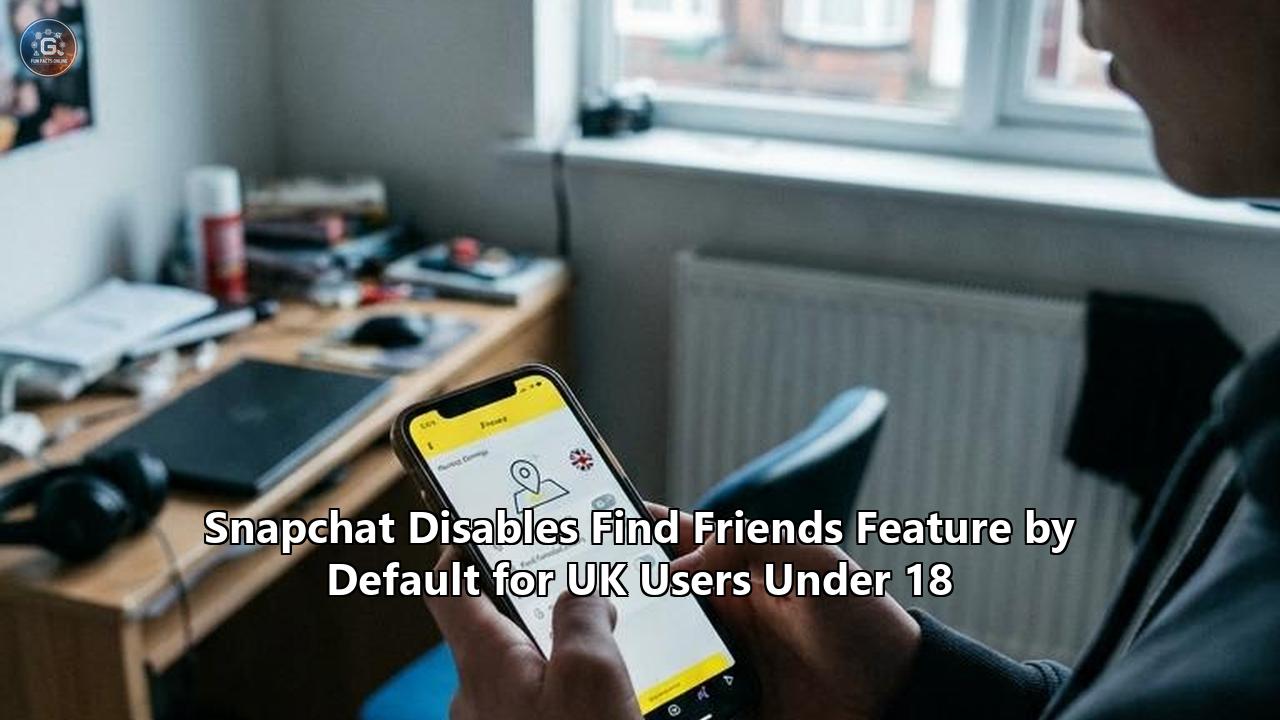
On November 6, 2026, UK communications regulator Ofcom announced that Snap Inc. had begun disabling its "Find Friends" contact-discovery feature by default for all British users under the age of 18. The sweeping operational shift, rolling out across November under close regulatory oversight, suppresses the algorithmic systems that automatically suggest teenage accounts to other users and recommend new connections on their "Add Friends" interface.
The intervention represents a direct enforcement milestone under the UK’s Online Safety Act framework. By dismantling the automatic bridge between children and unverified accounts, the regulator aims to sever the automated pipelines that facilitate online child sexual exploitation, abuse, and predatory grooming.
Oliver Griffiths, director of Ofcom’s Online Safety Group, described the shift as an "important and welcome improvement in child online safety" while pointedly adding that the measure was "long overdue". Snap originally committed to turning off the feature in May. With the rollout now active, Ofcom has warned that companies failing to implement baseline grooming protections risk formal enforcement actions, including statutory fines reaching up to £18 million or 10 percent of qualifying global annual turnover.
The regulatory push stems from alarming child protection data. A 2025 analysis of British police records conducted by the National Society for the Prevention of Cruelty to Children (NSPCC) revealed that 40 percent of all recorded offenses involving sexual communication with a child—where a specific digital platform was identified—occurred on Snapchat. Compounding this threat profile, an Ofcom study released in May established that 32 percent of British children aged 8 to 12 actively use Snapchat, completely bypassing the platform’s nominal terms of service requiring users to be at least 13.
By forcing Snap to dismantle its automated friend-recommendation infrastructure for minors, the UK has initiated one of the most significant structural modifications to an algorithmic social graph since the passage of the Online Safety Act. The decision forces a shift in product design: moving away from engagement-driven, high-frictionless network expansion and returning to permission-based, intentional communication for adolescent users.
The Technical Mechanism: What Changes Inside the Application
Snapchat’s "Find Friends" architecture—which incorporates the platform's public-facing "Quick Add" module—has long served as the central engine for user acquisition, network density, and session frequency. To grasp the operational scope of Ofcom’s intervention, one must examine how the underlying discovery system functions and what happens when its inputs and outputs are severed by default.
                     TRADITIONAL RECOMMENDATION PIPELINE
[User Signals] ──> [Address Books / Proximity / Graph Centrality] ──> [Algorithmic Edge Ranking]
                                                                                │
                                                                                ▼
[Minor Account] <──────────────── Automated Bidirectional Surfacing ─────────── [Target Pool / Strangers]


                         NEW UK UNDER-18 DEFAULT MODEL
[Minor Account] ──X──> Inbound Masking (Hidden from Others' "Find Friends" / "Quick Add")
                ──X──> Outbound Suppression (No Algorithmic Suggestions Delivered to Minor)
                ──X──> Push Alerts Blocked (No "Recently Joined" Broadcasts to Network)
                                      │
                                      ▼
             Requires Deterministic Lookups Only:
             • Exact Username Matching
             • Mutual Display Name Queries (Constrained)
             • Cryptographic/Visual Snapcodes
The Bidirectional Discovery Graph
Historically, Snapchat’s friend recommendation engine did not rely merely on simple contact matching. The algorithmic model ingested a wide matrix of behavioral and environmental signals:
- Cryptographic Contact Hashing: Scanning uploaded address books to establish direct and second-degree connections.
- Topological Graph Centrality: Calculating mutual friend counts; sharing multiple nodes within a cluster signaled a high probability of offline familiarity.
- Geographic and Environmental Proximity: Leveraging coarse IP-level localization, Wi-Fi network overlaps, and shared local interaction spaces.
- Behavioral Affinity: Tracking shared participation in ephemeral group chats, common interactions with public Stories, and concurrent activity clusters.
This data informed a recommendation model that populated the "Add Friends" screen with suggested connections and delivered persistent push notifications whenever someone in an expanded network joined the service.
Critically, this system was bidirectional. A teenager not only received an algorithmic feed of potential peers, but their account was also indexed and served into the discovery feeds of other users across their geographic or topological perimeter—including adult accounts that shared loose network proximity.
The Architecture of the Default Shutdown
Under the revised framework mandated by Ofcom, Snapchat has disabled the discovery engine for UK accounts registered to, or determined to belong to, individuals under the age of 18. Inside the client software, the system alters the underlying state of two fundamental account parameters:
- Enable Find Friends: This controls whether the account receives outbound automated suggestions.
- Show me in Find Friends: This controls whether the account is indexed as an inbound candidate for other users’ discovery feeds.
By setting both toggles to disabled by default, the platform initiates a tripartite firewall around the minor:
- Outbound Feed Suppression: The minor's "Add Friends" interface no longer generates algorithmic lists of suggested people. The carousel of speculative acquaintances is stripped from the interface.
- Inbound Index Masking: The minor's profile is fully excised from the candidate pool that generates friend suggestions for third parties. An adult browsing their "Quick Add" or "Find Friends" feed will no longer encounter algorithmic suggestions pointing toward underage profiles, even if significant mutual connections exist.
- Notification Silencing: The platform terminates the automated dispatch of suggestion-based notifications and "recently joined" alerts. Adult contacts who have a minor’s phone number stored in their hardware address book are no longer pinged with high-priority banners announcing that the adolescent has established a new presence on Snapchat.
Residual Discovery Vectors: The Shift to Deterministic Connection
The policy change does not erase teenage accounts from the service, nor does it convert them into air-gapped cryptographic silos. Instead, it shifts the mode of network formation from speculative algorithmic surfacing to deterministic, intentional retrieval.
┌─────────────────────────────────┬──────────────────────────────────┐
│ Legacy Speculative Vector       │ Revised Deterministic Vector     │
│ (Disabled by Default for Minors)│ (Retained with Restrictions)     │
├─────────────────────────────────┼──────────────────────────────────┤
│ Algorithmic "Quick Add" Feed    │ Exact Alphanumeric Username      │
│ "People You May Know" Carousels │ Scannable Physical Snapcodes     │
│ Automated "Recently Joined" Push│ Explicit Mutual Contact Sync     │
│ Secondary Graph Proximity Alerts│ Multi-Factor Mutual Friend Search│
└─────────────────────────────────┴──────────────────────────────────┘
A teenager in the UK can still be located through specific, manual vectors:
- Exact Alphanumeric Lookup: An external user can locate an under-18 account if they input the exact username into the global search bar. Partial string matching and fuzzy algorithmic searches remain heavily constrained by preexisting safety protections that require documented mutual connections before revealing minor accounts in search results.
- Direct Display Name Search: Searching a display name can still yield an account, but the visibility of the profile card is throttled if the searching party shares no verified mutual connections.
- Visual Snapcodes: Profiles retain their proprietary two-dimensional vector barcodes (Snapcodes). Establishing a link via this method requires the physical or out-of-band transmission of the image—a dynamic that requires an existing line of communication outside the app's internal recommendation engine.
- Direct Address Book Synchronization: If a teenager voluntarily chooses to sync their local device contacts, individuals already stored in their physical phone address book can still appear in their personal friend dashboard.
To modify these boundaries, a user must manually navigate through the snapchat privacy settings hierarchy, select the "Privacy Controls" sub-tier, enter the "Find Friends" menu, and manually override the default toggles. When an under-18 user attempts this override, the application surfaces interstitial warning dialogues detailing the potential hazards of exposing an account to unsolicited contact.
Granular Stakeholder Analysis: Who Is Affected
The systemic decommissioning of a primary growth mechanism within a major digital platform triggers asymmetric disruptions across multiple cohorts. The consequences ripple across adolescent culture, regulatory corridors, child protection operations, and commercial balance sheets.
                                  ECOSYSTEM IMPACT
                                         │
        ┌──────────────────┬─────────────┴─────────────┬──────────────────┐
        ▼                  ▼                           ▼                  ▼
  UK Adolescents   Predatory Actors            Snap Inc. (Platform)   Regulators (Ofcom)
  • Network friction  • Pipeline collapse       • Organic DAU drag     • Precedent set
  • Social silos     • Automated targeting dead• Ad inventory risk   • Cross-border model
  • Out-of-band links• High-cost harvesting    • Friction in metrics  • OSA validation
British Adolescents (Ages 13 to 17)
For the core adolescent demographic in the UK, Snapchat has operated as an informal identity directory and continuous communications channel. The removal of automated friend discovery dismantles the effortless assembly of high school social graphs.
Historically, when students entered a new secondary school, sixth-form college, or athletic club, they relied on Quick Add algorithms to populate their friend rosters. The algorithm deduced shared institutional membership through overlapping contact graphs and coarse geo-signals.
Without this automation, UK teenagers face intentional friction. Expanding an online social circle now requires active negotiation: trading alphanumeric handles verbally, exchanging Snapcodes across desks, or maintaining link trees across alternate platforms.
This friction carries psychological dualities:
- The Protective Dividend: Minors are insulated from the ambient anxiety of receiving unsolicited friend requests from casual acquaintances, estranged peers, or unknown third parties.
- The In-Group Silo Effect: Social graphs risk calcifying around existing, established peer groups. Late arrivals, marginalized adolescents, or students transferring into new communities face higher structural barriers to being integrated into digital cohort spaces.
Underage Cohorts (Ages 8 to 12)
The most structurally exposed cohort on Snapchat consists of pre-teens operating below the statutory age threshold. Ofcom’s finding that nearly one-third of UK children aged 8 to 12 use the platform indicates a failure of traditional, self-declared age gates.
Children in this developmental bracket are uniquely vulnerable to algorithmic exploitation. They routinely lack the cognitive capacity to distinguish between an algorithmically suggested mutual connection and an authentic, vetted peer.
For this group, the default deactivation of Find Friends removes a critical vulnerability. It prevents newly created accounts from immediately broadcasting their arrival to peripheral contacts.
However, the efficacy of this protective layer depends entirely on the accuracy of Snap’s age assurance systems. A child who registered using a falsified adult birthdate will not inherit these protections, leaving them exposed to the legacy discovery graph unless behavioral inference models correctly identify and reclassify them.
Parents, Guardians, and the Domestic Sphere
For years, the burden of child digital safety has been largely offloaded onto domestic surveillance: parents were advised to monitor their children’s devices, examine their friend lists, and navigate nested preference trees to manually harden accounts.
By instituting this protection as the platform default, the operational model flips. The default setting ensures baseline isolation without requiring direct parental intervention or technical literacy.
This directly interfaces with Snapchat’s "Family Center," the platform’s native parental supervision dashboard. Parents monitoring an adolescent account can now see whether the default friend-discovery settings remain engaged, transforming what was once a technical configuration into an observable behavioral indicator within parental oversight tools.
Predatory Networks and Bad Actors
From a criminological standpoint, algorithmic friend recommendation has historically operated as an involuntary pipeline for illicit actors. Investigative analyses of digital grooming methodologies reveal that perpetrators systematically exploit "Quick Add" to scale their access to minors:
- A bad actor establishes a foothold connection with a single adolescent within a specific geographic community or educational institution.
- The recommendation engine notes this new edge in the social graph and begins serving the actor's profile to the child’s entire contact circle via "mutual friend" weightings.
- Targeted children, observing that the suggested profile has multiple mutual connections, assume the user is an established member of their broader peer group and accept the incoming request.
Disabling Find Friends breaks this exploitation chain. A bad actor can no longer leverage graph proximity to jump between adolescent accounts.
To locate a minor, an external actor must possess precise alphanumeric credentials or direct physical access to a Snapcode. This raises the operational cost of predatory targeting and forces illicit actors onto less protected, legacy communication channels.
Educational Institutions
Secondary school administrators and pastoral care leads spend significant administrative time managing digital harms. Algorithmic friend suggestions frequently drive cross-grade bullying, school-wide pile-ons, and the dissemination of non-consensual imagery across loose social circles.
By suppressing discovery, inter-cohort visibility drops. Conflicts that originate within a specific classroom or peer group are less likely to bleed into broader school-wide networks via algorithmic suggestions, reducing the velocity of peer-to-peer social contagion.
Short-Term Consequences: Disruption, Friction, and Systemic Tension
The immediate operational rollout of the new default produces friction points across the UK digital ecosystem. These impacts test platform resilience, user behavior, and enforcement oversight.
                             ROLLOUT ROADBLOCKS & TENSIONS
                                          │
        ┌─────────────────────────────────┼─────────────────────────────────┐
        ▼                                 ▼                                 ▼
Behavioral Opt-In Bias           Age Assurance Lag                 Platform Displacement
Adolescents overriding defaults  Verification engine delayed       Users migrating to Discord,
via dark-pattern UI prompts      to year-end; falsified ages       TikTok, Telegram, or
driven by social isolation fears remain unmitigated                unregulated alt-networks
The Behavioral Battle Over User Overrides
A core technical caveat of Ofcom’s announcement is that the feature is disabled by default, not permanently locked out. The setting remains an accessible toggle inside the user’s client application.
This reality creates an immediate behavioral struggle. Adolescents are sensitive to perceived exclusion and social isolation. When a British teenager opens Snapchat and discovers their "Add Friends" interface empty, the immediate response may not be an appreciation of institutional privacy; it is often friction and frustration.
The user interface design of the override screen becomes an essential battleground:
- If the application deploys friction-free nudges—such as prominent banners declaring "Tap here to find your classmates"—a significant percentage of teenagers will actively re-enable the feature, bypassing the regulatory safeguard.
- Conversely, if Snap enforces high-friction safeguards—requiring explicit confirmation, surfacing multi-step warnings, or mandating parental approval via Family Center—the default setting will hold.
Regulatory auditors at Ofcom are actively assessing whether Snap's notification banners and override prompts comply with the spirit of the Age Appropriate Design Code. Under statutory guidelines, platforms are barred from deploying coercive UI design (often termed "dark patterns") to encourage children to degrade their privacy settings.
The Age Assurance Implementation Deficit
The entire architectural logic of age-tailored safety measures depends on an accurate classifier: the platform must correctly identify who is a child and who is an adult. In this regard, the timing of the rollout reveals a vulnerability.
Snap initially committed to deploying "highly effective" age-verification mechanisms across the UK market over the summer. However, company officials subsequently informed Ofcom that comprehensive, operational age verification would be delayed until the end of the year.
This operational lag creates a systemic loophole:
[Under-18 User Registers] ──> Falsifies Age as 18+ ──> Bypass Regulatory Defaults
                                                                │
                                                                ▼
                     Exposed to Legacy Speculative Discovery Graph:
                     • Surfaced in Adult "Quick Add" Feeds
                     • Unrestricted Profile Indexing
                     • Unchecked Push Discovery Alerts
Although Snap announced that over one million UK accounts had been validated as adults through its enhanced age-assurance pilot, hundreds of thousands of underage users likely remain registered with falsified adult birthdates.
Until advanced age assurance is enforced across the entire user base, those accounts will remain indexed in the open discovery graph, exposed to the vulnerabilities Ofcom sought to eliminate.
Organic Network Deceleration for Snap Inc.
For Snap Inc., the UK represents a mature, high-monetization market characterized by high average revenue per user (ARPU). The suppression of automated discovery introduces structural headwinds to the company’s regional growth metrics:
- Network Formation Velocity: Disabling default suggestions naturally reduces the rate at which new accounts add friends, directly capping the expansion speed of new social graph edges.
- Impression Surface Contraction: A user with fewer connected edges consumes fewer peer Stories, sends fewer Snaps, and experiences shorter session durations. This directly impacts the ad inventory available for insertion between friend updates.
- The Viral Loop Breakdown: The historical onboarding loop—whereby a single teen joining a class triggered a wave of automatic recommendations that pulled an entire cohort onto the platform—is broken. New customer acquisition shifts from frictionless viral propagation to high-cost intentional marketing.
Technical Comparison: How Major Platforms Handle Teen Account Discovery
Snapchat is not the only platform forced to redesign its social graph architecture under regulatory pressure. The UK Online Safety Act and the European Union’s Digital Services Act have compelled the entire social media ecosystem to reconsider how minor accounts are indexed and surfaced.
┌──────────────┬─────────────────────────┬─────────────────────────┬─────────────────────────┐
│ Platform     │ Friend Discovery Model  │ Inbound Search Defaults │ Direct Message Gates    │
│              │ (Minors Under 18)       │ (For Unknown Accounts)  │ (Adult-to-Minor)        │
├──────────────┼─────────────────────────┼─────────────────────────┼─────────────────────────┤
│ Snapchat     │ OFF by default (UK);    │ Constrained; exact      │ Strictly limited to     │
│              │ Algorithmic Quick Add   │ matching or mutual      │ mutual friends or       │
│              │ disabled entirely       │ links required          │ synchronized contacts   │
├──────────────┼─────────────────────────┼─────────────────────────┼─────────────────────────┤
│ Instagram    │ Filtered by default;    │ Suppressed from Explore │ Barred entirely unless  │
│ (Meta)       │ accounts not suggested  │ and hashtag aggregation;│ the adult is followed   │
│              │ to suspicious adults    │ restricted search cards │ by the minor account    │
├──────────────┼─────────────────────────┼─────────────────────────┼─────────────────────────┤
│ TikTok       │ OFF by default for      │ Private by default for  │ Direct Messaging        │
│ (ByteDance)  │ ages 13–15; suggest     │ ages 13–15; public      │ disabled entirely for   │
│              │ account to others locked│ indexing barred         │ accounts under age 16   │
├──────────────┼─────────────────────────┼─────────────────────────┼─────────────────────────┤
│ Discord      │ Server-centric; friend  │ Discovery disabled      │ Global safety filters;  │
│              │ suggestions driven by   │ without direct server   │ scanning and warnings on│
│              │ shared server membership│ or alphanumeric handle  │ non-friend direct comms │
└──────────────┴─────────────────────────┴─────────────────────────┴─────────────────────────┘
The data demonstrates that Snap’s UK intervention matches the strict defaults pioneered by ByteDance on TikTok for its youngest users. However, Snap’s policy is distinct: it applies to all minors up to age 18, rather than terminating at age 16.
This broader age bracket reflects regulatory recognition that 16- and 17-year-olds remain frequent targets of financial extortion, sextortion syndicates, and predatory grooming campaigns.
Structural Deep-Dive: The Mechanics of snapchat privacy settings
The disabling of friend discovery represents one part of a complex, interdependent array of technical protections embedded within snapchat privacy settings. Understanding how this specific intervention operates requires mapping it against the platform’s broader configuration architecture.
                               SNAPCHAT PRIVACY CONTROLS HIERARCHY
                                               │
             ┌─────────────────────────────────┼─────────────────────────────────┐
             ▼                                 ▼                                 ▼
     Contact Controls                  Map Visibility                    Discovery Defaults
     • "Friends Only" (Default)        • "Ghost Mode" (Mandatory)        • "Find Friends" (OFF)
     • Drops inbound calls from        • Disables background GPS         • "Show Me" (OFF)
       unsynchronized parties            triangulation on Snap Map       • Suppresses suggestions
The Contact Control Firewall
Finding an account and initiating an interaction on Snapchat are distinct technical capabilities. An account discovered through search cannot automatically send direct Snaps, launch calls, or exchange messages unless explicit permissions permit it.
For UK teenage accounts, snapchat privacy settings enforce a restrictive "Friends and Contacts" or "Friends Only" standard:
- Inbound Message Rejection: If an adult locates a minor via an exact username lookup and dispatches a Chat, the message is not routed into the primary inbox. The minor must first manually accept a reciprocal friend request.
- Media Blurring and Interstitial Warnings: Incoming connection requests from accounts with zero or few mutual links trigger automated warning screens. These alerts notify the minor that the user shares no established footprint within their real-world network.
- The Group Chat Vulnerability: Despite these barriers, an architectural bypass persists through group chats. If a minor shares a multi-party group chat with an unknown account—an occurrence common in large school or hobby groups—the unknown party can view messages, monitor read receipts, and interact within the group thread even if direct, one-on-one communication remains blocked.
Geolocation and the Snap Map
The disabling of Find Friends works alongside Snap Map's location protections. When minors configure their snapchat privacy settings, location broadcasting is set to "Ghost Mode" by default.
Ghost Mode disables the real-time background transmission of GPS coordinates to the platform’s public vector map. If this setting were not synchronized with friend-discovery restrictions, real-world physical tracking would bypass digital account protections.
By running both discovery and location sharing in hardened default states, the platform prevents bad actors from coordinating digital contact with physical proximity tracking.
Regulatory and Legal Context: The Online Safety Act and Beyond
Snap’s decision to modify its product architecture was not a voluntary corporate safety initiative. It was driven by the regulatory regime introduced by the UK’s Online Safety Act (OSA).
                     UK ONLINE SAFETY ACT ENFORCEMENT ENGINE
                                        │
           ┌────────────────────────────┴────────────────────────────┐
           ▼                                                         ▼
Illegal Harms Code of Practice                            Enforcement Sanctions
• Mandates child account insulation                       • Fines up to £18M or 10% global turnover
• Prohibits adult-to-minor discoverability                • Senior manager criminal liability
• Directs platform design around Safety-by-Design         • Network-level blocking orders
The Illegal Harms Codes of Practice
Under the statutory architecture of the Online Safety Act, Ofcom was empowered to construct binding Codes of Practice governing how platforms identify, manage, and mitigate systemic risks. The Illegal Harms Code addresses grooming, sexual abuse material, and child exploitation.
The Code establishes unambiguous expectations for major social networks (designated as Tier 1 or Categorised Services):
- Safety-by-Design as Default: Platforms must not place the burden of protection onto minors. Protective configurations must be active out of the box.
- Removal of Unvetted Adult Discovery: The platform must deploy design measures that actively block unknown adults from locating, identifying, or contacting child accounts through automated tools.
- Algorithmic De-Amplification: Recommendation systems cannot legally surface child accounts to third parties unless strong, demonstrable evidence of an existing real-world relationship is established.
In May, Snap formally agreed to adopt Ofcom's anti-grooming requirements in their entirety. Turning off Find Friends represents the concrete engineering implementation of that legal concession.
Financial Deterrence and Executive Accountability
Ofcom’s oversight carries significant financial leverage. The Online Safety Act equips the regulator with civil penalty powers matching the highest global standards:
$$\text{Maximum Penalty} = \max\left(£18,000,000,\; 0.10 \times \text{Qualifying Global Annual Revenue}\right)$$
For Snap Inc., which generated over $4.6 billion in global revenue across 2023 and experienced subsequent growth, a 10 percent fine would cost hundreds of millions of pounds.
Furthermore, the Act introduces potential criminal liability for designated senior platform managers who fail to comply with child safety information requests or obstruct audits. These mechanisms alter corporate risk calculations, forcing product managers to prioritize regulatory compliance over pure user engagement metrics.
Cross-Jurisdictional Pressures: The Global Regulatory Web
The UK’s actions do not exist in isolation; they are part of a coordinated international regulatory shift:
[European Union: Digital Services Act] ──> Formal proceedings on addictive design & minor exploitation
[United Kingdom: Online Safety Act]   ──> Disabling algorithmic discovery & enforcing age gates
[United States: State-Level Design Codes] ──> California, Utah, and Texas safety-by-default litigation- The European Union: The European Commission has initiated formal proceedings against Snap under the Digital Services Act (DSA). Investigators are examining whether Snap’s recommendation algorithms and interface design create behavioral rabbit holes and expose minors to exploitation. A successful enforcement precedent in London increases pressure on Brussels to mandate similar defaults across the EU's 27 member states.
- The United States: While federal online safety legislation remains locked in congressional debate over the Kids Online Safety Act (KOSA), individual states—including California, Utah, and Texas—have enacted design-code statutes. These laws require social networks to deploy the highest privacy and safety configurations by default for young users. Snap is being forced to rewrite its codebase to accommodate regional regulatory mandates, fragmenting what was once a unified global application.
The Criminology and Network Theory of Grooming Vulnerabilities
To understand why Ofcom focused on friend recommendations, one must examine the criminology of digital grooming. Grooming is rarely a sudden event; it is a gradual process of boundary erosion, relationship simulation, and social isolation.
               THE EXPLOITATION CHAIN OF AUTOMATED DISCOVERY
[Algorithmic Edge Creation] ──> [Manufactured Social Proof] ──> [Boundary Dissolution]
Perpetrator suggested via       Target accepts because of       Perpetrator shifts chat
Quick Add through weak graph    mutual friend counts            to private, unmonitored,
proximity signals               generated by algorithm          ephemeral channels
The Illusion of Social Proof
The primary vulnerability within algorithmic friend discovery is its artificial generation of social proof.
When a minor encounters an unknown adult profile on an open web forum, baseline skepticism remains high. However, when that same profile is served via a platform-curated "Quick Add" module—complete with an algorithmic badge declaring "12 Mutual Friends"—the child’s threat detection is suppressed.
The platform’s design implies vetting: the minor assumes that because their immediate peer group is linked to this account, the individual must be safe, known, and vetted within the community.
Perpetrators deliberately exploit this dynamic:
- They construct synthetic networks by adding low-discernment accounts within a specific geographic area.
- Once an initial web of connections is secured, the algorithm does the rest.
- The recommendation engine surfaces the perpetrator directly to high-value adolescent targets, effectively validating their presence within the child's social environment.
The Evidentiary Black Hole of Ephemeral Platforms
The structural vulnerability of Snapchat is magnified by its core product feature: ephemerality.
Unlike platforms that maintain persistent text histories, Snapchat’s servers delete one-on-one direct Snaps and Chats by default once they are viewed or expire. While users can manually preserve messages or take screenshots—which alerts the counterparty—perpetrators leverage this ephemeral environment to conduct illicit grooming with lower fear of detection.
The NSPCC’s finding that 40 percent of child sexual communication offenses took place on Snapchat directly reflects this architectural reality. Law enforcement investigators routinely struggle to reconstruct forensic timelines on ephemeral apps.
Because post-incident criminal investigation is structurally hindered by message deletion, preventative intervention is the only viable child-protection strategy. Removing the discovery feature addresses this reality: if an exploitative interaction cannot be reliably preserved and prosecuted, the platform must prevent the connection from forming in the first place.
Long-Term Consequences: Redefining Digital Socialization
The systemic disabling of contact discovery initiates cultural and economic consequences that extend beyond immediate regulatory compliance. Over the next decade, this shift will redefine how teenagers experience digital spaces and how social platforms engineer user engagement.
                             LONG-TERM STRUCTURAL SHIFTS
                                          │
        ┌─────────────────────────────────┼─────────────────────────────────┐
        ▼                                 ▼                                 ▼
The Death of Friction-Free       Codebase Balkanization           The Economics of Safety
Social Graphs                    UK/EU platforms diverge          Engagement and viral loops
Adolescents transition from      from US/Global builds, ending    give way to defensive
ambient expansion to private,     the universal consumer           architectures that drag on
closed-loop communications       client software model            platform monetization
The End of the Frictionless Social Network
For nearly two decades, the growth model of Silicon Valley was anchored to friction-free network density: Metcalfe’s Law held that the value of a network expanded with the square of its connected users. Platforms designed onboarding flows to ingest user address books, scrape geographic parameters, and maximize connection velocity.
This model is being dismantled for younger demographics. The UK’s mandate marks a transition toward closed-loop networks, resembling early digital messaging services like SMS or BlackBerry Messenger (BBM).
Adolescent digital socialization is shifting away from broad, public-facing networks and toward permissioned, high-trust micro-circles. While this protects developmental well-being and physical safety, it also reduces open cultural exchange, decentralizing youth digital culture into disconnected, unindexed group threads.
Jurisdictional Balkanization of Platform Architectures
The era of a single, universally distributed application package file across global app stores is ending.
To comply with the disparate requirements of Ofcom, the European Commission, and US jurisdictions, Snap Inc. is constructing fragmented platform branches:
- A UK teenager runs a hardened build where Find Friends is disabled, location features are suppressed, and age verification gates core settings.
- A US teenager in a non-regulated state continues to use a platform that actively surfaces friend carousels, algorithmic proximity matches, and push discovery notifications.
- An Australian or European teenager faces variable layers of regional friction depending on local legislation, such as Australia's statutory restrictions for users under 16.
Maintaining these fragmented branches introduces major code complexity, swells software maintenance budgets, and complicates cross-border interactions. If a British minor travels to another country, or connects with international peers, the platform must dynamically determine which jurisdictional privacy rules govern the interaction.
The Commercial Realities of Safety-by-Design
Silicon Valley product monetization relies on ambient exposure: algorithmic discovery surfaces content, content drives engagement, engagement fuels ad inventory, and ad inventory generates revenue.
Safety-by-Design reverses this flywheel:
- Suppressing friend discovery shrinks the average network size of adolescent users.
- Smaller networks yield fewer social updates and lower notification frequency.
- Lower notification frequency reduces daily application opens and aggregate time spent.
- Reduced time spent directly cuts the volume of ad impressions the platform can deliver.
This dynamic challenges the venture-capital and public-market expectations that have long governed consumer technology companies. Investors must adjust to an operating reality where compliance with child safety legislation introduces permanent friction into user acquisition and commercial monetization models.
Critical Analysis: Strategic Compromise vs. Legislative Threat
Snap’s rapid implementation of these safety defaults must be evaluated within a broader political context: the existential threat of an outright social media ban.
The UK government has openly evaluated legislative frameworks to ban social media access for minors under 16, mirroring historic legislation passed in Australia. British political leaders across the spectrum have expressed growing skepticism that social networks can ever be made safe for children through incremental modifications.
[Threat Level 1: Outright Under-16 Ban] ──> Total elimination of the UK youth customer base
                                    ▲
                                    │ (Preemptive Compromise)
                                    │
[Threat Level 2: Architectural Retraction] ──> Disable Find Friends, enforce age gates,
                                                accept user acquisition drag to survive
For Snap, disabling Find Friends by default is an essential strategic compromise. By conceding algorithmic discoverability, the company aims to demonstrate that platform risks can be contained without resorting to an outright prohibition that would eliminate its future user pipeline.
However, child protection advocates argue this concession addresses only part of the problem. The fundamental vulnerabilities of ephemerality, algorithmic content distribution via Spotlight, and exposure to generative AI chatbots remain active inside the application.
If police data fails to show a significant reduction in online exploitation following this rollout, calls for full age-gated bans will quickly regain political momentum.
What to Watch Next: The Implementation Horizon
As Snapchat finishes deploying this update across British accounts, focus shifts to measurable technical and policy milestones.
┌──────────────────────────────┬──────────────────────────────┬──────────────────────────────┐
│ Milestone Target             │ Implementing Body            │ Critical Risk Factors        │
├──────────────────────────────┼──────────────────────────────┼──────────────────────────────┤
│ End of November              │ Ofcom Regulatory Audit       │ Dark patterns in UI override;│
│                              │                              │ incomplete user base rollout │
├──────────────────────────────┼──────────────────────────────┼──────────────────────────────┤
│ End of Year                  │ Snap Inc. Engineering        │ Efficacy of age assurance;   │
│                              │                              │ false-adult account evasion  │
├──────────────────────────────┼──────────────────────────────┼──────────────────────────────┤
│ Mid-Term Regulatory Review   │ European Commission (DSA)    │ Extension of UK discovery    │
│                              │                              │ ban across the European Union│
├──────────────────────────────┼──────────────────────────────┼──────────────────────────────┤
│ Annual Police/NSPCC Data     │ National Child Welfare       │ Persistence of grooming cases│
│ Releases                     │ Organizations / UK Police    │ via unmonitored group chats  │
└──────────────────────────────┴──────────────────────────────┴──────────────────────────────┘
The immediate milestone is Ofcom’s regulatory audit. The regulator’s Online Safety Group will review whether Snap has successfully deployed the default setting across all eligible accounts without using manipulative UI designs to prompt minors into re-enabling the feature. Any evidence that the platform is guiding adolescents back into the discovery pool will likely trigger immediate regulatory action.
The more consequential milestone arrives with Snap's implementation of mandatory age verification. The entire foundation of this child safety update depends on the platform’s capacity to distinguish between an adult and a minor. If Snap’s verification engine relies on superficial checks that allow under-18s to easily register as adults, the discovery ban will fail to protect the most vulnerable users.
Further ahead, data will determine whether architectural design changes can overcome systemic product vulnerabilities. When the NSPCC and British police release future evaluations of sexual communication offenses, observers will see whether disabling friend suggestions measurably reduced child exploitation on Snapchat—or simply pushed predatory contact toward alternative, unmonitored platforms.
Technical Summary of Default Protections
For parents, educators, and technical auditors reviewing UK adolescent accounts, the operational status of snapchat privacy settings should reflect the following baseline architecture:
- Find Friends Visibility: Set to OFF by default. Accounts are not indexed in recommendation carousels, algorithmic lists, or contact suggestions.
- Outbound Recommendations: Set to OFF by default. The "Add Friends" interface displays no speculative or algorithmic suggestions.
- Broadcast Notifications: Terminated. Third parties receive no push alerts when an under-18 user joins the platform or syncs an address book.
- Direct Contact Controls: Enforced to "Friends Only". Incoming direct messages, media, and calls from non-verified connections are rejected at the edge.
- Location Broadcasting: Enforced to "Ghost Mode" by default. Real-time background telemetry is withheld from the global Snap Map.
By hardcoding these parameters into the application's default state, the platform removes the burden of defense from the child. The UK’s regulatory intervention has forced one of the world's most sophisticated engagement engines to acknowledge a critical reality: when child protection and frictionless network growth collide, platform architecture must yield.
Reference:
- https://live.euronext.com/en/financial-news/snapchat-starts-disabling-friend-finder-feature-uk-children-regulator-says
- https://mlq.ai/news/snapchat-starts-switching-off-find-friends-by-default-for-uk-children-ofcom-says/
- https://secritic.com/2026/11/07/snapchat-find-friends-uk-new-safety-rules-for-under-18s/
- https://help.snapchat.com/hc/en-us/articles/43285920298004-Safety-Updates-for-UK-Users
- https://www.thenews.com.pk/latest/1422743-snapchat-disables-find-friends-feature-by-default-for-uk-children-ofcom-says
- https://www.engadget.com/2310117/snapchats-find-friends-feature-will-be-off-by-default-for-uks-under-18-users/
- https://seekingalpha.com/news/4668365-snapchat-disables-friend-finder-feature-for-uk-children-amid-safety-concerns
- https://newslinepost.com/en/2026/11/07/snapchat-turns-off-find-friends-for-uk-under-18s/
- https://www.tbsnews.net/tech/snapchat-starts-disabling-friend-finder-feature-uk-children-regulator-says-1594826