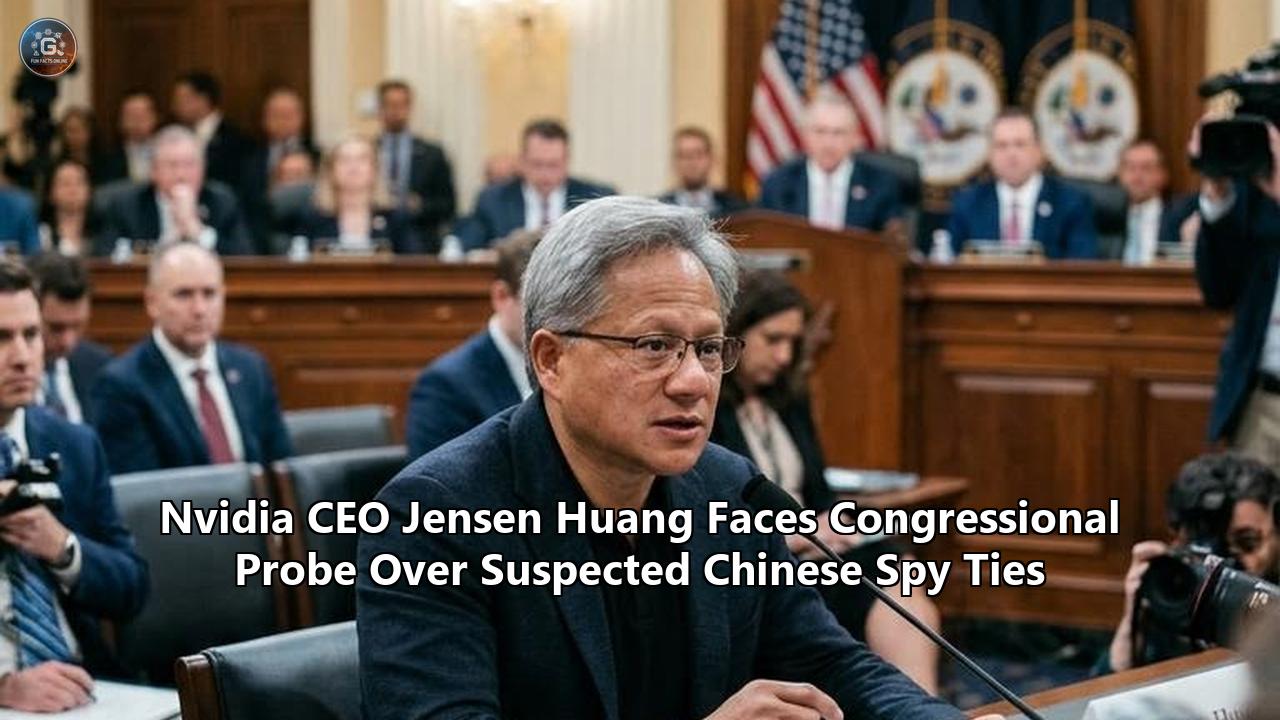
The chairs of three House committees have demanded that Nvidia Chief Executive Jensen Huang appear for a closed-door briefing on Capitol Hill, following classified intelligence disclosures alleging that a prominent business partner who cultivated a close relationship with him was an operative for China’s Ministry of State Security.
The joint summons—issued in a formal letter dated November 4 and signed by House Select Committee on the Chinese Communist Party Chairman John Moolenaar (R-Mich.), House Foreign Affairs Committee Chairman Brian Mast (R-Fla.), and House Permanent Select Committee on Intelligence Chairman Rick Crawford (R-Ark.)—gives Huang until November 11 to confirm his attendance for an in-person session on November 18. Lawmakers intend to question Huang directly regarding his interactions with Alice Huang (also known by her Chinese name, Huang Le), an executive at the Singapore-based cloud infrastructure provider Megaspeed International, alongside an exhaustive review of Nvidia’s internal safeguards against foreign industrial espionage and technological diversion.
The inquiry represents an unprecedented convergence of corporate executive counterintelligence, global supply chain scrutiny, and export enforcement. The central problem exposed by the inquiry is not merely the personal targeting of an executive, but a systemic vulnerability at the heart of Western technological dominance: the apparatus designed to choke off foreign adversaries from cutting-edge artificial intelligence silicon is fundamentally mismatched with the decentralized, commercial reality of global cloud computing networks and the aggressive human intelligence campaigns waged by Beijing.
The Summons to Capitol Hill
The congressional action follows a series of investigative disclosures from The New York Times, The Financial Times, and The Wall Street Journal revealing that American intelligence agencies have spent more than a year monitoring Alice Huang as an intelligence asset operating under the direction of China’s Ministry of State Security (MSS). According to intelligence findings briefed to top executive branch officials, the MSS specifically tasked her with embedding herself within the upper echelons of the semiconductor industry to extract strategic insights into advanced microarchitecture roadmaps and steer American policy toward easing high-performance compute export controls.
┌────────────────────────────────────────────────────────────────────────┐
│               CONGRESSIONAL PROBE: TIMELINE OF EVENTS                  │
├─────────────────┬──────────────────────────────────────────────────────┤
│ Late 2024       │ U.S. agencies flag Megaspeed for suspected AI chip   │
│                 │ diversions to Chinese hyperscalers via SE Asia.      │
├─────────────────┼──────────────────────────────────────────────────────┤
│ Mid-2024–2025   │ Electronic surveillance intercepts contacts between  │
│                 │ Alice Huang & U.S. citizen; Jensen Huang unmasked.   │
├─────────────────┼──────────────────────────────────────────────────────┤
│ Spring 2026     │ Classified memo circulated to Trump administration   │
│                 │ prior to Beijing summit; no executive action taken.  │
├─────────────────┼──────────────────────────────────────────────────────┤
│ Late Oct 2026   │ Press disclosures reveal year-long MSS counter-      │
│                 │ intelligence operation targeting Nvidia leadership.  │
├─────────────────┼──────────────────────────────────────────────────────┤
│ Nov 4–5, 2026   │ House Chairs Mast, Moolenaar, and Crawford demand    │
│                 │ joint closed-door briefing with Jensen Huang.        │
├─────────────────┼──────────────────────────────────────────────────────┤
│ Nov 11, 2026    │ Statutory deadline for Huang to accept or propose    │
│                 │ alternative appearance date.                         │
├─────────────────┼──────────────────────────────────────────────────────┤
│ Nov 17, 2026    │ Nvidia scheduled to report Q3 fiscal earnings.       │
├─────────────────┼──────────────────────────────────────────────────────┤
│ Nov 18, 2026    │ Scheduled date for joint congressional briefing.     │
└─────────────────┴──────────────────────────────────────────────────────┘
The scrutiny intensified when reporting established that electronic surveillance intercepted communications between Alice Huang and an American citizen whose identity was subsequently unmasked as Jensen Huang. Further reporting by The Financial Times cited intelligence memos indicating that the relationship between the two figures crossed beyond routine client dinners into a close personal dynamic.
"Recent reports raise significant national security concerns regarding the PRC’s access to sensitive U.S. technology and information," Moolenaar, Mast, and Crawford wrote in their joint letter. "The issue of PRC infiltration and access to cutting-edge U.S. technology is core to the investigative work of our three committees this Congress. It is vital that Congress determines the extent to which U.S. national security has been placed at risk."
The political momentum behind the inquiry is not confined to House Republicans. Following the November midterm elections, incoming Senate Banking Committee leadership and senior intelligence figures, including Senator Chris Coons (D-Del.), signaled that the upper chamber will pursue its own inquiries into semiconductor executive security protocols and supply chain leakage. The emerging Jensen Huang congressional probe reflects a rare bipartisan consensus: that the executives piloting critical national security technology can no longer be treated as ordinary commercial figures operating outside counterintelligence frameworks.
Nvidia, which commands a market capitalization exceeding $4 trillion and supplies the overwhelming majority of the graphics processing units (GPUs) training frontier AI models, has pushed back aggressively against the premise of the investigation. In statements issued through company spokesperson John Rizzo and prior remarks from Huang himself, the chipmaker maintained that interactions with Megaspeed personnel represented standard commercial client engagement.
"Meetings with customers are part of a CEO’s job; Jensen talks with thousands of customer executives every year," Nvidia stated. "Our regional cloud customers receive ordinary business information—not sensitive Nvidia trade secrets—and zero information relevant to national security. Anyone seeking classified information through our NCP customers would have hit a dead end. We neither have nor share classified information with customers."
The Chinese Embassy in Washington flatly rejected the reports, with spokesperson Liu Chang dismissing the intelligence assessments as "unsubstantiated smears" designed to disrupt standard commercial trade. Yet, the legislative machinery in Washington has already begun grinding forward.
The Megaspeed Nexus and the MSS Strategy
To evaluate the challenge confronting Capitol Hill, investigators are dissecting the architecture of Megaspeed International and its sudden rise within the high-performance computing market. Spun off in 2023 from an obscure mobile gaming developer with ties to local municipal investment funds in Shanghai and Zhejiang province, Megaspeed lacked an established track record in hyperscale infrastructure. Within months of its restructuring, however, the Singapore-headquartered entity initiated multibillion-dollar purchase orders for Nvidia’s premier enterprise hardware, eventually securing standing as a designated Nvidia Cloud Partner (NCP).
Between June 2024 and early 2026, trade logs and corporate filings reveal that Megaspeed and its affiliated corporate entities—including a Malaysian infrastructure arm named Speedmatrix—procured at least $4.8 billion in advanced AI server equipment powered by Nvidia processors. At that exact juncture, Alice Huang emerged as the public face of the operation. Operating with fluent English and elite industrial mobility, she established connections not only with Huang, but with senior executives at key Taiwanese assembly partners like Gigabyte Technology, which constructs the physical server chassis and liquid-cooled racks that house Nvidia’s high-density clusters.
                     ┌────────────────────────────────────────┐
                     │     Ministry of State Security (MSS)   │
                     │          (Beijing, PRC)                │
                     └───────────────────┬────────────────────┘
                                         │ Tasking & Direction
                                         ▼
                     ┌────────────────────────────────────────┐
                     │       Alice Huang (Huang Le)           │
                     │   Executive, Megaspeed International   │
                     └──────┬──────────────────────────┬──────┘
                            │                          │
           Cultivated Relationship /                   │ Multi-Billion Dollar
           Lobbying & Human Intel                      │ GPU Procurements
                            ▼                          ▼
┌───────────────────────────────────────┐   ┌────────────────────────────────────────┐
│             Jensen Huang              │   │   Nvidia Cloud Partner (NCP) Network   │
│         CEO, Nvidia Corp              │   │     Advanced Enterprise GPU Fleets     │
└───────────────────────────────────────┘   └──────────────────┬─────────────────────┘
                                                               │
                                                               │ Hardware Deployed to
                                                               │ Singapore & Malaysia
                                                               ▼
                                            ┌────────────────────────────────────────┐
                                            │      Southeast Asian Data Centers      │
                                            │  (Physical Compute Infrastructure)     │
                                            └──────────────────┬─────────────────────┘
                                                               │
                                                               │ Virtual Compute Slicing /
                                                               │ Remote Access Leases
                                                               ▼
                                            ┌────────────────────────────────────────┐
                                            │      Chinese Hyperscalers/Entities     │
                                            │    (Alibaba, ByteDance, State Orgs)    │
                                            └────────────────────────────────────────┘
The human intelligence angle was not executed in dark alleys, but in executive lounges and VIP dinners. Photographs and social media posts dating back to May 2023 and June 2024 place Jensen Huang and Alice Huang together at hospitality venues and industry dinners in Taipei during major semiconductor gatherings, flanked by hardware executives and component vendors. Intelligence analysts assess that Alice Huang leveraged these interactions to broadcast her proximity to the center of the AI ecosystem, using that perceived access to attract regional capital and lower compliance guardrails across Southeast Asia.
More concerning to the Department of Commerce and federal counterintelligence officials was the physical deployment of the hardware Megaspeed purchased. While export regulations enacted under the Export Administration Regulations (EAR)—specifically Commerce Control List categories 3A090 and 4A090—barred direct sales of advanced processors like the A100, H100, and Blackwell series to mainland China, they left significant latitude for commercial infrastructure deployments across Association of Southeast Asian Nations (ASEAN) territories.
Megaspeed exploited this loophole by constructing high-density data centers in Singapore and Johor, Malaysia, and leasing raw compute throughput back to mainland Chinese corporate giants, including Alibaba Cloud. While the physical chips technically remained on non-embargoed soil, Chinese developers accessed the compute power remotely via high-speed, low-latency network tunnels, training models and running inference workloads without ever importing a single silicon wafer through Chinese customs.
When Commerce Department export enforcement agents conducted field verifications at a Megaspeed data center facility in Malaysia in late 2024, they discovered thousands of Nvidia processors sitting in manufacturer packaging, uninstalled and unconfigured—triggering suspicions that the hardware was being staged for illicit transshipment into the Chinese mainland through third-party gray-market logistics brokers.
Corporate linkages also surfaced between Megaspeed’s investment syndicates and a cybersecurity subsidiary of China Electronics Technology Group Corporation (CETC), a sprawling state-owned enterprise deeply integrated with the People's Liberation Army’s command, control, and electronic warfare infrastructure. For congressional investigators, this transformed a corporate compliance dilemma into a potential national defense vulnerability.
The Problem Defined: Executive Asymmetry in the Geopolitical Arena
The Jensen Huang congressional probe brings into sharp relief an uncomfortable reality of Western technological competition: national security strategy has become deeply dependent on commercial corporations whose organizational cultures, executive incentives, and operational frameworks were built entirely for frictionless global expansion.
Three structural challenges define this crisis:
1. The Executive Counterintelligence Blind Spot
For decades, American intelligence services honed their protective counterintelligence tradecraft around defense industrial base contractors. Executives at Lockheed Martin, Northrop Grumman, and General Dynamics hold active security clearances, undergo rigorous counterintelligence vetting, receive standard defensive briefings when foreign adversaries target them, and operate inside classified facilities.
Commercial technology executives enjoy no such structural protection. Leaders of consumer-facing and commercial infrastructure firms—regardless of whether their microchips power autonomous drones, hypersonic computational simulations, or national cryptographic initiatives—operate without formal clearances, without travel restrictions, and without standardized counterintelligence protocols. They view their roles as global evangelists for their products.
Huang's schedule exemplifies this dynamic: he travels constantly between Silicon Valley, Taipei, Tokyo, and European capitals, holding court with thousands of regional distributors, developers, startup founders, and cloud operators. This public profile makes tech executives high-value targets for foreign intelligence agencies like the MSS. Rather than attempting to breach encrypted corporate servers or suborn low-level firmware engineers, foreign operatives can focus on cultivating the principal executive who dictates corporate strategy, allocation priorities, and political lobbying.
2. The Cloud Compute Circumvention Vector
Traditional export controls were conceived in an era of tangible industrial commodities. Regulators tracked the movement of physical steel, machine tools, centrifuge parts, and crated munitions. Silicon, however, derives its value not from its physical mass, but from its floating-point computational capacity.
The Bureau of Industry and Security (BIS) restricted the shipment of microchips above specific total processing performance (TPP) and interconnect bandwidth thresholds to entities in China, Russia, and other arms-embargoed destinations. Yet, compute can be partitioned, virtualized, and rented across borders at near-light speed.
┌────────────────────────────────────────────────────────────────────────┐
│             TRADITIONAL COMPLIANCE VS. CLOUD COMPUTE REALITY           │
├────────────────────────────┬───────────────────────────────────────────┤
│ Traditional Export Focus   │ Compute Virtualization Reality            │
├────────────────────────────┼───────────────────────────────────────────┤
│ • Physical manifests       │ • Ephemeral virtual machine (VM) slices   │
│ • Customs inspections      │ • Encrypted SSH / API tunnels             │
│ • Fixed delivery addresses │ • Global IP obfuscation & proxy routing   │
│ • End-use signoffs on site │ • Off-shore compute leasing agreements    │
│ • Single-tier verification │ • Multi-tenant infrastructure sharing     │
└────────────────────────────┴───────────────────────────────────────────┘
By allowing regional cloud partners like Megaspeed to buy tens of thousands of GPUs under the premise of building out local digital economies in ASEAN countries, export control frameworks inadvertently erected compute hubs that served as functional computational proxies for blacklisted firms in Beijing, Shanghai, and Shenzhen. Corporate compliance teams, focused strictly on verifying whether shipping manifests match designated consignees, were ill-equipped to audit the virtual routing tables of customers leasing time on those machines.
3. Conflicting Priorities Between Profit and Security
A widening fissure has emerged between the commercial objectives of Silicon Valley hardware titans and Washington's national security directives. Mainland China historically represented between 20% and 25% of Nvidia’s total data center revenue. Cutting off that market entirely threatens long-term research and development budgets, incentivizes foreign customer bases to cultivate domestic alternatives like Huawei’s Ascend architecture, and depresses corporate valuations.
Throughout 2024 and 2025, Huang openly warned policymakers that overly stringent export restrictions would simply accelerate Chinese self-sufficiency. He successfully lobbied the executive branch to permit modified architectures—such as the H20 and subsequent localized configurations—to maintain market share.
Earlier this year, Huang personally petitioned the administration to permit sales of H200 accelerators to select customers under an arrangement where the federal government captured a 25% surcharge on transactions. To national security hawks on Capitol Hill, however, this persistent corporate advocacy reflected an executive leadership corps that was either indifferent to geopolitical realities or vulnerable to foreign influence campaigns designed to weaken American controls.
The Intelligence Breakdown: A Failure to Issue Defensive Warnings
As investigators examine the circumstances surrounding the Jensen Huang congressional probe, one question has drawn sharp bipartisan concern: why did American intelligence agencies allow this relationship to develop for more than twelve months without ever intervening to warn the Nvidia chief executive?
Under standard counterintelligence doctrine, when an intelligence service discovers that a domestic corporate or academic leader is the target of a hostile foreign recruitment or influence effort, the Federal Bureau of Investigation (FBI) or partner agencies typically administer a "defensive briefing." The goal of such a briefing is to alert the citizen to the operative's true affiliations, describe the intelligence indicators observed, and insulate the individual from further compromise or unwitting disclosure.
Reporting confirms that Huang never received a defensive briefing regarding Alice Huang.
Intelligence community officials frequently face tradecraft dilemmas in these scenarios. Providing a defensive briefing requires disclosing active intelligence collection sources and methods, which carries the risk of burning ongoing electronic surveillance or human assets inside foreign intelligence services. If investigators notify an executive, and the executive's subsequent behavioral shift tips off the foreign asset, months or years of intelligence monitoring can evaporate instantly.
Furthermore, when the executive in question wields immense political and economic influence, intelligence leaders often hesitate to intercede without ironclad proof of wrongdoing.
The situation was further complicated by political channels. A classified intelligence memo detailing Alice Huang’s role as an MSS asset, her efforts to influence chip export policy, and her relationship with Jensen Huang was circulated to senior White House officials in the spring of 2026, ahead of high-level diplomatic engagements in Beijing. President Donald Trump, who maintains an active advisory dialogue with Huang on domestic AI manufacturing initiatives, was personally briefed on the findings but chose not to direct any interdiction, security intervention, or executive distancing.
To House committee leaders, this represents a multi-tiered breakdown across both the executive branch and the national security bureaucracy. Lawmakers are demanding to know whether internal administration politics or fear of disrupting the equity markets prevented agencies from executing standard counterintelligence protections.
Inside Nvidia's Defense and Technical Audit Posture
Confronted with an escalating legislative crisis, Nvidia’s leadership has mounted an extensive multi-front defense designed to isolate the corporation from allegations of technological compromise or export non-compliance.
The company's counter-narrative rests upon four operational pillars:
1. Information Compartmentalization
Nvidia stresses that even if an operative secured personal access to Huang, the corporate structure prevents customer-facing discussions from touching upon restricted technical secrets. Hardware architectural blueprints, instruction set architectures (ISAs), microcode optimizations, and chiplet interconnect schematics are held in secured internal repositories accessible only to credentialed engineering teams operating under strict role-based access controls.
Commercial discussions with regional cloud partners are confined to bulk supply scheduling, pricing terms, thermal cooling configurations, and data center real estate readiness. As one senior company representative noted, an executive discussing supply commitments over dinner cannot provide technical specifications that would allow a foreign entity to manufacture advanced 4-nanometer extreme ultraviolet (EUV) silicon.
┌────────────────────────────────────────────────────────────────────────┐
│             NVIDIA'S FOUR-PILLAR COMPLIANCE ARCHITECTURE              │
├──────────────────────┬─────────────────────────────────────────────────┤
│ Strategic Pillar     │ Operational Implementation                      │
├──────────────────────┼─────────────────────────────────────────────────┤
│ 1. Information       │ Commercial teams isolated from core microcode,  │
│    Isolation         │ architectural schematics, and EUV lithography.  │
├──────────────────────┼─────────────────────────────────────────────────┤
│ 2. Silicon Serial    │ End-to-end tracing of all MAC addresses and     │
│    Auditing          │ board-level components from fab to deployment.  │
├──────────────────────┼─────────────────────────────────────────────────┤
│ 3. Remote Verification│ Real-time cryptographic telemetry checking     │
│    Telemetry         │ physical rack locations and operating status.   │
├──────────────────────┼─────────────────────────────────────────────────┤
│ 4. Downstream Cloud  │ Contractual KYC provisions barring customer-    │
│    Auditing          │ facing compute resale to restricted entities.   │
└──────────────────────┴─────────────────────────────────────────────────┘
2. Comprehensive GPU Serial Tracking
In response to earlier Commerce Department and congressional inquiries regarding Southeast Asian diversions, Nvidia executed an internal audit tracing every enterprise GPU shipped to Megaspeed and Speedmatrix.
"We've studied all their deployments of our GPUs and counted every one," Huang stated in an interview following the initial press reports. The company maintains that its hardware tracking systems link every shipped processor’s media access control (MAC) address, board serial number, and baseboard management controller (BMC) identifier to specific physical server racks installed in verified data centers.
Nvidia argued that allegations of physical chip diversions were investigated and found to be without merit, noting that all hardware procured by Megaspeed remained physically accounted for in authorized non-embargoed facilities.
3. Customer-Facing Distance from Political Lobbying
Nvidia firmly denied that regional cloud customers hold any sway over the company's regulatory engagements in Washington. While Huang has consistently advocated for policies that permit American semiconductor firms to maintain international competitiveness, the company insists these positions are derived from macroeconomic realities and long-term corporate strategy, not the prodding of regional customers.
Spokesperson John Rizzo reiterated that no client has ever been given authority to lobby government officials on Nvidia’s behalf, nor does the company alter its product release roadmaps based on customer demands to evade statutory performance thresholds.
4. Operational Repositioning
Behind the scenes, Nvidia has moved quietly to contain the fallout. The company verified that Alice Huang no longer holds an active role at Megaspeed and that ongoing interactions with the firm have been subjected to heightened regulatory review.
Simultaneously, the geopolitical friction has forced immediate shifts in executive operations: a high-profile diplomatic and commercial trip to South Korea by Madison Huang, Nvidia’s senior director of Omniverse and robotics product marketing (and Huang’s eldest daughter), was abruptly canceled in early November to avoid exacerbating public and regulatory scrutiny during the escalating congressional inquiry.
Solutions from Capitol Hill: Re-engineering Counterintelligence
The problems exposed by the Huang inquiry have sparked an aggressive legislative drive to overhaul how Washington protects critical commercial technology. Lawmakers recognize that relying on traditional voluntary corporate compliance leaves national security exposed to sophisticated espionage campaigns. In response, leaders across the House China Select Committee, Foreign Affairs, and Intelligence committees are drafting statutory frameworks designed to merge commercial leadership with the national counterintelligence apparatus.
┌────────────────────────────────────────────────────────────────────────┐
│             PROPOSED REFORMS: LEGISLATIVE & EXECUTIVE ACTION           │
├──────────────────────┬─────────────────────────────────────────────────┤
│ Reform Initiative    │ Regulatory & Statutory Mechanism                │
├──────────────────────┼─────────────────────────────────────────────────┤
│ Mandatory Defensive  │ Amends National Security Act to mandate formal  │
│ Briefings Act        │ FBI/ODNI warnings to Systemically Critical Tech │
│                      │ Executives within 14 days of detected targeting.│
├──────────────────────┼─────────────────────────────────────────────────┤
│ Know-Your-Customer   │ Requires cloud providers (NCPs) to verify       │
│ Compute Expansion    │ end-user identities and corporate beneficiaries │
│                      │ under criminal penalty for proxy compute leases.│
├──────────────────────┼─────────────────────────────────────────────────┤
│ Dual-Use Executive   │ Creates specialized, expedited "Light Security  │
│ Clearance Structure  │ Clearances" for critical tech CEOs, mandating   │
│                      │ foreign contact disclosures and secure comms.   │
├──────────────────────┼─────────────────────────────────────────────────┤
│ Secondary Compute    │ Authorizes BIS to impose secondary sanctions on │
│ Sanctions Authority  │ foreign data centers leasing AI cluster time to │
│                      │ Chinese state entities or military end-users.   │
└──────────────────────┴─────────────────────────────────────────────────┘
The Critical Technology Executive Protection Act
Bipartisan staff are finalizing language for legislation that would mandate formal counterintelligence protections for corporate leaders overseeing critical dual-use technologies. Informally dubbed the "Critical Technology Executive Protection Act," the proposal would establish a statutory classification for "Systemically Critical Technology Leaders."
Under this framework, when the Director of National Intelligence (ODNI) or the FBI uncovers credible intelligence that a foreign adversary’s intelligence service is targeting a designated executive, agencies would be legally required to provide a classified defensive briefing within 14 days.
To protect intelligence sources and methods, the bill proposes creating an expedited, specialized security clearance track for critical corporate executives. This would allow intelligence officials to brief CEOs on classified intelligence findings without forcing them through the multi-year vetting pipeline required for full top-secret clearances. In exchange, executives would be legally required to disclose foreign personal and business relationships above specific investment thresholds.
Closing the Cloud Proxy Loophole: Cloud KYC
Legislators are moving to close the remote-compute loophole that allowed Megaspeed to rent out Nvidia compute capacity to Chinese state-linked firms. New draft regulations being advanced through the House Foreign Affairs Committee seek to codify strict "Know-Your-Customer" (KYC) requirements for cloud infrastructure operators.
Under these rules, any corporate entity purchasing export-controlled enterprise accelerators—regardless of whether they operate in Singapore, Malaysia, Dubai, or Dublin—would be prohibited under federal law from leasing compute time to entities on the Department of Commerce Entity List. Cloud providers would be required to implement identity verification, inspect client IP routing blocks, and submit quarterly user-verification logs to BIS. Failure to prevent sanctioned entities from accessing remote compute clusters would expose the cloud partner to secondary sanctions, revoking their eligibility to receive future American hardware shipments.
Strengthening Unmasking Transparency
The revelation that Jensen Huang was unmasked during foreign intelligence surveillance has ignited debate within the House Intelligence Committee. Lawmakers are examining whether executive agencies followed appropriate statutory protocols when processing intelligence collection touching on a prominent American corporate figure.
Proposed amendments to foreign intelligence surveillance authorities would require congressional notification whenever an executive of a Fortune 100 technology corporation is unmasked in connection with counterintelligence surveillance, ensuring Capitol Hill maintains visibility over emerging threats to domestic industrial leadership.
Technical Solutions: Hardware-Enforced Trust and Cryptographic Attestation
While lawmakers craft statutory remedies, computer scientists, cryptographers, and hardware security researchers are pursuing technical solutions to prevent technological leakage and illicit remote compute sharing.
Relying entirely on corporate compliance signatures or paper manifests has proven ineffective against foreign intelligence operations. Instead, engineers are designing hardware-level verification mechanisms that turn each GPU into a self-monitoring, cryptographically verified asset.
Hardware Geofencing and Cryptographic Attestation
To prevent high-performance processors from operating outside authorized geographic zones or being diverted after customs clearance, chipmakers are developing hardware-enforced geofencing architectures.
By integrating secure enclaves within the GPU silicon die—paired with tamper-proof cryptographic coprocessors—the chip can run continuous remote attestation protocols. These systems utilize physical unclonable functions (PUFs), which leverage minute, irreproducible micro-variations within each individual silicon wafer to generate unique cryptographic keys.
┌────────────────────────────────────────────────────────────────────────┐
│             HARDWARE-ENFORCED GEOFENCING & REMOTE ATTESTATION          │
├────────────────────────────────────────────────────────────────────────┤
│                                                                        │
│   1. Silicon Boot: Embedded Physical Unclonable Function (PUF)         │
│      generates hardware-unique, tamper-proof cryptographic identity.   │
│                                  │                                     │
│                                  ▼                                     │
│   2. Telemetry Interrogation: On-die secure enclave calculates         │
│      network timing, GPS/GNSS signals, and low-level latency ping to   │
│      trusted verification servers.                                     │
│                                  │                                     │
│                                  ▼                                     │
│   3. Cryptographic Handshake: Hardware transmits signed cryptographic  │
│      attestation challenge to BIS/Manufacturer compliance node.        │
│                                  │                                     │
│         ┌────────────────────────┴────────────────────────┐            │
│         ▼                                                 ▼            │
│ [Attestation Valid]                             [Attestation Invalid]  │
│ Location verified; cluster                      Location shifted or    │
│ executes instruction sets.                      network anomalies.     │
│                                                 Die fuses blow;        │
│                                                 firmware locks chip.   │
└────────────────────────────────────────────────────────────────────────┘
Using these embedded keys, processors can run periodic challenge-response handshakes with manufacturer verification servers, measuring signal latency, IP transit pathways, and low-level network timing to determine their physical location. If a cluster of enterprise accelerators configured for a facility in Singapore is disconnected and physically transported across the border into an embargoed zone, the change in network telemetry triggers an irreversible firmware lock, effectively bricking the hardware before it can be brought online.
Confidential Computing and Cryptographic Workload Slicing
To address the cloud-leasing loophole, where foreign developers train models remotely across international borders, researchers are pioneering cryptographic workload attestation.
Through confidential computing extensions built directly into modern architectures like Nvidia's Hopper and Blackwell chips, data in transit, in memory, and in processing remains fully encrypted within isolated execution environments. Hardware-enforced telemetry can detect whether multi-tenant infrastructure is running large-scale distributed training jobs that originate from or route through known proxy IP networks associated with restricted entities.
By deploying secure firmware that refuses to initialize interconnect fabric links (such as NVLink clusters) without verified, cryptographically signed tenant identity certificates, hardware developers can structurally prevent third-party cloud operators from reselling high-density processing power to unauthorized foreign end-users.
Global Regulatory Convergence: Closing the Third-Party Loophole
The revelations surrounding Megaspeed International have triggered regulatory aftershocks well beyond the halls of the United States Congress, highlighting the necessity of multilateral enforcement across the Indo-Pacific compute corridor.
┌────────────────────────────────────────────────────────────────────────┐
│          MULTILATERAL RESPONSES TO THE COMPUTING LEAKAGE CRISIS        │
├────────────────────┬───────────────────────────────────────────────────┤
│ Jurisdiction       │ Enforcement Actions & Regulatory Measures         │
├────────────────────┼───────────────────────────────────────────────────┤
│ United States      │ • House Joint Committee closed-door inquiry       │
│                    │ • BIS audits of Southeast Asian cloud deployments │
│                    │ • Expanded KYC compute requirements under EAR     │
├────────────────────┼───────────────────────────────────────────────────┤
│ Singapore          │ • Police Force (SPF) & CAD corporate fraud probe  │
│                    │ • Indictments of 4 entities & 4 individuals       │
│                    │ • Crackdown on shell company infrastructure leases│
├────────────────────┼───────────────────────────────────────────────────┤
│ Malaysia           │ • Inspection of Johor hyperscale infrastructure   │
│                    │ • Tightened customs scrutiny over staged servers  │
│                    │ • Verification of import end-use documentation    │
├────────────────────┼───────────────────────────────────────────────────┤
│ Taiwan             │ • National Security Bureau physical counter-intel │
│                    │ • Scrutiny of executive networking at GTC Taipei  │
│                    │ • Assembly partner compliance audits (Gigabyte)   │
└────────────────────┴───────────────────────────────────────────────────┘
In Singapore, authorities face mounting international pressure to ensure that their status as an international financial and technology hub is not exploited as an espionage staging ground. Following intelligence disclosures, the Singapore Police Force (SPF) and the Commercial Affairs Department launched investigations into Megaspeed and associated third-party logistics entities.
While the Singaporean Ministry of Home Affairs stressed that the city-state does not enforce unilateral foreign export controls, it affirmed a "zero-tolerance stance" against commercial fraud, deceptive corporate structuring, and the use of Singaporean entities to circumvent international trading rules. Singaporean prosecutors have already charged four individuals and four intermediary companies in connection with fraudulent server procurement schemes, offenses carrying statutory penalties of up to 20 years in prison.
In Taiwan, where the physical production of advanced semiconductor substrates occurs across TSMC’s foundries, national security officials have initiated physical counterintelligence reviews surrounding major industry gatherings. Security officials in Taipei are expanding physical surveillance and vetting procedures targeting foreign business delegations attending trade summits like Computex and GTC Taipei, actively monitoring known shell company executives seeking private hospitality engagements with foundry heads and design executives.
In Washington, the Department of Justice's Disruptive Technology Strike Force—a multi-agency initiative combining Commerce, Homeland Security, and FBI investigators—has expanded its prosecutorial focus from component smuggling to high-dollar cloud leasing networks. Following the recent indictment of executives involved in a $2.5 billion Supermicro server diversion operation and a $300 million Southeast Asian transshipment network, federal prosecutors are signaling that regional data center executives who facilitate unauthorized foreign compute access will face direct criminal conspiracy indictments.
What to Watch Next: Milestones, Earnings, and the Shifting Balance of Power
As the November 11 deadline for Jensen Huang to accept the congressional summons approaches, the semiconductor industry, financial markets, and the diplomatic apparatus are bracing for potential fallout. The impending closed-door session on Capitol Hill will alter how Big Tech operates alongside state power.
Several immediate milestones will determine the trajectory of this crisis:
- The November 11 Appearance Response:
Huang must formally inform the House Foreign Affairs, Intelligence, and China Select Committees whether he will appear voluntarily for the joint November 18 briefing or propose an alternative schedule. If Huang resists or declines to appear—mirroring his refusal to testify before Senator Elizabeth Warren's banking panel earlier this year—the committee chairs possess the authority to issue formal congressional subpoenas, compelling his appearance under oath and dramatically escalating the confrontation.
- The November 17 Q3 Earnings Disclosures:
Just 24 hours prior to the scheduled congressional briefing, Nvidia is set to deliver its third-quarter fiscal earnings report. Financial analysts and institutional investors will press company leadership for clarity on potential regulatory liabilities, the financial impact of tighter Southeast Asian cloud audits, and whether revised export controls could restrict access to critical regional markets like Singapore and Malaysia.
- The Executive Counterintelligence Testimony:
During the closed-door briefing, lawmakers will demand full disclosure of all interactions between Huang and Alice Huang, the specific topics discussed during their executive dinners in Taipei and elsewhere, and whether internal compliance teams ever flagged Megaspeed’s rapid capital accumulation. Lawmakers will also probe why Nvidia’s corporate security apparatus failed to detect an active MSS intelligence asset within its top-tier client network.
- Executive Branch and Intelligence Community Audits:
Lawmakers will demand internal memos from the Central Intelligence Agency, the Office of the Director of National Intelligence, and the FBI detailing why President Trump was briefed on an active foreign intelligence operation against a critical CEO a year ago without agencies interdicting or warning the target. The resulting friction could lead to reforms in presidential intelligence reporting and the handling of counterintelligence threats involving private sector leadership.
- The Long-Term Restructuring of Corporate Computing:
Beyond the personal implications for Nvidia's leadership, the probe marks the end of an era where hardware titans could operate with commercial autonomy. Moving forward, the development, deployment, and sale of advanced AI compute will be governed by the strictures of national defense. Silicon Valley’s global commercial footprint is being brought into direct alignment with Washington’s strategic imperative to maintain clear computational supremacy over geopolitical competitors.
The outcome of the Jensen Huang congressional probe will establish the modern playbook for executive counterintelligence, redefine supply chain liability across third-party jurisdictions, and decide whether commercial innovation can survive inside the geopolitical arena. As Congress prepares its closed-door inquiry, the technology industry is learning that at the frontier of artificial intelligence, commercial neutrality is no longer an option.
Reference:
- https://newscord.org/article/us-intelligence-memo-says-jensen-huang-had-romantic-relationship-with-suspected--Story_20261107_Megaspeedexecwasrecr5086a427
- https://mlq.ai/news/house-chairmen-ask-nvidias-jensen-huang-to-brief-congress-on-ties-to-reported-chinese-intelligence-asset/
- https://chinaselectcommittee.house.gov/media/press-releases/moolenaar-mast-and-crawford-seek-briefing-from-jensen-huang-on-ties-to-chinese-intelligence-asset
- https://www.theedgesingapore.com/news/tech/us-believes-woman-close-nvidia-ceo-china-spy--report
- https://www.businesskorea.co.kr/news/articleView.html?idxno=280085
- https://www.ynetnews.com/tech-and-digital/article/rklak02tfx
- https://www.japantimes.co.jp/news/2026/11/07/asia-pacific/china-nvidia-jensen-huang-spy/
- https://www.tomshardware.com/tech-industry/big-tech/nvidias-jensen-huang-officially-called-to-congress-due-to-reports-of-a-chinese-spy-plot-officials-mention-growing-concerns-over-national-security
- https://thenextweb.com/news/house-chairs-jensen-huang-briefing-megaspeed
- https://www.livemint.com/companies/people/us-intelligence-believes-nvidia-ceo-jensen-huang-had-relationship-with-chinese-spy-what-we-know-11794025659314.html
- https://www.chosun.com/english/world-en/2026/11/07/NYKQB5UG25EYPNADGPSZOZ565I/
- https://www.trendingtopics.eu/jensen-huang-relationship-suspected-chinese-spy/
- https://www.channelnewsasia.com/east-asia/nvidia-jensen-huang-megaspeed-international-6505791
- https://www.theguardian.com/technology/2026/oct/29/nvidia-ceo-targeted-chinese-spy
- https://www.pcmag.com/news/nvidia-ceo-had-close-relationship-with-chinese-spy-us-officials-believe
- https://www.techrepublic.com/article/news-nvidia-ai-chip-tracking-apac-singapore-china/
- https://gizmodo.com/chinese-spy-who-targeted-jensen-huang-worked-directly-for-chinas-top-spy-agency-report-2000836560
- https://www.tomshardware.com/tech-industry/artificial-intelligence/us-intelligence-believes-jensen-huang-had-romantic-relationship-with-chinese-spy-in-honeypot-operation-spy-suspect-linked-to-company-accused-of-smuggling-usd2-billion-in-ai-chips
- https://finance.biggo.com/news/33cb76a7-9189-4c8d-858d-4e7e9fefbc01
- https://www.axios.com/2026/11/07/jensen-huang-nvidia-congress-china-spy
- https://finance.biggo.com/news/33cb76a7-9189-4c8d-858d-4e7e9fefbc01
- https://www.briefs.co/news/nvidia-pushes-back-after-report-of-u-s-surveillance-tied-to/
- https://www.mha.gov.sg/media-room/newsroom/clarification-statement-on-wall-street-journals-article/
- https://www.binance.com/en/square/post/385116143734676