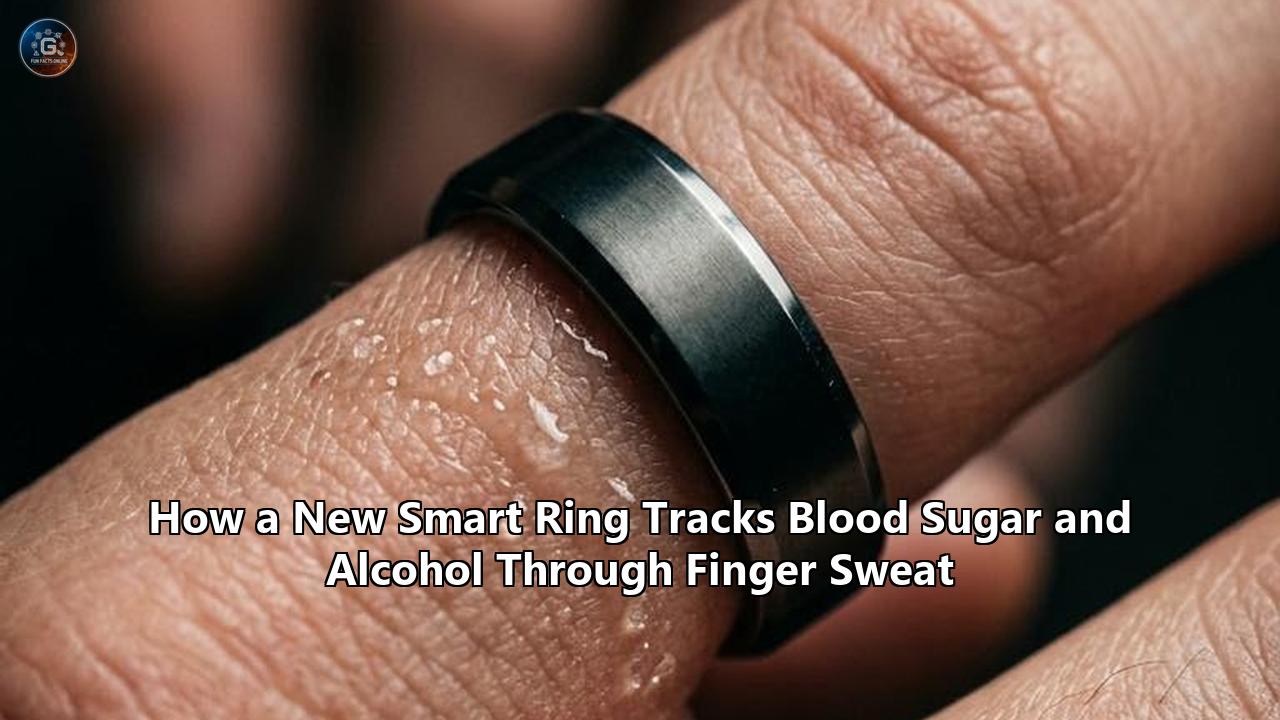
Engineers at the University of California, San Diego, have developed a working smart ring prototype that continuously tracks blood glucose, alcohol, ketones, lactate, uric acid, and vitamin C through finger sweat. Detailed in a study published in Nature Communications, the device—developed in the lab of nanoengineering professor Joseph Wang and led by postdoctoral researcher Tamoghna Saha—marks a sharp departure from existing commercial wearables. Rather than reading biophysical signals like pulse or skin temperature, the ring extracts micro-liter quantities of sweat passively from the fingertip to run real-time electrochemical assays.
The prototype, designated as the Continuous Health Analyzing Ring Module (CHARM), addresses a long-standing engineering challenge in non-invasive diagnostic health tracking. By utilizing an osmotic hydrogel polymer, the ring draws sweat to its sensor array via a controlled osmotic pressure gradient, eliminating the need for the user to exercise or perspire actively. In clinical trials involving healthy individuals and participants with Type 1 diabetes, the prototype demonstrated glucose monitoring accuracy comparable to commercial continuous glucose monitors (CGMs) while simultaneously profiling blood alcohol levels and metabolic markers.
                     BIOMARKER TRACKING PARADIGMS
┌────────────────────────┬─────────────────────────┬─────────────────────────┐
│ Metric / Feature       │ UCSD Smart Ring         │ Subcutaneous CGMs       │
│                        │ (Sweat Osmosis)         │ (Interstitial Fluid)    │
├────────────────────────┼─────────────────────────┼─────────────────────────┤
│ Sampling Method        │ Non-invasive hydrogel   │ Minimally invasive      │
│                        │ passive sweat pull      │ transdermal filament    │
├────────────────────────┼─────────────────────────┼─────────────────────────┤
│ Target Biomarkers      │ Glucose, Ketones,       │ Glucose only            │
│                        │ Alcohol, Lactate, etc.  │ (some Ketone duals)     │
├────────────────────────┼─────────────────────────┼─────────────────────────┤
│ Signal Latency         │ 15–30 minutes           │ 5–10 minutes            │
├────────────────────────┼─────────────────────────┼─────────────────────────┤
│ Sensor Life / Power    │ 12-hr battery per charge│ 10–14 days continuous   │
└────────────────────────┴─────────────────────────┴─────────────────────────┘
The arrival of this multi-analyte biosensor ring introduces a direct technical contrast to optical health monitoring technologies championed by consumer electronics manufacturers, as well as needle-based interstitial sensors utilized in clinical diabetes care.
The Molecular Jump: Sweat Chemistry vs. Optical Biophysics
Current market-leading wearables—such as the Oura Ring Gen 3, the Samsung Galaxy Ring, and the Ultrahuman Ring Air—rely almost exclusively on photoplethysmography (PPG) sensors, infrared LEDs, accelerometers, and thermistors. These instruments measure biophysical phenomena: volume changes in blood vessels, skin temperature fluctuations, respiratory rates, and micro-movements. While effective for tracking sleep stages, heart rate variability (HRV), and general physical activity, biophysical sensors are fundamentally incapable of measuring metabolic molecules directly.
       COMMERCIAL BIOPHYSICAL RINGS            UCSD CHARM BIOCHEMICAL RING
       ┌──────────────────────────┐           ┌──────────────────────────┐
       │ - Photoplethysmography   │           │ - Enzymatic Hydrogel     │
       │ - Infrared LEDs          │     VS    │ - Osmotic Fluid Extraction│
       │ - Thermistors            │           │ - Electrochemical Array  │
       │ Tracks: Heart Rate, HRV, │           │ Tracks: Glucose, Ketones,│
       │ Temperature, Sleep       │           │ Alcohol, Lactate, Uric A.│
       └──────────────────────────┘           └──────────────────────────┘
For years, consumer technology companies have attempted to build a non-invasive optical smart ring blood sugar monitor using near-infrared (NIR) or short-wave infrared (SWIR) spectroscopy. The theoretical goal of optical spectroscopy is to shine specific wavelengths of light through the dermis and detect the absorption spectrum of glucose molecules dissolved in blood or interstitial fluid.
However, optical non-invasive glucose sensing faces formidable physics-based barriers:
- Tissue Scattering and Depth: Light entering the skin undergoes extensive Rayleigh and Mie scattering, dampening signal-to-noise ratios.
- Interfering Chromophores: Water, collagen, hemoglobin, and melanin absorb light across similar spectral bands, masking subtle glucose signatures.
- Variable Hydration: Variations in ambient humidity, hydration levels, and local blood flow distort optical calibration baselines.
The UC San Diego research group bypassed optical spectroscopy entirely. Instead of attempting to "see" glucose through layers of skin tissue, the ring mechanics pull liquid sweat containing the target molecules directly to an integrated enzymatic sensor surface.
"Commercial rings only provide biophysical information, but they lack molecular information about biochemical markers that offer deeper insights about an individual's health status," explained Tamoghna Saha, first author of the study.
By shifting the collection vector from optical dermal penetration to transdermal fluid extraction, the sweat-analyzing smart ring replaces statistical optical estimations with direct electrochemical enzymatic reaction data.
Inside the CHARM Ring: Osmotic Extraction and Sensor Mechanics
The human fingertip represents one of the most bio-efficient locations on the body for sweat collection. Fingertips possess a dense concentration of eccrine sweat glands—exceeding 500 glands per square centimeter—which continuously secrete micro-liter volumes of fluid even during rest or sleep.
To harvest this fluid without forcing the user to perspire through physical exertion or heat exposure, the UCSD team engineered an osmotic hydrogel polymer. The hydrogel is formulated with a high-osmolarity solute—specifically an ethylene glycol solution—that generates a localized chemical potential gradient. When placed against the ventral surface of the finger, this gradient exerts a gentle transdermal osmotic pull, wicking microscopic quantities of sweat through the stratum corneum and into the ring’s internal channel array.
                  OSMOTIC EXTRACTION METHODOLOGY

         ┌──────────────────────────────────────────┐
         │         CHARM Ring Outer Shell           │
         ├──────────────────────────────────────────┤
         │ Flexible Electronics & Zn-AgO Battery   │
         ├──────────────────────────────────────────┤
         │ Electrochemical Biosensor Array          │
         ├──────────────────────────────────────────┤
         │ Osmotic Hydrogel (Ethylene Glycol Doped) │
         └──────────────────┬───────────────────────┘
                            │ (Osmotic Pressure Gradient)
         ┌──────────────────▼───────────────────────┐
         │ Ventral Fingertip Skin (Stratum Corneum) │
         ├──────────────────────────────────────────┤
         │ Dense Eccrine Sweat Glands (>500/cm²)    │
         └──────────────────────────────────────────┘
Once sweat reaches the micro-channel, it comes into contact with an array of screen-printed electrochemical sensors functionalized with specific enzymes:
- Glucose Oxidase (GOx): Catalyzes the oxidation of glucose into gluconic acid and hydrogen peroxide, generating a proportional electrical current.
- Alcohol Oxidase (AOx): Oxidizes ethanol into acetaldehyde and hydrogen peroxide, allowing quantitative blood alcohol concentration (BAC) estimation.
- Lactate Oxidase (LOx): Measures anaerobic metabolic shifts during exercise or physiological stress.
- Beta-Hydroxybutyrate Dehydrogenase: Monitors ketone body production, critical for assessing diabetic ketoacidosis risk or ketogenic metabolic states.
- Uricase and Ascorbic Acid Oxidase: Measure metabolic waste accumulation and antioxidant nutritional status.
The ring processes these enzymatic reactions using an ultra-compact printed circuit board (PCB) smaller than a US quarter coin. Power is supplied by a flexible zinc-silver oxide (Zn-AgO) rechargeable battery integrated into the ring’s band, providing up to 12 hours of continuous multi-analyte streaming via Bluetooth Low Energy (BLE) to a companion mobile application.
Comparative Analysis: Sweat Sensing vs. Optical Spectroscopy vs. CGMs
Evaluating the potential of a sweat-based smart ring blood sugar monitor requires comparing its performance, convenience, and biological limitations directly against competing technological approaches.
┌────────────────────────┬────────────────────────┬────────────────────────┬────────────────────────┐
│ Vector                 │ Sweat Osmosis Ring     │ Optical Spectroscopy   │ Subcutaneous CGM       │
│                        │ (UCSD CHARM)           │ (NIR / Raman)          │ (Dexcom, Abbott)       │
├────────────────────────┼────────────────────────┼────────────────────────┼────────────────────────┤
│ **Measurement Directness**│ Direct electrochemical │ Indirect optical       │ Direct electrochemical │
│                        │ analyte oxidation      │ photon absorption      │ analyte oxidation      │
├────────────────────────┼────────────────────────┼────────────────────────┼────────────────────────┤
│ **Invasiveness**       │ Fully non-invasive     │ Fully non-invasive     │ Minimally invasive     │
│                        │                        │                        │ (subcutaneous needle)  │
├────────────────────────┼────────────────────────┼────────────────────────┼────────────────────────┤
│ **Target Fluid**       │ Eccrine sweat          │ Interstitial / Intravascular│ Interstitial fluid    │
├────────────────────────┼────────────────────────┼────────────────────────┼────────────────────────┤
│ **Physiological Lag**   │ 15–30 minutes          │ 0–5 minutes            │ 5–10 minutes           │
├────────────────────────┼────────────────────────┼────────────────────────┼────────────────────────┤
│ **Multi-Biomarker Capability**│ High (Glucose, Ketones,│ Low (Primarily limited │ Medium (Glucose/Ketone │
│                        │ Alcohol, Lactate, etc.)│ to single analytes)    │ dual sensors emerging) │
├────────────────────────┼────────────────────────┼────────────────────────┼────────────────────────┤
│ **Form Factor**        │ Smart Ring (5.1g)      │ Ring or Watch          │ Wearable Patch / Arm   │
│                        │                        │                        │ Transmitter            │
├────────────────────────┼────────────────────────┼────────────────────────┼────────────────────────┤
│ **Calibration Needs**  │ Subject-specific       │ Continuous multi-point │ Factory calibrated     │
│                        │ algorithmic factor     │ optical re-calibration │                        │
└────────────────────────┴────────────────────────┴────────────────────────┴────────────────────────┘
Sweat Osmosis vs. Optical Spectroscopy
Optical spectroscopy remains an attractive consumer target because it requires no chemical consumables, microfluidics, or fluid contact with skin secretions. However, despite decades of laboratory development and significant venture investment, non-invasive optical glucose devices consistently struggle to meet clinical accuracy thresholds such as the Clarke Error Grid Zone A/B requirement (which demands that at least 95% of readings fall within clinically acceptable ranges).
In contrast, the UCSD sweat ring achieved strong correlation curves with reference blood glucose tests during human trials. Because the enzymatic reaction in the ring relies on actual chemical contact with glucose molecules in sweat, it avoids the chromatic interference and tissue-scattering distortions that disrupt optical NIR sensors.
The tradeoff comes in device maintenance: while optical sensors last the lifetime of the hardware, sweat-based electrochemical sensors require hydrogel replenishment and suffer from eventual enzyme degradation due to biofouling and environmental exposure.
Sweat Osmosis vs. Subcutaneous CGMs
Subcutaneous continuous glucose monitors, such as the Dexcom G7 and Abbott FreeStyle Libre 3, represent the current gold standard for personal diabetes management. These devices use a auto-applicator to insert a flexible micro-filament into the interstitial fluid beneath the skin, measuring glucose levels every 1 to 5 minutes for up to 14 days.
While subcutaneous CGMs deliver exceptional precision, they carry distinct drawbacks:
- Invasiveness: Insertion requires puncturing skin tissue, causing local trauma, occasional bleeding, and potential skin irritation or allergy to acrylic adhesives.
- Environmental Waste: Each 10 to 14-day replacement generates plastic and electronic waste from single-use inserters.
- Single-Metric Focus: Most commercial CGMs measure only glucose, with select newer models adding dual ketone tracking.
The smart ring prototype provides a completely non-invasive alternative that operates without skin punctures. Furthermore, its multi-analyte biosensor array measures up to four distinct metabolic markers simultaneously—pairing glucose tracking with alcohol, lactate, or uric acid monitoring on a single wearable platform.
However, CGMs retain a vital physiological advantage: signal latency.
The Latency Paradox: Navigating Sweat-to-Blood Lag Times
A primary physical constraint identified in the UCSD study is physiological lag time. When blood glucose levels rise following a meal, glucose must first diffuse from capillaries into interstitial fluid, and subsequently pass into the secretory duct of the eccrine sweat gland before appearing on the surface of the skin.
                     BIOLOGICAL DIFFUSION CASCADE

      ┌────────────────────────────────────────────────────────┐
      │               Vascular Compartment                     │
      │               (Systemic Blood Glucose)                 │
      └──────────────────────────┬─────────────────────────────┘
                                 │
                                 ▼ (5–10 Minute Diffusion)
      ┌────────────────────────────────────────────────────────┐
      │               Interstitial Fluid                       │
      │               (Subcutaneous Tissue)                    │
      └──────────────────────────┬─────────────────────────────┘
                                 │
                                 ▼ (10–20 Minute Secretion & Transport)
      ┌────────────────────────────────────────────────────────┐
      │               Eccrine Sweat Gland Duct                 │
      │               (Surface Dermal Layer)                   │
      └──────────────────────────┬─────────────────────────────┘
                                 │
                                 ▼ (Osmotic Hydrogel Wicking)
      ┌────────────────────────────────────────────────────────┐
      │               Smart Ring Biosensor Array               │
      │               (Electrochemical Output)                  │
      └────────────────────────────────────────────────────────┘
This biological cascade creates a 15-to-30-minute delay between systemic blood glucose spikes and corresponding sweat glucose concentrations measured by the ring.
For general wellness monitoring, athletic performance optimization, or early metabolic screening, a 15-to-30-minute lag is physiologically acceptable. However, for individuals managing Type 1 diabetes who require precise timing for bolus insulin administration, a 30-minute delay presents clinical risks—particularly during rapid hypoglycemic drops, where swift intervention is necessary to prevent severe disorientation or loss of consciousness.
To mitigate this limitation, the UCSD researchers developed predictive calibration algorithms. By applying machine-learning model smoothing to the electrochemical current response, the companion application calculates subject-specific calibration factors, projecting real-time blood values based on the rate of sweat biomarker changes. During clinical evaluation on Type 1 diabetes subjects, these predictive algorithms enabled sweat glucose curves to closely track commercial CGM trends during standard meal-tolerance tests.
Simultaneous Alcohol and Glucose Profiling: Metabolic Synergies
One of the unique capabilities of the UCSD smart ring is its ability to track blood alcohol concentrations alongside glucose and ketones simultaneously.
The physiological relationship between alcohol consumption and glucose metabolism is complex and clinically significant. Ethanol consumption actively suppresses hepatic gluconeogenesis—the process by which the liver converts non-carbohydrate substrates into glucose to maintain baseline blood sugar levels.
For individuals with diabetes, drinking alcohol can trigger severe, delayed nocturnal hypoglycemia hours after consumption, as the liver prioritizes metabolizing ethanol over releasing glucose into the bloodstream.
                    METABOLIC INTERACTION PATHWAY

                 ┌────────────────────────────────┐
                 │       Alcohol Ingestion        │
                 └───────────────┬────────────────┘
                                 │
                                 ▼
                 ┌────────────────────────────────┐
                 │  Hepatic Ethanol Metabolism    │
                 │  Prioritized by Liver          │
                 └───────────────┬────────────────┘
                                 │
                                 ▼
                 ┌────────────────────────────────┐
                 │  Inhibition of Hepatic         │
                 │  Gluconeogenesis               │
                 └───────────────┬────────────────┘
                                 │
                                 ▼
                 ┌────────────────────────────────┐
                 │  Suppressed Glucose Release    │
                 │  Risk of Nocturnal Hypoglycemia│
                 └────────────────────────────────┘
Existing health wearables evaluate alcohol impact indirectly by detecting elevated nocturnal heart rates, depressed HRV, or micro-disturbances in REM sleep via PPG sensors. However, these biophysical responses are reactive down-stream consequences that appear hours after ingestion.
By utilizing an integrated alcohol oxidase biosensor alongside glucose oxidase channels, the CHARM ring provides real-time, quantitative tracking of both sweat alcohol concentration and blood sugar dynamics. If a user consumes alcohol, the ring directly tracks the rising ethanol concentrations while simultaneously monitoring for any corresponding drop in glucose production.
This multi-analyte approach offers actionable insights:
- Preventive Hypoglycemia Alerts: Warning diabetic users of impending nocturnal blood sugar drops triggered by ethanol-induced gluconeogenesis suppression.
- Sobriety and Behavioral Tracking: Providing objective transdermal alcohol concentration metrics without requiring breathalyzer tests.
- Metabolic Fuel Profiling: Allowing athletes to measure lactate threshold surges alongside metabolic glucose utilization during high-intensity training sessions.
"A ring capturing dynamic molecular information in real time would be extremely useful for making informed decisions regarding health, diet, and lifestyle," noted Joseph Wang. "For example, the ring's ability to track both glucose and ketone continuously and simultaneously would greatly benefit optimal insulin dosing for the management of diabetes."
Technical Bottlenecks and Commercial Limitations
While the proof-of-concept published in Nature Communications demonstrates a major technological leap, significant engineering hurdles remain before a sweat-analyzing smart ring blood sugar monitor can be manufactured at commercial scale.
┌───────────────────────────┬────────────────────────────────────────────────────────┐
│ Engineering Challenge     │ Primary Cause & Operational Impact                     │
├───────────────────────────┼────────────────────────────────────────────────────────┤
│ **Battery Life**          │ Maxes out at 12 hours due to active electrochemical    │
│                           │ processing and continuous BLE streaming.               │
├───────────────────────────┼────────────────────────────────────────────────────────┤
│ **Hydrogel Depletion**    │ Ethylene glycol osmotic pull degrades after continuous │
│                           │ fluid absorption; requires strip/cartridge swaps.     │
├───────────────────────────┼────────────────────────────────────────────────────────┤
│ **Sensor Biofouling**     │ Dermal proteins and skin lipids accumulate on enzymes, │
│                           │ attenuating current response over time.               │
├───────────────────────────┼────────────────────────────────────────────────────────┤
│ **Environmental Noise**   │ Handwashing, soaps, lotions, and external rain water   │
│                           │ can dilute or contaminate micro-sweat samples.          │
└───────────────────────────┴────────────────────────────────────────────────────────┘
1. Power Constraints and Battery Architecture
The CHARM prototype incorporates a flexible zinc-silver oxide rechargeable battery that powers the biosensor array and data transmitter for up to 12 hours. While impressive for a 5.1-gram device, a 12-hour operational window falls far short of commercial smart ring expectations. Consumer products like the Oura Ring or Samsung Galaxy Ring operate for 5 to 7 days on a single charge. Users expect to wear health trackers continuously, including overnight for sleep tracking; requiring mid-day recharges creates friction that reduces compliance.
2. Hydrogel Longevity and Sensor Biofouling
The osmotic hydrogel polymer relies on a finite chemical potential gradient. As the hydrogel draws fluid continuously from the skin, the concentration of the osmotic agent dilutes, gradually diminishing its extraction pressure over extended wear periods.
Additionally, sweat contains skin lipids, dead epithelial cells, peptides, and ambient dust. Over time, these substances adhere to the biosensor surface—a phenomenon known as biofouling. Biofouling blocks catalytic enzyme sites on the electrode, causing signal drift and requiring periodic re-calibration or modular sensor replacement.
3. Environmental Interferences and Contamination
The human hand is constantly exposed to external fluids, physical washing, and chemical agents. Everyday tasks—such as washing dishes, applying hand lotion, exercising in heavy rain, or swimming—introduce significant environmental variables:
- Dilution: Immersion in water can wash away the osmotic hydrogel or dilute surface sweat, leading to artificially low analyte readings.
- Chemical Contamination: Soaps, hand sanitizers containing ethyl alcohol, and cosmetics can contaminate the enzymatic sensors, causing false alcohol or glucose spikes.
- Physical Debris: Outdoor dirt or grease can clog the microfluidic channel, disrupting fluid transport to the sensor array.
Commercialization will likely require the development of protective microfluidic membranes that shield the osmotic hydrogel from external water intrusion while maintaining skin-surface contact.
Regulatory Horizons and the Road to Commercialization
The commercialization pathway for a biochemical smart ring blood sugar monitor splits into two distinct regulatory trajectories depending on the intended user base and marketing claims.
                     REGULATORY & MARKET PATHWAYS

       ┌──────────────────────────────────────────────────┐
       │              UCSD CHARM Technology               │
       └─────────┬──────────────────────────────┬─────────┘
                 │                              │
                 ▼                              ▼
  ┌────────────────────────────┐  ┌────────────────────────────┐
  │   Wellness / Consumer      │  │     Medical Device         │
  │   (Oura, Samsung, Apple)   │  │   (FDA 510(k) / De Novo)   │
  ├────────────────────────────┤  ├────────────────────────────┤
  │ - Metabolic fitness        │  │ - Diabetes insulin dosing  │
  │ - Alcohol consumption      │  │ - Strict clinical trials   │
  │ - Lactate / Athletic load  │  │ - MARD accuracy thresholds │
  │ - General wellness trends  │  │ - Prescriptive clearance   │
  └────────────────────────────┘  └────────────────────────────┘
The Consumer Wellness Pathway
To enter the market quickly, wearable makers could license the osmotic sweat-sensing technology for general wellness, fitness, and lifestyle monitoring. Under FDA guidance for general wellness products, devices that track overall health patterns, exercise recovery, or metabolic responses to food without making specific disease-treatment claims do not require rigorous pre-market clearance.
In this context, the ring would serve as a metabolic health tracker: flagging glucose surges after high-carbohydrate meals, monitoring athletic lactate thresholds, tracking uric acid levels, and logging alcohol recovery times.
The Medical Device Pathway
If a manufacturer intends to market a biochemical smart ring as a direct replacement for invasive CGMs—enabling diabetic patients to calculate insulin doses—the device must obtain FDA 510(k) clearance or De Novo classification.
To secure medical clearance, the device must satisfy strict clinical criteria:
- Mean Absolute Relative Difference (MARD): MARD measures the average percentage deviation between the wearable sensor and lab-standard reference blood glucose tests. Modern CGMs achieve MARD scores below 9%. Sweat-based monitors must consistently demonstrate comparable single-digit MARD scores across diverse environmental conditions.
- Skin-Type and Sweat-Rate Equity: Clinical trials must prove that the osmotic hydrogel operates reliably across diverse demographic groups, including variations in skin thickness, melanin levels, age, and baseline sweat production rates.
- Fail-Safe Sensor Disconnects: Algorithms must instantly alert the user if hydrogel depletion, external fluid immersion, or sensor biofouling invalidates the current metabolic reading.
What to Watch For Next
The publication of the CHARM ring study in Nature Communications establishes a clear proof-of-concept for molecular-level wearable health monitoring. Over the next 12 to 24 months, several key milestones will signal whether this academic breakthrough can transition into consumer electronics and clinical practice:
- Miniaturization and Material Integration: Watch for follow-up research detailing second-generation osmotic hydrogels capable of sustained fluid extraction for 24 to 48 hours without replacement.
- Low-Power ASIC Architecture: Advances in custom Application-Specific Integrated Circuits (ASICs) that cut processor power draw, pushing operational battery life past 24 hours.
- Corporate Licensing Deals: Track whether major wearable tech conglomerates—such as Samsung, Apple, Google/Fitbit, or Oura—partner with or acquire biosensing spin-offs originating from UC San Diego's nanoengineering labs.
- Modular Cartridge Designs: Commercial implementations may adopt a hybrid architecture: a permanent ring casing containing the battery, processor, and Bluetooth radio, paired with disposable, snap-in hydrogel/sensor cartridges replaced weekly.
By moving health wearables past the physical barrier of light-based optics and deep into molecular chemistry, passive sweat-sensing smart rings open a new frontier in personalized health tracking. The coming years will determine if this molecular approach can overcome real-world environmental noise to finally deliver needle-free blood sugar and metabolic tracking to millions.
Reference:
- https://www.cnet.com/tech/mobile/new-smart-ring-uses-finger-sweat-track-health/
- https://today.ucsd.edu/story/new-wearable-ring-tracks-glucose-ketone-and-other-biomarkers-in-sweat-simultaneously
- https://www.phonearena.com/news/new-smart-ring-can-measure-blood-glucose-from-your-sweat_id182228
- https://www.mensfitness.com/news/new-smart-ring-measures-blood-sugar-alcohol-through-sweat
- https://cybernews.com/tech/smart-ring-sweat-biomarkers/
- https://www.androidauthority.com/smart-ring-sweat-3692606/