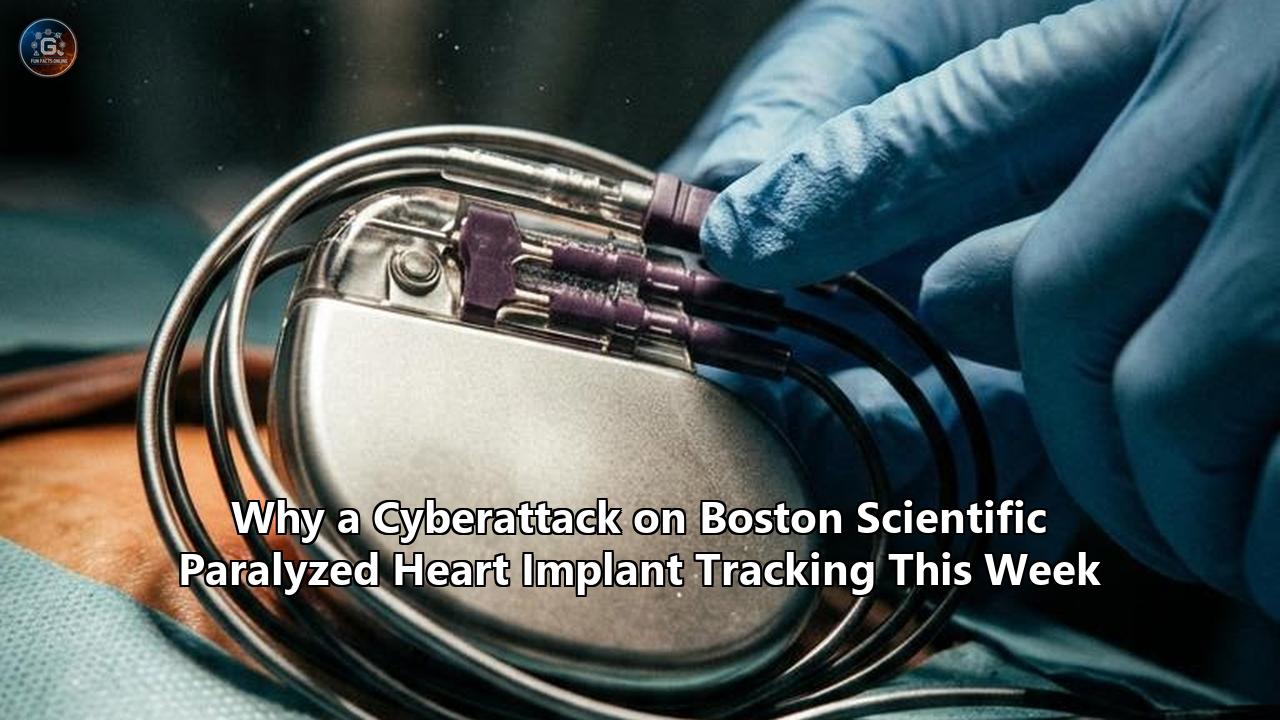
The fallout from the Boston Scientific cyberattack has exposed a critical fault line in modern digital medicine: the fragile bridge connecting life-sustaining hardware inside a human chest to corporate IT infrastructure on the other side of the world.
When Boston Scientific Corporation detected unauthorized activity within its enterprise network on August 25, 2026, the global medical device giant initiated emergency containment protocols that severed core operating systems, halted factory production lines, and grounded shipping networks. Within hours, the blast radius extended directly into electrophysiology clinics and cardiac catheterization laboratories.
While millions of legacy pacemakers and defibrillators already registered on the company’s LATITUDE remote patient management platform continued transmitting telemetry, the digital gateway for all newly implanted devices crashed. For nearly two weeks, patients walking out of hospitals with newly implanted cardiac rhythm devices were left stranded in a clinical blind spot, entirely unable to connect their hardware to remote monitoring networks.
On September 8, 2026, Boston Scientific filed an updated Form 8-K with the U.S. Securities and Exchange Commission (SEC) and issued technical notices confirming that remote monitoring activation capabilities had finally been restored alongside global manufacturing and distribution lines. Yet the corporate disclosures revealed substantial damage: the attack caused material disruption to the company’s operations worldwide, forced the withdrawal of third-quarter and full-year financial guidance, and exposed vulnerabilities in the life-support supply chains that serve more than 48 million patients annually.
                 CHRONOLOGY OF THE INCIDENT
+-------------------------------------------------------------+
| AUGUST 25, 2026                                             |
| Boston Scientific detects unauthorized network intrusion;    |
| IT isolates on-premises systems and halts factory lines.    |
+-------------------------------------------------------------+
                              |
                              v
+-------------------------------------------------------------+
| AUGUST 26, 2026                                             |
| Form 8-K filed with SEC; remote activations for pacemakers,  |
| ICDs, and cardiac monitors fail globally.                   |
+-------------------------------------------------------------+
                              |
                              v
+-------------------------------------------------------------+
| AUGUST 28, 2026                                             |
| Clinical warnings issued by British Heart Rhythm Society;   |
| device clinics revert to manual in-person interrogations.   |
+-------------------------------------------------------------+
                              |
                              v
+-------------------------------------------------------------+
| SEPTEMBER 8, 2026                                           |
| SEC update confirms restoration of activations; company     |
| warns Q3 and 2026 financial guidance unlikely to be met.    |
+-------------------------------------------------------------+
The Anatomy of the Outage: How an Enterprise Breach Blinded Remote Telemetry
The incident began in the early morning hours of August 25, when network defense sensors flagged anomalous activity inside Boston Scientific’s internal computing environment. Confronted with an active intruder attempting lateral movement, the company's cybersecurity incident response team enacted aggressive containment measures. Critical internal operating systems, enterprise resource planning (ERP) platforms, warehouse management software, and on-premises server environments were taken offline to isolate the threat.
Boston Scientific called in incident responders from CrowdStrike alongside additional third-party digital forensics firms. The defensive containment succeeded in boxing in the intruder: forensic assessments confirmed no unauthorized activity after August 25, and no evidence pointed to compromise within the firm's core cloud-hosted applications, external collaboration portals, or product development repositories.
However, severing those internal on-premises systems caused collateral damage across the company’s clinical infrastructure.
Boston Scientific’s cardiac rhythm management (CRM) portfolio relies on a layered digital telemetry architecture. At its center is the LATITUDE Patient Management System. When an electrophysiologist implants a pacemaker, an implantable cardioverter-defibrillator (ICD), or a cardiac resynchronization therapy (CRT) device, the patient receives a tabletop LATITUDE Communicator. This bedside base station interrogates the implanted device using low-power medical radio bands (Medical Implant Communication Service, or MICS) and transmits battery health, lead impedance, and arrhythmia episode logs via cellular or landline connections directly to the LATITUDE cloud.
For patients receiving an insertable cardiac monitor (ICM)—such as the LUX-Dx system—the device uses Bluetooth Low Energy (BLE) to pair directly to a smartphone app, relaying heart rhythm data over commercial mobile networks.
                 CARDIAC TELEMETRY PIPELINE

 +------------------+     MICS / BLE      +-----------------+
 | Implanted Device | ==================> | Base Station or |
 |  (ICD / Pacr)    |                     | Smartphone App  |
 +------------------+                     +-----------------+
                                                   |
                                                   | Cellular / Wi-Fi
                                                   v
 +----------------------------------------------------------+
 |               LATITUDE Cloud Environment                 |
 | (Remained intact; processed existing enrolled devices)   |
 +----------------------------------------------------------+
                              |
                              X  BRIDGE SEVERED BY OUTAGE
                              v
 +----------------------------------------------------------+
 |         Internal On-Premises Provisioning Engine         |
 |   - Cryptographic PKI Handshake                          |
 |   - Device Identity Registration                         |
 |   - Serial Number Database Validation                    |
 +----------------------------------------------------------+
During the incident, the underlying cloud infrastructure hosting patient records remained operational. Legacy patients whose devices were already authenticated and active experienced uninterrupted transmission.
The provisioning gateway, however, collapsed.
Whenever a clinician provisions a new communicator or links an ICM to a patient's mobile phone, the device must complete a cryptographic handshake against Boston Scientific's internal identity registration systems. This workflow verifies the device's unique serial number, generates a secure session certificate, and binds that specific hardware to the patient’s clinical chart within the hospital’s electronic health record (EHR) ecosystem.
Because those identity engines and cryptographic certificate directories resided on internal servers targeted during containment, all new registrations failed.
The result was an operational paralysis:
- CRM Communicators Blocked: Newly implanted pacemakers and defibrillators could not connect to their bedside LATITUDE units, preventing all automated nightly telemetry uploads.
- Smartphone Pairing Broken: New insertable cardiac monitors could not complete BLE pairing with patients’ mobile devices, rendering consumer-facing app telemetry nonfunctional.
- Data Trapped on Devices: Although the implants continued sensing and pacing inside patients' chests, all diagnostic and arrhythmia data was trapped in device memory.
- In-Person Fallbacks Required: To read a patient’s heart data, electrophysiologists had to rely exclusively on physical interrogations using in-clinic Model 3300 programmers or handheld Clinic Assistant apps.
Clinicians were blind to real-time events for every cardiac device implanted after August 25 until the provisioning bridge was restored on September 8.
Clinical Fallout: Inside the Electrophysiology Clinic
In the immediate aftermath of the Boston Scientific cyberattack, clinical workflows inside electrophysiology practices and hospital device clinics dissolved into disorder.
Under standard cardiac care protocols, the first 30 days following an implant procedure represent the highest-risk clinical window. During this immediate post-implantation phase, patients face an elevated likelihood of:
- Subacute lead dislodgement, where pacing or sensing wires shift within the myocardium;
- Rapid threshold elevations, which can prevent a pacemaker from properly delivering energy to capture the heart muscle;
- Acute pocket hematomas and surgical site infections;
- Malignant ventricular tachyarrhythmias (ventricular tachycardia and ventricular fibrillation) in cardiomyopathy patients who have just received a secondary-prevention ICD.
Remote monitoring systems like LATITUDE serve as an automated early warning system for these life-threatening events. If an intracardiac lead shifts 1 millimeter and loses proper sensing, the device’s automated daily check flags the spike in pacing impedance and transmits an alert to the clinic’s dashboard, prompting urgent intervention before the patient suffers syncope or cardiac arrest.
       FIRST 30 DAYS POST-IMPLANT: THE CRITICAL WINDOW
+-------------------------------------------------------------+
| RISKS NORMALLY CAUGHT BY REMOTE MONITORING:                 |
|  - Lead dislodgement (micro-shifts within heart tissue)     |
|  - Sudden pacing impedance changes                          |
|  - Subacute ventricular tachycardia / fibrillation runs     |
|  - Early battery anomalies or insulation failure            |
+-------------------------------------------------------------+
                              |
                              v
+-------------------------------------------------------------+
| DURING THE AUGUST 25 - SEPTEMBER 8 SYSTEM OUTAGE:           |
|  - Devices could NOT be activated on LATITUDE               |
|  - Nightly automated telemetry checks failed completely     |
|  - Arrhythmia data trapped in device internal RAM           |
|  - Complications invisible unless patients developed acute  |
|    symptoms and arrived at the Emergency Department         |
+-------------------------------------------------------------+
Between August 25 and September 8, that defensive monitoring vanished for an entire cohort of surgical patients.
On August 28, the British Heart Rhythm Society (BHRS) issued an urgent clinical advisory to cardiologists and cardiac physiologists across the United Kingdom. The BHRS alert stated the situation plainly:
"There is no impact to implantable device function (e.g., sensing, therapy or telemetry operations)... However, patients who received their implant on or after 25/8/26 are unable to be enrolled in the remote monitoring at this stage... Any in-person checks will function as normal."
The clinical burden landed squarely on front-line hospital staff. Electrophysiology departments and dedicated device clinics operate under severe staffing constraints, with nurse-to-patient ratios in remote monitoring programs often exceeding 1 to 1,500. Clinics manage hundreds of thousands of cardiac patients simultaneously by relying on software algorithms to filter incoming transmissions and flag the 1% of patients in clinical distress.
When remote activation failed, device clinic teams were forced to implement manual tracking protocols:
- Paper and Spreadsheet Registries: Clinic coordinators compiled ad-hoc spreadsheets of every patient implanted during the outage, manually cataloging device model numbers, serial numbers, and home phone numbers.
- In-Person Office Visits: Patients who were scheduled to simply plug in a communicator at home were instructed to return to the hospital for wound checks and manual device interrogations using bulky rolling programmer consoles (such as the Boston Scientific Model 3300).
- Emergency Department Triage: Without remote monitoring data to confirm whether an ICD patient had received an appropriate shock or an inappropriate shock triggered by electrical noise, emergency departments were forced to call on-call electrophysiologists to physically interrogate devices at bedside.
The disruption created a deep psychological burden for patients. Individuals receiving an implantable defibrillator often experience post-traumatic stress and anxiety regarding cardiac arrest and the sensation of being shocked. For these patients, the tabletop LATITUDE monitor acts as a psychological lifeline, offering reassurance that their heart rhythm is under continuous surveillance. When patients were discharged with a non-functional base station and told that corporate cyber disruptions prevented the device from connecting to their doctors, it damaged patient confidence at a vulnerable moment.
Supply Chain Paralysis: The Stoppage from Cork to the Operating Room
The cyberattack extended far beyond telemetric monitoring: it brought physical manufacturing and distribution to an abrupt halt.
Boston Scientific operates an expansive manufacturing and distribution footprint across North America, Europe, Latin America, and Asia. Its flagship biomedical engineering campus in Cork, Ireland, manufactures Class III life-critical medical devices, including transcatheter aortic valves, arterial stents, and specialized electrophysiology catheters.
On Tuesday, August 26, local management in Cork made the unprecedented decision to send manufacturing and assembly line personnel home. Cleanrooms were shuttered, and employees equipped for remote administrative tasks were instructed to work off-site.
               HOW AN IT OUTAGE HALTS PHYSICAL IMPLANTS
+-------------------------------------------------------------+
| IT Containment: Enterprise Resource Planning (ERP) Offline  |
+-------------------------------------------------------------+
                              |
                              v
+-------------------------------------------------------------+
| Traceability Failure: Automated lot tracking & electronic   |
| device history records (eDHRs) frozen across cleanrooms.    |
+-------------------------------------------------------------+
                              |
                              v
+-------------------------------------------------------------+
| Sterilization Paralysis: Ethylene Oxide (EtO) sterilization |
| validation logs unavailable; sterile batches cannot ship.   |
+-------------------------------------------------------------+
                              |
                              v
+-------------------------------------------------------------+
| Distribution Freeze: Major warehouses cannot scan barcodes, |
| verify regulatory compliance, or generate shipping labels.  |
+-------------------------------------------------------------+
                              |
                              v
+-------------------------------------------------------------+
| Hospital Depletion: Consignment inventory in ORs expires;   |
| non-elective cardiac procedures face immediate cancellation.|
+-------------------------------------------------------------+
Sending cleanroom teams home at an FDA-regulated implantable device plant is an extreme measure. It signals that digital enterprise disruption has penetrated deep into physical operational technology (OT) and manufacturing execution systems (MES).
Jacob Krell, Senior Director of Secure AI Solutions and Cybersecurity at Suzu Labs, analyzed the severity of the operational shutdown during the outage:
"Software involved in producing and tracking FDA-regulated devices sits inside a validated quality system. Restoring a server is one thing. Establishing that the data coming out of that system can still be trusted is another. You can't ship something that gets implanted in a human body on trust alone... A cardiac device that misses its ship date can mean a cancelled surgery. That's what makes a company like Boston Scientific such an attractive extortion target. The attacker doesn't need to destroy anything. They just need to make downtime more expensive than whatever they're asking for."
Medical device manufacturing is governed by stringent regulatory frameworks, including the FDA's Quality System Regulation (21 CFR Part 820) and the European Union’s Medical Device Regulation (EU MDR). Every single pacemaker, lead, and delivery sheath that moves through an assembly line must maintain an unalterable Electronic Device History Record (eDHR). This record documents:
- Specific raw material lot numbers,
- Calibration data for cleanroom laser welding and microscopic assembly,
- Verification of bioburden reduction, and
- Validated Ethylene Oxide (EtO) terminal sterilization parameters.
When Boston Scientific took down its central servers, access to these electronic history records and enterprise validation systems was cut off. Without functioning ERP systems, cleanroom operators could not verify assembly metrics, warehouse personnel could not match serialized devices to hospital purchase orders, and sterilization facilities could not validate safety releases.
The entire shipping pipeline froze. Major distribution centers were unable to fulfill or dispatch orders, stranding shipments of specialized cardiac hardware.
The consequences for hospitals surfaced immediately. Modern healthcare systems keep lean physical inventories, relying on just-in-time delivery models and consignment stock. In a typical hospital catheterization laboratory, Boston Scientific owns the devices sitting on the shelf. The hospital only buys an ICD or lead at the precise moment it is implanted into a patient, triggering an automated electronic message that ships a replacement unit to replenish the hospital's smart cabinet within 24 to 48 hours.
When the cyberattack halted that automated replenishment system, hospital supply closets were left empty.
Substituting cardiac hardware at the last minute is rarely straightforward. Unlike swapping one generic antibiotic for another, switching an electrophysiology device requires navigating steep technical barriers:
- Lead Compatibility: Different manufacturers use proprietary header connectors and distinct lead-bifurcation geometries. If an electrophysiologist has already secured a Boston Scientific left-ventricular lead in a patient's coronary sinus, mating that lead to a competitor's pulse generator can violate manufacturer warranties and create long-term connection failure risks.
- Programmer Availability: Switching an implant to an alternate manufacturer requires an available, calibrated programmer console (such as Medtronic's CareLink or Abbott's Merlin) along with trained clinical specialists physically present in the lab.
- Physician Credentialing: Many cardiologists are sub-specialized in specific proprietary delivery systems, catheter shapes, and steering mechanisms.
When Boston Scientific’s supply chain froze, electrophysiology suites faced a choice: attempt risky substitutions with competitor hardware, or cancel scheduled operations entirely. Non-emergency pacemaker upgrades, elective lead extractions, and planned cardiac resynchronization surgeries were postponed across the United States and Europe, disrupting operating room schedules and leaving patients in holding patterns.
Technical Analysis: The Architecture of IoMT and Point-of-Activation Failures
To understand why an enterprise IT attack crippled heart implant tracking while leaving the physical devices running, one must examine the split architecture of modern Internet of Medical Things (IoMT) platforms.
A connected medical implant system is divided into four technical tiers:
+-------------------------------------------------------------------+
|                        TIER 1: THE IN-VIVO TIER                   |
| - Implantable Pulse Generator (Pacemaker / ICD)                   |
| - Custom low-power ASIC silicon, zero-OS firmware                 |
| - Medical Implant Communication Service (MICS) 402-405 MHz        |
| - Air-gapped from internet; communicates only with nearby wand/app|
+-------------------------------------------------------------------+
                                  |
                                  v
+-------------------------------------------------------------------+
|                     TIER 2: THE EDGE GATEWAY TIER                 |
| - LATITUDE Bedside Communicator / Smartphone Mobile Apps          |
| - Translates MICS or BLE telemetry into TCP/IP packets            |
| - Cellular LTE-M or Home Wi-Fi backhaul connection                |
+-------------------------------------------------------------------+
                                  |
                                  v
+-------------------------------------------------------------------+
|                   TIER 3: THE PROVISIONING / PKI TIER             |
| - Corporate Active Directory, Hardware Security Modules (HSMs)    |
| - Serial verification, device authorization databases             |
| - *LOCATED ON-PREMISES / HYBRID ENTERPRISE NETWORK*               |
| - [THIS TIER WAS ISOLATED/SEVERED DURING THE INCIDENT]           |
+-------------------------------------------------------------------+
                                  |
                                  v
+-------------------------------------------------------------------+
|                     TIER 4: THE CLOUD TELEMETRY TIER              |
| - Cloud-hosted LATITUDE database and clinician Web Portal         |
| - Automated alert generation, arrhythmia episode storage          |
| - Integration with Epic / Cerner Electronic Health Records        |
+-------------------------------------------------------------------+
1. The In-Vivo Tier
The pulse generator sits inside the patient's pectoral pocket. It runs on specialized low-power microcontrollers without an operating system, executing pre-compiled bare-metal code designed for predictable reliability.
This tier does not connect to the internet. It communicates strictly over short distances using proprietary radio-frequency handshakes or the MICS band, accessible only via a wand placed over the skin or a nearby receiver. This design protected the devices from direct compromise: no remote threat actor could push malicious firmware or adjust clinical therapy across the airwaves.
2. The Edge Gateway Tier
The bedside monitor or smartphone app acts as a local relay. It receives short-range RF or BLE data from the implant, wraps the raw binary payload into encrypted TCP/IP packets, and routes them outward over commercial cellular networks or home Wi-Fi.
The gateway has no clinical intelligence; it simply acts as a secure pipe.
3. The Provisioning and Public Key Infrastructure (PKI) Tier
This operational layer provides the identity backbone for the entire system. When a device is linked to a gateway for the first time, this tier verifies cryptographic credentials.
To guard against malicious interference, spoofing, and unauthorized access, the communicator queries an enterprise directory to verify:
- That the pulse generator serial number matches a valid manufactured unit;
- That the bedside communicator is an authorized, unmodified device;
- That a clinician has linked this specific hardware combination to a registered patient profile in the portal.
This verification requires communication with internal database servers, Hardware Security Modules (HSMs), and enterprise Active Directory controllers.
4. The Cloud Telemetry Tier
This cloud layer hosts the LATITUDE portal used by doctors and nurses. It analyzes incoming telemetry data, generates clinician alerts for arrhythmias, and interfaces with hospital EHR systems via HL7 or FHIR protocols.
When the Boston Scientific cyberattack unfolded, the company successfully shielded Tier 4: the cloud telemetry database was hosted in an isolated external cloud environment and remained uncompromised. Devices that had already passed their initial security checks and possessed established cryptographic session keys continued communicating normally.
However, Tier 3 was tied to the corporate IT infrastructure. When incident response teams isolated on-premises servers to contain the attack, Tier 3 went dark.
As a result, every new patient attempting to register an implant hit a dead cryptographic endpoint. The edge gateway could not authenticate the device, the security handshake timed out, and the system failed safely by refusing to open an unverified communication channel.
The software performed as designed, but that secure failure state carried serious clinical consequences: it severed remote patient surveillance.
The recovery was further delayed by the strict software validation requirements that govern medical technology. In a standard corporate IT environment, recovering an isolated database involves restoring clean backups, patching vulnerabilities, running integrity checks, and bringing virtual machines back online over a weekend.
In medtech, that path is blocked by regulatory requirements:
               THE SOFTWARE RESTORATION TIMELINE
+-------------------------------------------------------------+
| TRADITIONAL CORPORATE IT:                                   |
| Re-image VM -> Restore Backup -> Patch -> Deploy to Prod    |
| Timeline: 24 - 48 Hours                                     |
+-------------------------------------------------------------+

vs.

+-------------------------------------------------------------+
| REGULATED MEDICAL DEVICE IT (FDA 21 CFR Part 11 / 820):     |
| 1. Forensic clearance from third-party experts (CrowdStrike)|
| 2. Re-validation of cryptographic hash keys & certificates  |
| 3. Execution of formal Installation Qualification (IQ)       |
| 4. Operational Qualification (OQ) on all database schemas    |
| 5. Rigorous Performance Qualification (PQ) with live probes |
| 6. Complete sign-off on non-compromise audit trail          |
| Timeline: 10 - 14 Days minimum                              |
+-------------------------------------------------------------+
Under FDA 21 CFR Part 11 and ISO 13485 standards, any computerized system used in medical device tracking, automated provisioning, or clinical reporting must undergo formal software validation. If a server environment is accessed by an unauthorized entity, the digital audit trail is compromised.
Before Boston Scientific could reconnect Tier 3 to the LATITUDE cloud, engineers and third-party forensic specialists had to prove that:
- No malicious logic, rootkits, or backdoors had been placed inside the identity and certificate generation code;
- Database records had not suffered silent data corruption that could link a patient's telemetry to the wrong clinical profile;
- The provisioning pipeline met its validated operational specifications under load.
Executing those formal validation protocols in an emergency environment is a slow, methodical process. It explains why activations remained disabled from August 25 until September 8, even after the initial intrusion was contained.
Financial and Regulatory Impact: Material Guidance Withdrawals and SEC Item 1.05
The operational paralysis from the Boston Scientific cyberattack triggered an immediate corporate and financial fallout.
In its September 8 filing with the SEC, Boston Scientific updated its initial August 26 disclosure under Item 1.05 of Form 8-K. The language was stark:
"Based on current information, Boston Scientific expects the incident to have a material impact on results for the third quarter and full year 2026 and believes it is unlikely to meet its previously issued net sales growth and adjusted EPS guidance for those periods. The company plans to update its 2026 outlook on October 28, 2026, and does not currently expect a material impact on its long-term financial condition."
                     FINANCIAL DISCLOSURE IMPACT
+-------------------------------------------------------------+
| PRE-INCIDENT EXPECTATIONS:                                  |
| - Double-digit operational net sales growth projected       |
| - Strong adjusted EPS trajectory across Q3 and FY 2026      |
| - High margin expansion driven by CRM & Electrophysiology   |
+-------------------------------------------------------------+
                              |
                              v
+-------------------------------------------------------------+
| POST-INCIDENT REVISED GUIDANCE (8-K FILED SEPT 8, 2026):    |
| - Material adverse impact on operations across Q3 & FY 2026 |
| - Previously issued Net Sales Growth guidance UNLIKELY      |
| - Previously issued Adjusted EPS targets WITHDRAWN          |
| - Comprehensive guidance update scheduled: OCTOBER 28, 2026 |
+-------------------------------------------------------------+
For a multinational corporation generating more than $20 billion in annual revenue, formally informing Wall Street that it will miss quarterly and annual guidance due to a cyberattack represents a major financial blow. The financial losses stem from several sources:
- Direct Revenue Loss: Surgeries that were canceled due to unavailable hardware often cannot be recaptured; hospitals re-allocated cases to competing platforms from Abbott, Medtronic, and Biotronik.
- Overtime and Logistics Costs: To clear massive order backlogs, Boston Scientific had to operate distribution networks "at or above normal levels" with around-the-clock staffing, incurring elevated freight, expedited shipping, and operational overhead expenses.
- Forensic and Remediation Overhead: Retaining CrowdStrike, external legal counsel, incident responders, and third-party validation experts through weeks of investigations represents a significant, unexpected SG&A cost.
- Deferred Activations: Delays in enrolling patients in LATITUDE defer recurring revenue streams tied to remote patient management subscriptions, clinic support fees, and diagnostic data integrations.
The SEC Item 1.05 Disclosure Framework
This incident represents a significant real-world test of the SEC's cybersecurity disclosure rules adopted in late 2023. Under Item 1.05 of Form 8-K, public companies are required to disclose a cybersecurity incident within four business days of determining that the incident is "material."
Historically, public corporations delayed disclosures for weeks or months while investigations were underway. In this case, Boston Scientific moved with notable speed: the incident was detected on Monday, August 25; an initial Form 8-K was filed on Tuesday, August 26.
Yet that early disclosure highlighted the challenge public companies face: balancing the SEC’s demand for rapid transparency against the reality of an unfolding investigation.
On August 26, the company could not definitively state whether the event was material. It required nearly two weeks of forensic investigation, factory shutdowns, and distribution paralysis before management could formally quantify the damage on September 8 and alert investors that 2026 sales and earnings guidance would be missed.
                 REGULATORY OVERSIGHT PRESSURES
+-------------------------------------------------------------+
| SEC (SECURITIES & EXCHANGE COMMISSION)                      |
| - Mandates rapid disclosure under 8-K Item 1.05             |
| - Scrutinizes timeline between discovery and materiality    |
| - Watches for selective disclosure to institutional markets |
+-------------------------------------------------------------+
                              |
+-------------------------------------------------------------+
| FDA (FOOD & DRUG ADMINISTRATION) - SECTION 524B             |
| - Enforces cyber safety across life-cycle of medical devices|
| - Requires postmarket surveillance of cyber vulnerabilities |
| - Demands proof that clinical device firmware was uncorrupted|
+-------------------------------------------------------------+
                              |
+-------------------------------------------------------------+
| HHS / OCR (HIPAA ENFORCEMENT)                               |
| - Investigates whether the breach exposed protected health  |
|   information (PHI)                                         |
| - Assesses whether operational downtime compromised patient |
|   safety standards under vendor Business Associate Agreements|
+-------------------------------------------------------------+
The FDA and Postmarket Cybersecurity: Section 524B
Beyond Wall Street, the incident caught the direct attention of the U.S. Food and Drug Administration. Under Section 524B of the Federal Food, Drug, and Cosmetic Act (FD&C Act)—enacted under the omnibus legislative reforms of the PATCH Act—medical device manufacturers face strict federal mandates regarding cybersecurity throughout the lifecycle of their products.
Section 524B empowers the FDA to verify that device makers:
- Maintain processes that provide reasonable assurance that devices and related systems are cybersecure;
- Make available software updates and patches on a regular and emergency cycle;
- Maintain a comprehensive Software Bill of Materials (SBOM) for their product ecosystems.
While Section 524B is often viewed through the lens of device hacking, the Boston Scientific outage exposed a broader regulatory question: availability as a component of safety.
If a manufacturer’s IT infrastructure fails in a way that blinds physicians to acute arrhythmias in postoperative patients, has the company met its statutory duty to keep the device safe? The FDA’s postmarket surveillance teams continue to review whether Boston Scientific’s fail-safe architectures provided sufficient continuity of care during enterprise outages.
HIPAA, GDPR, and the BAA Dilemma
Under the Health Insurance Portability and Accountability Act (HIPAA) in the United States and the General Data Protection Regulation (GDPR) in Europe, an operational outage raises distinct compliance risks.
Boston Scientific acts as a "Business Associate" to thousands of hospitals and covered healthcare entities. While the company's initial disclosures indicated no evidence of patient data exfiltration, the loss of availability itself tests regulatory compliance.
Hospitals remain legally responsible for protecting their patients' health and data. When a critical remote telemetry pipeline goes dark, hospital compliance officers must determine whether the disruption breaches the service-level and security standards defined in their Business Associate Agreements (BAAs).
If clinical systems fail to capture or process critical patient care data, health systems must assess whether the disruption meets the legal definition of an operational breach that requires individual patient notifications.
The Changing Threat Landscape: Medtech Supply Chains as High-Leverage Targets
The Boston Scientific cyberattack marks a strategic shift in cyber warfare and organized ransomware operations targeting the healthcare sector.
Between 2017 and 2023, cybercriminal gangs focused on soft targets: individual community hospitals, academic medical centers, and regional health systems. Attacks like the 2017 WannaCry outbreak and the 2020 Universal Health Services ransomware attack locked up local hospital workstations and disrupted local emergency departments.
Over the past three years, criminal cartels have pivoted away from individual healthcare providers, directing their attacks upstream toward the core infrastructure of the healthcare economy:
          THE UPSTREAM EVOLUTION OF HEALTHCARE CYBERATTACKS
+-------------------------------------------------------------+
| 2017 - 2022: TARGETING HOSPITALS                            |
| Attacks on individual care providers (WannaCry, UHS)        |
| - High public scrutiny, fierce law enforcement pushback     |
| - Limited ransom extraction per attack ($500K - $3M)        |
+-------------------------------------------------------------+
                              |
                              v
+-------------------------------------------------------------+
| 2024: TARGETING HEALTHCARE DATA AGGREGATORS                 |
| Change Healthcare Attack                                    |
| - Crippled national billing, insurance claims, pharmacy APIs|
| - Disrupted payments across thousands of medical practices  |
| - Leveraged national scale for a reported $22M ransom payout|
+-------------------------------------------------------------+
                              |
                              v
+-------------------------------------------------------------+
| 2026: TARGETING MEDTECH GLOBAL MANUFACTURING & TELEMETRY    |
| Stryker (March 2026) -> Boston Scientific (August 2026)      |
| - Disrupted ERP, cleanrooms, factory floors, sterilization  |
| - Paralyzed cardiac tracking and remote clinical monitoring |
| - Unprecedented leverage: factory downtime cancels surgeries|
+-------------------------------------------------------------+- The Data Hub Attack (Early 2024): The ransomware attack on Change Healthcare (a subsidiary of UnitedHealth Group) paralyzed the financial circulatory system of American medicine. By cutting off insurance claims and prescription clearinghouses, threat actors extracted a reported $22 million ransom by holding national healthcare billing hostage.
- The Medical Supply Chain Attack (March 2026): Stryker, a leading manufacturer of orthopedics, surgical equipment, and neurovascular devices, was hit by an enterprise cyberattack. The incident knocked out order processing, manufacturing, shipping, and distribution channels globally. The disruption was severe enough that NHS England issued warnings instructing hospitals to audit local inventories, share resources between trusts, and prioritize surgical stock based on clinical urgency.
- The Clinical Telemetry Attack (August 2026): The Boston Scientific cyberattack proved that an upstream intrusion can break both physical supply chains and post-operative clinical monitoring at the same time.
Upstream medical device manufacturers provide attackers with unique extortion leverage. As Jacob Krell pointed out, threat actors understand that medtech operates under severe operational constraints.
When an automaker or commercial appliance manufacturer suffers an IT outage, missed shipments delay dealer deliveries. The financial losses are limited to contractual penalties, temporary warehouse costs, and deferred sales.
When a medical device company misses its shipping window, the downstream consequences are immediate:
- Operating rooms go dark;
- Patients with unstable cardiac conditions have procedures canceled;
- Doctors switch to rival products, threatening long-term customer relationships;
- Factory lines in jurisdictions like Ireland and the EU incur major costs while cleanrooms sit idle.
Attackers recognize that the financial cost of operational downtime in medtech quickly surpasses typical ransom demands. By attacking the enterprise systems that govern manufacturing, sterilization, and remote device activation, cybercriminals exploit an inescapable pressure point: the threat of clinical harm to force rapid financial compliance.
                THE ATTACKER'S LEVERAGE FORMULA
+-------------------------------------------------------------+
|                   MEDTECH REVENUE EQUATION                  |
|                                                             |
|   Factory Stoppages (Cleanroom Downtime Costs)              |
| + Missed Surgeries (Irrecoverable Loss to Competitors)      |
| + Canceled Telemetry Tracking (Regulatory / FDA Exposure)   |
| + Immediate Shareholder Guidance Withdrawals (8-K Filing)   |
| ----------------------------------------------------------- |
| = EXTORTION LEVERAGE EXCEEDING TRADITIONAL IT RANSOMS       |
+-------------------------------------------------------------+
The American Hospital Association (AHA) warned that this attack structure represents an evolving threat to patient safety. John Riggi, the AHA's national advisor for cybersecurity and risk, has consistently emphasized that medical cybersecurity can no longer be handled as an administrative IT issue: it is a core patient safety vulnerability.
When enterprise IT failures cascade into hospital operating rooms and sever remote cardiac monitoring, cyberattacks move beyond data theft: they directly threaten patient outcomes.
Architectural Overhaul: Engineering Resilience for Life-Support Systems
The Boston Scientific outage demonstrated that existing enterprise IT models are poorly suited for life-sustaining medical technology.
Today's medtech conglomerates were assembled through decades of aggressive mergers and acquisitions. Companies grew by purchasing smaller medical device startups, clinical monitoring platforms, and specialty manufacturing companies, often linking their disparate digital assets using fragile software connectors and centralized Active Directory trees.
When that centralized corporate IT perimeter is breached, everything connected to it fails at once.
To prevent a future breach from shutting down cardiac telemetry and medical manufacturing, device makers and regulators must rethink their digital architectures.
       CONVENTIONAL VS. FAULT-TOLERANT MEDTECH ARCHITECTURE

CONVENTIONAL (MONOLITHIC HYBRID) MODEL:
[Corporate IT / Email / HR]
          | (Connected Network)
[Enterprise ERP / Shipping / MES]
          | (Connected Network)
[On-Premises Provisioning Engine] <==== CYBERATTACK HERE
          | (Tied Bridge)                COLLAPSES EVERYTHING
[Cloud Telemetry / Device Activations]


FAULT-TOLERANT (DECOUPLED ZERO TRUST) MODEL:
[Corporate IT / HR]
      || (Complete Air Gap / Zero Trust Network Access)
[Manufacturing & Sterilization Operations]
      - Local offline validation capability
      - Cryptographic eDHR signing caches
      || (Zero Trust Protocol Interface)
[Autonomous Telemetry Provisioning Tier]
      - Multi-region cloud-native HSM architecture
      - Decentralized, offline cryptographic enrollment
      - Zero dependencies on corporate Active Directory
1. Decoupling Device Operations from Corporate Networks
Implant telemetry and provisioning platforms should not share network infrastructure with corporate enterprise networks. There is no operational need for an internal employee email network or business application suite to sit within reach of the servers that authenticate heart implants.
Device telemetry backbones must be re-engineered into isolated, cloud-native environments guarded by strict Zero Trust Network Access (ZTNA) policies.
Corporate active directory domains must never be linked directly to the public key infrastructure (PKI) servers that authenticate cardiac monitors.
2. Decentralized, Offline Cryptographic Activation
Medical device makers must implement emergency onboarding protocols.
If a central provisioning server goes dark, the edge device—the bedside monitor or smartphone app—should have the ability to run local, cryptographically signed activation handshakes.
By embedding public key certificates directly into device programmers (like the Model 3300) during manufacturing, an electrophysiologist could authorize and activate a patient's remote telemetry in the clinic, completely bypassing corporate IT databases.
The base station would store encrypted data and automatically sync with central servers once back-end enterprise connectivity is restored.
3. Local Autonomy for Manufacturing Execution Systems (MES)
Cleanrooms should not shut down simply because an enterprise ERP server in another country is taken offline.
Regulators and device makers must build validated local-caching architectures for cleanroom production lines.
Assembly stations and ethylene oxide sterilization systems should be capable of operating safely in an autonomous local state for weeks at a time, cryptographically signing electronic device history records (eDHRs) locally and queuing them for enterprise reconciliation once the network recovers.
4. Re-Evaluating Consignment Inventory Models
Healthcare systems must reassess the lean inventory models that dominate hospital supply chains.
Relying exclusively on 24-hour just-in-time replenishment for Class III life-critical implants leaves health systems vulnerable to systemic shocks.
Hospitals and regional health authorities need to establish strategic local buffers for essential pacemakers, defibrillators, and leads, shielding surgical schedules from sudden manufacturer disruptions.
The Road Ahead: Ongoing Investigations and Systemic Reform
As of mid-September 2026, Boston Scientific has entered the recovery phase of the crisis. Remote monitoring activations are functioning, cleanrooms in Cork and worldwide have resumed production, distribution hubs are clearing backlogs, and major sterilization facilities have reopened.
                     WHAT TO WATCH FOR NEXT
+-------------------------------------------------------------+
| OCTOBER 28, 2026: EARNINGS CALL & 8-K DISCLOSURE            |
| Boston Scientific delivers formal accounting of revenue hit,|
| remediation costs, and revised FY 2026 sales projections.   |
+-------------------------------------------------------------+
                              |
                              v
+-------------------------------------------------------------+
| CROWDSTRIKE & FORENSIC POST-MORTEM                          |
| Publication of the initial intrusion vector (phishing,     |
| unpatched edge vulnerability, or compromised credentials).  |
+-------------------------------------------------------------+
                              |
                              v
+-------------------------------------------------------------+
| FDA POSTMARKET SURVEILLANCE FINDINGS                        |
| Potential regulatory guidance on availability mandates      |
| and fail-safe remote tracking requirements under 524B.      |
+-------------------------------------------------------------+
                              |
                              v
+-------------------------------------------------------------+
| SENATE / HOUSE HEALTHCARE CYBERSECURITY HEARINGS            |
| Scrutiny on medtech manufacturer supply chain dependencies  |
| following back-to-back attacks on Stryker and Boston Sci.   |
+-------------------------------------------------------------+
Yet critical questions remain unanswered:
First, forensic teams have not publicly disclosed the initial intrusion vector. Whether the intrusion originated from a compromised third-party vendor credential, a spear-phishing campaign against an employee, or an unpatched vulnerability in an edge-facing VPN gateway will determine where industry peers must reinforce their defenses.
Second, the market awaits the company’s third-quarter earnings report on October 28, 2026. That earnings call will provide the first detailed financial accounting of the damage:
- The dollar value of delayed and permanently lost sales;
- The operational costs required to stabilize shipping and production;
- The full financial impact of missing guidance targets across global business lines.
Most importantly, the incident has reframed the national debate around medical device security. For years, cybersecurity experts warned of a theoretical nightmare: hackers breaking into pacemakers to harm patients.
The Boston Scientific cyberattack demonstrated that the real danger looks very different.
Threat actors do not need to tamper with the software inside an implant to put a patient at risk. By targeting the IT systems that power device activation, manufacturing, and shipping, they can sever the link between doctor and patient, blind clinics to life-threatening arrhythmias, and bring life-saving supply chains to a halt.
As modern medicine weaves cloud-connected telemetry deeper into clinical care, cybersecurity is no longer just about protecting data. In a connected healthcare ecosystem, cybersecurity is patient safety—and the industry's digital infrastructure must be engineered to withstand the shock.
Reference:
- https://www.hipaajournal.com/boston-scientific-cyberattack/
- https://www.paubox.com/blog/boston-scientific-cyberattack-disrupts-new-cardiac-device-monitoring
- https://www.medicaleconomics.com/view/when-a-device-maker-goes-dark-what-the-boston-scientific-cyberattack-means-for-your-patients
- https://bhrs.com/bsi-cybersecurity-incident-update/
- https://www.ashe.org/node/711482
- https://www.stocktitan.net/sec-filings/BSX/8-k-boston-scientific-corp-reports-material-event-a5940c3e55fd.html
- https://www.beckershospitalreview.com/healthcare-information-technology/cybersecurity/boston-scientific-restores-remote-cardiac-device-monitoring/
- https://news.bostonscientific.com/update-on-recent-cybersecurity-incident
- https://industrialcyber.co/threats-attacks/security-flaws-found-in-boston-scientifics-zoom-latitude-used-in-healthcare-public-health/
- https://digital.nhs.uk/cyber-alerts/2021/cc-3954
- https://www.aha.org/news/headline/2026-09-08-boston-scientific-says-disruption-remote-monitoring-services-resolved-following-cyber-incident
- https://www.facebook.com/BostonBusinessJournal/videos/boston-scientific-continues-to-be-impacted-by-a-cybersecurity-attack-days-after-/1240433081561417/
- https://industrialcyber.co/manufacturing/boston-scientific-restores-operations-after-cybersecurity-incident-disrupts-order-fulfillment/