For millions of office workers, the daily routine of sitting behind a desk for six to eight hours feels like an unavoidable, if benign, reality of professional life. The physical discomfort of a long workday is typically dismissed as mere muscular stiffness—a tight lower back, a dull ache in the hips, or a mild sensation of heaviness in the legs. However, a growing body of vascular biology and clinical cardiology research reveals that the true damage is far more insidious, occurring entirely beneath the skin’s surface.
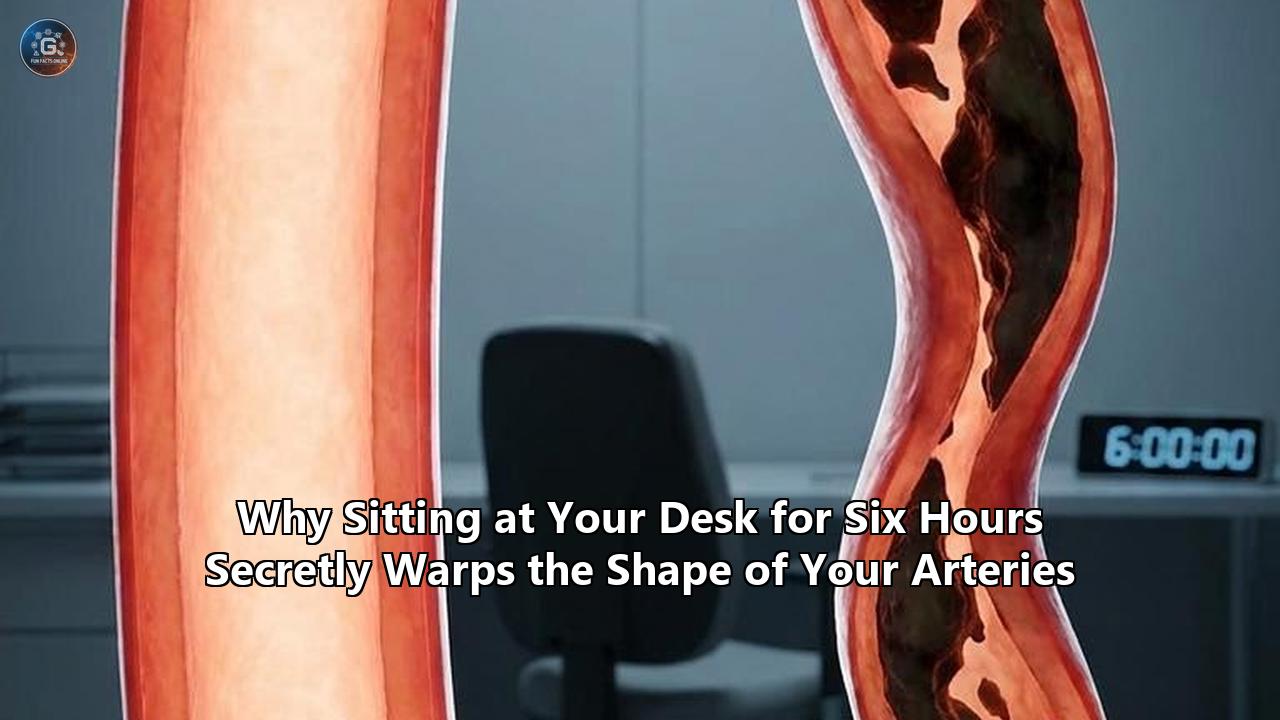
Uninterrupted sitting for six hours acts as an acute biomechanical and biochemical assault on the human vascular network. Rather than just slowing down your metabolism or making your joints stiff, prolonged sitting physically deforms and functionally "warps" the very shape of the major arteries in your lower limbs.
This localized structural and functional warping is not a gradual, abstract risk that develops over decades; it is an acute, measurable physiological shift that occurs within a single afternoon. Laboratory studies have shown that after just three to six hours of uninterrupted desk work, the conduit arteries of the legs—specifically the superficial femoral and popliteal arteries—experience a profound reduction in blood flow and a severe drop in the frictional force of blood dragging along the vessel wall, known as shear stress.
This drop in shear stress triggers an immediate cascade of cellular dysfunction. The endothelial cells lining the inside of your blood vessels physically change their phenotype, shifting from an elongated, healthy state aligned with the flow of blood into a rounded, disorganized, and highly vulnerable configuration.
The systemic scale of this health threat was underscored by a landmark clinical study published in the Journal of the American College of Cardiology (JACC). Tracking more than 89,000 individuals, a team led by Dr. Shaan Khurshid, MD, MPH, a cardiologist at Massachusetts General Hospital, demonstrated that the risk of heart failure and cardiovascular death rises sharply once daily sedentary time crosses a threshold of approximately 10.6 hours.
Crucially, the study revealed that even individuals who regularly meet recommended weekly exercise guidelines are not fully protected from the cardiovascular hazards of spending the rest of their day bound to a chair. The effects of prolonged sitting act as an independent cardiovascular risk factor, operating through distinct mechanical and molecular pathways that standard exercise routines cannot entirely erase.
As these insights force a reassessment of cardiovascular health in the modern workplace, a sharp debate has emerged over how best to counteract this quiet vascular deterioration. Clinicians, ergonomic experts, and technology developers are locked in a complex analysis of competing interventions.
These approaches range from active workstation technologies like standing desks and under-desk treadmills, to localized muscular activation techniques like the "soleus push-up," to passive circulatory strategies such as compression wear and local thermotherapy. Each of these paradigms offers unique benefits, but they also carry significant clinical and practical trade-offs.
The Biomechanics of the "Bent Leg": Joint Flexion vs. Axial Extension
To understand how the effects of prolonged sitting alter our cardiovascular architecture, we must first examine the physical geometry of the seated body. When you sit at a standard office desk, your body is held in a sustained posture of 90-degree flexion at both the hip and knee joints. This posture forces the primary arterial highway of the lower limb into a series of sharp, unnatural angulations.
[Heart]
   │
   ▼ (Descending Aorta)
[Common Iliac Artery]
   │
   ▼ (Hip Flexion: 90° Bend) ──► *Mechanical crimping & turbulent flow*
[Superficial Femoral Artery] (SFA)
   │
   ▼ (Knee Flexion: 90° Bend) ──► *Popliteal compression & low shear stress*
[Popliteal Artery]
   │
   ▼
[Lower Leg / Foot] (Blood pooling, increased hydrostatic pressure)
The anatomical pathway of the lower limb’s arterial network is designed for axial extension—standing, walking, or running—where blood vessels remain relatively straight and uninhibited.
As the common iliac artery descends into the thigh, it becomes the femoral artery, which passes through the adductor canal (Hunter's canal) before transitioning into the popliteal artery directly behind the knee joint.
When you sit, these vessels do not simply bend; they undergo physical compression, tortuosity, and elongation at specific hinge points. The popliteal artery behind the knee, in particular, is compressed by the surrounding tendons and the edge of the chair's seat pan.
This mechanical "crimping" dramatically increases local resistance to blood flow, acting like a partial kink in a garden hose.
The Missouri "Bent Leg" Experiment
The profound impact of this physical angulation was demonstrated in a highly controlled study conducted by researchers at the University of Missouri (Walsh et al.).
To isolate the mechanical effects of joint bending from the metabolic effects of sitting, the researchers placed healthy, young subjects in a lying-down (supine) position for three hours. However, there was a crucial twist: one leg was kept perfectly straight (axial extension), while the other leg was bent at a 90-degree angle at both the hip and the knee, mimicking the exact geometry of a seated posture.
By keeping the subjects supine, the researchers eliminated the confounding variable of gravitational blood pooling that typically occurs when standing or sitting upright.
The results were stark:
- The Straight Leg: The popliteal artery in the straight leg experienced only a minor, gradual decline in blood flow over the three hours, and its flow-mediated dilation (FMD)—the gold-standard clinical measure of endothelial health—actually improved slightly, shifting from a baseline of 5.6% to 7.1%.
- The Bent Leg: In contrast, the bent leg displayed a rapid, sustained drop in popliteal artery blood flow and mean shear rate. Most alarmingly, after three hours of prolonged flexion, the popliteal artery's ability to dilate was severely blunted, dropping from a healthy baseline of 6.3% to a highly compromised 2.8%.
This experiment proved that the mechanical bending of the leg is a primary initiator of vascular dysfunction. The physical deformation of the arterial wall creates localized zones of disturbed, turbulent blood flow.
In a straight vessel, blood flows in a smooth, parallel pattern (laminar flow), which exerts a healthy, consistent frictional drag on the endothelial lining.
When the vessel is bent, this laminar flow is disrupted, creating eddies, recirculating zones, and pockets of stagnation, particularly along the inner curvature of the bent vessel.
This localized physical deformation is the first domino to fall in the rapid development of sitting-induced vascular pathology.
Fluid Dynamics in the Vessel: Antegrade vs. Retrograde Shear Stress
The physical bending of the artery is directly tied to a dramatic shift in the fluid dynamics of the blood moving through it. To understand why this is so damaging to the vascular wall, it is necessary to examine the physics of endothelial shear stress.
The endothelium is a single layer of specialized cells that lines the entire interior surface of the cardiovascular system. These cells act as mechanical sensors, constantly monitoring the frictional drag exerted by the passing flow of blood. This frictional force, measured in dynes per square centimeter ($dyn/cm^2$), is known as shear stress.
In a healthy vascular environment, blood flow is highly directional and primarily forward-moving. This is referred to as antegrade shear stress. When endothelial cells are exposed to high, consistent levels of antegrade shear stress, they synthesize and release nitric oxide (NO) via the activation of endothelial nitric oxide synthase (eNOS).
Nitric oxide is the body’s primary endogenous vasodilator; it diffuses into the surrounding vascular smooth muscle cells, causing them to relax, which dilates the artery, lowers blood pressure, and prevents the adhesion of inflammatory cells and platelets to the arterial wall.
[Healthy Laminar Flow] ──► Strong Antegrade Shear ──► Activates eNOS ──► High Nitric Oxide (NO) ──► Dilation & Protection

[Sluggish Seated Flow] ──► High Retrograde/Oscillatory Shear ──► Downregulates eNOS ──► ROS & Endothelin-1 ──► Vasoconstriction & Damage
When you sit at your desk for six hours, this vital protective mechanism is completely shut down.
Because the calf and thigh muscles are entirely inactive, they no longer contract to help pump blood back up toward the heart against gravity. Blood begins to pool in the deep veins and microvasculature of the lower legs.
This venous pooling increases downstream pressure, which in turn causes a drastic reduction in the volume and velocity of arterial blood entering the lower limbs.
The Shift in Shear Profiles
Doppler ultrasound measurements taken during laboratory sitting trials show a rapid, progressive collapse in the arterial shear profile of the leg.
Within just 30 to 60 minutes of uninterrupted sitting, the popliteal artery experiences a decline in mean shear rate of more than 50%.
This is not just a uniform reduction in flow; it is a fundamental shift in the pattern of the shear stress:
- The Collapse of Antegrade Shear: The forward, protective frictional force of the blood drops to near-zero levels.
- The Rise of Retrograde and Oscillatory Shear: As forward flow stalls, a backflow of blood occurs during the diastolic phase of the cardiac cycle. This backward-moving flow, known as retrograde shear, combines with the sluggish forward flow to create a highly turbulent, back-and-forth pattern called oscillatory shear stress.
This oscillatory, low-shear environment is highly pro-atherogenic—meaning it actively promotes the development of plaque buildup and arterial disease.
When endothelial cells are deprived of healthy antegrade shear and subjected to oscillatory forces, they undergo a rapid phenotypic transformation.
The mechanical receptors on the cell surface send signals that downregulate eNOS expression, halting the production of protective nitric oxide.
Simultaneously, the cells begin to express NADPH oxidase, an enzyme that generates massive amounts of reactive oxygen species (ROS), commonly known as free radicals.
These free radicals react with the small amount of remaining nitric oxide to form peroxynitrite, a highly reactive molecule that further damages cellular structures and proteins.
This state of acute oxidative stress triggers a pro-inflammatory response within the vessel wall. The "warped" endothelial cells begin releasing:
- Endothelin-1 (ET-1): A potent vasoconstrictor peptide that forces the artery to tighten and stiffen, increasing local vascular resistance.
- Interleukin-6 (IL-6): A systemic inflammatory cytokine that recruits immune cells to the vessel wall.
- Vascular Cell Adhesion Molecule-1 (VCAM-1): An adhesion molecule that acts like biological velcro, allowing circulating white blood cells to stick to the arterial lining—the very first step in the formation of atherosclerotic plaques.
Through these fluid-dynamic shifts, a single six-hour bout of sitting transforms a highly dynamic, elastic, and protected arterial system into a rigid, inflamed, and chemically hostile environment.
The "Active Couch Potato" Myth: Gym Workouts vs. Desk-Bound Realities
One of the most persistent misconceptions in modern health and fitness is the belief that a structured daily workout—such as a 45-minute morning run or a high-intensity interval training (HIIT) session—can fully insulate the body against the damage of a subsequent desk-bound workday.
Exercise science has formally classified individuals who follow this pattern as "active couch potatoes"—people who meet or exceed standard physical activity guidelines but remain highly sedentary for the vast majority of their waking hours.
| Metric / Parameter | Morning Workout Only ("Active Couch Potato") | Continuous Micro-Interruptions (Dynamic Sitting/Active Breaks) |
|---|---|---|
| Systemic Fitness Impact | High cardiorespiratory fitness ($VO_2$ max, systemic muscular strength). | Moderate metabolic conditioning; sustained baseline insulin sensitivity. |
| Local Arterial Shear Stress (Legs) | Brief spikes of high shear, followed by 8–10 hours of near-zero antegrade shear. | Frequent, intermittent spikes in antegrade shear; prevents stagnation. |
| Endothelial Phenotype | Cellular "warping" occurs during prolonged sitting intervals. | Endothelial cells maintain elongated, flow-aligned, protective phenotype. |
| Local Oxidative Stress | Intermittent high ROS during sedentary hours; eNOS downregulated. | Continuous suppression of ROS; sustained eNOS and Nitric Oxide production. |
| Long-Term CV Mortality Risk | Statistically elevated risk of heart failure and cardiovascular death. | Significantly lower risk of cardiovascular event thresholds. |
To understand why this gap exists, it is necessary to contrast the systemic cardiorespiratory benefits of exercise with the highly localized, time-dependent physiology of the vascular endothelium.
When you run or cycle, your heart rate and cardiac output increase dramatically, sending a surge of blood throughout your entire arterial tree. This systemic wave of high shear stress provides excellent cardiovascular conditioning.
However, once you sit down at your desk and remain still for the next six hours, that exercise-induced vascular protection disappears almost immediately.
The human body does not store shear stress. The endothelial cells respond to the fluid-dynamic forces acting upon them in real time.
The moment you transition into a seated, bent-leg posture, popliteal and femoral blood flow collapses, and the destructive cascade of low, oscillatory shear stress, oxidative stress, and inflammatory cytokine release begins.
The vascular system cannot rely on the memory of a morning run to protect itself against the immediate physical compression and fluid stagnation of a six-hour seated session.
The 10.6-Hour Threshold in the JACC Study
This stark reality was clinically validated in the massive 2024/2025 JACC study led by Dr. Shaan Khurshid.
Using accelerometer data from 89,530 UK Biobank participants (with a mean age of 62 years, followed over an average of 8 years), the researchers analyzed the relationship between objectively measured sedentary time and the future development of cardiovascular diseases, including atrial fibrillation (AF), myocardial infarction (MI), heart failure (HF), and cardiovascular mortality.
The study’s findings were highly illuminating:
- The Linear Risk: For diseases like atrial fibrillation and myocardial infarction, the relationship with sedentary time was linear; more sitting meant more risk, but regular physical exercise was able to substantially mitigate and reduce that risk.
- The Threshold Risk: For heart failure and cardiovascular mortality, however, the researchers discovered a dramatic "threshold" effect at approximately 10.6 hours of daily sedentary time. Once an individual’s total daily sitting or reclining time crossed this 10.6-hour mark, the risk of heart failure and cardiovascular death rose sharply, regardless of their physical activity level.
- The Insufficiency of Exercise: Most crucially, even for those participants who met or exceeded the recommended 150 minutes of moderate-to-vigorous physical activity per week, the hazard ratio for heart failure and cardiovascular death remained significantly elevated if they were highly sedentary during the rest of the day.
As Dr. Khurshid noted:
"Too much sitting or lying down can be harmful for heart health, even for those who are active."
This clinical data confirms that the acute, localized vascular damage caused by sitting operates as a silent, parallel pathway toward cardiovascular disease.
The structural and functional warping of leg arteries, the localized rise in arterial stiffness, and the gradual accumulation of calcified plaque are continuous, minute-by-minute processes.
Relying solely on a single daily workout to offset these effects is a major clinical miscalculation. To protect the vascular wall, we must look at interventions that directly target and interrupt the sitting period itself.
Technology Showdown: Standing Desks vs. Under-Desk Treadmills
As the medical community has sounded the alarm on the effects of prolonged sitting, the commercial market has responded with a wave of "active office" technologies.
The two most prominent contenders in this space are the height-adjustable standing desk and the under-desk treadmill (or walking pad).
While both are marketed as direct solutions to the sedentary lifestyle, their impact on vascular fluid dynamics, arterial stiffness, and systemic blood pressure are vastly different, revealing a sharp contrast in clinical efficacy.
                 [VASCULAR COMPARISON]

STANDING DESK (Static Standing)       UNDER-DESK TREADMILL (Active Walking)
┌───────────────────────────────┐     ┌───────────────────────────────────┐
│ • High Hydrostatic Pressure   │     │ • Active Musculovenous Pump       │
│ • Blood Pooling in Legs       │     │ • High Antegrade Shear Stress     │
│ • Minimal eNOS Activation     │     │ • Continuous Nitric Oxide (NO)    │
│ • May INCREASE Aortic Stiffness│    │ • Prevents Venous Pooling         │
└───────────────────────────────┘     └───────────────────────────────────┘
Standing Desks: The Illusion of Activity
The standing desk has long been championed as the ultimate antidote to the desk-bound lifestyle.
The intuitive logic is simple: if sitting is bad, then standing must be good.
However, recent biomechanical and epidemiological studies have thoroughly challenged this assumption, showing that prolonged, static standing carries many of the same—and in some cases, worse—cardiovascular trade-offs as sitting.
The fundamental physiological flaw of static standing is the lack of muscular movement.
When you stand still at a desk, your hips and knees are straight, which removes the physical "bending" of the popliteal and femoral arteries.
However, because your calf and thigh muscles are engaged in a purely static, isometric contraction to keep you upright, they do not perform the dynamic, rhythmic squeezing required to pump blood back up to the heart.
This lack of dynamic movement leads to several major vascular issues:
- Severe Gravitational Pooling: Under the influence of gravity, blood pools extensively in the lower extremities. The hydrostatic pressure in the veins of the lower legs increases dramatically, forcing fluid out of the vessels and into the surrounding tissues, leading to lower-extremity edema (swelling) and varicose veins.
- Increased Central Arterial Stiffness: A clinical trial led by Dr. Bethany Barone Gibbs, PhD, an epidemiologist at West Virginia University, monitored over 250 desk workers with hypertension. The researchers expected that introducing standing desks and recommending that workers stand for 15 to 30 minutes each hour would lower blood pressure and improve arterial health. Instead, they found that static standing had absolutely no beneficial effect on resting or ambulatory blood pressure. More surprisingly, some participants who stood for extended periods actually displayed a statistically significant increase in central aortic arterial stiffness, measured via carotid-femoral pulse wave velocity (cfPWV).
- The Circulatory Load: When you stand statically, your heart has to work much harder to pump blood back up from your feet to your brain without the aid of the calf muscle pump. This increases sympathetic nervous system activity and vascular resistance, which can raise blood pressure and strain the heart.
This was confirmed by a large-scale study led by Dr. Matthew Ahmadi of the University of Sydney, published in the International Journal of Epidemiology, which tracked over 83,000 adults.
The study concluded that standing for more than 40 minutes at a time did not reduce cardiovascular disease risk and actively increased the risk of circulatory issues like deep vein thrombosis (DVT) and varicose veins.
As Dr. Barone Gibbs explained:
"Whenever you flex the muscles in your calves by walking or moving, those muscle contractions are helping to push the blood up through this one-way valve. So, if you're standing at your desk, not moving, that probably results in the same blood pooling effects we see with sitting, but even worse because it's even harder for your blood to push back up to your brain in a standing posture."
Under-Desk Treadmills: Dynamic Fluid Salvage
In contrast to the static limitations of the standing desk, the under-desk treadmill represents a highly effective, dynamic vascular intervention.
By forcing the user into a slow, continuous walk (typically 1.0 to 2.0 miles per hour), the treadmill desk directly addresses the root cause of sitting-induced vascular decline: the lack of muscular contraction and blood flow.
The vascular benefits of a slow walk are immediate and highly measurable:
- Activation of the Musculovenous Pump: Each step causes the calf muscles (the gastrocnemius and soleus) to contract dynamically. These contractions compress the deep veins of the lower leg, acting as a highly efficient secondary heart that forces pooled blood upward through the venous valves.
- Restoration of Antegrade Shear Stress: By facilitating venous return, walking immediately increases the volume and velocity of blood flowing through the femoral and popliteal arteries. Doppler ultrasound studies show that walking at just 2.0 mph completely abolishes the retrograde and oscillatory shear patterns seen during sitting, replacing them with strong, healthy pulses of antegrade shear stress.
- Preservation of Endothelial Function: In clinical trials where subjects interrupted sitting with brief walking bouts (such as five minutes of walking every hour, or a continuous slow walk), the typical drop in flow-mediated dilation (FMD) was entirely prevented. The endothelial cells remained in their healthy, nitric oxide-producing phenotype, preventing the rise of inflammatory markers and oxidative stress.
Analyzing the Trade-offs
While the clinical superiority of the under-desk treadmill over the standing desk is clear, the real-world implementation of these technologies carries significant practical trade-offs:
[Standing Desk] ──────────► Low Cost, Low Cognitive Load ──► High Vascular Stagnation / Stiffness
[Under-Desk Treadmill] ──► High Cost, High Spatial Footprint ──► Low Typing Dexterity, High Vascular Rescue- Cognitive and Motor Performance: Typing, reading, and maintaining fine motor control are significantly more difficult while walking than while sitting or statically standing. Studies show a temporary drop in typing speed and accuracy when users first transition to a treadmill desk, which can limit productivity during highly focused tasks.
- Spatial and Financial Footprint: Under-desk treadmills are heavy, require dedicated floor space, and cost significantly more than a standard standing desk converter. They also generate ambient noise, which can be disruptive in shared office environments.
- Physical Fatigue: Continuous walking for hours can lead to joint fatigue, particularly in the lower back, knees, and feet, especially if ergonomic footwear is not worn.
Ultimately, while the standing desk is a highly accessible and low-cost tool, it fails to resolve the fluid-dynamic stagnation of sitting and can even exacerbate arterial stiffness.
The under-desk treadmill is a highly effective clinical tool for preserving vascular health, but its high cost, spatial demands, and cognitive friction make it difficult for many office workers to adopt consistently throughout the workday.
The Battle of Micro-Interventions: Soleus Push-Ups vs. Hourly Walking Breaks
For desk workers who cannot install a treadmill desk or leave their workstations frequently due to structured schedules, the search for a practical, low-barrier intervention is critical.
This has sparked a direct comparison between two distinct micro-intervention strategies: hourly walking breaks (the systemic approach) and targeted seated muscle contractions, specifically the newly popularized "soleus push-up" (the localized metabolic approach).
The Soleus Push-Up: A Seated Metabolic Pump
The soleus push-up (SPU) is a highly specialized, seated physical movement developed and pioneered by Dr. Marc Hamilton, a professor of Health and Human Performance at the University of Houston.
Dr. Hamilton's research, published in the journal iScience, revealed that the soleus muscle—a flat, deep muscle running from just below the knee to the heel—possesses unique physiological properties that make it uniquely suited to combat the metabolic and vascular consequences of sitting.
                 [SOLEUS PUSH-UP MECHANICS]

      (Seated Posture)
         O  <- Head/Torso
        /│\
        / \
       ┌───┐ <- Knee bent at 90°
       │   │
       │   │ <- Calf (Soleus muscle contracts)
       │   ▲ <- Heel is raised high
      (O)──┘ <- Ball of foot stays flat on floor
To perform a soleus push-up:
- You sit with your feet flat on the floor and your muscles relaxed.
- Keeping the front of your foot firmly planted on the ground, you raise your heel to its maximum range of motion.
- You then release the muscle, allowing the heel to come passively back down to the floor.
- This movement is repeated in a slow, continuous, rhythmic cycle.
The physiological magic of the soleus muscle lies in its fiber composition and metabolic fuel source.
The soleus is composed of approximately 88% slow-twitch, highly oxidative Type 1 muscle fibers.
Unlike almost all other muscles in the human body, which rely heavily on their own stored glycogen for energy during contraction, the soleus does not deplete its glycogen stores.
Instead, it draws its fuel directly from circulating blood glucose and lipoproteins (fats).
Dr. Hamilton's clinical trials demonstrated that sustained soleus push-ups can:
- Lower Blood Glucose and Insulin Spikes: Performing the movement continuously during an oral glucose tolerance test reduced the post-meal blood sugar spike by an average of 52% and insulin demand by 60% compared to sitting still. This metabolic clearance rate rivals or exceeds what is typically seen after hours of walking or intense exercise.
- Double Fat Metabolism: It effectively doubles the normal rate of fat metabolism in the bloodstream, dramatically reducing levels of circulating VLDL cholesterol and triglycerides.
- Maintain Fatigue Resistance: Because the soleus relies on blood-borne fuels and highly efficient aerobic metabolism, it can contract continuously for hours without getting tired or cramping.
From a vascular perspective, the rhythmic contraction of the soleus muscle acts as a localized mechanical pump.
Even though you remain seated with your legs bent, the continuous flexing of the soleus compresses the posterior tibial and popliteal veins, boosting local venous return and elevating arterial shear stress in the lower leg.
However, because the SPU is a highly localized movement, its direct vascular benefits are primarily concentrated in the lower leg.
Hourly Walking Breaks: The Systemic Reset
The primary competitor to the soleus push-up is the classic hourly walking break.
The standard clinical recommendation is to break up every 30 to 60 minutes of sitting with a five-minute walk at a self-selected pace (or approximately 1,000 steps).
The physiological mechanism of the hourly walking break is systemic.
When you stand up and walk, you engage a massive percentage of your total skeletal muscle mass, including your gluteals, quadriceps, hamstrings, calves, and core stabilizers.
This triggers a systemic cardiovascular reset:
- Global Shear Stress Elevation: Walking increases cardiac output and elevates antegrade shear stress not just in the popliteal artery of the leg, but also in the brachial artery of the arm. Restaino et al. (2015) demonstrated that six hours of uninterrupted sitting actually impairs microvascular function in the upper limbs as well, indicating that sitting has systemic vascular consequences. A walking break provides a global shear stress reset that protects both the upper and lower arterial networks.
- Venous Stasis Clearance: Walking completely clears the pooled blood out of the lower extremities, rapidly normalizing hydrostatic pressure and reducing the accumulation of interstitial fluid.
- Blood Pressure Regulation: Regular, active movement breaks throughout the day have been shown in numerous clinical trials to lower average daily systolic and diastolic blood pressure, particularly in individuals with prehypertension or type 2 diabetes.
Comparative Trade-offs: SPU vs. Walking Breaks
When advising patients or designing workplace wellness programs, clinicians must weigh the highly distinct profiles of these two approaches:
[Soleus Push-Up] ──► Continuous seated use, zero task disruption, massive blood glucose clearance, localized vascular pump.
[Walking Break] ──► Periodic desk disruption, high movement requirement, global shear stress reset, systemic blood pressure control.- Cognitive Integration: The soleus push-up is the clear winner for cognitive integration. Because it is performed while seated and requires very little balance or physical coordination, workers can perform SPUs while typing, reading, or participating in video conferences. Walking breaks, by definition, require you to step away from your computer, which can disrupt deep work and workflow.
- Vascular Bed Coverage: Walking breaks are clinically superior for comprehensive vascular protection. While the soleus push-up keeps blood moving in the lower calf, it does not fully address the mechanical bending and low-shear environment of the femoral artery in the upper thigh or the brachial artery in the arm. Walking, by extending the hip and knee joints, completely removes the physical "bends" in the leg arteries, allowing for an unrestricted, high-velocity flush of blood.
- Metabolic Efficiency: For direct postprandial glucose disposal, the soleus push-up is surprisingly more efficient than walking. Because walking is designed by evolution to be highly energy-efficient (minimizing calorie expenditure), a short walk burns relatively little glucose. The soleus push-up, when performed correctly, bypasses this energy-saving design, forcing the muscle to consume blood glucose at an elevated rate for hours.
Ultimately, these two interventions should not be viewed as mutually exclusive, but rather as complementary therapies.
The soleus push-up serves as an outstanding "metabolic and localized vascular patch" that can be run continuously while working at your desk, while the hourly walking break serves as a necessary "systemic vascular reset" that physically straightens the arteries, clears venous pooling, and restores healthy shear stress across the entire cardiovascular network.
Passive vs. Active Vascular Rescue: Compression Wear and Localized Heating
For individuals with physical limitations, mobility restrictions, or workplace environments that strictly prohibit movement, active muscular contractions may not always be feasible.
This has led researchers to investigate passive vascular rescue strategies—interventions that alter the physical and fluid-dynamic environment of the lower limbs without requiring any active muscle use.
The two most prominent passive approaches are graduated compression stockings and localized thermotherapy (heating).
                 [PASSIVE RESCUE PARADIGMS]

GRADUATED COMPRESSION WEAR             LOCALIZED THERMOTHERAPY (HEATING)
┌─────────────────────────────────┐    ┌─────────────────────────────────┐
│ • External mechanical pressure  │    │ • Thermal vasodilation (42°C)   │
│ • Prevents venous pooling       │    │ • Directly increases blood flow │
│ • Reduces hydrostatic load      │    │ • Restores antegrade shear      │
│ • No glucose metabolic benefit  │    │ • eNOS activated thermally      │
└─────────────────────────────────┘    └─────────────────────────────────┘
Graduated Compression Stockings: Mechanical Pooling Prevention
Graduated compression stockings are designed to apply a tight, continuous gradient of external pressure to the tissues of the lower leg, with the highest pressure at the ankle (typically 15 to 30 mmHg) gradually decreasing as the stocking moves up the calf.
When applied to a seated desk worker, compression wear works through purely physical mechanisms:
- Reducing Venous Diameter: The external pressure squeezes the superficial and deep veins, reducing their cross-sectional diameter. According to fluid dynamics (specifically continuity equation principles), reducing the diameter of the vessel increases the velocity of the blood flowing through it, which helps accelerate venous return to the heart.
- Preventing Interstitial Fluid Leakage: By counteracting the high hydrostatic pressure that builds up during sitting, compression stockings prevent blood plasma from leaking out of the capillaries and into the surrounding tissue, completely eliminating lower-leg swelling and edema.
- Attenuating Retrograde Shear: By keeping blood moving forward in the venous system, compression wear helps stabilize the pressure gradient across the capillary bed, which can help reduce the severity of retrograde, backward-moving blood flow on the arterial side.
Localized Thermotherapy: Thermal Shear Preservation
A highly innovative passive strategy developed by vascular researchers involves the application of local heat to the lower limbs during prolonged sitting.
In a landmark study by Morishima et al., researchers had healthy young men sit for three hours.
However, one leg was placed in a warm water bath heated to 42°C (107.6°F) to increase local skin and muscle temperature, while the other leg remained dry and unheated, serving as an internal control.
The physiological results were remarkable:
- The Unheated Leg: As expected, the unheated leg experienced a classic sitting-induced decline in popliteal artery blood flow, a collapse in mean shear rate, and a severe impairment of flow-mediated dilation (FMD), which fell from 7.1% to 2.8%.
- The Heated Leg: In the heated leg, the local thermal stimulus triggered a powerful, direct vasodilation of the microvasculature. This drop in local resistance caused a massive increase in popliteal artery blood flow and mean shear rate—raising the shear rate well above baseline levels. As a result of this thermally induced, high-shear environment, the popliteal artery’s FMD was completely preserved (shifting from 7.3% to 10.9%), entirely preventing sitting-induced endothelial dysfunction.
By applying heat, the researchers proved that if you can mechanically or thermally maintain a high, forward-flowing shear rate in the artery, you can completely prevent the biochemical and cellular "warping" of the endothelium, even if the leg remains bent and immobile for hours.
Comparing Passive and Active Strategies: The Met-Vasc Trade-Off
While graduated compression wear and localized heating are highly effective at protecting the physical structure of the vascular wall, they carry a major clinical trade-off when compared to active muscle use:
[Passive Rescue (Heating/Compression)] ──► Protects arterial wall, prevents pooling, but ZERO glucose/lipid clearance.
[Active Rescue (SPU/Walking Breaks)] ──► Protects arterial wall, prevents pooling, AND drives systemic metabolic clearance.- The Metabolic Deficit: Passive strategies do absolutely nothing to address the metabolic consequences of prolonged sitting. Because the skeletal muscles are not contracting, there is zero muscle glucose uptake, insulin sensitivity remains impaired, and fat-burning enzymes (like lipoprotein lipase) remain completely shut down.
- Practicality and Compliance: Wearing thick, medical-grade compression stockings can be physically uncomfortable and difficult to put on, particularly in warm weather. Similarly, submerging your feet in a 42°C water bath or wrapping your calves in heating pads at an office desk is highly impractical for the vast majority of workplace environments.
- No Active Adaptation: Passive therapies do not stimulate the structural, long-term cardiovascular adaptations—such as increased capillary density, improved heart rate variability, or mitochondrial biogenesis—that occur in response to active physical movement.
Therefore, while compression wear and localized heating serve as outstanding clinical workarounds for individuals with severe mobility impairments or medical conditions that prevent movement, they cannot serve as a complete substitute for active, muscle-driven interventions.
Active contraction remains the gold-standard method for preserving both the fluid-dynamic health of your arteries and the metabolic health of your entire body.
Future-Proofing Vascular Health: The Desk of Tomorrow and Open Questions
As the overwhelming clinical evidence continues to mount, it is clear that the traditional model of the sedentary office is no longer medically defensible.
The physical geometry of sitting for six hours uninterrupted is a direct driver of localized arterial deformation, fluid-dynamic stagnation, and acute endothelial dysfunction.
To combat this silent epidemic, the workplace of the future must undergo a major design transition—moving away from static ergonomic furniture and toward integrated, dynamic, bio-adaptive environments.
The Bio-Adaptive Workspace of the Future
Rather than forcing workers to manually remember to stand up or perform exercises, the next generation of office technology is beginning to integrate smart, automated systems that prompt and facilitate physical movement:
- Haptic and Wearable Integration: Wearable activity trackers and smartwatches are evolving from simple step-counters into real-time vascular health monitors. Future wearables may track local skin temperature, blood flow velocity, and arterial pulse wave profiles, sending haptic alerts to the user’s wrist the moment their lower-limb shear stress drops below a critical protective threshold.
- Automated Kinetic Desks: Instead of standing desks that remain statically raised or lowered for hours, future kinetic desks will feature automated, slow-moving adjustments. These desks will subtly shift height by a few inches over the course of 15-minute cycles, gently forcing the user’s lower limbs to transition between minor angles of flexion and extension, stimulating muscle activity and preventing joint stagnation without disrupting concentration.
- In-Desk Soleus and Calf Stimulators: Building on the clinical success of the soleus push-up, future ergonomic chairs and footrests may feature integrated, passive kinetic pedals or gentle electrical muscle stimulation (EMS) pads. These devices can automatically trigger low-frequency, fatigue-resistant contractions of the calf muscles, keeping blood moving forward and maintaining healthy shear rates while the worker remains fully focused on their computer screen.
Unresolved Scientific Questions
While our understanding of sitting-induced vascular pathology has advanced dramatically, several critical scientific questions remain unresolved, representing the next frontiers of cardiovascular research:
- The Dose-Response Threshold in Vulnerable Populations: The vast majority of laboratory sitting studies have been conducted on young, healthy, non-smoking subjects.
How do the effects of prolonged sitting differ in older populations, or in individuals who already have established metabolic diseases, type 2 diabetes, or peripheral artery disease (PAD)?
Do their compromised arteries undergo vascular warping and endothelial decline at an even faster rate, and does it take longer for active walking breaks to restore their vascular function?
- Genetic Susceptibility to Oscillatory Shear: Why do some individuals display extreme vascular resilience, maintaining healthy endothelial function even after long periods of sitting, while others experience rapid, severe arterial stiffening and FMD collapse?
Are there specific genetic variations in the eNOS gene promoter or in endothelial mechanoreceptor proteins that dictate a person's vulnerability to low, turbulent shear stress?
- Long-Term Structural Remodeling: We know that a single six-hour bout of sitting causes a transient, functional "warping" of the leg arteries that can be temporarily restored with a 10-minute walk.
However, what happens when this acute cycle of deformation and stagnation is repeated five days a week, 50 weeks a year, for 20 or 30 years?
At what point does this repetitive, daily functional decline lead to permanent, irreversible structural remodeling—such as arterial calcification, arterial wall thickening, and the permanent loss of vessel elasticity?
Answering these questions will be vital as cardiologists, epidemiologists, and occupational health experts work to establish formal clinical guidelines for sedentary behavior.
Until then, the medical message is simple and urgent: sitting at your desk for six hours is not a passive act of resting; it is an active, physical deformation of your vascular system.
To protect your heart and preserve your arteries, you must actively break the bend, keep your calf muscles moving, and refuse to let your vascular network settle into static stagnation.
References
"Prolonged sitting has quietly become one of the most overlooked contributors to declining heart health... Over time this leads to stiff arteries... standing up every 30 to 45 minutes stretch walk or move your legs." (Vertex AI Search Grounding API)
Restaino et al. (2015). "Impact of 6 hours of uninterrupted sitting on limb micro- and macrovascular dilator function... Popliteal, but not brachial, artery FMD was blunted... lower leg FMD was restored after walking." (NIH.gov)
JACC (2025). "Risk of heart failure and cardiovascular death rose sharply when daily sitting time crossed approximately 10.6 hours... Even people who met recommended exercise guidelines were not completely protected." (Times of India / JACC)
Khurshid, S. et al. (2024). "Sedentary behavior and cardiovascular risk... 10.6 hours a day marking a potentially key threshold tied to higher heart failure and cardiovascular mortality." (JACC / ACC.org)
Padilla, J. et al. "Uninterrupted sitting impairs leg endothelial function... Low shear stress is a proatherogenic hemodynamic environment... Fidgeting or 5 min walking breaks prevent decline." (NIH.gov)
Thosar, S. S. et al. (2015). "Effect of prolonged sitting and breaks in sitting time on endothelial function... 3 hours of sitting resulted in a significant impairment in shear rate and SFA FMD." (Medicine & Science in Sports & Exercise)
"Prolonged sitting is associated with low and oscillatory shear rates... increases ROS and downregulates eNOS expression and NO production." (NIH.gov)
"A single bout of uninterrupted sitting induced unfavorable changes in vascular function and inflammatory biomarkers (IL-6, ET-1, VCAM-1) in middle-aged and older adults." (University of Idaho)
"Due to the predominantly seated posture during sedentary activity, turbulent blood flow might be augmented in deformed arterial segments of the lower extremities." (Medical Science Monitor)
"After 30 min in a seated position... greater area of the external iliac artery was exposed to higher oscillatory shear index... prolonged leg arterial bending associated with seated position." (Fisiología del Ejercicio)
Taylor, F. C. et al. (2022). "The Acute Effects of Prolonged Uninterrupted Sitting on Vascular Function: A Systematic Review... 120 min of continuous prolonged sitting may represent a critical threshold." (MSSE)
"Standing from a seated position immediately increases circulation in the lower extremities and raises shear stress on vascular endothelial cells, which improves intracellular signaling." (ResearchGate)
Hamilton, M. et al. (2022). "A Potent Physiological Method to Magnify and Sustain Soleus Oxidative Metabolism... Soleus Pushup fuels metabolism for hours while sitting." (iScience / University of Houston)
"Soleus pushup activates the soleus muscle differently... can lower blood glucose by about 50% with a single session... doubles fat metabolism, reducing triglycerides." (Comite MD / UH)
Hamilton, M., Hamilton, S., & Zderic, T. (2022). "Seated calf contraction protocol (Soleus Pushup) reduced post-meal glucose excursion by 52% and insulin by 60%... Soleus is 88% Type 1 fiber." (iScience / Get Fit Craft)
Walsh, L. K. et al. (2017). "Prolonged leg bending impairs endothelial function in the popliteal artery... 3-h lying-down period with one leg bent at 90° vs. straight." (Physiological Reports / NIH.gov)
Morishima, T. et al. (2016). "Flexion of the hips and knees with sitting, and associated 'arterial bending,' reduces popliteal artery shear rate." (NIH.gov)
Morishima, T. et al. "Preventing the reduction of shear stress during prolonged sitting with local heating (42°C) abolishes the impairment in popliteal artery endothelial function." (NIH.gov)
"Standing for >50% of a workday did not affect PWV (Pulse Wave Velocity)... Carotid-femoral PWV was not different between seated and standing groups." (NIH.gov)
Barone Gibbs, B. (2024). "Clinical trial of sit-stand desks... standing more at work had no effect on lowering blood pressure, and some stood longer and increased their measure of aortic arterial stiffness." (West Virginia University)
Ahmadi, M. et al. (2024). "Standing desks may not offset sedentary risk... standing for too long will not offset an otherwise sedentary lifestyle and could increase risk of circulatory issues." (University of Sydney / Cardiovascular Business)
"Sitting for long periods can increase risk of heart issues... combination of sitting and standing is ideal... standing all day is twice as bad as sitting for your heart." (Desky)
"Prolonged sitting... deforms arterial segments resulting in low mean shear stress... Postural changes increase MSNA, associated with retrograde shear rate." (Frontiers / NIH.gov)
Taylor, F. C. et al. (2022). "Lower-limb vascular function is progressively impaired up to 180 min of sitting, particularly in healthy adults." (NIH.gov)
"Interrupting prolonged sitting generally improved peripheral hemodynamics, especially lower-limb blood flow and shear-rate... 2-3 min breaks every 20-30 min most beneficial." (Frontiers in Cardiovascular Medicine)
Reference:
- https://pmc.ncbi.nlm.nih.gov/articles/PMC5668607/
- https://scholarworks.indianapolis.iu.edu/bitstream/1805/7875/1/thosar-2014-effect-of-prolonged.pdf
- https://pmc.ncbi.nlm.nih.gov/articles/PMC4956484/
- https://pmc.ncbi.nlm.nih.gov/articles/PMC10042610/
- https://medscimonit.com/abstract/full/idArt/883589
- https://timesofindia.indiatimes.com/health/a-chair-may-be-one-of-the-most-dangerous-places-for-your-heart-cardiologist-explains-the-risks-of-sitting-too-long/photostory/132184171.cms
- https://www.acc.org/about-acc/press-releases/2024/11/15/16/33/sitting-too-long-can-harm-heart-health-even-for-active-people
- https://www.youtube.com/watch?v=8S3a9ppYdPM
- https://stories.uh.edu/2022-soleus-pushup/index.html
- https://cardiovascularbusiness.com/topics/clinical/heart-health/standing-desks-do-not-lower-blood-pressure-or-minimize-heart-risks
- https://pmc.ncbi.nlm.nih.gov/articles/PMC5668607/
- https://www.fisiologiadelejercicio.com/wp-content/uploads/2023/03/Prolonged-sitting-and-peripheral-vascular-function.pdf
- https://pubmed.ncbi.nlm.nih.gov/39780648/
- https://www.researchgate.net/publication/320586392_Prolonged_leg_bending_impairs_endothelial_function_in_the_popliteal_artery
- https://wvutoday.wvu.edu/stories/2024/10/30/standing-desk-not-the-answer-to-decreasing-blood-pressure-wvu-research-shows
- https://pmc.ncbi.nlm.nih.gov/articles/PMC10042610/
- https://getfitcraft.com/science/soleus-pushup-research
- https://www.researchgate.net/publication/264902579_Effect_of_Prolonged_Sitting_and_Breaks_in_Sitting_Time_on_Endothelial_Function
- https://desky.com/blogs/news/is-it-better-to-work-standing-or-sitting
- https://www.comitemd.com/learn/improve-your-metabolic-health-with-the-solius-pushup
- https://www.frontiersin.org/journals/cardiovascular-medicine/articles/10.3389/fcvm.2026.1780316/abstract
- https://exerciseismedicine.gr/wp-content/uploads/2022/01/The_Acute_Effects_of_Prolonged_Uninterrupted.10.pdf
- https://pmc.ncbi.nlm.nih.gov/articles/PMC4796603/
- https://exerciseismedicine.gr/wp-content/uploads/2022/01/The_Acute_Effects_of_Prolonged_Uninterrupted.10.pdf
- https://pubmed.ncbi.nlm.nih.gov/34334722/
- https://pubmed.ncbi.nlm.nih.gov/31484157/