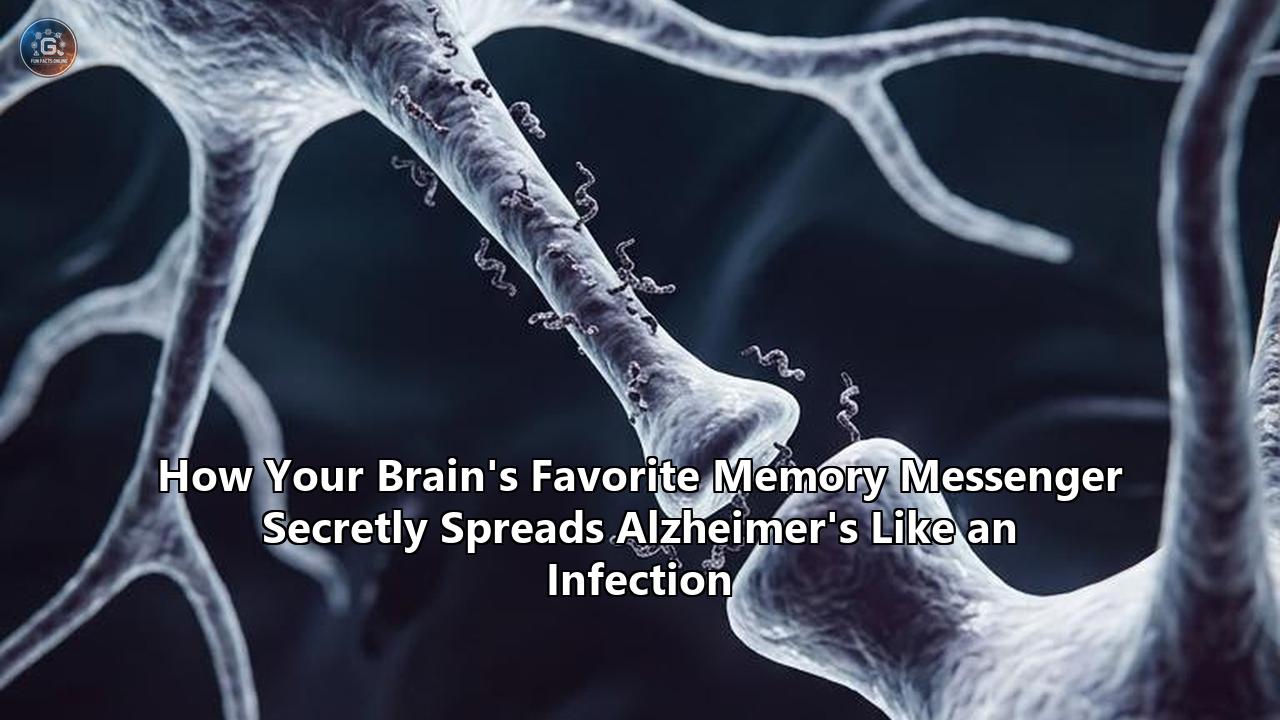
For decades, neuroscientists tracking the progression of Alzheimer’s disease have been haunted by a fundamental mystery. They knew that the disease did not simply appear everywhere in the brain at once. Instead, it begins as a localized fire, typically in the entorhinal cortex—the brain’s gateway for memory—before systematically marching along anatomical pathways, igniting and destroying one brain region after another. This relentless progression mimics the spread of an infectious pathogen, yet Alzheimer's is not caused by a foreign virus or bacterium.
Now, a study published in the journal Cell has unmasked the cellular accomplice responsible for this destructive migration: a native, essential brain protein called Arc.
The research, led by senior author Dr. Jason Shepherd, a professor of neurobiology at University of Utah Health, reveals that Arc—which normally acts as the brain’s premier molecular messenger for forming long-term memories—has been hijacked. Under normal conditions, Arc behaves like a "domesticated virus," packing memory-related genetic instructions into microscopic bubbles called extracellular vesicles (EVs) to carry information between neurons.
However, in the presence of Alzheimer's pathology, toxic Tau proteins bind to Arc. By hitching a ride inside these virus-like bubbles, toxic Tau is able to easily slip past cellular defenses, traveling from diseased neurons to healthy ones and seeding the disease anew.
The implications of this discovery are profound. When Shepherd’s team genetically engineered mice to lack the Arc protein, the transmission of toxic Tau between brain cells dropped to near-extinction.
"I had a hunch Arc may be involved, but wasn't expecting our results to be so clear," Dr. Shepherd said in an interview detailing the study's genesis. "When my student Mitali first found that tau transmission was almost gone in neurons that lacked Arc, I was surprised and excited."
This finding shifts our understanding of how alzheimers spreads, presenting a highly targeted strategy for stopping the progression of cognitive decline without destroying the delicate machinery of memory itself.
The Molecular Hijacking: Inside the 'Domesticated Virus'
To understand why a vital memory-shuttling protein is spreading a fatal neurodegenerative disease, one must look at Arc’s bizarre evolutionary history.
Arc (Activity-regulated cytoskeleton-associated protein) is unlike almost any other protein in the human genome. Millions of years ago, an ancient retrovirus infected an early ancestor of modern animals. Instead of destroying the host, the viral genetic code was assimilated into the genome, eventually evolving into Arc.
Remarkably, Arc retained its viral structure. When a neuron is activated during learning—such as when you study a new face or memorize a phone number—the cell rapidly produces Arc. The protein then self-assembles into a hollow, capsid-like structure that closely resembles the shell of an HIV or retrovirus.
[Normal Memory Consolidation]
Active Neuron ---> Produces Arc ---> Capsid Assembly ---> Packages mRNA ---> Extracellular Vesicle (EV) ---> Healthy Target Neuron

[Alzheimer's Hijack Pathway]
Diseased Neuron ---> Toxic Tau ("Glue Monster") ---> Binds to Arc ---> Packaged in EV ---> Infects Healthy Neuron ---> Pathology Spreads
These capsids package molecular messages, primarily in the form of RNA, and wrap themselves in the neuron's own lipid membrane to form extracellular vesicles (EVs). These microscopic bubbles are then extruded from the cell, floating across the synaptic gap to deliver their cargo to neighboring neurons. This process is essential for neuroplasticity—the brain’s ability to rewire itself in response to new experiences.
In a brain afflicted with Alzheimer’s, however, this highly specialized communication system becomes a trojan horse. The very property that makes Arc an efficient memory messenger—its ability to encapsulate itself in protective lipid bubbles and cross cellular membranes—makes it the perfect vector for disease.
Because Arc’s viral capsids are designed to be taken up by neighboring cells, any toxic material that manages to bind to Arc gains a free pass into healthy, vulnerable neurons. Instead of carrying the molecular building blocks of memory, the Arc "public transport bus" is hijacked by a lethal molecular passenger.
The Anatomy of a 'Glue Monster': How Tau Hijacks Arc
The primary cargo driving this toxic transport is a misfolded form of Tau. Under healthy conditions, Tau is a structural protein that acts like railroad ties, stabilizing the microtubules that run along the length of a neuron’s axon to transport nutrients and waste.
In Alzheimer's disease, chemical changes cause Tau to undergo hyperphosphorylation. When this happens, Tau detaches from the microtubules, loses its shape, and begins to clump together.
First author Dr. Mitali Tyagi, a postdoctoral research associate at Washington University in St. Louis who performed this research as a graduate student in Dr. Shepherd’s lab, describes these early Tau aggregates as "glue monsters."
"They glue together and block transportation within the neuron," Dr. Tyagi explained. "But they can break down into smaller glue monsters, called Tau seeds, which can then get transferred to a new neuron. And once this Tau seed comes into contact with healthy Tau, it is able to corrupt it. So, the pathology starts all over again in a healthy neuron."
[The Tau Corruption Cycle]
1. Hyperphosphorylation: Tau detaches from microtubules.
2. Aggregation: Detached Tau clumps into intracellular "glue monsters."
3. Fragmentation: Glue monsters break into small, highly mobile "Tau seeds."
4. Association: Tau seeds bind physically to Arc proteins.
5. Encapsulation: Arc packages the seeds into extracellular vesicles (EVs).
6. Transmission: EVs travel across synapses to deliver toxic seeds to healthy cells.
7. Replication: Imported Tau seeds template the misfolding of healthy host Tau.
Historically, scientists have puzzled over exactly how alzheimers spreads through the neural architecture, jumping from one connected brain region to another. While researchers knew that Tau could be found in the fluid between brain cells, they did not fully understand how such large, sticky proteins could survive the extracellular environment and successfully penetrate healthy target cells.
The discovery of the Arc-Tau interaction provides the first definitive blueprint of this transmission. The study demonstrated a direct protein-protein interaction: the toxic Tau seeds physically bind to Arc. When Arc wraps itself in its viral envelope to leave the cell, the Tau seeds are pulled inside the vesicle along with it.
Protected from the brain’s waste-clearing enzymes by the lipid bubble of the EV, the Tau seeds are carried safely through the extracellular space and delivered directly into the cytoplasm of adjacent neurons. Once inside, the imported Tau seeds act as templates, forcing the healthy Tau of the host cell to misfold and clump, spreading the cellular destruction.
The 99% Reduction: Proof in the Mouse Models
To confirm that Arc is the primary driver of this intercellular transmission, Dr. Shepherd’s team conducted a series of elegant genetic experiments. They utilized a well-established mouse model of Alzheimer’s disease (specifically, rTg4510 mice), which are genetically engineered to produce a mutant, highly aggressive form of human Tau that rapidly forms tangles and spreads throughout the brain.
The researchers crossed these Alzheimer's model mice with a strain of mice that had been genetically modified to completely lack the gene responsible for producing Arc. They then compared the brains of the Alzheimer's mice with Arc (rTgWT) against those without Arc (rTgArc KO).
The results of this comparison were stark:
- Vesicle Isolation: The team purified extracellular vesicles directly from the brain tissue of both mouse groups. In the mice that possessed Arc, the EVs were packed with toxic Tau. In the mice engineered to lack Arc, the extracellular vesicles contained virtually zero Tau.
- Pathology Mapping: Ten weeks after injecting localized Tau seeds into the brains of both groups, the researchers mapped the progression of the disease. In the mice with Arc, the Tau pathology had migrated far beyond the injection site, spreading deeply along established neural networks.
- The Transmission Drop: In the mice lacking Arc, neuron-to-neuron Tau transmission was almost entirely halted. The rate of disease spread dropped by approximately 99%, leaving the surrounding brain regions healthy and structurally intact.
"When we removed Arc, we saw that the transfer of Tau was severely, severely reduced," Dr. Tyagi said. "It was almost gone."
This experiment proved that without the Arc vehicle, the "glue monsters" are largely stranded. They lose their primary method of public transit, severely limiting their ability to colonize healthy areas of the brain.
A Double-Edged Sword: The Paradox of Arc Deletion
At first glance, the solution to Alzheimer’s seems simple: design a drug that deletes or completely deactivates the Arc protein. If you destroy the transport vehicle, you stop the disease in its tracks.
However, the biology of the brain is rarely so straightforward. The Cell study revealed that Arc is a double-edged sword, serving a critical protective function even as it facilitates the spread of disease.
When a neuron becomes choked with toxic Tau, its internal transport networks collapse, and its metabolic machinery begins to fail. To survive, the sick neuron attempts to clean house. It uses Arc to bundle up the excess, dangerous Tau and eject it from the cell in extracellular vesicles.
In the early stages of the disease, this ejection process acts as a vital safety valve. By dumping its toxic cargo into the extracellular space, the damaged neuron reduces its internal protein burden, allowing it to stay alive and functional for much longer.
When Dr. Shepherd’s team analyzed the brains of the mice lacking Arc, they discovered a tragic trade-off. While the disease was prevented from spreading to neighboring healthy neurons, the original diseased neurons died much faster.
Without Arc to package and export the toxic Tau, the "glue monsters" remained trapped inside the host cells. The proteins quickly accumulated to fatal thresholds, suffocating the cells and causing rapid, localized neuronal death.
[Arc Present (The Spread)]
- Diseased Cell: Survives longer by ejecting toxic Tau.
- Healthy Neighbors: Infected by incoming Tau-carrying EVs.
- Global Result: Slow, systematic decline across the entire brain.

[Arc Absent (The Trap)]
- Diseased Cell: Dies rapidly as toxic Tau builds up internally.
- Healthy Neighbors: Remain safe from infection.
- Global Result: Rapid, highly localized tissue death; loss of Arc-mediated learning.
Furthermore, because Arc is absolutely essential for cognitive plasticity, completely disabling it in human patients would have catastrophic side effects. Humans born with mutations in the Arc gene, or those who lack it, suffer from severe cognitive deficits, memory impairment, and neurodevelopmental disorders like Angelman's syndrome.
"Arc is still essential to brain health," Dr. Shepherd emphasized. "Any future Alzheimer's treatment targeting Arc would need to preserve its normal function while preventing it from transporting tau."
The Human Connection: Validating the Mechanism in Patient Tissue
While animal models are indispensable for mapping cellular mechanics, many promising dementia therapies fail because mouse biology does not always translate perfectly to humans. To bridge this gap, the research team analyzed post-mortem human brain tissue provided by the Massachusetts Alzheimer’s Disease Research Center.
They isolated extracellular vesicles from the brains of deceased individuals who had been diagnosed with various stages of Alzheimer’s disease. What they found confirmed that the Arc-Tau transport system is not merely a quirk of mouse models, but an active driver of human pathology:
1. Co-Packaging in Human Brains
Just like in the mice, the human extracellular vesicles contained both Arc and phosphorylated Tau. The two proteins were physically bound together inside the same microscopic lipid bubbles.
2. Pathological Correlation
Most importantly, the researchers discovered a strong, statistically significant positive correlation between the level of Arc in the vesicles and the amount of toxic, phosphorylated Tau. The more advanced the patient's Alzheimer's disease was, the more heavily loaded their Arc-containing EVs were with toxic Tau seeds.
This correlation suggests that as Alzheimer's pathology worsens, the brain's natural response—producing more Arc in a desperate bid to maintain cognitive function and memory consolidation—inadvertently accelerates the rate at which the disease spreads. The brain's attempt to save its memories serves to fuel the very fire consuming them.
The Paradigm Shift in Treatment: 'Mid-Flight' Interception
Because completely disabling Arc is clinically unviable, this discovery requires a massive shift in how we approach Alzheimer's drug development.
For years, the pharmaceutical industry has focused on two primary angles: preventing the formation of toxic proteins inside the cell, or using monoclonal antibodies to clear plaques and tangles once they have already formed. These approaches have yielded modest successes, such as lecanemab and donanemab, but they carry significant risks of brain swelling or bleeding, and they do not stop the underlying progression of the disease.
The Arc-Tau discovery points to an entirely new therapeutic landscape: targeting the extracellular space to intercept the toxic vesicles "mid-flight."
[Potential Interception Strategies]

1. Synaptic Decoys:
   [Diseased EV] ---> [Synthetic Decoy Receptor] (Snares vesicle before it hits healthy cell)

2. Monoclonal Antibodies:
   [Diseased EV] <--- [Targeted Antibody] (Binds to EV outer membrane and flags for microglia clearance)

3. Interface Blockers:
   [Tau Seed]  -X-  [Arc Protein] (Small molecule prevents Tau from attaching to the Arc capsid)
By focusing on the brief window when these Arc-and-Tau-loaded vesicles are traveling through the fluid between brain cells, researchers believe they can neutralize the disease's transport system without harming the cells themselves.
Several therapeutic modalities are already being conceptualized based on this model:
- Vesicle-Targeting Monoclonal Antibodies: Instead of targeting free-floating Tau or intracellular tangles, engineered antibodies could be designed to recognize specific surface proteins on the outer membrane of Arc-containing EVs. Once bound, these antibodies would flag the toxic vesicles for destruction by microglia—the brain’s immune cells—before they can bind to healthy neurons.
- Binding Interface Inhibitors: Scientists are mapping the precise atomic boundary where the "glue monster" Tau seeds attach to the Arc protein. If a small-molecule drug can be developed to block this specific physical interface, Tau would be unable to hitch a ride on the Arc bus. The toxic Tau would remain inside the sick cell, while Arc would remain free to perform its vital, healthy memory-shuttling duties.
- Decoy Receptors: Synthetic nanoparticles could be introduced into the brain to mimic the surface receptors of healthy neurons. These "decoys" would attract and bind the traveling Arc-Tau vesicles, neutralizing them safely in the extracellular space.
Because these strategies would not require altering the genetic expression of Arc or stripping cells of their protective clearance mechanisms, they could offer a highly effective way to halt cognitive decline with minimal side effects.
Broader Implications for Neurodegenerative Disease
The discovery that a native, virus-like memory messenger is responsible for propagating Alzheimer’s raises a broader question: is this how other neurodegenerative diseases spread?
Most major dementias and motor neuron diseases are characterized by the progressive accumulation and spread of specific toxic proteins:
| Disease | Primary Toxic Protein | Potential Spread Vector |
|---|---|---|
| Alzheimer's Disease | Tau / Amyloid-beta | Arc (Extracellular Vesicles) |
| Parkinson's Disease | Alpha-synuclein | Unknown (EVs suspected) |
| Amyotrophic Lateral Sclerosis (ALS) | TDP-43 / FUS | PEG10 (Retrotransposon EV) |
| Frontotemporal Dementia | Tau / TDP-43 | Suspected EV pathways |
Evidence is mounting that Arc is not the only "domesticated virus" in our DNA that has been co-opted by disease. For instance, recent research into Amyotrophic Lateral Sclerosis (ALS) has implicated a different retrovirus-derived protein called PEG10. Like Arc, PEG10 forms virus-like capsids that transport molecular information. In ALS patients, PEG10 accumulates in the spinal cord and interferes with nerve cell communication, mirroring the cellular hijack seen in Alzheimer's.
If neurodegenerative diseases share a common mechanism—where misfolded "glue monsters" exploit retrovirus-derived communication pathways to infect healthy tissue—then a breakthrough in blocking Arc-mediated transmission could lead to therapies for multiple conditions.
"Many neurodegenerative diseases have a similar origin: toxic misfolded proteins that kill neurons," Dr. Shepherd noted. "Over time, these toxic proteins spread across the brain, but this process is slow. If we could stop this spread early in the disease, we could potentially completely stop the disease from getting worse."
Looking Ahead: The Preclinical Road to Human Trials
While the scientific community is celebrating this discovery, researchers emphasize that a clinical cure remains years away.
The immediate next step is to replicate these findings in human stem-cell-derived neurons. Because most of the active testing was completed in mice, researchers must prove that blocking the Arc-Tau interaction in living human cells yields the same dramatic 99% reduction in pathology transmission without causing cellular toxicity.
"Most of the work we've been doing is in mice, not in humans," Dr. Shepherd cautioned. "We have some clues that whatever is happening in these mice could also be happening in humans, but we don't know that yet."
Additionally, biotechnology companies are already moving to commercialize this pathway. Dr. Shepherd, who is a co-founder of VNV, LLC and a consultant for Aera Therapeutics (which licenses intellectual property including Arc capsids), is working alongside global research networks to design the first generation of interceptor molecules.
If these preclinical phases succeed, the first safety trials in humans could begin within the decade.
For patients and families affected by dementia, the discovery of how Arc mediates the spread of Tau provides a clear biological target. By revealing that our brain's favorite memory messenger is secretly acting as the disease's primary transit system, science has finally mapped the route—giving us the tools we need to cut off the supply lines and halt Alzheimer's in its tracks.
Reference:
- https://www.houstonchronicle.com/news/nation-world/article/Studies-Alzheimer-s-spreads-like-a-virus-in-the-2930397.php
- https://www.inc.com/esther-lian/scientists-discovered-protein-driving-spread-of-alzheimers/91367621
- https://timesofmalta.com/article/Alzheimer-s-spreads-like-an-infection.405502
- https://www.biorxiv.org/content/10.1101/529438v2.full-text
- https://www.theguardian.com/society/2024/jan/29/alzheimers-can-pass-between-humans-in-rare-medical-accidents-suggests-study
- https://neurosciencenews.com/arc-protein-tau-vesicle-alzheimers-30957/
- https://pubmed.ncbi.nlm.nih.gov/42372723/
- https://www.eurekalert.org/news-releases/1132941
- https://neurosciencenews.com/arc-protein-tau-vesicle-alzheimers-30957/
- https://www.discovermagazine.com/a-common-brain-protein-may-help-alzheimer-s-disease-spread-and-understanding-this-could-lead-to-new-treatments-49324
- https://attheu.utah.edu/health-medicine/how-a-brain-messenger-protein-drives-progression-of-alzheimers-disease/
- https://iqgenio.com/blog/arc-protein-spreads-toxic-tau-alzheimers/
- https://www.sciencedaily.com/releases/2026/06/260630020521.htm
- https://pmc.ncbi.nlm.nih.gov/articles/PMC6833337/
- https://www.sciencedaily.com/releases/2026/06/260630020521.htm
- https://www.azolifesciences.com/news/20230608/The-New-Player-in-ALSe28094An-Ancient-Virus-Like-Protein.aspx
- https://www.youtube.com/watch?v=uobJuwHn5SM
- https://healthcare.utah.edu/newsroom/news/2026/06/how-brain-messenger-protein-drives-progression-of-alzheimers-disease
- https://www.alzra.org/blog/is-alzheimers-a-contagious-disease/
- https://www.inc.com/esther-lian/scientists-discovered-protein-driving-spread-of-alzheimers/91367621