For decades, nutritionists and neurologists have debated the exact impact of diet on the structural decline of the aging brain. While self-reported food diaries have long suggested that a diet rich in fresh fruits and vegetables is associated with sharper minds in old age, the subjective nature of these surveys left a lingering gap of skepticism.
A study published in the open-access journal PLOS One has bridged this gap, offering some of the most concrete evidence to date.
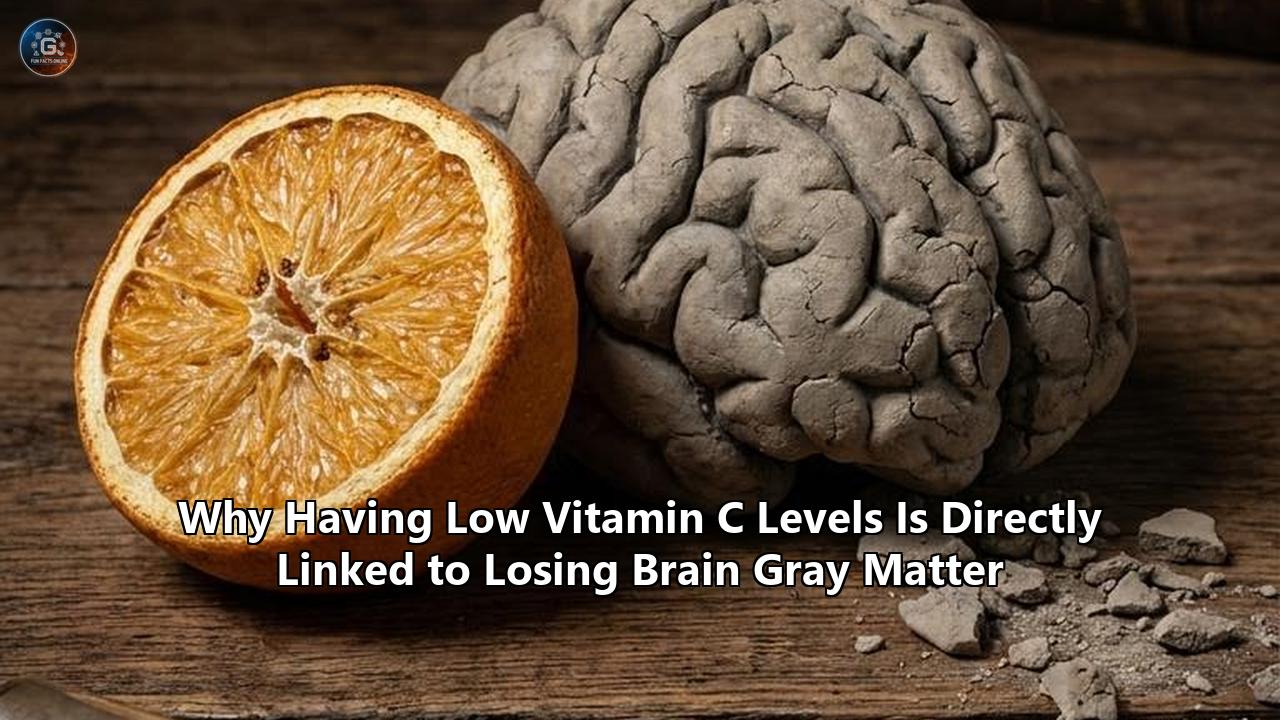
A research team at Hirosaki University in Japan, led by radiologist Haruka Nagaya and corresponding author Tomohiro Shintaku, MD, PhD, analyzed high-resolution magnetic resonance imaging (MRI) brain scans and direct blood plasma samples from 2,044 Japanese adults aged 64 and older. By using objective blood biomarkers rather than unreliable food diaries, the researchers uncovered a stark structural and functional correlation: older adults with lower levels of vitamin C in their blood plasma exhibited a significantly lower volume of cerebral gray matter and severely degraded functional connectivity within the brain’s Default Mode Network (DMN).
This finding goes far beyond typical dietary advice. It establishes a physical link between circulating micronutrient levels and the actual preservation of brain tissue. Gray matter—the cellular processing machinery of the brain—naturally thins as we age, but the rapid acceleration of this tissue loss is a key hallmark of cognitive decline and neurodegenerative diseases like Alzheimer's.
The Hirosaki University study reveals that the physical shrinkage of this vital tissue, alongside a breakdown in the neural network responsible for memory and self-reflection, is directly associated with depleted vitamin C levels.
To understand why this relationship is so direct, it is necessary to examine the complex, protective mechanisms of the brain, the specialized transport systems that feed it, and the chemical warfare that occurs within our neurons every second of the day.
The Anatomy of Atrophy: Gray Matter and the Default Mode Network
To understand why the depletion of vitamin C is so closely tied to physical changes in the brain, we must first look at what the MRI scans actually measured.
The human brain is broadly divided into gray matter and white matter. White matter consists of the insulated "wiring"—the myelinated axons—that allows different parts of the brain to communicate with one another. Gray matter, on the other hand, is the brain’s CPU. It is the dense, outer layer packed with neuronal cell bodies, dendrites, synapses, glial support cells, and micro-capillaries. This is where the heavy lifting of cognition occurs: processing sensory information, storing memories, executing decision-making, and regulating emotions.
When a radiologist notes a loss of gray matter volume, they are observing brain atrophy. This means that neurons are shrinking, their synaptic connections are withering, and in some cases, the cells themselves are dying. While a modest loss of gray matter is a normal part of the aging process, accelerated or localized gray matter loss is the primary physical signature of cognitive impairment.
                  THE GRAY MATTER AND DMN AXIS

       +-----------------------------------------------+
       |             Optimal Vitamin C Levels          |
       +-----------------------------------------------+
                               |
                               v
       +-----------------------------------------------+
       |   Preserved Gray Matter & Strong DMN Wiring   |
       |     (Robust Synapses, Healthy Cell Bodies)    |
       +-----------------------------------------------+
                               |
            Deficiency /       |       Sufficient
            Low Plasma         |       Plasma levels
                               |
        +----------------------+----------------------+
        |                                             |
        v                                             v
+-------------------------------+             +---------------+
|      Oxidative Stress &       |             | Cognitive     |
|      Lipid Peroxidation       |             | Resilience    |
+-------------------------------+             +---------------+
        |
        v
+-------------------------------+
|    Atrophy of Gray Matter     |
|   & Degradation of DMN Nodes  |
+-------------------------------+
The second key finding of the Japanese study centers on the Default Mode Network (DMN). Unlike localized regions of the brain that handle specific tasks, the DMN is a large-scale, interconnected neural web that spans several regions, including the prefrontal cortex, the posterior cingulate cortex, and the angular gyrus.
The DMN is often called the "resting-state network" because it becomes highly active when we are not focused on the outside world. It is the biological engine behind:
- Autobiographical memory: Recalling personal experiences and constructing our sense of self.
- Self-reflection and internal thought: Daydreaming, planning for the future, and processing emotions.
- Theory of Mind: The ability to attribute mental states to ourselves and others, allowing for empathy and social navigation.
When the functional connectivity of the DMN breaks down, the different nodes of this network stop communicating effectively. The neurons can no longer synchronize their firing patterns. This structural and functional "disconnect" is one of the earliest detectable clinical indicators of mild cognitive impairment and preclinical Alzheimer's disease.
The researchers at Hirosaki University found that participants with the lowest blood plasma vitamin C levels had both smaller gray matter volumes and significantly weaker neural connections within this memory-critical network. It suggests that maintaining optimal levels of this single nutrient is intimately connected to sustaining the physical architecture that keeps our minds cohesive.
The Brain as a Vitamin C Hoarder: The Transport Mechanism
To understand why a lack of vitamin C in the blood translates so quickly to brain damage, we must look at how the brain manages its supply of this nutrient.
The human body is genetically unusual: unlike almost all other mammals, humans cannot synthesize their own vitamin C. Millions of years ago, our ancestors suffered a mutation in the GULO (gulonolactone oxidase) gene, which is responsible for the final enzymatic step in converting glucose to ascorbic acid. As a result, we are entirely dependent on our diet to survive.
Because vitamin C is highly water-soluble, the body cannot store it in fat tissue for long periods. It must be continuously absorbed, utilized, and excreted. Yet, if you look at the distribution of vitamin C across the human body, the brain stands out as an aggressive, uncompromising hoarder.
                     THE ASCORBATE GRADIENT

       [ Diet / Gastrointestinal Tract ]
                       |
                       v  (Absorption)
       [ Blood Plasma ]  ~  50-70 µM (Optimal)
                       |
                       v  (Pumped via SVCT2 through Choroid Plexus)
       [ Cerebrospinal Fluid (CSF) ]  ~  150-200 µM (2-4x higher)
                       |
                       v  (Pumped via neuronal SVCT2)
       [ Neurons / Gray Matter ]  ~  up to 10,000 µM (100x higher)
Under normal, healthy conditions, the concentration of vitamin C (ascorbate) in the blood plasma ranges between 50 to 70 micromoles per liter ($\mu\text{M}$). However, the concentration in the cerebrospinal fluid (CSF)—the fluid that bathes the brain—is two to four times higher. More dramatically, the concentration of vitamin C inside the neurons themselves can reach up to 10 millimoles per liter ($\text{mM}$), which is up to 100 times higher than the concentration circulating in our blood.
How does the brain establish this steep, uphill concentration gradient? It relies on a highly specialized transport protein known as Sodium-dependent Vitamin C Transporter 2 (SVCT2).
The brain is protected from the blood's fluctuating chemistry by the blood-brain barrier (BBB) and the blood-cerebrospinal fluid barrier. While the oxidized, inactive form of vitamin C (dehydroascorbic acid, or DHA) can slip across the BBB using glucose transporters (GLUT1), the active, reduced form (ascorbate) must be actively pumped across the choroid plexus into the CSF by SVCT2. Once in the CSF, the ascorbate is distributed throughout the extracellular space of the brain, where neurons use their own local SVCT2 transporters to suck the nutrient out of the fluid and pack it into their cellular bodies against immense pressure.
This complex, energy-demanding infrastructure exists for one simple reason: neurons cannot survive without massive amounts of vitamin C.
When systemic blood levels of vitamin C drop due to a poor diet or chronic stress, the brain does everything it can to maintain its internal concentrations, pulling ascorbate out of other organs to keep its neuronal levels stable. But when systemic depletion is prolonged and severe, even the brain’s hoarding mechanisms fail. The concentration of ascorbate in the CSF and neurons plummets, leaving the delicate structures of our gray matter exposed to a cascade of cellular damage.
The Biochemist's Breakdown: Why Depletion Leads to Gray Matter Loss
The physical shrinkage of gray matter seen on MRIs is not a sudden event; it is the culmination of three distinct, chronic biological failures that occur when the brain is starved of vitamin C.
1. Oxidative Stress and Lipid Peroxidation (The Cellular Rusting)
The brain is a metabolic furnace. While it accounts for only about 2% of our total body weight, it consumes roughly 20% of the body’s oxygen and glucose to fuel the constant electrical firing of our neurons. This intense metabolic rate comes with a heavy price: the generation of massive amounts of reactive oxygen species (ROS), commonly known as free radicals.
Free radicals are highly unstable oxygen molecules that desperately seek to steal electrons from neighboring structures. The brain is uniquely vulnerable to these molecules because its cell membranes and myelin sheaths are incredibly rich in polyunsaturated fatty acids. When free radicals attack these fats, they trigger a chain reaction called lipid peroxidation. This process essentially turns the fats in the brain membrane rancid, compromising the structural integrity of the cell walls and eventually forcing the neurons into programmed cell death (apoptosis).
                THE LIPID PEROXIDATION CASCADE

              [ High Oxygen Consumption in Brain ]
                               |
                               v
                  [ Reactive Oxygen Species ]
                               |
                     +---------+---------+
                     |                   |
            No Vitamin C                 | Yes Vitamin C
                     |                   |
                     v                   v
          [ Attacks Brain Lipids ]   [ Ascorbate Donates Electron ]
                     |                   |
                     v                   v
          [ Lipid Peroxidation ]     [ ROS Neutralized ]
                     |                   |
                     v                   v
         [ Membrane Destruction ]    [ Cell Membrane Intact ]
                     |
                     v
         [ Neuronal Apoptosis ]
                     |
                     v
         [ Loss of Gray Matter ]
This is where the direct connection between vitamin c brain health and cellular preservation becomes clear. Vitamin C is the ultimate aqueous antioxidant. It floats freely within the water-based regions of the brain cells, ready to instantly donate an electron to neutralize free radicals before they can strike the lipid membranes.
Furthermore, vitamin C plays a vital role in recycling other antioxidants. When Vitamin E (alpha-tocopherol) protects the lipid membranes, it becomes oxidized and deactivated. Vitamin C steps in to reduce the oxidized Vitamin E back into its active form, creating a powerful, multi-layered shield against oxidative stress. Without sufficient vitamin C, this defensive shield collapses, lipid peroxidation runs rampant, and neurons die off, leading directly to the physical thinning of gray matter.
2. Neurotransmitter Synthesis and Excitotoxicity Control
The brain’s gray matter relies on neurotransmitters to communicate across synapses. Vitamin C is not merely a passive antioxidant; it is an active chemical co-factor in the synthesis of these vital signaling molecules.
Specifically, vitamin C is required by the enzyme dopamine $\beta$-hydroxylase, which converts dopamine into norepinephrine (noradrenaline)—the neurotransmitter responsible for attention, focus, and executive function.
Additionally, vitamin C helps recycle tetrahydrobiopterin (BH4), a critical co-factor for the enzyme tyrosine hydroxylase, which is the rate-limiting step in producing all catecholamines (dopamine, norepinephrine, and epinephrine). When vitamin C is depleted, the brain’s ability to synthesize these catecholamines drops sharply, leading to sluggish signaling, cognitive fatigue, and eventually, the retraction of synaptic connections.
                 CATECHOLAMINE SYNTHESIS PATHWAY

                       [ L-Tyrosine ]
                             |
                             |  <-- Tyrosine Hydroxylase (Requires BH4)
                             v
                         [ L-DOPA ]
                             |
                             v
                        [ Dopamine ]
                             |
                             |  <-- Dopamine Beta-Hydroxylase (Requires Vitamin C)
                             v
                     [ Norepinephrine ]
Beyond synthesis, vitamin C is a master modulator of glutamate, the brain’s primary excitatory neurotransmitter. While glutamate is necessary for learning and memory, too much of it is highly toxic.
Under normal circumstances, vitamin C is released into the extracellular space of the brain alongside glutamate, where it binds to synaptic receptors and prevents the overactivation of NMDA receptors. If vitamin C levels are low, this regulatory brake is lost. Glutamate floods the synapses unchecked, causing excitotoxicity. This process overloads the post-synaptic neurons with calcium, triggering internal enzymatic pathways that dissolve the cell's cytoskeleton and cause rapid neuronal death—further hollowing out the brain's gray matter.
3. Basal Lamina and Collagen Matrix Preservation
The gray matter of our brain is supported by a dense, microscopic network of blood vessels. These capillaries must be highly flexible yet strong enough to maintain the tight seals of the blood-brain barrier.
The structural backbone of these micro-vessels is collagen. Vitamin C is the indispensable co-factor for prolyl and lysyl hydroxylase, the enzymes that cross-link collagen fibers to give them structural stability.
Without adequate vitamin C, the synthesis of collagen is severely impaired, a failure that famously causes the bleeding gums and weak blood vessels of scurvy. In the brain, a lack of vitamin C weakens the basal lamina—the thin, supportive matrix surrounding the micro-capillaries. This leads to micro-bleeds, reduced localized blood flow, and a lack of oxygen to surrounding neurons, contributing to localized tissue death and visible gray matter loss.
Moving Beyond the Fork: Why Blood Biomarkers Rewrite Nutrition Science
One of the most significant aspects of the Hirosaki University study is its methodology. In the past, the field of nutritional neuroscience has been plagued by a fundamental scientific limitation: the food frequency questionnaire (FFQ).
When researchers ask participants to fill out forms detailing what they ate over the last month, the data is notoriously flawed. People suffer from recall bias, forgetting the half-cup of broccoli or overestimating their intake of fresh oranges. There is also the "social desirability bias," where participants systematically overreport healthy foods and underreport processed items.
Furthermore, even if a person’s self-reported food diary is 100% accurate, what enters the mouth is not necessarily what reaches the brain.
The human body's ability to absorb and utilize vitamin C varies wildly from person to person based on several physiological factors:
- Gut Health: Inflammatory bowel diseases, celiac disease, or an imbalanced gut microbiome can significantly impair the active transport of vitamin C across the intestinal lining.
- Lifestyle Stressors: Smoking is a massive depleter of vitamin C. A single cigarette can consume up to 25 milligrams of vitamin C as the body attempts to neutralize the inhaled free radicals.
- Metabolic Syndrome: Individuals with insulin resistance, high blood pressure, or chronic systemic inflammation consume vitamin C at a much faster rate to combat chronic oxidative stress.
- Genetics: Variations in the genes coding for the SVCT1 and SVCT2 transporters mean that some individuals simply require higher dietary intake to achieve the same cellular concentration as others.
By bypassing diet logs and measuring fasting blood plasma directly, Nagaya and his colleagues captured the exact, objective amount of active vitamin C circulating in the body on the morning of the brain scan.
The fact that the statistical association between low plasma levels and reduced gray matter held true even after adjusting for age, sex, education, physical activity, blood pressure, and diabetes underscores that circulating vitamin C is a powerful, independent predictor of structural brain health.
The Clinical Context: SVCT2 Knockout Studies and Neuroinflammation
To truly appreciate the protective role of vitamin c brain health, we can look at what happens in genetic animal models where this system is completely disrupted.
In mice, the ability to synthesize vitamin C is intact because they possess a functional GULO gene. However, researchers can genetically engineer "knockout" mice that lack the gene for the SVCT2 transporter.
When these mice are born, their brains contain virtually undetectable levels of vitamin C. The results are catastrophic: SVCT2-deficient mice suffer from widespread cerebral hemorrhages and die within hours of birth. If researchers use heterozygous knockout mice (which have only one functional copy of the SVCT2 gene and thus have partially depleted brain vitamin C), the mice survive but exhibit severe cognitive deficits, massive oxidative stress, and an accelerated accumulation of amyloid-beta plaques, the physical protein clumps associated with Alzheimer's disease.
                     THE MICROGLIAL TRIGGER

             +----------------------------------+
             | Low Systemic / Brain Vitamin C   |
             +----------------------------------+
                              |
                              v
             +----------------------------------+
             |      Microglia Activation        |
             |  (Shift from Rest to Aggressive) |
             +----------------------------------+
                              |
                              v
             +----------------------------------+
             |    Release of Inflammatory      |
             |          Cytokines               |
             +----------------------------------+
                              |
                              v
             +----------------------------------+
             |       Synaptic Pruning &         |
             |       Gray Matter Loss           |
             +----------------------------------+
These animal models have also revealed a deeper, immunological role for vitamin C in the brain: the regulation of microglia. Microglia are the resident immune cells of the central nervous system. Under healthy conditions, they act as diligent housekeepers, clearing away cellular debris and keeping the environment clean.
However, when brain vitamin C levels drop, microglia undergo a dramatic transformation. They switch from their protective, resting state into an aggressive, pro-inflammatory phenotype. These hyper-activated microglia begin releasing a torrent of inflammatory cytokines, including tumor necrosis factor-alpha (TNF-$\alpha$) and interleukin-1 beta (IL-$1\beta$).
This chronic neuroinflammation triggers a destructive process where microglia begin mistakenly eating healthy synapses—a phenomenon known as aberrant synaptic pruning. This immune-mediated destruction of synapses directly drives the physical loss of gray matter volume that radiologists observe on MRI scans of patients with low vitamin C.
Optimizing Your Levels: Practical Strategies for Cognitive Longevity
The realization that low blood levels of vitamin C are tied to physical brain shrinkage raises an obvious practical question: how do we ensure our plasma levels are optimized to protect our gray matter?
The most critical biochemical rule to understand is that vitamin C absorption is highly saturable.
The human intestine absorbs vitamin C using a transporter protein called SVCT1. When you consume a modest dose of vitamin C (around 100 to 200 milligrams), the body absorbs nearly 100% of it. However, if you swallow a massive 1,000-milligram supplement, the SVCT1 transporters become completely overwhelmed, and the absorption rate drops to less than 50%, with the excess unabsorbed vitamin C simply passing through the digestive tract or being rapidly excreted by the kidneys.
| Dietary Intake Dose (mg) | Approximate Absorption Efficiency (%) | Biological Fate |
|---|---|---|
| 30 – 100 mg | ~90% - 100% | Actively absorbed, fully utilized for baseline cellular functions. |
| 200 – 500 mg | ~70% - 80% | Achieves tissue and plasma saturation in healthy individuals. |
| 1,000 mg+ | <50% | Transporters saturate; excess is excreted via urine or causes digestive flushing. |
To achieve steady, optimal plasma saturation (above 70 $\mu\text{M}$), the following dietary strategies are far more effective than megadosing once a day:
- Prioritize Whole Foods: While supplements are useful, whole foods contain vital co-factors. For instance, flavonoids found in citrus fruits and berries have been shown to enhance the bioavailability of vitamin C and further protect the brain from oxidative stress.
- Spread Consumption Throughout the Day: Instead of relying on a single large dose, consume vitamin C-rich foods across multiple meals. A kiwi with breakfast, red bell peppers with lunch, and a serving of broccoli with dinner will keep blood levels consistently saturated, providing a steady supply for the brain's SVCT2 transporters.
- Address Lifestyle Depleters: If you smoke, live in a highly polluted area, or deal with chronic psychological stress, your daily vitamin C requirement is significantly higher than the standard recommended dietary allowance (RDA) of 75 to 90 milligrams per day. Many functional medicine specialists recommend aiming for 200 to 400 milligrams daily from food and targeted supplementation to ensure full brain tissue saturation.
Future Horizons: From Association to Action
The findings from Hirosaki University represent a major milestone in understanding the physical impact of nutrition on neurodegeneration, but they also highlight where the scientific community must go next.
Because this study was a cross-sectional "snapshot," it can only prove a correlation, not direct causation. It shows that people with lower vitamin C have less gray matter and weaker network connections, but it cannot definitively say whether the low vitamin C caused the brain shrinkage, or if a shrinking brain somehow leads to lower circulating vitamin C.
To turn this correlation into a therapeutic strategy, long-term, longitudinal studies are required. Researchers need to track the blood plasma levels of thousands of individuals over a decade, taking repeated MRI scans to see if those who maintain optimal vitamin C levels experience a slower rate of gray matter thinning over time compared to those with chronically low levels.
Furthermore, randomized controlled trials (RCTs) are needed to determine if targeted vitamin C interventions can actually halt or slow down DMN degradation in individuals showing the earliest signs of cognitive decline.
In the meantime, the clinical implications are incredibly encouraging. In geriatric and preventative medicine, doctors regularly track blood pressure, cholesterol, and blood glucose to evaluate a patient's risk of cognitive decline.
The Hirosaki University study suggests that a simple, cheap, and routine blood test for vitamin C plasma levels could easily be added to this preventative screening. Because correcting a vitamin C deficiency is incredibly low-risk, highly accessible, and inexpensive, it represents an easily modifiable lifestyle factor that could help preserve the physical architecture of the human mind as we age.
Our gray matter is the physical substrate of our memories, our personality, and our consciousness. Protecting it from oxidative rust and structural decay is one of the most critical challenges of aging—and the humble vitamin C molecule, delivered through a mindful, nutrient-dense diet, is proving to be a primary line of defense.
References
- [1] Nagaya, H., Shintaku, T., Kakeda, S., et al. (2026). "Plasma vitamin C levels are associated with brain structural networks on MRI: A large cohort study." PLOS One.
- [2] Harrison, F. E., & May, J. M. (2009). "Vitamin C function in the brain: vital role of the ascorbate transporter SVCT2." Free Radical Biology and Medicine, 46(6), 719-730.
- [3] Rice, M. E. (2000). "Ascorbat: keeper of brain homeostasis." Neuroscientist, 6(5), 302-311.
Reference:
- https://neurosciencenews.com/plasma-vitamin-c-default-mode-network-30858/
- https://topics.consensus.app/news/observational-study-finds-lower-vitamin-c-levels-linked-to-reduced-brain-volume-in-older-adults-evidence-review
- https://www.earth.com/news/low-vitamin-c-levels-may-reveal-subtle-changes-in-the-brain/
- https://www.medicalnewstoday.com/articles/vitamin-c-may-help-preserve-brain-gray-matter-volume-as-we-age
- https://www.news-medical.net/news/20260610/Study-links-low-vitamin-C-levels-in-the-blood-plasma-to-reduced-brain-connectivity.aspx
- https://www.tbsnews.net/bangladesh/health/study-links-higher-vitamin-c-levels-better-brain-health-older-adults-1476811
- https://www.intechopen.com/chapters/87549
- https://scitechdaily.com/could-vitamin-c-be-the-secret-to-keeping-your-brain-younger/
- https://journals.plos.org/plosone/article?id=10.1371/journal.pone.0017139
- https://www.psychologytoday.com/us/articles/201801/the-cognitive-benefits-vitamin-c
- https://pmc.ncbi.nlm.nih.gov/articles/PMC2649700/
- https://www.researchgate.net/figure/Vitamin-C-enters-the-CNS-by-SVCT2-present-in-choroid-plexus-cells-and-also-probably_fig2_264676418
- https://www.spandidos-publications.com/10.3892/ijo.2021.5215
- https://pmc.ncbi.nlm.nih.gov/articles/PMC5537779/
- https://www.researchgate.net/publication/230749889_Mechanisms_of_Ascorbic_Acid_Stimulation_of_Norepinephrine_Synthesis_in_Neuronal_Cells
- https://www.neurology.org/doi/10.1212/WNL.0000000000010960
- https://pmc.ncbi.nlm.nih.gov/articles/PMC3449284/
- https://www.frontiersin.org/journals/physiology/articles/10.3389/fphys.2015.00397/full
- https://iqgenio.com/blog/low-plasma-vitamin-c-linked-to-lower-gray-matter-and-neural/