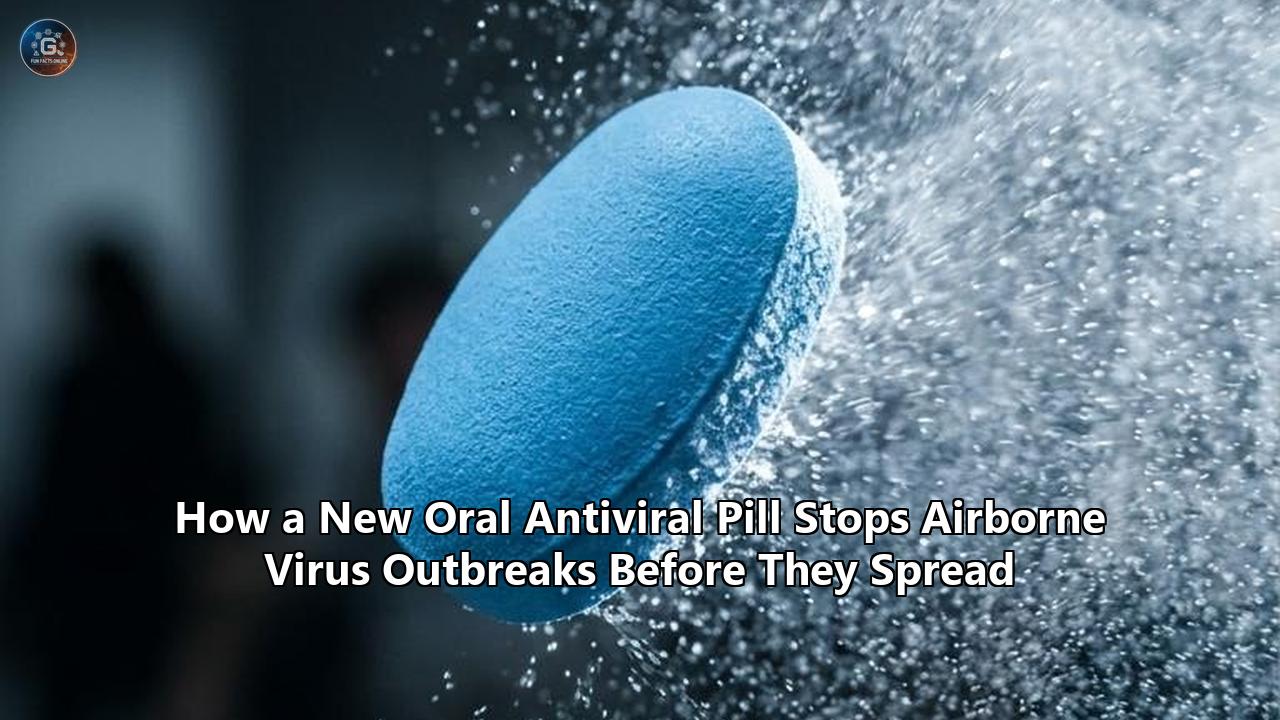
The publication of definitive Phase 3 trial data in the New England Journal of Medicine marked a fundamental shift in how public health institutions counter airborne viral threats. Results from the global SCORPIO-PEP study demonstrated that a five-day course of the investigational drug ensitrelvir reduced the risk of developing symptomatic COVID-19 by 67% among individuals exposed to an infected household contact. In high-risk populations with underlying health conditions, that protective effect escalated to a 76% reduction in relative risk.
Currently under priority review by the U.S. Food and Drug Administration with a Prescription Drug User Fee Act (PDUFA) target action date of June 16, 2026, the drug represents the first time an oral antiviral pill has successfully met its primary endpoint for post-exposure prophylaxis against a respiratory virus in a global Phase 3 trial.
By targeting the virus within the critical 72-hour window between exposure and the onset of symptoms, the intervention moves infectious disease control from reactive symptom management to proactive outbreak suppression.
“In this study, people taking ensitrelvir within 72 hours after household exposure were three times less likely to develop COVID-19 compared with those given placebo,” stated Dr. Frederick Hayden, Professor Emeritus of Clinical Virology at the University of Virginia School of Medicine and first author of the SCORPIO-PEP study. “These first, clearly positive results with an oral antiviral underscore its potential to protect a range of individuals, including those at higher risk of severe disease, and potentially alter management in high-density transmission settings.”
The emergence of this therapeutic strategy is not an isolated event. It is the culmination of a multi-year effort to solve one of virology's most persistent challenges: halting the exponential indoor transmission of airborne pathogens before clinical disease establishes itself.
2020–2022: The Structural Deficit of Early Antiviral Strategy
To understand the significance of the 2026 clinical results, one must trace the systemic gaps that defined the early years of the COVID-19 pandemic. Between 2020 and 2022, global pharmaceutical interventions against airborne pathogens operated almost exclusively on a reactive framework. Monoclonal antibodies and early intravenous therapeutics were designed to prevent severe illness and death in patients who were already infected and exhibiting symptoms.
When first-generation oral therapeutics emerged in late 2021—most notably nirmatrelvir co-packaged with ritonavir (Paxlovid) and molnupiravir (Lagevrio)—they represented a major logistical advance over infusion-based treatments. However, their clinical deployment remained strictly limited to treating established, symptomatic infections within five days of symptom onset.
Attempting to adapt these first-generation agents for post-exposure prophylaxis (PEP)—administering them to uninfected or pre-symptomatic individuals to prevent outbreaks—revealed deep pharmacological and operational limitations:
- Drug-Drug Interactions: Nirmatrelvir required co-administration with ritonavir, a strong cytochrome P450 3A4 (CYP3A4) inhibitor, to slow its metabolism and maintain therapeutic blood levels. While acceptable for short-term acute treatment in carefully screened patients, ritonavir’s extensive drug interaction profile created significant barriers for broad, rapid deployment across household contacts taking common medications for hypertension, dyslipidemia, or cardiac conditions.
- Tolerability and Compliance: Side effects such as dysgeusia (a severe, metallic taste disturbance) and gastrointestinal distress limited patient adherence—a critical vulnerability when attempting to administer preventive regimens to individuals who do not yet feel sick.
- The Failure of EPIC-PEP: In mid-2022, Pfizer announced that its Phase 2/3 EPIC-PEP trial evaluating ritonavir-boosted nirmatrelvir as post-exposure prophylaxis failed to meet its primary endpoint of reducing laboratory-confirmed symptomatic infection by a statistically significant margin (showing non-significant risk reductions of 32% and 37% across 5-day and 10-day dosing schedules).
The failure of EPIC-PEP highlighted a stark reality: airborne respiratory viruses replicate with extreme speed in the upper respiratory epithelium. Secondary attack rates in households during the Omicron era regularly ranged from 32% to 48%.
Because airborne virions spread via microscopic aerosols that linger in enclosed indoor air, an effective post-exposure shield needed to act immediately upon viral entry, achieve high concentrations in nasal and respiratory mucosa without requiring a metabolic booster, and display a safety profile clean enough for immediate distribution without extensive laboratory screening.
2022–2023: The Discovery of Unboosted Protease Inhibition
The search for a cleaner, direct-acting agent led virologists to the molecular structure of the SARS-CoV-2 main protease (3CL protease or Mpro). The 3CL protease is an essential viral enzyme responsible for cleaving polyproteins into functional non-structural proteins required for viral RNA replication. Because humans lack a homologous enzyme, 3CL protease represents an ideal target for selective inhibition with minimal off-target host toxicity.
In late 2022, researchers at Shionogi & Co. in Japan, working in collaboration with Hokkaido University, published preclinical and early clinical data for S-217622, later named ensitrelvir. Unlike its predecessors, ensitrelvir was engineered through structure-based drug design to bind non-covalently and non-covalently fit into the active site catalytic dyad (His41 and Cys145) of the 3CL protease with exceptionally high affinity.
This structural binding affinity yielded a decisive pharmacological breakthrough: ensitrelvir achieved effective antiviral blood and tissue concentrations as a single, once-daily monotherapy without requiring ritonavir boosting.
[Infected Index Case] ──(Aerosol Spread)──> [Exposed Household Contact]
                                                      │
                                                      ▼
                                       < 72 Hours Exposure Window
                                                      │
                                                      ▼
                                    [Ensitrelvir Monotherapy Dose]
                                                      │
                                                      ▼
                                     Blocks 3CL Protease Catalytic Site
                                                      │
                                                      ▼
                                    Halts Polyprotein Processing & Replication
                                                      │
                                                      ▼
                                      Prevents Symptomatic Establishment
                                      & Cuts Secondary Transmission
In November 2022, Japanese regulatory authorities granted emergency approval to ensitrelvir (marketed as Xocova) for the acute treatment of mild-to-moderate COVID-19, based on Phase 3 Phase 2b/3 trial data demonstrating rapid viral clearance and significant shortening of respiratory and systemic symptoms.
However, virologists recognized that ensitrelvir's unique pharmacokinetic profile—specifically its long terminal elimination half-life (approximately 40 to 50 hours), high plasma protein binding, and clean drug-interaction profile—made it uniquely suited for a different purpose: acting as an immediate molecular barrier against airborne exposure.
2023–2024: The SCORPIO-PEP Trial Logistics
In June 2023, Shionogi initiated the SCORPIO-PEP trial, an international, double-blind, randomized, placebo-controlled Phase 3 study explicitly engineered to test whether an oral antiviral pill could suppress airborne outbreak chains in household settings.
The trial was designed to overcome the recruitment and timing hurdles that had doomed earlier prophylaxis studies. Conducting a post-exposure trial for an airborne respiratory virus requires capturing participants in the narrow window between exposure and intra-nasal viral amplification.
Between June 2023 and September 2024, the trial enrolled 2,387 participants across hundreds of clinical sites in North America, South America, Asia, and Europe. The trial established stringent inclusion parameters:
- Exposure Window: Participants were required to be asymptomatic at enrollment and to have lived in the same household as an index patient who had developed symptomatic, laboratory-confirmed COVID-19 within the preceding 72 hours.
- Rapid Onset Dosing: More than 71% of trial participants received their first dose of the study drug within 48 hours of symptom onset in the household index patient.
- High Baseline Immunity Context: Reflecting real-world conditions, more than 98% of enrolled contacts had pre-existing immunity through prior SARS-CoV-2 infection, vaccination, or both.
- Stratification for Vulnerability: Approximately 37% of enrolled contacts possessed at least one major risk factor for severe disease, including obesity, chronic kidney disease, diabetes, or advanced age.
Participants were randomized 1:1 to receive either a five-day oral course of ensitrelvir (a 375 mg loading dose on Day 1 followed by 125 mg once daily on Days 2 through 5) or a matching placebo.
The primary endpoint was the proportion of household contacts who developed laboratory-confirmed symptomatic COVID-19 through Day 10. Secondary endpoints tracked viral load kinetics, overall household transmission rates, safety profiles, and efficacy within high-risk subgroups.
Late 2025 – May 2026: The SCORPIO-PEP Findings
Following unblinding and rigorous statistical evaluation throughout late 2025, the trial results were submitted to peer review and published in the New England Journal of Medicine in May 2026. The data provided definitive evidence that early post-exposure administration of an oral antiviral pill can suppress airborne transmission chains.
| Trial Population Group | Ensitrelvir Group Incidence (%) | Placebo Group Incidence (%) | Relative Risk Reduction | Statistical Significance |
|---|---|---|---|---|
| Primary Analysis Population (n=2,041) | 2.9% | 9.0% | 67% | p < 0.001 |
| Intention-to-Treat Population (n=2,387) | 4.4% | 10.2% | 57% | p < 0.001 |
| High-Risk Subgroup (≥1 Risk Factor) | 2.4% | 9.9% | 76% | Risk Ratio: 0.24 (95% CI: 0.12–0.49) |
| Secondary Household Transmission Rate | -- | -- | 34% | Post-hoc Analysis |
Beyond preventing clinical symptoms, the trial's virological substudies uncovered deep mechanistic explanations for how the drug neutralizes airborne outbreaks:
Rapid Suppression of Viral Dynamics
In contacts who tested positive for SARS-CoV-2 at baseline or during the 10-day monitoring period, those receiving ensitrelvir displayed significantly lower viral RNA loads in nasopharyngeal swabs compared to placebo recipients. By Day 5 of treatment, detectable viral antigen in plasma was reduced by nearly half compared to placebo (13.4% vs 25.1%; p < 0.001).
Interruption of Secondary Aerosols
Post-hoc epidemiologic modeling indicated a 34% relative risk reduction in overall SARS-CoV-2 transmission within households where contacts received post-exposure treatment. By lowering the amount of active virus replicating in the upper respiratory tract, the drug effectively choked off the generation of infectious aerosols, preventing tertiary spread to other family members.
Safety and Compliance Superiority
Adverse event rates were virtually indistinguishable between the active treatment group (15.1%) and the placebo group (15.5%). The most common adverse events—headache, fatigue, diarrhea, and cough—were mild and occurred at equal frequencies across both cohorts.
Crucially, zero cases of dysgeusia (altered taste) were attributed to ensitrelvir, solving the compliance issue that had previously plagued ritonavir-boosted regimens. No treatment-related serious adverse events, hospitalizations, or deaths occurred in the ensitrelvir arm.
Percentage of Participants Developing Symptomatic Infection (Day 10)
┌────────────────────────────────────────────────────────┐
│ Placebo Group: 9.0%                                    │
│ █ █ █ █ █ █ █ █ █                                      │
├────────────────────────────────────────────────────────┤
│ Ensitrelvir Group: 2.9%  [67% Relative Risk Reduction] │
│ █ █ █                                                  │
├────────────────────────────────────────────────────────┤
│ High-Risk Placebo: 9.9%                                │
│ █ █ █ █ █ █ █ █ █ █                                    │
├────────────────────────────────────────────────────────┤
│ High-Risk Ensitrelvir: 2.4%  [76% Relative Risk Red.] │
│ █ █                                                    │
└────────────────────────────────────────────────────────┘
“By preventing COVID-19, people can avoid not only potentially serious consequences of acute disease, but also the risk of exacerbating pre-existing conditions or acquiring new conditions, such as long COVID,” noted Dr. Aeron Hurt, Vice President of Global Medical Science at Shionogi. “Ensitrelvir cuts the chances of developing COVID-19 by two-thirds, which is substantial, particularly in households where the risk of spread is high.”
Early Viral Suppression in Respiratory Tissues
The biological reason an oral antiviral pill can arrest an airborne viral outbreak before symptoms appear lies in the distinct kinetics of respiratory viral infection.
When a person inhales infectious SARS-CoV-2 aerosols, the virions bind to angiotensin-converting enzyme 2 (ACE2) receptors on ciliated epithelial cells lining the nasal cavity and upper airway. This initial phase—the incubation period—lasts between 48 and 72 hours. During this window, viral replication accelerates exponentially: a single infected mucosal cell can produce thousands of progeny virions every few hours.
During these initial 72 hours, the host's innate immune system has not yet mounted a full response, and the individual remains completely asymptomatic. However, viral shedding in the upper nasal passages reaches levels high enough to produce infectious aerosols during normal breathing, talking, or coughing.
Timeline of Airborne Infection & Post-Exposure Intervention Window:

Hour 0                Hour 24               Hour 48               Hour 72+
│─────────────────────┼─────────────────────┼─────────────────────│
Viral Inhalation      Intra-Nasal           Exponential Viral     Symptom Onset &
& Mucosal Attachment  Replication Begins    Aerosol Shedding      Systemic Spread
│                     │                     │                     │
└─────────────────────┴─────────────────────┴─────────────────────┘
                       ▲
                       │
             ENSITRELVIR INITIATION
             (Blocks 3CL Protease)

             Result: Halts polyprotein processing, stops viral assembly,
             and prevents mucosal viral load from reaching symptom threshold.
When ensitrelvir is administered during this critical early window, it rapidly diffuses across the vascular barrier into the nasal respiratory mucosa. Once inside infected or newly exposed host cells, the molecule binds tightly to the 3CL protease enzyme.
Because the 3CL protease is essential for processing the polyproteins pp1a and pp1ab into the non-structural proteins (nsp1 through nsp16) that form the viral RNA-dependent RNA polymerase complex, inhibiting this enzyme brings viral replication to an abrupt halt.
Without functional protease enzymes:
- Viral Assembly Breaks Down: The virus cannot create new replication machinery or structural proteins.
- Mucosal Load Drops: The exponential curve of intra-nasal viral production is flattened before reaching the biological threshold required to trigger systemic inflammation (such as interleukin-6 and interferon surges that cause fever, myalgia, and respiratory congestion).
- Aerosol Transmission Clears: Because the upper respiratory viral load remains low, the host sheds fewer virions into ambient air, effectively breaking the chain of transmission to secondary household contacts or healthcare workers.
Strategic Operational Deployment: Ring Prophylaxis
The confirmation that an oral antiviral can successfully prevent symptomatic airborne disease transforms public health epidemiology. Historically, strategies against airborne outbreaks relied heavily on non-pharmaceutical interventions: physical masking, isolation, quarantine, and ventilation improvements.
While effective, these measures often suffer from implementation delays, variable public adherence, and economic disruption.
The availability of a post-exposure oral antiviral pill enables the widespread implementation of ring prophylaxis—a targeted containment strategy previously reserved for smallpox outbreaks using vaccines or bacterial threats using antibiotics.
       [ Index Patient Detected ]
                   │
                   ▼
       ┌────────────────────────┐
       │ Rapid Household &     │
       │ Institutional Mapping  │
       └───────────┬────────────┘
                   │
         Ring Prophylaxis Trigger
                   │
    ┌──────────────┴──────────────┐
    ▼                             ▼
[High-Risk Contacts]      [Institutional Rings]
• Immediate 5-Day Course  • Nursing Home Wards
• Prevents Severe Disease • Hospital Staff Units
• 76% Risk Reduction      • Military Barracks
1. Halting Outbreaks in High-Density Institutional Settings
Long-term care facilities, nursing homes, psychiatric units, and correctional facilities are exceptionally vulnerable to airborne respiratory pathogens. Once an airborne virus enters a facility, secondary attack rates frequently exceed 50%, leading to high hospitalization and mortality rates among frail residents.
With an approved post-exposure antiviral, the detection of a single positive case in a ward can immediately trigger a 5-day course of ring prophylaxis for all exposed staff and residents, stopping the outbreak before it forces facility-wide lockdowns.
2. Protecting Vulnerable Populations with Blunted Vaccine Responses
Immunocompromised individuals, solid organ transplant recipients, and patients undergoing chemotherapy often fail to generate robust neutralizing antibody responses from standard vaccines. For these individuals, exposure to a family member or caregiver with an airborne viral infection carries life-threatening risk.
Post-exposure prophylaxis provides a direct, host-independent chemical shield that acts instantly upon dosing, providing immediate passive protection regardless of the host’s immune status.
3. Preserving Critical Healthcare Workforce Capacity
During seasonal surges or novel variant waves, high rates of exposure among healthcare workers frequently lead to severe staffing shortages as doctors and nurses develop symptomatic illness and enter mandatory isolation protocols.
Deploying post-exposure oral antivirals to exposed hospital personnel allows healthcare systems to keep staff healthy and working, protecting health infrastructure during peak demands.
2026 and Beyond: Pan-Viral Preparedness and Unresolved Questions
As global regulatory bodies, led by the U.S. FDA, complete their evaluation of ensitrelvir's post-exposure application, public health agencies are already mapping out the next phase of airborne epidemic preparedness. The success of the SCORPIO-PEP trial has accelerated research into broad-spectrum post-exposure therapeutics capable of countering multiple viral families simultaneously.
Resistance Stewardship
A key focus for virologists following the SCORPIO-PEP study is monitoring for potential drug resistance. In the trial's genomic sequencing analysis, amino acid substitutions in the 3CL protease gene associated with reduced susceptibility to ensitrelvir were detected in a small fraction (1.9%) of baseline-infected contacts.
While these mutations did not translate into clinical treatment failures or sustained transmission of resistant strains, public health agencies emphasize that post-exposure deployment must be paired with continuous genomic surveillance. To preserve efficacy, post-exposure use will be strictly targeted to confirmed close contacts within the 72-hour exposure window rather than open-ended, unmonitored over-the-counter sales.
The Rise of Nanoengineered Broad-Spectrum Antivirals
Looking beyond COVID-19, researchers are leveraging the success of direct-acting antivirals to develop broad-spectrum agents that target shared replication mechanisms across Coronaviridae, Orthomyxoviridae (influenza), and Paramyxoviridae.
Advanced drug design and nanoengineered delivery platforms—such as lipid nanoparticle-encapsulated host-targeting compounds and nano-formulated host-factor inhibitors—are undergoing early-phase clinical testing. These next-generation broad-spectrum platforms aim to provide immediate "plug-and-play" ring prophylaxis against novel emerging respiratory threats before pathogen-specific vaccines or drugs can even be designed.
Evolution of Airborne Outbreak Containment Models:

2020–2022: Reactive Monotherapy Model
┌─────────────────────────────────────────────────────────────┐
│ Infection ──> Symptoms ──> Severe Illness ──> Hospitalization│
│                                                   ▲         │
│                                                   │         │
│                                           Late Intervention │
└─────────────────────────────────────────────────────────────┘

2023–2025: Early Acute Treatment Model
┌─────────────────────────────────────────────────────────────┐
│ Infection ──> Symptoms ──> Mild Illness                     │
│                   ▲                                         │
│                   │                                         │
│           Early Intervention (0-5 Days)                     │
└─────────────────────────────────────────────────────────────┘

2026+: Post-Exposure Ring Prophylaxis Model
┌─────────────────────────────────────────────────────────────┐
│ Exposure ──> Early Viral Entry                              │
│     ▲                                                       │
│     │                                                       │
│ Immediate Molecular Barrier (0-72 Hours)                   │
│ Result: Prevents Disease Establishment & Extinguishes Spread│
└─────────────────────────────────────────────────────────────┘
Global Supply and Equity Logistics
The ultimate effectiveness of post-exposure ring prophylaxis as a global health tool hinges on rapid production and equitable distribution. Manufacturing partnerships and licensing agreements with global generic manufacturers are already being established to ensure that when an outbreak occurs, stockpiles of oral antivirals can be deployed instantly to lower-income regions.
The progression from early pandemic vulnerability to the validation of early post-exposure intervention represents a permanent expansion of the public health toolkit. By transforming a brief exposure into a non-event, the strategic deployment of oral antivirals provides an effective molecular shield against the threat of airborne viral outbreaks.
References
- New England Journal of Medicine / Pharmacy Times (May 20, 2026): New Oral Antiviral Slashes COVID-19 Risk After Exposure, Phase 3 Trial Finds. Primary analysis of the Phase 3 SCORPIO-PEP trial evaluating ensitrelvir for post-exposure prophylaxis.
- Patient Care Online / NEJM (May 15, 2026): Ensitrelvir Phase 3 Trial Results in Household Contacts. Detailed breakdown of 67% relative risk reduction overall and 76% in high-risk populations.
- University of Minnesota CIDRAP (May 14, 2026): Ensitrelvir PEP Study Demonstrates Decreased Household Transmission and Reduced Viral Shedding. Post-hoc epidemiologic analysis and viral load dynamics.
- Shionogi & Co., Ltd. Global Announcement (May 13, 2026): SCORPIO-PEP Phase 3 Publication in NEJM and PDUFA Priority Review Update. Regulatory timeline and safety profiles.
- Small Science / NIH PubMed Central (January 2026): Nanoengineered Broad-Spectrum Antivirals for Rapid Response Towards Next Pandemics. Review of host-targeted and broad-spectrum oral antiviral technologies for pandemic preparedness.
Reference:
- https://www.pharmacytimes.com/view/new-oral-antiviral-slashes-covid-19-risk-after-exposure-phase-3-trial-finds
- https://www.patientcareonline.com/view/ensitrelvir-reduced-symptomatic-covid-19-risk-after-exposure-in-phase-3-trial
- https://www.shionogi.com/us/en/news/2026/05/new-england-journal-of-medicine-publishes-shionogi-study-demonstrating-ensitrelvir-prevents-covid-19-following-exposure.html
- https://www.cidrap.umn.edu/covid-19/antiviral-ensitrelvir-cuts-risk-covid-19-household-contacts-two-thirds-study-finds
- https://pubmed.ncbi.nlm.nih.gov/42017206/
- https://pmc.ncbi.nlm.nih.gov/articles/PMC12806469/
- https://www.researchgate.net/publication/399769789_Strategic_Preparedness_of_Broad-Spectrum_Antivirals_for_Rapid_Response_Towards_Next_Pandemics