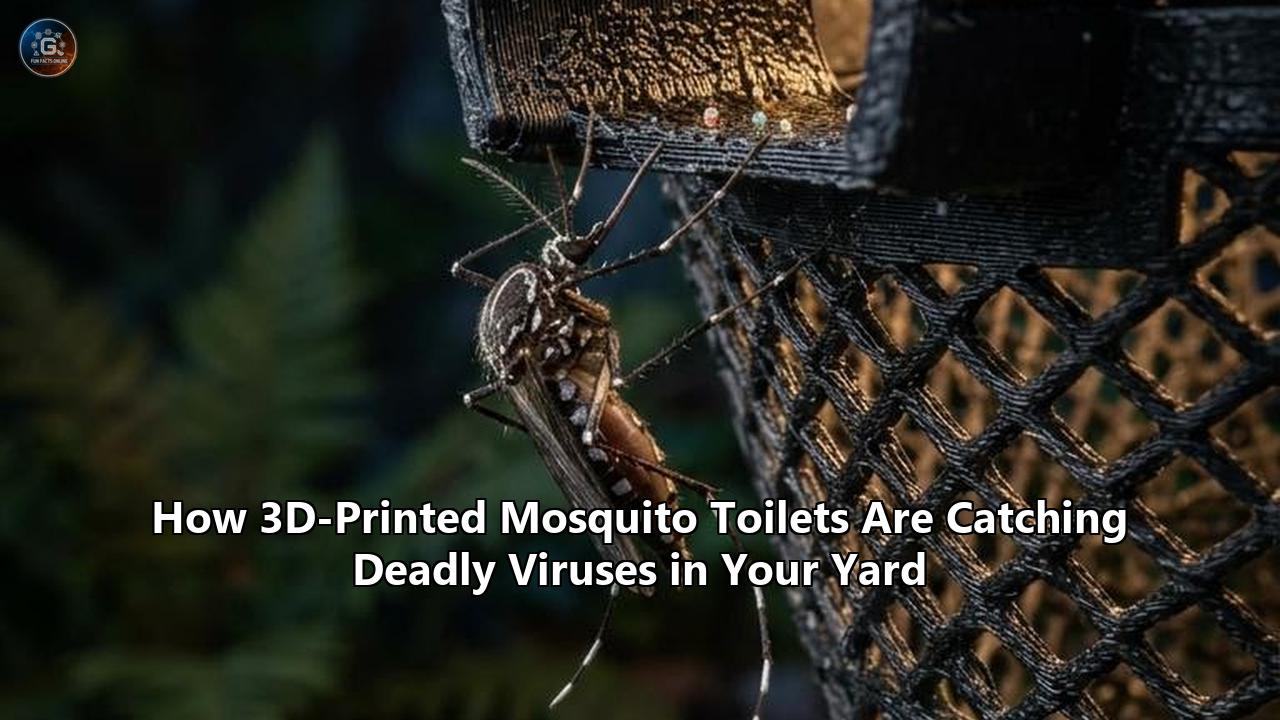
In a quiet residential backyard in New Brunswick, New Jersey, entomologists set up an experimental contraption that looked less like a clinical laboratory instrument and more like a high-tech dollhouse funnel. Inside sat fifty wild mosquitoes feeding on cotton pads soaked in red-dyed sugar water. Below them, a specially treated, custom-manufactured slope captured what the insects left behind.
The scientists had constructed what they bluntly termed a "mosquito toilet".
When the genetic results came back from the sequencers, that small trickle of insect excretion revealed an unexpected biological universe. Inside a few microliters of fluid, researchers at Rutgers University discovered a complete, intact genome of the West Nile virus, matching the endemic NY07 lineage. Alongside it was the first North American detection of the "Hedwig-like virus"—an obscure pathogen previously identified only in European snowy owls—as well as sequences belonging to several viruses unknown to science, and dozens of single-celled parasites.
Published in Microbiology Spectrum by a team led by Dana Price, an associate professor at the Rutgers Center for Vector Biology, the study establishes an entirely new architecture for viral surveillance. By skipping the decades-old practice of capturing, freezing, and pulverizing thousands of insect carcasses to search for a single target, the Rutgers team demonstrated that analyzing mosquito bodily waste can yield a comprehensive census of the pathogens quietly circulating through backyards, parks, and wetlands.
"What we did, colloquially, was build a mosquito toilet," Price said when unveiling the data. "If you don't look for it, you won't find it. But what if you don't know what to look for?"
The development arrives as public health infrastructure across the globe strains under the expanding footprints of vector-borne illnesses. As warming temperatures elongate breeding seasons and drive invasive mosquito species into higher latitudes, surveillance teams urgently need faster, cheaper, and broader warning systems. The humble 3D-printed funnel could bridge the critical gap between localized insect populations and municipal disease outbreaks, transforming insect bodily fluids into an early-warning radar for the next epidemic.
The Physics of the Mosquito Commode
To understand why researchers spent months designing a specialized insect commode, one must first confront a basic physical obstacle: insect droppings are microscopic, viscous, and notoriously difficult to harvest.
An adult Culex mosquito weighs roughly 2 to 5 milligrams. When it feeds on nectar, sap, or an artificial sugar solution, it processes that liquid through its digestive tract, eventually discharging droplets that measure mere fractions of a microliter. In a standard plastic cup, glass beaker, or insect-rearing cage, those micro-droplets never make it to an analysis vial. Capillary action, surface tension, and electrostatic attraction cause the fluid to flatten out and cling stubbornly to the container walls. Within minutes, dry ambient air evaporates the water content, baking whatever nucleic acids the droplet carried onto the plastic, where enzymes and ultraviolet radiation rapidly degrade the viral RNA.
The Rutgers team overcame this physical barrier by turning to additive manufacturing and advanced surface chemistry.
Using desktop stereolithography and fused deposition modeling, the researchers fabricated a rigid, steep-angled funnel designed to mount directly beneath standard screened mosquito housing. The geometry had to be precise: steep enough that gravity could act on sub-milligram masses, yet wide enough to catch waste falling from any corner of the holding cage.
However, raw 3D-printed plastic is inherently textured. The layer-by-layer deposition of polymer filament leaves behind microscopic grooves, ridges, and valleys. For a droplet smaller than the head of a pin, those microscopic ridges act like deep canyons, trapping the fluid through mechanical capillary retention.
To eliminate this friction, the engineers meticulously sanded the interior surface of the printed funnels until the polymer ridges were smoothed flat. Next, they applied two successive coats of an industrial superhydrophobic spray, followed by controlled thermal curing inside a laboratory oven.
               [Screened Insect Chamber]
              (Mosquitoes feed on sugar bait)
                         |   |
                         v   v  (Micro-droplets excreted)
        \=========================================/
         \   Superhydrophobic Coated Surface     /
          \   (Water contact angle > 150°)      /
           \                                   /
            \   Droplets bead up and roll     /
             \  without surface adhesion     /
              \                             /
               \===========     ===========/
                           |   |
                           |   |
                           v   v
                  [Sterile Collection Vial]
              (Liquid RNA/DNA ready for mNGS)
The resulting coating created an extreme manifestation of the "lotus effect." In materials science, a surface is considered superhydrophobic when the contact angle of a water droplet exceeds 150 degrees. Instead of spreading out and wetting the plastic, droplets of mosquito excreta balled up into near-perfect spheres. Because the liquid had virtually zero physical contact with the actual funnel substrate, gravity easily overcame the negligible surface adhesion.
The droplets rolled cleanly down the funnel walls without leaving a streak or smear behind, dropping directly into a sterile microcentrifuge tube positioned at the base. The entire yield from fifty mosquitoes feeding on sugar was funneled into a single, pristine pool of biological fluid, preserved and ready for molecular sequencing without a single human hand touching the insects.
The Destructive Bottleneck of Traditional Surveillance
To appreciate how radically this funnel departs from routine entomological fieldwork, consider how public health agencies have tracked vector-borne viruses for the past seventy years.
Across the United States and worldwide, mosquito monitoring relies on a labor-heavy, physically grinding process. Field technicians drive out to wetlands, drainage basins, and residential borders to hang heavy traps. Some of these units, like CDC miniature light traps, pull flying adults in using small electric fans and incandescent bulbs; others, such as gravid traps, draw egg-bearing females using tubs of foul, fermented organic water.
The logistical friction begins the moment the trap is emptied:
- Cold-Chain Dependence: Caught mosquitoes die quickly, and their bodies begin decomposing immediately. Because ambient heat rapidly breaks down fragile viral RNA, field crews must chill the catch on dry ice or freeze it in liquid nitrogen tanks the moment they retrieve the collection nets. In remote areas or developing countries, maintaining a continuous sub-zero cold chain is logistically difficult and often prohibitively expensive.
- Manual Sorting: Once hauled back to a central facility, the catch is dumped onto chilled chill-tables under stereo microscopes. Trained taxonomists must inspect every insect one by one, manually picking out non-target moths, beetles, and midges, and separating mosquito species (Culex, Aedes, Anopheles) using tiny forceps. A single county vector team can spend hundreds of technician-hours every week simply identifying dead bugs.
- Tissue Homogenization (The Grinding Phase): After species sorting, mosquitoes are bundled into "pools" of twenty to fifty insects. Technicians drop the bugs into plastic vials with steel or ceramic ball bearings and a chemical lysis buffer. High-speed homogenizers shake the tubes violently, crushing heads, legs, carapaces, and reproductive organs into a dense, muddy biological paste.
- Targeted PCR Screening: Technicians extract nucleic acids from that insect slurry and run real-time quantitative polymerase chain reaction (RT-qPCR) tests. Crucially, standard qPCR requires specific chemical primers. If a technician tests a New Jersey pool for West Nile virus, the assay illuminates only whether West Nile is present. If that same pool contains Eastern equine encephalitis, Jamestown Canyon virus, Usutu virus, or a newly emerged pathogen spilling over from migratory birds, the machine reads negative. The pathogen slips past unnoticed.
Beyond its manual burdens, whole-body grinding suffers from an inherent biological obstacle: excessive host background noise.
When an entomologist pulverizes fifty mosquitoes, more than 99.9% of the extracted genetic material belongs to the mosquitoes themselves—their muscle tissue, digestive enzymes, cuticular cells, and structural ribosomal RNA. The genetic footprint of any virus living inside the mosquito's salivary glands or gut represents a minuscule fraction of a percent of the total sample. Attempting deep metagenomic sequencing on a crushed bug is like trying to hear a faint whisper inside a roaring engine room; the massive volume of insect DNA and RNA drowns out the genetic signals of the microbes.
As an evolution in mosquito control technology, collecting clean excrement flips this dynamic upside down.
Mosquito bodily waste contains very little sloughed-off host tissue. It is composed predominantly of water, digestive byproducts, metabolic salts, and whatever microscopic passengers were residing in or passing through the alimentary canal. By sequencing the waste rather than the carcass, researchers remove the overwhelming background clutter of insect genome. The concentration of viral genetic material relative to host cellular debris spikes dramatically, allowing sequencers to capture clear pathogen profiles without wasting expensive computational and chemical capacity reading millions of redundant mosquito genes.
Wastewater Epidemiology at the Scale of an Insect
The conceptual root of the 3D-printed mosquito toilet traces back to one of the most effective public health interventions of the twenty-first century: wastewater epidemiology.
During the COVID-19 pandemic, municipal authorities around the globe realized they did not need to swab every citizen's nose to understand community infection dynamics. By sampling the influent flowing into municipal sewage treatment plants, technicians could detect traces of SARS-CoV-2 RNA shed in human stool days before infected individuals developed symptoms, visited clinics, or took home antigen tests. Wastewater surveillance provided an unbiased, population-level snapshot that bypassed the erratic variables of healthcare access and individual testing behaviors. Similar strategies have tracked polio re-emergence in London and New York, monitored seasonal influenza surges, and traced regional spikes in illicit drug consumption.
Price and his team asked a direct question: What if a mosquito population could be treated as a flying neighborhood, and its waste analyzed like miniature municipal sewage?
To understand why this works, one must trace the anatomy of the mosquito gut. When a female mosquito takes a blood meal from an avian reservoir or a mammal, or when males and females ingest floral nectar, fluid passes into the alimentary tract. The digestive system is segmented into the foregut, the midgut, and the hindgut, working in tandem with the Malpighian tubules—the insect equivalents of human kidneys.
+-------------------------------------------------------------------------+
|                       MOSQUITO GUT COMPARTMENTS                         |
+-------------------------------------------------------------------------+
|  [Crop]                 [Midgut]                [Hindgut & Tubules]     |
|  Temporary sugar        Primary digestion       Fluid regulation,       |
|  storage; low enzyme    site; blood breakdown;  waste concentration,    |
|  activity               viral replication zone  excretion collection    |
|       |                        |                         |              |
|       +------------------------+-------------------------+              |
|                                |                                        |
|                                v                                        |
|                 [EXCRETION: Feces + Urine]                              |
|           Contains shed viral particles, transit microbes,              |
|              and parasite life stages with minimal host DNA             |
+-------------------------------------------------------------------------+
When an arbovirus (an arthropod-borne virus) infects a mosquito, it must first cross the epithelial lining of the midgut. The virus replicates within these midgut cells before breaking out into the hemolymph (insect blood) and eventually migrating to the salivary glands, from which it can be transmitted during a subsequent bite.
During that intense intra-gut replication, millions of viral particles shed into the lumen of the gut. When the mosquito processes a follow-up meal—such as sugar water in a trap—it purges waste fluid. That waste carries discarded viral capsids, shed viral RNA fragments, and fully intact virions straight out of the cloaca.
By utilizing mosquito waste as an epidemiological sample, scientists effectively tap into an environmental drainage system. A single funnel does not merely test whether one insect was infected; it aggregates the biological output of dozens or hundreds of free-flying foragers that have spent days sampling blood from local birds, rodents, pets, and humans across several square blocks.
What the Backyard Funnel Uncovered
To put the concept to the test, the Rutgers researchers deployed standard gravid traps in a typical, high-density residential backyard in New Brunswick, New Jersey. They retrieved two batches of wild mosquitoes: one cohort of fifty insects in September 2021, and a second cohort of fifty in September 2022.
Both cohorts consisted of members of the Culex pipiens complex—the common house mosquito, widely known as the primary northern vector for West Nile virus and St. Louis encephalitis.
The wild insects were placed inside screened mesh cages resting over the 3D-printed superhydrophobic funnels. Above the screen, researchers laid cotton pads soaked in a 10% sucrose solution, colored red so technicians could visually verify through the insects' translucent abdomens that they were drinking and subsequently discharging waste. The mosquitoes spent several days feeding and defecating.
The resulting fluid beads rolled down into the collection tubes. The scientists extracted total RNA from the pooled waste and subjected it to shotgun metagenomic sequencing—a process that sequences every fragment of genetic code present in a sample simultaneously, without using targeted primers or knowing what organisms exist in the tube.
The sequencing reads revealed a complex microbial ecosystem:
1. A Pristine West Nile Genome
The 2022 excreta sample yielded an entire, high-coverage genome of the West Nile virus. Bioinformatic alignment revealed that the sequence belonged to the NY07 genotype. This specific genetic variant emerged in North America in the late 2000s, displacing older lineages due to its enhanced fitness and transmission efficiency in local Culex vectors. The fact that the entire 11,000-nucleotide single-stranded RNA genome could be assembled de novo from mere drops of insect waste validated the method's potential for genomic tracking. Public health officials could monitor point mutations, track lineage introductions, and watch for neurovirulence markers without needing to isolate viral cultures from live insect tissues.
2. The Hedwig-Like Virus in the Americas
Tucked within the genetic readouts of that same New Jersey sample were sequences corresponding to a Hedwig-like virus. Hedwig virus—named in homage to the white snowy owl of Harry Potter fame—was first documented by virologists in Europe who isolated it from wild owl tissues. Before the Rutgers experiment, no sequence belonging to this viral group had ever been recorded anywhere in the Western Hemisphere.
How did an obscure European avian virus end up in a backyard puddle in New Jersey? It is possible that the virus has been silently circulating through North American migratory bird populations for years, entirely invisible simply because standard public health PCR kits do not include primers to test for it. As Price noted: "We didn't even look for it specifically. We just looked for everything, and we found Hedwig in there".
3. Previously Undocumented Viral Sequences
Beyond known agents, the shotgun sequencing generated millions of base pairs that had no identical match in GenBank, the National Institutes of Health's open-access sequence database. These included partial contigs resembling Partitiviridae (double-stranded RNA viruses typically known to infect fungi and plants, but increasingly found in insect hosts) and novel picorna-like viruses. Some sequences likely represent harmless insect-specific viruses that replicate only inside mosquitoes without infecting mammals; others could be symbiotic hitchhikers or entirely uncharacterized vector-borne agents.
4. A Census of Internal Parasites
The fluid carried more than just viruses. Sequencing identified abundant genetic signatures of trypanosomatids—a diverse family of single-celled, flagellated protozoan parasites. While some members of this wider family cause devastating human conditions like Chagas disease and leishmaniasis, insect-restricted trypanosomatids frequently infect mosquito digestive systems. One single parasite clade generated tens of thousands of individual genetic matches within the New Jersey sample.
5. Self-Barcoding Species Confirmation
Perhaps most surprising was the presence of host mosquito mitochondrial DNA floating in the excretion. Even though the fluid was free of large insect tissue chunks, enough cells were shed from the gut lining during digestion to provide identifiable host genetic barcodes. The sequencer accurately matched the host markers to Culex pipiens, confirming the species of the insects sitting above the funnel without requiring a human taxonomist to dissect the collection.
+----------------------------------------------------------------------+
|             PATHOGENS & GENOMES DETECTED IN EXCRETA                  |
+----------------------------------------------------------------------+
| Target Found                  Significance                           |
+----------------------------------------------------------------------+
| West Nile Virus (NY07)        Complete 11kb viral genome assembled;  |
|                               matches dominant regional lineage.     |
|                                                                      |
| Hedwig-like Virus             First documented detection in the      |
|                               Americas; previously known only from   |
|                               European avian tissues.                |
|                                                                      |
| Culex Mosquito Virus 1        Highly abundant; matches strains       |
|                               previously seen in CA and Germany.     |
|                                                                      |
| Uncharacterized Picorna-like  Novel sequences; potential unmapped    |
| & Partiti-like viruses        insect-specific or avian RNA viruses.  |
|                                                                      |
| Trypanosomatid Parasites      High-density protozoan signatures      |
|                               shed from the insect gut lumen.        |
|                                                                      |
| Culex pipiens Host DNA        Mitochondrial markers allow automated  |
|                               vector species confirmation.           |
+----------------------------------------------------------------------+
Metagenomics: Shedding the Blindfolds
The Rutgers mosquito toilet succeeds largely because it pairs an elegant physical collection mechanism with metagenomic next-generation sequencing (mNGS). Understanding the distinction between traditional diagnostic tests and metagenomics explains why this work represents a leap forward for mosquito control technology.
Standard diagnostics rely on targeted amplification. If a laboratory technician wants to find Zika virus using RT-qPCR, they mix the mosquito sample with synthetic oligonucleotides (primers) specifically manufactured to match a known 100-base-pair stretch of the Zika genome. If the sample contains Zika, the primers bind, DNA copies multiply exponentially, and fluorescent dyes emit a measurable light signal. If the sample contains a mutated strain of Zika whose binding sites have drifted, or if it contains an entirely different pathogen like Oropouche or Mayaro virus, the primers fail to anneal. The reaction remains dark. The test returns a false sense of security.
Shotgun metagenomics operates on an entirely different philosophy: sequence everything that contains nucleic acid.
In an mNGS workflow, laboratory technicians extract all total RNA from the sample, convert it to complementary DNA (cDNA) via reverse transcriptase, and attach standardized sequencing adapters. High-throughput sequencers—such as platforms built by Illumina or Oxford Nanopore Technologies—read millions of individual strands in parallel, producing massive datasets containing gigabases of raw genetic letters (A, C, G, and T).
Supercomputers then take over. Sophisticated bioinformatic software strips away known background artifacts, filters out residual host mosquito DNA, and matches the remaining fragments against global databases containing every known virus, bacterium, fungus, and parasite. Where fragments overlap, assembly software stitches them together like jigsaw puzzle pieces into complete or near-complete viral genomes.
[Raw Excreta Sample]
        |
        v
[Total RNA Extraction] ----> (Negligible host DNA background)
        |
        v
[Reverse Transcription to cDNA]
        |
        v
[High-Throughput Sequencing]
(Illumina / Nanopore platforms generate millions of short/long reads)
        |
        v
[Bioinformatic Pipeline]
   ├── 1. Filter out remaining insect host sequences
   ├── 2. Match reads against reference databases (GenBank/RefSeq)
   ├── 3. De novo assembly of overlapping fragments (contigs)
   └── 4. Flag novel, unclassified, or divergent viral genomes
This method eliminates the need to guess what is lurking in the environment before running the test. Had the Rutgers team used standard surveillance protocols on their New Jersey sample, they would have tested for West Nile virus, logged a positive result, and discarded the remaining fluid. The Hedwig-like virus, the unknown picorna-like strains, and the trypanosomatid parasites would have ended up incinerated in biohazard waste, undiscovered.
By removing targeted blinders, open-ended metagenomics allows researchers to discover emerging threats at the moment they enter the local fauna, long before an unusual spike in human encephalitis cases or unexplained hospital admissions triggers a retrospective public health investigation.
The Economics of Vector Defense
Public health operations are fundamentally constrained by municipal budgets. When local mosquito abatement districts decide how to allocate their resources, they must constantly balance operational labor, consumable equipment costs, and laboratory turn-around times.
Under current operational models, mosquito surveillance is an expensive, labor-intensive undertaking:
- Field Personnel Costs: A substantial portion of a mosquito abatement district's budget is consumed by personnel driving routes, setting and retrieving heavy traps, refilling dry-ice containers daily, and transporting fragile specimens under refrigeration.
- Laboratory Labor: Sorting insects under a microscope cannot easily be automated with conventional machinery. It requires entomological training and manual dexterity. When a seasonal heatwave causes mosquito populations to explode, diagnostic labs face massive backlogs. Pools of insects can sit in freezers for weeks awaiting screening, muting their utility as an immediate early-warning system.
- Supply Chain Fragility: Commercial mosquito traps are surprisingly costly, often priced between $300 and $1,200 per unit, and rely on specialized mechanical parts, motors, and batteries that can face supply chain bottlenecks during international shipping crunches.
The economics of additive manufacturing and waste-based biosurveillance radically alter this equation.
A 3D printer capable of producing superhydrophobic-ready collection funnels costs less than $400. The raw thermoplastic filament required to print a single funnel costs roughly $1.50 to $3.00. The superhydrophobic spray and oven-curing process add mere pennies per device. Once a successful digital CAD model (an STL file) is designed, it can be distributed over the internet instantly to any public health agency, research outpost, or military installation in the world, allowing teams to print, coat, and deploy surveillance hardware locally without relying on international logistics networks.
| Surveillance Parameter | Traditional "Pool & Grind" | 3D-Printed Excreta Trap |
|---|---|---|
| Initial Hardware Cost | $300 – $1,200 per mechanical trap | < $10 in 3D-printing filament & coating |
| Field Maintenance | Daily dry-ice replenishment; specimen chilling | Multi-day passive sugar bait feeding |
| Laboratory Processing | Manual species sorting; tissue homogenization | Direct fluid draw; minimal host cleanup |
| Host Interference | > 99% insect host DNA/RNA background | Trace host cellular material |
| Diagnostic Scope | Single-target or multiplex PCR (pre-specified) | Open-ended metagenomic sequencing |
| Insect Survivability | 100% destructive (insects crushed) | Non-destructive (insects remain alive) |
Furthermore, gathering waste is non-destructive. In traditional pools, testing an insect destroys it completely. In an excreta-based system, the mosquitoes remain alive above the funnel, feeding and shedding waste over continuous multi-day windows. This allows researchers to conduct time-series monitoring on the same captive group, observing how viral shedding fluctuates over the life of the insect without needing to capture new populations daily.
By combining low-cost manufacturing with streamlined molecular extraction, this iteration of mosquito control technology lowers the financial and operational barrier for vector surveillance, making continuous pathogen monitoring viable for resource-strained municipalities and developing nations that have long been excluded from advanced genomic surveillance.
The Vision: Autonomous Sentinels in the Wild
The experiment conducted by the Rutgers team in New Brunswick was an essential proof of concept, but it was executed in a controlled setting: wild mosquitoes were trapped manually, carried into a facility, and hand-transferred into cages positioned over the 3D-printed toilets.
The long-term objective of this research is much more ambitious: building a self-contained, fully autonomous sentinel trap that can sit independently in a suburban yard, dense forest, or marshland, continually testing for deadly viruses and wirelessly reporting findings back to central health databases.
+-------------------------------------------------------------------------+
|                  AUTONOMOUS SENTINEL TRAP CONCEPT                       |
+-------------------------------------------------------------------------+
|                                                                         |
|  [Attractant Unit]     --> CO2 generation, octenol, & heat lure wild    |
|                            mosquitoes inside                            |
|                                                                         |
|  [Feeding Chamber]     --> Attracted mosquitoes feed on sugar-pad bait  |
|                                                                         |
|  [Superhydrophobic]    --> Excreta droplets roll with near-zero         |
|  [Collection Funnel]       adhesion into microfluidic module            |
|                                                                         |
|  [Microfluidic &]      --> Automated nucleic acid extraction and        |
|  [Nanopore Sequencer]      real-time electrical sequencing              |
|                                                                         |
|  [Cellular/Satellite]  --> Beams genetic data directly to cloud-based   |
|  [Telemetry Node]          public health dashboards in real time        |
|                                                                         |
+-------------------------------------------------------------------------+
"The pie-in-the-sky idea is a device that we place in a forest somewhere, and it's constantly just beaming back data to us," Price explained.
Realizing that goal requires integrating several emerging technologies into a single weatherproof enclosure:
1. Attract and Hold
A field-ready unit must first draw wild vectors in without killing them immediately. Modern prototype traps use synthetic lures that mimic human skin chemistry—blends of lactic acid, ammonia, and octenol—paired with slow-release carbon dioxide generators. Once inside, one-way funnel baffles prevent the insects from escaping, directing them into a sheltered resting chamber supplied with an appetizing sugar-feeding wick.
2. Microfluidic Extraction
Beneath the superhydrophobic funnel, the collection tube will be replaced by an automated microfluidic cartridge. Using micro-pumps and capillary valves, the system can periodically draw collected droplets into a reaction chamber, add chemical lysis agents to burst viral envelopes, and wash the solution across magnetic beads to isolate pure viral RNA and DNA—all without human pipetting.
3. Field-Portable Sequencing
Next-generation sequencers have shrunk from room-sized appliances to devices the size of a smartphone. Platforms like Oxford Nanopore's MinION determine nucleotide sequences by passing individual DNA or RNA molecules through microscopic protein pores (nanopores) embedded in an electrically resistant membrane. As each base passes through the pore, it disrupts an electrical current in a characteristic pattern, allowing software to read the sequence in real time. Because these systems run on standard USB power, they can be integrated directly into field units powered by compact solar panels or long-lasting lithium iron phosphate batteries.
4. Telemetry and Algorithmic Early Warning
Once the sequencer reads the genetic data, an onboard low-power microprocessor (such as a Raspberry Pi or edge-AI computing module) can run local alignment algorithms. The moment the device detects genetic signatures matching West Nile, Eastern equine encephalitis, or an unmapped pathogen displaying dangerous virulence markers, it can transmit an alert via cellular networks or low-Earth-orbit satellite links directly to municipal health departments.
Instead of waiting for an infected human patient to present with high fever and neurological symptoms at a local emergency room, vector control teams could receive a digital alert indicating that West Nile or another dangerous pathogen is active in a specific neighborhood. Technicians could deploy targeted larvicides to storm drains, launch public awareness notices, or clear stagnant water sources before transmission cascades out of control.
Scientific Caveats: What Waste Can and Cannot Reveal
While the 3D-printed commode opens unprecedented diagnostic pathways, entomologists and epidemiologists emphasize that insect waste surveillance comes with clear biological limitations that must be accounted for before it can supplement standard public health systems.
Transit vs. Disseminated Infection
Finding viral RNA inside mosquito excreta does not definitively prove that the insect is capable of transmitting that virus to a human. When a mosquito feeds on an infected animal, viral particles pass into its gut. In some cases, the virus simply passes through the insect's digestive tract and is excreted in waste without ever penetrating the gut wall, replicating in the hemolymph, or reaching the salivary glands.
This is known as a non-competent vector transit. A mosquito might pass viral fragments in its droppings, but its bite could remain completely harmless. Excreta testing tells scientists that a virus is present in the local ecological network, but supplementary laboratory studies are still necessary to determine whether the mosquito species in question is an active vector or merely an accidental biological courier.
Species Deconvolution in Mixed Catches
In the Rutgers experiment, researchers tested a single species (Culex pipiens) in an isolated enclosure. In a wild trap, however, dozens of insect species—including harmless non-biting midges, agricultural pests, and multiple competing mosquito species—might gather in the chamber simultaneously.
If all those insects defecate into a single shared funnel, assigning a specific virus to a specific insect vector becomes complicated. While host DNA markers found in the waste can confirm which species were present in the trap, parsing which individual insect shed the pathogen requires complex bioinformatic deconvolution or downstream individual-level testing.
Environmental Durability
A smooth, superhydrophobic coating works cleanly inside an environmentally regulated laboratory. In the wild, however, surfaces face extreme conditions. Dust, pollen, rain splatter, windblown debris, and solar UV radiation can gradually degrade nano-coatings over time. If dust particles settle onto the funnel, droplets can stick to the debris, halting their slide into the collection reservoir. Designing durable, self-cleaning superhydrophobic coatings that can survive weeks in high-humidity swamps or sun-baked suburban borders remains an active challenge for materials scientists.
Bioinformatic Interpretation
Shotgun metagenomics generates massive amounts of data, much of it belonging to harmless, uncharacterized organisms. Distinguishing between a benign insect-specific virus and an emerging zoonotic pathogen capable of causing human encephalitis requires sophisticated bioinformatic discernment. Public health agencies cannot spray insecticides over an entire county every time a trap detects a novel, unclassified viral sequence; epidemiologists must establish clear risk-assessment frameworks to interpret metagenomic findings before translating trap readouts into physical vector interventions.
The Shifting Geography of Vector Threats
The emergence of smarter tools for vector monitoring is taking place amid a backdrop of significant geographic shifts in mosquito populations.
Warming global temperatures, shifting precipitation belts, and expanded urban heat islands have altered the ranges of major disease vectors. Species once confined to tropical and subtropical zones, such as Aedes aegypti (the yellow fever and dengue vector) and Aedes albopictus (the Asian tiger mosquito), are establishing permanent year-round populations across Southern Europe, the American Sun Belt, and the temperate river valleys of North America.
Simultaneously, native vectors like Culex pipiens and Culex tarsalis are extending their active transmission windows later into autumn. A prolonged warm season gives arboviruses more time to replicate within their insect hosts, increasing the extrinsic incubation period and dramatically elevating the statistical probability of spillover into avian and human populations.
These climatic shifts are colliding with an increasingly interconnected global trade and travel network. Pathogens can cross an ocean inside the bloodstream of an asymptomatic airline traveler or inside an egg cluster attached to imported industrial tires, arriving in ecosystems where native mosquitoes stand ready to amplify them. When West Nile virus first arrived in New York City in 1999, it took only a few years to sweep across the entire continental United States, permanently altering native bird populations and becoming the leading cause of domestically acquired mosquito-borne disease in the country.
Traditional surveillance systems designed in the mid-twentieth century were built around predictable, regional seasonality. Those models struggle against unpredictable, rapidly shifting vector ecology. The discovery of the Hedwig-like virus in New Jersey illustrates how incomplete our current geographical baseline truly is. We do not know whether Hedwig arrived in North America last year via a migratory bird, or whether it has been silently inhabiting New Jersey wetlands for centuries, unnoticed because public health systems were testing exclusively for the viruses they already knew.
As Price reflected: "The more data we collect, the more we wonder whether everything really exists everywhere. Even though we don't yet know how much of everything exists everywhere, it could still be much more than we realize".
Looking Forward: Field Trials and the Open-Source Blueprint
The next major milestone for the Rutgers team is taking the 3D-printed commode from laboratory chambers into the field.
Researchers are currently refining field-ready prototypes that integrate the superhydrophobic funnel directly into existing municipal trap networks. The upcoming phase will test how effectively these passive waste-catchers hold up against real-world environmental elements across an entire summer breeding season, comparing their viral detection rates head-to-head against traditional whole-body homogenization pools collected by local mosquito abatement commissions.
Concurrently, the research group plans to publish the computer-aided design (CAD) schematics and manufacturing parameters online. By making the 3D-printing files open-source, the researchers hope vector biologists, academic labs, and municipal mosquito abatement districts worldwide will print, adapt, and deploy the funnels within their own regional tracking programs.
Whether a team is monitoring for dengue in Southeast Asia, tracking Rift Valley fever in East Africa, or guarding against West Nile resurgence in the American Midwest, the ability to manufacture low-cost surveillance hardware on a local 3D printer could democratize access to advanced molecular epidemiology.
Humanity's struggle against mosquito-borne pathogens has historically been a reactive war: waiting for people to fall sick, testing their blood, and then scrambling to eliminate the standing water sources that produced the offending insects. By listening to the quiet, microscopic chemical signals shed in insect droppings, researchers are assembling an entirely new line of defense. A tiny 3D-printed funnel, slicked with water-repellent spray and set beneath a sugar-soaked cotton pad, has proven that the earliest warnings of coming viral storms might already be rolling silently through backyards, waiting only for us to look.
Reference:
- https://studyfinds.com/mosquito-toilet-reveals-virus-never-reported-in-americas/
- https://3druck.com/en/case-studies/rutgers-researchers-use-3d-printed-funnel-to-monitor-viruses-in-mosquitoes-57162999/
- https://www.news-medical.net/news/20260918/Mosquito-excrement-offers-new-way-to-detect-circulating-viruses.aspx
- https://zenopa.com/news/rutgers-team-uses-mosquito-waste-for-viral-surveillance
- https://studyfinds.com/mosquito-toilet-reveals-virus-never-reported-in-americas/
- https://www.labcompare.com/617-News/628152-Mosquito-Waste-Reveals-Unknown-and-Familiar-Viruses/
- https://theweek.com/science/mosquito-waste-virus-early-warning
- https://www.facebook.com/1075Frank/posts/scientists-have-created-a-mosquito-toilet-its-a-3d-printed-water-repellent-funne/1753269380137045/
- https://theweek.com/science/mosquito-waste-virus-early-warning
- https://www.medindia.net/news/mosquito-waste-may-help-detect-viruses-in-the-environment-225236-1.htm
- https://www.news-medical.net/news/20260918/Mosquito-excrement-offers-new-way-to-detect-circulating-viruses.aspx
- https://pubmed.ncbi.nlm.nih.gov/38198453/
- https://soz6.com/news/mosquito-toilet-detects-west-nile-and-first-hedwig-like-virus-found-in-the-americas
- https://theprint.in/science/scientists-toilet-mosquitoes-waste-reveals-viruses/3042972/
- https://www.healthandme.com/health-news/3d-printed-mosquito-toilets-track-west-nile-find-new-virus-in-americas-article-156161758
- https://www.rutgers.edu/news/mosquito-waste-reveals-viruses-hiding-plain-sight
- https://www.healthandme.com/health-news/3d-printed-mosquito-toilets-track-west-nile-find-new-virus-in-americas-article-156161758
- https://zenopa.com/news/rutgers-team-uses-mosquito-waste-for-viral-surveillance