When clinical neuroscientists at APC Microbiome Ireland released the findings of their randomized trial in Nature Communications, they upended a long-standing medical consensus on caffeine, mood, and digestion. For generations, physicians and psychiatrists handed patients suffering from panic, chronic restlessness, or generalized anxiety disorders a blunt instruction: stop drinking coffee. The logic seemed indisputable. Coffee was treated as a chemical vehicle for caffeine, a central nervous system stimulant known to antagonize calming adenosine receptors, accelerate cardiac rhythms, and ignite the hypothalamic-pituitary-adrenal (HPA) axis.
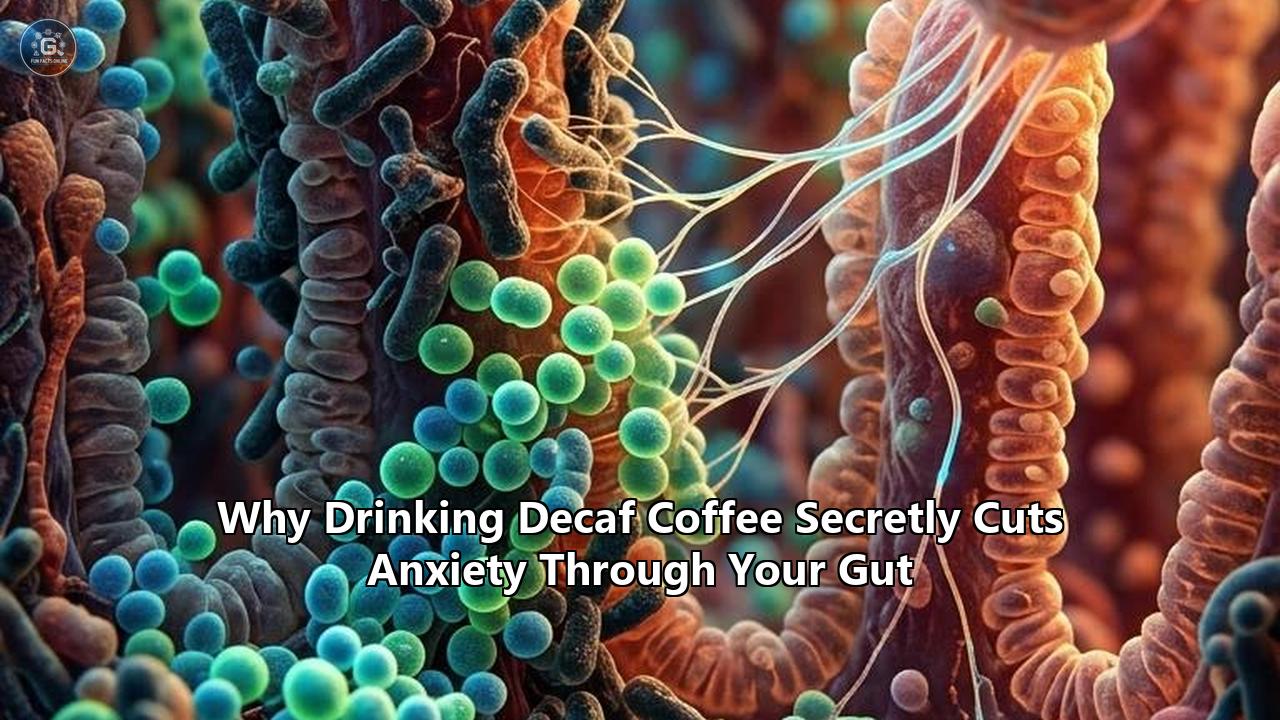
The University College Cork researchers discovered that the calming effects of coffee abstinence were only half the story—and not necessarily the most important half. Tracking coffee drinkers and non-drinkers through rigorous washout phases, blind crossovers, microbiome sequencing, and metabolite profiling, the trial revealed that decaffeinated coffee exerts its own biological influence over human emotional regulation. Stripped of caffeine, decaf coffee actively remodels the human gut microbiome, shifts systemic metabolite profiles, and quells physiological stress through the microbiota-gut-brain axis.
                 THE GUT-BRAIN CALMING PATHWAY

    [ Decaffeinated Coffee ]
               │
               ▼
    [ Colon: 70%+ Intact Polyphenols ]
               │
               ├─► Lawsonibacter asaccharolyticus (4–8x proliferation)
               ├─► Bifidobacterium & Faecalibacterium enrichment
               │
               ▼
    [ Microbial Fermentation & Transformation ]
               │
               ├─► Chlorogenic Acid ──► Dihydroferulic Acid & Hippurate
               └─► Soluble Fiber    ──► Short-Chain Fatty Acids (Butyrate)
               │
               ▼
    [ Biological Downstream Effects ]
               │
               ├─► Tight Junctions Reinforced (Claudin-1, Occludin)
               ├─► Endotoxemia (LPS leakage) Blocked
               ├─► Vagus Nerve Activated via Enteroendocrine FFAR2/3
               └─► Microglial M1 Inflammatory Activation Suppressed
               │
               ▼
    [ Central Nervous System Outcome: Reduced Anxiety & Neuroinflammation ]
These findings, corroborated by international metagenomic sequencing published in Nature Microbiology, demonstrate that coffee’s most profound psychiatric power lies not in its caffeine content, but in its complex matrix of prebiotic polyphenols and soluble fibers. For millions who struggle with the intersection of stress and digestion, understanding the mechanisms linking decaf coffee anxiety reduction to microbial fermentation has moved from fringe wellness speculation into the forefront of nutritional neuroscience.
The Challenge: The Caffeine-Anxiety Paradox and the Cost of Total Abstinence
Roughly 264 million people worldwide live with diagnosed anxiety disorders, while hundreds of millions more navigate subclinical tension, panic episodes, and persistent gastrointestinal distress. For this cohort, the traditional morning cup of coffee often acts as an accelerant.
┌────────────────────────────────────────────────────────────────────────┐
│                        THE CAFFEINE TRAP                               │
│                                                                        │
│   Regular Coffee ──► Adenosine Receptor Blockade                       │
│                      │                                                 │
│                      ├──► Adrenaline & Cortisol Release (HPA Axis)     │
│                      ├──► Tachycardia & Tremors                        │
│                      └──► Enteric Motility Spikes (Gastric Upset)      │
│                                                                        │
│   Total Abstinence ──► Sudden Loss of 60–70% of Dietary Polyphenols    │
│                        │                                               │
│                        ├──► Polyphenol Deprivation in Colon            │
│                        ├──► Drop in Butyrate-Producing Commensals      │
│                        └──► Intestinal Permeability & Endotoxemia      │
└────────────────────────────────────────────────────────────────────────┘
The pharmacology behind caffeine-induced anxiety is well established. Caffeine functions as a non-selective antagonist of adenosine $A_1$ and $A_{2A}$ receptors in the brain. Adenosine is the central nervous system’s natural tranquilizer; as it binds to its receptors throughout the day, neural activity slows, promoting vascular dilation, sedation, and muscular relaxation.
When caffeine blocks these receptors, it suppresses this brake system. Dopaminergic, noradrenergic, and glutamatergic signaling escalate unchecked. The pituitary gland interprets this surge as an alert state, prompting the adrenal cortex to flood the bloodstream with cortisol and catecholamines—epinephrine and norepinephrine.
For people possessing genetic variants in the CYP1A2 liver enzyme gene (slow caffeine metabolizers) or specific polymorphisms in the ADORA2A gene, even 50 milligrams of caffeine can induce severe physiological distress: palpitations, muscular tremor, cold extremities, gastrointestinal cramping, and impending feelings of doom.
The Unintended Cost of Quitting
Faced with these symptoms, clinical guidance has consistently recommended total coffee cessation. Yet this intervention creates an unrecognized metabolic penalty. In Western diets, brewed coffee represents the single largest source of dietary antioxidants, contributing between 60% and 70% of total polyphenol intake—exceeding blueberries, red wine, green tea, and dark chocolate combined.
Total Daily Polyphenol Intake (Typical Western Diet)
───────────────────────────────────────────────────────────────────
Coffee (Regular or Decaf):  ██████████████████████████████ 65%
Fruits & Berries:           ██████ 15%
Vegetables & Legumes:       ████ 10%
Tea, Wine, Cocoa:           ████ 10%
───────────────────────────────────────────────────────────────────
When patients eliminate coffee entirely to resolve palpitations, they simultaneously strip their colon of its primary supply of chlorogenic acids, caffeic acid, ferulic acid, and prebiotic galactomannans.
"We observed that habitual coffee consumers who underwent complete withdrawal showed rapid, measurable shifts in their gut metabolite profiles," explains Professor John Cryan, Principal Investigator at APC Microbiome Ireland and co-author of the landmark Nature Communications study. "Coffee is more than just caffeine. It is a complex dietary factor that interacts intimately with our gut microbes, our metabolism, and ultimately our emotional centers. When you remove it entirely, you eliminate biochemical precursors that gut microbes rely on to generate anti-inflammatory, neuroprotective signals".
This realization crystallized the modern challenge: millions of anxious individuals need to eliminate the neuroendocrine shock of caffeine without starving the enteric ecosystem that protects them against chronic inflammation and emotional vulnerability.
What Went Wrong: Misunderstanding the Gut-Brain Axis in Anxiety Pathogenesis
The disconnect between coffee consumption and psychiatric care stems from a historical error in medicine: treating anxiety purely as a disorder of brain chemistry while viewing the digestive tract as an isolated processing tube.
Emerging neuropsychiatry demonstrates that anxiety is frequently a systemic disorder driven by intestinal dysbiosis, barrier failure, and low-grade neuroinflammation. The digestive tract and the central nervous system maintain continuous, bidirectional communication through the microbiota-gut-brain axis via three distinct routes:
- The Vagus Nerve: The longest cranial nerve, providing direct parasympathetic and sensory connections between enteric neurons and the brainstem’s nucleus tractus solitarius (NTS).
- The Neuroendocrine Circuit: Enterochromaffin cells in the gut lining that produce more than 90% of the body’s total serotonin, regulated by microbial metabolites.
- The Systemic Immune Pathway: Circulating cytokines, short-chain fatty acids (SCFAs), and bacterial cell-wall fragments traversing the intestinal epithelial barrier into the bloodstream.
                THE ENTERIC-NEUROINFLAMMATORY CASCADE

     Psychological / Environmental Stress
                    │
                    ▼
     Intestinal Dysbiosis (Depleted Commensals)
                    │
                    ▼
     Breakdown of Epithelial Tight Junctions (Claudin/Occludin)
                    │
                    ▼
     Systemic Endotoxemia (Circulating LPS Leakage)
                    │
                    ▼
     TLR4 Receptor Activation & Pro-Inflammatory Cytokines (IL-6, TNF-α)
                    │
                    ▼
     Blood-Brain Barrier Disruption & Microglial M1 Activation
                    │
                    ▼
     Indoleamine 2,3-Dioxygenase (IDO-1) Activation
                    │
                    ▼
     Tryptophan Diverted to Neurotoxic Quinolinic Acid (Anxiety / Agitation)
The Biology of "Leaky Gut" and Microglial Activation
When the intestinal ecosystem loses diversity and healthy microbial populations drop, the mucosal layer degrades. The tight junction proteins binding enterocytes together—principally claudin-1, occludin, and zonula occludens-1 (ZO-1)—degrade. This state of intestinal hyperpermeability allows lipopolysaccharide (LPS), an endotoxin found in the outer membrane of Gram-negative bacteria, to pass into mesenteric lymphatics and portal circulation.
Circulating LPS triggers Toll-like receptor 4 (TLR4) on systemic macrophages, launching an inflammatory cascade characterized by elevated tumor necrosis factor-alpha (TNF-$\alpha$), interleukin-1 beta (IL-1$\beta$), and interleukin-6 (IL-6). These cytokines circulate to the brain, crossing circumventricular organs and weakening the blood-brain barrier.
Inside the central nervous system, cytokines activate resting microglia—the brain's resident immune cells—into a pro-inflammatory M1 phenotype. Activated microglia release reactive oxygen species and neurotoxic mediators directly into the amygdala and hippocampus, structural regions responsible for threat detection, fear conditioning, and emotional processing.
Simultaneously, chronic inflammation activates the enzyme indoleamine 2,3-dioxygenase (IDO-1). This enzyme hijacks dietary tryptophan, shunting it away from the synthesis of serotonin and melatonin and down the kynurenine metabolic pathway. The terminal byproduct of this pathway is quinolinic acid, a potent agonist of $N$-methyl-$D$-aspartate (NMDA) receptors that drives neurotoxicity, neuronal exhaustion, and persistent anxiety states.
                    THE TRYPTOPHAN METABOLIC SPLIT

                           Dietary Tryptophan
                                   │
                  ┌────────────────┴────────────────┐
                  ▼                                 ▼
         [ HEALTHY ENVIRONMENT ]           [ INFLAMMATORY STATE ]
          Low Systemic Cytokines            High LPS, IL-6, TNF-α
                  │                                 │
                  ▼                                 ▼
        Tryptophan Hydroxylase             IDO-1 Enzyme Upregulated
                  │                                 │
                  ▼                                 ▼
             5-HTP (Serotonin)              Kynurenine Pathway
                  │                                 │
                  ▼                                 ▼
              Melatonin                     Quinolinic Acid
         (Restful Sleep & Calm)       (NMDA Excitation & Anxiety)
Patients stuck in this inflammatory loop experience physiological anxiety that cognitive behavioral therapy and traditional psychotropics often fail to fully resolve. By viewing coffee strictly through the lens of caffeine-driven neural excitation, medicine missed the reality that coffee compounds—when stripped of caffeine—target and dismantle the root inflammatory triggers of this gut-driven anxiety loop.
The Biological Mechanics: How Decaf Coffee Reshapes the Enteric Ecosystem
Decaffeinated coffee provides a unique biochemical delivery vehicle. It offers high concentrations of bioactive polyphenols and soluble fibers without the adenosine antagonism and catecholamine elevation of caffeine.
Green and roasted coffee beans contain a dense array of bioactive compounds:
- Chlorogenic Acids (CGAs): Predominantly 5-caffeoylquinic acid (5-CQA), alongside 3-CQA, 4-CQA, and di-caffeoylquinic acids.
- Caffeic and Ferulic Acids: Potent phenolic metabolites with direct antioxidant activity.
- Trigonelline: A pyridine alkaloid that degrades during roasting into nicotinic acid (vitamin $B_3$) and alkylpyridinium compounds.
- Melanoidins: Complex, high-molecular-weight nitrogenous polymers formed during the Maillard reaction.
- Soluble Prebiotic Fiber: High-molecular-weight galactomannans and arabinogalactans (roughly 0.5 to 1.5 grams per cup).
When a person drinks a cup of decaffeinated coffee, only about 30% of the chlorogenic acids are absorbed in the stomach and upper small intestine. The remaining 70% of polyphenols, along with virtually all the prebiotic galactomannans and melanoidins, pass intact into the cecum and colon.
Here, they function as targeted substrates for the colonic microbiome.
                    COLONIC BIO-TRANSFORMATION

       Dietary Polyphenols (70% Reach Colon Unabsorbed)
                         │
                         ▼
        Microbial Cinnamoyl Esterases & Reductases
                         │
        ┌────────────────┼────────────────────────┐
        ▼                ▼                        ▼
  Dihydrocaffeic    Dihydroferulic         3-(3-Hydroxyphenyl)
      Acid               Acid                 propionic Acid
        │                │                        │
        └────────────────┼────────────────────────┘
                         │
                         ▼
            Hepatic Glycine Conjugation
                         │
                         ▼
             Hippuric Acid (Hippurate)
             [Plasma Biomarker of Reduced
               Neuroinflammation & Calm]
The Proliferation of Lawsonibacter asaccharolyticus
A worldwide metagenomic analysis conducted by Paolo Manghi and colleagues from the University of Trento, analyzing over 22,800 individual gut profiles across 25 nations and published in Nature Microbiology, identified an extraordinary microbial correlation. Out of more than 150 dietary items analyzed, coffee demonstrated by far the strongest, most specific influence on the human gut microbiome.
The primary beneficiary of this relationship is Lawsonibacter asaccharolyticus, an obligate anaerobe first isolated in 2018.
The bacterium is unable to metabolize conventional sugars, carbohydrates, or amino acids. Instead, it relies almost entirely on the phenolic compounds in coffee. Regular coffee intake correlates with a 4.5- to 8-fold increase in the intestinal abundance of L. asaccharolyticus. Laboratory culture experiments confirmed that adding coffee directly accelerates the bacterium's replication rate up to 3.5 times.
Crucially, this microbial bloom occurs identically with decaffeinated coffee, demonstrating that non-caffeine polyphenols and quinic acid derivatives drive this growth. Lawsonibacter asaccharolyticus processes these polyphenols into downstream bioavailable metabolites that suppress peripheral inflammation and reinforce the intestinal lining.
Metagenomic Presence of Lawsonibacter asaccharolyticus
───────────────────────────────────────────────────────────────────
Non-Coffee Drinkers:       ██ 1.0x (Baseline)
Moderate Coffee Drinkers:  ████████ 4.5x
Heavy Coffee Drinkers:     ████████████████ 8.0x
Decaffeinated Drinkers:    ███████████████ 7.8x
───────────────────────────────────────────────────────────────────
The Enzymatic Assembly Line: Polyphenol Fermentation to Postbiotics
Colonic bacteria possess specialized enzymes—specifically cinnamoyl esterases, demethylases, and dehydroxylases—that break down chlorogenic acids into a succession of smaller, bioavailable phenolic acids:
$$\text{5-CQA} \xrightarrow{\text{Esterase}} \text{Caffeic Acid} + \text{Quinic Acid} \xrightarrow{\text{Reductase}} \text{Dihydrocaffeic Acid} \xrightarrow{\text{Dehydroxylase}} \text{3-(3-hydroxyphenyl)propionic Acid}$$
These secondary phenolic metabolites circulate via the portal system into the liver, where they are conjugated into compounds like dihydroferulic acid and hippuric acid before entering systemic circulation.
Simultaneously, Bifidobacterium, Bacteroides, and Faecalibacterium prausnitzii ferment coffee's soluble arabinogalactans and galactomannans into short-chain fatty acids: acetate, propionate, and butyrate.
The Triple-Action Anti-Anxiety Mechanism
This combination of microbial metabolites initiates three biological processes that act directly on anxiety:
┌────────────────────────────────────────────────────────────────────────┐
│             HOW DECAF POLYPHENOLS QUIET THE NERVOUS SYSTEM             │
│                                                                        │
│  1. Barrier Restoration:                                               │
│     Butyrate fuels colonocytes ──► Claudin-1 & Occludin synthesis      │
│     ──► Gut wall seals ──► Endotoxemia & LPS leakage fall              │
│                                                                        │
│  2. Vagal & Neuroendocrine Signaling:                                  │
│     Acetate & Propionate trigger FFAR2/3 receptors on L-cells          │
│     ──► GLP-1 & PYY release ──► Afferent Vagus Nerve fires             │
│     ──► Parasympathetic tone rises; Amygdala hyperreactivity cools     │
│                                                                        │
│  3. Microglial De-escalation:                                           │
│     Dihydroferulic acid & Butyrate cross blood-brain barrier           │
│     ──► Inhibit HDAC enzymes & NF-κB transcription                     │
│     ──► Microglia shift M1 (toxic) to M2 (neuroprotective)            │
└────────────────────────────────────────────────────────────────────────┘- Epithelial Barrier Restoration: Butyrate acts as the primary energy substrate for colonocytes, stimulating peroxisome proliferator-activated receptor-gamma (PPAR-$\gamma$) signaling, which upregulates tight junction proteins. As claudin-1 and occludin reseal the mucosal barrier, circulating LPS drops, extinguishing the upstream trigger for systemic inflammation.
- Vagal Tone Activation: SCFAs bind to free fatty acid receptors 2 and 3 (FFAR2/FFAR3) on enteroendocrine L-cells in the lower gut wall, triggering the release of glucagon-like peptide-1 (GLP-1) and peptide YY (PYY). These gut peptides stimulate sensory terminals of the subdiaphragmatic vagus nerve. Vagal afferent signals ascend into the solitary tract of the brainstem, driving parasympathetic tone, slowing heart rate, and moderating excitability in the basolateral amygdala.
- Inhibition of Microglial Inflammation: Systemic dihydroferulic acid and circulating butyrate cross the blood-brain barrier via monocarboxylate transporters. Inside the central nervous system, butyrate acts as an endogenous histone deacetylase (HDAC) inhibitor, suppressing NF-$\kappa$B transcription inside microglia. The microglia revert from the reactive, inflammatory M1 state to a protective M2 resting phenotype. With neuroinflammation quenched, IDO-1 activity ceases, allowing tryptophan to convert into serotonin and calming neurotransmission to return.
These mechanisms clarify why the clinical trial out of University College Cork demonstrated sustained improvements in mood, stress resilience, and cognitive performance when decaffeinated coffee was reintroduced to regular drinkers. Clinical data evaluating the resolution of decaf coffee anxiety concerns showed that subjects receiving blinded decaf experienced substantial drops in perceived stress, depressive symptoms, and behavioral impulsivity, alongside elevations in beneficial Firmicutes, Eggertella, and Cryptobacterium curtum populations.
Rather than functioning as an inert placebo, decaffeinated coffee acts as a targeted psychobiotic brew.
The Chemical Processing Problem: Solvents vs. Clean Extraction
While the biology confirms that coffee polyphenols can quiet gut-driven anxiety, the method used to decaffeinate green coffee beans introduces a new set of clinical considerations.
Historically, coffee was decaffeinated using harsh chemical solvents that alarmed health-conscious consumers. Anxious individuals seeking to swap caffeine for decaf often found themselves contending with residual solvent compounds or chemically damaged polyphenol profiles.
┌────────────────────────────────────────────────────────────────────────┐
│               DECAFFEINATION METHODOLOGY COMPARISON                    │
├────────────────────┬─────────────────┬────────────────┬────────────────┤
│ Process            │ Chemical Agent  │ CGA Retention  │ Chemical Residue│
├────────────────────┼─────────────────┼────────────────┼────────────────┤
│ European Solvent   │ Dichloromethane │ 60% – 75%      │ Trace limits   │
│ Natural Ethyl      │ Ethyl Acetate   │ 70% – 80%      │ Minimal        │
│ Swiss Water®       │ Water/Soluble GF│ 88% – 94%      │ 100% Zero      │
│ Supercritical CO2  │ Carbon Dioxide  │ 90% – 96%      │ 100% Zero      │
└────────────────────┴─────────────────┴────────────────┴────────────────┘
The Four Decaffeination Technologies
Raw, unroasted green coffee beans contain caffeine bound tightly inside cellular structures alongside chlorogenic acids, minerals, and flavor lipids. Decaffeination requires extracting this caffeine while leaving the therapeutic polyphenol matrix intact. Four primary commercial methods are used today:
                             DECAFFEINATION METHODS
                                       │
        ┌──────────────────────────────┴──────────────────────────────┐
        ▼                                                             ▼
[ Solvent-Based Extractions ]                             [ Solvent-Free Technologies ]
        │                                                             │
        ├─► Dichloromethane (Methylene Chloride)                     ├─► Swiss Water Process (SWP)
        │   • Uses chemical wash                                      │   • Pure water & green coffee extract
        │   • Heated to strip caffeine                                │   • Carbon filtration capture
        │   • Regulatory scrutiny over residues                       │   • Preserves 90%+ polyphenol matrix
        │                                                             │
        └─► Ethyl Acetate (Sugar Cane Method)                         └─► Supercritical CO2 Extraction
            • Naturally derived solvent                                   • Extreme pressure liquefies CO2
            • Milder environmental profile                                • Selectively binds caffeine molecules
            • Retains fair polyphenol yields                              • Zero chemical contaminants
1. Dichloromethane (Methylene Chloride)
Green beans are soaked in near-boiling water to draw caffeine to the bean's surface, then submerged in a bath of methylene chloride, a chlorinated hydrocarbon solvent that binds selectively to caffeine. The solvent-caffeine mixture is flushed and the beans are repeatedly steamed to vaporize remaining residues.
While the U.S. Food and Drug Administration (FDA) caps methylene chloride residues at a stringent 10 parts per million (ppm), and industry samples routinely test below 1 ppm, the solvent remains under intense scrutiny. Environmental and public health coalitions petitioned the FDA to ban methylene chloride across all food processing, citing its classification as an industrial carcinogen. For individuals using decaf to calm autonomic nervous system dysfunction, knowing a drink was treated with industrial solvents can induce acute psychological hesitation and somatic hypervigilance.
2. Ethyl Acetate Processing (The "Natural" or Sugar Cane Method)
Often marketed as natural decaffeination, this technique utilizes ethyl acetate derived from the fermentation of sugarcane molasses. The green beans are steamed and rinsed in an ethyl acetate solution that bonds with caffeine salts. The solvent is drained and the beans are re-steamed.
While safer than chlorinated solvents, excessive thermal exposure during steaming can hydrolyze and oxidize sensitive caffeoylquinic acids, lowering the final polyphenol concentration of the bean.
3. The Swiss Water Process (SWP)
Developed in Schaffhausen, Switzerland, this 100% solvent-free technique operates via osmotic diffusion. Green coffee beans are soaked in hot water, dissolving both caffeine and the full spectrum of water-soluble polyphenols, sugars, and minerals.
This initial batch of beans is discarded. The resulting nutrient-saturated water is passed through a specialized activated carbon charcoal filter bed with a porosity calibrated to trap only caffeine molecules, leaving all polyphenols intact.
This liquid—termed Green Coffee Extract (GCE)—is now saturated with coffee bioactives but contains zero caffeine. When fresh batches of unroasted coffee beans are immersed in this GCE bath, an osmotic gradient forms: caffeine flows out of the beans into the water, but the beans' chlorogenic acids, trigonelline, and soluble fibers cannot escape, because the liquid is already fully saturated with them.
The beans reach a 99.9% caffeine-free state while retaining roughly 90% to 94% of their therapeutic polyphenol compounds, with no chemical solvent contact.
4. Supercritical Carbon Dioxide ($CO_2$) Extraction
Widely favored by specialty coffee roasters, this process places pre-soaked green beans in high-pressure extraction vessels. Pure carbon dioxide is compressed to over 73 atmospheres at 31 degrees Celsius, entering a "supercritical" state where it shares properties of both a gas and a liquid.
The supercritical $CO_2$ circulates through the beans, acting as a selective solvent that diffuses into bean pores, binds the caffeine molecules, and leaves larger polyphenol compounds undisturbed. The $CO_2$ is decompressed, dropping the caffeine into an isolated chamber, and recirculated.
This process yields exceptionally clean decaffeinated beans with minimal loss of chlorogenic acid isomers and zero synthetic chemical residues.
What Experts and Leaders Are Doing About It: Implementing the Solution
The emerging science connecting decaf coffee anxiety reduction with gut barrier repair has mobilized gastroenterologists, nutritional psychiatrists, and functional coffee producers. They are turning decaf from an overlooked substitute into a structured clinical tool.
┌────────────────────────────────────────────────────────────────────────┐
│               THE CLINICAL PROTOCOL FOR NERVOUS SYSTEM RECOVERY        │
│                                                                        │
│   Phase 1: Pure Sourcing                                               │
│   • Select Swiss Water or Supercritical CO2 certified beans            │
│   • Eliminates solvent residues; guarantees >90% chlorogenic acids     │
│                                                                        │
│   Phase 2: Roast Optimization                                          │
│   • Choose Light-to-Medium roast                                       │
│   • Retains 3-CQA, 4-CQA, 5-CQA while avoiding char oxidation          │
│                                                                        │
│   Phase 3: The Enteric Shield                                          │
│   • Consume 60–90 minutes postprandial (never on an empty stomach)     │
│   • Protects gastric mucosa; optimizes colonic polyphenol transit      │
│                                                                        │
│   Phase 4: Synergy & Protection                                        │
│   • Optional: Add L-theanine (100mg) for parasympathetic support       │
│   • Zero synthetic sucralose or saccharin to protect Akkermansia       │
└────────────────────────────────────────────────────────────────────────┘
Leading researchers, including Dr. Uma Naidoo, Director of Nutritional and Lifestyle Psychiatry at Massachusetts General Hospital, and Professor John Cryan at University College Cork, advocate for practical protocols that leverage decaffeinated coffee as a functional psychobiotic beverage.
1. Sourcing for Maximum Polyphenol Bioavailability
Patients shifting away from caffeine to heal chronic anxiety and autonomic arousal should source coffees decaffeinated via the Swiss Water Process or Supercritical $CO_2$. This eliminates chemical solvent residues while ensuring the highest possible concentration of chlorogenic acids, quinic acid, and arabinogalactans to feed Lawsonibacter asaccharolyticus and Faecalibacterium.
Packaging should display the SWP or Carbon Dioxide certification stamp.
Roast Profile vs. Bioactive Retentions
───────────────────────────────────────────────────────────────────
Light Roast:   ████████████████████ CGA: High | NMP: Low | Acid: High
Medium Roast:  ██████████████       CGA: Med-High | NMP: Med | Acid: Balanced
Dark Roast:    ███████              CGA: Low-Med | NMP: High | Acid: Low
───────────────────────────────────────────────────────────────────
CGA = Chlorogenic Acids (Polyphenol/Prebiotic)
NMP = N-methylpyridinium (Gastric Acid Blocker)
2. Strategic Roast Profile Selection
Roasting chemistry changes coffee’s phenolic and gastric properties:
- Light Roasts retain the highest concentration of unmodified chlorogenic acids (up to 45 milligrams per gram of dry coffee). However, their higher titratable acidity can trigger gastric discomfort in individuals with sensitive stomachs or gastritis.
- Dark Roasts degrade up to 60% of original chlorogenic acids into quinic acid, caffeic acid, and roasting lactones. However, dark roasting generates N-methylpyridinium (NMP), a compound formed from the degradation of trigonelline. NMP downregulates hydrochloric acid secretion by stomach parietal cells, making dark roasts easier on the stomach.
- The Clinical Sweet Spot: A true medium roast decaf balances these factors, preserving 70% to 80% of native chlorogenic acids while developing enough NMP to protect upper digestive comfort.
3. Chrono-Nutritional Timing and Gastric Buffering
Anxious individuals frequently make the mistake of consuming coffee—even decaffeinated coffee—on an empty stomach immediately upon waking. This stimulates gastric peristalsis, gastrin secretion, and early bile release, which can trigger enteric nerves and somatic vigilance.
Nutritional psychiatrists recommend drinking decaffeinated coffee approximately 60 to 90 minutes after waking, consumed with or immediately following a breakfast containing healthy fats and soluble fiber (e.g., ground chia seeds, oatmeal, or pastured eggs).
This approach serves two clinical purposes:
- It buffers the gastric mucosa against organic acids, preventing reflex gastroesophageal irritation and sympathetic arousal.
- It slows gastric transit, delivering coffee polyphenols and dietary fiber to the cecum and ascending colon together, where bacteria ferment them into butyrate.
4. Psychobiotic Synergy Formulations
Specialty wellness roasters and clinicians have begun formulating polyphenol-dense decaf blends that incorporate complementary natural compounds:
- L-Theanine Supplementation: An amino acid extracted from Camellia sinensis that readily crosses the blood-brain barrier. It acts as an antagonist at AMPA glutamate receptors and stimulates alpha-1 brainwave activity (8–12 Hz), inducing a state of calm alertness without sedation. Adding 100 milligrams of pure L-theanine to a morning decaf coffee provides added protection against sympathetic nervous system spikes.
- Protecting the Microbiome Against Artificial Additives: Many people switch to decaf and sweeten it with zero-calorie synthetic sweeteners, such as sucralose, aspartame, or saccharin. Research demonstrates that synthetic sweeteners induce colonic dysbiosis, erode the mucus lining, and significantly deplete populations of the gut-barrier-protective bacterium Akkermansia muciniphila. This dysbiosis drives the very intestinal permeability and neuroinflammation the individual is attempting to solve. Decaf should be consumed unsweetened, lightly flavored with Ceylon cinnamon (which enhances insulin sensitivity and provides additional polyphenols), or paired with small quantities of raw, grass-fed dairy or polyphenol-rich almond milk.
┌────────────────────────────────────────────────────────────────────────┐
│                  AVOIDING THE ARTIFICIAL TRAP                          │
│                                                                        │
│   Decaf Coffee + Sucralose / Saccharin:                                │
│   ──► Depletes Akkermansia muciniphila                                │
│   ──► Thins protective mucosal barrier                                │
│   ──► Increases gut permeability (Leaky Gut)                           │
│   ──► Drives peripheral endotoxemia ──► Counteracts Decaf Benefits     │
│                                                                        │
│   Decaf Coffee + Pure Ceylon Cinnamon / Clean Fats:                    │
│   ──► Protects Akkermansia & Lawsonibacter                            │
│   ──► Preserves mucosal tight junctions                                │
│   ──► Sustained Butyrate & Hippurate production                       │
└────────────────────────────────────────────────────────────────────────┘
Future Horizons: Precision Psychobiotics and Low-Caffeine Genetics
The recognition that decaffeinated coffee functions as a gut-mediated anxiolytic is driving new directions across agricultural genetics, clinical diagnostics, and functional neurology.
Future Research and Commercial Milestones
───────────────────────────────────────────────────────────────────
1. Genetic Decaffeination: Naturally caffeine-free wild varietals
2. Metabotyping: Stool profiling to determine polyphenol fermentation
3. Medical Foods: Standardized, Swiss-Water decaf extracts for GAD/IBS
4. Synthetic Consortia: Engineered probiotics mimicking L. asaccharolyticus
───────────────────────────────────────────────────────────────────
1. Naturally Caffeine-Free Cultivars
Agronomists and botanists are moving away from post-harvest decaffeination by cultivating wild, naturally decaffeinated coffee species. Agricultural researchers in Brazil and Cameroon are selectively breeding Coffea charrieriana—a wild, caffeine-deficient species discovered in Central Africa—with commercial Coffea arabica.
By naturally downregulating the caffeine synthase (NMT) gene family through classical agronomic crossing and CRISPR precision editing, breeders are developing coffee plants that produce zero caffeine in the bean while maintaining an intact chlorogenic acid and diterpene profile. These natural varietals require zero post-harvest processing, preserving the bean's polyphenol balance and cellular structure.
2. Personalizing Nutrition to the Gut Metabotype
Research from the APC Microbiome Ireland team underscores that individuals do not metabolize decaffeinated coffee polyphenols identically. The health benefits of coffee depend heavily on an individual's unique gut microbiome composition.
People generally fall into specific "metabotypes" based on their resident bacteria:
- Individuals carrying abundant baseline colonies of Lawsonibacter asaccharolyticus, Bifidobacterium, and Faecalibacterium prausnitzii efficiently convert 5-CQA into bioactive dihydroferulic acid and short-chain fatty acids, experiencing pronounced drops in neuroinflammation and anxiety.
- Individuals with low microbial diversity or antibiotic-depleted microbiomes struggle to metabolize these polyphenols, leaving them unfermented and missing out on the full neuroprotective benefit.
Diagnostic companies are developing stool testing panels that identify an individual's coffee-fermenting capacity. In the future, nutritional psychiatrists will be able to assess a patient's microbiome to determine whether their system can efficiently transform decaffeinated coffee into anti-anxiety postbiotics—or whether they need targeted probiotic seeding first.
3. Decaf Extracts as Standardized Medical Foods
Clinical biotechnology companies have begun running trials on standardized decaffeinated coffee polyphenolic extracts (DCPE) designed as medical foods for generalized anxiety disorder (GAD), panic disorder, and irritable bowel syndrome with anxiety (IBS-A).
By isolating and encapsulating the precise ratios of chlorogenic acid isomers, quinic acid, and arabinogalactans found in premium Swiss Water decaf, researchers aim to deliver predictable therapeutic doses directly to the distal ileum and colon. These delayed-release capsules bypass the stomach entirely, eliminating any risk of gastric acidity while providing high concentrations of prebiotic polyphenols directly to colonic commensals.
Moving Beyond the Caffeine Paradigm
The discovery that decaffeinated coffee actively supports mental calm through the gut-brain axis challenges one of psychiatry’s oldest assumptions. For decades, medicine viewed coffee through an oversimplified lens: an addictive stimulant whose only meaningful neuropsychiatric agent was caffeine.
That framework is giving way to a more integrated understanding of nutritional biochemistry.
Anxiety is not simply a chemical imbalance isolated in the brain, nor is coffee merely an energizing drink. The human digestive tract acts as a metabolic engine that shapes emotional health, processing the foods and beverages we consume into neuroactive signals.
By eliminating the neuroendocrine stress of caffeine while supplying the colonic microbiome with a steady stream of prebiotic polyphenols, high-quality decaffeinated coffee strengthens the intestinal barrier, feeds beneficial bacterial populations like Lawsonibacter asaccharolyticus, and dampens microglial inflammation throughout the central nervous system.
               THE COGNITIVE & ENTERIC REFRAME

    OLD MODEL (Brain-Only Focus)
    Coffee = Caffeine Drug Vehicle
    Anxiety Protocol = Cut all coffee; treat with sedatives
    Decaf = Useless, processed, chemically stripped imitation

    NEW MODEL (Microbiota-Gut-Brain Axis)
    Coffee = Complex polyphenol matrix & prebiotic powerhouse
    Anxiety Protocol = Remove caffeine stimulus; feed gut commensals
    Decaf = Clean, functional psychobiotic protecting the nervous system
For those caught in the cycle of caffeine-induced panic, digestive distress, and nervous system hypervigilance, this research provides clear, actionable guidance. You do not have to abandon your morning ritual or surrender coffee's potent dietary antioxidants to find relief.
By choosing clean, solvent-free decaf and drinking it mindfully, you transform an old morning habit into a daily investment in your gut microbiome—and a quiet, evidence-based defense against chronic anxiety.
Reference:
- https://www.sciencedaily.com/releases/2026/09/260927034331.htm
- https://www.nutritioninsight.com/news/coffee-gut-microbiome-brain-health-mood-stress.html
- https://www.psychologytoday.com/us/blog/night-sweats-and-delusions-of-grandeur/202608/how-coffee-affects-mood-and-cognition-via-the
- https://pmc.ncbi.nlm.nih.gov/articles/PMC8914519/
- https://www.coffeeandhealth.org/health/media-content/news-alerts/new-research-reveals-mechanisms-behind-coffees-positive-effects-on-the-gut-brain-axis
- https://www.healthline.com/health-news/coffee-reshapes-gut-brain-reduce-stress
- https://bluehorizonbloodtests.co.uk/blogs/gut-health/how-does-coffee-affect-the-gut-microbiome
- https://microbiomepost.com/largest-study-yet-links-coffees-health-benefits-to-gut-microbes/
- https://www.nutritioninsight.com/news/coffee-gut-microbiome-brain-health-mood-stress.html
- https://bluehorizonbloodtests.co.uk/blogs/gut-health/how-does-coffee-affect-the-gut-microbiome
- https://www.facebook.com/medscape/posts/emerging-evidence-suggests-coffee-influences-gut-microbiota-through-bioactive-co/1980925775878841/
- https://www.biocodexmicrobiotainstitute.com/en/surprising-effect-coffee-microbiota
- https://www.metabolicfitnesspro.com/blog/lawsonibacter-asaccharolyticus-a-microcosm-of-our-limited-microbiome-knowledge
- https://www.reddit.com/r/InterstellarKinetics/comments/1t34pny/breaking_a_new_study_published_in_nature/
- https://www.news-medical.net/news/20260424/Drinking-coffee-alters-your-microbiome-mood-and-memory.aspx
- https://www.healthline.com/health-news/coffee-reshapes-gut-brain-reduce-stress