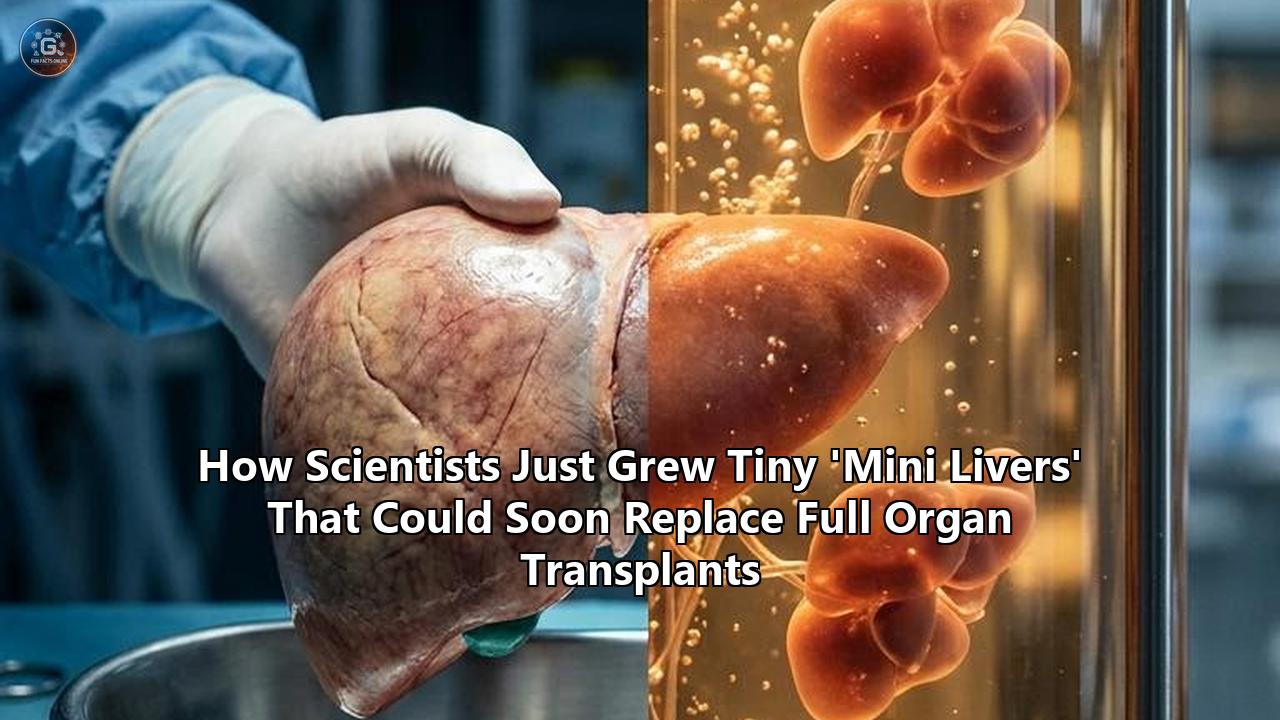
In July 2026, a quiet shift occurred in the landscape of regenerative medicine. In a paper published in the journal Cell Biomaterials, engineers at the Massachusetts Institute of Technology announced they had successfully grown functional, injectable "mini livers". When introduced into mice, these tiny cellular clusters survived for more than two months, establishing their own blood supply and performing the complex metabolic work of a full-scale organ.
This milestone in mini liver research represents a departure from traditional tissue engineering. Instead of attempting to manufacture a massive, surgically complex organ in a laboratory, scientists are increasingly looking to turn the human body itself into a bioreactor.
At the same time, a clinical trial in Houston, Texas, is pushing this concept into human patients. Led by biotech firm LyGenesis, researchers are using endoscopic ultrasound to inject healthy donor liver cells directly into the lymph nodes of patients with end-stage liver disease. The goal is to use the lymph nodes as a nursery, coaxing them to grow miniature, "ectopic" satellite organs that can take over the heavy lifting of a failing liver.
For decades, the only hope for patients with terminal liver failure has been a full organ transplant—a high-stakes, extraordinarily expensive procedure governed by a brutal shortage of donors. In the United States alone, tens of thousands of people die from liver disease every year. Many never make it onto a transplant list; others die while waiting.
The convergence of these distinct biological approaches—injectable hydrogels at MIT and lymphatic bioreactors in Texas—suggests that the era of relying entirely on deceased donors for organ transplants may soon draw to a close.
The Lymph Node as a Biological Factory
To understand how a patient might grow a secondary liver inside their own body, one must look at the work of Dr. Michael Hufford, the CEO of Pittsburgh-based LyGenesis. For years, Hufford and his co-founders have pursued a hypothesis: the lymphatic system, which normally filters waste and houses immune cells, has the perfect microenvironment to nurture new tissue growth.
"We are using the lymph nodes as living bioreactors to regenerate an ectopic organ," Hufford explained, tracking the progress of the company’s ongoing Phase 2a clinical trial.
The procedure is elegant in its simplicity, designed to avoid the physical trauma of open-abdomen transplant surgery. A clinician guides an endoscopic ultrasound probe down the patient’s esophagus, through the stomach, and adjacent to the periduodenal lymph nodes. Through a fine needle, a solution containing healthy hepatocytes—isolated from donated livers that were deemed unsuitable for full-scale transplantation—is injected directly into the node.
Once inside, the hepatocytes begin to multiply, utilizing the lymph node’s rich blood supply and natural signaling molecules to organize themselves into functioning liver tissue. As the mini liver grows, the lymph node itself begins to shrink, ultimately functioning as a supportive envelope for the new organ.
In March 2025, the independent Data and Safety Monitoring Board (DSMB) reviewed safety data from the trial’s first cohort of patients. The results were promising enough that the board cleared the trial to escalate the dosage, allowing clinicians to inject cells into multiple lymph nodes in subsequent patients.
"We are very encouraged by the safety and tolerability of the cell therapy based on this initial cohort," said Dr. Constance Mobley, the principal investigator of the trial at Houston Methodist Hospital. "This represents a critical step forward in evaluating the potential of allogeneic hepatocyte transplantation."
The therapeutic promise of this technique lies in its efficiency. A single donor liver, which might otherwise be discarded due to mild damage or logistical delays, can be processed to harvest enough viable hepatocytes to treat up to 75 patients. If successful, the approach could effectively eliminate the supply-demand crisis for a significant portion of patients on liver waitlists.
The Microfluidic Scaffold
While LyGenesis is targeting the lymphatic system, a team of researchers at MIT’s Koch Institute for Integrative Cancer Research has taken a different path to solve the same problem. Led by Dr. Sangeeta Bhatia, a biomedical engineer and pioneer in microtissue technology, the MIT group has focused on creating "satellite" organs that can be injected into fat tissue.
A key challenge that has long dogged mini liver research is the issue of cellular survival. Hepatocytes are notoriously finicky cells. When isolated from the liver and cultured in a traditional two-dimensional laboratory dish, they quickly lose their specialized functions and die. They require three-dimensional physical structures and constant signaling from neighboring cells to remain viable.
To bypass this hurdle, Bhatia’s team developed a specialized microfluidic device capable of generating uniform, microscopic hydrogel spheres. These microspheres act as individual structural cages. Inside each sphere, hepatocytes are mixed with supporting cells, specifically fibroblasts, which provide the structural and chemical signals the liver cells need to thrive.
"We think of these as satellite livers," Bhatia said. "If we could deliver these cells into the body, while leaving the sick organ in place, that would provide booster function."
In the team's July 2026 study, these cell-laden hydrogel microspheres were injected into the abdominal fat of mice. Fat tissue was chosen because it is highly vascularized and easily accessible.
The results exceeded expectations. Rather than remaining isolated, the injected microspheres began to self-assemble. Within days, the surrounding host tissue responded by growing a network of capillaries directly into the new cellular grafts. The mini livers survived for at least two months, producing essential human proteins like albumin and actively metabolizing drugs—functions that the animals' native, failing livers could no longer manage.
Dr. Vardhman Kumar, an MIT postdoc and the lead author of the study, emphasized that the subcutaneous or intra-abdominal approach dramatically lowers the clinical stakes.
"And if we think they might need another therapy or more grafts, the barriers to do that are much less with this injectable technology than undergoing another major surgery," Kumar said.
Importantly, Kumar noted that these satellite organs do not need to be physically connected to the original liver or the portal vein to do their job. Because the liver's primary tasks—such as clearing systemic toxins, producing blood-clotting factors, and managing cholesterol—are performed via the bloodstream, a mini liver located in the abdomen or even near the kidneys can effectively supplement a failing native organ.
Solving the Capillary Crisis
For decades, the primary roadblock to growing transplantable organs in a lab was not a lack of cells, but a lack of plumbing. If you build a tissue structure thicker than a few tenths of a millimeter, the cells at the center will starve and suffocate before blood vessels have a chance to grow into them. This limit, known as the oxygen diffusion limit, has kept most laboratory-grown organoids small.
A major breakthrough on this front came in June 2025 from a team led by Dr. Takanori Takebe at Science Tokyo and Cincinnati Children’s Hospital Medical Center. Takebe’s lab developed a method to create human liver bud organoids that contain their own self-organized, authentic sinusoidal-like blood vessels.
By shifting the focus of mini liver research toward vascular self-organization, the team managed to co-culture four distinct precursor cell types. Instead of trying to painstakingly print or carve out microscopic blood vessels using a 3D printer, Takebe’s team allowed the cells to follow their own developmental programming. Under the right chemical cues, the cells self-assembled, forming a delicate, branching network of capillaries that mirrored the microarchitecture of a human liver.
When transplanted into mice engineered to model Hemophilia A—a genetic disorder characterized by a lack of blood-clotting factors normally produced by the liver—these vascularized organoids immediately integrated with the host’s circulatory system. Within days, the organoids began secreting the missing clotting factors into the mice’s blood, correcting their bleeding symptoms for up to five months.
"Our enhanced organoids may support the development of regenerative therapies for coagulation disorders and end-stage liver failure," Takebe noted in his report.
This achievement, paired with Keio University’s September 2025 announcement that functional human liver organoids could be grown from cryopreserved (frozen) adult hepatocytes, has made the prospect of "off-the-shelf" mini organs far more realistic. Historically, researchers had to rely on freshly harvested cells, which are incredibly rare and lose viability within hours. The ability to use frozen cells means that manufacturers can scale up production, banking thousands of vials of uniform, pre-screened hepatocytes to be thawed and assembled into mini livers on demand.
The Decellularized Scaffold and the External Bridge
While some scientists are focused on injecting tiny cellular clusters, others are scaling the technology up to build entire, full-sized bioengineered organs. One of the most advanced efforts in this arena is led by Miromatrix, a subsidiary of United Therapeutics.
Instead of building a liver from scratch, Miromatrix utilizes a process called perfusion decellularization. Researchers take a pig liver and wash it with a gentle detergent. This strips away all the porcine cells and genetic material, leaving behind a pristine, translucent matrix of collagen and extracellular proteins that preserves the exact three-dimensional architecture of the original organ, including its vast network of blood vessels.
This hollow scaffold is then placed into a specialized bioreactor, where it is infused with human cells. Human endothelial cells are run through the vascular network to line the blood vessels, preventing clots, while healthy human hepatocytes are seeded into the structural pockets.
[Pig Liver] ---> [Detergent Wash] ---> [Decellularized Scaffold] ---> [Infused with Human Cells] ---> [Vascularized Miroliver]In early 2026, United Therapeutics announced the results of a historic Phase 1 clinical trial evaluating this platform, known as miroliverELAP. In this study, five patients suffering from acute liver failure (ALF) who were ineligible for a standard liver transplant were connected to a bioengineered external liver.
The miroliverELAP was housed in a machine outside the patient's body, acting as an external liver-assist device. The patient’s blood was routed out of their body, through the bioengineered liver, and back into their circulatory system. The lab-grown organ successfully performed critical detoxification and protein synthesis tasks for at least 44 hours.
All five patients survived the treatment, and no serious adverse events were linked to the device during a 32-day follow-up window.
"This study provides early evidence that miroliverELAP, an innovative bioengineered organ alternative product, has the potential to provide liver support for patients experiencing ALF, giving their native livers more time to recover," said Jeff Ross, the president of Miromatrix.
The external device serves as a critical proof of concept. If a decellularized pig scaffold seeded with human cells can safely filter human blood outside the body, the next step is clear: refining the manufacturing process so that these organs can be permanently implanted inside human patients, eliminating the need for human donors entirely.
The Economics of Abundance
For those tracking the progress of mini liver research, the economic and logistical implications are as profound as the biological ones. The current system of organ transplantation is defined by scarcity and tragedy. To save one life, another must usually end, often under sudden, traumatic circumstances.
This bottleneck creates immense systemic costs. A standard liver transplant in the United States routinely costs upwards of $800,000. This figure includes:
- The intense logistics of organ procurement and rapid transport.
- Hours of complex, high-risk surgery.
- Weeks of intensive care recovery.
- A lifetime of expensive immunosuppressive medications to prevent the patient's immune system from destroying the foreign organ.
| Metric | Traditional Transplant | Mini Liver / Ectopic Graft |
|---|---|---|
| Primary Source | Deceased Human Donor | Unused Donor Tissue / iPSCs |
| Surgical Profile | Highly Invasive Open Surgery | Minimally Invasive Outpatient Procedure |
| Recipient Yield | 1 Donor = 1 Recipient | 1 Donor = Up to 75 Recipients |
| Estimated Cost | $800,000+ | Significantly Lower (Outpatient-based) |
| Logistics | Real-time, emergency matching | Scalable manufacturing and cryopreservation |
Because injectable mini livers and lymph-node grafts can be delivered via minimally invasive outpatient procedures, they bypass the most dangerous and costly aspects of traditional surgery.
Furthermore, because these techniques can utilize liver cells from organs that would otherwise be discarded, or potentially even cells derived from a patient's own skin (via induced pluripotent stem cells, or iPSCs), they offer a path toward an abundant supply.
In a study led by Dr. Alejandro Soto-Gutiérrez at the University of Pittsburgh, researchers took human skin cells, reverted them to a stem cell state, and programmed them to become functional hepatocytes. They then seeded these patient-specific cells into decellularized rat livers, creating personalized mini livers that could be transplanted back into the animals without triggering immune rejection.
"What we are planning to do is to start making mini human organs that are universal," Soto-Gutiérrez said. "This means we can biofabricate liver grafts that are universally accepted. That would change the paradigm of transplants."
The Path to the Clinic
Despite the momentum, significant hurdles remain before these miniature organs can completely replace full-scale transplants.
The most pressing challenge is the immunological barrier. Currently, patients participating in the LyGenesis trials must take standard immunosuppressive drugs to prevent their bodies from rejecting the donor cells injected into their lymph nodes. While this is the same requirement faced by traditional transplant recipients, the long-term goal of regenerative medicine is to eliminate these toxic, immune-compromising drugs altogether.
To address this, researchers are exploring two parallel pathways:
- Genetic Stealthing: Teams are using CRISPR gene-editing tools to knock out the major histocompatibility complex (MHC) proteins on the surface of donor hepatocytes. This essentially makes the cells "invisible" to the recipient's immune system, allowing them to engraft and function without triggering an attack.
- Autologous iPSCs: By growing mini livers directly from the patient’s own reprogrammed skin or blood cells, the resulting tissue is a perfect genetic match, rendering immunosuppression completely unnecessary. However, this personalized approach is currently slow and incredibly expensive to manufacture at scale.
There is also the question of physiological scale. While a mouse can survive on a handful of injected hydrogel microspheres, a human liver consists of roughly 100 billion hepatocytes. For a mini liver or a collection of satellite organs to rescue a patient with end-stage liver disease, they must scale up significantly.
"To regenerate a human liver, organoid growth has to scale up to thousands of millions, because the human body is larger," noted Dr. Ryo Igarashi, a researcher at Keio University School of Medicine.
Fortunately, the liver has a unique biological superpower: it is the only visceral organ in the human body capable of natural regeneration. If even a small, healthy graft can successfully integrate with the bloodstream, the chemical demands of the host's body will naturally signal the cells to grow, expand, and adapt to meet the patient’s metabolic needs.
As the medical community awaits the final Phase 2a trial data from LyGenesis, expected in early 2027, the trajectory of transplant medicine is undergoing a profound shift. The future of treating organ failure may not lie in waiting for a tragic death, but in planting a microscopic seed of hope inside a patient’s own tissue, and letting the body do what it does best: heal itself.
Reference:
- https://scitechdaily.com/scientists-create-tiny-mini-livers-that-could-one-day-replace-liver-transplants/
- https://www.newsweek.com/liver-organ-transplant-injectible-mini-tissue-graft-mice-11620407
- https://synapse.patsnap.com/article/phase-2a-trial-initiates-for-lygenesis-regenerative-esld-cell-therapy
- https://www.lygenesis.com/media/press-releases/data-and-safety-monitoring-board-approves-lygenesiss-phase-2a-clinical-trial-to-continue-and-dose-escalate-in-novel-trial-of-organ-regeneration/
- https://www.appliedclinicaltrialsonline.com/view/first-patient-dosed-in-phase-iia-trial-of-regenerative-cell-therapy-for-end-stage-liver-disease
- https://www.forbes.com/sites/alexknapp/2025/08/08/the-prototype-this-startup-aims-to-grow-new-mini-organs-in-patients/
- https://www.fiercebiotech.com/medtech/united-therapeutics-bioengineered-temporary-liver-shows-promise-phase-1-trial
- https://www.mpo-mag.com/breaking-news/united-therapeutics-shares-positive-study-results-for-its-bioengineered-liver/
- https://www.311institute.com/researchers-successfully-grow-mini-livers-from-stem-cells-for-first-time/
- https://www.lygenesis.com/media/press-releases/
- https://clinicaltrials.gov/study/NCT04496479
- https://www.frontiersin.org/journals/medicine/articles/10.3389/fmed.2024.1521851/full
- https://www.drugtargetreview.com/new-liver-organoids-research-brings-hope-for-drug-development/650001.article
- https://www.criver.com/eureka/whats-hot-2026-organoids-unbound
- https://www.news-medical.net/news/20250717/Scientists-create-liver-organoids-with-functional-blood-vessels.aspx
- https://www.technologytoday.us/First_Human_Trial_of_a_Bioengineered_Part_Human_Part_Porcine_Liver.html
- https://longevity.technology/news/fda-fast-tracks-united-therapeutics-bioengineered-liver-tech/
- https://www.inverse.com/mind-body/lab-grown-mini-human-livers