The rain in Gothenburg, Sweden, was persistent, slicking the cobblestones outside the congress hall where thousands of the world’s leading geneticists had gathered for the annual conference of the European Society of Human Genetics. Inside, the atmosphere was thick with the hum of academic debate, the clinking of coffee cups, and the quiet rustle of slide decks. But in one of the presentation halls, a young researcher from the Netherlands was about to present data that would make the room fall completely silent.
Pasquale C. Putter, a doctoral candidate from Leiden University Medical Center (LUMC), adjusted his microphone. Behind him, a slide flickered to life, displaying a simple line graph that mapped a profound human divergence.
The graph did not show lifespans. It showed healthspans—the precious years a human being lives entirely free of chronic, debilitating diseases. Putter pointed to a gap between two of the lines.
On one side were average citizens. On the other were the middle-aged children born into exceptionally long-lived Dutch families. The gap between them was not a matter of months, nor was it a modest year or two gained by healthy eating or regular exercise. It was an astonishing 13 years.
"We consistently observe that individuals from these long-lived families not only live longer but also remain healthier compared with the general population," Putter told the audience, his voice carrying the calm authority of a scientist holding a massive dataset. "Specifically, they experience a 13-year delay in the onset of cardiometabolic diseases compared to their spouses, who share their environments but not their lineages."
For decades, the search for the genetic secrets of longevity has been a frustrating exercise in finding needles in a haystack of genomic noise. While human life expectancy has doubled over the past two centuries, healthspan has stubbornly lagged behind. We have engineered a world where people live longer as patients, but not necessarily as healthy, active participants in life.
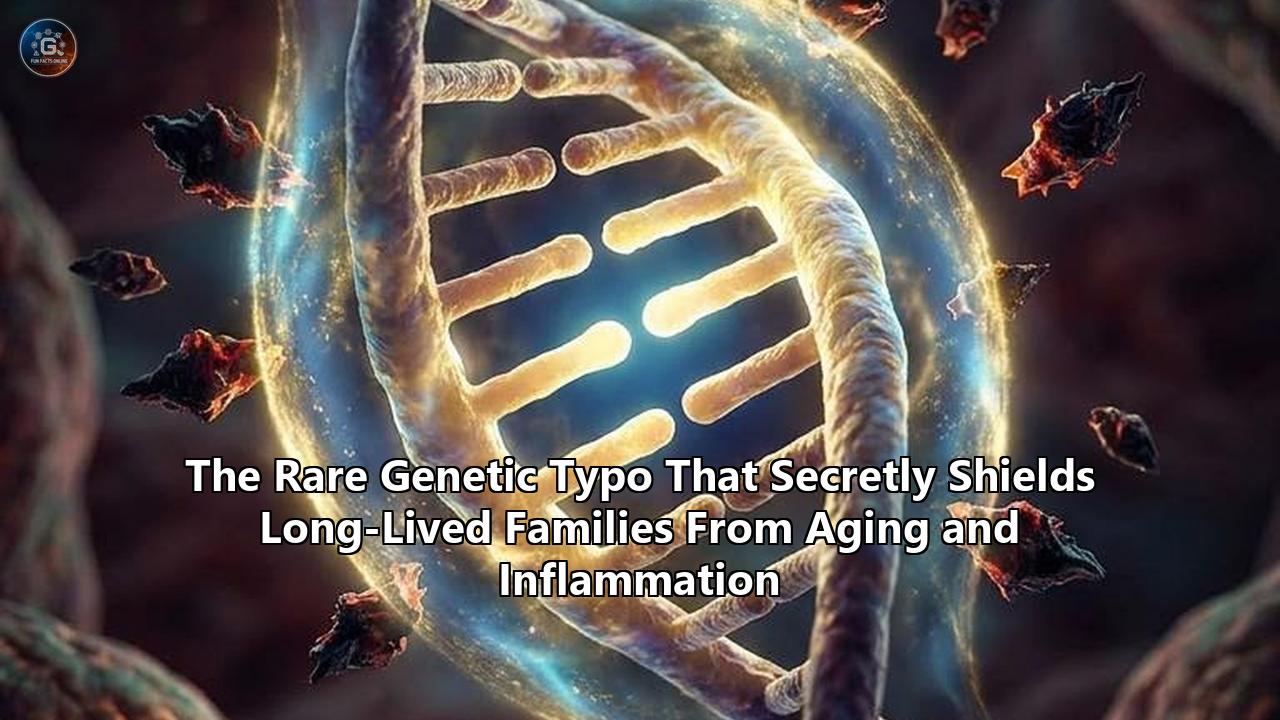
But in the genomes of these Dutch dynasties, Putter and his colleagues in Prof. Eline Slagboom’s molecular epidemiology group had uncovered a biological shield. It was a rare, single-letter typo in our DNA code—a missense mutation known as rs200818241.
This genetic anomaly does not work by boosting metabolism or building stronger muscles. Instead, it performs a much more fundamental, elegant trick: it dampens the body’s own self-destructive alarm system. By subtly turning down a master switch of chronic inflammation, this single mutation shields carriers from the slow, systemic burning that defines human aging.
The discovery of this typo marks a pivotal shift in how scientists understand both the aging process and the future of preventative medicine. It suggests that the secret to a long, vibrant life may not lie in adding complex new machinery to the human body, but in quietly disabling a piece of our evolutionary defense system that has outlived its usefulness.
The Leiden Dynasty: Tracking the Centenarian Siblings
To understand how a single genetic typo can rewrite the timeline of human decay, one must travel to the city of Leiden, a historic university town in the Netherlands. For more than twenty years, the Leiden University Medical Center has been home to one of the most rigorous and deeply characterized longevity cohorts in the world: the Leiden Longevity Study (LLS).
Most genetic studies of human aging take a simple, brute-force approach. They round up thousands of unrelated centenarians, sequence their DNA, and compare them to the general public. While this has yielded a few famous candidates—most notably the APOE and FOXO3 genes—the signal is often drowned out by environmental factors, lifestyle differences, and sheer luck. Some centenarians smoke, drink, and eat poorly, yet survive through sheer stochastic resistance.
Professor Eline Slagboom, a towering figure in the molecular epidemiology of aging, realized early on that a different strategy was required. To isolate the true genetic secrets of longevity, her team decided to study families. Longevity, they knew, is a complex trait that clusters heavily in specific lineages. If you want to find the rare, protective variants that actually change human biology, you have to look at entire generations of long-lived siblings.
                     [ THE LEIDEN LINKAGE STRATEGY ]

         212 Ancestral Sibships (Mean Age: 97.4 Years)
                               │
            Whole-Genome Scan / Linkage Analysis
                               │
            Identified 4 Specific Chromosomal Regions
           (1q21.1, 6p24.3, 6q14.3, and 19p13.3)
                               │
            Narrowed Search from 20,000 to 350 Genes
                               │
        Filtered for Rare, High-Impact Protein-Altering Variants
                               │
           12 Rare Longevity-Candidate Variants Identified
                               │
       ┌───────────────────────┴───────────────────────┐
  cGAS Mutation (rs200818241)                 6 Other Candidate Genes
  - Dampens cGAS-STING pathway                - Under active study
  - Present in 2 independent families
The Leiden team established an incredibly strict standard for their cohort. They selected 212 distinct families—specifically "sibships" consisting of nonagenarian and centenarian brothers and sisters who had survived into the top 10 percent of their birth cohort, along with their offspring and the spouses of those offspring.
The beauty of this design lies in the spouses. By comparing the adult children of these long-lived siblings to their own marriage partners, the researchers effectively controlled for socioeconomic status, geography, and adult diet. The spouses shared the same homes, ate the same dinners, and lived in the same neighborhoods for decades. Yet, the genetic descendants of the long-lived Dutch families remained biologically younger, boasting healthier vascular profiles and, crucially, that 13-year delay in cardiometabolic illness.
"These families don't just possess a survival advantage; they show a systemic delay in the multi-morbidity that usually dominates the final decades of life," says Joris Deelen, a key collaborator on the study at LUMC. "Their bodies are doing something different at a fundamental, cellular level."
Armed with whole-genome sequencing data from these 212 ancestral sibships, the Leiden researchers began a hypothesis-free genetic linkage analysis. Rather than scanning the entire genome of roughly 20,000 genes for common variants, they mapped the chromosomes to find specific regions that were shared by long-lived siblings far more often than would be expected by random chance.
The search pinpointed four distinct genomic loci: 1q21.1, 6p24.3, 6q14.3, and 19p13.3. By narrowing their focus to these chromosomal zip codes, the researchers shrunk their search field from 20,000 genes to a highly manageable subset of just 350 candidate genes.
Next, they applied a series of stringent filters to identify rare, protein-altering variants within those regions—mutations that actually change the physical shape and behavior of the proteins our bodies build. Out of this genetic sifting came exactly 12 high-impact, rare variants spread across seven candidate genes: NUP210L, SLC27A3, CD1A, CGAS, IBTK, RARS2, and SH2D3A.
One of those variants, a missense mutation in the cGAS gene (designated as rs200818241), was found independently in two separate, exceptionally long-lived families in the study.
It was a striking find. The cGAS protein was already well known to immunologists, but it was not a traditional "longevity gene" like SIRT1 or FOXO3. It was something far more intriguing: a molecular landmine designed to detonate the immune system.
The Secret Agent of "Inflammaging"
To understand why a mutation that alters cGAS can protect a human family from the ravages of time, we have to look at one of the most prominent theories of human aging: inflammaging.
The term, first coined by Italian immunologist Claudio Franceschi in 2000, describes a paradox of human biology. As we age, our adaptive immune system—the precise, learned defense mechanism that uses antibodies to fight off specific pathogens—gradually weakens and decays. But our innate immune system—the ancient, blunt-instrument defense network that triggers immediate, non-specific inflammation—does the exact opposite. It becomes hyper-reactive, stuck in a state of chronic, low-grade activation.
                     [ THE INFLAMMAGING LOOP ]

                       Cellular Damage / Stress
                               │
                    Mitochondrial DNA Leaks
                     (Into Cytoplasm/Cytosol)
                               │
               cGAS Detects Mislocalized DNA (Alarm)
                               │
                    cGAS-STING Pathway Activates
                               │
               Uncontrolled Inflammatory Cytokines
                     (Interferons, IL-6, TNF)
                               │
                Cellular Senescence ("Zombie" Cells)
                               │
                        Tissue Damage
                     (Vascular / Neurological)
                               │
                 [ Back to Cellular Damage ]
This persistent, sterile inflammation acts like a slow-burning fire, silently chewing through healthy tissues. It stiffens the walls of our blood vessels, degrades synaptic connections in our brains, ruins our insulin sensitivity, and prevents our stem cells from repairing damaged organs. Inflammaging is the unified driver behind a vast array of age-related diseases, from atherosclerosis and type 2 diabetes to Alzheimer’s and macular degeneration.
And at the very heart of this sterile fire sits the cGAS-STING pathway.
In a young, healthy cell, DNA is kept strictly locked away. The vast majority of it resides within the protective double-membrane of the nucleus, while a tiny fraction is safely contained inside the power-generating mitochondria. The cytoplasm—the fluid-filled interior of the cell—is kept meticulously free of DNA.
To the cell, DNA floating freely in the cytoplasm is an absolute emergency. It is the ultimate signature of an invader—either a virus that has forced its way inside or a bacterium that has ruptured.
To guard against this threat, evolution created a highly sensitive molecular sensor: cyclic GMP-AMP synthase (cGAS).
The cGAS protein patrols the cytoplasm like a security guard with a tripwire. When it bumps into double-stranded DNA in the cytosol, it binds to it. This binding triggers a rapid chemical reaction: cGAS synthesizes a small messenger molecule called cyclic GMP-AMP (cGAMP). This messenger then rushes to bind to a protein on the endoplasmic reticulum called STING (Stimulator of Interferon Genes).
Once STING is activated, it sets off a cascading genetic siren. It recruits the TBK1 kinase, phosphorylates the transcription factor IRF3, and commands the cell's nucleus to pump out a massive wave of type I interferons and pro-inflammatory cytokines. The immune system is deployed, and the infected cell is targeted for destruction or forced into cellular senescence—a state where it stops dividing and transforms into an inflammatory "zombie cell" that screams for immune assistance.
This pathway is an evolutionary masterpiece. It is the reason humans can survive lethal viral infections and clear out malignant cells before they become tumors. But like many ancient survival systems, it was optimized for a world where humans rarely lived past the age of forty.
As we grow old, our cells begin to fail from the inside out. The nuclear membrane, once a secure vault, becomes fragile and prone to temporary ruptures. The mitochondria, under constant assault from oxidative stress, become damaged and leaky.
The result is a disaster: our own self-DNA begins to spill into the cytoplasm.
The cGAS sensor cannot tell the difference between a fragment of a viral genome and a piece of leaky mitochondrial DNA. It binds to our own genetic debris, activating the STING pathway. But because this cellular damage is ongoing and systemic, the alarm never shuts off.
The security guard keeps tripping over our own household clutter, continuously triggering the alarm. This is the molecular engine of inflammaging: a constant, self-destructive immune response triggered not by an external invader, but by the natural debris of cellular wear and tear.
Anatomy of a Genetic Typo: rs200818241
If chronic cGAS-STING activation is the engine of human decay, how did the long-lived Dutch families manage to escape its grip?
The answer is encoded in the specific structure of the rs200818241 variant.
This genetic typo is incredibly rare, occurring in less than one in ten thousand individuals in the general European population. It is a single-nucleotide substitution—a simple swap where a thymine base is replaced by an adenine base in the genetic code.
In the language of molecular biology, this tiny edit translates to a single amino acid change in the cGAS protein: an aspartate-to-valine substitution at position 452 (D452V).
                 [ cGAS PROTEIN - D452V SUBSTITUTION ]

  Normal cGAS Protein:
  ...- Glu - Glu - ASPARTATE (452) - Leu - Lys -... (Highly Stable)
                     │
              rs200818241 Typo (Thymine to Adenine Swap)
                     ▼
  Mutant cGAS Protein:
  ...- Glu - Glu - VALINE (452) - Leu - Lys -... (Destabilized / Rapid Degradation)
Position 452 lies near the C-terminal end of the protein, specifically within the Mab21 domain. This domain is not just a random structural loop; it is a highly conserved, functionally critical region that is essential for both the catalytic activity of cGAS and its ability to bind to nucleic acids.
To find out exactly what this amino acid swap does to human cells, Putter and the Leiden team conducted a series of elegant in vitro laboratory experiments. They took human mesenchymal stem cells, lung fibroblasts (IMR-90), and primary human astrocytes, and used viral vectors to express either the normal, wild-type cGAS protein or the mutant rs200818241 variant.
At first, the researchers looked at the messenger RNA (mRNA) levels to see if the cells were simply transcriptionally silencing the mutant gene. They found that both the wild-type and mutant cells were producing the exact same amount of cGAS mRNA. The genetic recipe was being copied at the same rate.
But when they looked at the actual physical protein levels inside the cells using Western blotting, they saw a massive, unexpected discrepancy. The cells expressing the mutant cGAS variant had dramatically lower levels of the cGAS protein.
The protein was vanishing.
"We were surprised by the magnitude of the effect we observed in our experiments," Putter explains. "The rs200818241 variant doesn't stop the body from making cGAS. Instead, it dramatically reduces the stability of the protein once it is built. The mutant protein degrades much faster inside the cell."
In the crowded, highly regulated environment of the human cell, proteins are constantly monitored for quality and age. Those that are damaged, unstable, or no longer needed are tagged with a small molecule called ubiquitin and sent to the cellular recycling bin—the proteasome—to be shredded.
The D452V mutation in the Mab21 domain of the cGAS protein alters its physical folding just enough to expose a structural vulnerability. It makes the protein highly unstable, causing the cell’s internal quality control systems to target it for rapid destruction.
Because the cGAS protein is being degraded so quickly, it cannot accumulate in high concentrations. This means that when self-DNA leaks into the cytoplasm during the aging process, there are far fewer cGAS "sentries" available to bind to it.
               [ IMPACT OF THE cGAS MUTATION ]

  WILD-TYPE SYSTEM (Normal Aging)
  Leaked DNA ──► [ Plenty of Stable cGAS ] ──► STING ──► High Inflammaging

  MUTANT SYSTEM (Leiden Longevity Families)
  Leaked DNA ──► [ Few, Unstable cGAS ]    ──► STING ──► Quiet Immune System
The genetic typo acts as a natural, highly precise dimmer switch. Rather than shutting down the cGAS-STING alarm system entirely—which would leave the body completely defenseless against viral infections and cancers—the rs200818241 mutation simply quietens the system.
It is a stunning compromise. The carriers of this variant still have enough functional cGAS to mount an acute defense against a massive viral attack or repair tissue damage. But they are uniquely protected against the chronic, low-grade, self-inflicted inflammation that accumulates over a lifetime. Their cellular security guards are present, but they are far less likely to keep screaming at the household clutter.
The Laboratory Evidence: Cellular Shieled from Decay
To prove that this rapid protein degradation translates to a real-world biological benefit, Putter's team put the mutant cells to the test.
They stimulated both wild-type and rs200818241 human cells with double-stranded DNA to mimic either a viral infection or severe, age-related cellular damage.
In the normal, wild-type cells, the response was swift and violent. The cGAS pathway flared to life. Western blots showed a massive surge in the phosphorylation of TBK1 and IRF3—the key biochemical markers of STING pathway activation. This was accompanied by a torrent of pro-inflammatory genetic expression: the cells began pumping out high levels of interferon-stimulated genes and classic inflammatory cytokines like interleukin-6 (IL-6) and tumor necrosis factor-alpha (TNF-α).
But in the cells carrying the rs200818241 typo, the story was completely different. The levels of phosphorylated TBK1 and IRF3 were remarkably low. The downstream genetic response was quiet, showing a highly attenuated, tempered activation.
Crucially, this dampened signaling had a profound effect on cellular senescence.
As human cells divide and age, they eventually hit the "Hayflick limit." Their telomeres shorten, their DNA becomes damaged, and they enter senescence. Instead of dying quietly, these senescent cells turn into "zombies." They begin secreting a toxic chemical cocktail known as the Senescence-Associated Secretory Phenotype (SASP), which is rich in inflammatory cytokines, chemokines, and matrix metalloproteinases. This SASP cocktail infects neighboring healthy cells, dragging them into senescence and spreading tissue degradation throughout the organ.
And what drives this transition to the toxic zombie phenotype? The cGAS-STING pathway.
When the Leiden team cultured human fibroblasts over several weeks to induce replicative senescence, they watched the normal cells gradually transform into classic, flattened, SASP-secreting senescent cells. But the fibroblasts carrying the rs200818241 mutation resisted this decay. They stayed younger for longer, showing a significant delay in cellular senescence and a much quieter, less toxic secretome.
                  [ REPLICATIVE SENESCENCE ASSAY ]

  Wild-Type Fibroblasts (Normal DNA):
  Passage ──► Telomere Shortening ──► cGAS Activation ──► SASP Zombie Cells (SASP+)

  Mutant rs200818241 Fibroblasts:
  Passage ──► Telomere Shortening ──► cGAS Degraded   ──► Delayed Senescence / Clean Cells
The team didn't limit their research to human cells in a dish. They discovered that the rs200818241 variant is highly conserved across species, including in mice.
Using CRISPR gene editing, they created mouse embryonic stem cells (mESCs) harboring the exact same mutation in a homozygous state. When they stimulated these edited mouse cells with foreign DNA, they observed the exact same therapeutic dampening of the cGAS-STING pathway. The evolutionary machinery behaved identically across species.
This was the proof of concept they needed. The rare typo they had discovered in the Leiden Longevity Study was not a passive genetic marker; it was an active, functional shield. It physically restructured the cGAS protein, targeted it for accelerated degradation, silenced the chronic alarms of aging, and kept cells functionally younger, cleaner, and less inflammatory.
The Evolutionary Ledger: From Naked Mole Rats to Bats
The discovery that a dampened cGAS-STING pathway is a major key to the genetic secrets of longevity has sent shockwaves through the scientific community, but to comparative biologists, it makes perfect, intuitive sense.
For years, researchers who study the animal kingdom's outliers—the species that defy the typical rules of aging and disease—have kept their eyes on this exact same pathway.
Consider the naked mole-rat (Heterocephalus glaber). This small, hairless rodent lives in underground tunnels in East Africa. By all the laws of biology, it should have a lifespan similar to a field mouse—roughly two to three years. Instead, naked mole-rats live for over 30 years, showing an extraordinary resistance to cancer, cardiovascular decay, and neurodegenerative decline.
In 2023, a landmark study published in Nature revealed that one of the primary secrets of the naked mole-rat’s healthspan lies in its immune system. Specifically, the naked mole-rat possesses a naturally modified, far less reactive cGAS-STING pathway. When their cells experience the DNA leakage that accompanies aging, their cGAS doesn't panick. It mounts a quiet, highly controlled response, preventing the "inflammaging" that destroys other rodents within a few short years.
To prove this, researchers took the genetic code for the naked mole-rat’s cGAS protein and engineered it into laboratory mice. The result was remarkable: the transgenic mice became highly resistant to age-related systemic inflammation, showing improved healthspans and a delay in typical age-related tissue degradation.
                     [ COMPARATIVE EVOLUTIONARY TABLE ]

┌───────────────────┬───────────────────┬─────────────────────────────────────────┐
│ Species           │ Lifespan Trend    │ cGAS-STING Status                       │
├───────────────────┼───────────────────┼─────────────────────────────────────────┤
│ Field Mouse       │ 2-3 Years         │ Hyper-Reactive; High Inflammaging       │
│ Naked Mole-Rat    │ 30+ Years         │ Naturally Dampened; Low Inflammaging    │
│ Little Brown Bat  │ 30+ Years         │ Highly Muted STING; High Viral Tolerance│
│ Human (Typical)   │ ~80 Years         │ High Baseline Inflammaging in Old Age  │
│ Leiden Families   │ Centenarian Peaks │ Mutant cGAS (rs200818241); Fast Degradation │
└───────────────────┴───────────────────┴─────────────────────────────────────────┘
An even more extreme example can be found in bats. Bats are the only mammals capable of sustained flight, a highly metabolic activity that generates massive amounts of cellular stress, DNA damage, and mitochondrial leakage. In a normal mammal, this level of cellular debris would trigger a catastrophic, systemic autoimmune storm.
But bats are exceptionally long-lived for their body size—some species can live up to 40 years—and they are legendary for their ability to harbor highly lethal viruses (like coronaviruses and filoviruses) without showing any symptoms of disease.
Once again, the secret lies in the cGAS-STING pathway. Bats have evolved a highly muted, structurally altered STING protein. Their immune systems can detect a virus and fight it with other mechanisms, but they completely lack the hyper-inflammatory STING-driven panic response. They have traded a violent, destructive immune alarm for a quiet, tolerant coexistence with cellular damage and viral pathogens.
And now, with the Leiden University Medical Center’s discovery, we know that some human families have hit upon the exact same evolutionary strategy.
Through a random, rare roll of the genetic dice, these long-lived lineages inherited the rs200818241 mutation. Their bodies took a page out of the naked mole-rat and bat playbook, opting to "split the difference." They kept their defenses functional, but muted the chronic alarms of age, gaining a 13-year shield against chronic disease.
The Christchurch Connection: Damping the Brain's Fire
The discovery of the cGAS mutation’s role in healthy aging also intersects with another major development in neurology: the mystery of the APOE Christchurch mutation.
In 2019, scientists studying a massive Colombian family with a rare genetic variant that dooms them to early-onset, hereditary Alzheimer's disease in their 40s identified an extraordinary outlier. A woman who carried the dreaded Alzheimer’s-causing gene remained completely cognitively healthy into her 70s, decades past her family’s typical age of decline.
When researchers sequenced her genome, they found she carried two copies of a rare mutation in the apolipoprotein E gene, known as APOE3-R136S or the "Christchurch mutation." Despite her brain being absolutely packed with amyloid-beta plaques—the classic pathological hallmark of Alzheimer's—she had remarkably low levels of tau tangles and virtually no cognitive decline.
                     [ THE ALZHEIMER'S PATHWAY ]

  Amyloid-Beta Accumulation
             │
  Activates Microglia (Brain's Immune Cells)
             │
  STING Pathway Flare-up (cGAS-STING Pathway)
             │
  Severe Neuroinflammation ──► Tau Hyperphosphorylation ──► Brain Cell Death
             │
  [ Christchurch Mutation / cGAS Inhibitors block this STING Flare-up ]
For years, scientists struggled to understand how a lipid-transport protein variant could protect a brain from amyloid-driven destruction. The answer was revealed in a major preclinical study led by investigators at Weill Cornell Medicine.
The researchers discovered that the Christchurch mutation works by suppressing the cGAS-STING pathway in microglia—the resident immune cells of the brain.
Normally, when microglia detect amyloid-beta plaques, their cGAS sensors trigger a massive, chronic inflammatory response. This neuroinflammation is what actually drives the progression of the disease, forcing the brain’s neurons to produce toxic tau tangles and destroying synaptic connections.
But in the presence of the Christchurch mutation, this cGAS-STING pathway is naturally dampened. The microglia detect the amyloid, but their internal alarms are kept quiet. Because the brain's inflammatory environment is controlled, the neurons remain healthy, synaptic connections are preserved, and cognitive decline is arrested—even in the presence of high amyloid levels.
To prove the connection, the Weill Cornell team treated mice lacking the Christchurch mutation with a drug-like inhibitor that pharmacologically blocks the cGAS-STING pathway. The drug perfectly replicated the protective effects of the Christchurch mutation, reducing neuroinflammation, preventing tau accumulation, and saving the animals' cognitive function.
"This finding completely shifts the paradigm of neurodegenerative research," says one of the lead investigators. "It shows that amyloid and tau are not the direct killers; it is the immune system’s hyper-inflammatory, cGAS-driven response to those proteins that destroys the brain. If we can quiet that response, we can protect the brain."
The parallels are undeniable. Whether it is the microglial microenvironment of a patient resisting Alzheimer’s or the systemic cardiovascular system of a Dutch centenarian family, the path to preserving human healthspan leads back to a single, unified strategy: quietening the cGAS-STING pathway.
From Code to Cure: The Quest for a Longevity Pill
The ultimate goal of studying the genetic secrets of longevity is not simply to document the lucky few who inherited a protective shield, but to translate that shield into a medicine that can be shared with everyone else.
Now that the Leiden team has laid out the exact blueprint of the rs200818241 variant, the race is on to develop therapies that mimic its effects.
                  [ PHARMACEUTICAL TRANSLATION PATH ]

     Leiden Discovery: rs200818241 Mutation (Fast Degradation)
                               │
       In Vivo Validation: Max Planck Institute (Killifish)
                               │
            High-Throughput Drug Screening Campaigns
                               │
       Identify Small Molecules that Destabilize/Inhibit cGAS
                               │
                    Targeted Clinical Trials:
         - Sepsis & Severe Infection (Acute Inflammation)
         - Cardiometabolic Disease (Chronic Vascular Damage)
         - Neurodegeneration (Alzheimer's / Parkinson's)
The researchers are already moving their work into living organisms. In collaboration with the world-renowned Max Planck Institute for the Biology of Ageing in Cologne, Germany, the team is introducing the human rs200818241 cGAS mutation into the turquoise killifish (Nothobranchius furzeri).
"Killifish are the shortest-lived vertebrates on Earth, with a natural lifespan of between three to nine months," says Putter. "This makes them an incredibly powerful model for aging research. Using them will enable us to determine whether the mutation directly contributes to an increased lifespan in a whole organism and investigate its precise health effects across different tissues."
If the killifish studies show the same protective, life-extending effects seen in human cells, it will provide a clear green light for drug developers.
The beauty of the cGAS degradation mechanism is that it is highly druggable. Historically, developing drugs to "activate" genes associated with longevity—like trying to turn on SIRT1 or FOXO3—has proven incredibly difficult and prone to off-target failures. But inhibiting or destabilizing a protein is something modern pharmaceutical chemistry is exceptionally good at.
There are currently two primary strategies being pursued to mimic the Leiden mutation:
1. Small-Molecule cGAS Inhibitors
Several major biotech and pharmaceutical companies are already screening chemical libraries to find small molecules that can bind to the Mab21 domain of cGAS, mimicking the structural shift caused by the D452V mutation. These drugs would act as a chemical dimmer switch, blocking a portion of the cGAS proteins from binding to DNA and reducing the overall output of the STING pathway.
These inhibitors are currently being eyed for acute, life-threatening inflammatory conditions like sepsis—where aging immune cells become permanently stuck in a hyper-inflammatory loop—as well as chronic age-related conditions.
2. Targeted Protein Degraders (PROTACs)
A more advanced, elegant approach involves a relatively new class of drugs known as Proteolysis-Targeting Chimeras (PROTACs). Instead of just blocking cGAS activity, a cGAS-targeting PROTAC would physically bind to the cGAS protein and recruit an E3 ubiquitin ligase to tag it for immediate destruction by the cell's own proteasome.
This would perfectly replicate the exact molecular mechanism of the rs200818241 mutation: it would accelerate the degradation of the protein, keeping its baseline levels low and preventing the chronic accumulation that drives inflammaging.
"If we can develop a small molecule that safely and reversibly reduces cGAS stability by 50 percent, we might be able to offer average individuals the same 13-year delay in cardiometabolic disease enjoyed by these long-lived families," says a researcher involved in drug screening. "We are no longer talking about treating individual diseases of aging. We are talking about targeting the upstream driver of aging itself."
What to Watch: The Next Frontiers of Healthspan Research
As the scientific community digests the Leiden findings, several critical questions and upcoming milestones will shape the future of this research:
- The Killifish Lifespan Results (2027/2028): The upcoming data from the Max Planck Institute will be the first definitive proof of whether the cGAS mutation can extend the lifespan and healthspan of a whole, complex vertebrate. Watch for markers of cognitive function, physical activity, and tissue pathology in these edited fish.
- The Sepsis and Macrophage Connection: Recent research from the University of Minnesota, published in Nature Aging, identified that aging macrophages produce a protein called GDF3 that keeps them stuck in a highly inflammatory state. Understanding how cGAS-STING inhibitors interact with these tissue-specific macrophage pathways will be crucial for preventing the severe, systemic immune failures that strike older adults.
- The Cancer Dilemma: Because the cGAS-STING pathway is an essential tool for detecting and clearing mutated, pre-cancerous cells, any drug that dampens this pathway must be carefully balanced. Clinical trials will need to establish whether long-term, low-dose cGAS inhibition can protect against aging without inadvertently increasing susceptibility to certain malignancies.
- The Other Six Candidate Genes: The Leiden Longevity Study identified 12 rare variants across seven genes. While the cGAS mutation has taken center stage due to its dramatic effect on inflammation, the remaining six genes—particularly those involved in nuclear transport (NUP210L), lipid metabolism (SLC27A3), and cellular stress responses (IBTK)—may hold their own profound secrets. The coming years will see functional characterizations of these variants, potentially revealing a multi-layered cocktail of genetic shields.
The era of treating aging as an inevitable, untreatable decline is rapidly coming to an end. By following the evidence trail from the quiet laboratories of Leiden to the genomes of families who have defied the clock for generations, science is uncovering the precise, single-letter typos that can shield us from decay.
The genetic secrets of longevity are no longer a locked vault. They are being transcribed, analyzed, and synthesized—and if the early data is any indication, they may soon offer all of us a way to keep our internal alarms quiet, our bodies clean, and our healthspan extended by more than a decade.
Reference:
- https://www.inc.com/lucia-auerbach/scientists-uncover-a-rare-genetic-key-to-longevity-that-could-delay-chronic-disease-by-13-years/91361729
- https://www.news-medical.net/news/20260615/Family-genetics-study-reveals-clues-to-longer-healthspan.aspx
- https://www.thenews.com.pk/latest/1406768-rare-genetic-clue-linked-to-healthy-aging-found-in-long-lived-families
- https://www.sciencedaily.com/releases/2026/06/260621060301.htm
- https://selfdecode.com/en/pages/inflammatory-aging-biomarkers-genes/
- https://pmc.ncbi.nlm.nih.gov/articles/PMC12713140/
- https://pmc.ncbi.nlm.nih.gov/articles/PMC12713140/
- https://www.fightaging.org/archives/2026/01/a-rare-reduced-function-mutation-in-cgas-in-a-long-lived-human-lineage/
- https://selfdecode.com/en/pages/centenarian-genes-longevity/
- https://www.researchgate.net/publication/398488861_Rare_longevity-associated_variants_including_a_reduced-function_mutation_in_cGAS_identified_in_multigenerational_long-lived_families
- https://pubmed.ncbi.nlm.nih.gov/41427385/
- https://bioengineer.org/new-study-sheds-light-on-how-longevity-and-health-are-inherited-across-generations/
- https://www.researchgate.net/figure/Mean-count-per-individual-of-a-rare-alleles-excluding-singletons-and-b-singletons-only_fig1_390810581
- https://superpower.com/guides/what-centenarian-studies-actually-teach-us-about-living-longer
- https://www.frontiersin.org/journals/aging/articles/10.3389/fragi.2024.1452453/full
- https://pmc.ncbi.nlm.nih.gov/articles/PMC12726917/
- https://neurosciencenews.com/genetics-alzheimers-inflammation-29321/
- https://www.reddit.com/r/tech/comments/1uccrwg/longlived_families_reveal_a_rare_genetic_clue_to/
- https://www.inc.com/lucia-auerbach/scientists-uncover-a-rare-genetic-key-to-longevity-that-could-delay-chronic-disease-by-13-years/91361729
- https://pmc.ncbi.nlm.nih.gov/articles/PMC6822251/
- https://www.biorxiv.org/content/10.64898/2025.12.04.689698v1.full-text
- https://www.biorxiv.org/content/10.64898/2026.03.13.711689v1.full
- https://newsreel.com.au/article/community/long-life-families-linked-to-mutant-inflammation-killer/
- https://www.fightaging.org/archives/2022/06/longer-lived-mammals-tend-to-have-lower-expression-of-inflammation-related-genes/
- https://www.eshg.org/news-home/for-media/2026-press-releases
- https://scitechdaily.com/aging-immune-cells-may-rewrite-their-own-dna-to-stay-inflammatory/