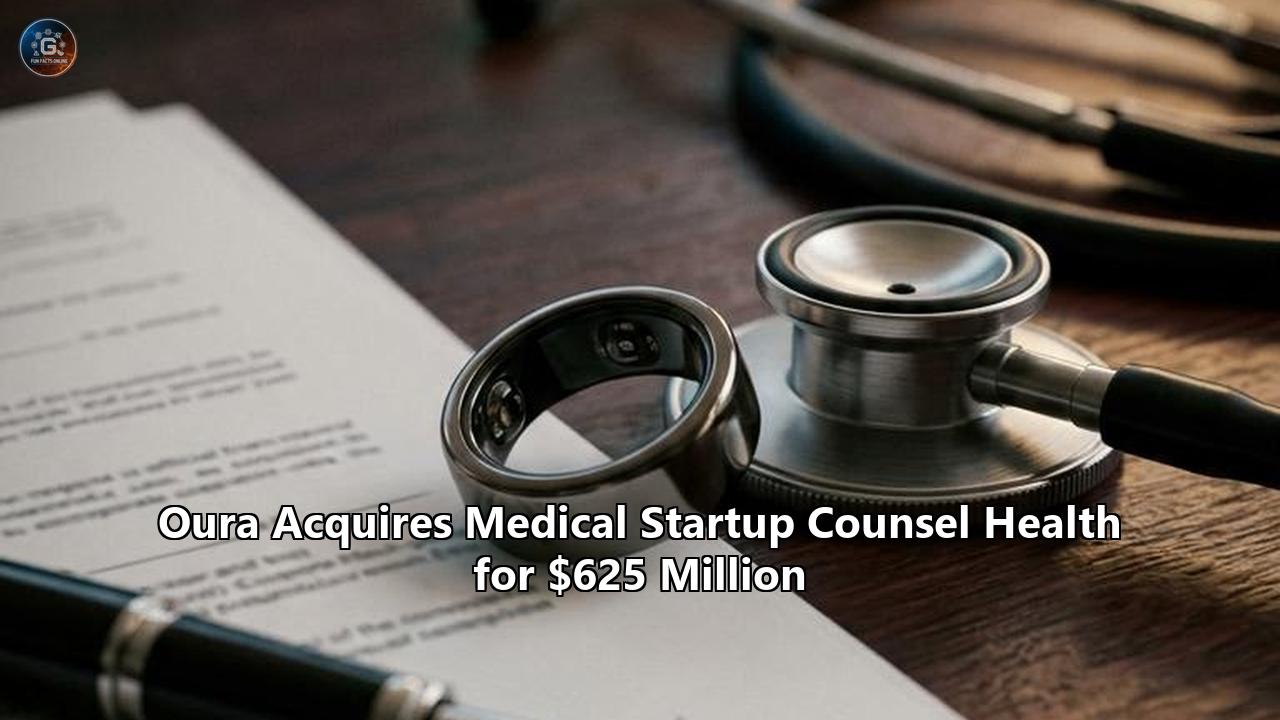
Oura has agreed to acquire artificial intelligence healthcare startup Counsel Health for $625 million in cash, executing the consumer wearable sector’s most aggressive move yet into direct clinical care delivery. The deal, announced on November 10, 2026, and slated to close before the end of the year, absorbs an AI-native virtual medical practice directly into Oura’s consumer ring ecosystem. The acquisition arrives just weeks after the Finnish-founded smart ring pioneer postponed its planned Nasdaq initial public offering, an offering that had targeted a $15.6 billion valuation and up to $2.2 billion in capital.
Rather than waiting for market turbulence to clear before expanding its scope, Oura is deploying its balance sheet to bridge the historic chasm between consumer wellness hardware and licensed clinical medicine. Counsel Health, founded by physician and Stanford-trained AI researcher Dr. Muthu Alagappan, pairs large language model agent workflows with an in-house medical group of board-certified physicians. Through an asynchronous, messaging-first interface, Counsel’s software ingests patient symptoms, retrieves medical records, cross-references clinical practice guidelines, and presents a drafted assessment and plan for licensed doctors to verify, adjust, and sign off within minutes.
As Oura acquires Counsel Health in an all-cash transaction valued at $625 million, the company breaks ranks with the prevailing strategies of Big Tech. Where Apple, Google, and Samsung have treated continuous biometric data as an exportable metric for external health systems, Oura is internalizing the clinic itself. The merger confronts the digital health industry with a consequential real-world experiment: whether marrying continuous physiologic streams with an AI-augmented medical staff can solve the twin crises of primary care access and wearable monetization, or whether it will stumble over the legal, diagnostic, and economic liabilities that have historically hobbled telehealth.
                      +--------------------------------------------------+
                      |         Oura Ring Physiological Sensors          |
                      |  (Photoplethysmography, Negative Temp, Accel.)   |
                      +--------------------------------------------------+
                                               |
                                               v
                      +--------------------------------------------------+
                      |         Oura App Algorithmic Analytics           |
                      |    (Sleep Score, HRV, Symptom/Health Radar)      |
                      +--------------------------------------------------+
                                               |
                                [Anomalous Signal Trigger]
                                               |
                                               v
+-----------------------------------------------------------------------------------------+
|                              Counsel Health AI Care Engine                              |
|                                                                                         |
|   +--------------------------+  +--------------------------+  +---------------------+   |
|   |   Agent 1: Intake &      |  | Agent 2: Context Parsing |  |  Agent 3: Clinical  |   |
|   |   Symptom Gathering      |  | & Longitudinal EHR Data  |  |  Guideline Match    |   |
|   +--------------------------+  +--------------------------+  +---------------------+   |
|                 \                            |                            /             |
|                  +---------------------------+---------------------------+              |
|                                              |                                          |
|                                              v                                          |
|                              +--------------------------------+                         |
|                              |   Clinician Cockpit Dashboard  |                         |
|                              |  (Synthesized Diagnostic Plan) |                         |
|                              +--------------------------------+                         |
+-----------------------------------------------------------------------------------------+
                                               |
                                 [Physician Sign-Off / Order]
                                               |
                                               v
                      +--------------------------------------------------+
                      |             Licensed Medical Outcome             |
                      |     (Prescription, Lab Order, Escalation)        |
                      +--------------------------------------------------+
The News Hook and Financial Anatomy of the Deal
The acquisition price represents an extraordinary 17.3-fold multiple on the $36 million in venture capital Counsel Health raised across its seed and Series A rounds. Venture investors including Andreessen Horowitz (a16z Bio + Health), Google Ventures (GV), Asymmetric Capital Partners, Floodgate Fund, and Pear VC had backed Counsel with a $25 million Series A in late 2025 following an $11 million seed round in 2024. Counsel was valued between $100 million and $250 million during its private financings. Oura’s $625 million purchase price underscores both intense competition in generative clinical AI and the desperation of consumer hardware makers to establish defensible, recurring service revenue.
The corporate maneuvers leading up to the transaction reveal a calculated financial pivot. Parallel to the acquisition announcement, Oura disclosed preliminary, unaudited financial results for its fiscal year ended September 30, 2026:
- Full-year revenue surged 92% year-over-year to approximately $1.75 billion, up from roughly $911 million in fiscal 2025.
- For the quarter ended September 30, 2026, revenue jumped 153% to $533 million.
- Adjusted EBITDA for the quarter reached $87 million, yielding an operational margin of 16%.
- The company’s active, paying subscriber base surpassed 6 million members, with roughly 5.7 million maintaining active ring software subscriptions.
Despite these commercial metrics, Oura withdrew its planned public debut in late September, citing volatility in tech equities and private market skepticism over long-term consumer hardware margins. Historically, smart rings and fitness trackers follow a brutal hardware commoditization curve. Device makers depend on multi-year hardware upgrade cycles that inevitably compress as competitors release low-cost alternatives. While Oura’s hardware margins sit comfortably above traditional consumer electronics—rings sell between $349 and $499—the company’s primary valuation driver in its S-1 filing was its recurring subscription model ($5.99 monthly or $69.99 annually), which boasts an 89% gross margin.
By acquiring Counsel Health, Oura is constructing a higher-tier software and service package. Rather than merely charging for biometric dashboards, Oura is introducing an optional $159 annual clinical tier following a 30-day introductory trial. Dr. Muthu Alagappan will transition to Oura alongside Counsel’s clinical, engineering, and data science staff, while Counsel will maintain its parallel enterprise channels serving employers, commercial health plans, and health system partners.
Architectural Dissection: Counsel Health’s Asynchronous Care Model
To evaluate the operational mechanics behind the acquisition, one must examine how Counsel Health departs from the first generation of digital health and telemedicine platforms.
The legacy telemedicine boom—led by companies like Teladoc, Amwell, and Doctor On Demand—was structurally defined by synchronous video calls. That architecture effectively replicated the traditional 15-minute clinical office visit inside a browser window. It preserved the fundamental economic inefficiency of legacy healthcare: one doctor sitting across from one patient in real time, tethered to a digital scheduler. Synchronous video failed to expand clinical capacity; it merely eliminated the patient's commute while introducing platform overhead and worsening physician administrative fatigue.
+----------------------------------------------------------------------------------------------------+
|                                    Telehealth Structural Models                                    |
+------------------------------+----------------------------------+----------------------------------+
| Attribute                    | Legacy Telehealth (Teladoc)      | AI-Native Virtual (Counsel)      |
+------------------------------+----------------------------------+----------------------------------+
| Primary Encounter Medium     | Synchronous scheduled video      | Asynchronous structured text     |
| Provider Panel Capacity      | 1,500 – 2,500 patients           | 7,500 – 12,000+ patients         |
| Clinical Intake Method       | Static drop-down web form        | Multi-agent conversational LLM   |
| Electronic Health Record     | Legacy Third-Party (Epic, Cerner)| In-house proprietary AI EHR      |
| Response Latency             | Hours to days (appointment-based)| Sub-minute AI, <15 min physician |
| Continuous Biometric Context | Absent / manual upload           | Integrated native ring data      |
+------------------------------+----------------------------------+----------------------------------+
Counsel Health was built around asynchronous clinical triage and proprietary workflow software. Rather than buying an off-the-shelf electronic health record (EHR) system designed for billing fee-for-service insurance codes, Counsel engineered its own asynchronous-first EHR and an operational interface known internally as the "Clinician Cockpit".
The platform’s technical pipeline operates across four discrete stages:
- Autonomous Intake and Context Synthesis: When a patient initiates a query through the messaging interface, an orchestration agent ingests the unstructured text and dynamically conducts clinical history-taking. Unlike static intake questionnaires, the intake agent asks targeted clarifying questions based on Bayesian risk models and standard clinical triage algorithms.
- Longitudinal Integration: Concurrently, background data retrieval agents access the user's historical medical records via regional Health Information Exchanges (HIEs), past messaging exchanges, and continuous biometric streams.
- Draft Synthesis in the Clinician Cockpit: The platform cross-references patient data with established clinical practice guidelines (such as the American College of Cardiology or Infectious Diseases Society of America protocols) and prepares a fully formatted clinical encounter note. This note includes a proposed differential diagnosis, triage priority level, suggested lab orders, or pharmacological prescriptions.
- Physician-in-the-Loop Adjudication: The entire package surfaces inside the Clinician Cockpit for a board-certified physician. The physician reviews the source citations, adjusts the draft assessment, verifies contraindications against the patient's EHR, and approves the treatment plan.
Because human physicians are freed from repetitive data gathering, manual EHR navigation, and live scheduling constraints, their clinical efficiency increases by an order of magnitude. Early operational benchmarks from Counsel’s enterprise deployment through Eli Lilly’s LillyDirect platform demonstrated an average time-to-first-consultation of 15 minutes for metabolic intake, while maintaining clinician panel sizes three to four times larger than those of traditional primary care groups.
By avoiding the synchronous trap, Counsel achieved the rare dual milestone of high clinician throughput and high patient satisfaction. The critical vulnerability, however, has always been diagnostic scope: asynchronous text and algorithms cannot palpate an abdomen, perform an otoscopic exam, or listen to lung sounds. It relies on the fidelity of patient reporting and peripheral biometric inputs.
Continuous Physiologic Surveillance vs. Episodic Medical Encounters
The union of Oura and Counsel Health targets one of modern medicine’s most persistent blind spots: the episodic nature of patient data.
Conventional healthcare delivery is punctuated by isolated, cross-sectional measurements. A patient visits a clinic once a year for an annual physical, where a medical assistant measures resting heart rate and blood pressure under conditions frequently distorted by stress or rushing (the well-documented "white coat" effect). Biochemical markers are drawn via standard venipuncture, yielding a static snapshot of fasting glucose, lipid profiles, and metabolic function. If a chronic disease develops between these annual checkups, it often progresses undiagnosed until overt clinical symptoms prompt an urgent care or emergency department visit.
EPISODIC TRADITIONAL CARE:
[Annual Checkup] -------------------- (11 Months Dark) --------------------> [Acute ER Visit]
- 120/80 mmHg snapshot                                                       - Overt pathology
- Static lab panel                                                          - Expensive triage

CONTINUOUS PROACTIVE CARE (OURA + COUNSEL):
=== Continuous Biometric Tracking (24/7/365 PPG, Temp, HRV, Sleep) ===
   |                      |                      |
[Baseline Shift]   [Prodromal Temp Rise]   [Autonomic Strain]
   |                      |                      |
   +----------------------+----------------------+
                          |
                          v
         [Automated Counsel AI Triage Prompt]
                          |
                          v
     [Physician Intervention / Early Rx / Workup]
Oura replaces this fragmented paradigm with continuous, longitudinal physiological telemetry. The Oura Ring Gen3 and its underlying sensor architecture track multiple data channels continuously:
- Infrared and red photoplethysmography (PPG): Measures blood volume changes in the digital arteries of the finger, yielding continuous resting heart rate, pulse wave velocity, and blood oxygen saturation (SpO2).
- Heart Rate Variability (HRV): Quantified via the root mean square of successive differences (RMSSD) between heartbeats, serving as an indirect proxy for autonomic nervous system tone (the balance between sympathetic fight-or-flight and parasympathetic rest-and-digest states).
- Negative Temperature Coefficient (NTC) thermistors: Sample dermal temperature variations with a resolution of 0.1°C, mapping deviation from the user's established circulating baseline.
- Tri-axial accelerometry: Tracks motion, kinetic energy expenditure, sleep micro-movements, and circadian rest patterns.
When Counsel Health operated as an independent virtual practice, its AI models relied on what the patient typed into the messaging chat and whatever static records could be pulled from an HIE. In practice, patients are notoriously imprecise historians. They miscalculate the duration of fevers, misjudge their baseline heart rates, and fail to connect subtle shifts in sleep architecture or fatigue with incipient metabolic or cardiovascular illness.
When Oura acquires Counsel Health, it explicitly couples this conversational interface directly to an ambient, passive data stream. An escalation no longer requires the patient to self-identify an ambiguous physical change and seek out care.
For example, through features like Oura’s "Symptom Radar" and "Health Radar," an asymptomatic user with an overnight skin temperature elevation of +1.2°C, a 30% collapse in RMSSD, and an elevated resting pulse of 18 beats per minute above baseline triggers an algorithmic alert. Instead of merely displaying a low "Readiness Score" and advising the user to rest, the application can open a Counsel Health asynchronous clinical encounter. The intake agent already holds the objective telemetry confirming an acute inflammatory or infectious prodrome, allowing the physician to review objective physiologic degradation hours before systemic symptoms fully manifest.
The Perils of Continuous Biometric Alerting
While the theoretical advantages of continuous physiological monitoring are clear, the clinical tradeoffs are complex. Medical literature has documented the unintended systemic consequences of continuous consumer monitoring.
First is the problem of diagnostic specificity and false positives. An elevated resting heart rate combined with an HRV drop is not pathognomonic for any single disease; it can reflect viral infection, severe psychological stress, alcohol consumption, dehydration, or an unannounced schedule change. When consumer algorithms convert vague physiological perturbations into clinical alerts, they risk inducing health-related anxiety—a phenomenon clinicians term "cyberchondria" or "data-driven somatization."
Second, consumer-facing diagnostic alerts threaten to flood the healthcare ecosystem with low-acuity inquiries. If an algorithm encourages millions of healthy, young users to contact a physician every time their temperature fluctuates by one degree, the system risks driving low-value care, over-testing, and medical cascade events—unnecessary blood panels, inappropriate antibiotic prescriptions, or superfluous imaging that expose patients to physical and financial harms without altering clinical outcomes.
To make this pairing clinically viable, Counsel’s multi-agent triage system must serve as a rigorous clinical filter rather than an alarmist funnel. The engineering challenge shifts from detecting biometric deviations to establishing strict clinical thresholds that prompt proactive outreach only when the predictive value of the telemetry meets established medical standards.
Strategic Playbooks Compared: Oura, Apple, Amazon, and Whoop
The acquisition highlights four divergent corporate philosophies regarding how consumer technology should interface with regulated healthcare delivery.
+-------------------------------------------------------------------------------------------------------------+
|                                    Big Tech Healthcare Strategy Matrix                                      |
+---------------+---------------------+--------------------------+-----------------------+--------------------+
| Feature       | Oura + Counsel      | Apple                    | Amazon (One Medical)  | Whoop              |
+---------------+---------------------+--------------------------+-----------------------+--------------------+
| Core Vehicle  | Smart Ring + Native | Smartwatch + Third-Party | Enterprise Primary    | Screenless Strap + |
|               | Virtual Clinic      | Health Ecosystem         | Care + Pharmacy       | Video Telehealth   |
| Hardware Role | Proprietary sensor  | Ecosystem anchor and     | Ancillary / minimal   | Subscription tool  |
|               | source of telemetry | consumer lock-in engine  | (discontinued Halo)   | for performance    |
| Provider      | In-house owned      | Explicitly none; hands   | Employed in-person    | External partner   |
| Model         | medical group       | off to hospital systems  | & virtual clinicians  | networks           |
| Clinical      | Asynchronous AI     | Asynchronous passive     | Synchronous video &   | Synchronous video  |
| Architecture  | agents + physician  | tracking; user exports   | physical exam rooms   | visits inside app  |
| Monetization  | Tiered sub: $70/yr  | Pure hardware margins +  | Prime add-on ($99/yr) | Hardware-inclusive |
|               | app + $159/yr care  | App Store distribution   | or standard insurance | membership         |
| Direct CPOM   | Absorbed via MSO/PC | Zero (deliberately       | High (runs full-scale | Low (acts as       |
| Liability     | structure           | avoided)                 | clinical facilities)  | software conduit)  |
+---------------+---------------------+--------------------------+-----------------------+--------------------+
Apple: The Diagnostic Device as a Neutral Data Conduit
Apple represents the polar opposite of Oura’s strategy. Despite holding extensive FDA 510(k) clearances for atrial fibrillation detection, irregular rhythm notifications, and sleep apnea risk assessments, Apple refuses to practice medicine. The Apple Watch is engineered as a consumer device that surfaces validated clinical metrics, which are then formatted via HealthKit and Fast Healthcare Interoperability Resources (FHIR) protocols for transmission into traditional electronic medical records like Epic Systems and Cerner.
Apple’s calculus is rooted in risk aversion and margin preservation:
- Liability Isolation: By refusing to employ clinicians or run diagnostic algorithms that prescribe drugs, Apple shields its brand from medical malpractice claims, misdiagnosis lawsuits, and complex state-by-state medical board regulations.
- Margin Integrity: Apple maintains corporate gross margins above 45% without absorbing the low-margin operational friction of clinical staffing, medical malpractice insurance, and clinical support labor.
- Market Neutrality: Positioned as an infrastructure provider, Apple partners with every major hospital network and health insurance plan in the Western world without competing against them for primary care encounters.
The fundamental trade-off of Apple’s approach is friction. When an Apple Watch detects an episode of potential atrial fibrillation, the user is instructed to schedule an appointment with their physician. The patient falls back into traditional healthcare queues, waiting weeks for a cardiology consult while experiencing acute anxiety. The diagnostic continuum is severed at the exact point where care delivery begins.
Amazon: Horizontal Infrastructure and Real Estate Drag
Amazon tackled the primary care challenge from the opposite direction, acquiring One Medical in 2023 for $3.9 billion. Rather than growing outward from wearable biometric monitoring, Amazon acquired an established hybrid primary care network comprising hundreds of physical brick-and-mortar clinics in major metropolitan markets, supplemented by on-demand virtual visits.
Amazon’s model treats primary care as a customer acquisition channel for its broader commercial ecosystem, particularly Amazon Pharmacy:
- The Strength: By operating physical clinics, One Medical can treat the full spectrum of acute and chronic conditions that cannot be addressed virtually. Clinicians can draw blood, administer vaccines, perform physical exams, and manage complex polypharmacy.
- The Trade-off: Amazon assumed vast physical overhead—commercial leases, clinic construction costs, nursing staff, administrative billing infrastructure, and unionized labor pressures. These heavy capital expenditures contributed to Amazon shutting down its own internal wearable line, Halo, in 2023. Amazon holds the clinical network, but it lacks an ambient biometric surveillance layer integrated into the daily lives of its patients.
Whoop: Athletic Optimization and Partnered Telehealth
Whoop, Oura’s primary rival in the specialized recovery wearable sector (valued privately at over $10 billion), has chosen an intermediary path focused on human performance. In mid-2026, Whoop launched an in-app clinical consultation feature. However, unlike Oura’s outright acquisition of Counsel Health, Whoop implemented a partnered, synchronous telehealth model.
Whoop routes users who want blood panels or physician checkups to third-party telehealth networks and clinical labs. The company deployed an algorithmic "Whoop Coach" powered by generative models, but kept it bounded as an athletic optimization and lifestyle engine. Whoop avoids owning the underlying medical provider group, insulating itself from medical licensure compliance while keeping its operational focus centered on elite athletic recovery, corporate wellness programs, and consumer subscriptions.
Oura’s Third Path: Native Asynchronous AI Micro-Care
Oura’s acquisition of Counsel Health carves out a distinct fourth path: an asset-light, fully owned, asynchronous AI medical practice.
Oura avoids the multi-billion-dollar real estate burden of Amazon’s One Medical while closing the care gap that Apple leaves open. Instead of redirecting users to an overburdened external primary care system, Oura resolves the encounter within its own software.
The primary trade-off is diagnostic ceiling. By operating without physical examination rooms, Oura restricts its direct clinical utility to conditions that can be safely managed through asynchronous messaging, ambient biometrics, at-home lab diagnostics, and remote drug prescribing. Oura is betting that this asset-light envelope covers a large enough share of primary care friction—preventive triage, metabolic management, prescription renewals, and early infection handling—to transform the economics of its consumer subscriber base.
The Economic Model: Hardware Gateways, Subscriptions, and Enterprise Reimbursement
The financial viability of the Counsel Health acquisition hinges on whether Oura can reshape consumer and enterprise health payment models.
Currently, Oura’s consumer business relies on a conventional two-tier pricing structure:
- Upfront Hardware: The ring retails for $349 to $499, depending on finish and materials.
- Base Software Subscription: Users pay $5.99 per month ($69.99 per year) to unlock their biometric dashboards, sleep tracking metrics, readiness scores, and algorithmic wellness trends.
CONSUMER REVENUE STACK PER USER:
Tier 1: Hardware Sale (One-time: $349 - $499)
   +
Tier 2: Baseline Metric Subscription ($69.99/year - 89% gross margin)
   +
Tier 3: Counsel Health Clinical Tier ($159/year - Asynchronous AI + MD Care)
----------------------------------------------------------------------------
Total Annualized Year-One Consumer Value: Up to $727.99
With the integration of Counsel Health, Oura is establishing a third commercial tier: an optional $159 annual clinical plan providing unlimited messaging access to Counsel’s AI agents and physician network.
The economic arithmetic of this third tier reveals why Oura acquires Counsel Health at a multiple exceeding seventeen times invested capital. The base $69.99 software subscription targets a traditional consumer wellness audience. Adding a $159 annual charge lifts average revenue per user (ARPU) by more than 220% for converting members.
In digital health, the traditional hurdle for paid subscriptions is consumer churn. Pure hardware fitness bands face steep abandonment curves; a significant percentage of consumer fitness bands end up discarded in drawers within twelve months of purchase. By transforming the Oura Ring from an athletic tracking accessory into the personal diagnostic dashboard for a dedicated primary care physician, Oura dramatically elevates user switching costs. Abandoning the ring no longer means just losing a sleep score; it means severing the clinical context that informs a patient's active medical care.
The Consumer Friction Point
Despite this industrial logic, consumer adoption faces immediate friction. The modern consumer is already weary of software subscriptions. Demanding that an individual pay $349 to $499 upfront for a ring, plus $70 a year for baseline data access, plus an additional $159 a year for virtual medical care—reaching a year-one cost exceeding $600—narrows Oura’s addressable market to affluent, health-conscious demographics.
Furthermore, an individual paying significant annual premiums for employer-sponsored health insurance or Medicare Advantage expects primary care access to be covered under their existing benefits package. Convincing that consumer to spend $159 in after-tax, out-of-pocket cash for an asynchronous medical group requires proof of tangible clinical superiority over their existing insurance options.
The Enterprise and Payer Escape Hatch
Because direct-to-consumer cash-pay models ultimately hit a ceiling, the strategic value of Counsel Health lies in its established business-to-business (B2B) enterprise infrastructure.
Counsel Health was not founded exclusively as a consumer application; it was engineered to contract directly with self-insured employers, commercial payers, and accountable care organizations (ACOs). In these arrangements, the enterprise sponsor pays a recurring Per Member Per Month (PMPM) fee to deploy Counsel as a digital front door that reduces emergency department visits and diverts low-acuity cases away from expensive hospital clinics.
Oura had already initiated this enterprise migration through targeted medical partnerships:
- Metabolic Care and Pharma Distribution: Partnering with Dexcom (continuous glucose monitoring integration) and Eli Lilly’s LillyDirect distribution arm, where Counsel’s asynchronous physicians manage clinical evaluations and ongoing monitoring for patients on GLP-1 receptor agonists.
- Cardiorespiratory Management: Collaborating with ResMed to track obstructive sleep apnea risks.
- CMS Chronic Care Demonstration: In September 2026, Oura and Counsel announced an operational alignment centered on the Centers for Medicare and Medicaid Services (CMS) Advancing Chronic Care with Effective Scalable Solutions (ACCESS) model, scheduled to begin in early 2027.
Under the CMS ACCESS framework, value-based care organizations can bill for remote patient monitoring (RPM) and chronic care management (CCM) using specific Medicare Current Procedural Terminology (CPT) reimbursement codes (e.g., CPT 99453, 99454, 99457, and 99458). These codes reimburse healthcare organizations for supplying continuous physiologic monitoring hardware to patients with chronic conditions, reviewing biometric data transmissions, and conducting clinical consultations.
By acquiring Counsel, Oura can capture these professional service fees directly. Instead of waiting for third-party medical practices to buy Oura Rings for their patients, Oura’s internal medical group can prescribe the ring as an eligible remote monitoring device, ingest the continuous data, execute asynchronous clinical check-ins, and bill Medicare and commercial payers directly. This transforms Oura from an out-of-pocket consumer luxury into an insurable, clinically indicated medical service.
Legal, Regulatory, and Clinical Boundaries
Merging a consumer electronics business with an active medical practice thrusts Oura into a complex regulatory environment that traditional tech hardware companies deliberately avoid.
+--------------------------------------------------------------------------------------------------+
|                             The MSO / Friendly PC Legal Separation                              |
+--------------------------------------------------------------------------------------------------+
|                                                                                                  |
|   +------------------------------------+         +-------------------------------------------+   |
|   |          Oura Health Oy            |         |            Counsel Health P.C.            |   |
|   |         (Public Tech MSO)          |         |         (Physician-Owned Practice)        |   |
|   +------------------------------------+         +-------------------------------------------+   |
|   | - Owns hardware, apps, algorithms  |         | - Employs licensed medical doctors        |   |
|   | - Owns AI agents & EHR code base   |         | - Holds cross-state medical licenses      |   |
|   | - Controls corporate brand & IP    |         | - Carries medical malpractice insurance   |   |
|   | - Collects enterprise platform fee |         | - Makes independent clinical decisions    |   |
|   +------------------------------------+         +-------------------------------------------+   |
|                     \                                                 /                          |
|                      \====== Administrative Services Agreement ====== /                          |
|                             (Arm's-Length Management Contract)                                   |
|                                                                                                  |
+--------------------------------------------------------------------------------------------------+
The Corporate Practice of Medicine Doctrine
In the United States, medical delivery is governed at the state level by the Corporate Practice of Medicine (CPOM) doctrine. Enforced in influential states including California, New York, Texas, and Illinois, the doctrine legally prohibits non-physician-owned corporations from practicing medicine, employing physicians to practice medicine, or sharing directly in medical professional fees. The underlying public policy rationale is clear: corporate entities beholden to commercial shareholders might compromise clinical judgment, alter treatment protocols, or prioritize profit margins over patient safety.
A consumer tech company cannot simply buy a medical license. To execute the Counsel Health acquisition legally, Oura must utilize the specialized "Friendly PC-MSO" corporate architecture standard in venture-backed digital health:
- The Management Services Organization (MSO): Oura owns the technology infrastructure, the smart ring manufacturing pipeline, the proprietary algorithms, the AI EHR codebase, and the brand identity. The MSO provides administrative services, billing software, and technological tools.
- The Professional Corporation (PC): Counsel Health’s clinical medical staff must be housed within a separate, physician-owned professional corporation (often legally owned by Dr. Muthu Alagappan or another licensed physician partner).
- The Administrative Services Agreement (ASA): The physician-owned PC contracts with Oura’s MSO via an arm’s-length agreement, paying management fees to Oura in exchange for its software platform and operational infrastructure.
While legally standard, this separation creates internal friction. The clinical leadership of the PC is legally bound to exercise independent medical judgment, regardless of Oura’s corporate growth imperatives or investor expectations. If Counsel’s physicians decide that a specific Oura algorithmic alert generates too many clinically invalid visits, they have the professional authority to block automated clinical triage pathways, regardless of how such features affect consumer engagement metrics.
Medical Malpractice and Algorithmic Liability
The deployment of multi-agent LLM systems in clinical workflows introduces untested questions of tort liability and medical negligence.
When a human doctor misdiagnoses an illness during a traditional physical examination, medical malpractice law relies on the established "standard of care" doctrine: did the physician exercise the reasonable degree of skill, knowledge, and care ordinarily possessed by members of the medical profession under similar circumstances?
In Counsel’s architecture, an AI agent takes clinical history, accesses longitudinal records, and drafts the diagnostic assessment and pharmacological treatment plan. If an AI intake agent misinterprets a patient’s message regarding atypical chest discomfort—classifying it as gastroesophageal reflux rather than acute coronary syndrome—and the reviewing physician signs off on the auto-drafted note without cross-checking the primary data, where does the legal liability fall?
+----------------------------------------------------------------------------------------------------+
|                                    Liability Allocation Spectrum                                   |
+------------------------------+----------------------------------+----------------------------------+
| Point of Failure             | Responsible Legal Entity         | Governing Legal Framework        |
+------------------------------+----------------------------------+----------------------------------+
| Hardware Sensor Malfunction  | Oura Health (Device MSO)         | Products Liability / UCC Express |
| (Faulty PPG / Temperature)   |                                  | and Implied Warranties           |
+------------------------------+----------------------------------+----------------------------------+
| AI Agent Hallucination or    | Counsel Health P.C. /            | Joint Enterprise Liability /     |
| Erroneous SOAP Formulation   | Physician Sign-Off               | Negligent Supervision of AI      |
+------------------------------+----------------------------------+----------------------------------+
| Unreviewed Algorithmic Drift | Oura MSO & Software Division     | Enterprise Algorithmic Product   |
| in Intake Logic              |                                  | Defect Standards                 |
+------------------------------+----------------------------------+----------------------------------+
| Physician Rubber-Stamping of | Licensed Physician Indiv. /      | Professional Medical Malpractice |
| Inaccurate Drafted Notes     | Medical Professional Corp.       | (Failure to adhere to standard)  |
+------------------------------+----------------------------------+----------------------------------+
Counsel’s "physician-in-the-loop" structure is engineered explicitly to address this legal exposure. By mandating that a licensed human doctor personally review and authenticate every prescription, lab order, and diagnostic summary, Counsel preserves the classic malpractice model. The licensed physician remains the final legal shield.
Yet this protection relies on the physician thoroughly scrutinizing the algorithmic recommendations. In clinical environments where physicians are incentivized to manage large patient panels, there is a documented cognitive risk known as "automation bias"—the human tendency to defer uncritically to automated outputs. If reviewing physicians begin routinely rubber-stamping Counsel’s auto-generated clinical notes in under sixty seconds, defense attorneys will struggle to prove that an independent, human medical review occurred.
FDA Boundaries: Wellness Gadgets vs. Regulated Medical Devices
A regulatory tightrope governs Oura’s hardware and software framing.
Under Section 520(o) of the Federal Food, Drug, and Cosmetic Act (clarified by the 21st Century Cures Act), software applications designed solely for maintaining or encouraging a general state of health or a healthy activity—without making claims to diagnose, cure, mitigate, treat, or prevent a specific disease—are categorized as general wellness products. These tools are exempt from burdensome FDA premarket notification (510(k)) or premarket approval (PMA) requirements.
For years, Oura’s consumer marketing maintained strict adherence to this wellness boundary. The app provided "Readiness Scores," "Sleep Stages," and "Stress Tracking." It warned members that "something’s different," avoiding explicit diagnostic terminology.
+-----------------------------------------------------------------------------+
|                          FDA Regulatory Boundary                            |
+-----------------------------------------------------------------------------+
|                                                                             |
|   EXEMPT GENERAL WELLNESS                   REGULATED MEDICAL DEVICE        |
|   (Section 520(o) FD&C Act)                 (FDA 510(k) / SaMD Pathways)    |
|                                                                             |
|   - "Readiness Score"                       - "Atrial Fibrillation Warning" |
|   - "Sleep Stage Tracking"                  - "Hypertension Screening"      |
|   - "Something's Different Alert"   |||     - "Type 2 Diabetes Monitoring"  |
|   - "Relaxation Assistance"         |||     - "Prescription Formulation"    |
|                                                                             |
|   [Oura Ring Hardware History]      >>>     [Oura + Counsel Convergence]    |
|                                                                             |
+-----------------------------------------------------------------------------+
By bringing Counsel Health in-house, Oura steps directly into disease diagnosis and therapeutic intervention. If the Oura mobile app uses proprietary sensor outputs to autonomously trigger clinical encounters for specific pathologies (such as nocturnal hypertension, cardiac arrhythmias, or thyroid dysfunction), the underlying algorithms risk being reclassified by the FDA as Software as a Medical Device (SaMD). Navigating formal FDA clinical trial validations and premarket clearances requires significant capital, lengthy multi-year timelines, and rigorous design controls that slow the pace of consumer software deployment.
Clinical Labor Dynamics: The Iron Man Suit vs. Cognitive Deskilling
A central justification for the acquisition's $625 million valuation is operational scalability: the promise that Counsel’s AI workflow tools allow a single doctor to provide safe, effective care to a significantly expanded patient panel. Proponents in the venture capital sphere describe this AI-assisted doctor model as an "Iron Man suit for clinicians".
+----------------------------------------------------------------------------------------------------+
|                                  Physician Panel Scaling Capacity                                  |
+----------------------------------------------------------------------------------------------------+
|                                                                                                    |
|  Traditional Primary Care Physician (Episodic, In-Person Visits):                                  |
|  [||||||||||||||||||||] ~2,000 Active Patients Max                                                 |
|                                                                                                    |
|  Counsel Health AI-Augmented Physician (Asynchronous Multi-Agent Workspace):                       |
|  [||||||||||||||||||||||||||||||||||||||||||||||||||||||||||||||||||||||||||||||||] ~8,000+        |
|                                                                                                    |
+----------------------------------------------------------------------------------------------------+
In a traditional family medicine practice, a primary care physician manages an active panel of approximately 1,500 to 2,500 patients. Attempting to expand that panel without adding clinical staff inevitably degrades care quality, causes patient scheduling delays, and drives physician burnout. Doctors spend up to two hours documenting encounters in legacy EHRs for every one hour of direct face-to-face patient contact.
Counsel’s platform fundamentally reallocates physician time:
- Routine clinical documentation, data extraction, and clinical code searching are automated by background agents.
- Rather than spending ten minutes typing out an encounter summary, the physician spends two minutes reviewing a pre-synthesized draft, verifying the logic against the patient’s biometrics, and releasing the clinical order.
- By shifting direct communication to structured asynchronous messaging, physicians are liberated from rigid 15-minute appointment slots. They can clear patient queues dynamically throughout their shift.
Under this operational model, Counsel claims its physicians can comfortably manage active panels ranging from 7,500 to over 10,000 patients, drastically lowering the labor cost per patient encounter while expanding overall healthcare capacity.
The Clinical Counterargument: Fragmentation and Deskilling
Many primary care clinicians view the expansion of asynchronous algorithmic triage with professional skepticism.
First, critics point out the risk of care fragmentation. Comprehensive primary care is inherently longitudinal and relational. Decades of clinical epidemiology indicate that health outcomes improve and total costs decline when a patient builds a continuous, trusting relationship with a single physician who understands their social context, psychological history, and nuanced behavioral habits. Counsel’s asynchronous messaging model prioritizes speed and convenience, often routing the user to whichever licensed physician is active on the network queue. By turning medical encounters into rapid, transactional messaging chats, the platform risks dismantling the therapeutic alliance central to primary care.
Second, medical educators raise concerns regarding cognitive deskilling. Clinical judgment is an intellectual muscle developed through constant, iterative synthesis—personally extracting histories, identifying non-verbal cues, and wrestling through complex differential diagnoses. When software automates the diagnostic synthesis and simply asks the doctor to approve pre-formulated options, the physician risks functioning as an administrative editor rather than an analytical diagnostician. Over time, reliance on automated clinical suggestions can erode the diagnostic instincts required to catch rare, atypical presentations that fall outside an AI model’s training distribution.
Strategic Realignment: The Wearable Battleground Ahead
Looking ahead, the strategic realignment sparked when Oura acquires Counsel Health signals a broader divergence across the wearable ecosystem. The smart ring category is confronting intense competitive pressure from global technology conglomerates.
Samsung entered the market in mid-2024 with its Galaxy Ring, leveraging its global consumer supply chain, Android ecosystem integration, and deep enterprise resources without requiring a mandatory software subscription. Ultrahuman has expanded its Ring Air platform by aggressively shipping software features, metabolic integrations, and sleep tracking without paywall barriers. Concurrently, rumors persist that Apple is actively prototyping smart ring form factors to serve as lightweight peripherals for its ecosystem.
In a commoditized market, relying solely on hardware industrial design is a losing strategy. Hardware patents provide narrow protection; optical sensors and micro-circuitry are accessible to any well-capitalized competitor with access to Asian contract manufacturing.
                      +------------------------------------------+
                      |         The Smart Ring Landscape         |
                      +------------------------------------------+
                                     /            \
                                    /              \
    +----------------------------------+        +-----------------------------------+
    |     Commoditized Hardware        |        |   Vertically Integrated Care      |
    |      (Device as Accessory)       |        |   (Device as Medical Gateway)     |
    +----------------------------------+        +-----------------------------------+
    | - Samsung Galaxy Ring            |        | - Oura + Counsel Health           |
    | - Ultrahuman Ring Air            |        | - Proprietary Asynchronous Clinic |
    | - Low/No Subscription Tier       |        | - Direct Prescriptions & Labs     |
    | - Relies on Phone OS Lock-in     |        | - $159/yr Integrated Service Fee  |
    +----------------------------------+        +-----------------------------------+
By acquiring Counsel Health, Oura is moving upmarket into clinical service delivery where consumer hardware manufacturers cannot easily follow. A technology manufacturer can quickly clone a ring’s form factor and accelerometer algorithms, but building or buying a 50-state physician group, licensing an asynchronous clinical AI EHR, navigating CPOM doctrines, and securing Medicare reimbursement contracts requires institutional capabilities that consumer electronics brands are often hesitant to develop.
This acquisition establishes a structural defense for Oura’s business:
- Even if competitors lower the pricing floor on smart ring hardware, Oura can monetize its platform through higher-margin, recurring clinical subscriptions.
- By providing actual medical value—prescribing medications, interpreting blood panels, and managing chronic conditions—Oura builds an enduring health record for its members, reducing churn rates.
- When Oura returns to the public markets to revive its postponed IPO, it will not pitch itself to Wall Street as a consumer hardware vendor vulnerable to upgrade cycles, but as an integrated, recurring-revenue digital health provider.
The immediate milestone to observe will be the consumer conversion rate when Counsel’s services transition out of Oura Labs and into broad commercial availability within the main application. Whether Oura’s 6 million members will voluntarily pay $159 annually for an AI-augmented virtual medical group will serve as an early market test for consumer-funded digital health. Concurrently, the platform’s performance in the upcoming CMS ACCESS chronic care initiative will determine whether Oura can successfully unlock institutional insurance reimbursement.
Oura’s $625 million wager represents a decisive transition in consumer technology. The consumer health era of passive metric accumulation—endless step counts, resting heart rate graphs, and sleep scores that inform users of their physiological fatigue without offering medical solutions—is reaching its operational limit. By purchasing its own medical group, Oura is testing whether the ultimate destination for the wearable industry is not merely to track our physical decline, but to step in and treat it.
Reference:
- https://medcitynews.com/2026/11/ouras-buys-counsel-for-625m-but-will-payers-and-consumers-get-on-board/
- https://www.fiercehealthcare.com/digital-health/oura-acquire-ai-virtual-primary-care-partner-counsel-health-625m
- https://emergent.sh/news/oura-acquires-ai-primary-care-startup-counsel
- https://www.trendingtopics.eu/oura-buys-counsel-health-625-million/
- https://mgmtboston.com/companies/counsel-health
- https://www.healthcareaiguy.com/p/industry-deep-dive-counsel-health
- https://www.healthcaredive.com/news/oura-makes-bet-on-ai-in-healthcare-with-625m-counsel-health-buy/874401/
- https://endpoints.news/oura-to-buy-ai-care-startup-counsel-health-for-625m/
- https://dealroom.co/companies/counsel-health/
- https://healthtechbuilders.substack.com/p/counsel-health-joins-oura
- https://ouraring.com/blog/fi/oura-to-acquire-counsel-health/
- https://ouraring.com/blog/oura-to-acquire-counsel-health/